Grevillea sp. (Grevillea)
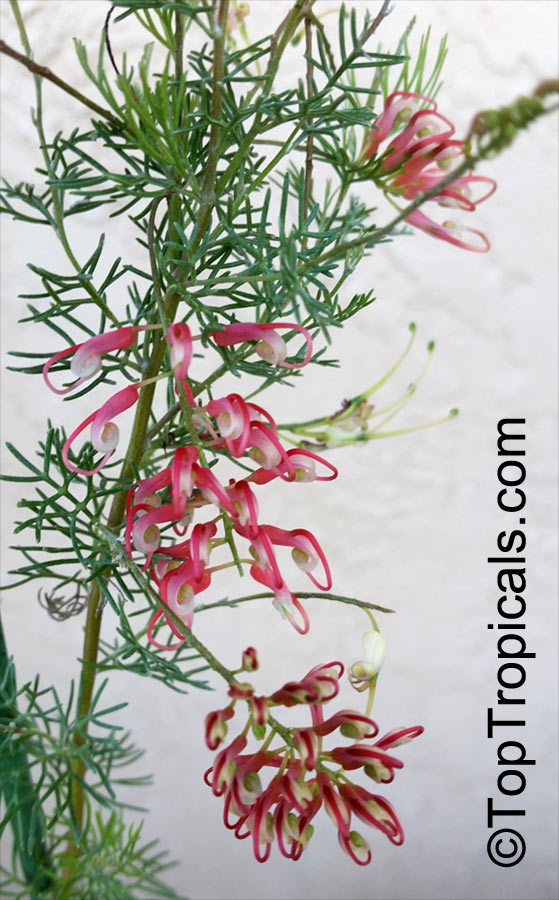
Botanical name: Grevillea sp.
Common name: Grevillea
Family: Proteaceae
Origin: Australia
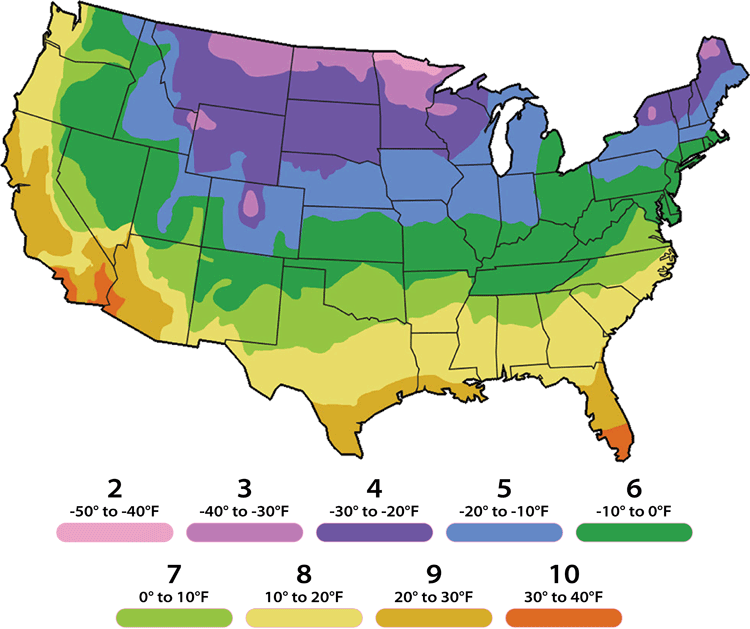
USDA Zone: 8-11
 Plant form: Large bush
 Mature height: 5-10 ft
 Sun exposure: Full sun or bright light indoor
 Cold tolerance: Frost sensitive. Protect from freezing.
 Watering: Moderate

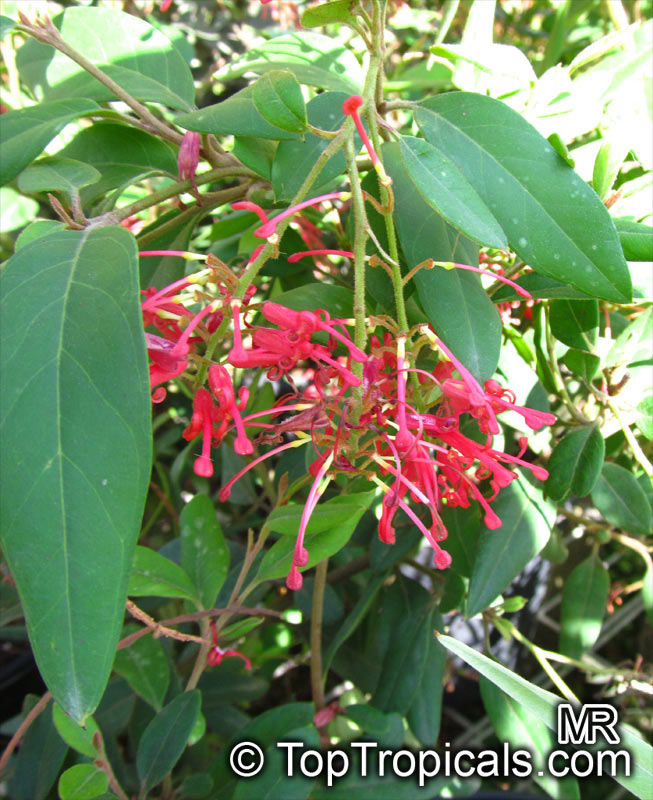
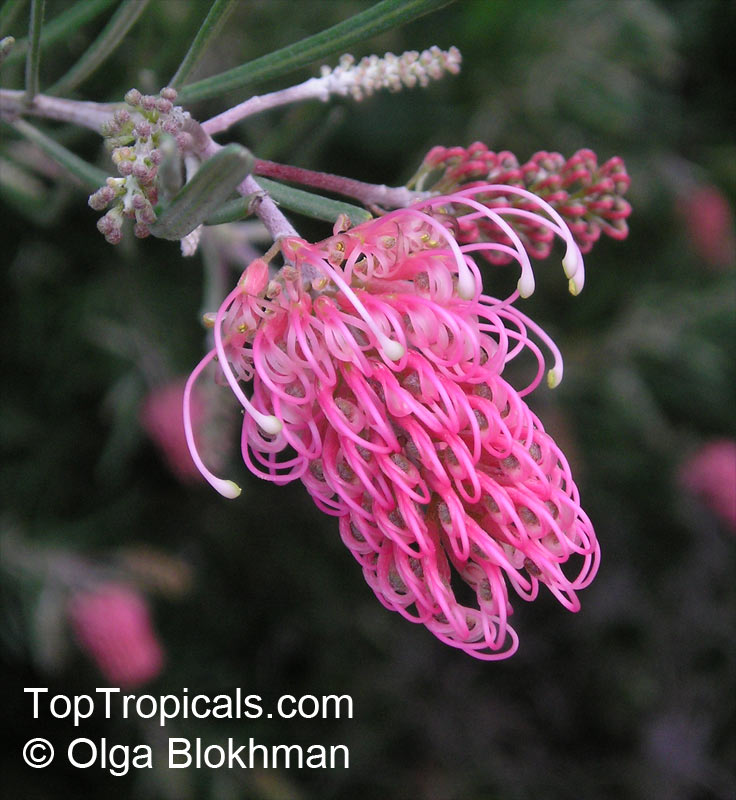
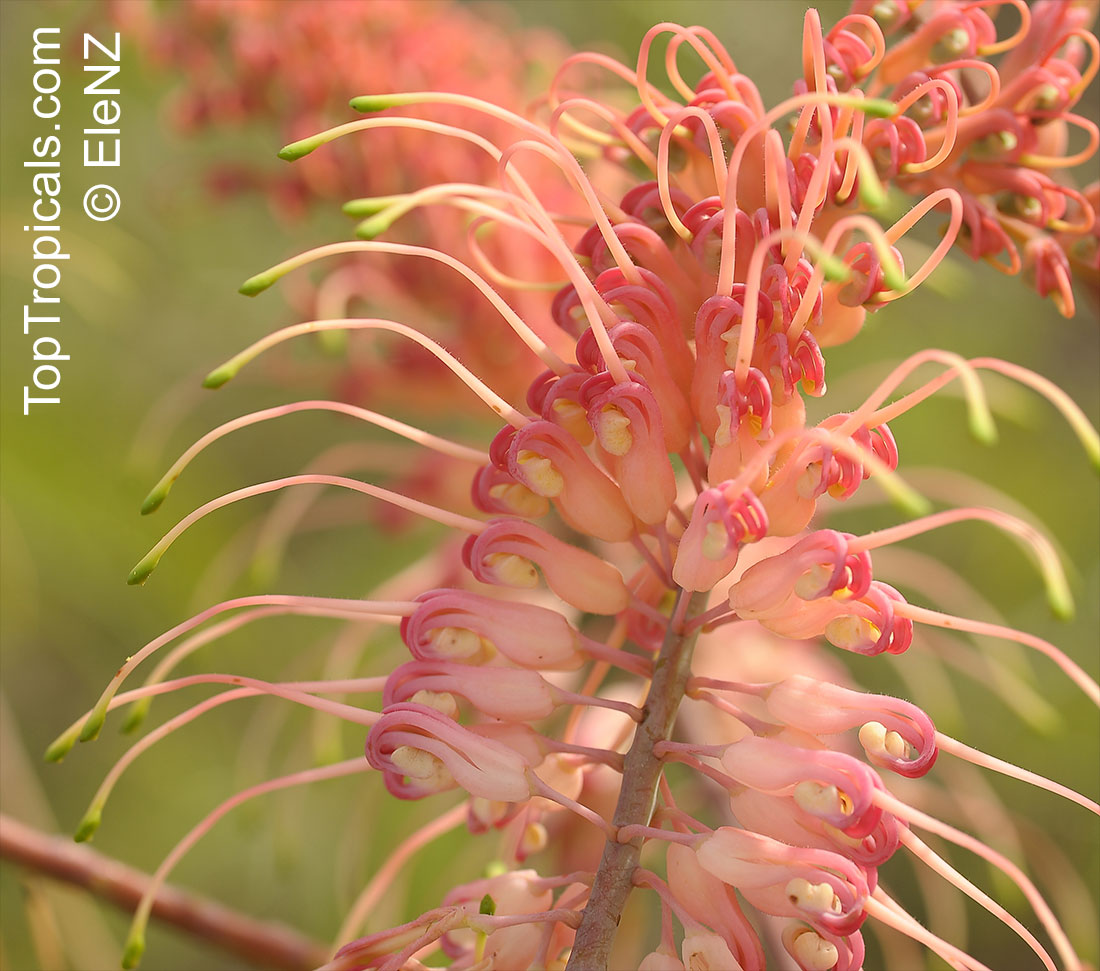
 Flower color: Pink; red, crimson, vinous; yellow, orange
 Suitable for: Outdoors in the suitable USDA zone; small gardens, containers, and indoor growing
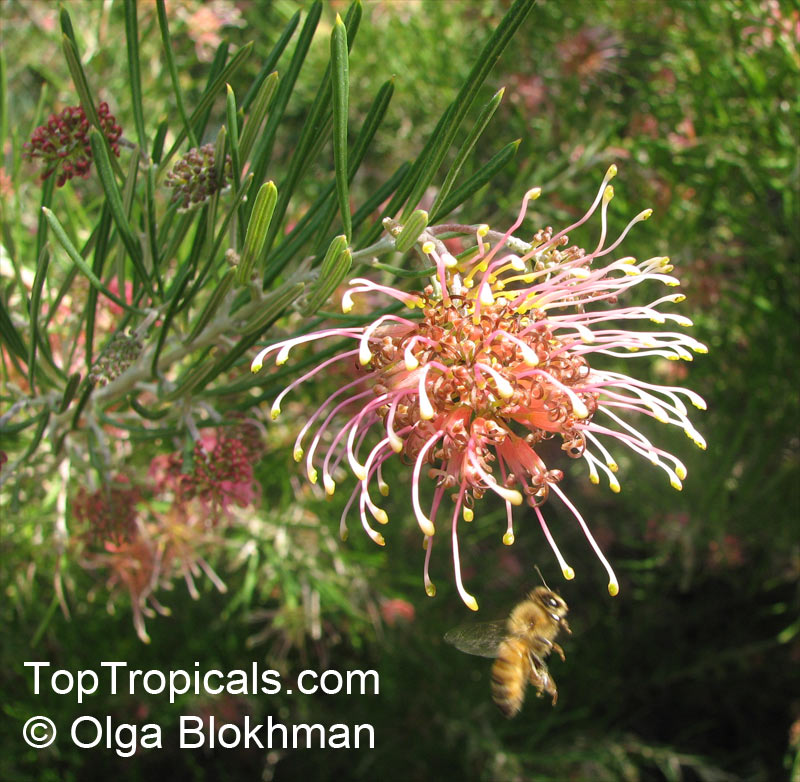
 Wildlife: Attracts butterflies and hummingbirds
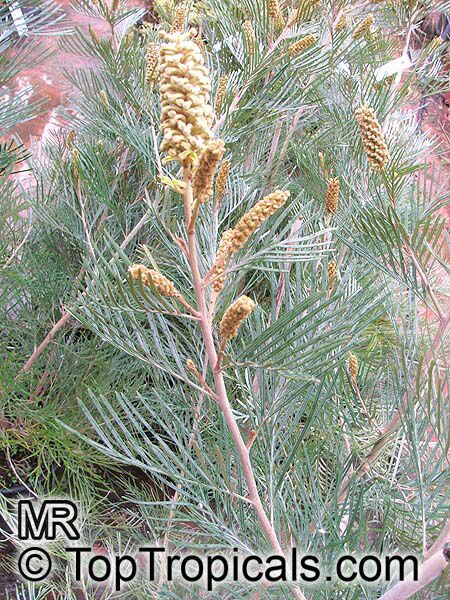
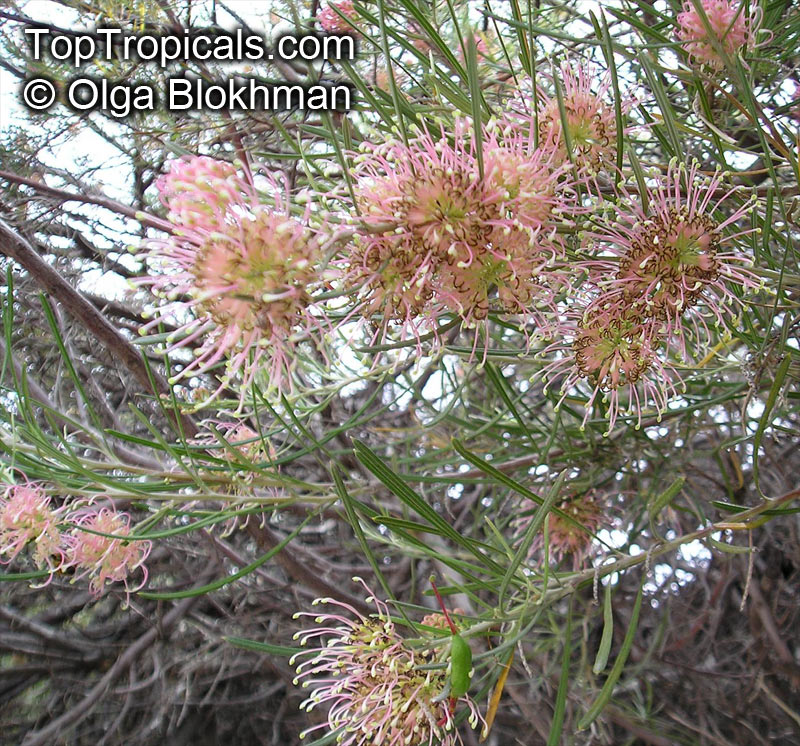
The genus Grevillea includes more than 350 species of evergreen shrubs, small trees, and groundcovers native primarily to Australia. Members of the genus are admired for their unusual flowers, attractive foliage, and exceptional value as a nectar source for wildlife.
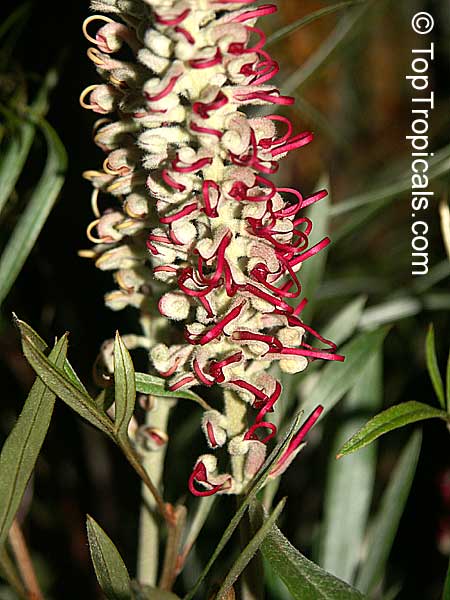
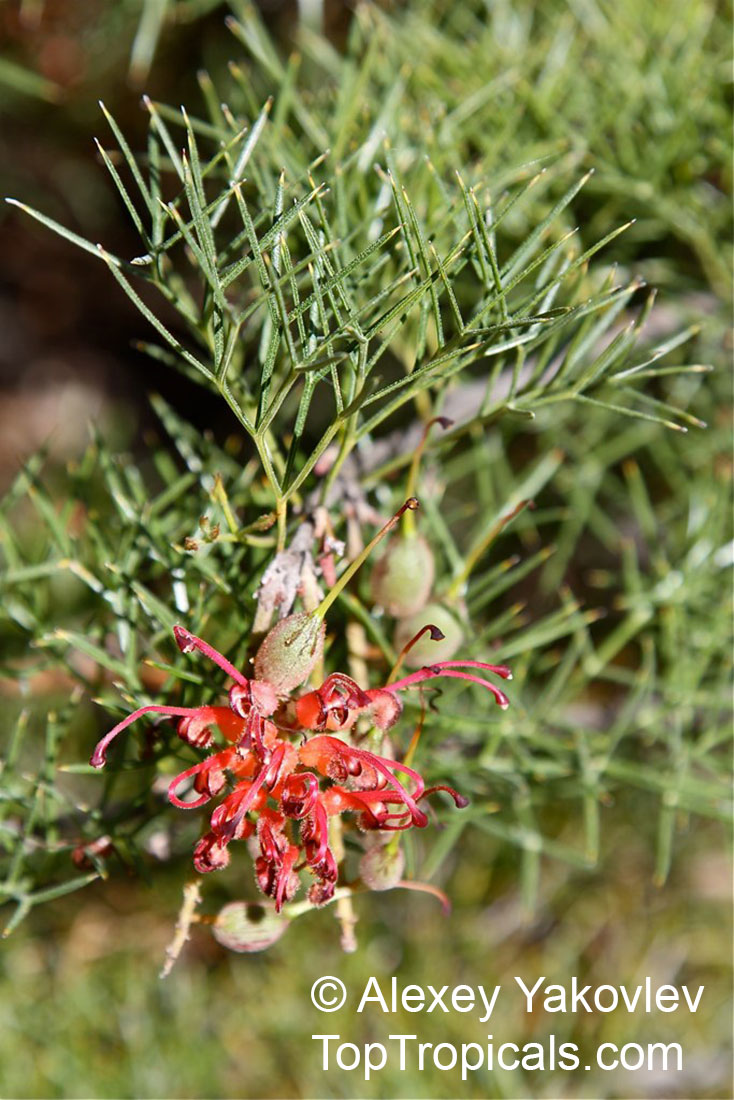
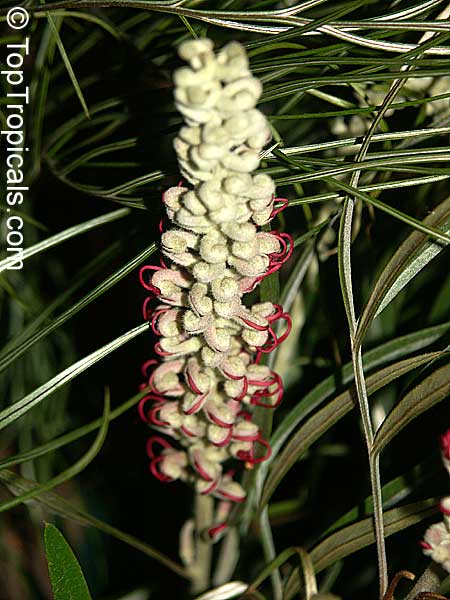
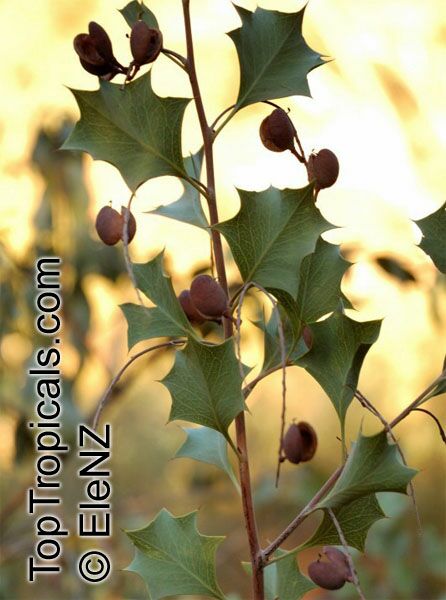
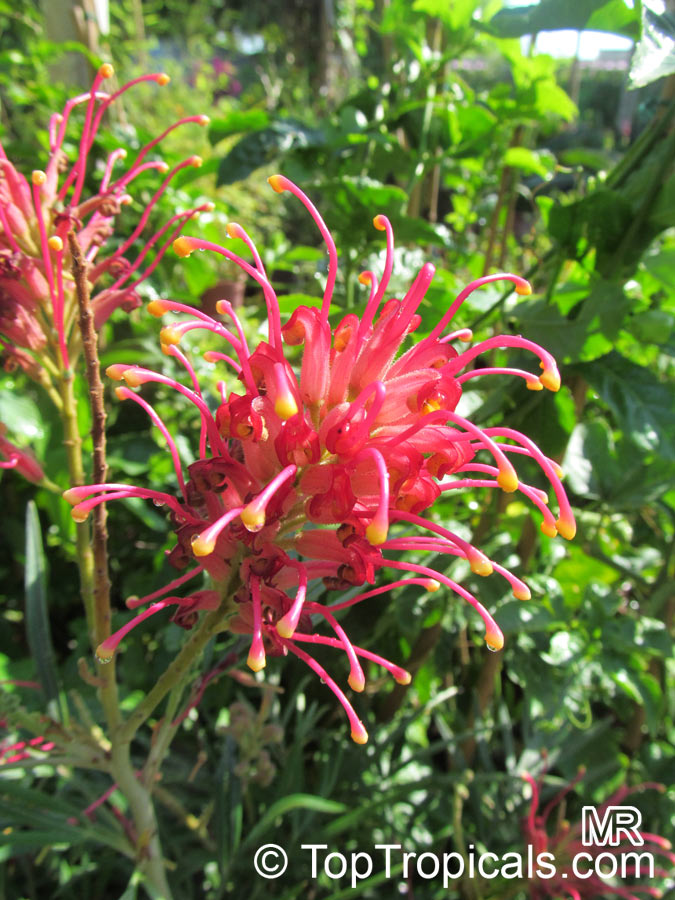
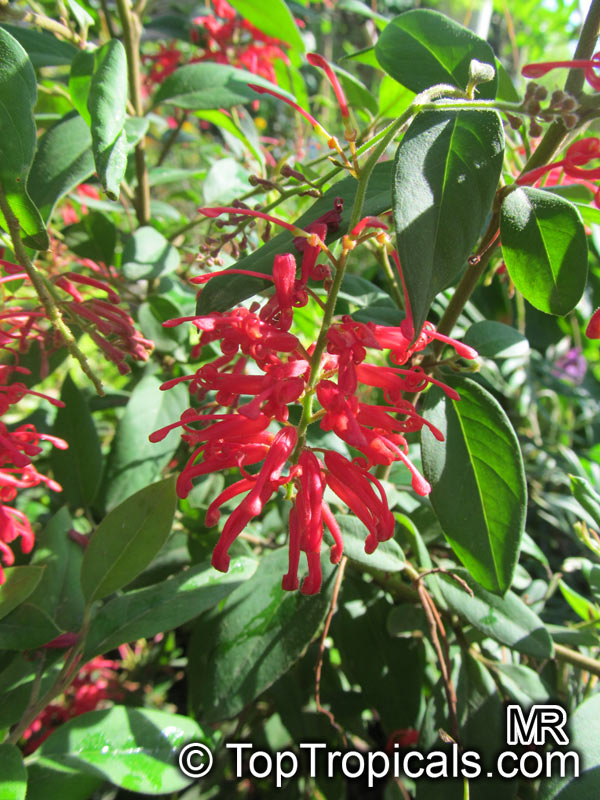
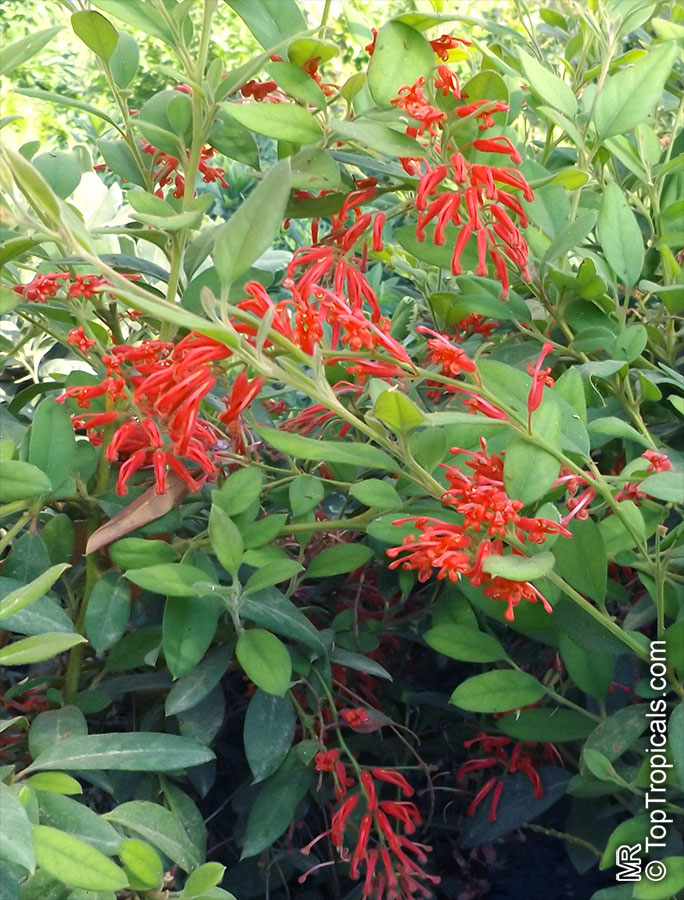
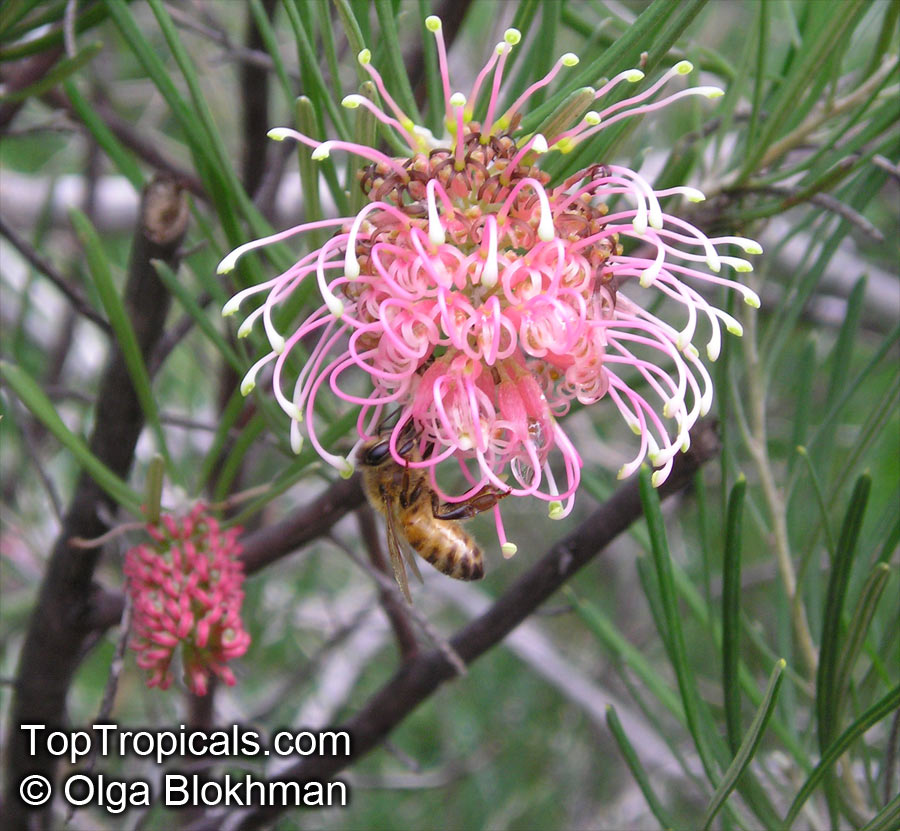
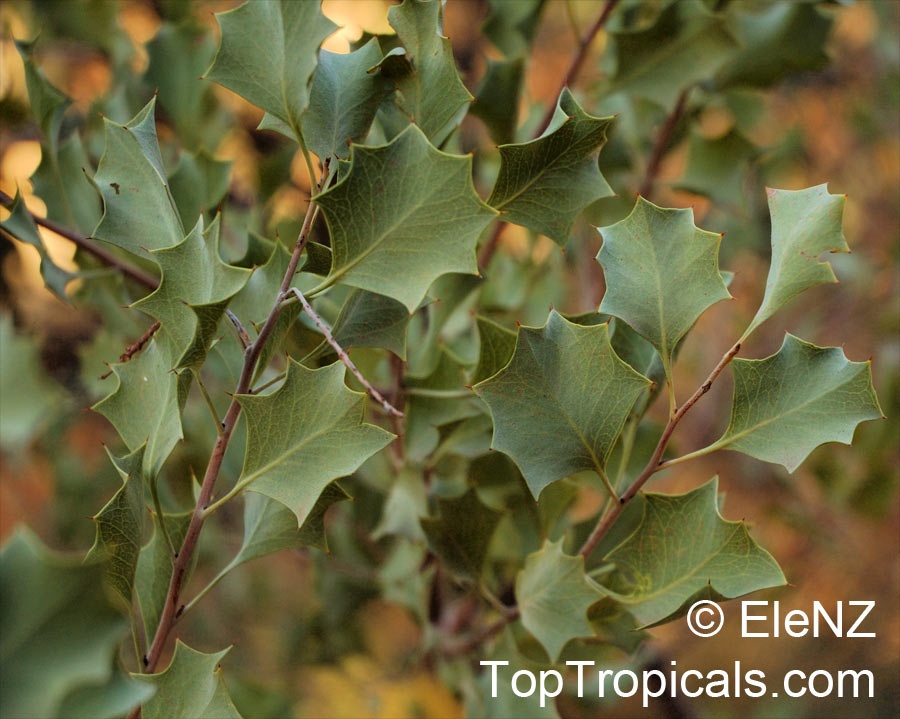
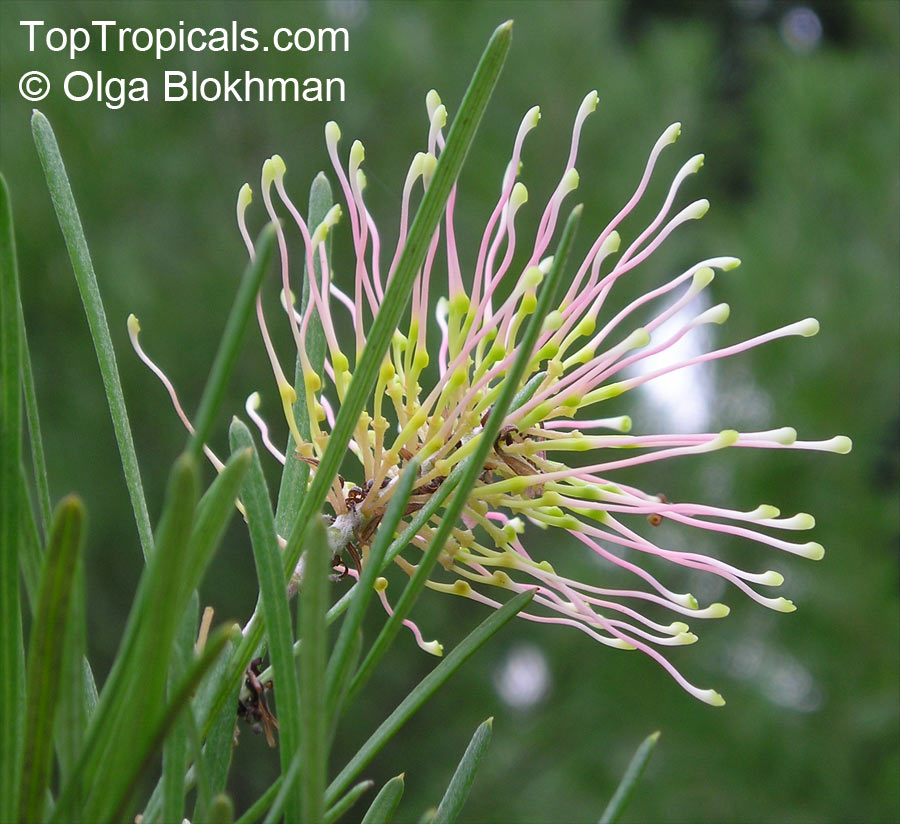
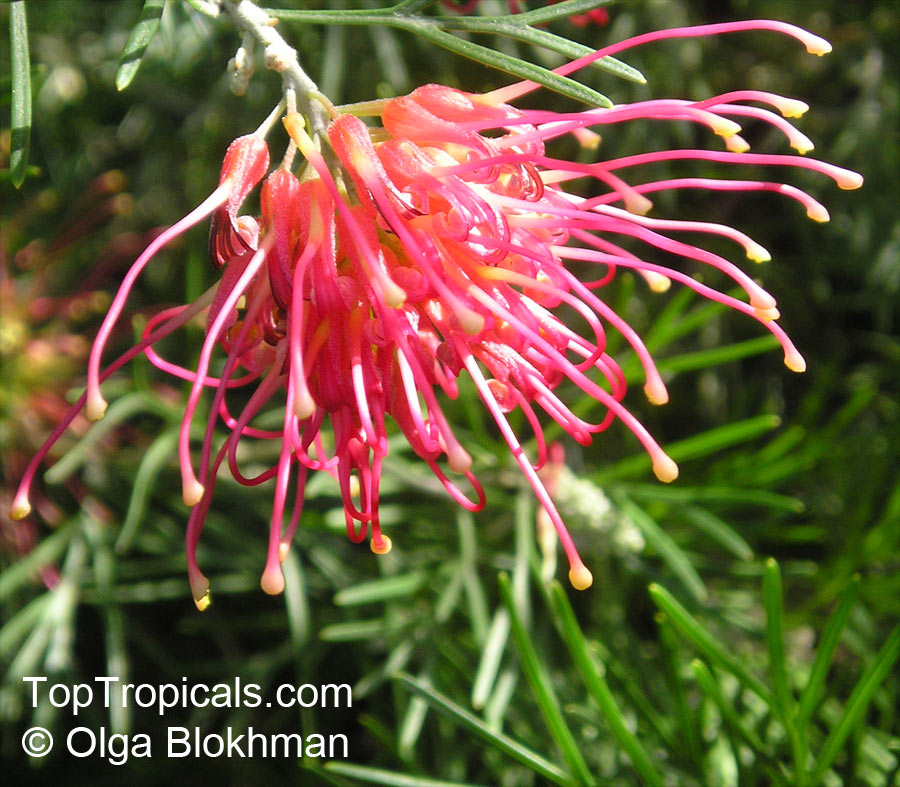
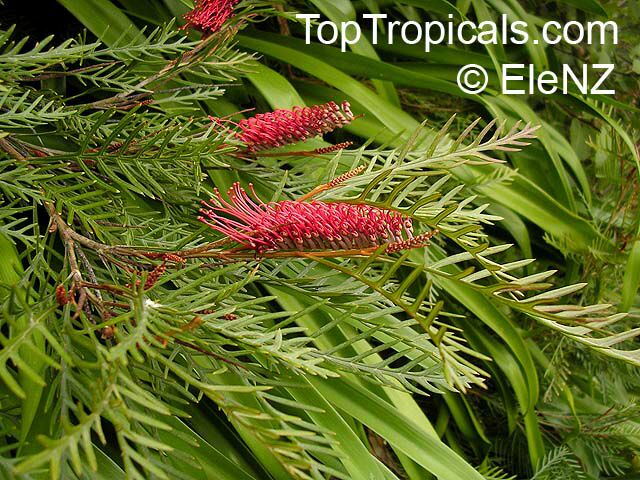
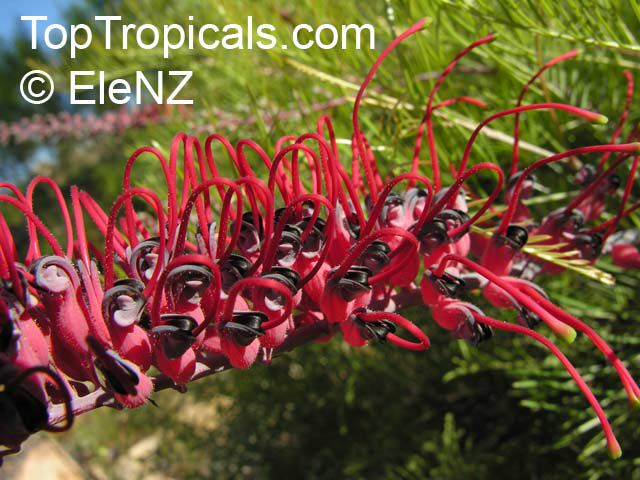
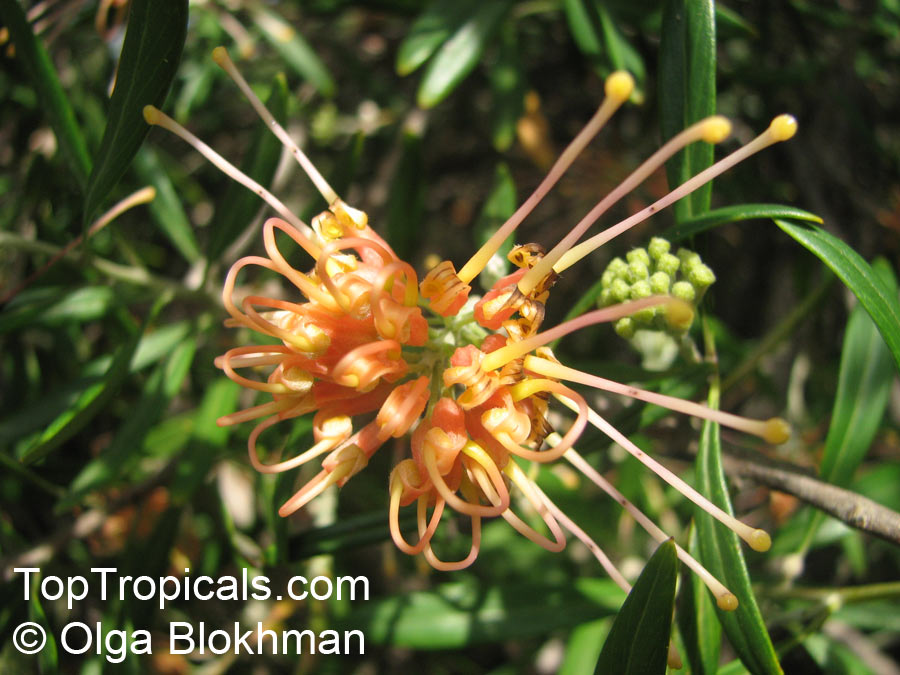
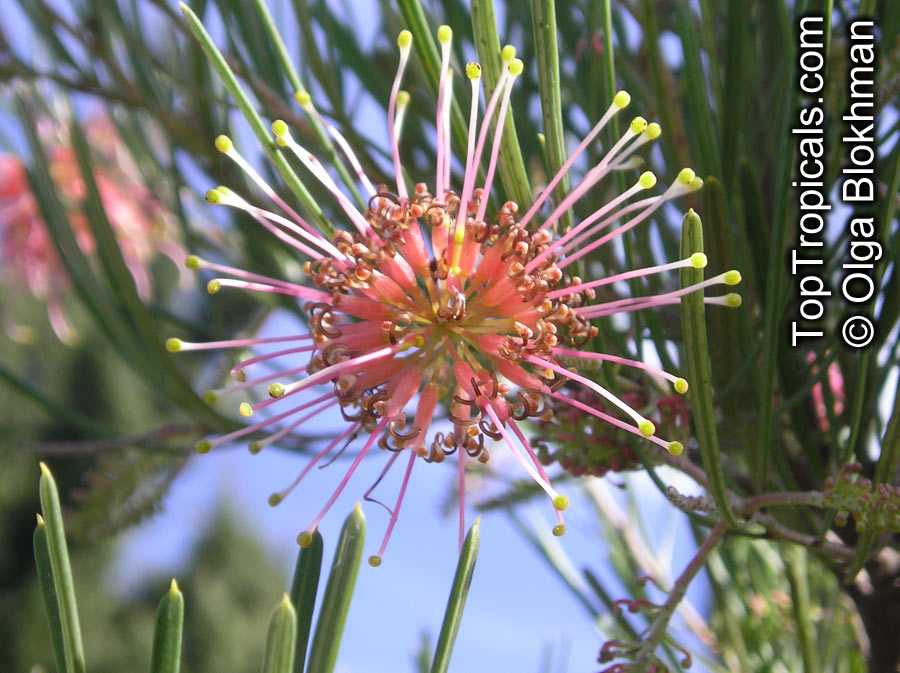
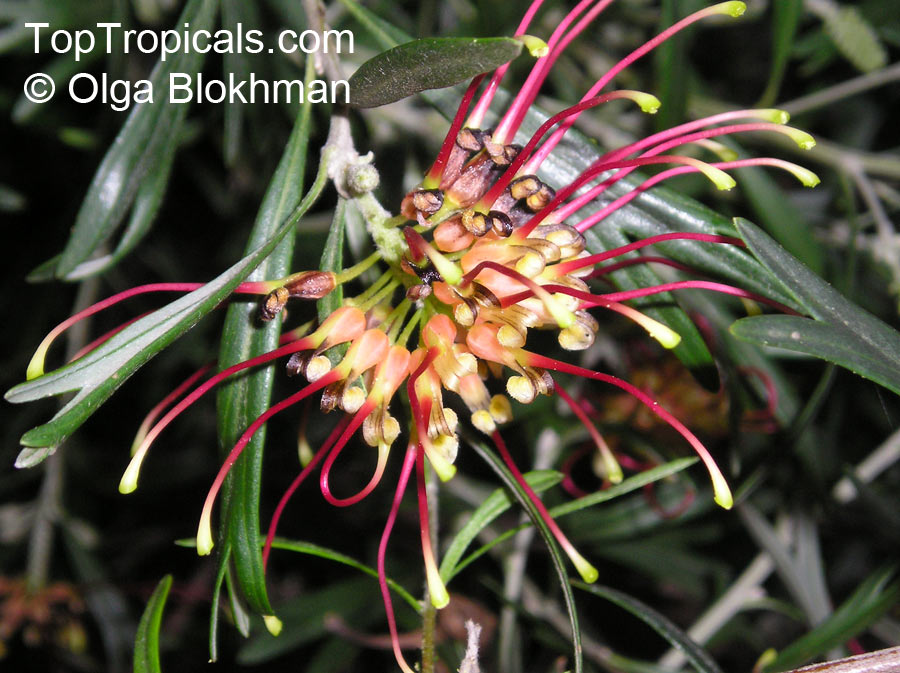
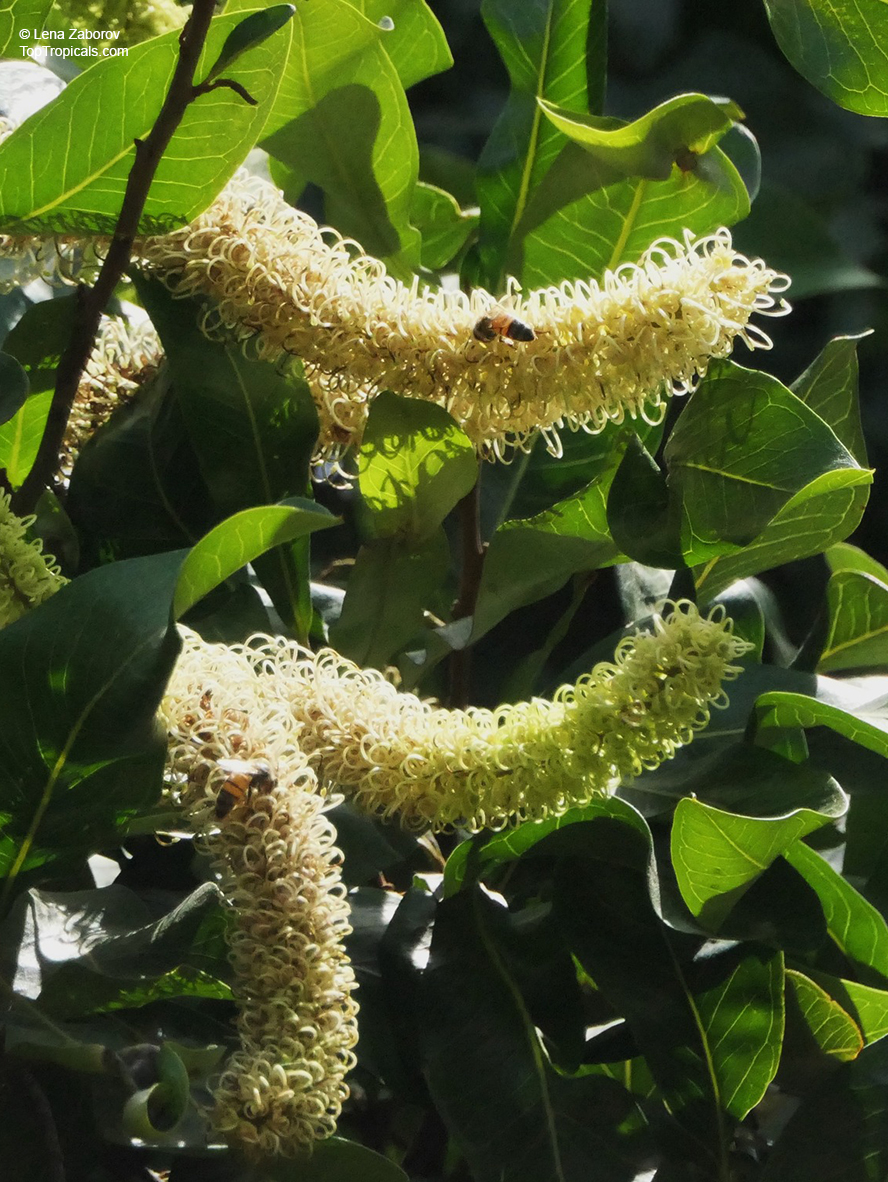
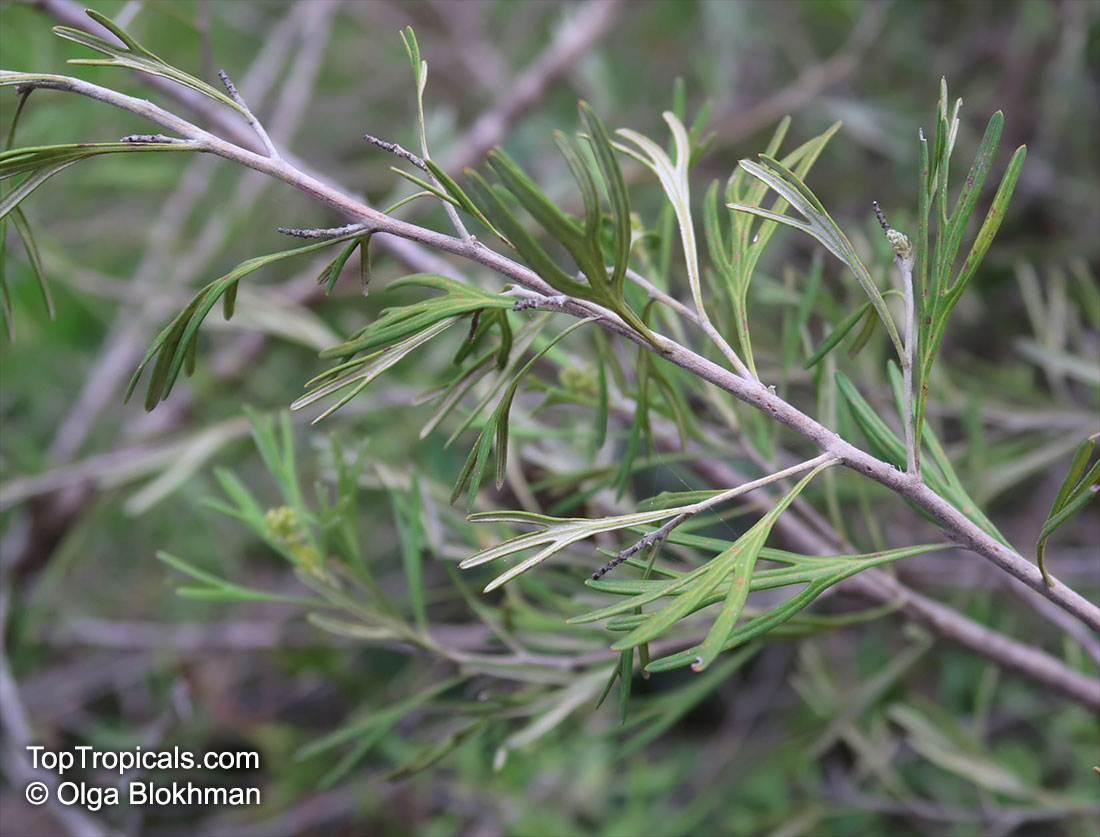
Foliage and growth habit vary widely among species, making grevilleas suitable for a broad range of landscape uses. Unlike those of most garden plants, Grevillea flowers lack obvious petals. Instead, the colorful styles extend outward in curved or spider-like forms, creating intricate flower clusters in shades of red, orange, pink, yellow, cream, or white. Many species bloom for extended periods and produce abundant nectar that attracts hummingbirds, butterflies, bees, and other pollinators. The flowers are often followed by small woody seed capsules typical of the protea family.
Most grevilleas perform best in full sun and sharply drained soil. Once established, many species are highly drought tolerant and well adapted to dry climates. Excessive fertilization, particularly with phosphorus-rich products, should be avoided because members of the protea family are sensitive to high phosphorus levels.
USDA Plant Hardiness Zones vary by species, generally ranging from 8-11. Some species tolerate light frost, while others require frost-free conditions.
Similar plants: Grevillea sp. (Grevillea)
- Grevillea banksii (Red Silky Oak)
- Grevillea curviloba (Grevillea)
- Grevillea johnsonii (Grevillea)
- Grevillea lanigera ''Mt Tamboritha'' (Mt Tamboritha Grevillea)
- Grevillea parallela (Silver Oak)
- Grevillea robusta (Silky Oak)
- Grevillea sp. ''Canberra Gem'' (Canberra Gem Grevillea )
- Grevillea sp. ''Bronze Rambler'' (Bronze Rambler Grevillea)
- Grevillea_sp ''Robin Gordon'' (Robin Gordon Grevillea)