Garden Blog - Top Tropicals
Date: 24 Mar 2019
Spectacular Evergreen Wisteria
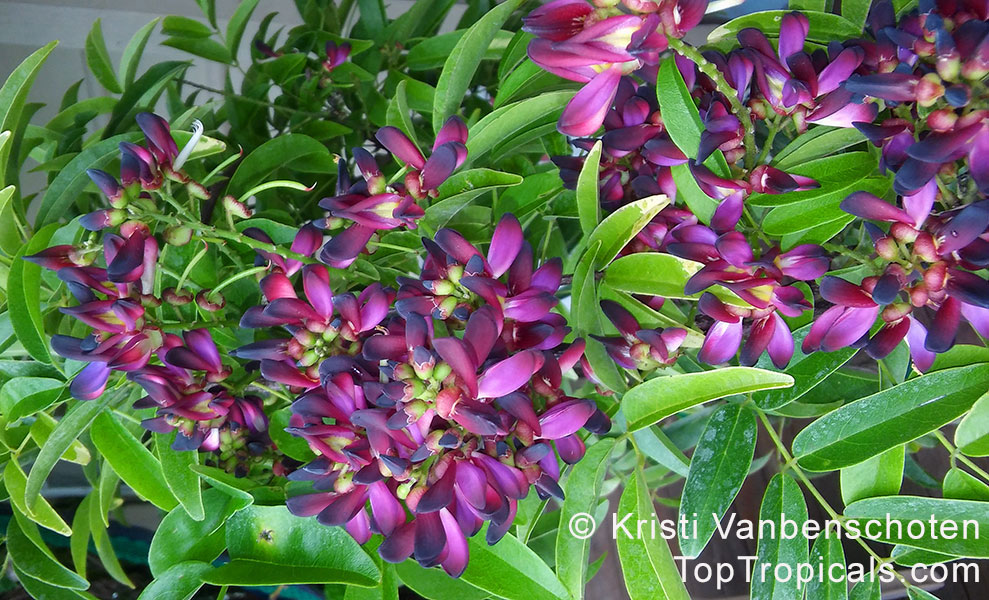
Q: When I was a child growing up in Virginia, my mother always had Wisteria growing around the house. It became one of my favorite plants growing up. I loved the beautiful cascading purple flowers. The highly fragrant and colorful flowers provided a feast for the senses. I have now re-located to Florida and understand the the Wisteria I knew as a child will not flower here in the warmer climate. Is there a vine similar to the wisteria that I can grow here in Florida?
A: There is a great alternative to the Wisteria sinensis you knew and loved as a child! Millettia reticulata - Evergreen Wisteria is a beautiful and highly fragrant vine. Unlike Wisteria sinensis, Millettia is not an invasive plant and can be maintained much more easily. The royal purple flowers completely cover the plant throughout the Spring and Summer.

Date: 18 Mar 2019
Featured plant. Sauromatum (Typhonium) venosum - Voodoo Lily
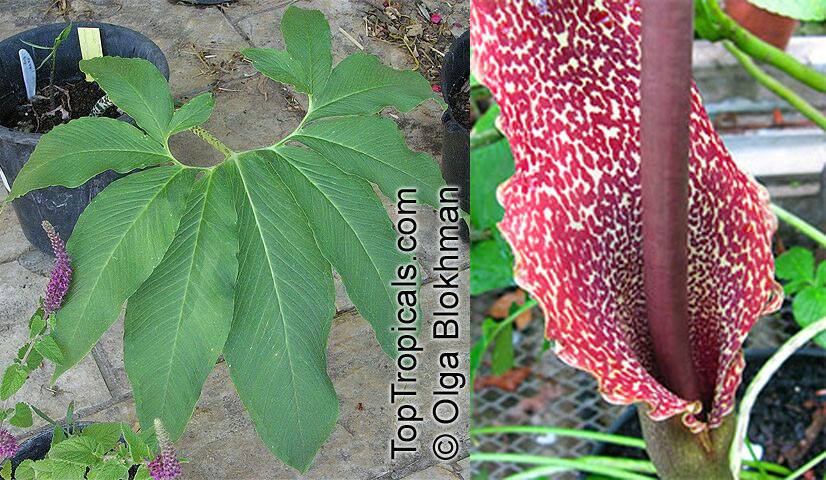
Sauromatum (Typhonium) venosum - Voodoo Lily
Rare Amorphophallus ralative, Typhonium venosum (Sauromatum venosum), is
a common shade-loving house or garden plant from temperate and tropical
Africa and Asia. This plant is also known as the Voodoo Bulb because of its
ability to flower from a corm without soil and water. Tuberous perennial with
solitary, segmented round leaf and strange, arum-like flower. Rare collectable,
it is a showy exotic container plant.
Typhonium grows to around 20 inches tall from an underground corm. A
large corm can spawn multiple new corms. Inflorescences emerge before the
leaves. An inflorescence has a purplish-brown-spotted, yellowish spathe and a
purplish-brown spadix which emit a strong odor perceived as similar to cow
manure, rotting flesh, or a dirty wet dog, depending on who smells the
inflorescence ;) The odor lasts only a day and attracts carrion-feeding insects which can
pollinate this plant.
Plants we have in stock, have tubers 1-2"in diameter. The plant goes
dormant in winter and starts sprouting in March-April. Keep soil slightly
moist but not wet, and wait for the magic leaf to pop up... The plant should
flower within a year or two.
Date: 18 Mar 2019
Cocoa plant after winter
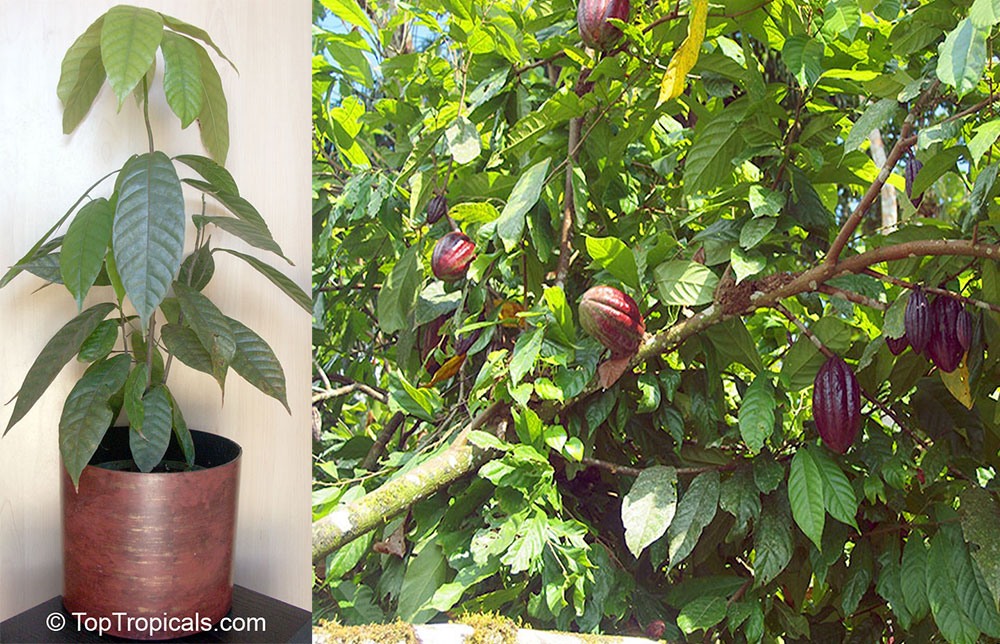
Q: I purchased the Theobroma cacao two months ago. The leaves are wilting from the edges. Do you think this from not enough water, too much water or not enough sunlight? I am keeping the plant indoors.
A: During winter time, Cocoa plants even inside our greenhouse look the same. Dry tips of the leaves are normal for this time of the year. It is a combination of lower temperatures and low humidity that causes it. Indoors air humidity is especially low. Weather permitting, bring plant outside in the bright shade, when temperatures are above 65F. Humidifier and water-spraying will help too. You may put the plant on top of a tray with pebbles/water. Do not overwater - extra watering is not a substitute for high humidity. As spring comes, Cocoa plants start looking greener and grow new healthy leaves.
Date: 15 Mar 2019
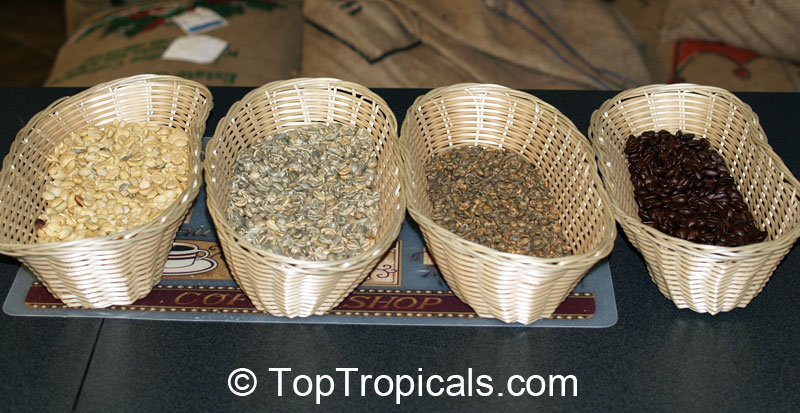
Save Coffee from extinct!
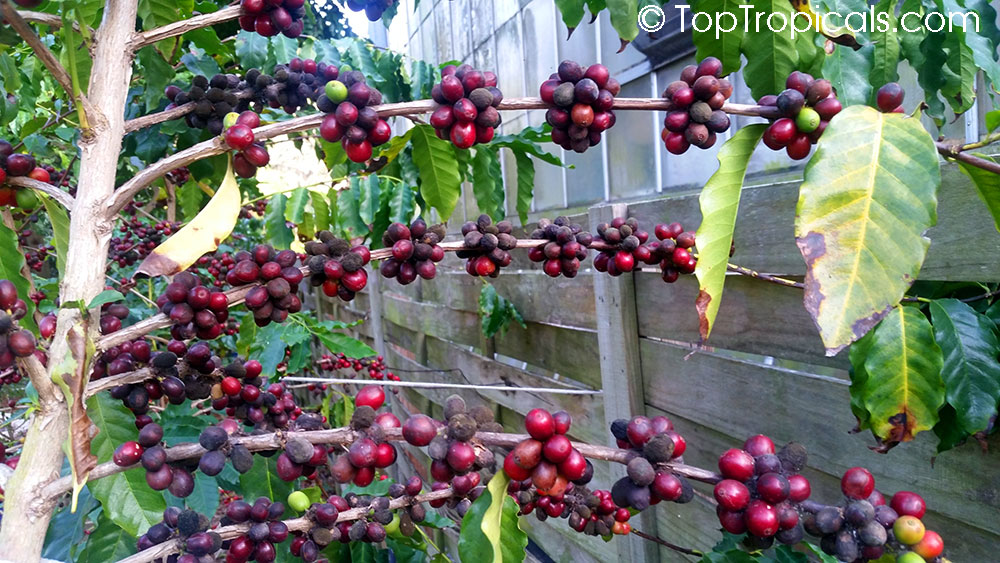
The most popular kind of coffee for commercial production, Coffea arabica, is already on the endangered species list. According to research, Coffea arabica plant could become extinct in as little as 60 years.
Coffee requires a forest habitat for its survival. With so much deforestation going on around the world, wild coffee species are being impacted at an alarming rate. Coffee plants grow in very specific natural habitats, so rising temperatures and increased rainfall brought by climate change can make coffee impossible to grow in places the plants once thrived.
Read the whole article
See video: Top Tropicals Showcase: Coffee plant
To reserve a cup of coffee for yourself and your children, plant the Coffee tree now!

Date: 15 Mar 2019
Spring mulching
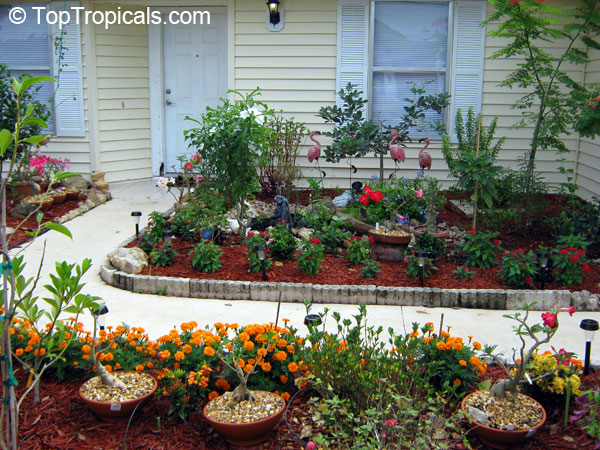
Q: When do I start re-mulching my garden? Should I wait till summer?
A: It is time now to get ready for the growing season when not
only plants start growing, but weeds as well. To protect your garden from
unwanted invasives, keep a thick layer of mulch in areas around tree trunks and
shrubs.
Heavily mulch your garden at least once a year, at springtime. Add
mulch during the year as needed.
After mowing your lawn, use cut grass (hay) as a mulch around trees.
Hay is the best natural mulch, it compresses well after the rain or watering
and becomes very dense - weeds won't grow through it. You may cover it with
some colored mulch of your choice for a more attractive look.
Mulching is also helpful for retaining water for root systems, so
plants will require less frequent watering.