Garden Blog - Top Tropicals

Date: 28 Sep 2025

Guava Tree Plant Care

Tips from Top Tropicals Plant Expert - Tatiana Anderson
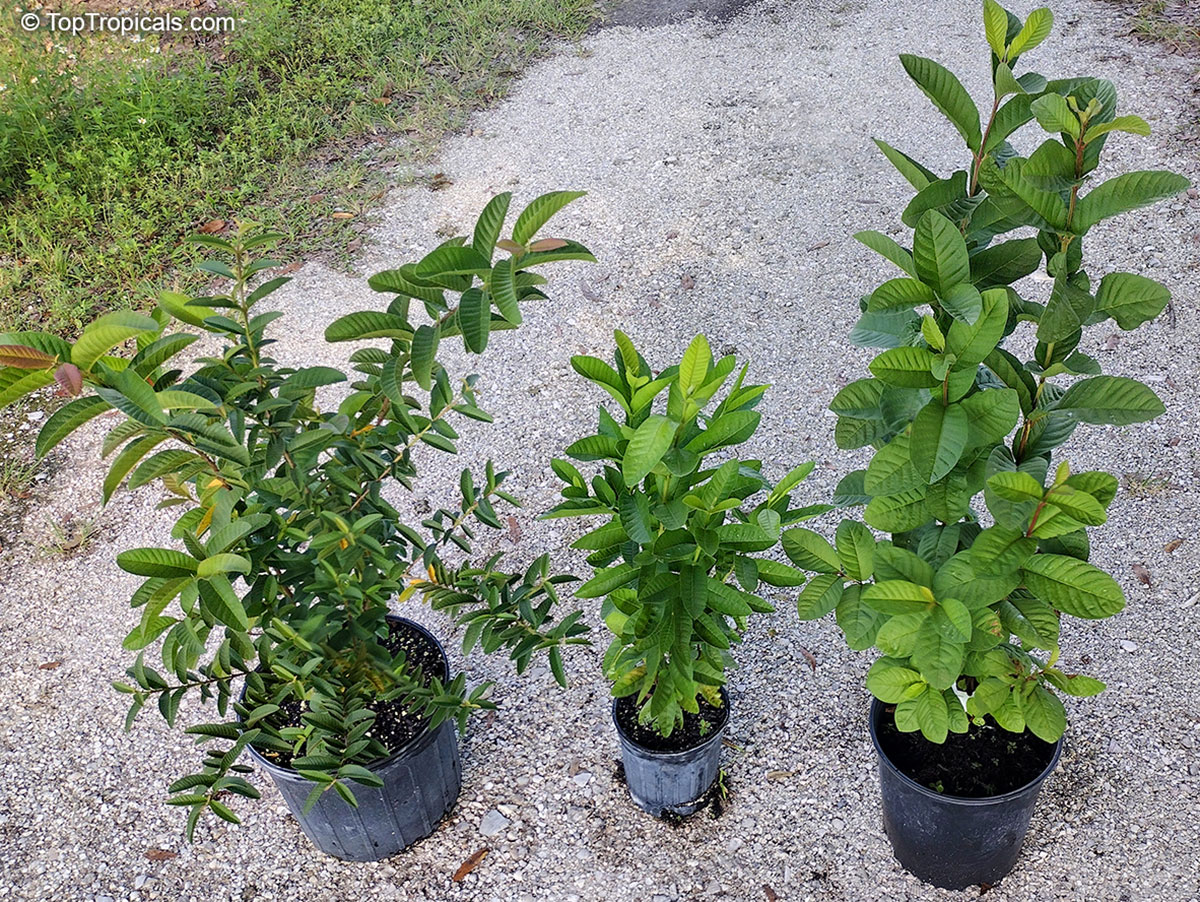
Guava trees for sale in 3-gallon nursery pots, healthy young plants 
with green 
foliage.

Where to Plant Outdoors

Guavas love full sun — aim for 6–8 hours of direct light. They’re adaptable to many soils but do best in well-drained, organic-enriched mixes. Plant them in a spot where you can water easily; guavas are thirsty trees during fruiting.

Container & Indoor Growing

Don’t have space or live in a cooler climate? Guavas thrive in large pots. Use well-drained potting mix. LINK TO OUR SOIL Keep them on a sunny patio during warm months and bring them indoors when nights dip below freezing. Compact varieties like Dwarf Hawaiian Rainbow or Tikal are especially good for pots.

Winter Care

Mature guavas can handle a light frost (down into the high 20s F), but young plants need protection. If planted outdoors, cover them with frost cloth on cold nights. Container guavas can be wheeled into a garage, greenhouse, or bright indoor window until the weather warms.

Watering and Fertilizing

Water deeply once or twice a week, more often in hot weather or when fruit is developing. They don’t like soggy soil, but they won’t complain about short floods either. Fertilize 3–4 times a year during the growing season with a balanced fruit tree fertilizer. Guavas especially love potassium and phosphorus for strong flowering and heavy crops. We recommend liquid crop booster Sunshine C-Cibus and balanced controlled release fertilizer Green Magic.

Pruning

Prune after fruiting to keep them compact and open up airflow. Remove crossing or dead branches. In containers, trim back vigorous shoots regularly to manage size and encourage more fruiting wood.

Pests and Problems

Guavas are generally tough and pest-resistant. The main thing to watch for in humid or rainy climates is mealybugs - those cottony white clusters on leaves or stems. They're easy to manage with neem oil or a quick spray of horticultural soap.

Fruit time

Guavas fruit young - often within a year or two.

Pollination

Guavas are self-pollinating, so you'll get fruit even with a single tree. Planting more than one tree, however, often boosts harvests and gives you a longer fruiting season.

If you've ever wanted instant gratification from a fruit tree, guava is it.
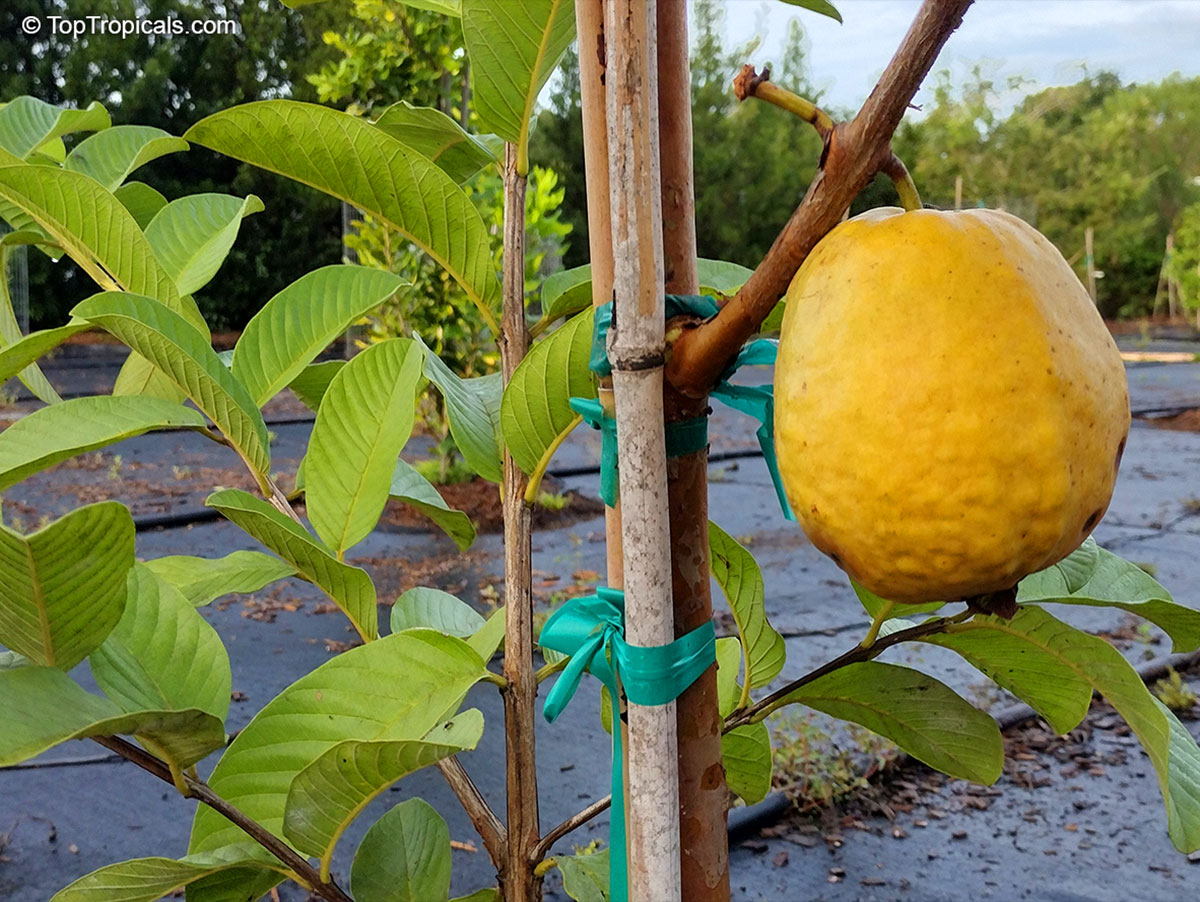
Ruby Supreme Guava tree with a large ripe yellow fruit, variety known 
for sweet pink flesh and reliable 
harvests.

🍴 Guava Recipes

With all that fruit, the next question is always: "What do I do with it?" Here are our favorites:

  • Cas Guava: Make Agua de Cas

    Boil halved Cas Guava fruits with sugar, simmer, strain, and bottle. Dilute with water when serving. The concentrate keeps for months in the fridge.
    Check out the recipe.

  • Hawaiian Gold: Make Drinks

    Perfect for Mojitos or Margaritas. Sweet, tangy juice pairs beautifully with lime and mint. Learn more

  • Araca Pera: Guava Wine

    Famous in Brazil, where the fruit is turned into a vibrant rosу wine. Locals say it’s the taste of summer in a glass — and yes, you can make it at home too. Learn more...

  • Quick snack: Guava Grilled Cheese

    Spread guava paste or fresh mashed fruit with cheese, grill until golden. Sweet and savory heaven. Learn more...

  • Simple Guava Juice

    Blend ripe guavas with water, ice, and a little sugar if you like. Instant refreshment.

✅Ready to Grow? Whether you want fresh juice, sweet fruit, or even your own guava wine, we’ve got the best varieties in stock right now. Your future self, sipping guava juice on a hot summer afternoon, will thank you.

👉 Order your guava tree today

Tabby cat sitting between a glass of yellow guava juice with white 
guavas and a glass of pink guava juice with green guavas and cut pink guava 
fruit.

Date: 29 Apr 2024

Fun Facts: Cacao beans

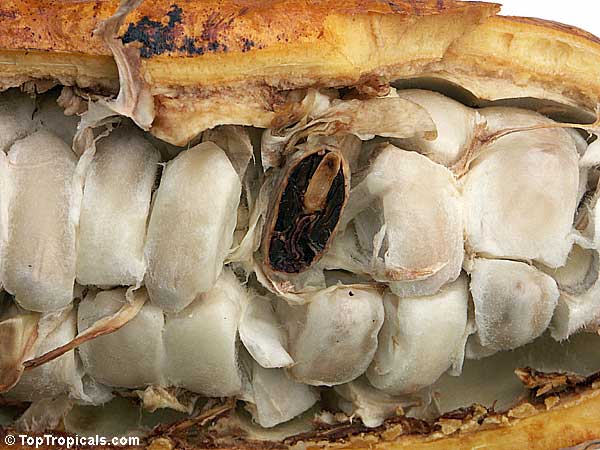
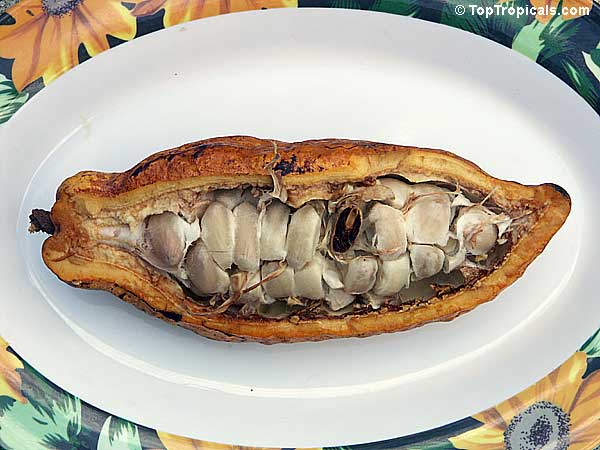
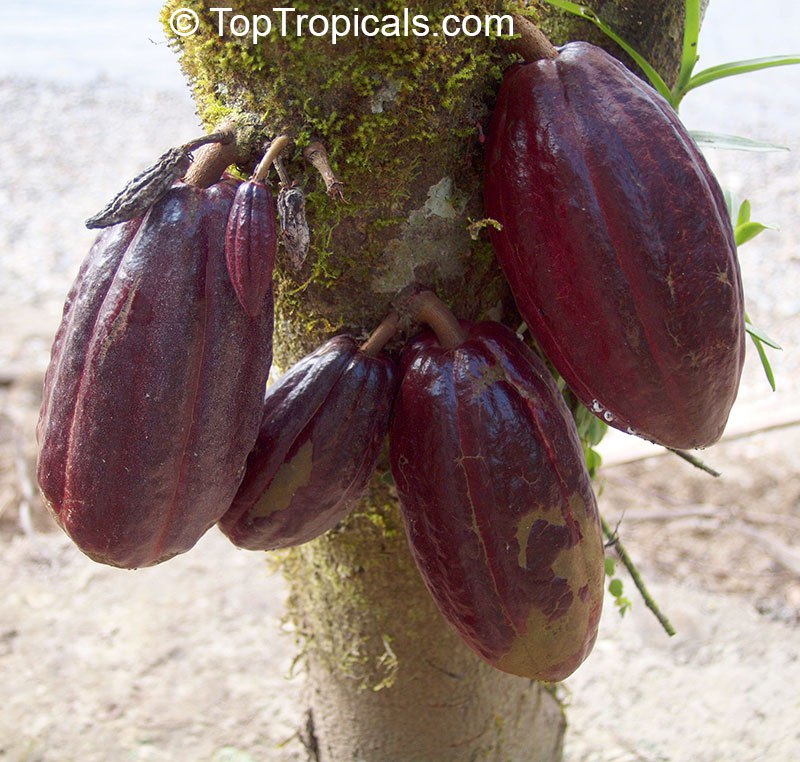
Cacao Chocolate Tree (Theobroma cacao)

Cacao Chocolate Tree (Theobroma cacao)

Cacao Chocolate Tree (Theobroma cacao)

Cacao Chocolate Tree (Theobroma cacao)

Cacao Chocolate Tree (Theobroma cacao)

Cacao Chocolate Tree (Theobroma cacao)

Cacao Chocolate Tree (Theobroma cacao)

Cacao Chocolate Tree (Theobroma cacao)

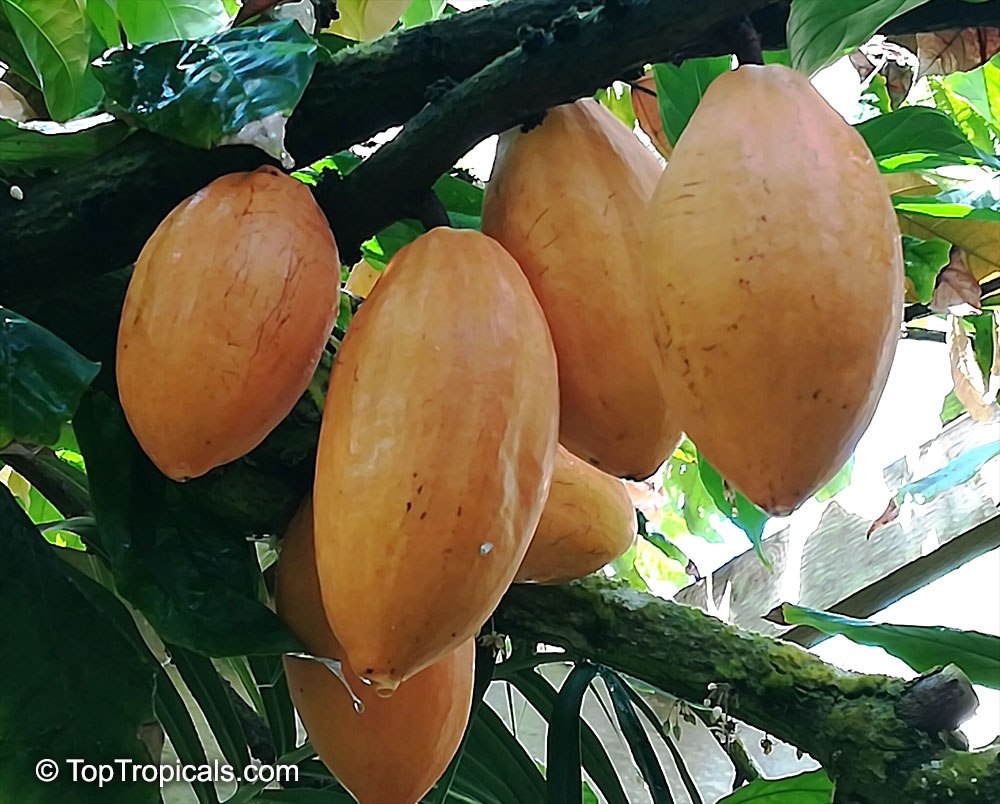
📖 Fun Facts: Cacao beans (Theobroma cacao) were used to make chocolate, and the ancient Maya and Aztec civilizations valued cacao beans as currency 💰 Can we use chocolate as money?
  • 🍫 Chocolate tree has large dark green leaves that shade the fruit pods which grow directly from the trunk and branches.
  • 🍫 The flesh of the fruit is eaten as a dessert, and the seeds are the raw material of chocolate. Hot chocolate can be made by drying the seeds, roasting, grinding, and adding milk.
  • 🍫 This exotic rare tree makes a gem of a houseplant collection.


🛒Get your own Chocolate Tree

#Fun_Facts #Food_Forest

JOIN 👉 @TopTropicals

Date: 26 Apr 2025

Fun Facts About the Guava Flower

Guava Flower

🌸 Fun Facts About the Guava Flower
  • 🌸 Frilly and Fabulous - Guava flowers may be small, but they're packed with fluffy white stamens that give them a soft, powder-puff look.
  • 🌸 Pollinator Magnet - Bees and butterflies love guava blooms, making them a great addition to a pollinator-friendly garden.
  • 🌸 Scent-sational - The flowers have a light, pleasant fragrance that adds a touch of sweetness before the fruit even arrives.
  • 🌸 Bloom to Fruit - Each flower can turn into a delicious guava fruit, making them both beautiful and productive.
  • 🌸 Part of the Showy Family - Guava (Psidium) belongs to the Myrtaceae family, which also includes eye-catching bloomers like Eucalyptus, Bottlebrush (Callistemon), and the stunning Rose Apple (Syzygium).


📚 More from previous posts about: #Guava

🛒 Shop Guava Trees

#Food_Forest #Guava #Fun_facts

🔴 Join 👉 TopTropicals

Date: 13 Apr 2025

Why do the Chinese drink tea?

Why do the Chinese drink tea?
🌱 Why do the Chinese drink tea?

  • 🍃 It actually has to do with the Chinese theory of the five elements - wood, metal, fire, water, and earth:

木 金 火 水 土

  • 🍃 Tea comes from a plant - Camellia sinensis - the Tea Leaf Tree - that is used to make all true teas: green, black, white, and oolong. The Tea Tree contains the element of wood (木) 🌳

  • 🍃 When it's roasted in a cast-iron pan, it gains the element of metal (金)

  • 🍃 Then it's dried over fire, adding the element of fire (火) 🔥

  • 🍃 When it's brewed with boiling water, the element of water enters (水) 💦

  • 🍃 Finally, tea is poured into a clay vessel, symbolizing the element of earth (土) 🍯

  • 🍃 In this way, all five elements - wood, metal, fire, water, and earth - come together in a single cup.

  • 🍃 The plant grows slowly and can thrive in containers or frost-free gardens with sun to semi-shade.


🛒 Grow your own tea

📚Learn more from previous posts:
Tea facts
How to grow your own tea?
Where does the tea come from?
Instructions how to make tea from tea leaves (PDF)

#Food_Forest #Remedies #Fun_facts

🔴 Join 👉 TopTropicals

Date: 25 Jun 2019

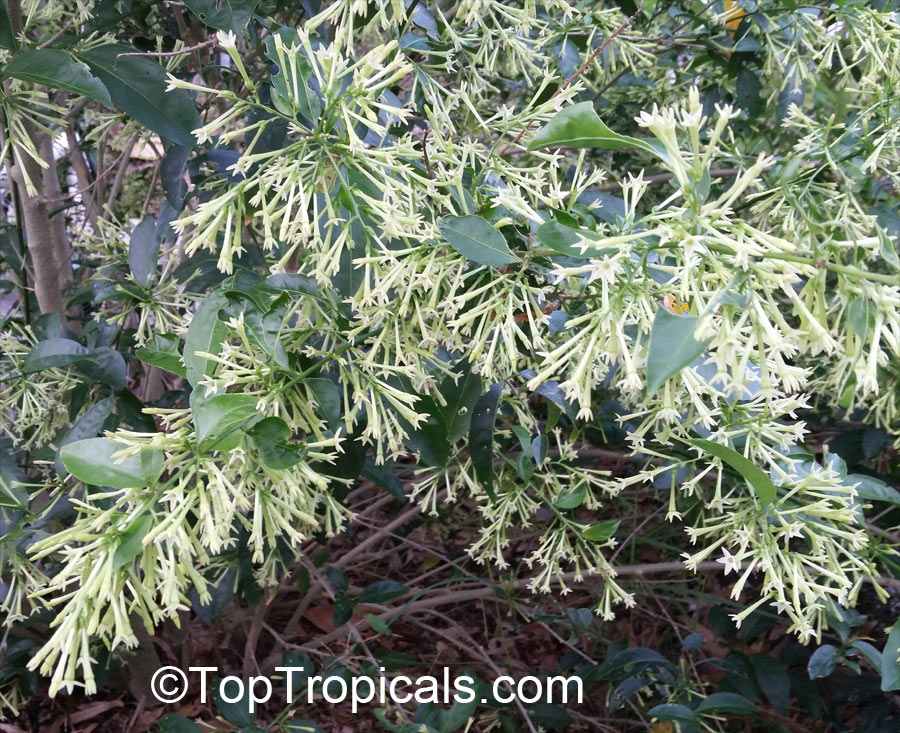
True love of Night Blooming Jasmine

By Onika Amell, tropical plant specialist

Q: I live in New Cumberland, West Virginia. I love the smell of Night-Blooming jasmine. Is it possible to grow it in the northern panhandle of West Virginia? Do I have to plant it every year or do I keep it in a pot and take it inside during the winter months?

A: Technically, Night Blooming Jasmine is not a true jasmine (those plants belong to Oleaceae, or Olive family). Night Blooming Jasmine belongs to the Solanaceae family, also known as the Nightshade or "Potato" family of plants. Yes, this sweet fragrant flower called Jasmine for its perfume is related to potatoes and tomatoes!
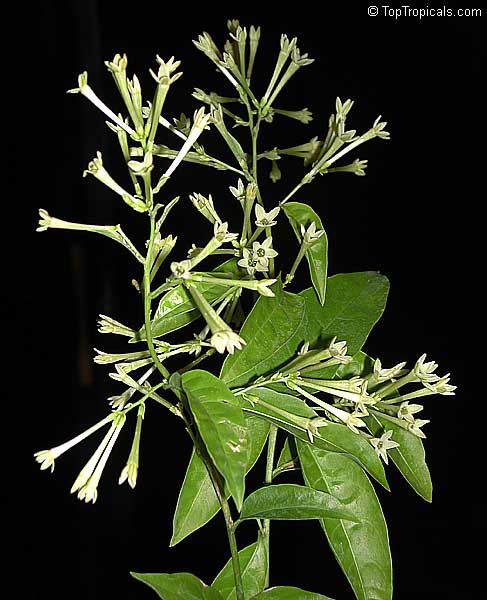
Night Blooming Jasmine - Cestrum nocturnum - is loved by many gardeners for its beautiful fragrance at night. It is one of the most fragrant tropical evergreen shrubs available. Cascading clusters of tiny, tubular pale yellow to white flowers open at night and release a heavenly fragrance throughout the garden, especially on warm summer evenings. The fragrance is much lighter during the day. Night Blooming Jasmine is grown year-round in zones 9-11. It is at its happiest in a sunny to a partially sunny spot in your garden in well-drained soil but can be grown in cooler climates as a container or greenhouse plant.
You would absolutely be able to enjoy this plant during the warm months in West Virginia, but it will most certainly not survive outside during the winter. You will have to bring it inside. Take it outside again only once you are confident there is no more possibility of frost. When grown indoors, be sure to give it the sunniest, South facing window in your home. When grown in a container, you will need to re-pot it every two to three years so it doesn't become root-bound.
For those who are lucky to live in frost-free areas, in ideal growing conditions outside, it can easily reach 8 feet with a spread of 5 feet. It has a lovely informal look that can soften a more manicured garden. Add organic matter to the planting hole when you plant to enrich the soil around the root ball. Water well in the summer, but allow them to dry out a bit between watering in the winter. Plant this Jasmine near pools, porches, doors, windows, and walkways where its lovely fragrance can be enjoyed. The shrub is also an excellent plant for privacy hedges and screens. When grown as a hedge, plant 3 feet apart.
Trim lightly after a bloom cycle to shape and then do a hard pruning in fall or spring to control the size of this plant. Fertilize 3 times a year - in spring, summer, and autumn - with a good quality granular fertilizer.

Recommended fertilizers:

Pink N Good Daily Plant Food - Flower Booster
Tropical Allure - Smart-Release Booster

Interesting facts:

Night-blooming jasmine is an excellent mosquito repellent. The powerful scent of the flowers attracts moths and bats that feed on mosquitoes and other small insects.
The flowers of the Night Blooming jasmine are widely used in India and other countries of South Asia for perfumery, medicinal applications and in religious ceremonies.

Limited time special offer:
Instant $5 off Night Blooming Jasmine