Garden Blog - Top Tropicals

Date: 5 May 2025

🎀 Five plant gifts she'll love this Mother's Day

Q: My mother loves gardening and I am thinking to buy her a live plant to make her happy. What plant do you recommend?

A: At Top Tropicals, we have a big selection of wonderful gift plants . Below are a few suggestions for you, these plants are large, developed and ready to bloom or fruit!

1. Joy Perfume Tree
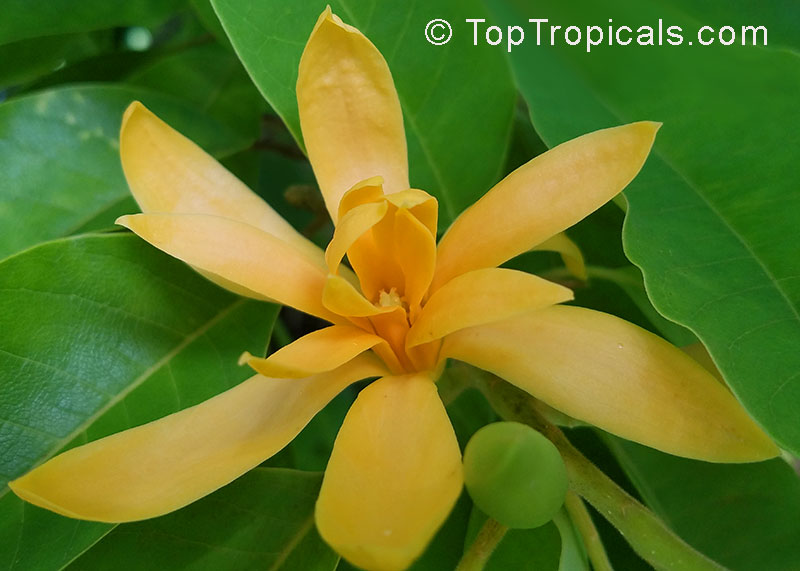
Magnolia (Michelia) champaca, Joy Perfume Tree, Champaka

The Champaka or Joy Perfume Tree (Magnolia champaca) - is a top choice for Southern landscapes, prized for its striking columnar shape and fragrant, fruity bubble gum-scented blooms - you won't be able to stop sticking your nose in this flower! A signature plant at Top Tropicals, it's known for producing the world's most expensive perfume, Joy. The Joy Perfume Tree blooms on and off year-round and is currently in full bloom at our farm in Sebring, FL, filling the air around with fantastic sweet scent. This tree thrives in both pots and the ground, growing bushy and full as it matures. At Top Tropicals, we have beautiful Champaka trees in all sizes, from 3-4 ft tall (ready to bloom in a year) to 6-10 ft tall (already bloomed) for local pick up or delivery.
Learn more, with a short video.

2. Tropical Raspberry Mysore
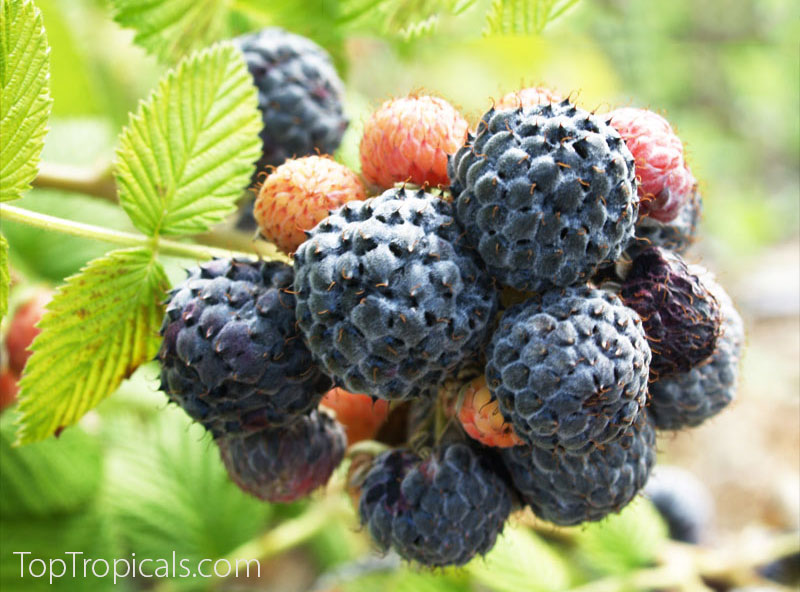
Raspberry Mysore Tropical, Rubus albescens (niveus)

Tropical Raspberry Mysore (Rubus albescens) - is the perfect solution for those missing Northern fruit in hot climates. Unlike traditional raspberries that can't handle the heat, this fast-growing Raspberry from India thrives in humid, hot conditions and produces juicy, sweet fruit almost year-round! The clusters of purple-black fruit are packed with flavor, and the plant is perfect for large containers, producing plenty of fruit in no time. Cold-hardy to the upper 20s F, it's an easy-to-grow, fast producer. We have beautiful, fruit-ready 3 gal Raspberry bushes, ready to add a burst of sweetness to your garden!
Learn more, with a short video.

3. Fragrant Jasmine Sambac
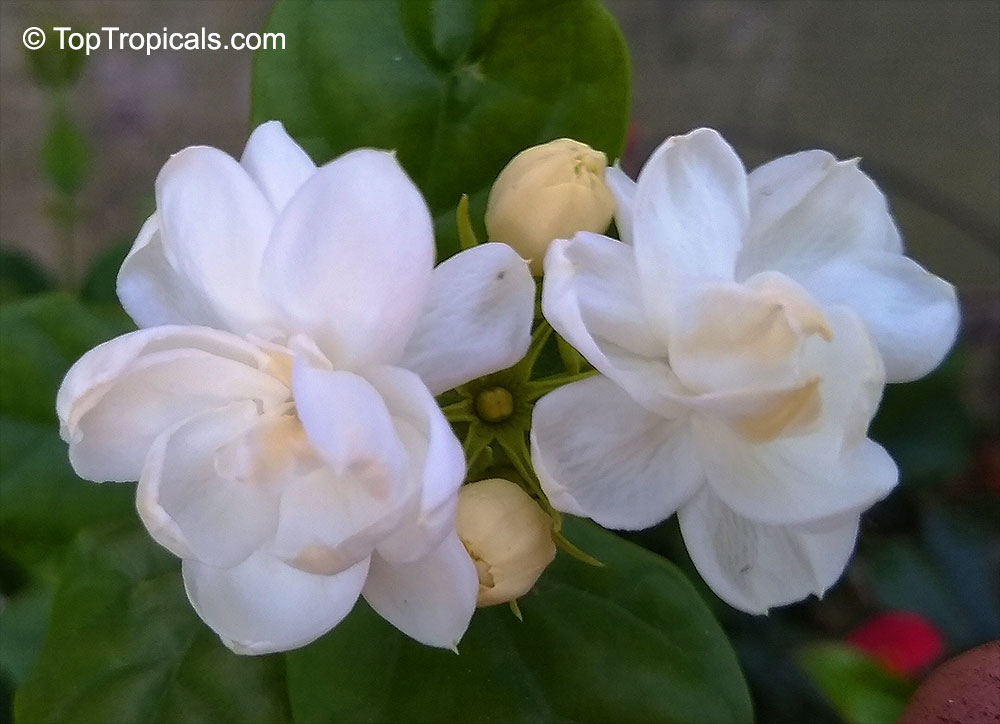
Jasminum 
sambac

Jasminum Sambac is widely regarded as the most fragrant jasmine, cherished by tropical gardeners and plant collectors alike. Native to India, this jasmine is the source of jasmine perfume oil and the signature ingredient in jasmine tea. With various varieties offering unique flower sizes, shapes, and growth habits, it’' perfect for both sun and shade, thriving as a container plant or indoor favorite. Its delightful fragrance fills the air, and with the help of Sunshine Pikake plant booster, you can enjoy even more blooms. Jasmine Sambac, along with Champaka, is another signature plant of Top Tropicals. Through the decades, we've collected all the available varieties in cultivation - check them out!
Learn more about Jasmine Sambac varieties, with a short video.

4. Everbearing mulberry
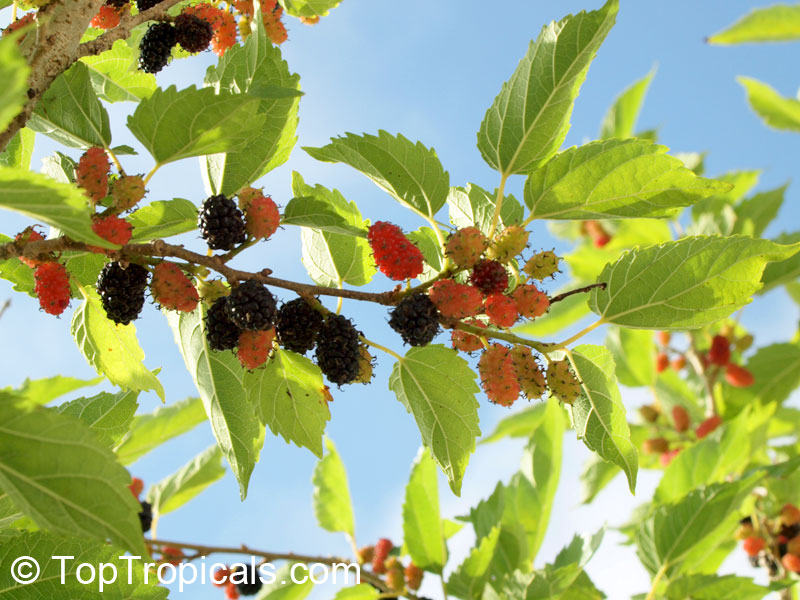
Mulberry tree Dwarf Everbearing (Morus 
sp.)

The Dwarf Everbearing Mulberry (Morus sp.) - is the perfect way to enjoy fruit year-round! This beautiful, cold hardy bush produces sweet, juicy mulberries starting from the very first year - often the same season you plant it. With its dwarf habit (easily maintained at 4-6 ft), it's perfect for containers and small spaces. Cold-hardy and drought-resistant, this productive plant thrives in various climates, from USDA zones 5 to 10! The fast-growing Mulberry will provide fruit year-round, and with minimal care, it will flourish in almost any soil. Our Everbearing Mulberry bushes produce enough fruit for both birds and breakfast - we pick a handful every day!
Learn more, with a short video.

5. Medinilla Coral Spike
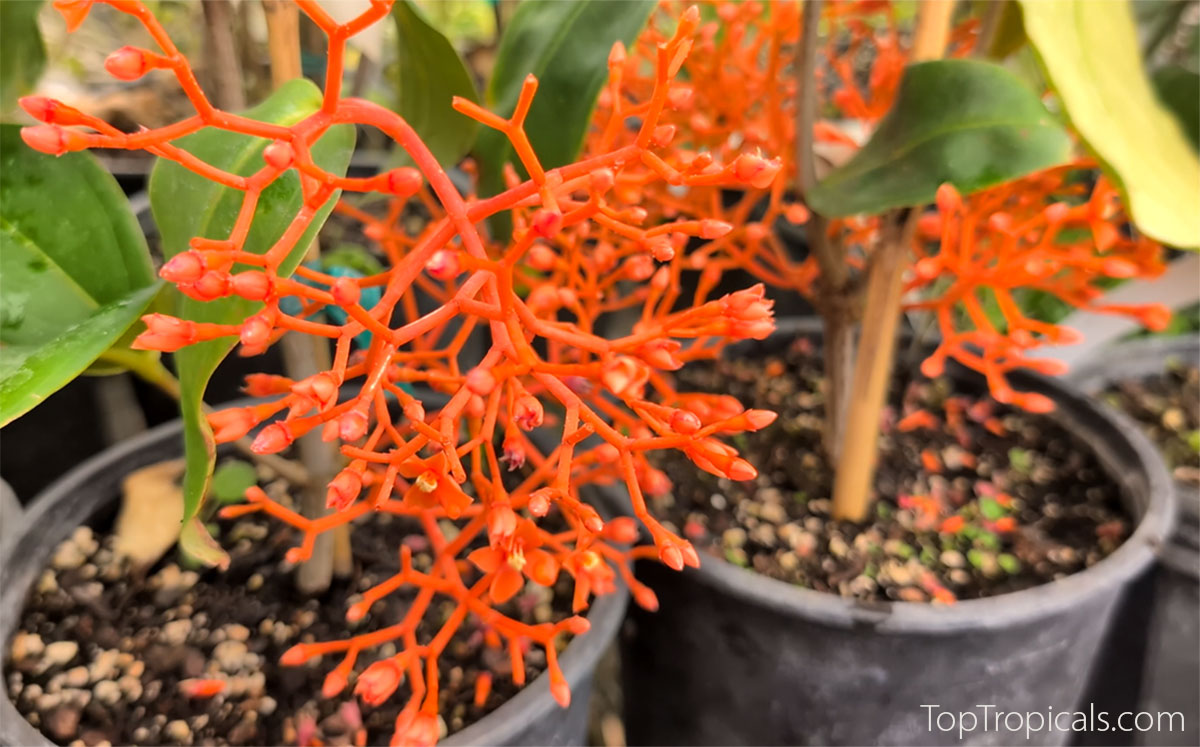
Medinilla scortechinii - Orange Coral Spike

Rare Medinilla scortechinii - Orange Coral Spike - is a rare gem that brings a touch of the ocean to your garden! With bright orange stems bursting into star-shaped blooms, it looks like something straight from a coral reef. Compact and easy to grow, this plant stays under 2-3 ft tall, making it perfect for pots, hanging baskets, or as an epiphytic accent. The glossy dark leaves contrast beautifully with the vibrant orange panicles, and it thrives in bright shade. A must-have for collectors of unusual tropical plants, this coral spike adds a bold pop of orange wherever it grows - but hurry, it doesn't stay in stock for long!
Learn more, with a short video.
Date: 29 Apr 2024

Fun Facts: Cacao beans

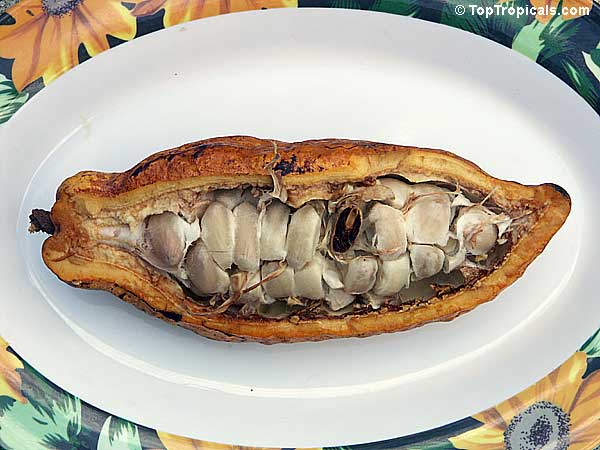
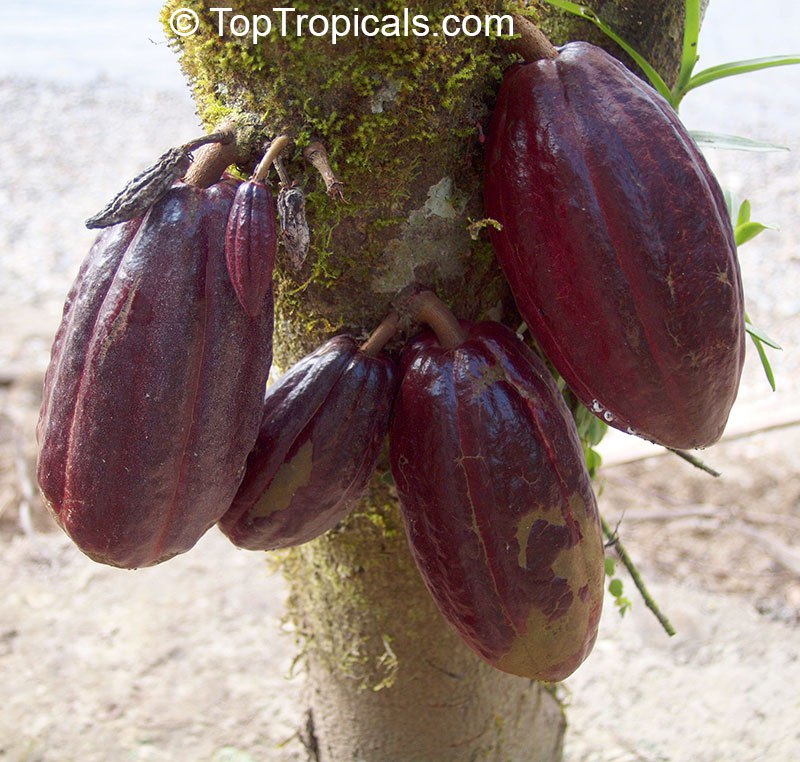
Cacao Chocolate Tree (Theobroma cacao)

Cacao Chocolate Tree (Theobroma cacao)

Cacao Chocolate Tree (Theobroma cacao)

Cacao Chocolate Tree (Theobroma cacao)

Cacao Chocolate Tree (Theobroma cacao)

Cacao Chocolate Tree (Theobroma cacao)

Cacao Chocolate Tree (Theobroma cacao)

Cacao Chocolate Tree (Theobroma cacao)

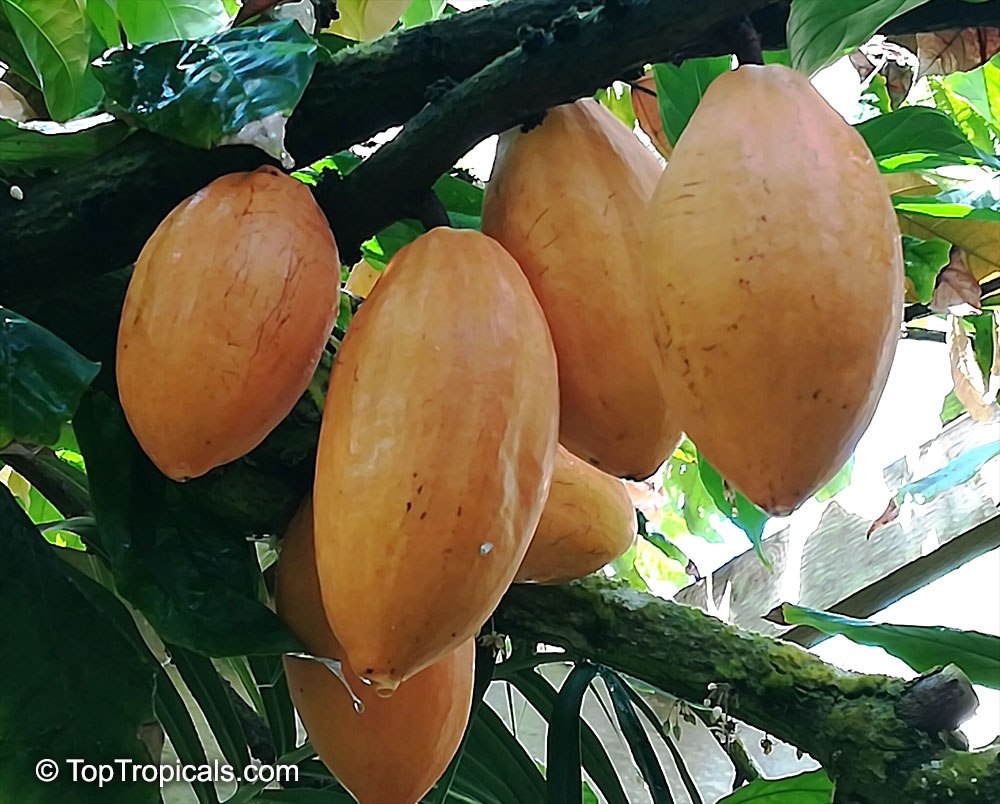
📖 Fun Facts: Cacao beans (Theobroma cacao) were used to make chocolate, and the ancient Maya and Aztec civilizations valued cacao beans as currency 💰 Can we use chocolate as money?
  • 🍫 Chocolate tree has large dark green leaves that shade the fruit pods which grow directly from the trunk and branches.
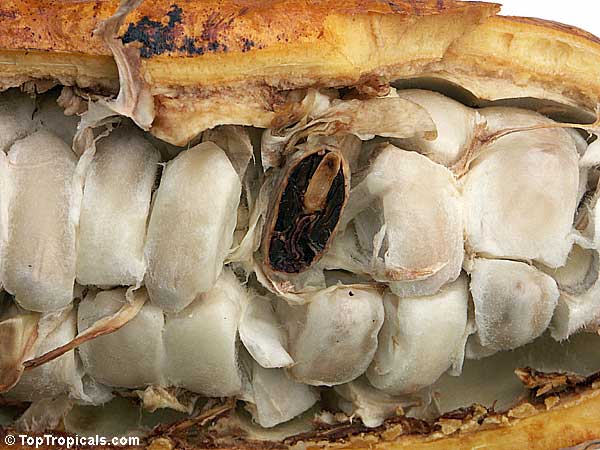
  • 🍫 The flesh of the fruit is eaten as a dessert, and the seeds are the raw material of chocolate. Hot chocolate can be made by drying the seeds, roasting, grinding, and adding milk.
  • 🍫 This exotic rare tree makes a gem of a houseplant collection.


🛒Get your own Chocolate Tree

#Fun_Facts #Food_Forest

JOIN 👉 @TopTropicals

Date: 26 Apr 2025

Fun Facts About the Guava Flower

Guava Flower

🌸 Fun Facts About the Guava Flower
  • 🌸 Frilly and Fabulous - Guava flowers may be small, but they're packed with fluffy white stamens that give them a soft, powder-puff look.
  • 🌸 Pollinator Magnet - Bees and butterflies love guava blooms, making them a great addition to a pollinator-friendly garden.
  • 🌸 Scent-sational - The flowers have a light, pleasant fragrance that adds a touch of sweetness before the fruit even arrives.
  • 🌸 Bloom to Fruit - Each flower can turn into a delicious guava fruit, making them both beautiful and productive.
  • 🌸 Part of the Showy Family - Guava (Psidium) belongs to the Myrtaceae family, which also includes eye-catching bloomers like Eucalyptus, Bottlebrush (Callistemon), and the stunning Rose Apple (Syzygium).


📚 More from previous posts about: #Guava

🛒 Shop Guava Trees

#Food_Forest #Guava #Fun_facts

🔴 Join 👉 TopTropicals

Date: 13 Apr 2025

Why do the Chinese drink tea?

Why do the Chinese drink tea?
🌱 Why do the Chinese drink tea?

  • 🍃 It actually has to do with the Chinese theory of the five elements - wood, metal, fire, water, and earth:

木 金 火 水 土

  • 🍃 Tea comes from a plant - Camellia sinensis - the Tea Leaf Tree - that is used to make all true teas: green, black, white, and oolong. The Tea Tree contains the element of wood (木) 🌳

  • 🍃 When it's roasted in a cast-iron pan, it gains the element of metal (金)

  • 🍃 Then it's dried over fire, adding the element of fire (火) 🔥

  • 🍃 When it's brewed with boiling water, the element of water enters (水) 💦

  • 🍃 Finally, tea is poured into a clay vessel, symbolizing the element of earth (土) 🍯

  • 🍃 In this way, all five elements - wood, metal, fire, water, and earth - come together in a single cup.

  • 🍃 The plant grows slowly and can thrive in containers or frost-free gardens with sun to semi-shade.


🛒 Grow your own tea

📚Learn more from previous posts:
Tea facts
How to grow your own tea?
Where does the tea come from?
Instructions how to make tea from tea leaves (PDF)

#Food_Forest #Remedies #Fun_facts

🔴 Join 👉 TopTropicals

Date: 25 Jun 2019

True love of Night Blooming Jasmine

By Onika Amell, tropical plant specialist

Q: I live in New Cumberland, West Virginia. I love the smell of Night-Blooming jasmine. Is it possible to grow it in the northern panhandle of West Virginia? Do I have to plant it every year or do I keep it in a pot and take it inside during the winter months?

A: Technically, Night Blooming Jasmine is not a true jasmine (those plants belong to Oleaceae, or Olive family). Night Blooming Jasmine belongs to the Solanaceae family, also known as the Nightshade or "Potato" family of plants. Yes, this sweet fragrant flower called Jasmine for its perfume is related to potatoes and tomatoes!
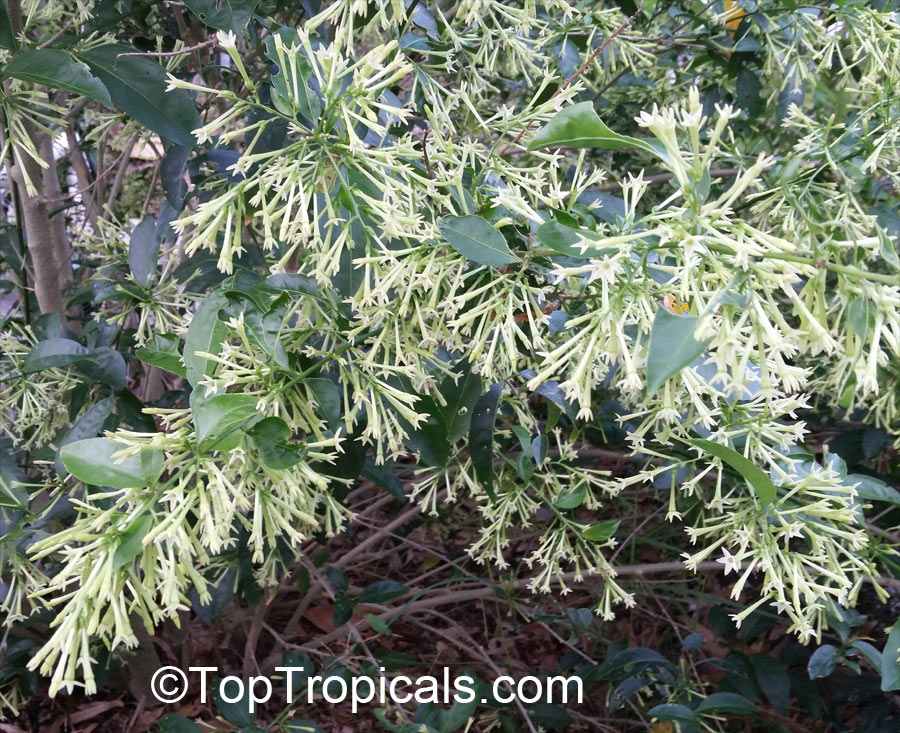
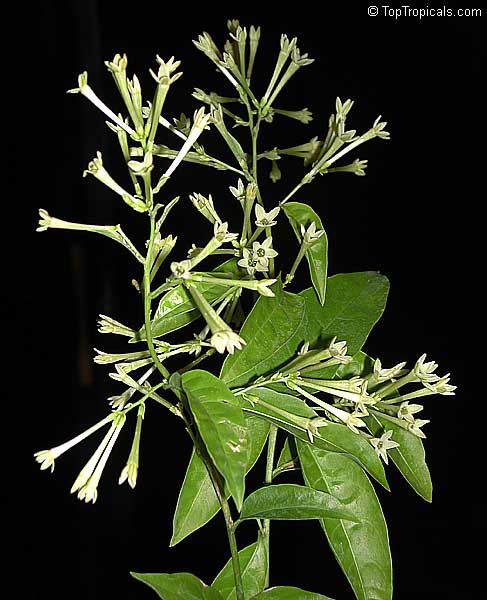
Night Blooming Jasmine - Cestrum nocturnum - is loved by many gardeners for its beautiful fragrance at night. It is one of the most fragrant tropical evergreen shrubs available. Cascading clusters of tiny, tubular pale yellow to white flowers open at night and release a heavenly fragrance throughout the garden, especially on warm summer evenings. The fragrance is much lighter during the day. Night Blooming Jasmine is grown year-round in zones 9-11. It is at its happiest in a sunny to a partially sunny spot in your garden in well-drained soil but can be grown in cooler climates as a container or greenhouse plant.
You would absolutely be able to enjoy this plant during the warm months in West Virginia, but it will most certainly not survive outside during the winter. You will have to bring it inside. Take it outside again only once you are confident there is no more possibility of frost. When grown indoors, be sure to give it the sunniest, South facing window in your home. When grown in a container, you will need to re-pot it every two to three years so it doesn't become root-bound.
For those who are lucky to live in frost-free areas, in ideal growing conditions outside, it can easily reach 8 feet with a spread of 5 feet. It has a lovely informal look that can soften a more manicured garden. Add organic matter to the planting hole when you plant to enrich the soil around the root ball. Water well in the summer, but allow them to dry out a bit between watering in the winter. Plant this Jasmine near pools, porches, doors, windows, and walkways where its lovely fragrance can be enjoyed. The shrub is also an excellent plant for privacy hedges and screens. When grown as a hedge, plant 3 feet apart.
Trim lightly after a bloom cycle to shape and then do a hard pruning in fall or spring to control the size of this plant. Fertilize 3 times a year - in spring, summer, and autumn - with a good quality granular fertilizer.

Recommended fertilizers:

Pink N Good Daily Plant Food - Flower Booster
Tropical Allure - Smart-Release Booster

Interesting facts:

Night-blooming jasmine is an excellent mosquito repellent. The powerful scent of the flowers attracts moths and bats that feed on mosquitoes and other small insects.
The flowers of the Night Blooming jasmine are widely used in India and other countries of South Asia for perfumery, medicinal applications and in religious ceremonies.

Limited time special offer:
Instant $5 off Night Blooming Jasmine