Garden Blog - Top Tropicals

Date: 10 Nov 2025

❄️ How to Prepare Your Tropical Garden for Winter

Two cats in a tropical garden at sunset. Smokey, a black-and-white 
tuxedo cat wearing a wool cap, holds a thermometer while Sunshine, a fluffy 
orange tabby, sits beside mulch and folded frost cloths surrounded by banana
 and hibiscus plants.

Smokey and Sunshine Wrap Up the Garden with Frost Cloth Before the Chill.

Smokey: "Thermometer says 45. Time to wrap the bananas!"
Sunshine: "You wrap the bananas. I’ll guard the mulch… from this sunny spot."
Smokey: "Teamwork, Sunshine. Teamwork."

🌡️ Cold nights are coming - but your tropicals do not need to shiver!

Even in sunny Florida and other warm zones, one cold snap can undo months of growth. Preparation is everything. Tropical plants can handle a lot, but they dislike surprises. Let’s make sure your garden stays safe, strong, and happy all winter long.

Tips from Tatiana Anderson, Top Tropicals Plant Expert

👉 Group and Check Your Plants

You already know which plants are in pots and which are in the ground. What matters now is prioritizing by cold sensitivity. Identify the tender tropicals – papaya, banana, plumeria, adenium, heliconia – and decide which ones get covered first when temperatures drop. Keep frost cloths or old sheets near those areas, ready to grab fast. If your garden is large, label protection zones or mark plants that always need extra care. The goal is to have a plan, not a panic, when the cold alert hits.

Once you know your priorities, you can plan the rest of your protection strategy.

👉 Feed and Mulch

Stop using high-nitrogen fertilizers by late fall. They push soft new growth that freezes easily. Add compost around the base of your plants and top with 3 to 4 inches of mulch. Mulch acts like a blanket: it keeps warmth in, protects the roots, and keeps soil moisture steady. Just make sure the soil drains well; cold and soggy soil leads to root rot. In raised beds, check that water flows away easily.

After you feed and mulch, it is time to look at how your local zone changes the game.

👉 Zone-by-Zone Tips
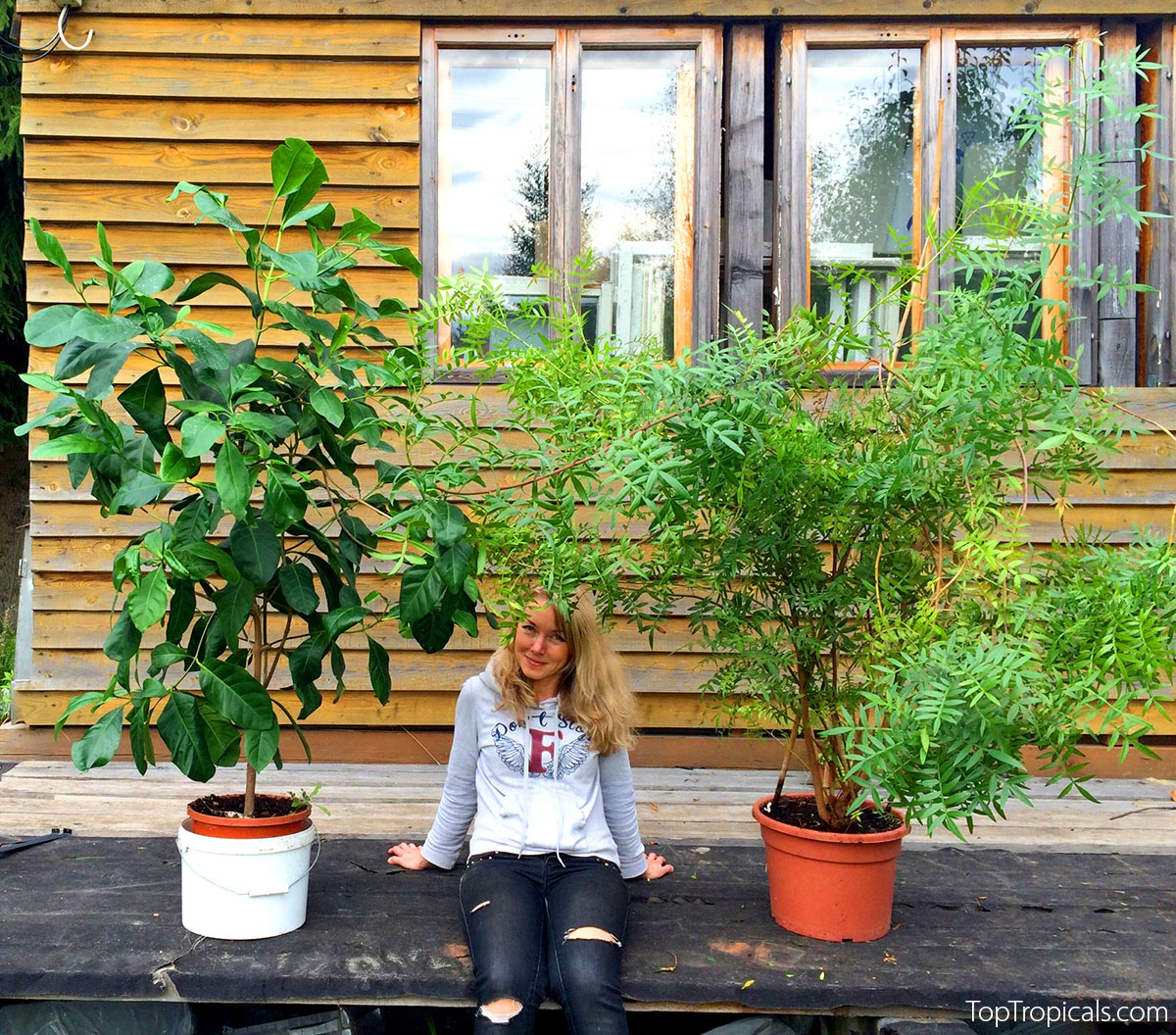
Woman sitting between two large potted tropical plants on a wooden deck
 in front of a house, preparing to move them indoors for the winter.

Moving Tropical Plants Indoors for Winter Protection

  • Zone 10: You are lucky! This is mostly a maintenance season. Watch for root rot after heavy rain, trim lightly if needed, and protect tender young trees during surprise chills. Keep some frost cloth ready just in case.
  • Zone 9: This is the main action zone. Nights can dip into the 30s. Deep-water your trees once before cold nights to insulate the roots. Apply heavy mulch, and have frost protection ready to go. If you grow tropical fruit like mango or guava, consider wrapping young trunks in burlap or foam pipe insulation.
  • Zone 8: This is where tropical gardening becomes creative. Stick to cold-hardy tropicals such as loquat, guava, or cold-hardy avocado varieties. Use portable greenhouses, wrap trunks, and move smaller plants indoors or to a heated porch when frost threatens.

Now that the garden beds are set, let’s look at your pots and containers – your most mobile plants.

👉 Container and Patio Plants

Potted plants are the easiest to protect but also the quickest to freeze. Start reducing watering now so roots do not stay too wet in cooler weather. Before moving them, check for insects hiding under leaves or in the soil. Group your pots close to a wall for reflected heat and wind protection. If you plan to bring them indoors, do it gradually. Move them closer to the house for a few days before bringing them all the way inside to help them adjust to lower light and humidity.

When the chill starts, many gardeners rush to move everything inside at once – but a smooth transition works much better.

👉 Indoor Plants

When bringing plants inside, give them a good rinse to remove dust and bugs, and flush the soil to wash out salts from summer fertilizing. Keep them separate from your houseplants for a week to make sure no pests come along. Expect some leaf drop – it is normal as they adjust to lower light. Give them bright light near a window, and cut watering by about half until spring. Avoid misting too much; good airflow matters more than humidity during winter.

Many tropicals, like hibiscus, brugmansia, and crotons, may look tired for a while, but they will bounce back quickly once days get longer.

👉 Timing Is Everything

The key is to prepare before the first cold warning. Check your weather app regularly once nights start dropping into the 50s. Keep covers, mulch, and supplies ready so you are not running outside at midnight with a flashlight and a frozen hose. Have your frost cloths labeled by plant group and stored in an easy spot. A little organization now saves a lot of stress later.

Many tropicals, like hibiscus, brugmansia, and crotons, may look tired for a while, but they will bounce back quickly once days get longer.

Remember: the goal is to help your plants rest safely. Many gardeners prune or fertilize too late in the season – we will talk about why that can be risky next week." — says Tatiana Anderson, Top Tropicals Plant Expert

Coming next mail-list: The best gadgets for cold protection (lights, heaters, frost covers) and what NOT to do in winter.

📚 Learn more from Top Tropicals Blog:

Cold protection - winter action for your plant collection

What plants are good to order in Winter?

How to take care of house plants in Winter

How to protect tropical plants in Winter

How to take care of a mango tree in winter

How to protect Avocado from cold

Overwintering Adeniums outside of tropics

Rows of tropical plants in black pots covered with frost cloth and 
plastic sheeting for winter protection at Top Tropicals nursery.

Protecting Tropical Plants with Frost Covers at Top Tropicals Nursery
Date: 29 Apr 2024

Fun Facts: Cacao beans

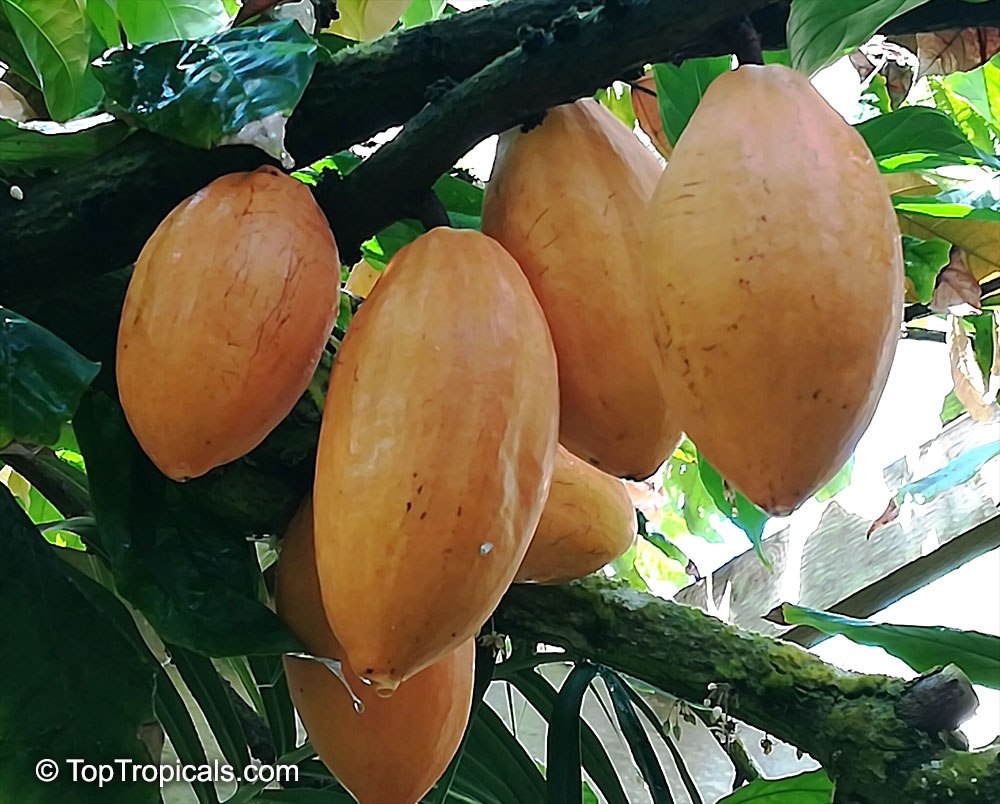
Cacao Chocolate Tree (Theobroma cacao)

Cacao Chocolate Tree (Theobroma cacao)

Cacao Chocolate Tree (Theobroma cacao)

Cacao Chocolate Tree (Theobroma cacao)

Cacao Chocolate Tree (Theobroma cacao)

Cacao Chocolate Tree (Theobroma cacao)

Cacao Chocolate Tree (Theobroma cacao)

Cacao Chocolate Tree (Theobroma cacao)

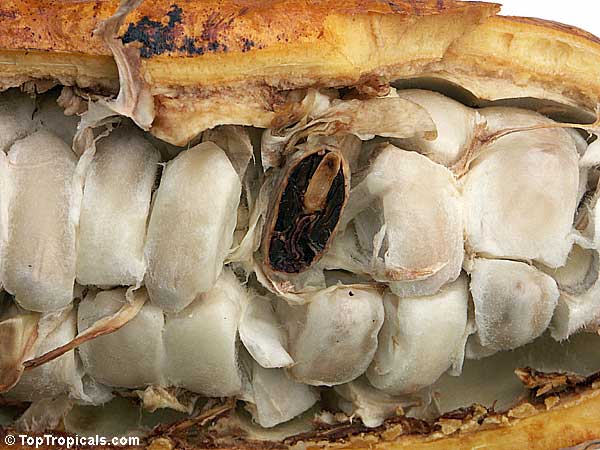
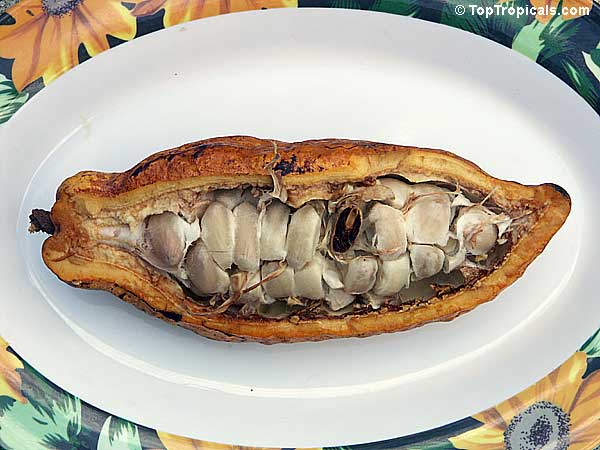
📖 Fun Facts: Cacao beans (Theobroma cacao) were used to make chocolate, and the ancient Maya and Aztec civilizations valued cacao beans as currency 💰 Can we use chocolate as money?
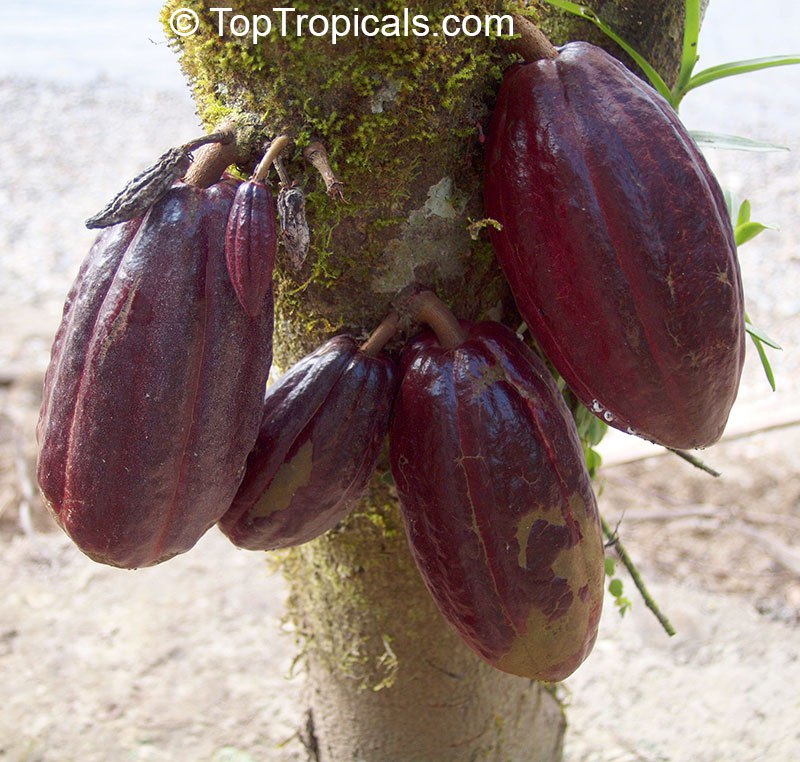
  • 🍫 Chocolate tree has large dark green leaves that shade the fruit pods which grow directly from the trunk and branches.
  • 🍫 The flesh of the fruit is eaten as a dessert, and the seeds are the raw material of chocolate. Hot chocolate can be made by drying the seeds, roasting, grinding, and adding milk.
  • 🍫 This exotic rare tree makes a gem of a houseplant collection.


🛒Get your own Chocolate Tree

#Fun_Facts #Food_Forest

JOIN 👉 @TopTropicals

Date: 26 Apr 2025

Fun Facts About the Guava Flower

Guava Flower

🌸 Fun Facts About the Guava Flower
  • 🌸 Frilly and Fabulous - Guava flowers may be small, but they're packed with fluffy white stamens that give them a soft, powder-puff look.
  • 🌸 Pollinator Magnet - Bees and butterflies love guava blooms, making them a great addition to a pollinator-friendly garden.
  • 🌸 Scent-sational - The flowers have a light, pleasant fragrance that adds a touch of sweetness before the fruit even arrives.
  • 🌸 Bloom to Fruit - Each flower can turn into a delicious guava fruit, making them both beautiful and productive.
  • 🌸 Part of the Showy Family - Guava (Psidium) belongs to the Myrtaceae family, which also includes eye-catching bloomers like Eucalyptus, Bottlebrush (Callistemon), and the stunning Rose Apple (Syzygium).


📚 More from previous posts about: #Guava

🛒 Shop Guava Trees

#Food_Forest #Guava #Fun_facts

🔴 Join 👉 TopTropicals

Date: 13 Apr 2025

Why do the Chinese drink tea?

Why do the Chinese drink tea?
🌱 Why do the Chinese drink tea?

  • 🍃 It actually has to do with the Chinese theory of the five elements - wood, metal, fire, water, and earth:

木 金 火 水 土

  • 🍃 Tea comes from a plant - Camellia sinensis - the Tea Leaf Tree - that is used to make all true teas: green, black, white, and oolong. The Tea Tree contains the element of wood (木) 🌳

  • 🍃 When it's roasted in a cast-iron pan, it gains the element of metal (金)

  • 🍃 Then it's dried over fire, adding the element of fire (火) 🔥

  • 🍃 When it's brewed with boiling water, the element of water enters (水) 💦

  • 🍃 Finally, tea is poured into a clay vessel, symbolizing the element of earth (土) 🍯

  • 🍃 In this way, all five elements - wood, metal, fire, water, and earth - come together in a single cup.

  • 🍃 The plant grows slowly and can thrive in containers or frost-free gardens with sun to semi-shade.


🛒 Grow your own tea

📚Learn more from previous posts:
Tea facts
How to grow your own tea?
Where does the tea come from?
Instructions how to make tea from tea leaves (PDF)

#Food_Forest #Remedies #Fun_facts

🔴 Join 👉 TopTropicals

Date: 25 Jun 2019

True love of Night Blooming Jasmine

By Onika Amell, tropical plant specialist

Q: I live in New Cumberland, West Virginia. I love the smell of Night-Blooming jasmine. Is it possible to grow it in the northern panhandle of West Virginia? Do I have to plant it every year or do I keep it in a pot and take it inside during the winter months?

A: Technically, Night Blooming Jasmine is not a true jasmine (those plants belong to Oleaceae, or Olive family). Night Blooming Jasmine belongs to the Solanaceae family, also known as the Nightshade or "Potato" family of plants. Yes, this sweet fragrant flower called Jasmine for its perfume is related to potatoes and tomatoes!
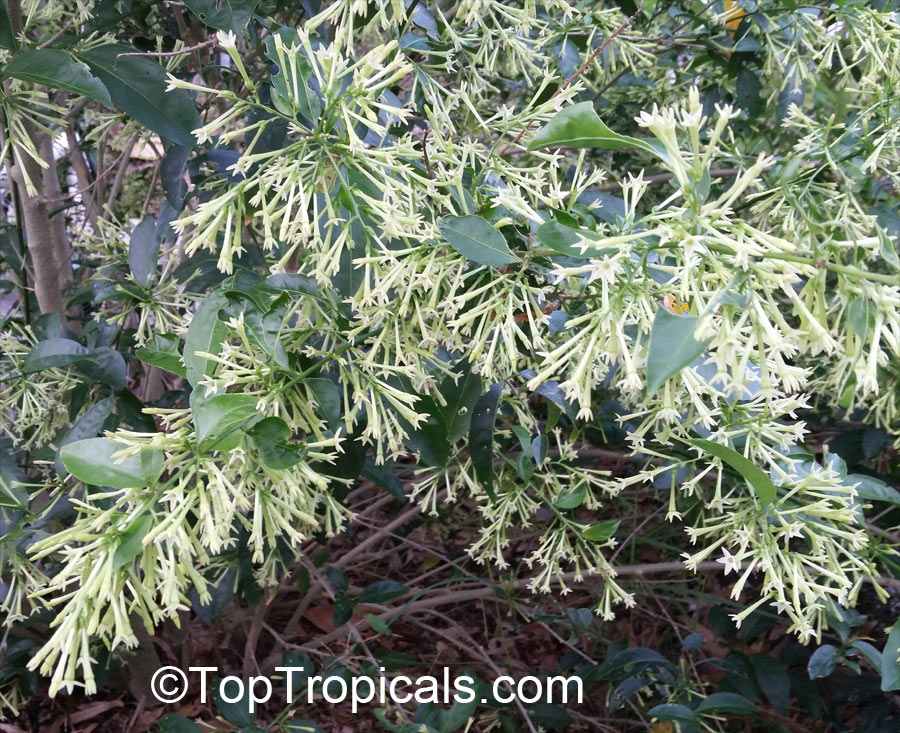
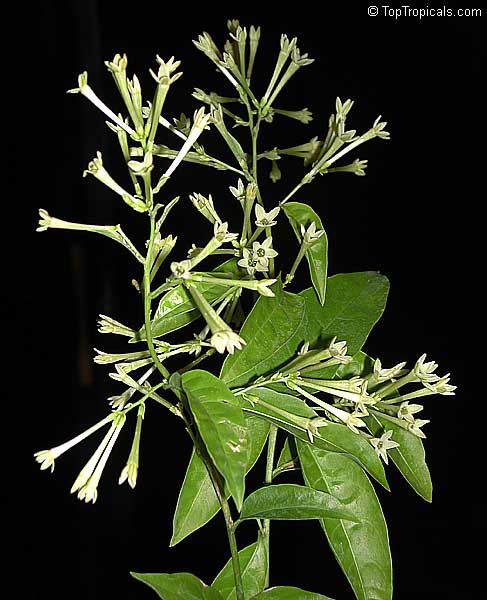
Night Blooming Jasmine - Cestrum nocturnum - is loved by many gardeners for its beautiful fragrance at night. It is one of the most fragrant tropical evergreen shrubs available. Cascading clusters of tiny, tubular pale yellow to white flowers open at night and release a heavenly fragrance throughout the garden, especially on warm summer evenings. The fragrance is much lighter during the day. Night Blooming Jasmine is grown year-round in zones 9-11. It is at its happiest in a sunny to a partially sunny spot in your garden in well-drained soil but can be grown in cooler climates as a container or greenhouse plant.
You would absolutely be able to enjoy this plant during the warm months in West Virginia, but it will most certainly not survive outside during the winter. You will have to bring it inside. Take it outside again only once you are confident there is no more possibility of frost. When grown indoors, be sure to give it the sunniest, South facing window in your home. When grown in a container, you will need to re-pot it every two to three years so it doesn't become root-bound.
For those who are lucky to live in frost-free areas, in ideal growing conditions outside, it can easily reach 8 feet with a spread of 5 feet. It has a lovely informal look that can soften a more manicured garden. Add organic matter to the planting hole when you plant to enrich the soil around the root ball. Water well in the summer, but allow them to dry out a bit between watering in the winter. Plant this Jasmine near pools, porches, doors, windows, and walkways where its lovely fragrance can be enjoyed. The shrub is also an excellent plant for privacy hedges and screens. When grown as a hedge, plant 3 feet apart.
Trim lightly after a bloom cycle to shape and then do a hard pruning in fall or spring to control the size of this plant. Fertilize 3 times a year - in spring, summer, and autumn - with a good quality granular fertilizer.

Recommended fertilizers:

Pink N Good Daily Plant Food - Flower Booster
Tropical Allure - Smart-Release Booster

Interesting facts:

Night-blooming jasmine is an excellent mosquito repellent. The powerful scent of the flowers attracts moths and bats that feed on mosquitoes and other small insects.
The flowers of the Night Blooming jasmine are widely used in India and other countries of South Asia for perfumery, medicinal applications and in religious ceremonies.

Limited time special offer:
Instant $5 off Night Blooming Jasmine