Garden Blog - Top Tropicals
Date: 3 Jul 2026
🎆 250 Years of America, Still Growing
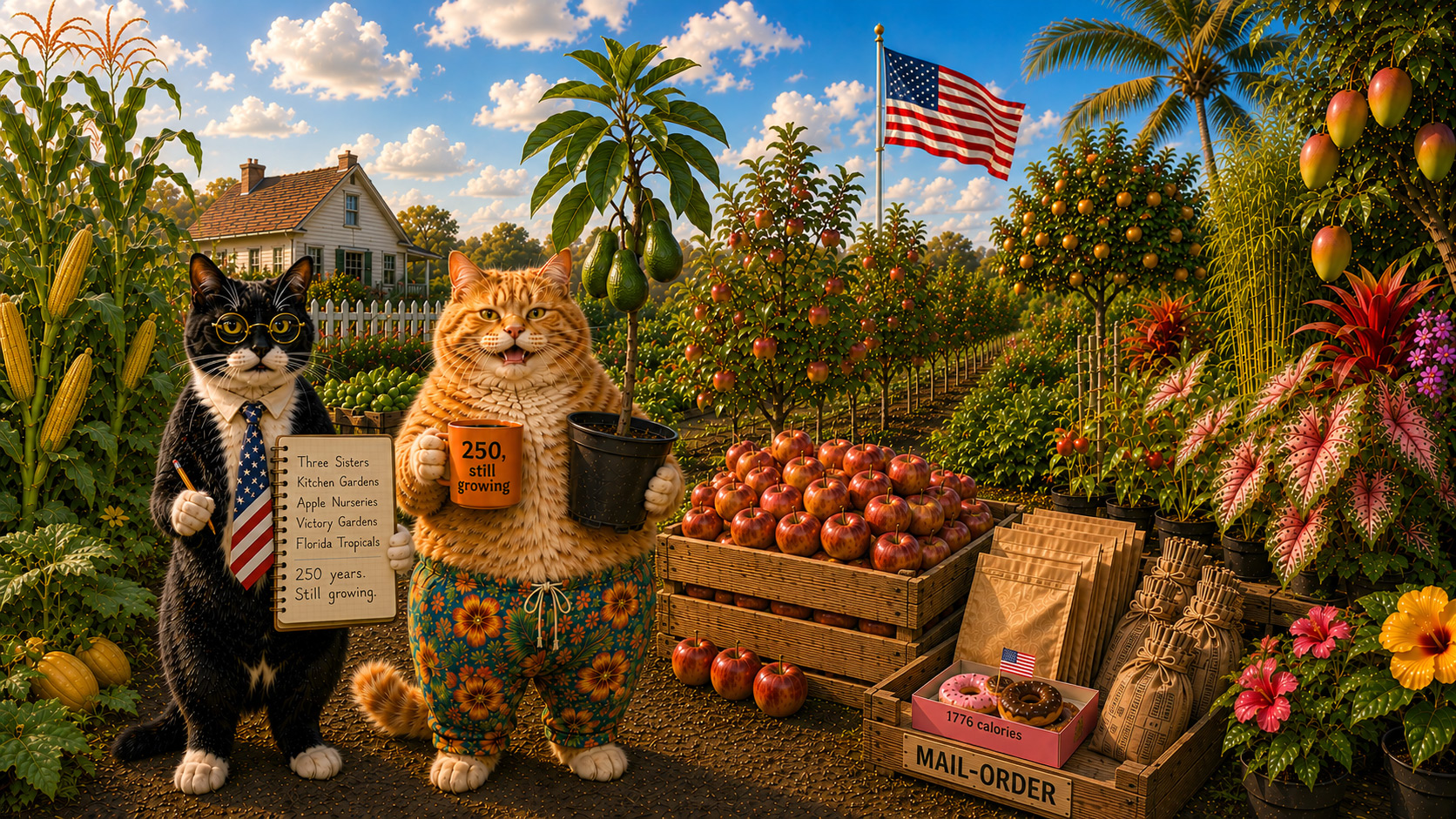
Smokey: Correct. And not all of that history happened on battlefields.
Sunshine: Some of it happened here. In yards. In small plots of ground.
Smokey: The way most lasting things happen.

Tomorrow, the United States turns 250. Most of what gets written about it will focus on documents, presidents, battlefields, and monuments. Those stories matter. But they are not the only place American history happened. Some of it happened in the ground. In backyards, in fields, in pots on windowsills, and in rows behind farmhouses. Quietly, without headlines, gardening has been part of American life from the very beginning.
Long before 1776, this land already had gardens. Indigenous farmers grew corn, beans, and squash together, a planting method later known as the Three Sisters. The corn gave the beans something to climb, the beans helped enrich the soil through nitrogen-fixing roots, and the squash spread low across the ground, shading out weeds and holding in moisture. This was farming built on cooperation between plants, refined over generations.
When colonists arrived, gardens were not decoration. They were survival. A kitchen garden supplied vegetables, herbs for cooking, and plants used as medicine when the nearest doctor was days away. Knowing how to grow food, and keep it through the winter, was a skill that could decide whether a family made it to spring.
Several of the country's early leaders were also genuine plant people. George Washington and Thomas Jefferson both gardened seriously, testing crops and keeping notes on what worked and what didn't. It was the same practical habit gardeners rely on today: pay attention, and adjust next season when something fails.
Few stories make that point better than John Chapman, the man history remembers as Johnny Appleseed. He was not simply scattering seeds at random. Through the early 1800s, he ran seedling nurseries ahead of settlers, so young apple trees would already be growing by the time families arrived. Setting a tree in the ground you may never sit under is its own kind of faith. He planted for people he would never meet.
As the country grew, so did the way people found new plants. Long before anyone could order online, seed catalogs arrived by mail, filled with descriptions of vegetables, flowers, and fruit trees a family might never have seen growing nearby. A catalog could bring a new tomato variety to a farm in Ohio or a rose to a porch in Georgia. That habit of discovering plants through the mail did not end. It just found new forms, and it is part of what a nursery like ours still does today.
Gardening carried the country through harder years too. During World War II, Victory Gardens turned lawns, schoolyards, and empty lots into food gardens. It was steady, unglamorous work that fed people, supported the home front, and gave families something useful to do when so much else felt out of their hands.
Florida adds its own chapter to that story. Here, gardening looked less like neat rows of familiar crops and more like an ongoing experiment. Spanish settlers brought citrus to Florida centuries ago. Growers replanted after hard freezes and kept moving south, chasing warmer ground. Plant explorers and nursery owners introduced mangos, palms, caladiums, bamboos, tropical fruit trees, and ornamentals from other tropical regions, testing what could take root in Florida's heat and humidity.
South Florida became something like an open-air laboratory, and in many ways, it still is. At Top Tropicals, we work in that same living laboratory every day, growing, testing, collecting, and sharing plants that still feel new to many American gardeners. Different decade, same instinct. Find a plant worth growing, learn how to grow it, and share it with anyone patient enough to try.
None of this happened quickly. A garden does not come together in one afternoon. It grows one seed, one season, one plant, one generation at a time. A country grows the same way.
As the country marks 250 years, it might be worth planting something of your own. Not because it will make headlines. Because years from now, someone may be glad you did.
👉 Plant Something for the Next Chapter
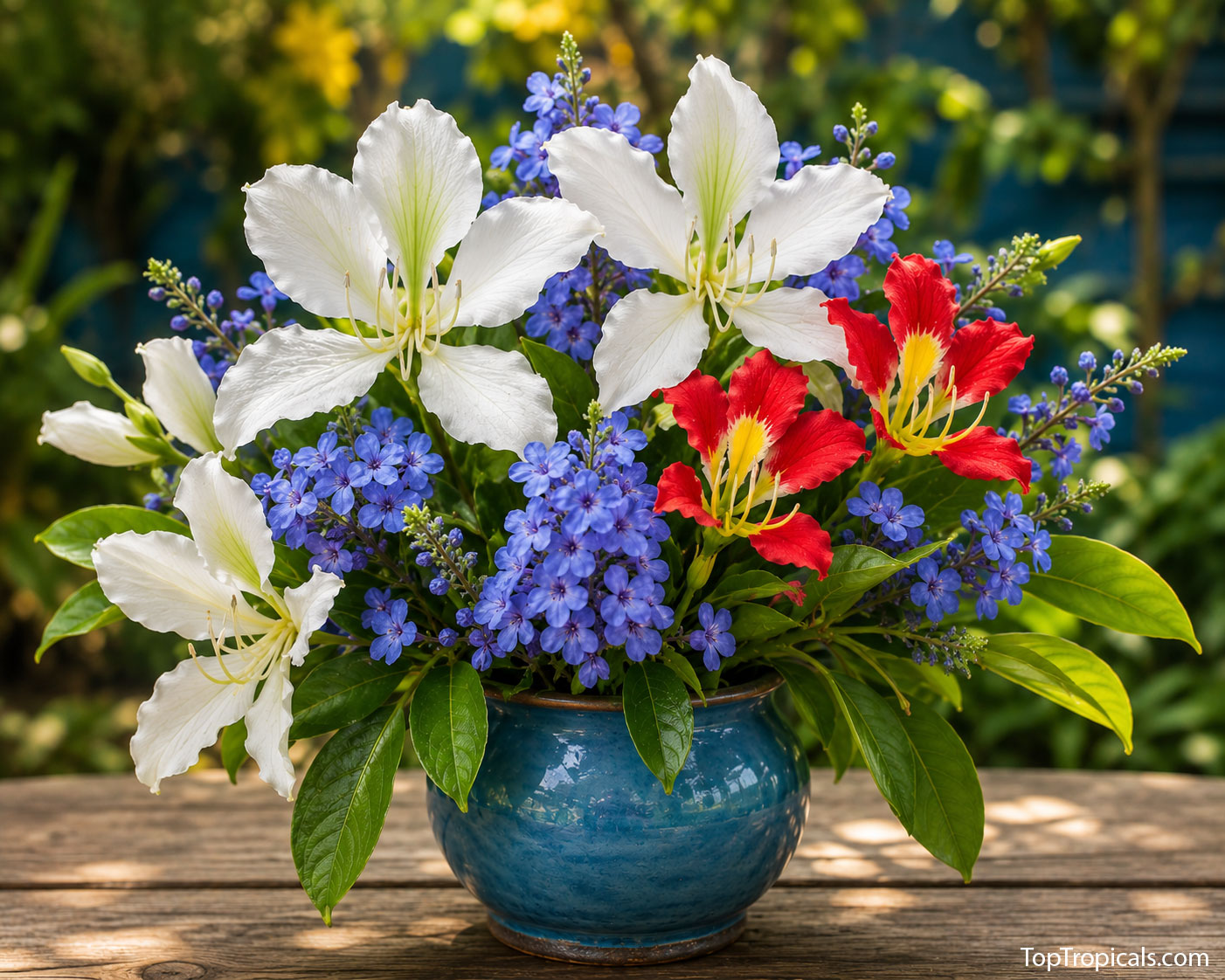
💐Flowers in the vase:
· Bauhinia alba, White orchid tree
· Bauhinia madagascariensis, Red Butterfly Orchid Tree
· Eranthemum pulchellum - Blue Sage, Lead Flower