Garden Blog - Top Tropicals

Date: 31 Aug 2025

🌿 The Jungle Cactus with a secret life
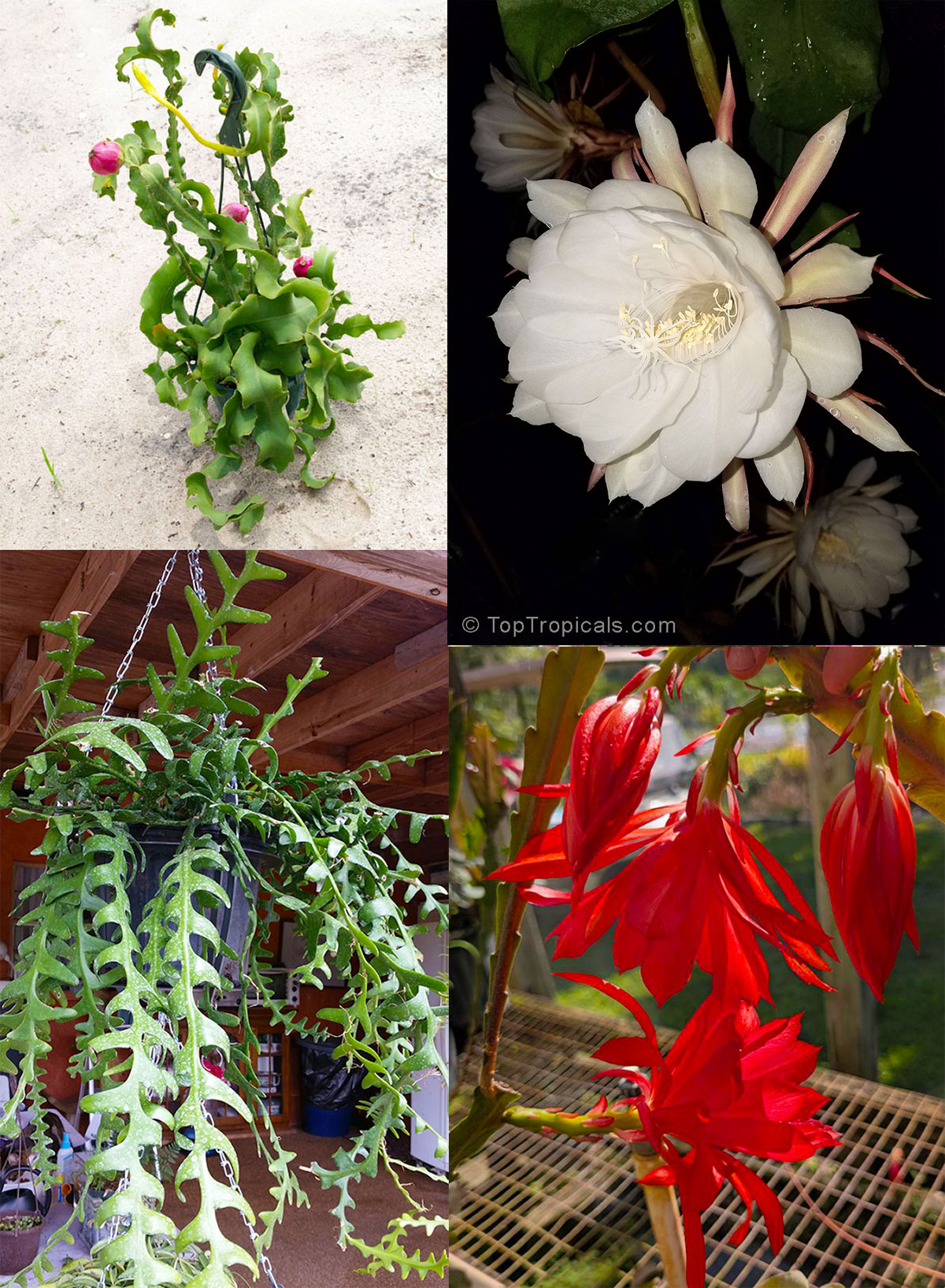
Collage of four jungle cactus plants: top left Epiphyllum guatemalense 
Monstrosa (Curly Locks Orchid Cactus), top right Epiphyllum oxypetalum 
(Queen of the Night), bottom left Cryptocereus anthonyanus (Zig-Zag Cactus),
 and bottom right Disocactus ackermanni (Red Orchid 
Cactus).

Jungle cactus collage: top left Epiphyllum guatemalense Monstrosa (Curly Locks Orchid Cactus), top right Epiphyllum oxypetalum (Queen of the Night), bottom left Cryptocereus anthonyanus (Zig-Zag Cactus), and bottom right Disocactus ackermanni (Red Orchid Cactus)

Most people picture cactus as desert plants: hot sun, sharp spines, dry sand. But that’s only half the story. There’s another branch of the family that lives in the shade of rainforests. These are the jungle cacti — epiphyte plants that climb trees, trail from branches, and throw out flowers so big and showy they look closer to orchids than to cactus blooms.

See one up close and it’s a surprise. The stems can be flat, zig-zagged, or even curly. Some trail like ferns, others pile into a shaggy basket. And when the flowers open — often at night — they’re wide, fragrant, and gone by morning. It’s no wonder gardeners like them from a first sight.

✔️ Jungle Cactus Q&A

Aren’t all cacti desert plants?

Not these. Jungle cacti are epiphytes and grow in rainforests, clinging to trees and catching rain. They never touch desert sand.

What kind of light do they need?

Outdoors, filtered sun under a tree works best. Indoors, give them bright but indirect light — east or north windows are usually safe. Direct summer sun can scorch the stems, whether inside or out.

How much water is safe?

They take more water than desert cactus but still hate wet feet. Outdoors, a rain shower is fine if the pot drains fast. Indoors, water when the top inch of soil feels dry. Always use a loose mix like Adenium mix so roots get some air.

Do they bloom indoors?

Yes. In fact, many bloom better inside where conditions are steady. They set buds when a little root-bound, and cooler nights help. Outdoors in frost-free zones, flowers come with seasonal shifts. Indoors, expect surprise buds after a cool spell by the window.

Best way to display them?

Hanging baskets show off trailing stems both inside and out. Shallow pots work well on shelves or ledges indoors. In warm climates, they can even be tied to a tree branch outside — exactly how they grow in the wild.

Extra note on indoor vs. outdoor care?

Indoors, watch for dry heated air in winter — they like a bit of humidity. A tray of pebbles and water under the pot helps. Outdoors, protect from heavy midday sun and bring them in if nights dip below the mid 30s F.

Jungle cacti are easy to keep and full of surprises. Whether trailing from a basket or blooming after dark, they prove that not every cactus belongs in the desert.
Read Garden Blog about Cacti

Add Jungle Cactus to your collection

Date: 27 May 2025

Too weird to ignore, too easy not to grow!

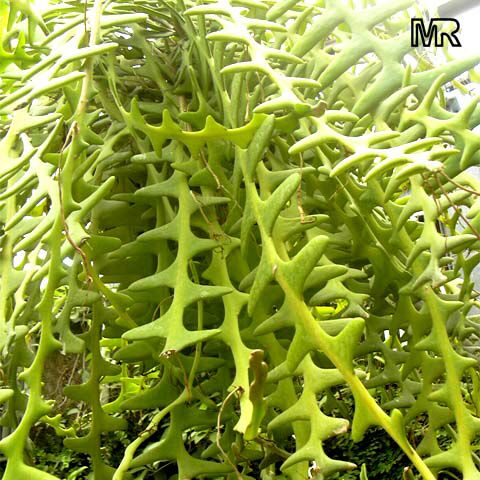
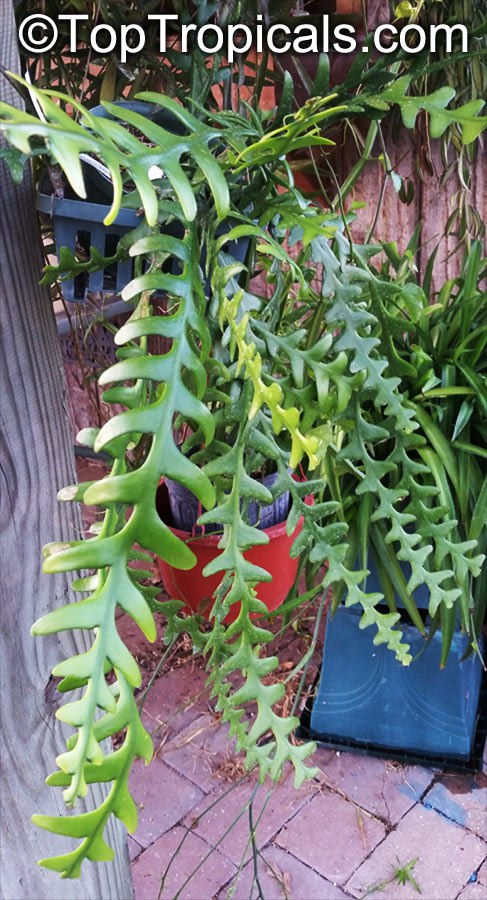
Cryptocereus (Selenicereus) anthonyanus - Zig-Zag Cactus, Anthony's Rick-Rack, Fishbone Cactus

Cryptocereus (Selenicereus) anthonyanus - Zig-Zag Cactus, Anthony's Rick-Rack, Fishbone Cactus

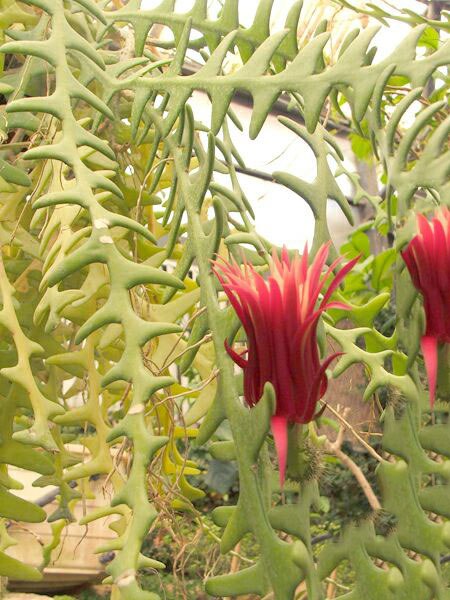
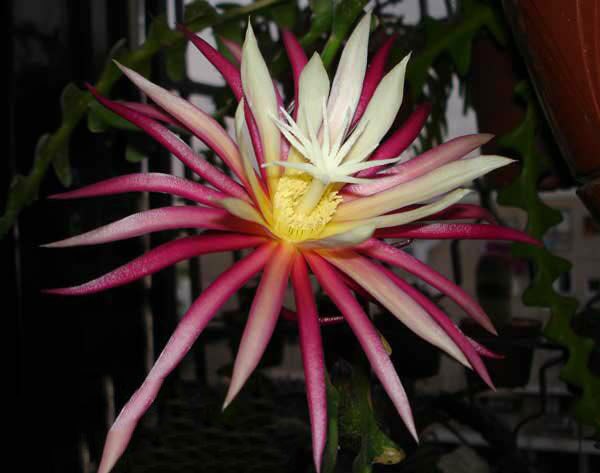
Cryptocereus (Selenicereus) anthonyanus - Zig-Zag Cactus, Anthony's Rick-Rack, Fishbone Cactus, flower

Cryptocereus (Selenicereus) anthonyanus - Zig-Zag Cactus, Anthony's Rick-Rack, Fishbone Cactus, flower

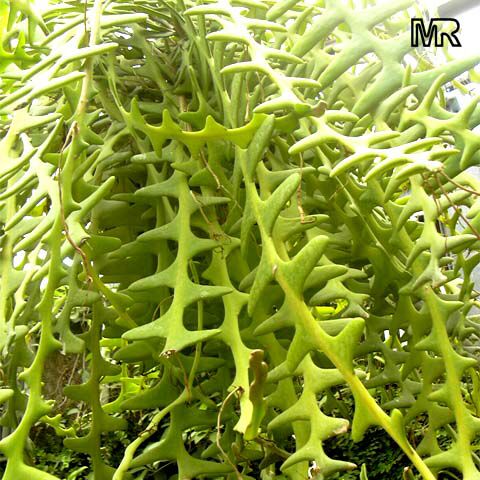
Cryptocereus (Selenicereus) anthonyanus - Zig-Zag Cactus, Anthony's Rick-Rack, Fishbone Cactus

Cryptocereus (Selenicereus) anthonyanus - Zig-Zag Cactus, Anthony's Rick-Rack, Fishbone Cactus

Cryptocereus (Selenicereus) anthonyanus - Zig-Zag Cactus, Anthony's Rick-Rack, Fishbone Cactus, leaves

Cryptocereus (Selenicereus) anthonyanus - Zig-Zag Cactus, Anthony's Rick-Rack, Fishbone Cactus, leaves

Too weird to ignore, too easy not to grow!
  • ⚡️Cryptocereus (Selenicereus) anthonyanus - Zig-Zag Cactus. Also known as Anthony's Rick-Rack or Fishbone Cactus, this oddball epiphyte is famous for its zigzagging, succulent leaves that look like a green lightning bolt.
  • ⚡️ In nature, it climbs trees using aerial roots, but it's happy in a pot too.
  • ⚡️Give it bright, indirect light and let the soil dry out completely between waterings.
  • ⚡️In spring, it may reward you with a rare night-blooming flower that lasts just one magical evening.
  • ⚡️ Easy, sculptural, and full of character!


🛒 Add this oddball to your jungle

📚 More about exotic epiphytic cacti:
Disocactus ackermanni - Red Orchid Cactus
Epiphyllum oxypetalum - Queen of the Night
Pseudorhipsalis (Wittia) amazonica - Blue Flame
Epiphyllum guatemalense Monstrosa - Orchid Cactus, Curly Locks

#Fun_Facts #Container_Garden #Shade_Garden #Nature_Wonders

🔴 Join 👉 TopTropicals

Date: 22 Sep 2025

Dragon Fruit Plant Care – Tips from the Garden Expert
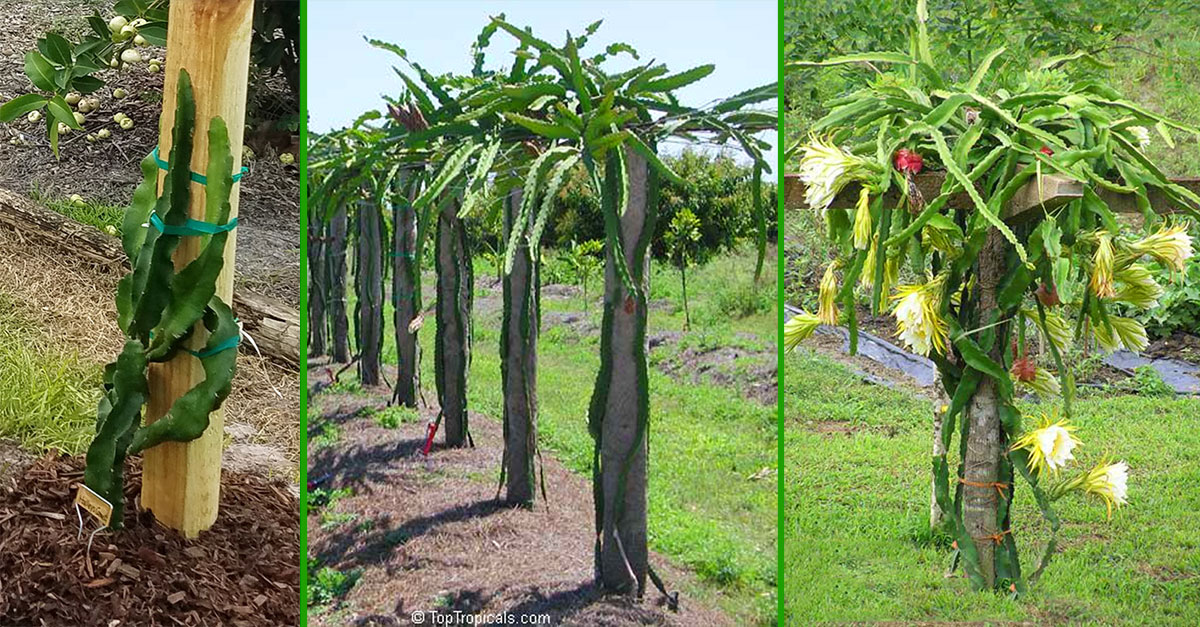
Stages of dragon fruit pitaya plant growth and trellis support 
system

Dragon fruit is one of those plants that look exotic but are surprisingly easy once you know the basics. Here is what works best in the garden:

  • Soil: They hate wet feet. A sandy, fast-draining soilless-mix is your friend. If water sits around the roots, rot comes fast.
  • Watering: Deep watering is better than frequent sips. Let the soil dry between waterings. In rainy season they cope well, but in pots you need to be careful.
  • Sunlight: Full sun is great, but in very hot places a touch of afternoon shade keeps them happy.
  • Support: They are natural climbers. A wooden post, concrete pole, or trellis will give them something to grab and makes harvest easier.
  • Fertilizer: Feed lightly but often. A gentle liquid like Sunshine C-Cibus liquid booster with every watering, or Green Magic controlled release fertilizer every 5-6 months. It encourages strong roots, lush growth, and lots of flowers.
  • Pruning: Trim off tangled or weak stems. This guides energy into strong branches that will flower and fruit.

Think of it as training a cactus vine into a small tree. Once it settles in, it almost takes care of itself — and pays back with fruit you can’t buy in stores.

🌱 Dragon Fruit Plant Care – Outdoors and Indoors

Outdoors: Dragon fruit thrives in USDA Zones 10–11 year-round. In warm regions like Florida, Texas, California, and Hawaii, you can grow it outside in the ground. Give it fast-draining soil, full sun with a little afternoon shade in the hottest months, and a sturdy trellis or post to climb. Deep watering with drying periods in between keeps roots healthy. A yearly pruning shapes the plant and boosts flowering.

Indoors or Patio Pots: Gardeners in cooler zones can still enjoy dragon fruit in containers. Use a large pot with sandy, well-draining mix or soilless-mix and a pole for support. Place the pot in the brightest spot — a greenhouse, sunroom, or patio that gets 6+ hours of light daily. Move pots inside when temperatures drop below 40F. Even indoors, a healthy plant can bloom and fruit if it has enough light and warmth.

❓ Dragon Fruit FAQ


How soon will a dragon fruit start producing?

Cuttings can flower and fruit in as little as 2–3 years. Seed-grown plants take longer, often 4–6 years. Large developed specimens can start flowering and fruiting within a year or even the same season.

Do I need more than one plant for pollination?

Some varieties are self-fertile, others need a second plant for cross-pollination. Even self-fertile types usually set more fruit with a partner nearby.

How big do they get?

In the ground, dragon fruit can climb 15–20 ft if you let it. With pruning and a trellis, you can keep it shaped like a small tree, 6–8 ft tall.

Can I grow it in a pot?

Yes. A large container with sandy mix or soilless-mix and a pole for climbing works well. Indoors it will need bright light or a grow lamp.

What does a dragon fruit taste like?

Sweet and juicy, like a blend of blackberry and raspberry. Varieties differ: flesh can be white, pink, deep red, or purple, wrapped in skins of red, pink, or yellow. White flesh is mild and refreshing, red flesh is sweeter, and yellow flesh is the sweetest with a honey-pineapple flavor.

What zones can I grow dragon fruit outside?

USDA Zones 10–11 are best for year-round outdoor planting. In cooler areas, grow it in containers and bring inside for winter.

How often should I water?

Deep water, then let the soil dry. Too much water causes root rot. Think “desert cactus with a taste for rain.”

Is dragon fruit easy to grow?

Yes. Pitayas grow like cactus trees on strong supports, but they are easy to care for — little water, sun or semi-shade, and they thrive.

How long do they live?

A healthy dragon fruit cactus can produce for 10 years or more with proper care.

What are the health benefits?

Dragon fruit is high in fiber, supports digestion, and is low in calories. It is rich in antioxidants and vitamin C, making it good for immunity and overall wellness. Many gardeners enjoy it as a healthy snack or in smoothies.

Explore Dragon Fruit varieties

Date: 12 Jul 2024

How does Zig-Zag Cactus grow

Cryptocereus anthonyanus - Zig-Zag Cactus flower

Cryptocereus anthonyanus - Zig-Zag Cactus flower

Cryptocereus anthonyanus - Zig-Zag Cactus

Cryptocereus anthonyanus - Zig-Zag Cactus

Cryptocereus anthonyanus - Zig-Zag Cactus

Cryptocereus anthonyanus - Zig-Zag Cactus

⚡️ #Fun_Facts: Zig-Zag Cactus

Cryptocereus anthonyanus (Zig-Zag Cactus) has zigzag-shaped stems and beautiful night-blooming flowers that make it a fascinating addition to cactus collections.

🛒 Order Zig Zag Cactus

#Container_Garden

🏵 TopTropicals

Date: 30 Nov 2024

Why this cactus is called Blue Flame

Pseudorhipsalis amazonica - Blue Flame Cactus

Pseudorhipsalis amazonica - Blue Flame Cactus

Pseudorhipsalis amazonica - Blue Flame Cactus

Pseudorhipsalis amazonica - Blue Flame Cactus

Pseudorhipsalis amazonica - Blue Flame Cactus

Pseudorhipsalis amazonica - Blue Flame Cactus

Why this cactus is called Blue Flame 🔥
  • 🔥 Pseudorhipsalis amazonica - Blue Flame Cactus - is a spectacular bloomer!
  • 🔥This is a rare, spineless, epiphytic cactus from the rainforests of the Amazon jungle.
  • 🔥 The flowers emerge along the leaf edges from late spring through early summer. They have a distinctive blue tip on the magenta flower, just like a blue flame!


🛒 Order Blue Flame Cactus

#Container_Garden #Shade_Garden #Fun_facts

🔴 Join 👉 TopTropicals