Garden Blog - Top Tropicals

Date: 18 Feb 2026

⭐️ Choosing the Right Variety of Jasmine Sambac

By Tatiana Anderson, Horticulture Expert at Top Tropicals
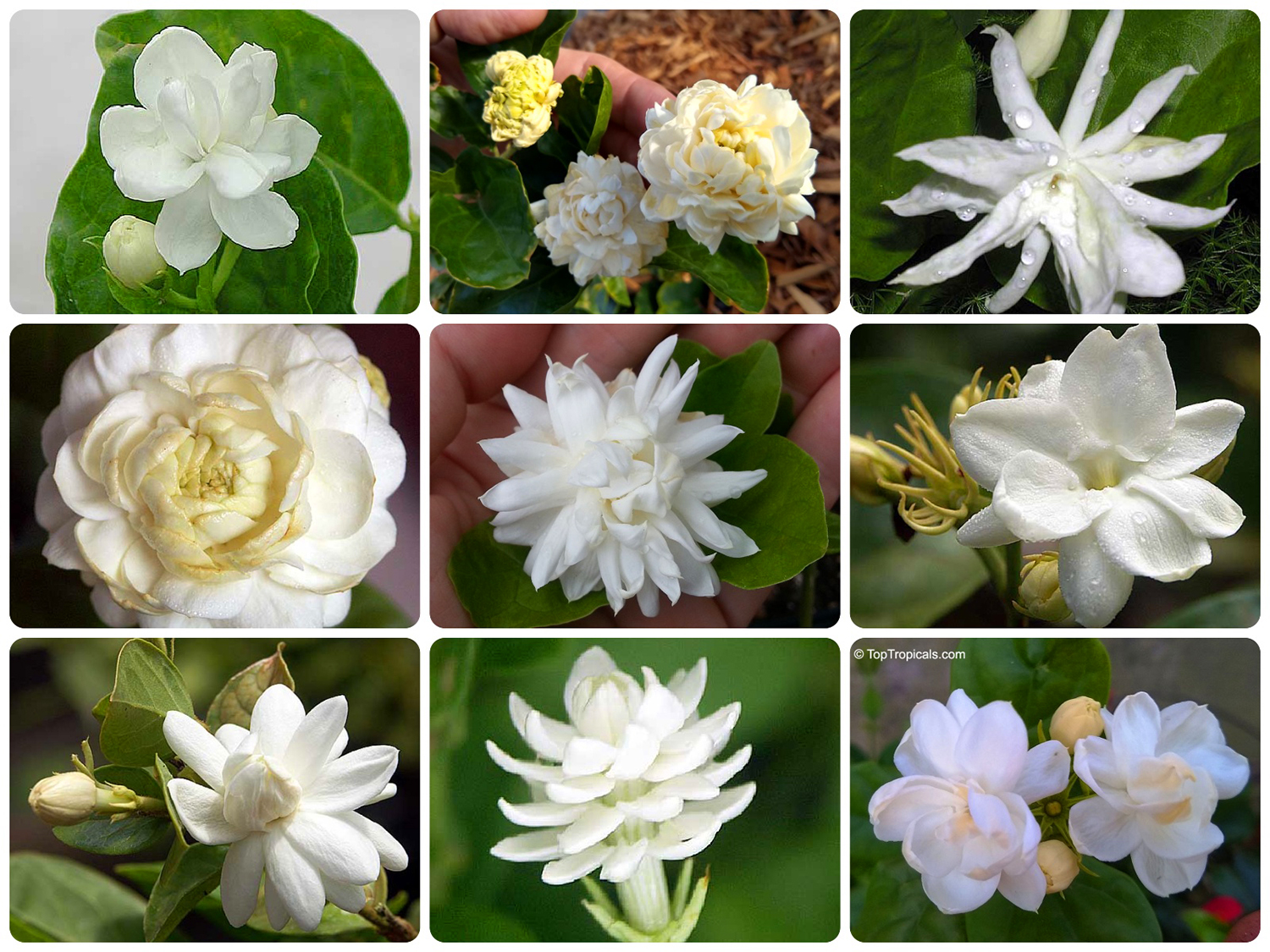
Jasmine  Sambac  varieties  collage  showing  single,  double,  and 


multi-layered  white  fragrant  flowers  including  Belle  of  India,  Grand  Duke, 


Arabian  Nights,  and  other 


forms.

Jasmine Sambac varieties: Arabian Nights, Little Duke, Belle of India, Grand Duke, Duke Supreme, Maid of Orleans, Mysore Mulli, Malichat, Gundu Mallii

One of the reasons Jasmine Sambac is so fascinating is that it does not come in just one form. Each variety has its own personality.

If you want a compact patio plant, Arabian Nights or Little Duke are excellent choices. They stay tidy, bloom generously, and are easy to manage in containers.

If you prefer elegant, elongated petals and a refined look, Belle of India is a favorite. It can be grown as a small bush or trained lightly as a vine.

For those who love full, carnation-like double flowers, Grand Duke of Tuscany and Grand Duke Supreme are classic selections. They are vigorous and make impressive shrubs in warm climates.

If you need a stronger climber for fences or hedges, Maid of Orleans performs beautifully in full sun while Mysore Mulli prefers semi-shade.

Collectors often enjoy rare forms like Mali Chat or newer hybrids such as Gundu Malli, which combine traits from different lines.

How to Grow Jasmine Sambac Successfully

Sambac is not difficult, but it responds best to consistency.

Light: Full sun produces the most flowers. In very hot climates, light afternoon shade is acceptable. Indoors, place it in the brightest window available.

Soil: Use a well-draining potting mix such as Sunshine Abundance. Sambac does not like heavy, constantly wet soil.

Water: Water thoroughly, then allow the top layer to dry slightly before watering again. Reduce watering during cooler months.

Pruning: Light trimming after a bloom cycle encourages branching. More branches mean more flower buds.

Feeding: Sambac is a heavy bloomer, and fragrance takes energy. During active growth, feed regularly with a balanced fertilizer that supports flowering such as Green Magic (controlled release every 6 months) or liquid Sunshine Boosters Pikake (formulated especially for fragrant flowers) - with every watering. I prefer formulas slightly higher in potassium to encourage stronger bud formation and richer bloom cycles. Consistent feeding during warm months makes a visible difference in both flower count and intensity of scent.

With proper care, Jasmine Sambac will reward you not just with flowers, but with perfume that changes the atmosphere of your entire garden.
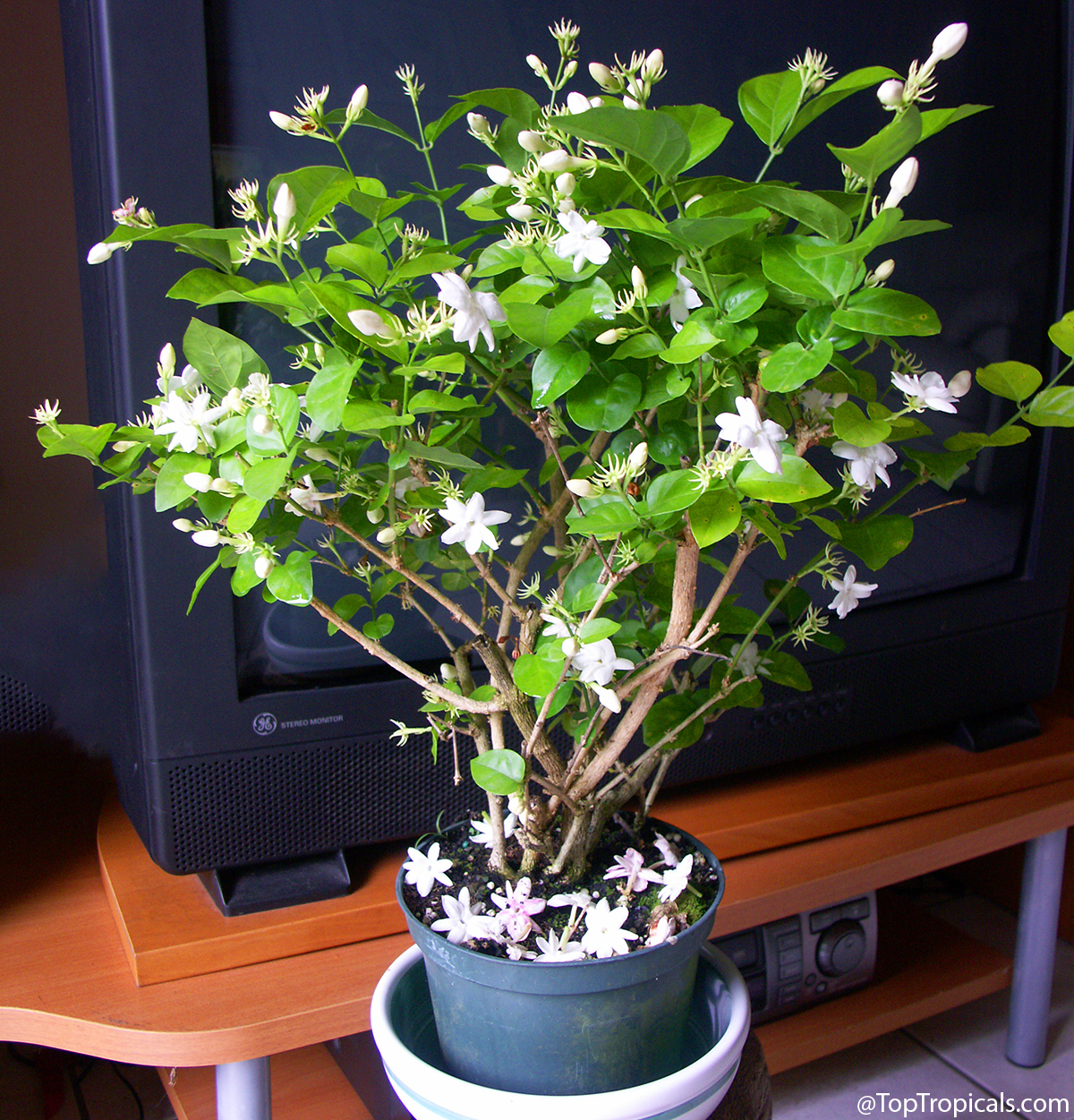
Jasmine  Sambac  Maid  of  Orleans  blooming  indoors  in  a  container  with 


numerous  white  star-shaped  flowers  and  glossy  green 


leaves.

Jasmine Sambac Maid of Orleans flowering indoors in a container under bright light.

❓Frequently Asked Questions About Jasmine Sambac

  • Does Jasmine Sambac need full sun?
    It flowers best in full sun. In very hot climates, light afternoon shade is acceptable. Indoors, give it the brightest window possible.
  • Can I grow it in a pot?
    Yes. Sambac performs beautifully in containers. Many gardeners prefer pots because it is easier to control size and move during cold weather.
  • How often does it bloom?
    With proper light and feeding, it blooms in cycles throughout the warm season. Consistency in care makes flowering more reliable.
  • Why is my plant not blooming?
    The most common reasons are insufficient light or irregular feeding. Increase light first, then review your fertilizing routine.
  • Is it difficult to grow indoors?
    Not if you provide strong light and good air circulation. Compact varieties adapt especially well.
  • Is it frost tolerant?
    No. Jasmine Sambac is tropical. Protect it from temperatures below 40F and bring it indoors before frost.

🌸 Year of the Horse Special – Jasmine Bonus

Celebrate 2026 with the fragrance of Jasmine plants. For a limited time, enjoy special savings when you grow one of the most wanted perfume plants in cultivation.
Jasmine Sale - 15% Off
Save 15% on all Jasmine plants. Discount is already applied in the online store - no code needed.
Offer valid through 02/28/2026.

🛒 Explore varieties of Sambac

Date: 18 Feb 2026

🔥 Blazing into the 2026 with hot jasmines

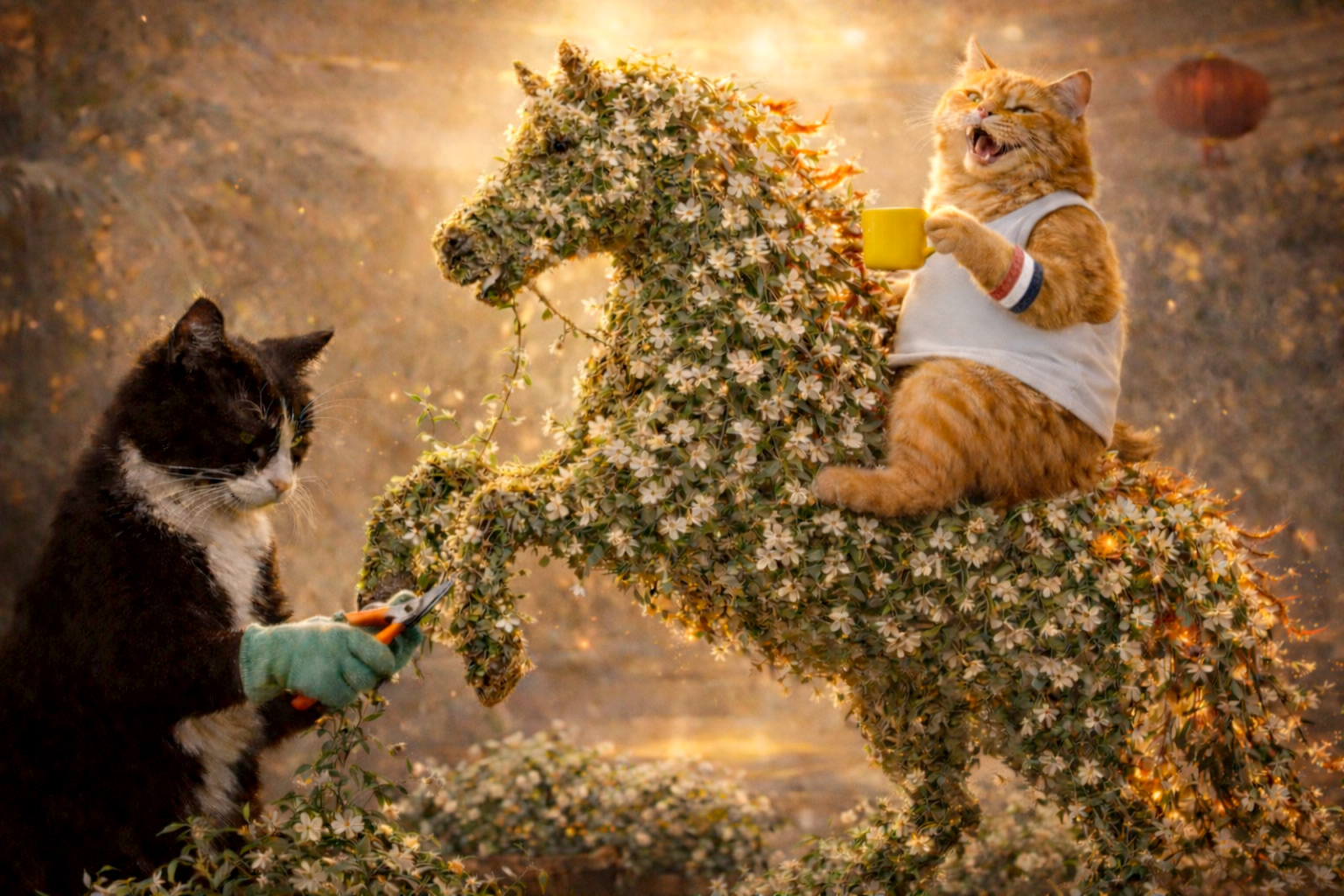
Sunshine  the  orange  tabby  wearing  a  red,  white,  and  blue  wristband  sits
 
 
  laughing  on  a  jasmine-covered  horse  topiary  during  the  2026  Year  of  the 


Horse,  while  Smokey  the  tuxedo  cat  trims  the  greenery  at 


sunset.
Sunshine: I'm blazing into the 2026 Year of the Horse! Call me Mister Fahrenheit. Don't stop me now! 'Cause I'm having a good time — I'm a shooting star, leaping through the sky like a tiger, defying the laws of gravity!
Smokey: It's jasmine, Tiger. A shrub. Not Wembley. Calm down.

💮 2026 Year of the Horse - and the Plant I Trust Most

By Tatiana Anderson, Horticulture Expert at Top Tropicals

Every new year carries its own energy.

2026 is the Year of the Horse - a year of movement, fire, momentum, and bold decisions. It is not a quiet year. It pushes us forward.

When fellow gardeners ask me what to grow in a year like this, my answer is simple:
Grow something that balances strength with grace.

For me, that plant is Jasmine Sambac.

In many cultures, Sambac represents devotion, purity, and deep affection. In the Philippines it is the national flower - Sampaguita - woven into garlands for weddings and sacred ceremonies. In Hawaii, it becomes leis - a symbol of welcome and connection - Pikake. In India, it perfumes temples and homes.

This is not just a fragrant shrub.
It is a plant tied to love, loyalty, and continuity.

The Horse runs forward.
Jasmine anchors the heart.

In a fiery year like 2026, I believe we need both.

And that is why I always return to Jasminum sambac.

🛒 Explore Jasmine varieties

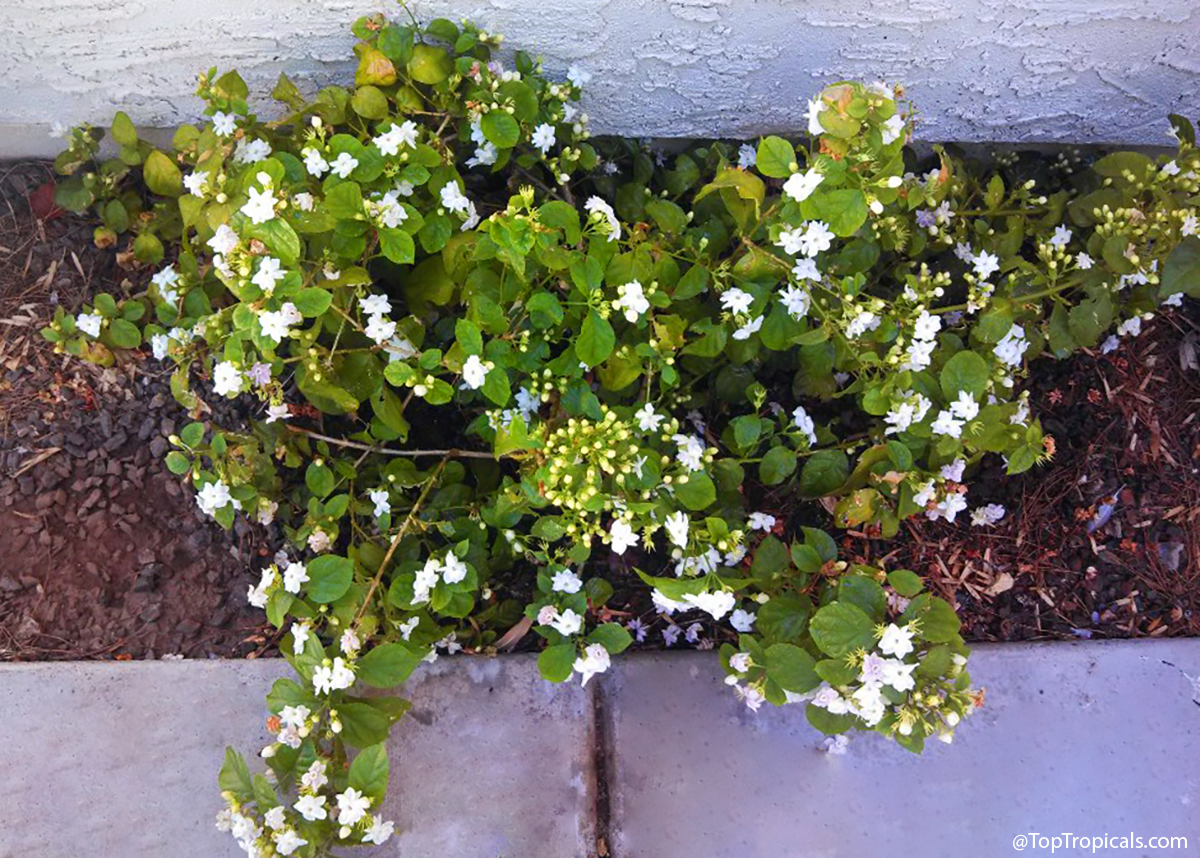
Jasmine  Sambac  Maid  of  Orleans  plant  growing  along  a  wall  with  clusters
 
 
  of  white  fragrant  flowers  in  bloom.

Jasmine Sambac thrives in hot, sunny locations

✅ Why Jasmine Sambac?

Over the years I have grown thousands of plants, but very few have the staying power of Jasmine Sambac.

It is not just fragrant. It is intensely, unmistakably fragrant. One open flower can perfume an entire patio. In the evening, the scent becomes deeper and richer.

But what makes Sambac truly special is its adaptability.

It can grow as a compact patio shrub, a flowering hedge, or a climbing vine. It performs beautifully in containers. It tolerates both full sun and partial shade. The more light you give it, the more flowers it rewards you with.

And unlike many tropicals, Sambac does not bloom just once. With proper care, it flowers in cycles throughout the warm season.

For gardeners, that combination is rare: beauty, perfume, flexibility, and repeat bloom.

That is why it has remained one of the most wanted fragrant plants in cultivation.

✍️ More About Jasmines from Blog

🛒 Explore Jasmine plants

Date: 14 Feb 2026

🍭 From Vine to Bean: A Practical Guide

Vanilla  planifolia  vine  climbing  a  support,  close-up  of  vanilla  flower,
 
 
  and  cured  vanilla  beans

Vanilla planifolia Vine, Flower, and Cured Vanilla Beans

How to Grow Vanilla: quick how-to

Vanilla is not complicated, but it does have preferences. Start with a pot and regular, well-draining mix. It does not need anything exotic. Give it:

  • Bright, indirect light
  • Warm temperatures
  • Good humidity
  • Air movement

Most importantly, give it something solid to climb. A wooden trellis, a log, or a burlap-covered board works well. The surface should be porous so the aerial roots can grip.

As it grows, guide the vine gently. You can prune it to control size. Vanilla is slow to mature. That is normal.

The Bloom Secret

Vanilla does not bloom just because it looks healthy. It blooms when it feels secure.

This is a climbing orchid. It must attach firmly to a solid, porous support such as a wood log, trellis, or burlap-covered board. When the aerial roots grip and the plant reaches maturity, flowering becomes possible.

Once the flowers appear, they usually need to be hand pollinated to produce pods. Each flower stays open for only a short time, so timing matters.

How to pollinate vanilla: In this video, we show you exactly how to pollinate vanilla step by step

❓Vanilla care: quick FAQ

  • Does Vanilla planifolia really produce vanilla beans?
    Yes. Vanilla planifolia is the commercial source of vanilla. After flowering, it can form long green pods (vanilla beans). The aroma develops later during curing.
  • What is the secret to getting vanilla to bloom?
    Let it climb. Vanilla is a climbing orchid and usually will not bloom until its aerial roots attach firmly to a solid, porous support like a wood log, trellis, or burlap-covered board.
  • Do I need to pollinate vanilla flowers?
    Yes. In most home growing conditions, vanilla flowers must be hand pollinated to produce pods. Each flower is open for only a short time, so timing matters.
  • Can I grow vanilla indoors?
    Yes, if you can provide bright, indirect light, warmth, humidity, and a support to climb. A sunny room with filtered light and a trellis or log can work well.
  • What should I use for support?
    Use a sturdy trellis, a wood log, or a burlap-covered board. The key is a porous surface that aerial roots can grip. Avoid chemically treated wood. Check out this very unusual way to grow Vanilla Orchid over a wall.
  • What potting mix should I use for Vanilla plant?
    Start in a pot with a regular, well-draining potting mix such as Sunshine Abundance. As the plant matures, it relies more on its support and aerial roots than the soil.
  • What fertilizer should I use?
    Sunshine Boosters Orchidasm is formulated specifically for orchids and will work perfecty for Vanilla orchid as well.
  • How big will it get?
    As big as you let it. Train it and prune it. Vanilla grows according to the structure and space you provide.
  • How long until it flowers?
    Typically a few years. Vanilla is a long-term project, but it is very rewarding once established.

For Collectors and Enthusiasts:

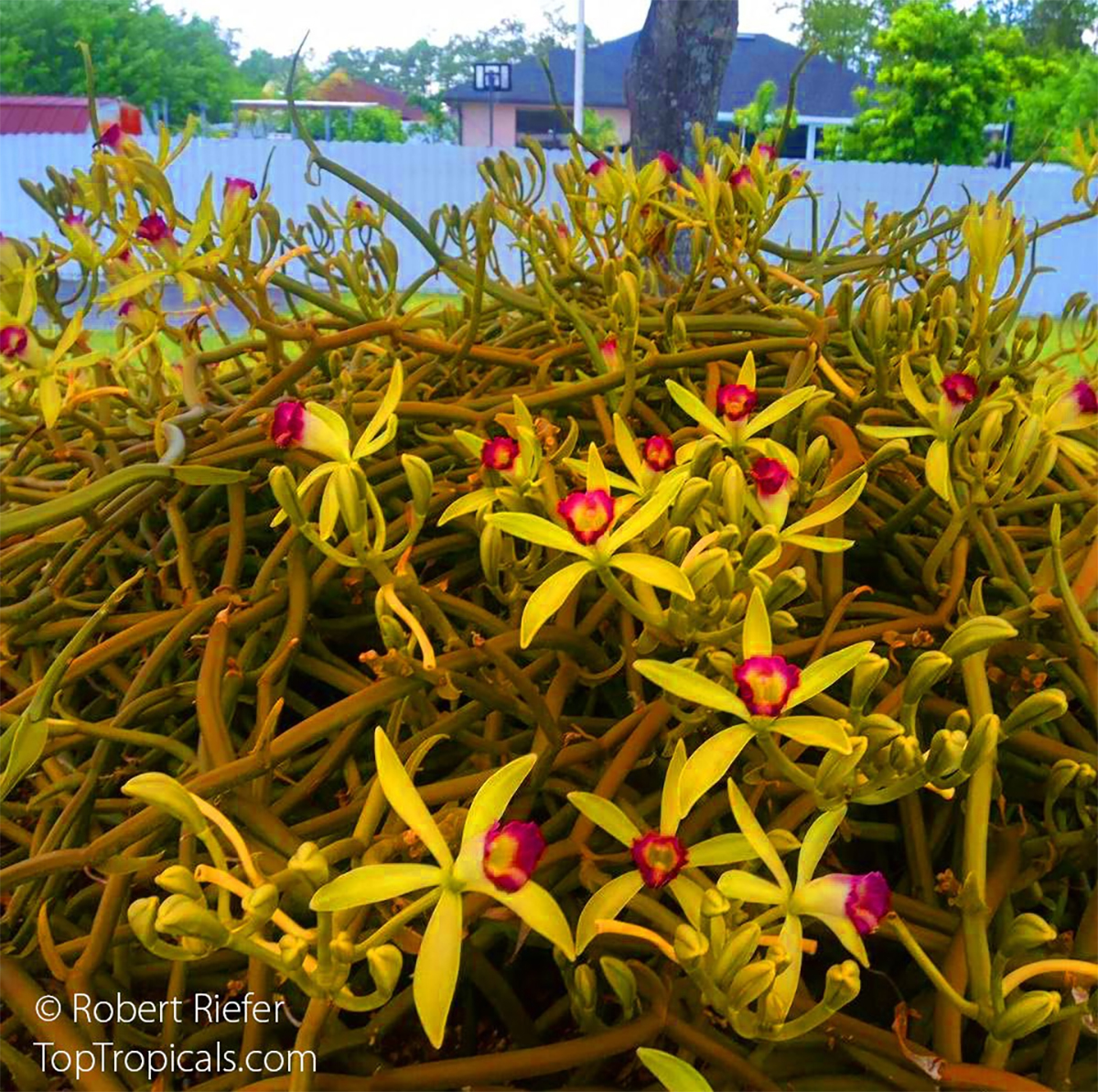
Vanilla  dilloniana  vine  covered  in  yellow-green  flowers  with  red 


centers  growing  outdoors  in  100  gal  pot

Vanilla dilloniana in Bloom - Rare Florida Native Orchid

We also offer Vanilla dilloniana, a rare Florida native species with distinctive flowers.

One remarkable specimen of this species, grown by our friend Robert Riefer, became so vigorous over many years that it outgrew a 100 gallon container and was eventually moved into a 250 gallon pool on wheels.

The plants we offer are propagated from that very specimen:

That kind of growth reflects deliberate cultivation and ideal conditions - not something that happens unintentionally.

Vanilla grows according to the space and structure you provide.

For gardeners focused on producing real vanilla beans for the kitchen, Vanilla planifolia remains the right place to start.

✍️ More About Vanilla Orchids from Blog

🎁 Shop Vanilla Orchids

Date: 14 Feb 2026

🍧Vanilla does not come from a bottle

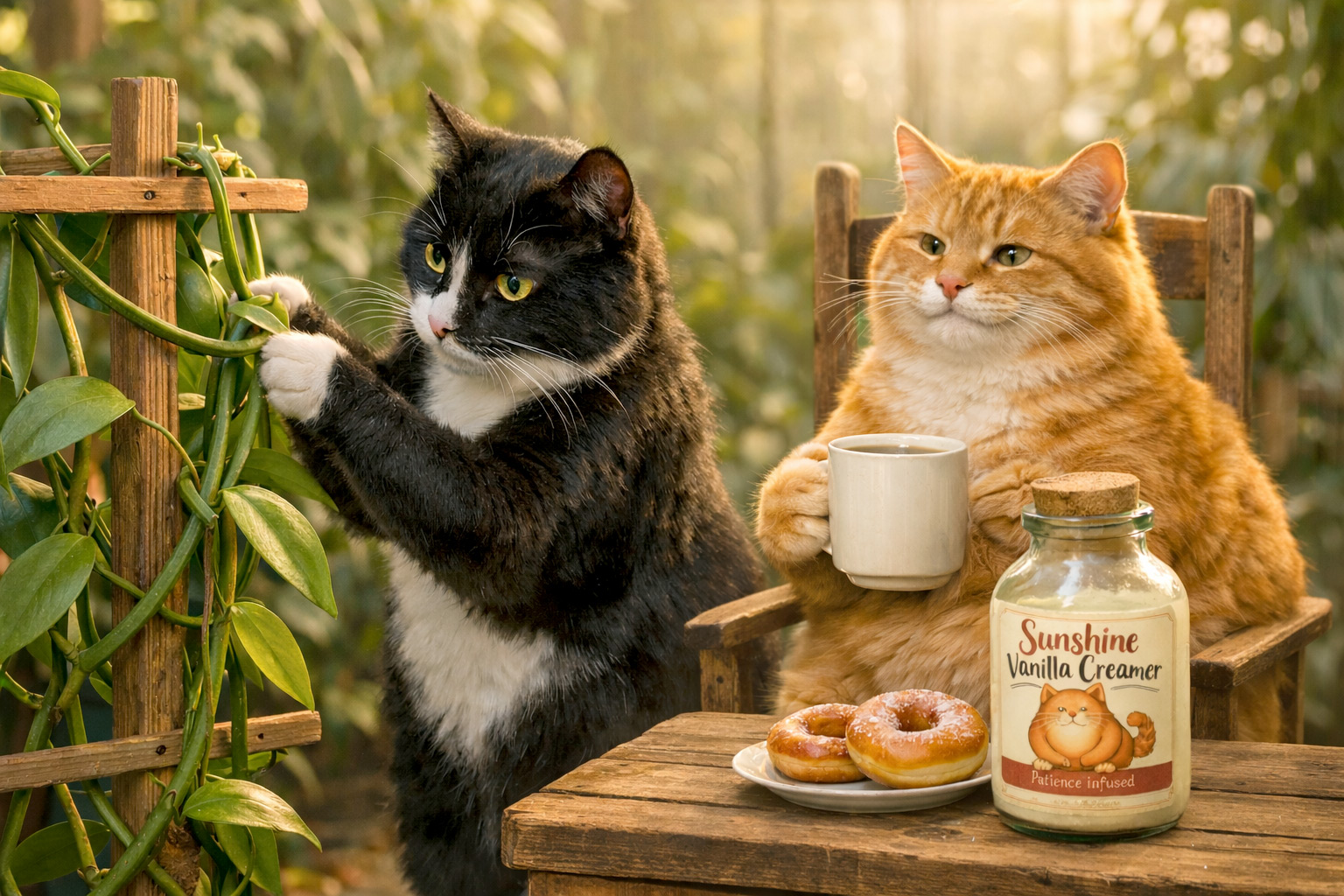
Tuxedo  cat  training  a  vanilla  vine  on  a  wooden  trellis  while  orange  cat
 
 
  drinks  coffee  beside  jar  labeled  Sunshine  Vanilla  Creamer.
Sunshine: What are you doing?
Smokey: Growing vanilla for your creamer. It needs support to climb.
Sunshine: I can provide moral support and donuts. Count on me, my friend.

🍨 The orchid behind the worlds favorite flavor

Vanilla does not come from a bottle. It comes from a climbing orchid. Vanilla planifolia is the plant that produces real vanilla beans - and yes, you can grow it at home. It starts simply. A potted orchid with glossy leaves. Then it begins to reach. Vanilla is a climber. It wants something solid to attach to. This is where most people go wrong. They keep it in a pot and wait. Vanilla needs support - a log, a trellis, a wooden board. Once its aerial roots attach firmly and the plant matures, flowering becomes possible.

It is not instant. You need patience. The pods form green and only develop their aroma after curing. That slow process is part of what makes vanilla so valuable. For gardeners who enjoy growing something meaningful - something edible and beautiful - vanilla is worth it. Vanilla is not a novelty plant. It is a long conversation with your garden.

🎁 Shop Vanilla Orchids

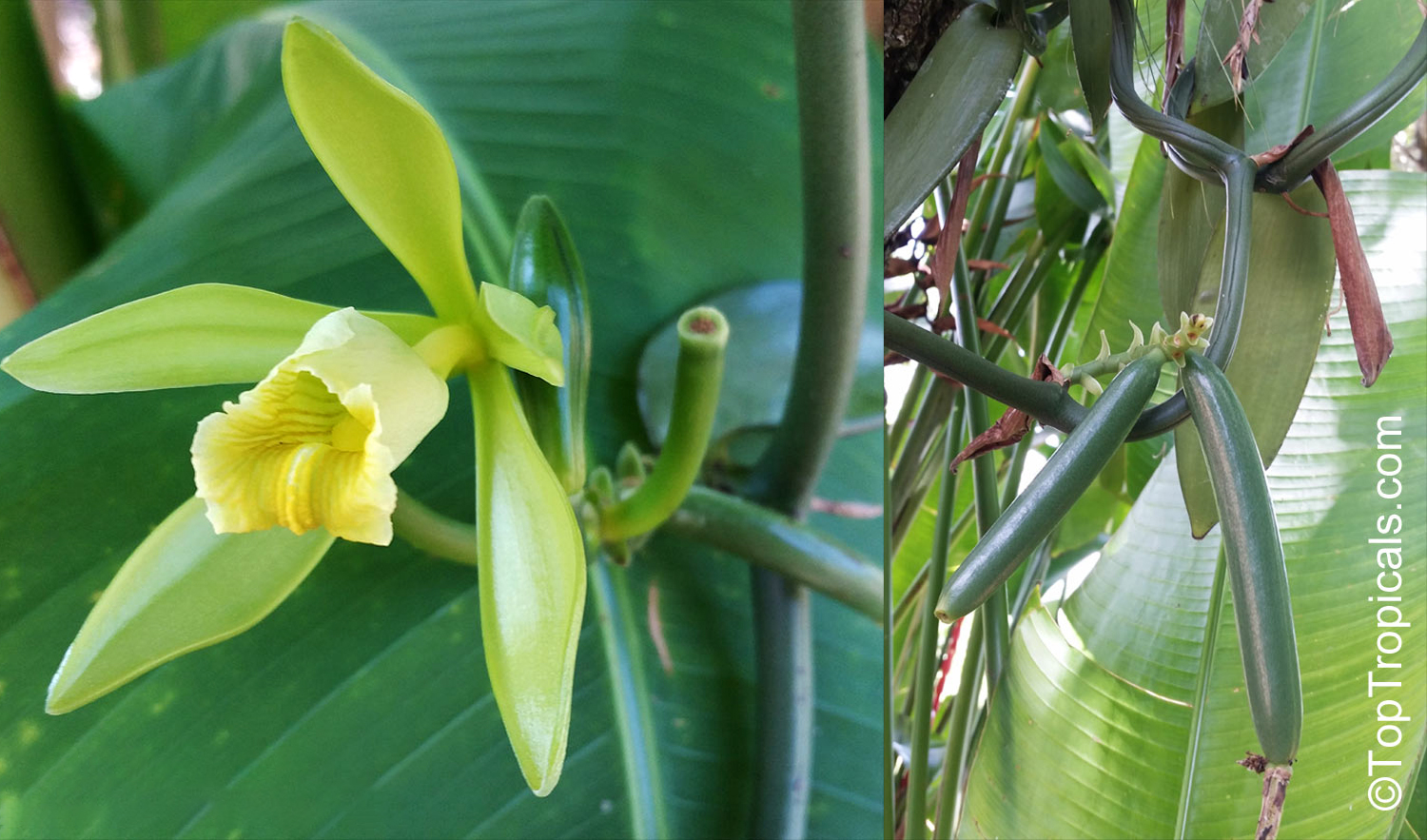
Close-up  of  Vanilla  planifolia  flower  with  yellow  throat  and  green 


vanilla  bean  pods  developing  on  climbing  vine

Vanilla planifolia Flower and Developing Vanilla Pods

Date: 6 Feb 2026

💕How would you like to give a Valentine plant gift?

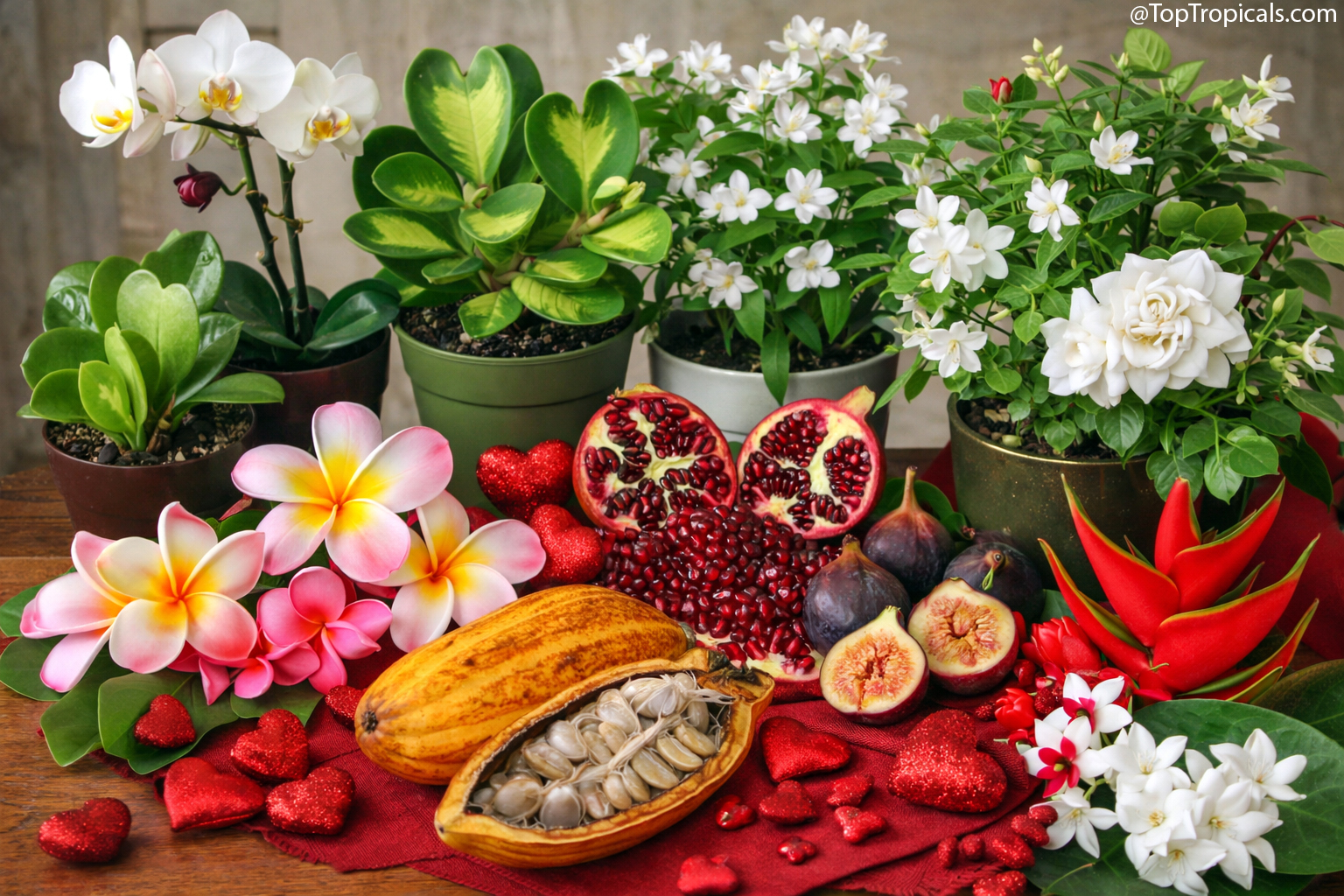
Valentines  themed  arrangement  of  tropical  plants  and  fruits  including 


heart  shaped  hoya,  orchids,  gardenia,  jasmine,  cacao  pod,  figs,  and 


pomegranate  with  red  heart 


decorations

Choose the plant

If you already know what feels right, choose the plant now. Sweetheart Hoya is a favorite for a reason, and there are other Valentine plants to explore if you want options.

A good choice when you feel confident, love plants, or are gifting something meant to live indoors.

Let your Valentine choose

If timing, weather, or choice feels uncertain, a Gift Card keeps the moment simple. Your Valentine can choose the perfect plant when the time is right.

Especially helpful for gardeners up north, or when you want the gift to unfold later.

About shipping and timing

We ship live plants with care and pay close attention to weather along the way. If conditions are not right, we may hold a shipment briefly to keep plants safe.

If timing or weather makes you hesitate, a Gift Card is an easy way to give a Valentine gift now and choose the plant later, when conditions are perfect.

Valentine Day Gift Card Bonus
To make Valentines Day a little sweeter, we are offering a special gift card bonus for a limited time. When you purchase a gift card, we add 15% extra value. Just add Valentine greeting in gift card message field. For example, a $100 gift card becomes $115 to spend.
Offer valid through 02/15/2026.
The bonus value is not valid with other promotions or discounts. Gift cards cannot be used to purchase other gift cards. Bonus value is added at the time of purchase.

🎁 Buy Gift Card

More Valentines Gift Plants

  • Valentines plants from around the world that symbolize love, connection, and appreciation. 👉Learn
  • Top nine plants of love, desire, and the senses: aphrodisiacs and sensory connections. 👉Learn
  • Four popular plants of friendship, appreciation, and shared connection. 👉Learn
  • Eight favorite plants of romance, affection, and emotional connection. 👉Learn
✍️ More About Velentines Gift Plants from Blog

🎁 Shop Gift Plants