Garden Blog - Top Tropicals

Date: 23 Oct 2022

What is Akee fruit?

One of the most bizarre looking, yet useful...
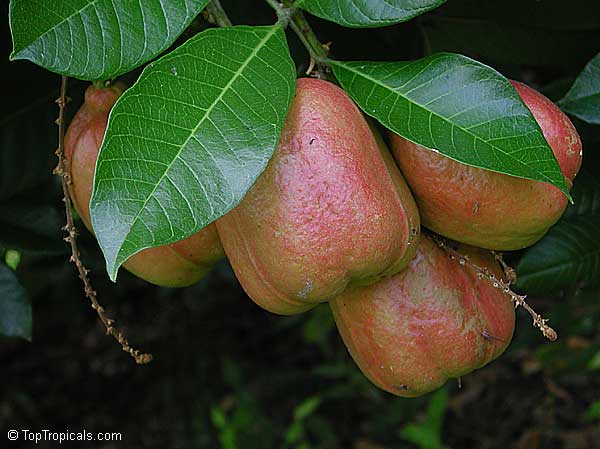
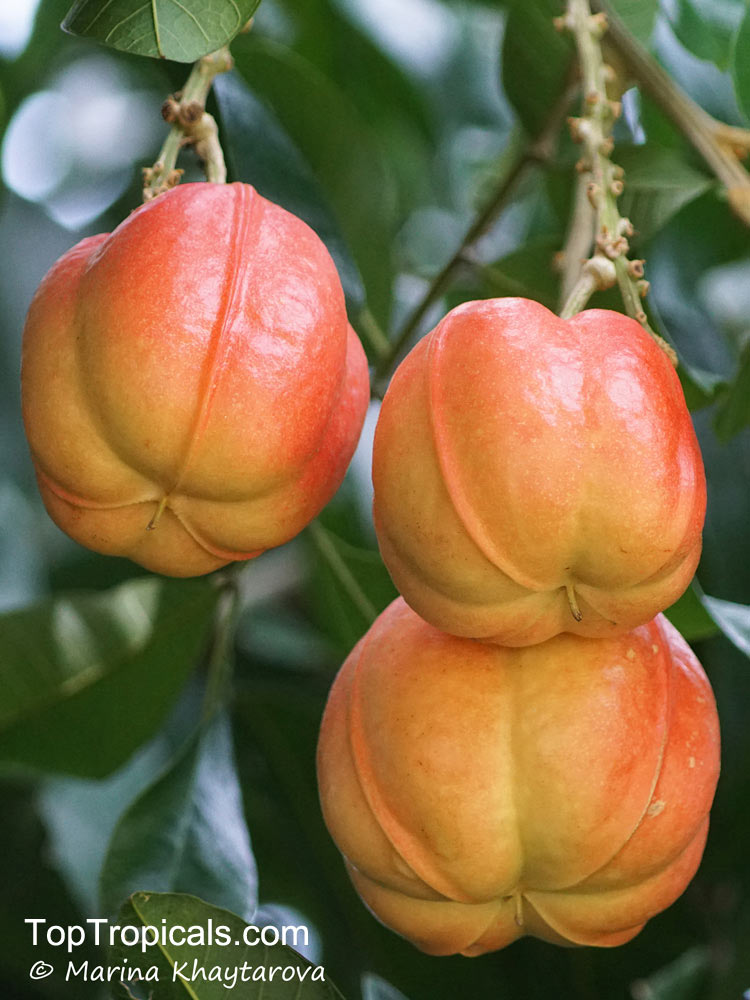
Akee fruit on the branch with leaves

Email from our Florida customer:

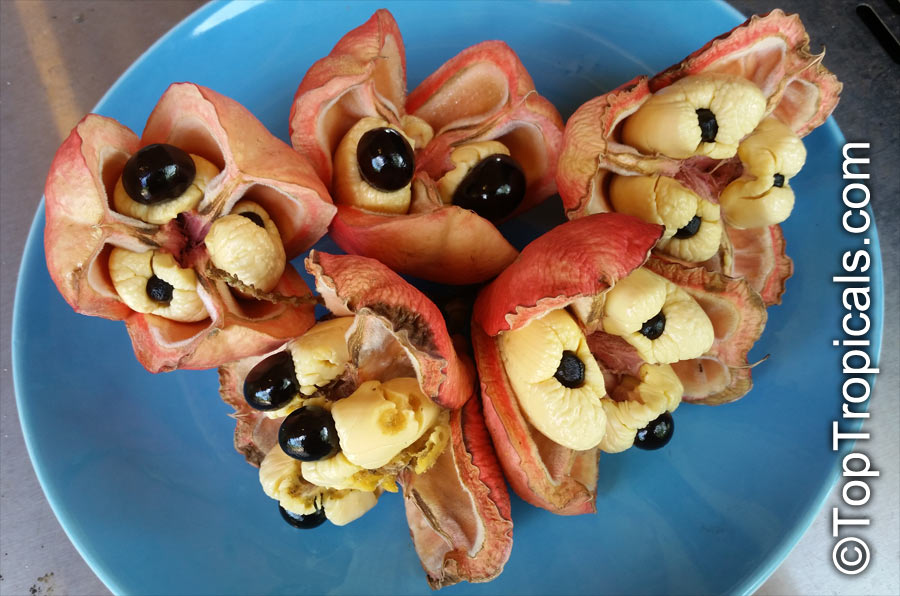
I got an Akee tree from you last year for my tropical fruit garden collection and honestly didn't know much about what it was. This year it started growing real fast and branched out. In spring it was flowering like crazy and now I have about 20 bright coral fruit hanging off the tree that look like Christmas decorations. They are extremely showy and can be seen from far away, I have neighbors stopping by asking what kind of tree it is. I finally did more research on it and found a recipe how to cook the fruit. Only a few had ripened and opened so far, but I already had a chance to try the meal. Cooked the arils and fried in a pan with some butter. What a delicious surprise! To my taste, it is like a mix of potatoes and eggs. Just through in some bacon and it will make a complete breakfast! One of the coolest fruit I've tasted. Just wanted to share this with you.

About Akee (Blighia sapida)

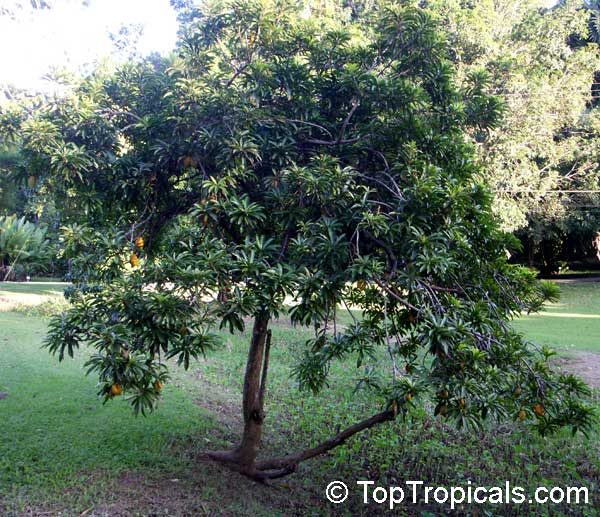
This showy fruit, a close relative of Lychee, Longan, and Rambutan, is a National fruit of Jamaica. It is indeed very exciting one, and what is also important, the tree is easy in cultivation, fast growing and can be maintained compact. I it is not bugsy or picky about soil/water conditions, and is relatively cold tolerant for being a tropical tree. You can find delicious akee meals only in Jamaican restaurants. But no need to search for it - grow your own tree, it can't be easier. It will start fruiting for you the next season, you don't have to wait long. Sometimes it fruits twice a year! However, remember, the fruit is used as a vegetable, and is not eaten raw. It must be picked after the fruit has opened naturally so the flesh is fully exposed to light. When the fruit has "yawned", discard the seeds (or better plant them to grow more trees - to share with your friends!). The arils, while still fresh and firm, are best parboiled in salted water or milk and then lightly fried in butter. Then they are really delicious!
Read more about this tree...
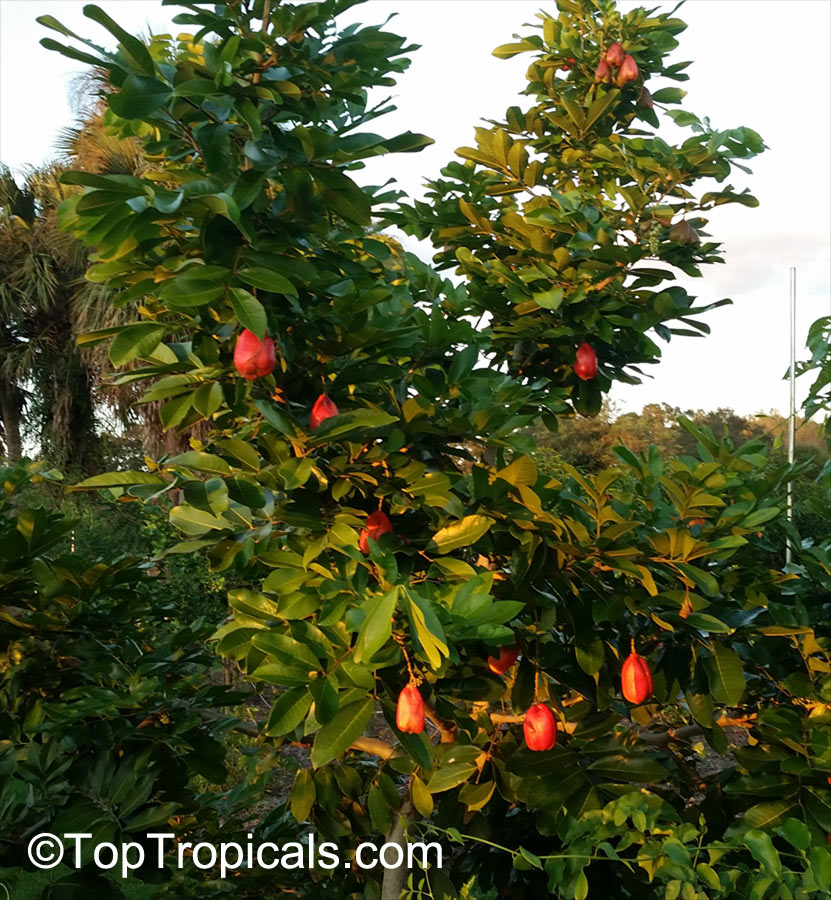
Akee tree

Akee fruit

Akee fruit with pulp and seeds on a plate

Date: 21 Oct 2022

Grow your own food:
Pouteria campechiana - Canistel
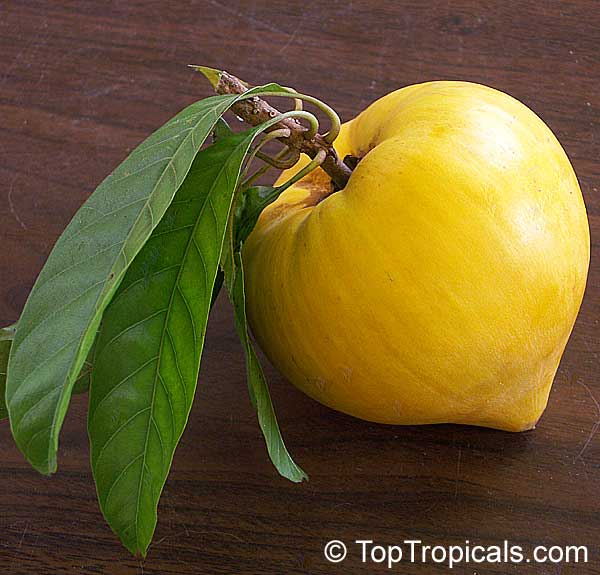
The curious heart-shaped Egg Super-Fruit

by Alex Butova, the Witch of Herbs and Cats

Canistel fruit

...You will be surprised how many health benefits this fruit can offer! Yet is is a beautiful, curiously shaped piece of Nature's Art, and the tree is super easy to grow. It is relatively cold hardy and fast growing, providing with the first crop within a year or two...

10 greatest health benefits of Canistel fruit

1. Canistel is good for the heart
2. Canistel lowers the risk of diabetes
3. Canistel lowers the risk of cataract
4. Canistel treats osteoarthritis
5. Canistel prevents cancer
6. Canistel is immunity booster
7. Canistel is great for digestion
8. Canistel prevents anemia
9. Canistel promotes healthy bones
10. Canistel reduces the risk of Alzheimer's

LEARN THE DETAILS >>

Canistel tree

Date: 19 Oct 2022

Project Ian

A letter from a gardener:
"We just want our paradise back!"

PeopleCats Botanical Garden

"...My name is Ian, and I am a 21 y/o Natural Resource Management student at South Dakota State University. In 2006, my family found a small barrier island lush with foliage and virtually untouched by the modern world, and we fell in love. Little Gasparilla Island became a piece of our family and now after 16 years, we still spend months out of each year enjoying the island's natural beauty.
Enter Hurricane Ian.
With the eye of the hurricane traveling directly over the island, many homes and materialistic items were destroyed, but more importantly, the once beautiful "jungle" is now more comparable to a barren desert.
This is where I was hoping to get some help... to restore the beauty of Little Gasparilla. After almost 3 weeks, neither the county nor FEMA has made it out to survey our island. And it is almost as if we feel forgotten. After fending for ourselves for clean-up, I am ready to get to work on landscaping. Plants are my passion and it pains me each day to wake up and see that 90% of our Australian and Norfolk Island Pines are completely gone, along with most foliage and palms.
We just want our paradise back, and many of us will work for it by any means necessary..."

We replied to Ian who suffered from Ian... We are willing to help his beautiful island, as well as everyone who is looking for help restoring our Florida beauty. Check out our deals and re-leaf discounts we send in our Newsletters. Remember to attend our Garden Festival on Nov 19, with some big discounts as well as free plants for after-Ian re-leaf!

We will make Florida beautiful again.
We will call it Project Ian!

PeopleCats Garden and pond

Date: 16 Oct 2022

This Fall Special:
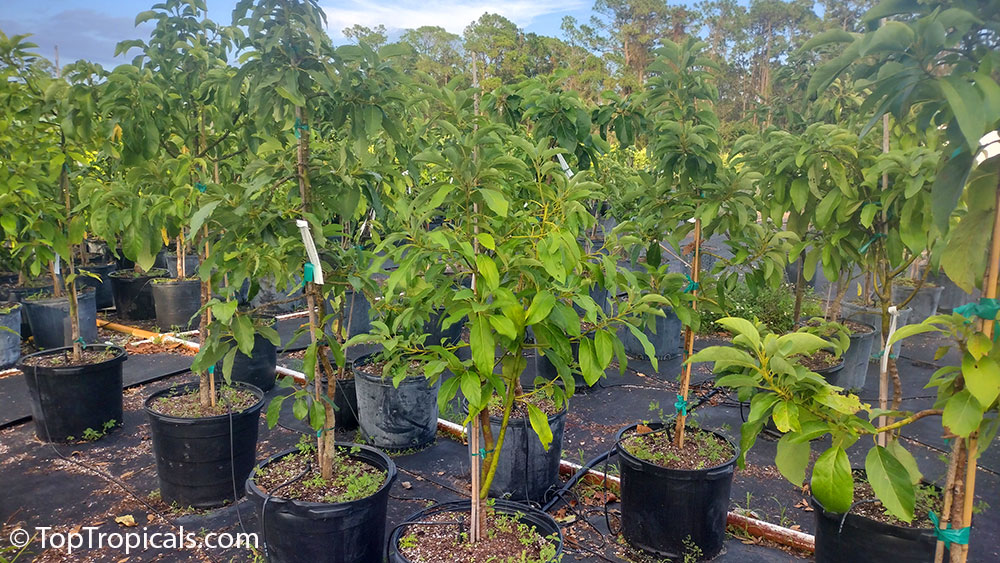
Avocados and Champakas in large containers

Save $25 cat in a shower

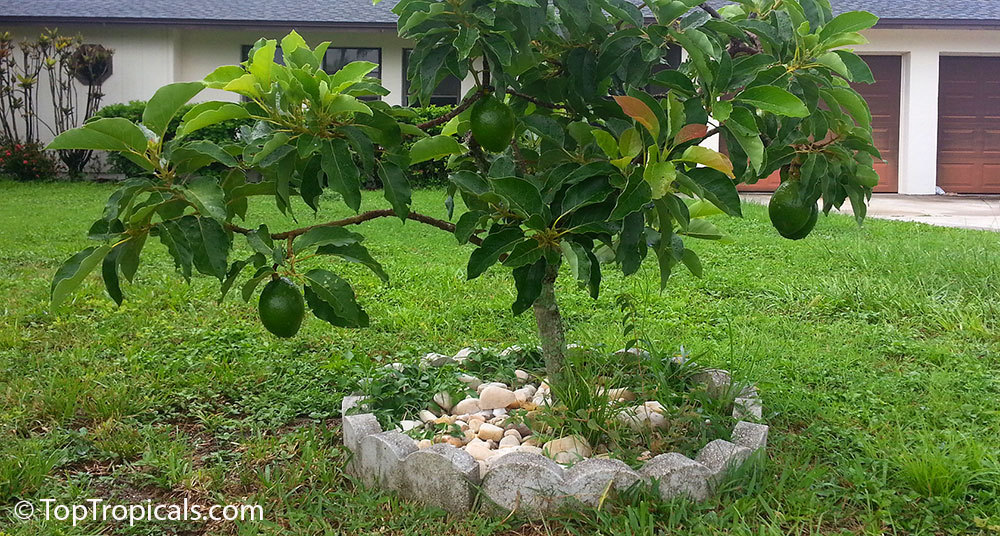
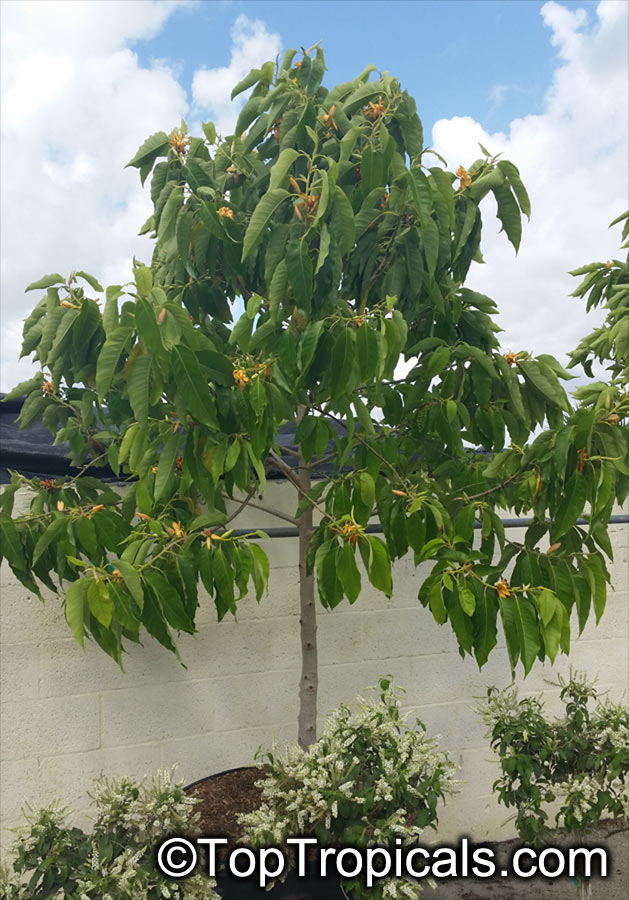
The clean-up and restoration after Hurricane Ian continues for many of us across Florida and the Southeast. Some people In SW Florida lost their homes, and almost every home owner lost a tree or even the whole garden. TopTropicals is here to help. We started introducing special Re-Leaf offers to help local gardeners replace broken trees. When it's time to restore your garden, we have 15-25 gallon Avocado trees in many varieties and oversized Magnolia Champaca trees available for pick up at our Fort Myers Garden Center or B-Farm in Sebring.

These trees are 6-8 feet tall (some larger) and ready to bear fruit!

Please call or visit our Garden Center to select your own tree.

Delivery and installation available

Limited time offer!

Avocado trees in 15 gal pots

Magnolia (Michelia) champaca - Joy Perfume Tree, Champaka, 15 gal pot

Date: 11 Oct 2022

Fertilizing in Fall:
Plants need food too!

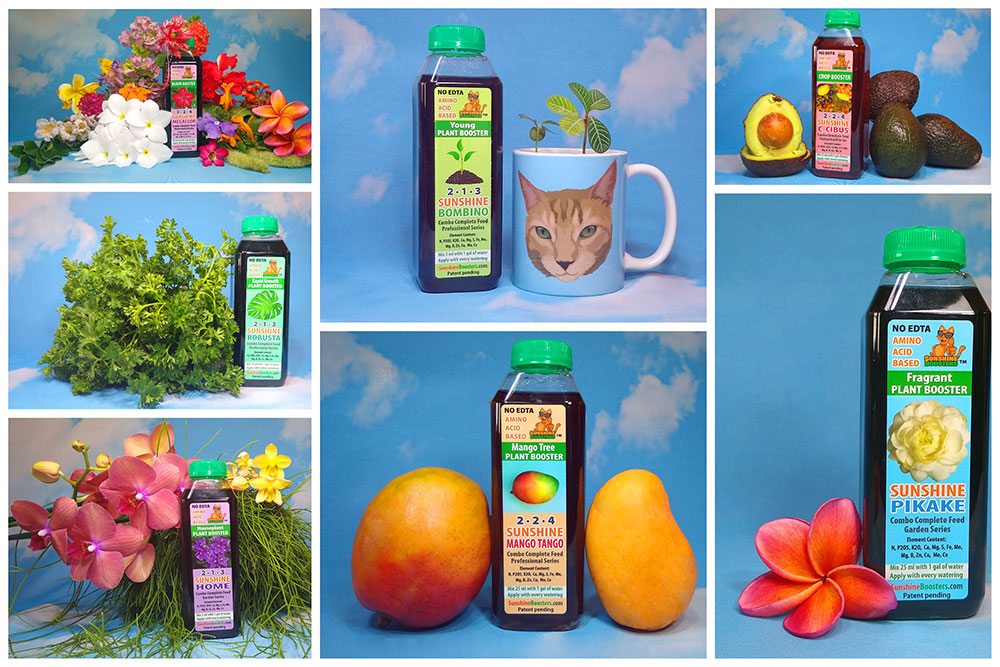
Sunshine boosters products collage

Q: I know that I am not supposed to fertilize plants in winter. But I just bought several ground orchids from you, they are blooming now and I wonder if I can give them some food to support their bloom energy? When should I do the last application of fertilizer? I will keep them in a sun room during Winter until Spring.

A: Traditionally, end of October to November is the time when we give the last dose of fertilizer to our tropical plants. Liquid fertilizers, and especially amino-acid based Sunshine Boosters, are safe to apply year around. This means, you can continue feeding your plants with Sunshine Boosters through the Winter without risk of over-feeding or burning roots. Why?
The answer is very simple: even with their metabolism slowed down in Winter, plants will use all that food.
Sunshine Boosters have special mild formulas that are scientifically designed and based on Amino Acids. Plants will use all essential elements from the solution as needed.
Liquid fertilizer is diluted in water, and will be applied only when you water the plant. During Winter, water needs are lowered = watering times are less frequent, with less amount of water = the plants will get less water and less fertilizer accordingly.

Importance of micro elements
in combination with plant food during winter

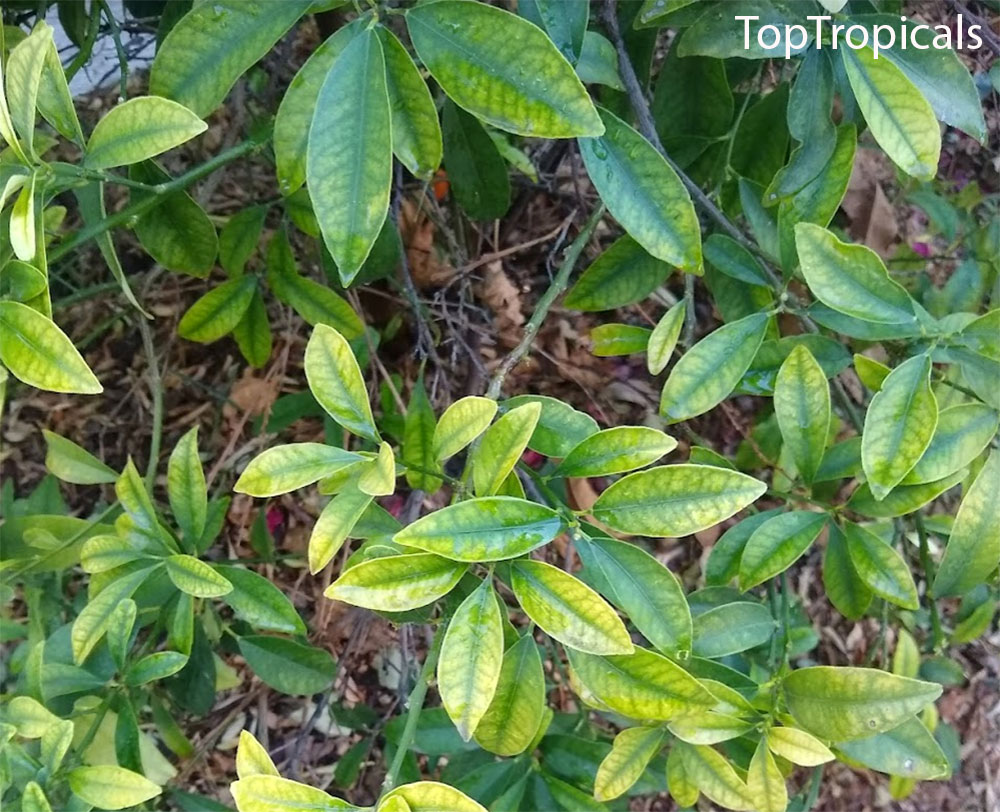
winter chlorosis on Kumquat leaves

In the photo: winter chlorosis on Kumquat leaves that is very hard to treat and should be prevented instead

Keep in mind that feeding your plants regularly during Winter will help to avoid "winter chlorosis" and other deficiency problems. So called "cool-temperature-induced chlorosis" (CTIC) is especially common in Spring on young, actively growing leaves. Unless chlorosis is prevented by micro-element applications, affected leaves may remain in this condition for the rest of the growing season.

Make sure to select proper type of fertilizer for your over-wintering plants. We have special formulas for foliage, flowering plants, fruit trees, young seedlings, even for for orchids and bromeliads. Check out our selection!

Cats looking for food in grocery bags