Garden Blog - Top Tropicals
Date:
PeopleCats of TopTropicals. Cats of the day: Biggy's Cat Hospital
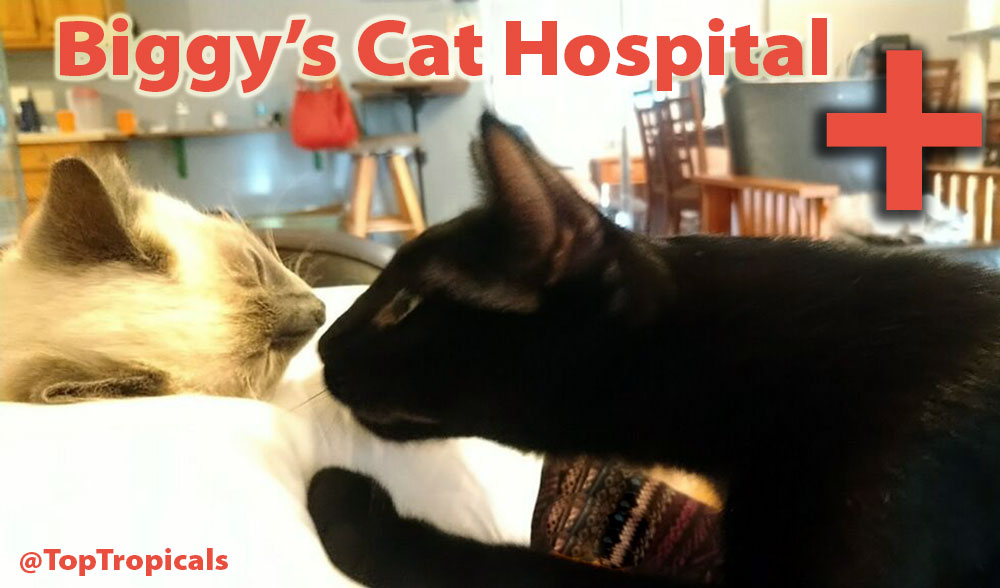
Biggy checking on patient Abu when he couldn't walk
During these challenging times for the whole planet, we receive kind letters from our customers checking on how our PeopleCats are doing, especially those that previously were ill. And since we promised to follow up on everyone, including heart-breaking story of Raja and Abu, today's report is about everybody's progress!
As we mentioned in our previous newsletter, several cats in TopTropicals
Cat Sanctuary had a coronavirus (we call it COVID-Cat-20), or simply a cat respiratory infection. Chiefy, Snitch, Marco and Biggy had it really bad, but some other PeopleCats surprisingly didn't
get it! Just like with humans. Lucky King didn't have a single sneeze!
Finally, everybody has recovered by now, but it has been a very stressful
couple of weeks for us, considering limited vet availability at this stay-home
time. On top of that, Lil S had an abscess and was also contained in a home hospital, away
from flu-quarantined PeopleCats. Our homes become real cat hospitals!
We are thankful to our customers support, especially Silvia who made
several donations for our PeopleCats, and also recommended antiseptic pads - those worked great for Lil S!
Abu and Raja's adventures were not over... After 2 weeks of seeing a
vet treating their infections and injuries, they got worse... Then after a
couple of weeks in another hospital (and a couple thousand more in bills) we were
suggested to put them down as hopeless since they would never walk again...
But Kristi did not want to believe it, she did not give up! The kittens heard
her. They won. Today, they are all better, walking, jumping and playing!
Thank you Kristi!
Never give up hope!
Stay safe and healthy with your PeoplePets!

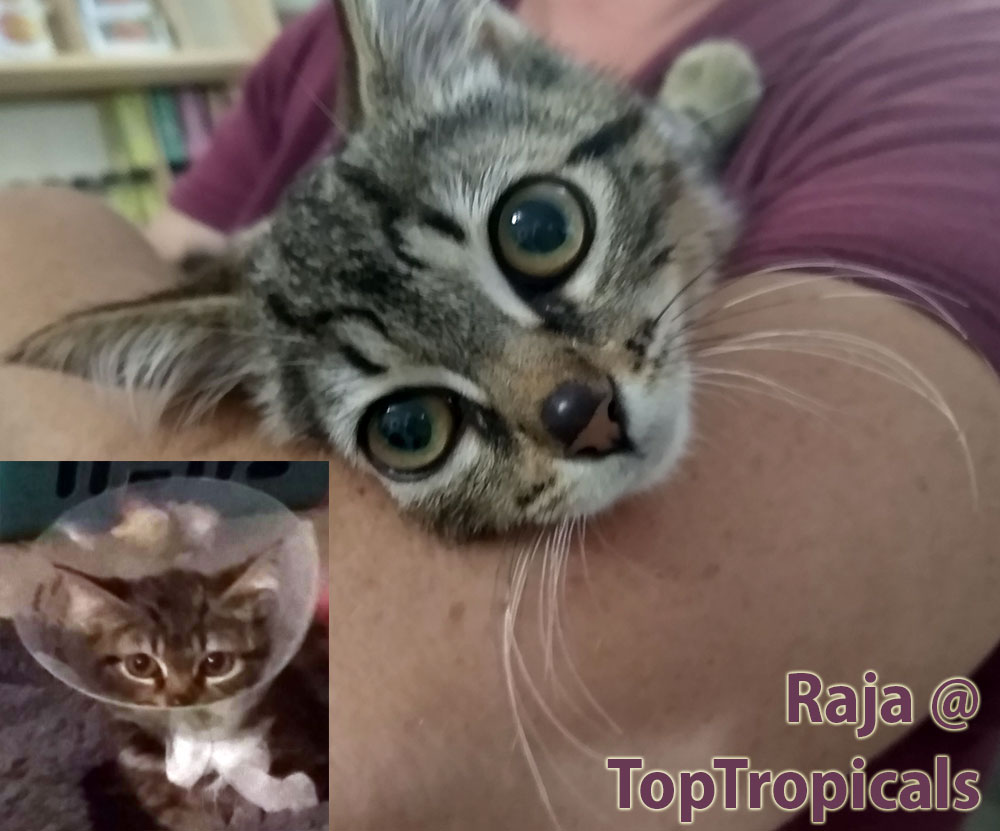

TopTropicals PeopleCat Club
Thank you everybody for supporting us in helping PeopleCat Community!
Make
your kind donation today and receive a surprise gift from us. Every little
bit helps! Thank you and God bless you and your pets!
Date:
Meet PeopleCats of TopTropicals. Charlie, the Indoor Hunter
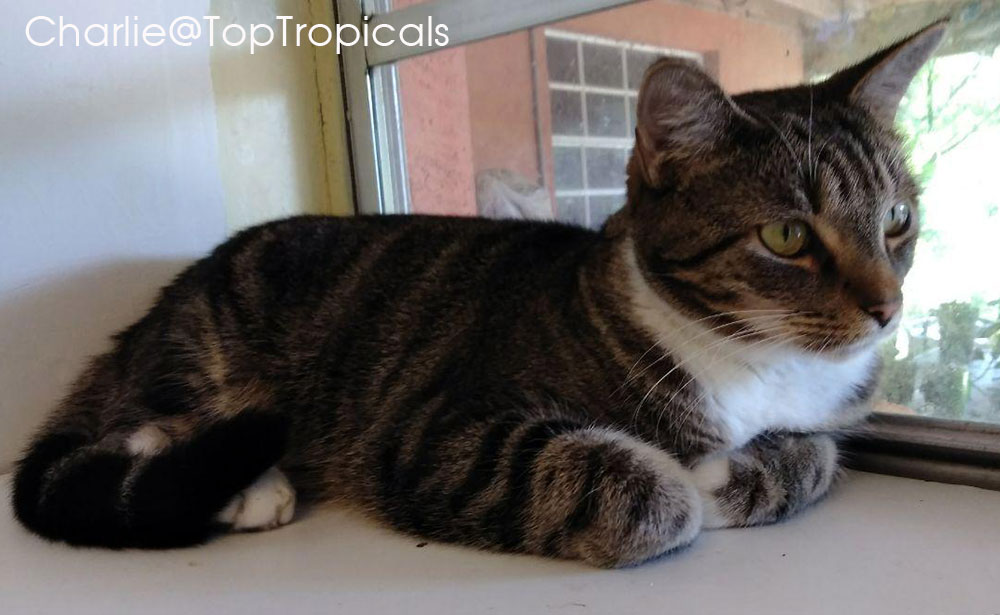
Carlie was a kitty drop off with LadyBug, Rickie, and Purry.
Charlie is Jamie's baby. She has an attitude of a teenager, one minute she
loves you and the next - wants nothing to do with you. Carlie stays with the
inside PeopleCats, she says it's too big in the outside world for her and she
gets scared. Carlie has a fun game (fun to her): she plays around 2:00 am in
the morning, she loves to drag random items down the hall (socks, toys,
shirts, even blankets) in her mouth MEOOOWWWING as loud as she can. She then sets
the items down on her human's bedroom rug and waits for her human to say
thank you. We're pretty sure her hunting instinct is off...
Check out and more Cat of the Day stories.
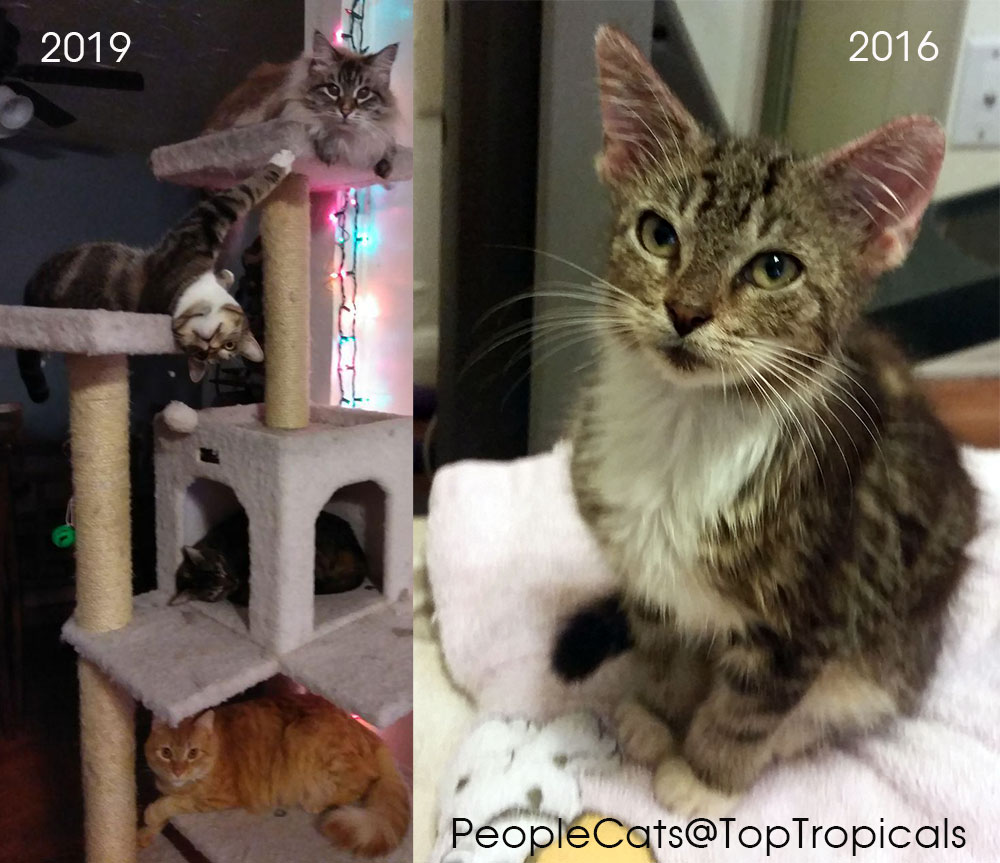
2019, from Top to Bottom: Moe, Charlie, Bagheera, and Snitch. 2016: Charlie
Date:
Cold protection of tropical container plants
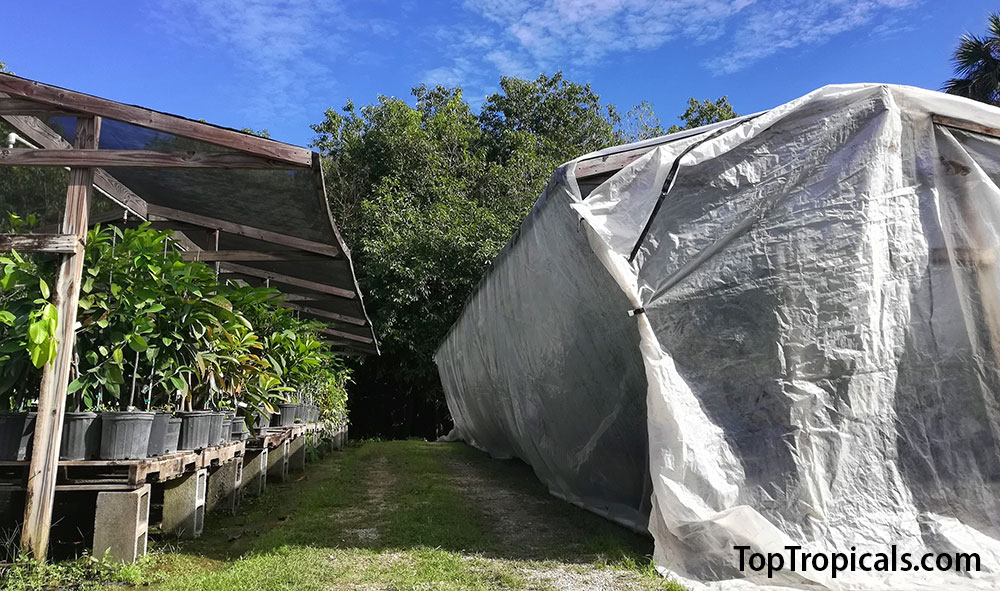
Q: I am long time customer of yours, I live in San Diego California and while the summer and Fall temperatures are warm to mild, the winter temperatures dip to a point where some tropicals die off. We are experimenting with different variations of way to heat and insulate the pots we have the tropicals planted in as a way to keep them alive during the colder winter months. I was wondering if you knew of the ideal soil temperature for these tropical in order to look their best year round. All of the heaters we have installed have thermostats and temperature adjustments so we can now keep the soil anywhere between a range of between 65-75 degrees. Any advise you can provide would be greatly appreciated.
A: This is a very interesting concept you are working with.
Indeed, keeping pots/roots warm, may help a lot! We've been experimenting with
cold protection for a long time - for the above-ground plant parts. For sure
keeping roots protected (even with a thick layer of mulch) will benefit tropical
plants during winter. In case with container plants, this may help
dramatically.
The guideline is, tropical plants slow down or stop their metabolism at
65F. As long as you can keep soil above that temperature - this should work
great. Of course, the higher the better.
Optimum temperature for growing tropical plants in general - 70-85F.
Above 90F, metabolism stops too, unless it's a heat tolerant, desert
plant.
More information on winter cold protection of tropical plants and zone pushing:
Greenhouse in Virginia
Plumeria cold protection
Ghost Cold Protection
Seven rules of cold protection for tropicals
About Cold Protection
Cold protection - winter action for your plant collection
Tropical Treasures articles on zone pushing.
Date:
PeopleCats of TopTropicals. Cat of the Day: the mischievous Jim the Second
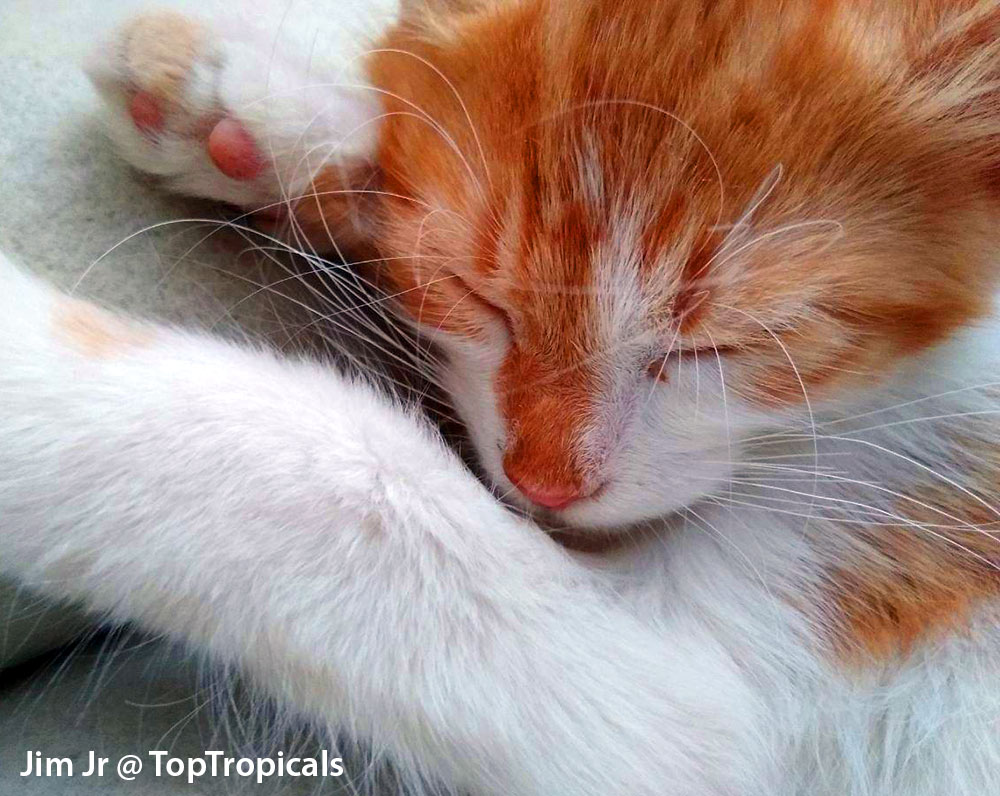
In May 2020 we celebrated 16th birthday of Jim the Founder - the Cat who established
TopTropicals. It broke our hearts when this Old and Wise Purrrson peacefully passed away
this August :(( We want to believe that he is now in Cat Paradise... but we
miss him terribly - both humans and PeopleCats. Google the Cat lost his appetite and went into a deep depression after
he lost his best buddy... To get him distracted from his separation stress,
we decided that Google needs... a Project.
Here he is. Jim the Second. About a month ago we found him in a Human
Society shelter. He was a tiny fur ball size of a palm of a hand. But he proudly
carries his Godfather's name, for a reason - he likes to EAT - just as much as
Jim the First. He eats 3 times more than Google, and he talks a lot. And of
course, he pulls everyone's tail, and kicks everything that is kickable...
The Veteran Google complains that young generation of PeopleCats nowadays
are nothing but trouble... but they've become friends anyway! Google feels
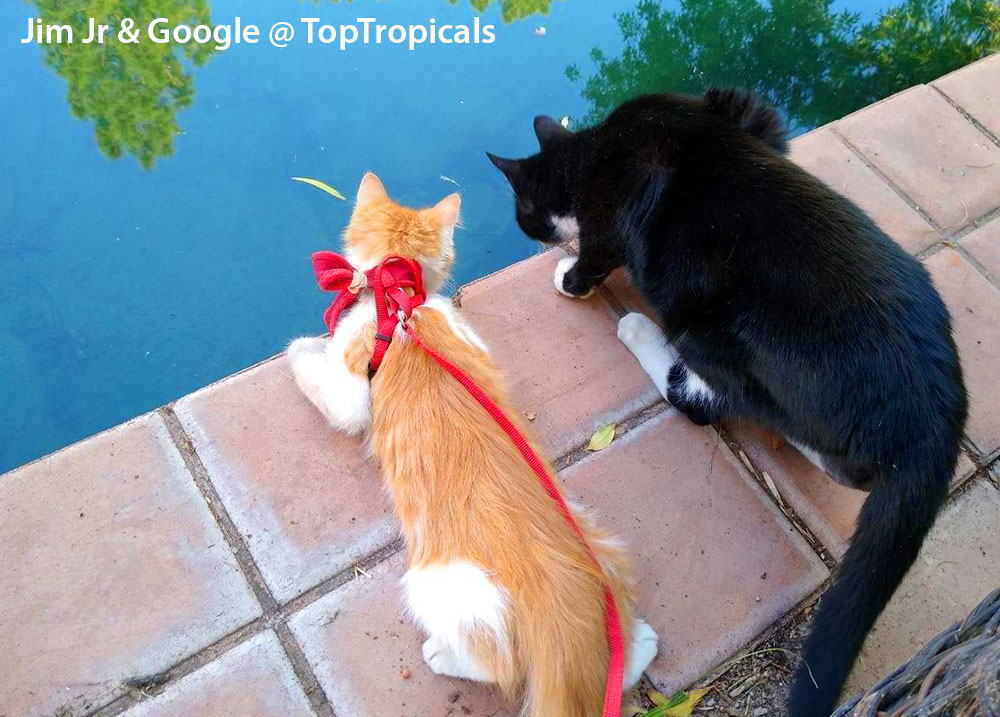
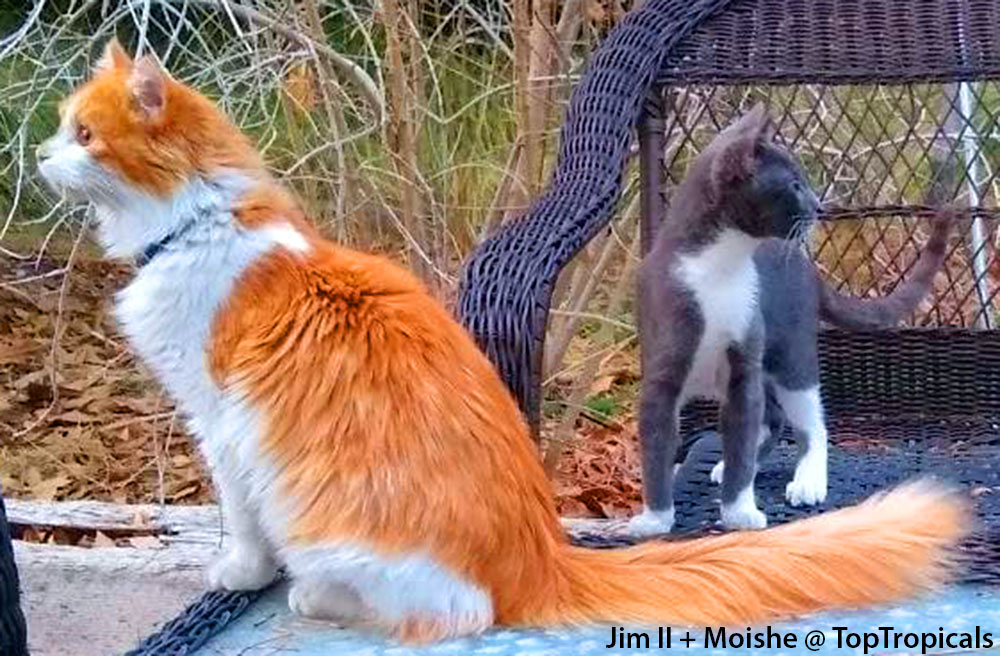
much happier now. He just took Jim Jr to his first walk outside to the lake and
showed him some fishing techniques...
Bon voyage Little Jim, you soon will master it all! As Mr Booster claims, Orange Cats Bring Happiness!

TopTropicals PeopleCat Club and Zoo
Thank you for supporting us in helping PeopleCat Community!
Make
your kind donation today and receive a surprise gift from us! Every little
bit helps. Thank you and God bless you and your pets!
Date:
PeopleCats of TopTropicals. Cat of the Month: Moishe, the Google Intern with a Sweet Tooth
Just a few months ago we introduced our new Little Purrrson Jim II that we got as a "toy" for intellectual
Google the Cat, to cheer him up after he lost his friend Jim I... Jim II, the fluffy goofball, grew up in no time and in his turn,
requested entertainment, since Google bored him with his technical lectures... So
we got a toy for Jim-the-toy... and he turned out to be - another
mini-Google!
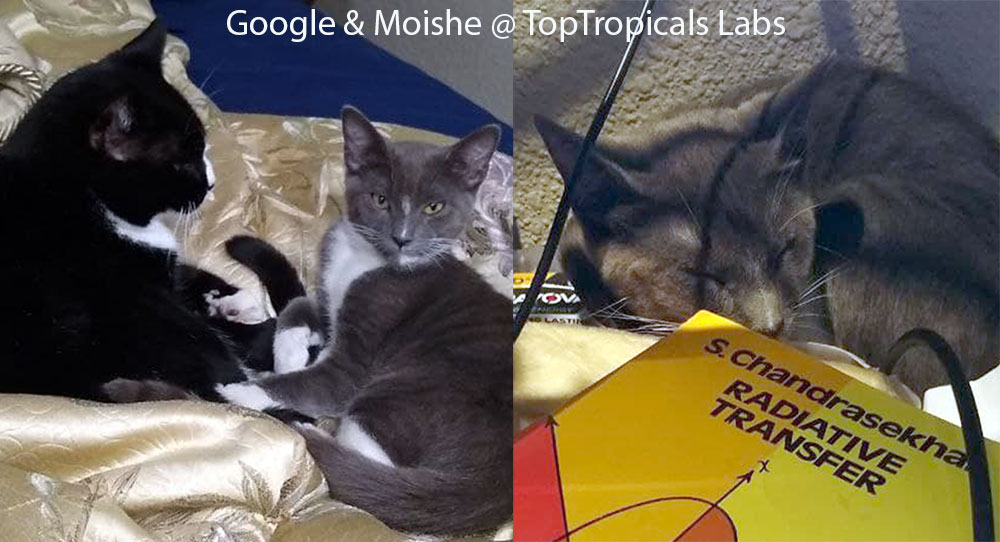
Moishe is very busy young individual, spending his day solving math
equations and discovering laws of physics... Google appreciates the new generation's input. Jim II is simply glued to the little guy. He follows Moishe everywhere, including boring seminars by Google. Jim loves his new little brother with all his heart!
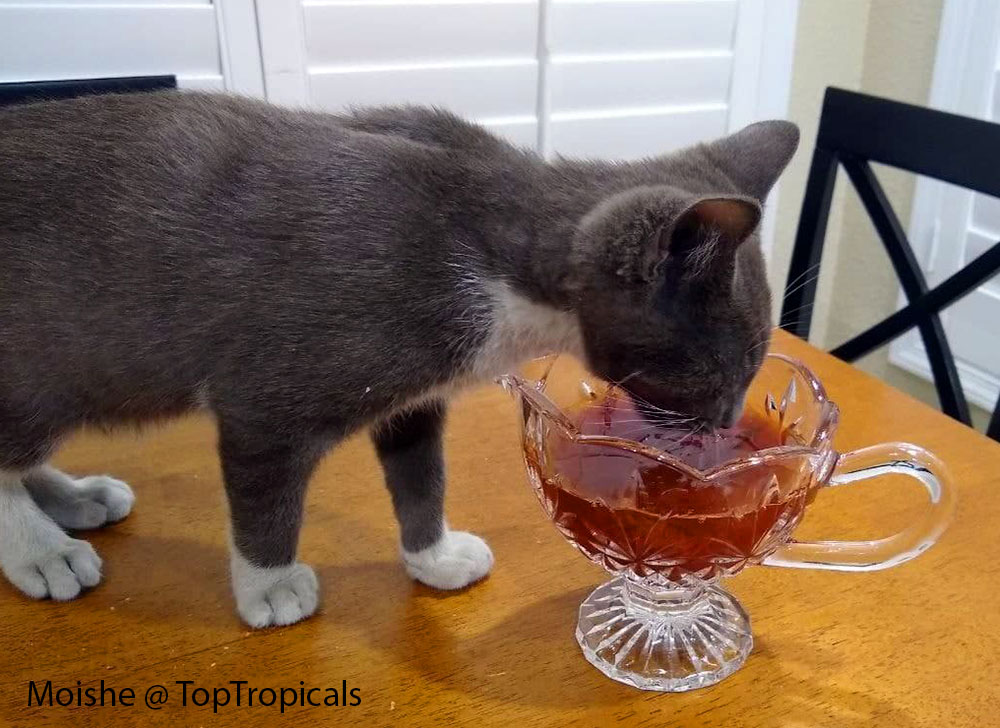
Moishe's favorite things are - gravity experiments, reading scientific manuscripts, and eating JAM for breakfast! No toast required.
TopTropicals PeopleCat Club and Zoo
Thank you for supporting us in helping PeopleCat Community!
Make
your kind donation today and receive a surprise gift from us! Every little
bit helps. Thank you and God bless you and your pets!
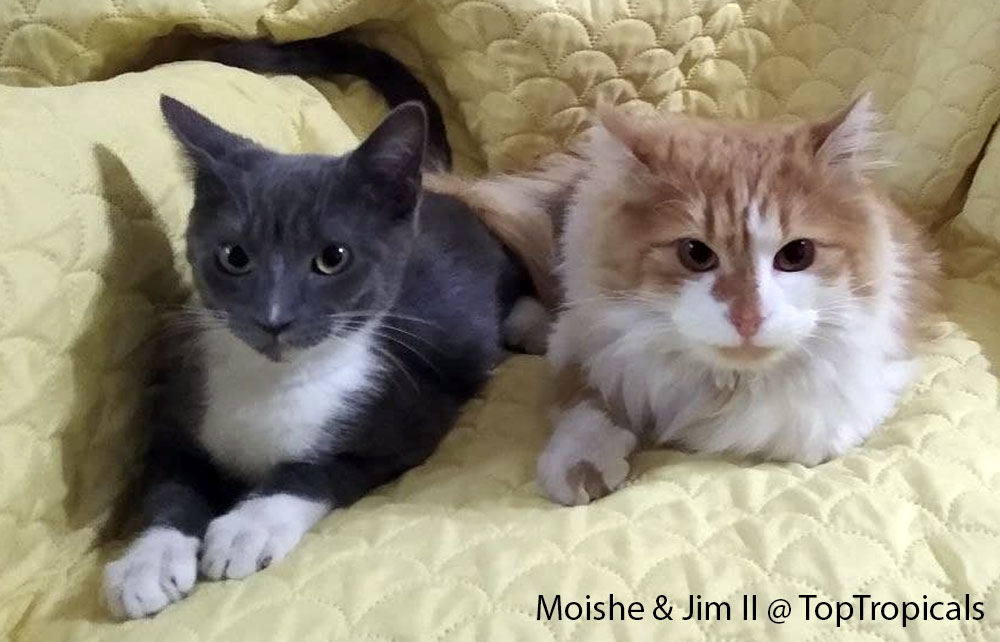
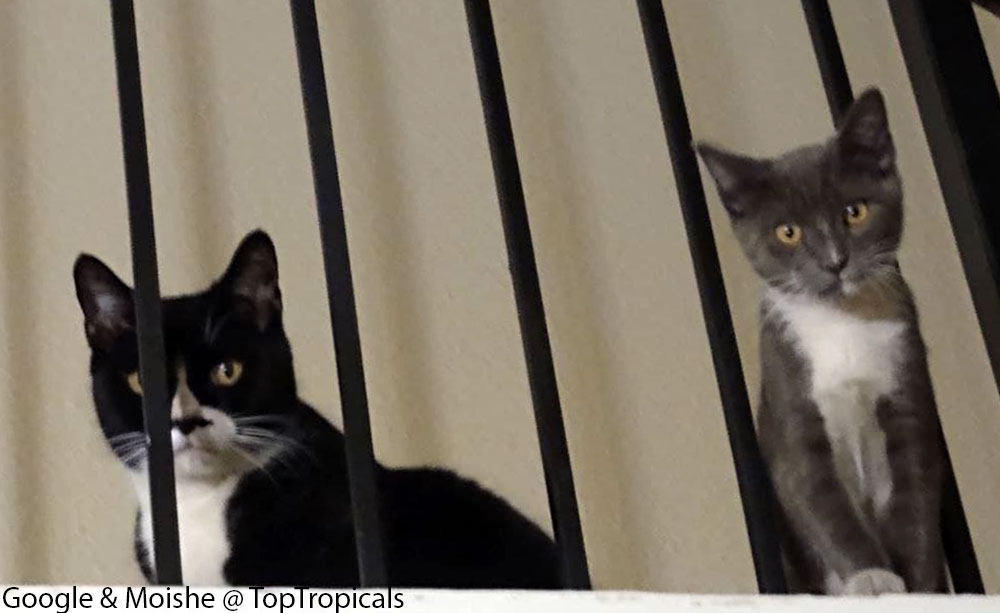
In the photo: Moishe the Scientist and Jim the Hopeless Romantic
Date:
Ghost Cold Protection
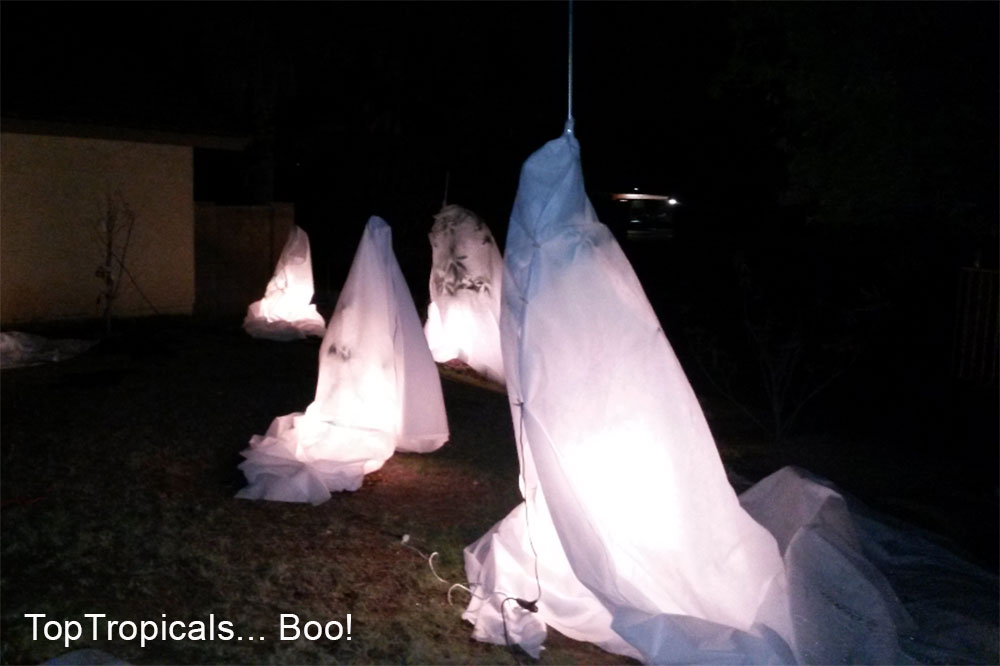
Q: Has anyone ever tried using heat packs under frost blankets to protect tropical plants from frost?
A: The reality is, the heat packs used for shipping do not have enough heat capacity to create efficient warming effect. From our own experience, the best way is to use small 25W incandescent bulbs which produce lots of heat (considering observing all safety precautions and fire safety). Some gardeners use Christmas lights. See picture of our plants in the ground during a cold night. We called them Ghost Cold Protection! ;)
See more columns on cold protection:
Seven rules of cold protection for tropicals
About Cold Protection
Cold protection - winter action for your plant collection
Tropical Treasures articles

Date:
Seven rules of cold protection for tropicals
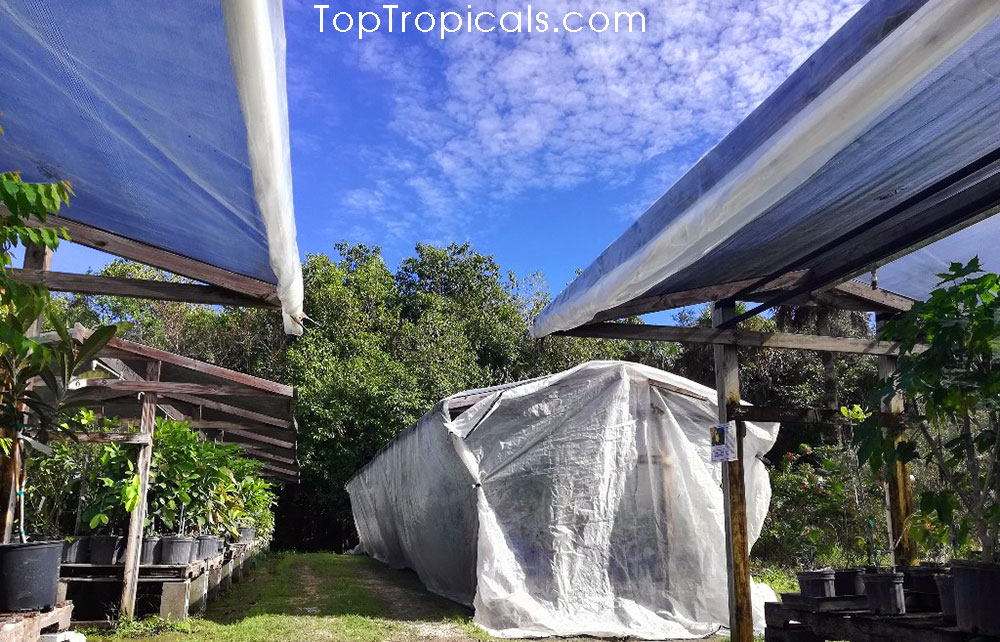
Q: I was always wondering how you guys manage to grow true tropical trees in Florida? I live in Puerto Rico and we have Breadfruit trees growing here in a wild... but my sister lives not far away from you, in Orlando, which is much colder, and I wonder if I can get her a Breadfruit tree for Christmas?
A: Your
sister can grow a Breadfruit tree in Orlando either in a pot (and bring it indoors during
cold periods) or in the ground inside a structure (an elclosed conservatory
with heating system). See our customer's Greenhouse in Virginia. Cold protection of tropical plants is a lengthy
subject and we have many interesting publications about it in our managine
Tropical
Treasures and on the website. In a nutshell, when growing tropicals outside of
tropical climate, you need to follow these 7 rules:
1. Cut watering to a minimum. Cold+wet kills tropical roots.
2. Water thirsty plants before a cold night. Jucy leaves have fewer
chances to be cold-zapped.
3. Wind protection is more important than a temperature drop. Plant
tropicals close to a house or surrounded by other trees.
4. Duration of a cold period is more critical than the cold itself. If
expecting long cold hours, bring up all available protection resources.
Christmas lights or propane heaters - as long as there is a heat source,
everything helps!
5. Remove plastic covers during the daytime so plants don't get
"cooked" in the sun. Fabric covers are better than plastic.
6. Grow ultra-tropicals in containers and bring them inside the garage
or even indoors during the cold.
7. Use SUNSHINE plant boosters and feed your plants well during Summer to improve cold hardiness.
Related topics:
About Cold Protection
Cold protection - winter action for your plant collection
Improving cold hardiness before winter: fertilizer and micro-elements
Cold hardy tropical fruit trees
Date:

Healthy Plants: Q&A from Mr Booster
How to get Canistel tree to produce
without dropping flowers and fruit
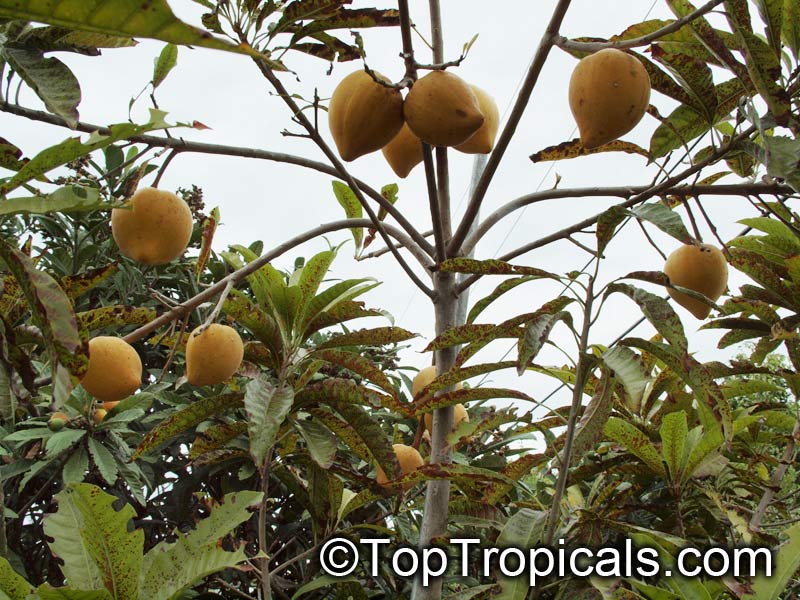
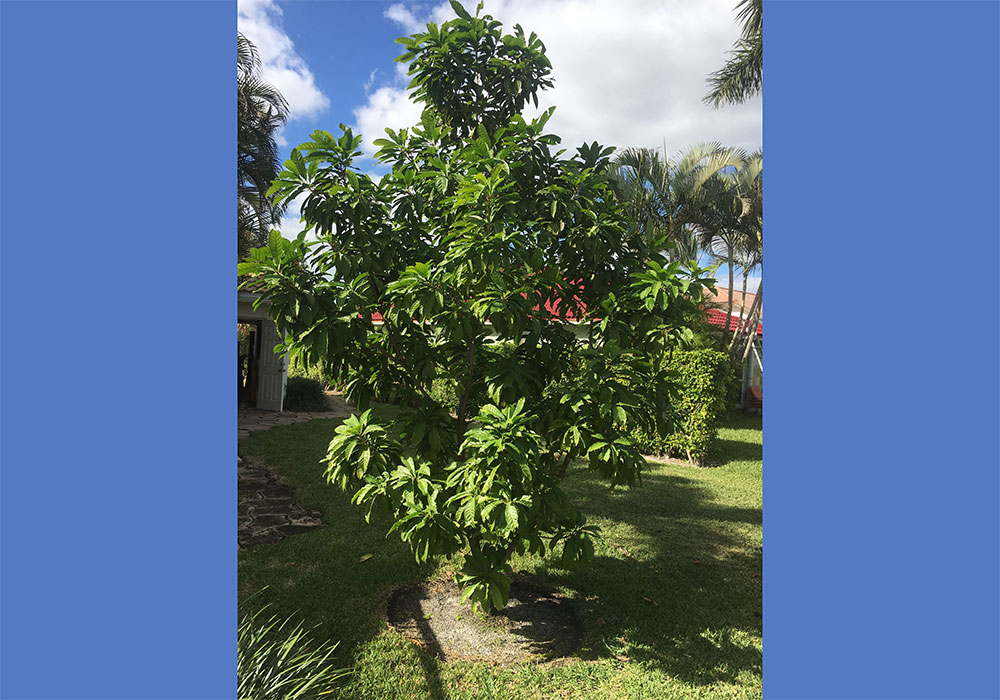
Q: My Canistel tree is 3 1/2 years old and is growing very well, see the picture below. It gets hundreds of pea sized "berries" but then they fall off. No canistel fruit. What's wrong?
A: You have such a nice looking tree, it is a shame you can't get
any fruit to ripen.
In our experience, Pouteria trees dropping fruit prematurely is a very common problem.
There may be one of the following reasons, or a combination of them:
- Cold winters may affect production, and while Canistel is generally
pretty hardy tropical plant that can easily withstand short periods of chill, the
fruit may never form properly if it had a cold winter.
- Lack of water. Canistel tree is pretty drought tolerant, but for the
proper production cycle it needs regular irrigation. Especially during hot
summer.
- The tree may be not strong enough; young trees drop fruit very often when
they don't have enough "fruiting energy" built up in their system.
Your tree looks well established and vigorous, however, flower/fruit drop
is often a sign of insufficient nutrients of particular kind, usually Boron
(B) and/or Molybdenum (Mo): either when a tree is too young and not strong
enough, or because of poor soils and lack of necessary elements.
Here is what can be done, considering you live in a warm, frost-free climate.
1. Provide regular fertilizing program. We recommend liquid
fertilizers Sunshine Boosters that are safe to use with every watering and year
around. It is beneficial to switch plants from traditional "slow-release"
fertilizer to the liquid one because it makes a huge difference in plant growth
and flower/fruit quality and quantity. See also:
- Why liquid fertilizers are better than dry
- Article about benefits of liquid fertilizers.
Use this plant food for your Canistel tree:
SUNSHINE C-Cibus - Crop Nutrition Booster
2. Apply micro-element remedies that are very effective for improving fruit production, especially when flower or fruit drop occurs:
SUNSHINE Honey - promotes more efficient blossoming and pollination, makes
flowers bigger and reduces bud drop.
SUNSHINE SuperFood - improves plant vigor and quality and size of
flowers
These are all natural, eco-friendly supplements that work great for fruit
trees and other edibles.

Date:
Healthy Plants: Q&A from Mr Booster
Fertilizing in Winter
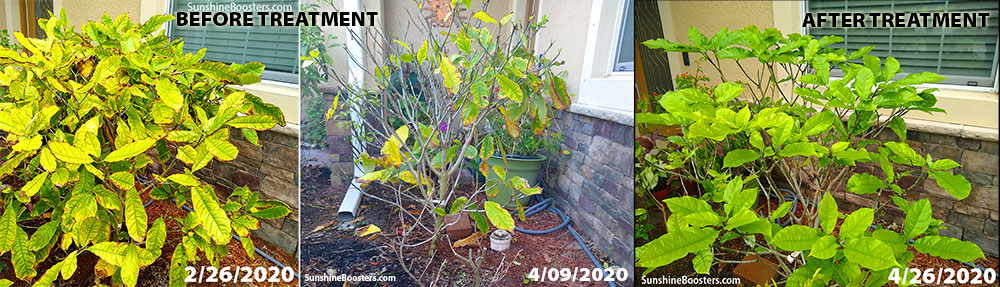
Q: I have many tropical plants in my garden, both in the ground and in pots. I realize it is wintertime and some of them, the Hydrangea, Hibiscuses, and roses are in bloom but the rest of them seem wilty and droopy. Is it alright to fertilize them now, or should I wait for a few days? I have an all purpose tropical fertilizer and a 20-20-20 also. Please advise what to do.
A: During wintertime, tropicals may suffer from low temperatures
and lack of sunshine which causes droopy leaves, and leaf loss.
Regardless of the cause and plant condition, you should NEVER apply
traditional dry fertilizers during cool months. When cold, dry fertilizers
(EDTA-chelated) may create nutrient lock up in soil and damage the roots. Dry
fertilizers (both granulated and water-soluble) can be used only during hot season -
when min temperatures stay above 65F for at least a week in a row, and
daytime temperatures are over 75-80F. During hot, active growth season plant
metabolism increases. This provides less chance for a chemical root burn, as the
nutrients are used up quickly.
However, liquid fertilizers, as long as they are amino-acid based, can
be used year round. From our own experience last winter, we discovered that
fertilizing sickly looking plants (with signs of cold damage and root issues)
with Sunshine Boosters actually revived those plants. Sunshine Boosters even
brought back to life some hopeless specimens. Take a look at this gardenia
that grows in our garden (picture above). See full article.
In your case, it would be beneficial to use a mild formula of liquid
boosters in combination with Sunshine Epi -a natural plant hormone that boost their growth and helps
to cope with cold-, temperature- and low-light-related stress.
These are the products we recommend:
- Sunshine Bombino - add to every watering
- Sunshine Epi - twice a month as foliage spray
Since you grow plants in pots, feeding program is especially essential,
because plants are limited with a container size where roots can't reach out to more food in the outer soil.
In professional nursery set up with injector irrigation systems, container plants are fed daily (depending on season, more than once a day) with every watering. This is why greenhouse plants are so healthy looking.
So feel free to give your plants Sunshine boosters with every watering,
dozing according to the label. During cold period, plants need less frequent
watering, so fertilizer input will be balanced accordingly, it will depend on
temperature and plant metabolism.
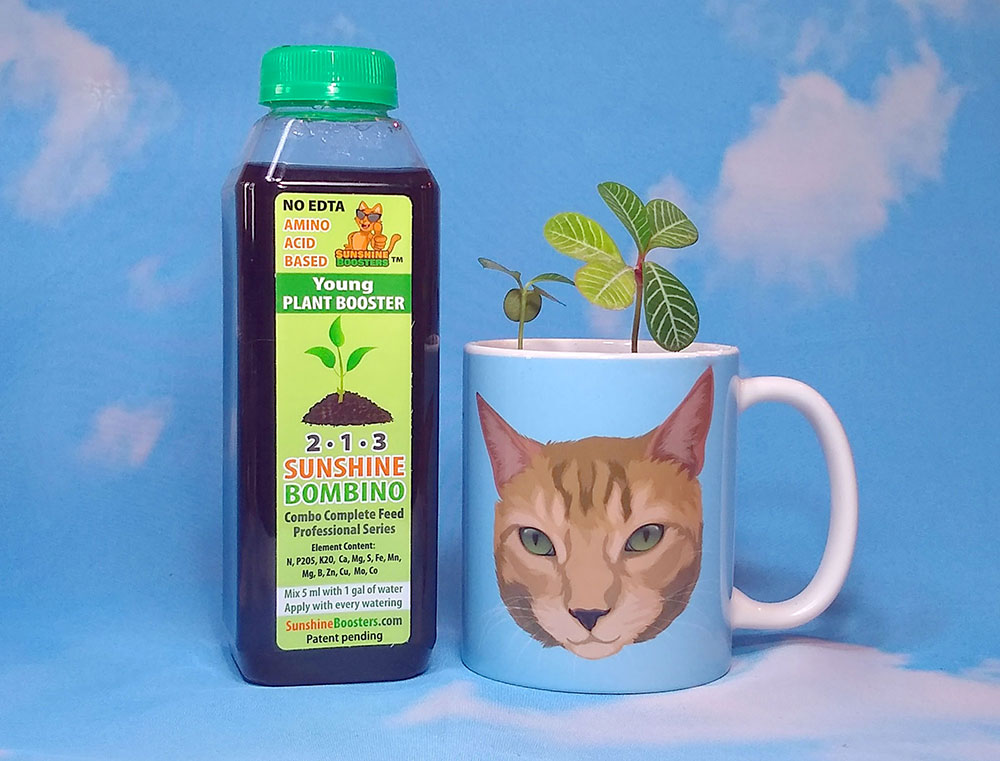
Sunshine Bombino - mild, "pampering" formula for young and tender plants, as well as plants recovering from stress and/or winter damage.
Date:
Healthy Plants: Q&A from Mr Booster
New Boosters for the New Year!
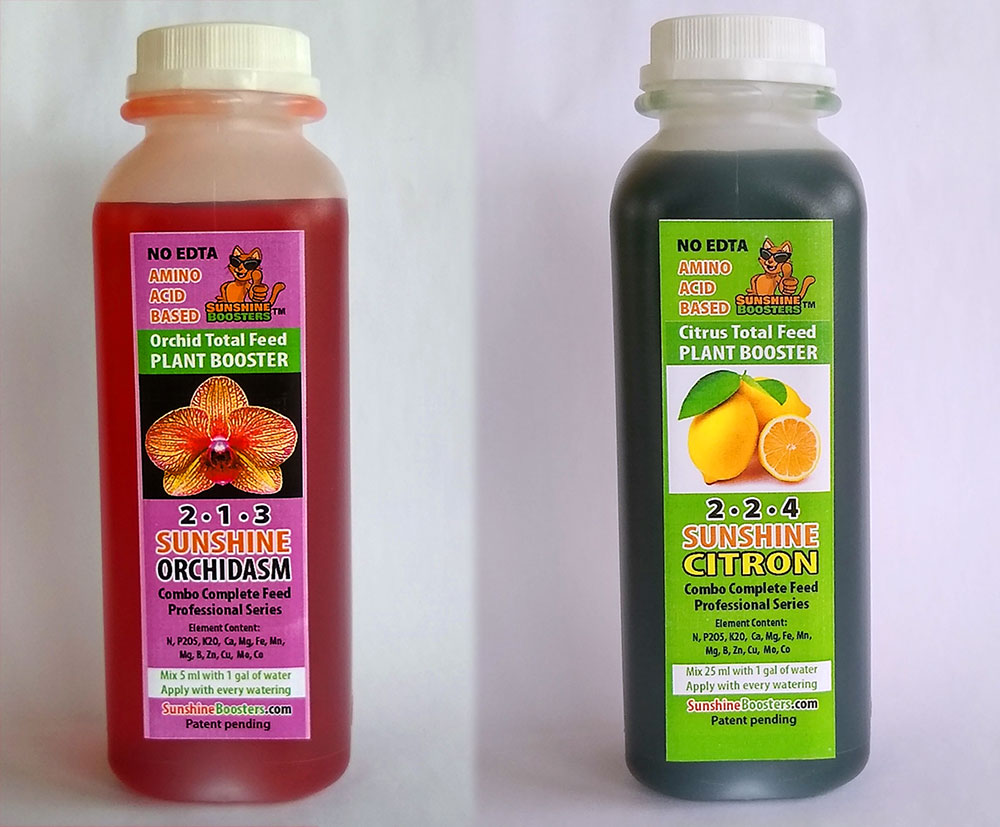
Sunshine Total Feed: Orchidasm and Citron
How to grow everblooming orchids?
Q: I ended up with a large collection of orchids that I was given as presents... They grow well but unfortunately after the showy blooms were gone, I don't see any more flowers, just green leaves. What do I need to do to make them bloom again? Should I fertilize them with Azalea bloom booster?
A: Orchids culture is different from garden ornamental plants. First big difference, they are epiphytes, growing in a loose bark medium rather than soil, and
benefit from daily mist. Second difference is a type of fertilizer. You can not use a regular garden fertilizer on orchids,
because they are very sensitive to salts. Orchids need special, acidic type of fertilizer, very mild in action.
Luckily, Sunshine Boosters formulas are exactly what orchids need! They are amino-acid based, have very mild formulas, and do not create nutrient lock up (building up salts is one of the biggest
enemies of tender orchids).
A new Sunshine Boosters Orchidasm TotalFeed is scientifically balanced orchid food that contains all
necessary nutrients, including micro-elements, for healthy, happy, vigorous orchids. It can be used as often as daily with every foliage spray. From our testing experience, after using Orchidasm Booster, orchids not only got happy and thriving -
they also bloom more often - up to several times a year, shooting new flower spikes one after another! (while normal blooming cycle for most
orchids is once a year). It gets even better - the flower display lasts twice longer!
To enjoy these beautiful flowers year around - treat them with Love, give them some
Orchidasm!
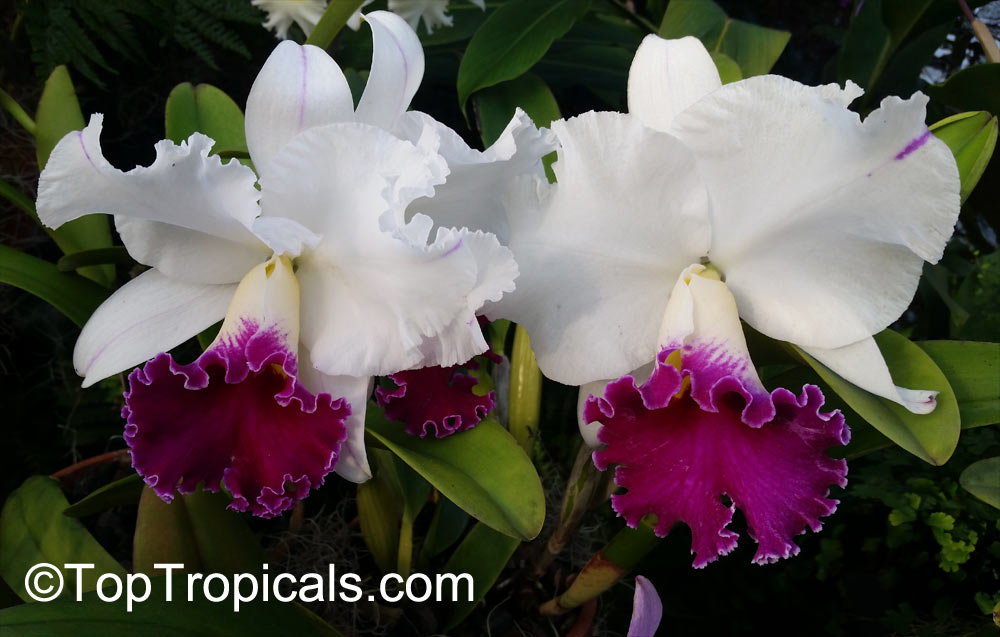
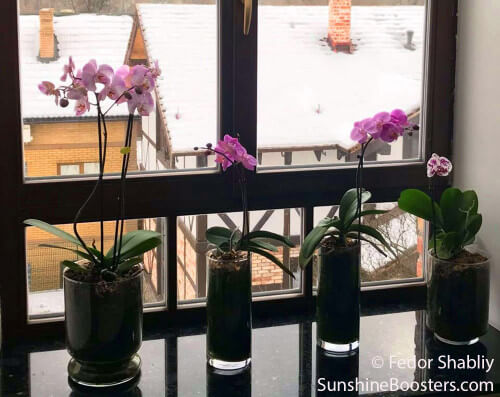
See more information with pictures in Sunshine Boosters Orchid Blog
Secrets of a healthy Citrus tree
Q: We planted several citrus trees in our yard - Meyer Lemon, Grapefruit and Blood Orange. The trees came from the store full of flowers and even had a few fruit, but a year after planting - no more flowers! The old leaves are green, but new growth doesn't look healthy, leaves are yellowish and have spots, maybe eaten by bugs (?), and how do we get them to fruit?
A: Citrus plants are not the easiest trees to grow; they are susceptible to various diseases, pests, and deficiencies, especially in areas with high humidity/rainfall like Florida.
Fungi, viruses, leaf minors, chlorosis - this is not a complete list of citrus common problems. In commercial groves, these conditions are kept under
control by using harsh chemicals on solid schedule.
For home gardeners, growing citrus trees may become a challenge. Many people don't want to use harsh
chemicals on their edibles; and those who do, may not always have time to apply treatments on a professional schedule. So as much as we all love a fresh juicy orange,
growing your own may become quite a pain!
Sunshine
Citron TotalFeed is your simple, eco-safe solution to a healthy looking, productive citrus tree with organic fruit! Amino-acid based formula provides all
necessary elements to strengthen the tree and make it resistant to possible problems.
Did you know that treatment of leaf chlorosis (yellow leaves with dark
green veins), commonly treated with iron supplements, in fact requires a complex combination of nutrients - both balanced NPK and micro-elements?
Use Sunshine Citron in combination with Sunshine GreenLeaf and
Sunshine SuperFood and never see yellow chlorotic leaves again!
Apply Sunshine Epi on regular basis (every 2 weeks) and help your tree boost its immune system and stay virus-free.
Add Sunshine Honey, and you will have large, juicy fruit that
are much sweeter and more flavorful than those from the store! All these boosters are compatible with each other, and perfectly natural. Eat your fruit safely and enjoy...
Read more about treating citrus tree defficiencies in Sunshine Boosters Citrus Blog.