Garden Blog - Top Tropicals

Date: 22 Apr 2020

PeopleCats saving us from COVID-19!

Cat owners have higher immunity for COVID-19?

In our previous newsletter, we were talking about cats fighting the coronavirus and how to help them to recover.
The research made by Sabina Olex-Condor, a Polish doctor who works in a clinic in Madrid, showed that due to cross-immunity (cats are a known reservoir of coronaviruses) cat owners have milder sympthoms of COVID-19! Perhaps this is due to the fact that in a cross-reaction antibodies are produced to the virus, and owners of cats are more protected from COVID19... Read more)
Now that quarantine has been introduced almost universally because of coronavirus, dog owners are also in a better position - they can officially go outside for a short while. But the benefit of dogs (and other pets) is not only that. Scientists from the Italian city of Catanzaro found in the course of the study, that those who have a four-legged pet, have very mild symptoms of the COVID-19. A similar effect was observed in those in contact with cattle... To find an explanation for this phenomenon, the researchers compared viruses. It turned out that the disease of bulls, cows and other cattle is similar to Chinese coronavirus by 38.4%, and the virus of dogs by 36.9%. This means that owners of animals already have some kind of immunity. So the owners of cats and dogs, as a rule, tolerate coronavirus easier or completely asymptomatic. Read more...

Stay safe and healthy with your PetPeople!

TopTropicals PeopleCat Club

Thank you everybody for supporting us in helping PeopleCat Community!
Make your kind donation today and receive a surprise gift from us. Every little bit helps! Thank you and God bless you and your pets!

Date: 25 Jun 2020

Meet PeopleCats of TopTropicals. Cat of the day: Anders from the King's Palace

We receive many letters from customers who enjoy our Cat of the Day column, including those who want to share their cat stories with us! Today's guest in PeopleCat studio -

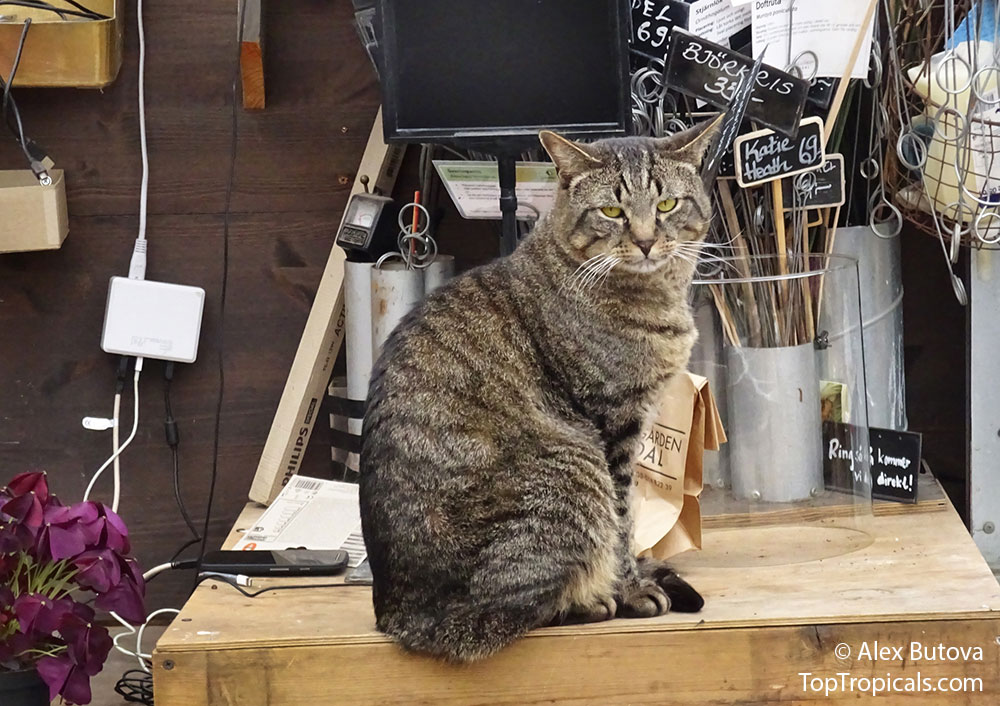
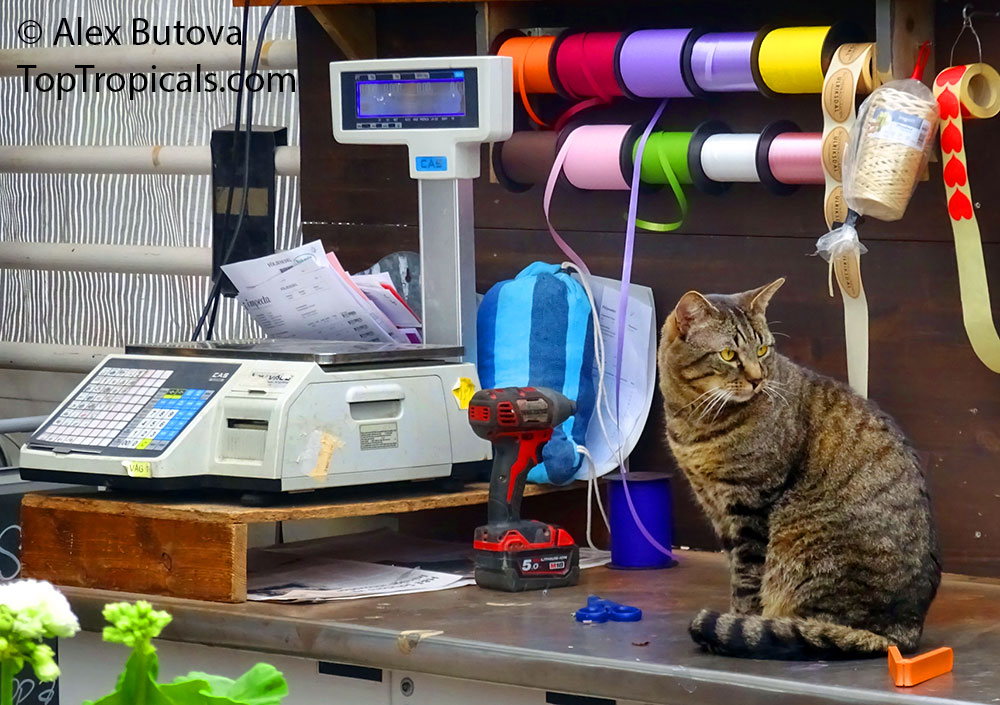
Cat Anders. Anders lives in Stockholm. He is a manager of a Garden Center located in one of the King's properties - Palace Ulriksdal. He has so many beautiful flowers in stock! Lots of orchids, camellias, and showy colorful annuals.
Anders' favorite spot is to sit by the cash register where he can closely monitor every payment transaction. Sometimes he takes a walk around the premises to take care of security issues and to stay on top of his inventory control. During lunch time Anders visit Flower Cafe nearby, to make sure visitors' dogs behave properly... Yes, dogs and cats are welcomed in!

TopTropicals PeopleCat Club and Zoo

Thank you for supporting us in helping PeopleCat Community!
Make your kind donation today and receive a surprise gift from us! Every little bit helps. Thank you and God bless you and your pets!

Date: 19 Jan 2021

Healthy Plants: Q&A from Mr Booster

Fertilizing in Winter

Q: I have many tropical plants in my garden, both in the ground and in pots. I realize it is wintertime and some of them, the Hydrangea, Hibiscuses, and roses are in bloom but the rest of them seem wilty and droopy. Is it alright to fertilize them now, or should I wait for a few days? I have an all purpose tropical fertilizer and a 20-20-20 also. Please advise what to do.

A: During wintertime, tropicals may suffer from low temperatures and lack of sunshine which causes droopy leaves, and leaf loss.
Regardless of the cause and plant condition, you should NEVER apply traditional dry fertilizers during cool months. When cold, dry fertilizers (EDTA-chelated) may create nutrient lock up in soil and damage the roots. Dry fertilizers (both granulated and water-soluble) can be used only during hot season - when min temperatures stay above 65F for at least a week in a row, and daytime temperatures are over 75-80F. During hot, active growth season plant metabolism increases. This provides less chance for a chemical root burn, as the nutrients are used up quickly.

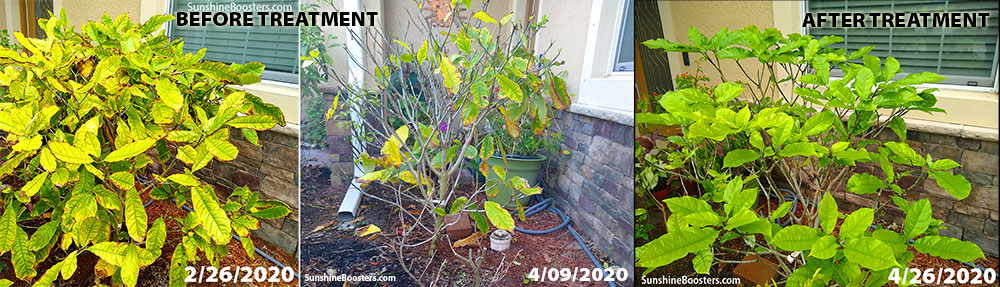
However, liquid fertilizers, as long as they are amino-acid based, can be used year round. From our own experience last winter, we discovered that fertilizing sickly looking plants (with signs of cold damage and root issues) with Sunshine Boosters actually revived those plants. Sunshine Boosters even brought back to life some hopeless specimens. Take a look at this gardenia that grows in our garden (picture above). See full article.
In your case, it would be beneficial to use a mild formula of liquid boosters in combination with Sunshine Epi -a natural plant hormone that boost their growth and helps to cope with cold-, temperature- and low-light-related stress.

These are the products we recommend:
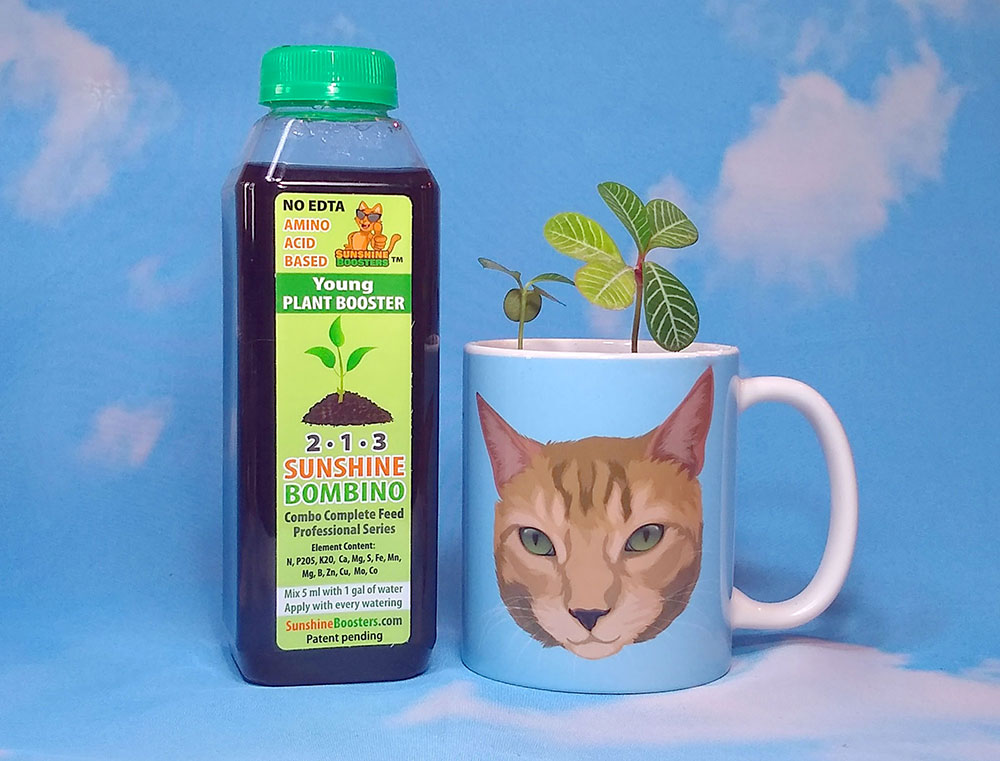
- Sunshine Bombino - add to every watering
- Sunshine Epi - twice a month as foliage spray

Since you grow plants in pots, feeding program is especially essential, because plants are limited with a container size where roots can't reach out to more food in the outer soil. In professional nursery set up with injector irrigation systems, container plants are fed daily (depending on season, more than once a day) with every watering. This is why greenhouse plants are so healthy looking.
So feel free to give your plants Sunshine boosters with every watering, dozing according to the label. During cold period, plants need less frequent watering, so fertilizer input will be balanced accordingly, it will depend on temperature and plant metabolism.

Sunshine Bombino - mild, "pampering" formula for young and tender plants, as well as plants recovering from stress and/or winter damage.

Date: 15 Jan 2021

Healthy Plants: Q&A from Mr Booster

New Boosters for the New Year!
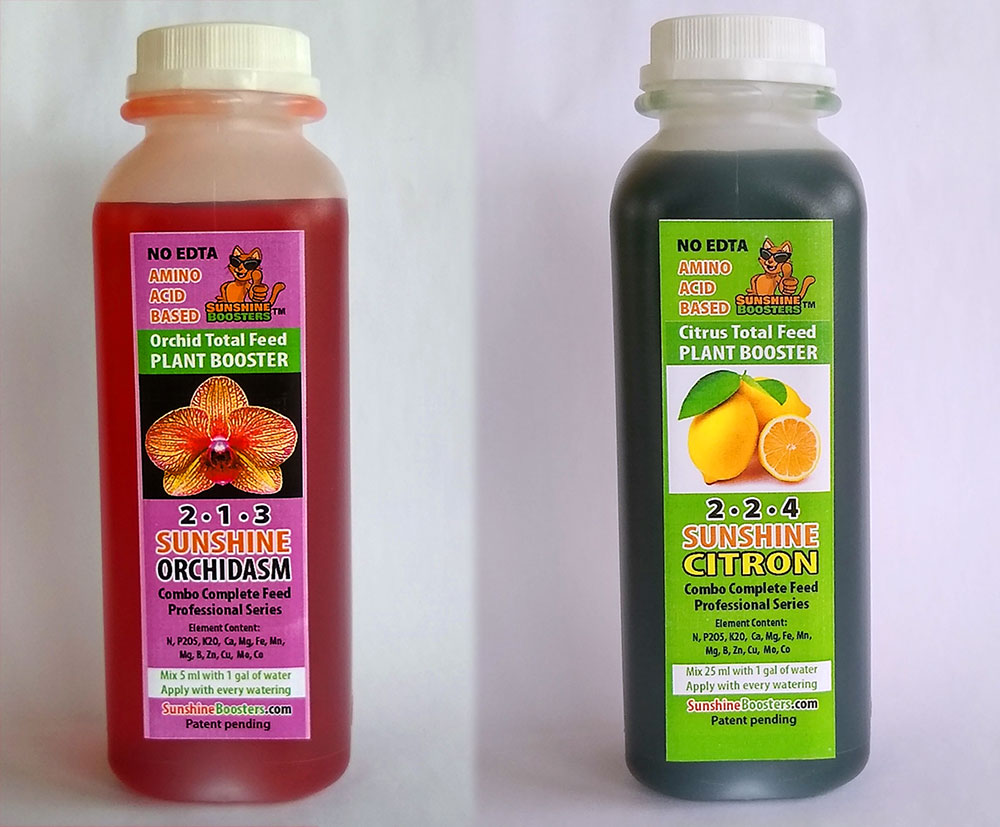
Sunshine Total Feed: Orchidasm and Citron
How to grow everblooming orchids?

Q: I ended up with a large collection of orchids that I was given as presents... They grow well but unfortunately after the showy blooms were gone, I don't see any more flowers, just green leaves. What do I need to do to make them bloom again? Should I fertilize them with Azalea bloom booster?

A: Orchids culture is different from garden ornamental plants. First big difference, they are epiphytes, growing in a loose bark medium rather than soil, and benefit from daily mist. Second difference is a type of fertilizer. You can not use a regular garden fertilizer on orchids, because they are very sensitive to salts. Orchids need special, acidic type of fertilizer, very mild in action.
Luckily, Sunshine Boosters formulas are exactly what orchids need! They are amino-acid based, have very mild formulas, and do not create nutrient lock up (building up salts is one of the biggest enemies of tender orchids).
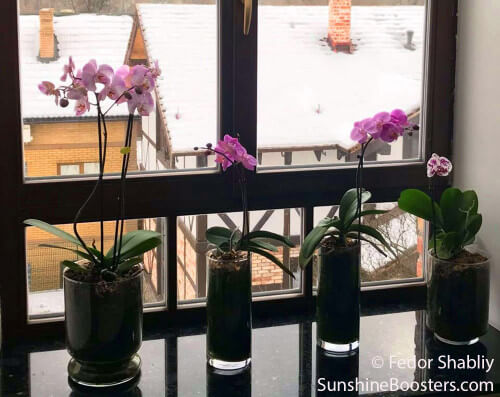
A new Sunshine Boosters Orchidasm TotalFeed is scientifically balanced orchid food that contains all necessary nutrients, including micro-elements, for healthy, happy, vigorous orchids. It can be used as often as daily with every foliage spray. From our testing experience, after using Orchidasm Booster, orchids not only got happy and thriving - they also bloom more often - up to several times a year, shooting new flower spikes one after another! (while normal blooming cycle for most orchids is once a year). It gets even better - the flower display lasts twice longer!
To enjoy these beautiful flowers year around - treat them with Love, give them some Orchidasm!

See more information with pictures in Sunshine Boosters Orchid Blog

Secrets of a healthy Citrus tree

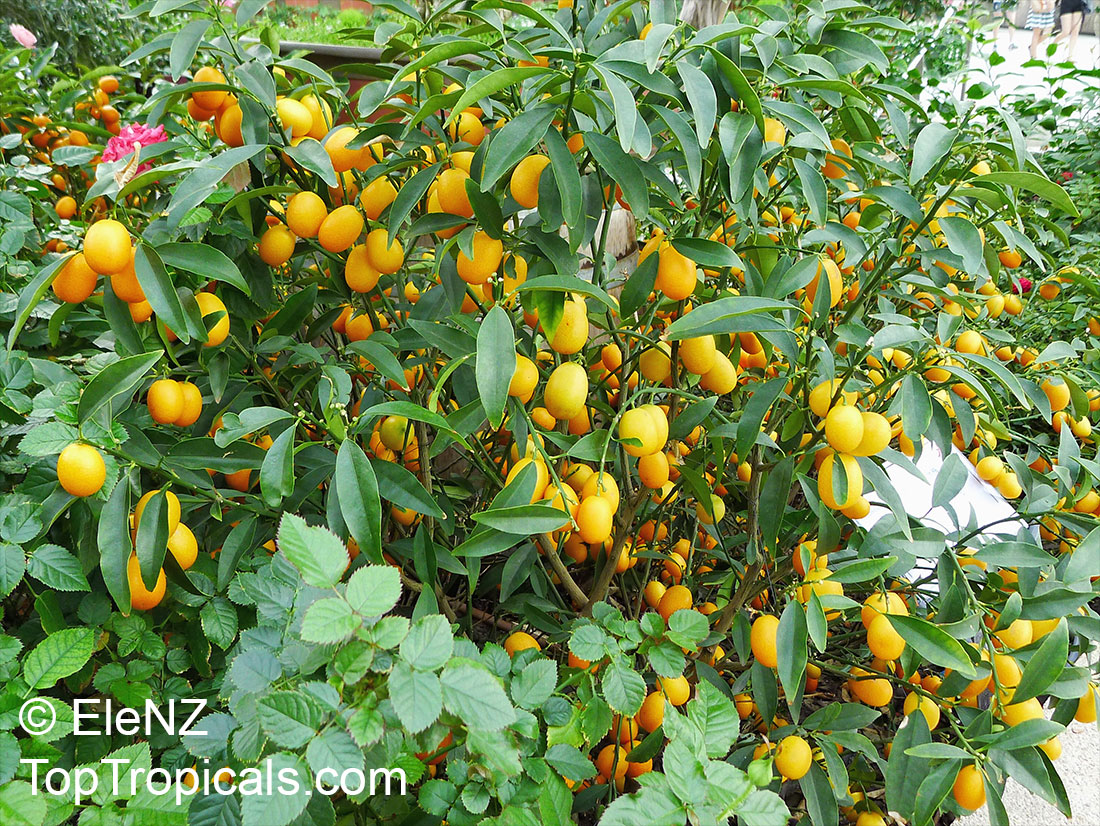
Q: We planted several citrus trees in our yard - Meyer Lemon, Grapefruit and Blood Orange. The trees came from the store full of flowers and even had a few fruit, but a year after planting - no more flowers! The old leaves are green, but new growth doesn't look healthy, leaves are yellowish and have spots, maybe eaten by bugs (?), and how do we get them to fruit?

A: Citrus plants are not the easiest trees to grow; they are susceptible to various diseases, pests, and deficiencies, especially in areas with high humidity/rainfall like Florida. Fungi, viruses, leaf minors, chlorosis - this is not a complete list of citrus common problems. In commercial groves, these conditions are kept under control by using harsh chemicals on solid schedule.
For home gardeners, growing citrus trees may become a challenge. Many people don't want to use harsh chemicals on their edibles; and those who do, may not always have time to apply treatments on a professional schedule. So as much as we all love a fresh juicy orange, growing your own may become quite a pain!
Sunshine Citron TotalFeed is your simple, eco-safe solution to a healthy looking, productive citrus tree with organic fruit! Amino-acid based formula provides all necessary elements to strengthen the tree and make it resistant to possible problems.
Did you know that treatment of leaf chlorosis (yellow leaves with dark green veins), commonly treated with iron supplements, in fact requires a complex combination of nutrients - both balanced NPK and micro-elements?
Use Sunshine Citron in combination with Sunshine GreenLeaf and Sunshine SuperFood and never see yellow chlorotic leaves again!
Apply Sunshine Epi on regular basis (every 2 weeks) and help your tree boost its immune system and stay virus-free.
Add Sunshine Honey, and you will have large, juicy fruit that are much sweeter and more flavorful than those from the store! All these boosters are compatible with each other, and perfectly natural. Eat your fruit safely and enjoy...

Read more about treating citrus tree defficiencies in Sunshine Boosters Citrus Blog.
Date: 28 Dec 2020

Healthy Plants: Q&A from Mr Booster

How to grow a happy Red Jade Vine?

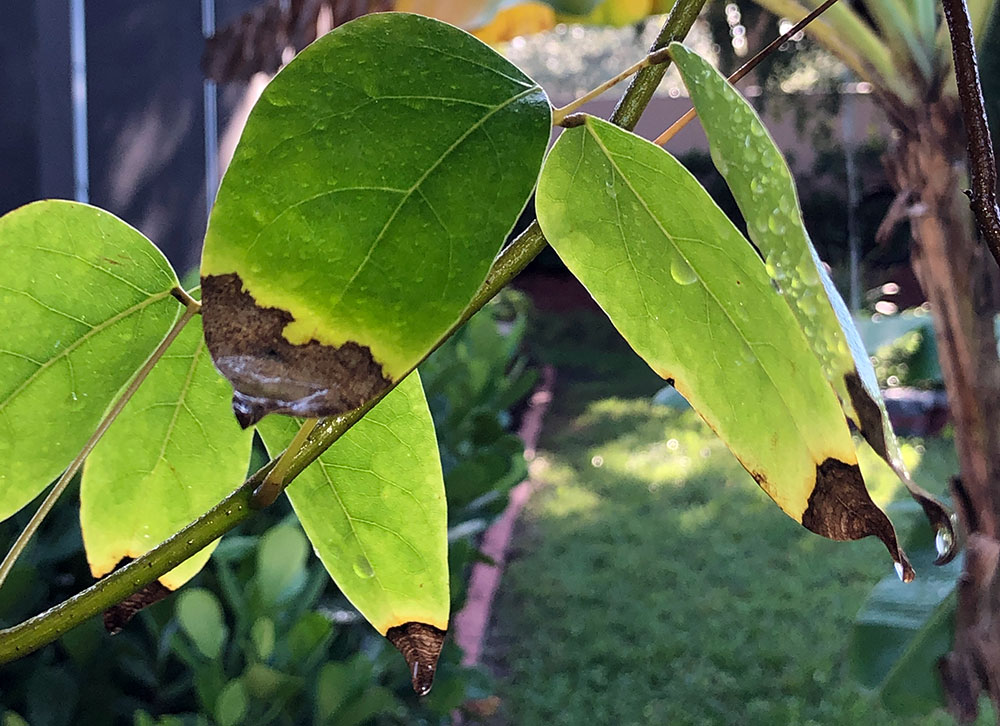
Q: My Red Jade Vine has the leaf tips turning brown. I water this plant four times a week and I am using a half a teaspoon of miracle grow bloom booster 15-30-15 per 2 gallons, every two weeks. In the beginning I had to water this plant off city water in South Fort Myers. Over the last two months I picked up a dechlorinator buggy plus threw that on my hose and I've been watering it with that but it didn't seem to make a difference. I put this plant in the ground last September. It has three shoots that run into the top of the tree, so it is growing but leaves seem to drop off down low at the base of the vine and the brown tipping running into the top of the plant. But not the newest shoot its leaves are solid green all the way at the top. Thanks for any advice.

A: Mucuna benettii - Red Jade vine - is not the easiest plant to grow, and we are glad your vine is growing well. For those who love this plant but not ready to face all challenges, we recommend its cousin - Camptosema grandiflora - Dwarf Red Jade Vine, which is much hardier and easier plant.
We looked at the photos and these are our thoughts.

1) The top of the plant with green fresh leaves definitely indicates that the plant is generally healthy and vigorous.
2) Dry tips of the old leaves may indicate excess salts in soil, in combination with the summer heat that it went through. Based on your feeding program description, that fertilizer may create a problem. Water soluble traditional fertilizers are EDTA-chelated which often causes nutrients lock up in soil and leaf drop. Try to stay away from that fertilizer for a month and let the rains and/or irrigation water flush the soil for a couple of weeks.
3) Red Jade vine is a very sensitive species. Normally, during hot season it is safe to use traditional fertilizers, especially slow-release granulated. However, with this plant we recommend you to switch to more delicate formula and use only liquid fertilizer.
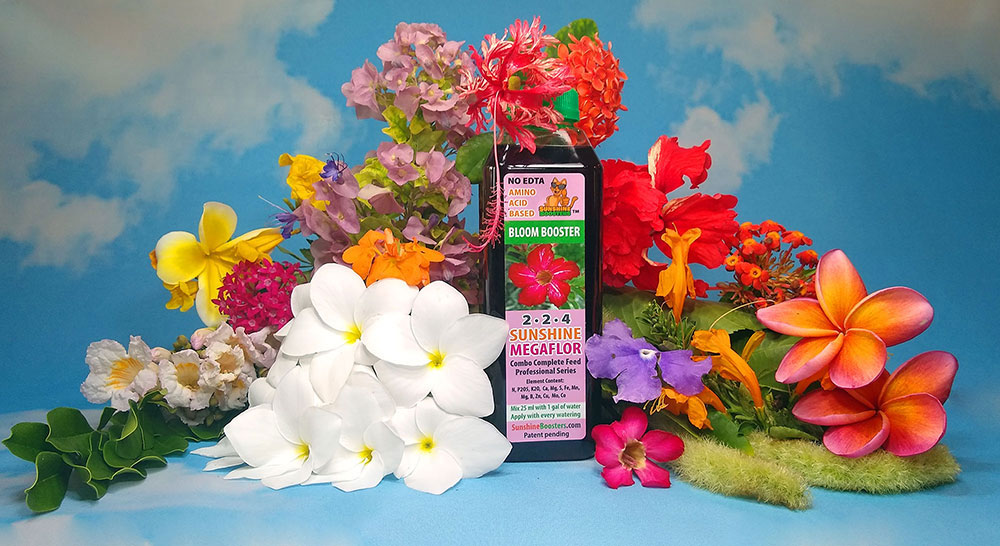
SUNSHINE Megaflor - Bloom Nutrition Booster will be the best. It is safe to use it as frequent as with every watering! It is amino-acid based, and will be totally consumed by the plant without nutrient lockup.
4) Another cause of dry leaf tips may be micro-element deficiency.
Megaflor booster already has all necessary micro-nutrients in it, plus you may apply some extra: SUNSHINE Superfood.
5) You may continue using regular water for watering (including city water) as long as you use amino-acid based plant food and supplements: they improve soil acidity (what tropical plants like is acidic soil, and Florida soils are alkaline). Additionally, to improve soil acidity which can be critical for this Mucuna species, you may add 1" layer of pure peat moss on top of the soil around the plant. Please keep us in loop how the plant is doing. It is pretty rare species in cultivation and we will be happy to help you to keep it thriving.