Garden Blog - Top Tropicals

Date: 29 Jan 2020

Meet People of TopTropicals. Pea Cock of the Day: the Orchid Guard
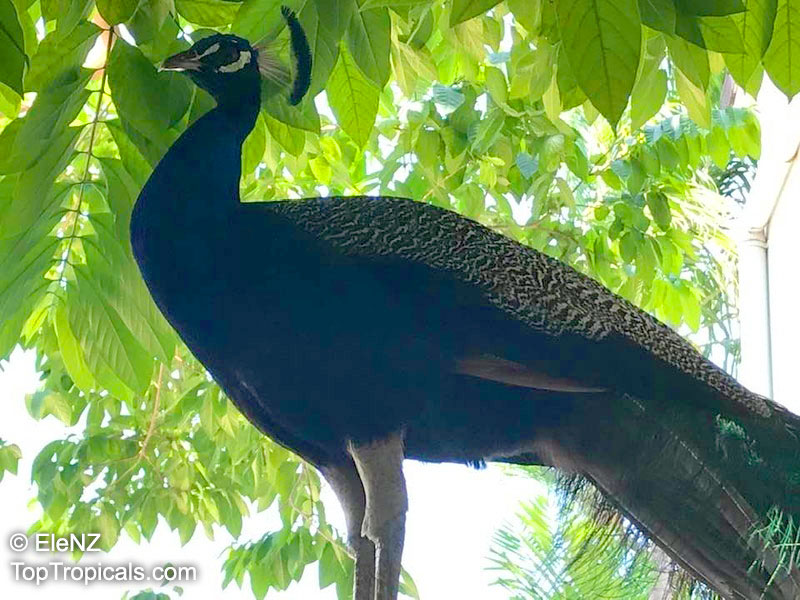
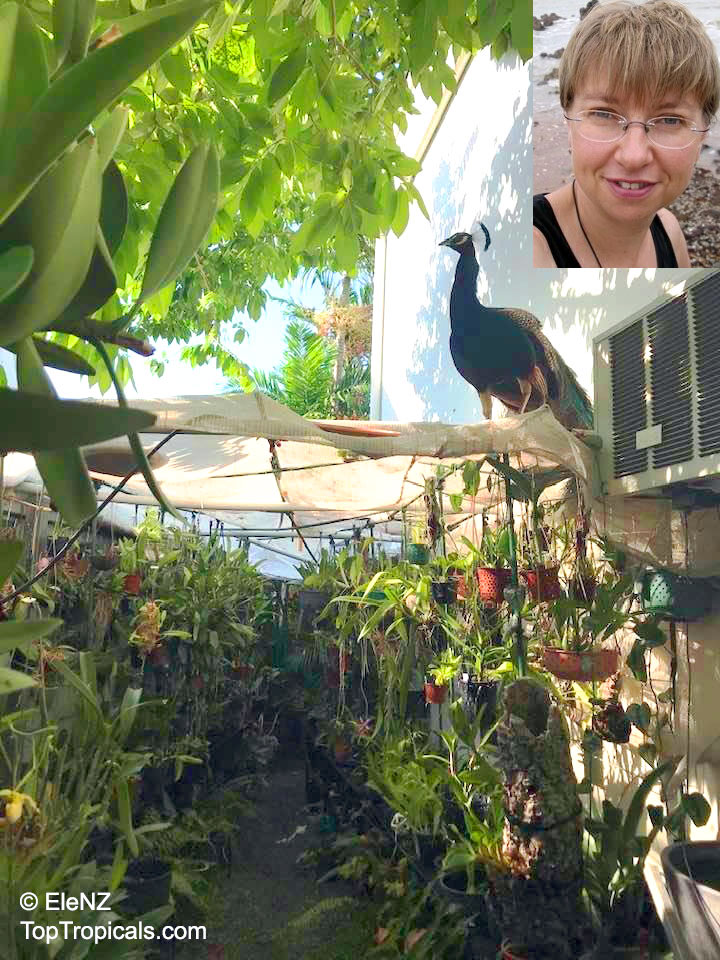
Recently we started to reveal the secret about who works behind the scenes on TopTropicals project; you have already met our editors and their assistants: Marina with Tilda, and Alex with Sonya. Today's story is about a Magic Peacock who works in orchid greenhouse of Eleanor Wilks - our photographer and tropical plant journalist in New Zealand and Australia. The watermark EleNZ you see on pictures of Australian flora - is Eleanor's!
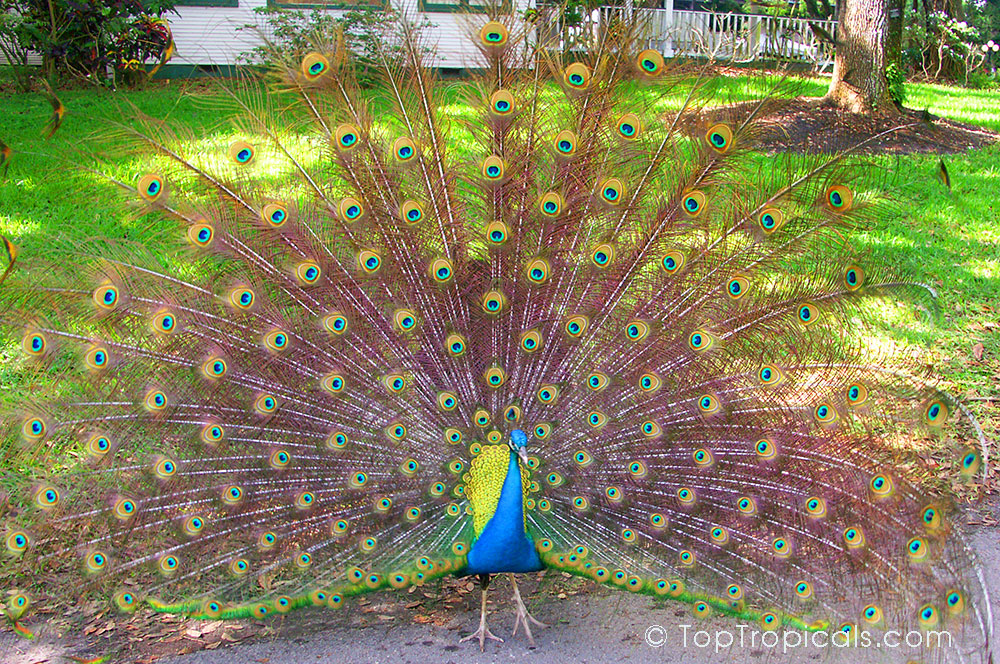
Today Eleanor is sharing with us pictures of this amazing bird that helps her around her Orchidarium.
This young Pea Cock showed up one day in her backyard from nowhere and set up his living quarters in a tree. She asked around: no one was missing a peacock... so she took the Pea in and now he is in charge of her orchid collection. After a day of a hard work, Pea comes home to the back porch, waiting for Eleanor to sing him a good-night lullaby. Pea won't go to sleep until everyone in the house is ready for bed and the lights turned off. What a responsible house guard!
Check out and more Cat of the Day stories.
Date: 16 Sep 2019

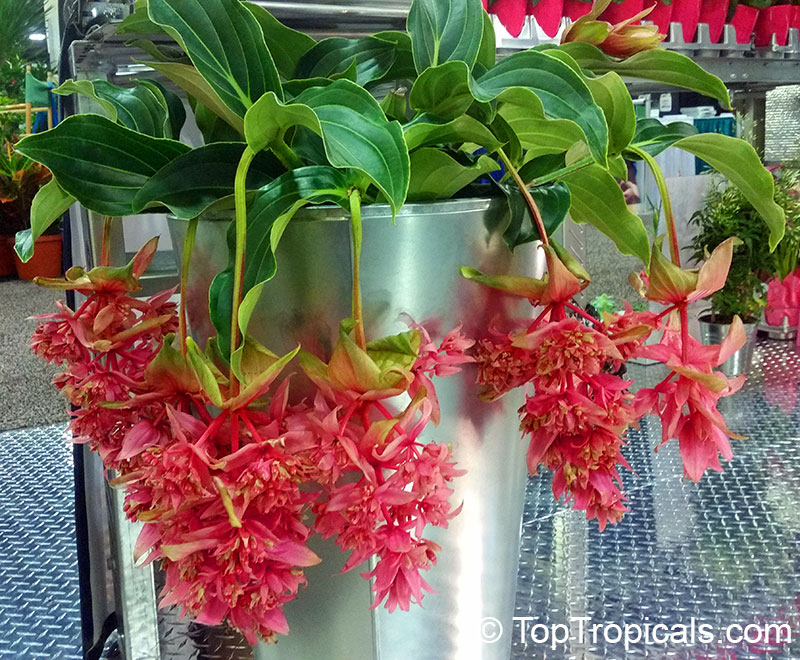
What pot is good for Medinilla?

Q: I just acquired a Medinilla plant. I have a cylindrical tall clay pot that I would like to repot this beauty into. Would like to know if a deep pot is good for this type of tropical plants even if the medium is lightweight with bark and perlite allowing adequate drainage. Would appreciate your advice.

A: Medinillas are very close to epiphytes, meaning they like high air humidity and very good soil drainage characteristics. Clay pots usually provide good air circulation, as long as they are not glazed. If you add a lot of soil conditioner into your mix, like orchid mix and perlite, the tall pot will provide a good drainage. Tall pot is also great for displaying the beautiful pendulous blooms!

Plastic pots work well too, as long as you provide a well-drained soil for the plant. If a nursery plastic pot is not pretty enough, you may place it in a fancy planter; however, make sure never let the pot sit in water, Medinillas do not like wet feet.

Date: 2 Feb 2020

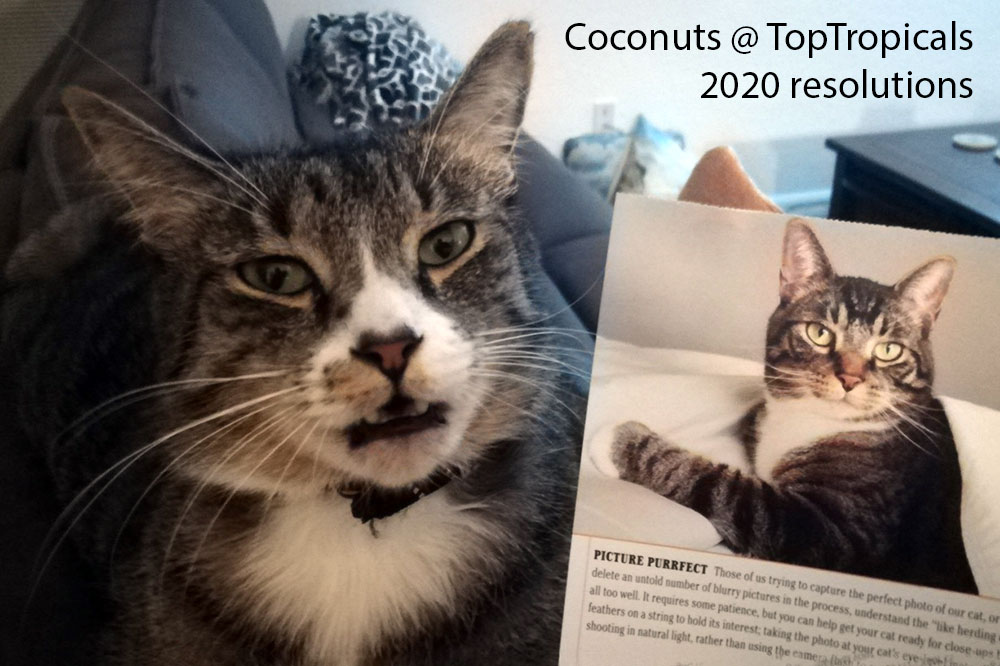
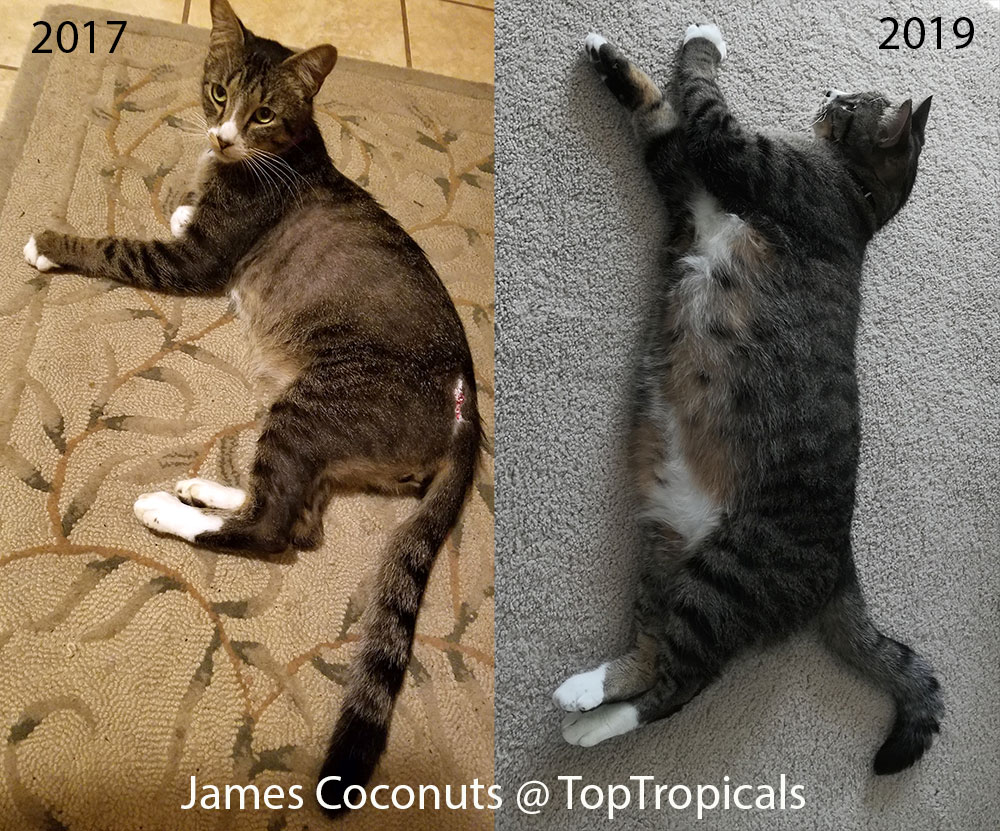
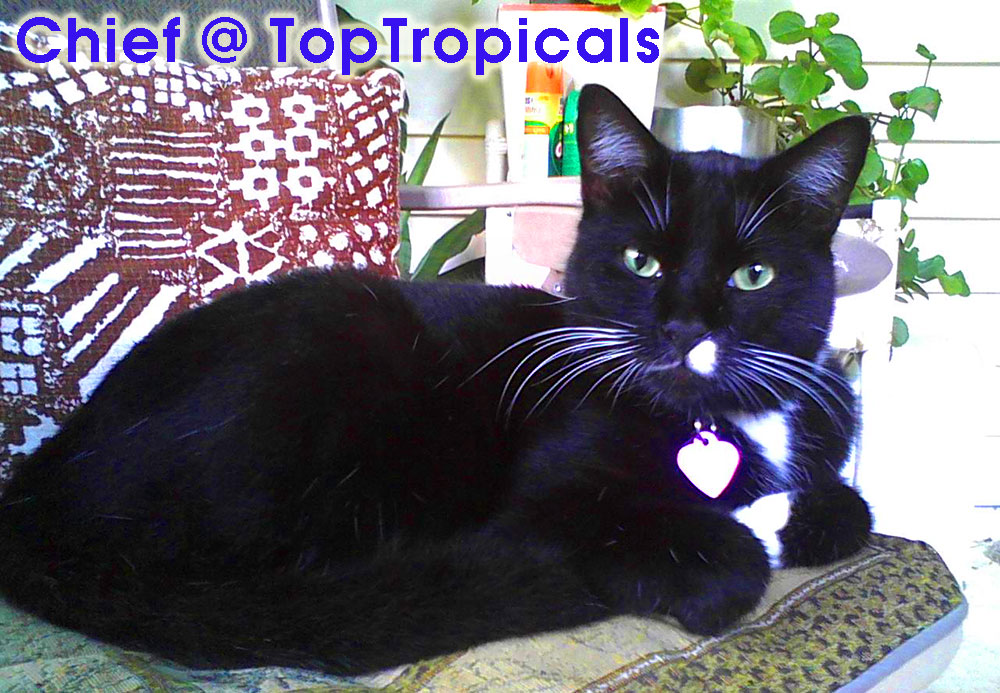
Meet PeopleCats of TopTropicals. Cat of the Day: James Coconuts progress report

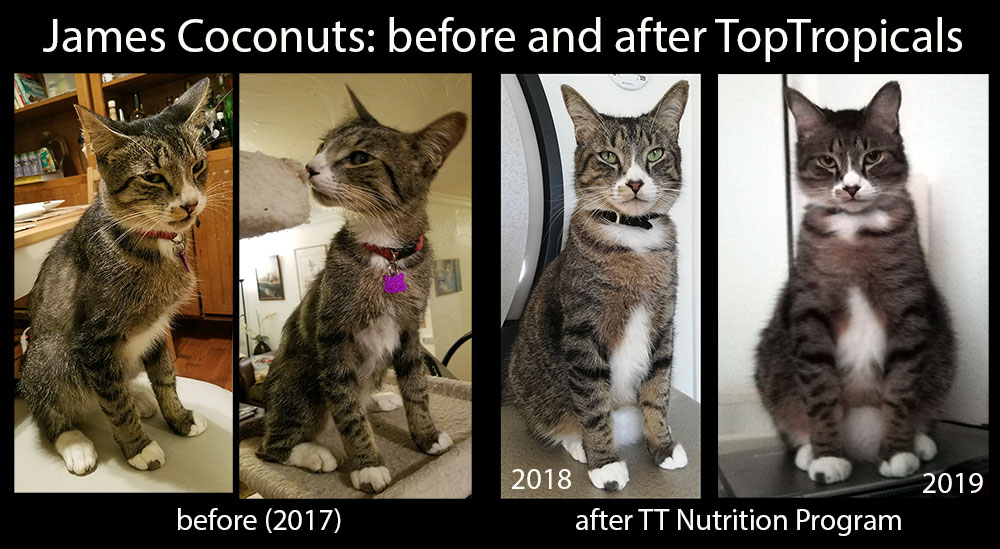
Many people asking about James Coconuts who used to be in charge of our Office and Customer Service team. What is he doing now? Did he get a promotion? We addressed this question to Coconuts and here is what he's got to say:

"Hi folks, I am doing just fine. Yes, I got a promotion and currently working in Sunshine Boosters Lab together with Mr Booster (I just call him Mr B). We are developing a revolutionary Sunshine Plant Nutrition Program. It is important that your plants have good food! I can tell from my own experience. When these nice people at TopTropicals picked me up from the street couple years ago, I was nothing but bone and skin... not even much fur. And look at me now! I am still working on my work out, and my resolution for 2020 is to become even more fluffy, just like that chick in the calendar! I think everyone should eat good... and do good... Like someone said:

"Go into the world and do well. But more importantly, go into the world and do good!" (Minor Myers Jr).

Check out and more Cat of the Day stories.

Date: 29 Dec 2019

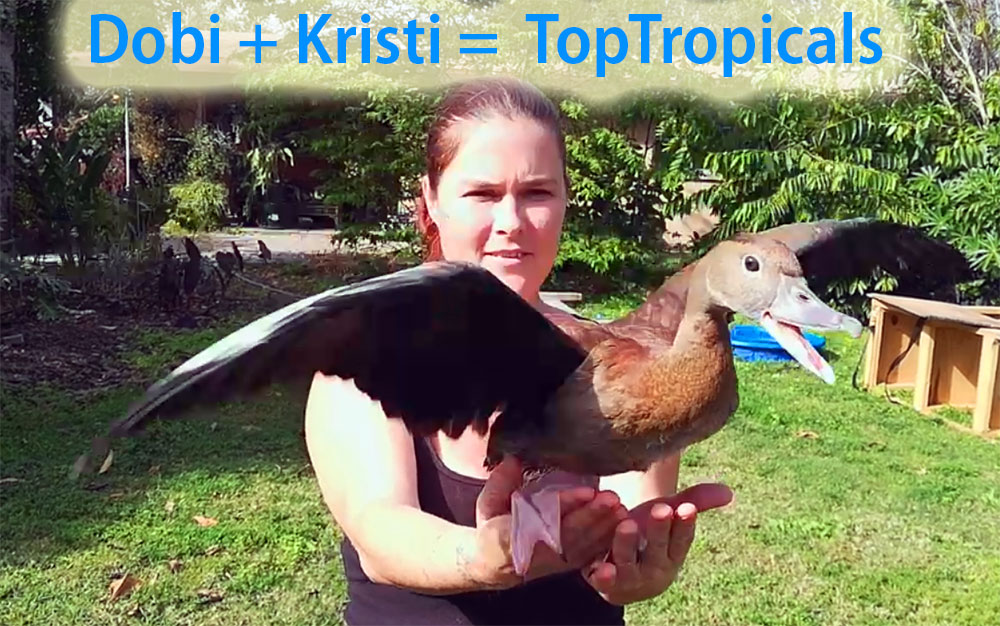
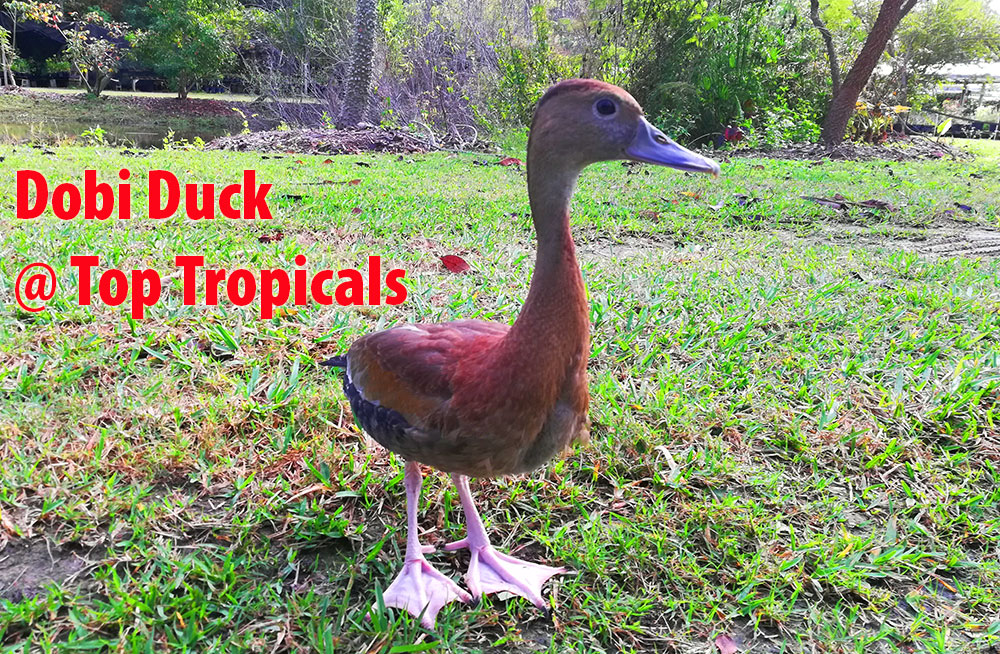
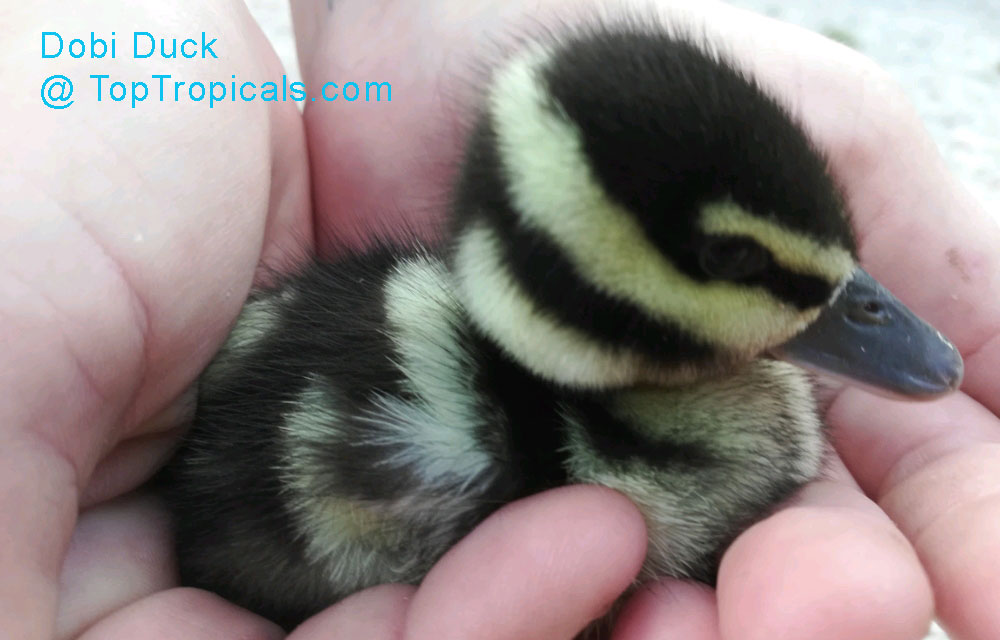
Meet People of TopTropicals. Duck of the Day: Dobi says Good-Bye!

Our Duck Dobi finally decided to join her whistling duck community and said good bye to us...

Everyone who visited Top Tropicals Garden Center met Dobi - the all-time greeter! She has been raised by Kristi from a little fluffy duckling and ruled TopTropicals Cat Community and Plant Nursery for almost 2 years! Now that she finally feels strong and confident, she said she feels good about getting her Duck Freedom. She promised to come back in Spring, like all ducks do - they come to their Home Pond where they have been raised.

Bon Voyage Dobi, enjoy your duck friends, and we will be waiting for you!

Check out and more Cat of the Day stories.
Date: 30 May 2019

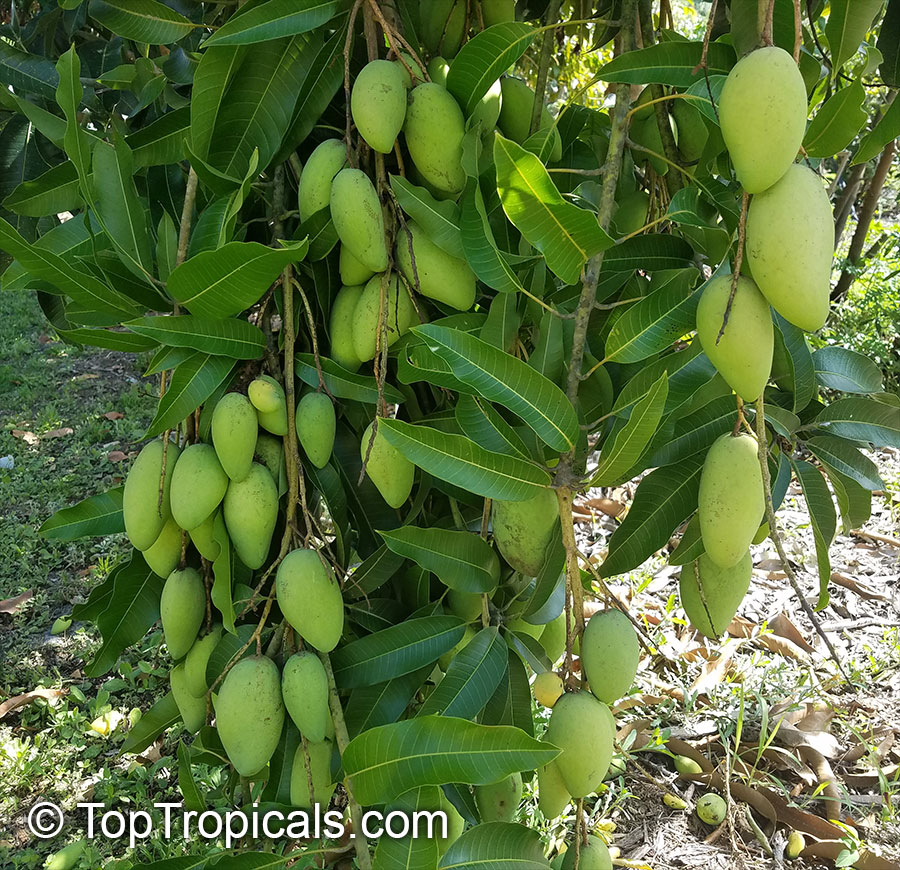
Triple Sec Mango

TopTropicals.com

By Onika Amell, tropical plant specialist

Q: I live in Mesa, Arizona. I am considering purchasing two of you Triple Sec Mango trees. Can you please give me some information on this variety and how to grow it successfully here in hot and arid Arizona, if at all?

A: Triple Sec Mango is a new name for the superior variety Seacrest. The aroma of this fruit resembles Triple Sec - an orange liqueur. It's a juicy, mid-season variety that has good disease resistance.
Mango has pretty good heat and drought tolerance. It loves sun, but there are a lot of factors to consider when growing Mango in your area.
Check your soil. Soil quality is always first and foremost: when you live in an area of Arizona with hardpan (extremely compacted desert soil) or caliche (layers of soil cemented by calcium carbonate) you will have to learn how to deal with such soil types. Amend the soil as needed.
The best time to plant is spring or fall to give your Mango a chance to get established before the really intense Summer heat starts. Alternatively, protect the tree with a shade cloth. Tender, new growth will not stand a chance unprotected, especially newly planted and/or young trees.
Mangoes are tropical and sensitive to frost and freeze damage. Young trees especially will also need winter protection when temperatures go near or below freezing. Always plant trees in a location where they will be protected from cold wind. Consider staking your newly planted Mango trees for the first year. It's never a bad idea to even stake during periods of high winds.
Make sure your planting site has very good drainage. Always use a good quality mulch around your tree as it helps to trap moisture, keeping the ground and the roots beneath it cool. Keep mulch a couple of inches from the trunk of the tree. Avoid a location that gets full day sun. Morning sun, afternoon shade is ideal. Give regular watering until the tree is established. Once established, water only when the soil feels dry.
Fertilizer with a Mango-Food. A foliar spray of micronutrient solution is always recommended during the active growing period. Use plant stimulants and microelements to improve cold hardiness and vigor.

See more info on growing mango in hot climate and container grown mangoes in Arizona.