Garden Blog - Top Tropicals

Date: 25 Jun 2019

True love of Night Blooming Jasmine
By Onika Amell, tropical plant specialist

Q: I live in New Cumberland, West Virginia. I love the smell of Night-Blooming jasmine. Is it possible to grow it in the northern panhandle of West Virginia? Do I have to plant it every year or do I keep it in a pot and take it inside during the winter months?

A: Technically, Night Blooming Jasmine is not a true jasmine (those plants belong to Oleaceae, or Olive family). Night Blooming Jasmine belongs to the Solanaceae family, also known as the Nightshade or "Potato" family of plants. Yes, this sweet fragrant flower called Jasmine for its perfume is related to potatoes and tomatoes!
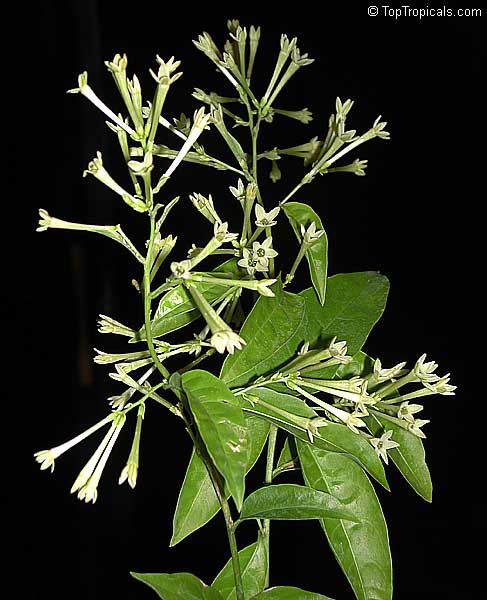
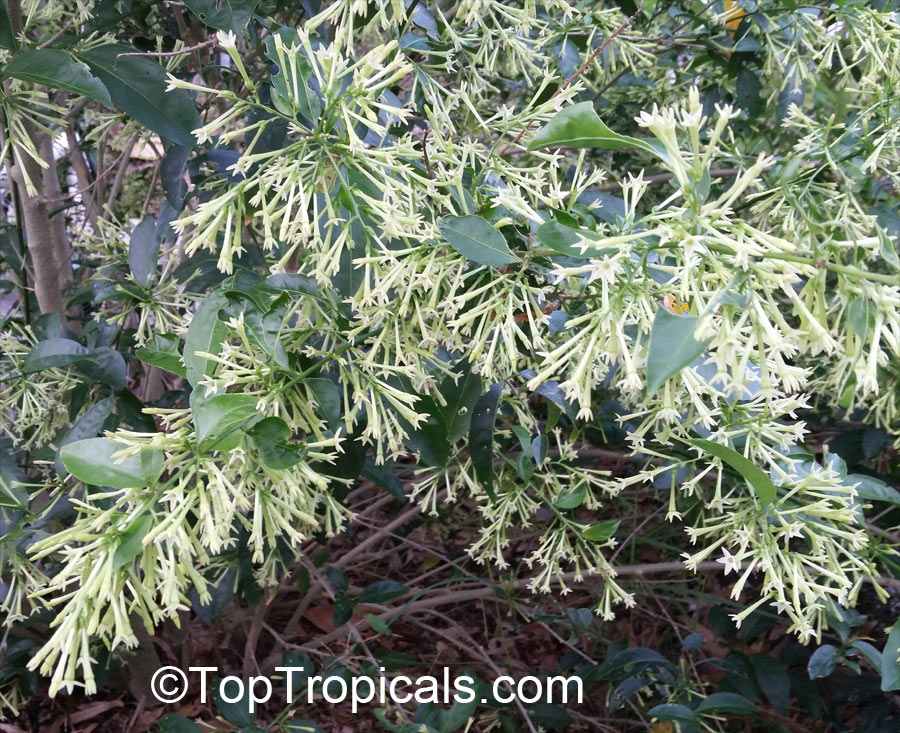
Night Blooming Jasmine - Cestrum nocturnum - is loved by many gardeners for its beautiful fragrance at night. It is one of the most fragrant tropical evergreen shrubs available. Cascading clusters of tiny, tubular pale yellow to white flowers open at night and release a heavenly fragrance throughout the garden, especially on warm summer evenings. The fragrance is much lighter during the day. Night Blooming Jasmine is grown year-round in zones 9-11. It is at its happiest in a sunny to a partially sunny spot in your garden in well-drained soil but can be grown in cooler climates as a container or greenhouse plant.
You would absolutely be able to enjoy this plant during the warm months in West Virginia, but it will most certainly not survive outside during the winter. You will have to bring it inside. Take it outside again only once you are confident there is no more possibility of frost. When grown indoors, be sure to give it the sunniest, South facing window in your home. When grown in a container, you will need to re-pot it every two to three years so it doesn't become root-bound.
For those who are lucky to live in frost-free areas, in ideal growing conditions outside, it can easily reach 8 feet with a spread of 5 feet. It has a lovely informal look that can soften a more manicured garden. Add organic matter to the planting hole when you plant to enrich the soil around the root ball. Water well in the summer, but allow them to dry out a bit between watering in the winter. Plant this Jasmine near pools, porches, doors, windows, and walkways where its lovely fragrance can be enjoyed. The shrub is also an excellent plant for privacy hedges and screens. When grown as a hedge, plant 3 feet apart.
Trim lightly after a bloom cycle to shape and then do a hard pruning in fall or spring to control the size of this plant. Fertilize 3 times a year - in spring, summer, and autumn - with a good quality granular fertilizer.

Recommended fertilizers:

Pink N Good Daily Plant Food - Flower Booster
Tropical Allure - Smart-Release Booster

Interesting facts:

Night-blooming jasmine is an excellent mosquito repellent. The powerful scent of the flowers attracts moths and bats that feed on mosquitoes and other small insects.
The flowers of the Night Blooming jasmine are widely used in India and other countries of South Asia for perfumery, medicinal applications and in religious ceremonies.

Limited time special offer:
Instant $5 off Night Blooming Jasmine

Date: 28 Dec 2018

FEATURED BUTTERFLY PLANT:

TopTropicals.com

Duranta variegata - Variegated Sky Flower

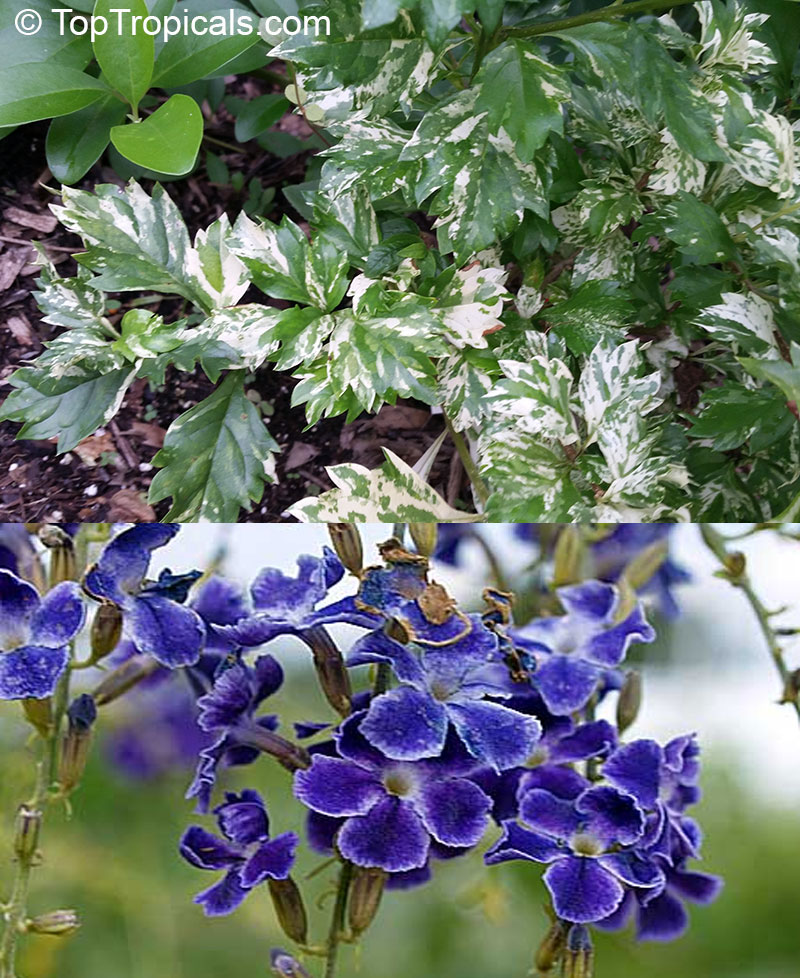
Variegated Sky Flower is grown for its summer flowers and ornamental fruit. This evergreen fast-growing shrub spreads and arches to 10 feet tall and wide and is great for live hedges and covering fences and corners. In the summer, cascading clusters of blue tubular flowers appear followed by wonderfully contrasting orange-yellow berries. This variegated form has creamy-yellow margins around the one inch long serrated leaves. In mild climates, this plant can be in flower nearly year round with flowers and fruit appearing at the same time. It does best in full sun with frequent deep watering and is hardy to about 20-25F. A good choice for espaliers, as a small tree or large bush; all forms benefit from frequent selective pruning. Flowers are very attractive to butterflies. Great for providing a color contrast in the landscape, and is especially well-suited as a bright-colored background or screening. Prune back in late winter to encourage a more compact shape and strong flush of fresh spring foliage. Requires moderate watering in a well-drained soil.

Check out this plant...

Date: 29 Nov 2016

December Fest on Dec 10, mark your calendars!

Topic: Edible landscape. 10:00am - 2:00pm. Agenda:

Class @ 11:00am by Robert Riefer. How to keep pests off of maturing fruit.
Class @12:00pm Super foods by Zoe Merring. Benefits of Soursop, barbados cherry, goji, moringa. Benefits and recipes.

Discounts on all edibles
Prize giveaways at 12:00pm and 2:00pm (must be present to win)

20% off After-Cyber-Monday sale! Now that everybody is done with shopping for monitors and speakers, it is time to get some happy stuff! 20% off on all fruit trees, 1 day only! Enjoy your shopping and get the plants you always wanted at a low price!

Date: 14 May 2019

How to get gingers to bloom

TopTropicals.com

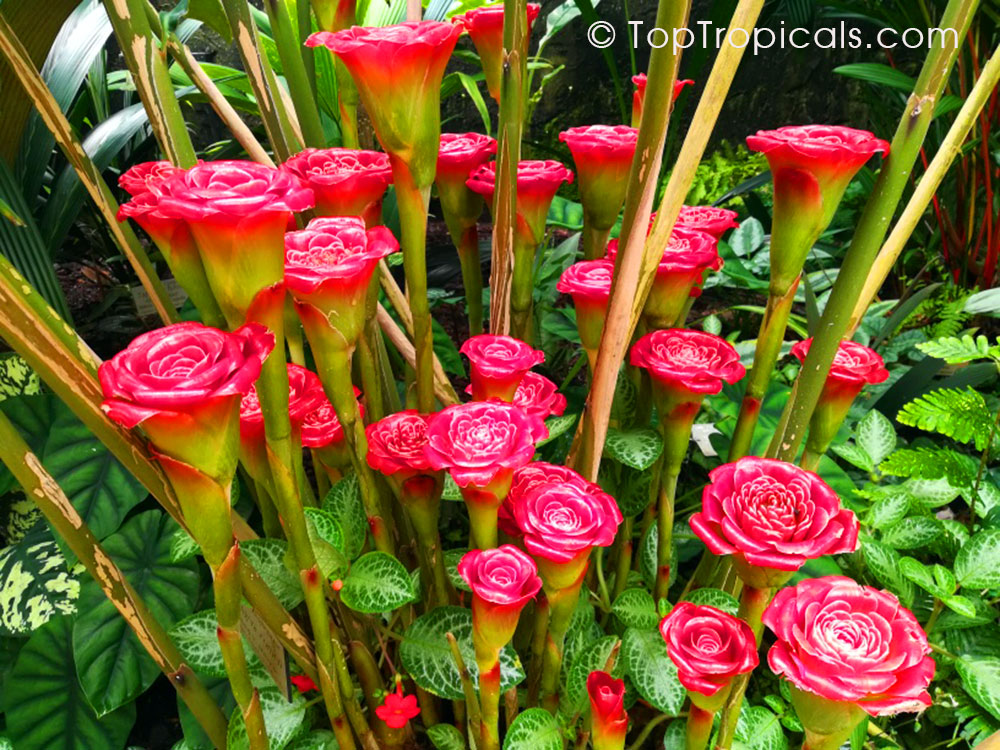
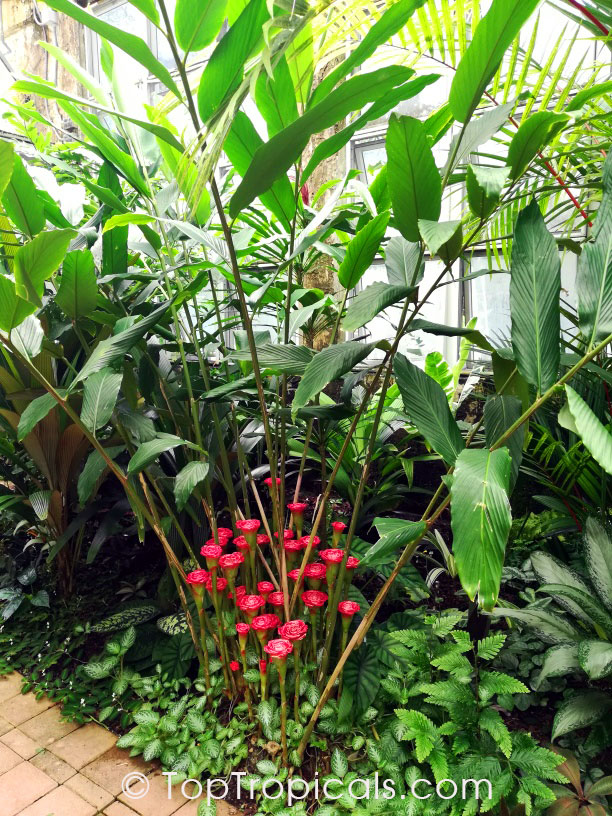
Q: I have several gingers in my yard, including Red Torch, Lobster Claw, and Red Bamboo Ginger, they grow beautifully but only produce large dark green leaves and no flowers. Is there anything I can do to make them bloom? Do they need any special fertilizer?

A: Gingers are easy to grow tropical plants with so many benefits, giving us unique spice, and showy flowers (including long-lasting cut flowers!) - where other plants fail, especially in deep shade. They are not fussy about soils and even water once established. To keep your gingers happy, follow these simple steps:

1. Bright light is essential for flowering, but planting gingers in semi-shade or filtered light will keep them stress-free from burning summer rays.
2. Water gingers regularly until they established and start producing new leaves and stems. Once they start clumping, you may reduce watering to a minimum 9once a week or so), or rely on your sprinkler system.
3. Once the plant is established, start using fertilizer to induce flowering and healthy growth.
- We recommend granulated "smart release" fertilizer for all tropical plants. For gingers, the best formula is Tropical Allure. It provides all macro- and microelements essential for the healthy growth of the plant.
- Apply balanced water-soluble plant food for Gingers, Heliconias and Bananas - Broad Leaf Plus - once a month.
- Additionally, you may also add to the menu flower booster Pink N Good Daly Plant Food - this fertilizer is used in very low concentration and can be used with every watering.
4. Remove old dry and yellowing leaves with sharp cutters to avoid pest problems and keep good air circulation around these clumping plants.
5. Keep soil covered with 1" mulch to protect from weeds and maintain the optimal amount of moisture for the rhizomes.

Check out our specialized fertilizers for different plants - for all your gardening needs!

TopTropicals.com

Date: 4 Oct 2016

Plants for happiness and joy

Plants as homeopathic remedies and happiness boosters. Many people know about health benefits of vitamin C which improves and boosts our immune system similar to SUNSHINE plant booster stimulating growth of plants. But not everybody realizes that this vitamin is responsible for overall happiness of our body, it brings many systems in balance. A number of tropical plants used in salads, as well as fruit with high content of vitamin C can play dual role in your life. You can use them as food, as well as enjoy their beautiful tropical appearance. Such plants will help you feel interest and joy in life when you feel apathetic and resigned to the situation you are in. Just to name a few:

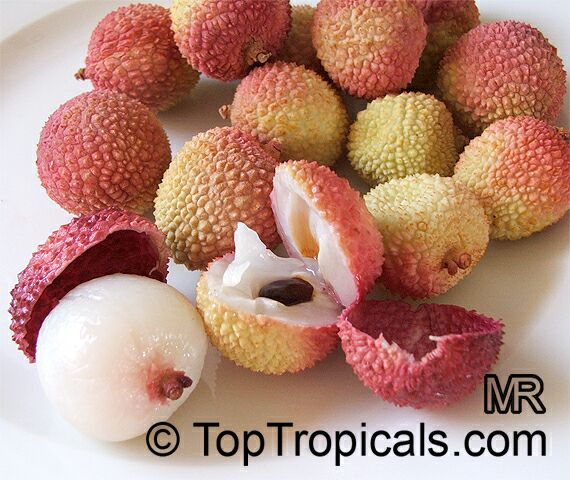
Lychee
Barbados Cherry
Eugenias
Hibiscus Karkade

Try them out. Stay healthy and happy!