Garden Blog - Top Tropicals

Date: 28 Mar 2019

Hawaiian Dwarf is a True Star!
TopTropicals.com

By Mark Hooten, the Garden Doc

Q: I live in Southern Ohio and love growing lots of tropical plants. In the warm months, they all go outside under the protection of tall trees, but in the cold months, they all come inside in a snug but very brightly lit sun-room. For many years I have successfully kept a dwarf Meyer's lemon which amazes my friends, and I am wondering if you could suggest some other dwarf tropical fruit tree which I might be able to grow that would amaze them even more?

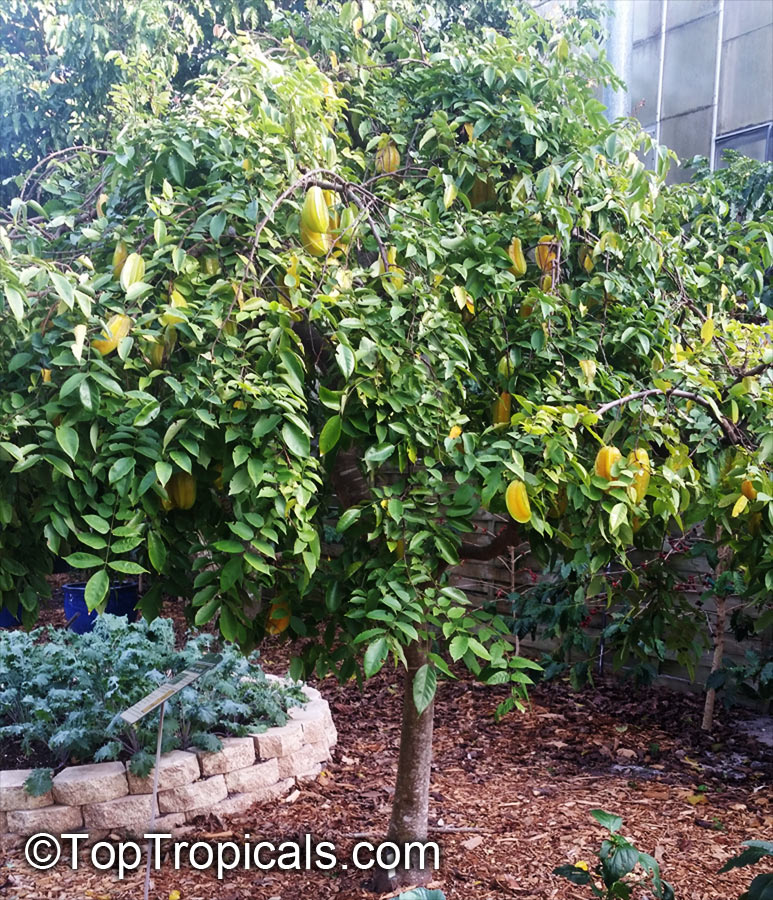
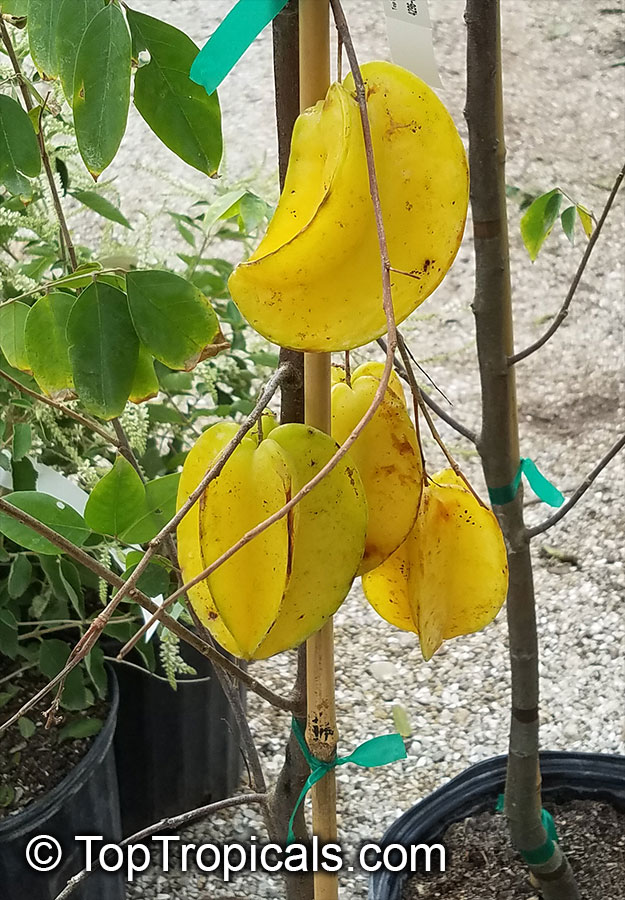
A: Without hesitation, I would strongly suggest a particular variety of carambola (star-fruit) called Dwarf Hawaiian, as it is truly special as tropical fruit trees go. First and foremost, they begin fruiting at a very young age, often while only in a one-gallon pot, and even less than a couple of feet tall with a very little trimming. Better even is that they are perfectly happy living perpetually in a pot. I have one myself which is content in a 12 inch pot and which fruits freely throughout the year. Also, even though it should be too much to be expected, the fruits are of the highest quality and are as sweet as candy. I also like the fact that the fruits hang decoratively on the tiny tree for quite some time before finally ripening, rather like ornaments. One of these little trees in-fruit is an amazing sight and ought to make anyone take notice, especially in a sun-room in Ohio! They really are very easy to grow, and if you have a Meyer's lemon which does well, you'll certainly have no particular issues with a Dwarf Hawaiian carambola.

However, I have found that in order for them to remain extra dwarf and fruit especially precociously, this variety needs to be grafted and not cutting grown. Fortunately, Top Tropicals has recently obtained a number of these extra wonderful grafted trees which are of the highest quality I have seen in some time, all of which will likely begin fruiting very shortly. They simply are wonderful little trees! Check them out...

TopTropicals.com

Date: 24 Mar 2019

Featured plant. Heliconia rostrata - Lobster Claw

TopTropicals.com

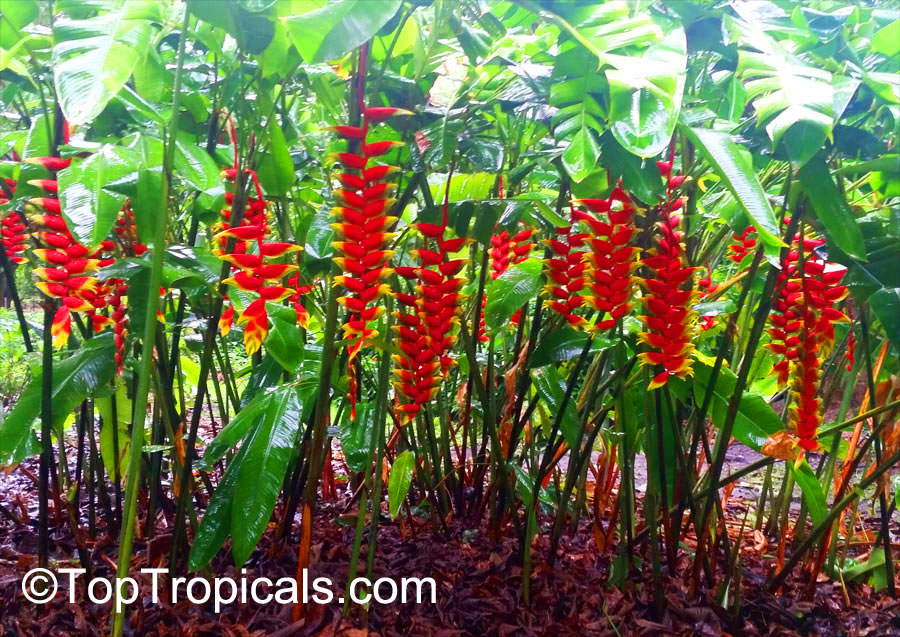
Heliconia rostrata - Lobster Claw

Lobster Claw, Parrot's beak... Tropical flowers never fail to astound and amaze with their forms and colors. Lobster Claw plant (Heliconia rostrata) is no exception, with large, brightly hued bracts that cluster up a stem. It is also called Parrot Beak and has inconsequential tiny flowers covered by the showy bracts. It is native to Central to South America and is one of the most recognized and widely grown species of showy heliconias, and one of the most beautiful! The inflorescence it produces is one of the most colorful you will ever encounter. Pendulous blooms of striking red and yellow bracts often reach 3' in length! The flowers last a long time and make an excellent cut flower. It is an easy grower in tropical areas but some room is required because the stalks can reach 7 feet in height. It can withstand temperatures in the high 20s. Can be grown in large pots, it starts blooming once the plant reaches 4-5' tall and the amazing inflorescences will appear one after another creating a spectacular show to enjoy. Grow in full to partial sun and rich soil with lots of water and fertilizer.

Check out this plant...

Date: 24 Mar 2019

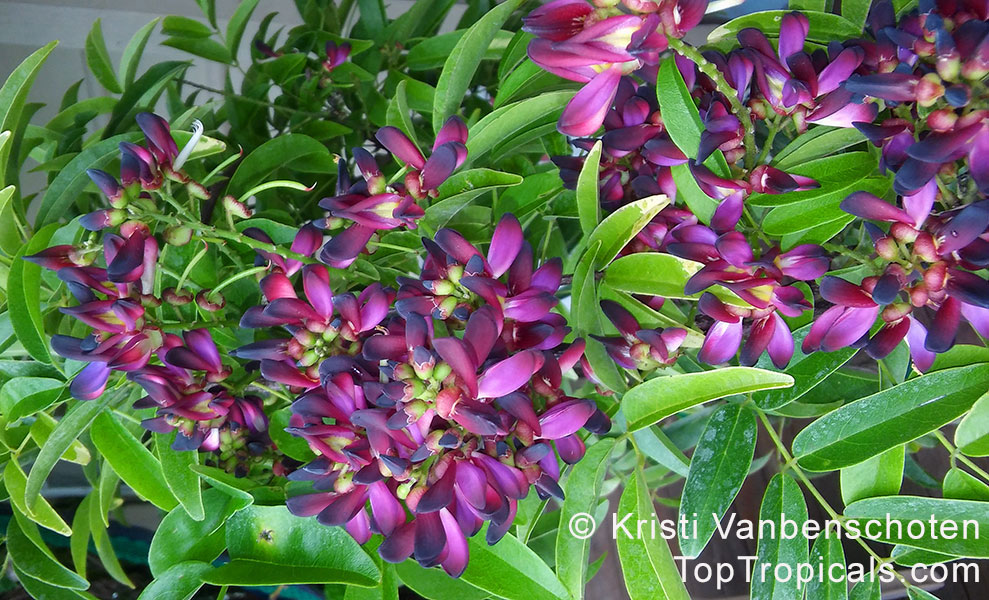
Spectacular Evergreen Wisteria

TopTropicals.com

Q: When I was a child growing up in Virginia, my mother always had Wisteria growing around the house. It became one of my favorite plants growing up. I loved the beautiful cascading purple flowers. The highly fragrant and colorful flowers provided a feast for the senses. I have now re-located to Florida and understand the the Wisteria I knew as a child will not flower here in the warmer climate. Is there a vine similar to the wisteria that I can grow here in Florida?

A: There is a great alternative to the Wisteria sinensis you knew and loved as a child! Millettia reticulata - Evergreen Wisteria is a beautiful and highly fragrant vine. Unlike Wisteria sinensis, Millettia is not an invasive plant and can be maintained much more easily. The royal purple flowers completely cover the plant throughout the Spring and Summer.

Date: 18 Mar 2019

Featured plant. Sauromatum (Typhonium) venosum - Voodoo Lily

TopTropicals.com

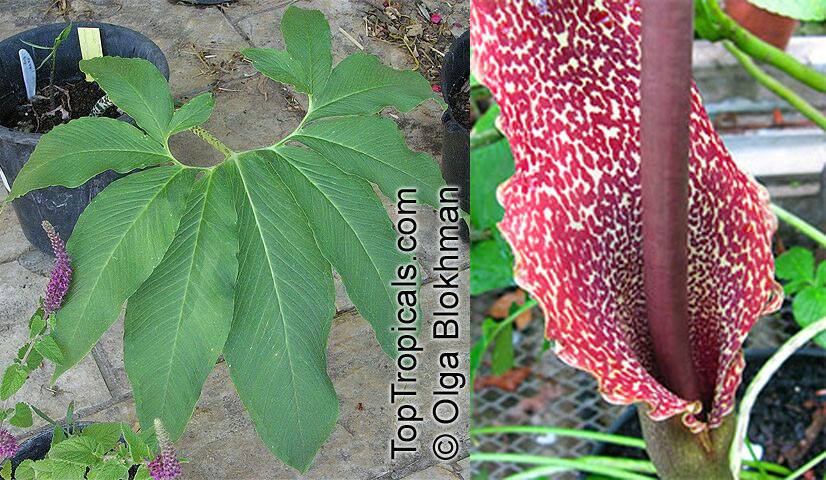
Sauromatum (Typhonium) venosum - Voodoo Lily

Rare Amorphophallus ralative, Typhonium venosum (Sauromatum venosum), is a common shade-loving house or garden plant from temperate and tropical Africa and Asia. This plant is also known as the Voodoo Bulb because of its ability to flower from a corm without soil and water. Tuberous perennial with solitary, segmented round leaf and strange, arum-like flower. Rare collectable, it is a showy exotic container plant.
Typhonium grows to around 20 inches tall from an underground corm. A large corm can spawn multiple new corms. Inflorescences emerge before the leaves. An inflorescence has a purplish-brown-spotted, yellowish spathe and a purplish-brown spadix which emit a strong odor perceived as similar to cow manure, rotting flesh, or a dirty wet dog, depending on who smells the inflorescence ;) The odor lasts only a day and attracts carrion-feeding insects which can pollinate this plant.
Plants we have in stock, have tubers 1-2" in diameter. The plant goes dormant in winter and starts sprouting in March-April. Keep soil slightly moist but not wet, and wait for the magic leaf to pop up... The plant should flower within a year or two.

Check out this plant...

Date: 18 Mar 2019

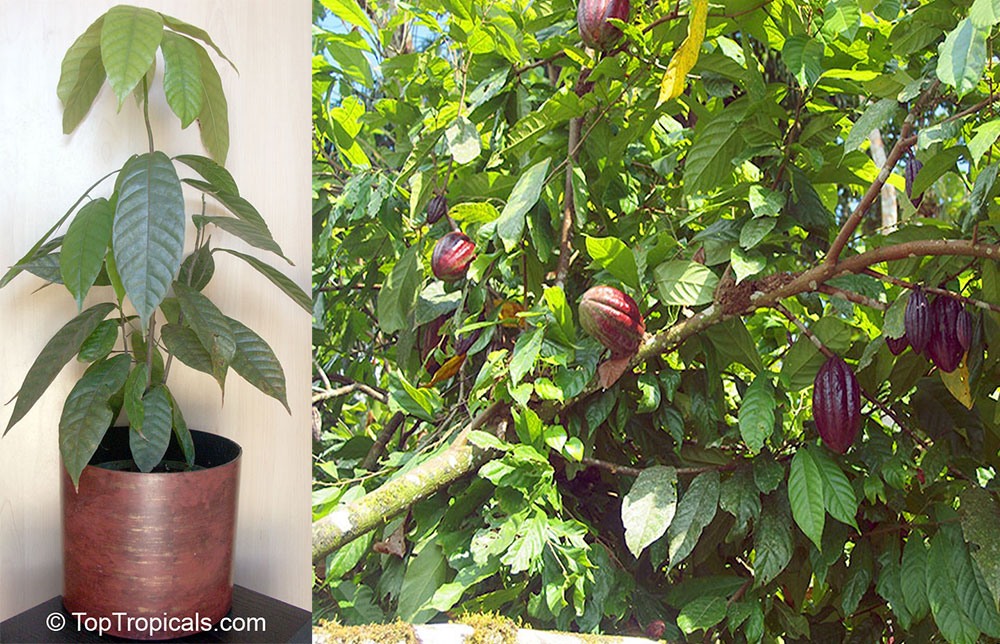
Cocoa plant after winter

TopTropicals.com

Q: I purchased the Theobroma cacao two months ago. The leaves are wilting from the edges. Do you think this from not enough water, too much water or not enough sunlight? I am keeping the plant indoors.

A: During winter time, Cocoa plants even inside our greenhouse look the same. Dry tips of the leaves are normal for this time of the year. It is a combination of lower temperatures and low humidity that causes it. Indoors air humidity is especially low. Weather permitting, bring plant outside in the bright shade, when temperatures are above 65F. Humidifier and water-spraying will help too. You may put the plant on top of a tray with pebbles/water. Do not overwater - extra watering is not a substitute for high humidity. As spring comes, Cocoa plants start looking greener and grow new healthy leaves.