Garden Blog - Top Tropicals

Date: 12 Apr 2019

Dwarf Red Ginger - more than just a pretty face
TopTropicals.com

Q: I've just recently moved to Florida from North Carolina. I don't know much about tropical plants. Can you perhaps suggest an easy and pretty flowering plant for a beginner which I can plant around my garden pond for a tropical feeling?

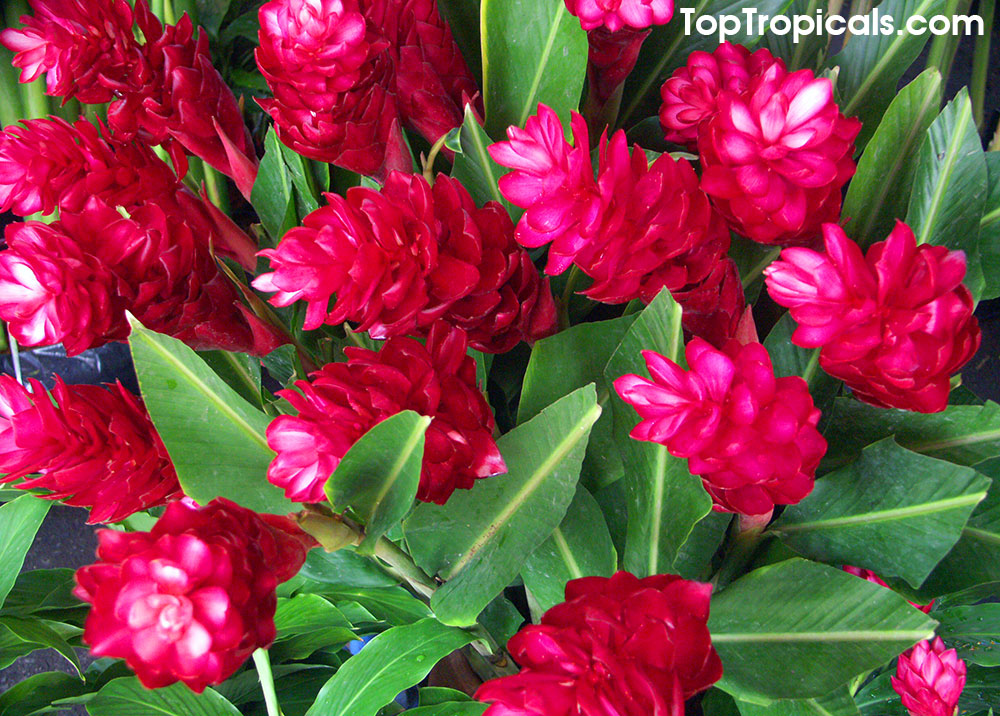
A: For adding that tropical look to your garden, few plants beat beautiful ginger! Alpinia purpurata, the Dwarf Red Cone Ginger with its bright red floral spikes and lush, lance-shaped foliage is no exception. This striking perennial will add a tropical effect to your garden that will definitely take your breath away.
The Dwarf Red Cone grows between 3 and 4 feet tall and blooms 8-9 months of the year! The blooms will hold on the plant for up to 3 weeks! It makes a very attractive and distinctive backdrop for other plants.
Red Cone Ginger likes partial shade and moist, humid conditions, but will tolerate full sun. It is fast growing, easy to grow and resistant to disease, heat, and insects. The plant is a wonderful accent in a garden and works well as a focal point specimen, show-stopping when planted around garden ponds or near entryways. This ginger also works very well in containers and planters. Either in mass plantings or smaller groups, all gingers add tropical flair which never disappoints.
In addition, the beautiful flower spikes make for great, long-lasting cut flowers and is an interesting addition to bouquets.
An added bonus? Dwarf Red Ginger is super easy to propagate. If stems are cut at the base and placed in water, they will generally root within a few weeks. Eventually, you can make a whole flowering hedge just from one plant!

Who does not like a plant that is non-fussy and not only beautiful but easy to grow? Dwarf Red Ginger is more than just a pretty face!

To keep this plant happy and blooming, give it some food: Broad Leaf Plus - Ginger-Heliconia-Banana Booster.

Date: 8 Apr 2019

Magic mix for stubborn plants

TopTropicals.com

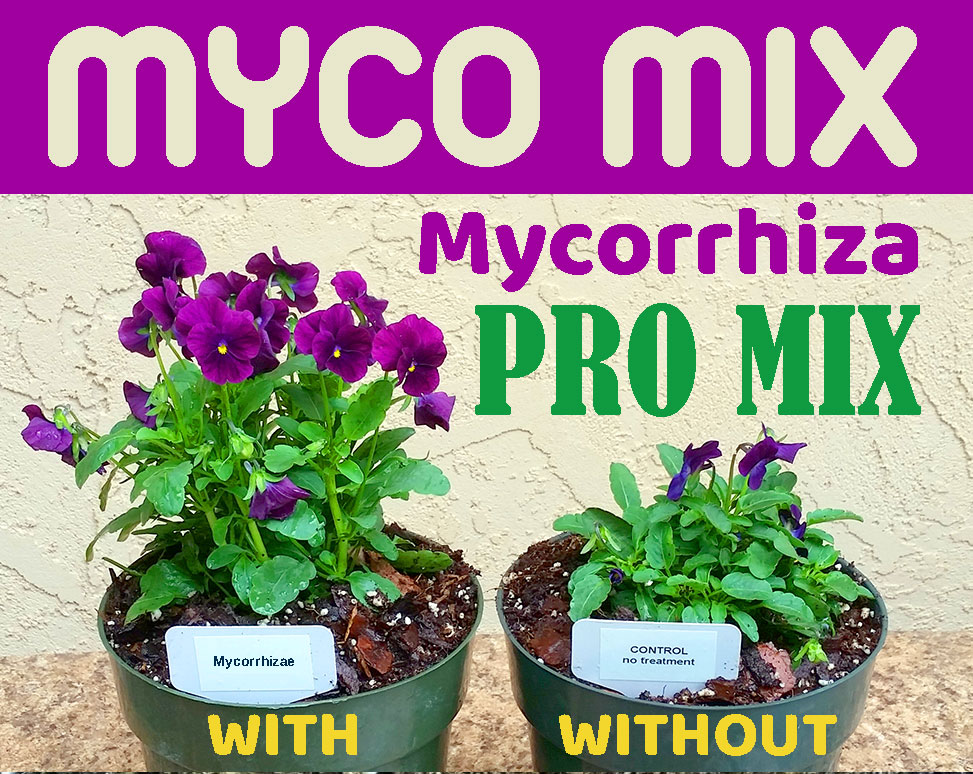
Myco Mix - magic mix with Mycorrhiza

A word from the owner...
...When I first started growing tropical fruit trees, I noticed that Lychee just can't be grown from seed, period. The seed germinates readily, a little happy seedling grows like crazy... but only for the first couple weeks. Then it stops. Then it shrinks. Then it dies.
My teacher, tropical fruit tree expert Murray Corman (Garden of Delights), made fun of me for growing Lychee from seed, and explained his sarcasm with two words - "Need Mycorrhiza!" It appears that in Nature, Lychee seedlings can only grow around its mother plant which has this magic plant-friendly fungus around its roots! The only way to succeed with some seedlings is using this amazing Nature symbiosis... Check out Mycorrhiza - and try it, works 100% in all stubborn cases!

Myco Mix is an amazing underground secret to a better garden! This professional growing medium with Mycorrhiza is a must for establishing plants, recovering weak plants, and for transplanting applications, including seedlings and cuttings...Learn more...

Date: 8 Apr 2019

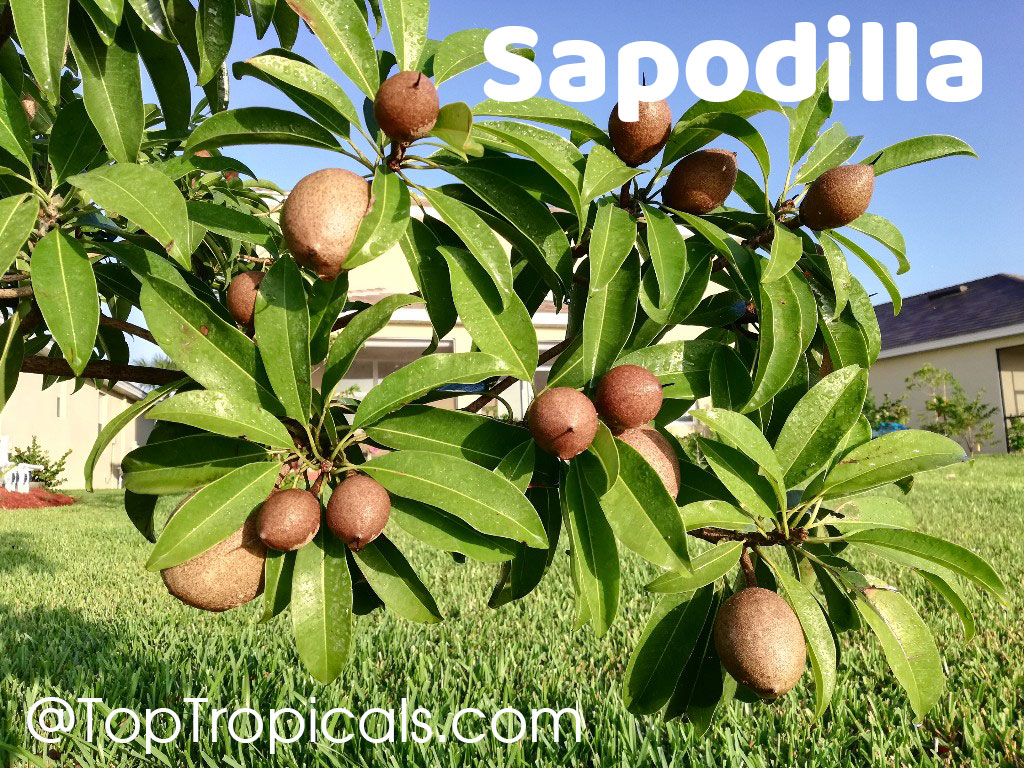
Growing sapodilla in container and indoors

TopTropicals.com

Q: I live in northwestern Washington state. I was wondering if I can grow a Sapodilla tree indoors in a container? Are they self-fertile, and which variety do you think would do best in a large container?

A: A: All Sapodillas are self-fertile. They can be successfully grown in pots due to their slow growth rate and compact nature. The most important requirement for successful growing and fruiting is a bright light, other than that it is a very undemanding plant and is not fussy about watering. The best variety for potting culture is Silas Woods which is a dwarf kind. This variety is the most profuse producer, flowering and fruiting nearly year round providing bright light and warmth. Although the fruit are smaller than other varieties and average 3-4" size.
Sapodillas require regular fertilizer applications for good production. We recommend Fruit Festival slow release fertilizer for the best results.

Date: 3 Apr 2019

Featured plant. Acacia sphaerocephala - Bulls-Horn Acacia

TopTropicals.com

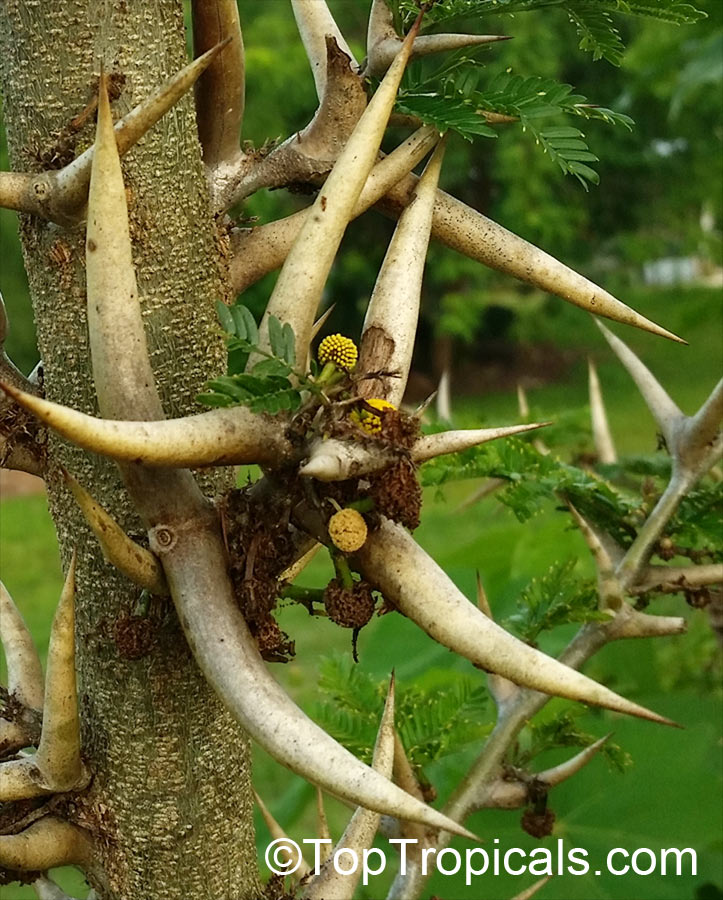
Acacia (Vachellia) sphaerocephala - Bulls-Horn

The name of this cool unusual tree comes from the shape of the thorns which do indeed resemble the horns of a bull! The tree has a strong, symbiotic relationship with a species of an ant, Pseudomyrmex sphaerocephala for which it is the obligate habitat. The ants act as caretakers for the tree, and clear the ground and keep it free of any other plants and even prune surrounding branches of other trees that threaten to outshade the acacia. Without the protection of the ant colony, the acacia tree would fall vulnerable to chewing insects such as beetles or caterpillars, and surrounding trees and shrubs would quickly outcompete the acacia without the maintenance work of the ants to keep the tree safe.

Check out this plant...

Date: 3 Apr 2019

Clay or plastic?

TopTropicals.com

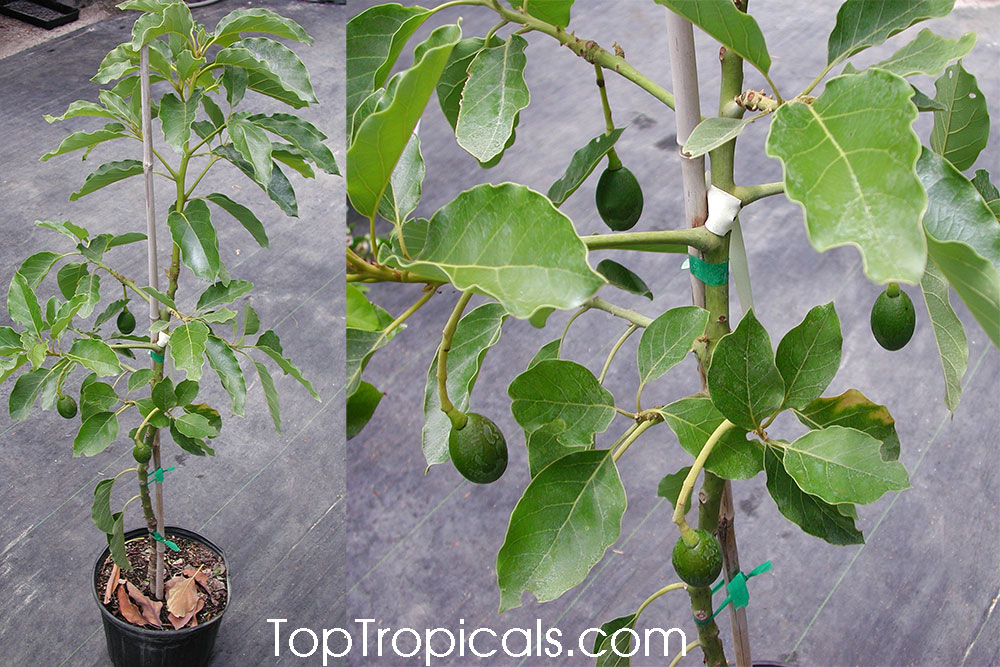
Q: I purchased an Avocado tree and planted it in a nice clay pot that I bought in a special pottery place. My tree looked very healthy when arrived but after a week leaves become droopy and started yellowing. I was advised this was a sign of over-watering. I watered the tree only once since I got it 2 weeks ago. What is wrong with my plant?

A: Unfortunately, the fancy pot may be the reason. Although clay pots (plain clay, without glaze) are considered to be good for root health, however, the root system is hard to control and difficult to check without disturbing. Clay pots with fancy glaze and painting may have a drainage problem. We have noticed that cone-shaped pots are usually problematic for drainage, and a plant always has "wet feet". Avocados like watering, but cannot tolerate sitting in water. If you want to avoid root problems and still like to keep a beautiful look of your treasure plant, you may use a fancy planter, where you can put your plant growing in a plain plastic black nursery pot of much smaller size than a planter: its vertical walls are perfect for drainage, and the pot is easy to remove for re-potting or inspecting. Make sure to put a layer of drainage rock on the bottom of the planter so your efforts won't be in vain.