Garden Blog - Top Tropicals

Date: 7 Mar 2017

Taking care of Guanabana (Soursop) after shipping
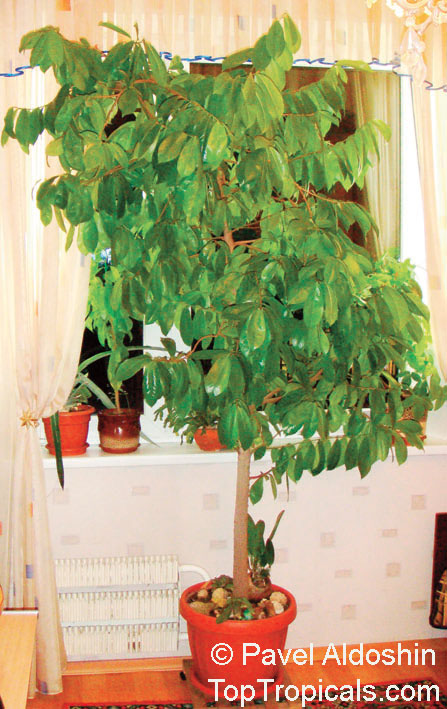
Q: Since I have never grown a soursop tree before I need some pro help. My tree was delivered absolutely beautiful, leaves were a pretty green. I potted it and gave it a good drink of water and put it in a shaded area outside. Then the weather here became cool so I brought it in for a few days until the weather warmed, and it lost all the leaves. Is it in shock and will come around eventually? Will I be able to grow this tree indoors during winter?

A: Soursop - Annona muricata trees are very sensitive to temperature drops. This always causes leaf loss. You seem to be doing everything right. Do not water until soil gets slightly dry; keep it in bright shade. The weather should be good now with high temperatures and humidity rising. No fertilizer until the plant shows active new growth. Be patient with your plant, it should recover soon.

Soursop is an ultra-tropical tree and doesn't take any freeze. If you live in cooler climate, keep the plant in a pot (the good news is, Annonas in general have compact nature and are perfect for container culture). Bring the tree indoors during cold period, providing bright light.

Remember that grafted trees start flowering and producing fruit right away, unlike seedlings of Soursop that may take a few years till fruiting.

We have very interesting article about growing and fruiting Soursop in apartment. Check out Tropical Treasures Magazine #7.
Date: 8 Aug 2016

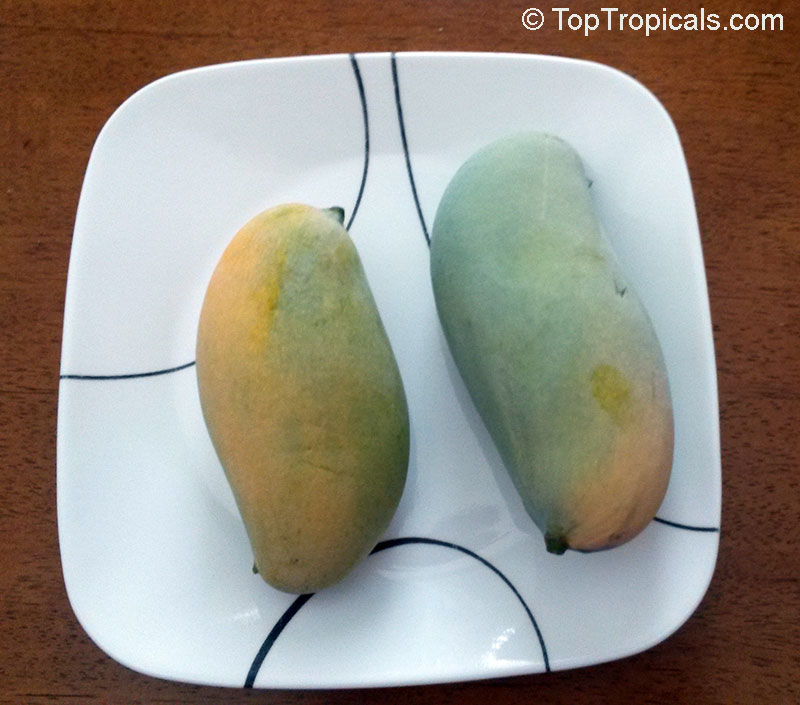
Growing mango in hot Arizona

By Mike D, Mesa, AZ. Despite to what you may think, mango can be successfully grown in desert Arizona climate. It has good heat and drought tolerance. It's possible providing the following:
1) Winter protection of a young plant when temperature goes around or below freezing. Try to plant trees in locations where they're protected from cold wind. Minimal temperatures vary widely. Areas which are closer to downtown are few degrees warmer, while outskirts can be very cold.
2) Some people are lucky enough to live in areas with good soil. However, most of us will have a so-called hardpan (extremely compacted desert) or caliche (layers of soil cemented together by calcium carbonate). Check with your local county extension office to determine how to deal with such conditions. Gypsum is usually used to loosen compacted soil.
3) When planting, dig a large hole making sure it has good drainage. Plant tree as usual, add mulch around it. It helps to conserve moisture.
4) Best time to plant is late Fall or early Spring, so mango can get established before Summer heat.
5) Plant where tree gets few hours of sun.
5) Water a lot until established. Once established, water when soil is dry.
6) Small plant may need protection from summer heat. Use shade cloth.
7) Mango requires very little nitrogen fertilizer. In hot climate, overdosing nitrogen may result in quick plant decline. Use balanced low nitrogen slow release fertilizer or avoid nitrogen completely. If you use mulch, then decomposing mulch provides enough nitrogen. Foliar spray of micronutrient solution is recommended during active growing period. Read more...

Date: 6 May 2016

Taking care of Soursop after shipping

Q: Since I have never grown a soursop tree before I need some pro help. My tree was delivered absolutely beautiful, leaves were a pretty green. I potted it and gave it a good drink of water and put it in a shaded area outside. Then the weather here became cool so I brought it in for a few days until the weather warmed, and it lost all the leaves. Is it in shock and will come around eventually? Will I be able to grow this tree indoors during winter?

A: Soursop - Annona muricata trees are very sensitive to temperature drops. This always causes leaf loss. You seem to be doing everything right. Do not water until soil gets slightly dry; keep it in bright shade. The weather should be good now with high temperatures and humidity rising. No fertilizer until the plant shows active new growth. Be patient with your plant, it should recover soon.

Soursop is an ultra-tropical tree and doesn't take any freeze. If you live in cooler climate, keep the plant in a pot (the good news is, Annonas in general have compact nature and are perfect for container culture). Bring the tree indoors during cold period, providing bright light.

We have very interesting article about growing and fruiting Soursop in apartment. Check out 4534 Tropical Treasures Magazine # 7.

Date: 13 Mar 2016

Growing Vanilla Orchid

Q: I want to buy Vanilla orchid and I wonder if I can grow it in my bathroom by the skylight.

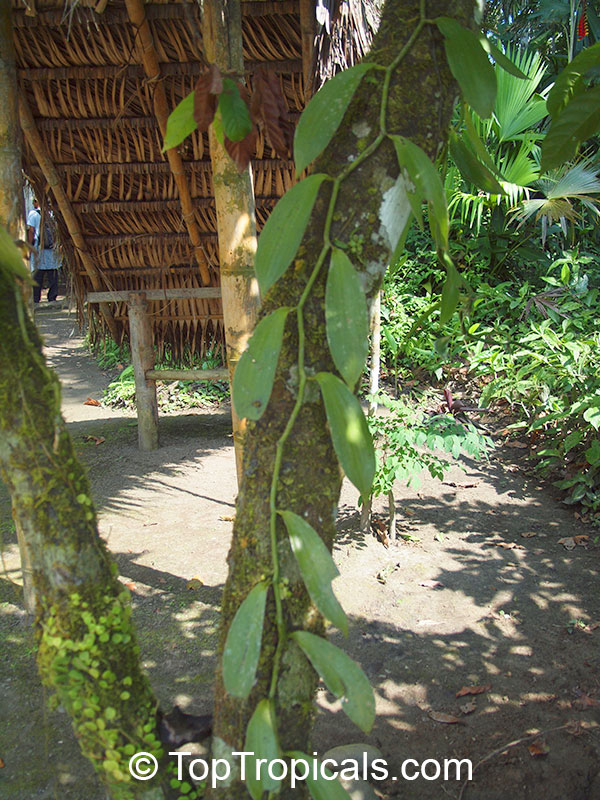
A: Growing Vanilla orchid is no different than other orchids. It is very simple. All that the plant needs is a good light, good air humidity, and good porous support.

Light. Grow Vanilla orchid in a very bright light, but protected from direct hot sun.

Air humidity.The higher the air humidity, the better your plant will grow. Many people grow orchids in a bathroom where these plants can enjoy occasional "humidity treats" after showers.

Growing media. Vanilla orchid cuttings are rooted very often in a regular potting mix with high content of pine bark and/or Perlite, Coconut Husk Chips. Once the little plant is well-rooted and starts developing, it will need a special porous surface to climb on and to attach to with developing aerial roots. A log covered with porous bark is used often. Another option is a piece of wood wrapped with a burlap fabric. In the Nature, this plant climbs up high onto trees and attaches to the bark with aerial roots - at this point, it doesn't need those terrestrial roots any more which may even die off. Climbing a porous support is absolutely necessary for your vanilla for setting buds, flowering and producing vanilla beans. If you are lucky to live in frost-free climate, plant you vanilla by a tree that will provide a shady canopy and a great natural climbing surface (bark). You may see the flowers as soon as within 1-2 seasons!

Date: 20 May 2017

Forget the gym and get to gardening?

Fun workout? We never have enough time to go to the gym or do an exercise so it's good to know that just doing something that you love can give you a workout. We all know that when we are out in the garden it gives us a bit of exercise but we do not realize how much exactly. Research says that three hours of gardening can have the same effect as an intense 1-hour gym session. The study was carried out with a group of 100 gardeners who were asked to monitor the amount of time spent doing a series of common gardening tasks over a four week period. Gardening tasks that were monitored included weeding, digging, mowing the lawn, hedge trimming, trimming shrubs and trees, raking, planting shrubs, and moving garden waste using a wheel barrow. Here are some facts and numbers:
- Just doing half an hour weeding can burn up to 150 calories and tasks that handle heavy electrical equipment such as hedge trimming will give you a good workout burning 400 calories per hour.
- Spending a day or five hours each week in the garden will burn up to around 700 calories
- Over a gardening season that works out at 20,000 calories per year, equivalent to running seven marathons
- The gardening hobby could help burn a million calories over a lifetime.

Calories burned with only 1 hour of:
340 cal - Chopping wood, splitting logs, gardening with heavy power tools, tilling a garden, chain saw. Mowing lawn, walk, hand mower. Shoveling by hand.
272 cal - Carrying, loading or stacking wood, loading/unloading or carrying lumber, digging, spading, filling garden, composting, laying crushed rock or sod. Clearing land, hauling branches, wheelbarrow chores.
238 cal - Operating blower, walking. Planting seedlings, shrubs, trees, trimming shrubs or trees, manual cutter. Weeding, cultivating garden.
224 cal - Raking lawn, sacking grass and leaves
136 cal - Picking fruit off trees, picking up yard, picking flowers or vegetables. Walking, gathering gardening tools.
102 cal - Walking, applying fertilizer or seeding a lawn
34 cal - Watering lawn or garden, standing or walking

Radio Top Tropicals Live Webcast upcoming event: Saturday May 20, at 11 am EST.
Topic: Come Ride My Peninsula! Discusses the REAL Florida. Our plants, the Everglades, how all of the wonderful plants Top Tropicals has to offer are grown in South Florida. Our Host Robert Riefer - Internationally Certified Crop Adviser and Weed Scientist - answering all your gardening questions.
Listen to Radio Top Tropicals, every Saturday, at 11 am EST! You may use our website radio player DURING AIR TIME. To ask questions using live chat, you need to log in at Mixlr.com or simply call our office 239-887-3323 during air time!
If you missed a live webcast, you may listen to recording by following Showreel item link.
Check out our upcoming radio shows and get your gardening questions ready!