Garden Blog - Top Tropicals

Date: 10 Apr 2016

Growing by the sea
Q: Please recommend me some interesting plants that can grow on my waterfront property and can withstand some salt wind. All my neighbors have Sea Grape trees and bougainvilleas, and I want something different and special. I would love to have some colorful or fragrant flowers, or fruit around my paradise home.

Q: Considering your neighbors successfully grow Sea Grape (Coccoloba), and Bougainvilleas, you have a mild, frost free climate. There is a number of spectacular and useful tropical plants that are salt tolerant. Orchid Trees - Bauhinias, Poincettia - Delonix, and Geiger trees - Cordias, are very showy flowering trees. For large size bushes, try Dwarf Poincianas - Caesalpinias, and Scarlet-Coral Erythrinas. Frangipani - Plumeria, come in different colors and bring you perfume fragrance from Hawaii. And of course, Desert Roses - Adeniums, can be grown and showy specimens anywhere in your yard, both in the ground or as potted bonsai.

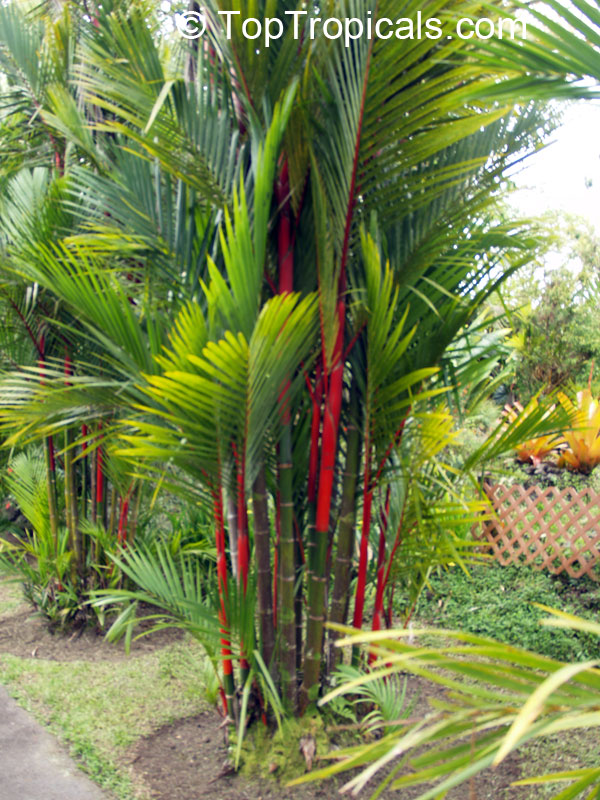
Most palms, especially popular Coconut Palm, source of tasty fruit and drink, are highly tolerant to salt breeze. If you are looking for something that nobody has, Lipstick palm, or Sealing wax palm - Cyrtostachys lakka, is definitely the most spectacular palm you can find. It is a stunning feather palm that develops a brilliantly red trunk. Palm is originally from Malaysia, but has been introduced to Costa Rica and other tropical areas of the world. Sealing Wax Palm seeds are very slow to germinate, up to a year, and large specimens are very rare and hard to find even in rare tropical plant nurseries. This palm will require a good overhead light, and constant warmth (above temperature 55F). It is definitely worth an effort to grow this beauty.

You may add more tropical accents to your landscape by the sea with many varieties of showy heliconias.
See full list of salt tolerant trees.

Date: 19 May 2016

Care of mail-order plants during hot summer

Q: I live in California and about a month ago ordered several plants from you, including fruit trees (Carambola, Mango, Avocado) and flowering trees (Xanthostemon, Adeniums, Champaca, Ylang Ylang). They were all doing well until I tried to move them into full sun, when they got leaf burn immediately. Ylang Ylang was doing great in a shade, but I repotted it from 1 gal into 3 gal and it is drooping leaves now. It has been very hot (over 100F) and dry (humidity is less than 25%). Any suggestions?

A: Hot summer can be pretty challenging time for establishing new plants. These are some guidelines to make your summer gardening more successful and rewarding.

1. You can order plants at any time, but keep your eye on your local weather forecast and try to chose cooler periods to schedule your plant shipments. Here at TopTropcals we monitor weather at destinations, and we can also delay shipment per your request until more favorable conditions.

2. During hot Summer months, many plants are still OK to ship, and to be planted, many species are heat tolerant. It's usually safe to ship most succulents, including Desert roses and Euphorbias. Some fruit trees are pretty easy too, like Loquats, Mango, Eugenias. Many flowering trees can take heat: Acacias, Clusias, Jatropha, Sausage Tree, Plumerias and many others. Check our full list of plants suitable for hot and dry conditions. Most jasmines, including Jasmine Sambac and Trachelospermum make also a safe choice for hot weather planting.

3. Use shade cloth or simply white sheets to protect young plants and new plantings from hot sun.

4. When establishing mail ordered plants during hot weather, keep them in shade for longer period of time than average recommended 1-2 weeks. Give them a chance to establish really well. In areas with low air humidity, try to create a simple mist system. It can be purchased in your local Home Depot for only $20 and set up takes only 10 minutes! It makes a big difference and can help you save many plants from hot weather stress.

5. Although it may seem that during hot weather plants need more water due to high evaporation, be careful with watering, and check soil with your finger before watering - don't water if it is still wet. Combination of "hot and wet" can be as harmful for the root system as "cold and wet" during winter. Protect root systems from overheating: covering black pots with white cloth will work. Remember when temperature is above 90F, most of plants slow down their metabolism, which means roots slow down or even stop pumping water and become more vulnerable to overwatering. For the same reason, do not hurry to step up into bigger container if roots haven't filled yet the existing pot.

Date: 2 Apr 2016

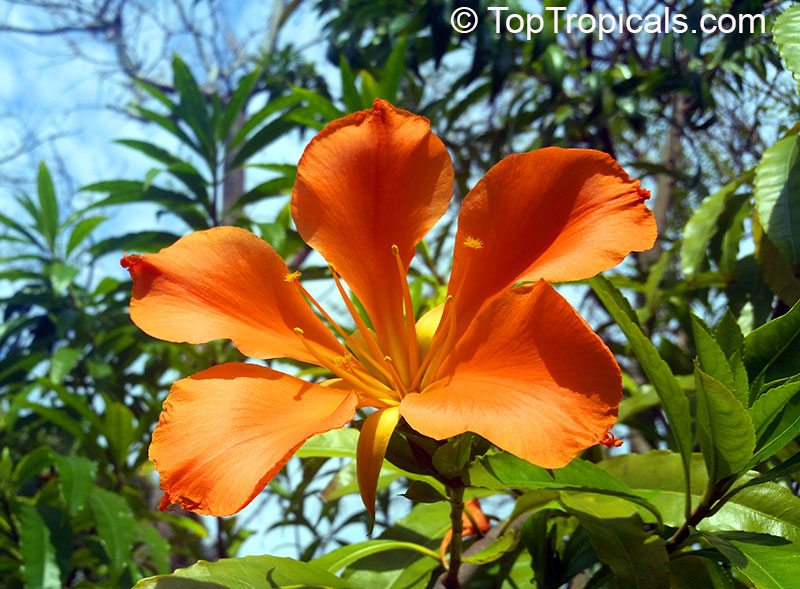
Erblichia or Flor de Fuego - Apricot fragrance and sunny color

Q: I saw this wonderful flower Flor de Fuego on your website and I would like to buy this plant. I am wondering how big this tree will grow and how long will it take until I can smell the lovely flowers? I have a big garden and not much space left, but I still have a few spots available for smaller trees. Also any special care info will be appreciated.

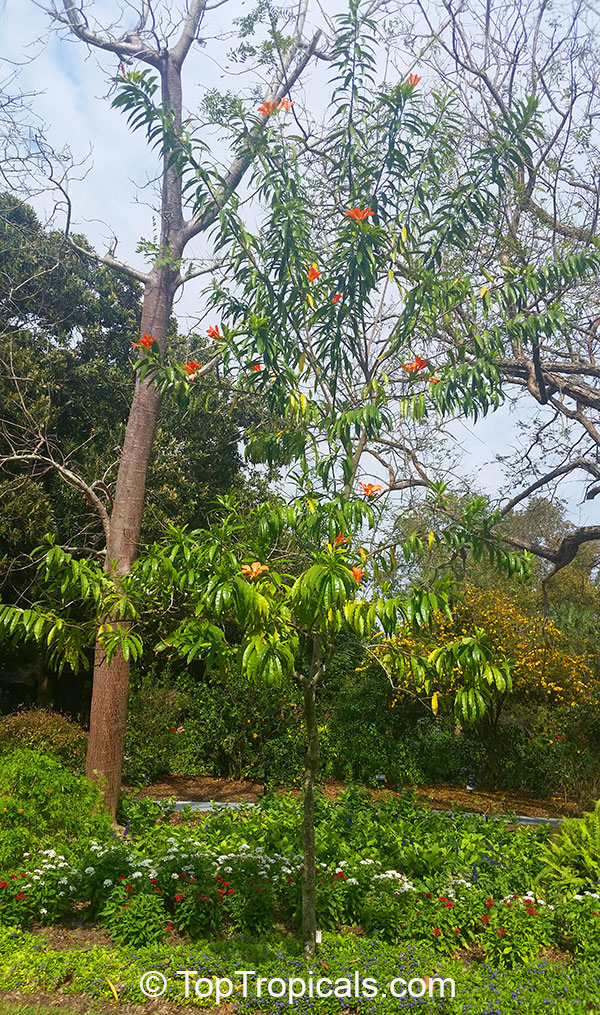
A: Flor de Fuego is a small tree and will fit in any small yard situation. It is very rare in cultivation. This is the newest, most exciting tree to be introduced in the last decade. It said to be one of the most beautiful flowering trees in Central America. It has long narrow leaves and large flowers 6-8" across that smell like apricots. It blooms from late fall through early winter and sometimes through spring. Normally it starts blooming in 2-3 years after planted in the ground. Surprisingly for such a delicate plant, it tolerates poor soils. Once established, it doesn't require any special care other than regular watering and fertilizing during hot months. It does take some effort sometimes to make the tree happy in its new habitat. After planting in the ground, keep your eye on irrigation schedule and do not let soil stay wet, young trees don't like wet feet. In natural habitat, the plant prefers to have a dry period that is beneficial for profuse blooming.

See full size picture of Erblichia tree in full bloom

Click here to buy Flor de Fuego

Date: 22 May 2016

Plant Horoscope. Gemini Zodiac lucky plants: Anthurium and Philodenron

Gemini - 5/21-6/20. Ruled by the mutable, changeable planet Mercury (also patron of the art of medicine), Gemini is an AIR sign. Plants ruled by Mercury tend to have ferny or highly-divided leaves or stems (like the bronchi of lungs), hairy or fuzzy leaves (related to the cilia in the lungs), or subtle odors.

Gemini rules the lungs, shoulders, arms, and hands. Its plants help to strengthen the lungs and respiratory system, relax the nervous system, strengthen ears and hearing, the tongue and speaking, the vocal cords, lungs and thyroid, as well as the shoulders, arms, and hands. Gemini has so much going on mentally that they may need a little help to digest all the information they're constantly absorbing. Herbs that have clean, pure flavor not only help physical digestion, but assist spiritual and mental intake as well.

Gemini Zodiac lucky plants: Ferns, Blechnum, Tree ferns and Cyatheas, Fern Tree, Aralias, Jackfruit and Breadfruit, Paulownia, Anthurium, Philodendron, Philadelphus, Clerodendrums, Anise, Lavender, Myrtle, Nut trees, Macadamia, Ficus, Piggyback plant - Tolmiea menziesii, Aloe vera, Fig, Honeysuckle, Azalea, Mint Tree Satureja, Vitex, Ironwood, Mulberry, Osmoxylon, Acalypha, Allamanda, Aphelandra, Iboza, Ruda, Kiwi, Caesalpinia, Cyphomandra, Monstera, Kalanchoe, Magnolia, Oregano, Ocimum, Naranjilla, Zamia, Delionix, Acacias, Calliandra, Patchoili, Palms, Geranium, Grevillea, Eucalyptus.

For other signs information, see full Plant Horoscope.

Date: 6 May 2016

Taking care of Soursop after shipping

Q: Since I have never grown a soursop tree before I need some pro help. My tree was delivered absolutely beautiful, leaves were a pretty green. I potted it and gave it a good drink of water and put it in a shaded area outside. Then the weather here became cool so I brought it in for a few days until the weather warmed, and it lost all the leaves. Is it in shock and will come around eventually? Will I be able to grow this tree indoors during winter?

A: Soursop - Annona muricata trees are very sensitive to temperature drops. This always causes leaf loss. You seem to be doing everything right. Do not water until soil gets slightly dry; keep it in bright shade. The weather should be good now with high temperatures and humidity rising. No fertilizer until the plant shows active new growth. Be patient with your plant, it should recover soon.

Soursop is an ultra-tropical tree and doesn't take any freeze. If you live in cooler climate, keep the plant in a pot (the good news is, Annonas in general have compact nature and are perfect for container culture). Bring the tree indoors during cold period, providing bright light.

We have very interesting article about growing and fruiting Soursop in apartment. Check out 4534 Tropical Treasures Magazine # 7.