Edible plant - Plant Encyclopedia Results
| Number of plants found: 651 | Next | 
|
Go to page: | 1 | 2 | 3 | 4 | 5 | Last |
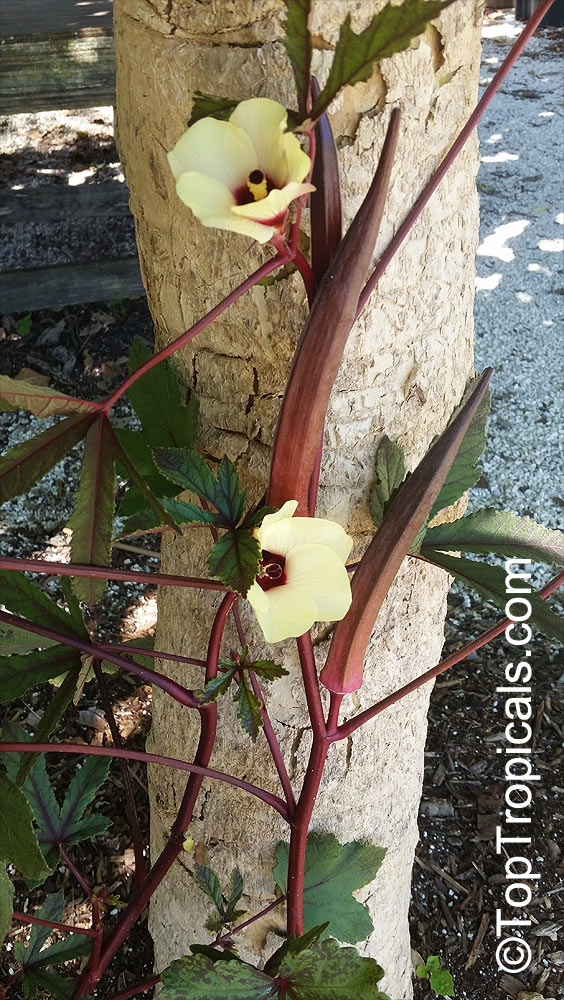
Botanical names: Abelmoschus esculentus, Hibiscus esculentus
Common names: Okra, Bamia, Gombo
Family: Malvaceae
Origin: Africa
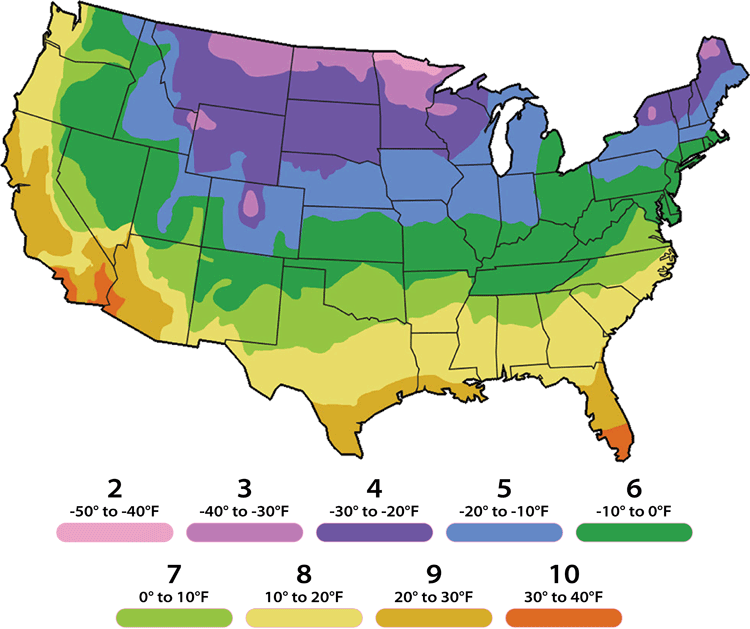
USDA Zone: 9b-11


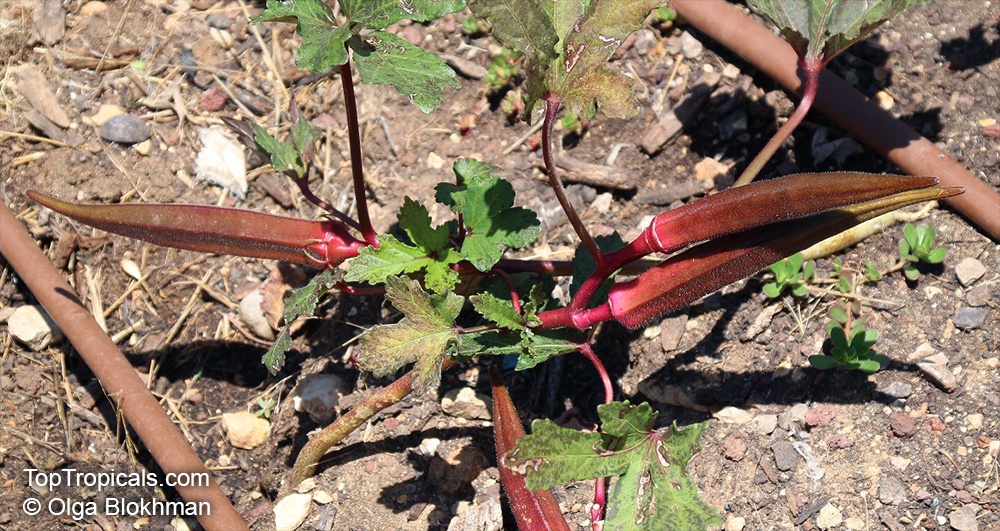
Abelmoschus esculentus, commonly known as okra, is a flowering plant that is native to Africa. It is a large, fast-growing shrub, growing 5-10 ft tall and producing beautiful white, off-white, and yellow-orange flowers. This plant runs on a shorter lifecycle than most other shrubs, taking only 120-165 days to mature.
Okra does best when grown in warm climates, where it can receive strong direct sunlight, and regular watering. It has adapted over time to thrive in USDA hardiness zones 9-11. As it is a climacteric crop, it benefits greatly from warm, humid days and cool nights.
Regular water needs will depend on the local climate, but okra requires moderate regular watering, even during seasonal to periodical droughts. Soil with a high drainage level and well-aerated conditions will help the plant thrive and reach its full potential.
The plant produces striking large edible seeds within green, finger-like pods. Young, tender okra can be used in stir-fry or soups either blanched or pickled, and raw okra is often used in cold salads. When cooked, it is similar to asparagus. In terms of taste, some describe it to be similar to a combination of mushrooms and eggplant.
Okra is packed with nutrients, including vitamin C, calcium, and potassium. It also contains a healthy amount of dietary fibers, which can help maintain healthy digestion. Health benefits of okra also includes its ability to strengthen the immune system, lower stress, and improve skin and hair health.
In terms of yield, the plant can produce up to few hundred pods per plant, depending on the variety and local climate conditions. Therefore, okra is a great choice whether you are looking to have some fresh fruits in your household.
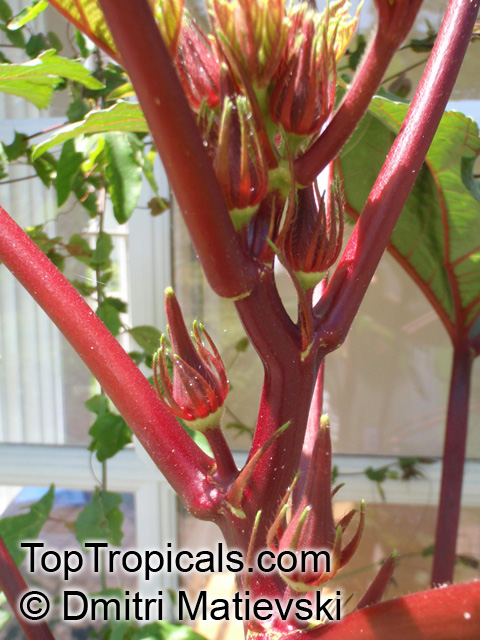
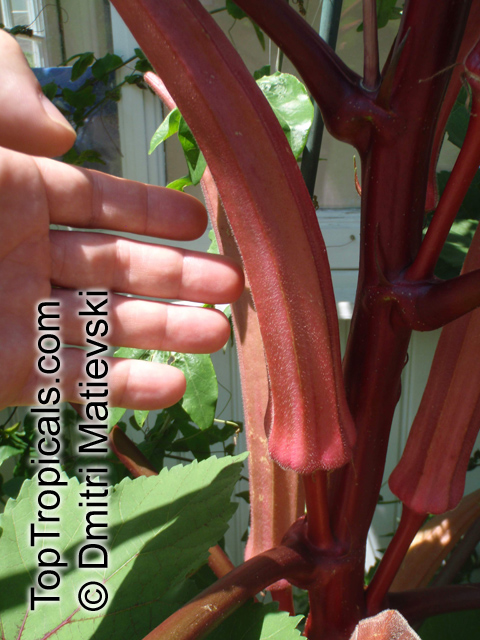
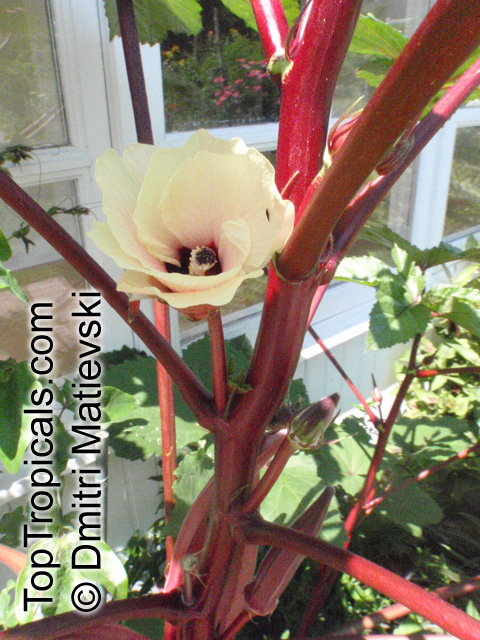
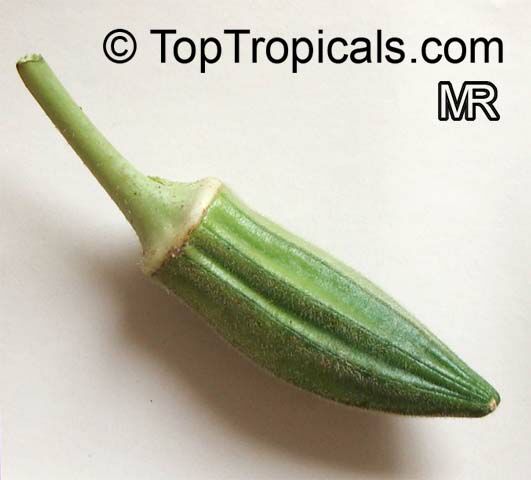
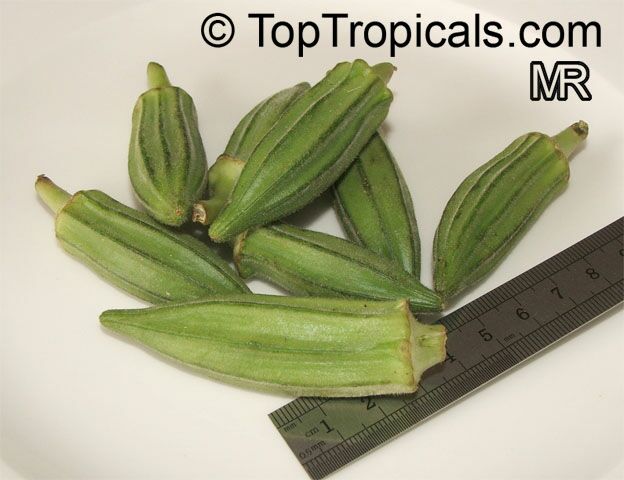


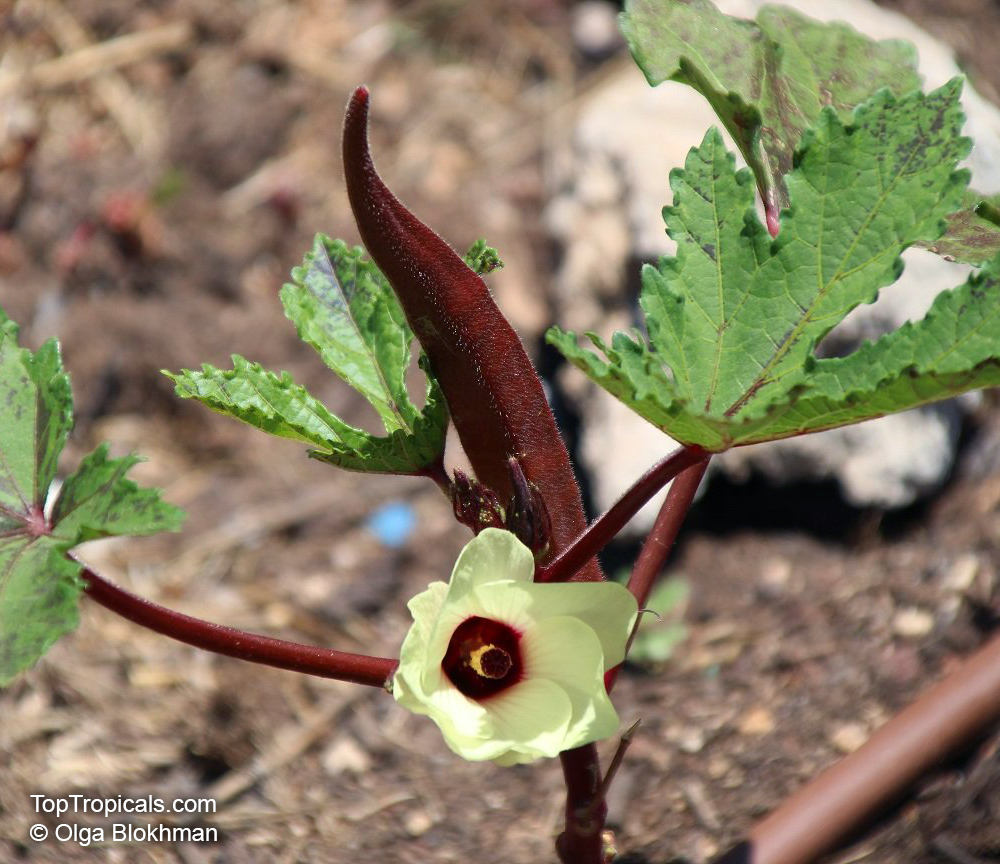
Botanical names: Abelmoschus moschatus, Hibiscus abelmoschus
Common name: Musk Mallow
Family: Malvaceae
Origin: South East Asia
USDA Zone: 9-11


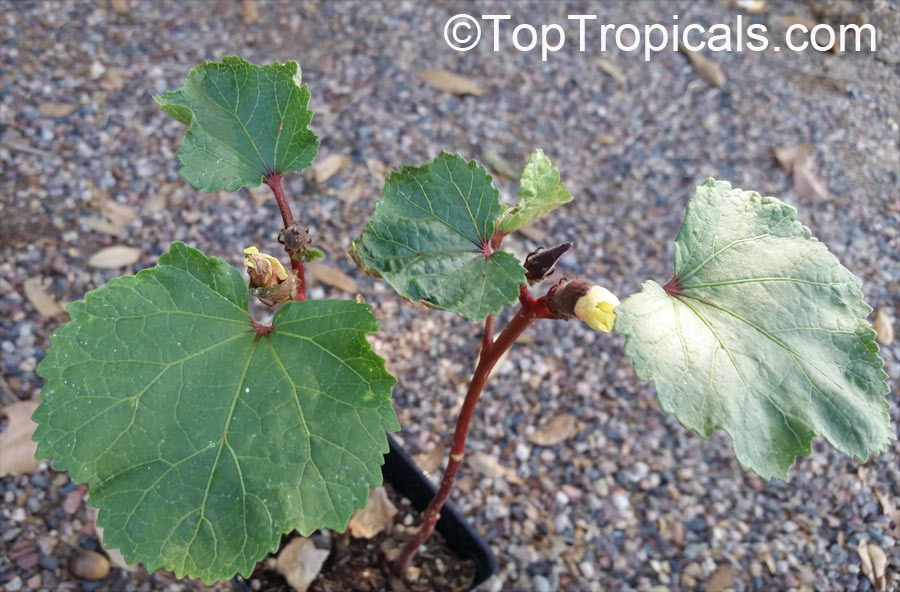
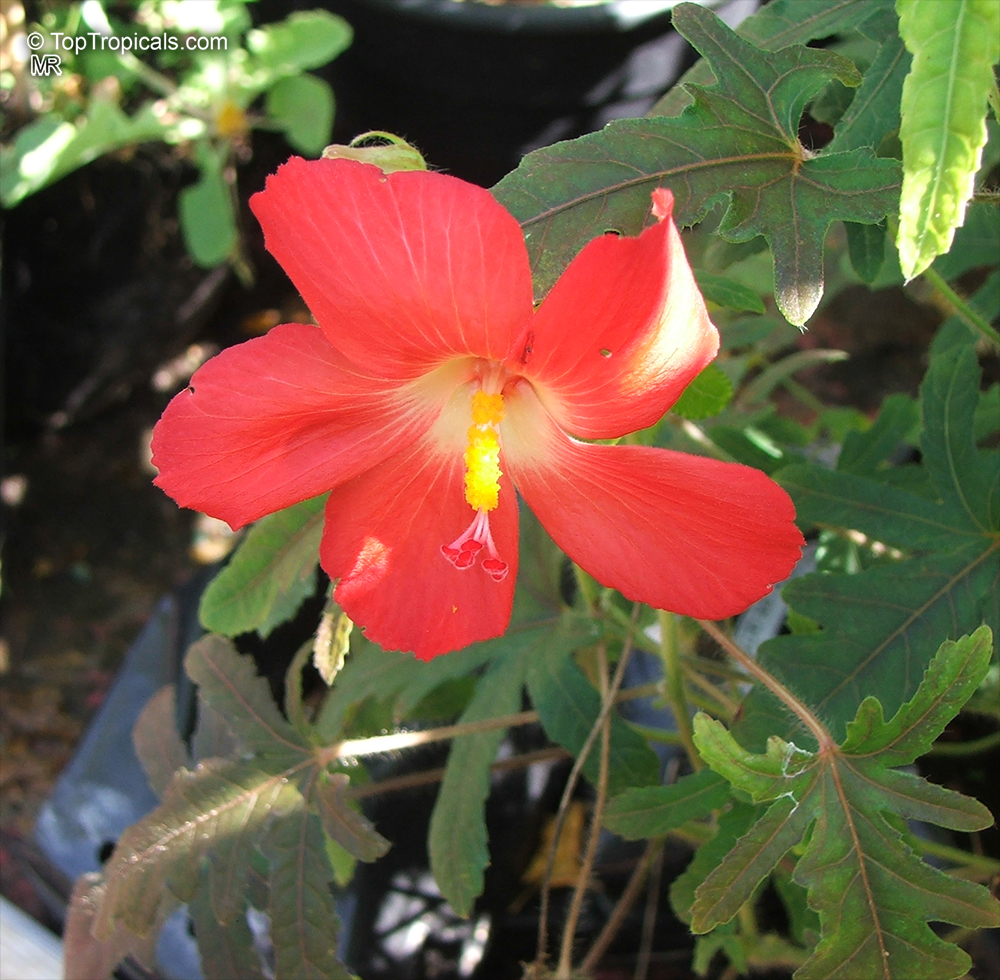
Valued as an ornamental plant, due to its colorful and attractive flowers. The leaves are alternate, rough, hairy, heart-shaped or 3-5 lobed with serrated margins. Flowers are Hibiscus-like.
Cultivated for aromatic oil from seeds. Young leaves, shoots, and unripe seedpods are cooked as a vegetable.
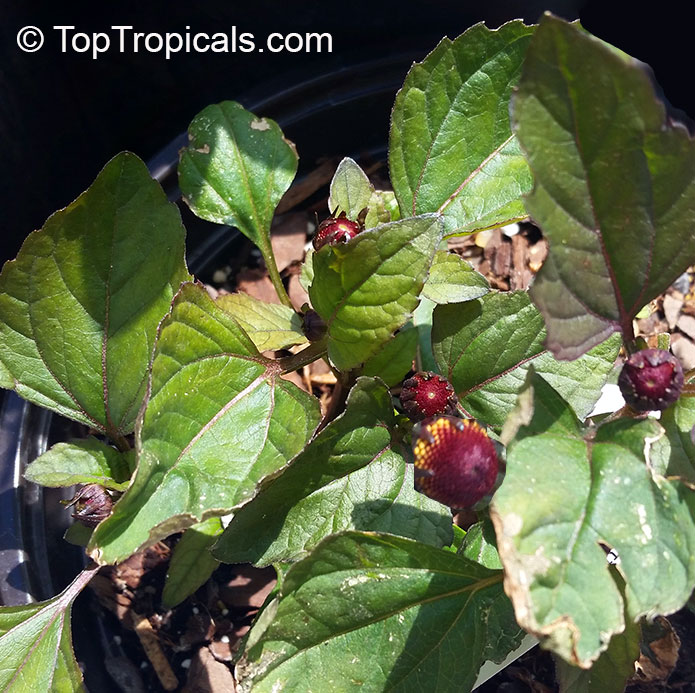
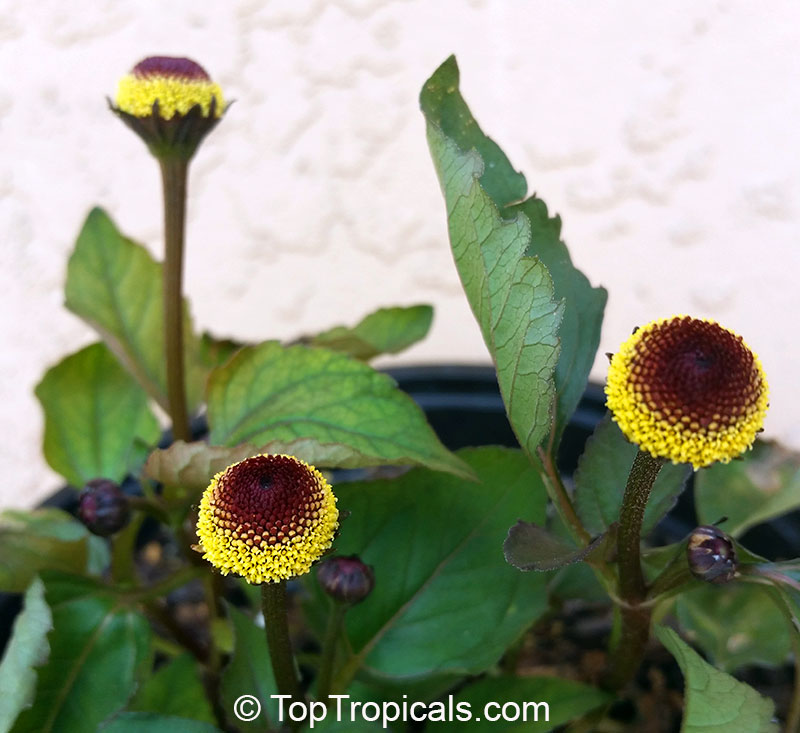
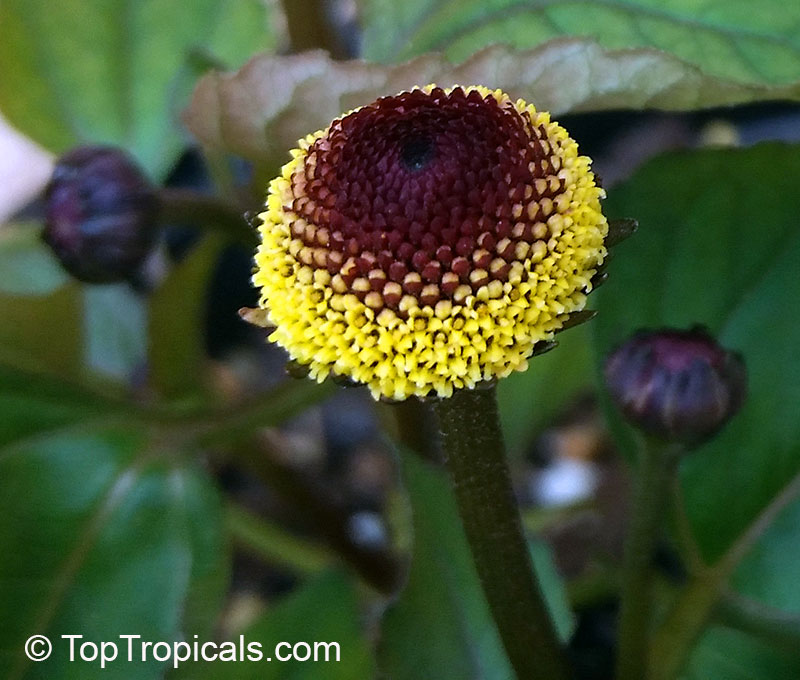
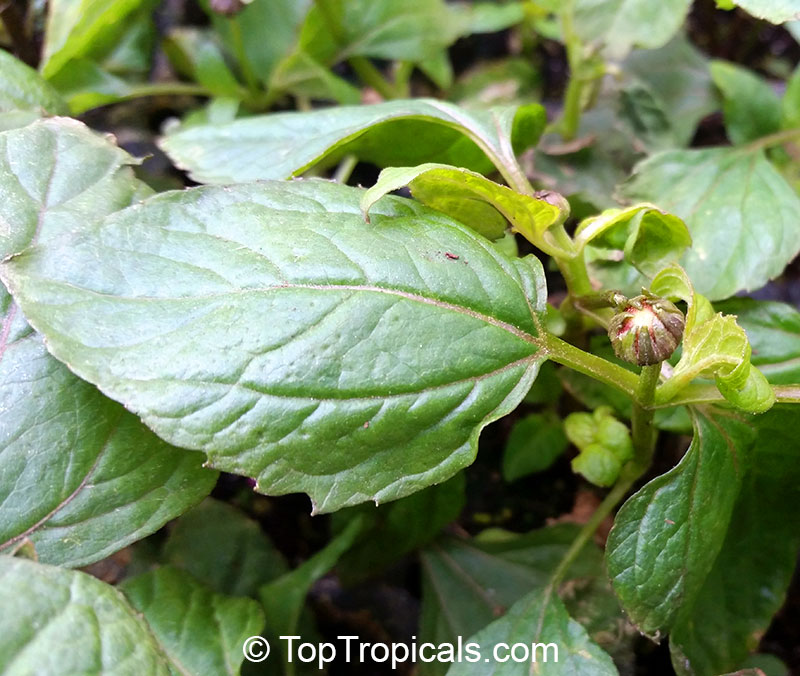
Botanical names: Acmella oleracea, Spilanthes oleracea
Common names: Toothache Plant, Paracress, Botox Plant, Jambu
Family: Asteraceae
Origin: Brazil
USDA Zone: 9-11

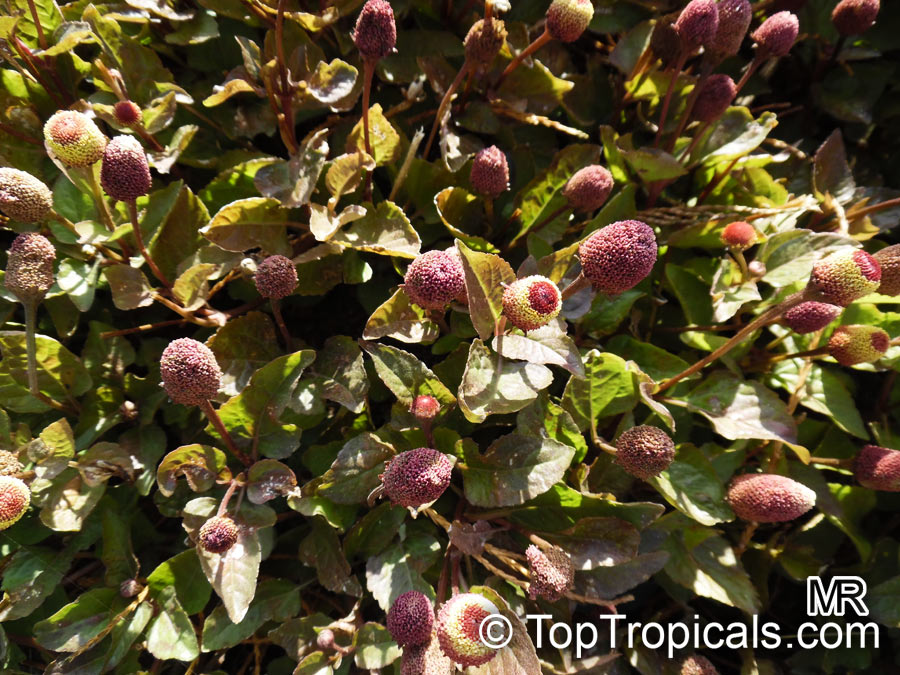
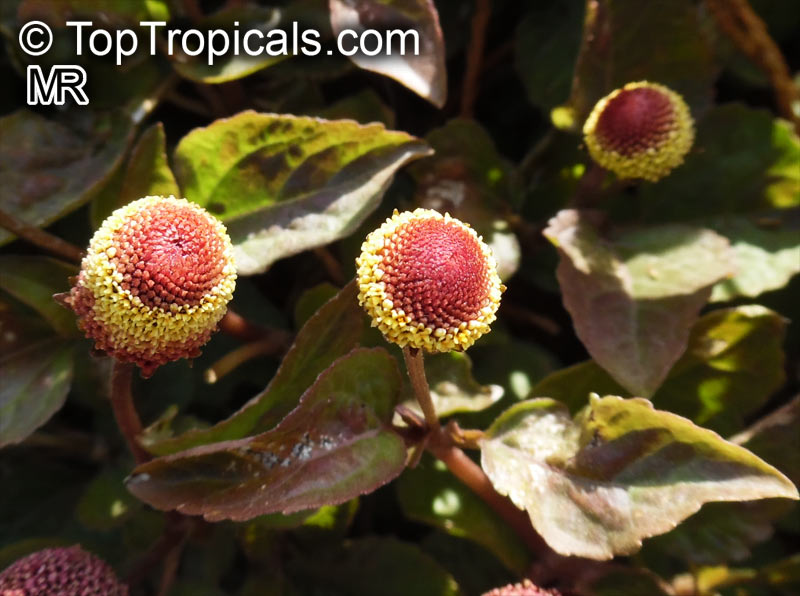
Toothache Plant is a medicinal herb that has been used for generations to manage the pain of toothaches. Both the leaves and the attractive golden flowers can be used as a natural anesthetic. Simply chew the leaves or flowers for a few seconds then you will experience a tingling and numbing sensation in your mouth. An infusion or tincture made from the Toothache Plant is said to promote gum and throat health due to its strong antibacterial properties. For culinary purposes, small amounts of shredded fresh leaves are said to add a unique flavor to salads. Cooked leaves lose their strong flavor and may be used as leafy greens. Both fresh and cooked leaves are used in dishes such as stews in northern Brazil. They are combined with chilis and garlic to add flavor and vitamins to other foods. The use of jambu extract as a food flavor is described as having an odor of citrus, herbal, tropical or musty odor, and its taste can be pungent, cooling, tingling, numbing, or effervescent.
Acmella Oleracea extract is considered a natural alternative to Botox. Applied topically, Acmella Oleracea reportedly reduces muscle tension, reducing facial wrinkles caused by tense or contracted facial muscles. It is considered a natural muscle relaxant and has been traditionally used as an herbal Orajel of sorts, thanks to the presence of analgesic alkylamides called spilanthol. This spilanthol is thought to have the same paralyzing effects on facial muscles as it does on gums, reducing wrinkles by relaxing the skin. It's seen in topical formulas and can easily penetrate the skin, inhibiting contractions in subcutaneous muscles.
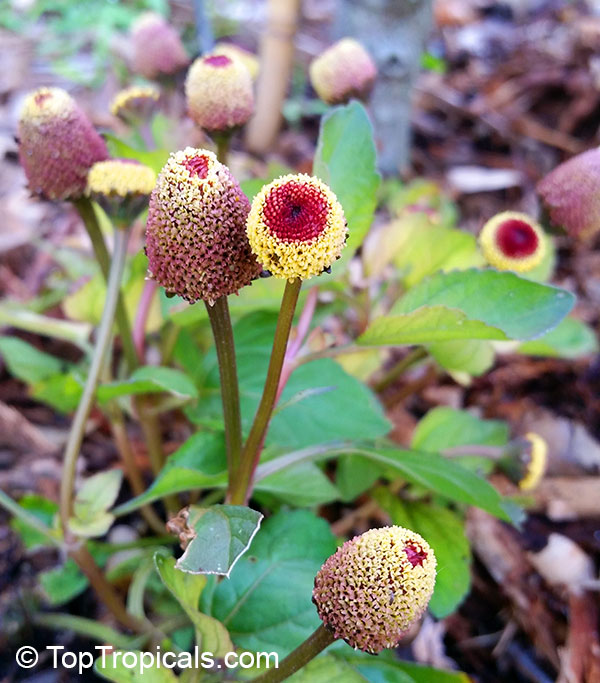
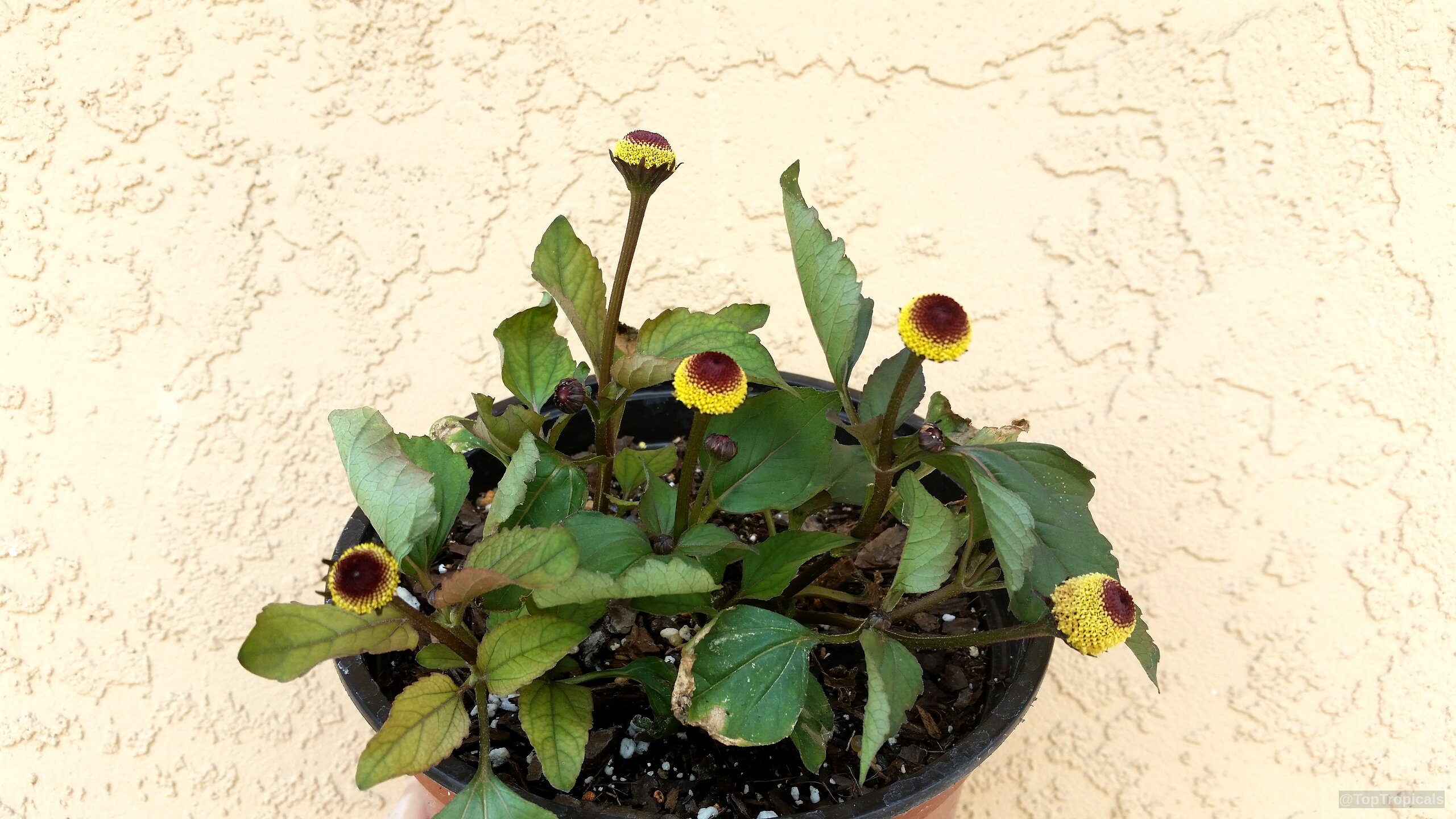
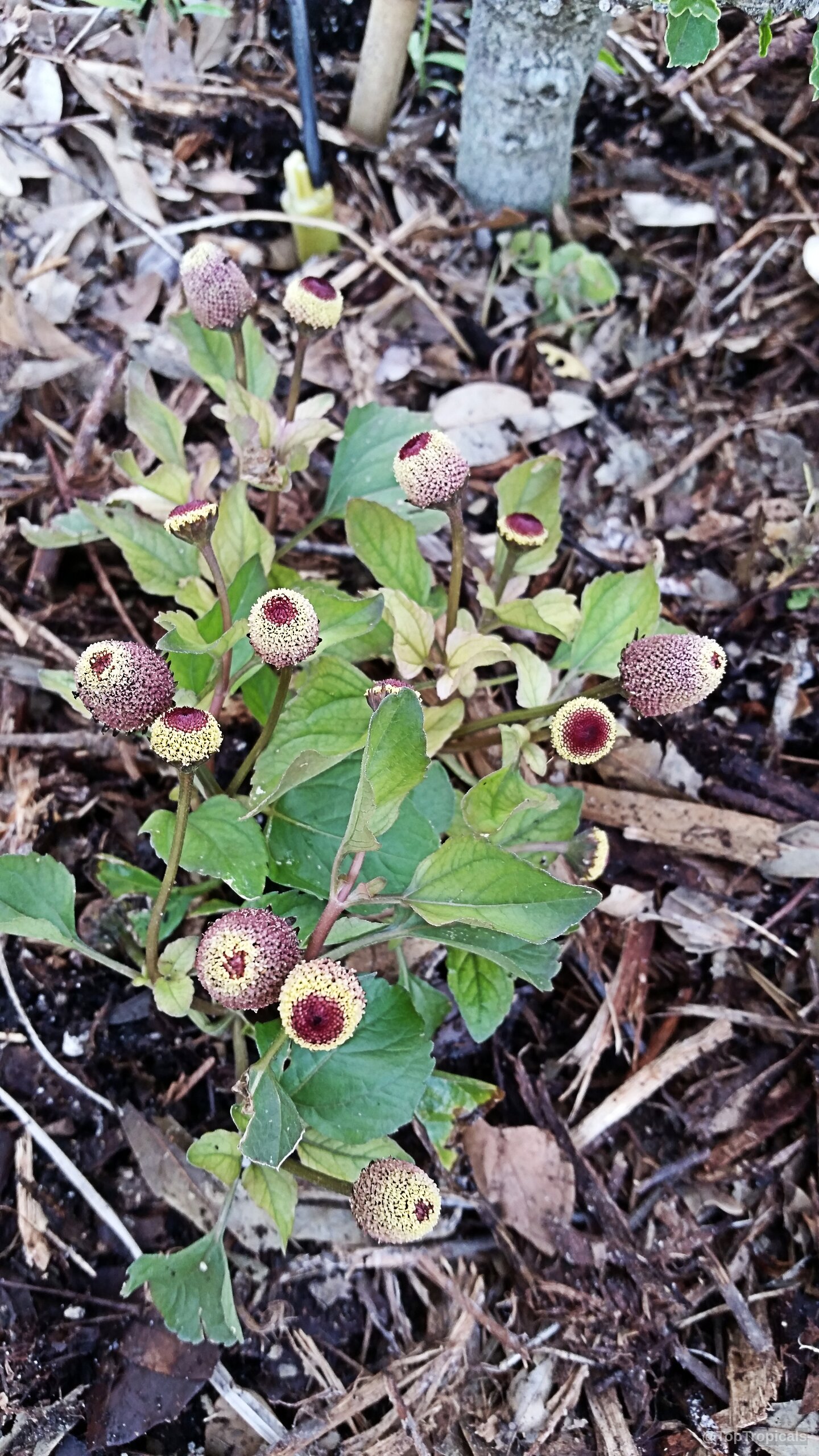
The plant is a small, erect, it grows quickly and bears gold and red inflorescences. It is frost-sensitive but perennial in warmer climates. Can be grown in a container and as a houseplant.
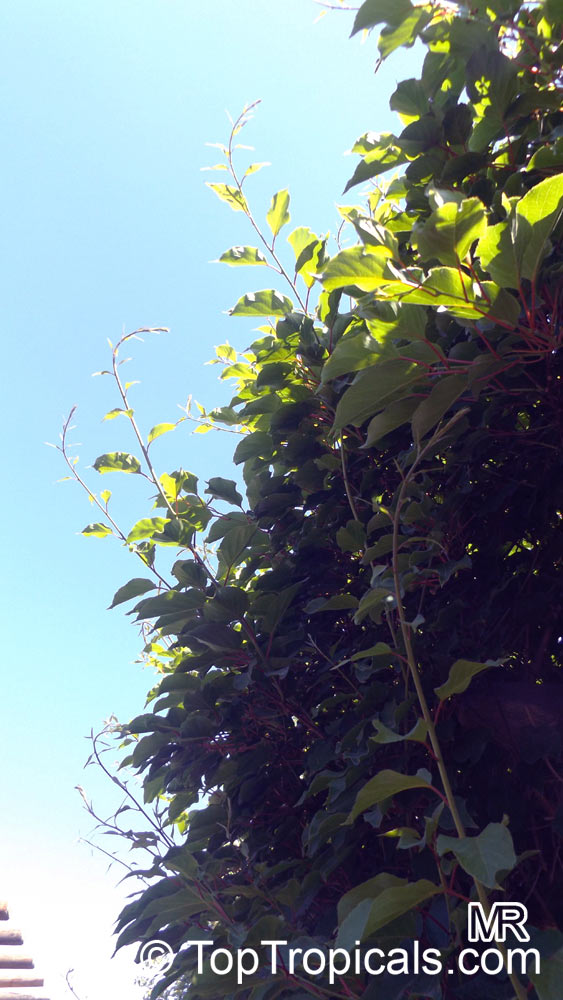
Botanical name: Actinidia arguta
Common names: Hardy Kiwifruit, Kiwi Berry, Arctic Kiwi, Baby Kiwi, Dessert Kiwi, Grape Kiwi, Northern Kiwi
Family: Actinidiaceae
Origin: Japan, Korea, Northern China
USDA Zone: 3-9


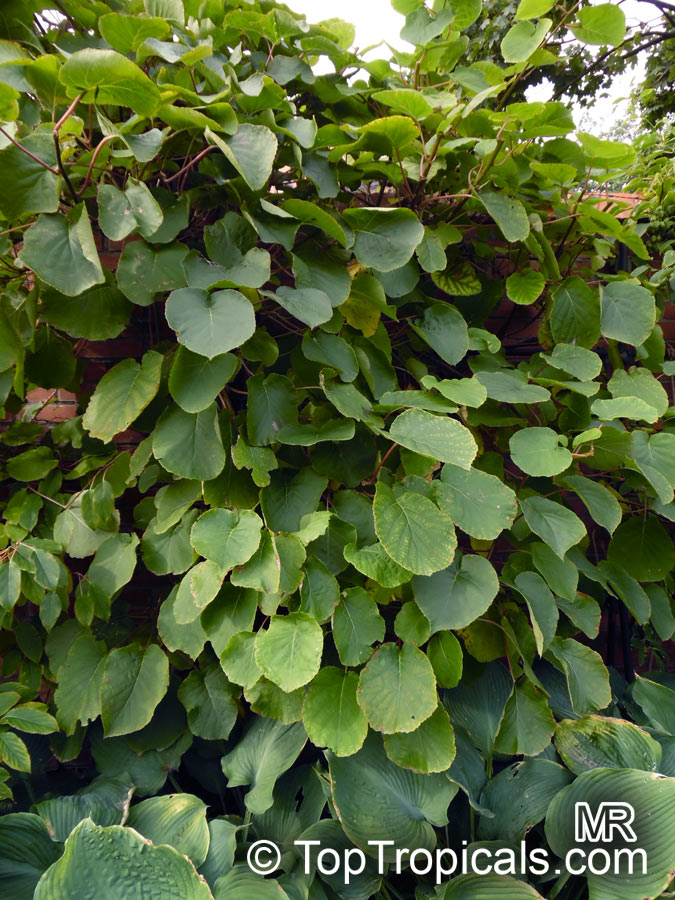
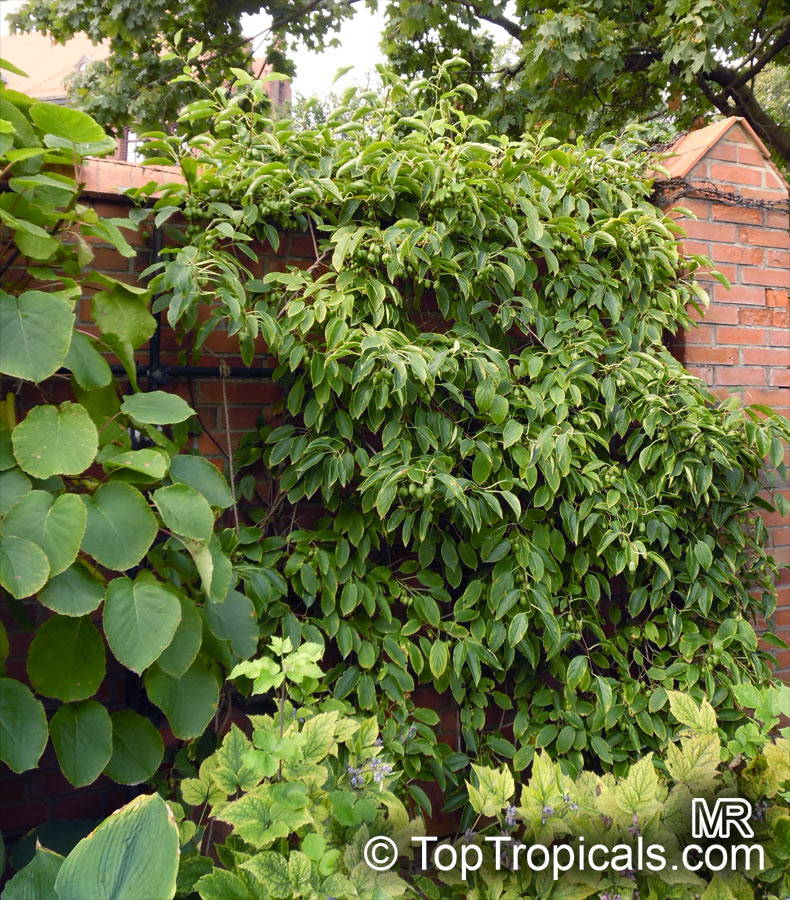
The fast-growing, climbing vine is very hardy, and is capable of surviving slow temperature drops to -34 C (-30 F), although young shoots can be vulnerable to frost in the spring. This vine needs a strong (vines are heavy) support structure on which to grow such as a trellis, arbor, patio overhead, fence or wall.
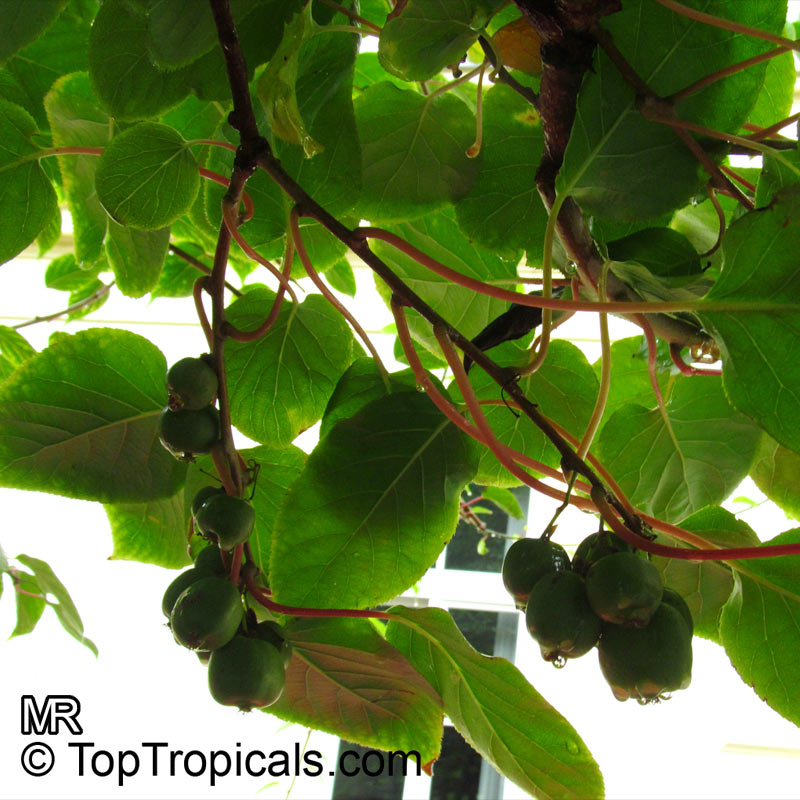
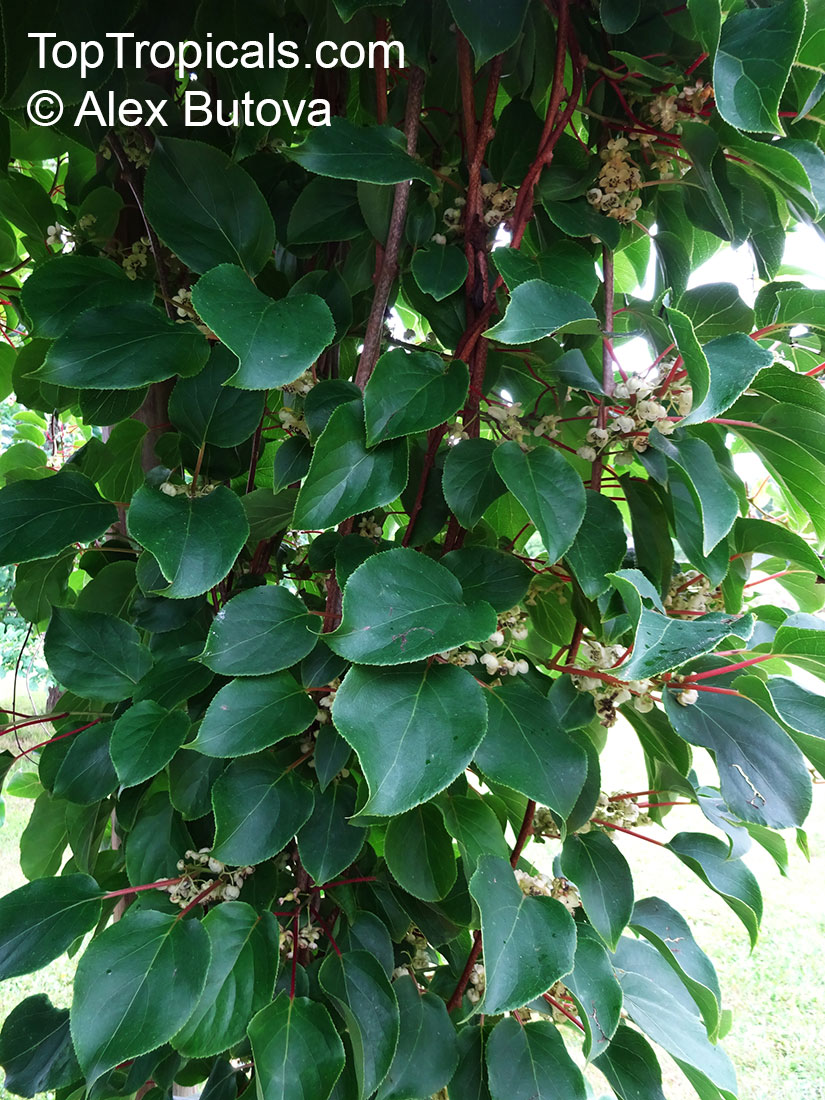
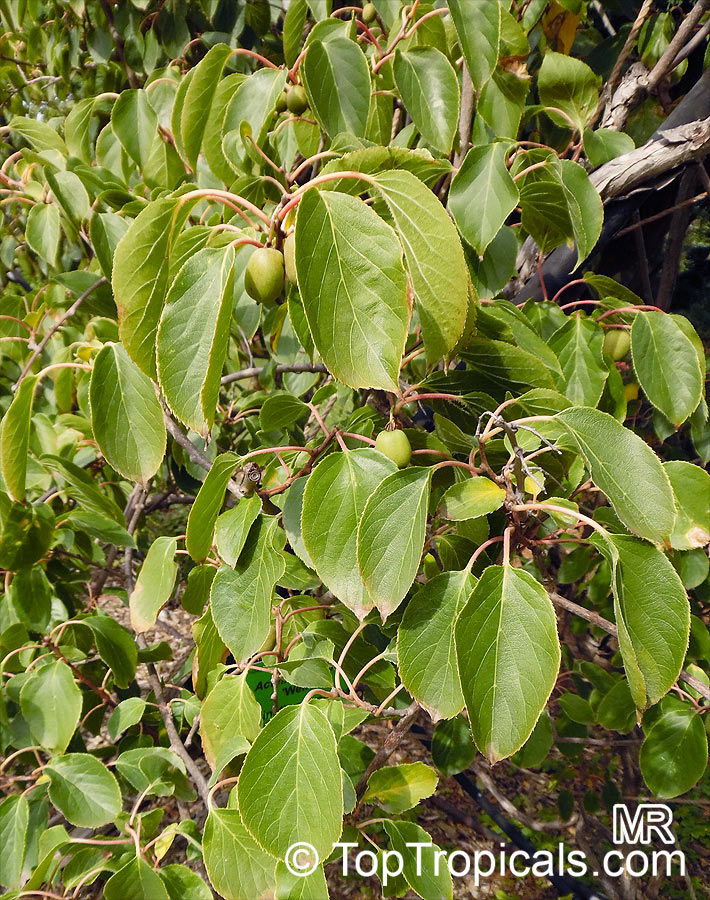
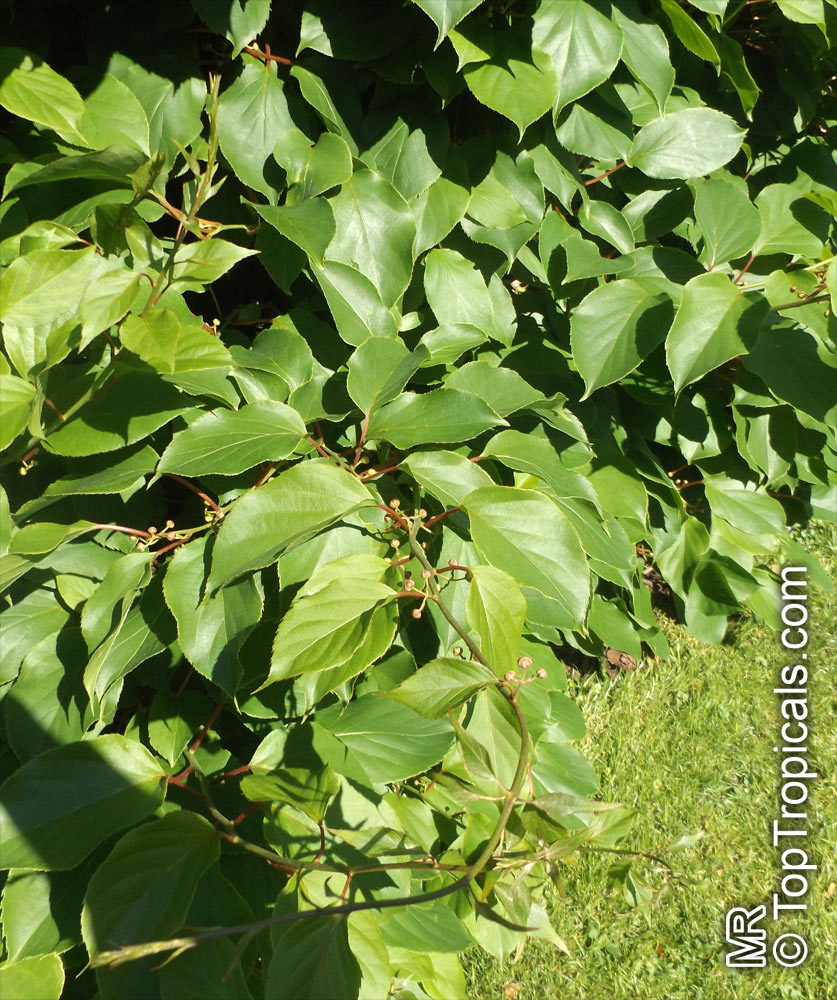
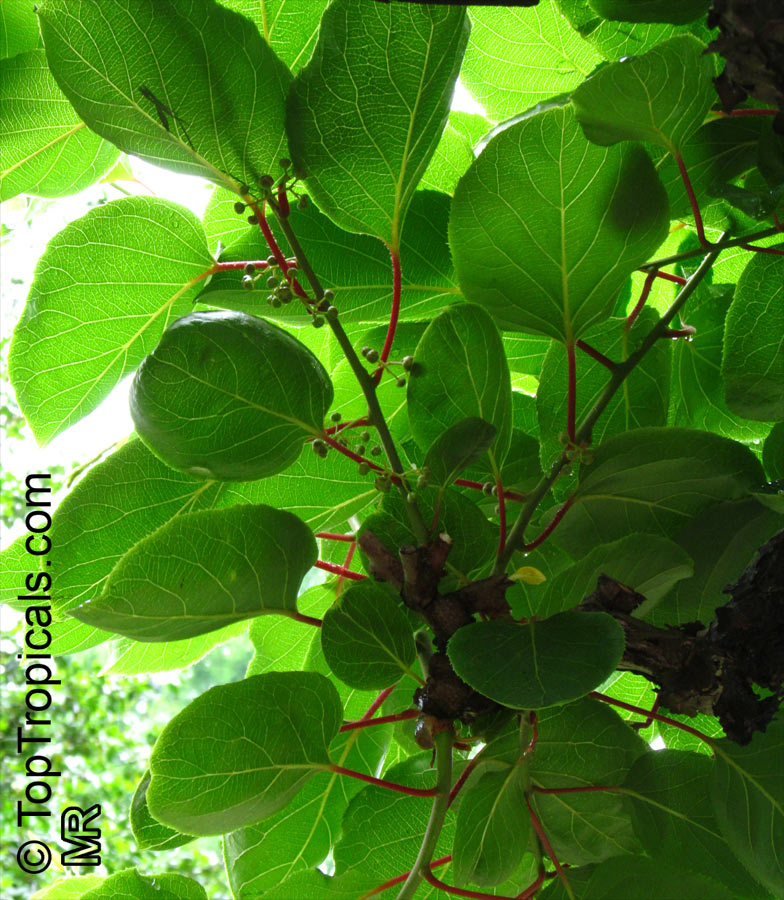
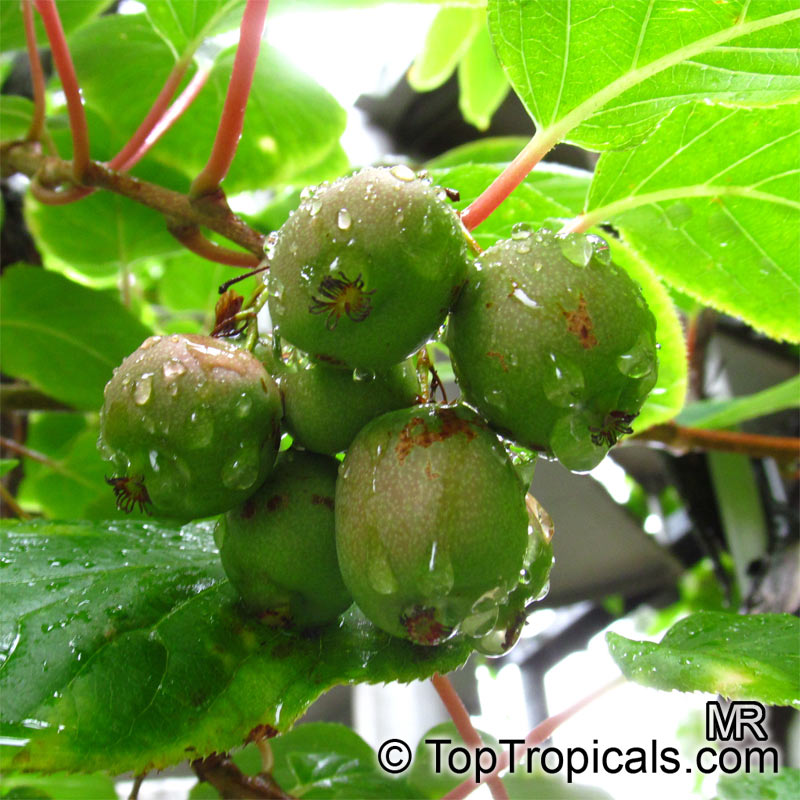
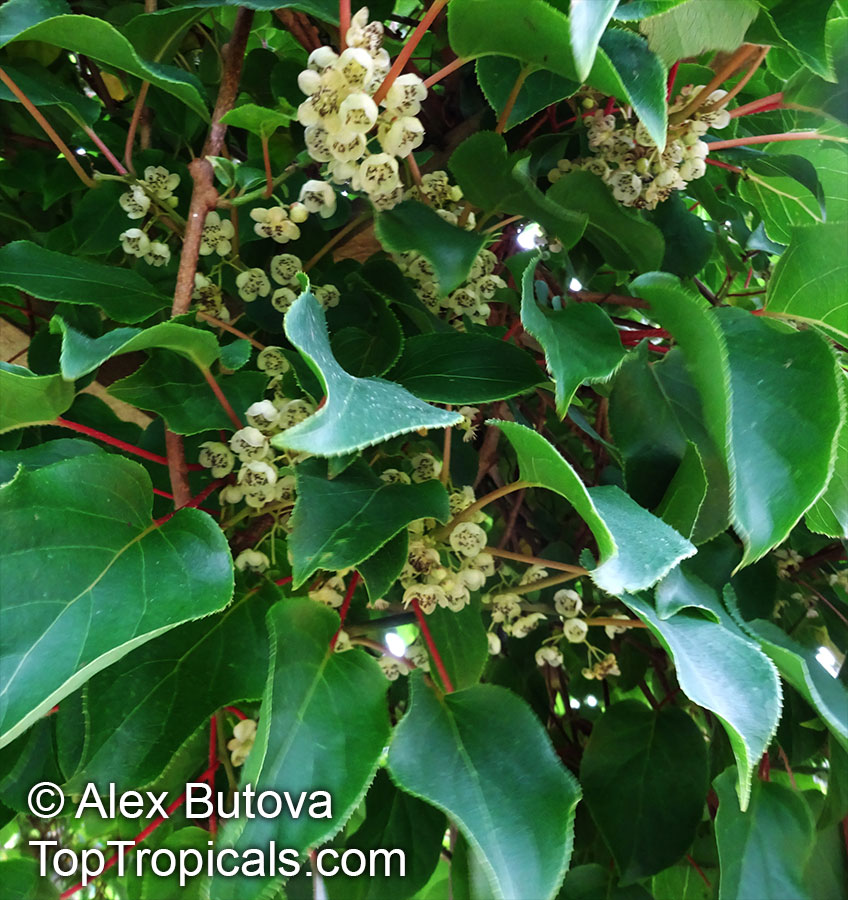
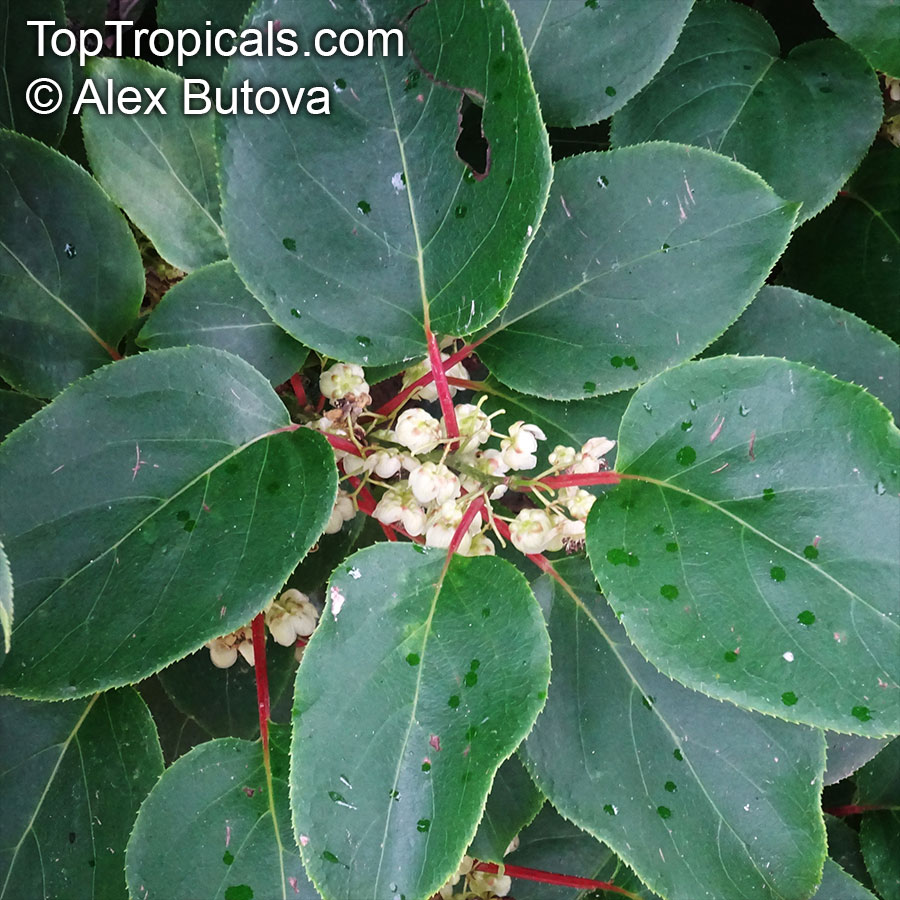
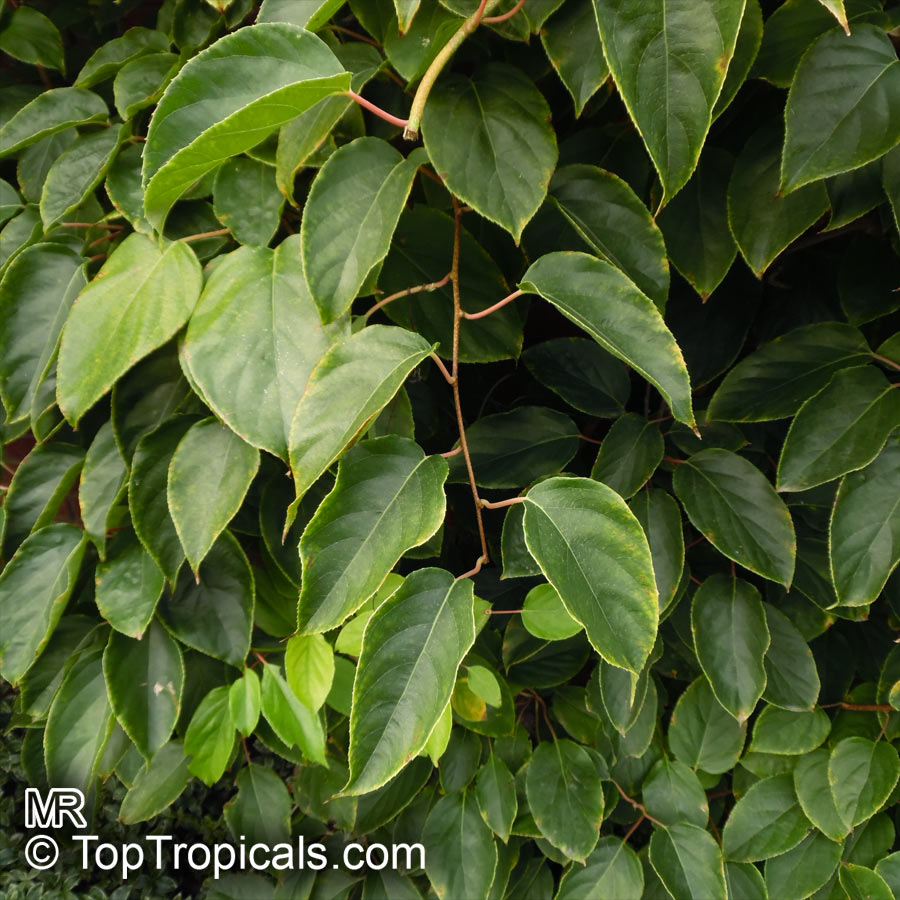
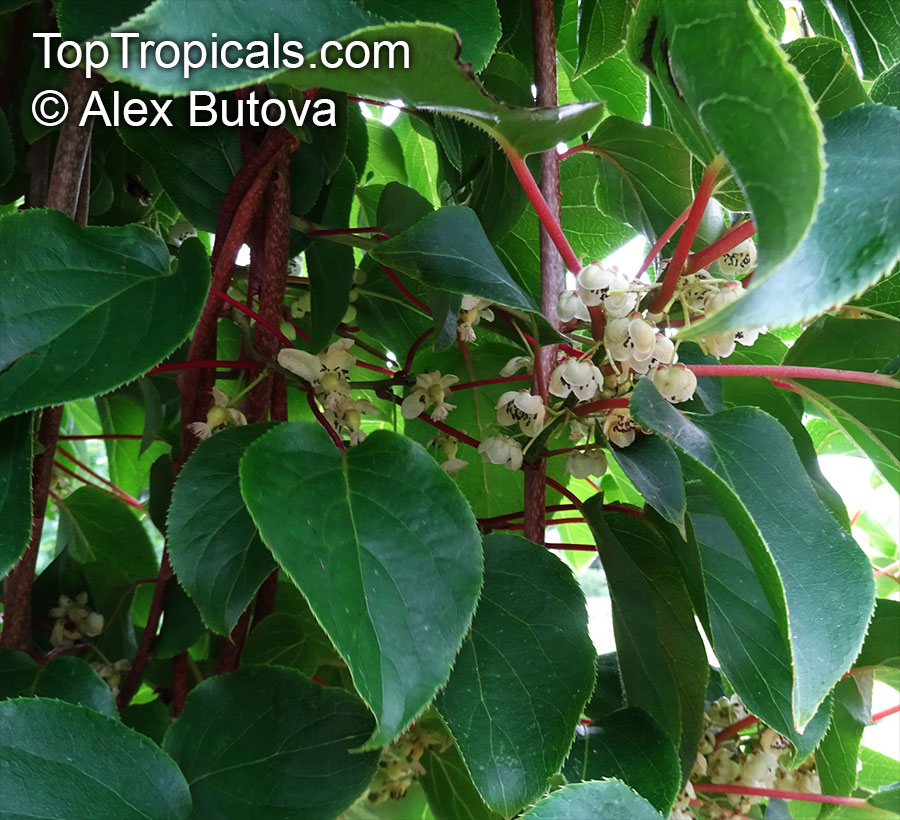
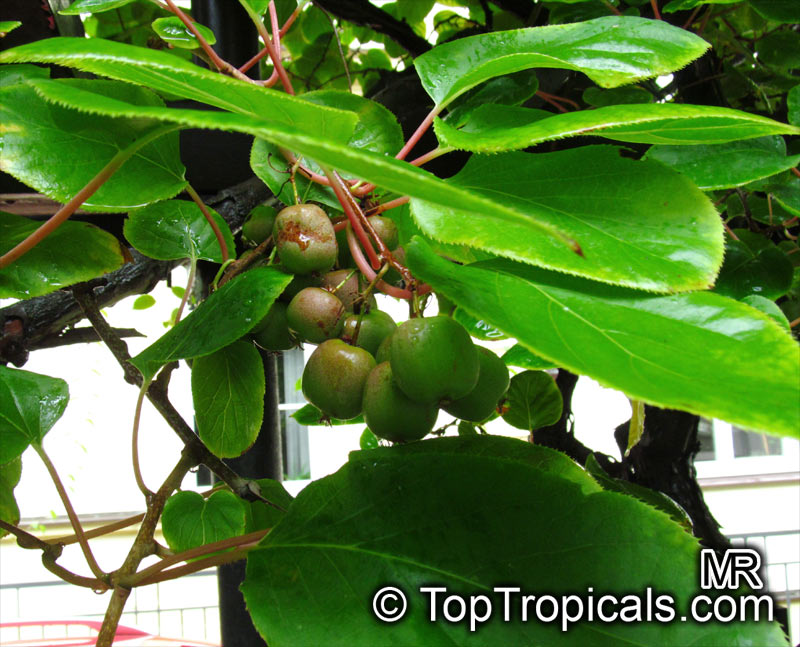
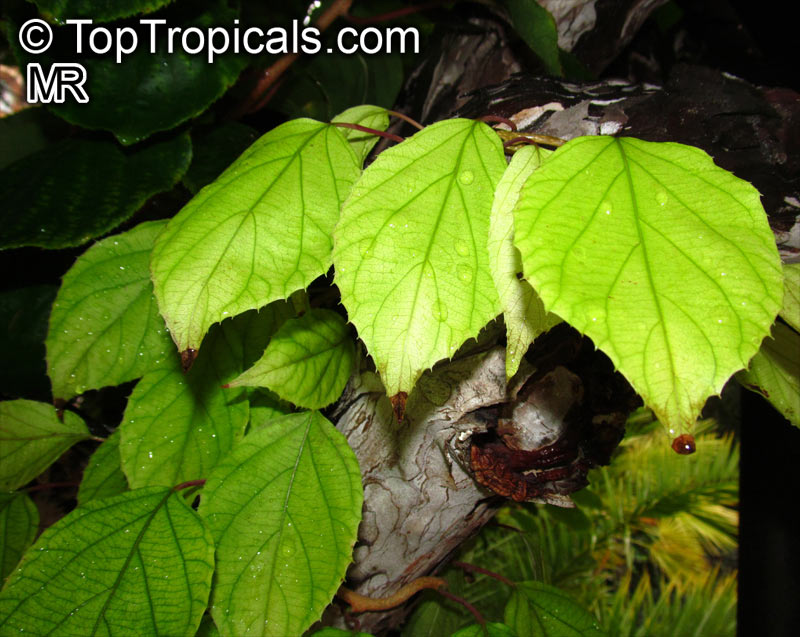
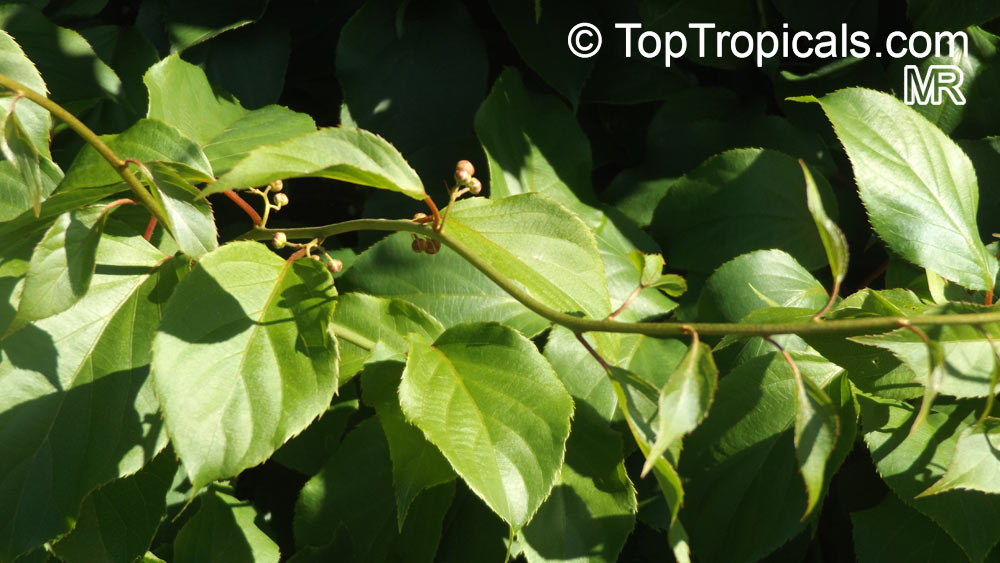
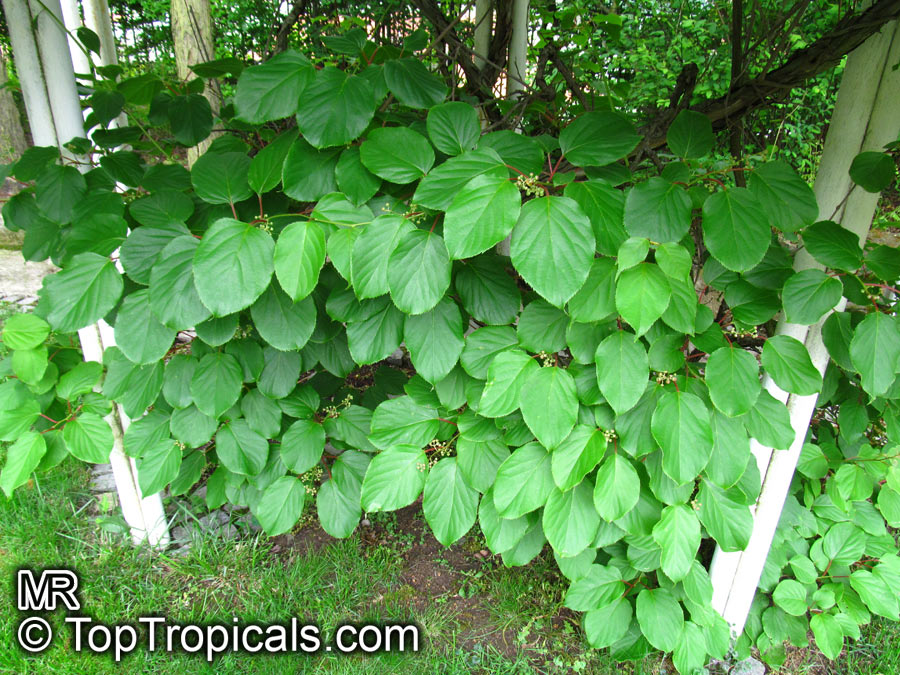
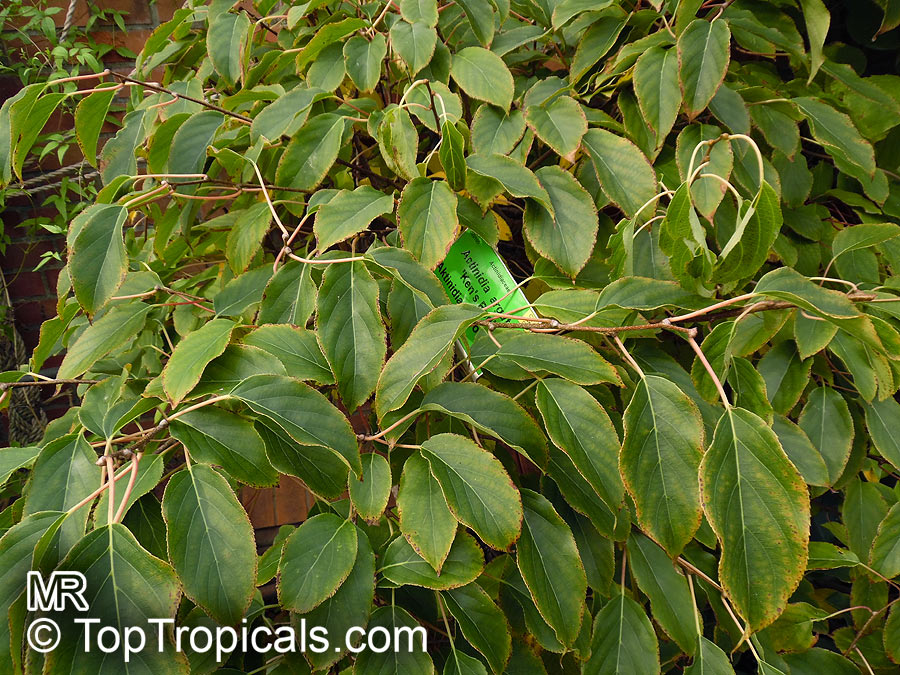
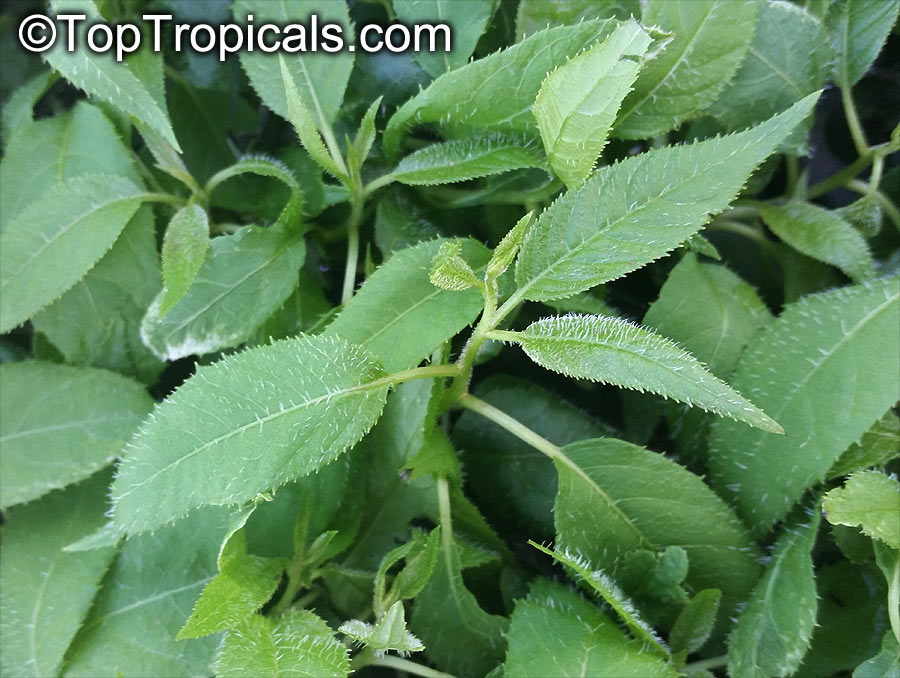
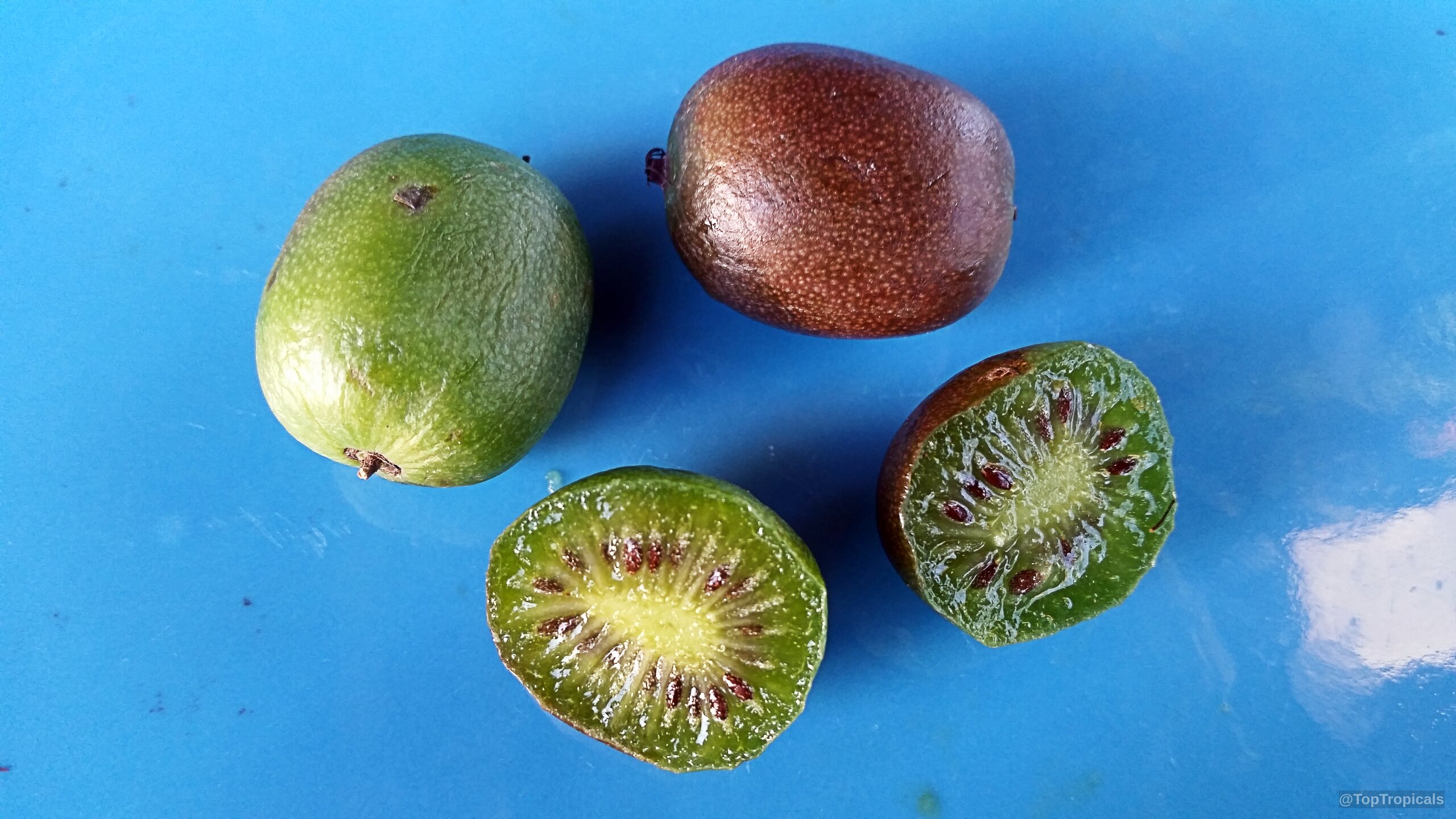
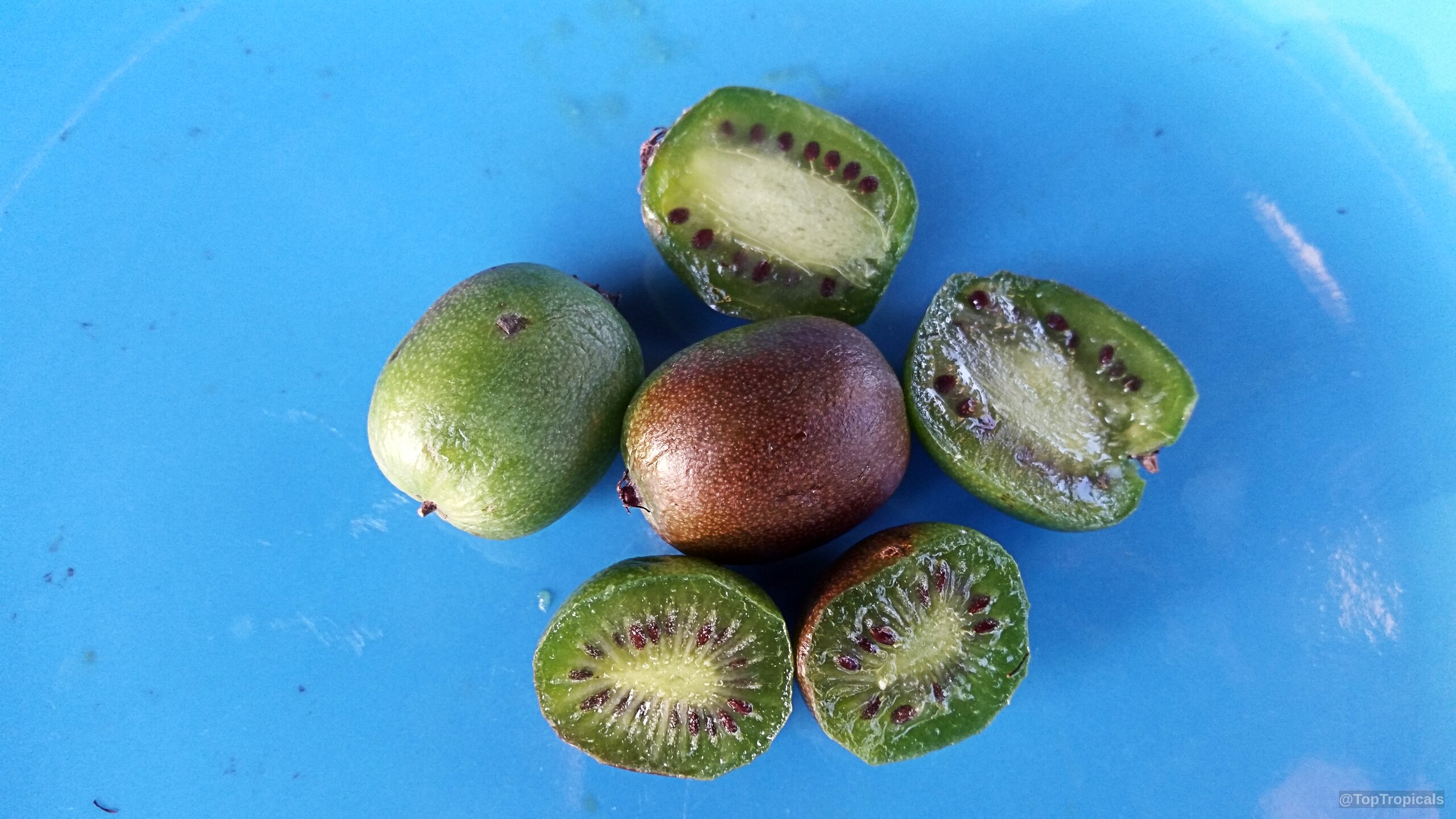
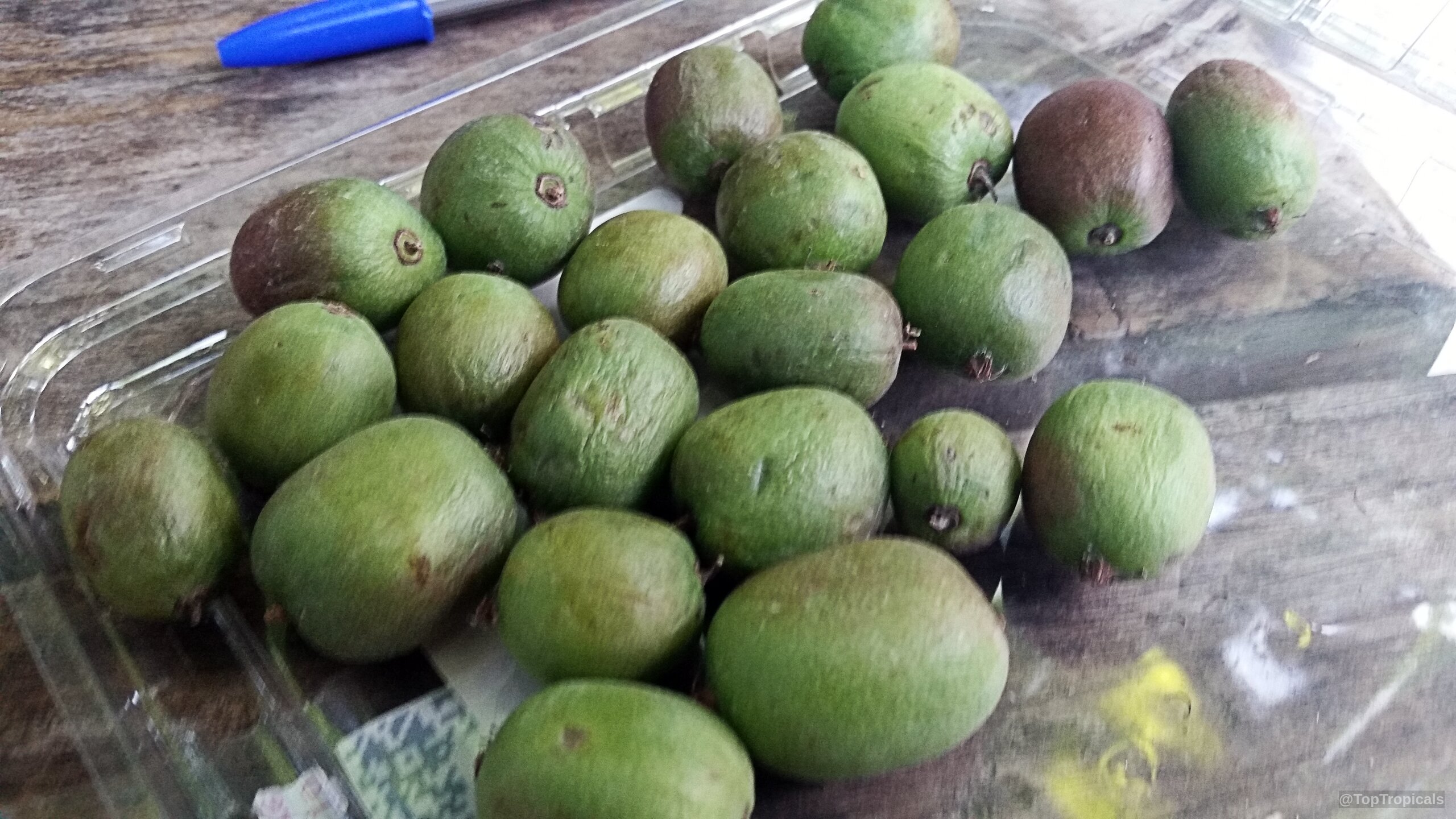
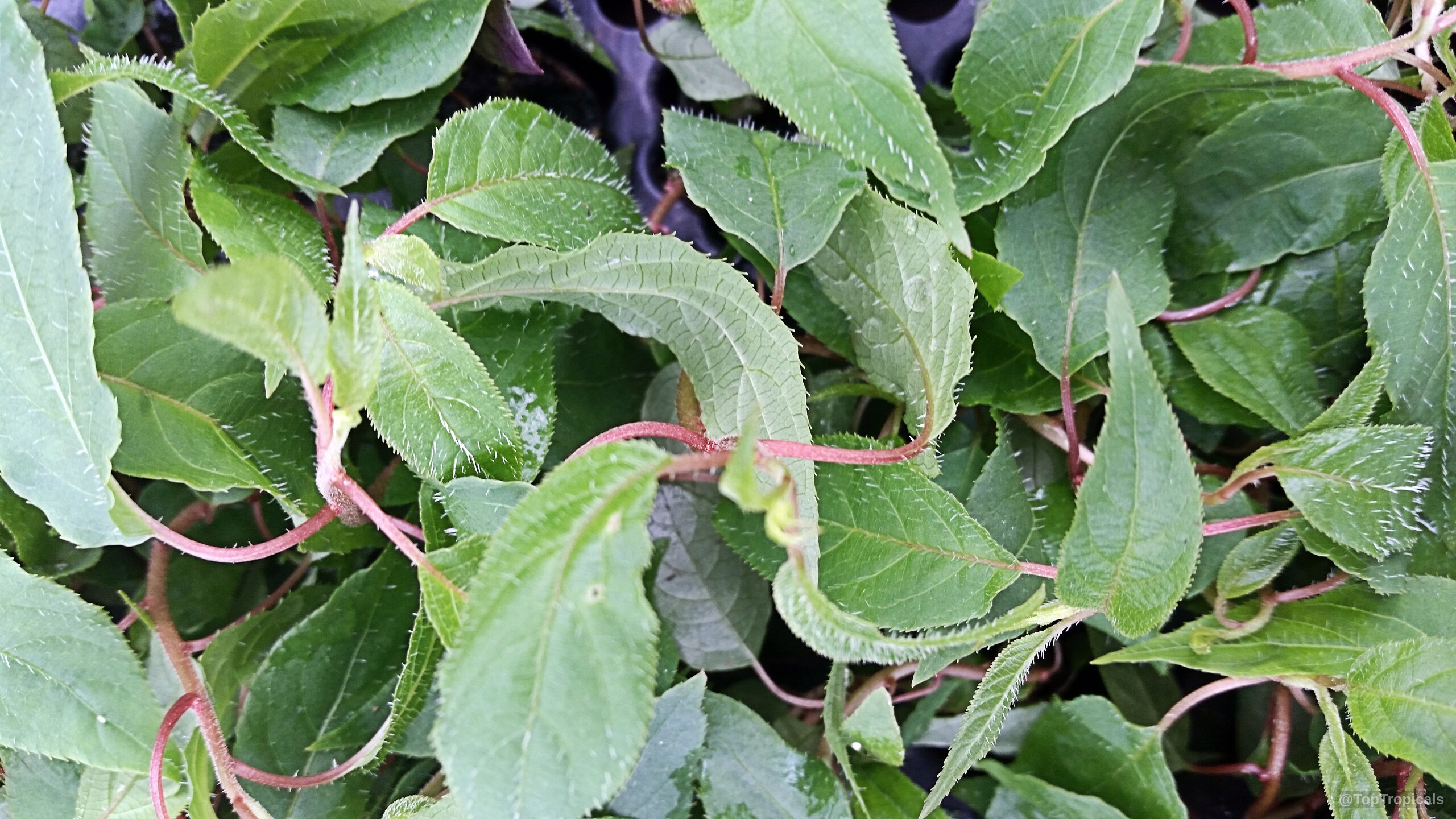
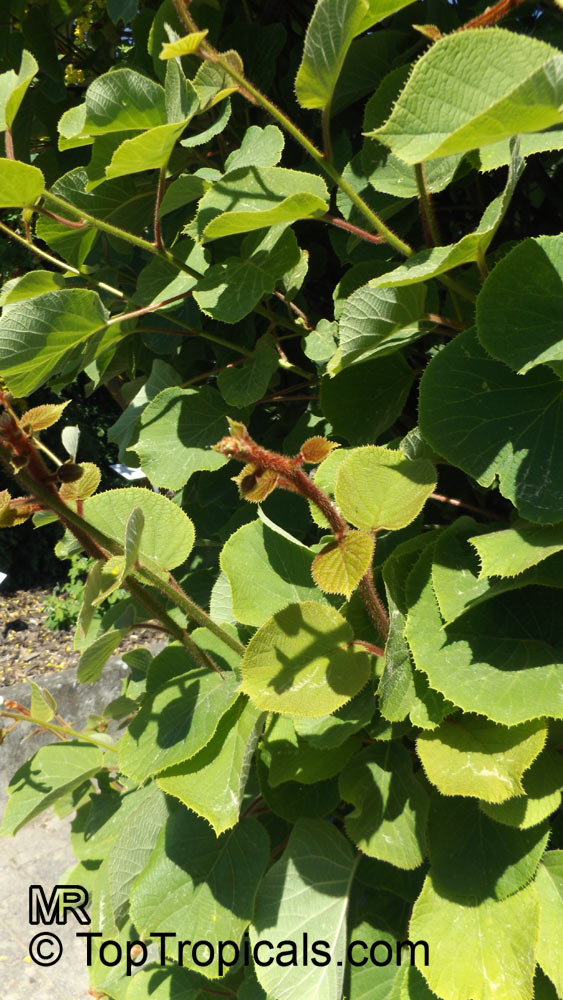
Botanical name: Actinidia chinensis
Common name: Kiwi Fruit
Family: Actinidiaceae
Origin: China
USDA Zone: 7-9
Cold tolerance: 10°F
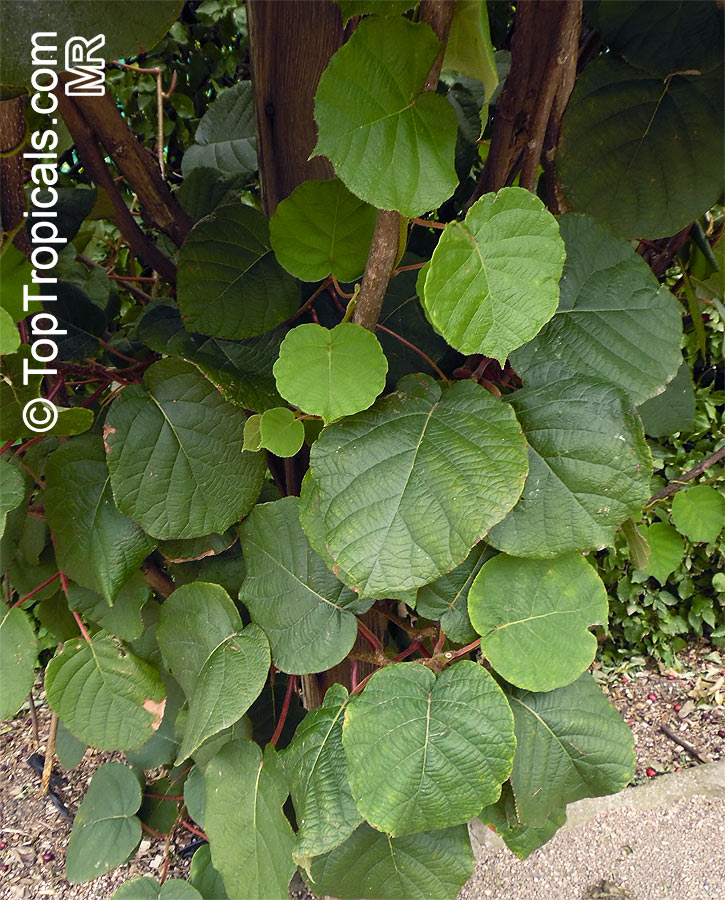
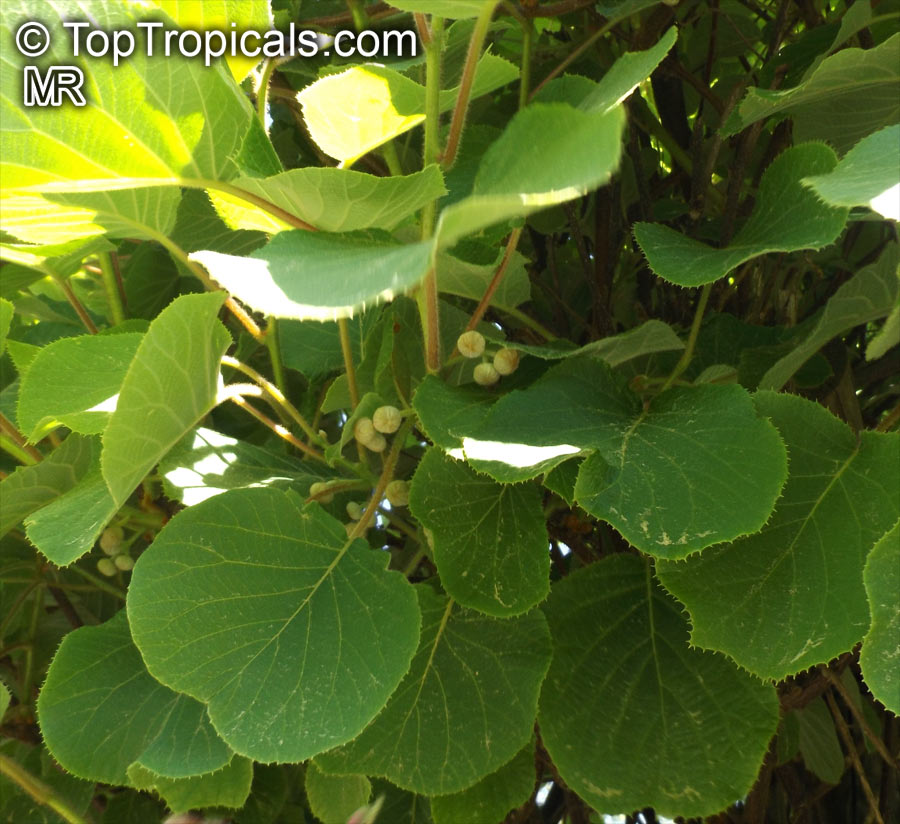
Actinidia chinensis is a vigorous deciduous climbing vine native to central and southern China. When supported by a trellis, arbor, or fence, it can stretch to about 30 feet, covering the structure with a lush canopy of broad, heart-shaped leaves. In warm months the vine grows quickly, often filling its allotted space within two or three seasons.
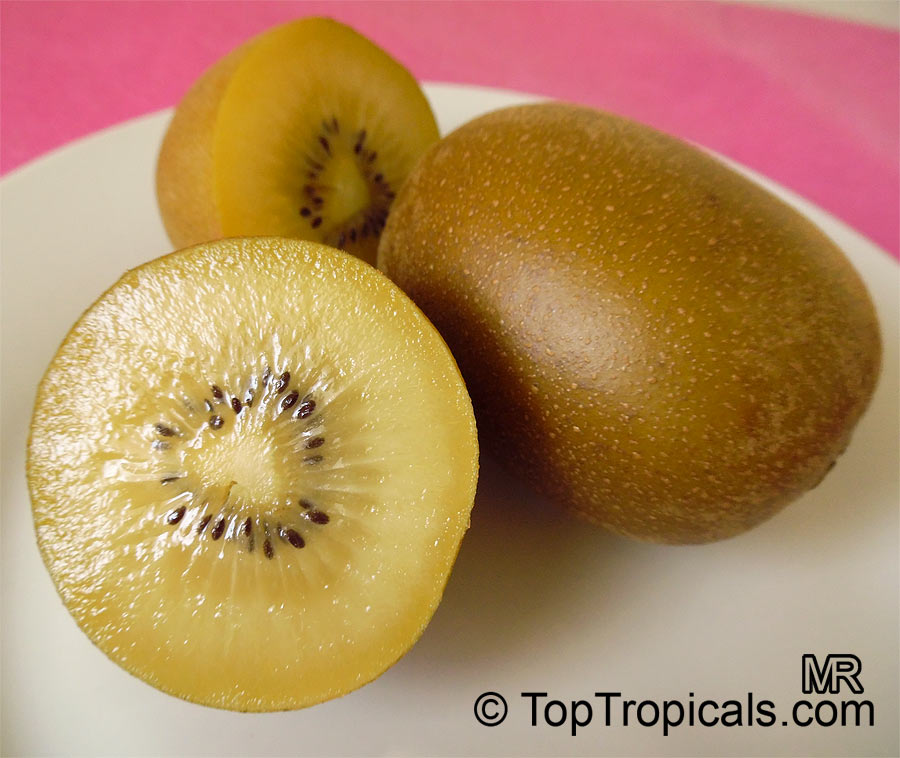
The plant thrives in full sun and fertile, well-drained soil enriched with compost, although a touch of afternoon shade is welcome in hot climates. Consistent moisture throughout summer is essential, as dry spells can noticeably reduce both fruit size and quality. In late spring, creamy-white to pale yellow flowers open, usually on separate male and female plants. Female vines that receive good pollination produce the familiar fuzzy brown fruits by late autumn. Depending on the variety and ripeness, the fruit may be tangy, sweet-tart, or mellow in flavor, with sweetness varying widely.
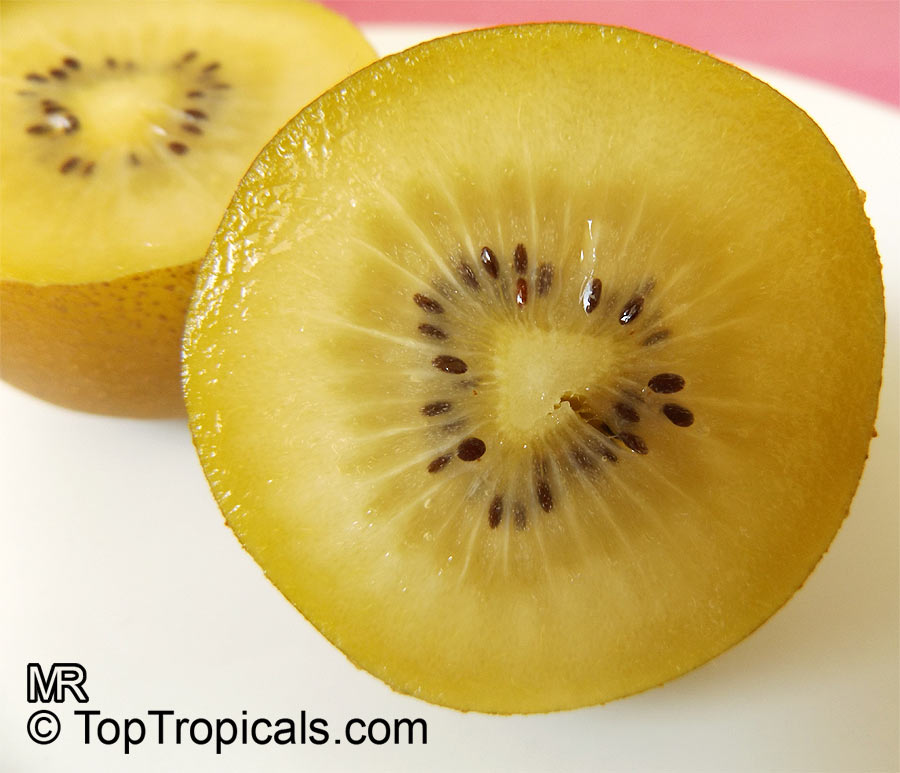
The first domesticated form of kiwifruit was Actinidia chinensis var. deliciosa, also treated in the literature as Actinidia deliciosa. This green, fuzzy kiwifruit originates from central southern China, where it grows naturally at elevations of 800 to 1,400 m. It became the first kiwifruit vine to enter large-scale commercial cultivation and remains the foundation of the traditional green kiwifruit market. The golden-fleshed cultivar Actinidia chinensis 'Sun Gold', often seen in markets, is notably sweeter and less tangy than many other selections.
While best suited to USDA Zones 8 9, it can be grown in sheltered spots in Zone 7 with winter and late frost protection. Young shoots are sensitive to cold snaps in spring. The vine can also be managed in a large container with regular pruning and a compact trellis, though this demands attentive watering and feeding. Fruits are enjoyed fresh, blended into drinks, or preserved as jam.
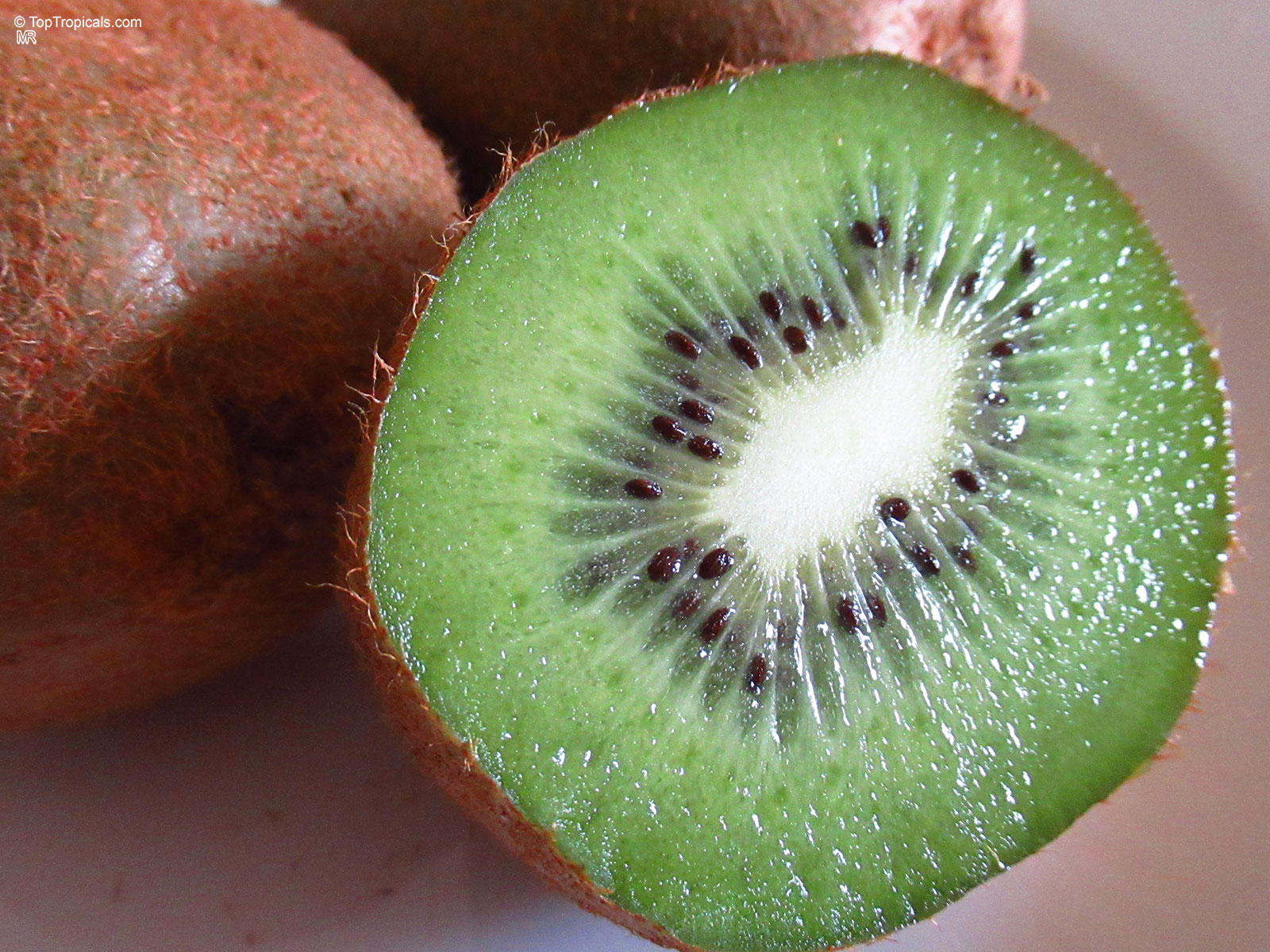
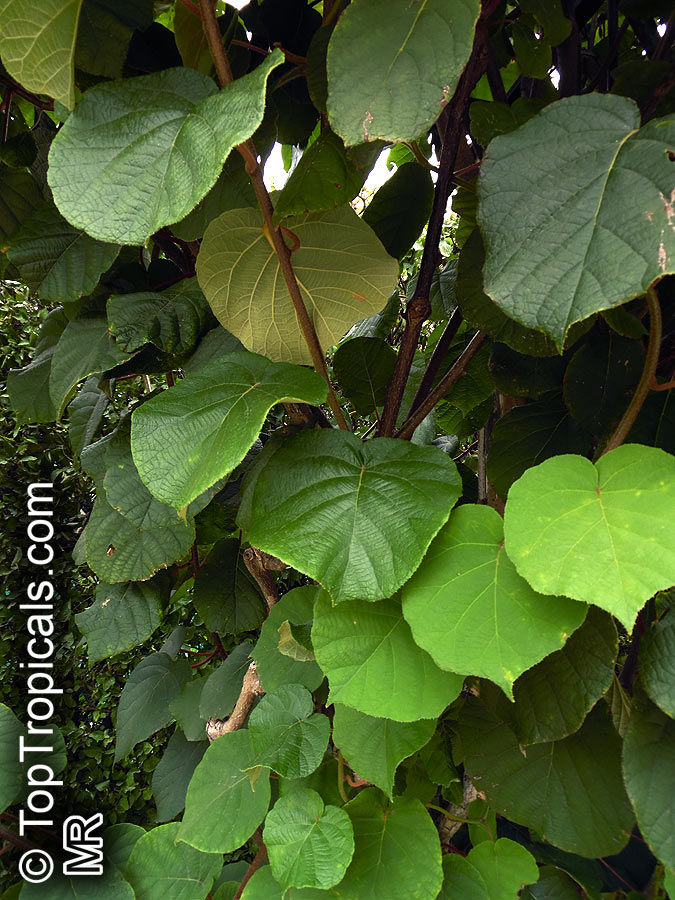


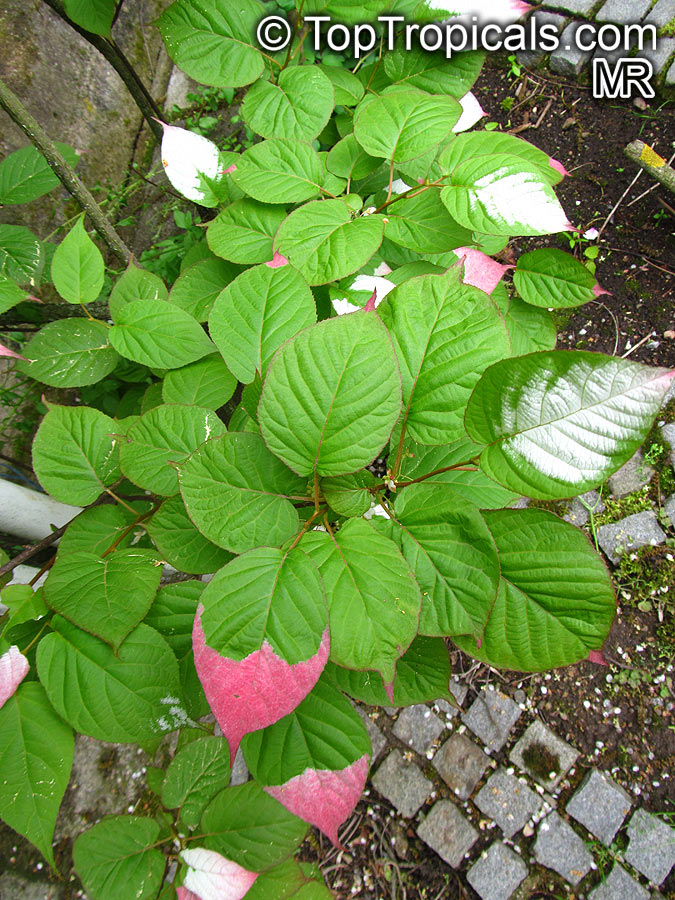
Botanical name: Actinidia kolomikta
Common name: Kiwi
Family: Actinidiaceae
Origin: East Asia
USDA Zone: 4-9

Actinidia kolomikta is a vine or creeper from the Actinidiaceae family, originating from East Asia. It has decorative foliage, with leaves turning red, pink and white in the fall. The leaves are green and creamy white and can be up to 4 inches long. It is a deciduous plant, which means it loses its leaves in the winter.
Actinidia kolomikta prefers semi-shade and regular water, but can tolerate moderate water. It is a fast growing plant, reaching up to 30 ft. It requires support to grow and climb, however it will not produce fruit without both a male and female plant. It is grown in USDA Zone 4-9.
The fruit of the Actinidia kolomikta is sweet and grape-sized, with a yellow or light orange skin. The green, juicy flesh has a light, sour flavor. It can be eaten fresh or cooked, and is a good source of Vitamin C, Vitamin A, and dietary fibers. The fruit can also be used to make jams and jellies. A mature plant can produce up to 100 fruits per season, depending on the care and conditions.
Actinidia kolomikta is an edible, ornamental plant that is easy to care for and can provide a good harvest of sweet, juicy fruit.
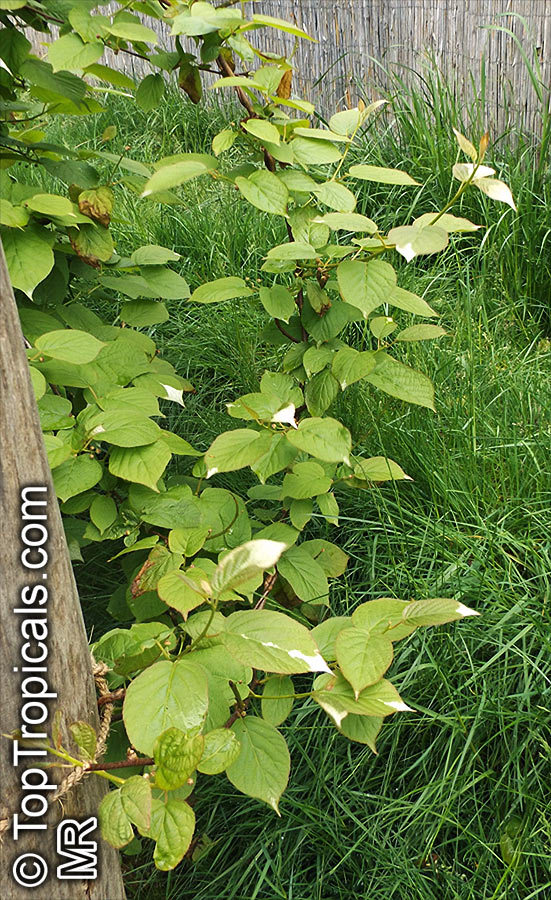
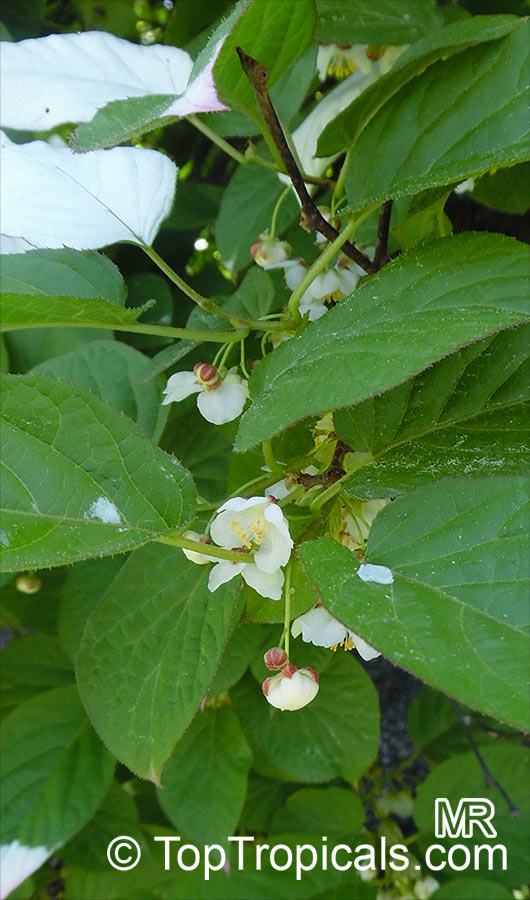
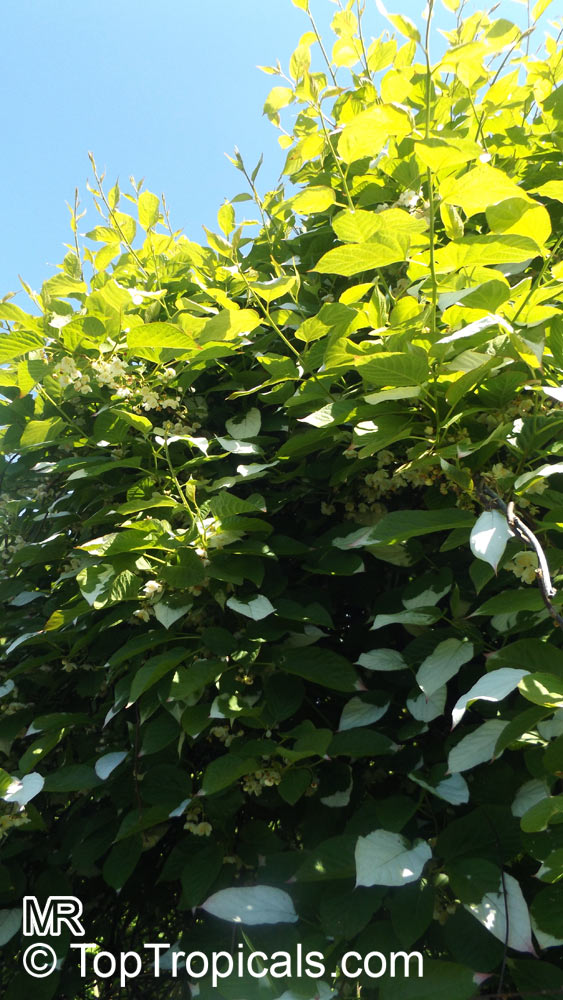
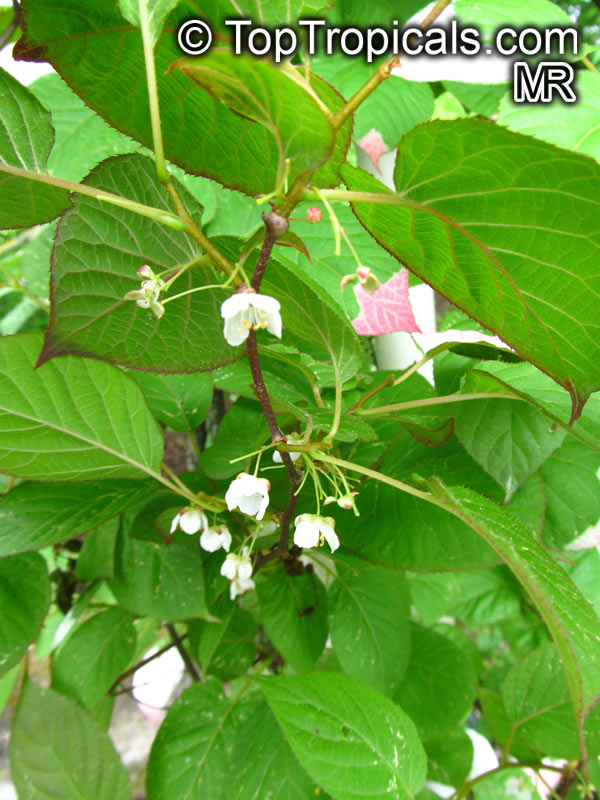
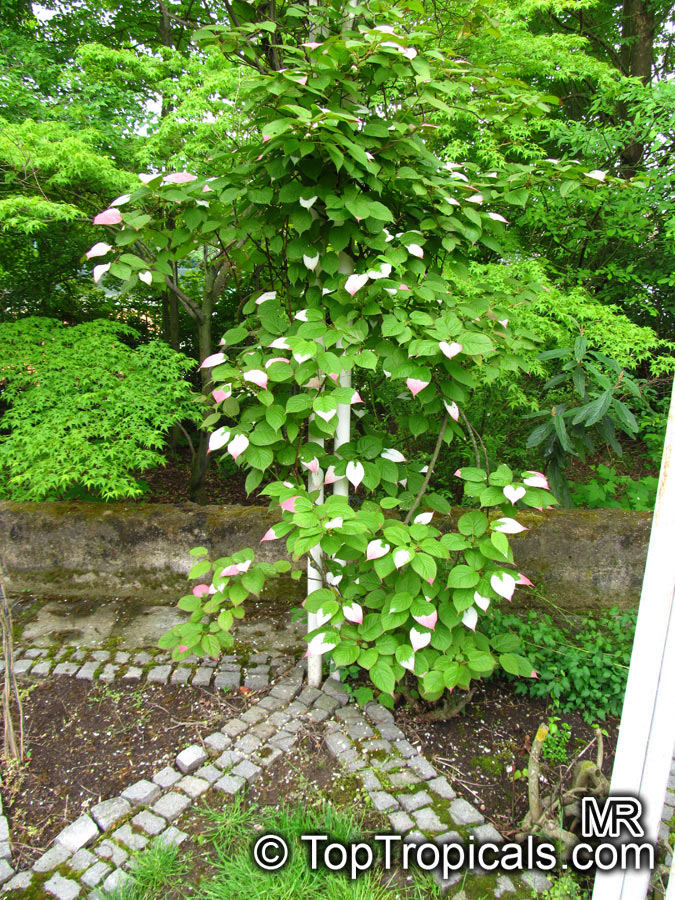
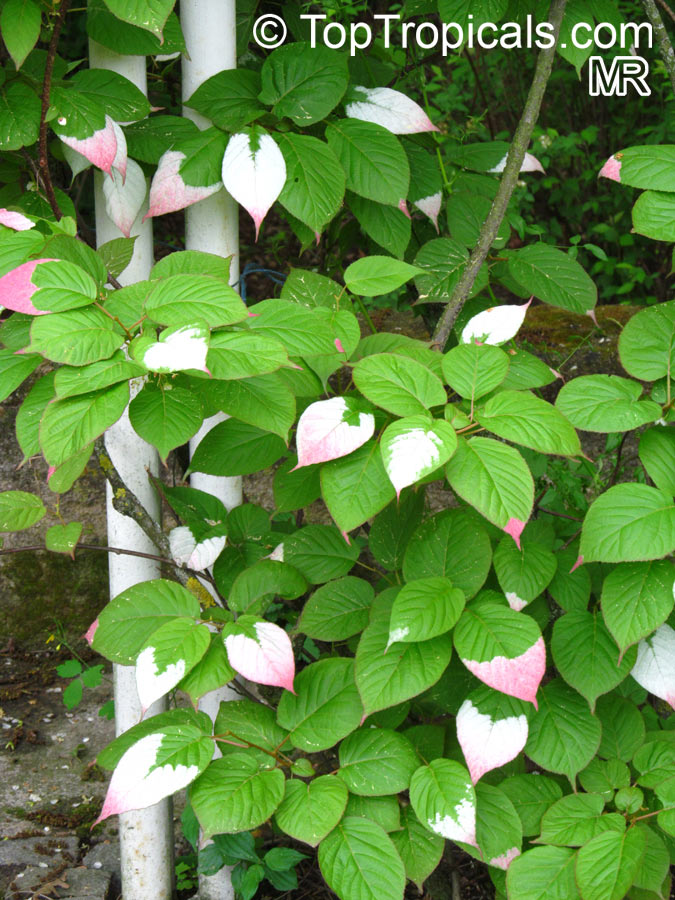
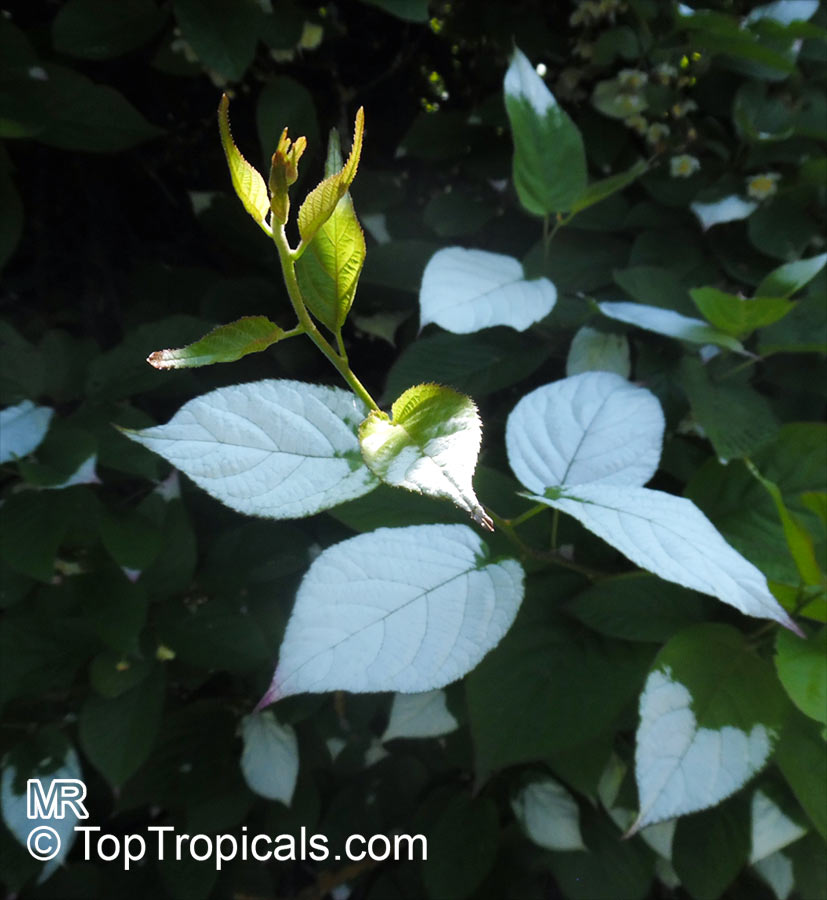
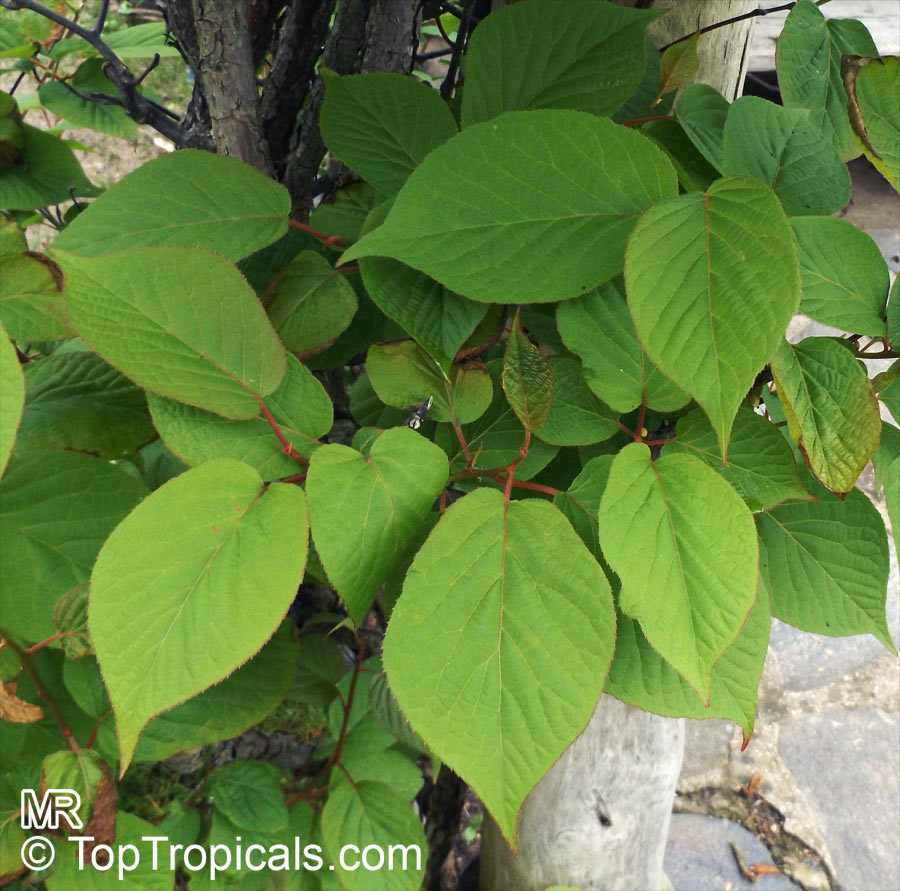
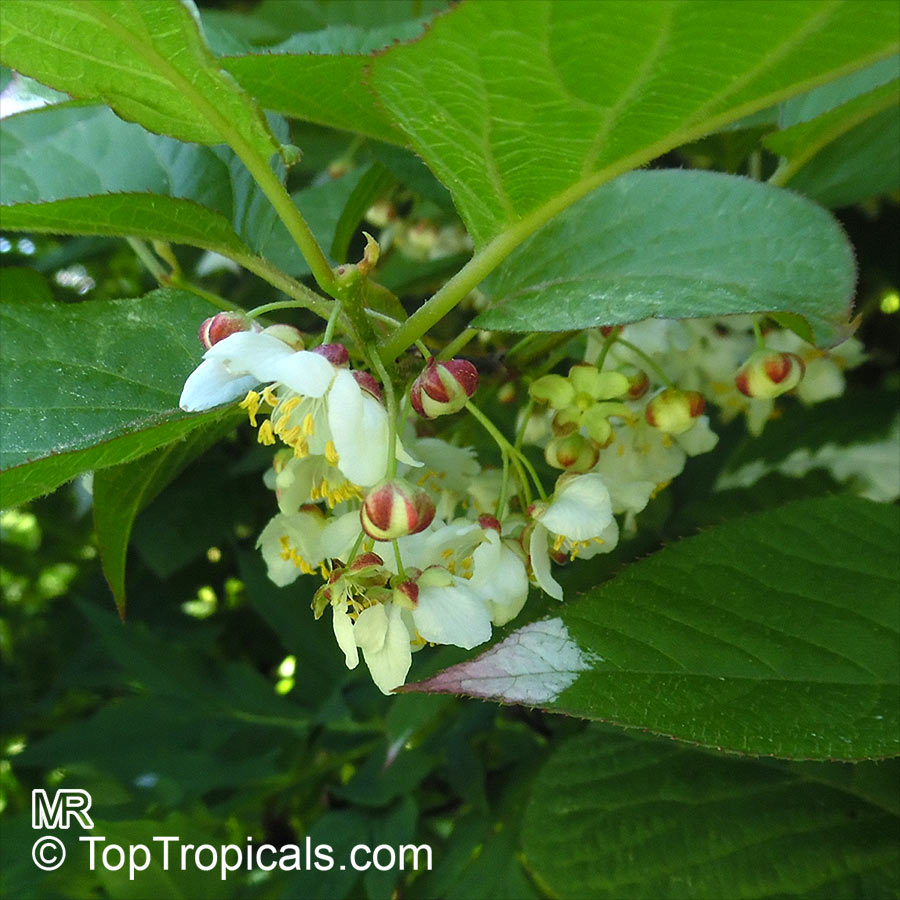
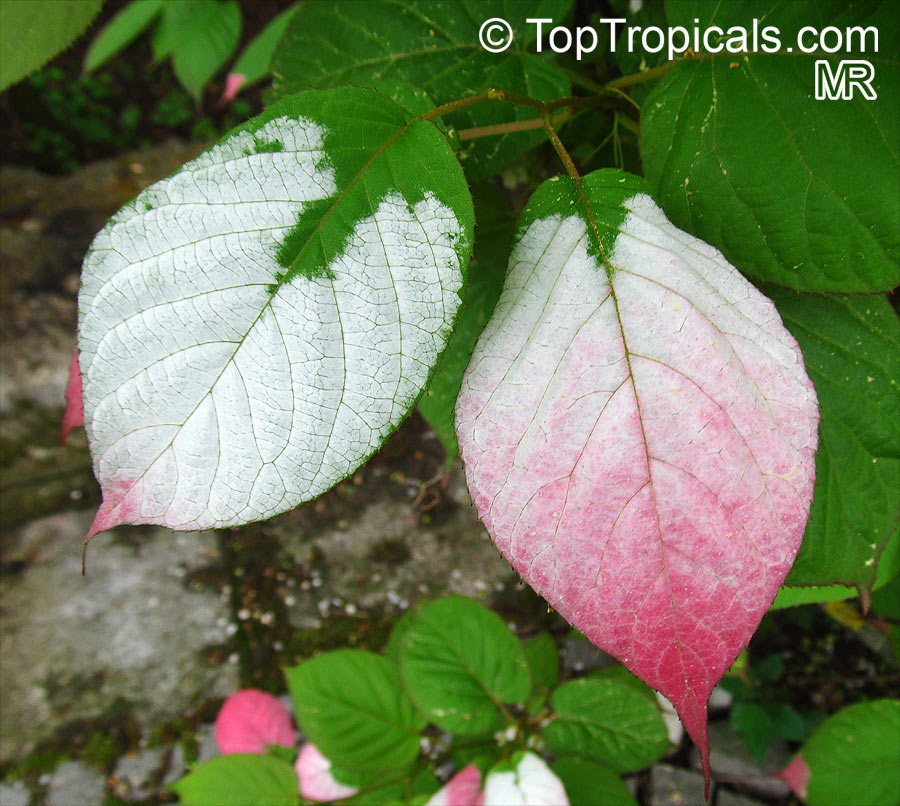
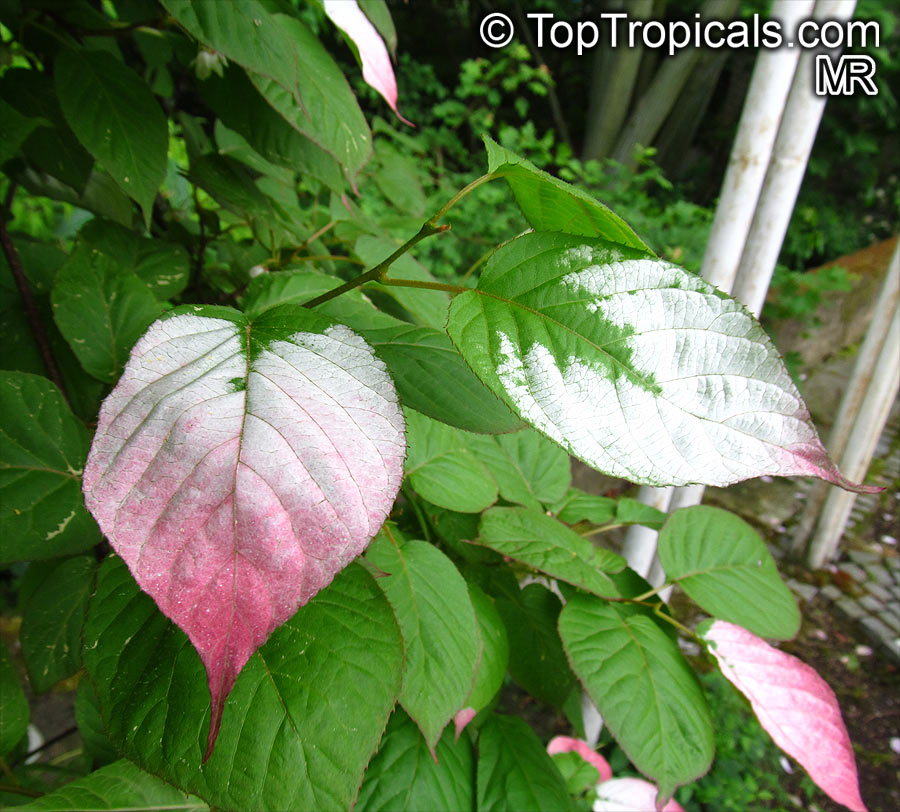
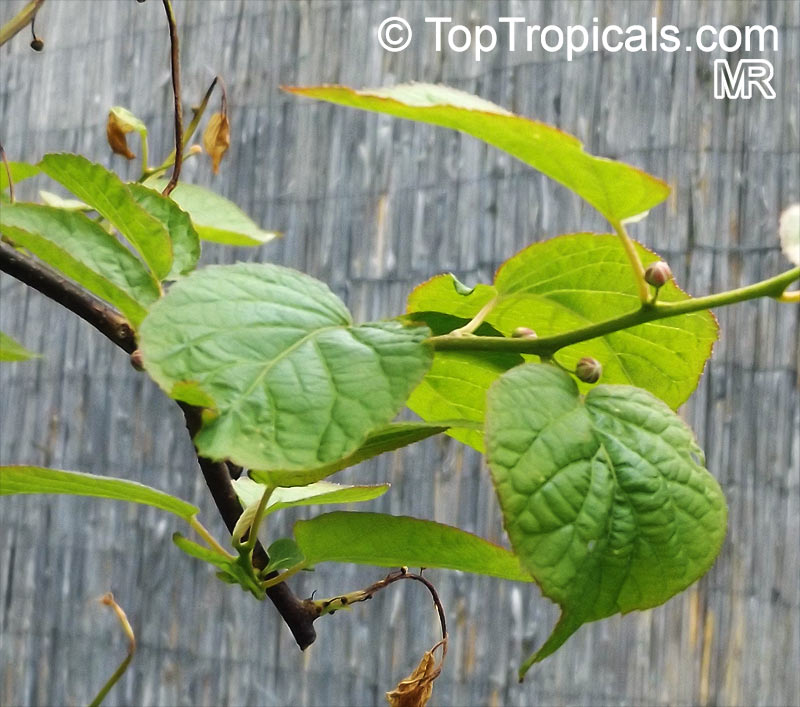
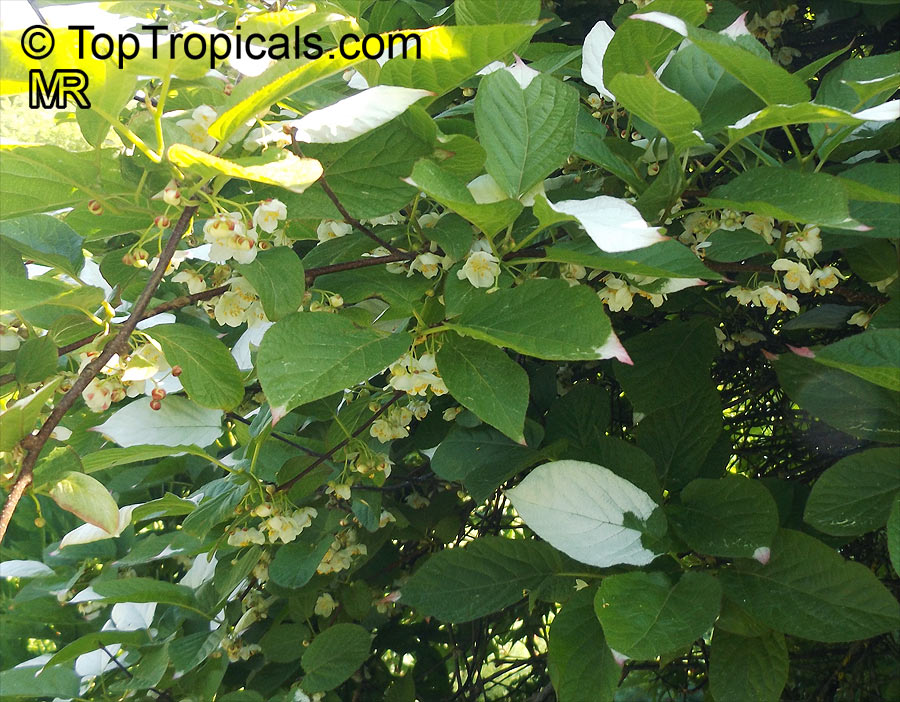
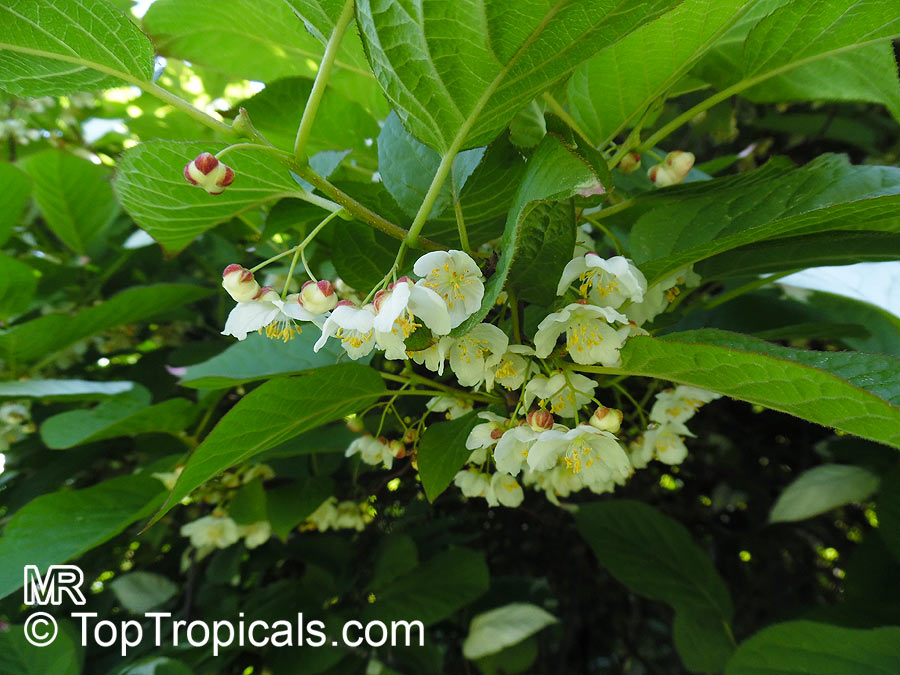
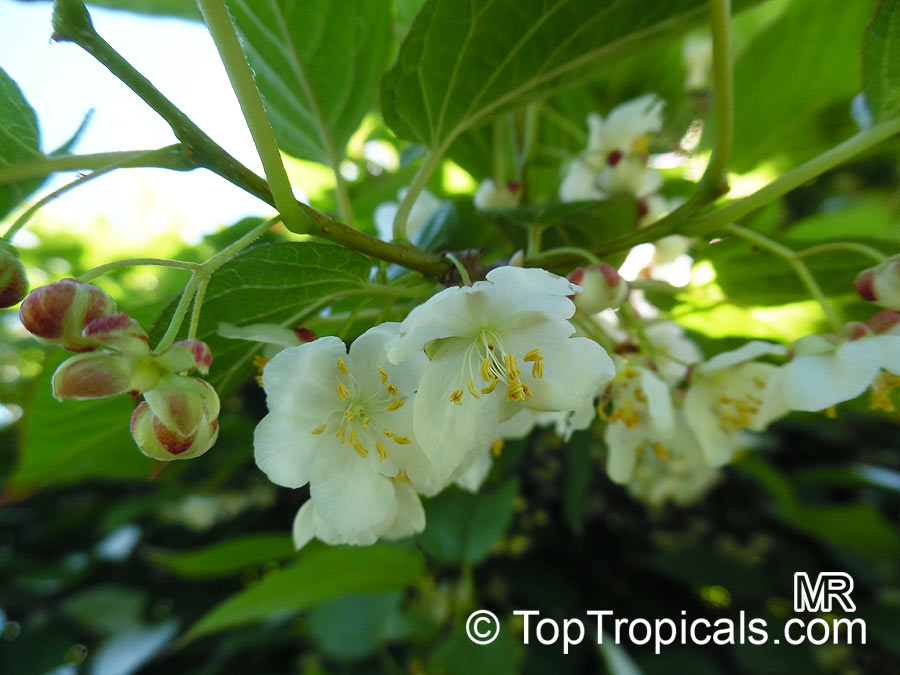
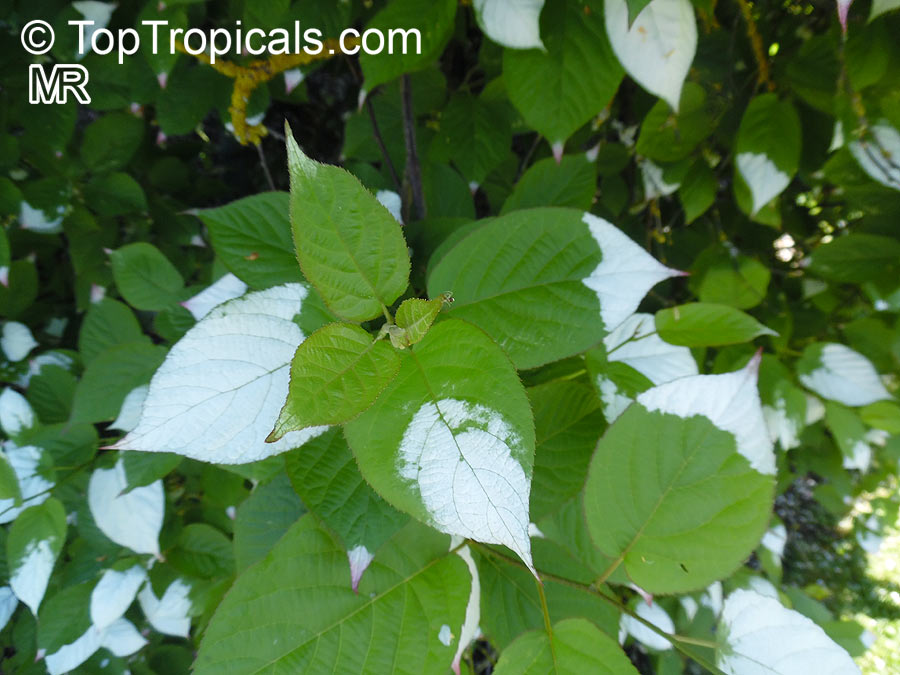
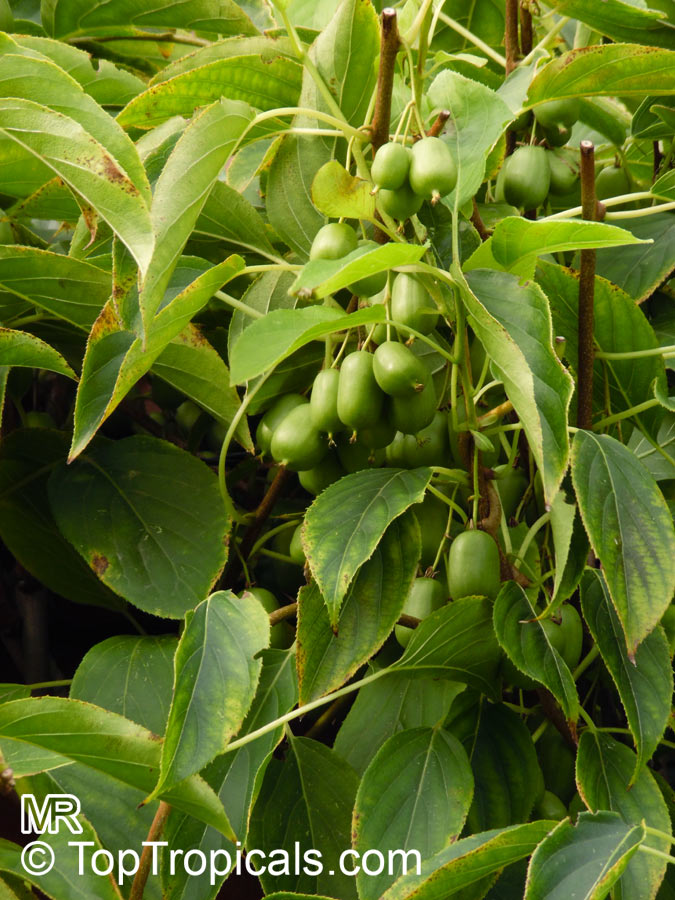
Botanical name: Actinidia sp.
Common names: Actinidia, Kiwi
Family: Actinidiaceae
Origin: Eastern Asia
USDA Zone: 8-10
Actinidia sp. (Actinidia) is an attractive and fast-growing perennial plant native to eastern Asia. It typically will reach a mature size of 5-10 feet tall, either as a large shrub or as a vine or creeper. This plant is well-suited for full sun and semi-shade areas, and requires regular water for good growth. Actinidia sp. produces white and off-white flowers, which are especially attractive in spring and summer.
Ethnomedical uses of Actinidia include edible Kiwi fruits; the fruits are high in vitamin C and other healthy elements. Depending on the species, a mature plant can produce a range of up to a few hundred fruits per season. The fruits can be tart or sweet, and are usually eaten fresh or canned as juices or jams.
Actinidia is a hardy plant, able to withstand cold temperatures at least to 30s F for a short time. It is optimally grown in USDA Zone 8-10 and is an excellent choice for gardeners in cold climates who would like to try growing the plant in a pot. To do this successfully, it is important to make sure the container is of an appropriate size and is stored in an area free from harsh winter winds. Potting soil should be kept moist and watered as needed, and if temperatures are expected to drop far below freezing, the pot should be covered.
Overall, Actinidia is a beautiful and versatile plant that is easy to care for and produce a bounty of edible fruits which are high in vitamins and other essential nutrients. While it is hardy to moderately cold temperatures, careful precautions should be taken if grown in a pot to ensure the Actinidia is able to survive the winter and produce healthful fruit for many seasons to come.
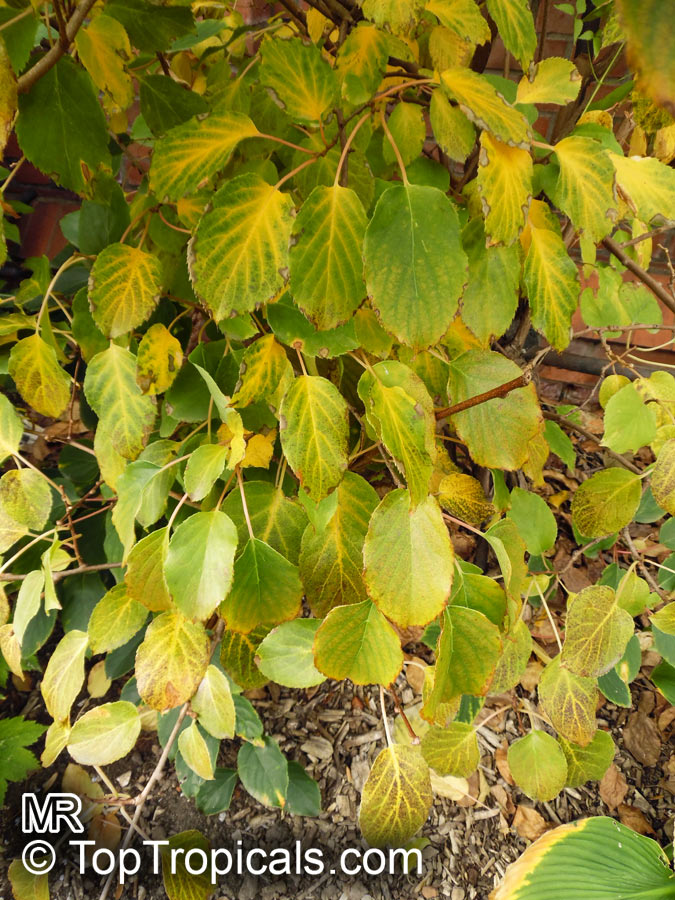
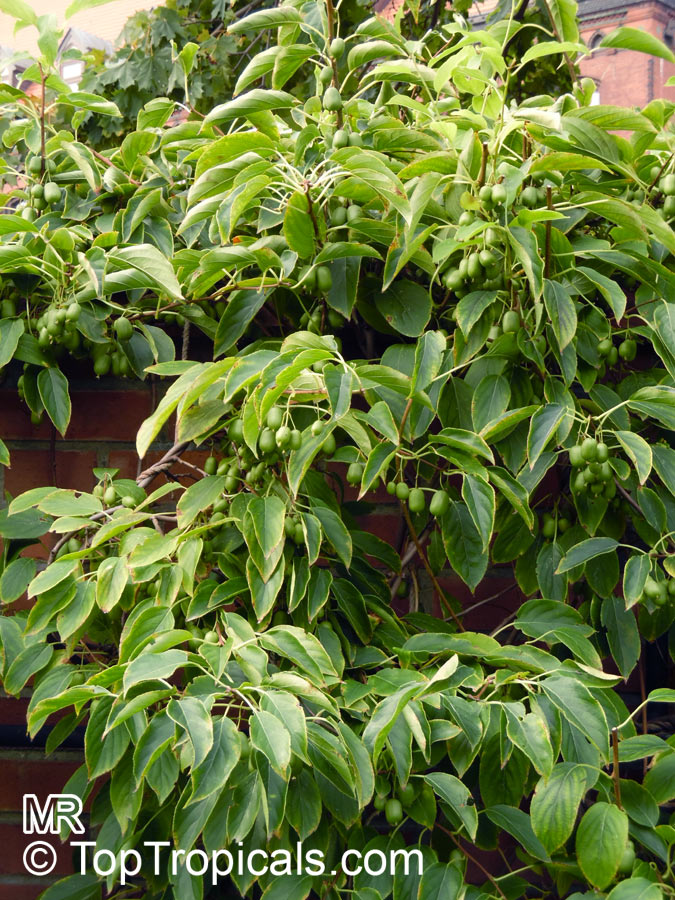
Botanical name: Adansonia grandidieri
Common names: Grandidier's Baobab, Giant Baobab
Family: Malvaceae (Formerly:Bombacaceae)
Subfamily: Bombacoideae
Origin: Madagascar
USDA Zone: 9-10


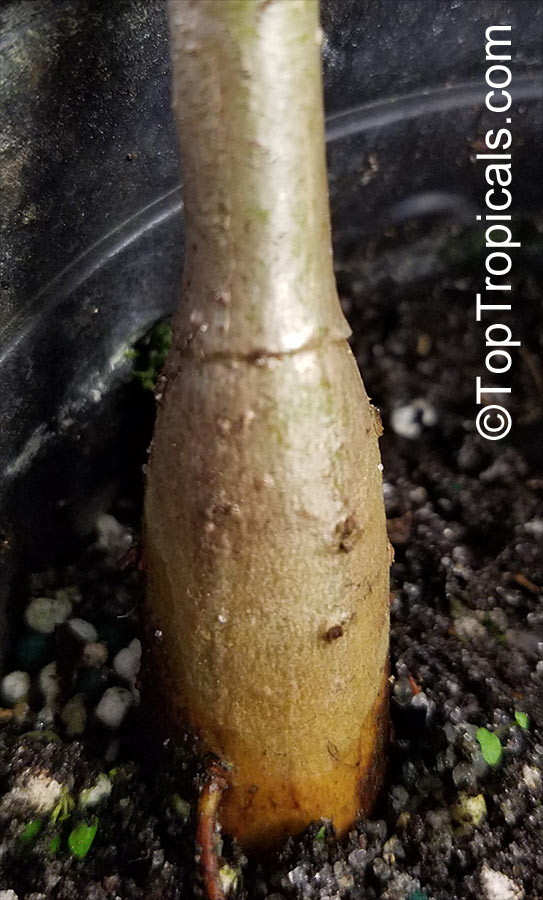
Native to Madagascar and growing with a massive, cylindrical bole, Grandidier's Baobab, Adansonia grandidieri, can be a large tree, reaching up to 80 ft tall. The tree is mostly found in a restricted area, threatening its survival due to habitat destruction and regeneration. Despite being threatened, Grandidier's Baobab remains very versatile and is popular among bonsai enthusiasts.
Grandidier's Baobab can prosper in full sun, or on rare occasions in partial shade, and needs moderate watering. If grown in cold regions, pots should be elevated to ensure better drainage and should be sheltered during winter. It has a flat-topped, light crown with few branches, and white to off-white flowers. It produces edible fruits, with oil-rich seeds, making it a valuable source of food and fiber for thatching.
Grandidier's Baobab can produce hundreds of fruits, depending on the age and weather conditions, each fruit weighing about 250g. The fruits are orange and oval-shaped with a pulp containing a few large seeds. It has a pleasant taste and can be used to make refreshing drinks, jams, salads, and other desserts. Grandidier's Baobab is also rich in vitamins, minerals and antioxidants such as vitamin C, phosphorus, and fiber, providing healthy benefits and being an important component of the Malagasy diet.
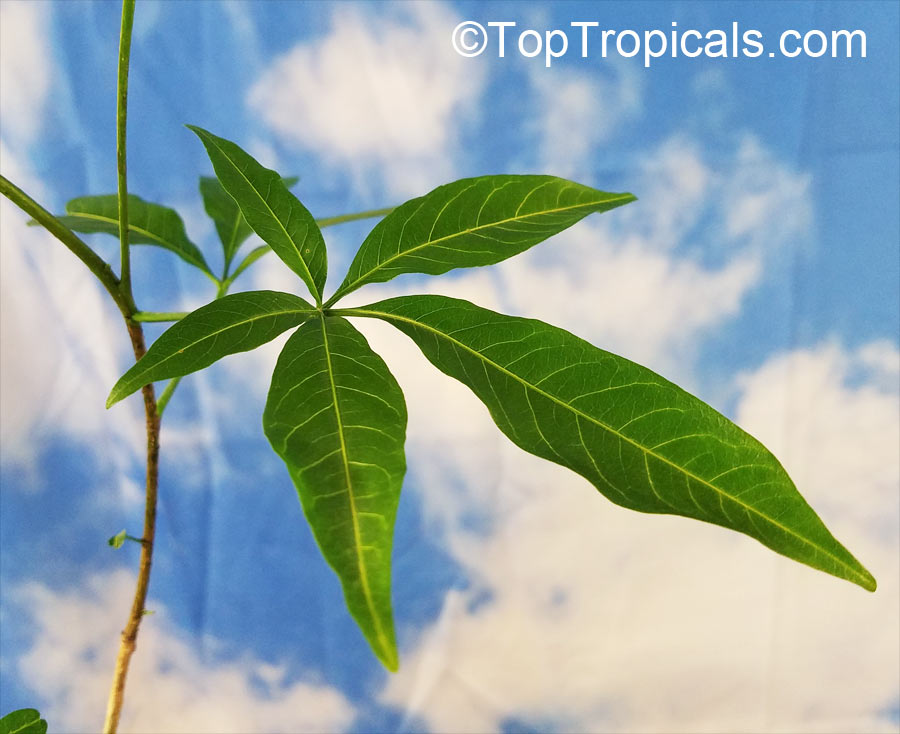
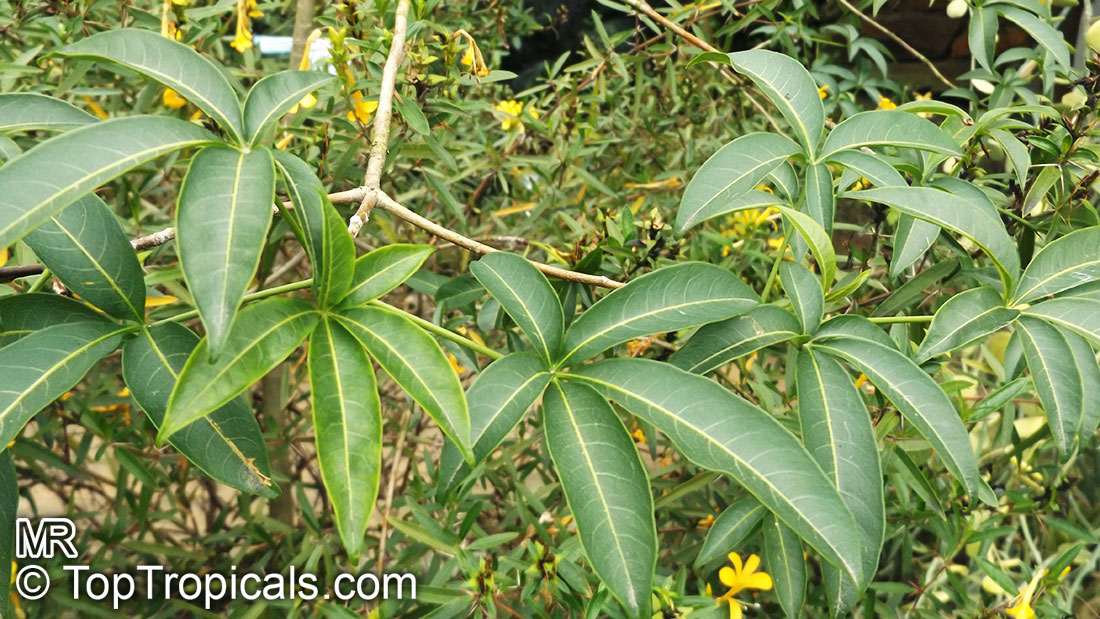
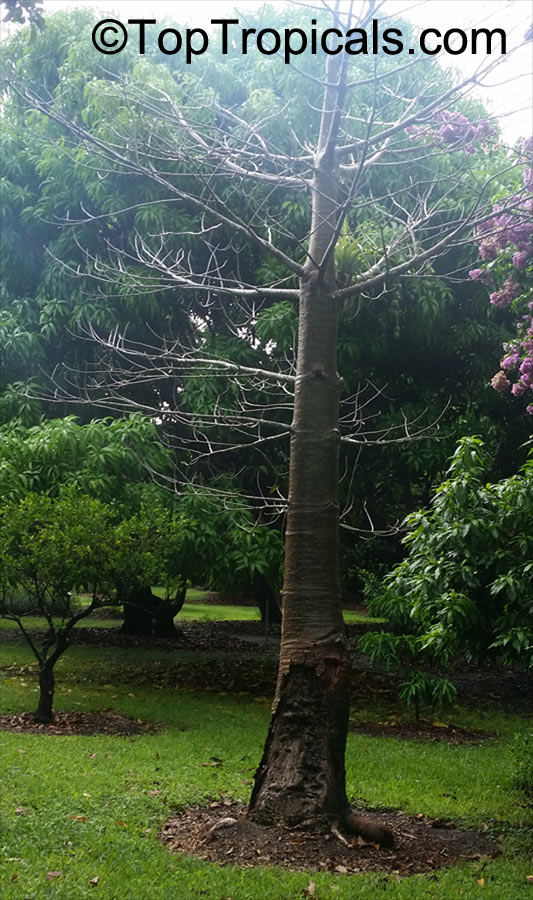
Botanical name: Adansonia za
Common name: Baobab
Family: Malvaceae (Formerly:Bombacaceae)
Subfamily: Bombacoideae
Origin: Madagascar
USDA Zone: 9-10


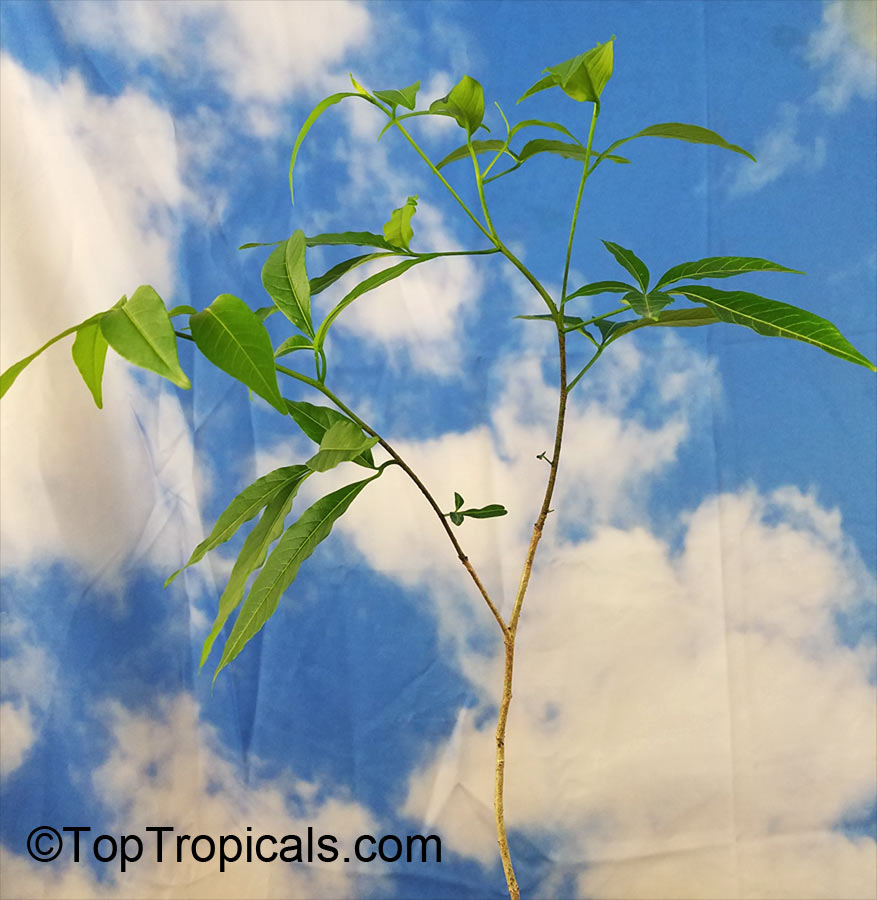
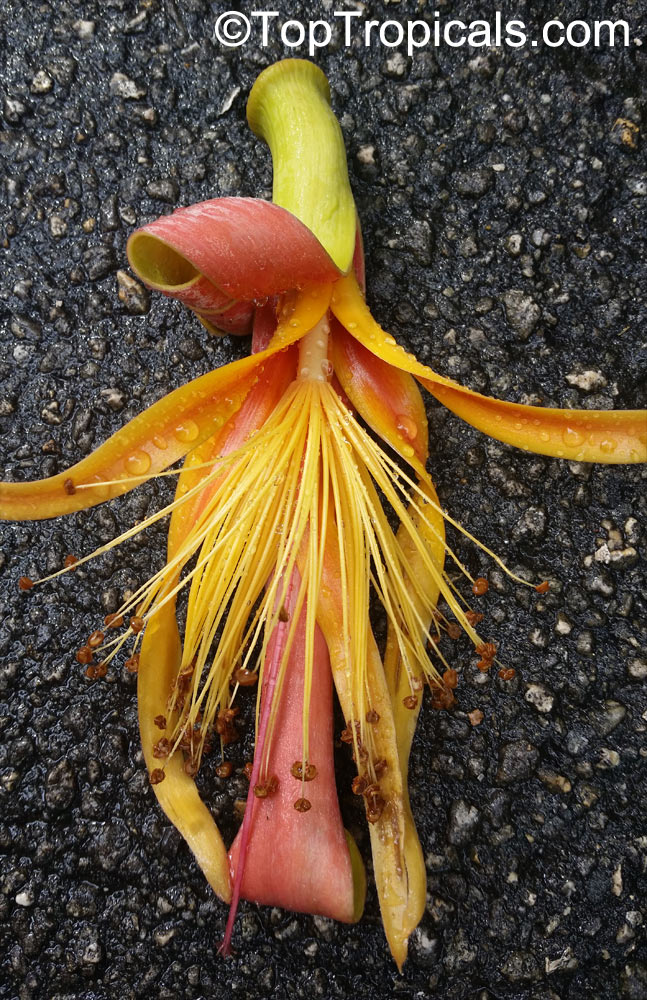
Adansonia za, or Baobab, is an imposing ethnomedical plant native to Madagascar with its full sun, moderate water requirements, and unusual color. This big tree can grow taller than 20 ft, producing deciduous foliage and stunning flowers that vary in color from crimson to vinous, and yellow to orange. It is a delightfully hardy plant that not only emits a unique beauty in the garden, but is also attractive to butterflies and hummingbirds.
The blooms can be followed by an edible fruit that tastes delicately sweet and acidic. The fruit also carries a wealth of health benefits, containing vitamins A, C, and E, thiamine, niacin, riboflavin, and folate. An average Baobab fruit tree can yield an estimated 150-200 fruits in a single year.
Baobab can be grown in USDA Zones 9-11, and since the tree is deciduous, it can withstand some cold temperatures, making it a great option for gardens in cooler climates. When growing a Baobab in a pot, it is important to use a well draining potting mix, as the tree does not like to stay wet. Keep the pot in a sheltered spot and bring it indoors during frosty winter nights. Water the tree regularly, especially during the hotter summer months. An occasional dose of fertilizer will also help promote healthy growth.
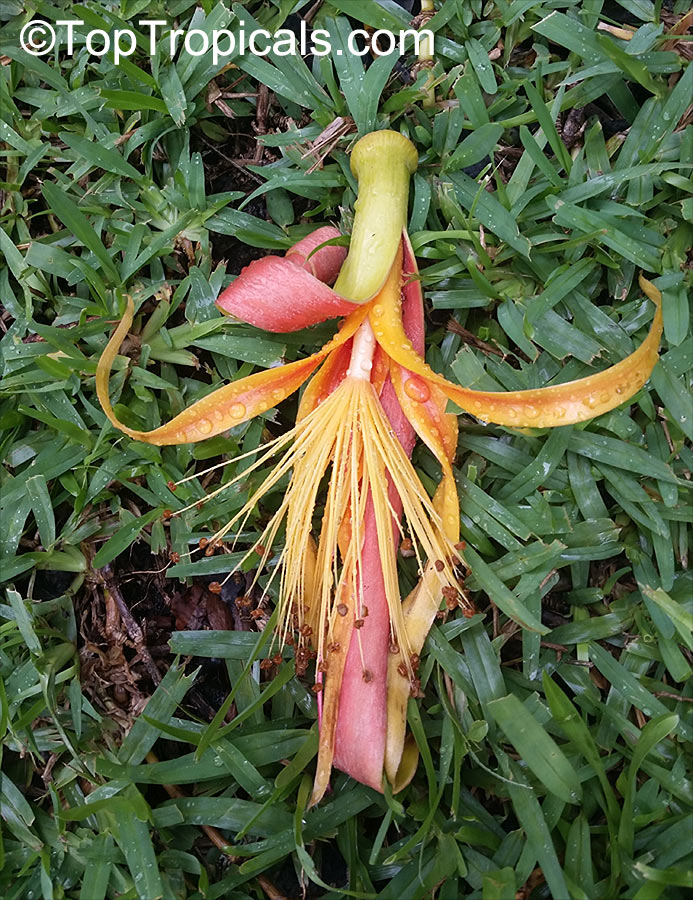
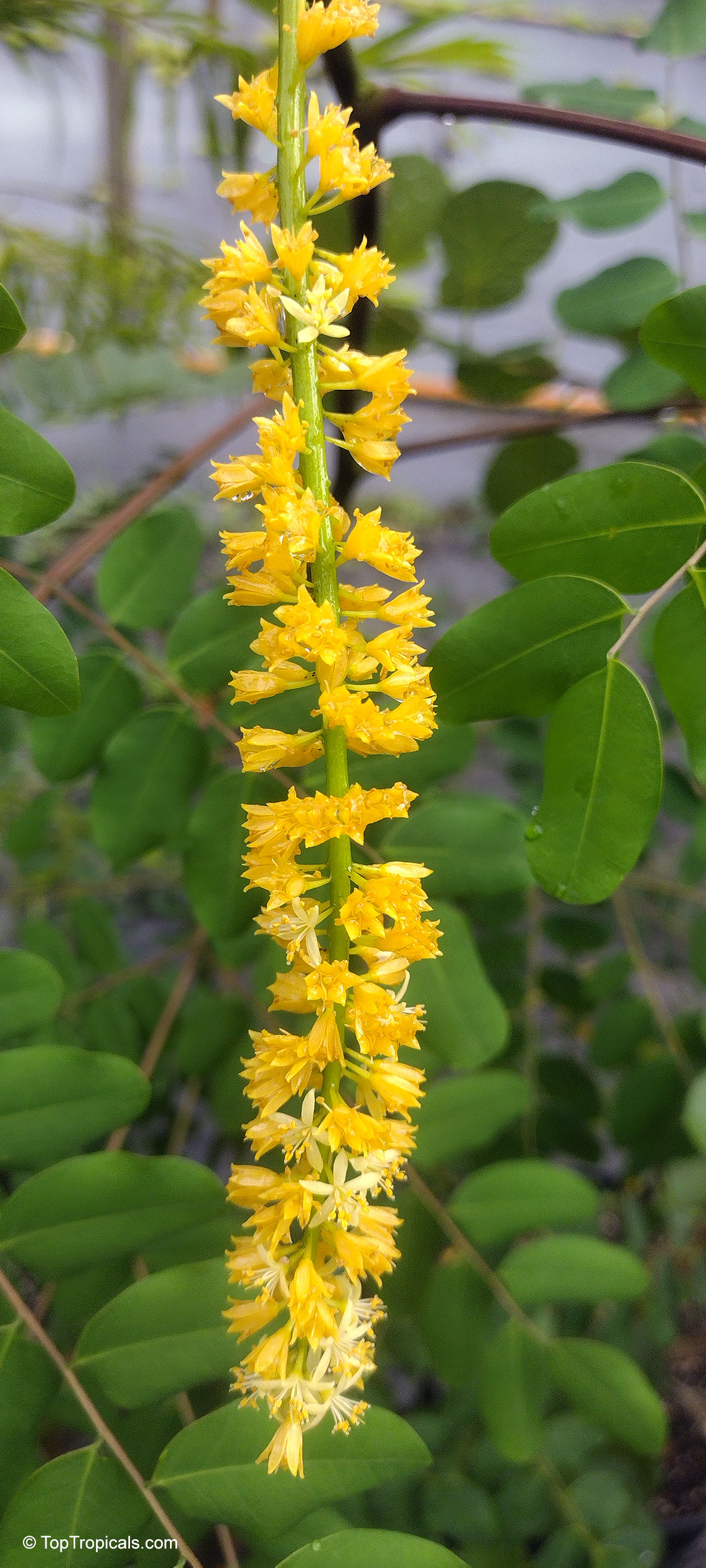
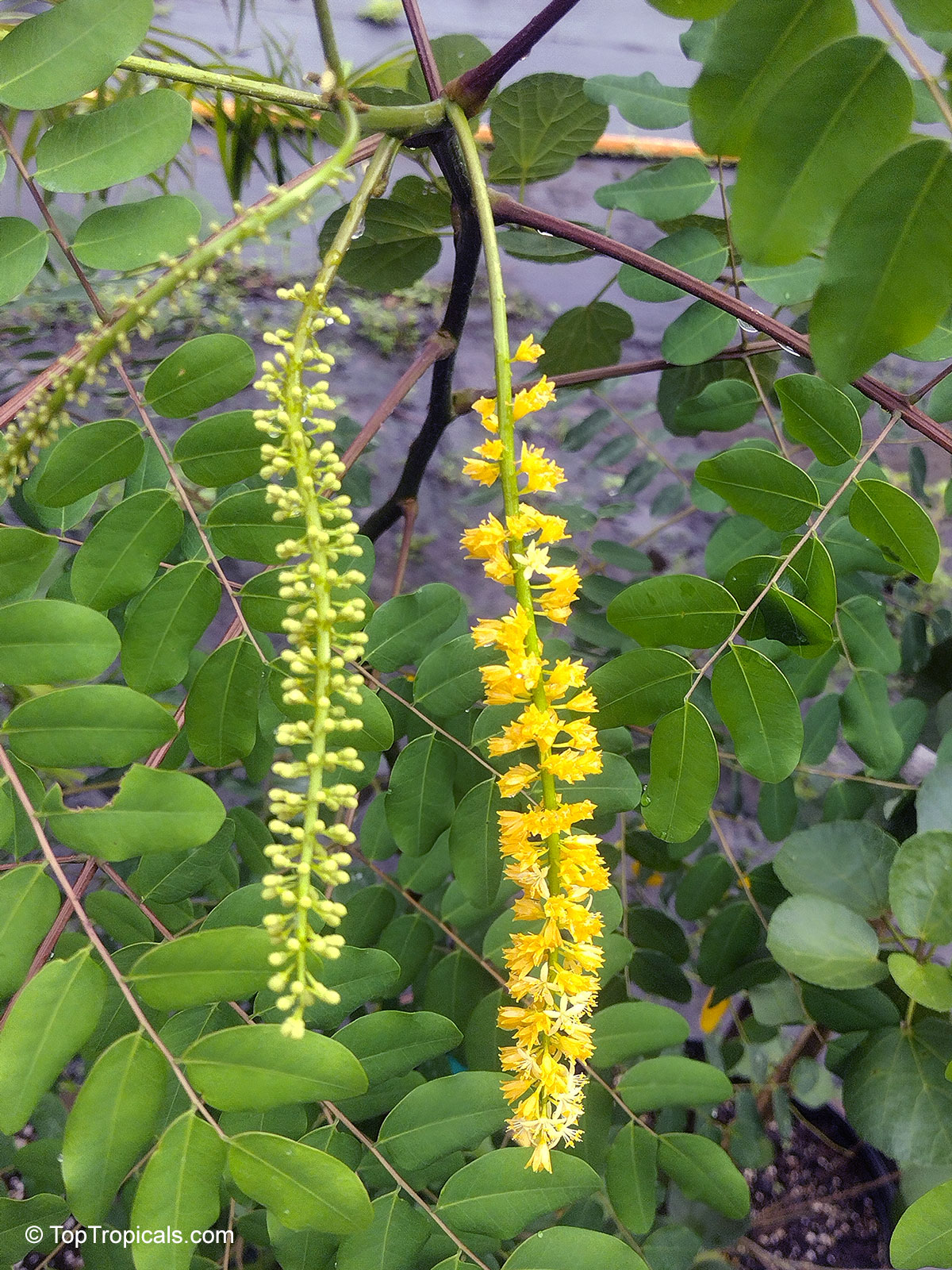
Botanical name: Adenanthera pavonina
Common names: Red Sandalwood, Coral Bean Tree, Saga, Sagaseed Tree, Red-bead Tree, Raktakambal, Kokriki
Family: Fabaceae
Subfamily: Caesalpinioideae
Origin: India
USDA Zone: 9-11
Cold tolerance: 35°F


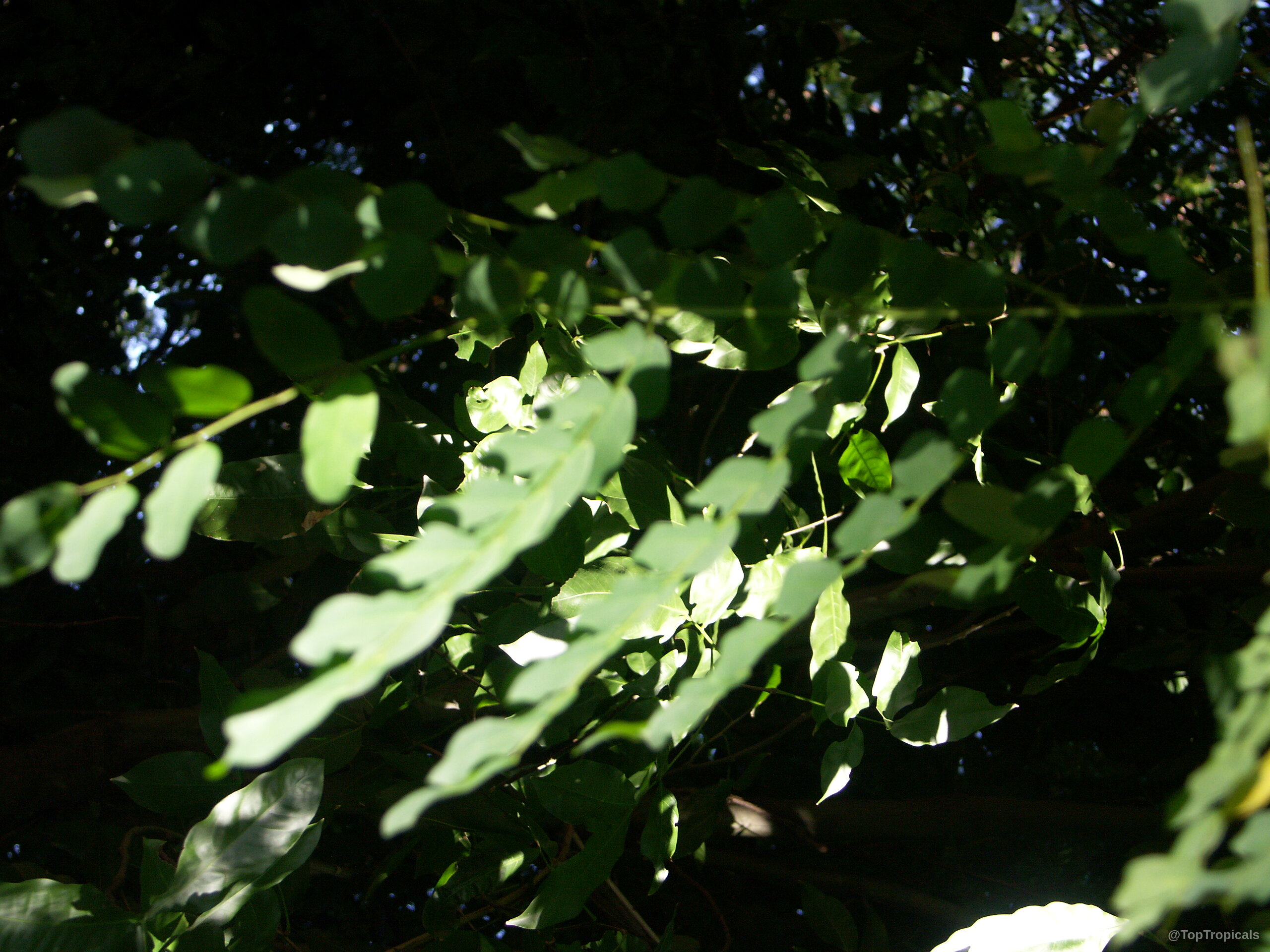
A medium-sized tree up to 15 m high, Adenanthera pavonina is native to India and Malaysia. It has been planted extensively throughout the tropics as an ornamental and has become naturalized in many countries.
The tiny flowers are said to smell vaguely like orange blossoms.
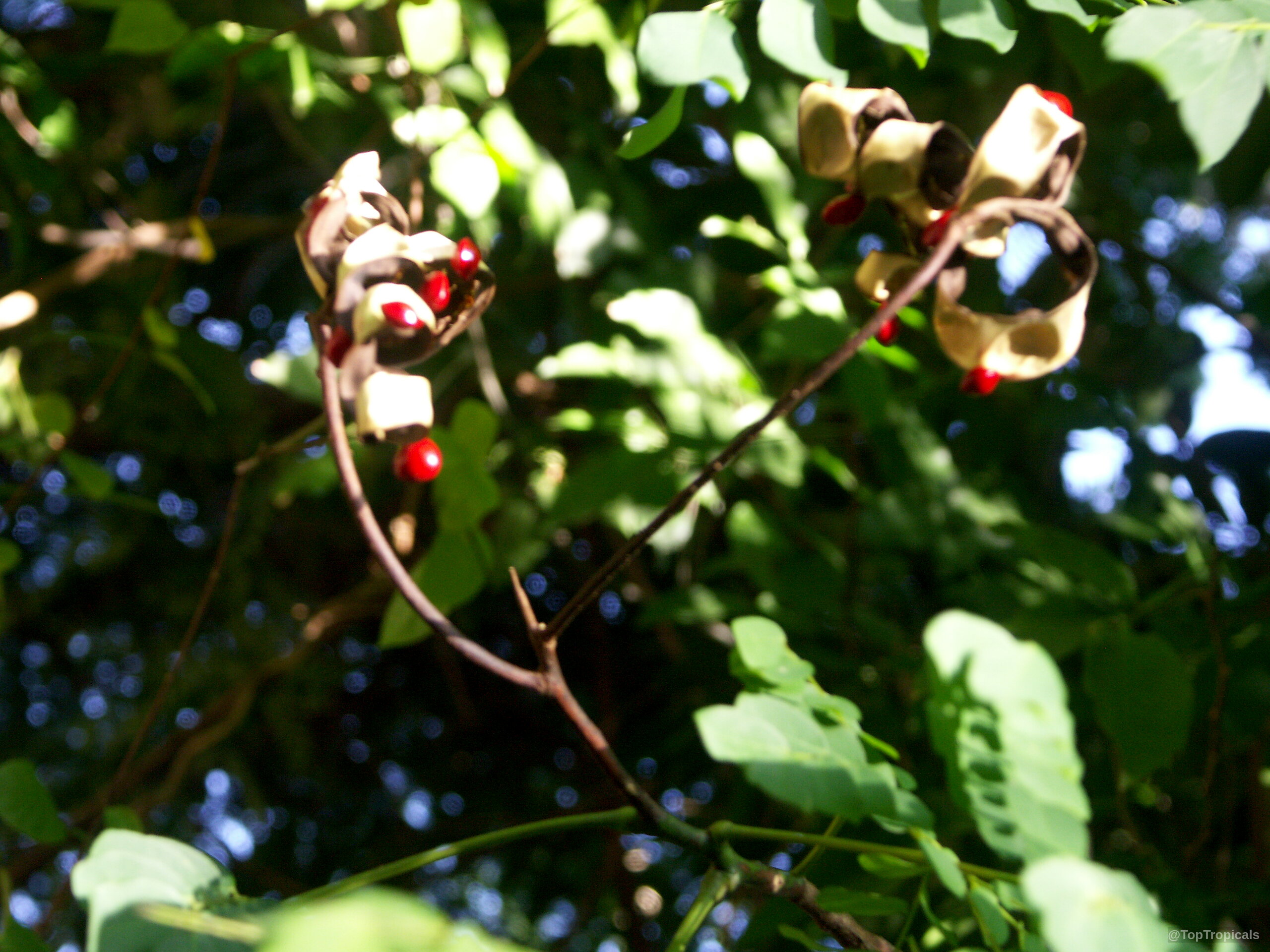
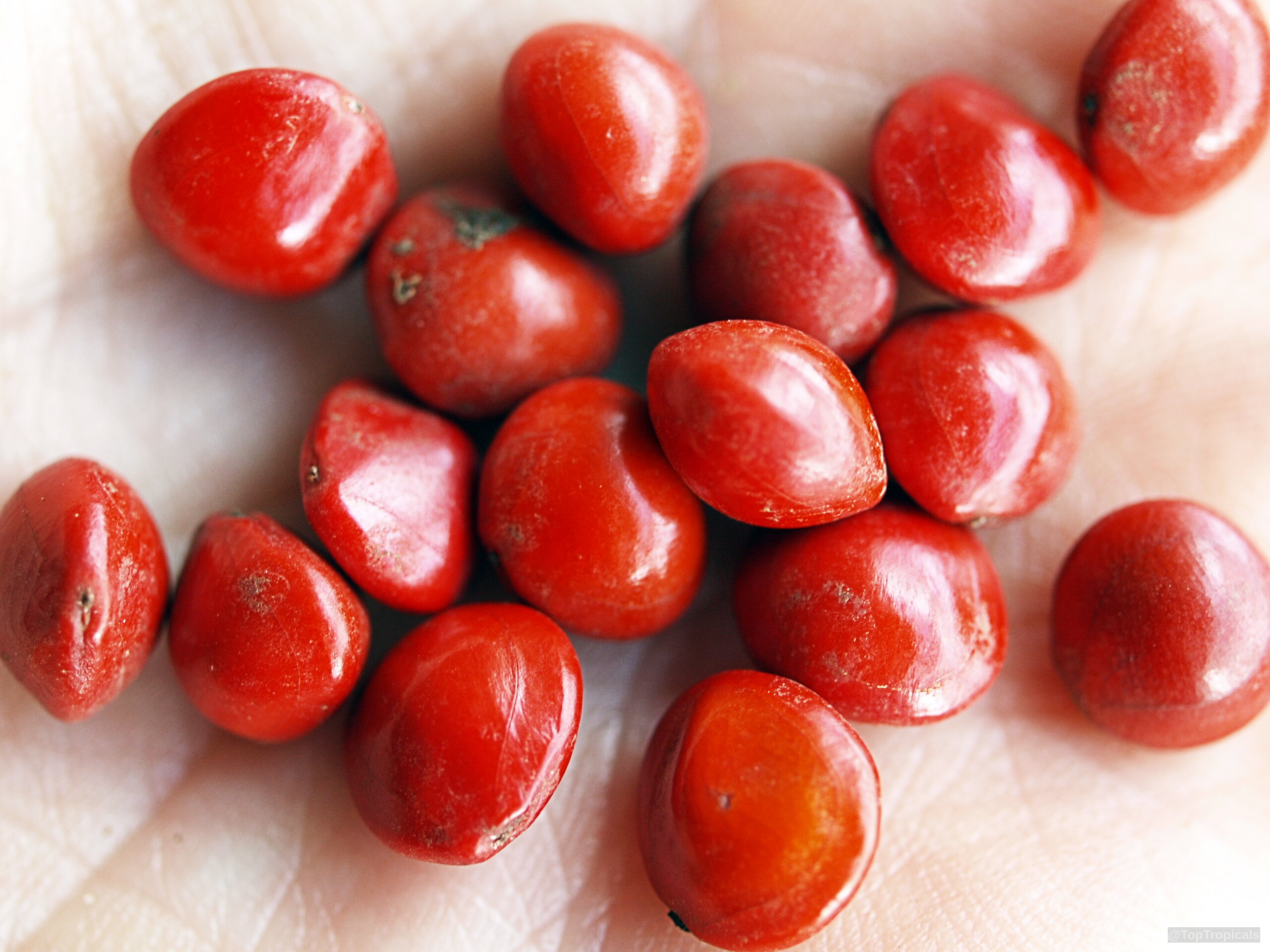
The slender flattened pods become twisted as they split open at maturity to release up to 12 brilliant red, lens - shaped, extremely hard seeds. The ripened pods stay on the tree for some time. The seeds are used in necklaces and ornaments, as beads in jewellery, leis and rosaries. They were also used in ancient India for weighing gold. The seeds are curiously similar in weight. Four seeds make up about one gramme. In fact the name "saga" is traced to the Arabic term for "goldsmith".
In Malaysia and Indonesia, the trees provide shade and planted as "nurse trees" in coffee, clove and rubber plantations.
Although the raw seeds are toxic, when cooked they are edible: are roasted, shelled and then eaten with rice in Java, Indonesia. In Melanesia and Polynesia people call it the "food tree". The seeds are said to taste like soy bean. The young leaves can be cooked and eaten, but usually only during famine.
The hard reddish wood of the red sandalwood tree is used for cabinet making. A red dye, obtained from the wood, is used by Brahmins to mark religious symbols on their foreheads. A red powder made from the wood is used as an antiseptic paste. In Ancient Indian medicine, the ground seeds are used to treat boils and inflammations. A decoction of the leaves is used to treat gout and rheumatism. The bark was used to wash hair.
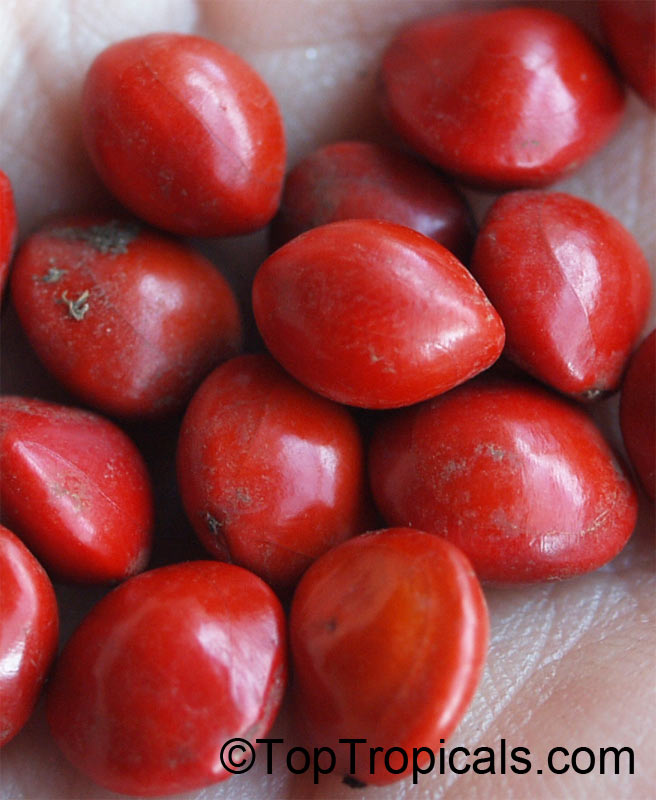
Plant seeds 1" deep in otting mix, keep warm, damp and in bright light. Scarify to expedite germination.
Ordering seeds info
RECOMMENDED SUPPLIES:
Seed Germination Mix #3, professional grade
SUNSHINE-Epi - Seeds and cuttings booster
SUNSHINE Bombino - Young Plant Booster
| Next | |
Use link to repeat this search:
https://toptropicals.com/cgi-bin/garden_catalog/cat.cgi?search_op=and&keyword_op=and&language=e&number=10&no_change_lang=1
&v1=frt&user=tt&sale=1&first=0