Seaside, salt tolerant plant - Plant Encyclopedia Results
| Number of plants found: 455 | Next | 
|
Go to page: | 1 | 2 | 3 | 4 | 5 | Last |
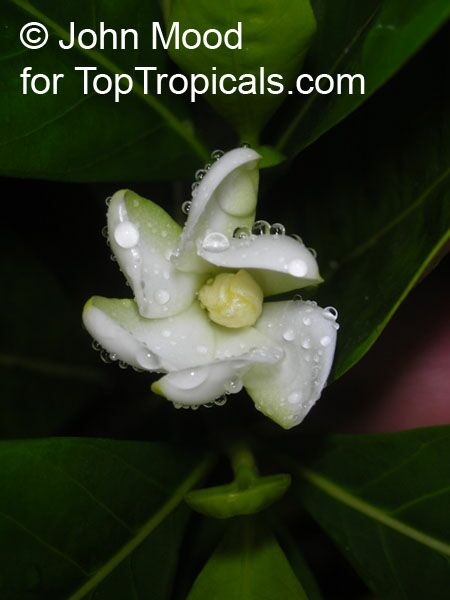
Botanical name: Gardenia vanuatuensis
Common name: Vanuatu Gardenia
Family: Rubiaceae
Origin: Vanuatu


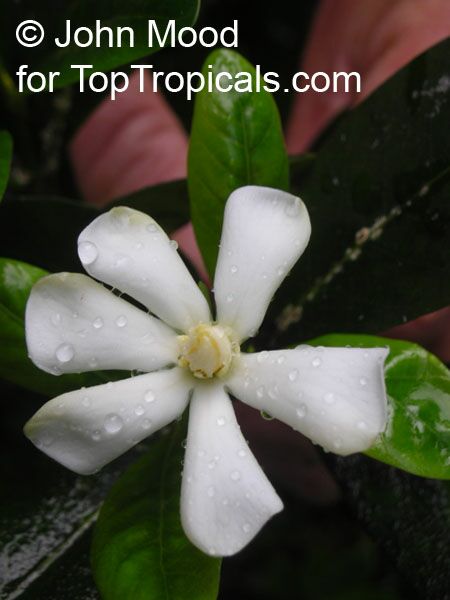
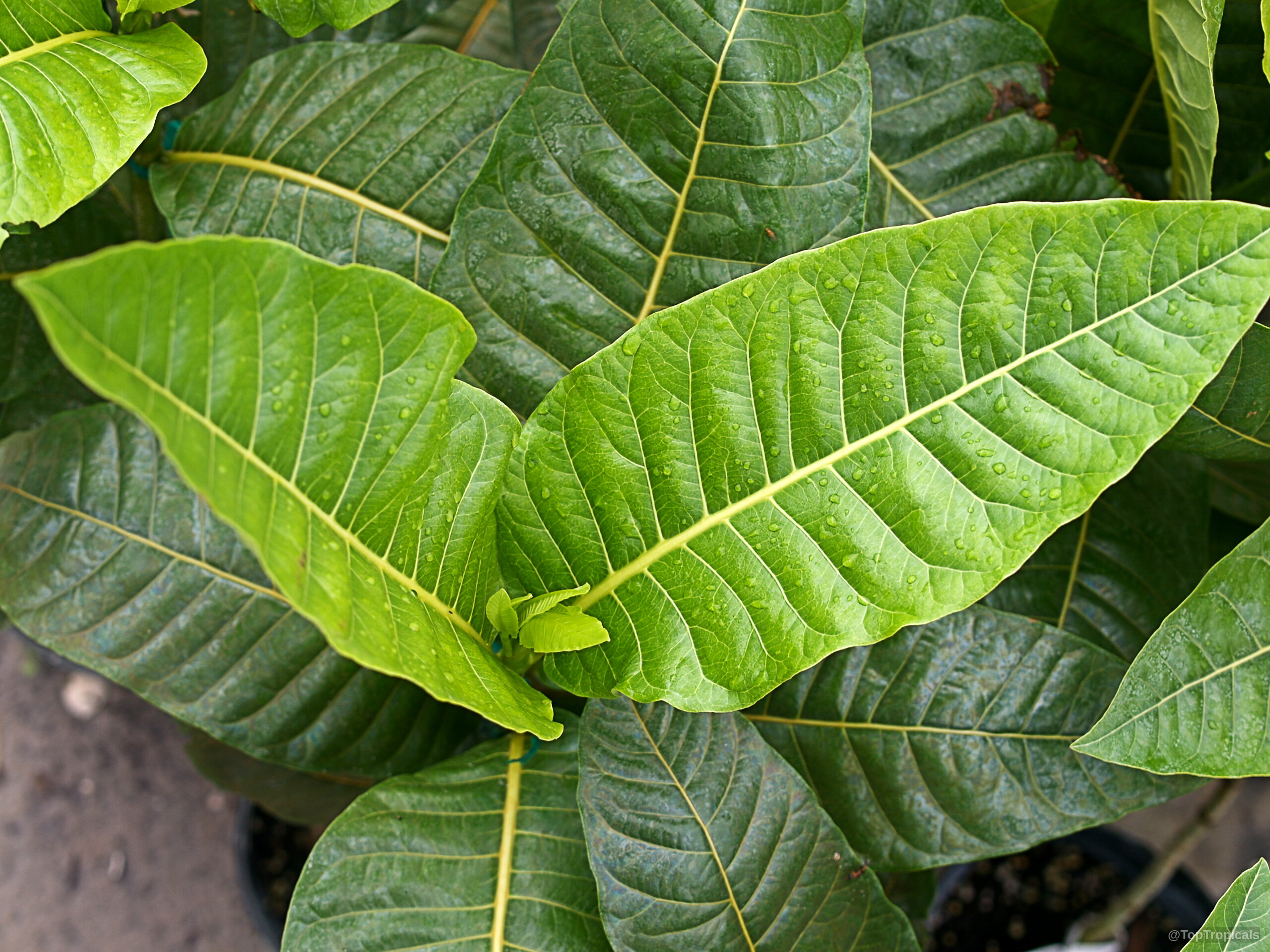
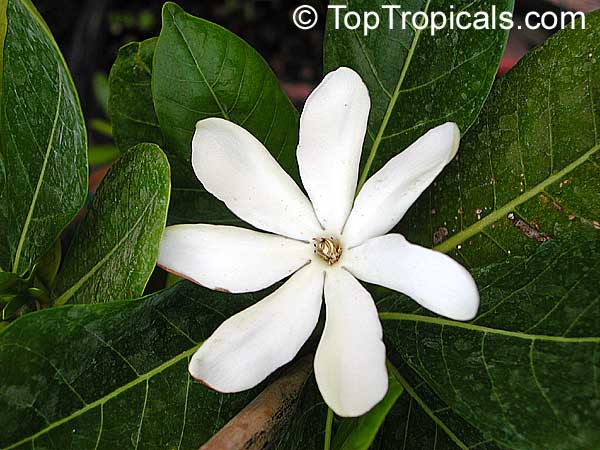
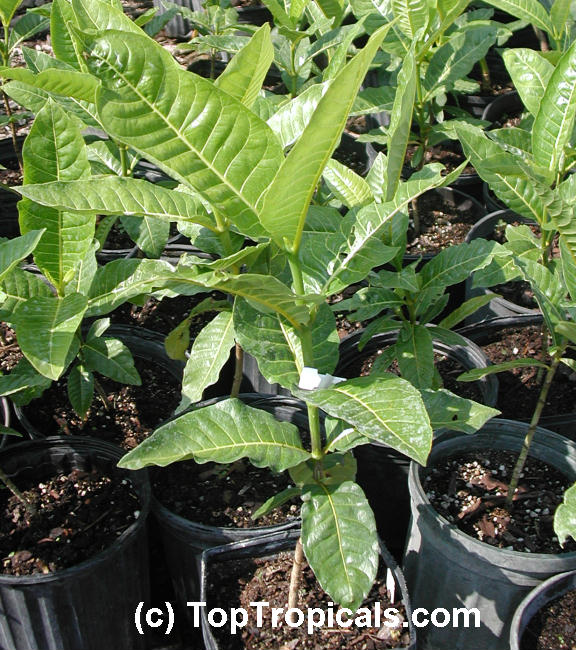
New rare gardenia from S. Pacific island Vanuatu. Very salt-tolerant. Fragrant flowers are similar to G. taitensis but smaller size.
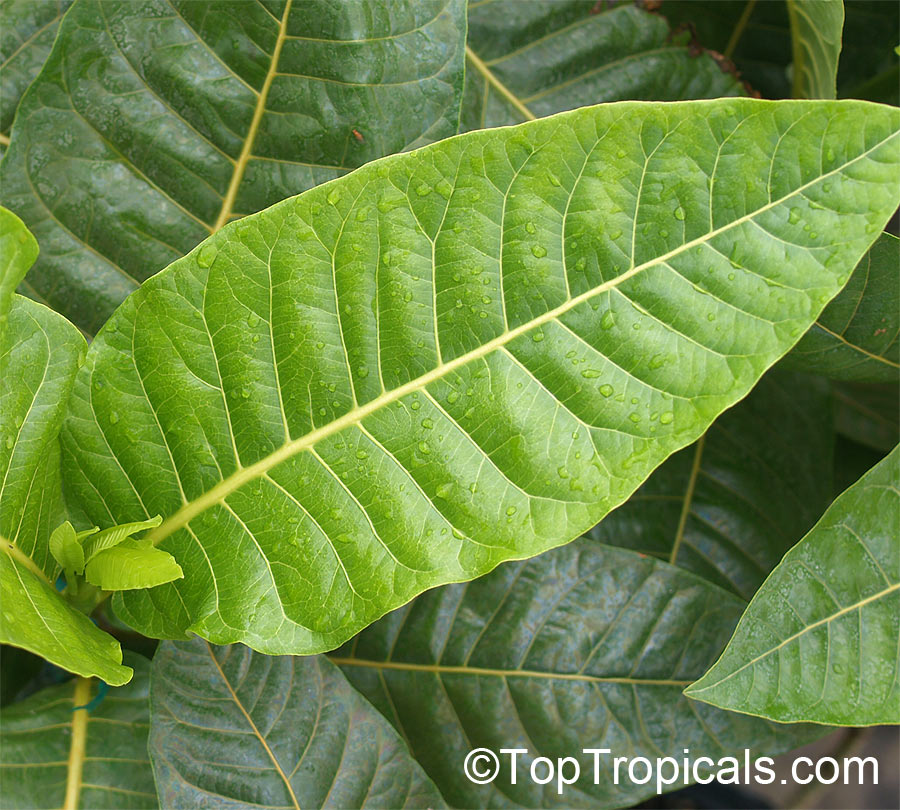
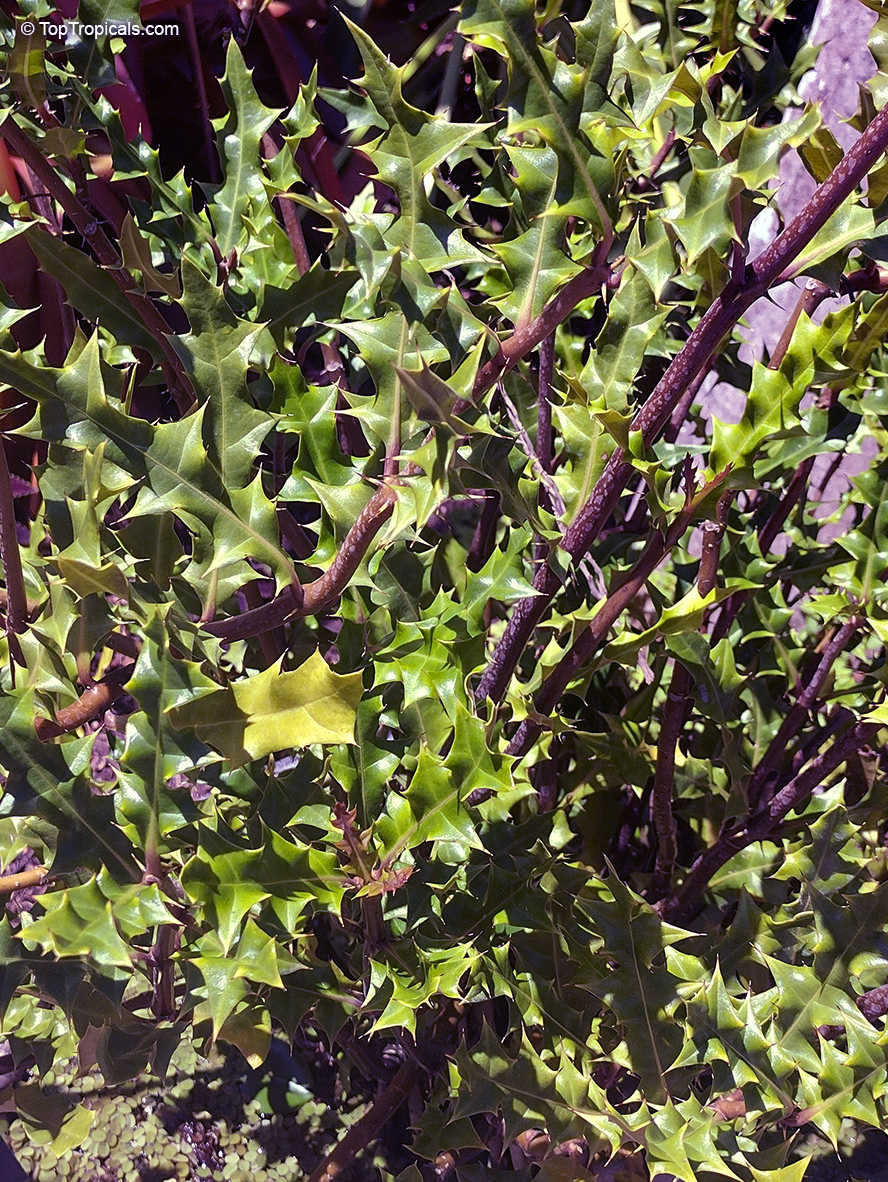
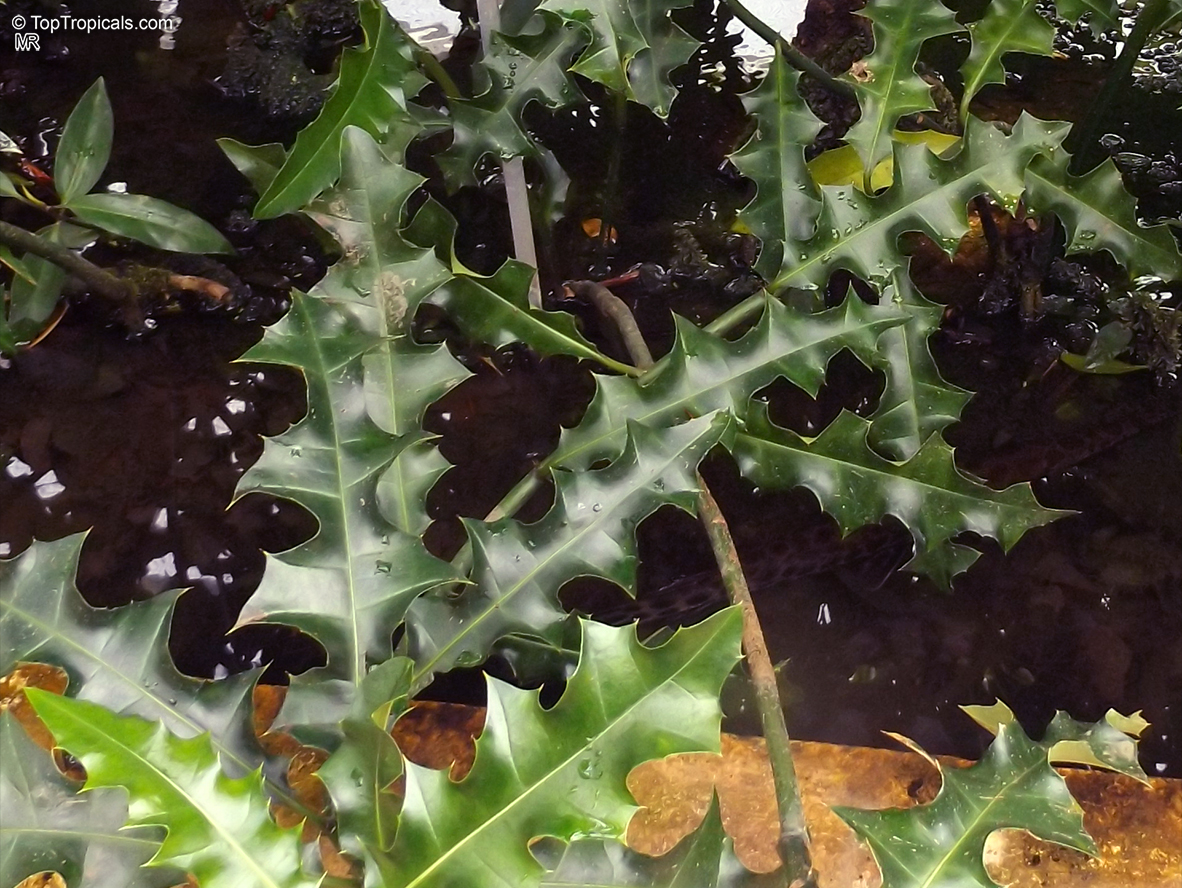
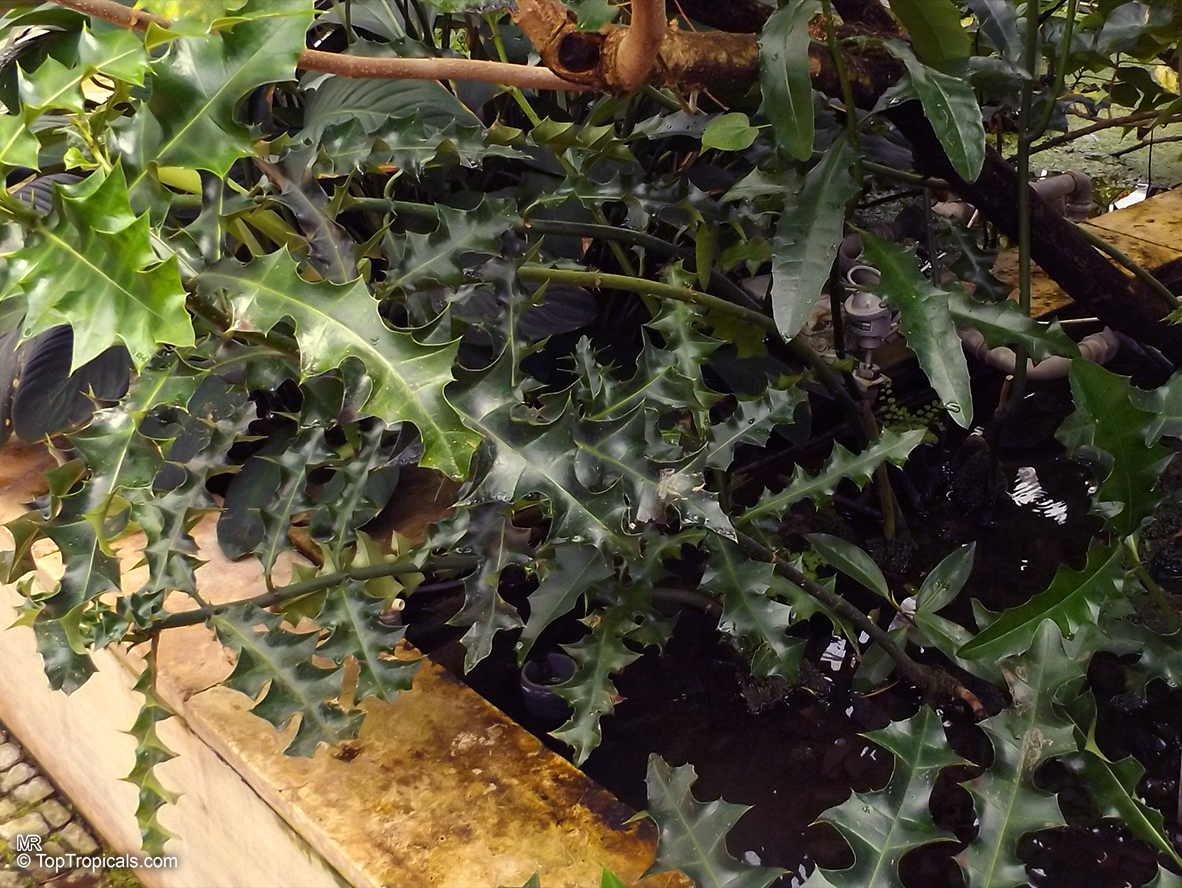
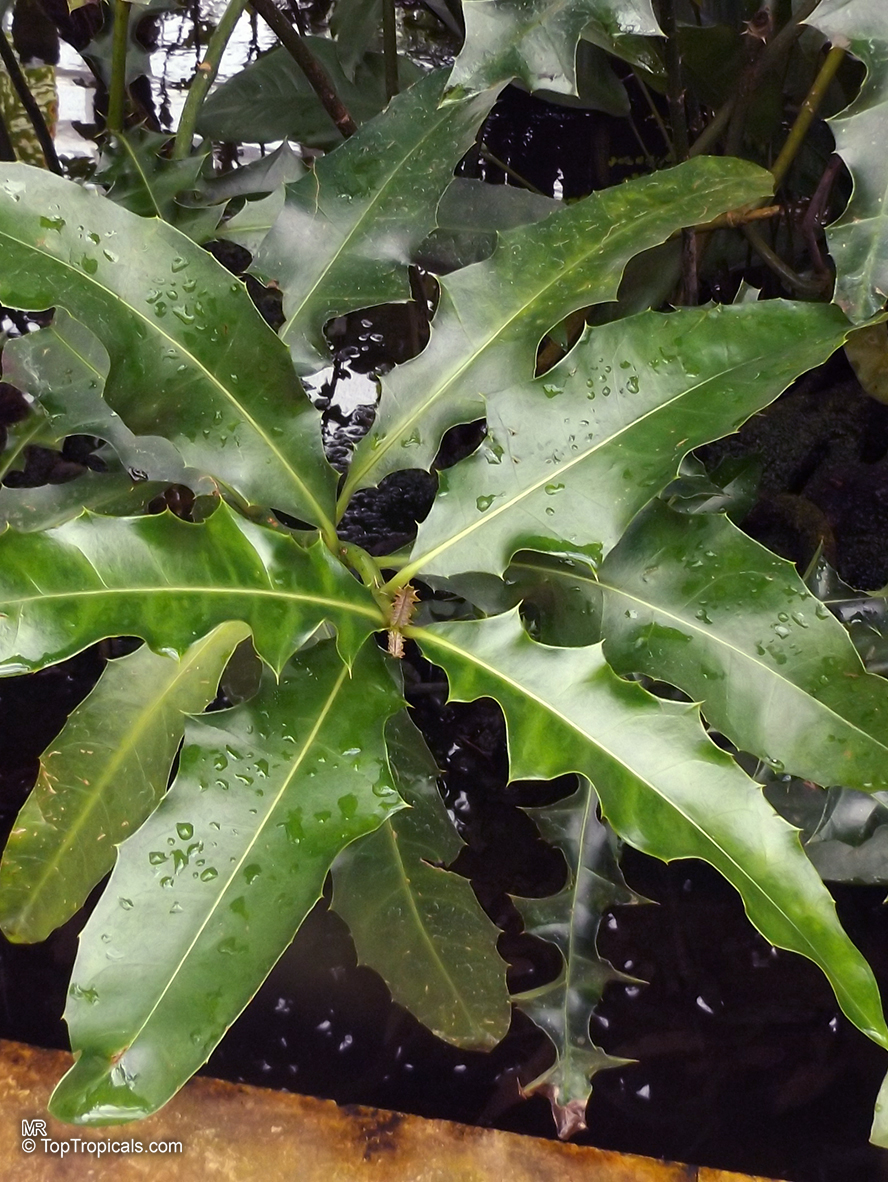
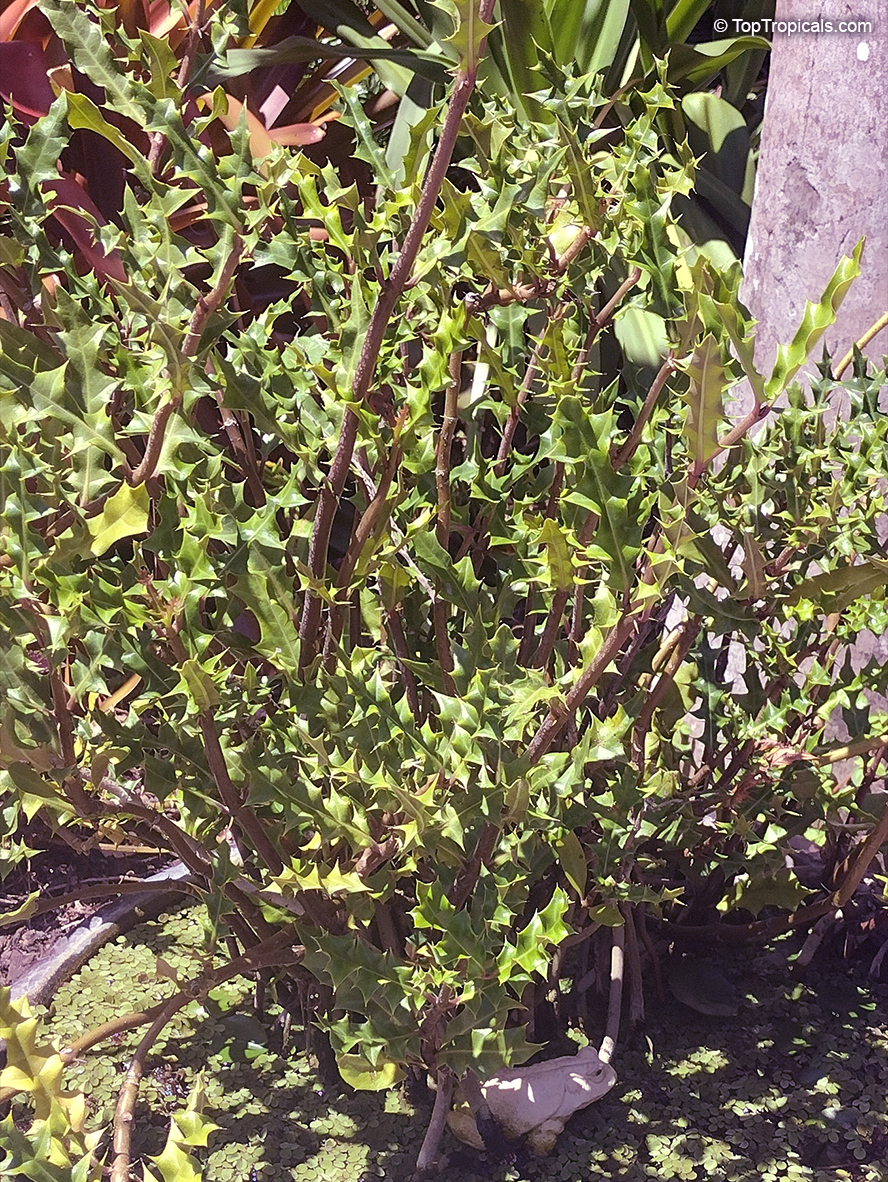
Botanical name: Acanthus ilicifolius
Common names: Holly-leaved Acanthus, Sea Holly, Holy Mangrove
Family: Acanthaceae
Origin: India, Polynesia


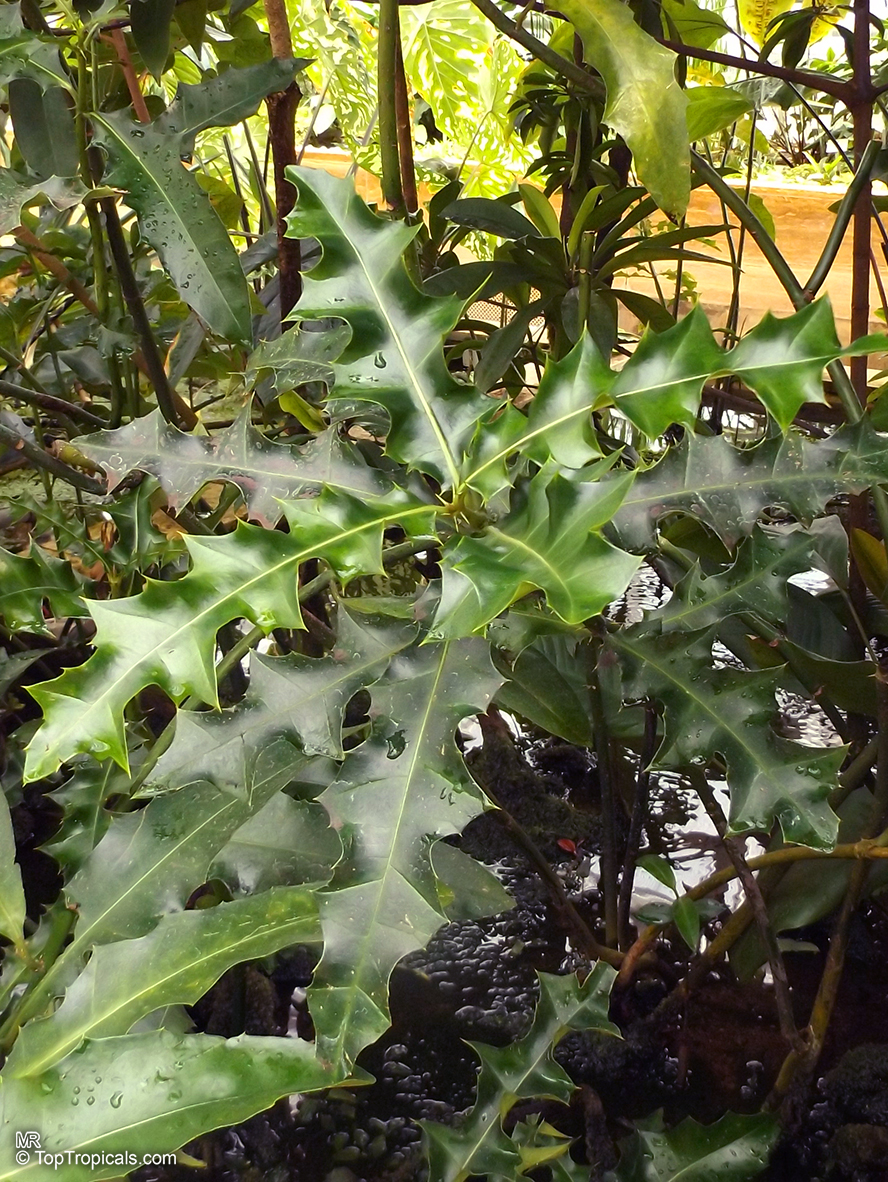
Acanthus ilicifolius, or Holly-leaved Acanthus, is a perennial plant native to India and Polynesia. This plant can reach a large size, typically growing up to 5-10 ft tall. It has a semi-woody and sprawling structure, with thin stems coated in a glossy green hue speckled with white. The leaves are oval-shaped with a pair of spines at each angle.
Holly-leaved Acanthus prefers full sun to semi-shade and can be grown either in a bog or aquatic environment. It requires plenty of moisture as well as regular watering to stay healthy and vibrant. This plant also tolerates flooding and salty conditions near the seaside very well. Therefore, it can be a great addition to any garden in the USDA hardiness zone of 8-11.
The Holly-leaved Acanthus is adorned with clusters of beautiful blue, lavender and purple flowers. It is also an ethnomedical plant, hence its use in traditional medicine. Its stems are thorny or spiny and may require careful handling when handling.
When growing Holly-leaved Acanthus in a pot, it is essential to keep the soil moist and use quality organic potting soil. A location with some protection from the elements is preferred in colder regions as well as a winter mulching of thick straw to prevent frost damage. Additionally, it is important to keep an eye out for any pests and diseases that may occur and act appropriately to keep the plant healthy.
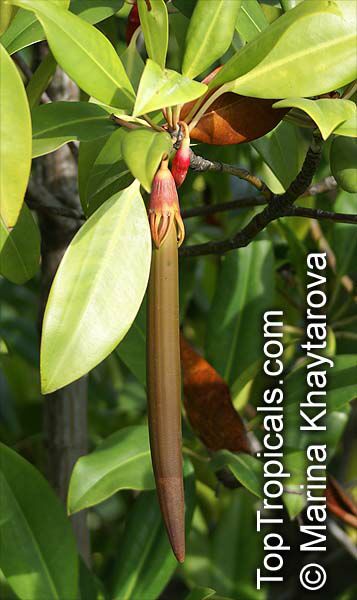
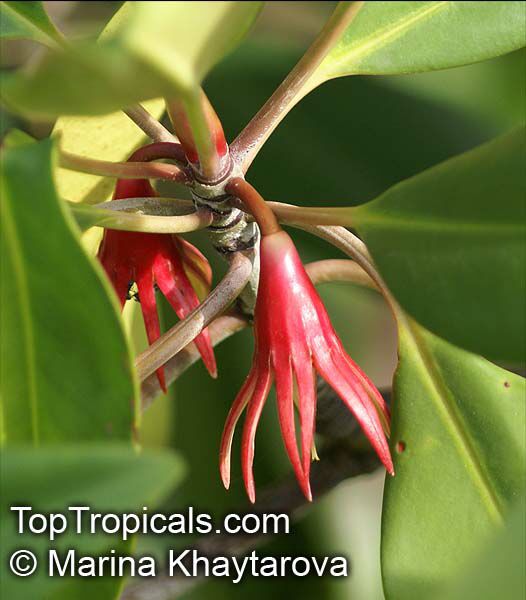
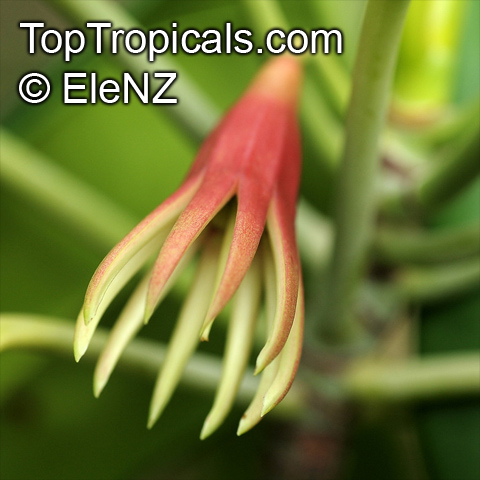
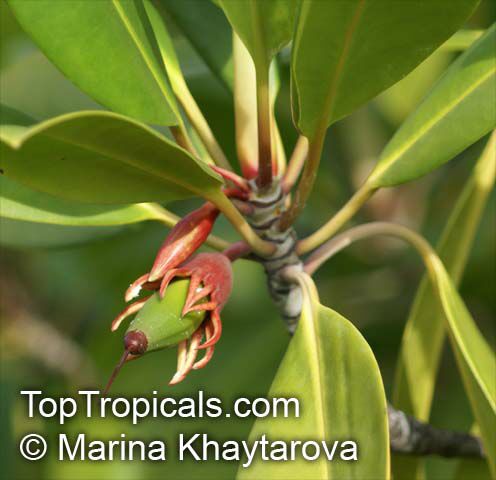
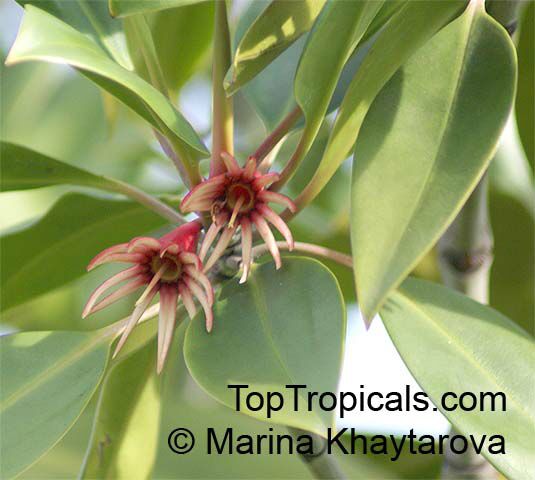
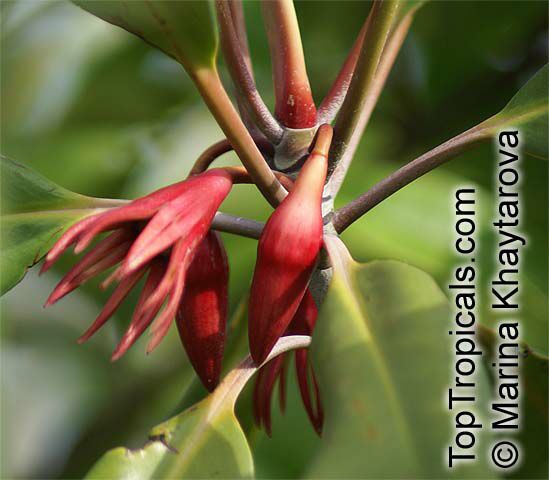
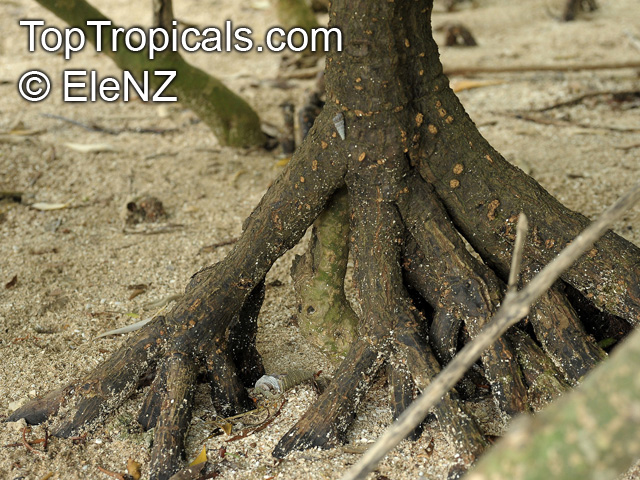
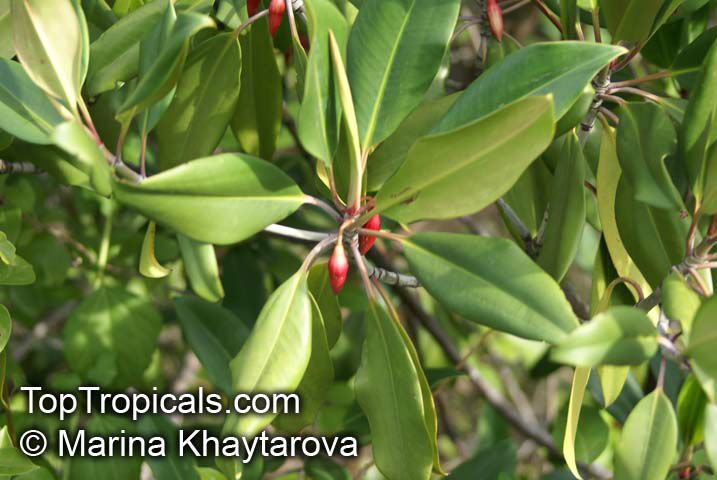
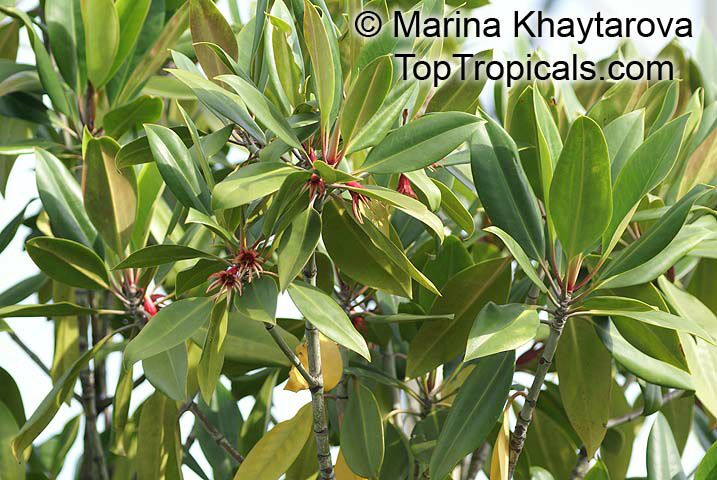
Botanical name: Bruguiera gymnorrhiza
Common names: Burma Mangrove, Black Mangrove
Family: Rhizophoraceae


Mangroves are tropical plants that are adapted to loose, wet soils, salt water, and being periodically submerged by tides. Great for aquariums and ponds.
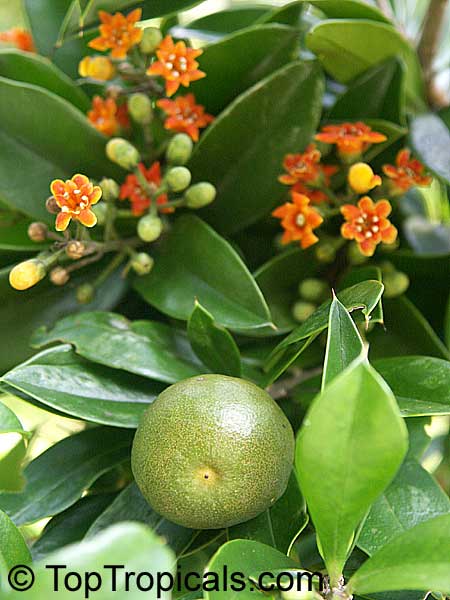
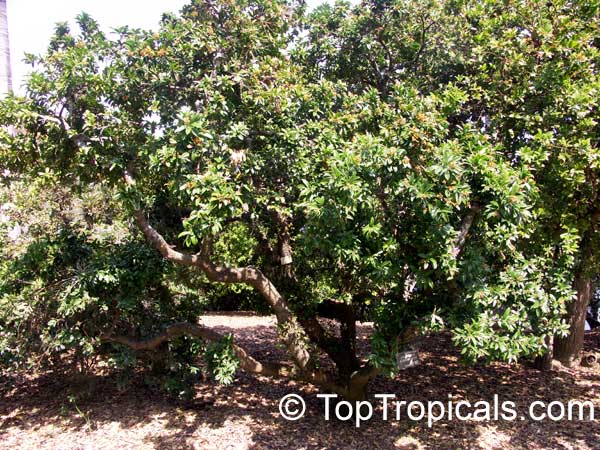
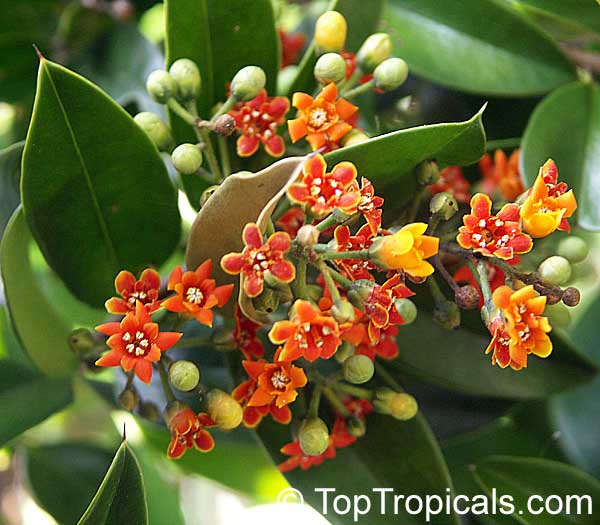
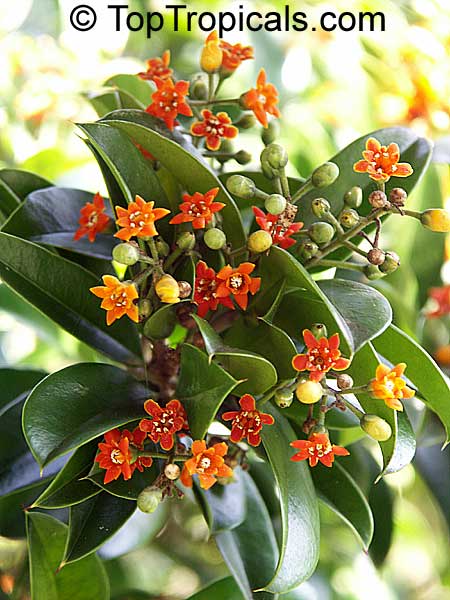
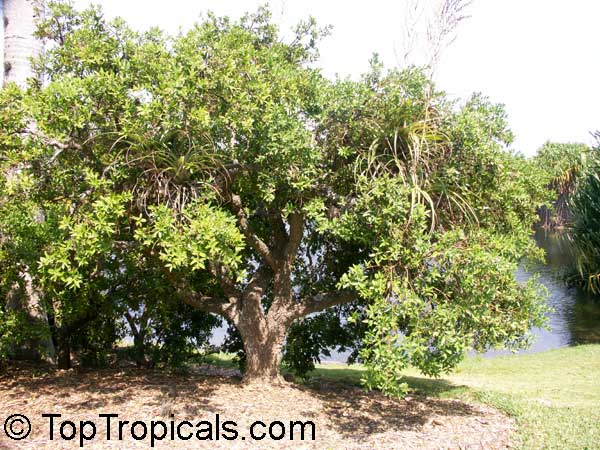
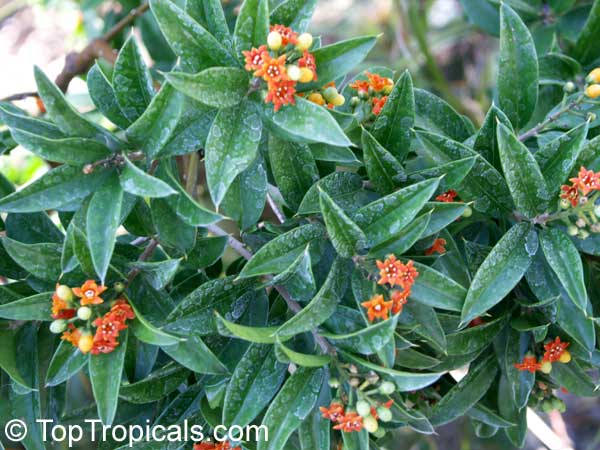
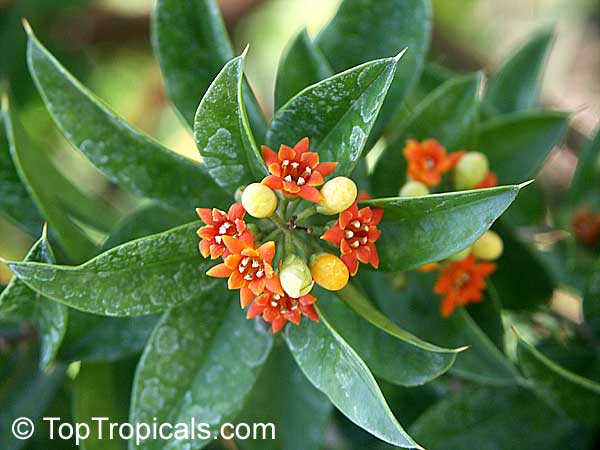
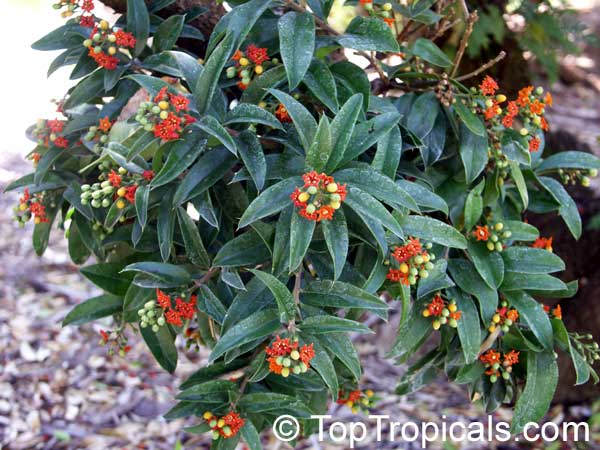
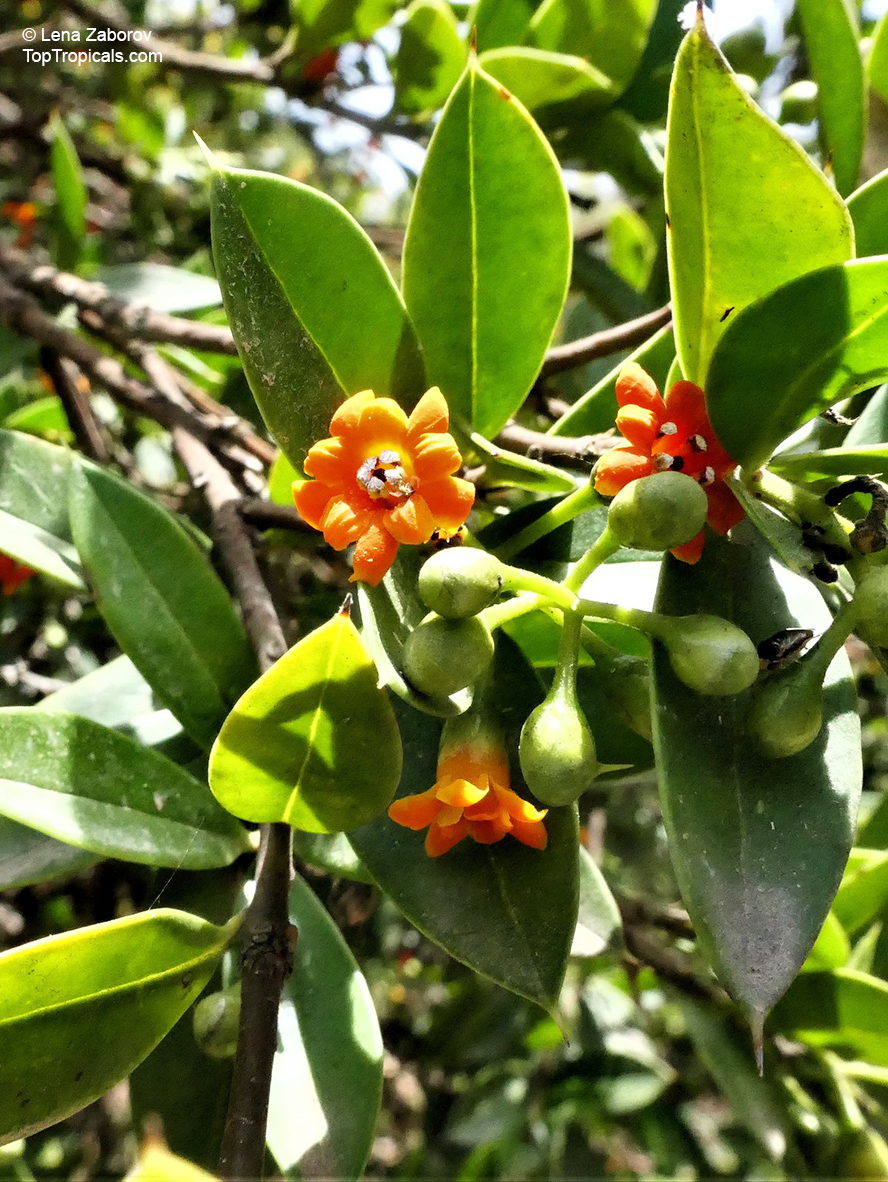
Botanical names: Bonellia macrocarpa, Jacquinia macrocarpa, Jacquinia aurantiaca
Common names: Cudjoewood, Barbasco
Family: Primulaceae (Formerly:Theophrastaceae)
Origin: West Indies, Mexico


Grows in tropical climates in a range of environmental conditions, seeds dispersed by birds and other frugivorous animals.
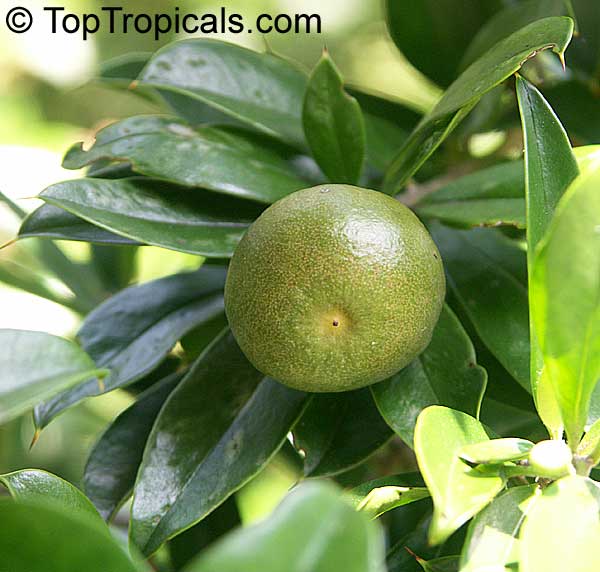
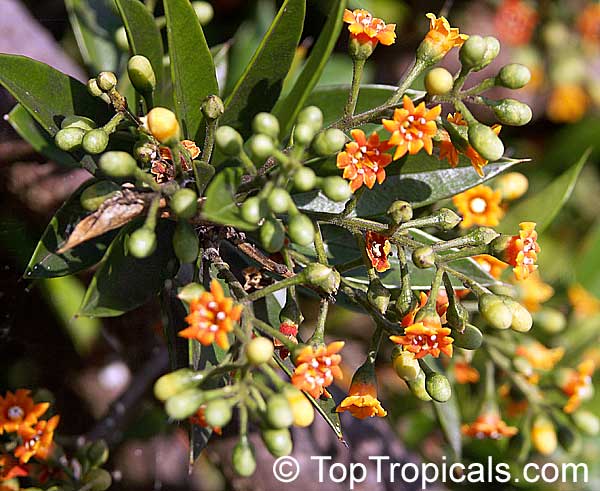
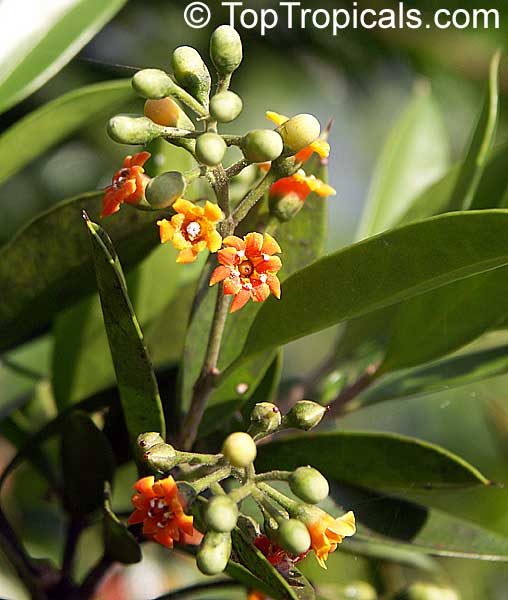
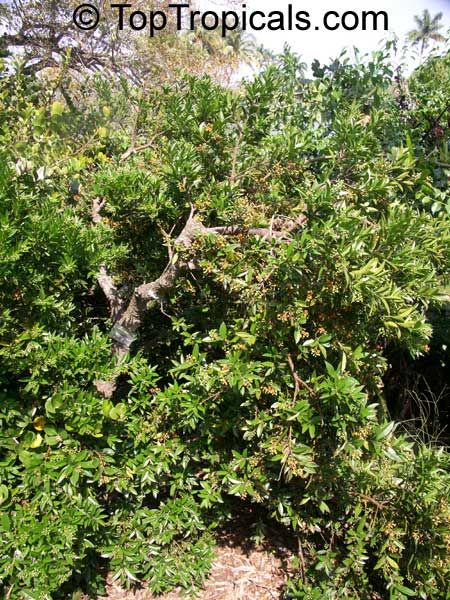
Jacquinia is often found in coastal scrublands and rocky shorelines. For landscaping purposes, this shrub makes a great windbreak or hedge.
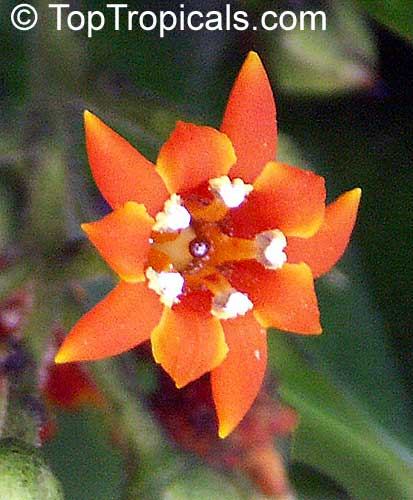
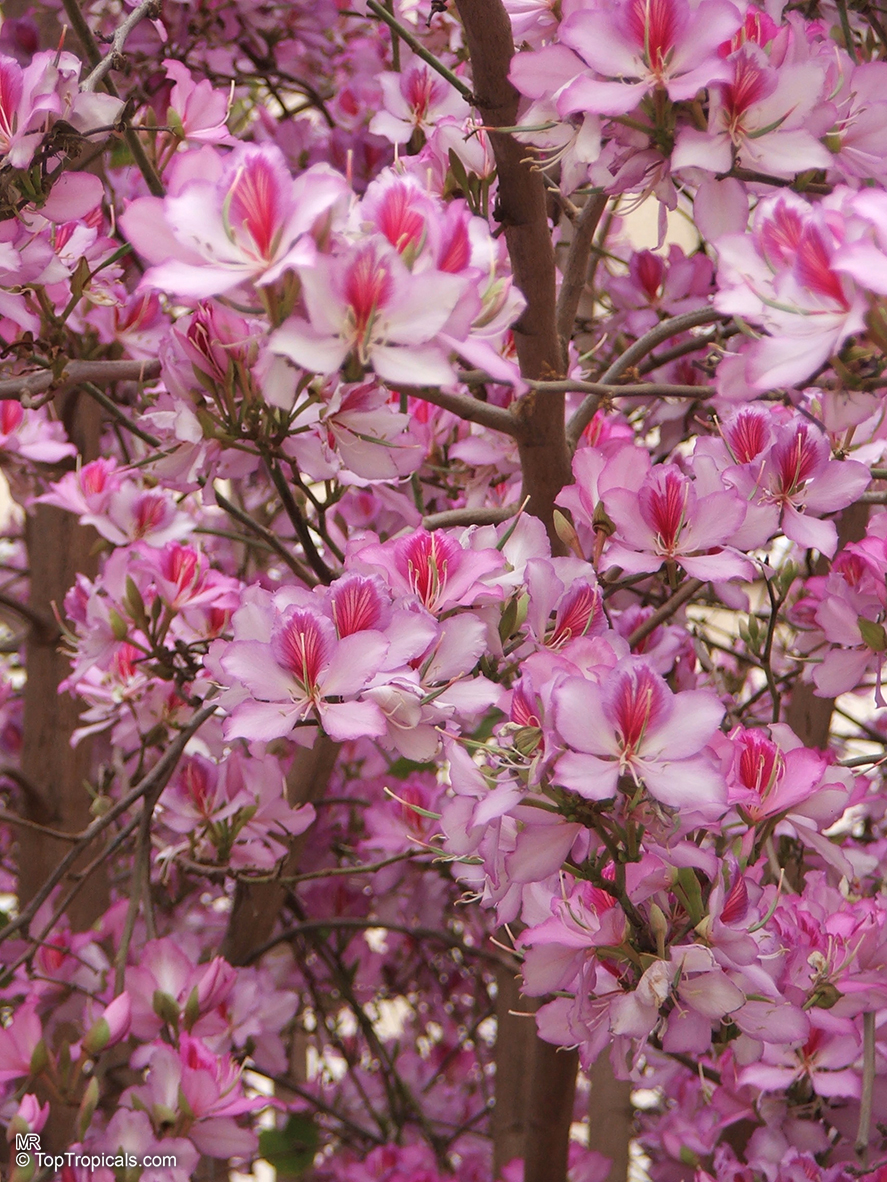
Botanical names: Bauhinia variegata, Phanera variegata
Common names: Orchid tree, Purple orchid tree, Mountain ebony, Poor Man's orchid
Family: Fabaceae
Subfamily: Caesalpinioideae
Origin: India and China


Orchid tree grows 20-40' tall and 10-20' wide with a spreading crown of briefly deciduous leaves which are 4-6" across and rounded with lobed ends and heart shaped bases. The leaves are shaped a little like a cow's hoof. Some cultivars have leaves with white variegations. The flowers are reminiscent of showy orchids, with five irregular, usually slightly overlapping petals in shades of magenta, lavender or purplish blue. The flowers often make their first appearance in late winter while the tree is bare of leaves. The blooming period then lasts until early summer. The flowers are 3-5" across and carried in clusters at the branch tips. A member of the bean family, orchid tree produces flattened brown woody legumes (pods) up to 12" long. The cultivar 'Candida' has snow white flowers with greenish veins.
See Article about Bauhinia variegata.
Learn more: Bauhinias: trees with Orchid Flowers and Butterfly Wings
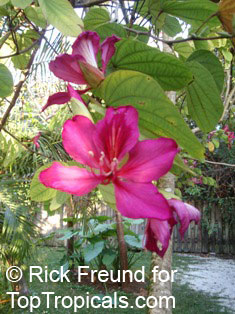
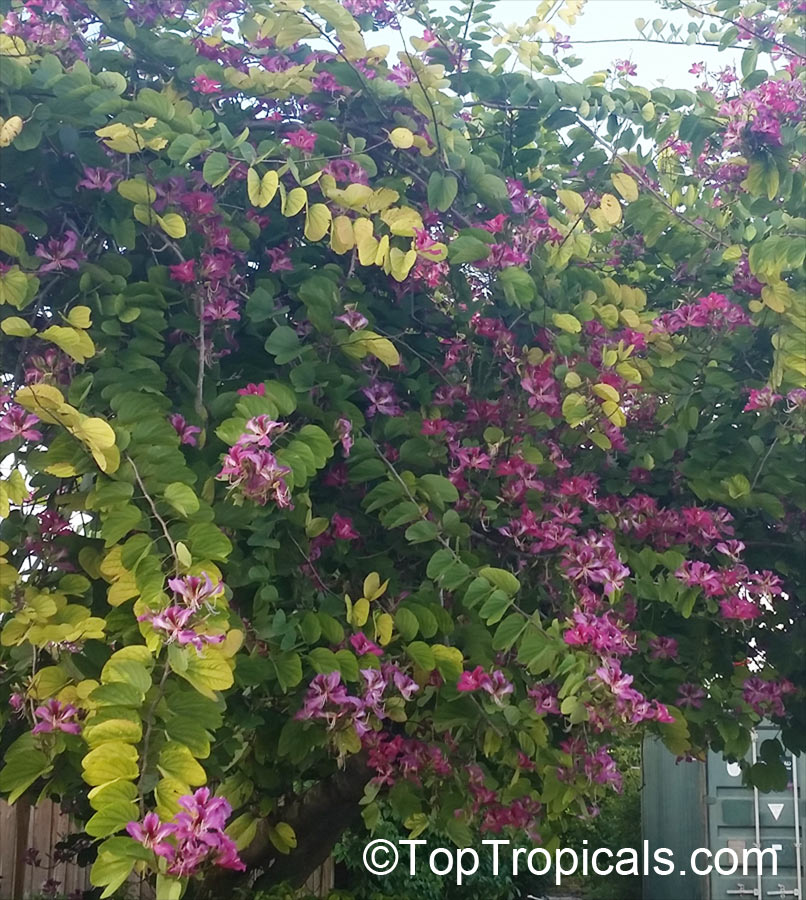
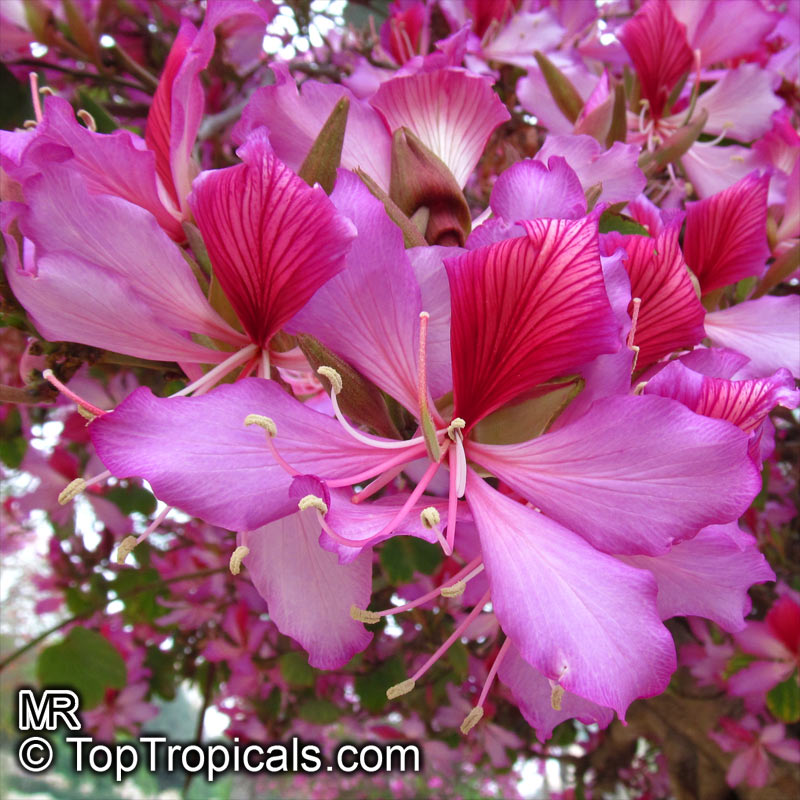
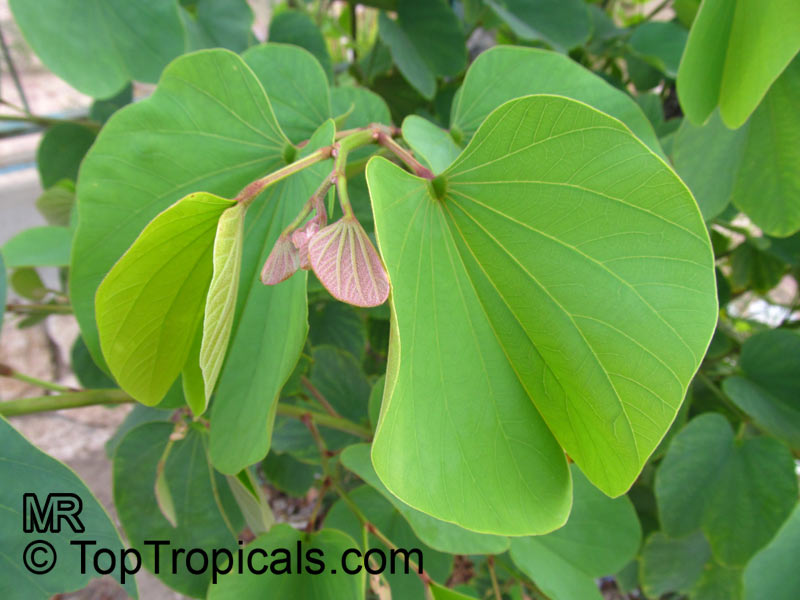
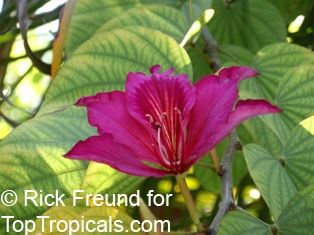
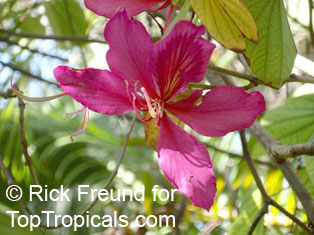
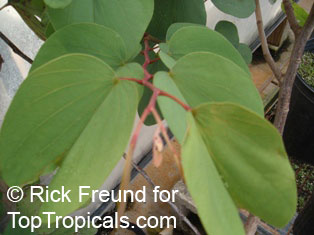
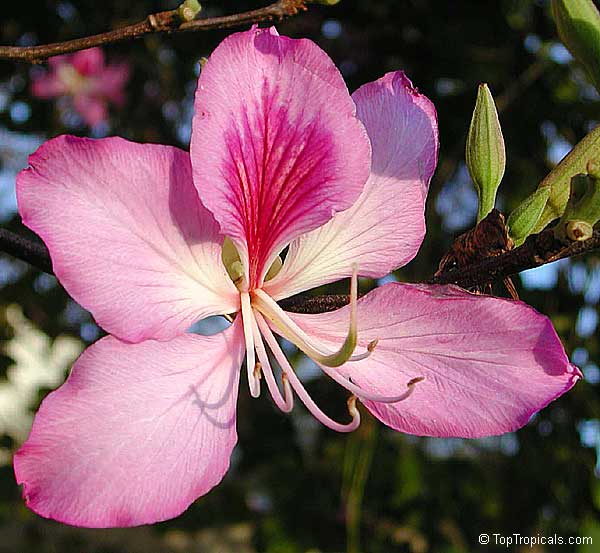
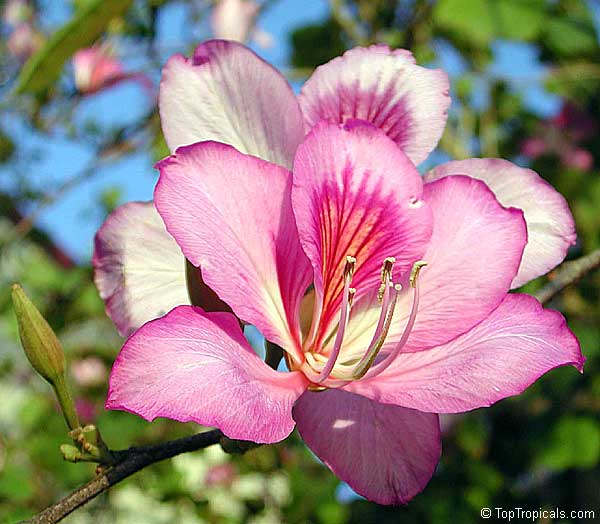
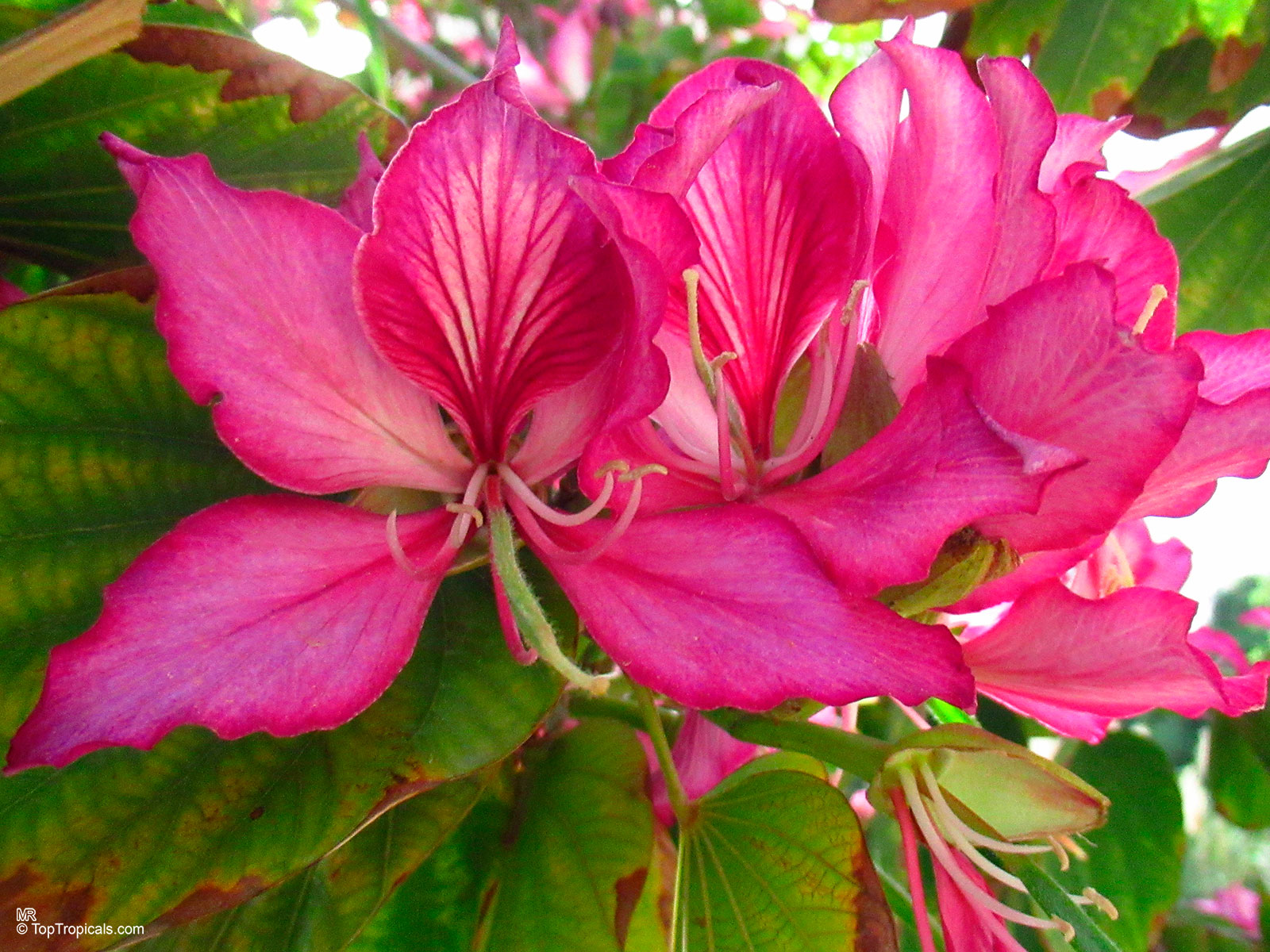
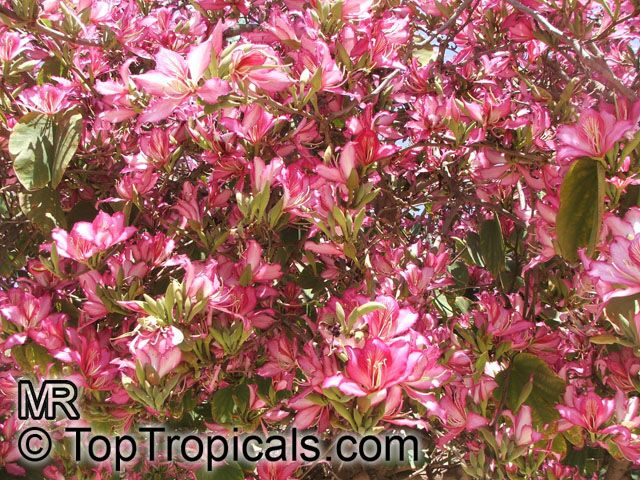
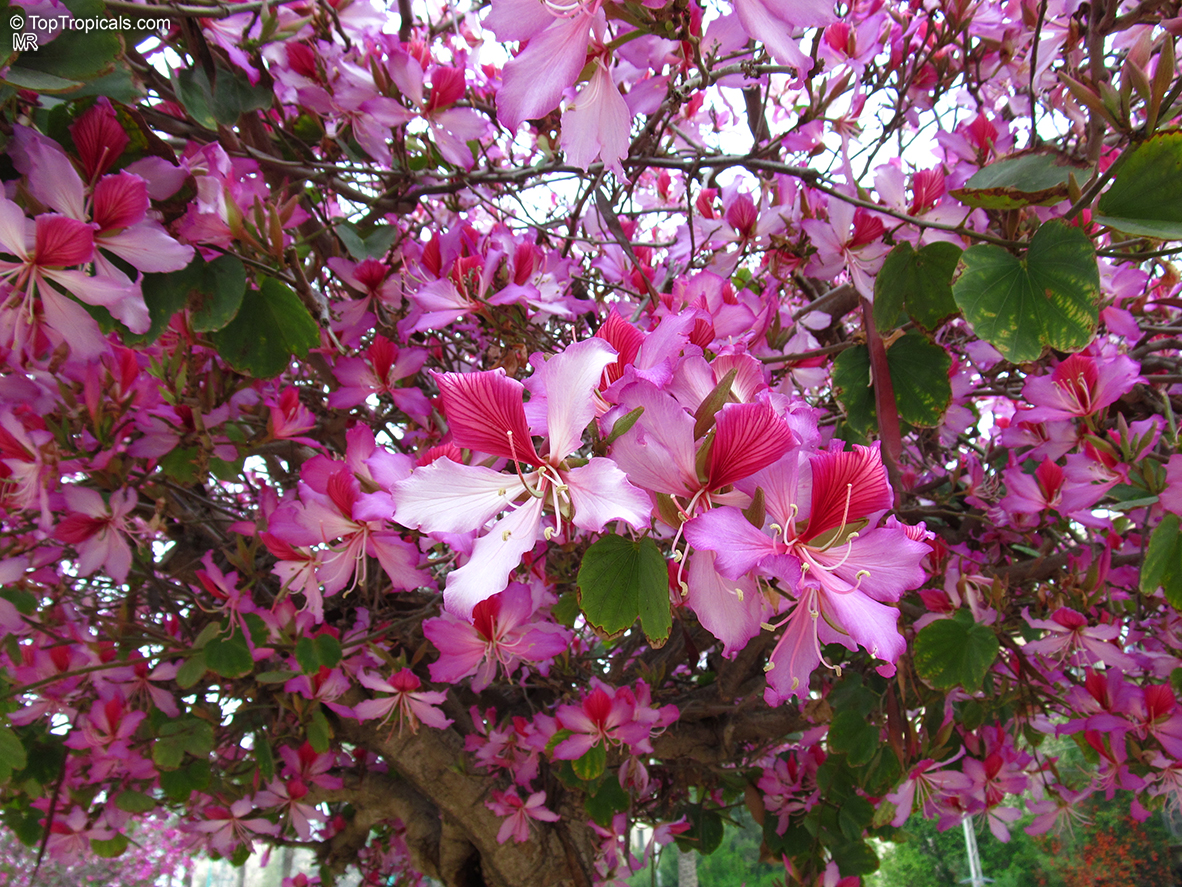
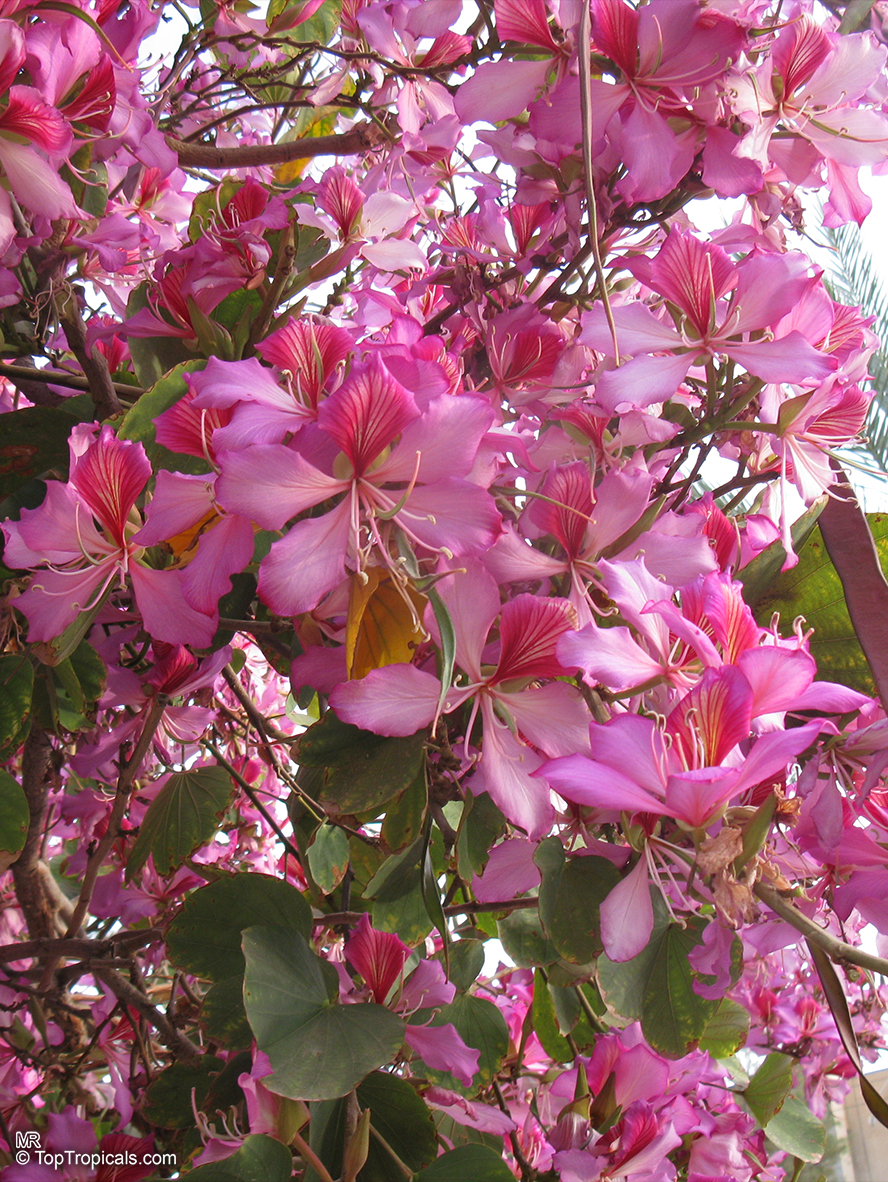
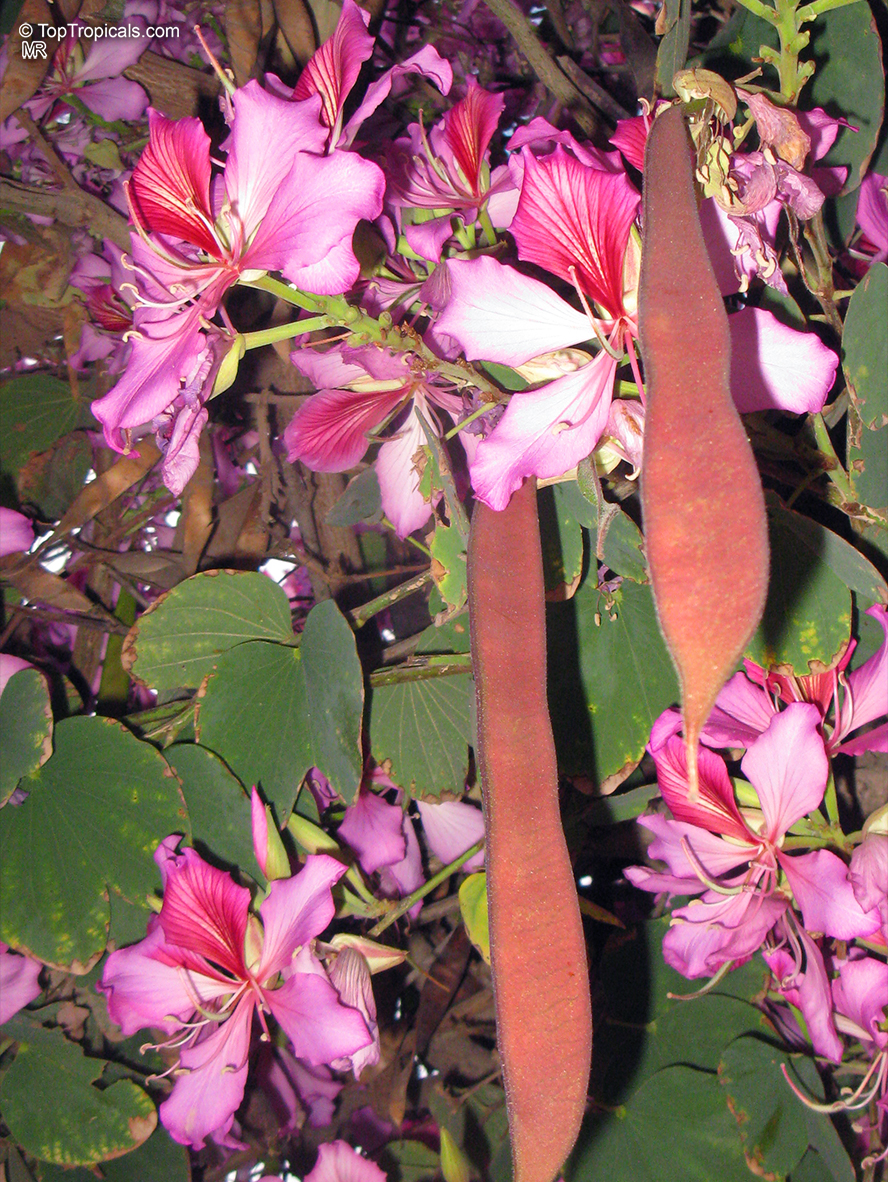
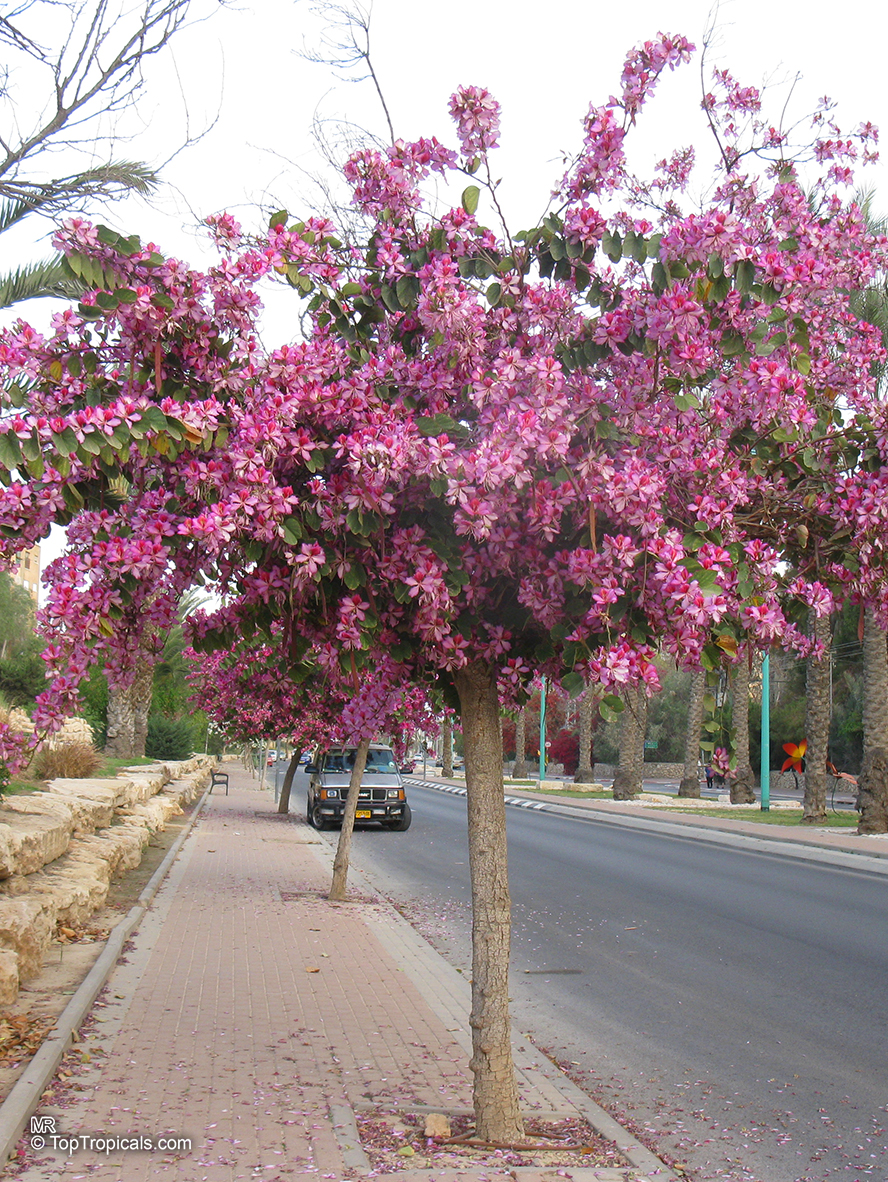
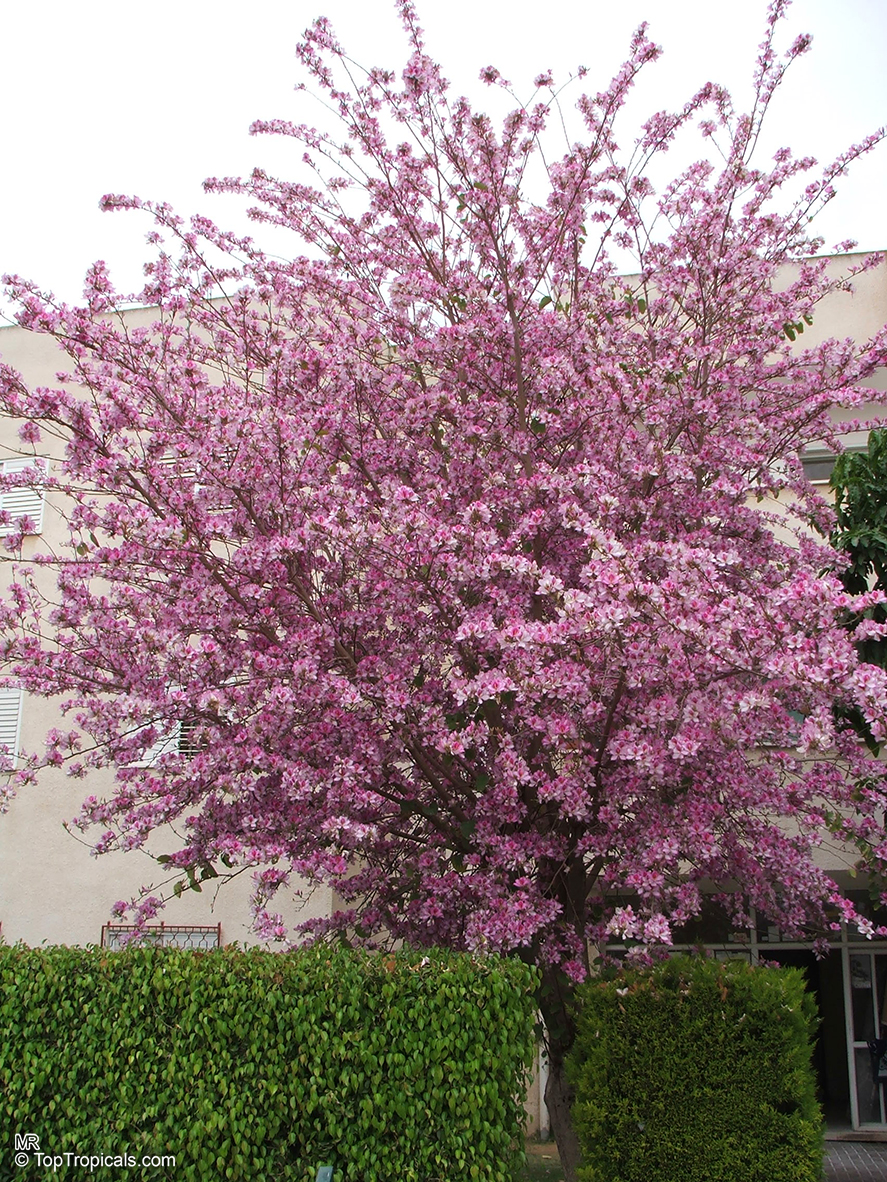
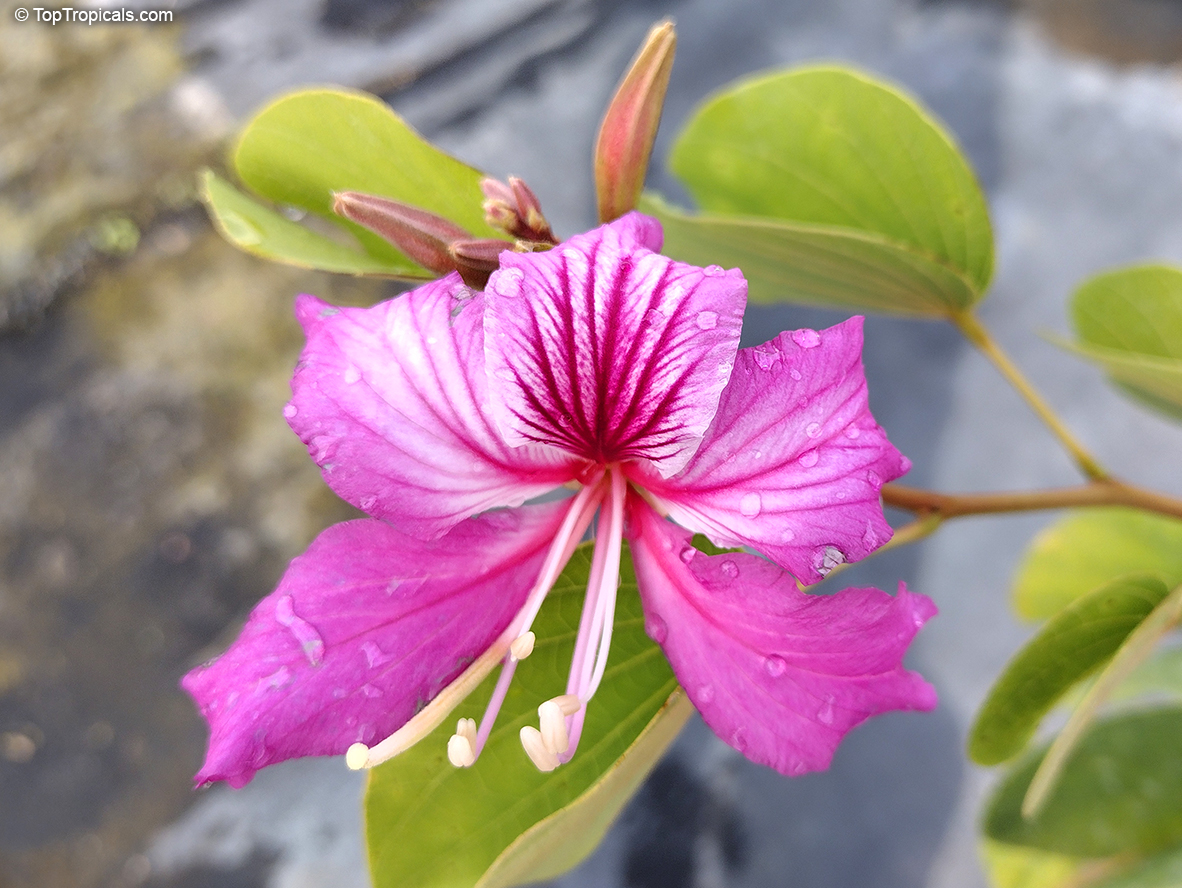
The slightly fragrant flowers are reminiscent of showy orchids, with five irregular, usually slightly overlapping petals in shades of magenta, lavender or purplish blue. Great landscape shade tree.
See Article about this plant.
Learn more: Bauhinias: trees with Orchid Flowers and Butterfly Wings
Recommended Fertilizer: SUNSHINE Megaflor - Bloom Nutrition Booster
Botanical name: Coccothrinax miraguama
Common name: Miraguama Palm
Family: Arecaceae / Palmae
Origin: Cuba

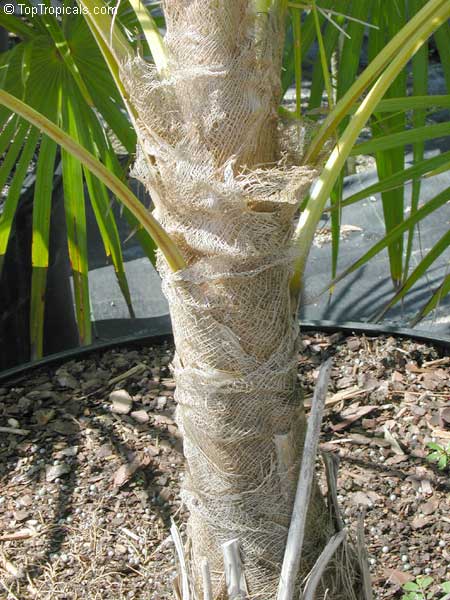
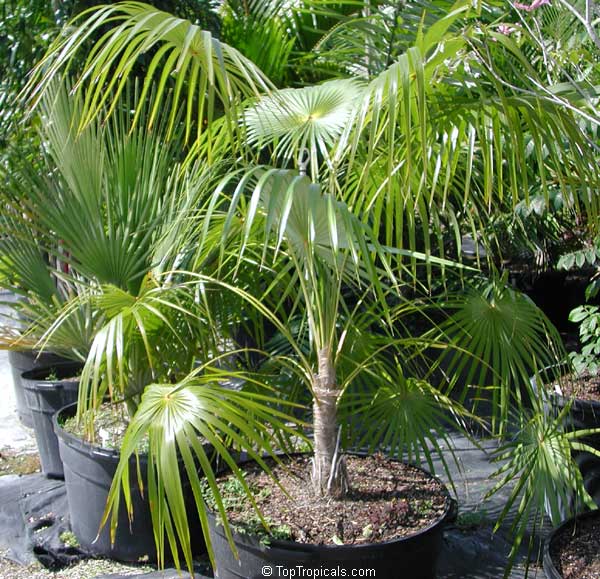
The Coccothrinax miraguama (Miraguama Palm) is a small palm in the understory of tropical and subtropical regions. This palm is native to Cuba and is found on the margins of forests and moist areas. It has a slow-growing trunk, which is covered in matted fibers, giving the tree a unique look. The fronds of the palm are delicate, light green in color, and arranged in an elegant fountain-like pattern.
It prefers a location in full sun or semi-shade and requires moderate levels of water. The Miraguama Palm is a hardy palm and does well in humid, coastal, and salty regions. When planting the Coccothrinax miraguama, it is important to choose a location with full sun or at least partial shade. The soil should also be well draining and high in organic matter. For plants grown in pots, keep the soil evenly moist, but not soggy. These palms can do well in USDA Zones 9-11. In colder regions, container-grown plants should be brought indoors or wrapped in frost or cold protection if temperatures are expected to drop significantly.
The Miraguama Palm is a beautiful, palm that can bring a tropical feel to any garden. With the right care, the Coccothrinax miraguama can be a stunning addition to any landscape.
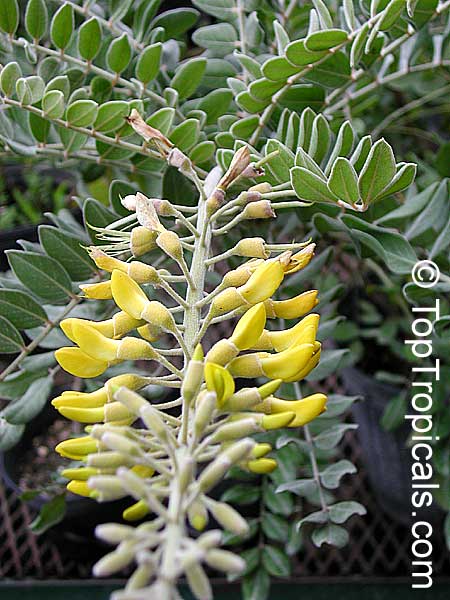
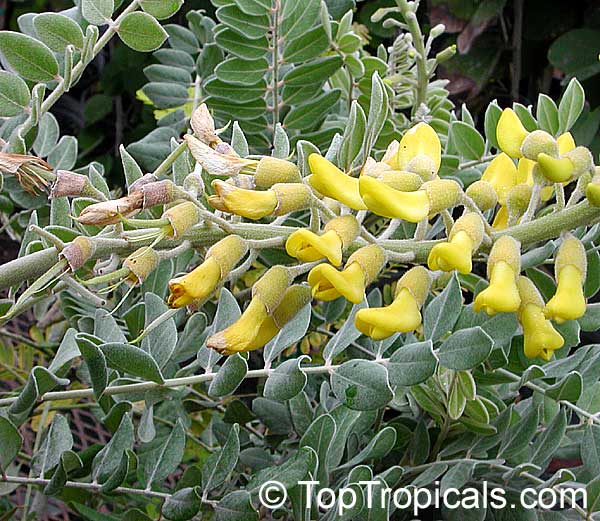
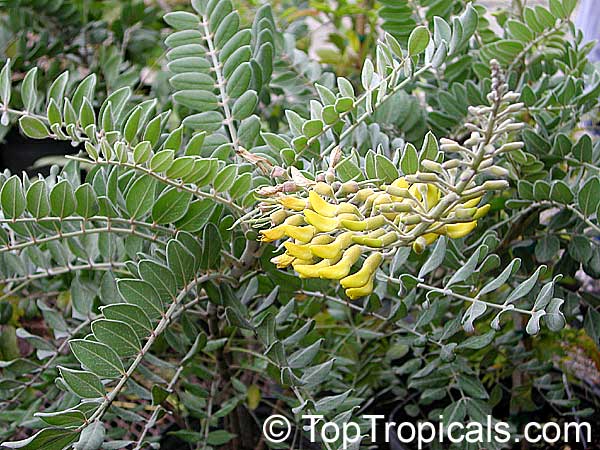
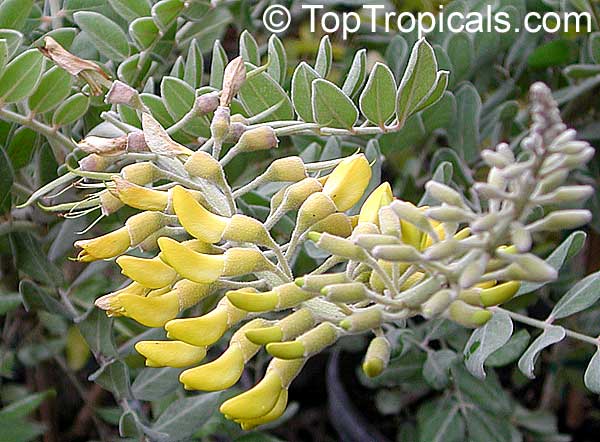
Botanical name: Sophora tomentosa
Common names: Yellow Necklace Pod, Silverbush
Family: Fabaceae
Subfamily: Faboideae
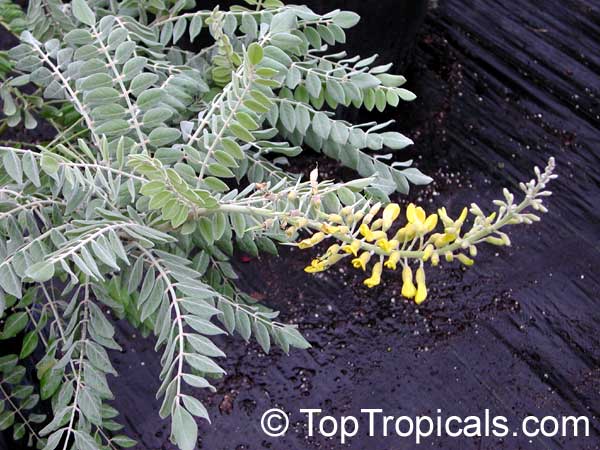
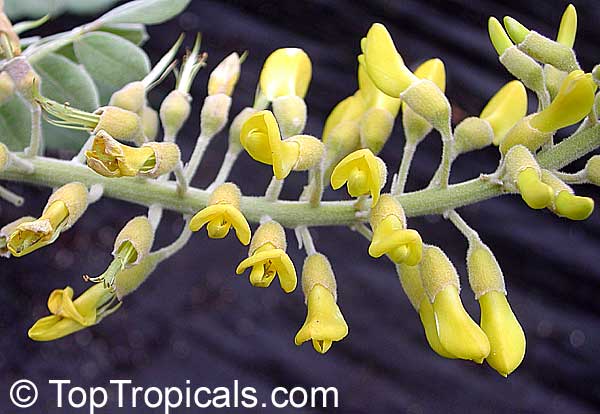
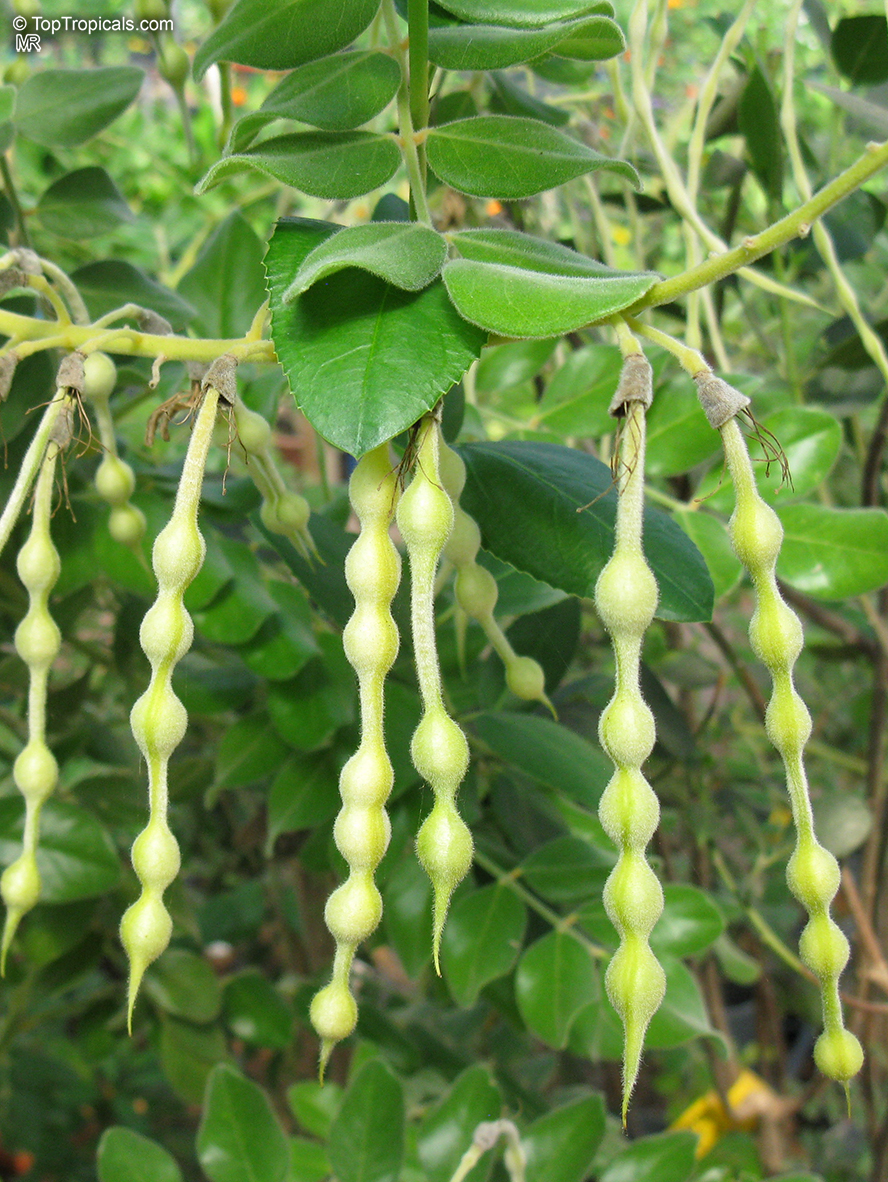
Beautiful, loose growing shrub with yellow flowers that attracts butterflies and hummingbirds. Leaves are hairy and velvet, pleasant to touch. Drought tolerant. Prefers dry soil and tolerates a wide pH range. Size: 5 - 10 feet. Zone: 10a, 10b. Occurs on recent sands on frontal coastal dunes. Historic records suggest it was a fairly common plant from Port Stephens northwards. Endangered species: the largest known population at Port Macquarie is estimated at up to 500 plants, other populations are of less than 20 plants.
Botanical name: Coccothrinax barbadensis
Common names: Silver Thatch, Barbados Silver Palm
Family: Arecaceae / Palmae
Origin: Antillean Island of the Jamaican

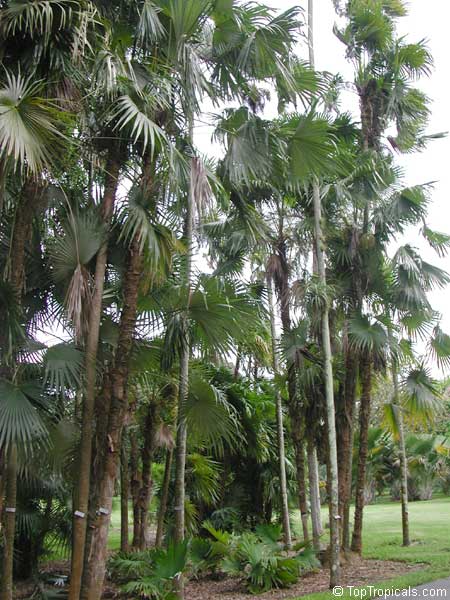
Coccothrinax barbadensis, also known as Silver Thatch, is a native of the Antillean Island of Jamaica that can grow to be a large and stately tree. It can reach incredible heights of up to (50 ft), with its fan-shaped, palmate leaves made up of up to 60 wavy segments. The undersides of the leaves are covered in a silvery-gray hue. It is an especially salt-tolerant species, capable of withstanding considerable coastal exposure.
Silver Thatch is a sun-lover, so it's best to plant it in an area with full sun exposure and moderate water needs. Best grown in USDA Zone 9-11. When growing Coccothrinax barbadensis in colder regions, a large pot may be a better option. To enjoy its full potential, it's important to provide it with ample room to grow. Plant it in fertile, well-drained soil and water it regularly to ensure that its roots stay moist. To keep its growth healthy, feed it with a balanced fertilizer every few months. Additionally, trim the leaves occasionally to keep it from becoming top-heavy. With proper care and maintenance, this beautiful palm makes a striking addition to any garden.
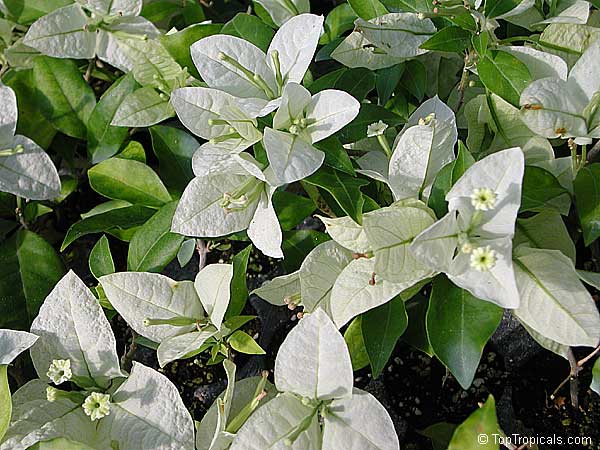
Botanical name: Bougainvillea glabra
Common names: Bougainvillea, Primavera
Cultivar: Miss Alice
Family: Nyctaginaceae
Origin: Brazil

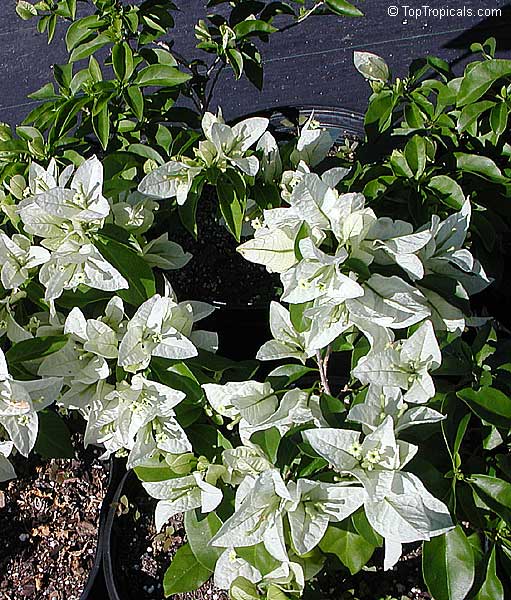
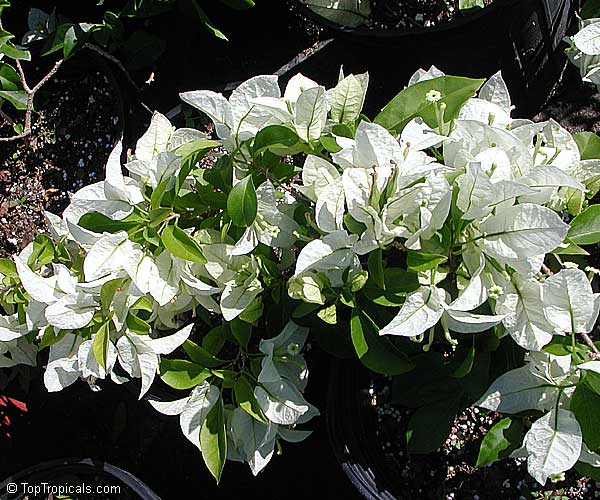
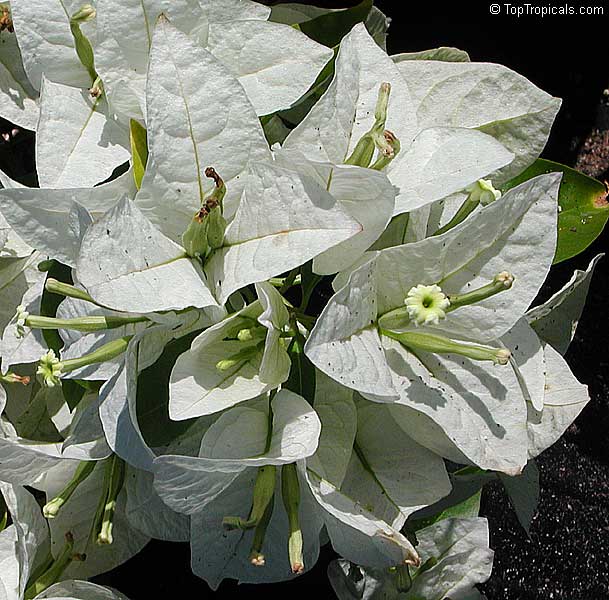
A truly unique variety, Miss Alice is almost totally thorn less and displays massive clusters of huge white bracts. When in full bloom, it is a real showstopper. A slow growth rate, heavy flowering habit and an extremely low thorn count make Miss Alice a winner. It flowers year around and is much more tolerant of wet, summer conditions than other varieties. See article about Bougainvillea.
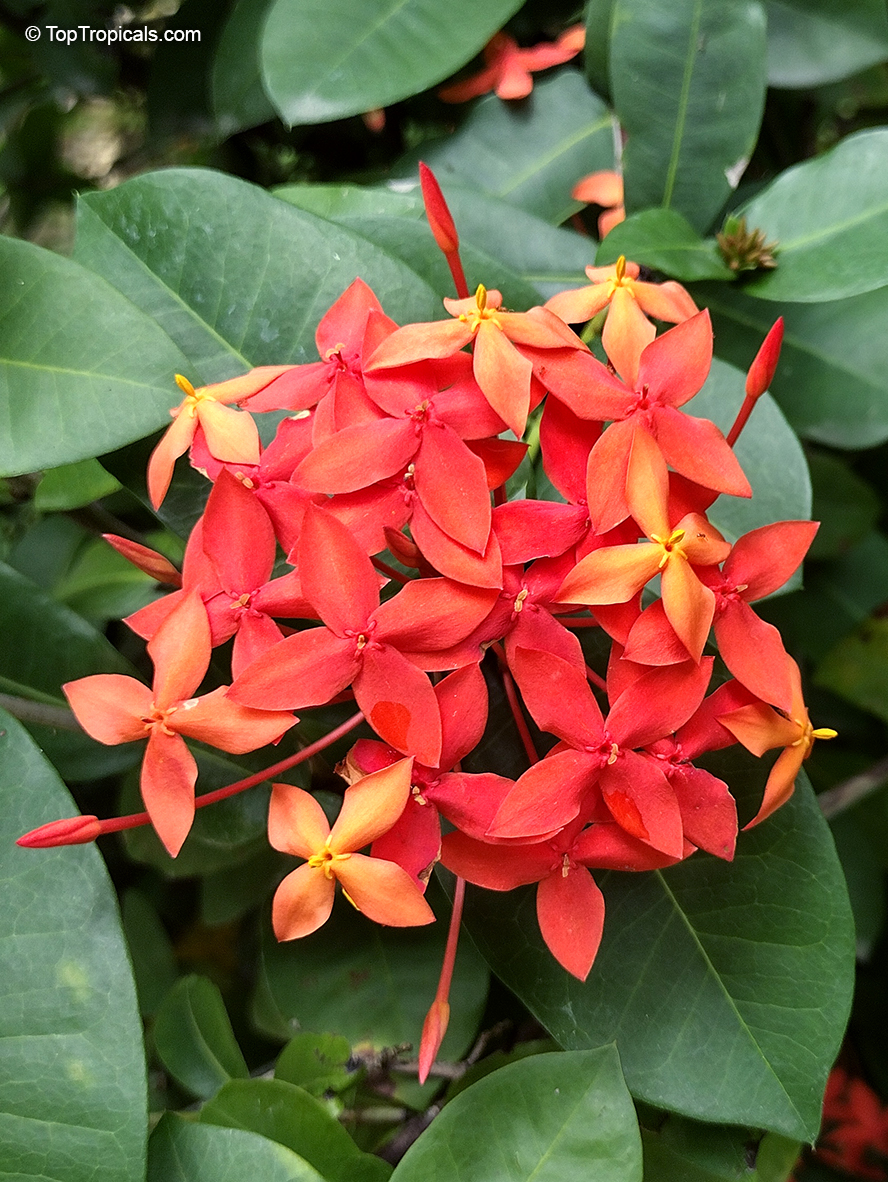
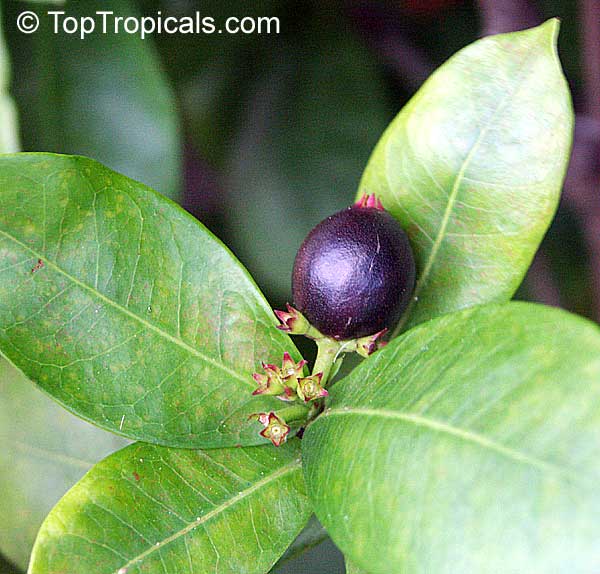
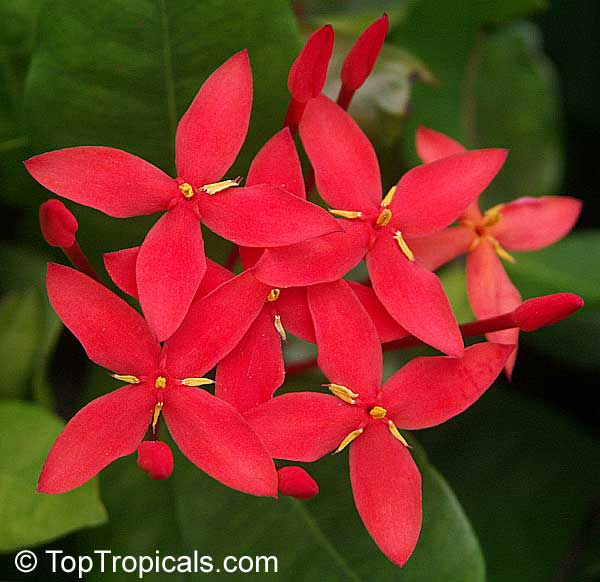
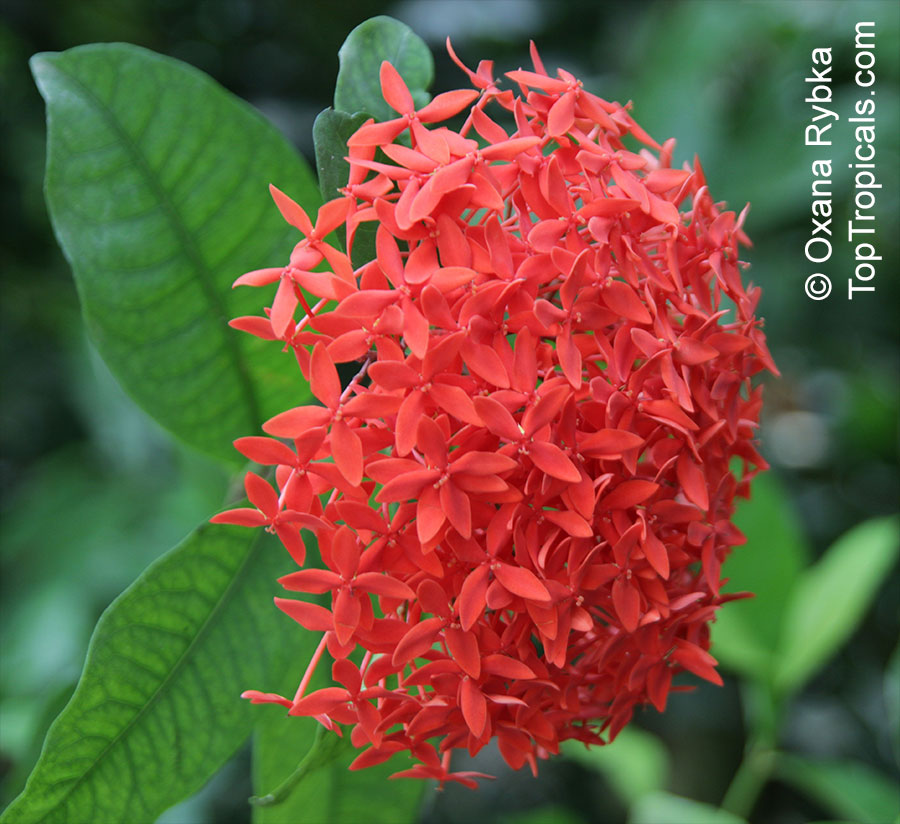
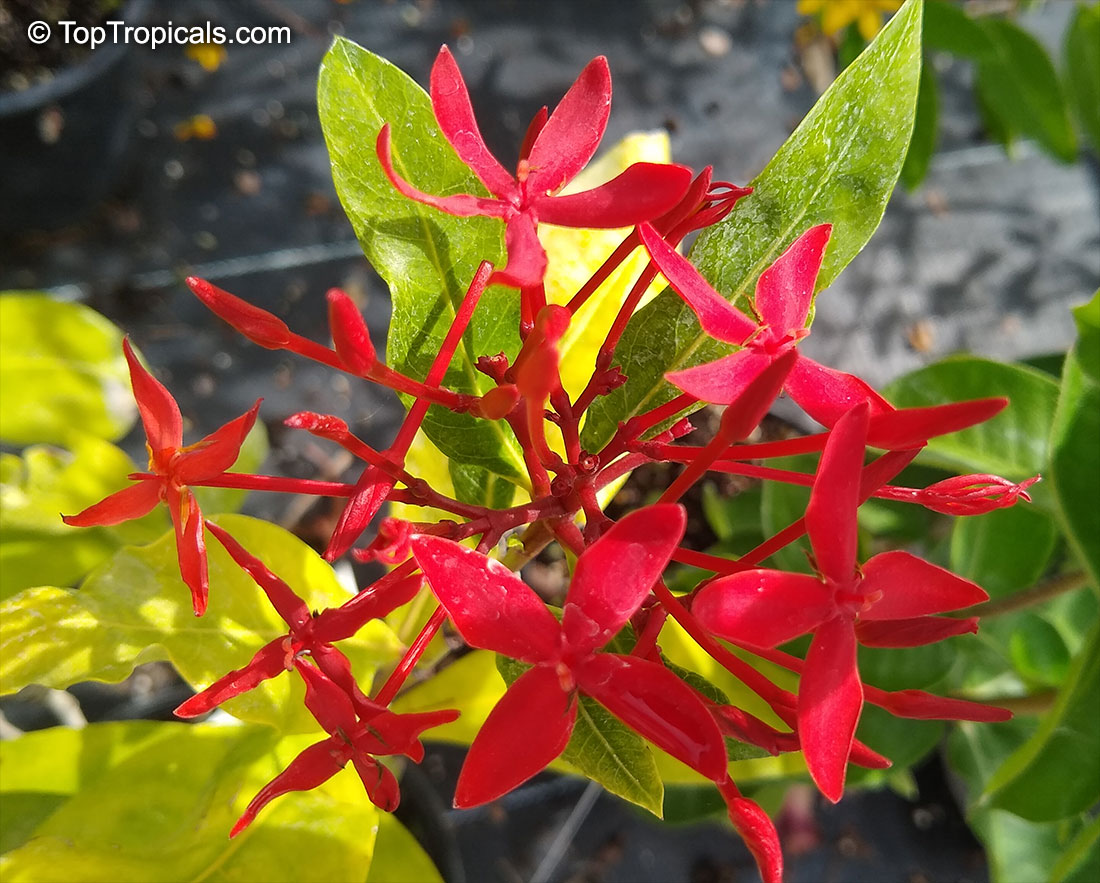
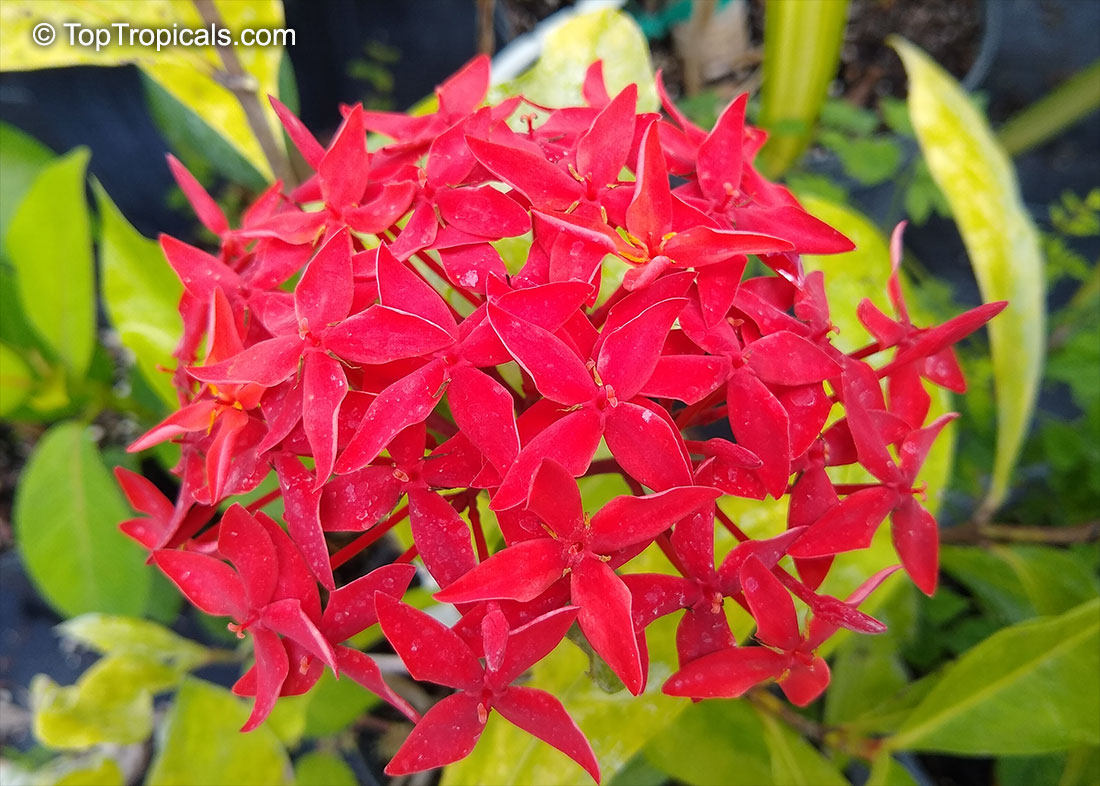
Botanical name: Ixora coccinea
Common names: Jungle flame, Needle flower, Flame of the Woods, Jungle Geranium
Family: Rubiaceae
Origin: India, Sri Lanka
Ixora coccinea, also known as 'Jungle Flame', is a tropical shrub native to India and Sri Lanka. It is salt-wind tolerant, making it perfect for seaside gardens and is also highly drought-tolerant. In order to achieve optimal growth, it should be planted in full sun to semi-shade. In areas with cold winters, it is better grown as a pot plant and brought inside during cold months.
Ixora coccinea requires regular watering, as well as moist, rich, and well-drained soil and regular fertilization in order to stay healthy and produce vibrant flowers. If the plant becomes too large or untidy, it can be pruned to keep its shape, however, over-pruning should be avoided as it will reduce flowering. Different varieties featuring brilliant pink, vinous, yellow, and orange flowers can be planted to attract wildlife such as butterflies and hummingbirds. In USDA hardiness zones 9-11, Ixora coccinea is a fast-growing shrub, producing abundant clusters of vivid blooms all year round. With proper care, it will be a low-maintenance and stunning addition to any garden.
Learn more about ixora plants: Ixora - the Star of Southern Landscapes.
| Next | |
Use link to repeat this search:
https://toptropicals.com/cgi-bin/garden_catalog/cat.cgi?search_op=and&keyword_op=and&language=e&number=10&no_change_lang=1
&v1=sea&user=tt&sale=1&first=0