Flood tolerant plant - Plant Encyclopedia Results
| Number of plants found: 177 | Next | 
|
Go to page: | 1 | 2 | 3 | 4 | 5 | Last |
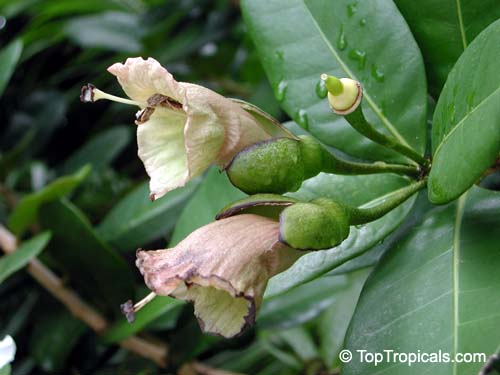
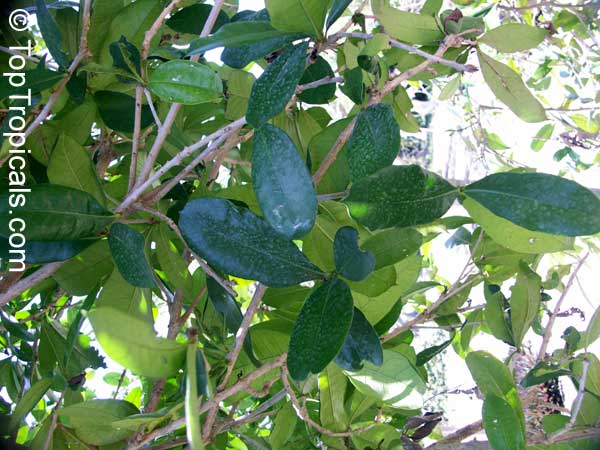
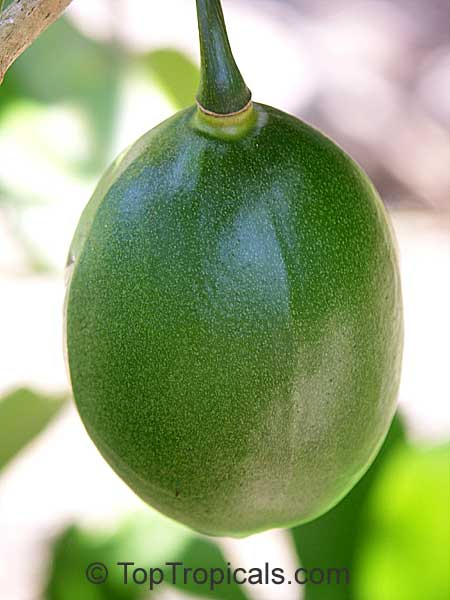
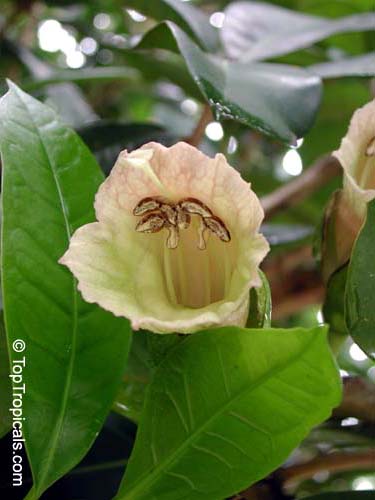
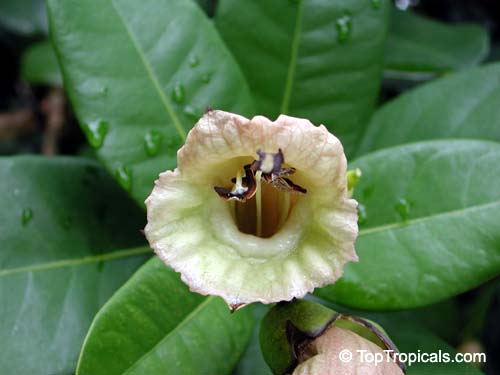
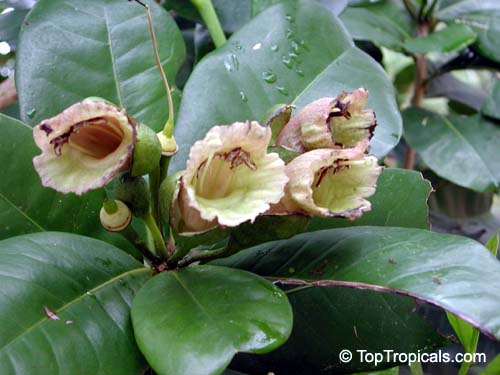
Botanical names: Amphitecna latifolia, Enallagma latifolia, Dendrosicus latifolius, Crescentia latifolia
Common names: Black Calabash, Jicarillo, Savanna Calabash
Family: Bignoniaceae
Origin: Costa Rica
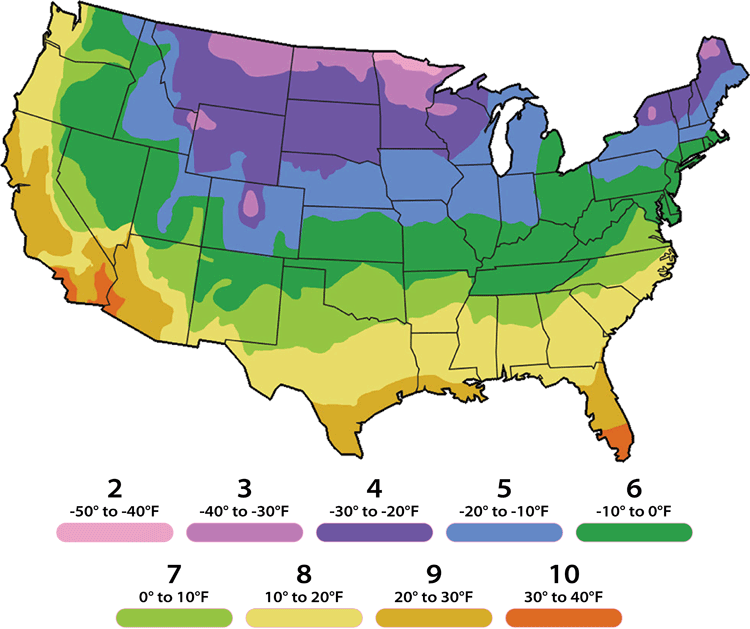
USDA Zone: 9-10


Irregularly shaped tree with a bent and twisting, angular trunk. Simple, alternate ovoid leaves, thick and stiff. Waxy, glossy, and dark green, they contrast markedly with the lighter bark of the branches and twigs. Solitary flowers may be found growing amid the foliage or directly from the sides of the bare sections of the larger limbs and even the trunk. They are large, white, and composed of four thick petals fused into a bent and angular corolla tube that flares distally into a trumpet. The green calyx that covers and protects the developing flower during its early development is also fused into one piece, and it splits irregularly when the blossom finally emerges. Five long, black-anthered stamens and a central pistil are found within the perianth. Flowers are nearly present throughout the entire year. Fruits are large (4"in diameter), ovoid, indehiscent green pods with a smooth, glossy texture and an appearance similar to the fruits of the Jicaro (Crescentia alata ) tree. Inside the thin, woody skin of the pod is a white fleshy pulp that surrounds several black seeds. The white pulp and seeds of the fruit are edible. Jicarillo wood is reportedly hard and rot resistant.
Pollination: "Members of this genus are not bee pollinated - the flowers have peak nectar production at night, and you'll notice that they produce quite a lot of nectar. Bees are generally after the pollen, they would probably drown in all the nectar this species produces. The flowers are also pretty big - these are bat pollinated. The bees will certainly visit, but they are not effective transferrers of the pollen to the stigma". (By Susan Grose)
Botanical names: Myrciaria cauliflora, Plinia cauliflora, Eugenia cauliflora
Common names: Jaboticaba, Duhat
Family: Myrtaceae
Origin: Brazil
USDA Zone: 9-11


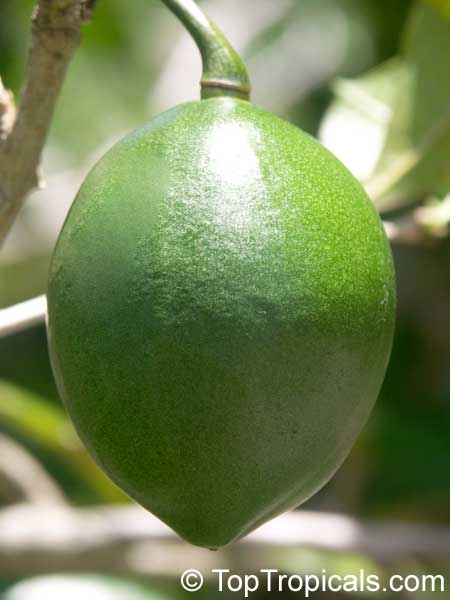
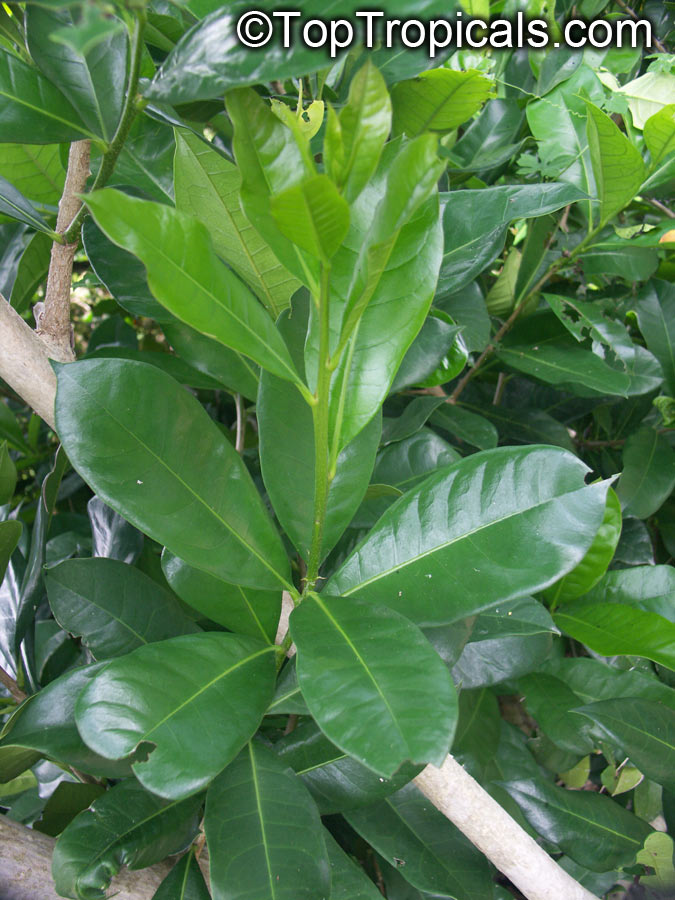
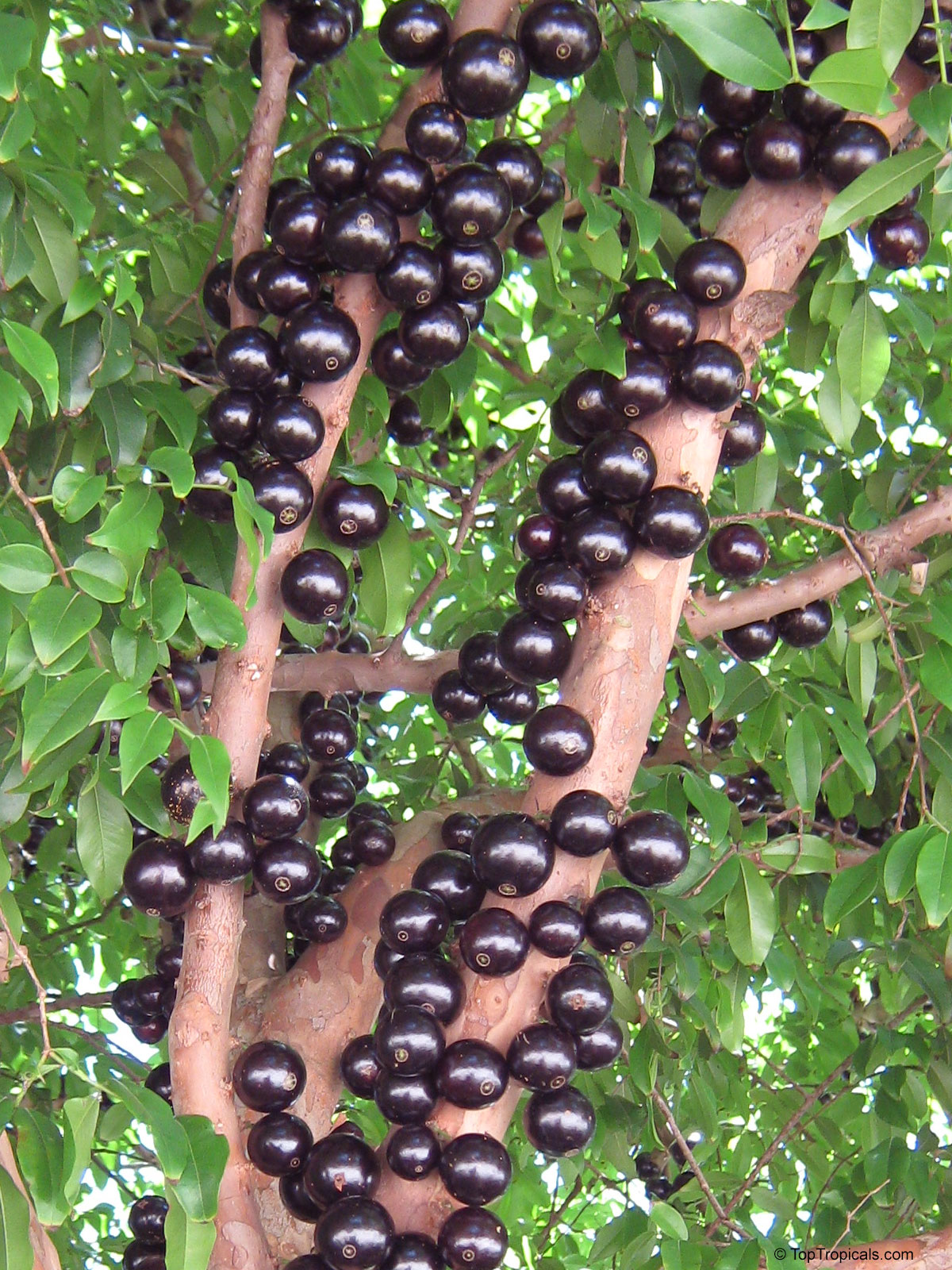
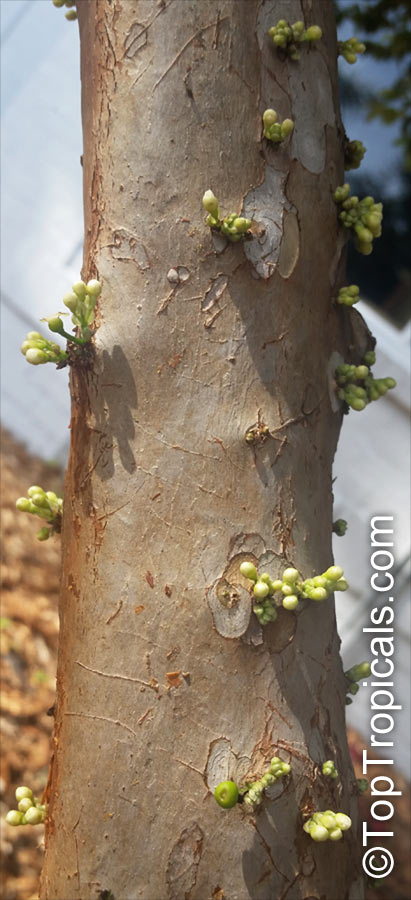
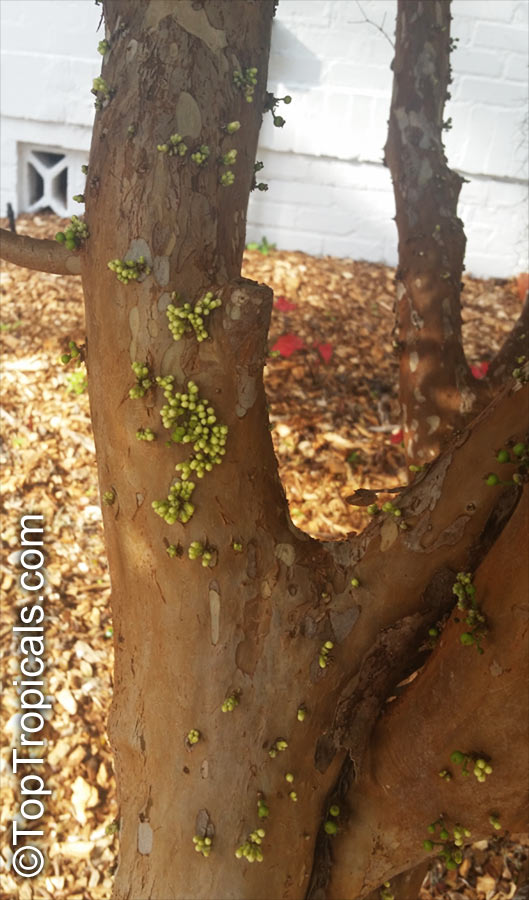
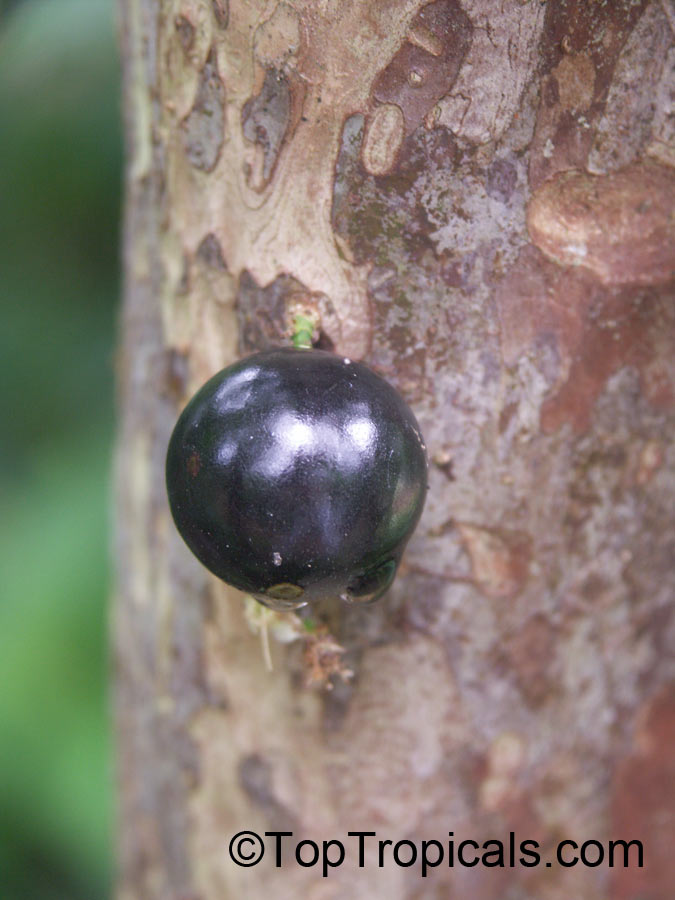
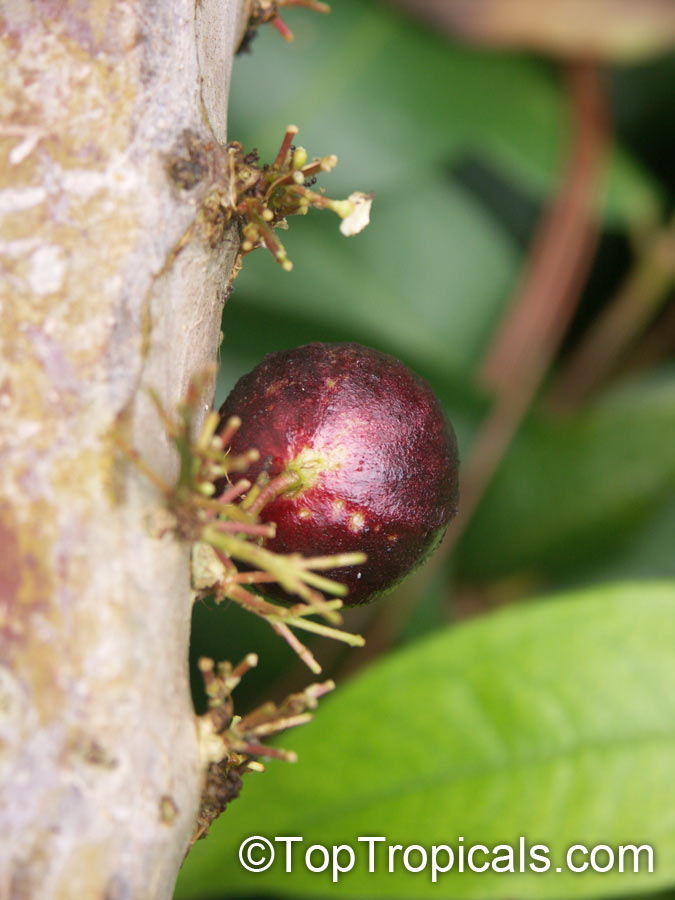
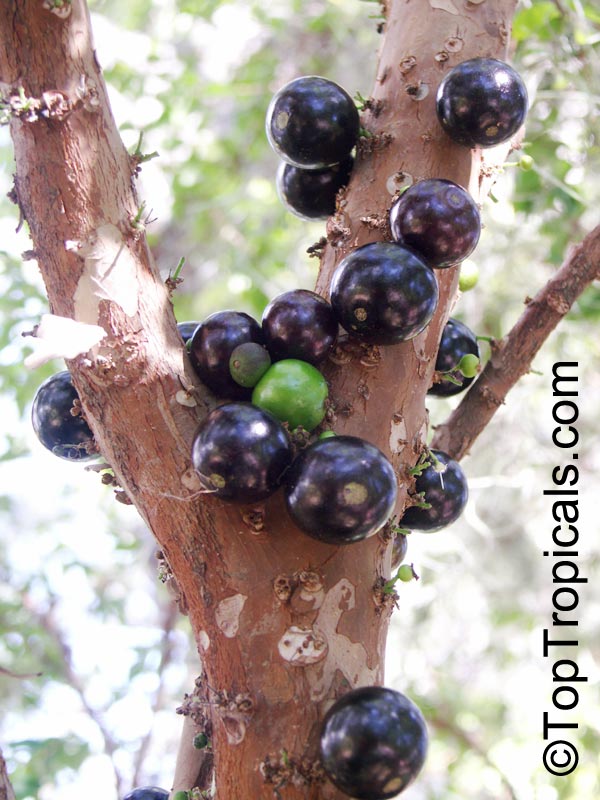
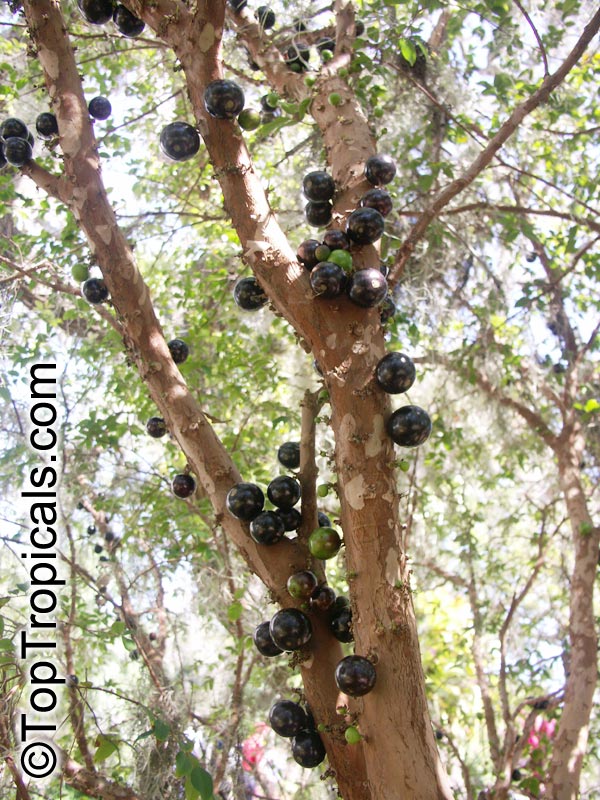
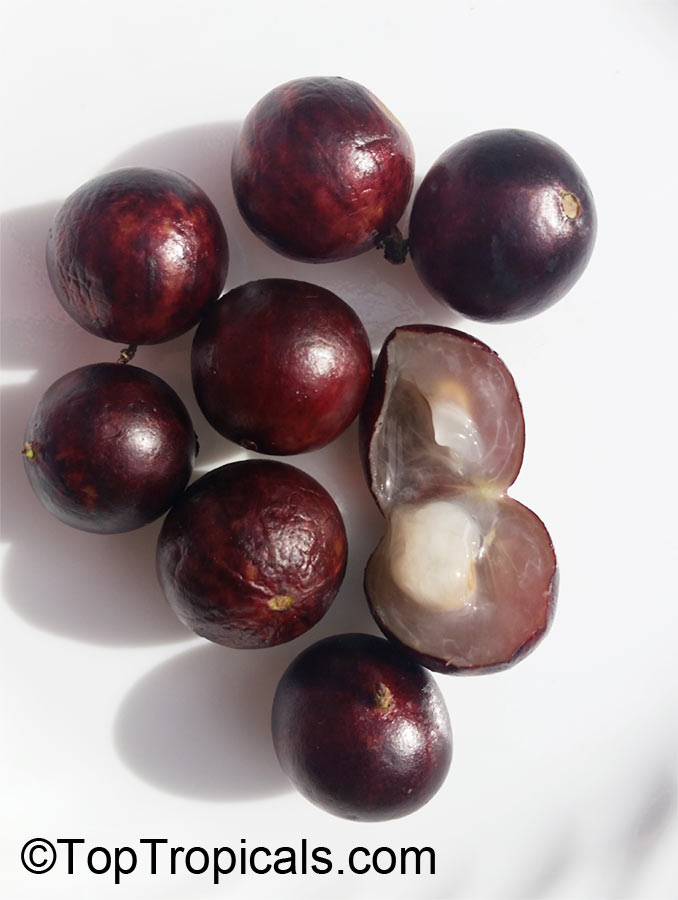
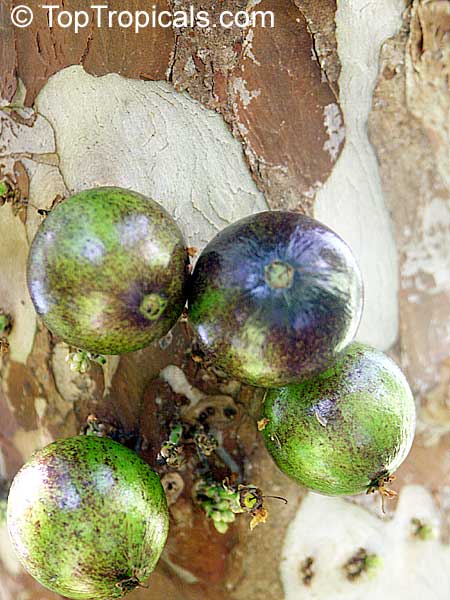
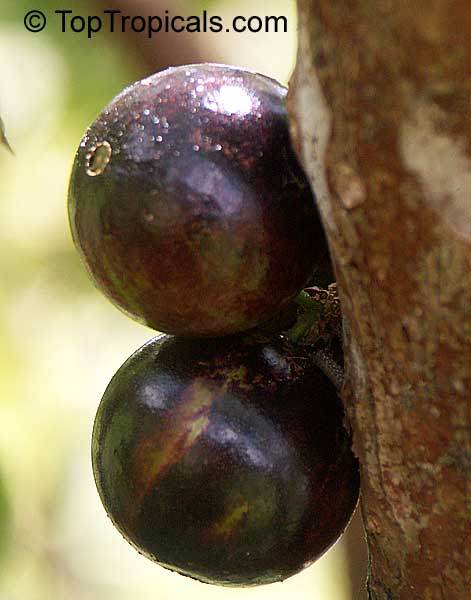
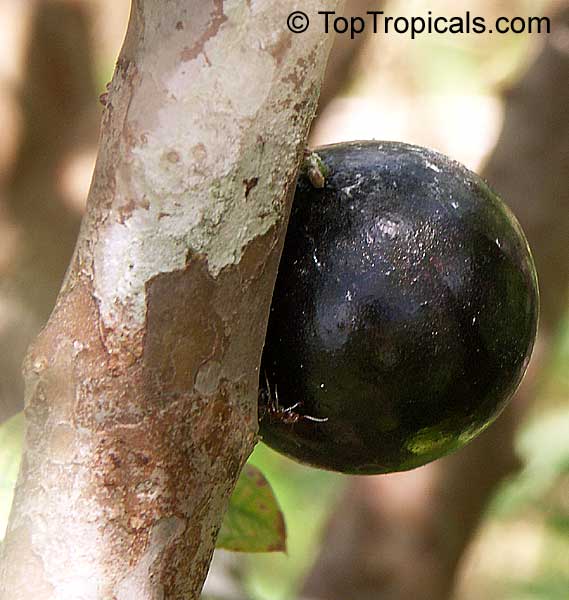
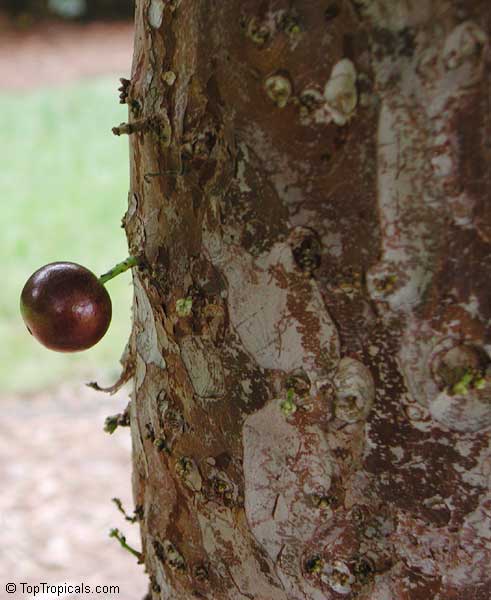
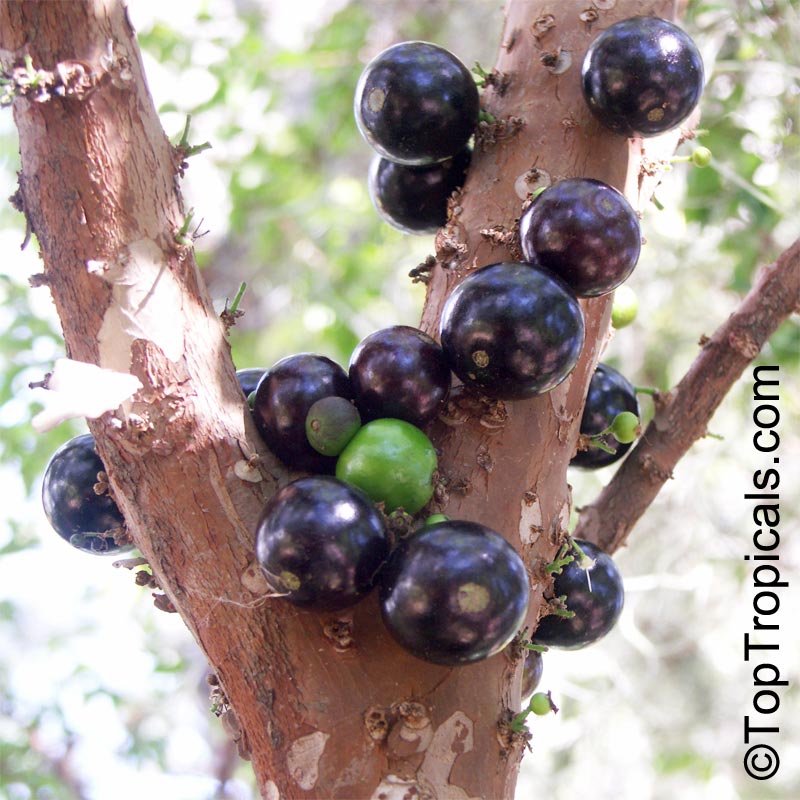
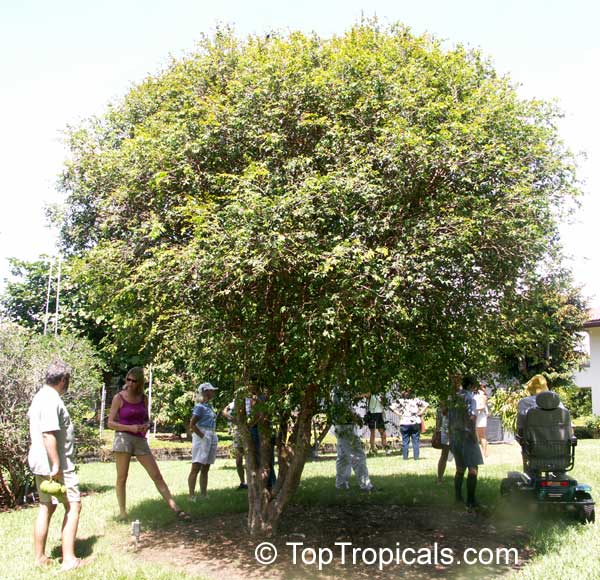
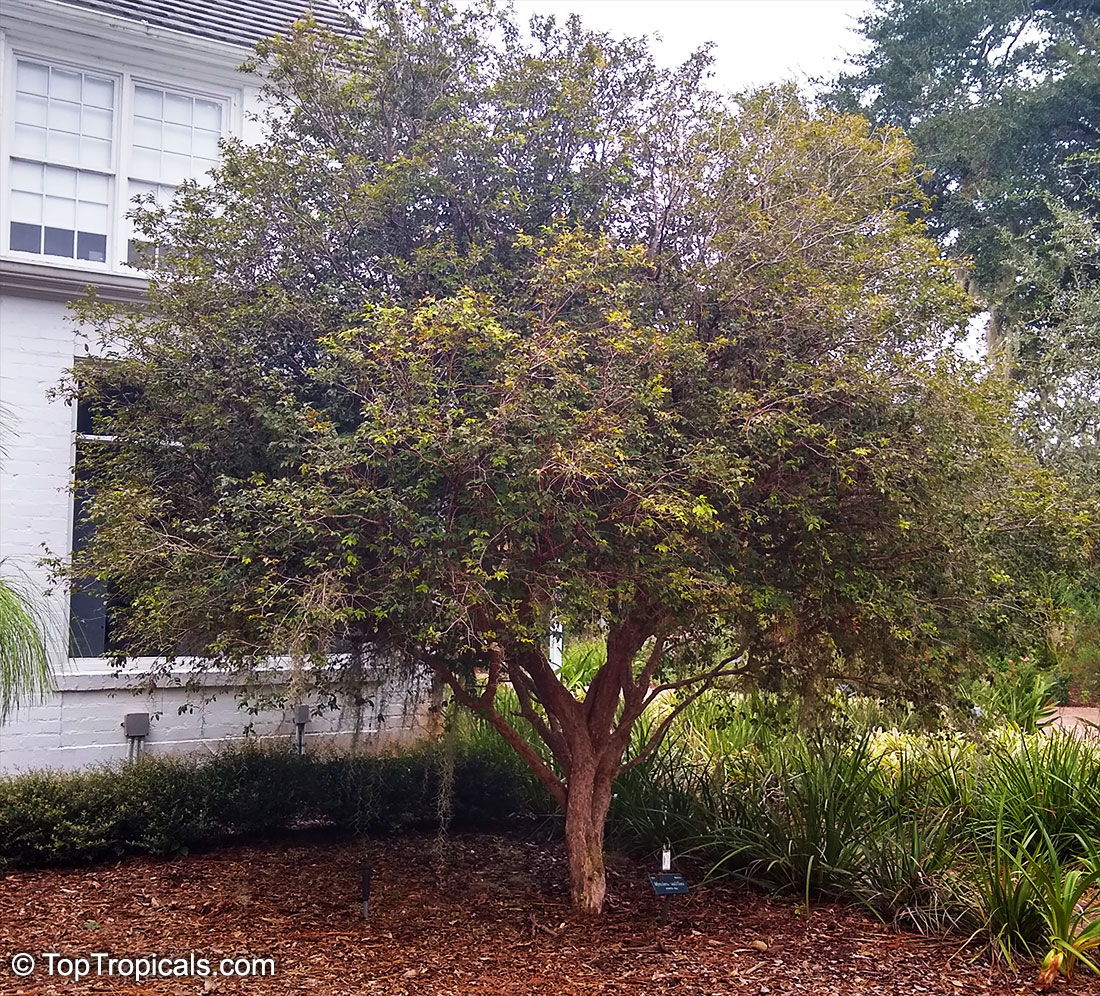
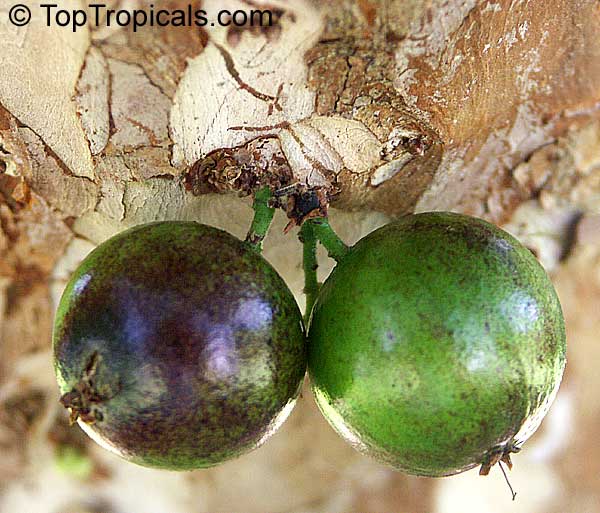
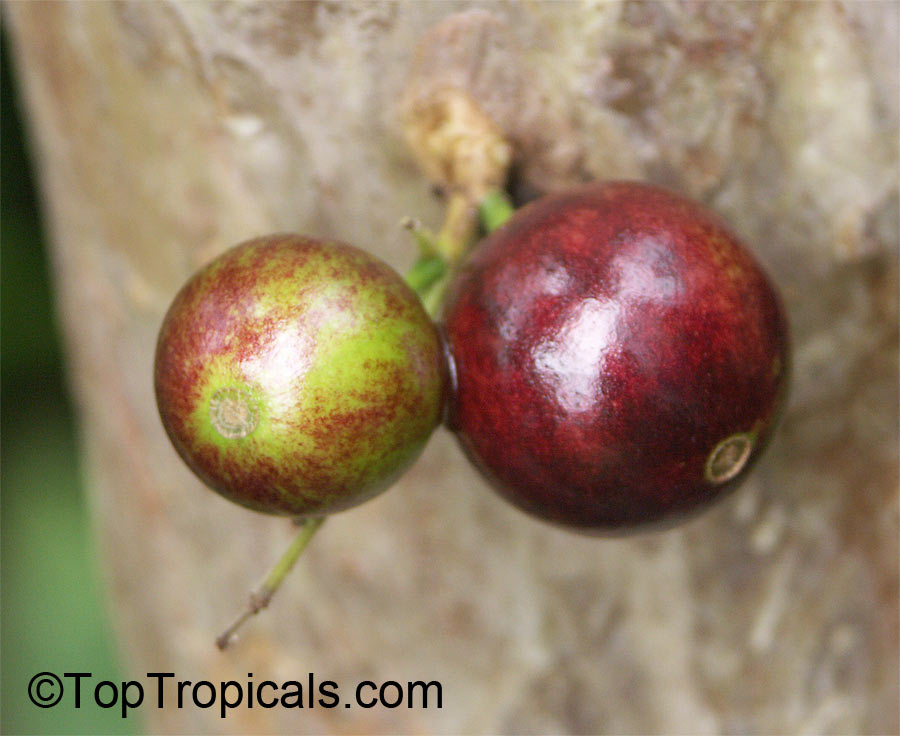
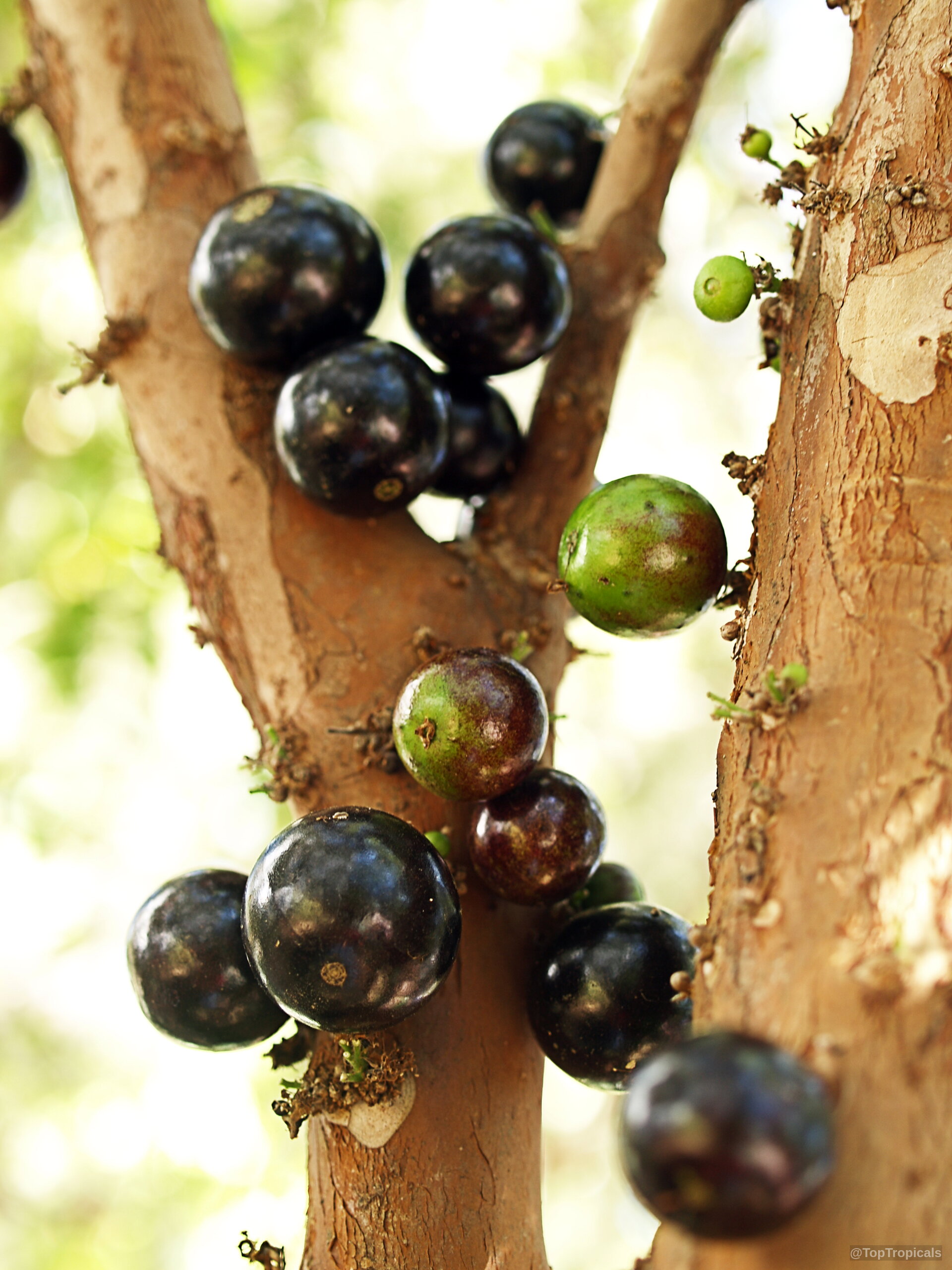
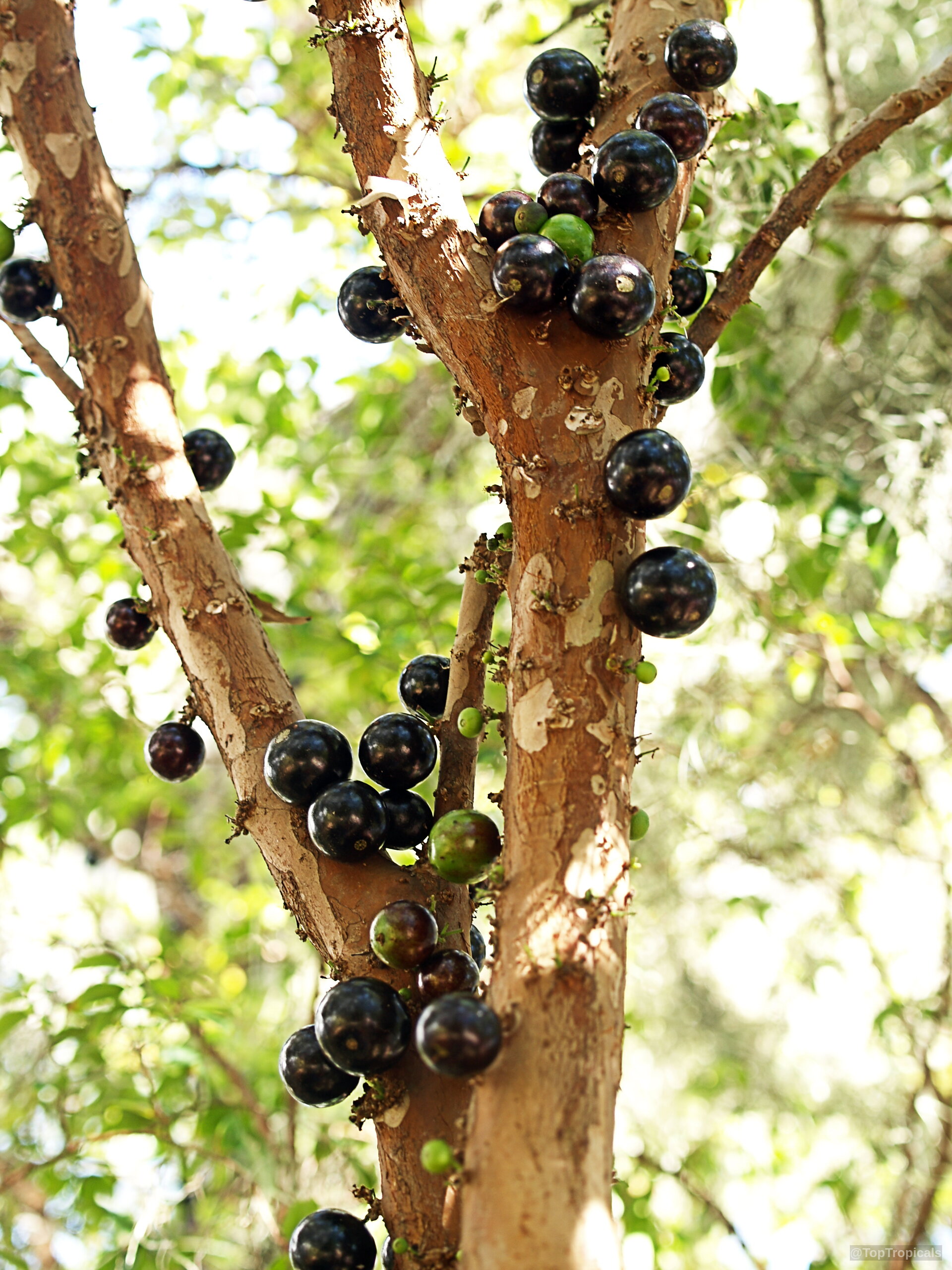
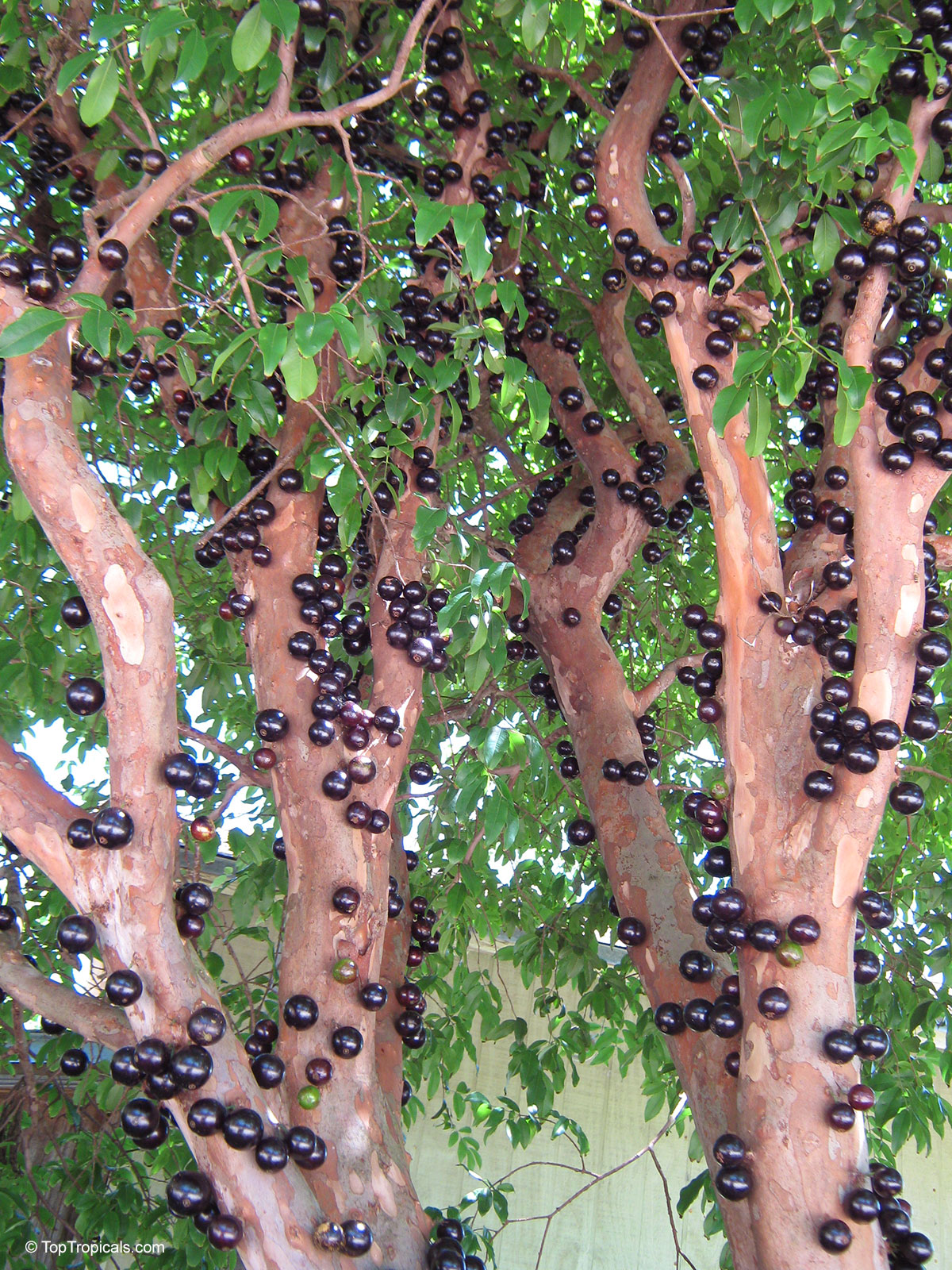
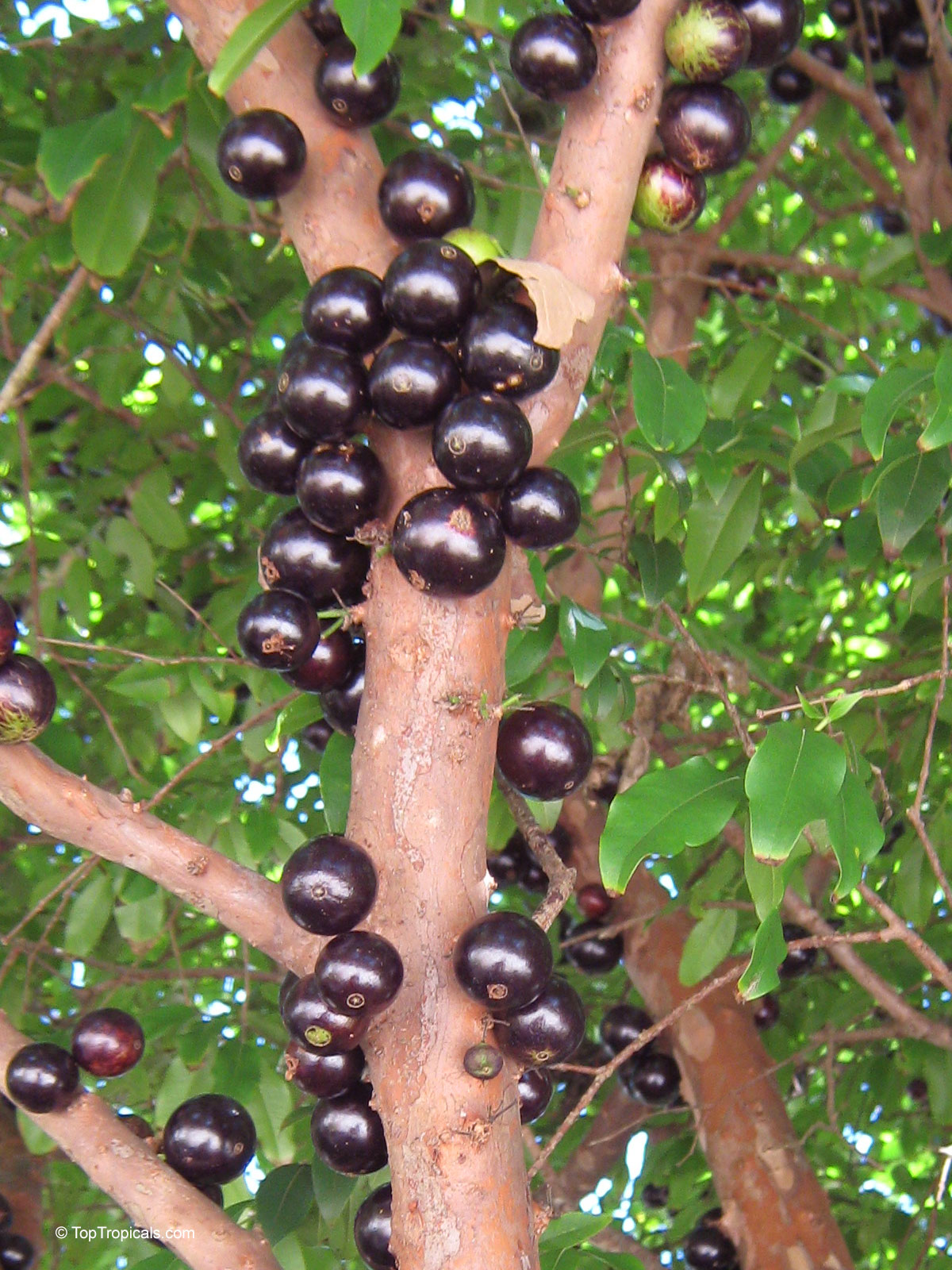
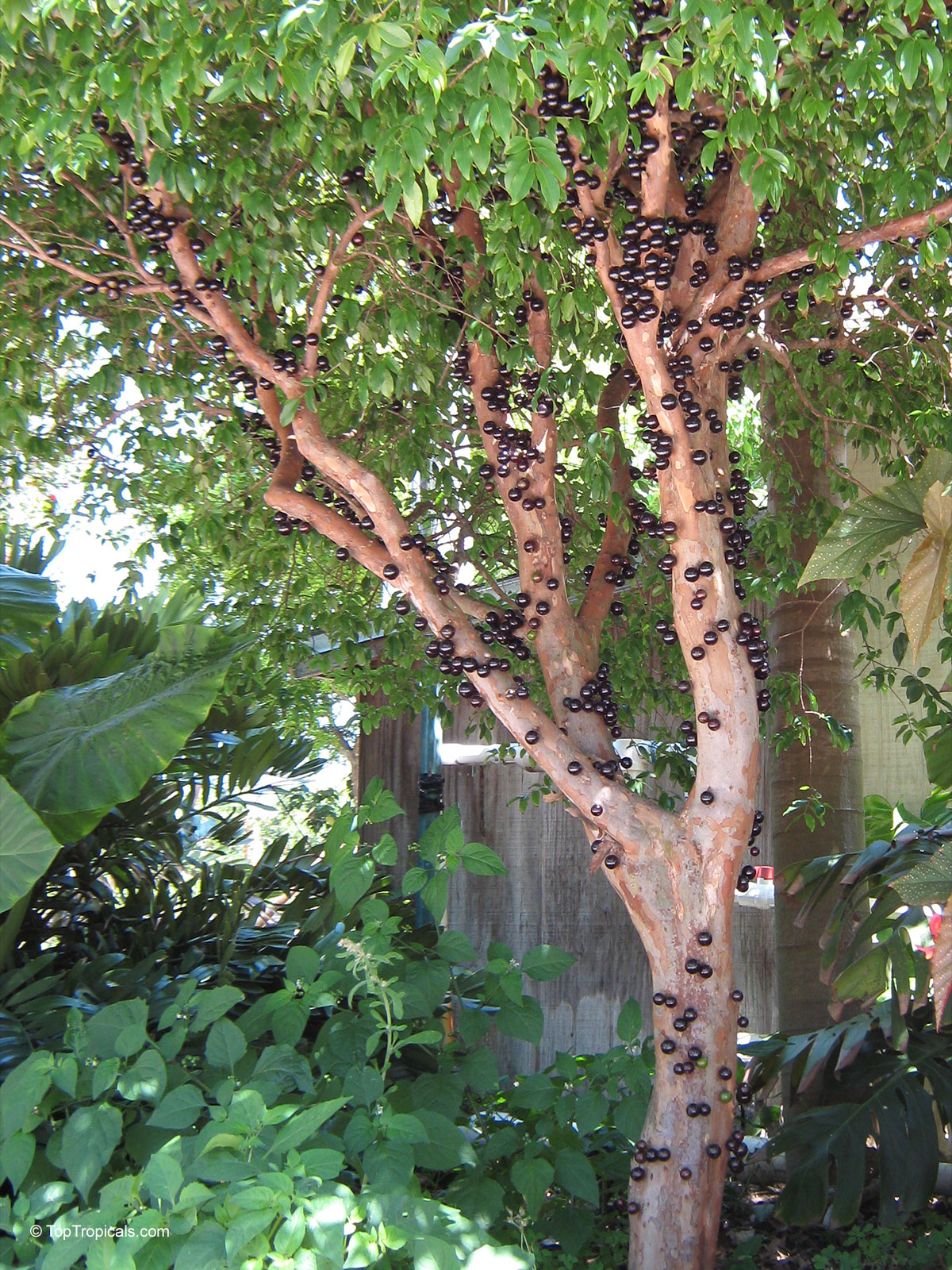
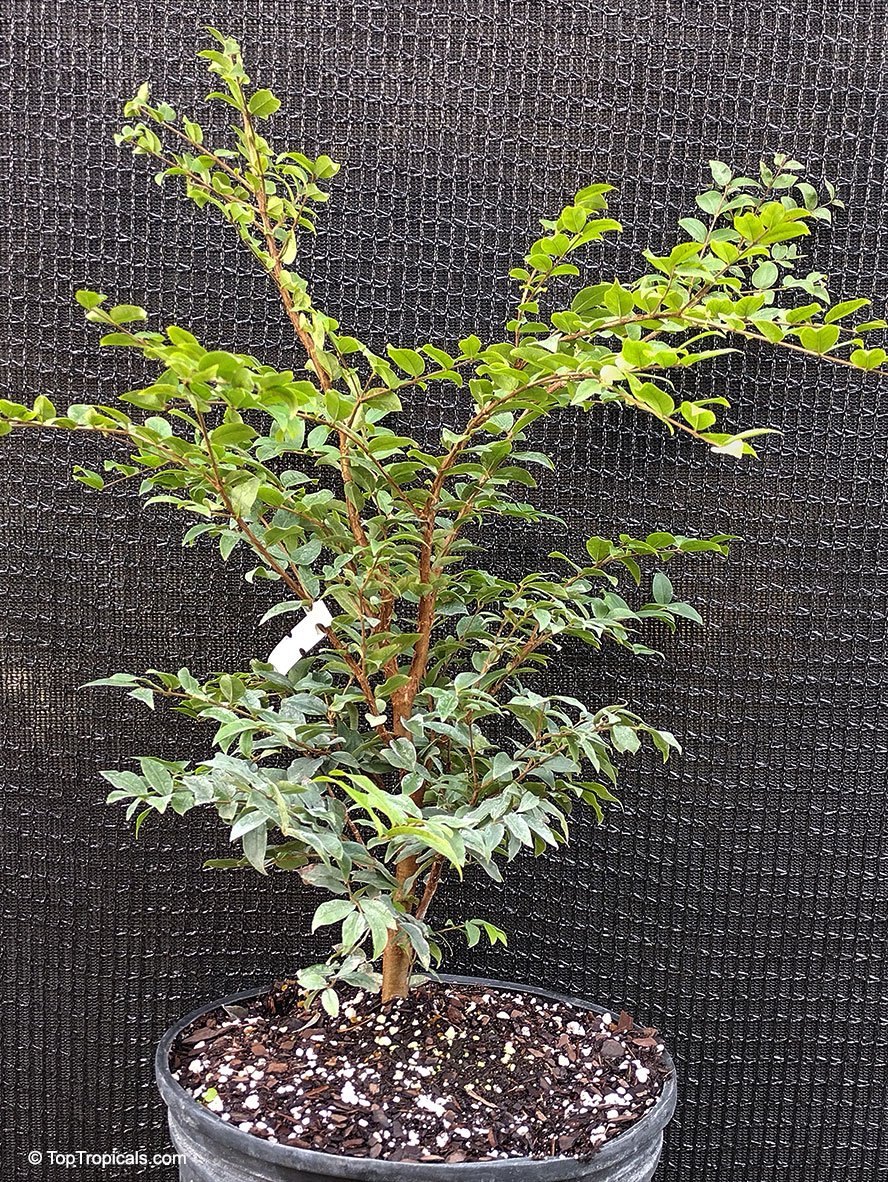
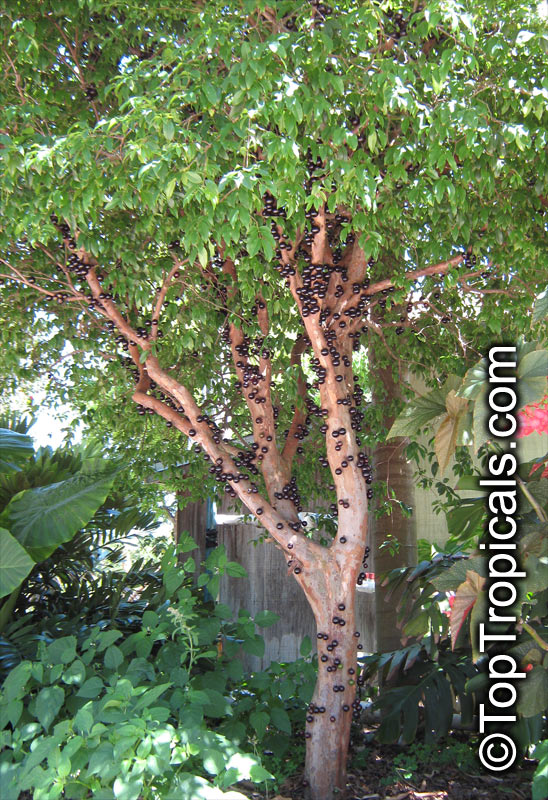
One of the most popular native fruit of Brazil. This is a slow-growing rather bushy tree up to 15 ft tall, often multi-stemmed with opposite small leaves. The larger trunks and branches have bark which peels off in small patches which is found to be very attractive. The tree is evergreen, but once or twice during the year it will shed large numbers of leaves generally corresponding to heavy rains. Small white flowers are produced along the larger trunks and branches ("cauliflora" means "flowers growing on trunk"). Fruit development is very rapid, usually taking only 20-25 days from flower to full maturity.
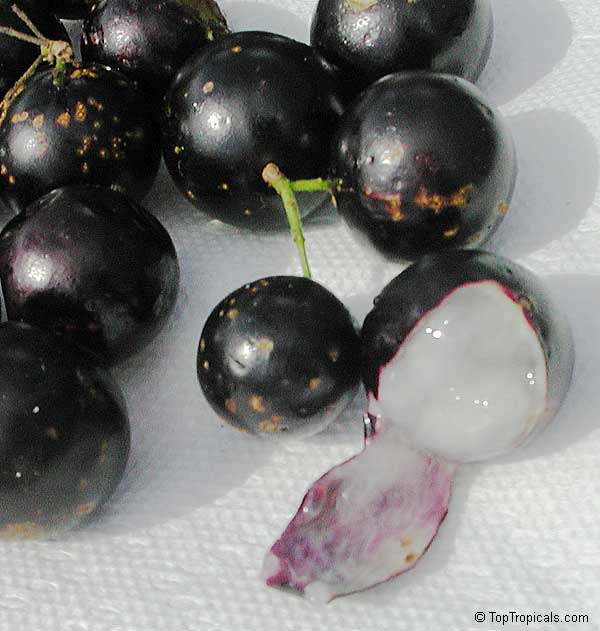
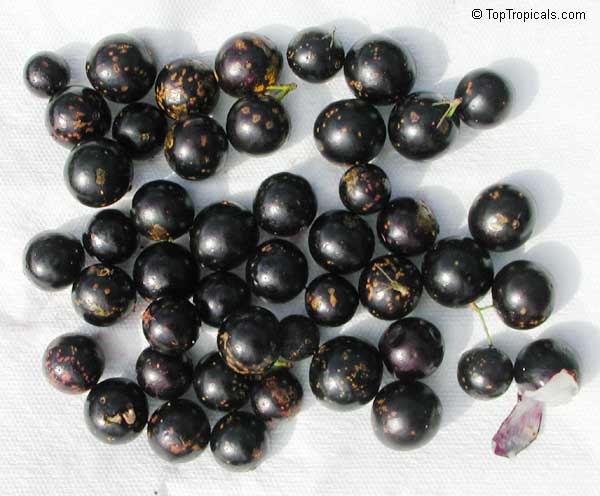
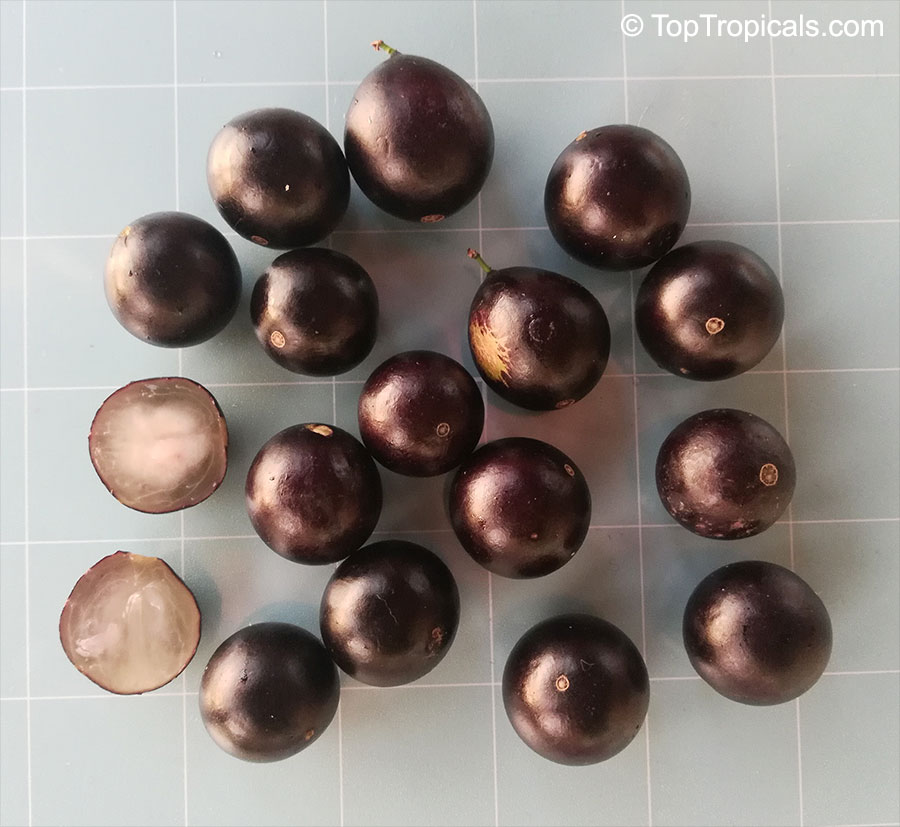
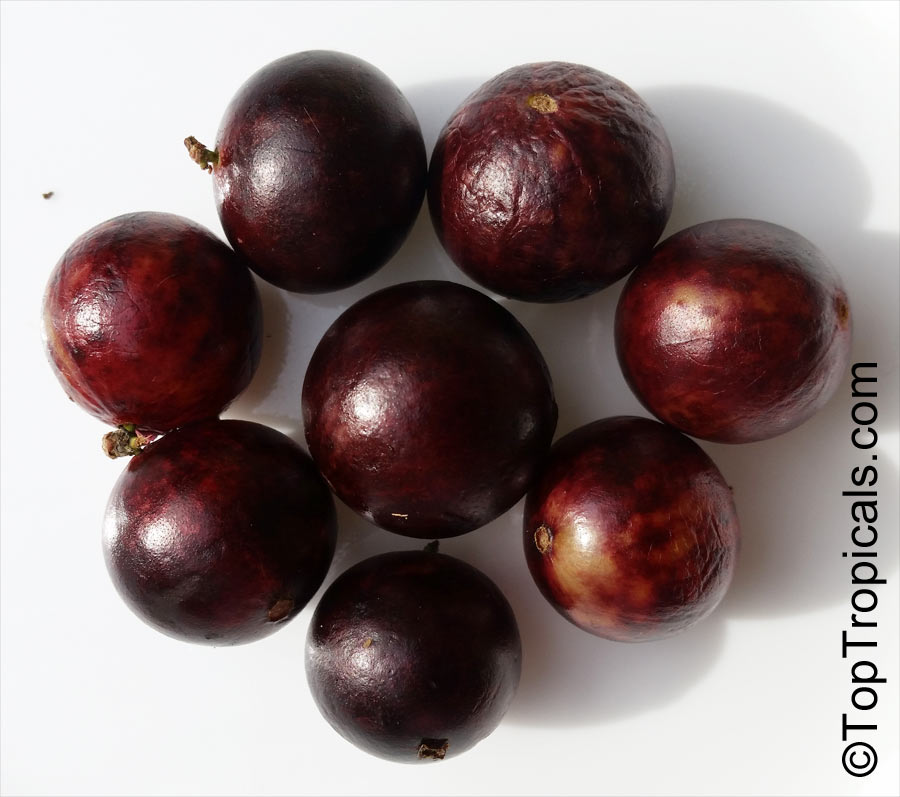
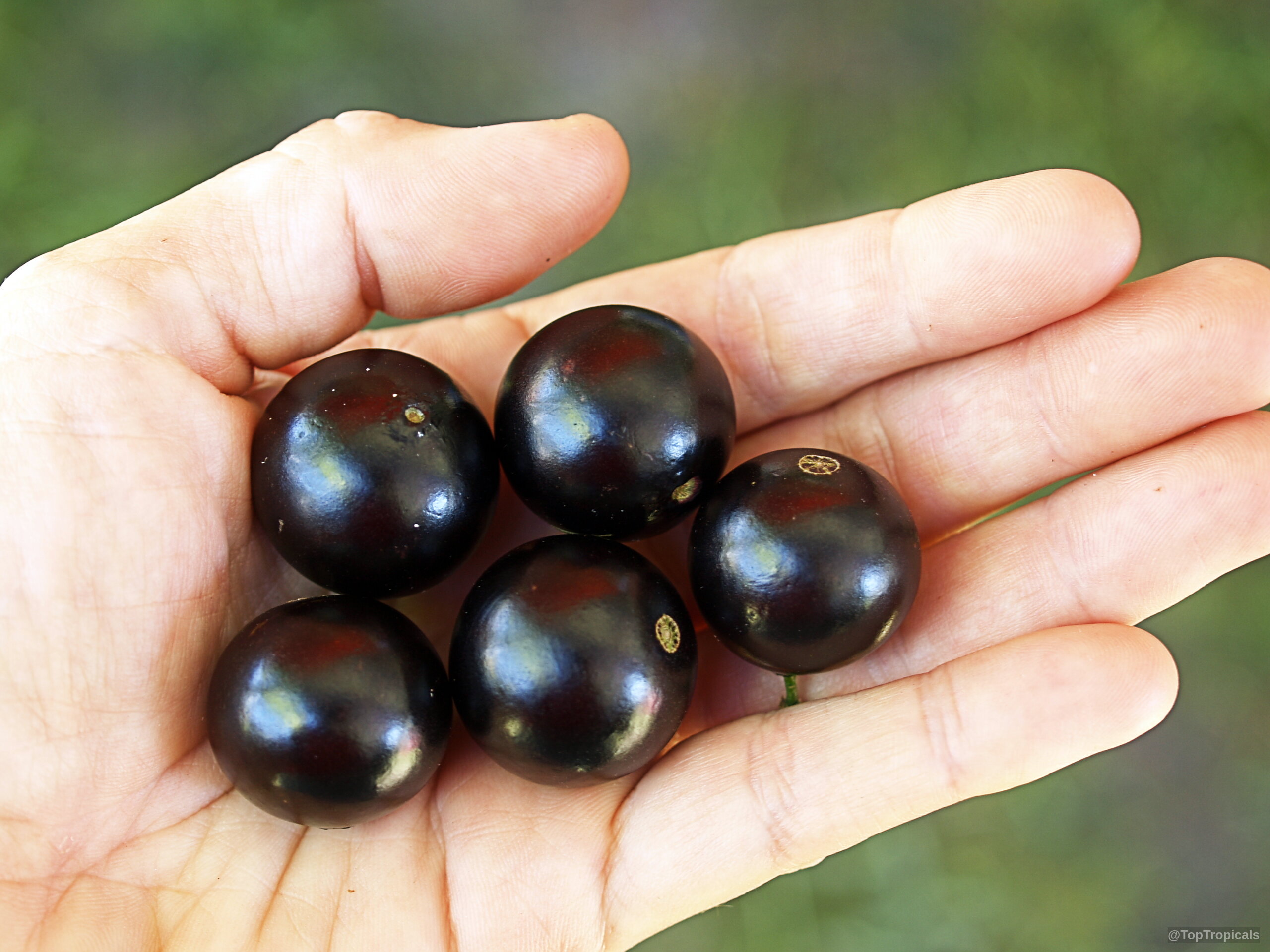
The fruit forms on the trunks on short stems, with 2-3 fruits sometimes in a cluster. When trees are in heavy fruit, you cannot see the branches for all the large numbers of dark purplish-black fruits that look like large grapes. They have a white pulp with several small seeds. Skin is thick, and delicious melting pulp somewhat resembles Northern Black Currant in flavor. Jaboticaba fruits are ready to harvest when they have developed a full color and are somewhat soft like a ripe grape. The fruits can be eaten fresh, used in jellies, jams, ice creams, wines or can be frozen whole to enjoy throughout the year. Usually, Jaboticaba will bear fruit only in 6 to 10 years from seed. Once mature, the trees may produce between six to eight crops of fruit per year.
Jaboticaba is fairly wind tolerant but not salt tolerant, but it is relatively cold hardy, taking down to 23 F for short periods without serious damage. Young plants may be injured at around upper 20's F. As the root system is shallow and dries out quickly, the tree requires regular irrigation. It thrives better when planted in heavily mulched organic soils. In their native area, Jaboticabas are frequently flooded by rising rivers for weeks at a time without serious damage, so they are considered water-tolerant. The plant will do best in acid soil with a pH of 5.5 to 6.5, somewhat like gardenias. In highly alkaline soil the plant often develops micronutrient deficiency.
Because of its slow growth, Jaboticaba is perfect for growing in containers. Mature trees in 3-5 gal pots can be many years old. Due to small leaves and dwarfish growth habit, Jaboticaba is often used as bonsai. The tree is small enough to fit into many parts of the garden landscape. Some old bonsai specimens can fruit.




Recommended Fertilizer: SUNSHINE C-Cibus - Crop Nutrition Booster
SUNSHINE-Honey - sugar booster
7 gal pot. More developed root system, thicker trunk and branches. Plant height depends on growing season and variety. Dwarf varieties are slow growers and may be shorter. Contact us for exact size description if size/height matters to you. 7 gal plants may be shipped separately from other items by Ground service due to large size. See here time in transit (business days, excluding Sat-Sun!)
Last one

Recommended Fertilizer: SUNSHINE C-Cibus - Crop Nutrition Booster
SUNSHINE-Honey - sugar booster
7 gal pot. More developed root system, thicker trunk and branches. Plant height depends on growing season and variety. Dwarf varieties are slow growers and may be shorter. Contact us for exact size description if size/height matters to you. 7 gal plants may be shipped separately from other items by Ground service due to large size. See here time in transit (business days, excluding Sat-Sun!)
Recommended Fertilizer: SUNSHINE C-Cibus - Crop Nutrition Booster
SUNSHINE-Honey - sugar booster

7 gal pot. More developed root system, thicker trunk and branches. Plant height depends on growing season and variety. Dwarf varieties are slow growers and may be shorter. Contact us for exact size description if size/height matters to you. 7 gal plants may be shipped separately from other items by Ground service due to large size. See here time in transit (business days, excluding Sat-Sun!)
Recommended Fertilizer: SUNSHINE C-Cibus - Crop Nutrition Booster
SUNSHINE-Honey - sugar booster
Recommended Fertilizer: SUNSHINE C-Cibus - Crop Nutrition Booster
SUNSHINE-Honey - sugar booster
7 gal pot. More developed root system, thicker trunk and branches. Plant height depends on growing season and variety. Dwarf varieties are slow growers and may be shorter. Contact us for exact size description if size/height matters to you. 7 gal plants may be shipped separately from other items by Ground service due to large size. See here time in transit (business days, excluding Sat-Sun!)
Recommended Fertilizer: SUNSHINE C-Cibus - Crop Nutrition Booster
SUNSHINE-Honey - sugar booster
Recommended Fertilizer: SUNSHINE C-Cibus - Crop Nutrition Booster
SUNSHINE-Honey - sugar booster
7 gal pot. More developed root system, thicker trunk and branches. Plant height depends on growing season and variety. Dwarf varieties are slow growers and may be shorter. Contact us for exact size description if size/height matters to you. 7 gal plants may be shipped separately from other items by Ground service due to large size. See here time in transit (business days, excluding Sat-Sun!)
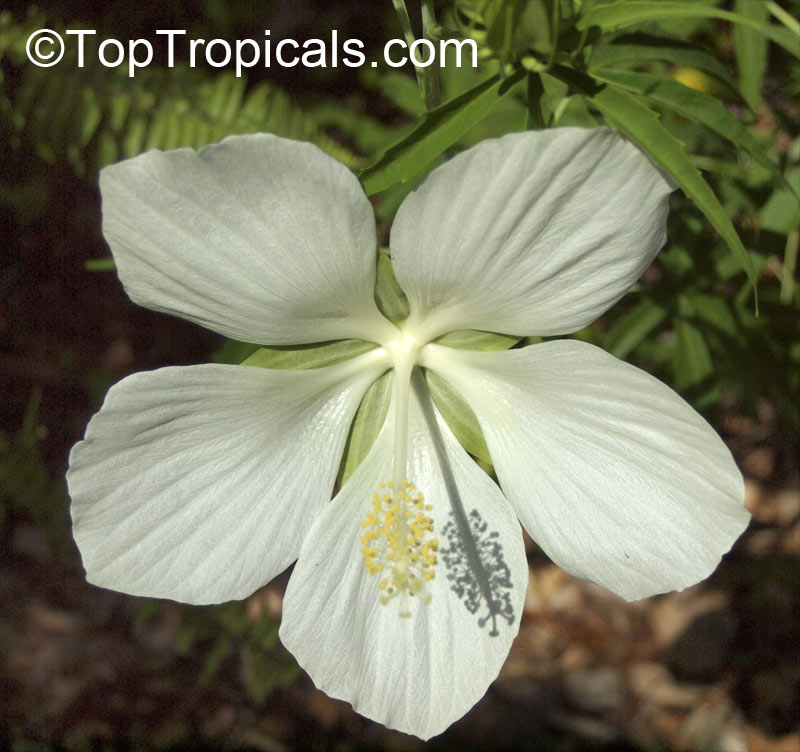
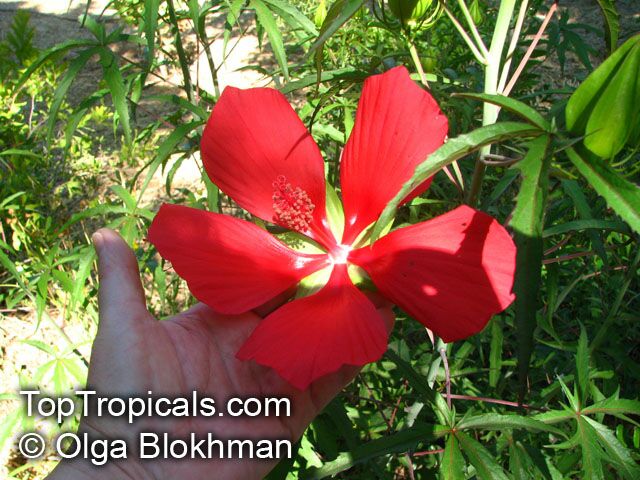
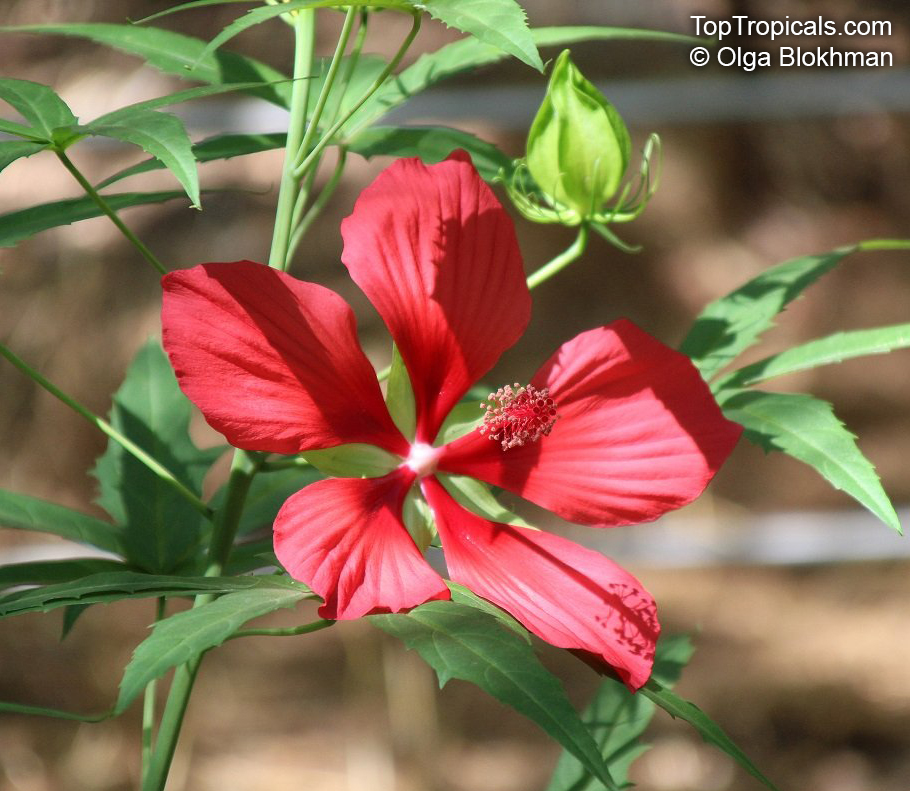
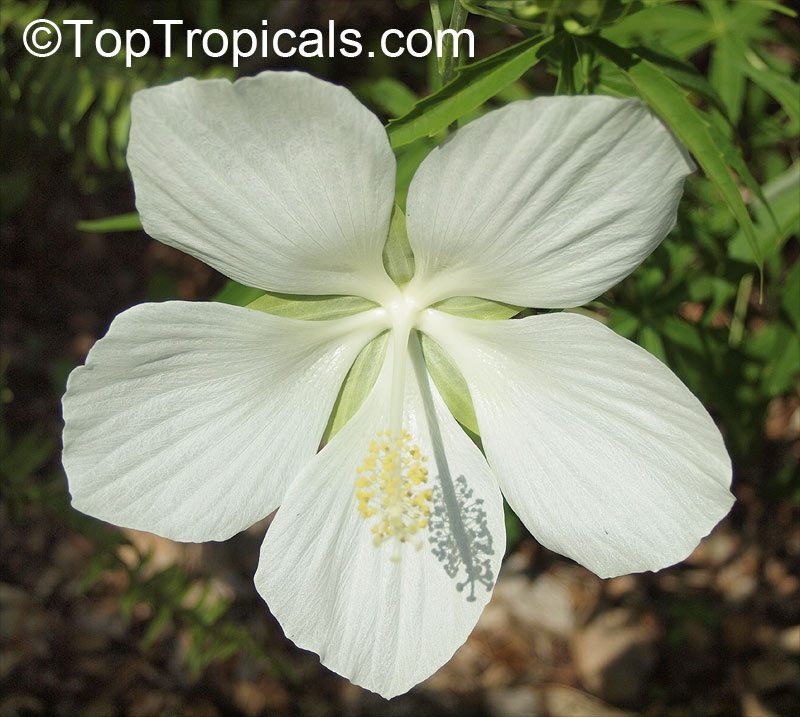
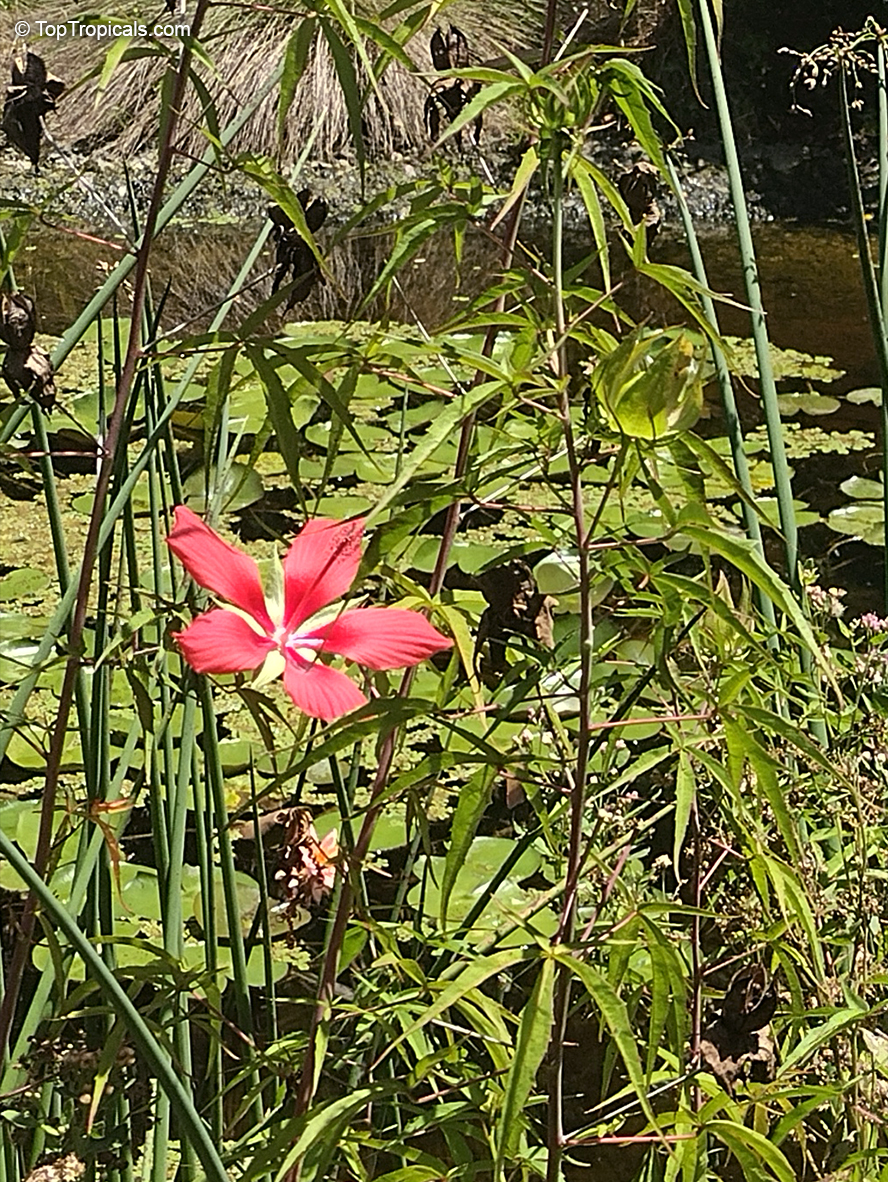
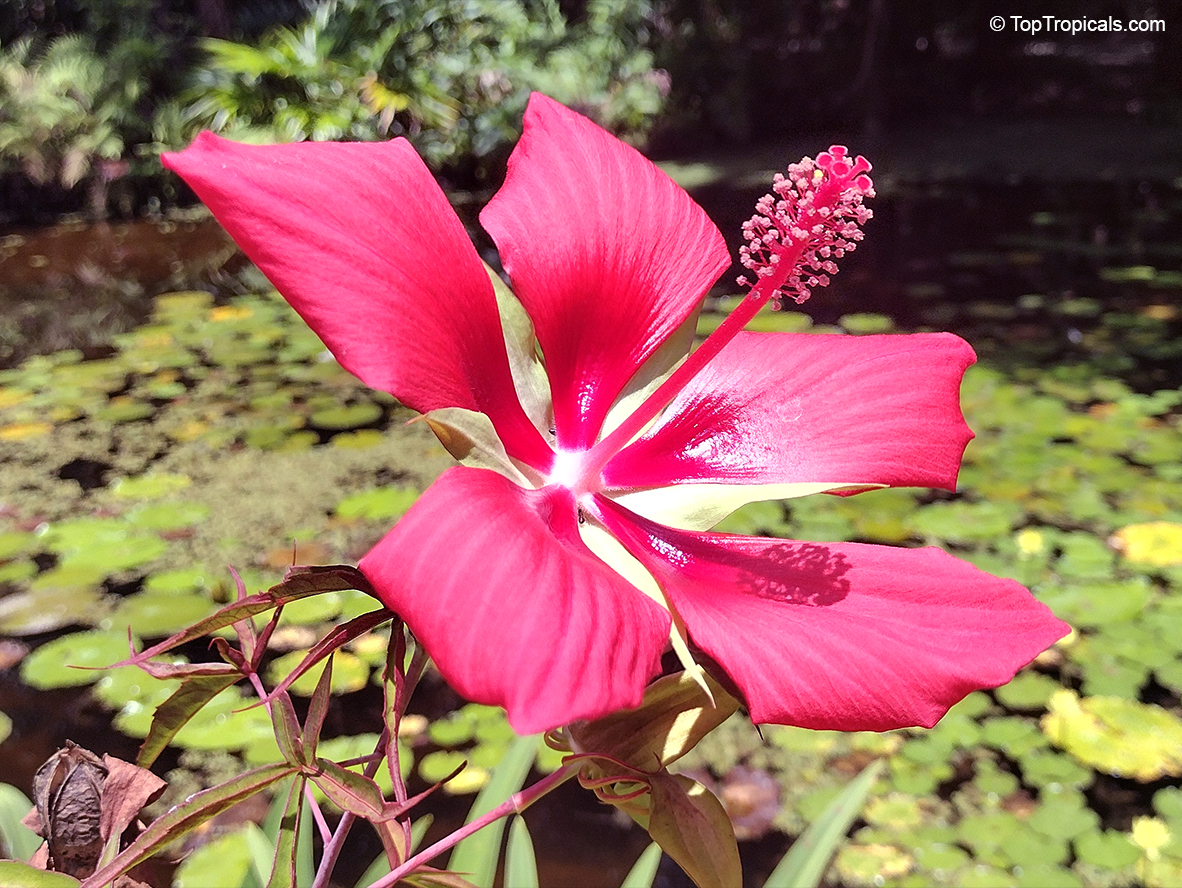
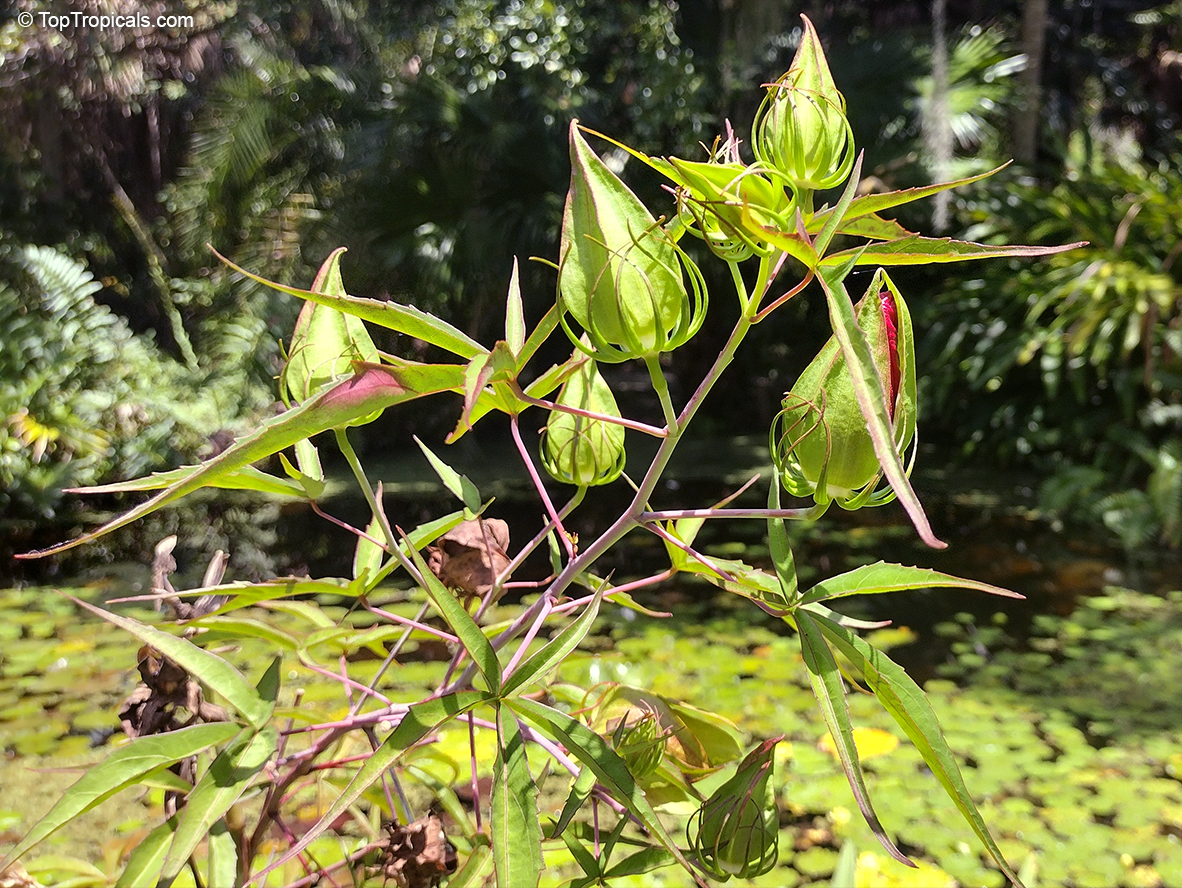
Botanical name: Hibiscus coccineus
Common names: Scarlet Hibiscus, Scarlet Rose Mallow, Swamp Hibiscus
Family: Malvaceae
Origin: Southeastern United States
USDA Zone: 6-9


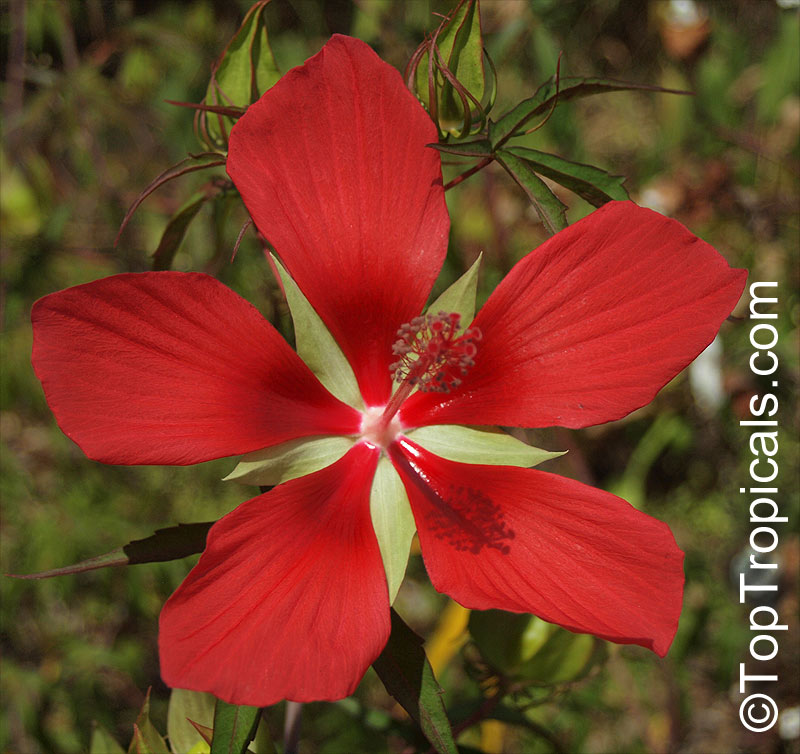
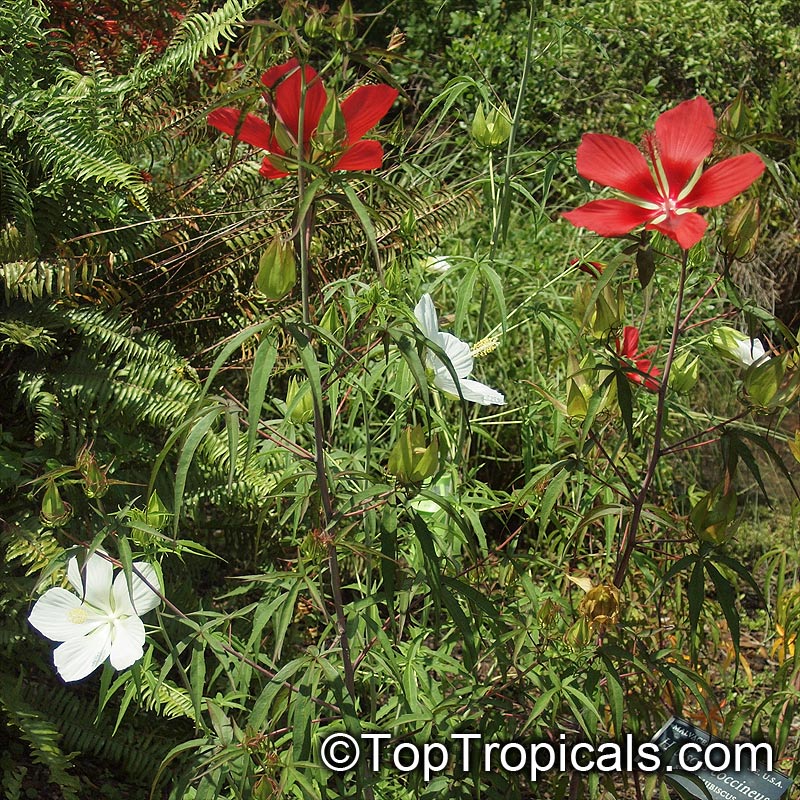
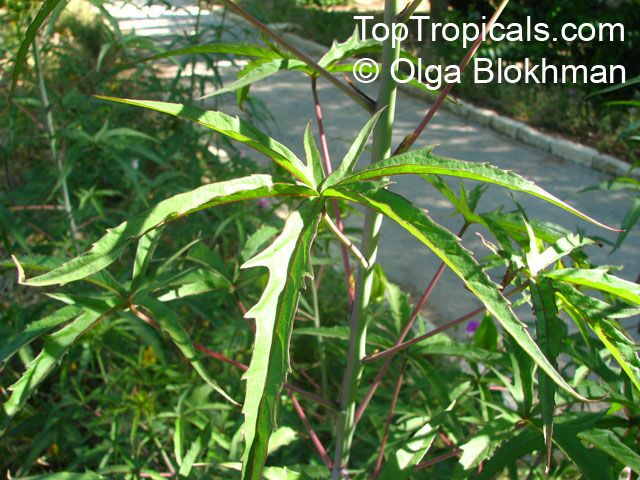
This large shrub grows 5-10 feet (1.5-3 m) tall and wide. It has large, deeply serrated, palmate leaves and blooms in mid to late summer. The magnificent red, crimson, or vinous flowers have irregularly shaped petals and are very attractive to butterflies and hummingbirds.
Scarlet Hibiscus prefers full sun in warm climates and semi-shade in cooler regions. It is a moderately drought tolerant plant once established, although it does best with regular water. In cold climates it is best grown in a container which can be moved indoors in cold winters. In these areas, the container should be kept well drained, and the soil lightly moistened, ensuring that the pot does not dry out completely.
This shrub is best propagated from cuttings of perennial wood taken in spring or early summer; however, healthy plants can be readily purchased from garden centers. Once established, scarlet hibiscus is a low-maintenance plant that is pest- and disease-free. It is also an excellent choice for naturalizing as it easily self-propagates.
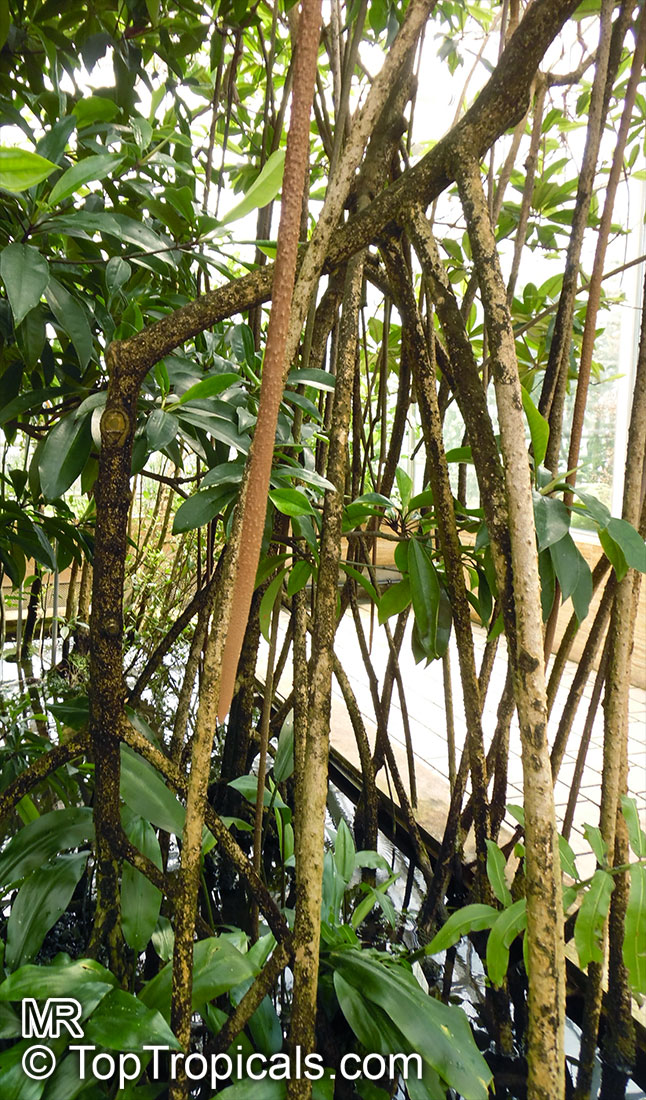
Botanical name: Bruguiera sp.
Common name: Mangrove
Family: Rhizophoraceae
Origin: East Africa, India, Southeast Asia, Australia, Melanesia and Polynesia
USDA Zone: 9-10

Mangroves are tropical plants that are adapted to loose, wet soils, salt water, and being periodically submerged by tides. Great for aquariums and ponds.
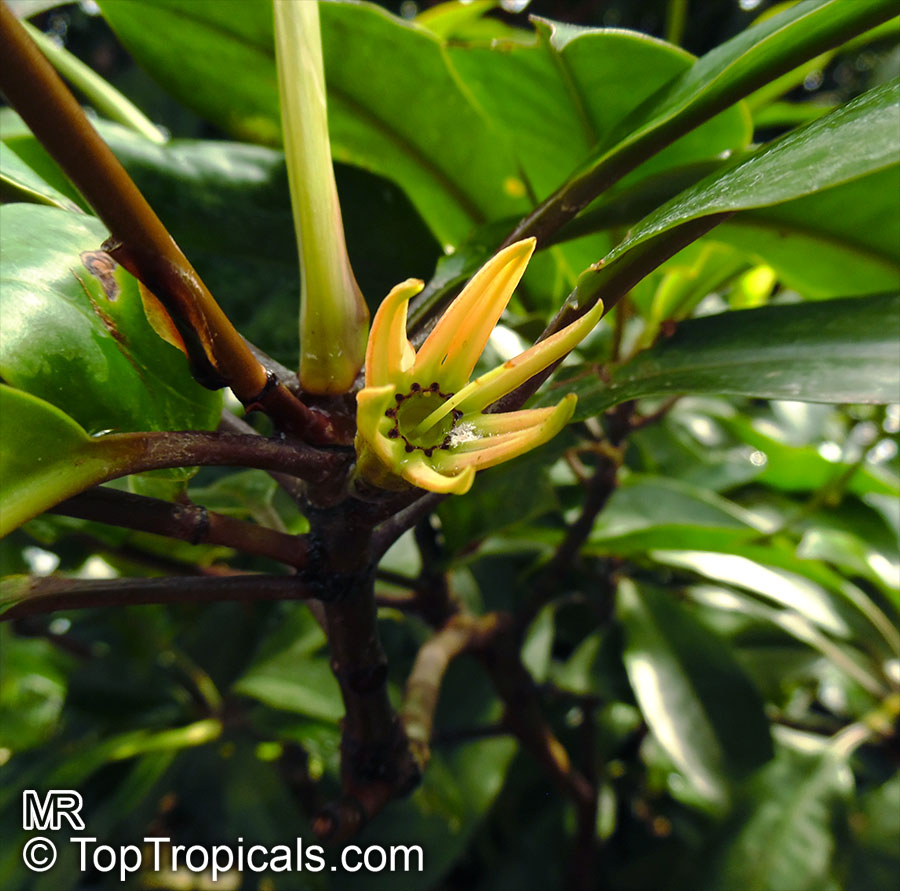
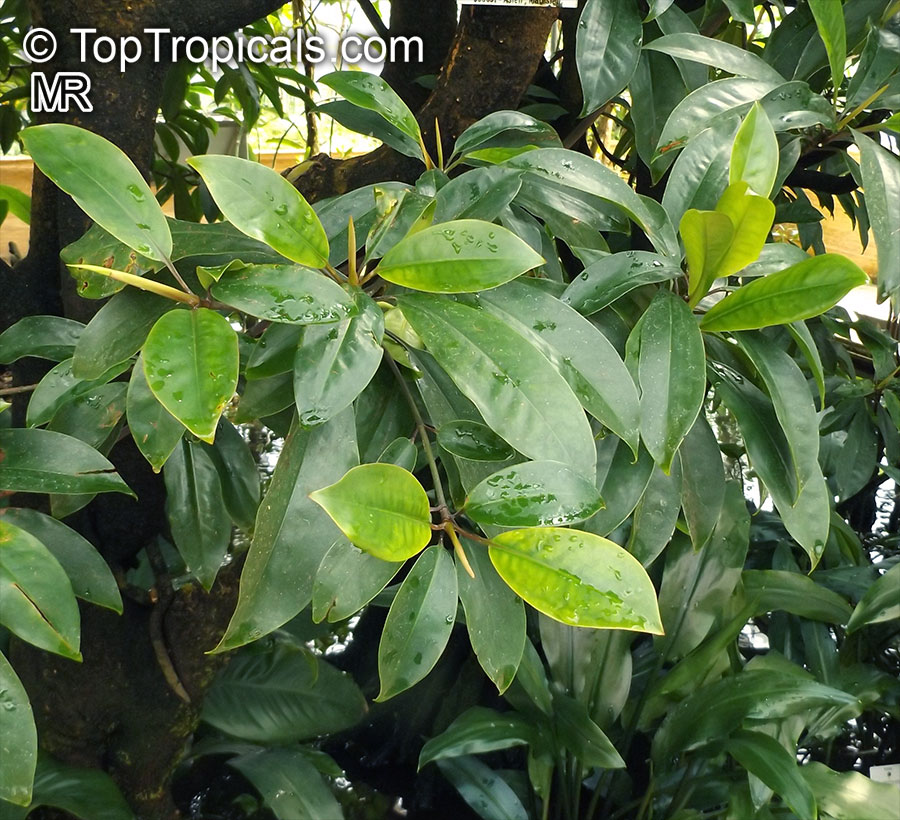
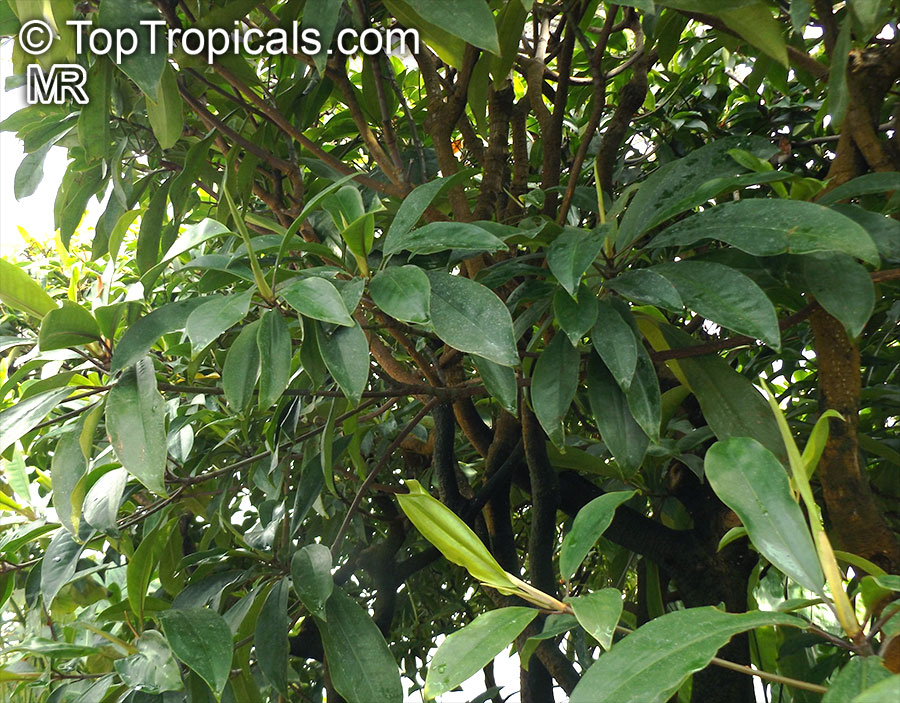
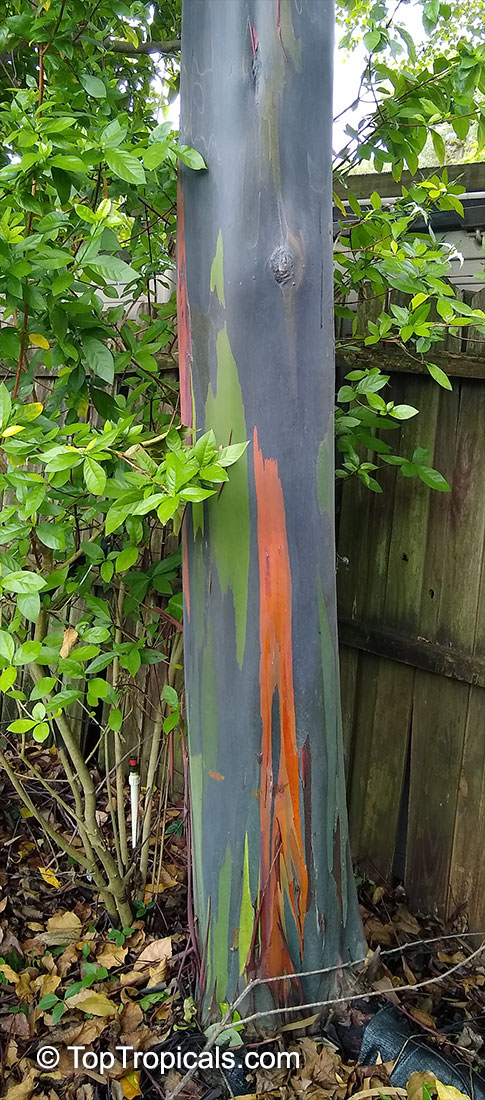
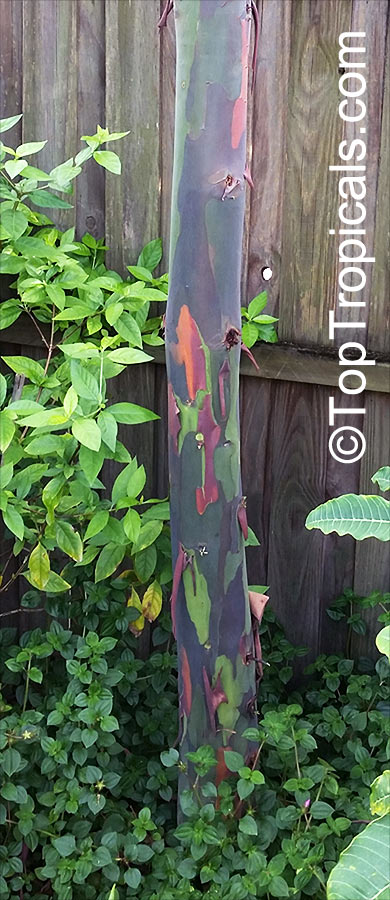
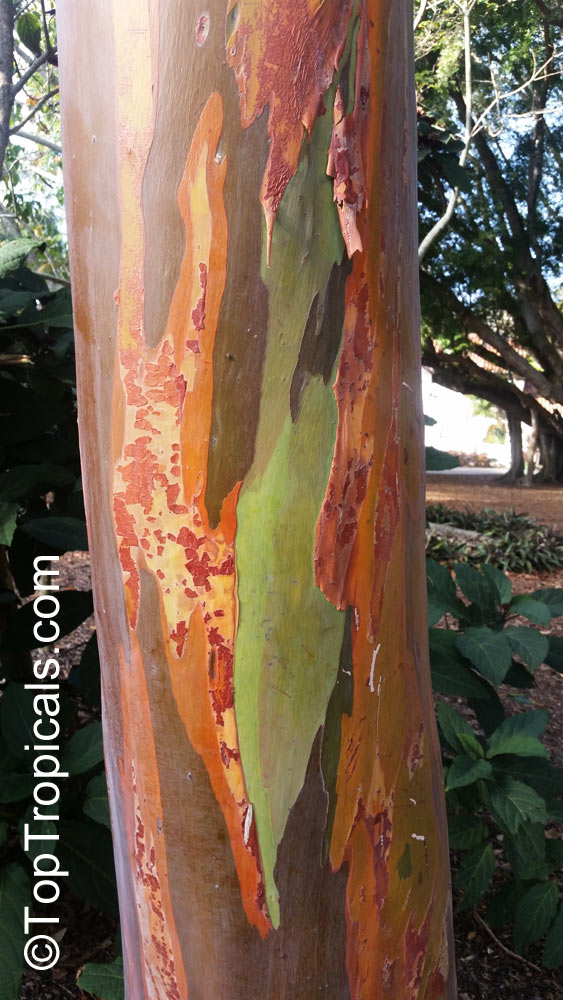
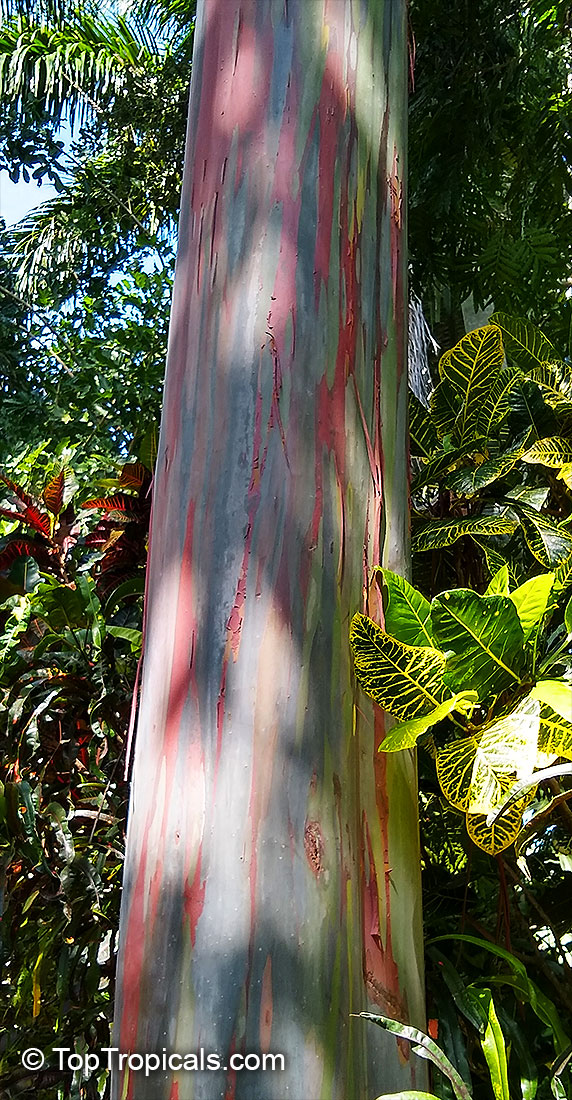
Botanical name: Eucalyptus deglupta
Common names: Rainbow Eucalyptus, Mindanao Gum, Rainbow Gum
Family: Myrtaceae
Origin: Philippines Native, Papua New Guinea
USDA Zone: 10-11


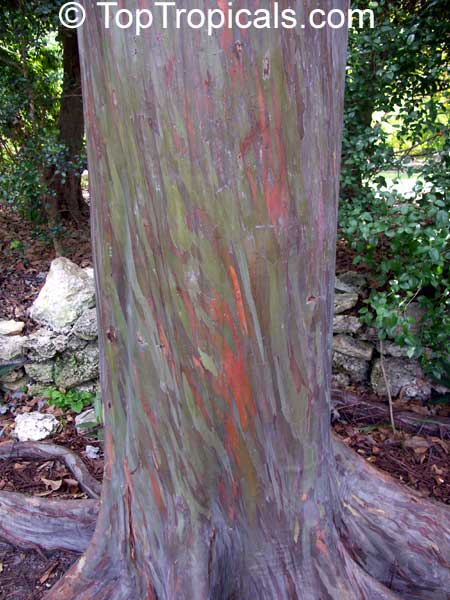
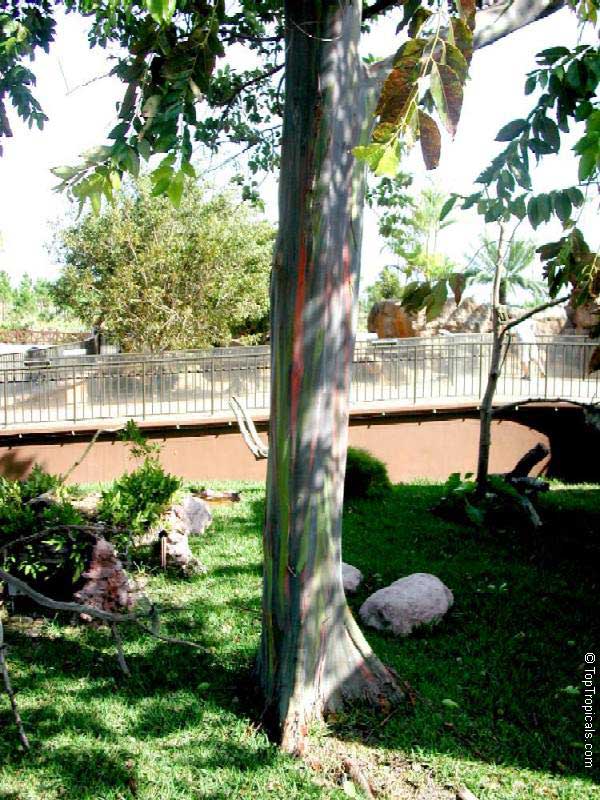
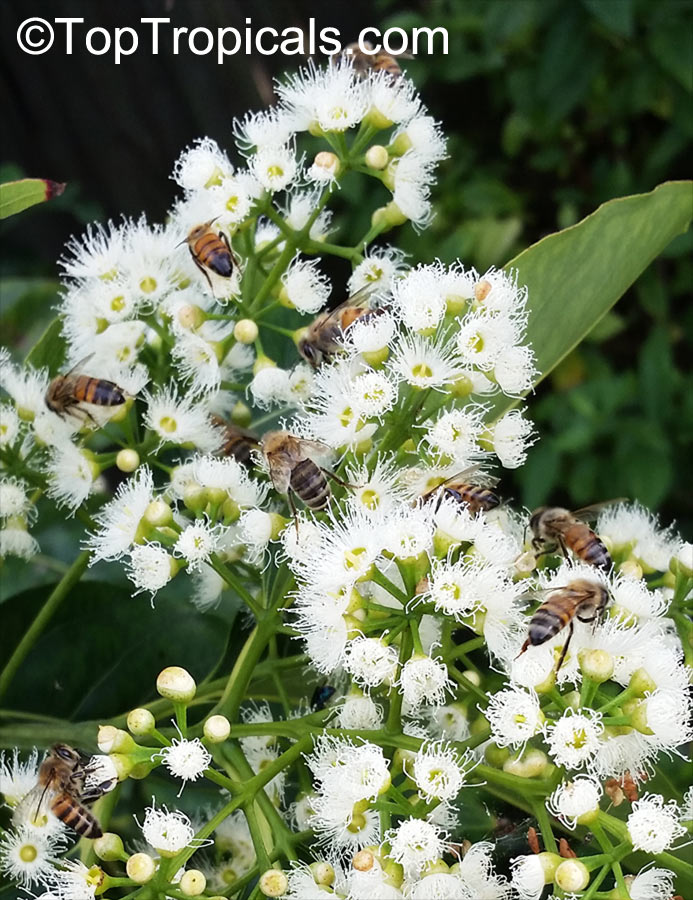
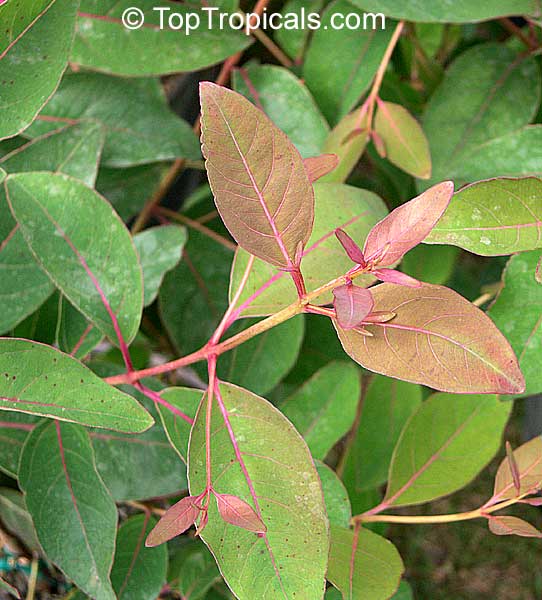
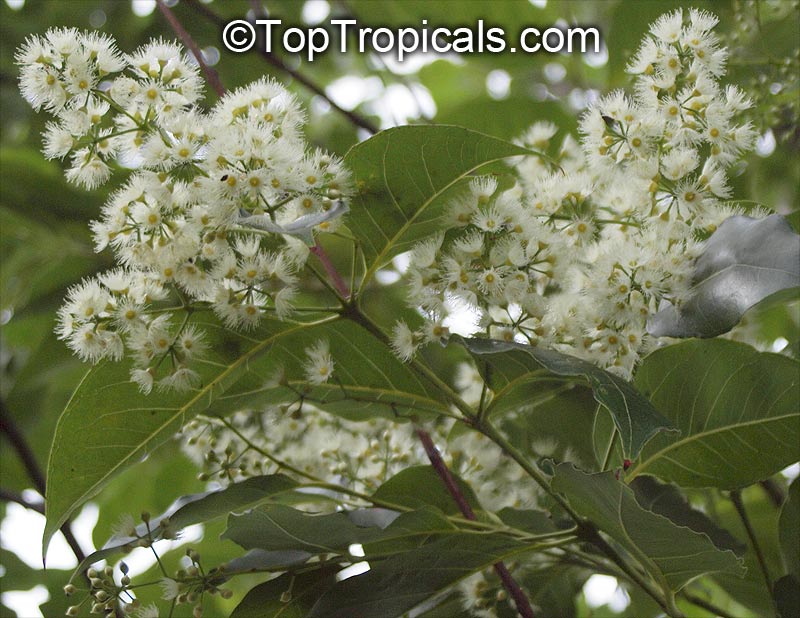
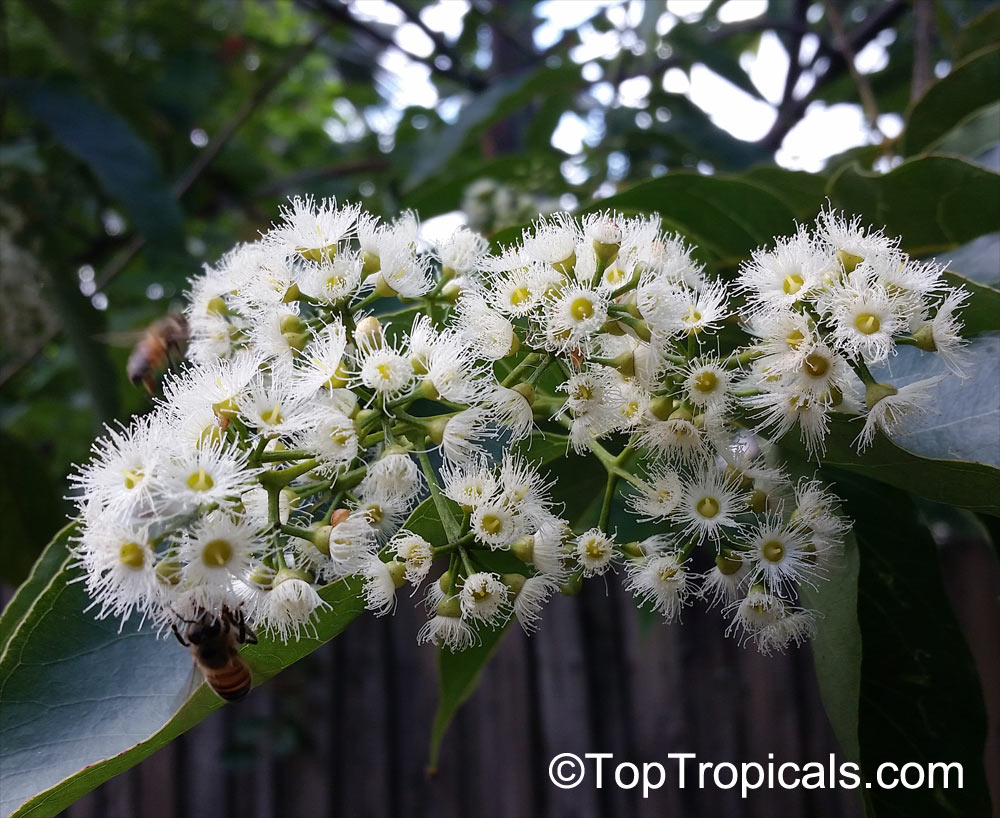
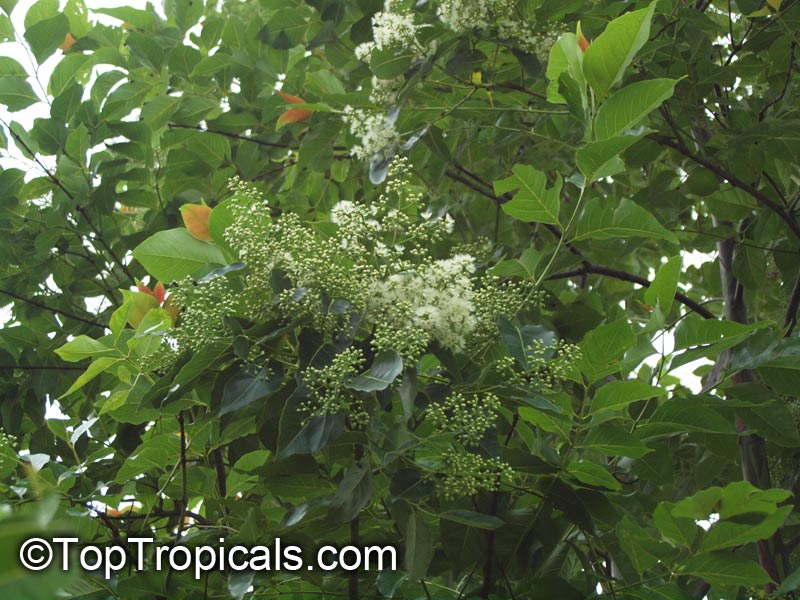
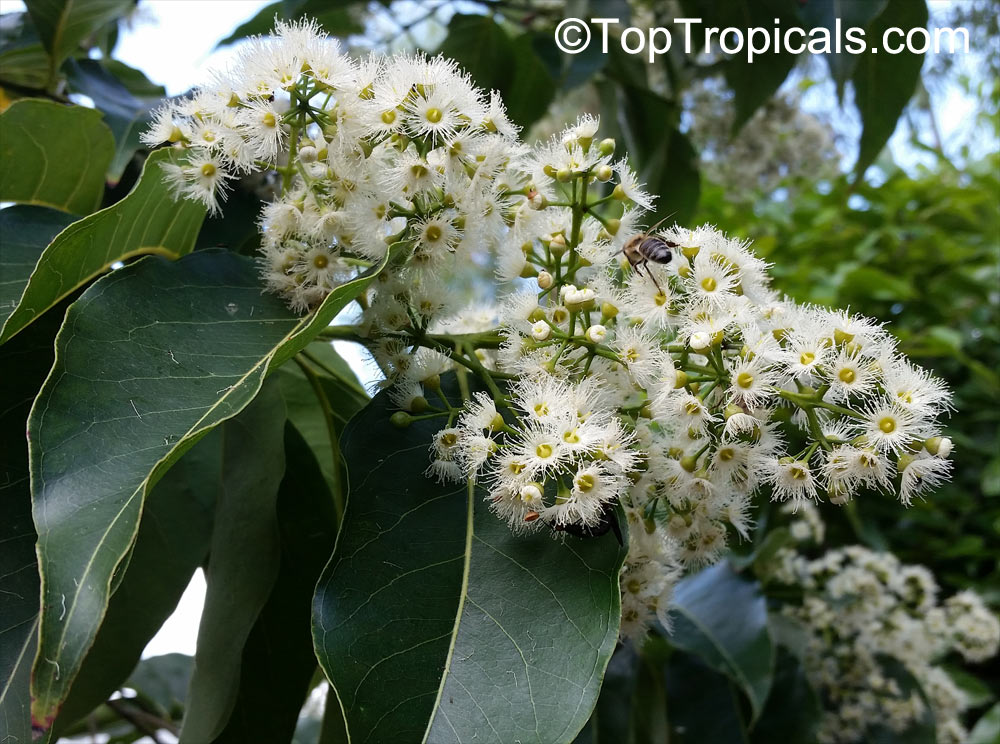
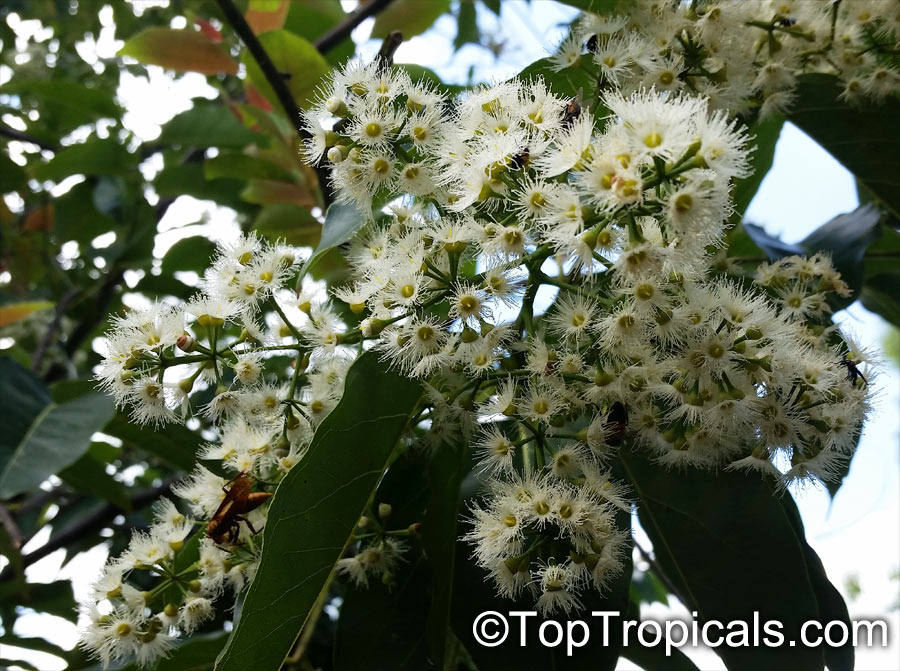
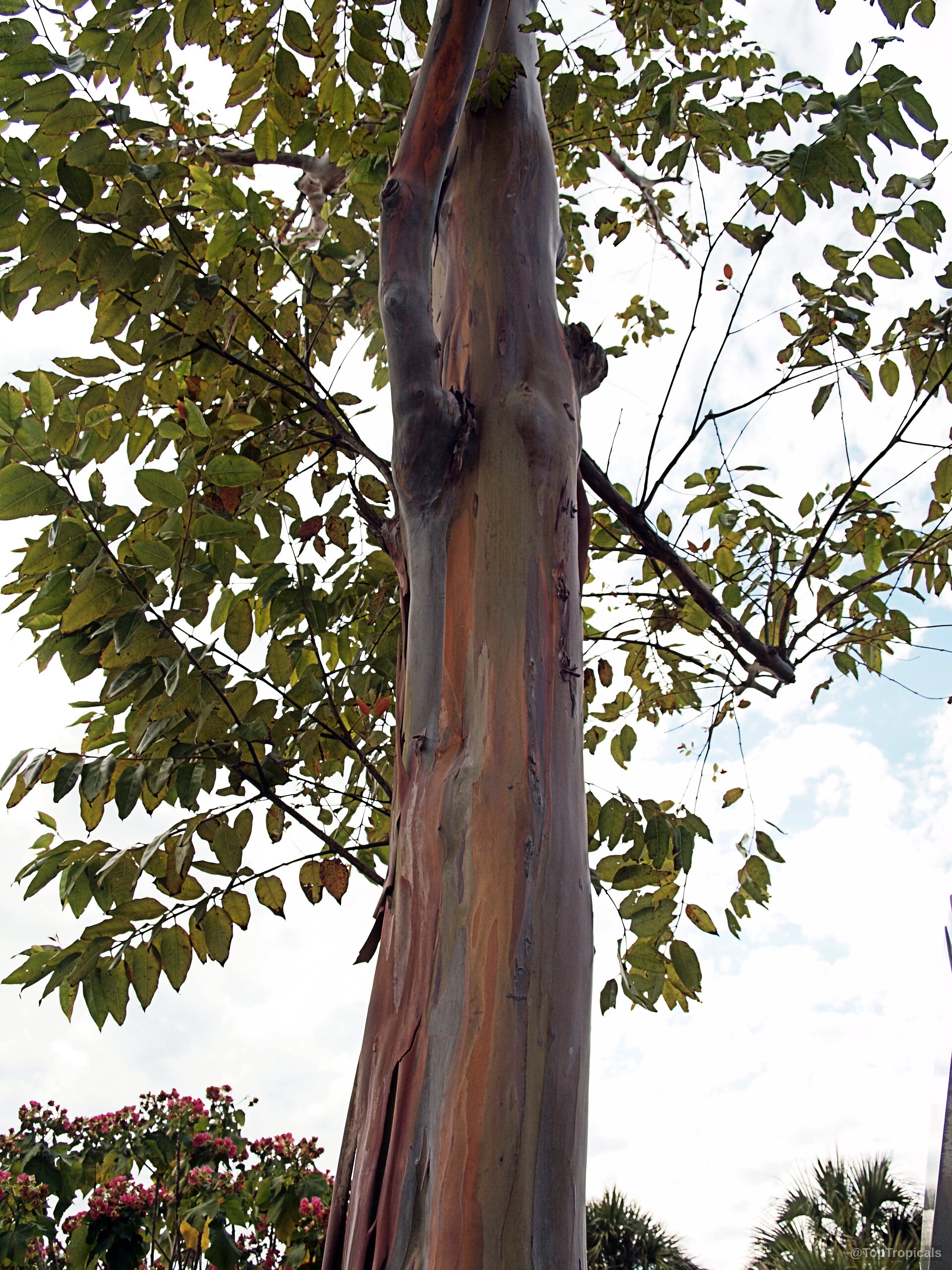
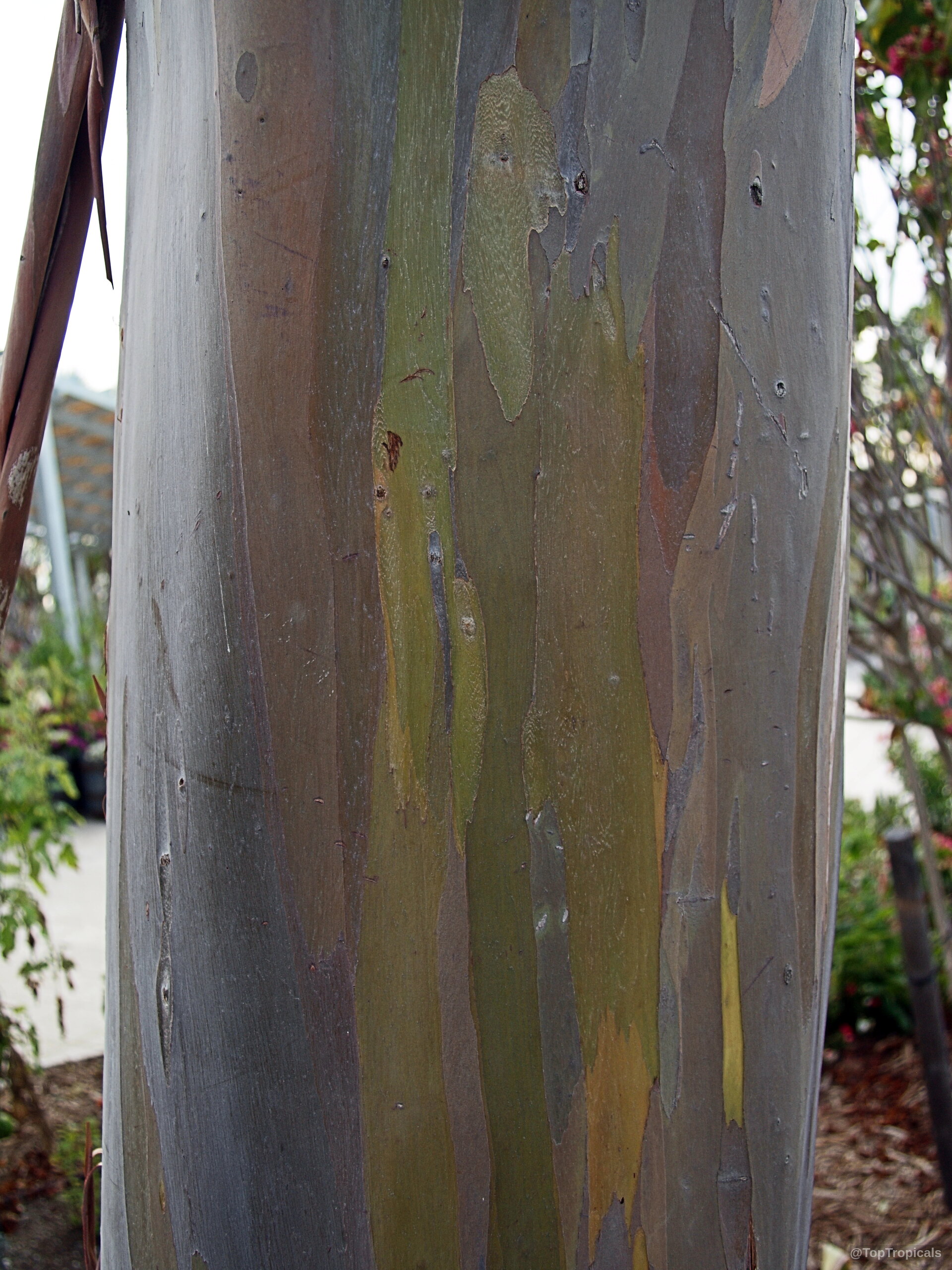
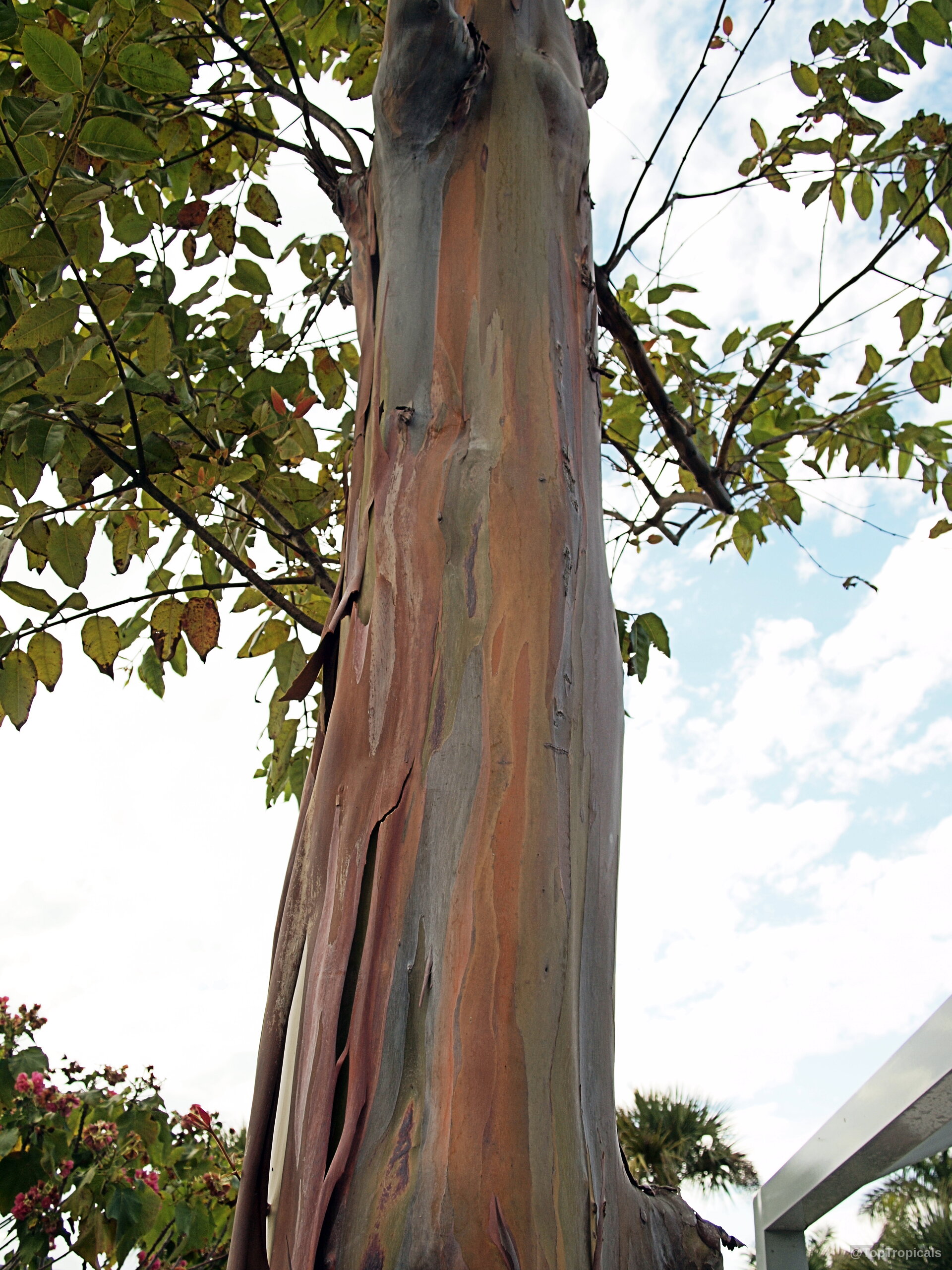
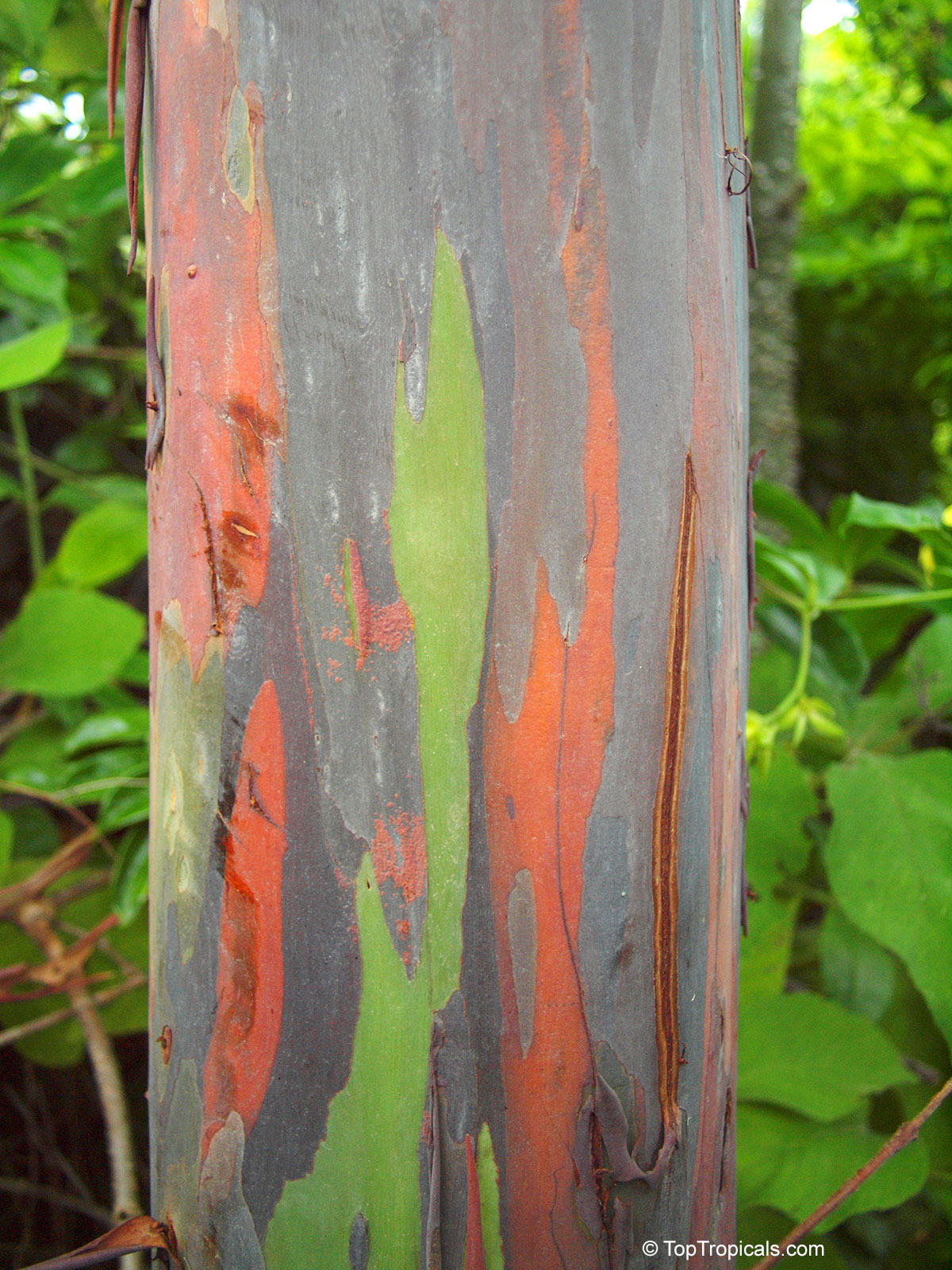
Eucalyptus deglupta - Rainbow Eucalyptus is one of the most striking trees in the world, famous for its naturally multi-colored peeling bark in shades of green, blue, purple, orange, and red. Native to the humid tropical forests of the Philippines and Papua New Guinea, it is a very fast-growing tall tree with an elegant upright form and pleasantly aromatic leaves. Unlike most eucalyptus species, this one is highly cold sensitive and should be protected from frost, hard freezes, and cold winds. Best suited for USDA Zones 10-11, it thrives in full sun, warm humid conditions, and moist well-drained soil, though it also tolerates periodic flooding. An outstanding specimen tree for tropical and subtropical landscapes.



Recommended Fertilizer: SUNSHINE Robusta - Rapid Growth Booster
Recommended Fertilizer: SUNSHINE Robusta - Rapid Growth Booster
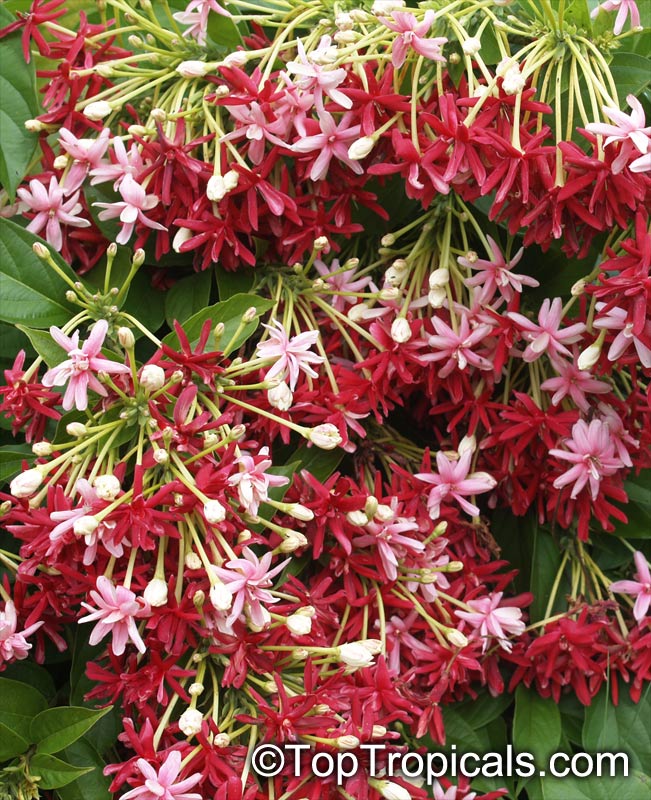
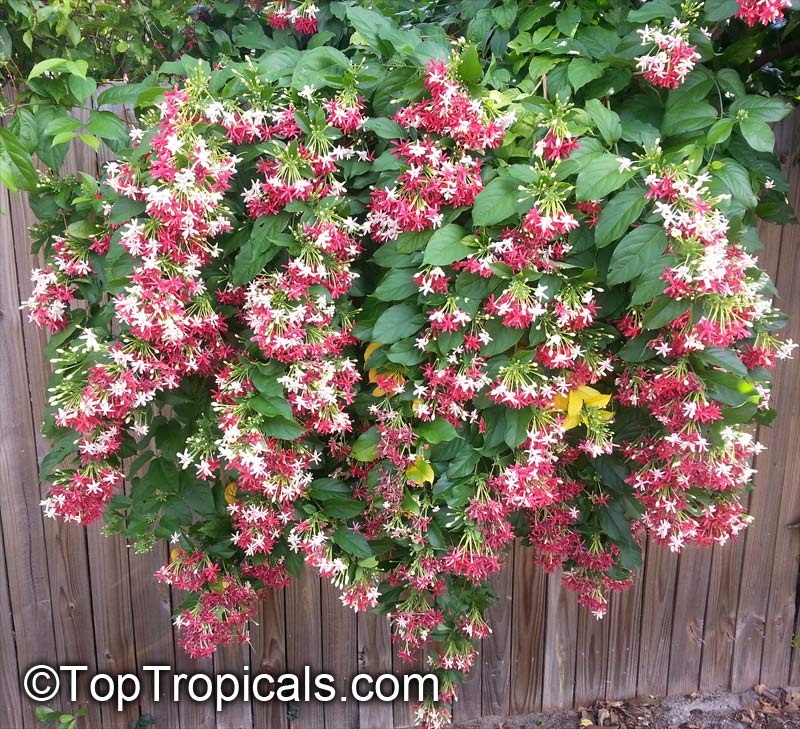
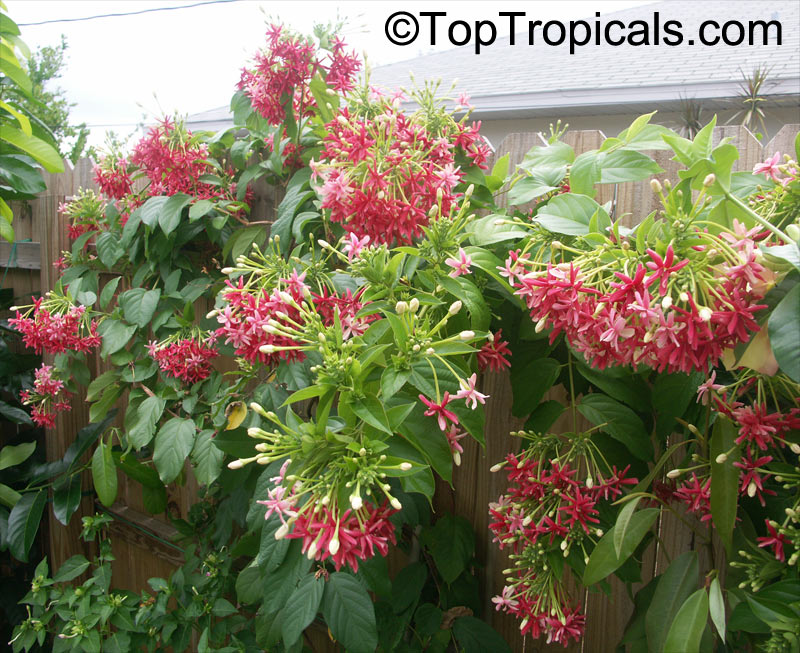
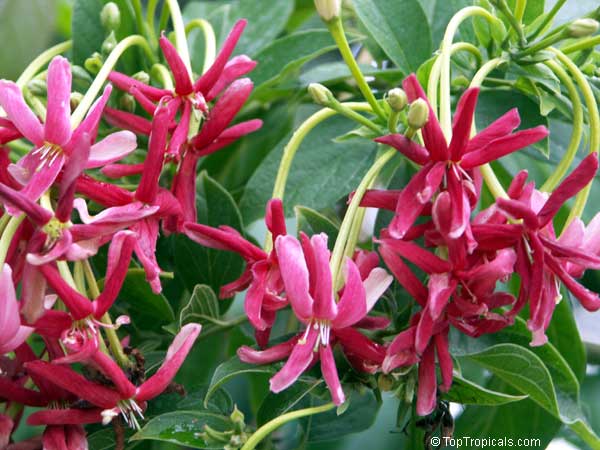
Botanical names: Quisqualis indica, Combretum indicum
Common name: Thai Double Flower Rangoon Creeper
Cultivar: Double Flower
Family: Combretaceae
Origin: Thailand
USDA Zone: 9-11


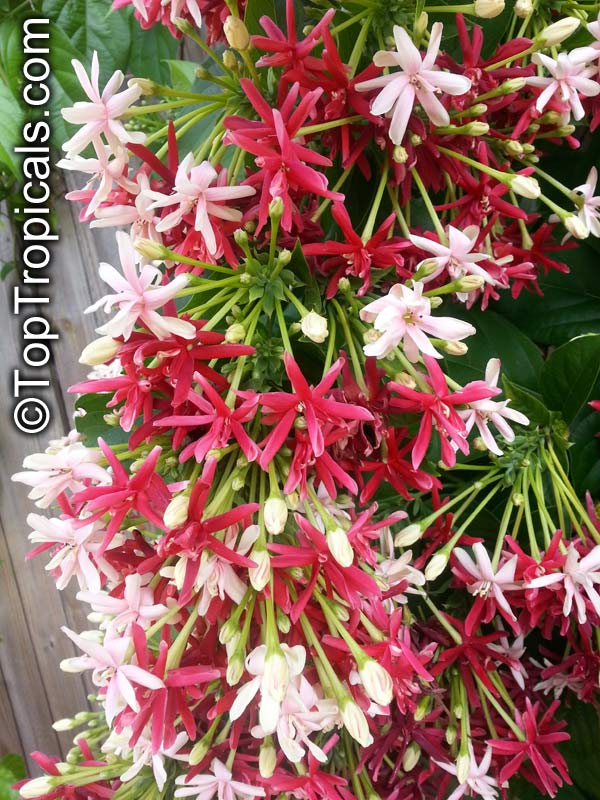
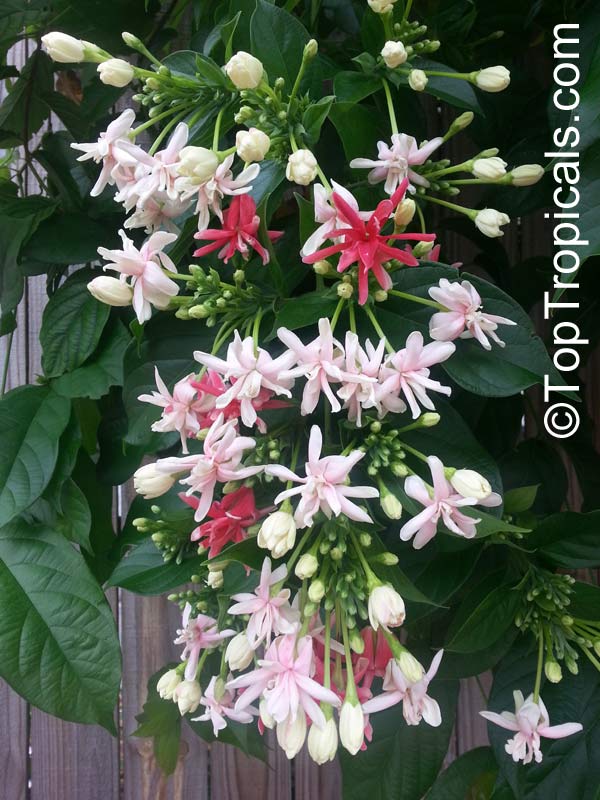
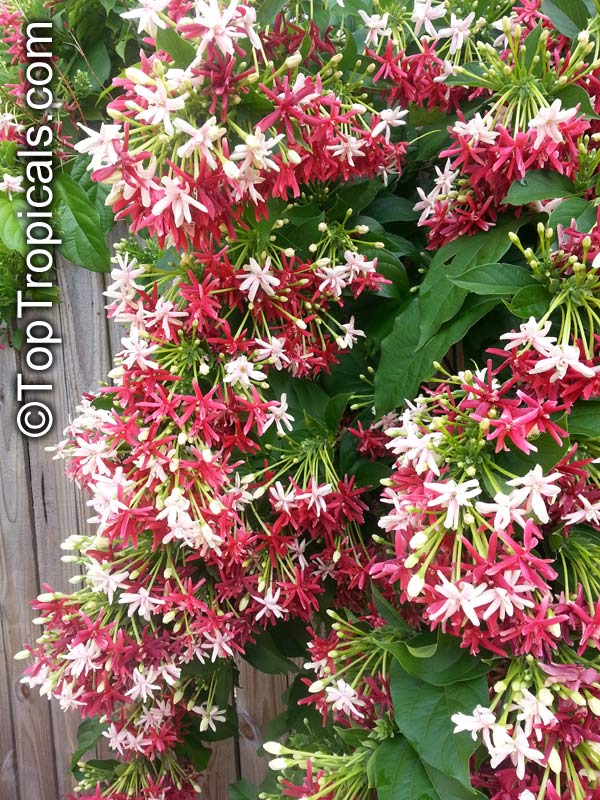
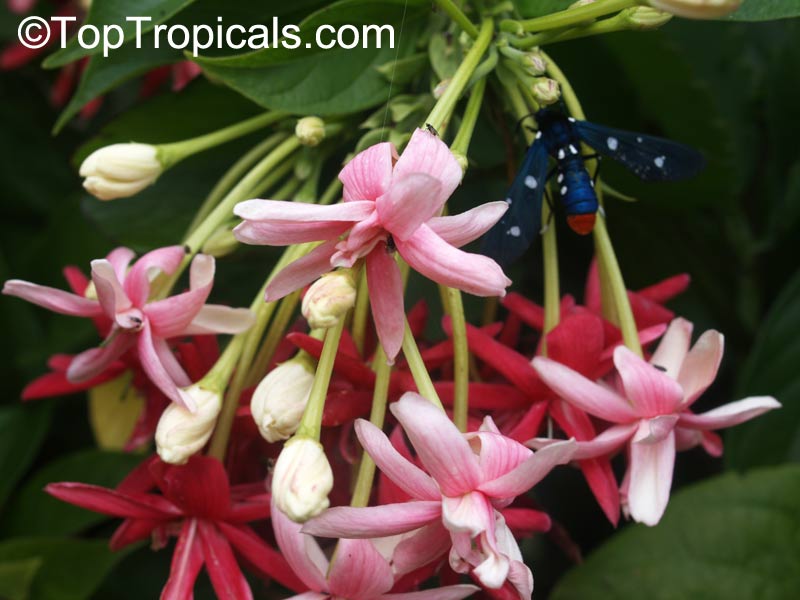
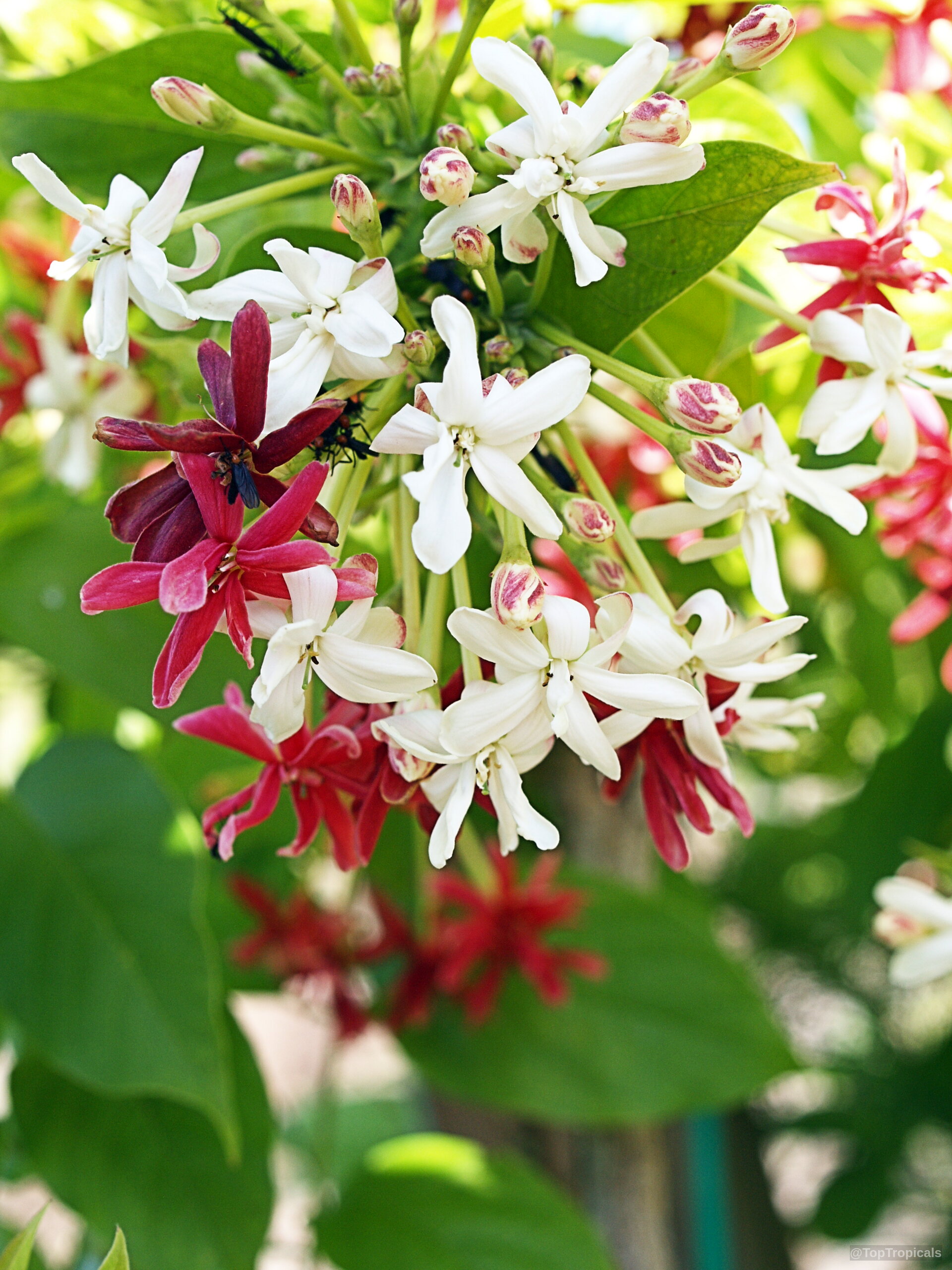
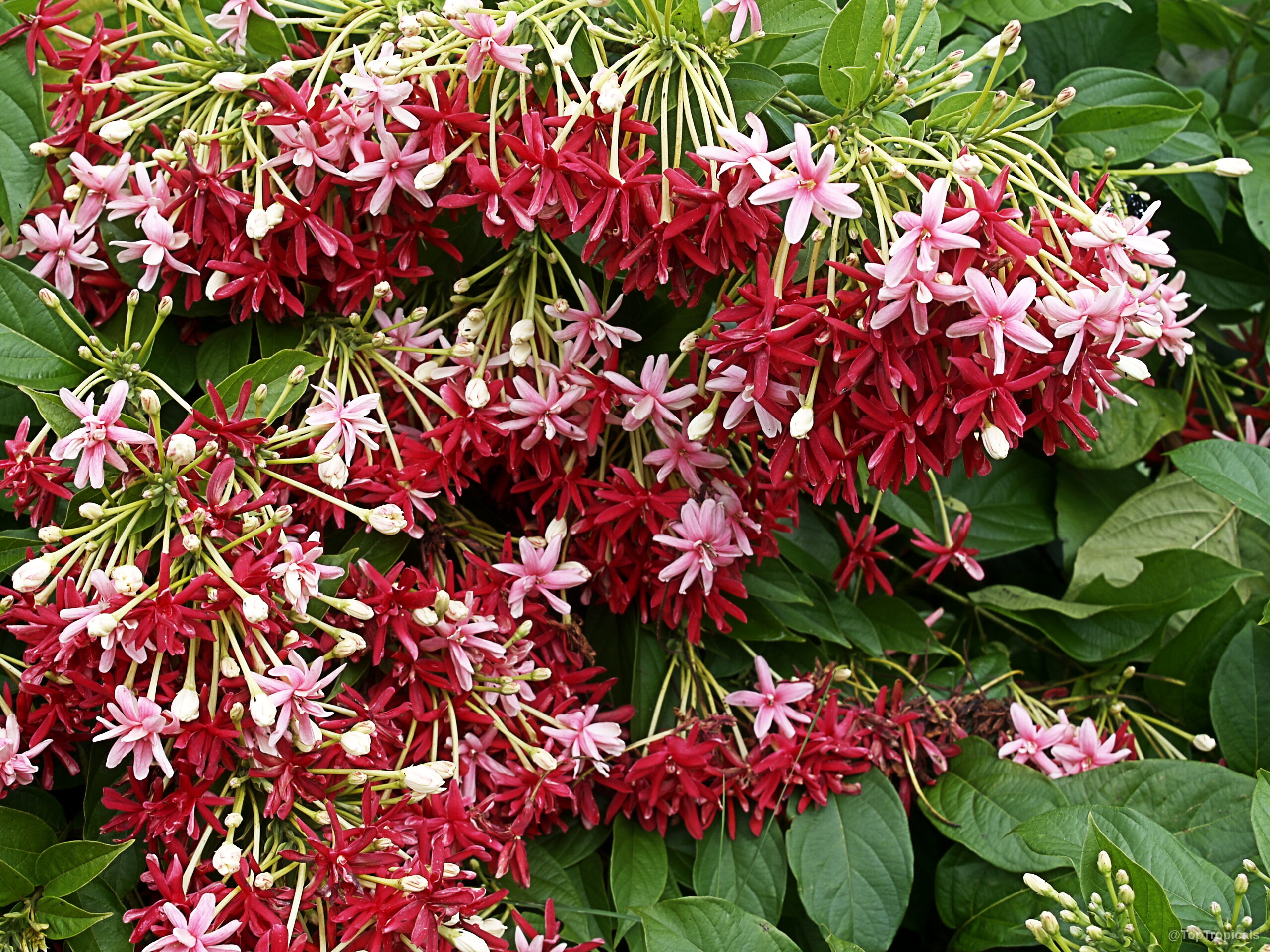
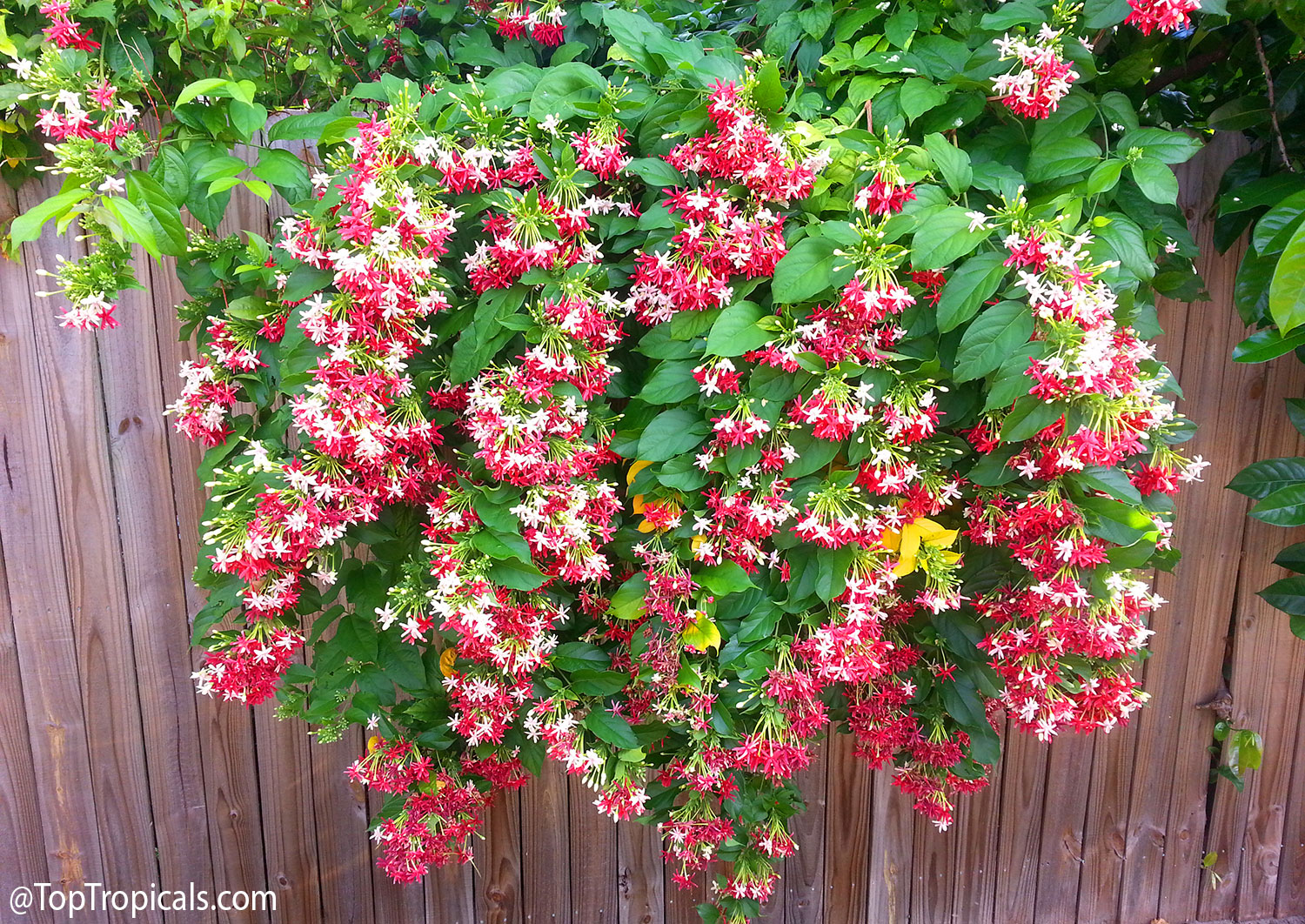
This hybrid of quisqualis from Thailand has large clusters of double flowers. An extremely beautiful shrubby vine with pale-pink to deep crimson star shaped flowers, covering the entire plant when in full bloom. It's scent is unforgettable, fruity and intoxicating! The flowers are born in clusters and each flower has many variations of color, depending on how old the flower is. The flower starts out white and or pink striped and turn solid pink and finally dark pink on maturity. Highly fragrant in warm humid afternoon. Very difficult to propagate.


Recommended Fertilizer: SUNSHINE Pikake - Fragrant Flower Booster
 SUNSHINE Pikake (NPK 2-2-4) - eco-friendly concentrated nutrition booster for fragrant flowers. Improves quantity and quality of flowers. Encourages profuse blooming. Increases flower fragrance intensity. Can be used with every watering. For best results, use in combination with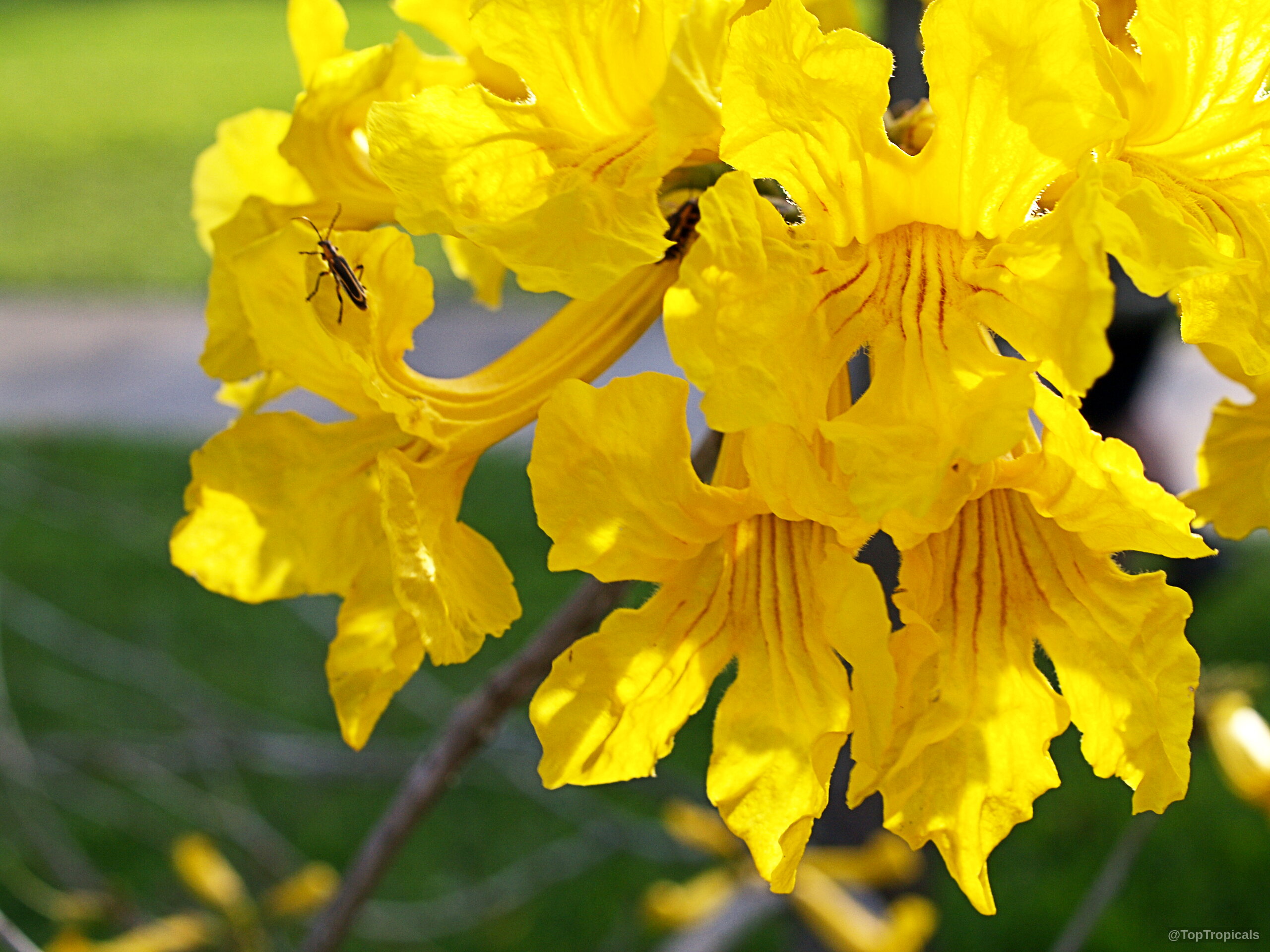
Botanical name: Tabebuia umbellata
Common name: Yellow Trumpet
Family: Bignoniaceae
Origin: Tropical America
USDA Zone: 9-10
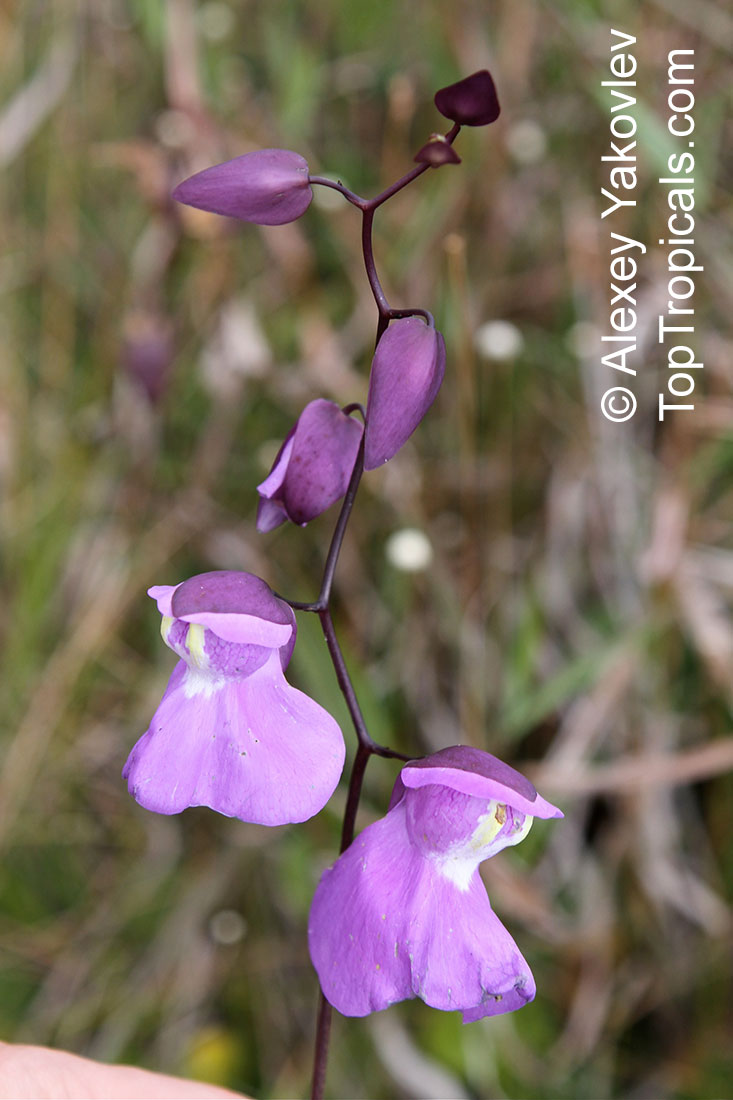
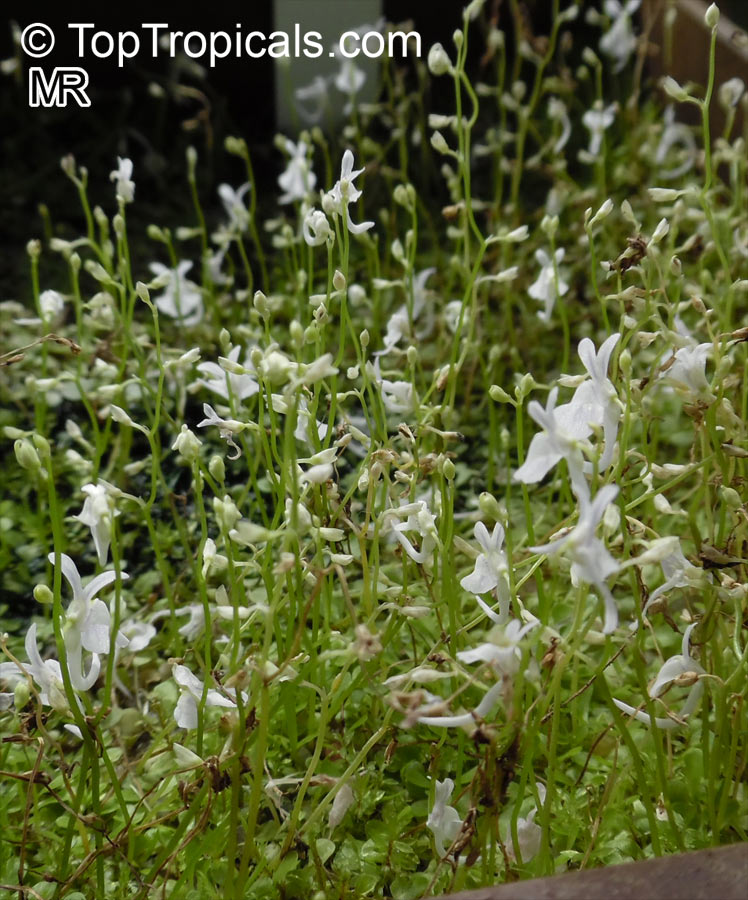
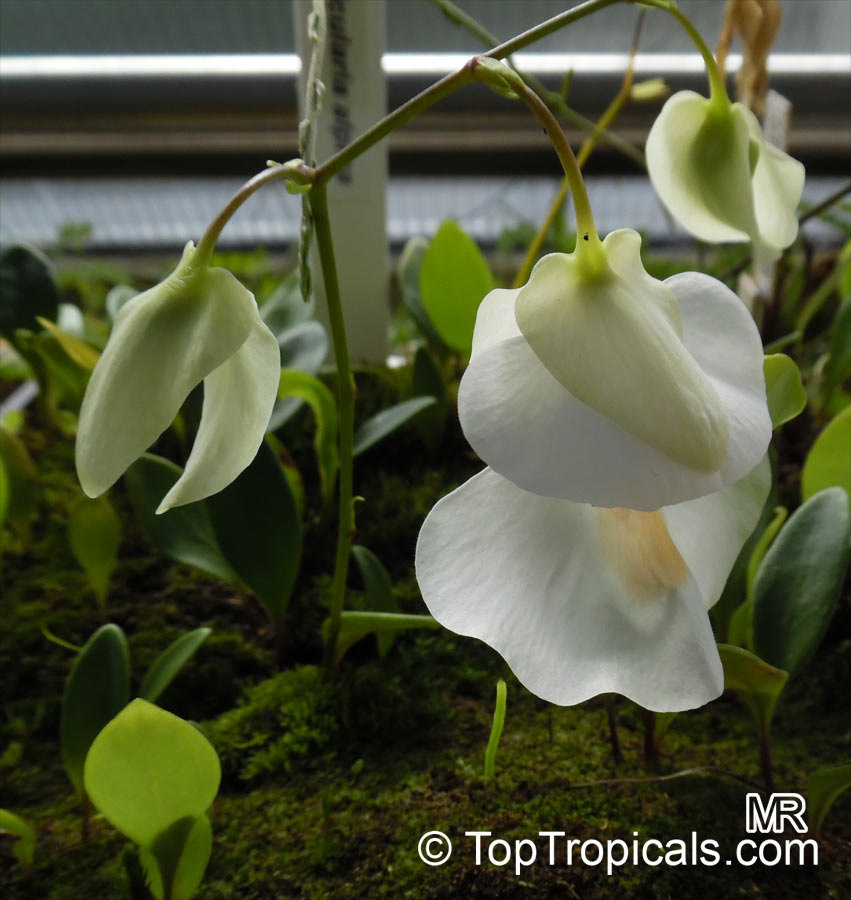
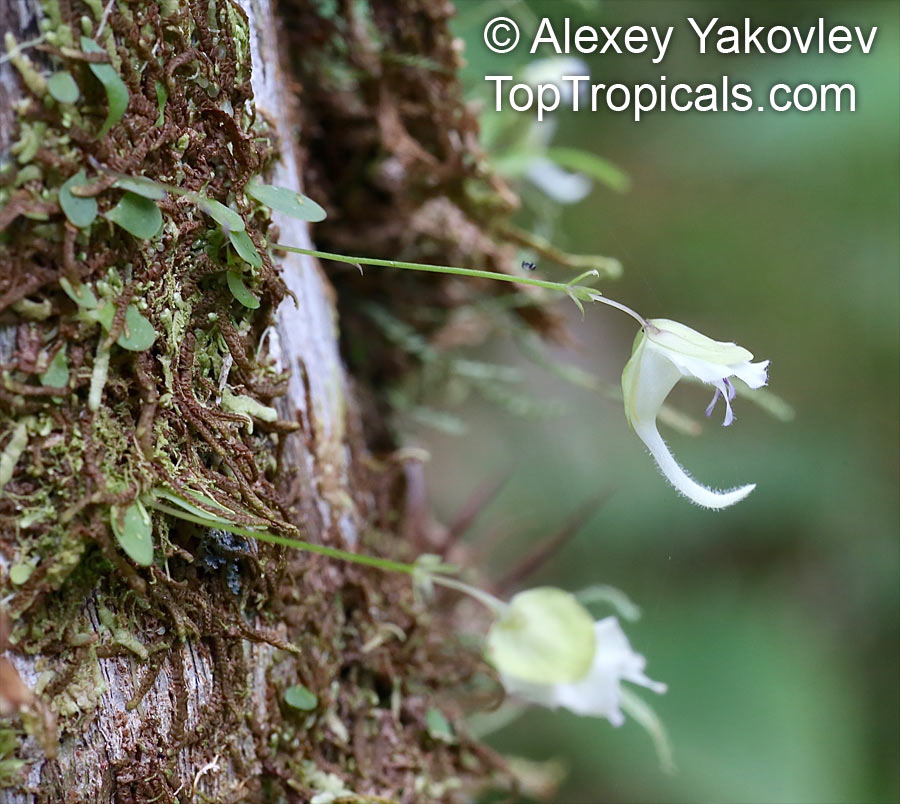
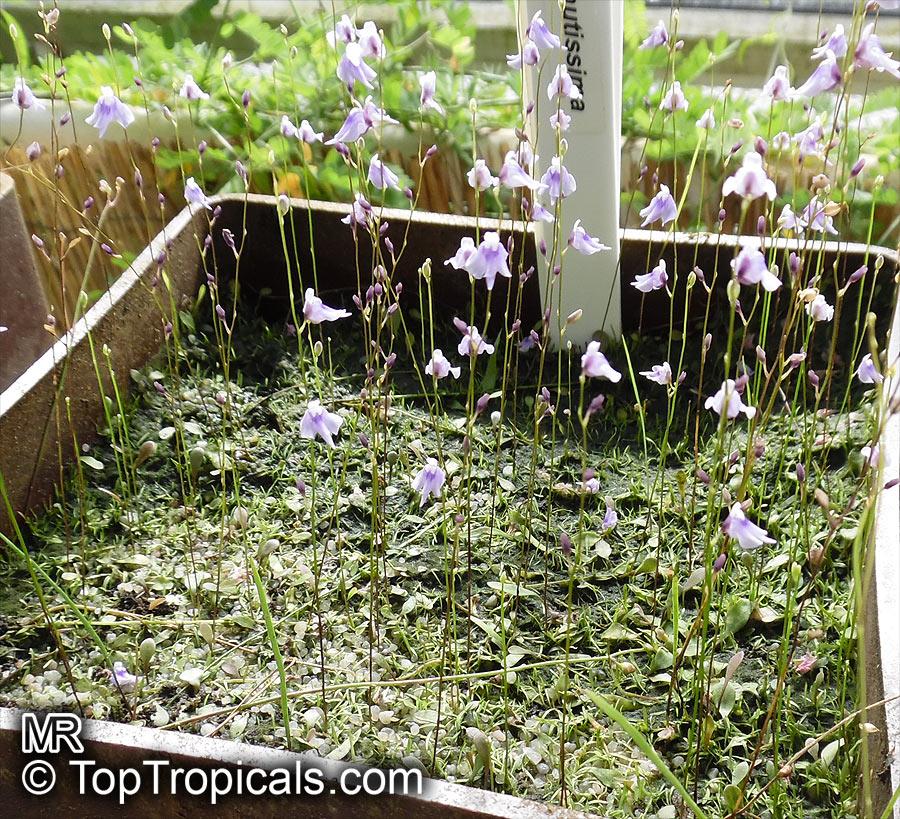
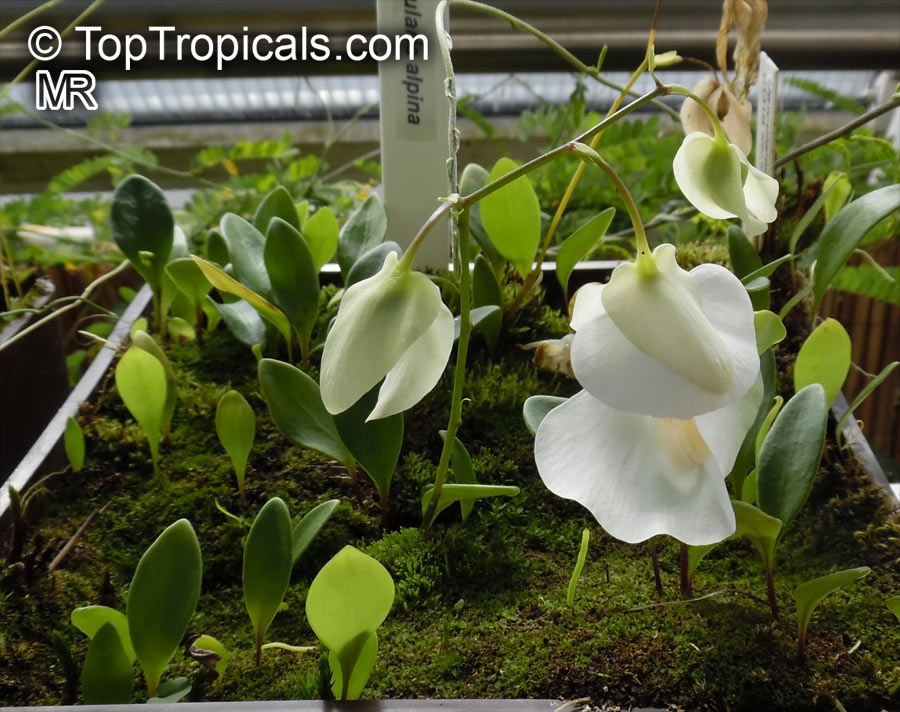
Botanical name: Utricularia sp.
Common name: Bladderwort
Family: Lentibulariaceae
Origin: Worldwide
USDA Zone: 6-9


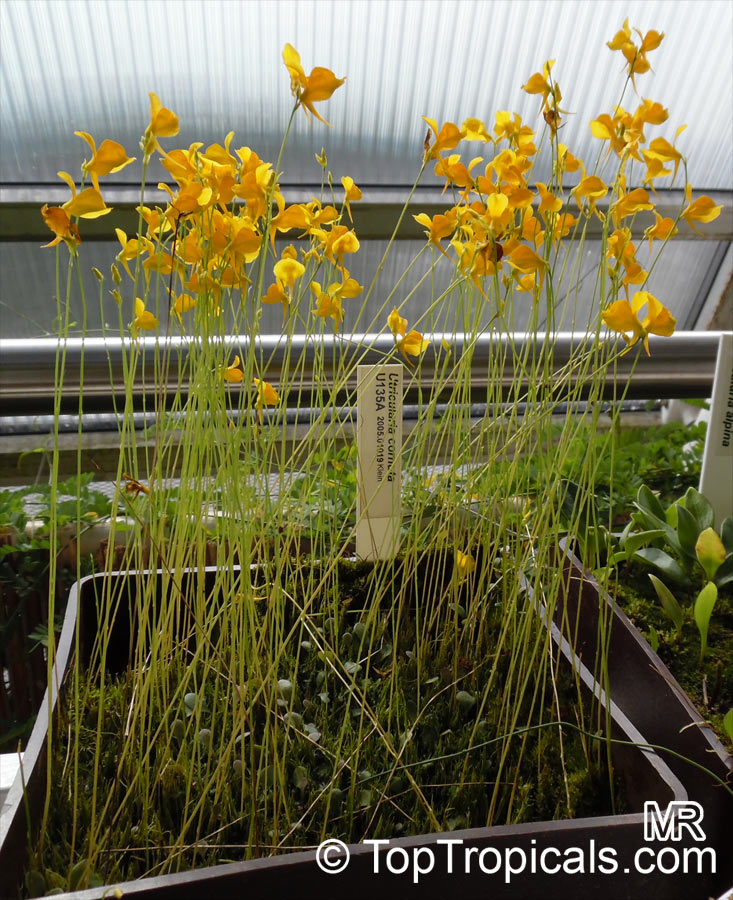
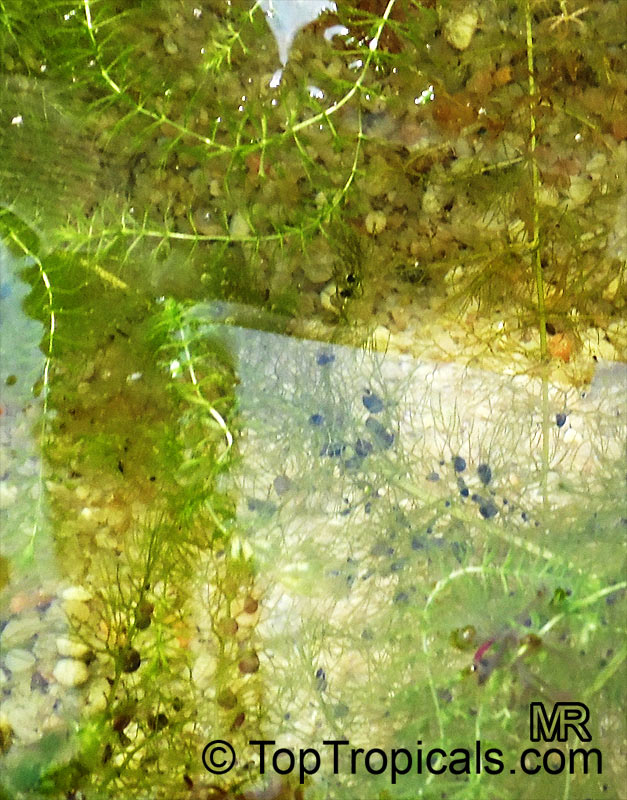
Utricularia is the largest genus of carnivorous plants with more than 220 species that occur throughout the world. They are found on every continent except for Antarctica. Some are terrestrial species found in moist-to-wet, often acid soils, and in sphagnum moss, while others are aquatic, preferring to be floating freely in quiet waters in ponds and ditches. Many terrestrial species in the tropics are epiphytic.The bladderworts present a rather unique morphology. First of all, the plants are entirely rootless -- completely giving up the normal plant way of obtaining nutrients from the root system. Also, the distinction between stem and leaf is often vague, especially in the aquatic species. The trapping mechanism, the bladder, is a modified leaf or a leaf division morphologically, in general conformity with all trapping structures found in carnivorous plants of other genera. The flowers are generally quite colorful and showy for both terrestrial and aquatic species, especially when seen in masses. Some of these flowers compete with those of orchids in their beauty.
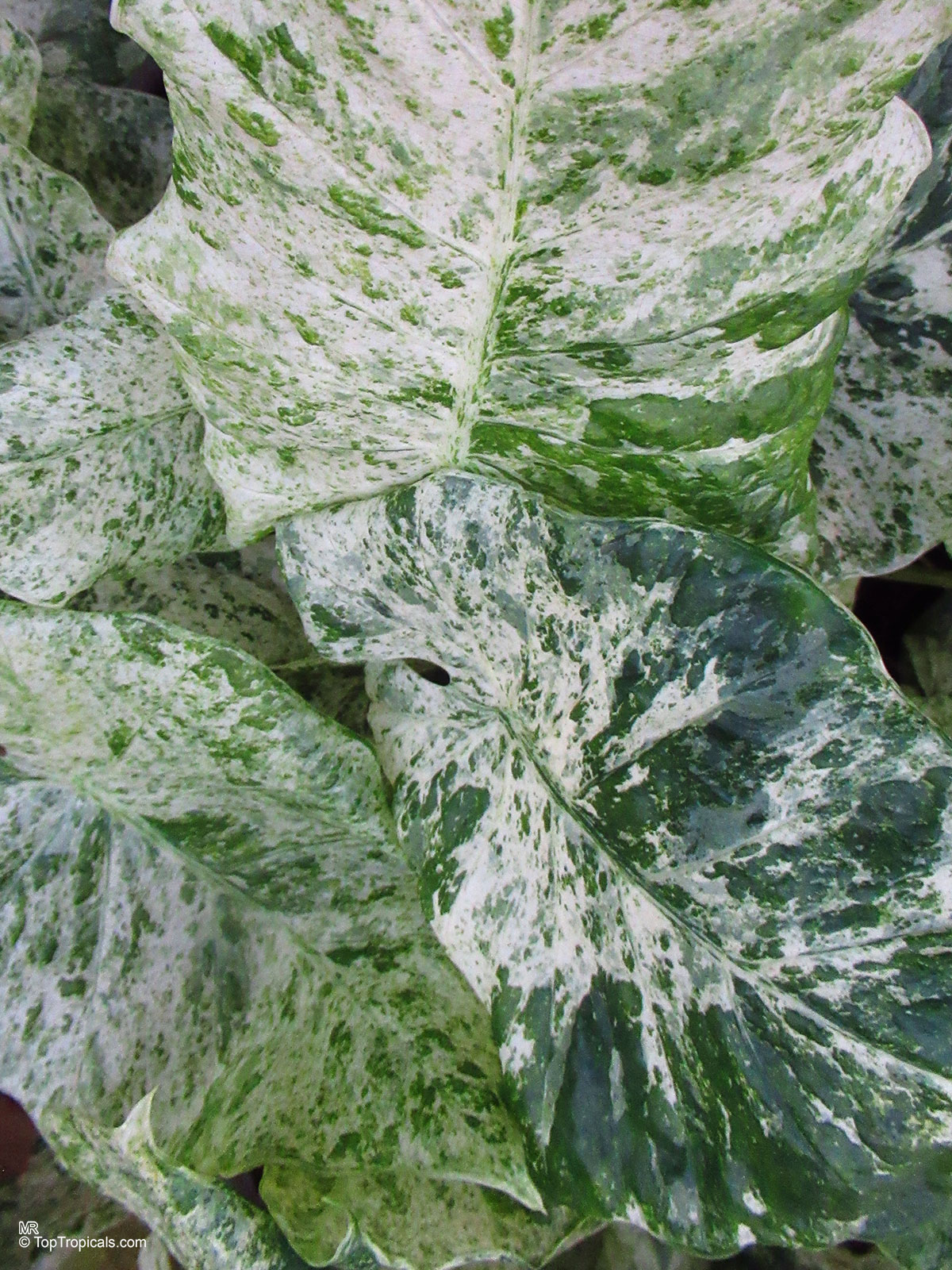
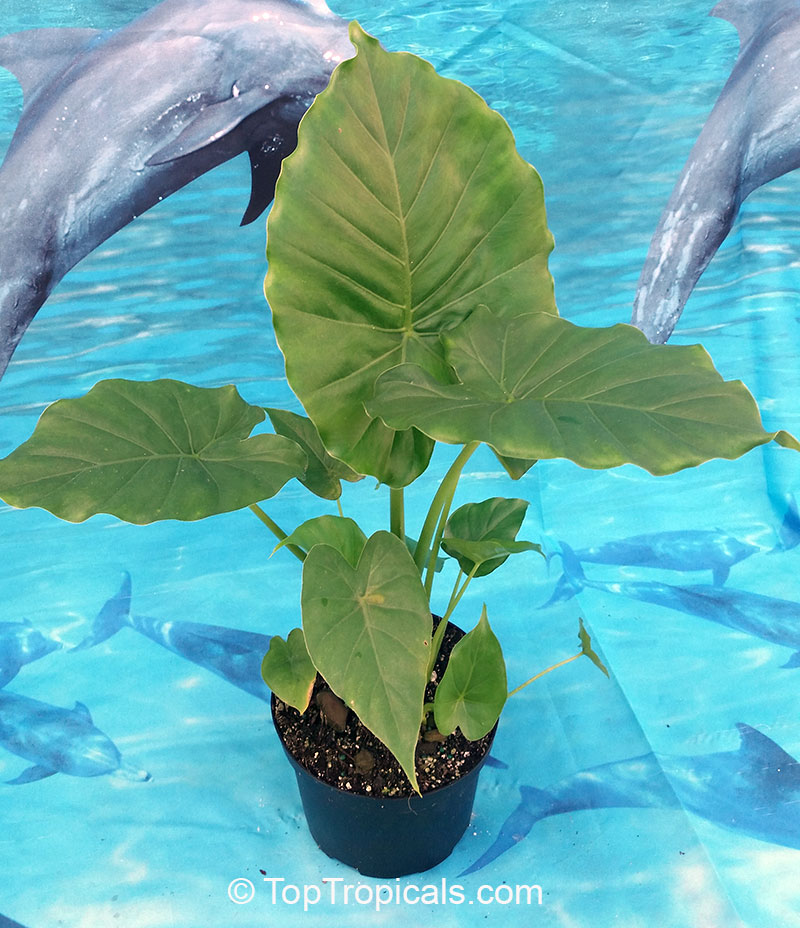
Botanical name: Alocasia odora
Common name: Giant Upright Elephant Ear
Family: Araceae
Origin: Tropical Asia
USDA Zone: 7-11

It grows in light shade to partial sun, in a well-drained, fuzzy soil. Where cold winter temperatures occur, it is best to plant these in a container that can be moved indoors; they are only cold-hardy to Zone 7-11, so Zone 8 and below should take extra caution, as this plant cannot tolerate frost.
A tall, woody perennial, Alocasia odora typically grows up to 5-10 feet tall in its native Tropical Asia. With its large, striking leaves and small, off-white/white fragrant flowers, it has become a popular ornamental choice for gardens. The foliage has an intense shine, and striking color contrast with the veining and patterning.
Alocasia odora prefers partial shade and regular water. It will tolerate bog or aquatic garden conditions and flood-like conditions. It requires a soupy soil or a soil that allows for good drainage.
In order to ensure a healthy, robust growth, it is important to evenly water the plant regularly, ideally using a moisture meter to determine the proper moisture level. It is also recommended to place the plant in spots where it will receive plenty of indirect sunlight and to fertilize it bi-weekly.
However, in cold regions, it is essential to be aware of the fact that Alocasia odora is only cold-hardy to temperatures at least as low as 30°F for a short time. To prevent any cold damage, it is best to move the plant indoors and it might be good to keep it in a pot rather than planting it in the ground.
Overall, Alocasia odora adds a unique texture and delicate beauty to any garden or home. With its large, architectural leaves and fragrant blooms, it is no wonder that this plant has become a much sought-after ornamental for any garden.
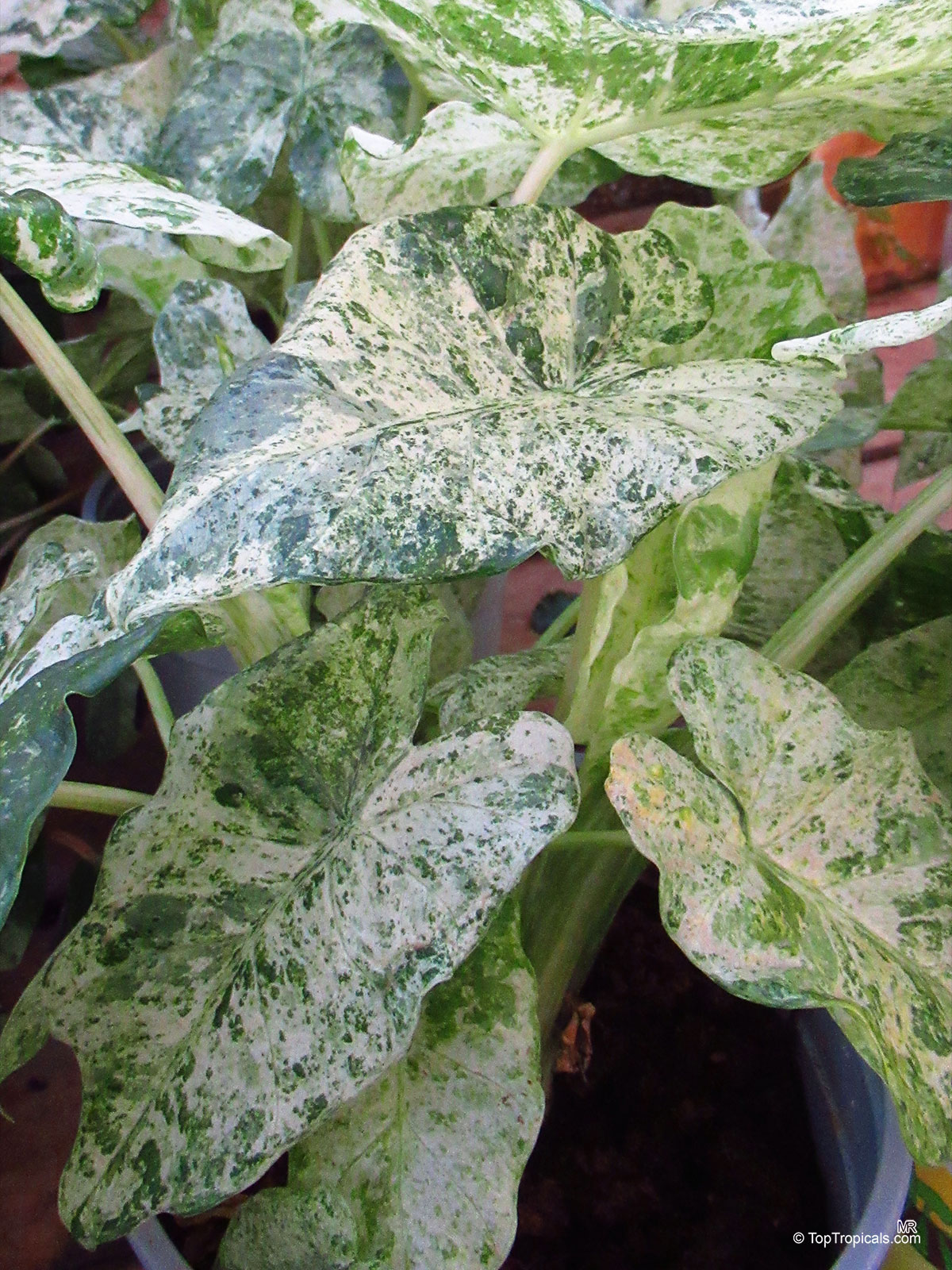
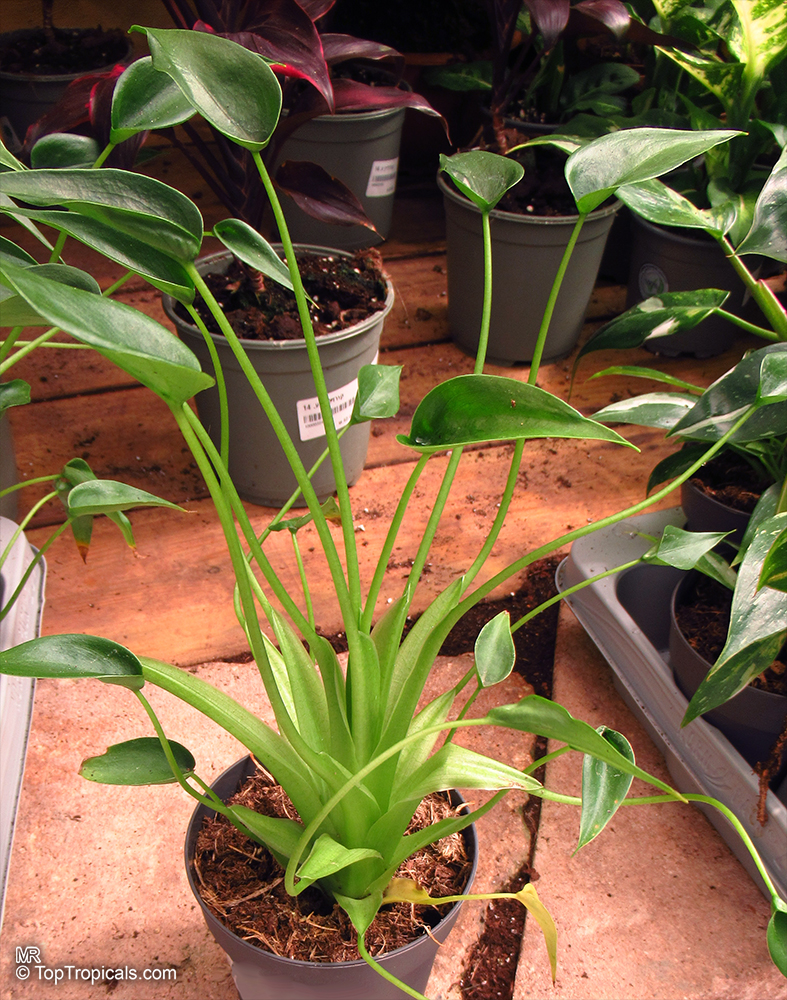
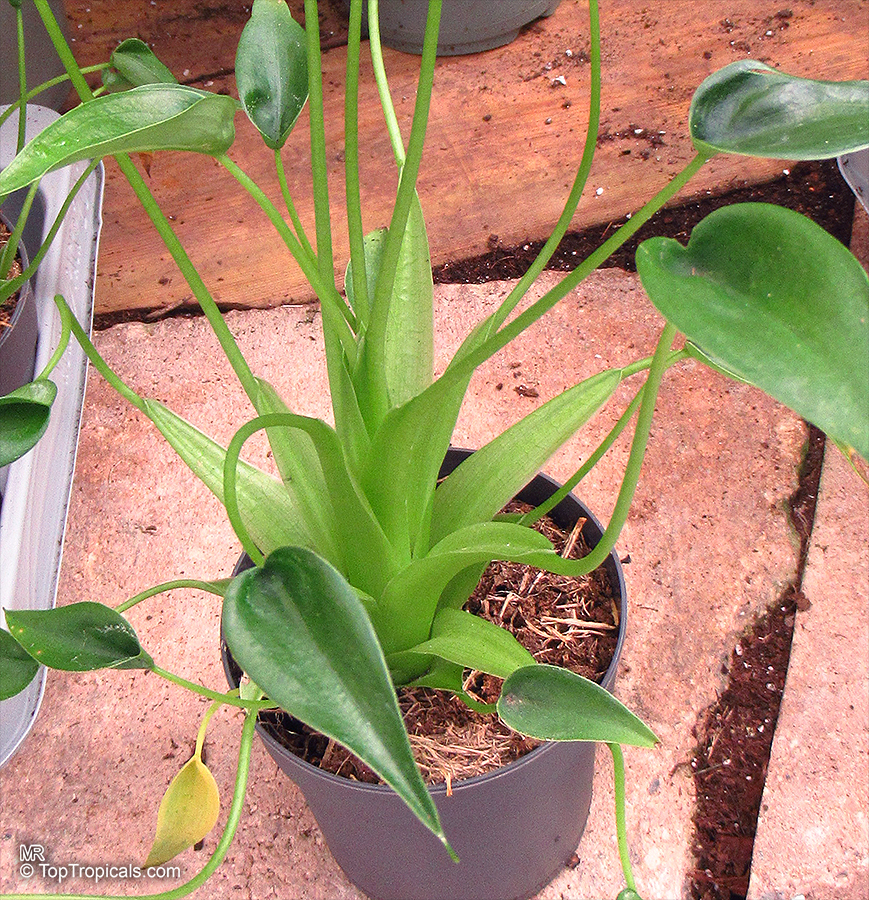
Alocasia 'Tiny Dancer' is unlike any other.This hybrid (scientific name: Alocasia brisbanensisxlocasia odora), created in 2013 is known for its long green petioles with small cupped leaves in a unique teardrop shape. While the plant grows upright, its petioles tend to fan out, curving in different directions like they are dancing.
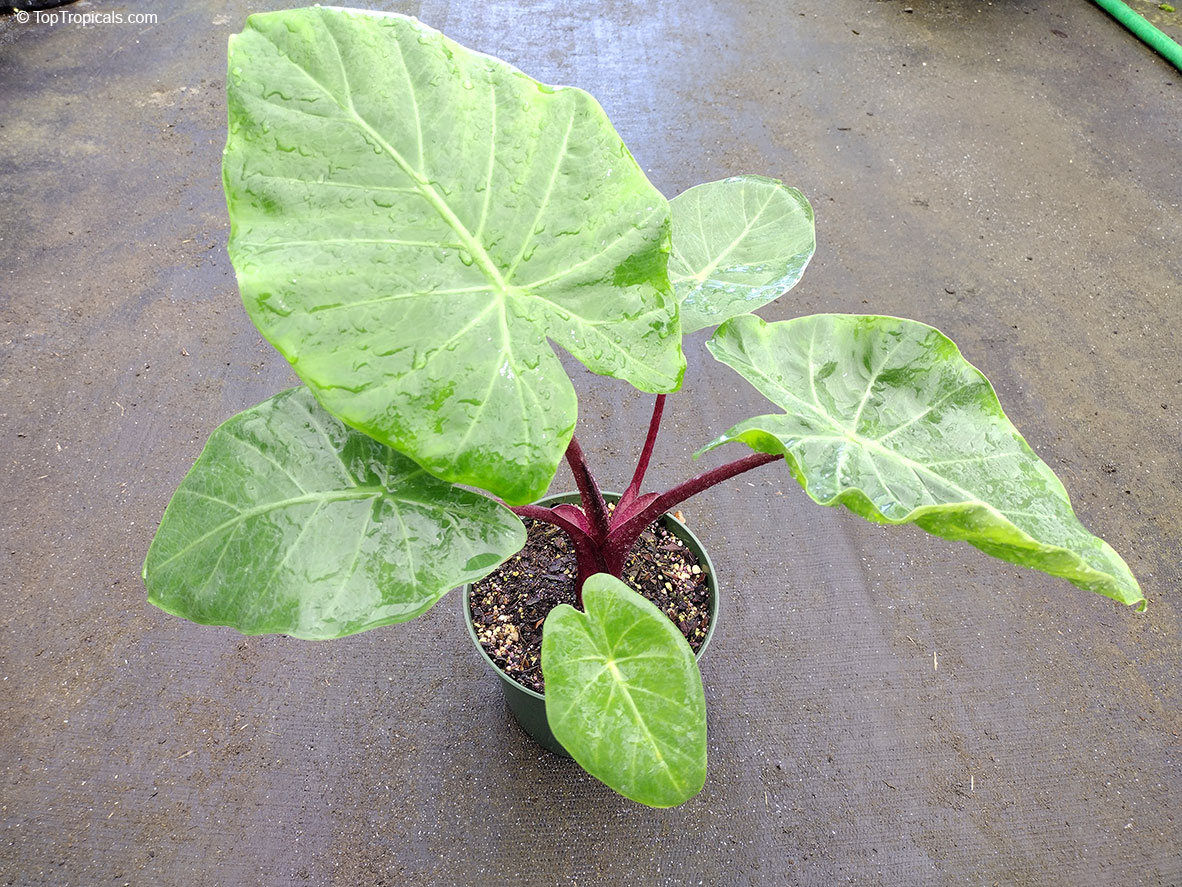
Alocasia 'Imperial Red' is a hybrid between Alocasia odora and a pink petioled (stem) clone of Alocasia Macrorrhiza.
Recommended Fertilizer: SUNSHINE Robusta - Rapid Growth Booster
Botanical name: Callistemon viminalis
Common name: Bottlebrush
Family: Myrtaceae
Origin: Australia
USDA Zone: 9-11
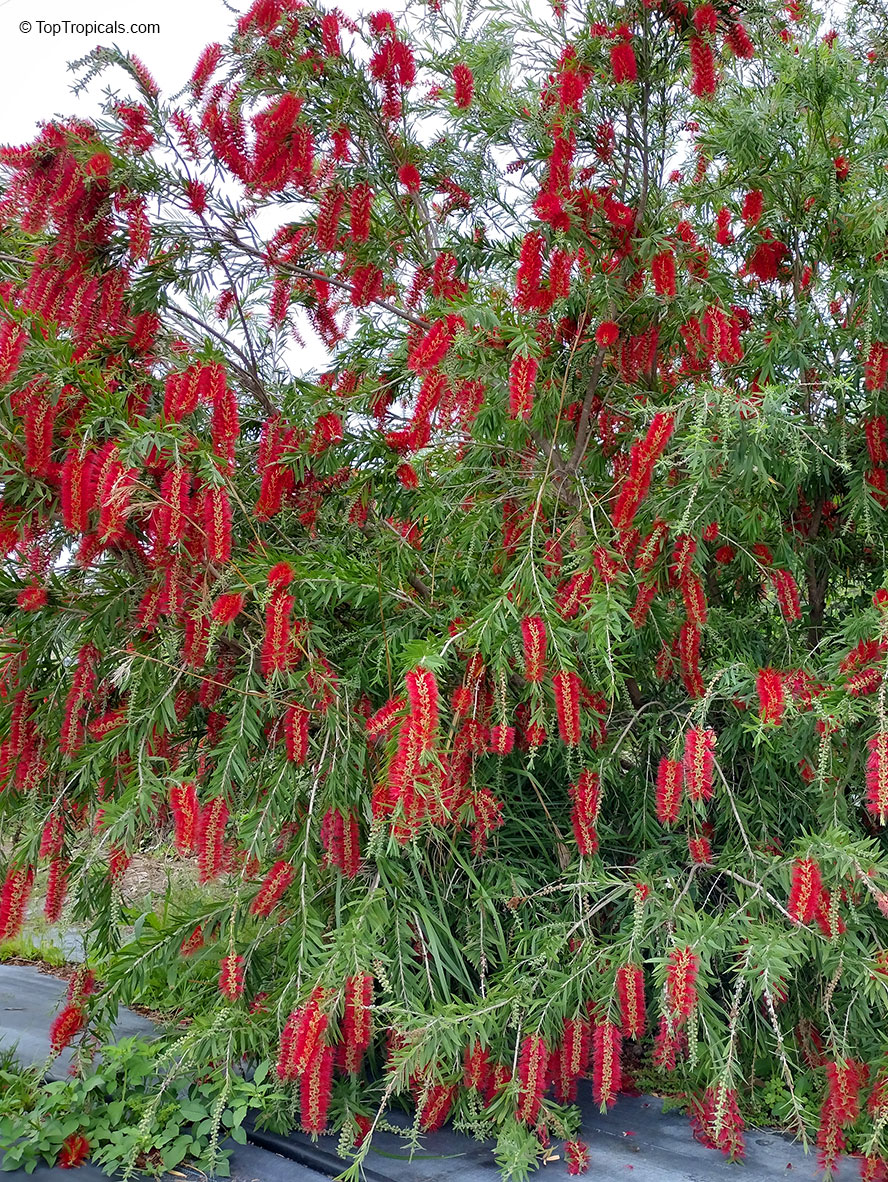
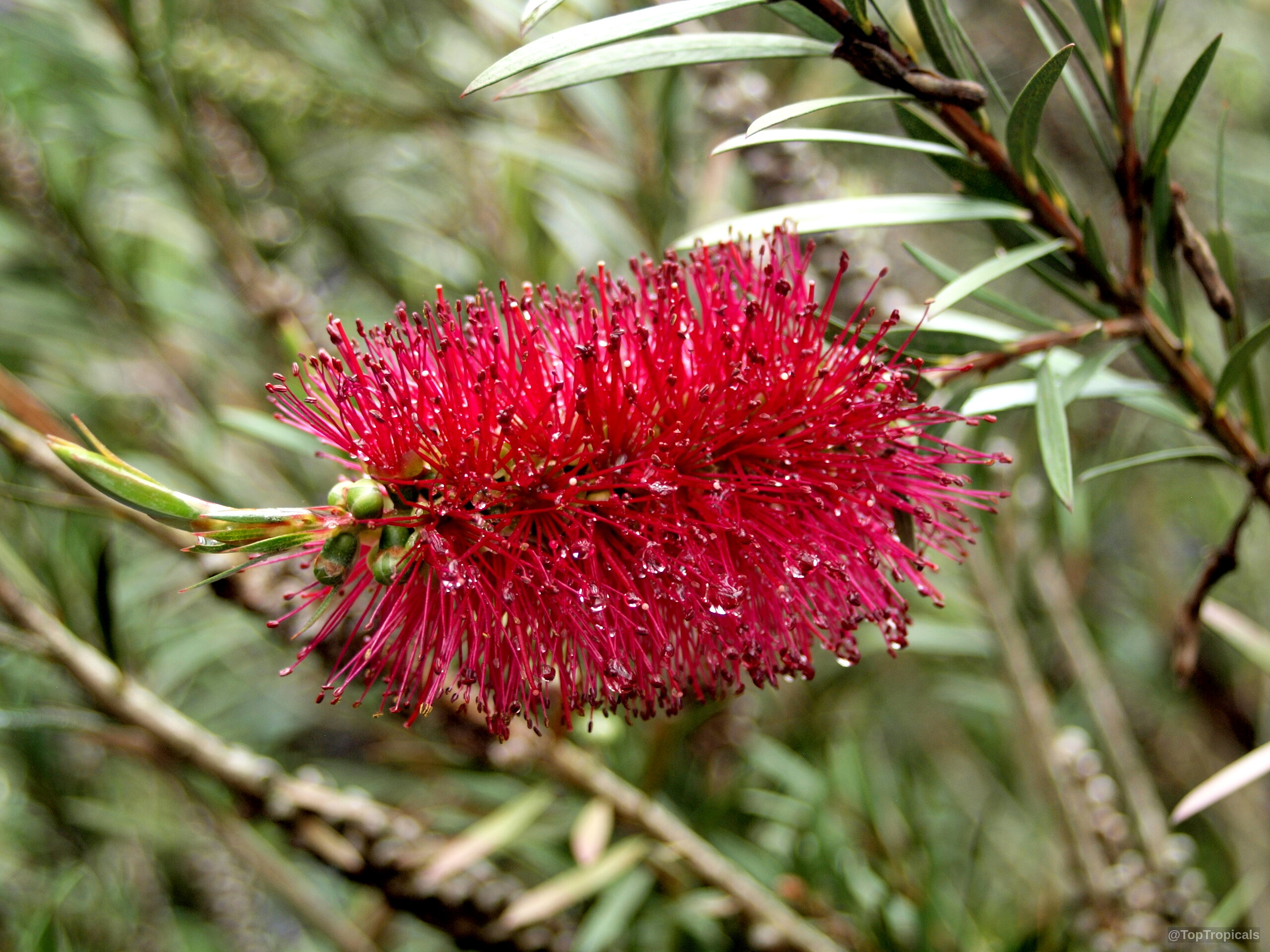
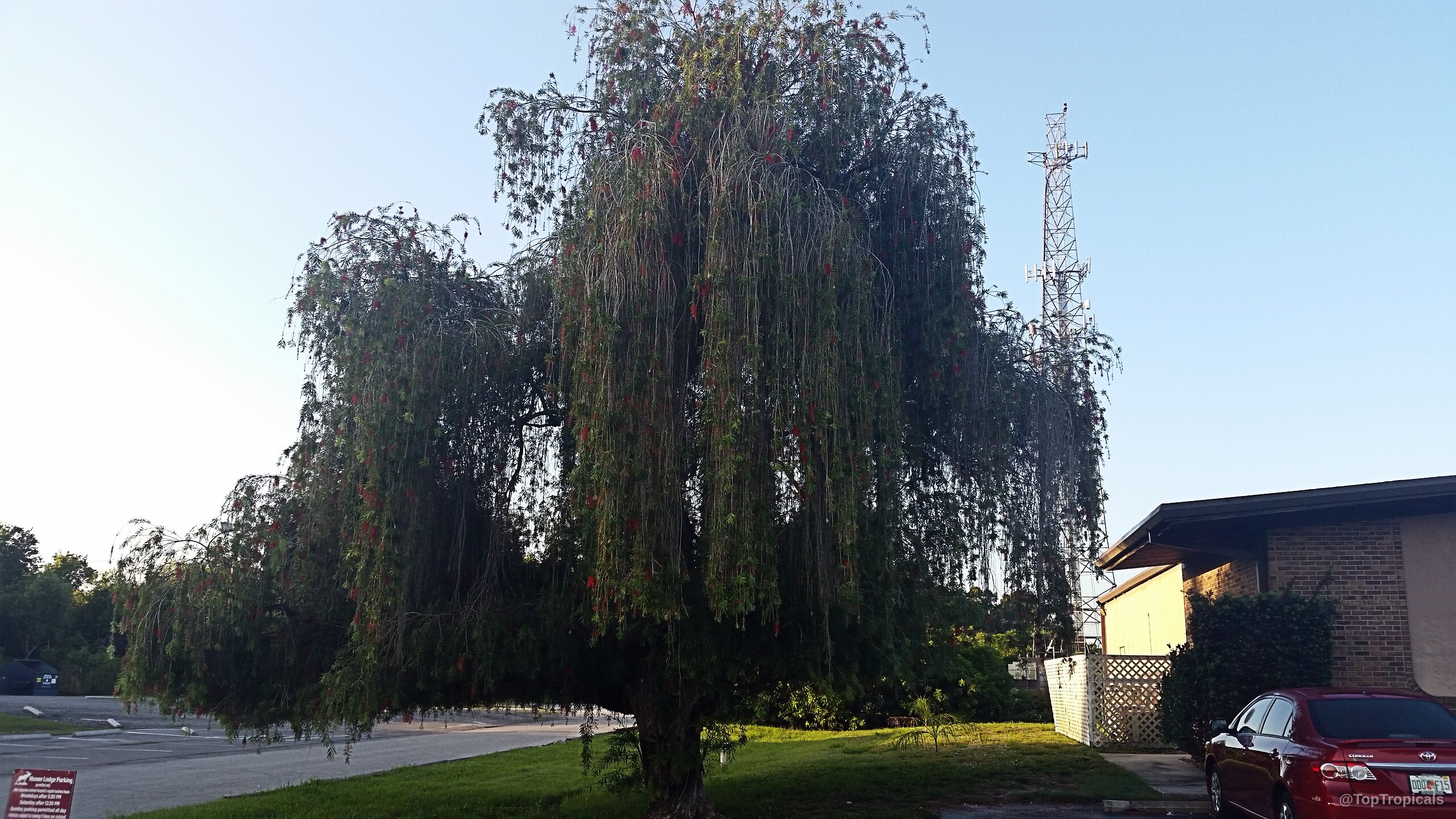
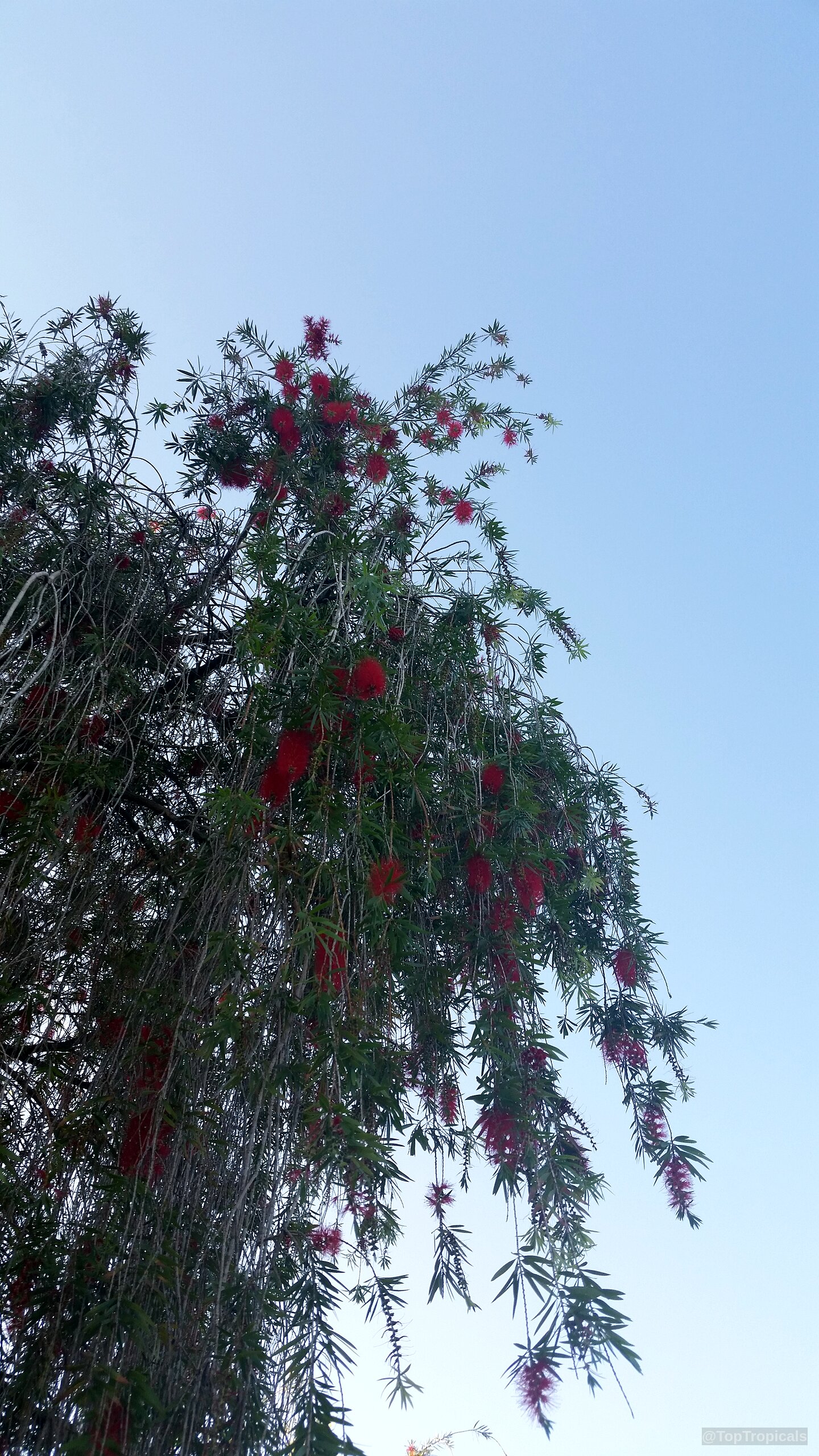
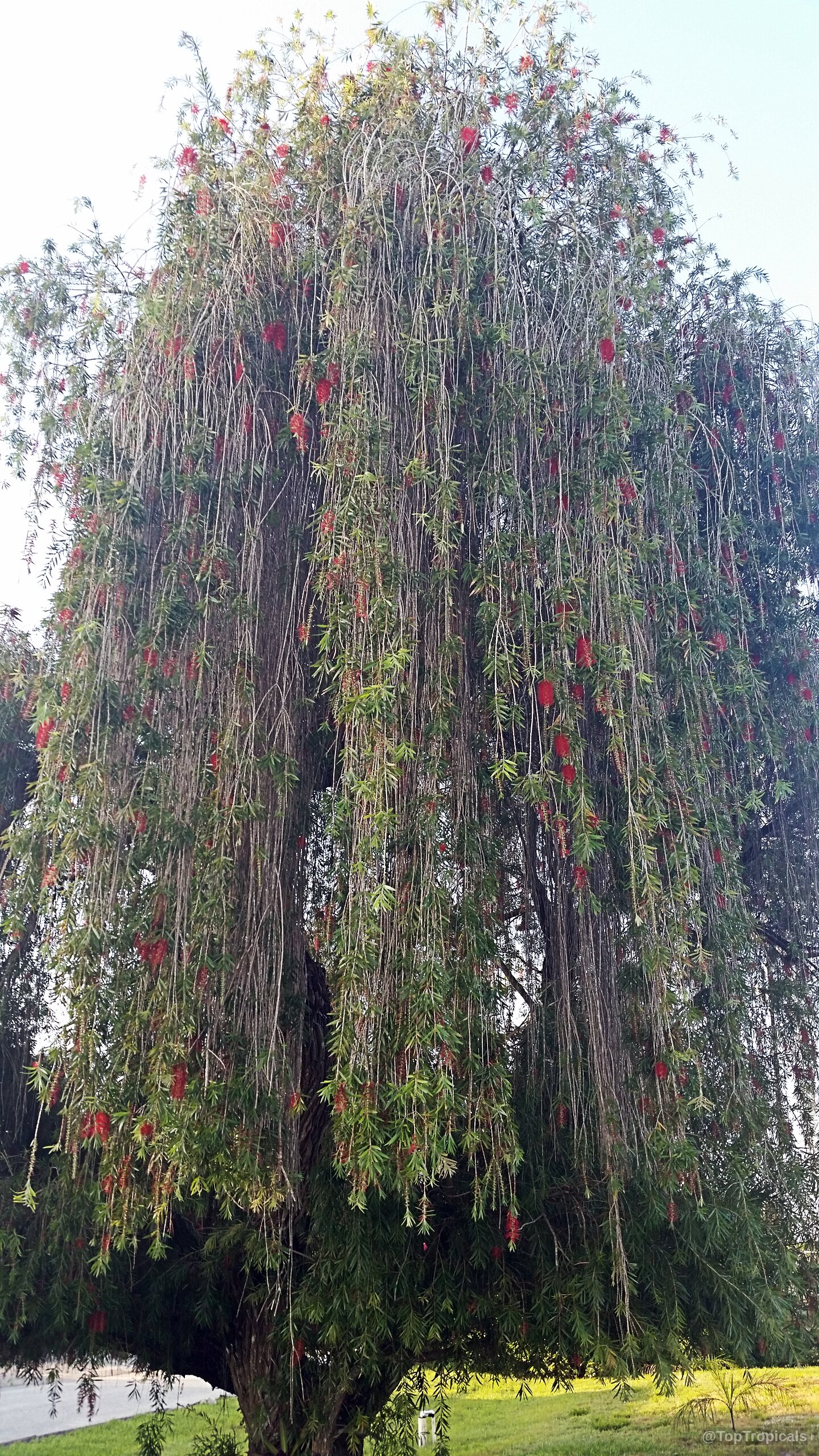
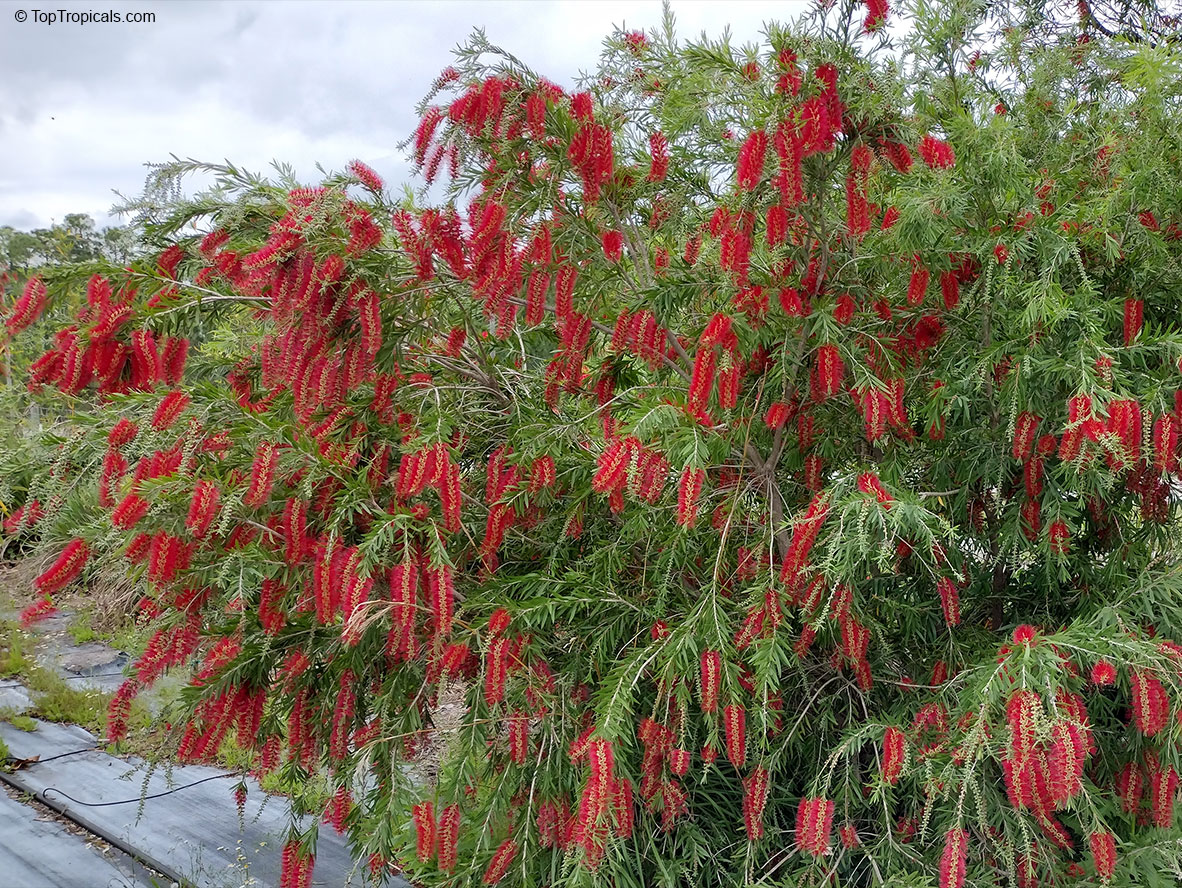
Callistemon viminalis (Bottlebrush) is a small tree, native to Australia, that grows between 10-20 feet tall. This beautiful tree has clusters of vibrant and dainty white, off-white, red, crimson and vinous flowers, with colors of yellow and orange. As the flowers mature, they become bottle brush shaped, hence the name. The beautiful blooms are sure to attract butterflies, bees and hummingbirds to your landscape.
This plant is hardy in USDA Zones 9-11, making it a great choice for warmer climates. It has a moderate water requirement and prefers full sun to partial shade. A mature Bottlebrush is known to be cold hardy at least to 30s F for a short time, making it a good choice even in colder climates as long as it is provided with a bit of extra protection such as a North-facing wall or backyard fence. It is also flood and salt tolerant, making it a great choice for seaside landscapes.
When it comes to growing and caring for Bottlebrushes in a pot, they will do well in large pots that have good drainage. During cold winter months, the pot should be placed in a sheltered location, preferably against a wall that gets plenty of sun. It is important to keep the soil moist during the spring and summer months and to water it less in the winter. When planting Bottlebrush in a pot, use well-draining soil and a pot with drainage holes. Additionally, it is a good idea to use a pot that is larger than the existing rootball and to check the roots from time to time to ensure they are not pot-bound. Fertilizer can also be added to the pot to help the growth of the tree.
By following the recommended planting and caring instructions, you can be sure that the Bottlebrush will thrive in your landscape or pot. With its vibrant colors and ease of care, this beautiful tree and its bottle brush-shaped flowers are sure to be an eye-catching addition to your landscape and a great attraction for butterflies and hummingbirds.
| Next | |
Use link to repeat this search:
https://toptropicals.com/cgi-bin/garden_catalog/cat.cgi?search_op=and&keyword_op=and&language=e&number=10&no_change_lang=1
&v1=fld&user=tt&sale=1&first=0