Verbena - Plant Encyclopedia Results
| Number of plants found: 70 | Next | 
|
Go to page: | 1 | 2 | 3 | 4 | 5 | Last |
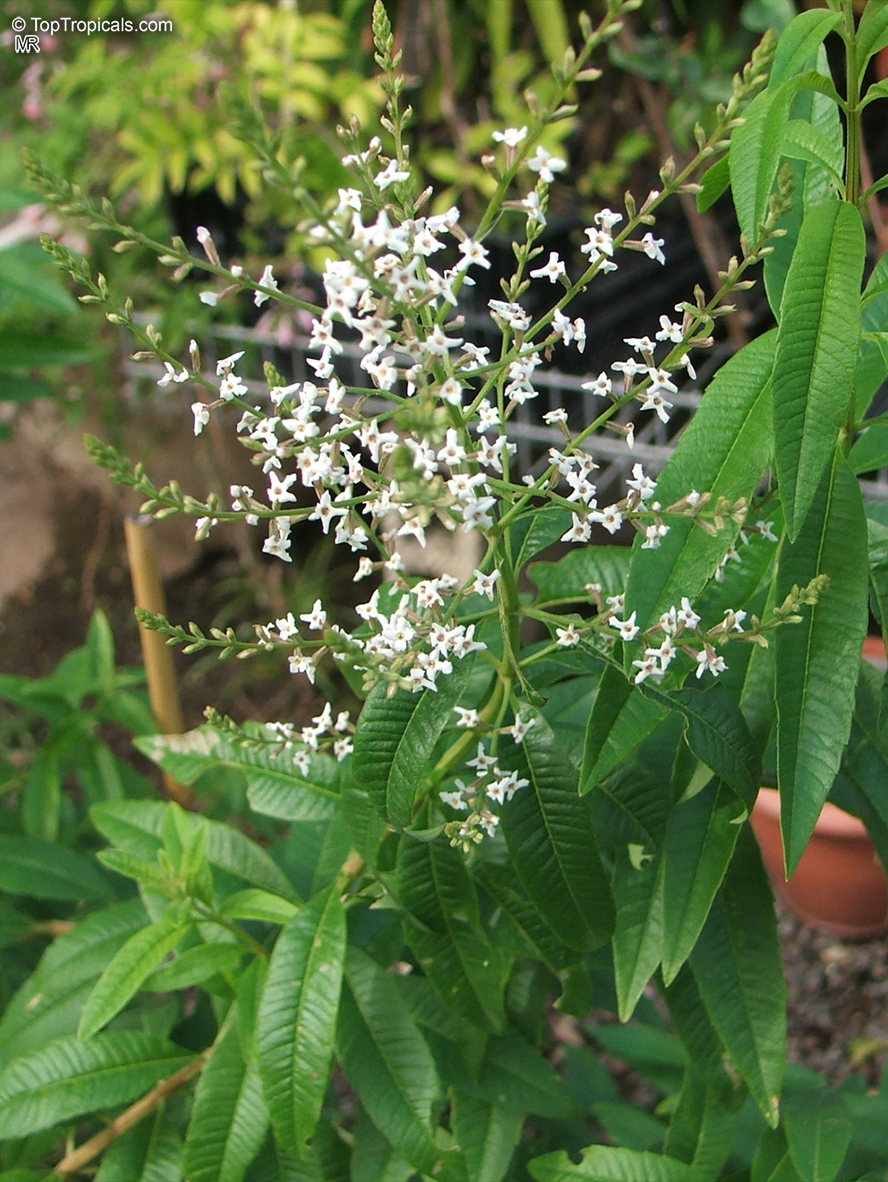
Botanical names: Lippia citriodora, Aloysia citriodora, Verbena citriodora, Verbena triphylla
Common names: Lemon-scented verbena, lemon Luisa, Pitiona
Family: Verbenaceae
Origin: South America (Chile and Peru)
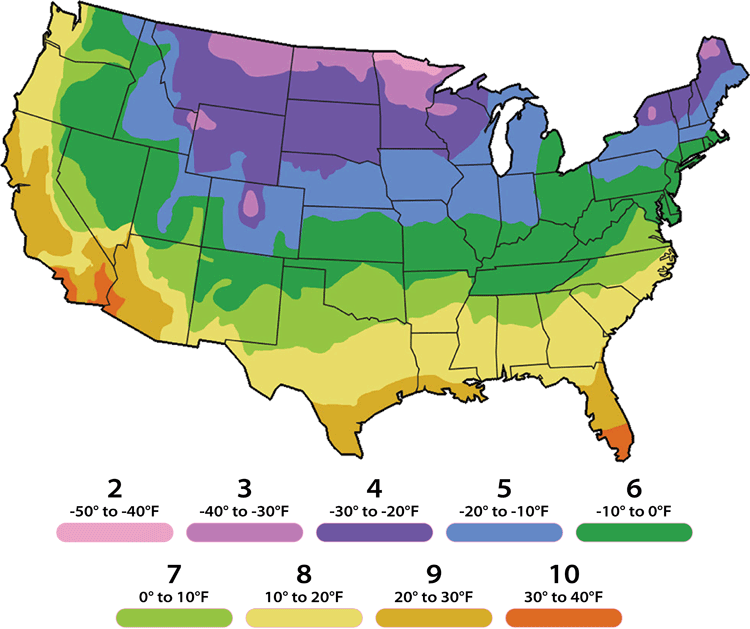
USDA Zone: 8-10


Lemon verbena has an unusually pure, fruity lemon, note it is more intense than many other lemon-scented herbs. The genus name Aloysia, now also obsolescent, was allegedly given in honour of Maria Luisa Teresa de Parma (1751-1819), wife of king Carlos IV of Spain. The shrub can grow to 5 feet in height and has long narrow leaves which are highly scented smelling of lemon. It will bloom in late summer the flowers being tiny and white or lilac in color. Soil can be poor but needs a sheltered warm place and will need protecting during the cold weather. Lemon Verbena is an herbal medicine used to treat asthma, colds, fever, gas, stomach upset, and diarrhea. Lemon Verbena can be used in fruit dishes, jellies, punches, added to baked custard or home made ice cream. The leaves dry very well and can be used to make a mildly sedative tea. The leaves can also be put among linen and in pot-pourri, make an infusion of the leaves and add to your bath. An infusion is also said to be good for cleaning the teeth.
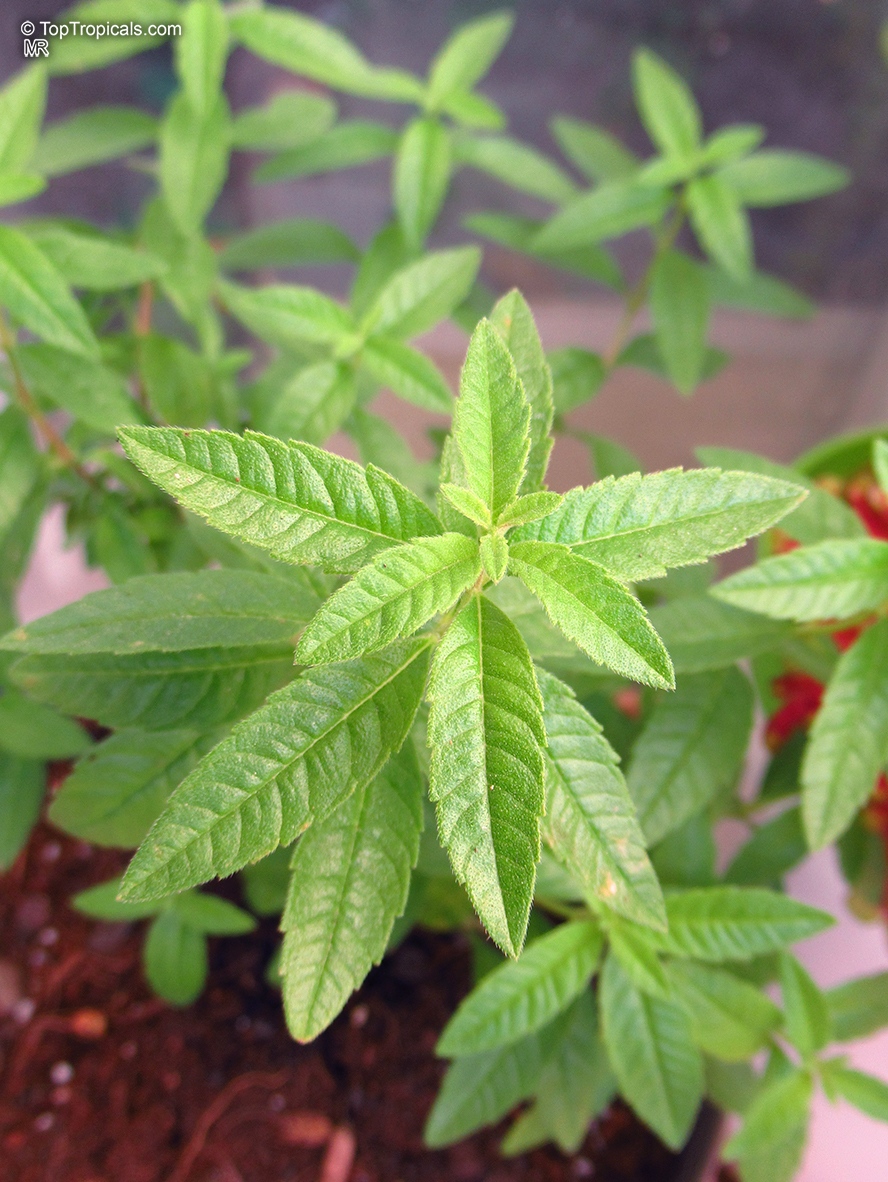
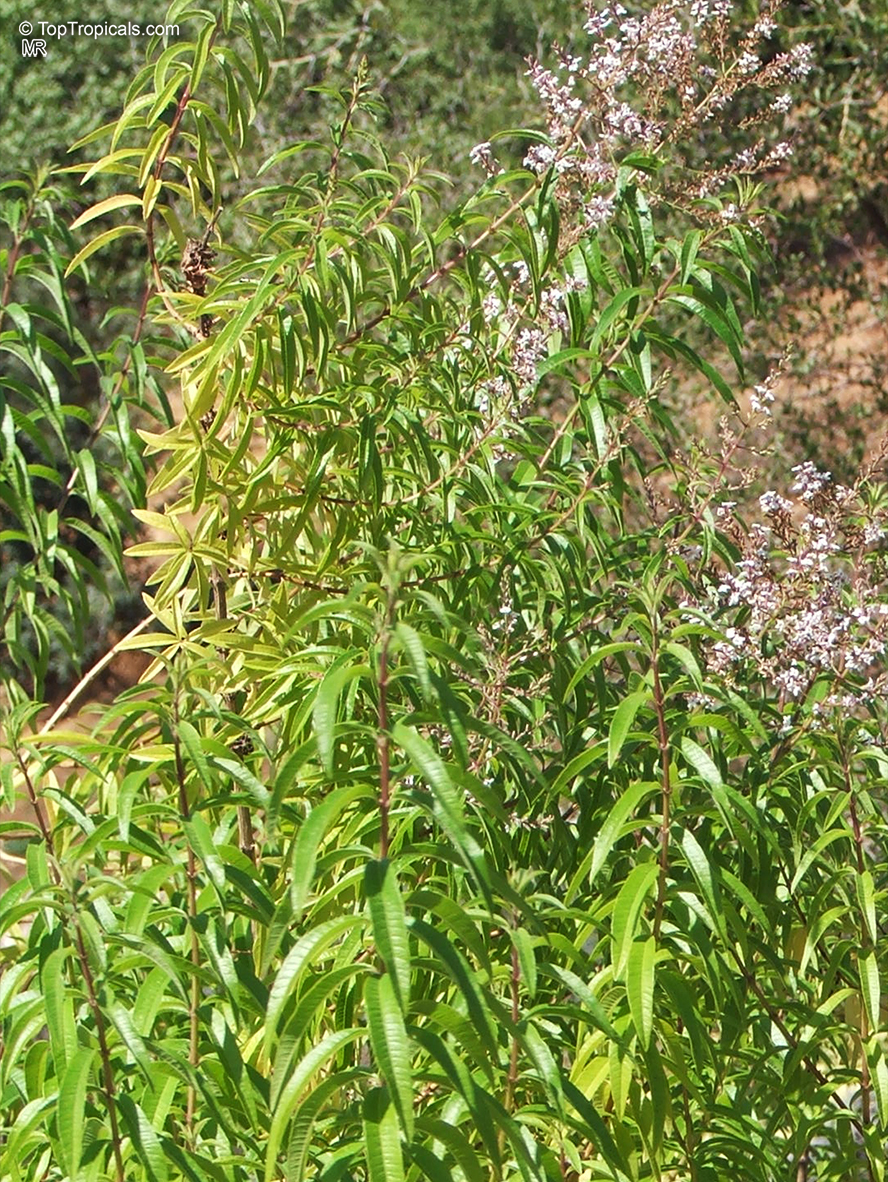
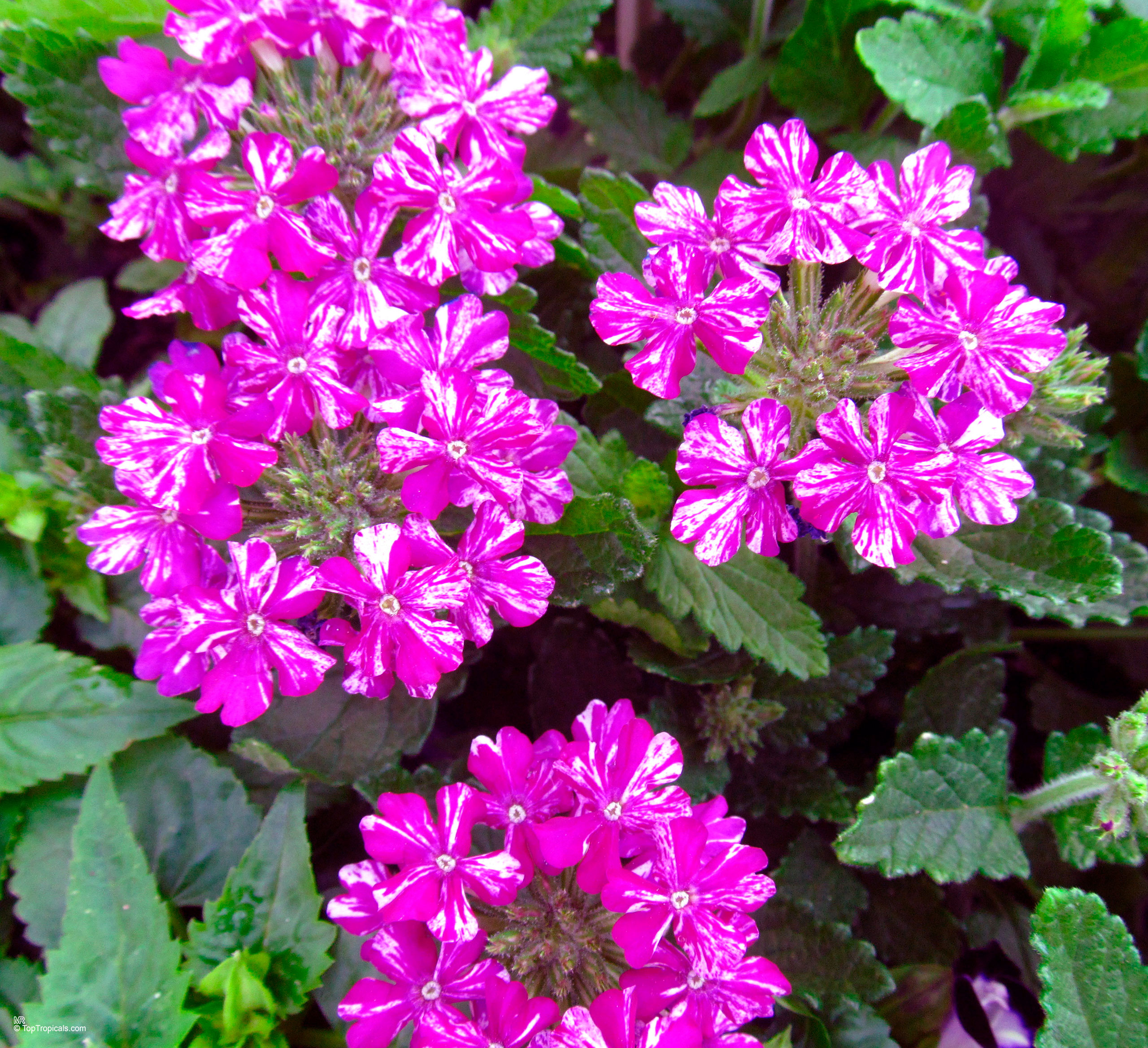
Botanical name: Verbena sp.
Common name: Verbena
Family: Verbenaceae
USDA Zone: 7-11


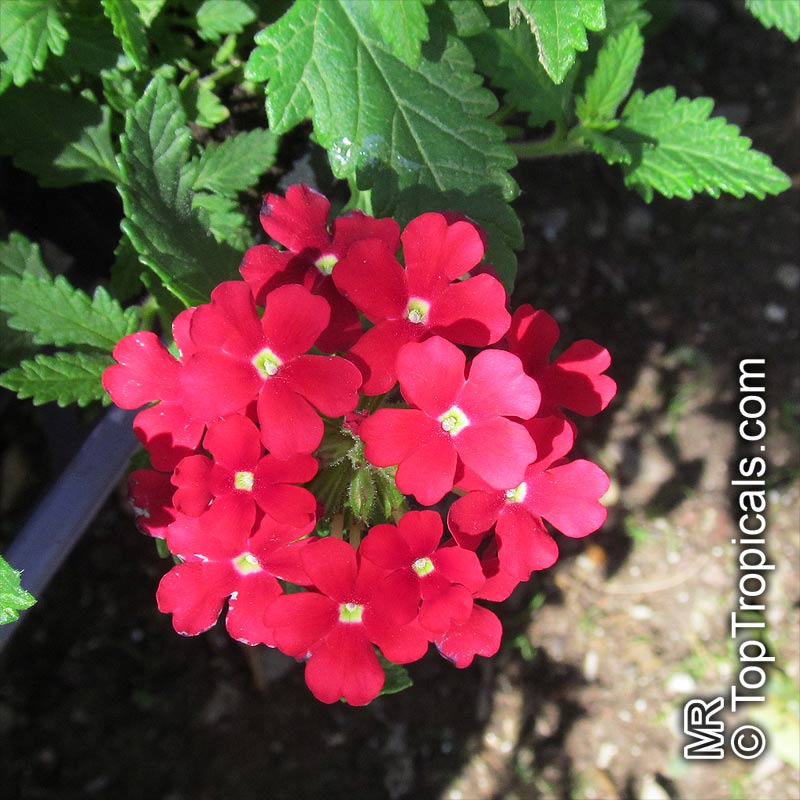
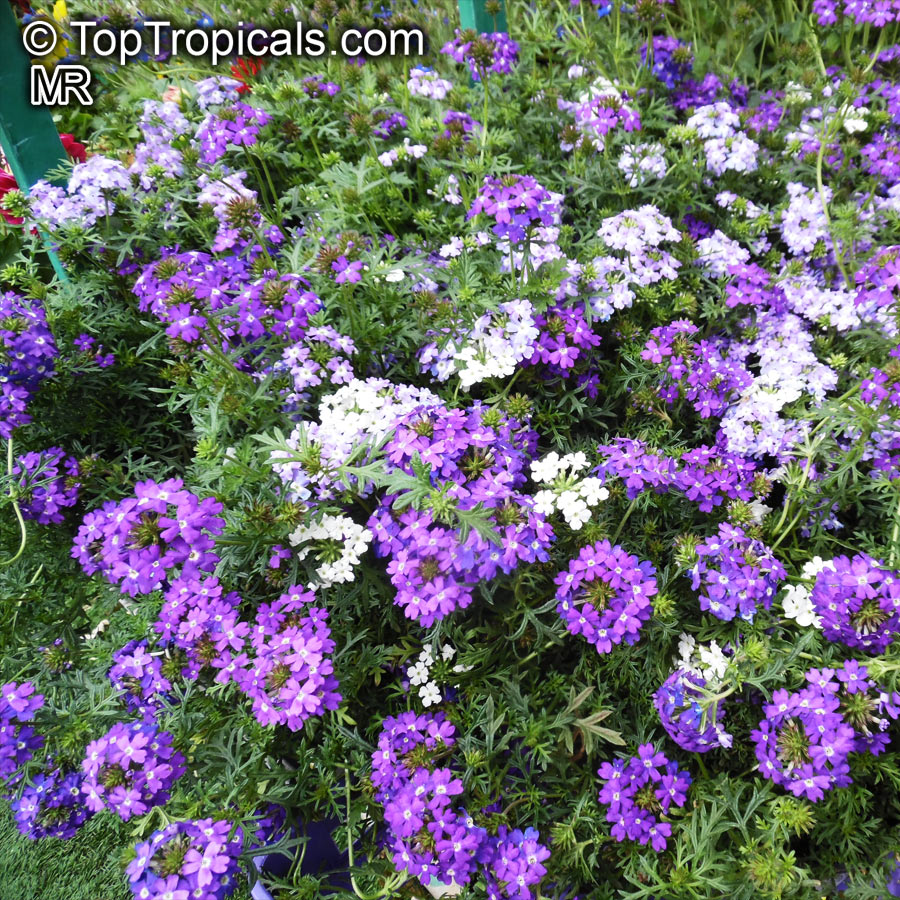
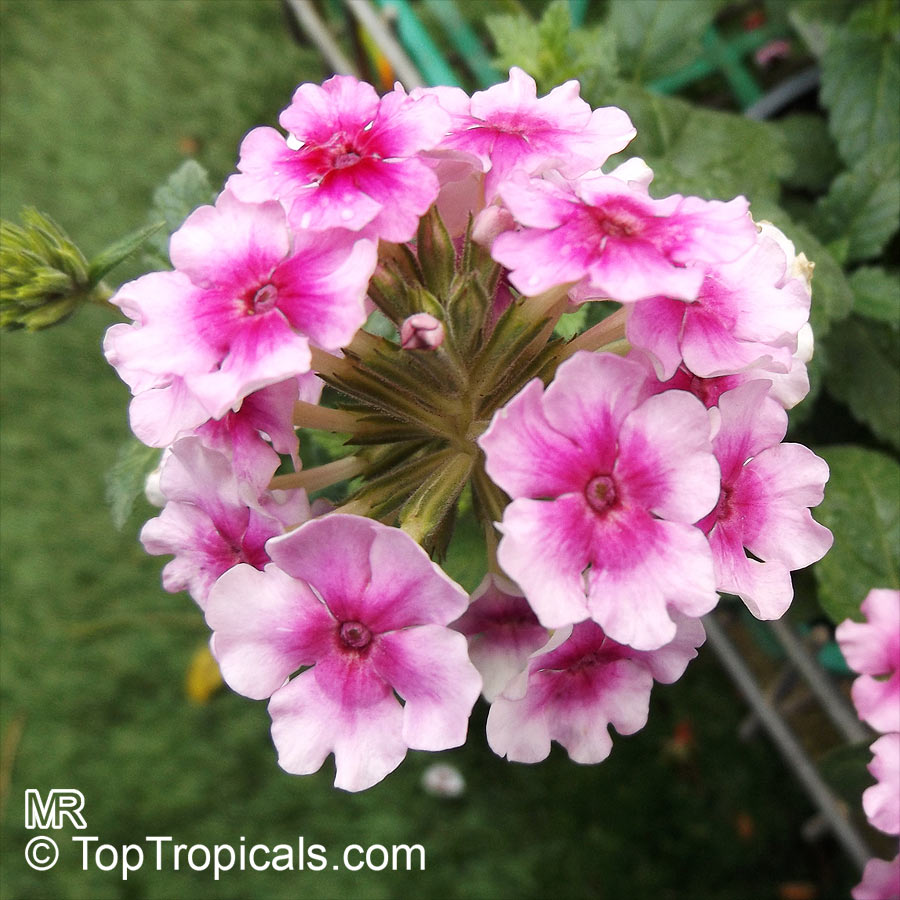
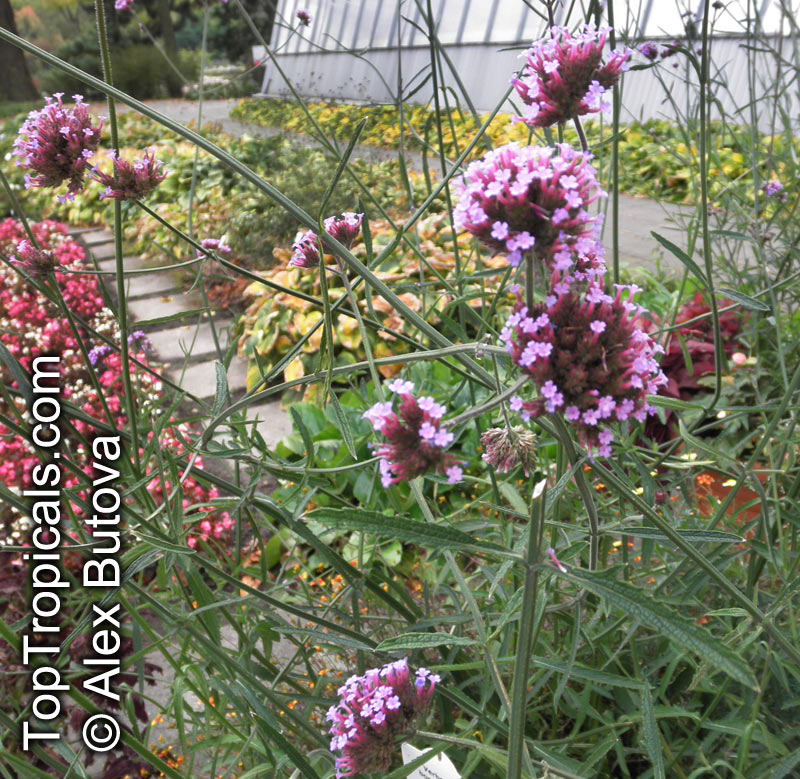
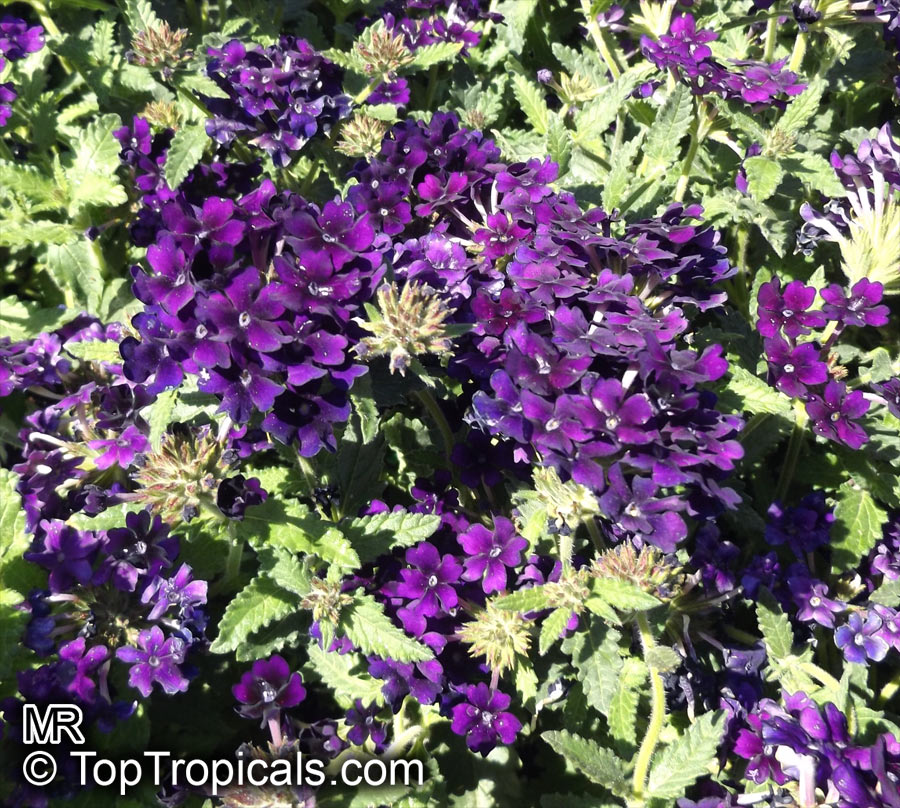
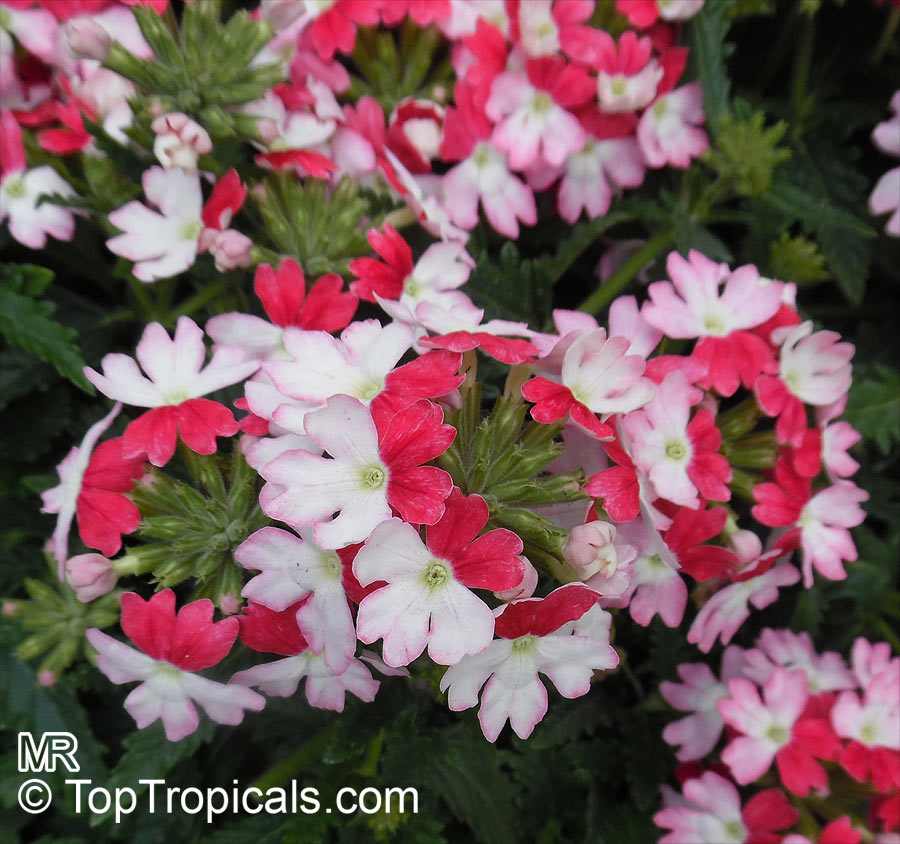
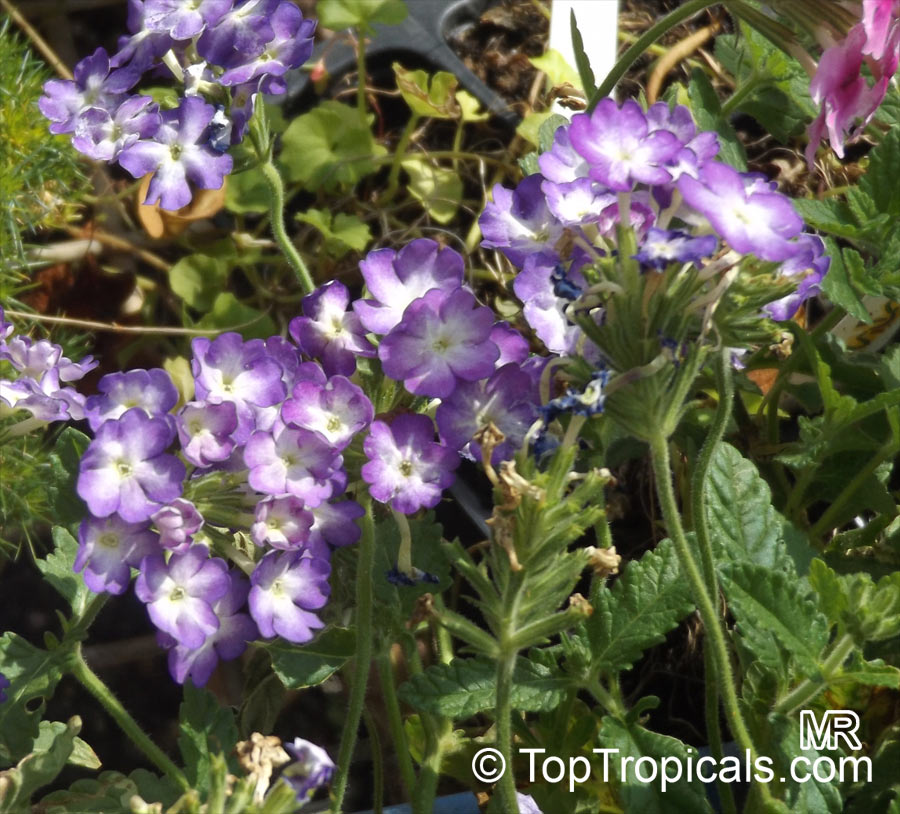
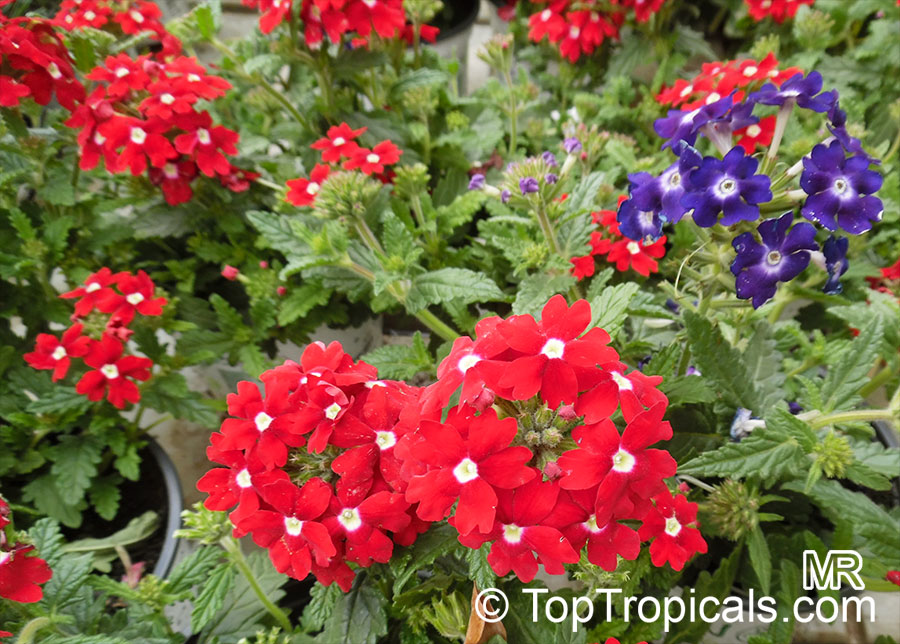
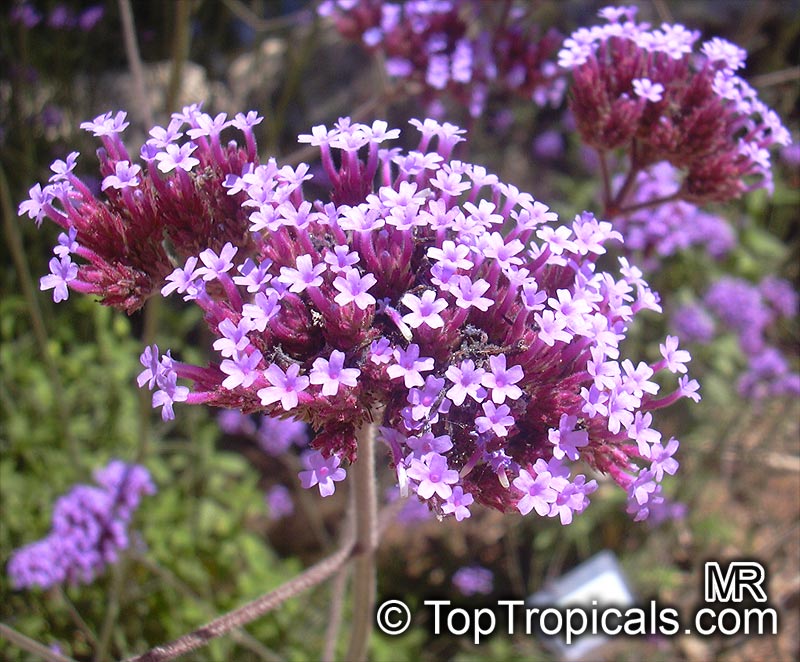
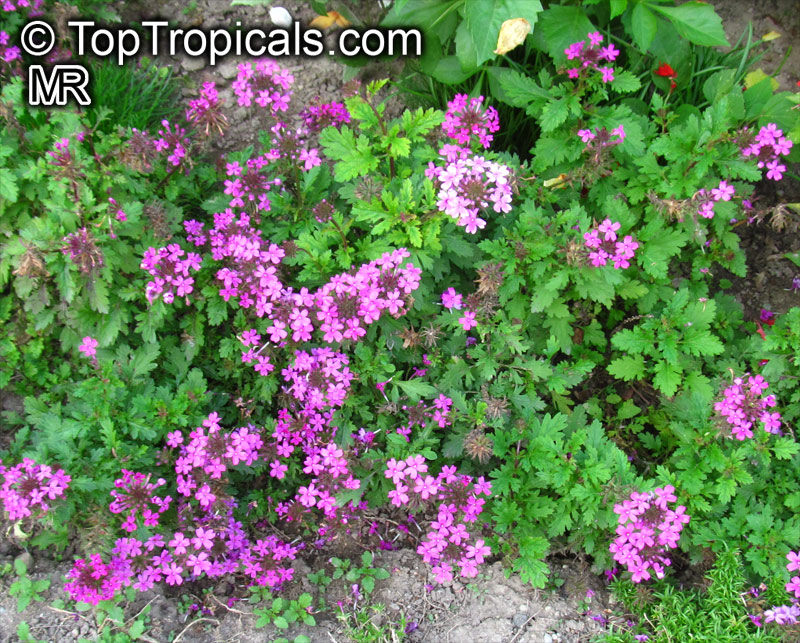
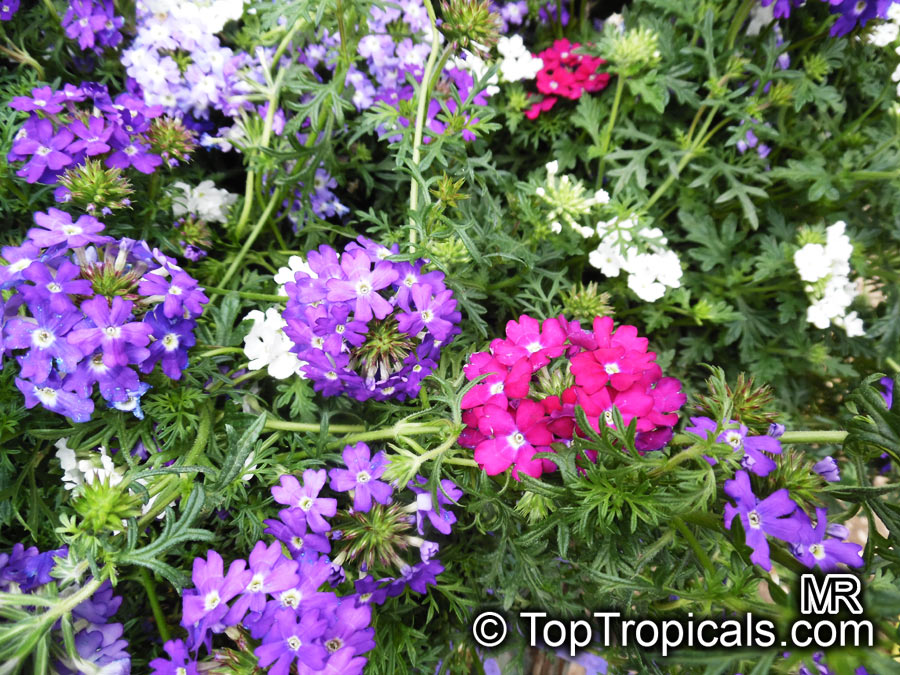
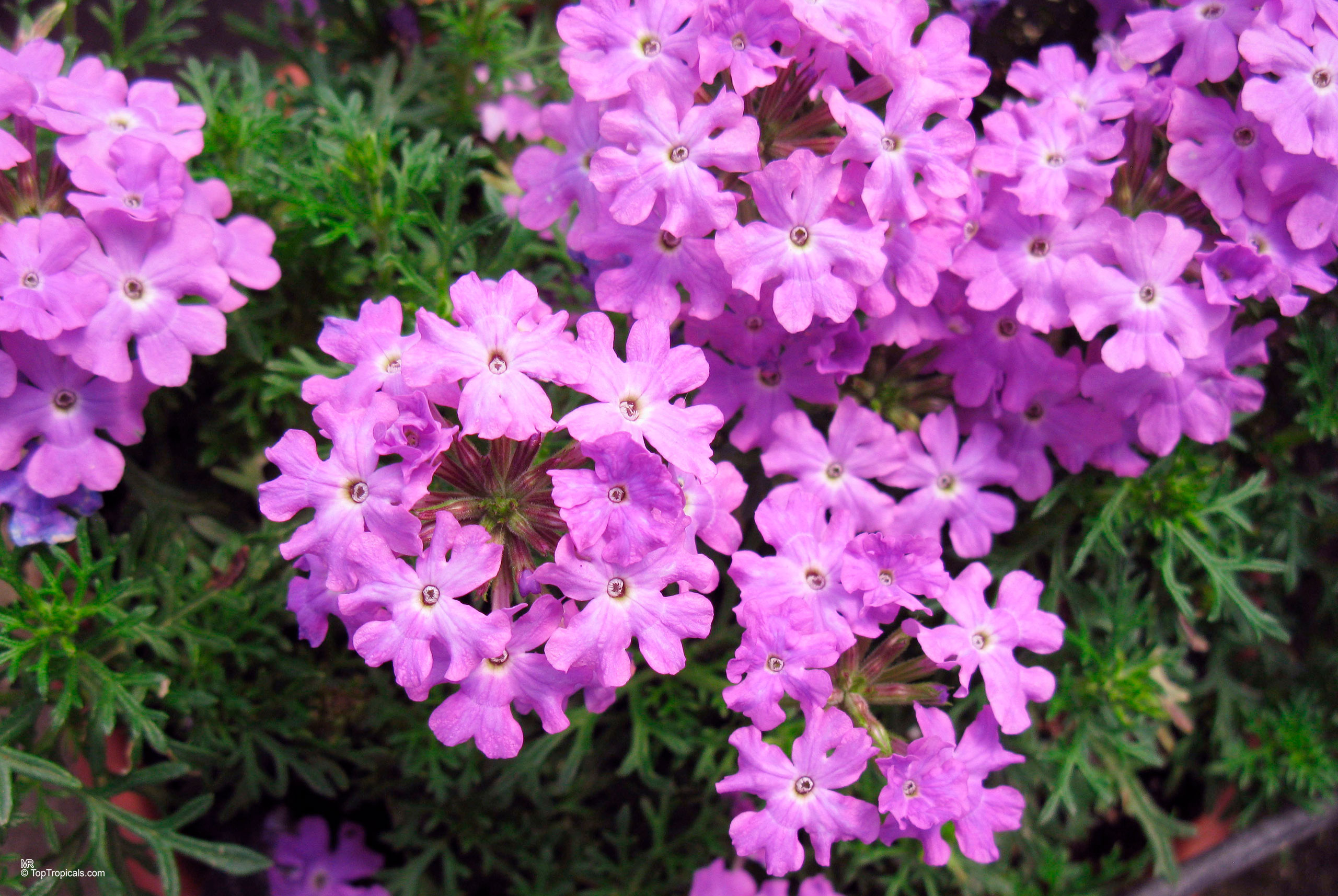
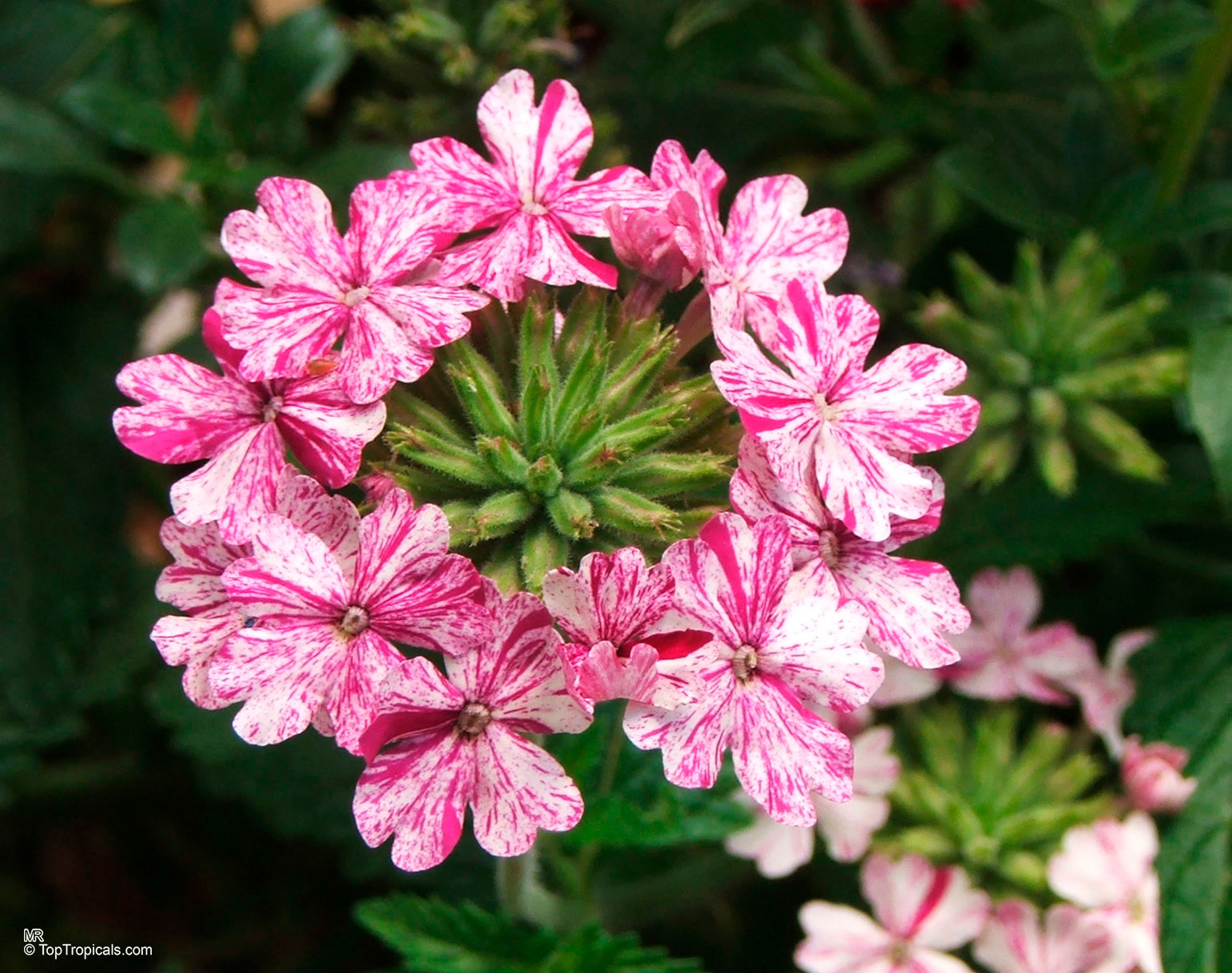
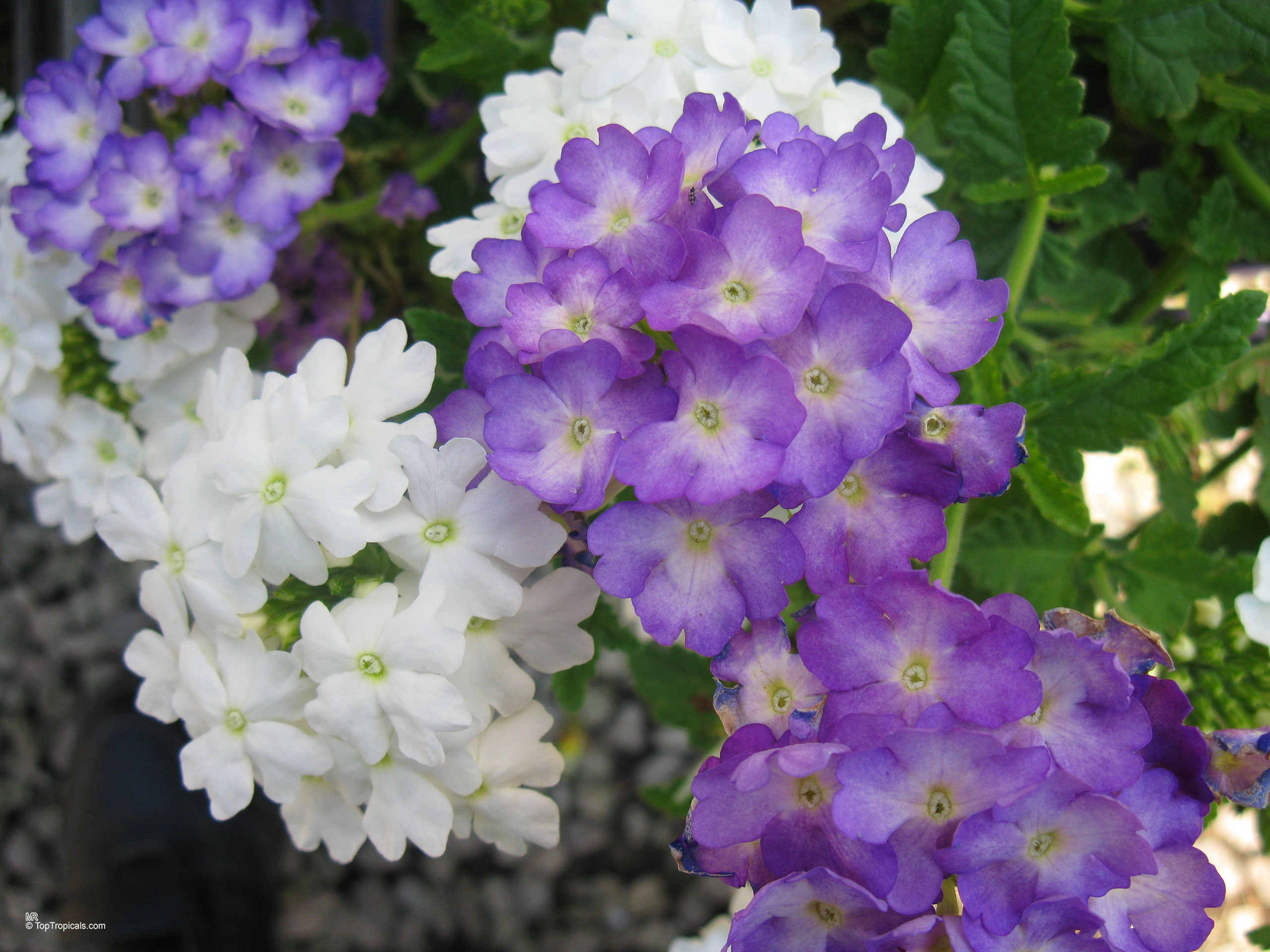
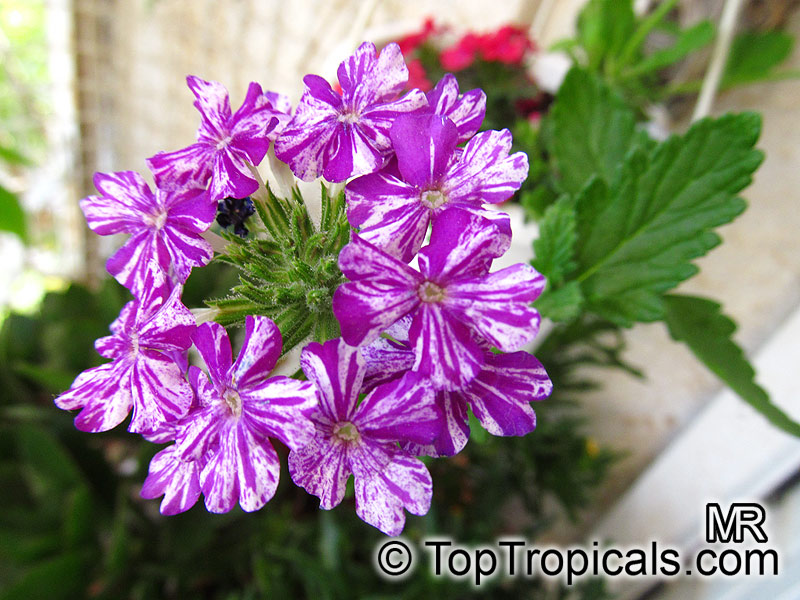
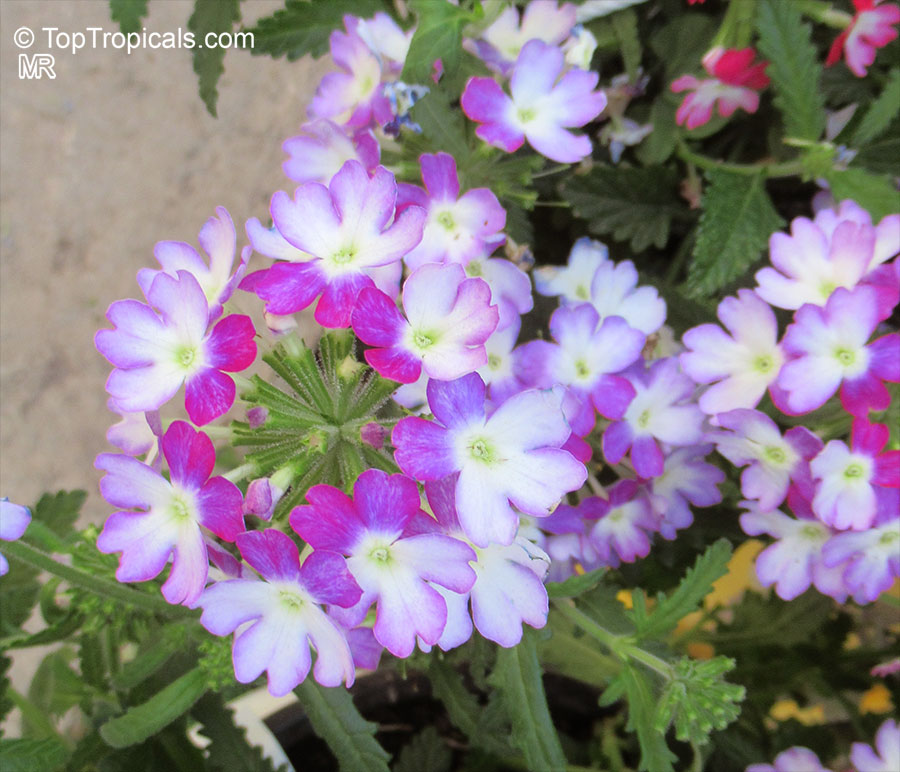
Verbena is a diverse genus of flowering plants in the Verbenaceae family, comprising about 150 species native primarily to the Americas, with a few species occurring naturally in Europe. Depending on the species, verbenas may be annuals, perennials, or small subshrubs, ranging from compact bedding plants to upright, airy forms several feet tall. They are valued for their long-lasting clusters of small, five-petaled flowers in shades of purple, violet, pink, red, white, and lavender, often blooming continuously from spring until frost. Their extended flowering season and nectar-rich blooms make them especially attractive to butterflies, bees, and other pollinators.
Most verbenas grow best in full sun and well-drained soil, tolerating heat, humidity, and short periods of drought once established. They benefit from regular deadheading or light trimming to encourage continued flowering and compact growth. Depending on the species, they are suitable for USDA Zones 7-11, while many are also grown as annuals in cooler climates. Their versatility makes them excellent choices for borders, containers, hanging baskets, rock gardens, pollinator gardens, and naturalistic plantings.
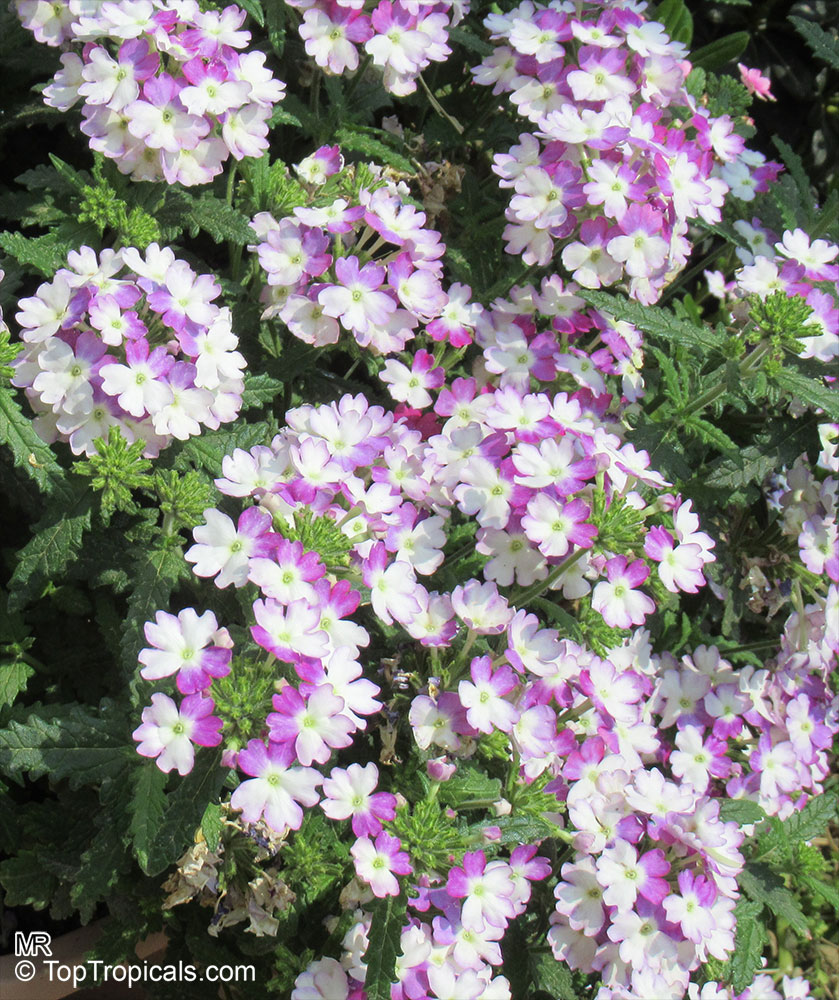
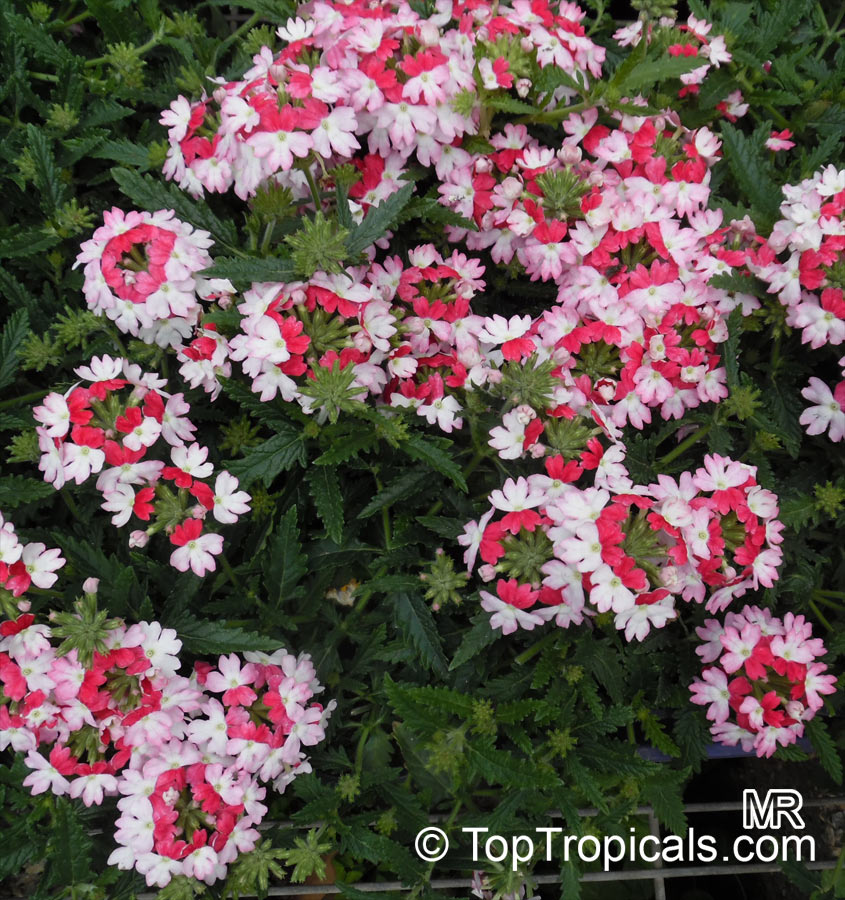
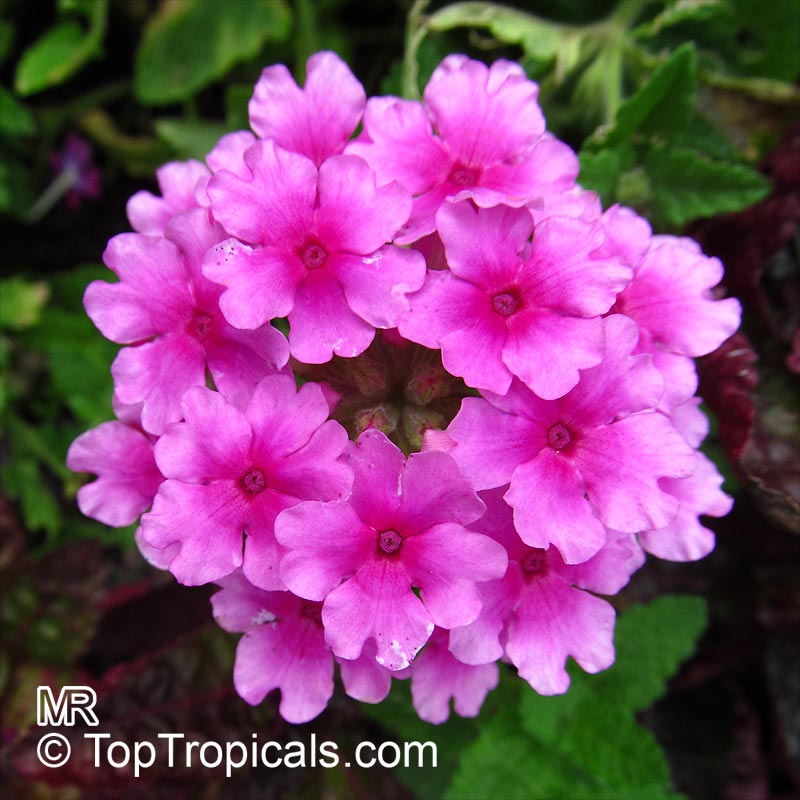
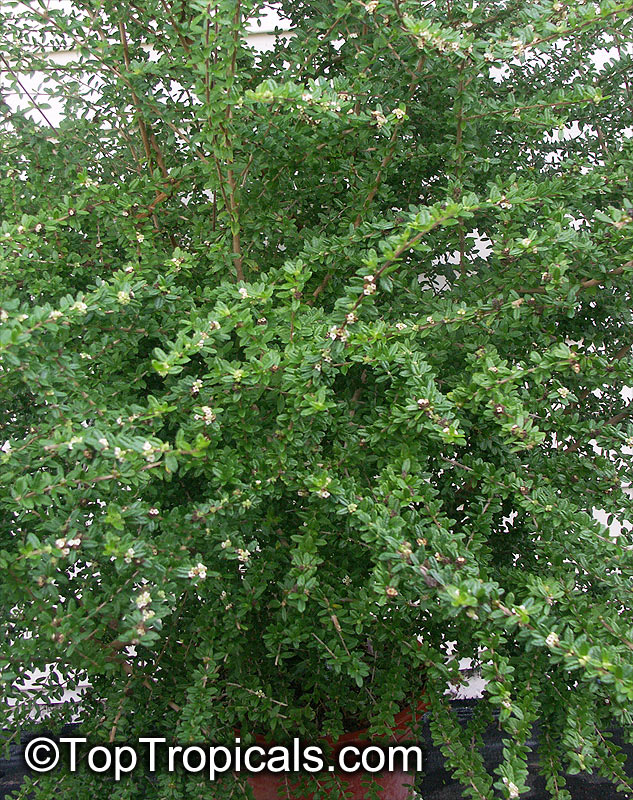
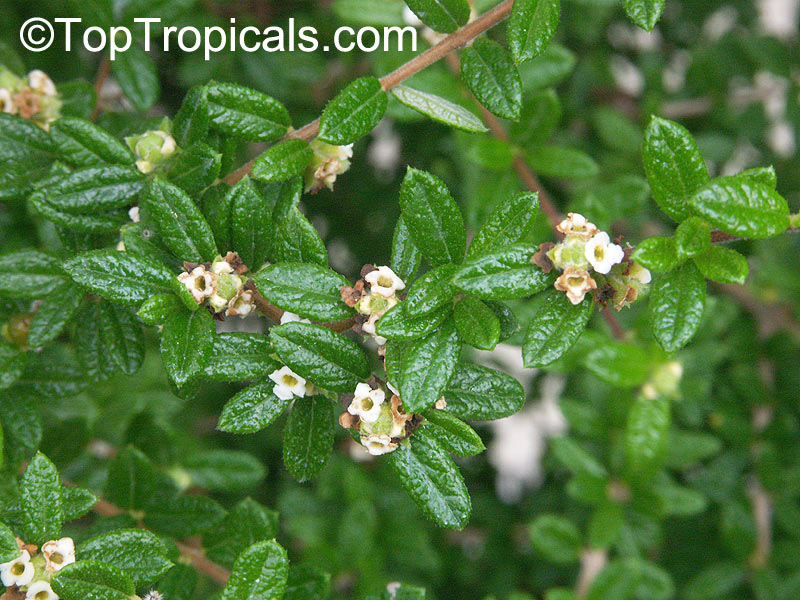
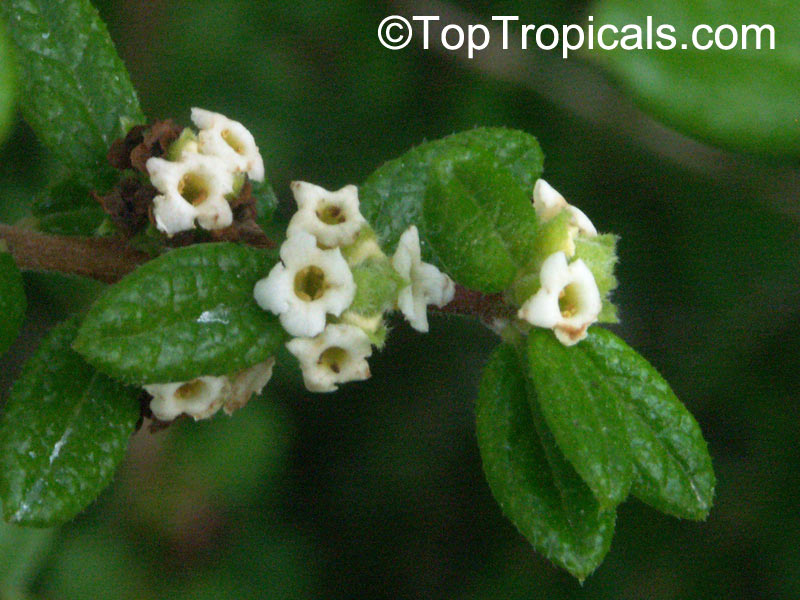
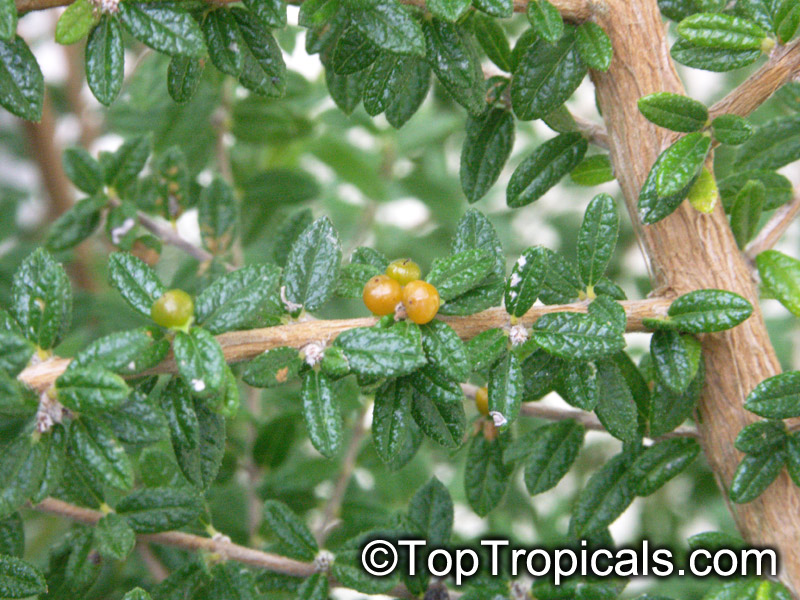
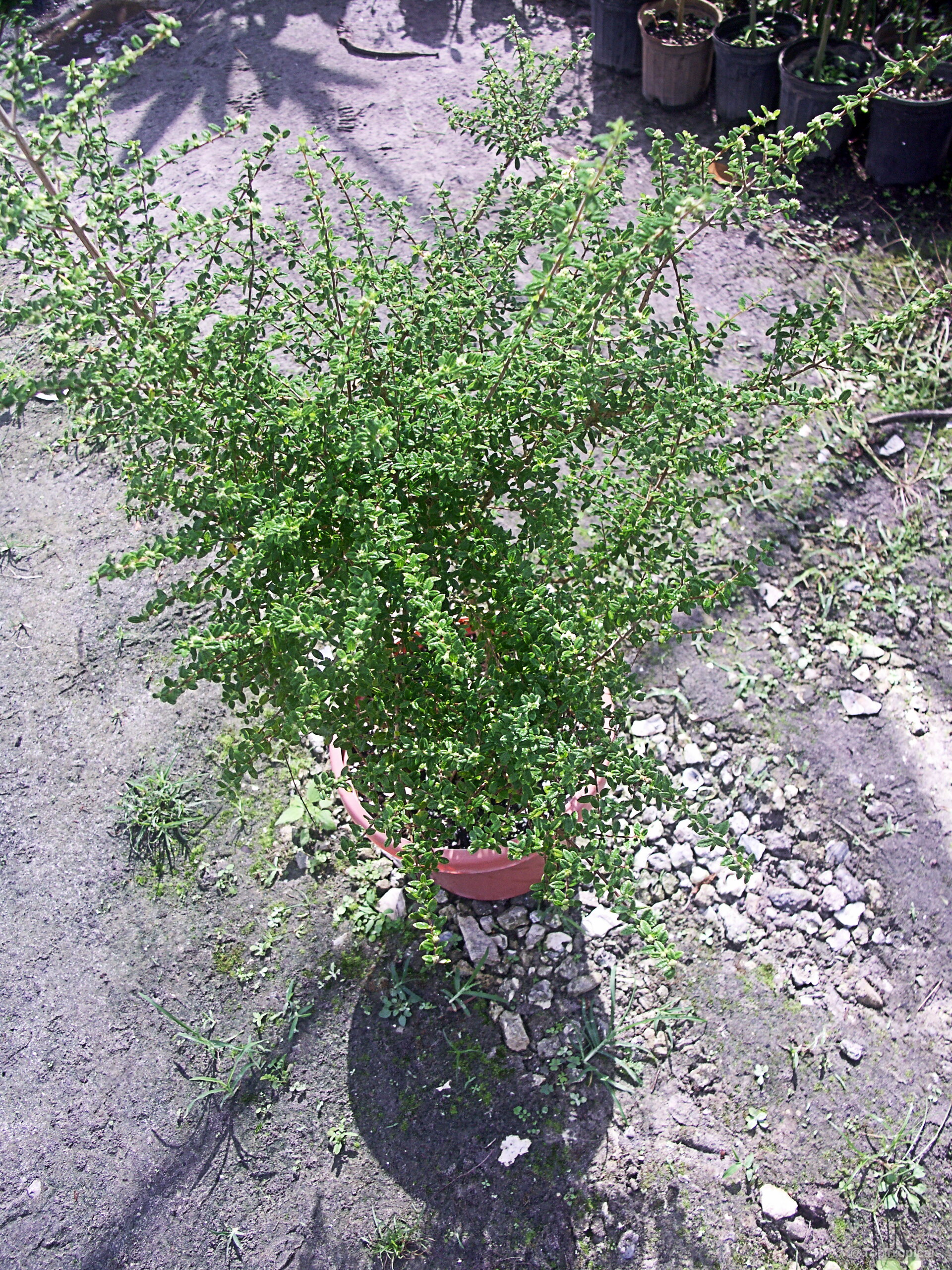
Botanical name: Nashia inaguensis
Common names: Moujean Tea, Bahamas Berry, Pineapple Verbena
Family: Verbenaceae
Origin: Caribbean
USDA Zone: 9-11


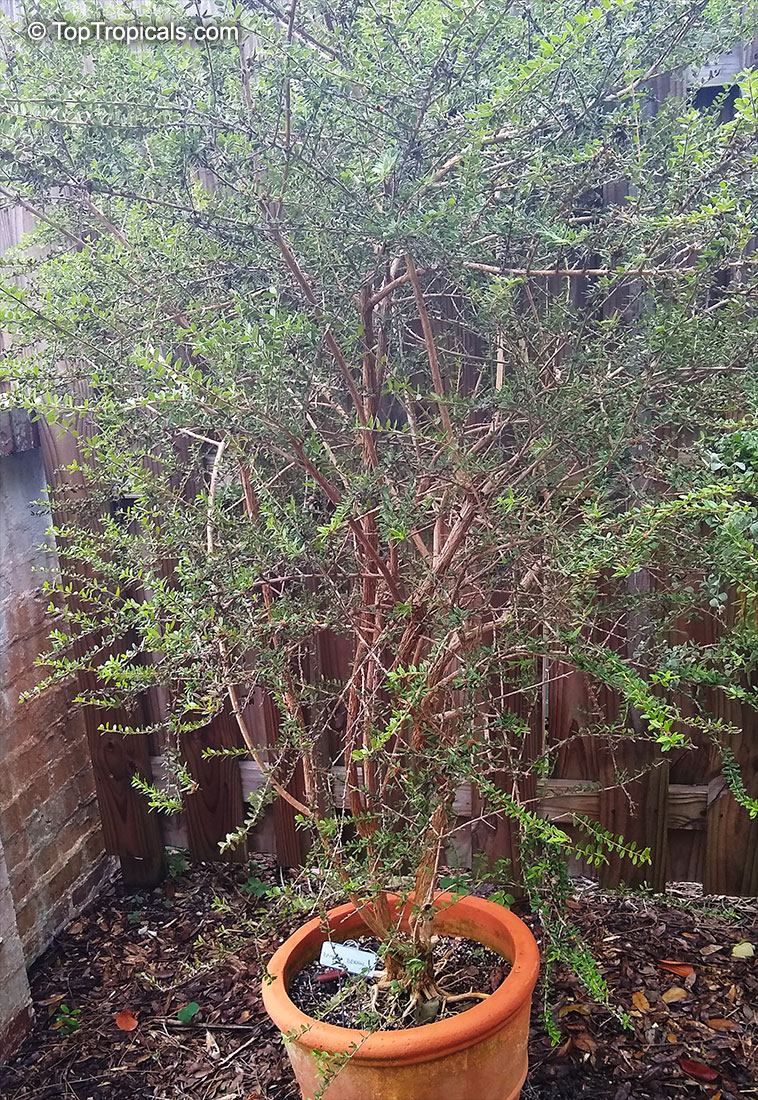
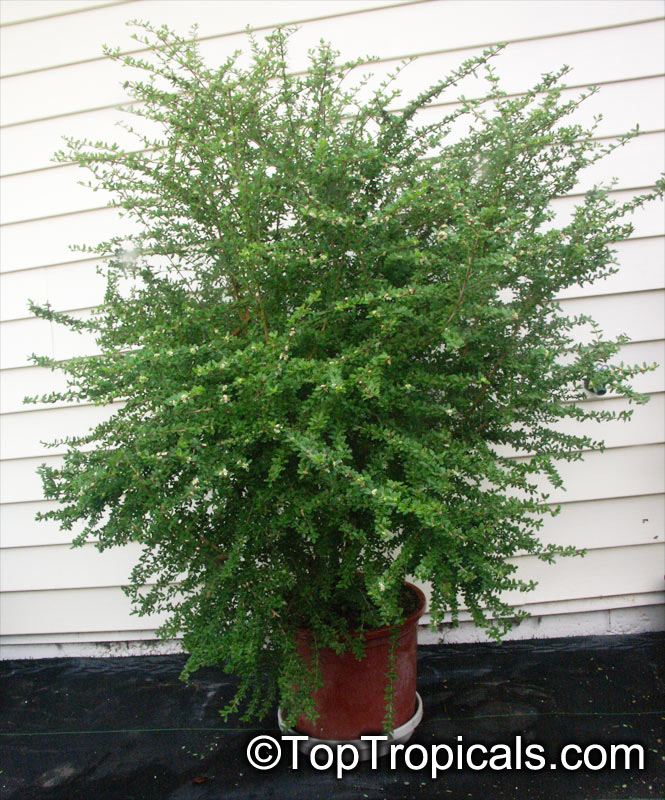
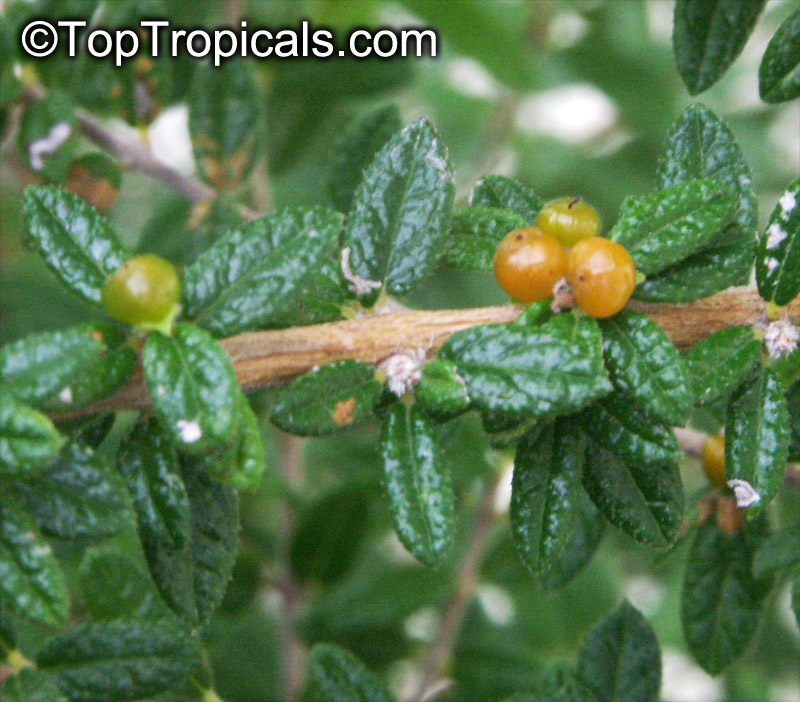
The Nashia inaguensis, also known as Moujean Tea, Bahamas Berry, or Pineapple Verbena, boasts delightfully fragrant leaves. This evergreen shrub hails from the island of Inagua in the Bahamas and is often cultivated as a bonsai due to its small size. During summer, it produces tiny white flowers in clusters that are followed by reddish orange berries. It thrives in full sun, warm temperatures, and high humidity, and requires consistent moisture to prevent drying out. Its fragrant leaves can be brewed into a tea that offers a citrusy, vanilla-like, or pineapple-like flavor and aroma.
This plant is an excellent choice for a small topiary or bonsai and makes a stunning centerpiece in Southern gardens. The plant has a low-growing habit of 2 feet, but can grow up to 5 feet when mature. It responds well to pruning and can be shaped and sized according to your preference. If planted along a walkway, the leaves can be lightly brushed to emit their enchanting scent with each passing.

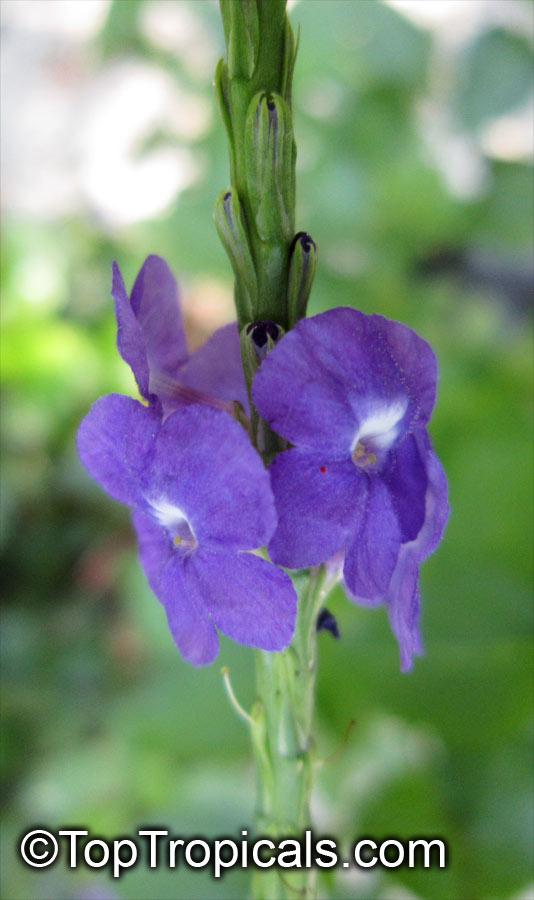
Botanical name: Stachytarpheta sp.
Common names: Porterweed, Brazilian Tea
Family: Verbenaceae
Origin: Tropical America
USDA Zone: 8-11


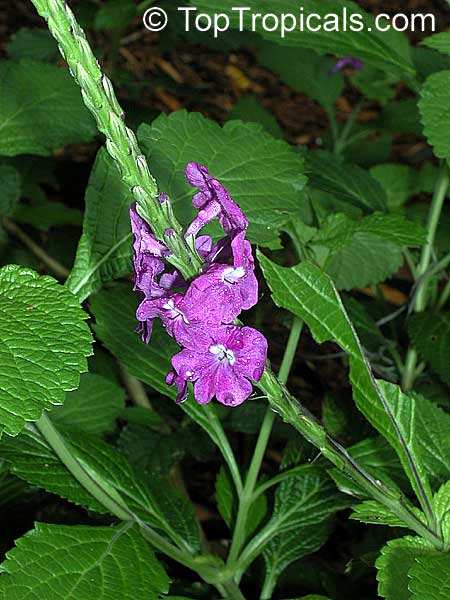
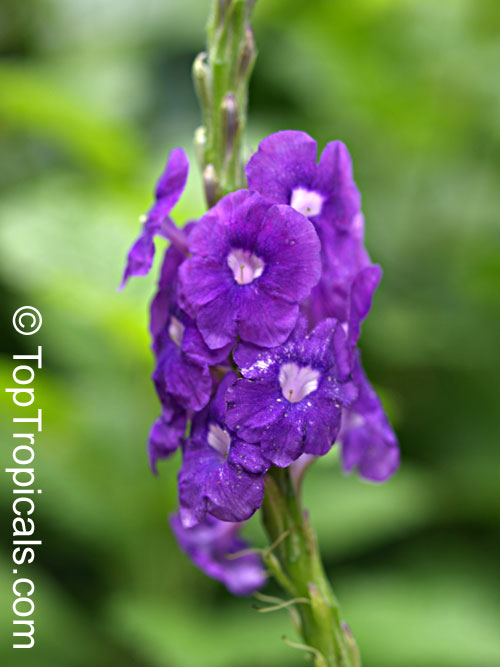
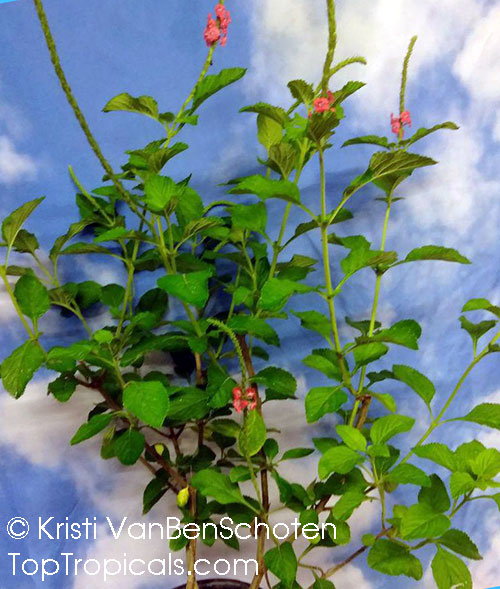
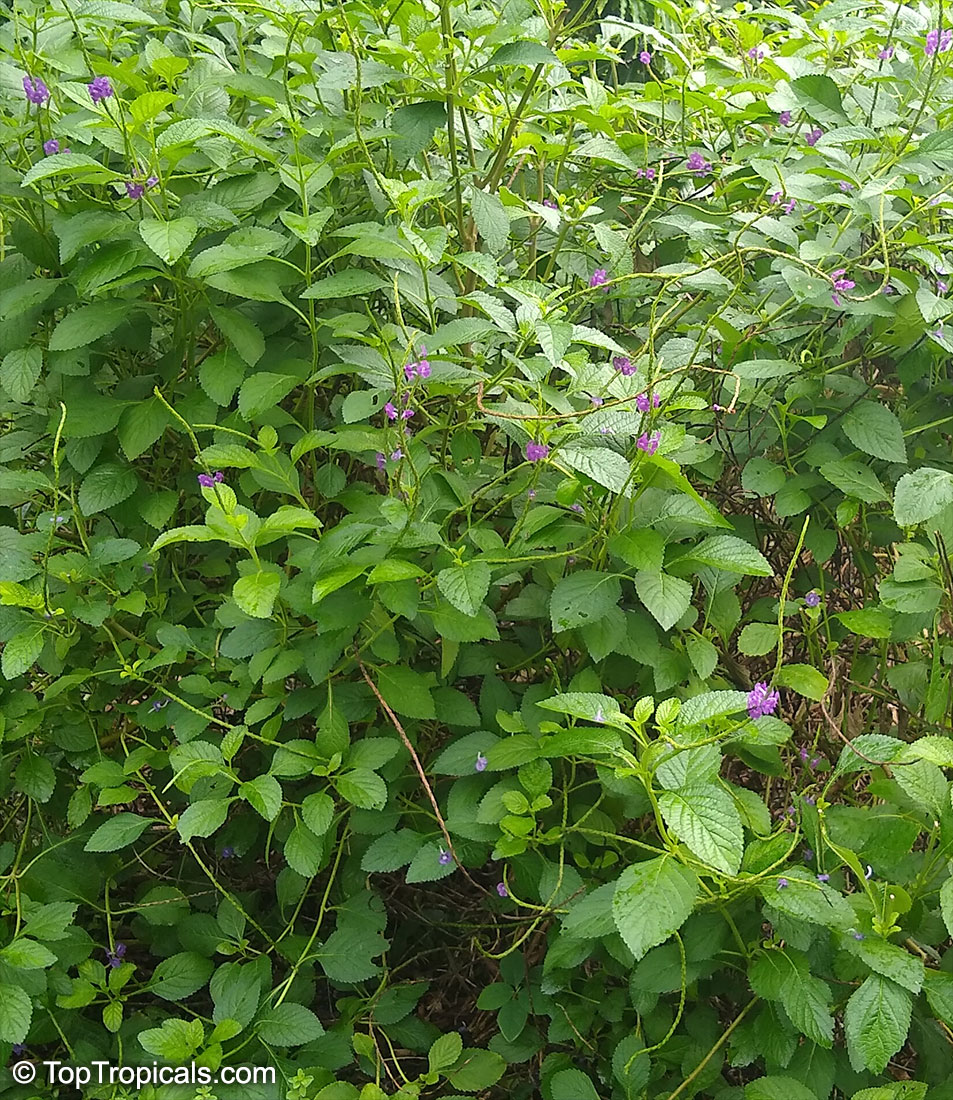
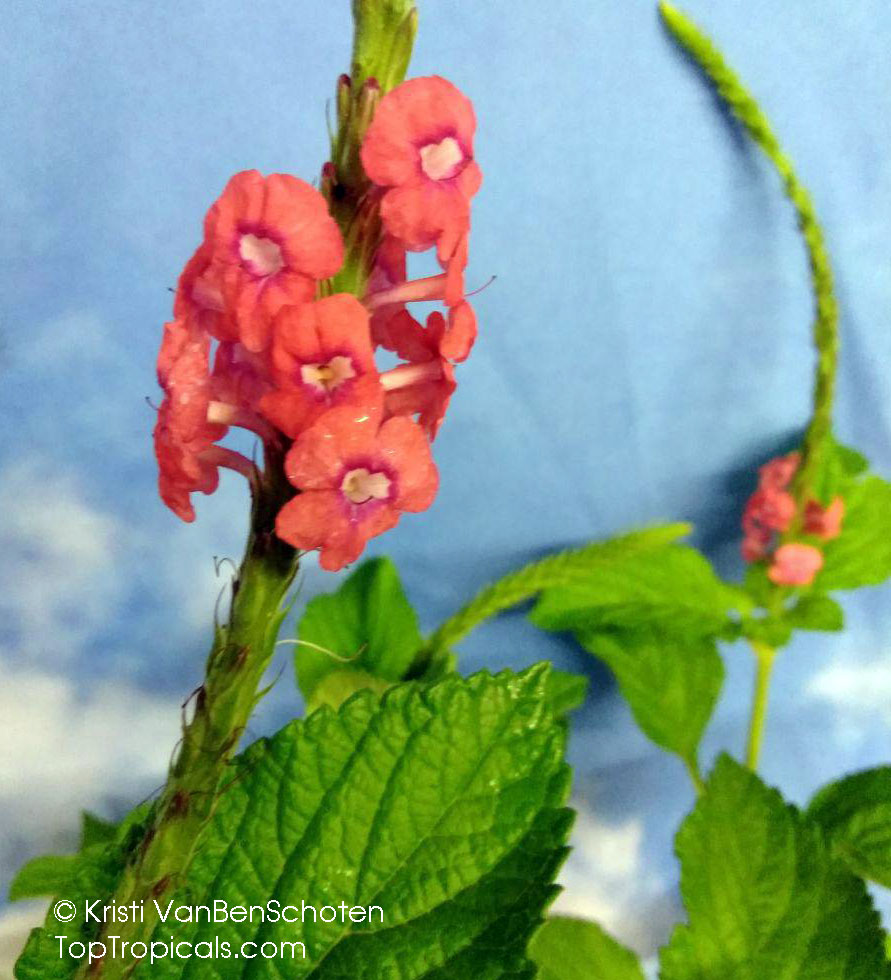
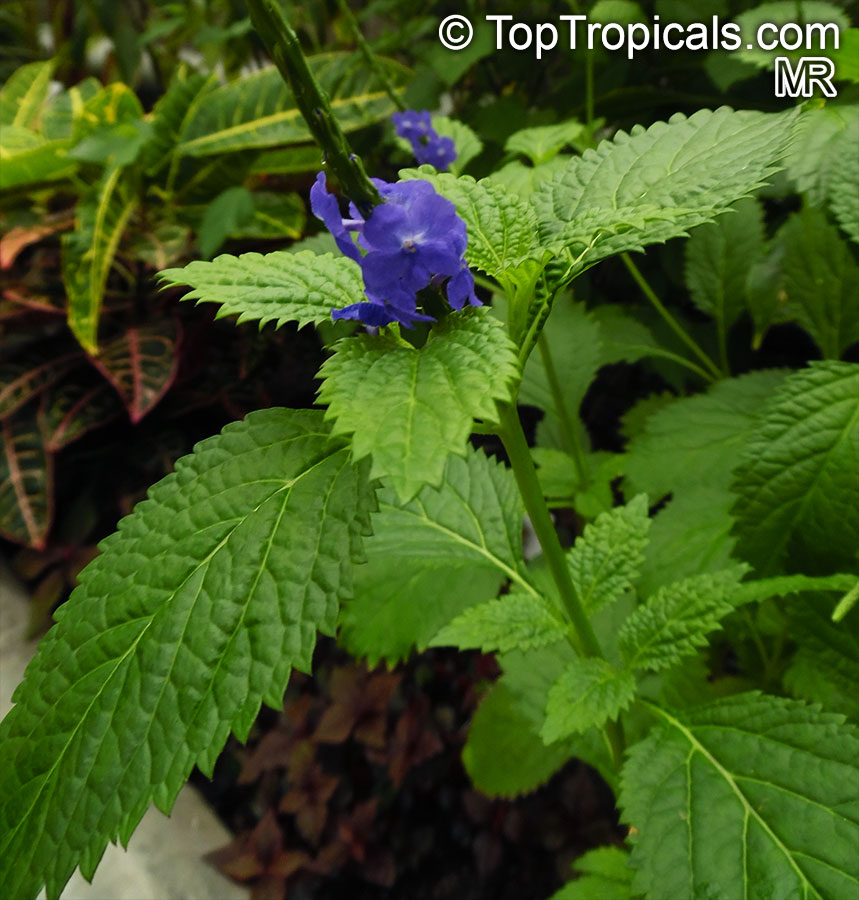
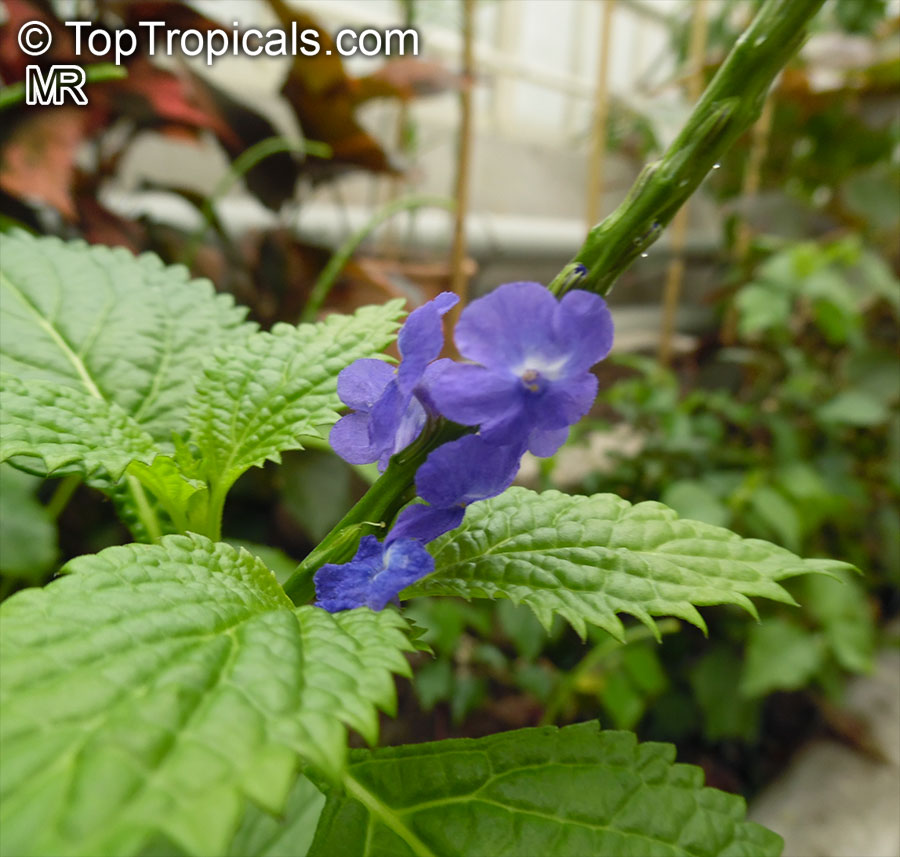
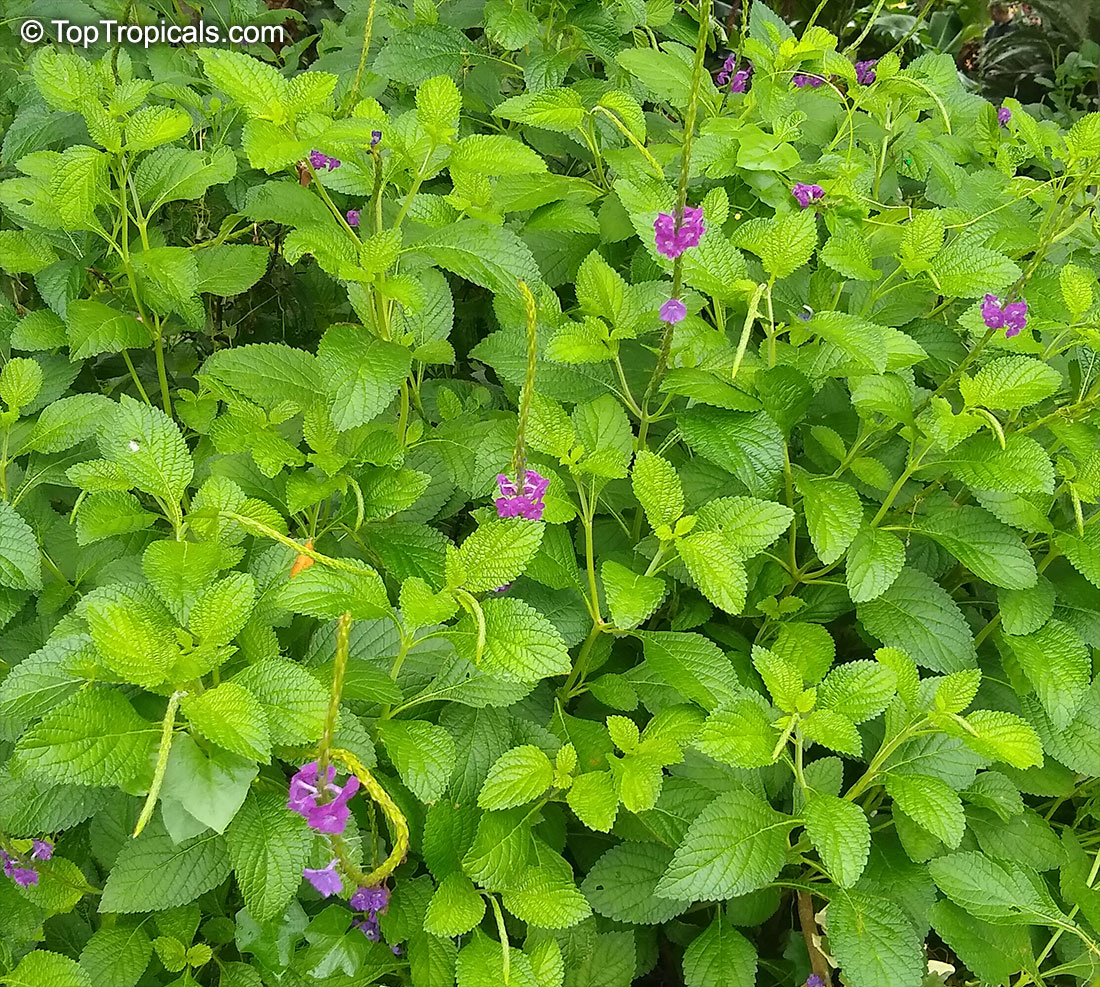
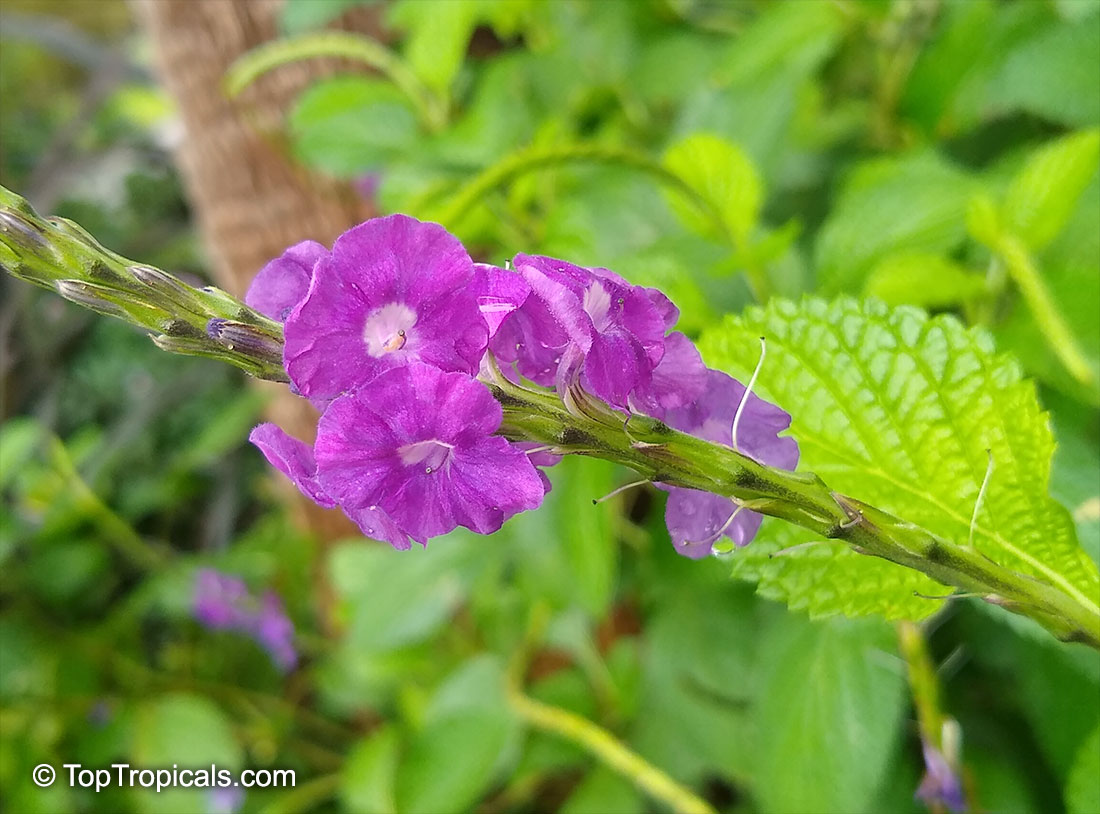
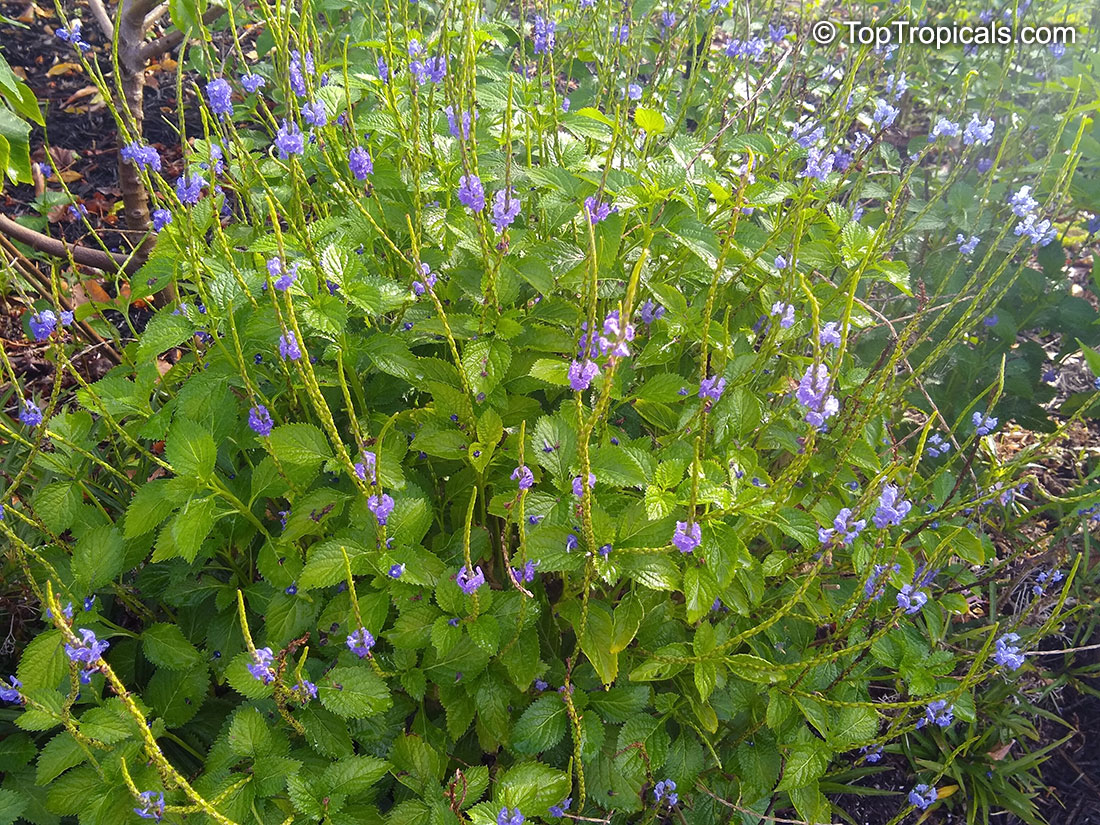
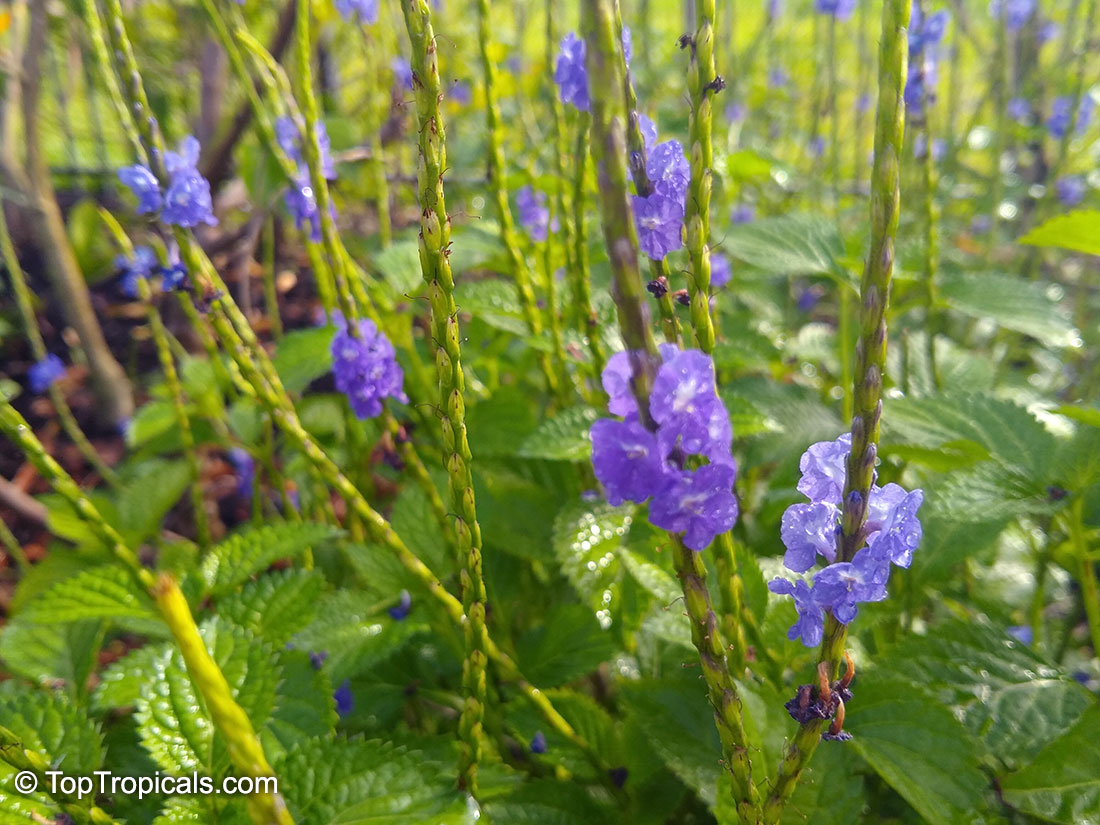
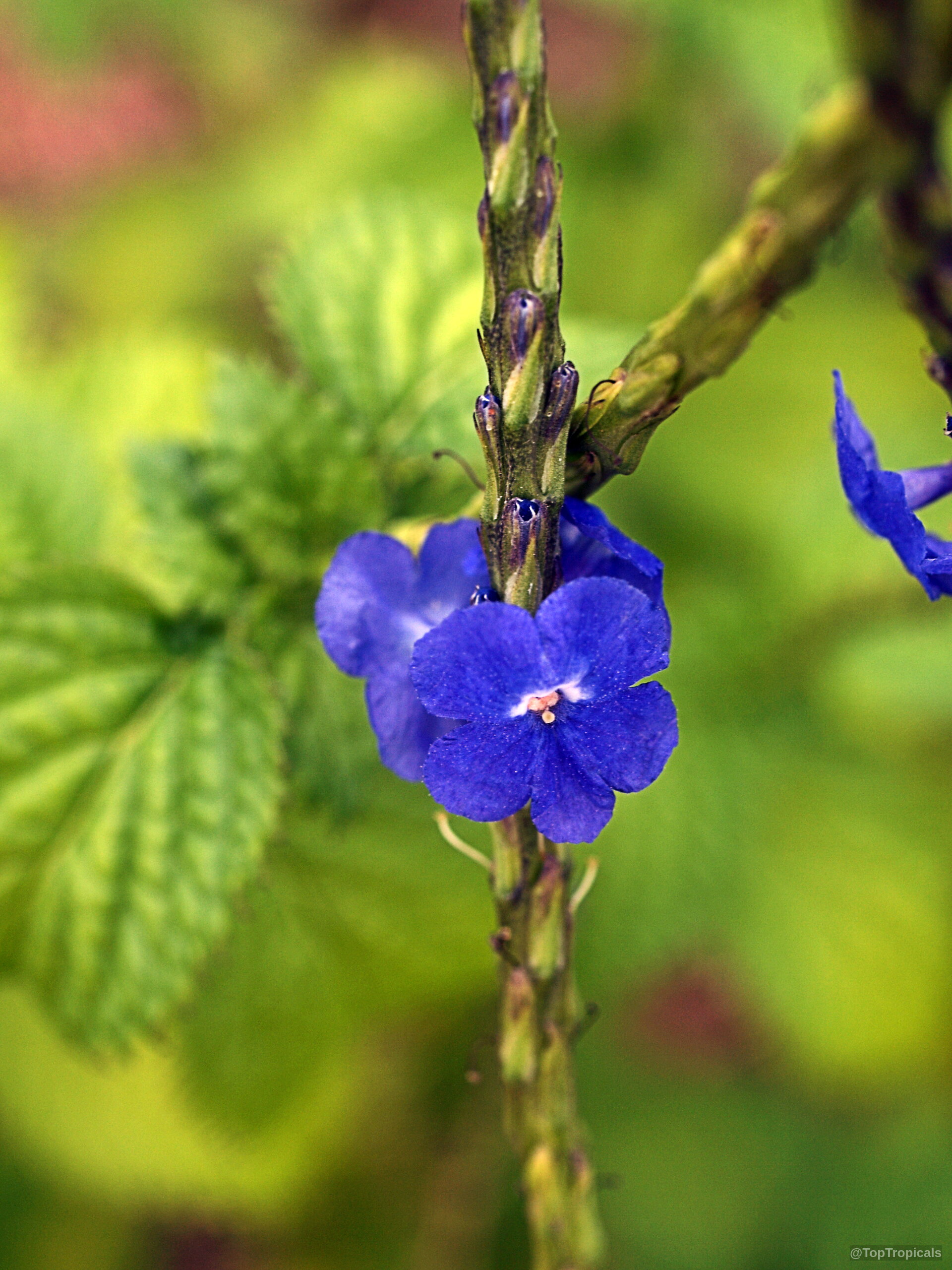
Brazilian Tea is a weedy annual (and sometimes perennial) herbaceous plant that grows 60-120 cm tall. It bears small reddish-purple to deep blue flowers that grow along tall bracts that are favored by butterflies. It is indigenous to most parts of tropical America and, although some consider it a semi-invasive weed, it is sometimes cultivated as an ornamental plant for its blue flowers and deeply-serrated, dark green leaves. Brazilian Tea belongs to the large Verbenaceae family, which comprises about 100 genera and 2,600 species (including the common vervain and verbena plants). It is often referred to as Bastard Vervain or Wild Verbena. Two very similar species of Stachytarpheta grow in the tropics and are used interchangeably (and share the same common names) in many countries' herbal medicine systems - S. cayennensis and S. jamaicensis.
Species:
Stachytarpheta jamaicensis
Stachytarpheta urticifolia
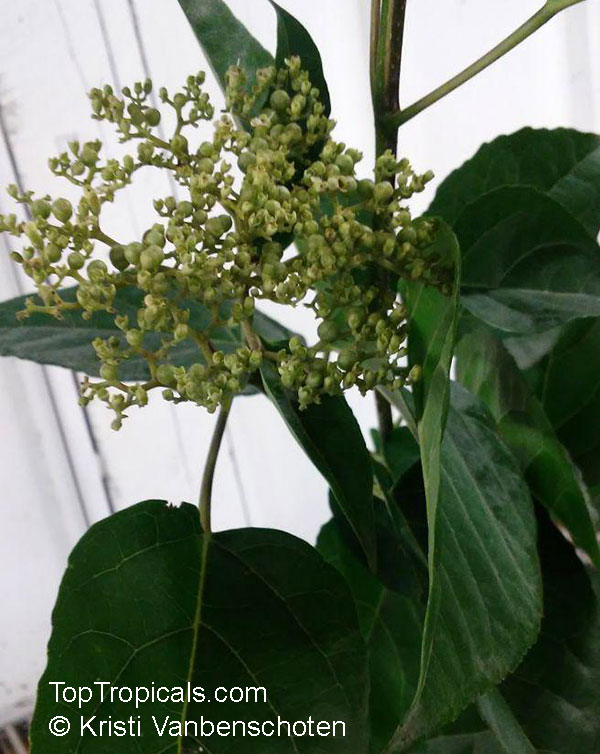
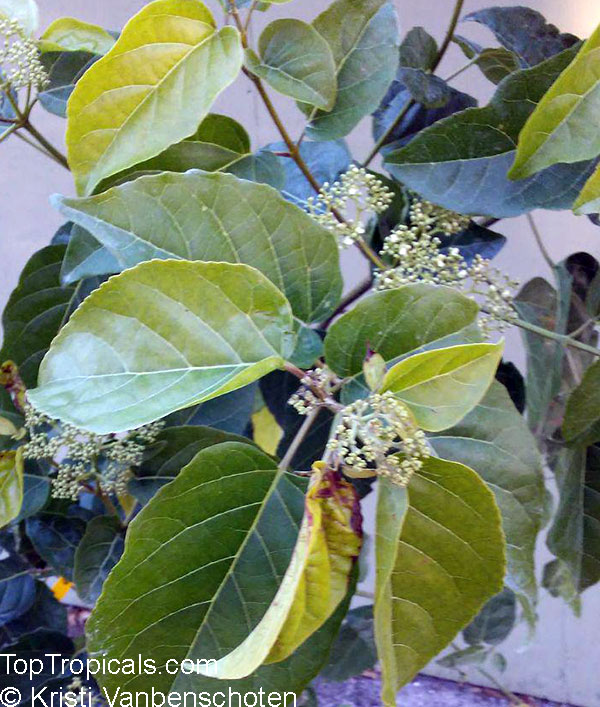
Botanical name: Premna serratifolia
Common name: PLa Cach
Family: Lamiaceae (Formerly:Verbenaceae)
Origin: SE Asia
USDA Zone: 8-11


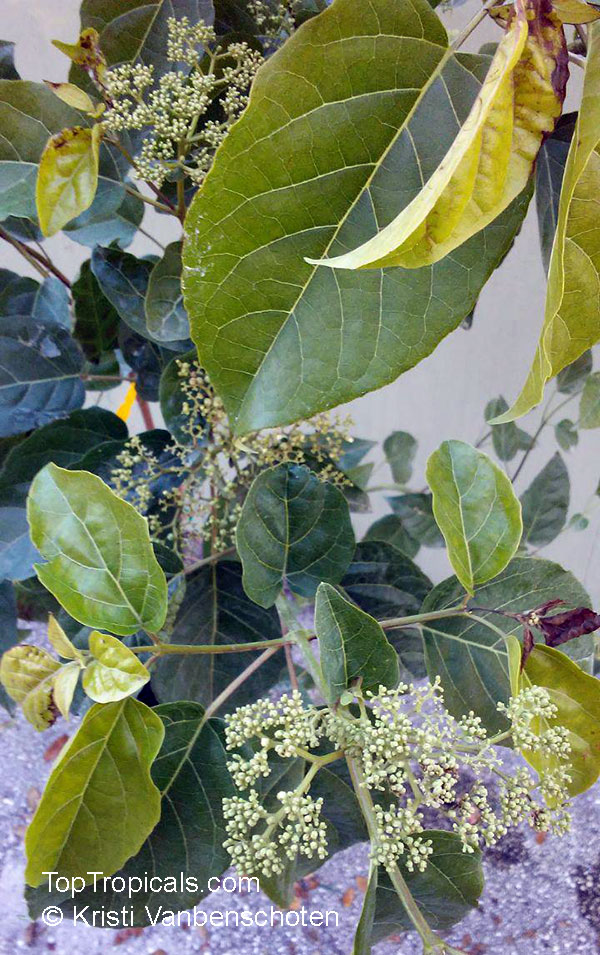
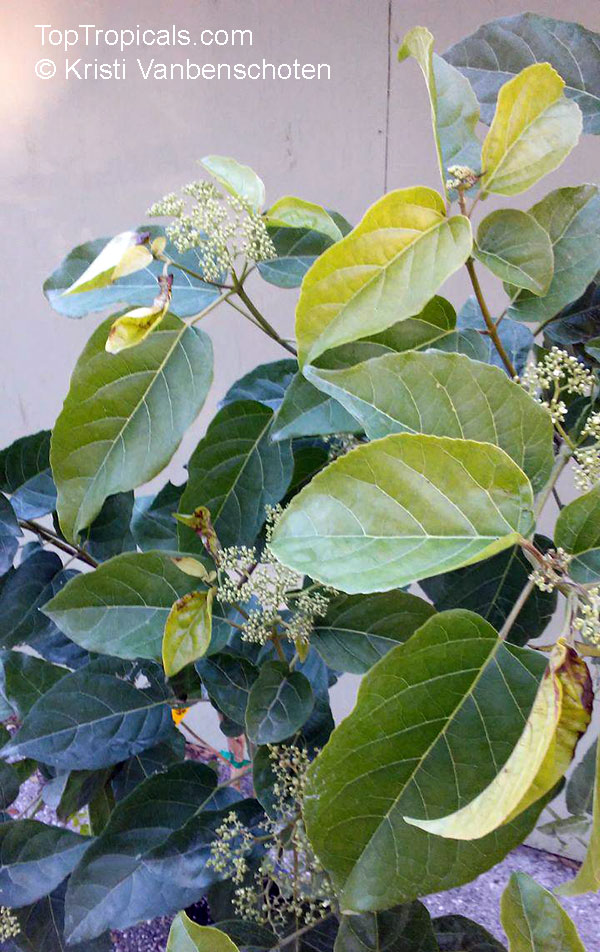
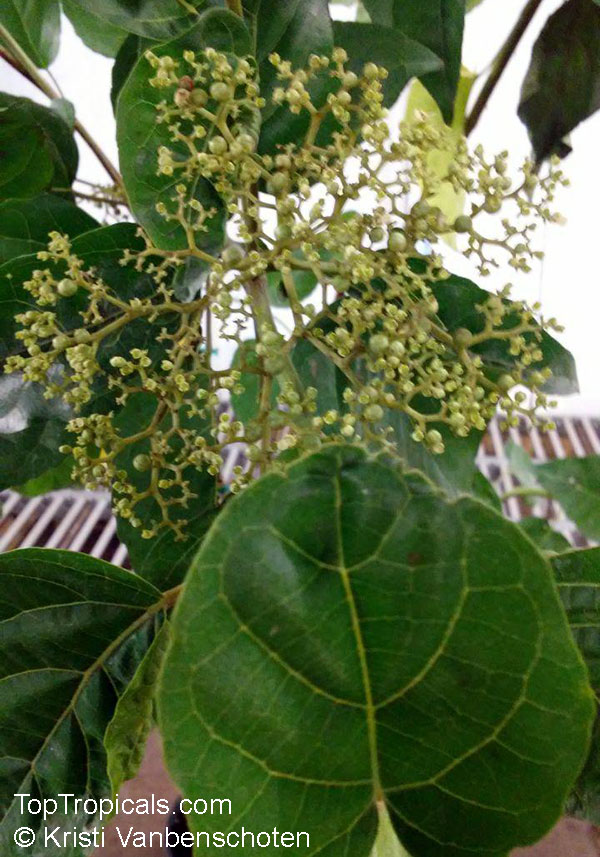
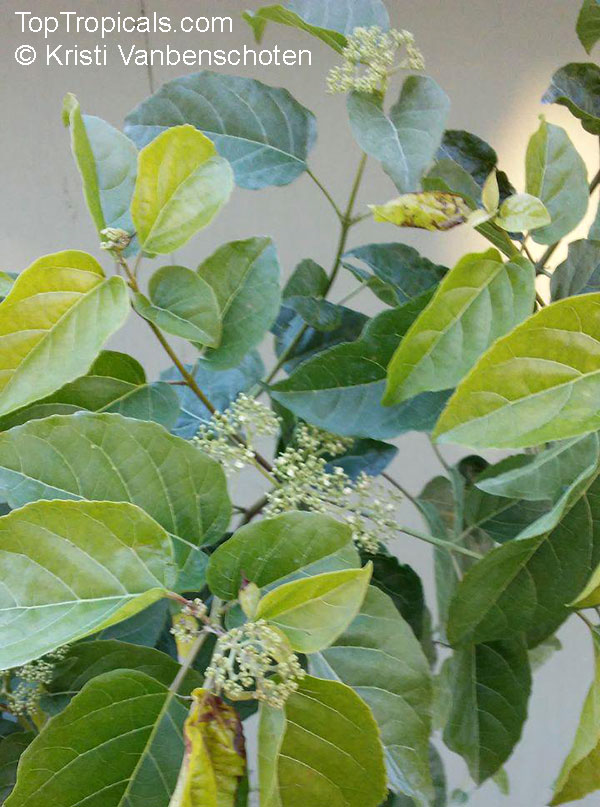
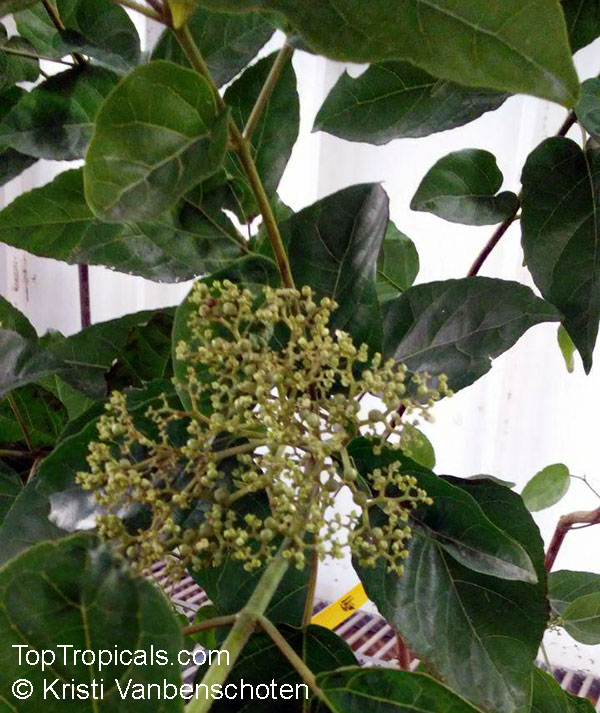
Premna serratifolia is a small tree of the Verbenaceae family that is native to Southeast Asia. It can reach a height of 10 to 20 feet and prefers full sun with some semi-shade. This ethnomedical plant is widely used as a spice or herb, especially in Indian traditional medicine. Its leaves are edible and have a lightly pungent flavor, making them popularly used as mixed vegetables or ingredients for hotpot. Sometimes used as a vegetable hot-pot dip or can be used as vegetables boiled or fried. It tastes very good. This mildly stimulant herb is famous in whole South Asia, Thailand, Indonesia and Vietnam.
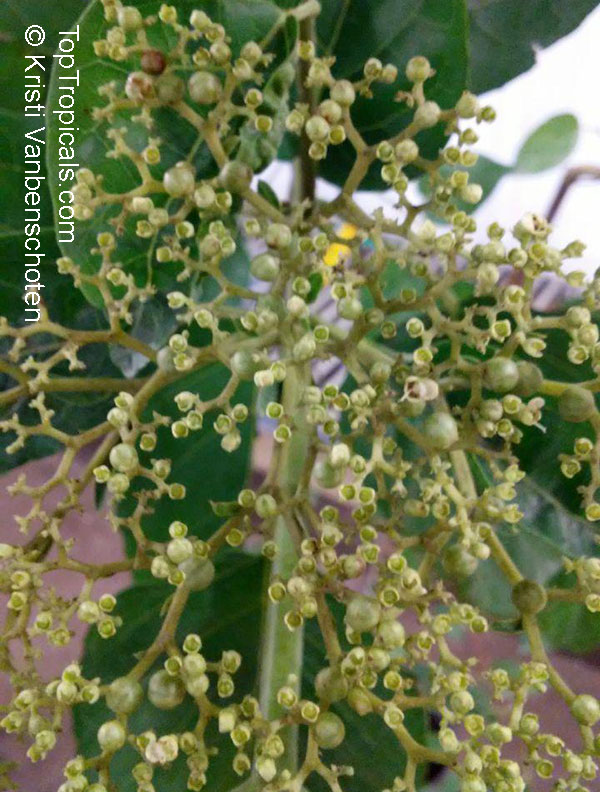
This small tree is cultivated widely in gardens in USDA Zone 8-11e. It flowers during spring and summer and produces yellowish-white fragrant flowers in small panicles. These flowers are followed by small black fruits, which are 1/8 to 5/16 inch in size. The fruits are edible and can be consumed, either raw or cooked. They have sweetly scented and mild taste. In traditional medicine, the fruits are considered to have anti-inflammatory, antiulcer, and antimalarial properties.
Premna serratifolia is easy to grow and requires little care. For those in cold regions, it can be grown in a pot and stored inside the house during winter. It needs to be watered regularly and fertilized every season. It can tolerate short-term periods of drought, but it requires enough cold to properly flower.
Overall, Premna serratifolia is a valuable small tree with many uses. Its leaves and fruits make it edible, while its medicinal benefits make it an important herb in native traditional medicines. It is relatively easy to take care of and its versatility makes it a great addition to any garden.
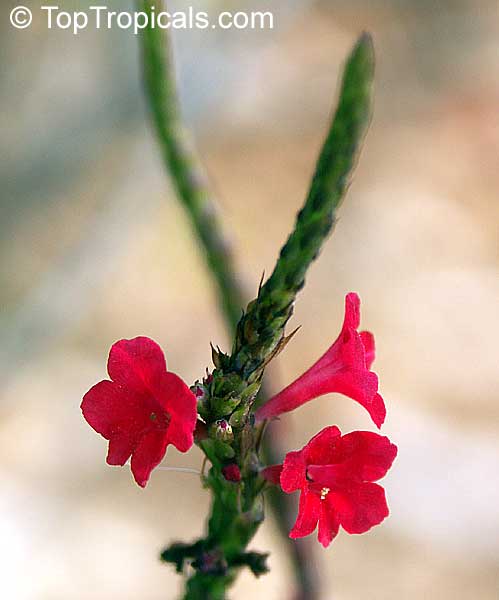
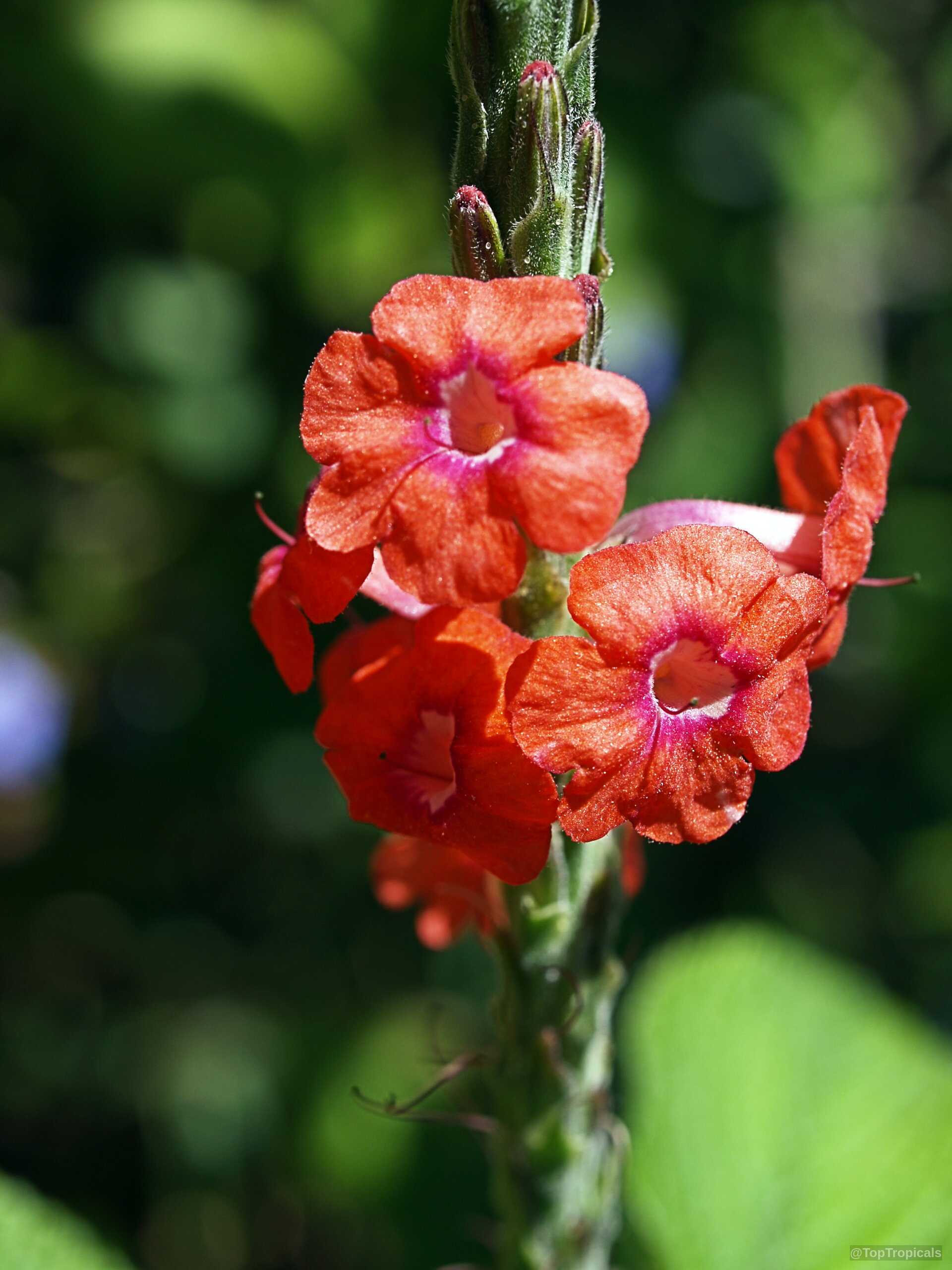
Botanical name: Stachytarpheta sanguinea
Common names: False Vervain, Snake-weed
Family: Verbenaceae
Origin: Brazil
USDA Zone: 9-10
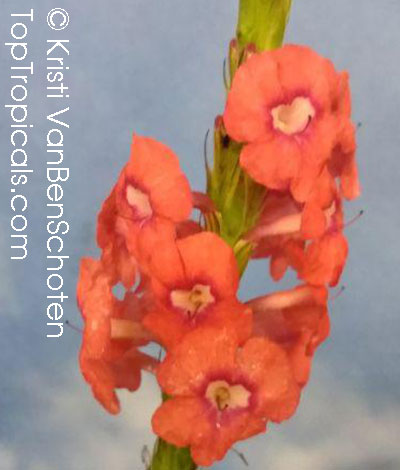
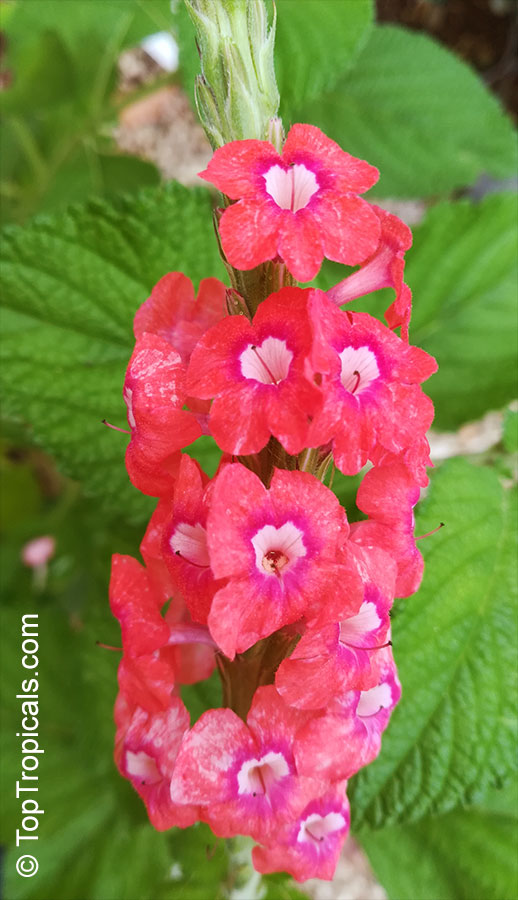
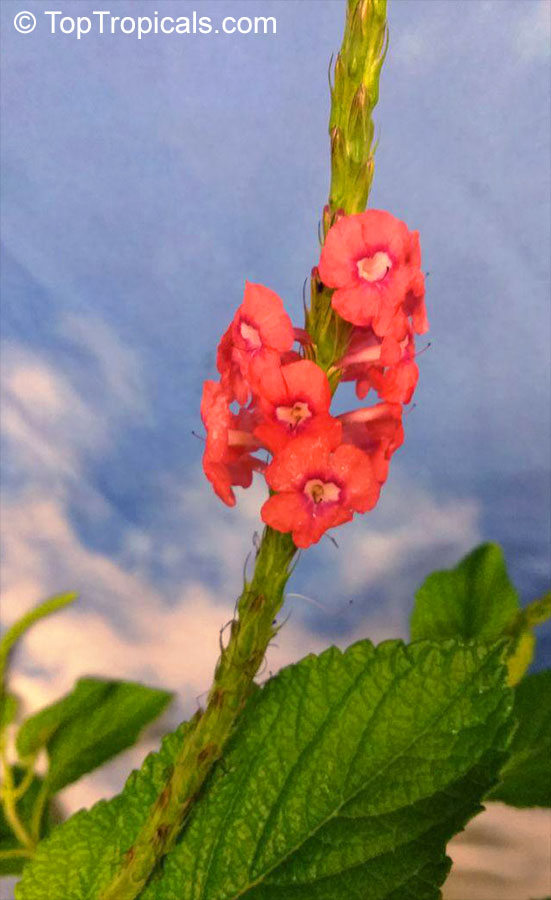
Stachytarpheta sanguinea or False Vervain is a member of the Verbenaceae family, and is a hardy shrub that typically grows from 2 to 5 feet high. It bears small, red flowers and has deeply-serrated, dark green leaves that are favored by butterflies. Native to most parts of tropical America, False Vervain is sometimes cultivated as an ornamental plant for its beautiful blooms.
This plant is relatively easy to care for and tolerates diverse growing conditions. It prefers full sunlight or semi-shade and thrives with regular watering, though it can remain somewhat drought-tolerant. Its flowers produce plenty of nectar, bringing plenty of hummingbirds and butterflies to any garden - plus, they can be cut back after they wilt, to help keep the plant blooming through the warmer months.
For colder climates, False Vervain is best grown in a pot. To keep them healthy through the winter months, select a high-quality potting soil and apply mulch to help trap in moisture and keep the root system warm. Regular, consistent watering is also essential, as the soil can quickly dry out in cold weather, and the pot should be brought inside when temperatures drop below 32 degrees Fahrenheit. Moving the pot in and out of warmer regions as needed will help to keep the plant blooming continuously.
Overall, False Vervain is a reliable, low maintenance plant that makes a dramatic impact with its unique foliage and vibrant flowers. With just a few simple steps of care, it can bear plenty of delicious seeds and bring beautiful blooms and plenty of hummingbirds and butterflies to any garden.


Botanical names: Aloysia gratissima, Lippia lycioides, Aloysia lycioides
Common names: Whitebrush, Beebrush
Family: Verbenaceae
Origin: Mexico, South America
USDA Zone: 8-11


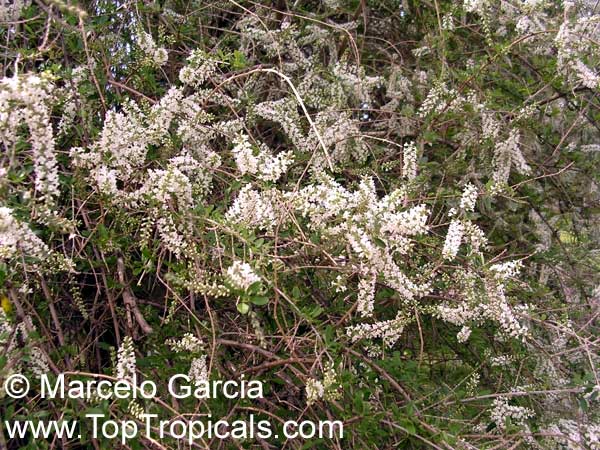
Grown in full sun to partial shade, Aloysia gratissima is a large and moderately tolerant shrub native to Mexico and South America. It can grow up to 5-10 feet tall, producing fragrant white or off-white flowers with yellow and orange centers in the spring through fall. Attracting butterflies and hummingbirds, this ethnomedical plant is drought tolerant, low-water use, and tolerant of soils which are poorly drained.
It thrives in USDA Zones 8-11. In cold regions, Aloysia gratissima should be grown in a large enough pot to prevent it from freezing, and the pot should be brought inside during severe weather. Provide shade or mulch when temperatures dip too low, and be sure to water deeply after periods of extreme cold. Use a slow-release fertilizer to encourage healthy growth.
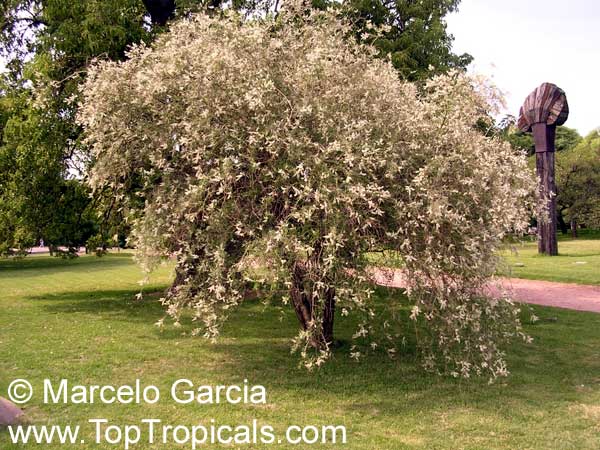
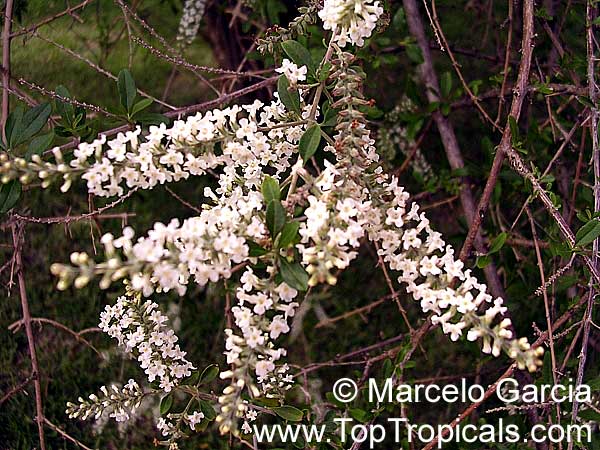
Botanical name: Aloysia virgata
Common names: Sweet Almond Bush, Incense Bush
Family: Verbenaceae
Origin: Mexico, South America
USDA Zone: 9-11
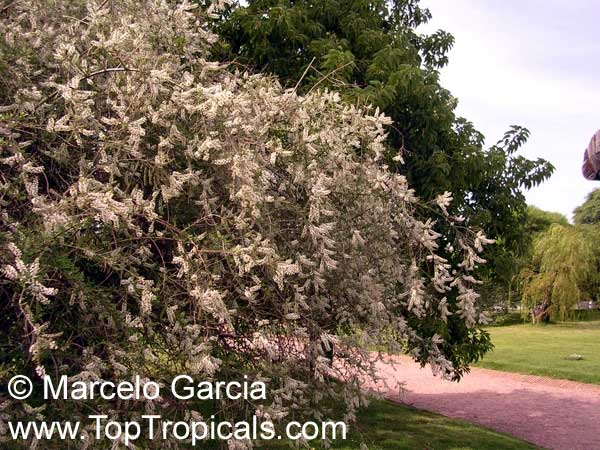
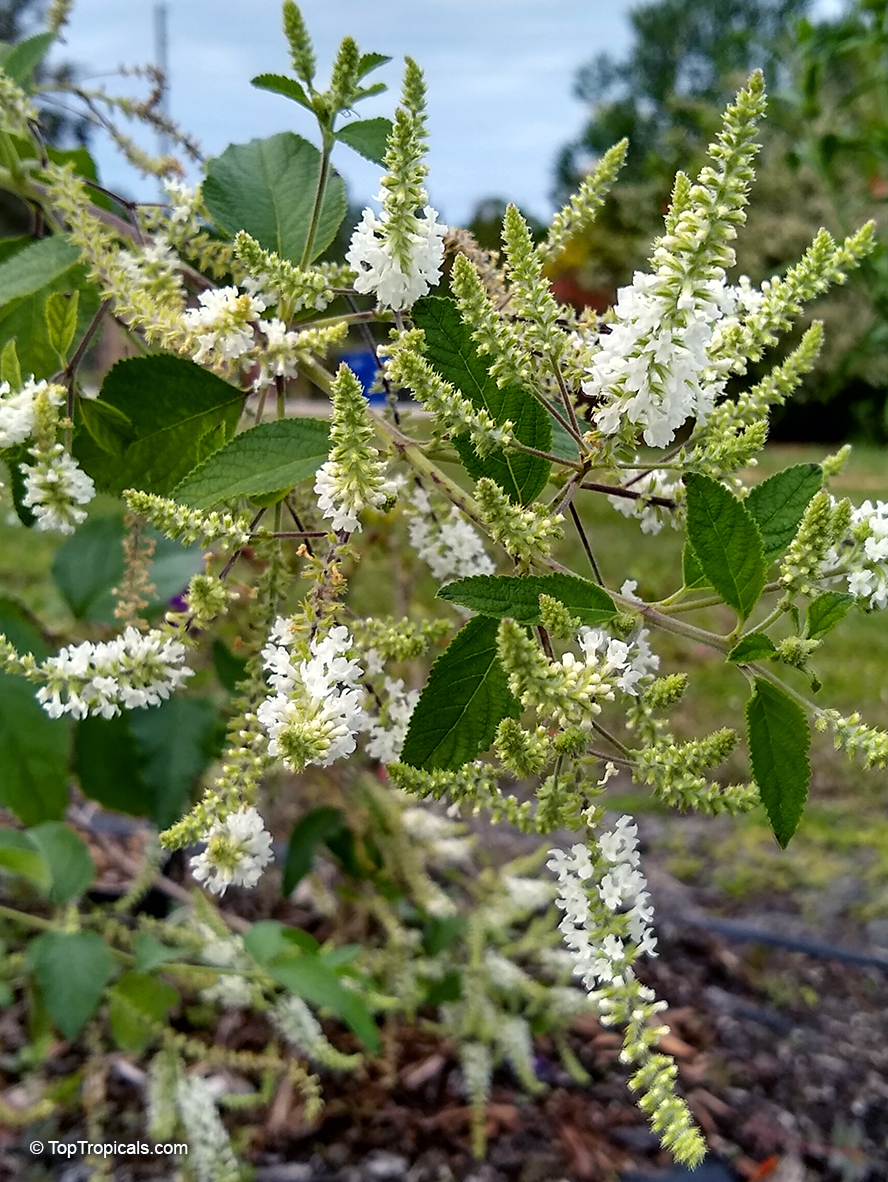
Aloysia virgata is very attractive to butterflies and hummingbirds. Native to Mexico and South America, Aloysia virgata (Sweet Almond Bush) is a large shrub that can reach heights of 5-10 feet tall. This plant prefers to be grown in full sun or semi-shade, with a moderate amount of water. Its fragrant, white to off-white flowers attract butterflies, hummingbirds, and other pollinators. It makes a great addition to any garden, with the bonus of a lovely scent.
Aloysia virgata is a fast-growing shrub, requiring very little care for best performance. In order to maintain its appearance and shape, it is important to prune it back periodically. It is also possible to grow it as a potted plant in cold regions, as long as the plant is given careful growing and care instructions.
For successfully growing Aloysia virgata in a pot in cold climates, the container must have good drainage to prevent waterlogging, and should be brought indoors when temperatures reach the mid 30s F. It is important to note that the pot should be large enough to accommodate the rate of growth of the plant. The soil must include compost or mulch for nutrients, and the soil should be kept consistently moist but not overly wet. During the winter, the soil needs to also be mulched to help ensure insulation from extreme cold temperatures.
Aloysia virgata is a beautiful and fragrant shrub that can provide near year-round beauty to any home garden. With proper care and maintenance, it can thrive in full sun or partial shade, and in a wide range of climates and soils.
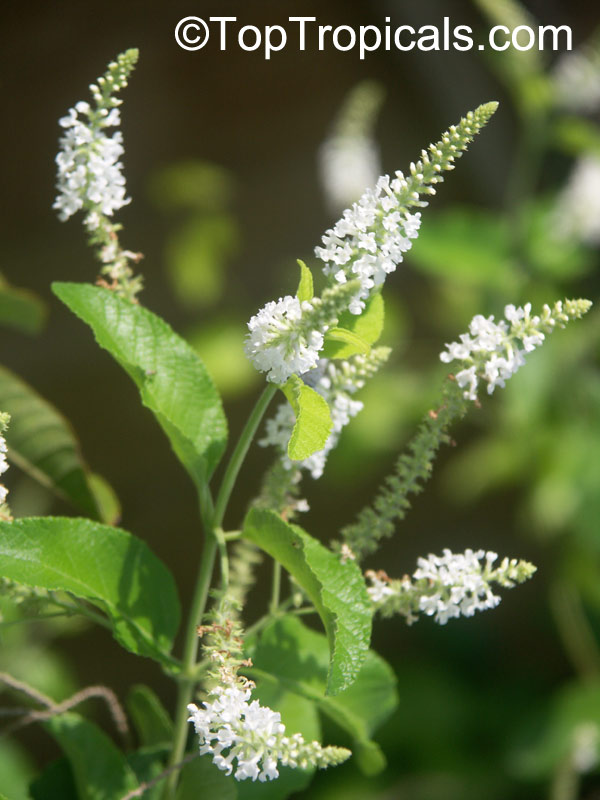
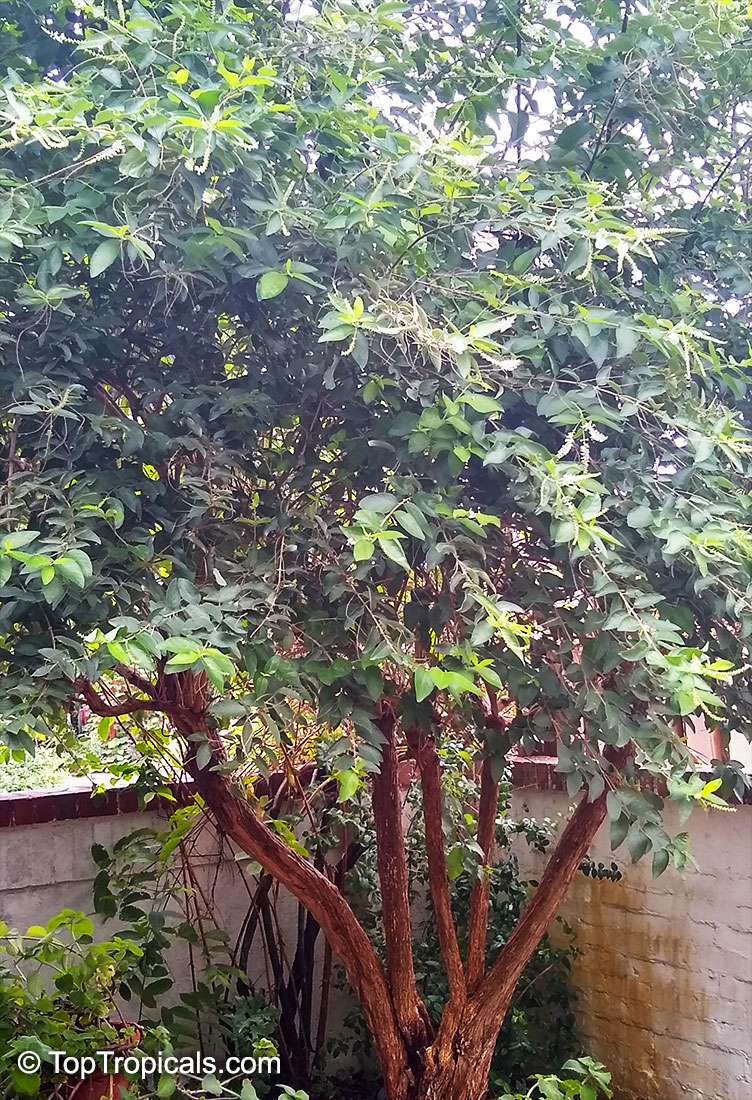
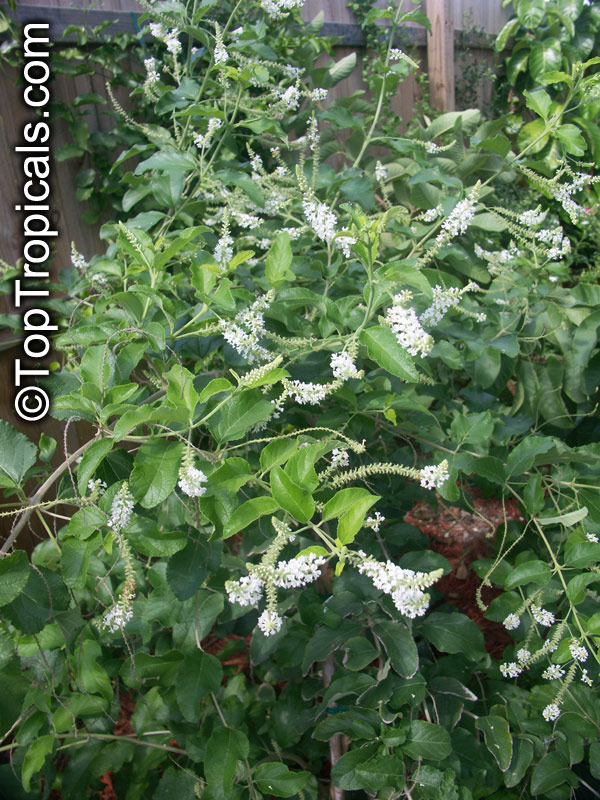
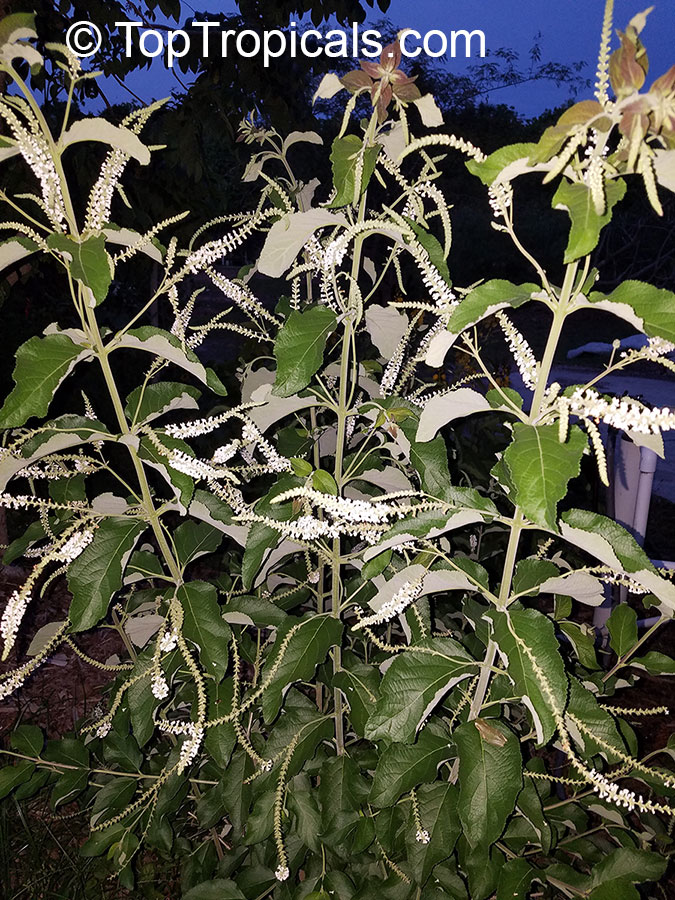
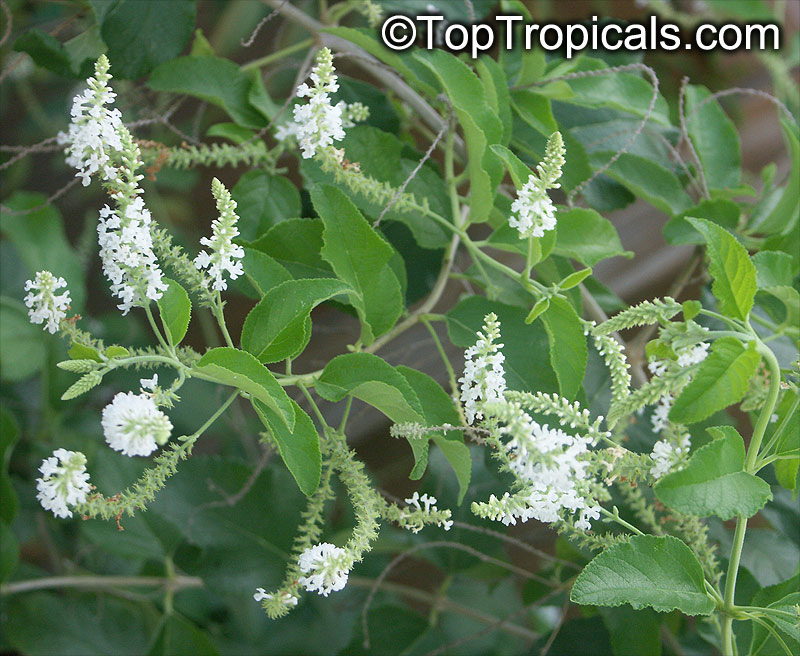
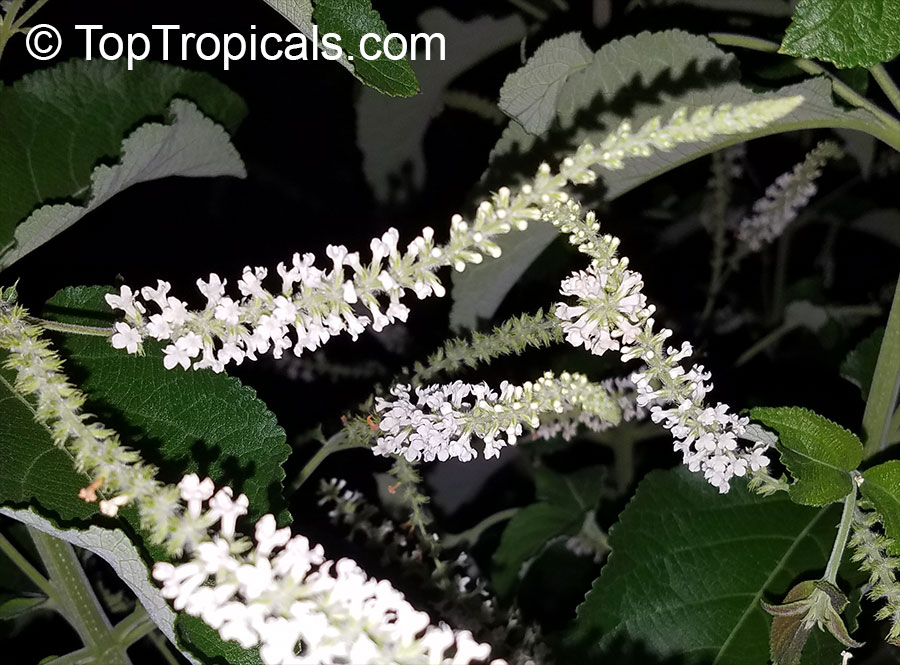

Slender, densely branched deciduous shrub, 3 to 10 feet tall, 8 feet in spread. Fragrant foliage. White to yellow flowers appear in spring to fall with strong almond scent. attractive to butterflies and bees. This is a honey plant. Low water use, drought tolerant.
Recommended Fertilizer: SUNSHINE Megaflor - Bloom Nutrition Booster
 SUNSHINE Pikake (NPK 2-2-4) - eco-friendly concentrated nutrition booster for fragrant flowers. Improves quantity and quality of flowers. Encourages profuse blooming. Increases flower fragrance intensity. Can be used with every watering. For best results, use in combination with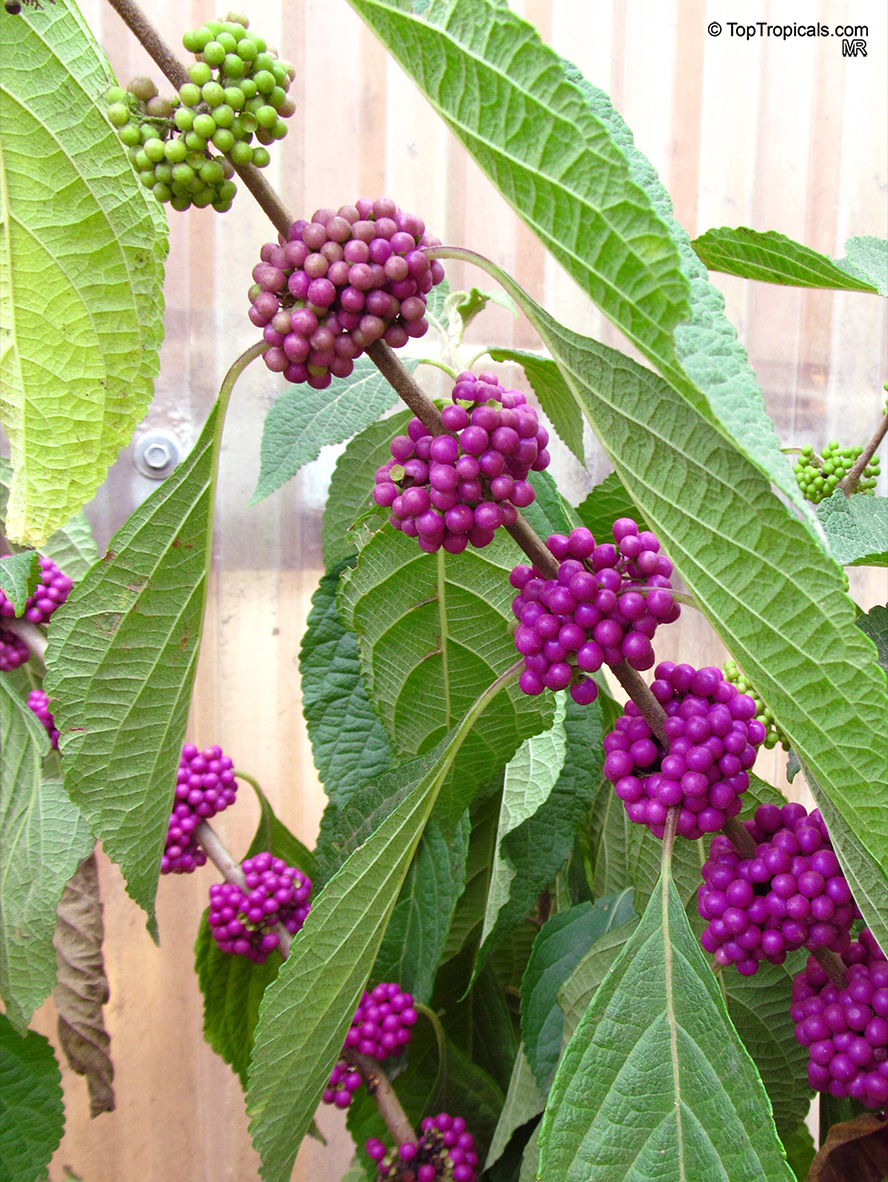
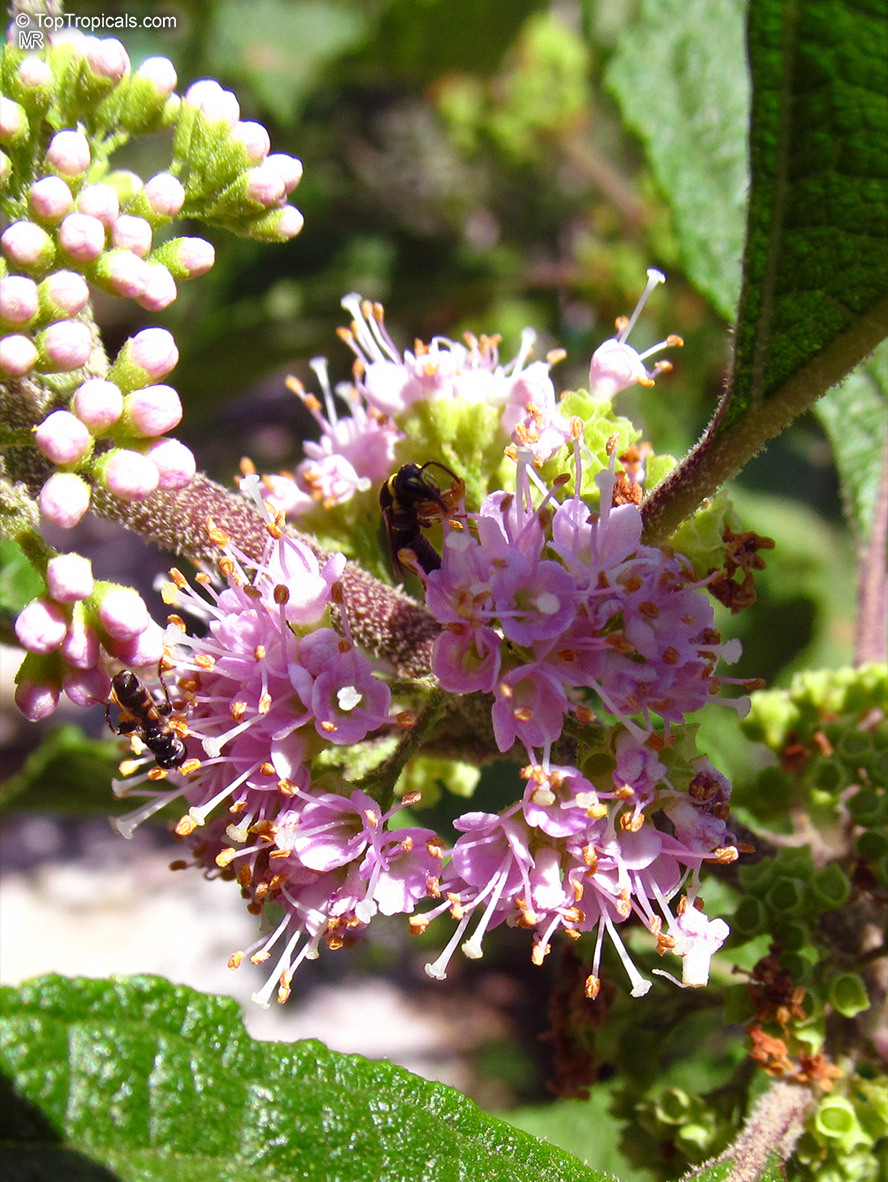
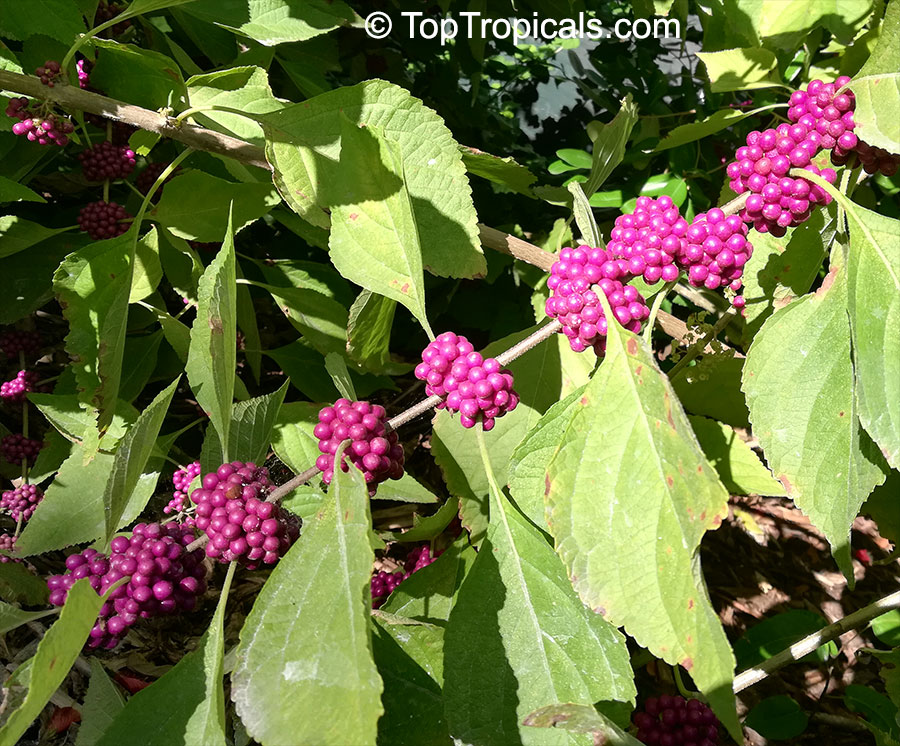
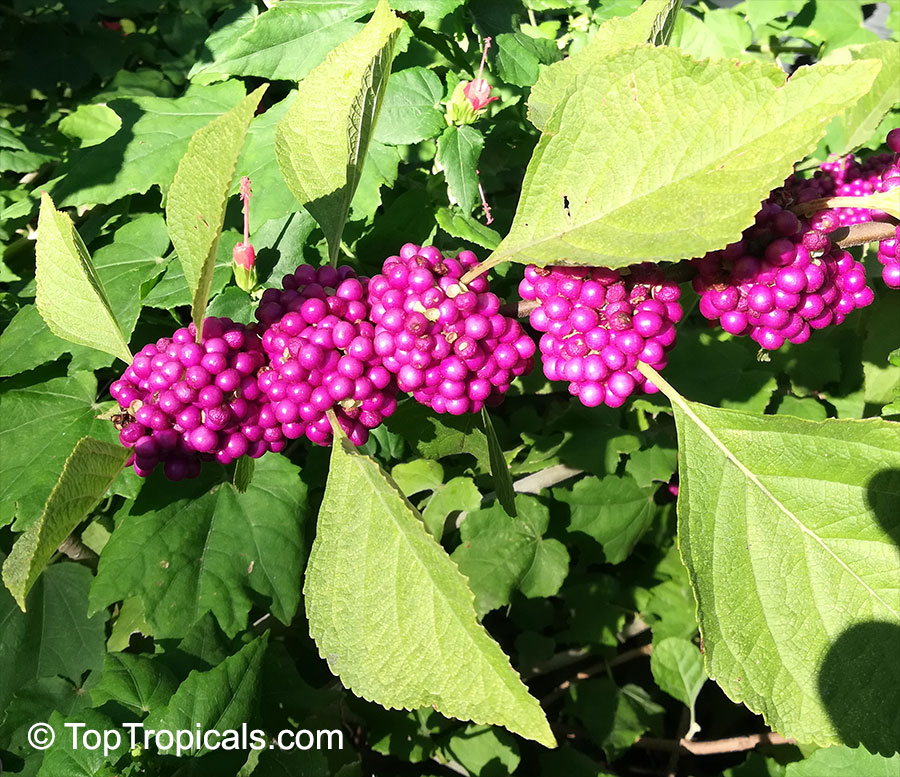
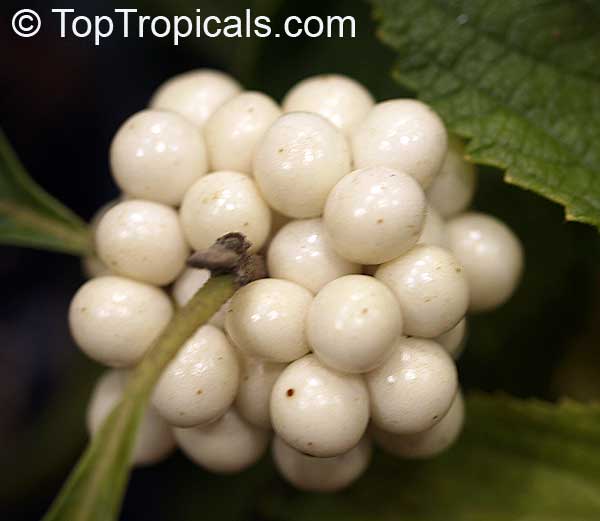
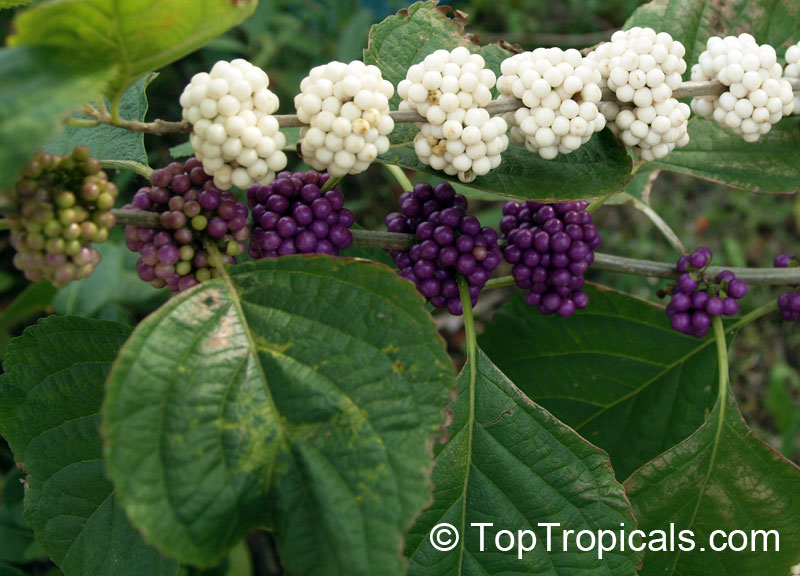
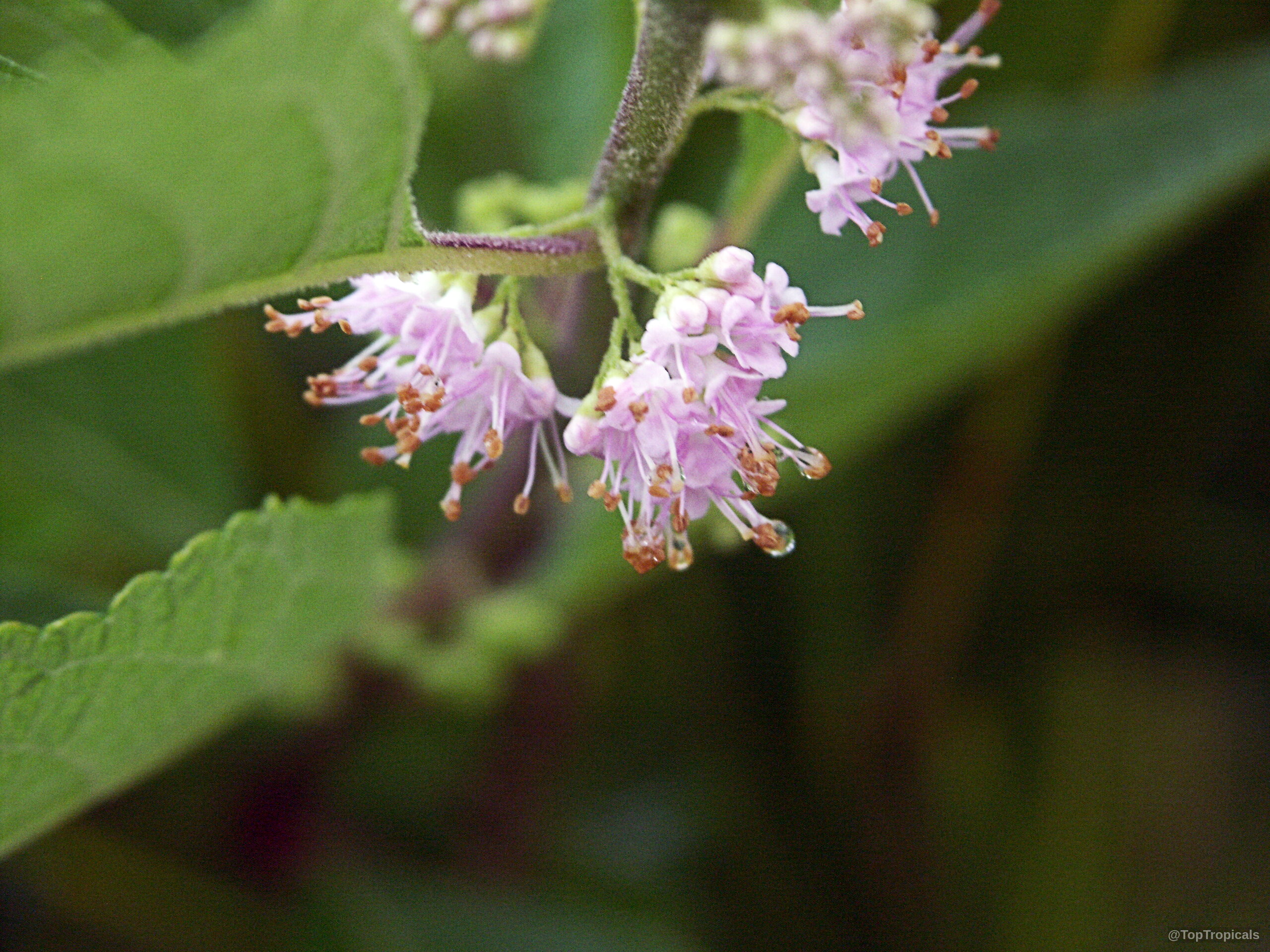
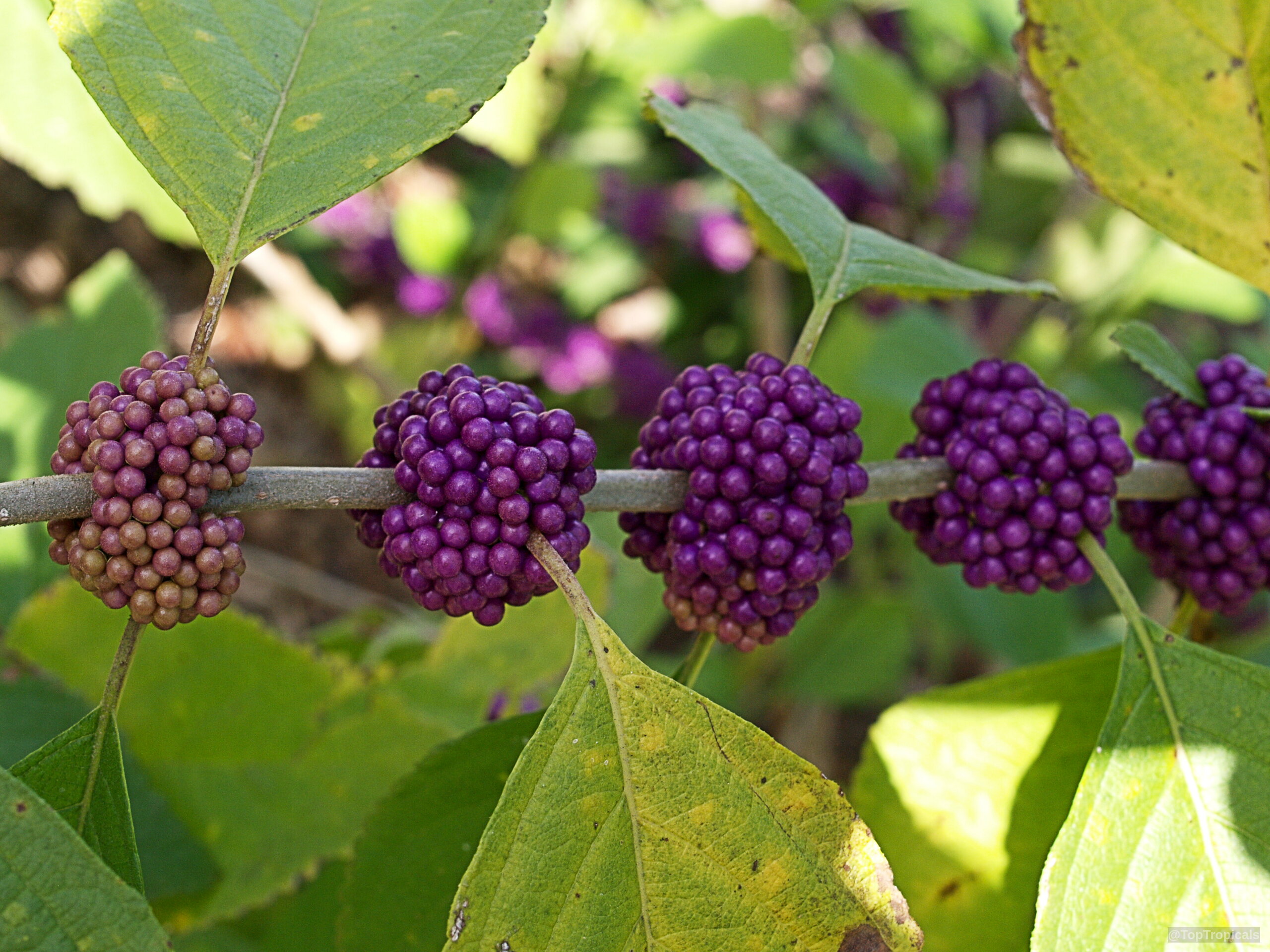
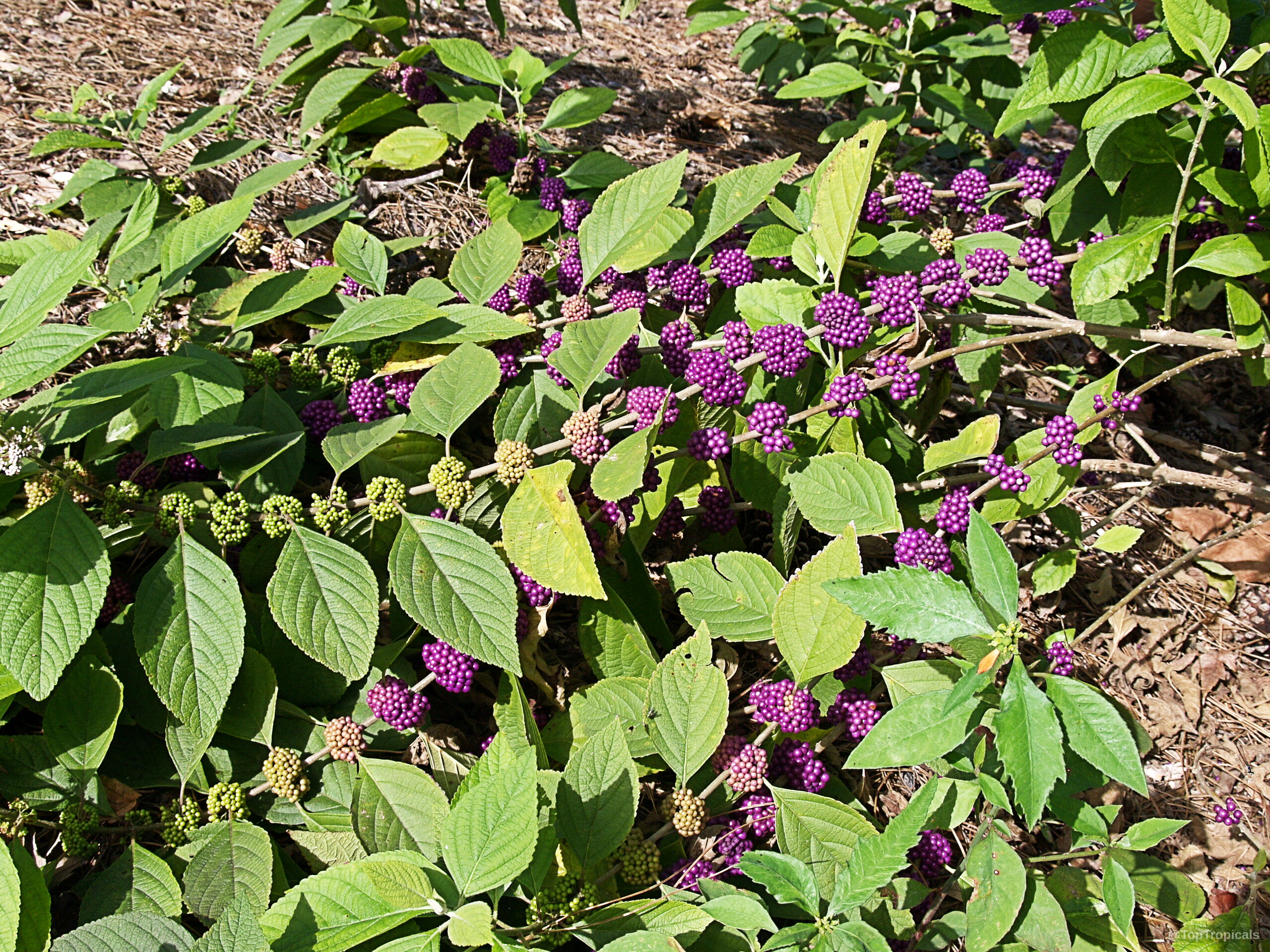
Botanical name: Callicarpa americana
Common name: American Beautyberry
Family: Lamiaceae (Formerly:Verbenaceae)
Origin: North America
USDA Zone: 6-11

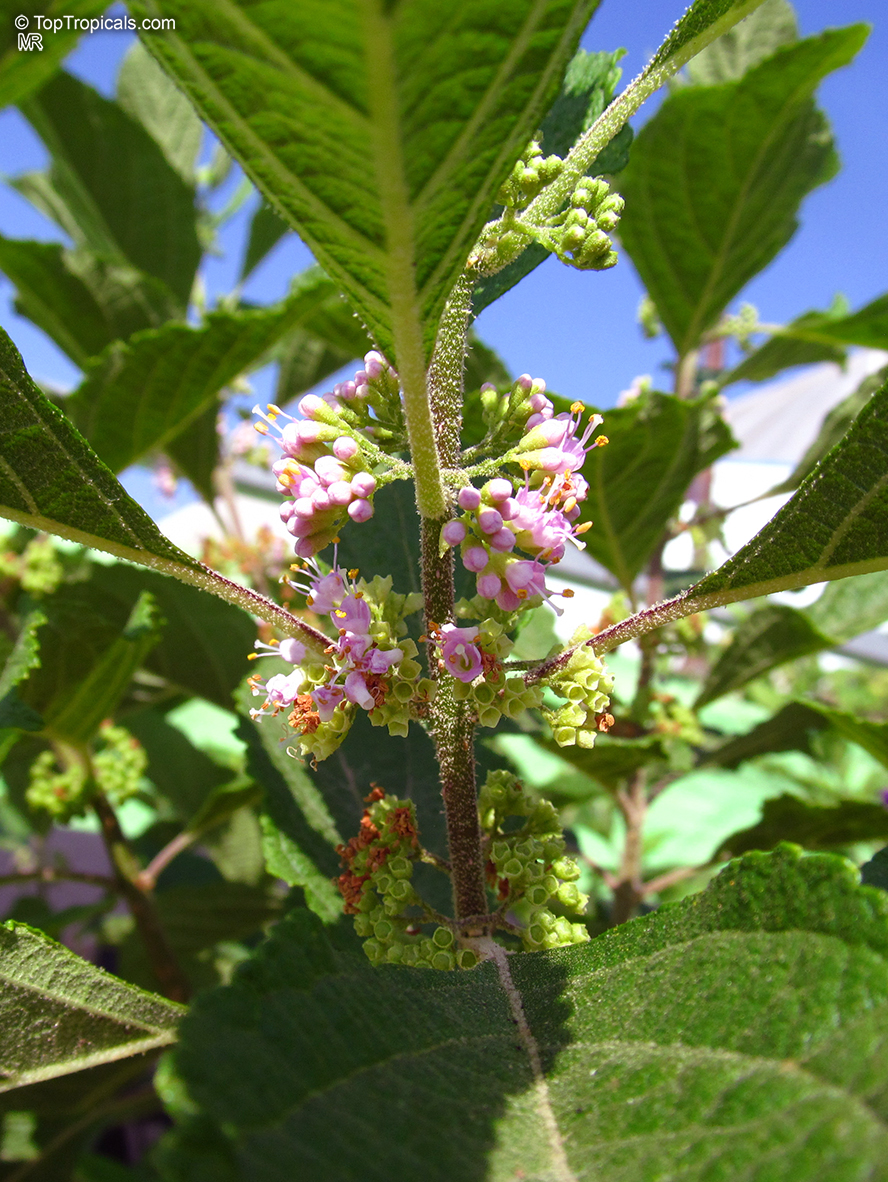
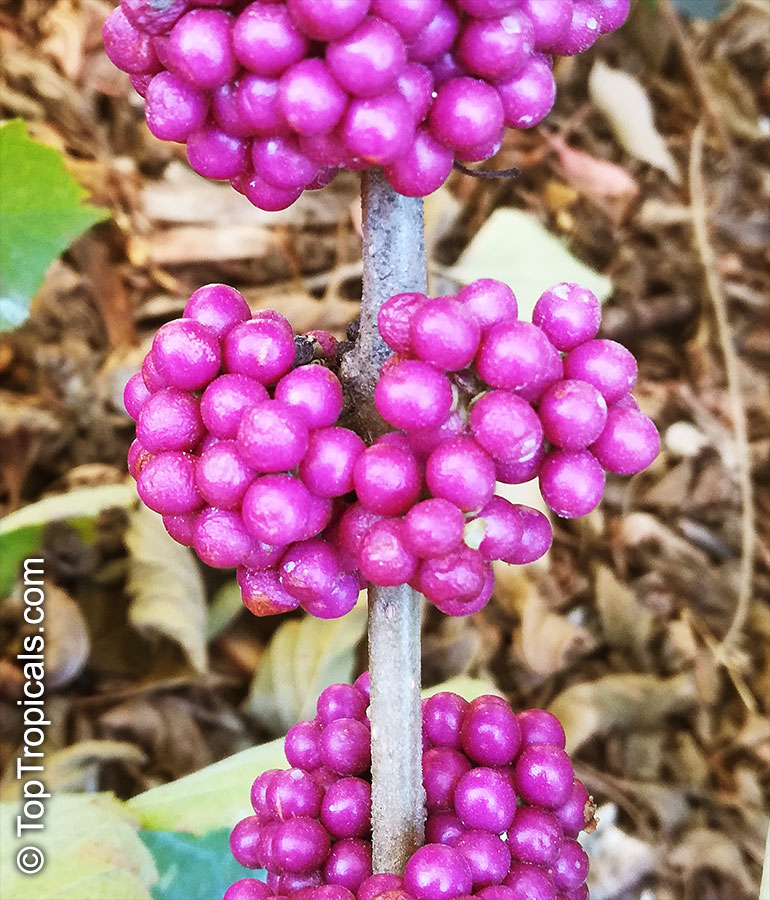
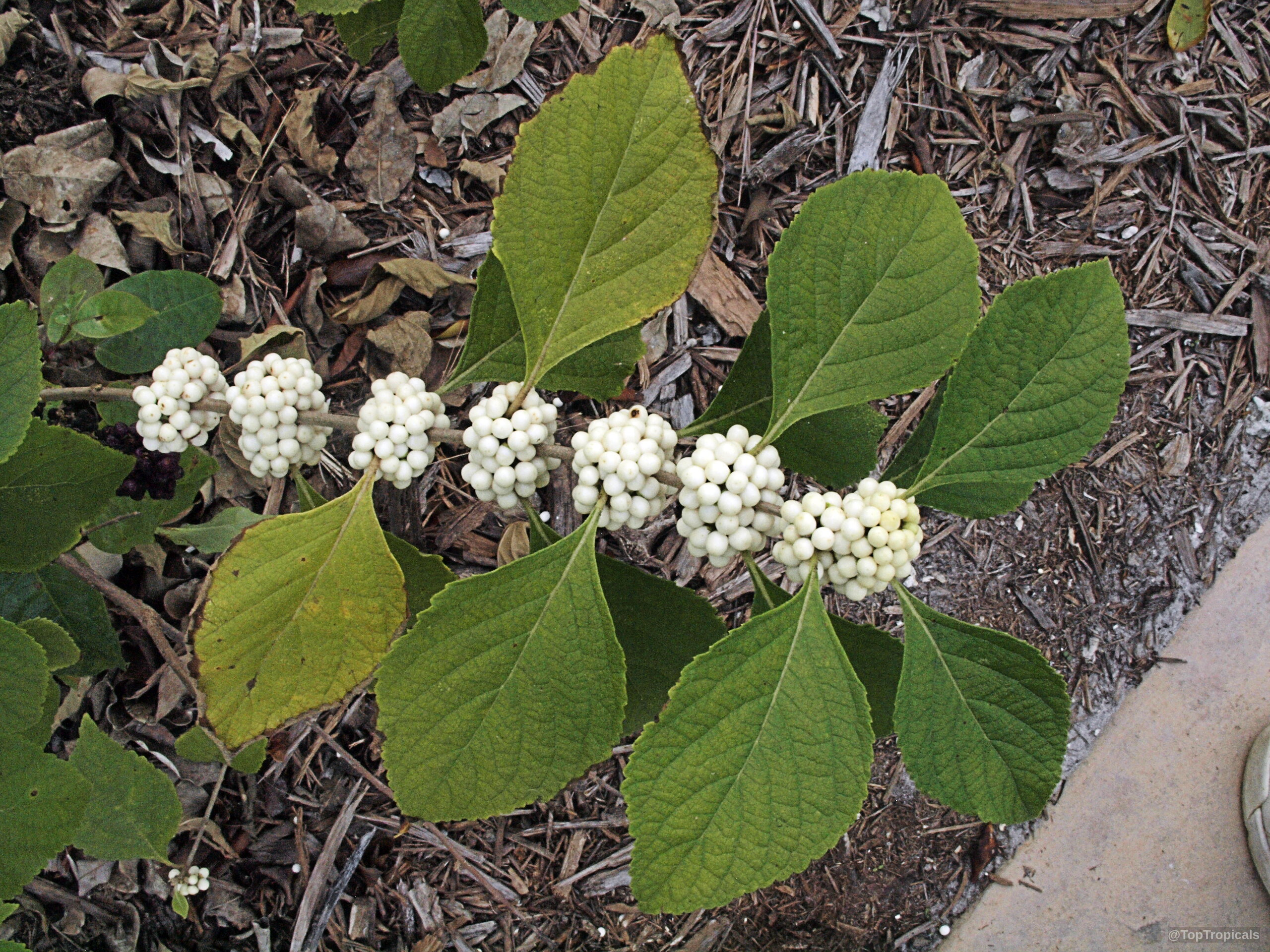
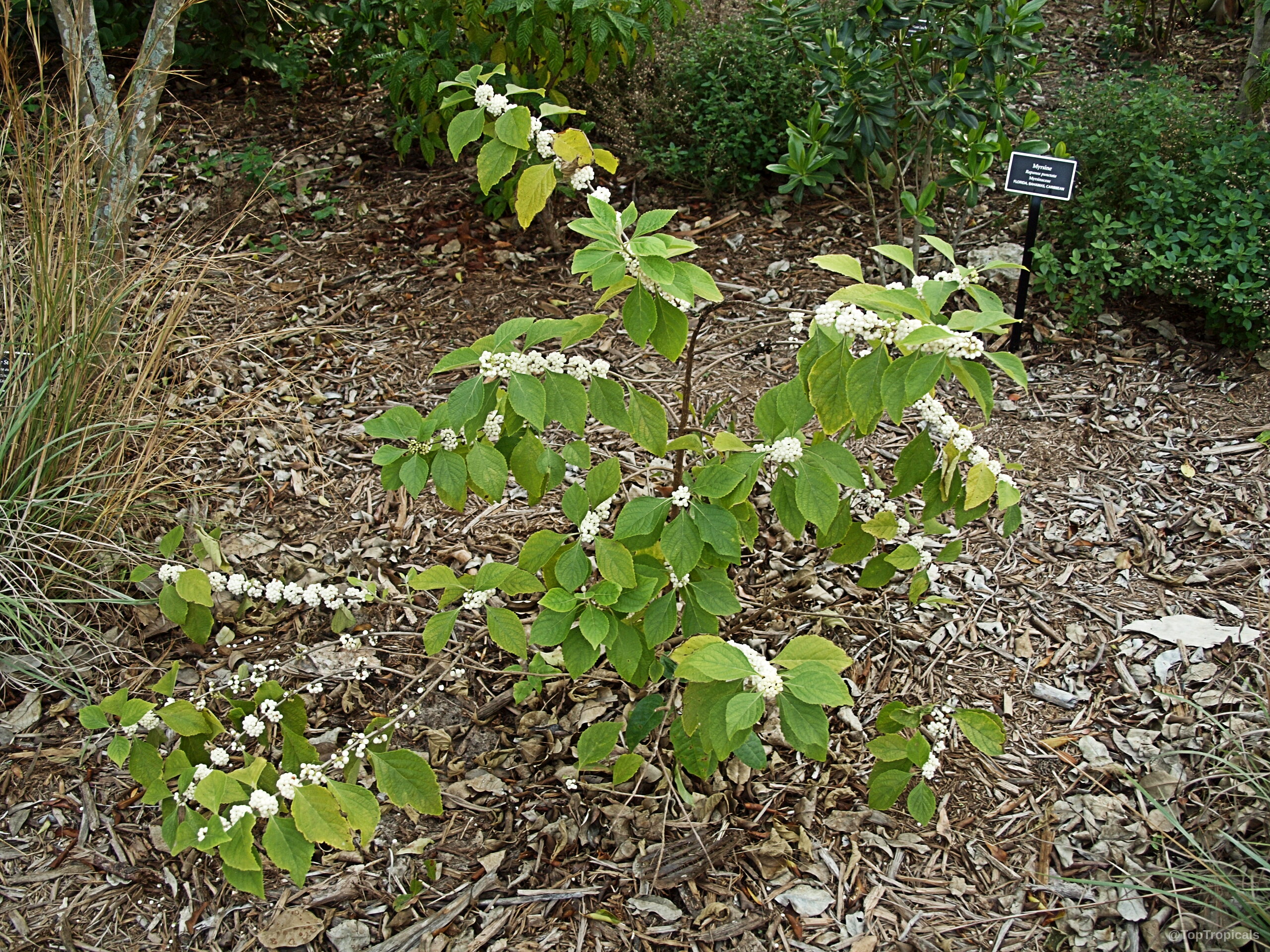
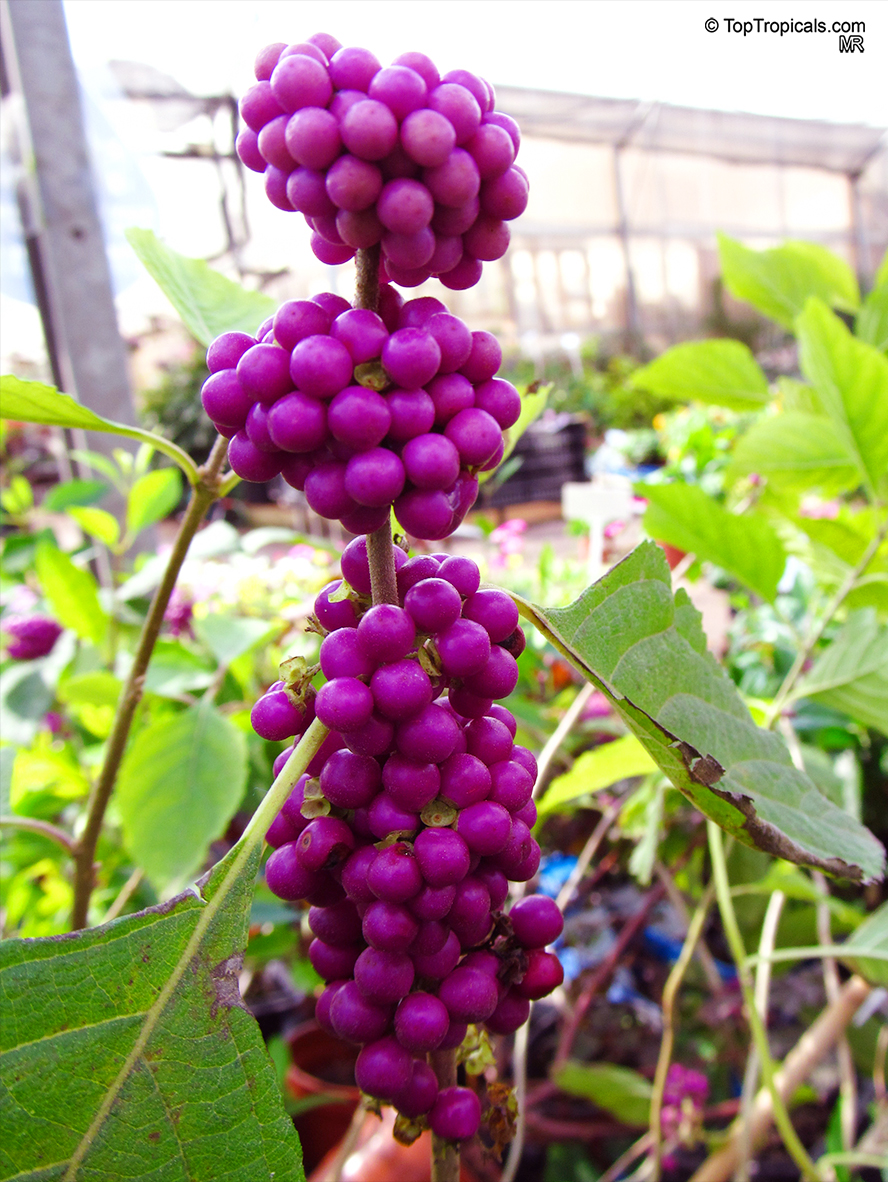
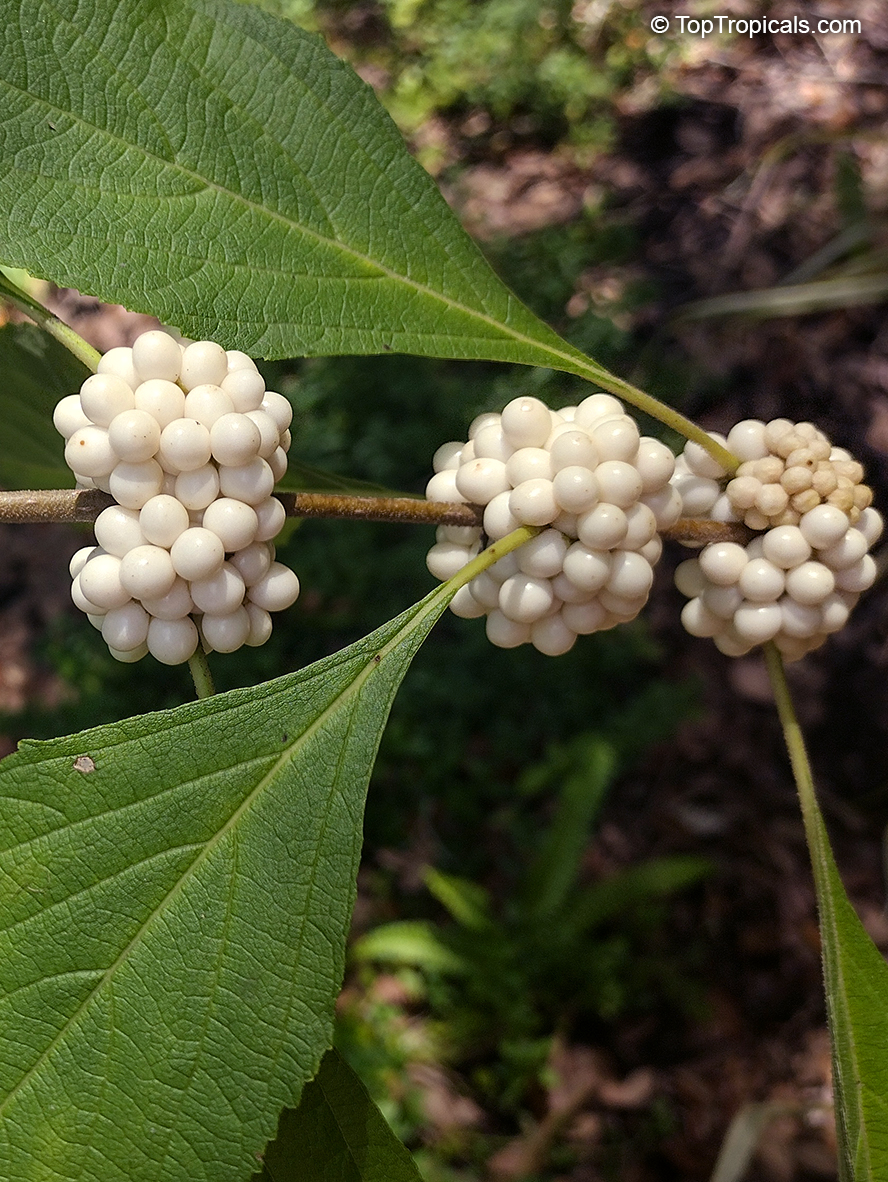
The beautyberries are packed tightly together in clusters that encircle the stem. Variety lactea has white fruits. Spring flowers and beautiful fall fruit make this an attractive landscape plant.
Very adaptable, even to low fertility soils. Very drought tolerant. Requires well drained soil. Propagation: Seeds and semi-hardwood cuttings.






Recommended Fertilizer: SUNSHINE Megaflor - Bloom Nutrition Booster
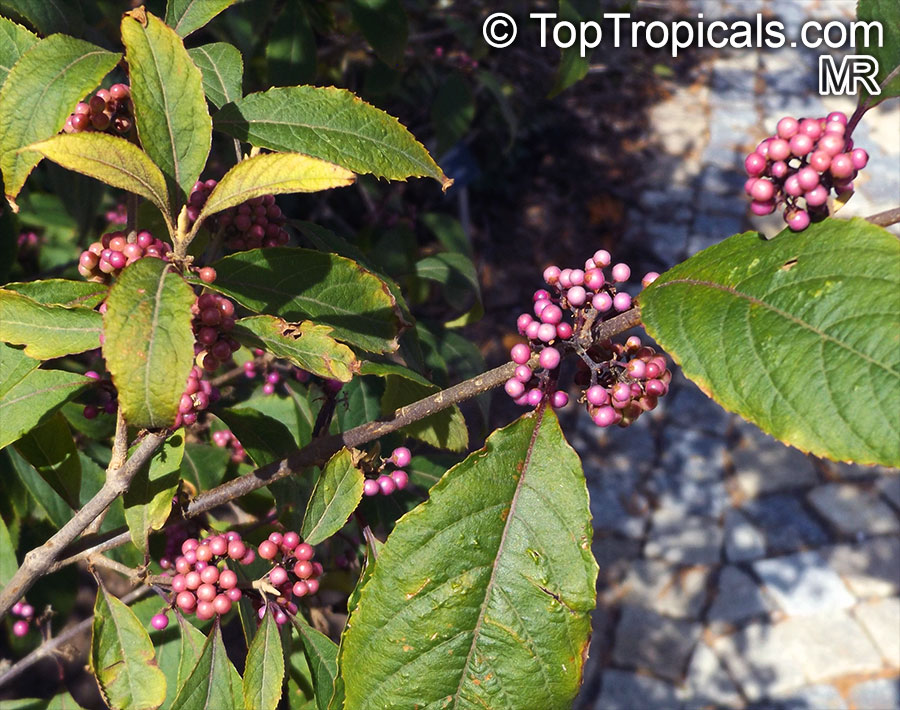
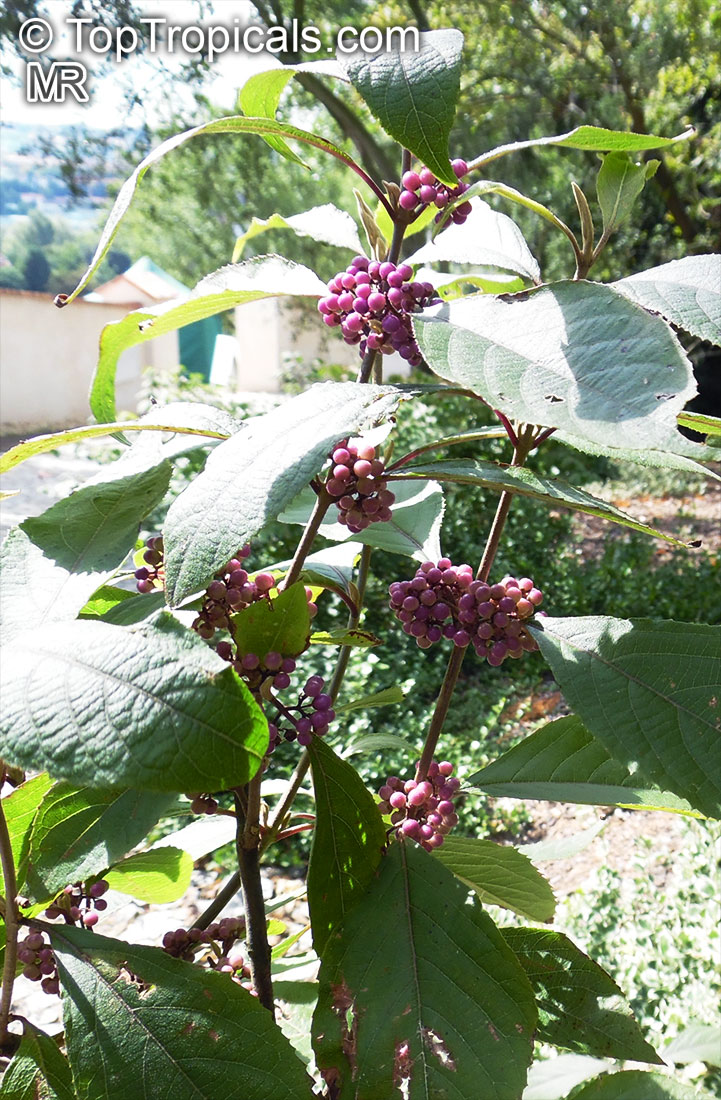
Botanical name: Callicarpa bodinieri
Common name: Bodinier's Beautyberry
Family: Lamiaceae (Formerly:Verbenaceae)
Origin: West and Central China
USDA Zone: 6-10
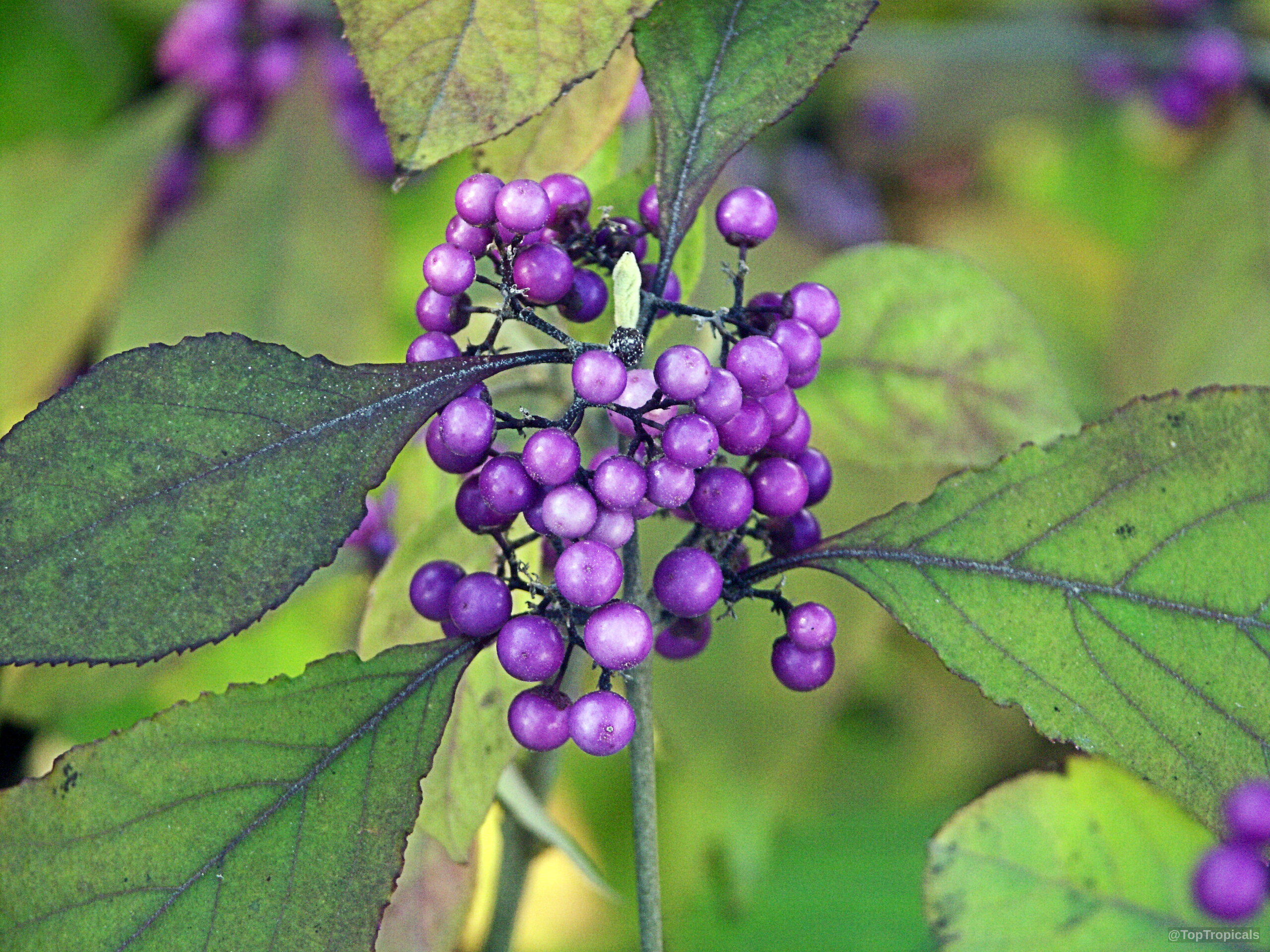
The berries are edible and can be used in jams and jellies.
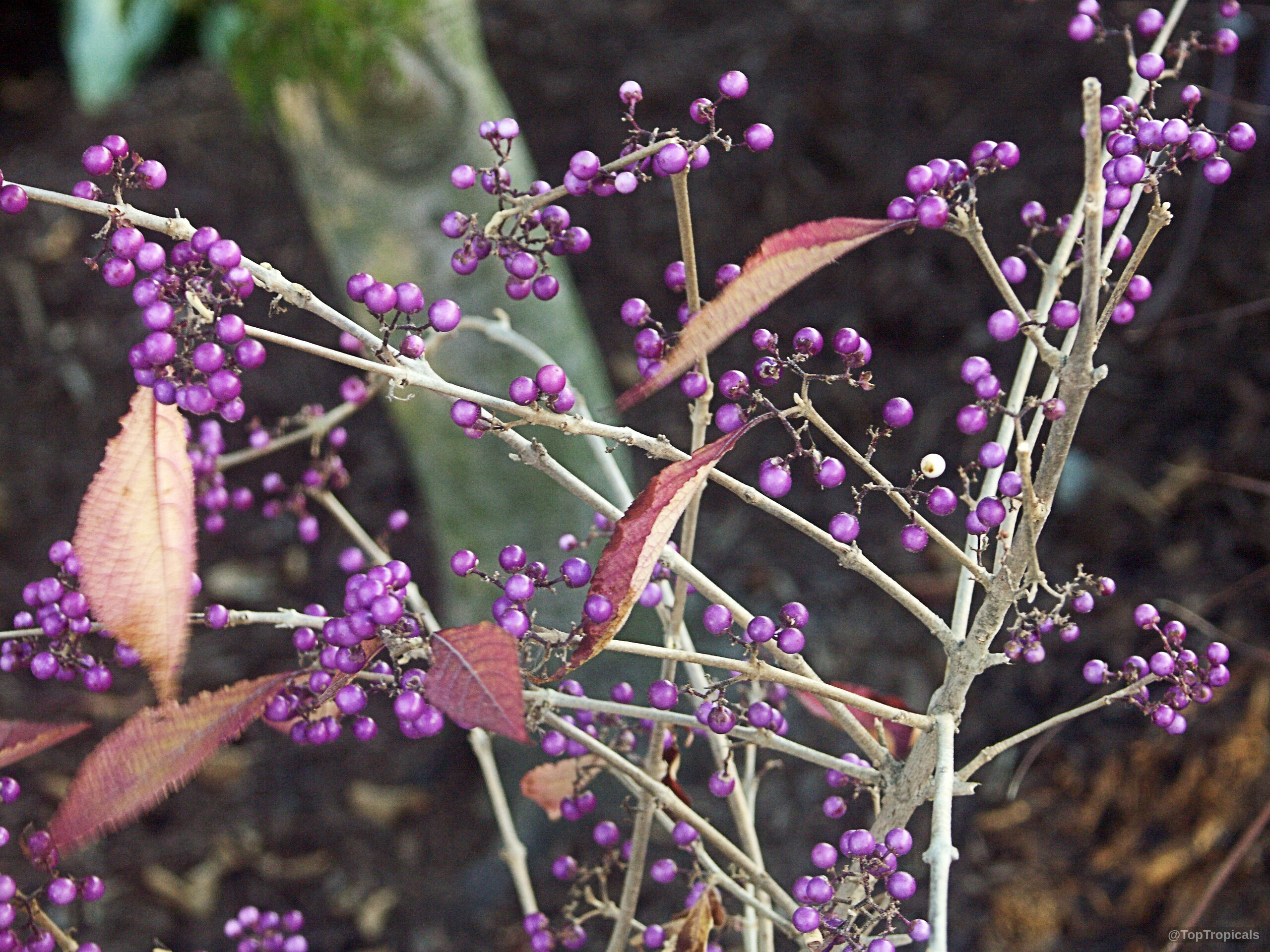
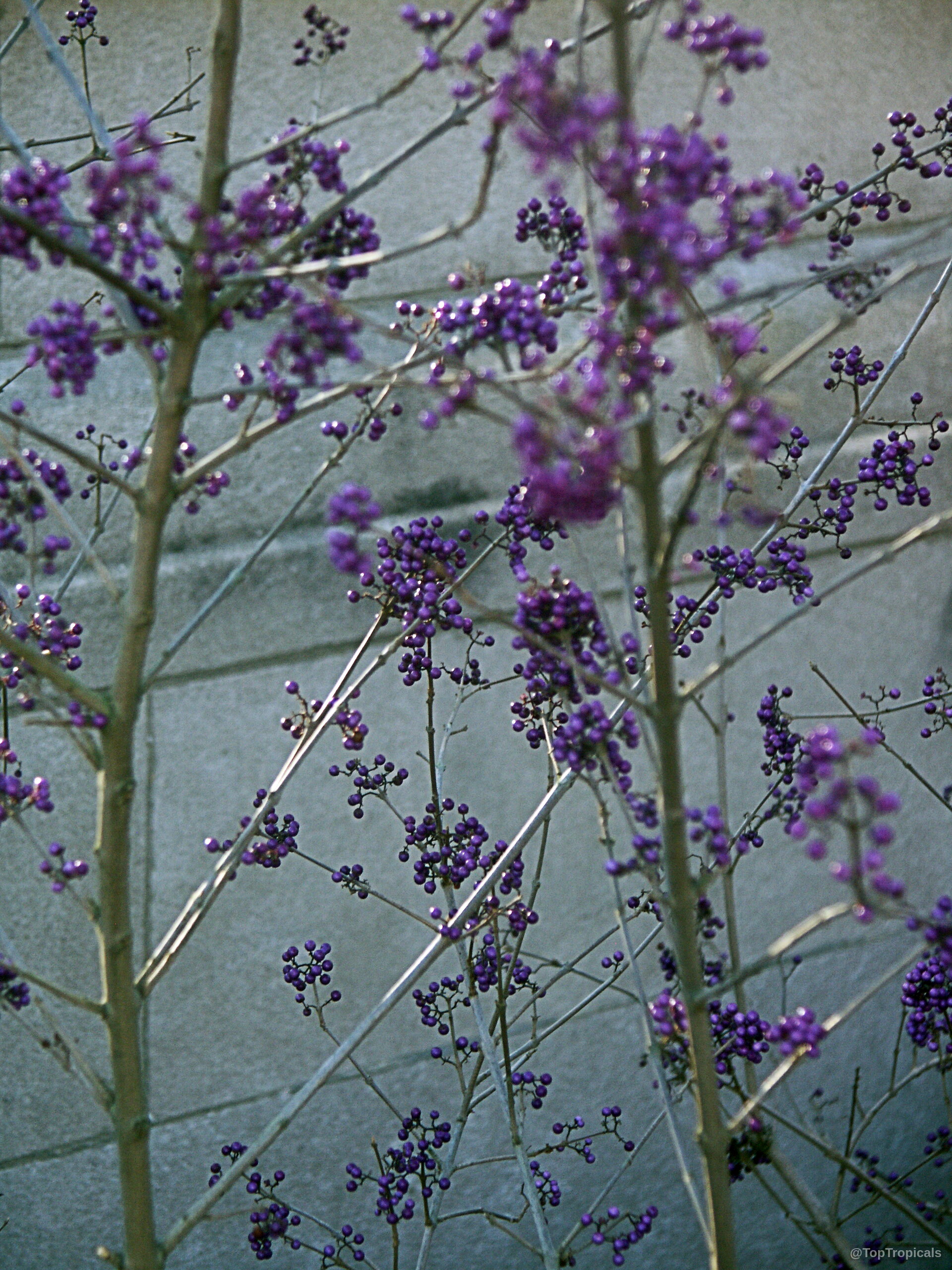
Callicarpa bodinieri is a large shrub, growing between 5-10 feet tall and wide. It is considered an easy to grow plant, requiring full sun and regular water, as well as occasional pruning of dead branches to maintain a neat shape. This deciduous plant is suitable for USDA Zone 6-10.
Callicarpa bodinieri produces beautiful pink flowers in mid to late summer, attracting butterflies and hummingbirds. In fall, the shrub is covered in clusters of small, purple berries, making it an attractive addition to the garden.
When growing Callicarpa bodinieri in pots, it is important to provide a well-draining potting mix, and to ensure that the plant is not overwatered.

| Next | |
Use link to repeat this search:
https://toptropicals.com/cgi-bin/garden_catalog/cat.cgi?find=Verbena&search_op=and&keyword_op=and&language=e&number=10
&no_change_lang=1&user=tt&sale=1&first=0