Prosopis - Plant Encyclopedia Results
| Number of plants found: 2 |
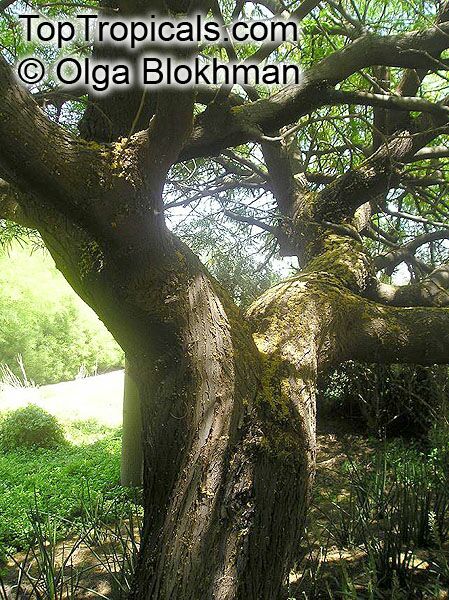
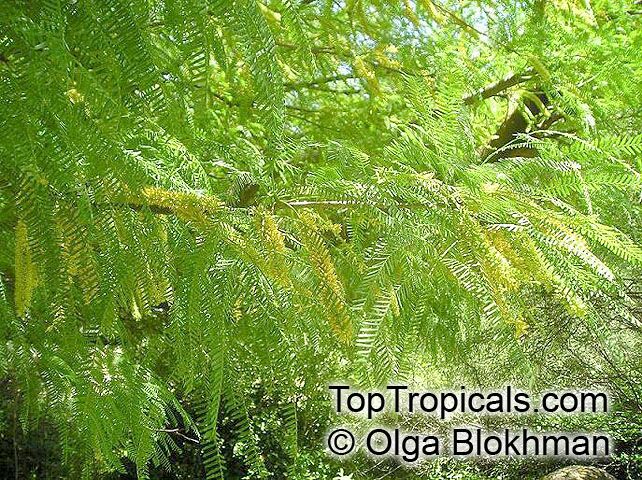
Botanical name: Prosopis juliflora
Common name: Velvet mesquite
Family: Fabaceae
Subfamily: Mimosoideae
Origin: South America
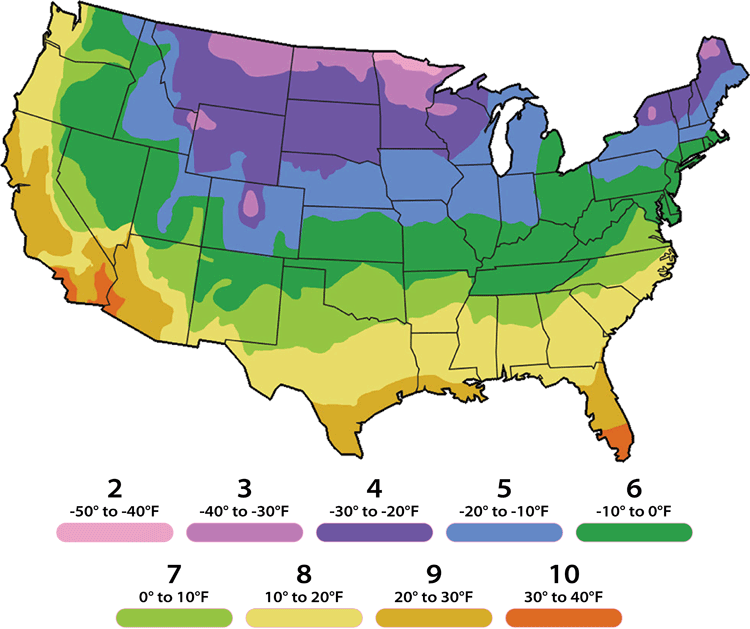
USDA Zone: 9-10


Prosopis juliflora, also known as Velvet mesquite, is a large tree native to South America. It is a fast-growing tree, capable of reaching a height of more than 20 feet, and it has become widely naturalized in many places throughout the world.
This plant prefers full sun to semi-shade and needs regular watering, although it can survive on lower amounts of water in times of drought. It is a great plant for attracting butterflies and hummingbirds, and does well in USDA Hardiness Zones 9-11.
When planting mesquite, be sure to use a large container or pot. In regions with cold climates, insulating the root ball in winter with organic mulch or a plastic wrap may be necessary. In colder climates, it's usually best to plant the container-grown Prosopis juliflora in spring or early summer and to keep it on a patio or other protected area over winter.
Regular watering is necessary for mesquite to thrive, but it should be kept in mind that too much water can be detrimental. During hot summer months, Prosopis juliflora can handle up to two inches of water per week, while during cooler times of the year, it should be watered less frequently.
When pruning Prosopis juliflora, it is important to use sharp tools in order to avoid damaging the bark and making the tree more prone to disease. It is also important to never prune more than a third of the tree's foliage at any one time.
Prosopis juliflora is a showy and interesting addition to any landscape, and with the right care and attention, it can thrive for many years. Its attractive foliage and its ability to attract butterflies and hummingirds make it a great choice for anyone looking for a beautiful plant to add some life to their outdoor spaces.
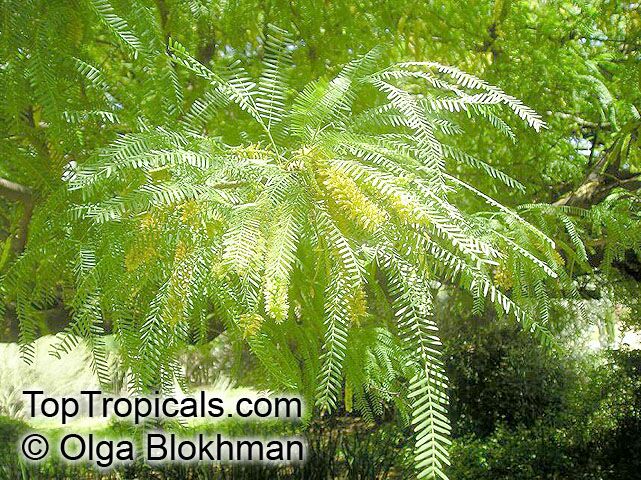
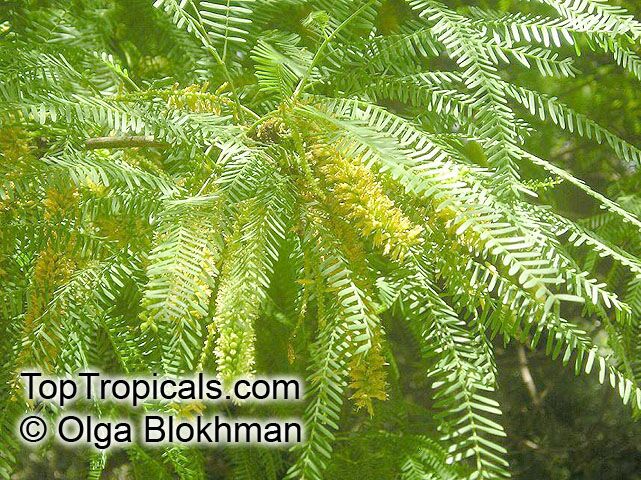
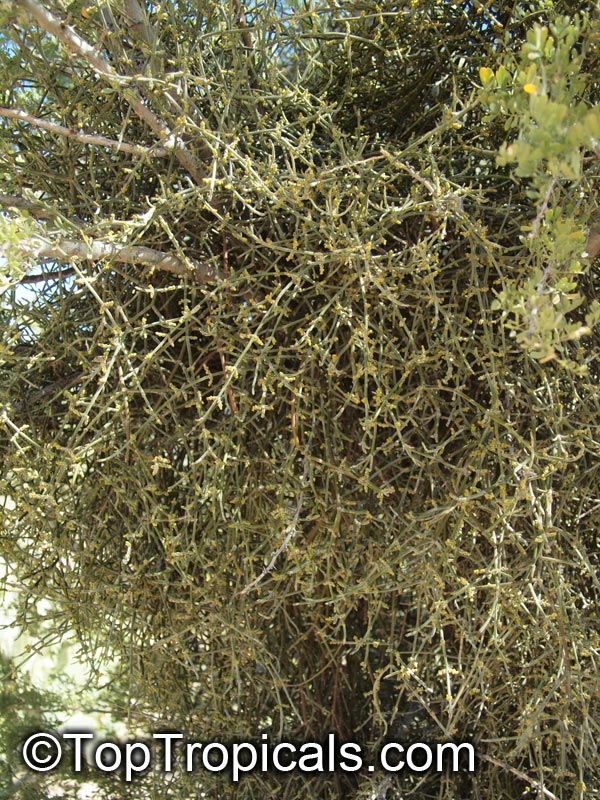
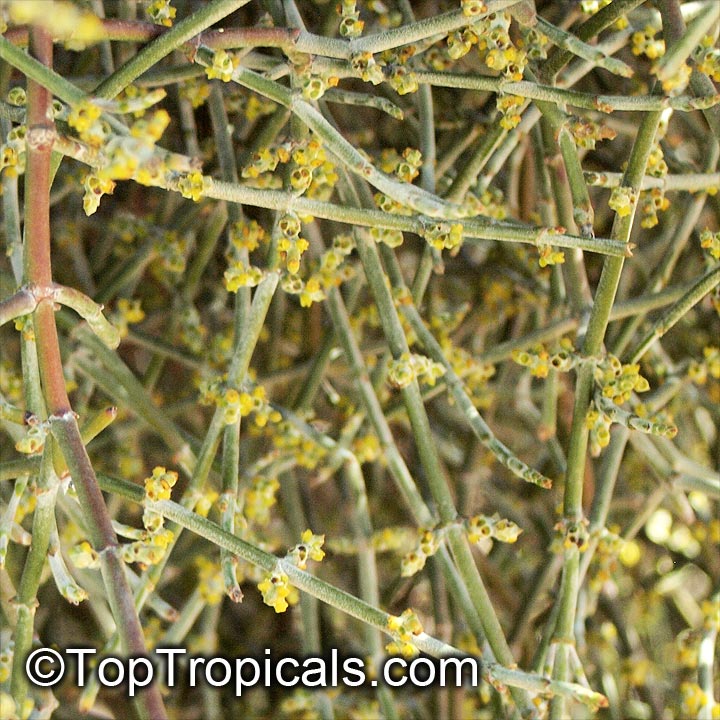
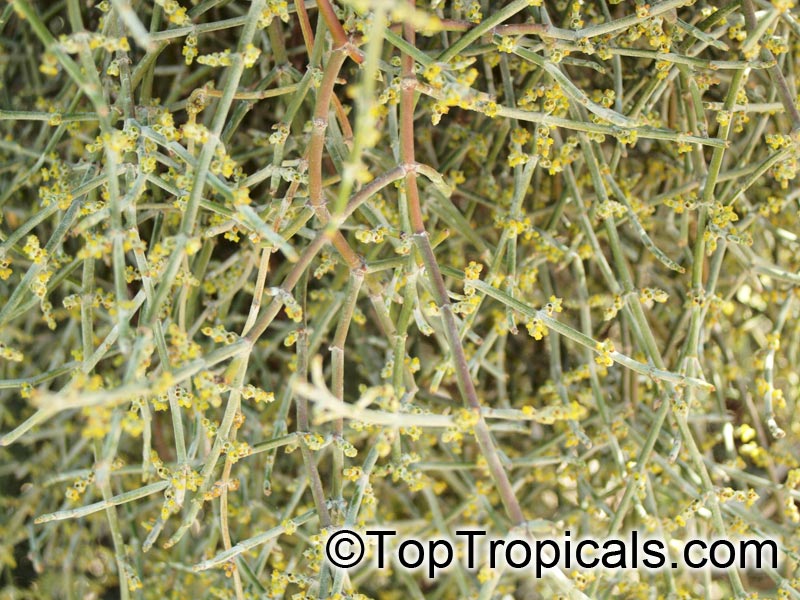
Botanical name: Phoradendron californicum
Common names: Desert Mistletoe, Mesquite Mistletoe
Family: Santalaceae
Origin: California, Arizona
USDA Zone: 9-10


Phoradendron californicum is a leafless plant that attaches to host plants, often leguminous woody desert trees such as Cercidium and Prosopis.
The plants are dioecious with tiny, inconspicuous, yellowish flowers. The female plants produce numerous, spherical, translucent, white, pink, or red berries that are adored by fruit-eating birds.
Desert Mistletoe plants, but not the berries, contain phoratoxins which can easily lead to death. The white to reddish fruits are edible, but native tribes ate only the fruits of mistletoes growing on Prosopis, Olneya tesota or Acacia greggii.
Use link to repeat this search:
https://toptropicals.com/cgi-bin/garden_catalog/cat.cgi?find=Prosopis&search_op=and&keyword_op=and&language=e&number=10
&no_change_lang=1&user=tt&sale=1&first=0