Mucuna, benettii - Plant Encyclopedia Results
| Number of plants found: 2 |
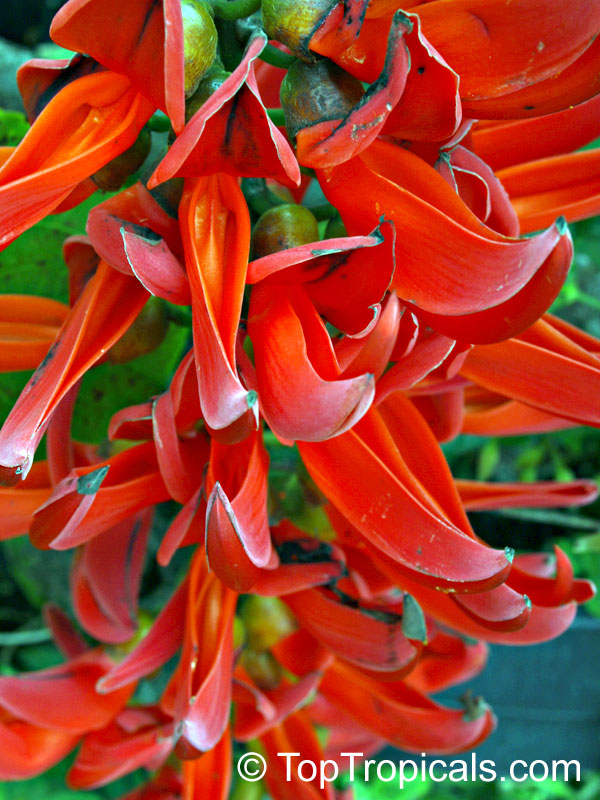
Botanical names: Mucuna benettii, Mucuna bennettii, Mucuna warburgii, Mucuna albertisii, Mucuna novoguineensis
Common names: Red Jade Vine, New Guinea Creeper
Family: Fabaceae
Subfamily: Faboideae
Origin: New Guinea
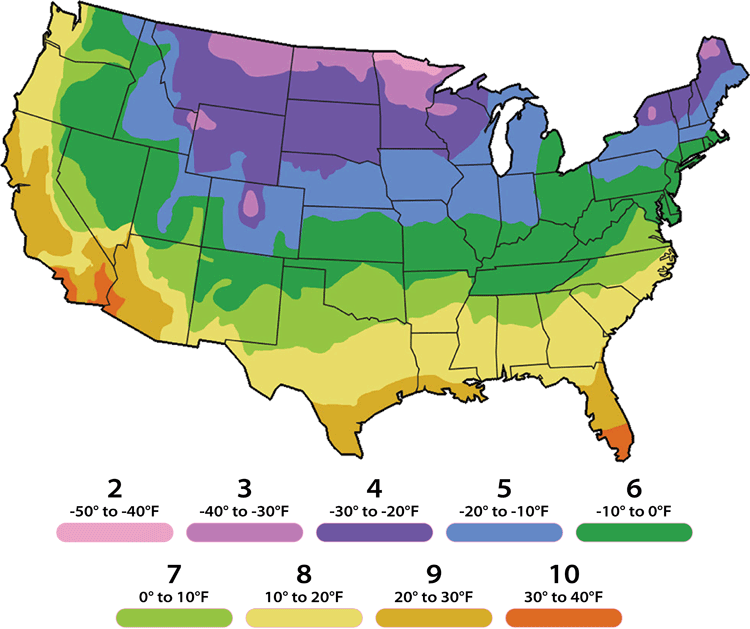
USDA Zone: 9-10


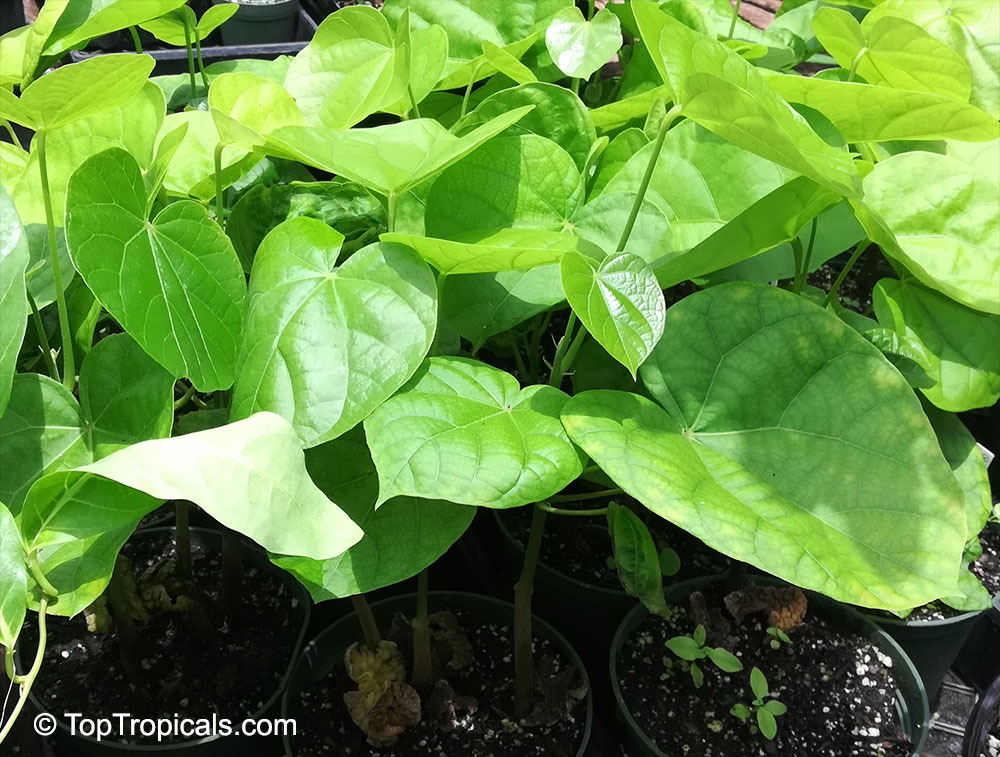
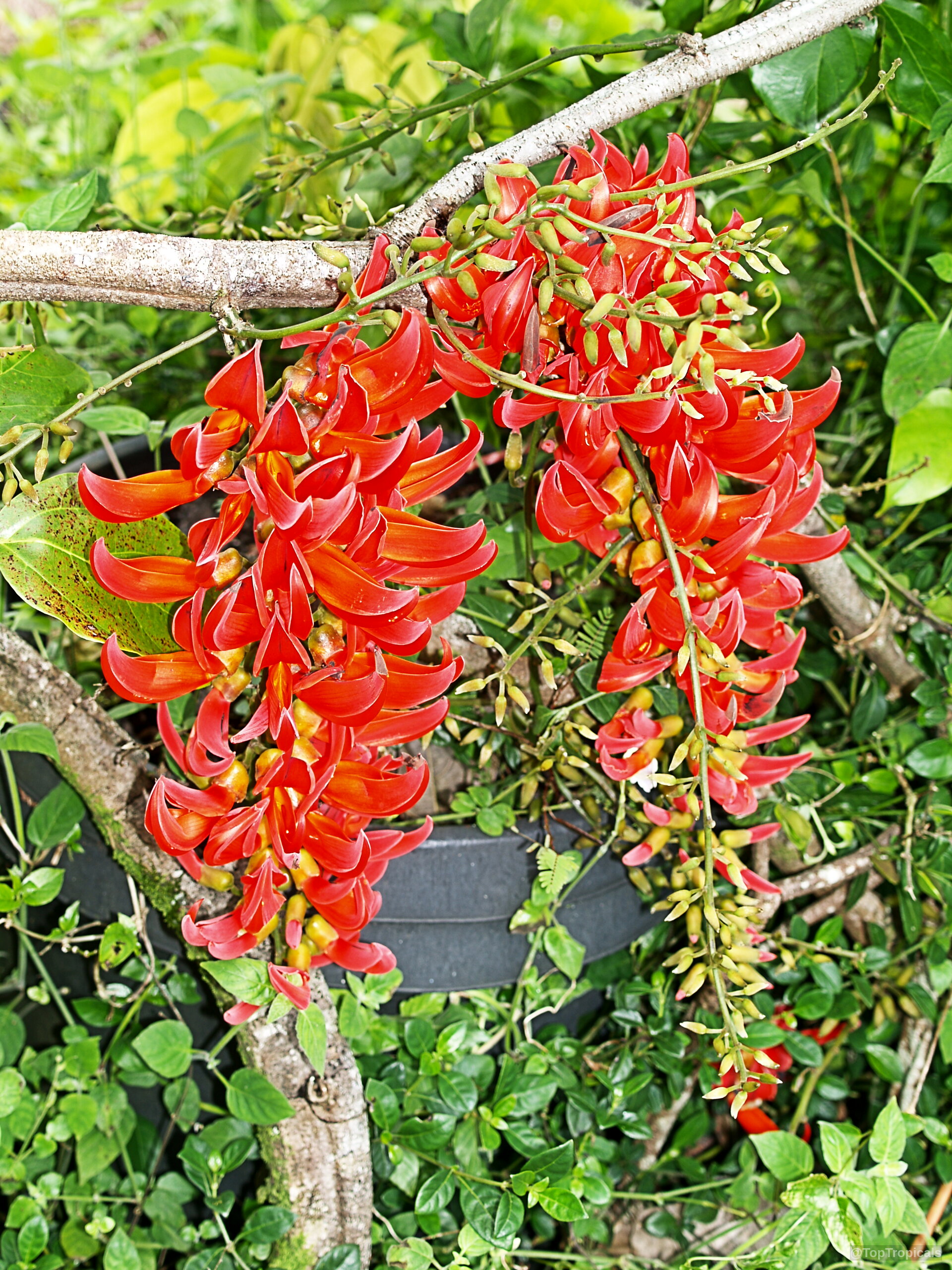
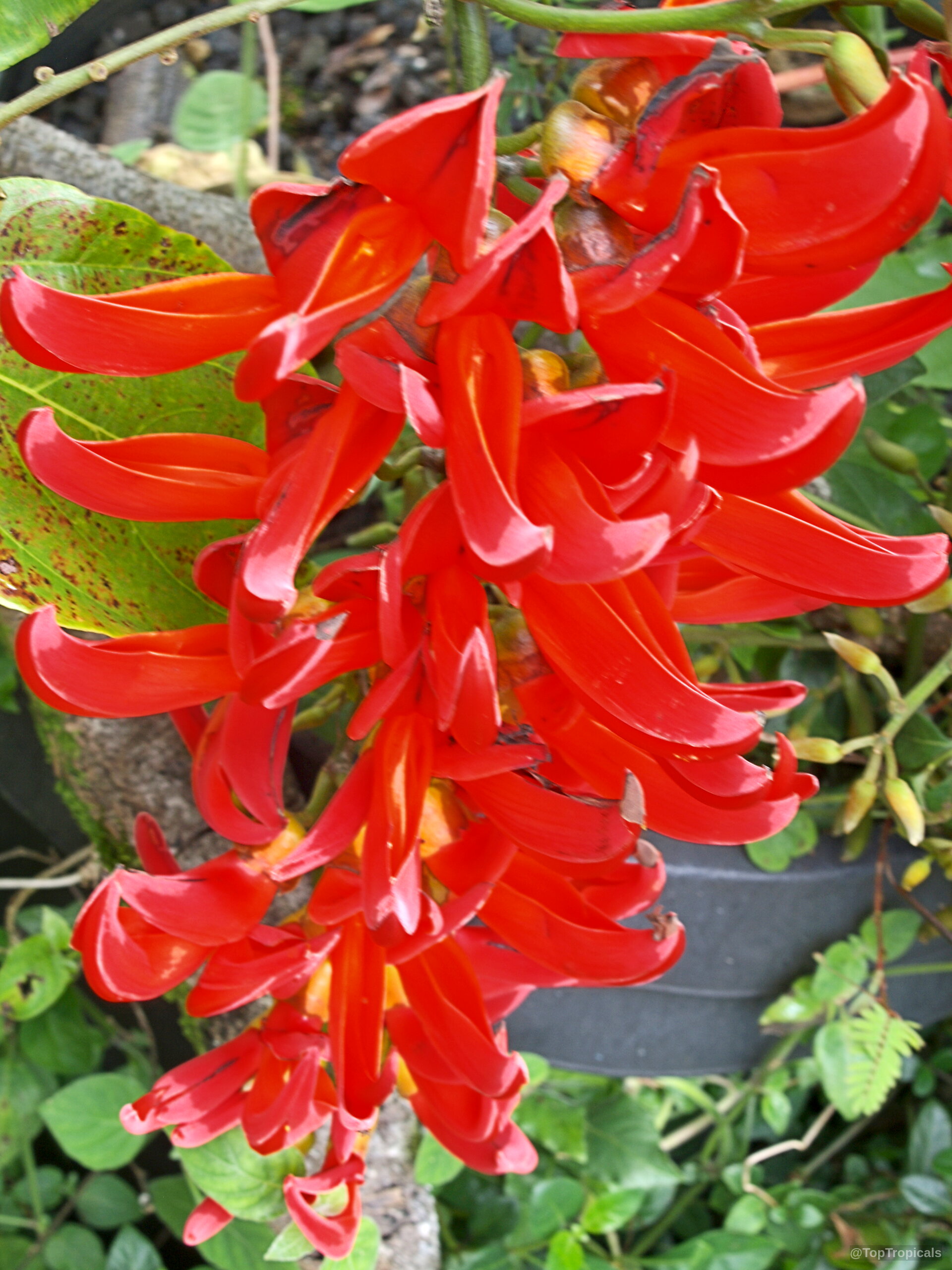
Mucuna benettii, also known as Red Jade Vine, is a beautiful and stunning plant native to New Guinea. It is a fast-growing vine that can reach lengths of 15-20 feet and widths of 8-12 feet, making it a great choice for climbing large trees and pergolas. The long cascading clusters of bright red flowers are a sight to behold and are sure to attract butterflies and hummingbirds to your garden.
This plant is tolerant of salt and seaside conditions, making it a good choice for coastal gardens. It is best suited for growing in USDA Zone 9-11 and may need to be grown in a pot and brought indoors during the colder months in regions with lower hardiness.
When growing Red Jade Vine, it is important to provide it with the right conditions to thrive. Here are some tips for success:
Light and temperature: Red Jade Vine prefers full sun and is best suited for growing in tropical or semi-tropical regions. It is more cold tolerant than its cousin, Green Jade Vine (Strongylodon), but may still need to be grown in a pot and brought indoors during the winter in colder regions. It is a fast-growing plant that can tolerate a wide range of temperatures, but it may need extra protection during extreme cold or heat.
Soil: This plant requires well-draining, high-quality potting soil with a pH between 6.0 and 7.5. Avoid using soil that is too heavy or compact, as this can lead to poor drainage and root rot. It is also important to ensure that the roots of the plant are in shade, as direct sunlight can damage them.
Watering: Red Jade Vine requires moderate watering, but the frequency of watering will depend on the temperature and humidity of the environment. During the warmer months, water deeply but less frequently, allowing the soil to dry out slightly between waterings. During the colder months, reduce watering to prevent the soil from becoming soggy. Be sure to check the soil moisture regularly and adjust watering as needed.
Fertilizing: Red Jade Vine does not require heavy fertilization and can be prone to over-fertilization. It is best to use a balanced, slow-release fertilizer once or twice a year, depending on the needs of the plant. Avoid using fertilizers with high levels of nitrogen, as this can lead to excessive leaf growth at the expense of flowers.
Pruning: Pruning Red Jade Vine is important to keep the plant healthy and encourage new growth. It is best to prune the plant in the early spring, when new shoots are just starting to emerge. Remove any dead, damaged, or diseased branches, as well as any branches that are crossing or rubbing against each other. This will help to promote a healthy and attractive growth habit.
By following these tips, you can help your Red Jade Vine to thrive and produce stunning, long cascades of brilliant red flowers. It is a magnificent plant that is sure to be a standout feature in any garden.


Botanical name: Camptosema grandiflora
Common names: Crista-De-Galo, Dwarf Red Jade Vine, Brazilian Red Jade Vine
Family: Fabaceae
Subfamily: Faboideae
Origin: Brazil
USDA Zone: 9-11


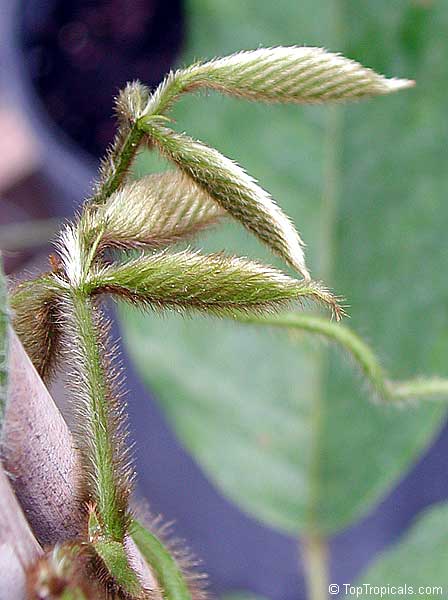
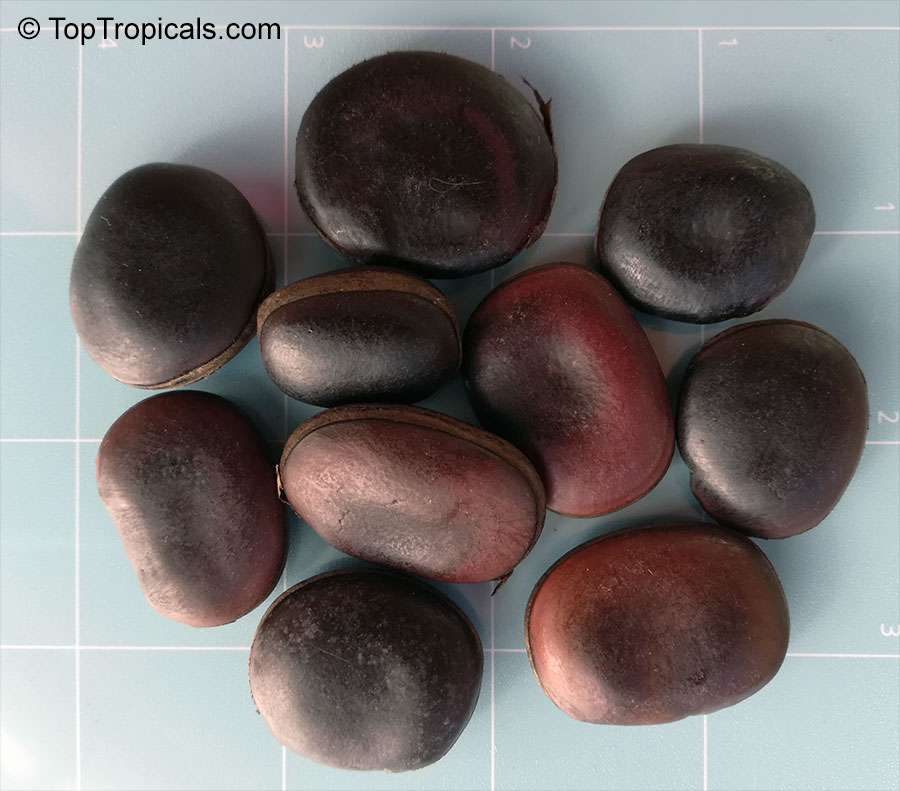
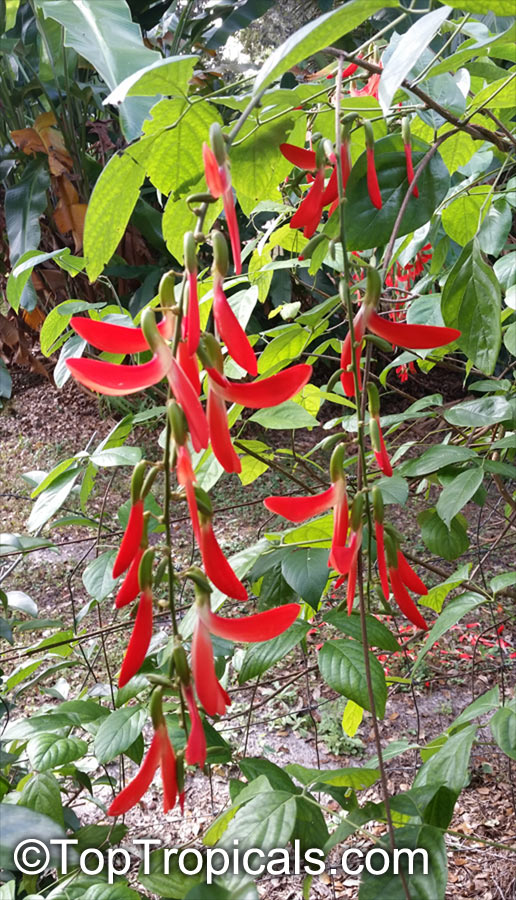
Camptosema grandiflora, commonly known as Dwarf Red Jade Vine, Brazilian Red Jade Vine, or Crista-de-Galo, is a spectacular flowering vine admired for its brilliant red blooms and greater cold tolerance than the tropical Red Jade Vine, Mucuna benetti..
This vigorous evergreen climber, native to Brazil, belongs to the legume family and develops strong twining stems. Although often called a dwarf red jade vine, it can become a substantial plant when established. Its lush green foliage remains attractive even when not in bloom.
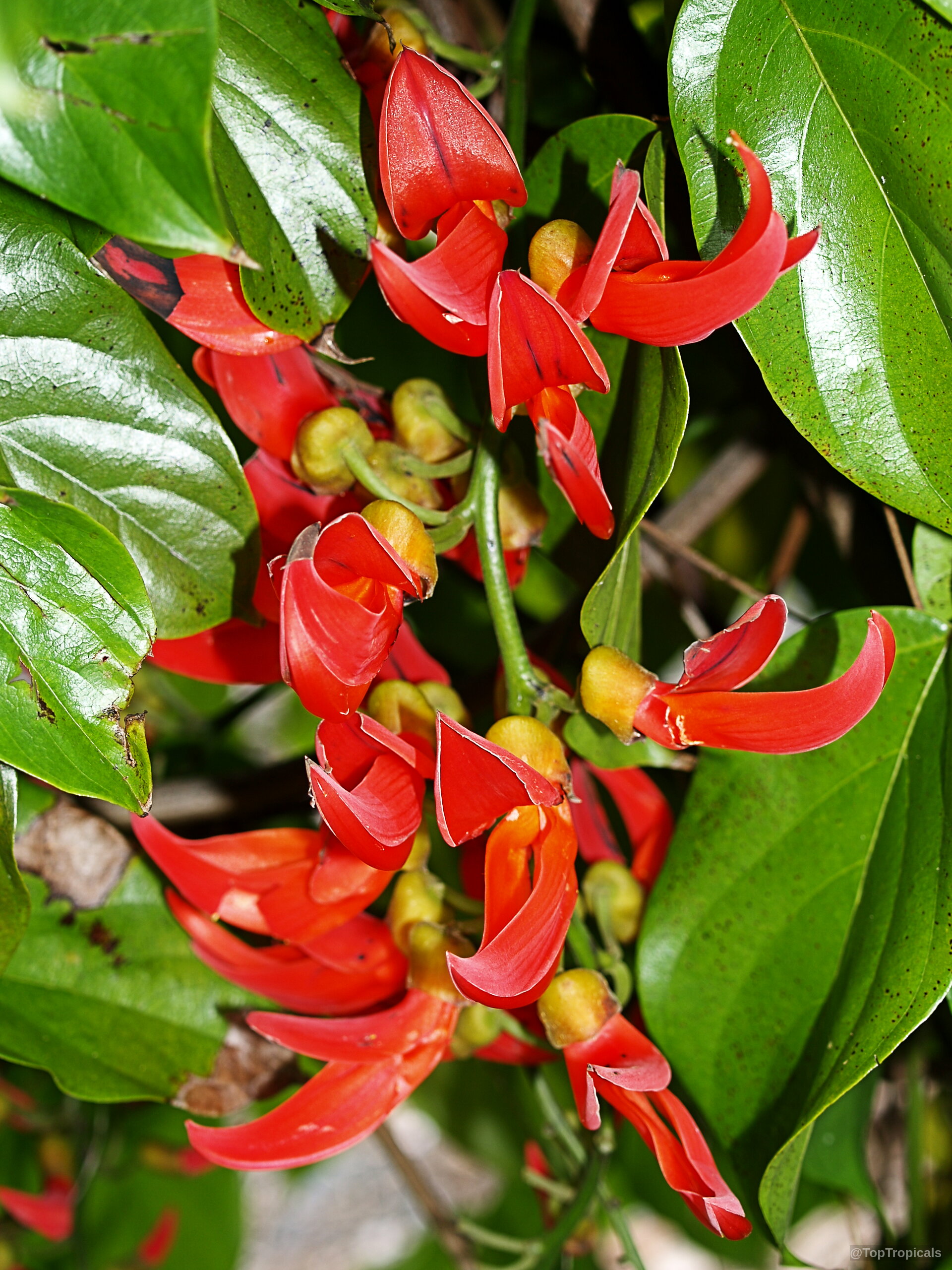
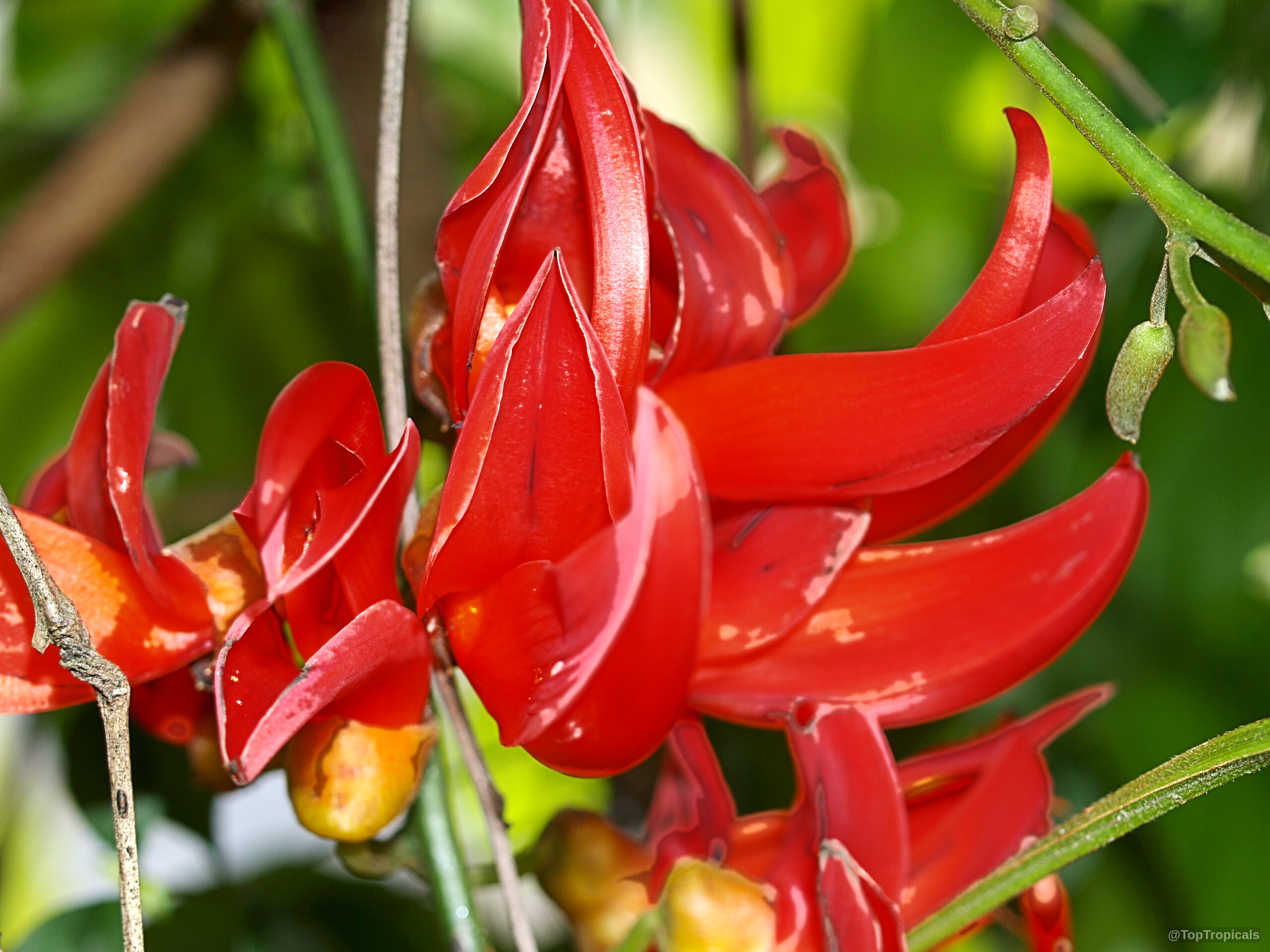
From fall through winter, the vine produces long, pendulous racemes of fiery red to orange-red flowers reminiscent of those of Mucuna benettii. The spectacular blooms attract butterflies and hummingbirds and are most effective when displayed overhead, allowing the clusters to hang naturally.
Camptosema grandiflora grows best in full sun to partial shade and well-drained soil with regular moisture. Once established, it can tolerate short dry periods and light frost. Adequate feeding and occasional pruning after flowering encourage vigorous growth and abundant blooming. Considerably more cold tolerant than Mucuna benettii, this species has become a favorite among gardeners who admire jade vines but live outside truly tropical climates.
USDA Plant Hardiness Zones: 9b-11. Established plants can tolerate brief temperature drops to approximately 25-28F, although young growth may be damaged by frost.
Read article about Camptosema grandiflora.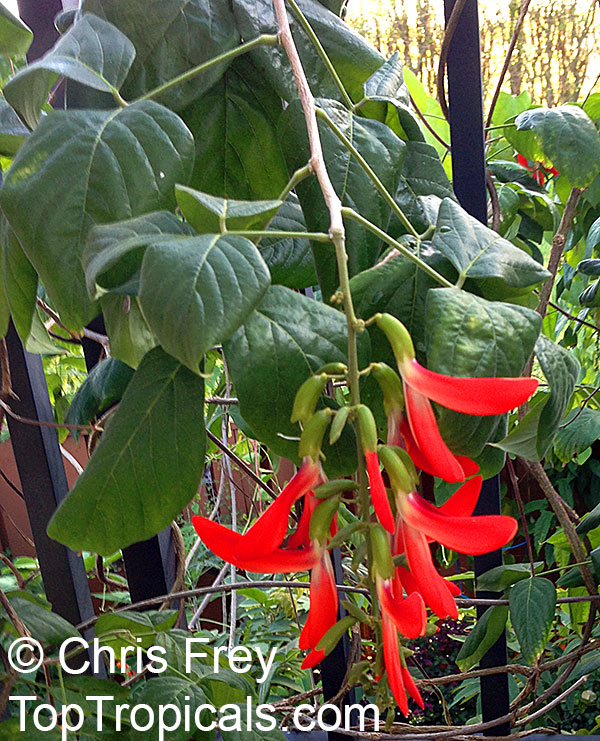
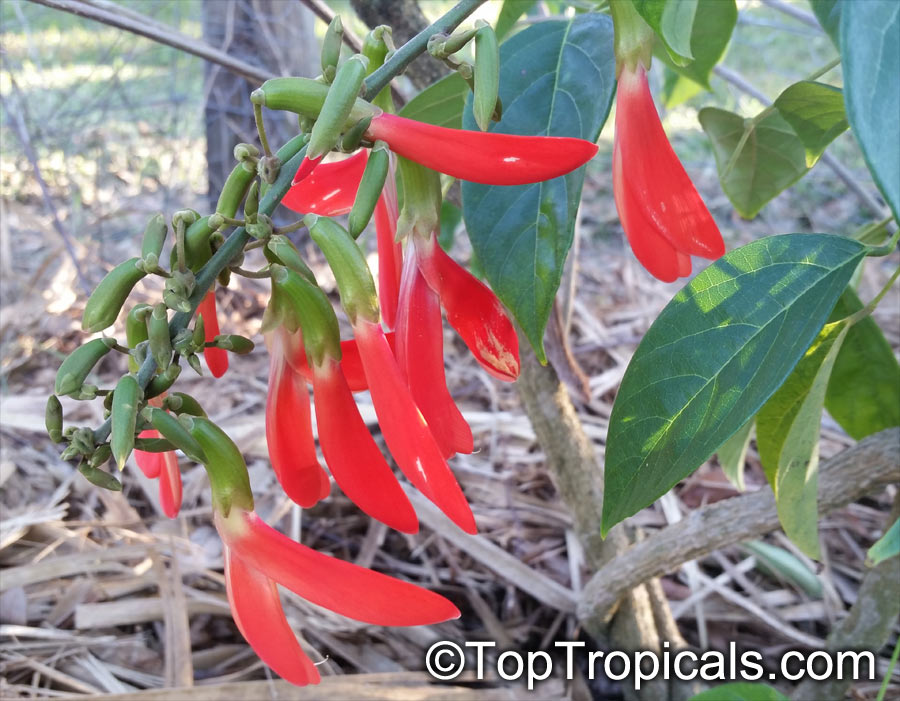
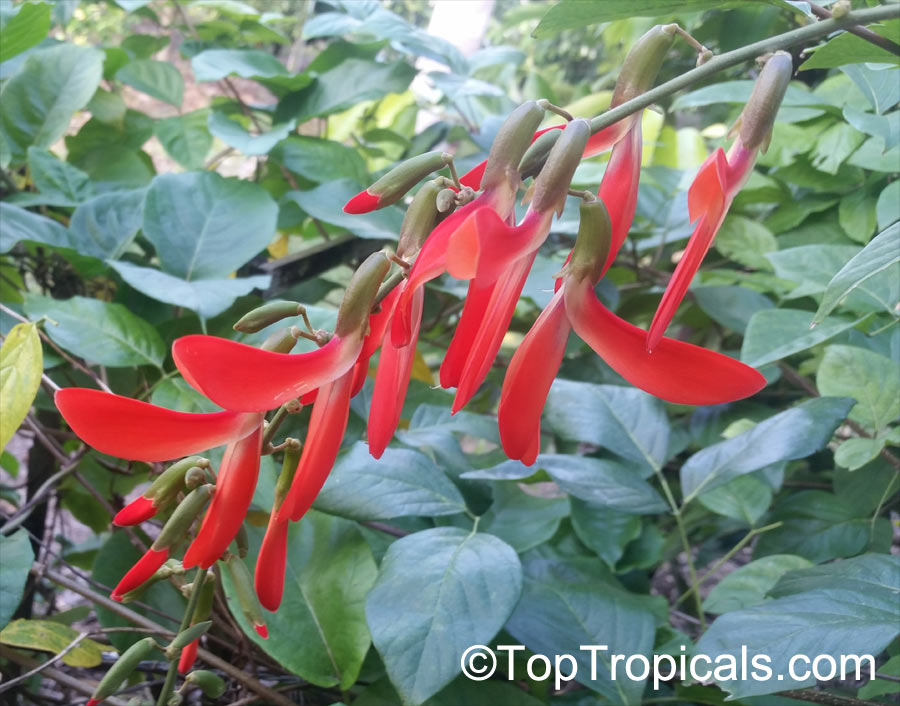


It is a spectacular fast-growing vine from Brazil with long pendulous chains of fiery bright red flowers. Heavy vine, it needs large trellis or pagoda. An arbor is ideal so that the brilliant flowering racemes can hang down from the ceiling. Blooms in fall and winter. Prune heavily in spring after flowering. Give full or partial sun with adequate moisture and fertilizer. It is very easy to grow, can tolerate some drought and light frost.
Read Article: Camptosema grandiflora, Dwarf Red Jade Vine - my favorite plant.
Recommended Fertilizer: SUNSHINE Megaflor - Bloom Nutrition Booster
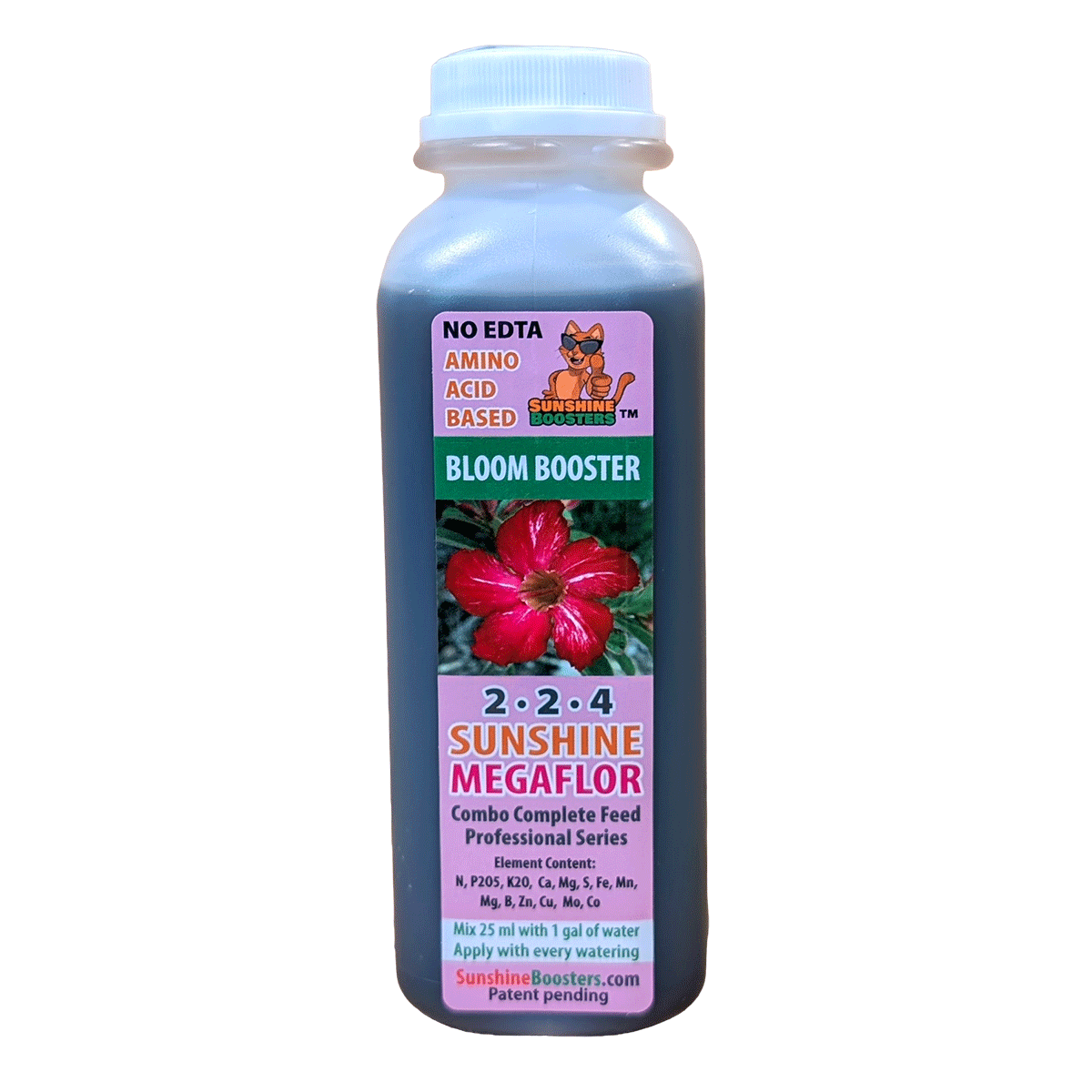 SUNSHINE Megaflor (NPK 2-2-4) - Bloom Booster for every watering. Formulated especially for blooms, to boost flowering, improve flower size and quality, and stimulate pollen development. This is an eco-friendly nutrition booster that can be used for organic gardens. Can be used for daily feeding with every watering. Scientifically-balanced stable formula is organic Amino-acid based and has NO EDTA chelators to eliminate nutrients lockup; it does not affect crop taste. Organic Amino acids greatly enhance stability of all Sunshine boosters and provide excellent absorption of trace elements. Pollinating insects friendly.
Use link to repeat this search:
https://toptropicals.com/cgi-bin/garden_catalog/cat.cgi?find=Mucuna benettii&search_op=and&keyword_op=and&language=e
&number=10&no_change_lang=1&user=tt&sale=1&first=0