Hydrangea - Plant Encyclopedia Results
| Number of plants found: 12 | Next | 
|
Go to page: | 1 | 2 |
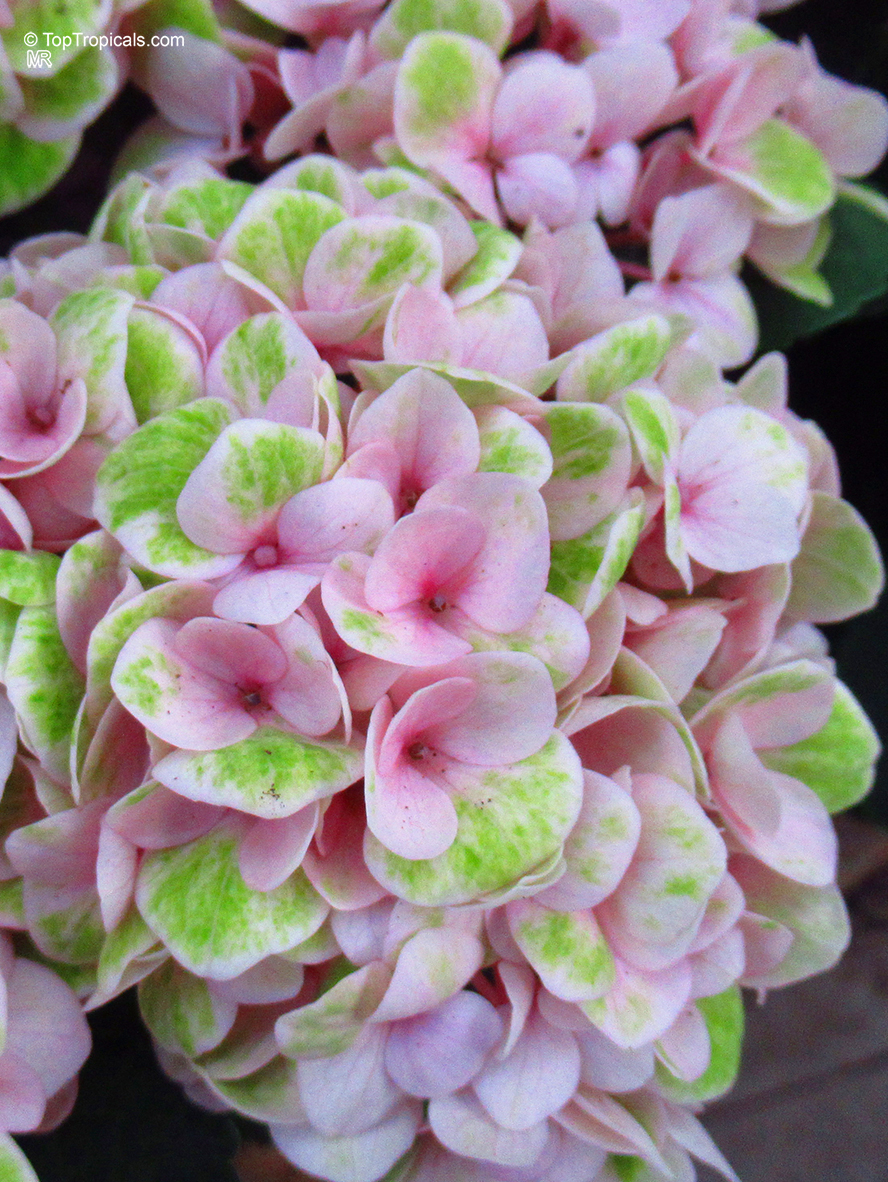
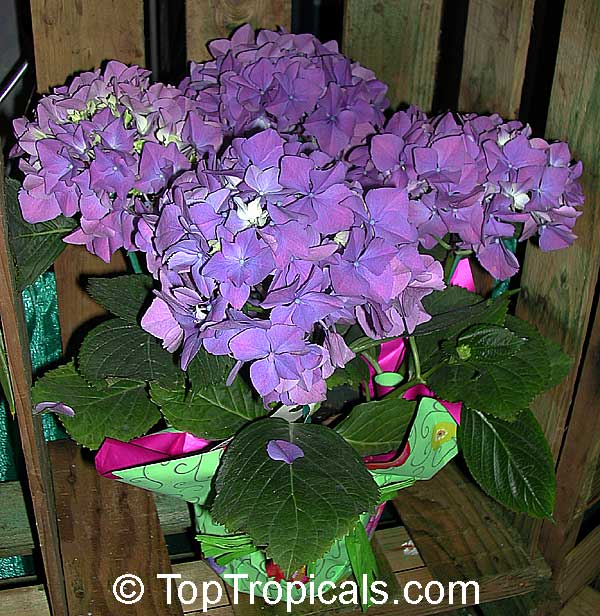
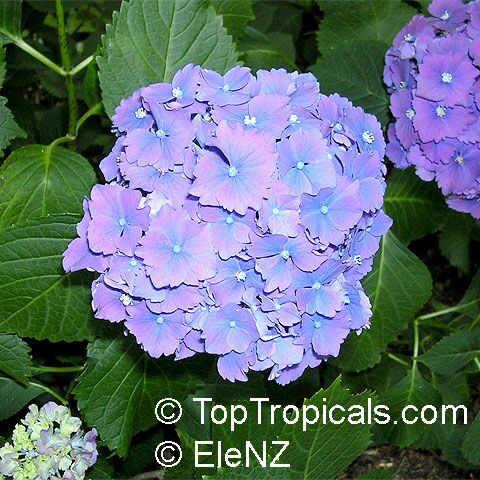
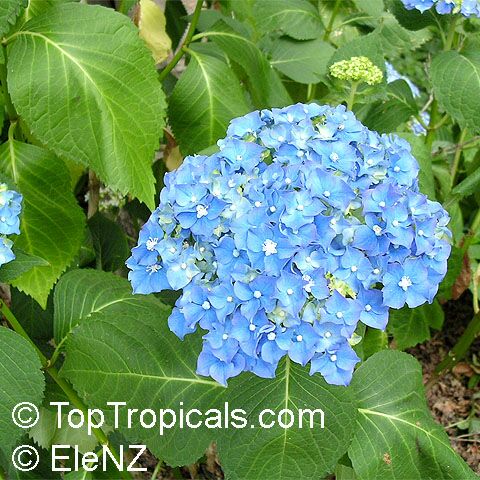
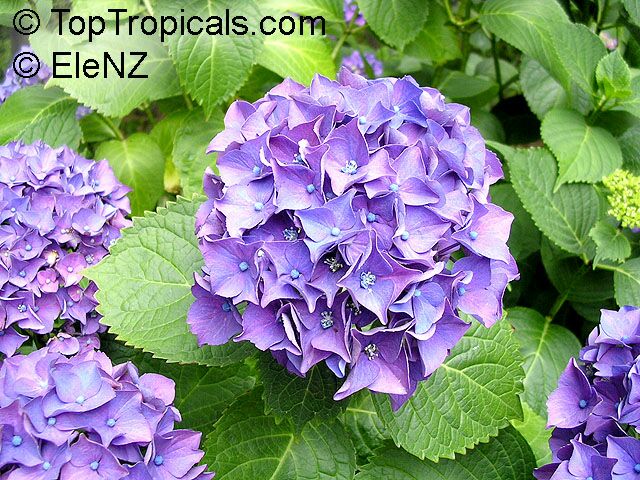
Botanical name: Hydrangea macrophylla
Common names: Hortensia, Bigleaf Hydrangea, French Hydrange
Family: Hydrangeaceae
Origin: Japan


This large shrub is native to Japan and thrives in full sun or partial shade.
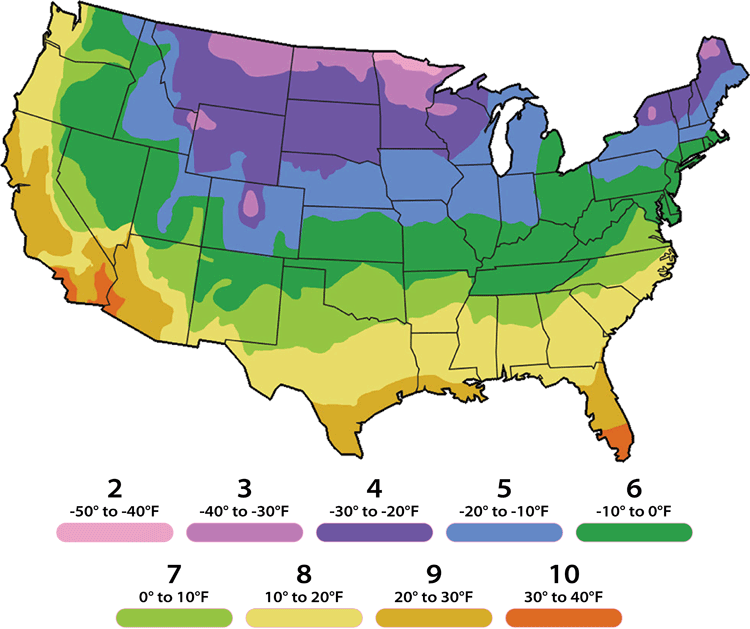
It is best to provide Hydrangea macrophylla with regular watering, however too much water can negatively impact the flowers. Ideal soil should be moist but well-drained. It prefers a slightly acidic soil. It is hardy to USDA zones 4-9.
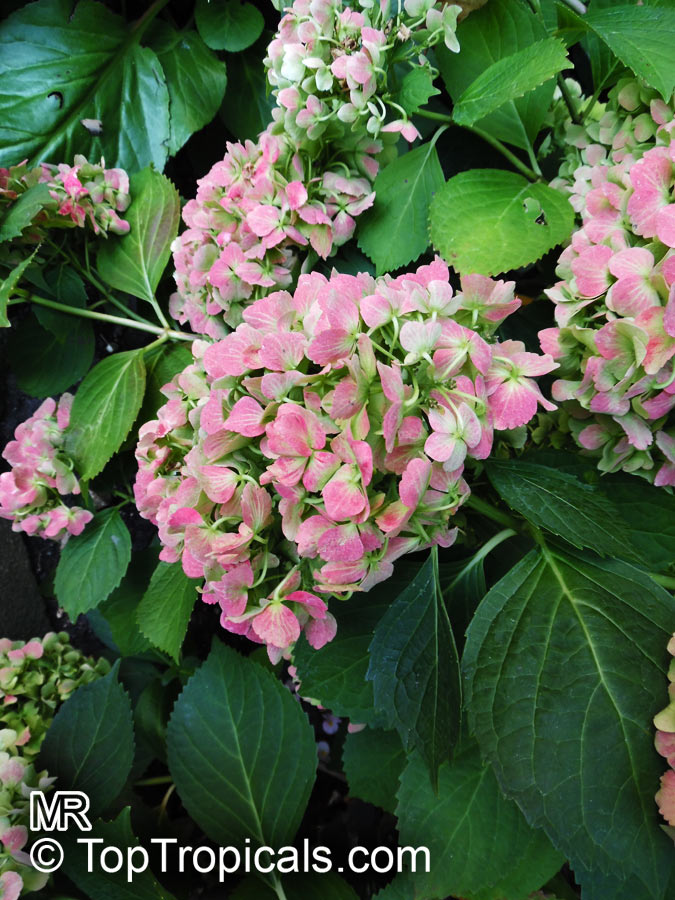
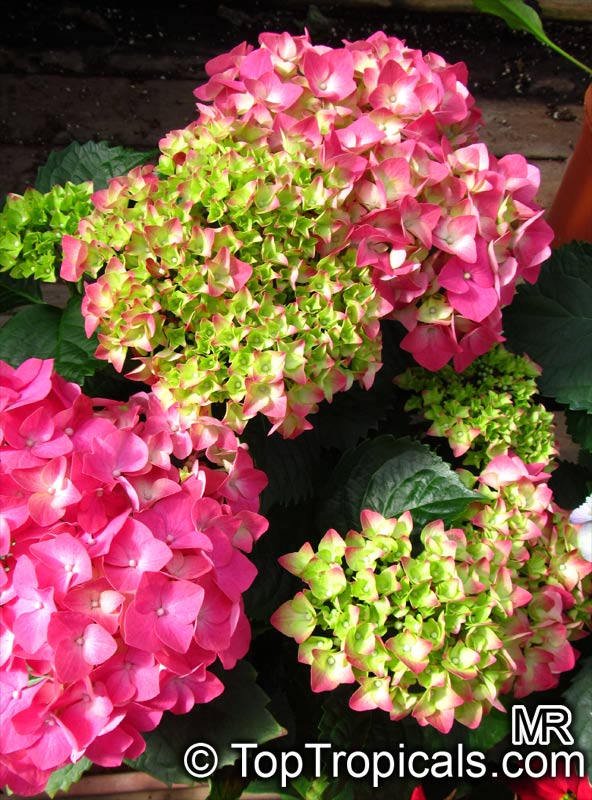
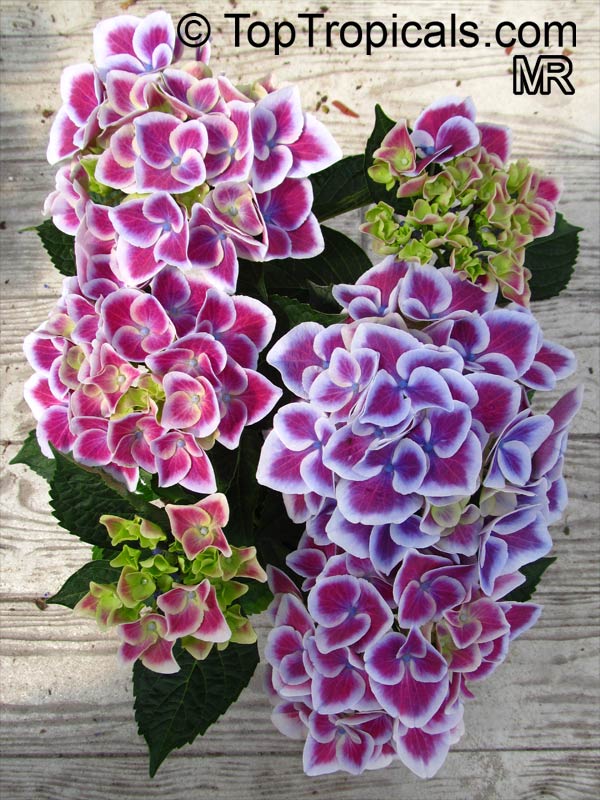
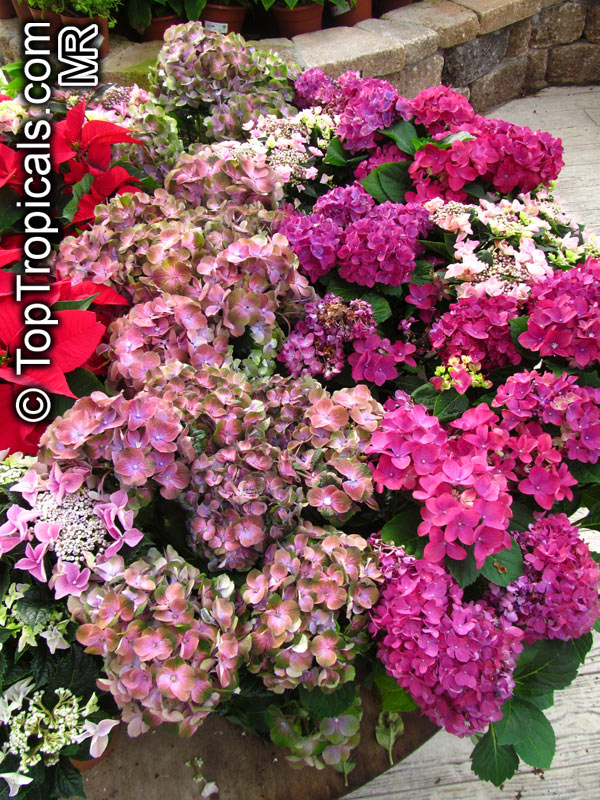
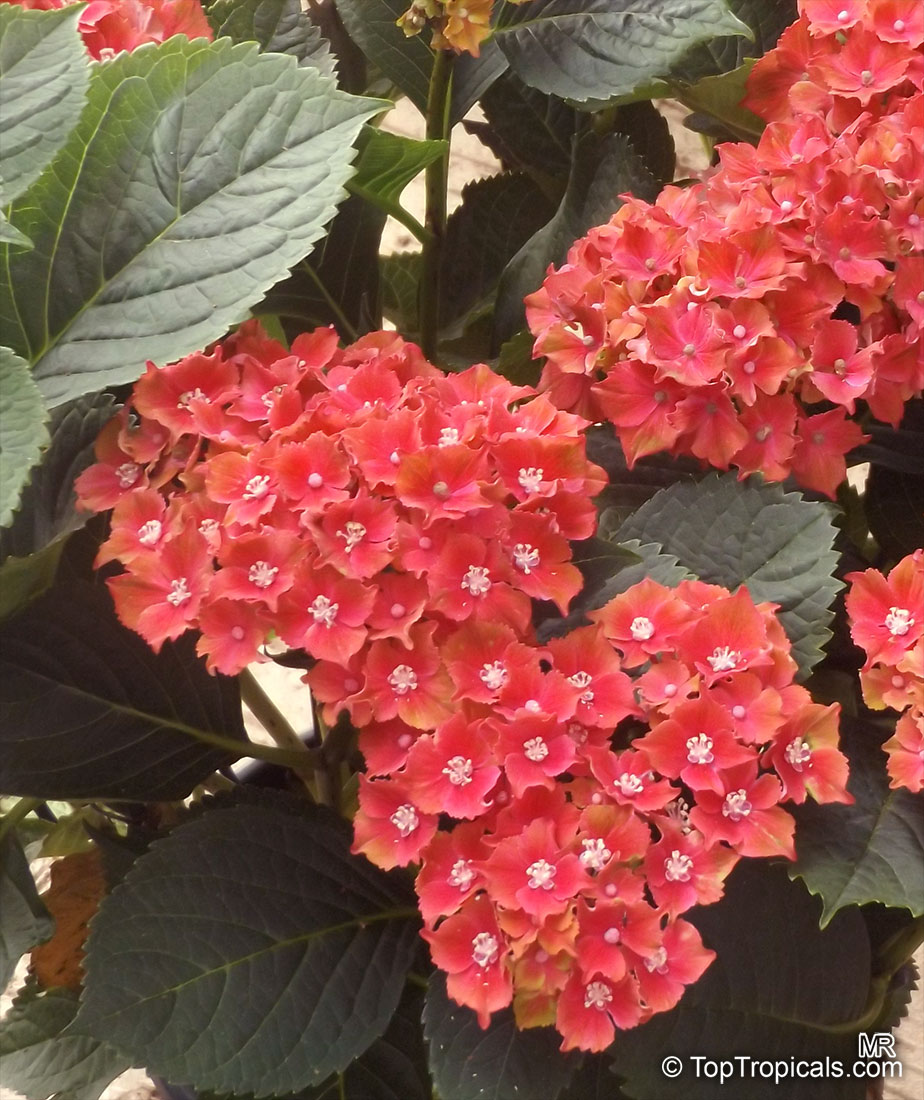
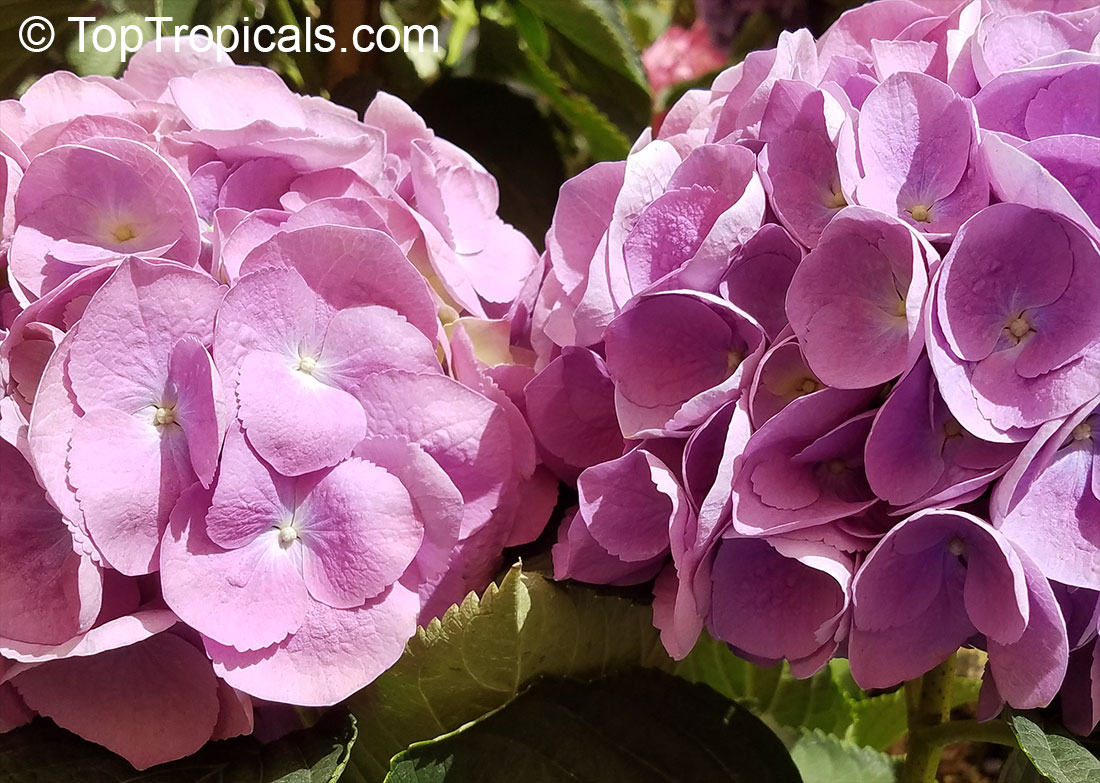
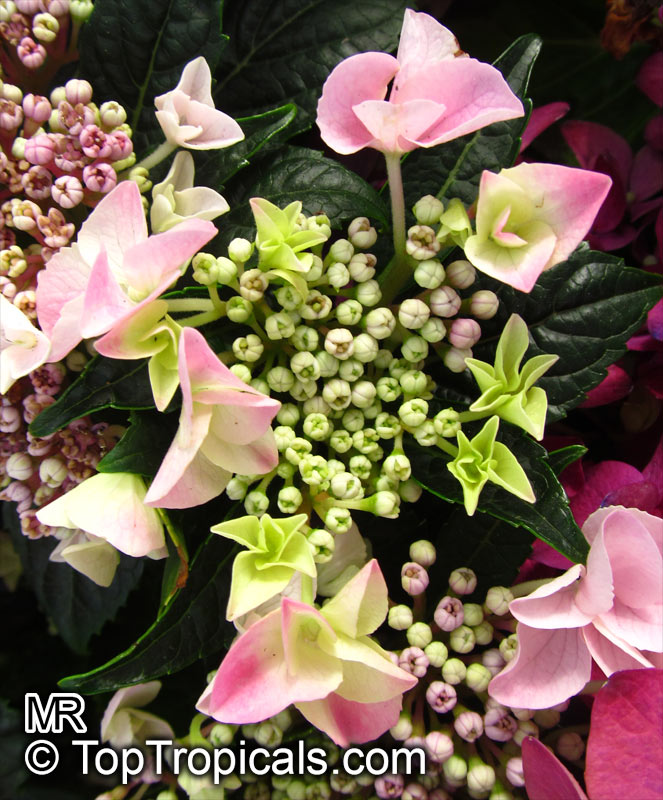
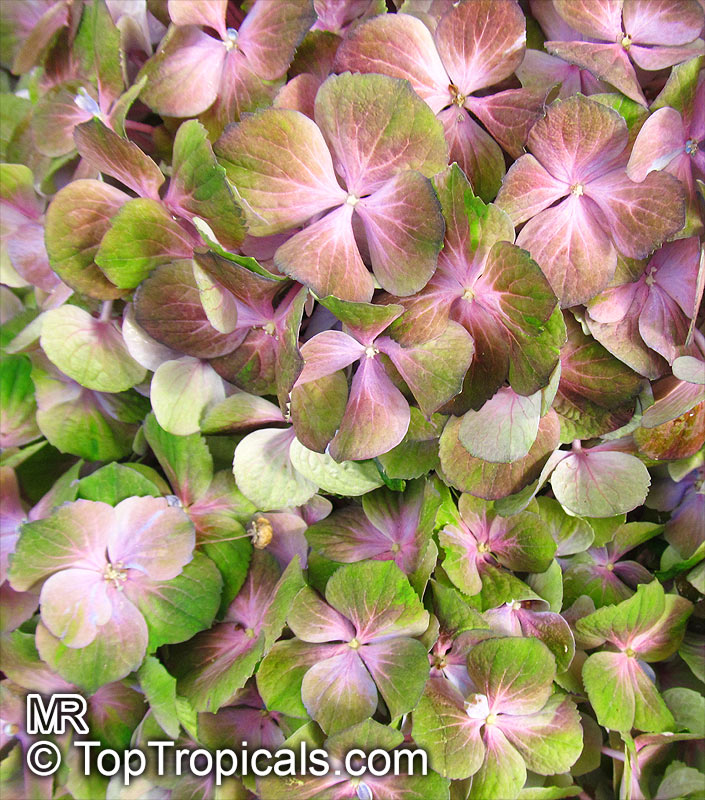
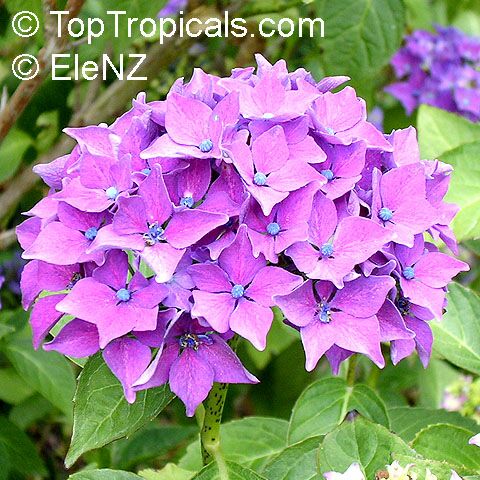
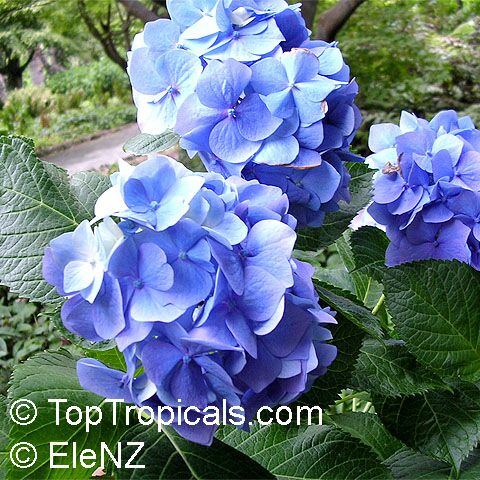
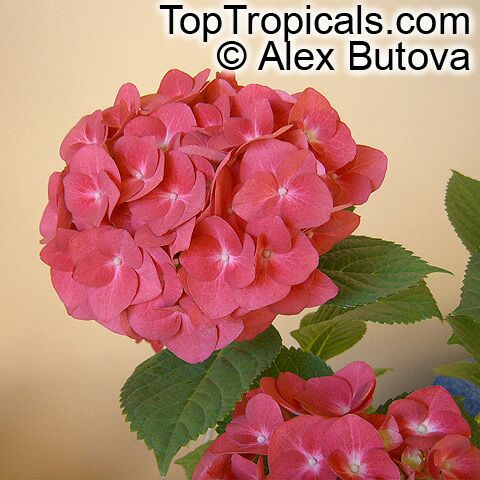
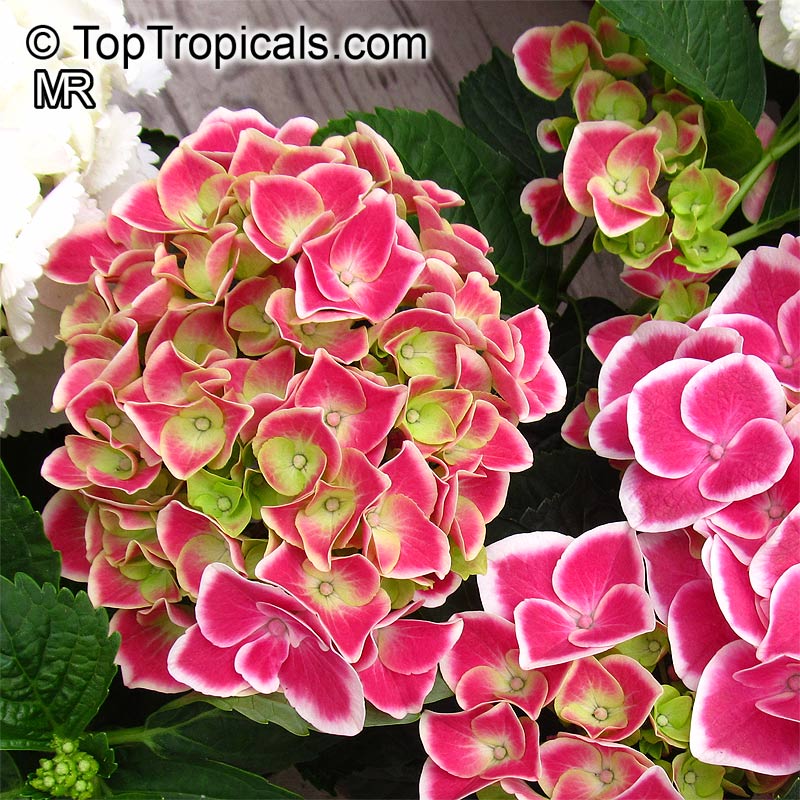
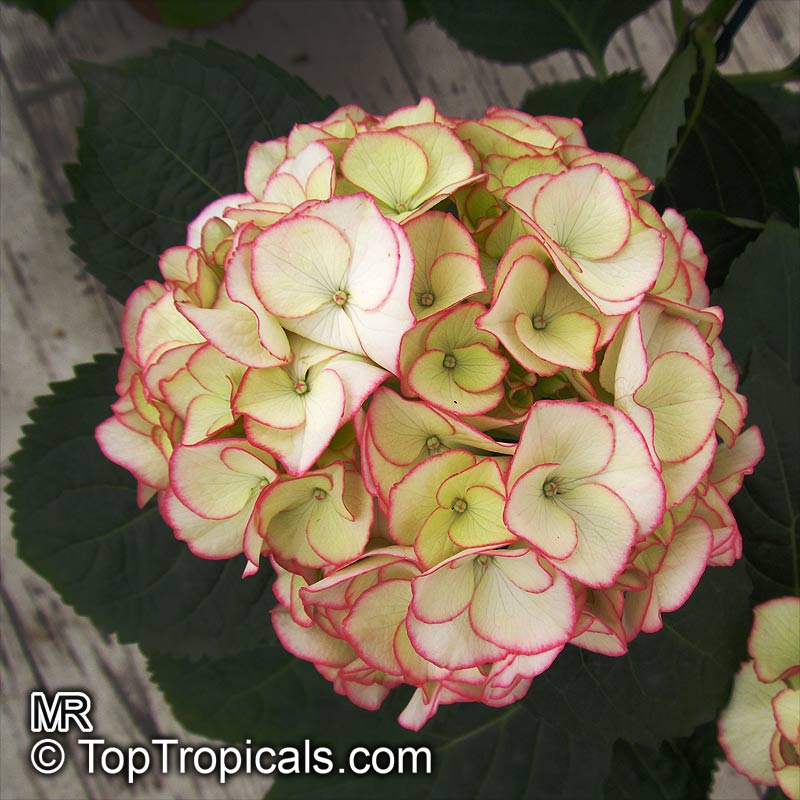
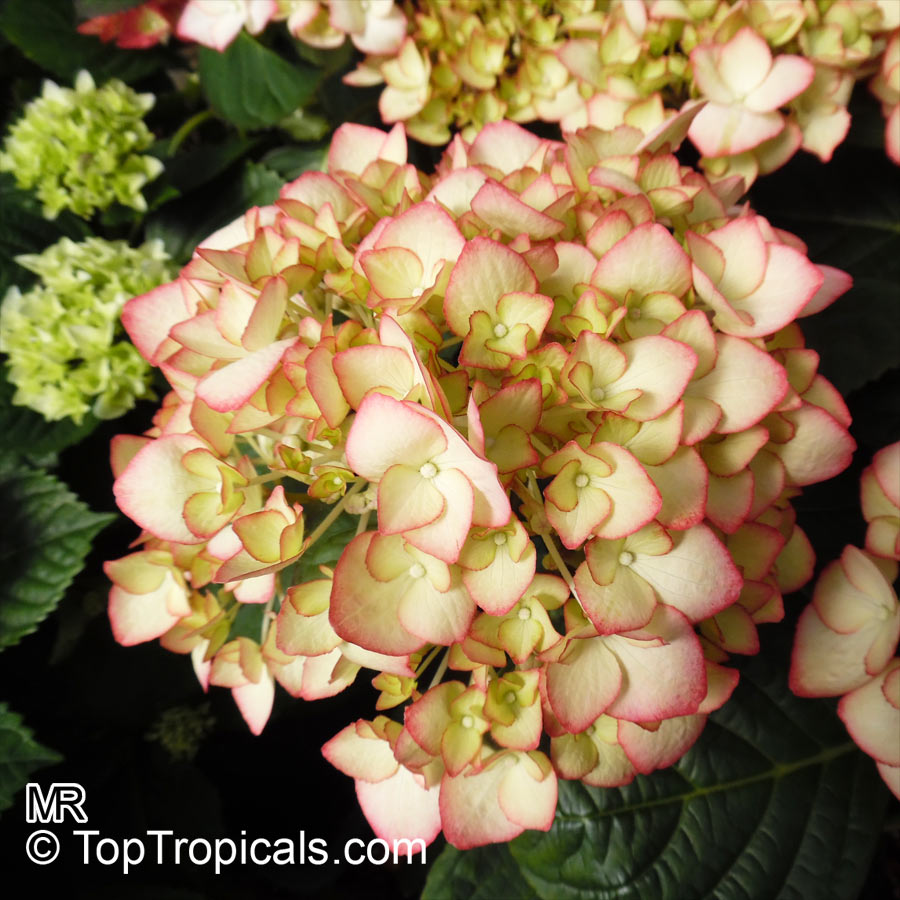
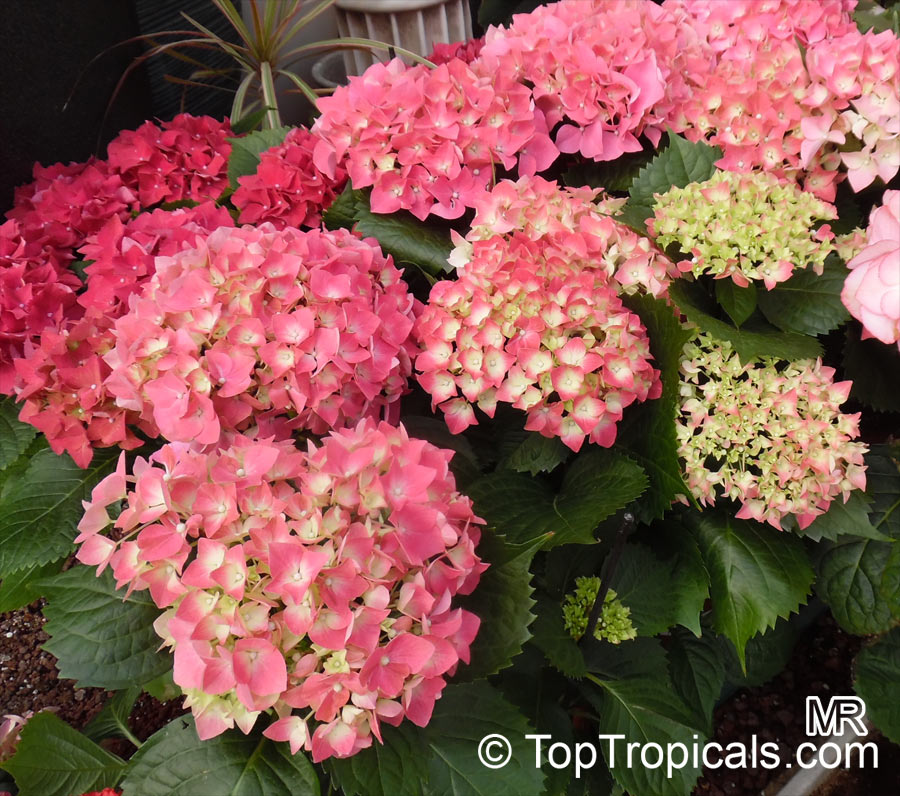
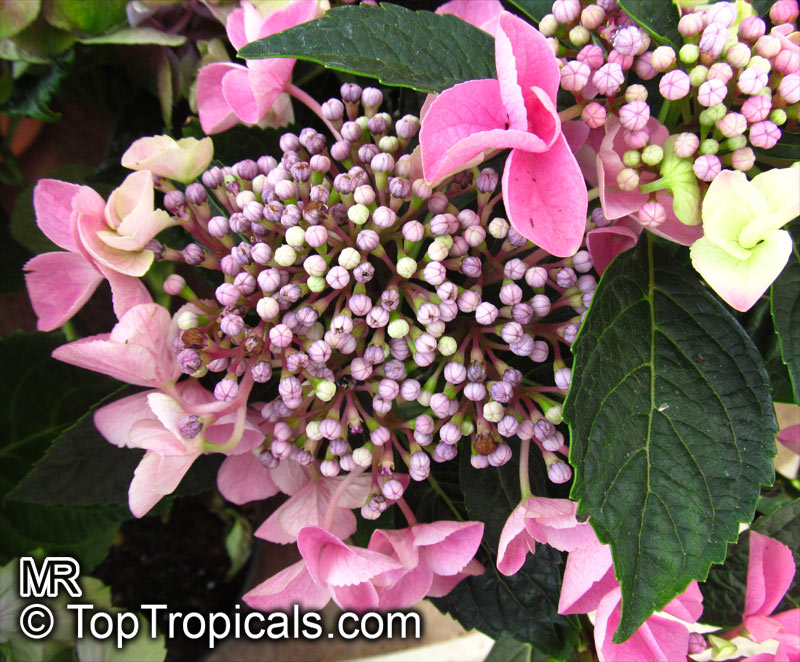
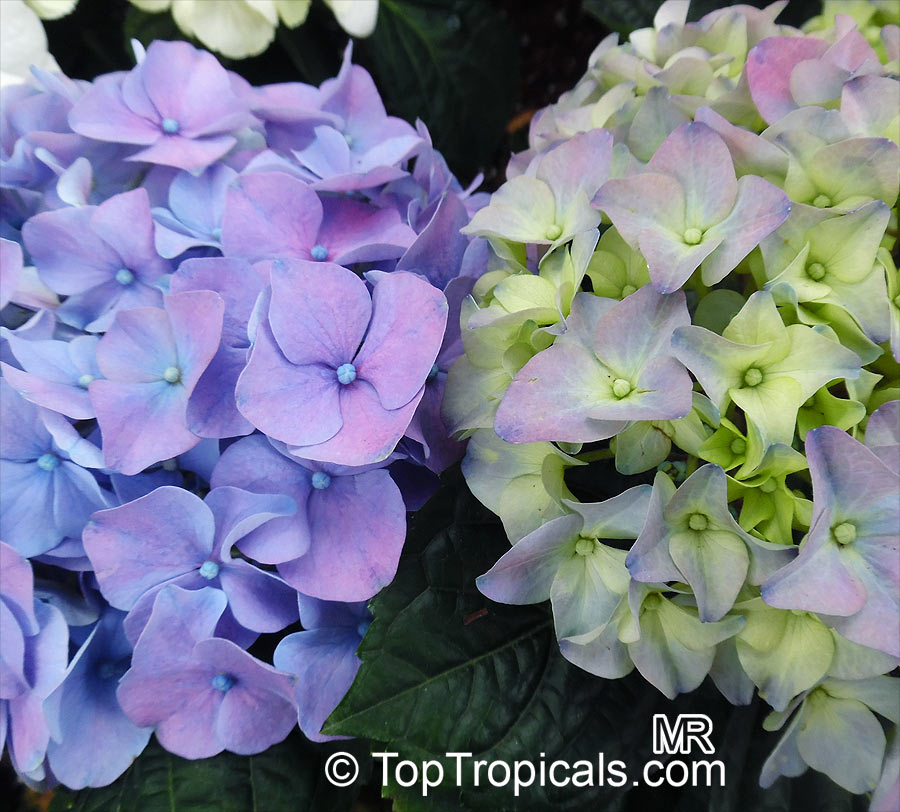
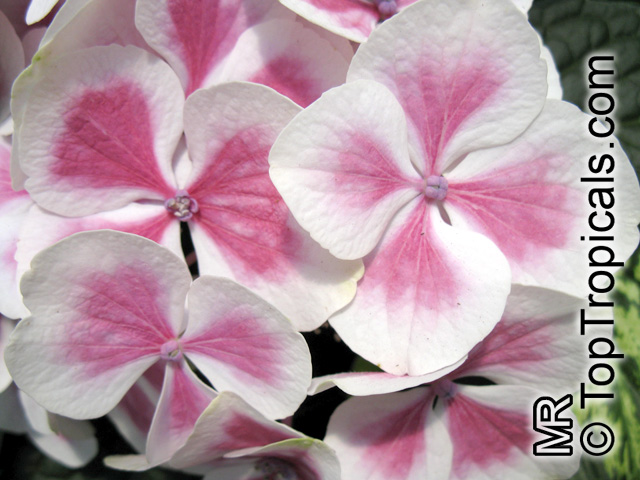
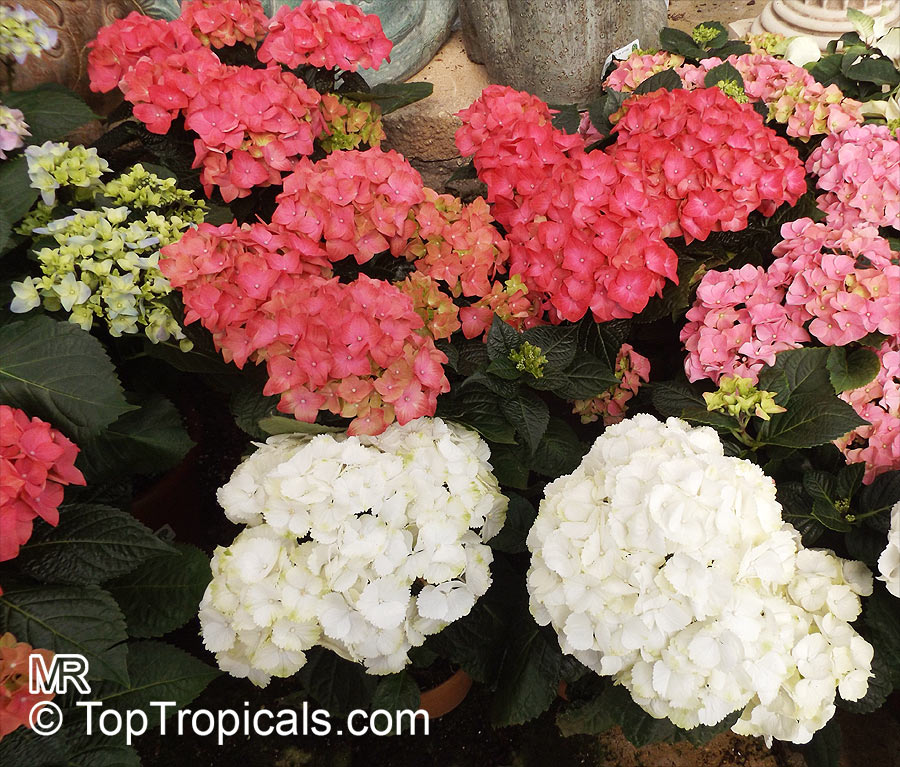
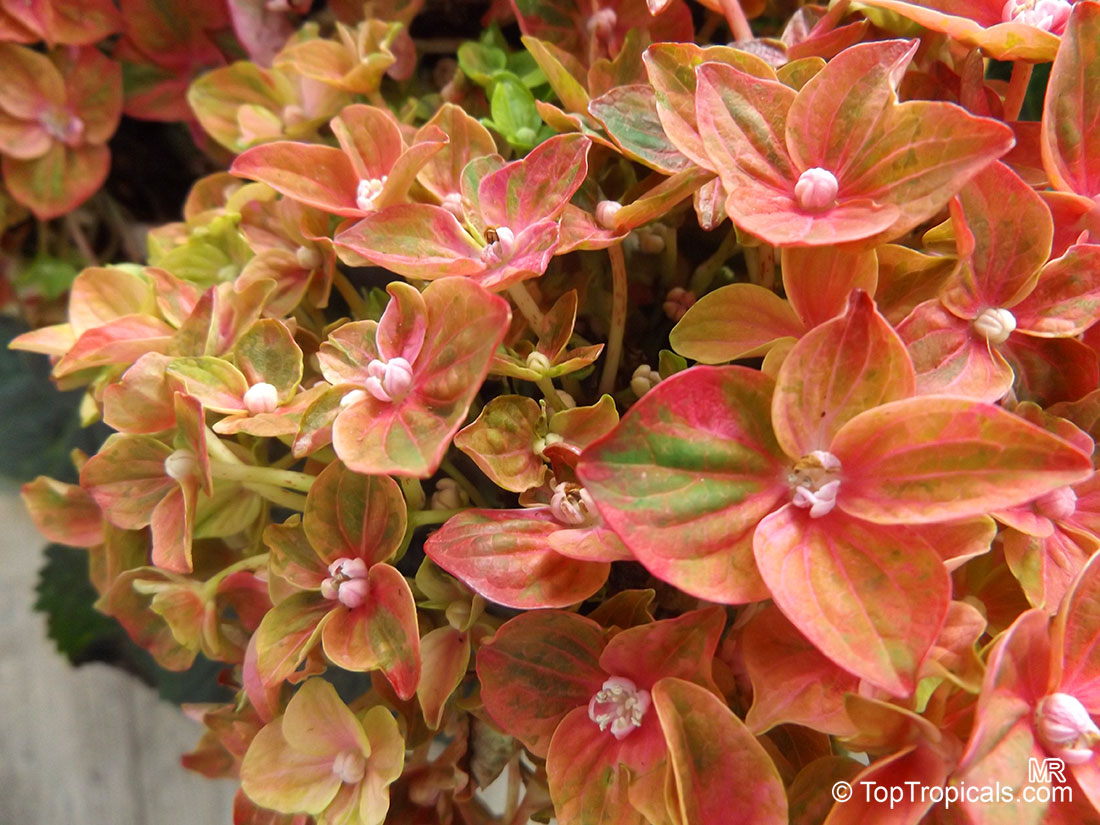
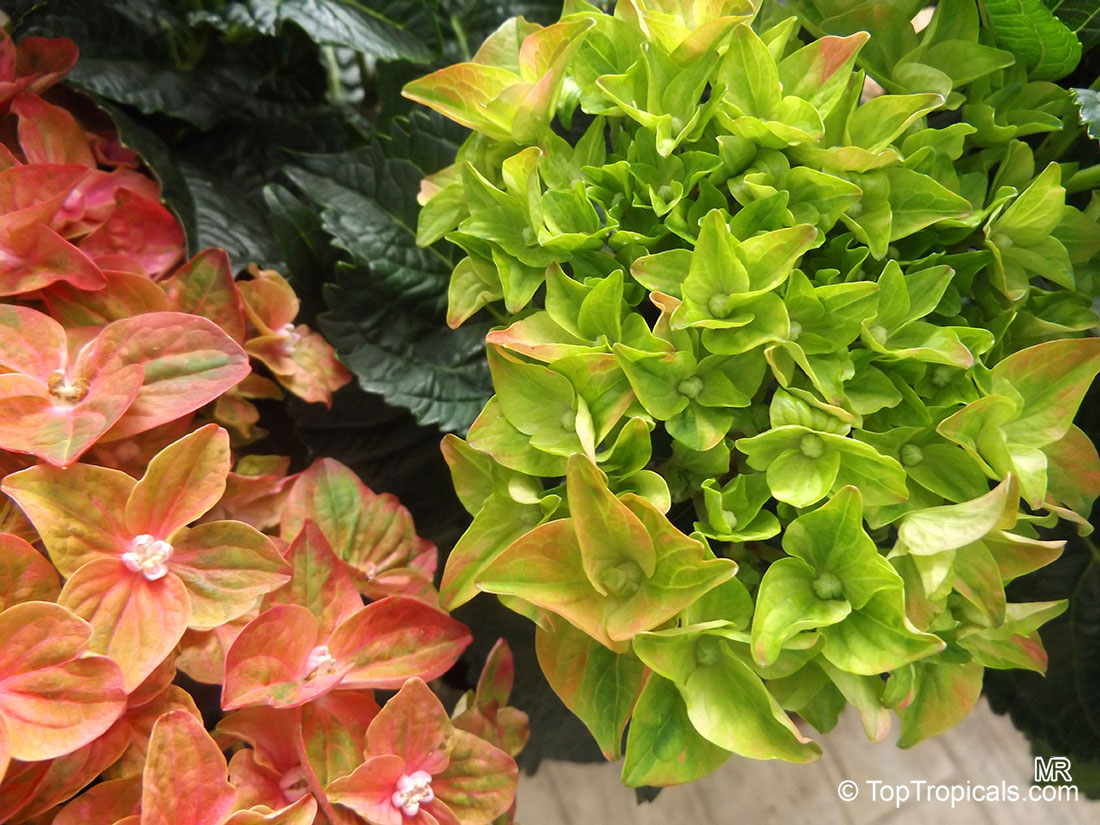
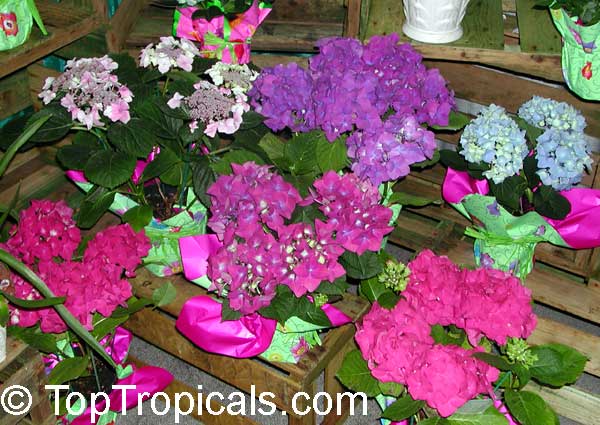
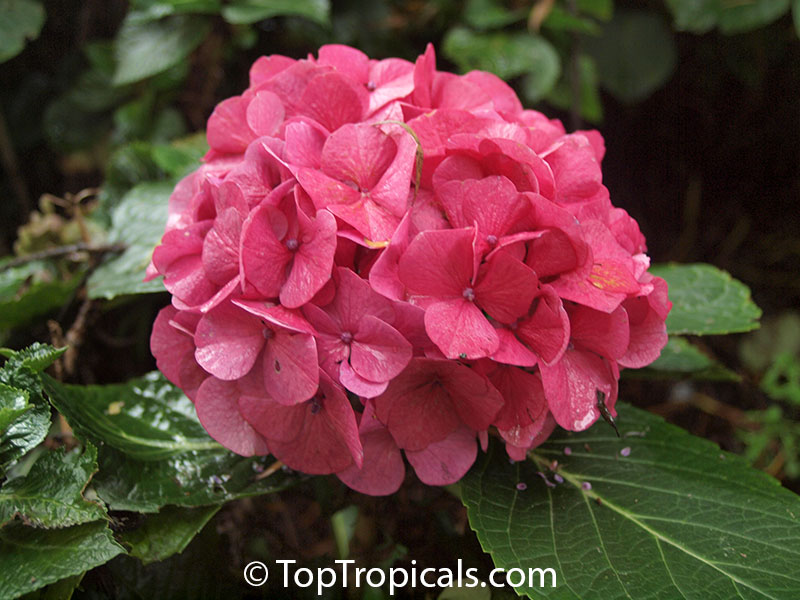
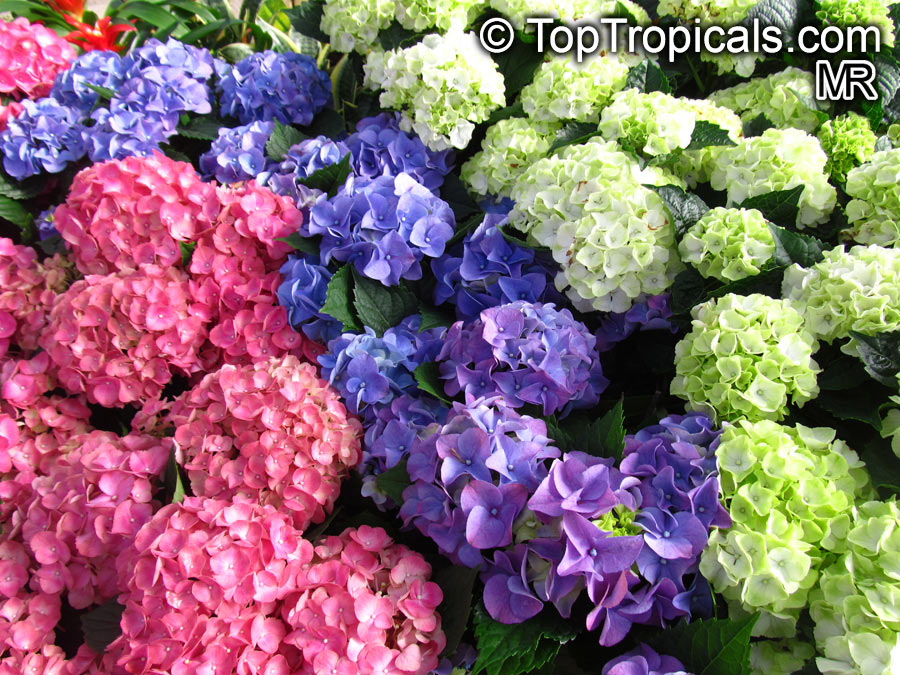
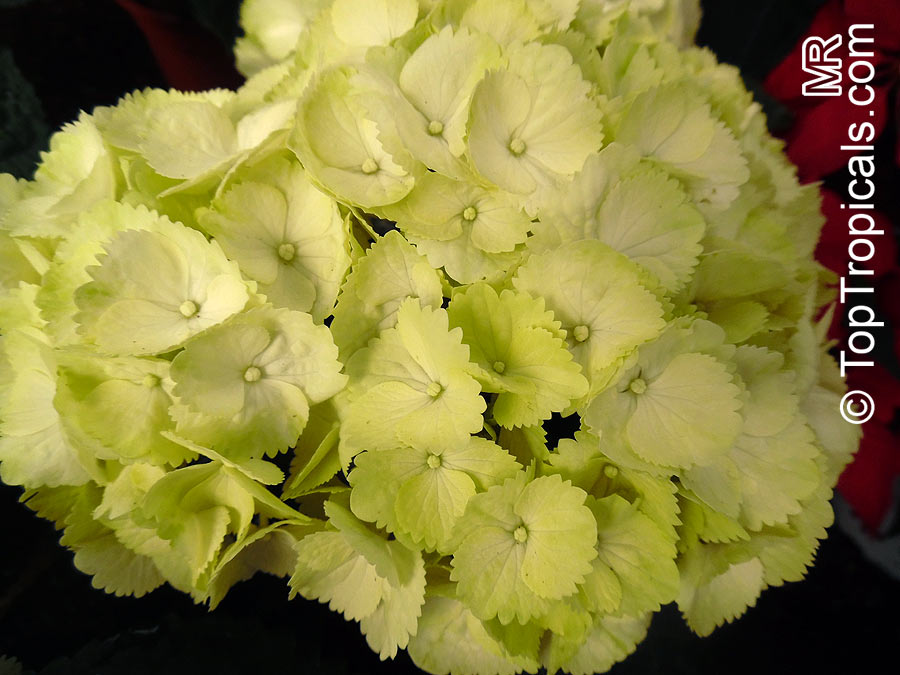
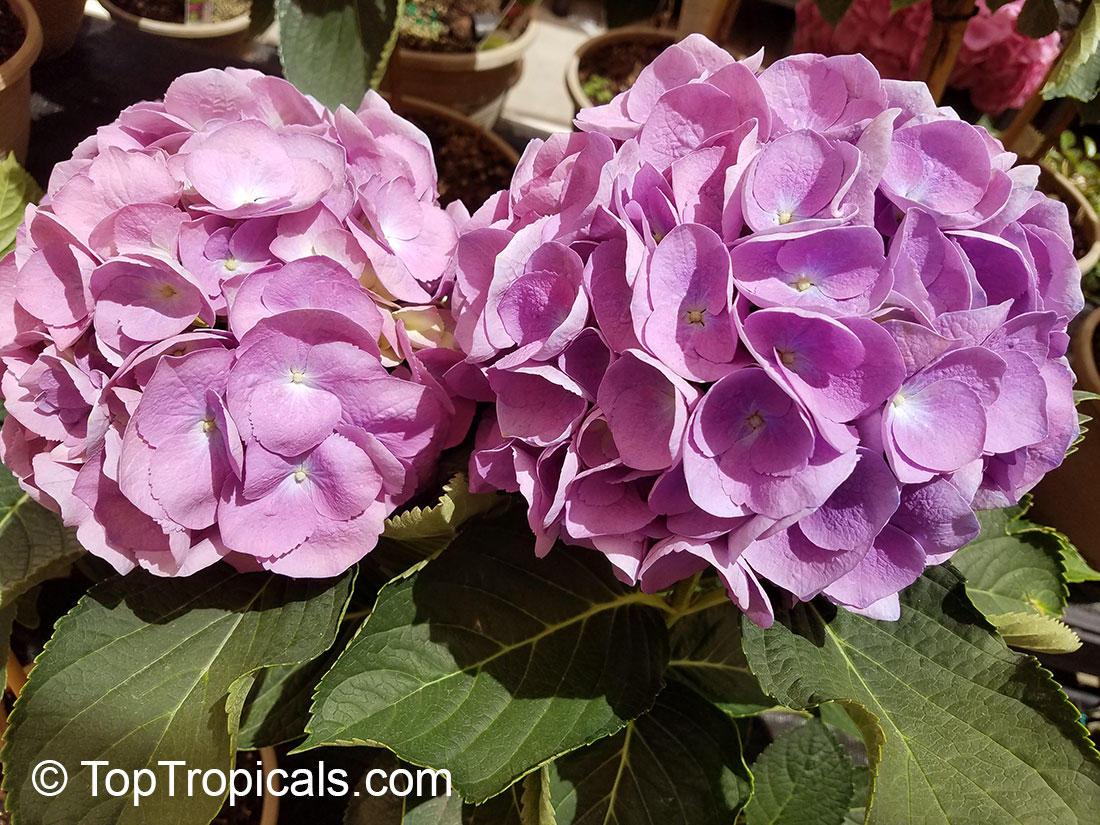
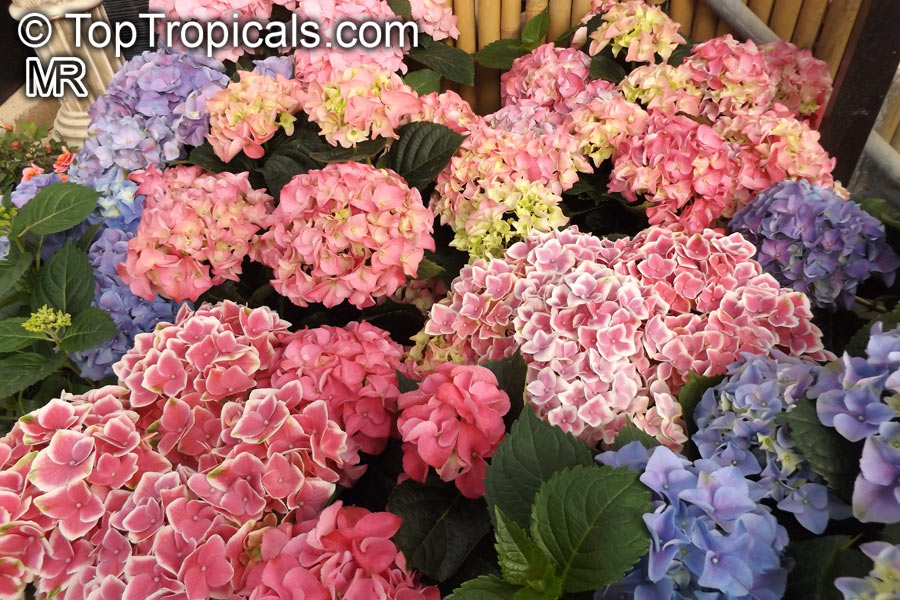
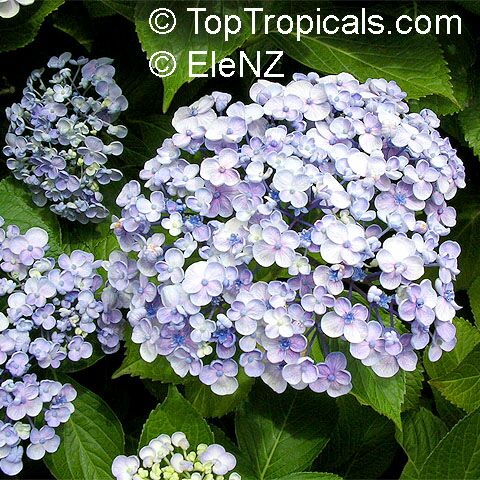
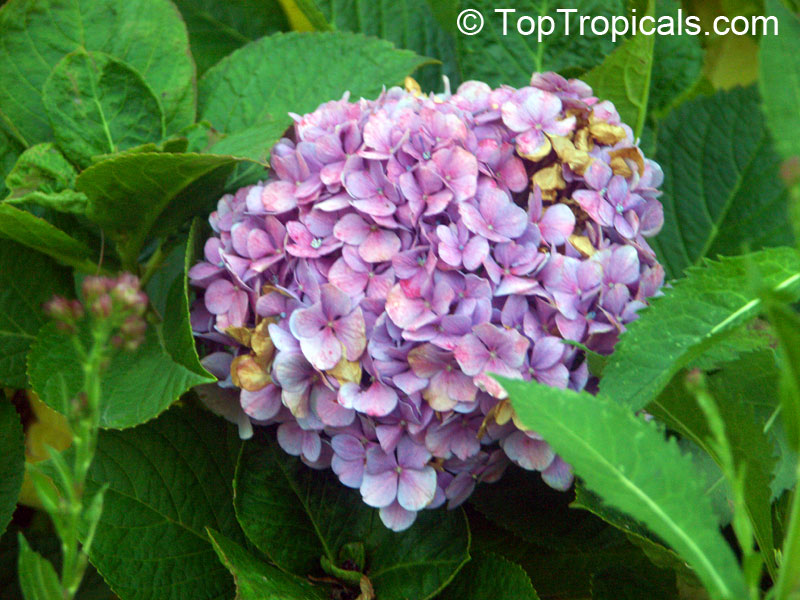
The flowers of Hydrangea macrophylla come in a range of colors from white, off-white, blue, lavender and purple to particularly unusual colors such as red, crimson and vinous, and yellow and orange. The flower heads can be up to 10 inches wide and the plant can grow to an impressive 5-10 feet tall.
For ideal growth and flower production, the shrub prefers full sun in cooler climates and semi-shade in warmer areas. However, it is important to also reduce the intensity of sun during the peak of summer as too much heat can cause bud drop. For best production of flowers, prune the branches in late winter before the growth starts. Regular watering is important due to evaporation in hot summers. For areas where winter temperature below zero is expected or where frequent snow or ice occurs, you can wrap the plant in extra layers.
In cold regions, it is best to grow Hydrangea macrophylla in a pot - protect the pot from direct sun to protect the roots and provide some winter insulation like wrapping insulation or bubble wrap. Provide additional water when the temperature drops below freezing, or when the plant is under water stress. Take extra care with the pot when the temperature is below freezing: watering too much can cause the roots to freeze, damaging the plant.



Botanical name: Hydrangea quercifolia
Common name: Oakleaf Hydrangea
Family: Hydrangeaceae
Origin: Southeastern United States

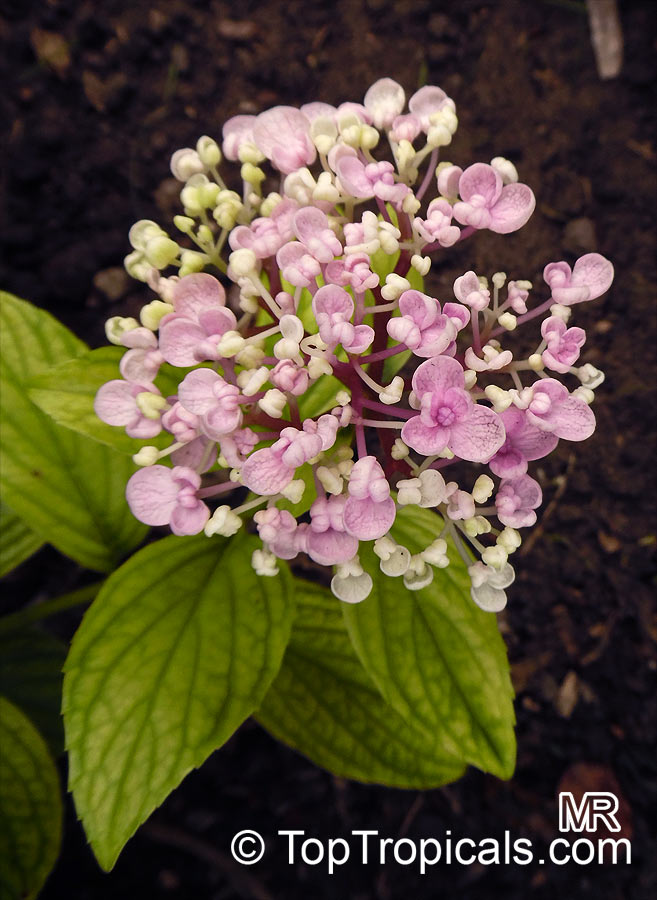
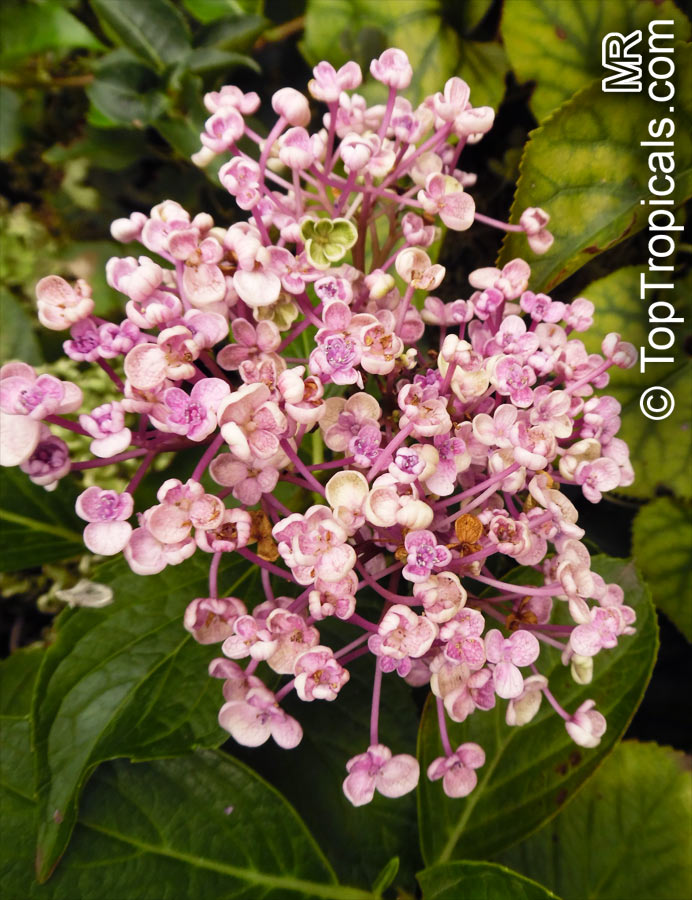
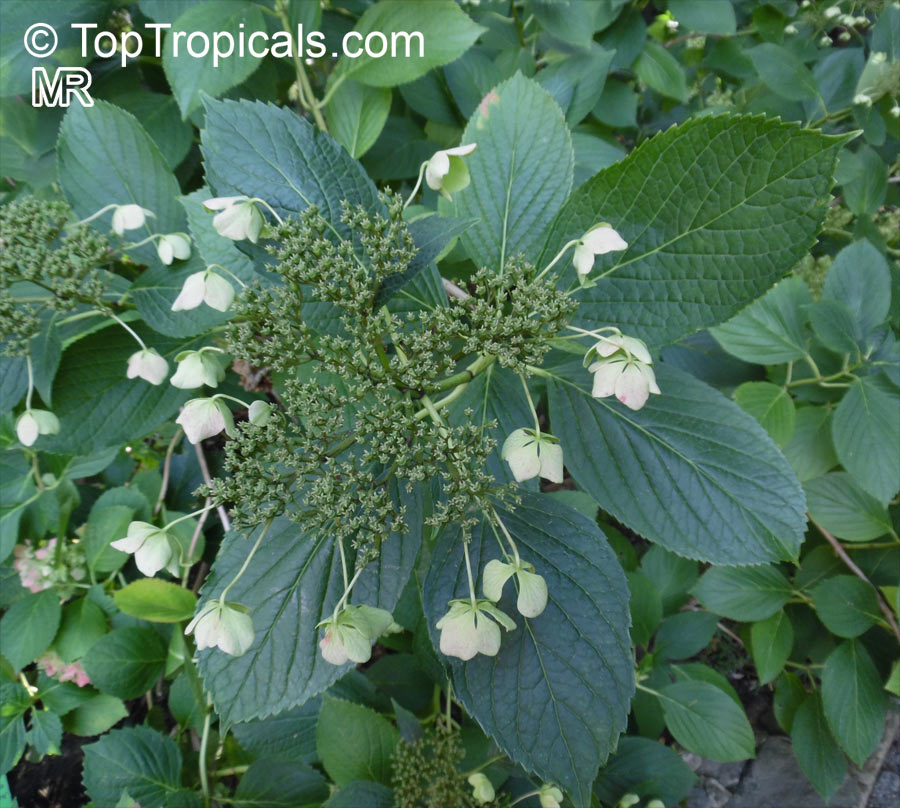
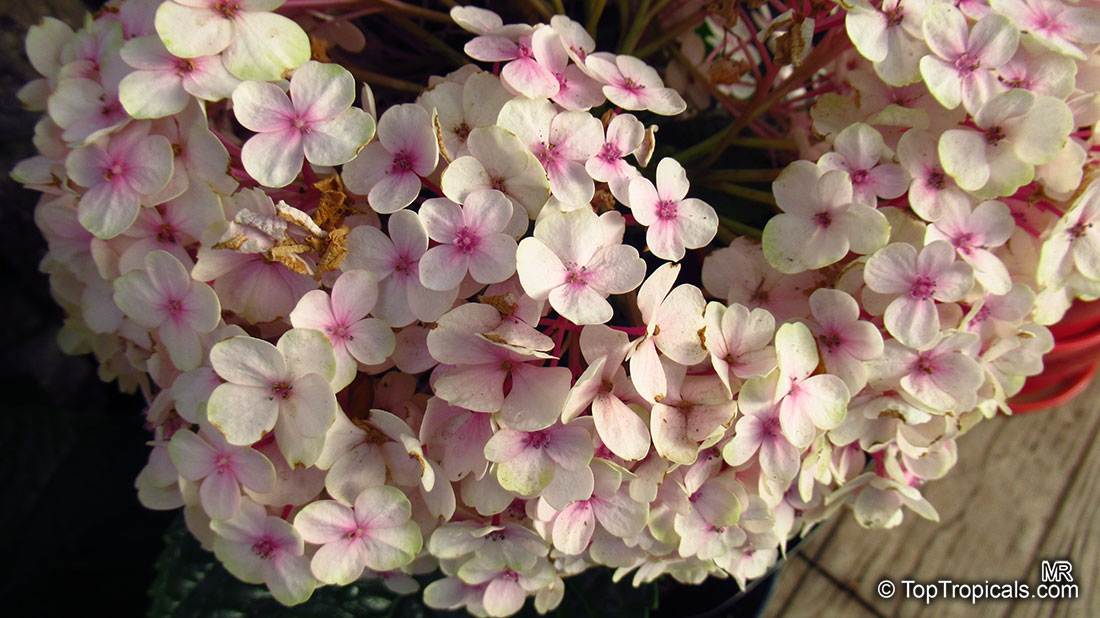
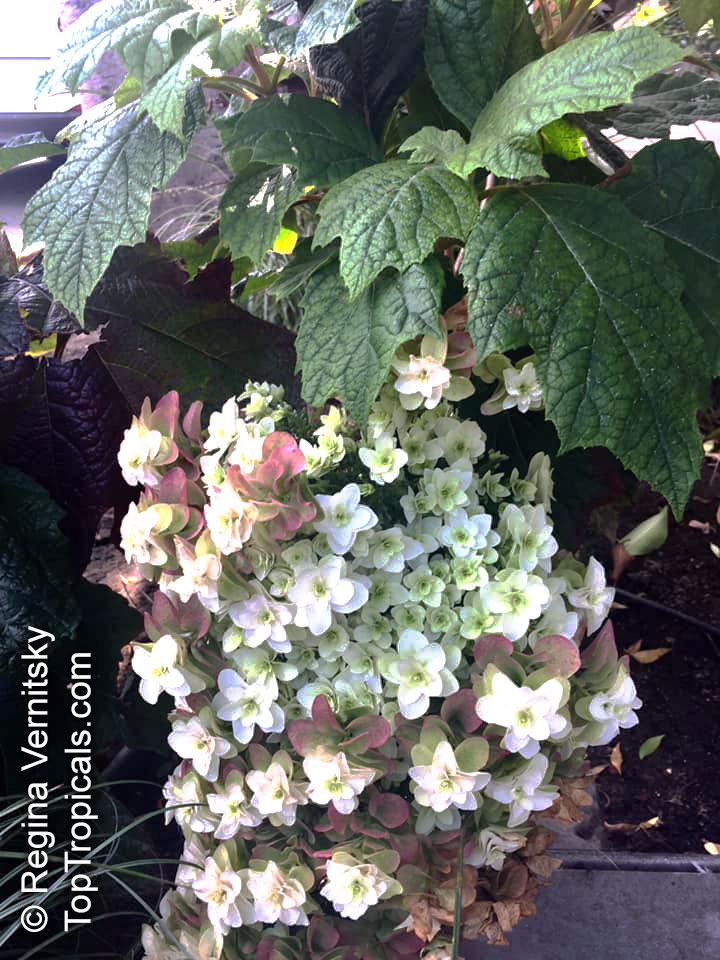
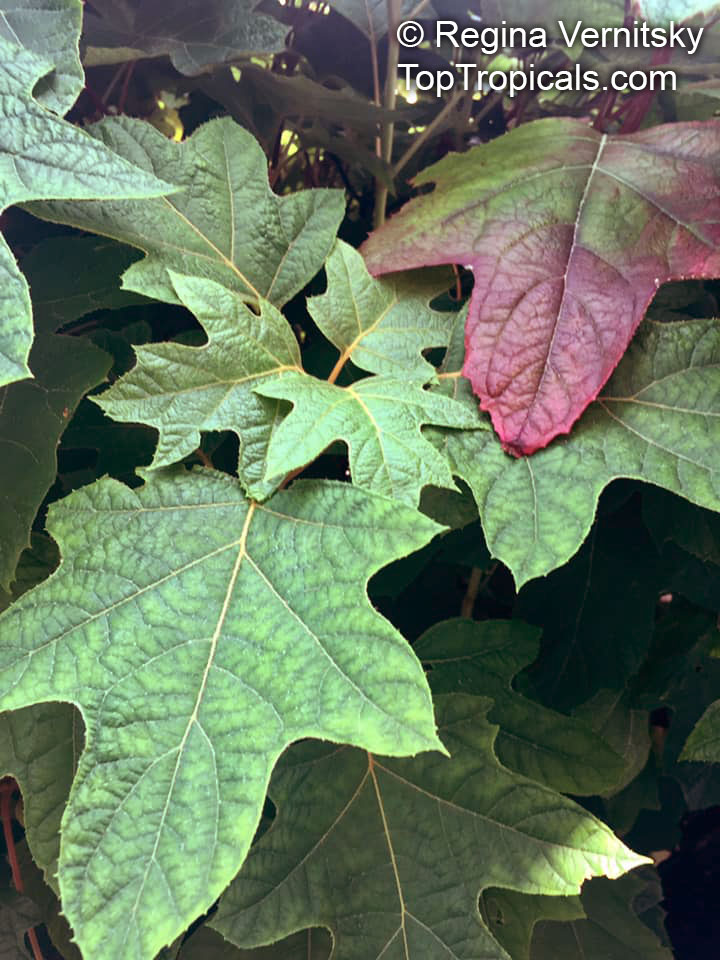
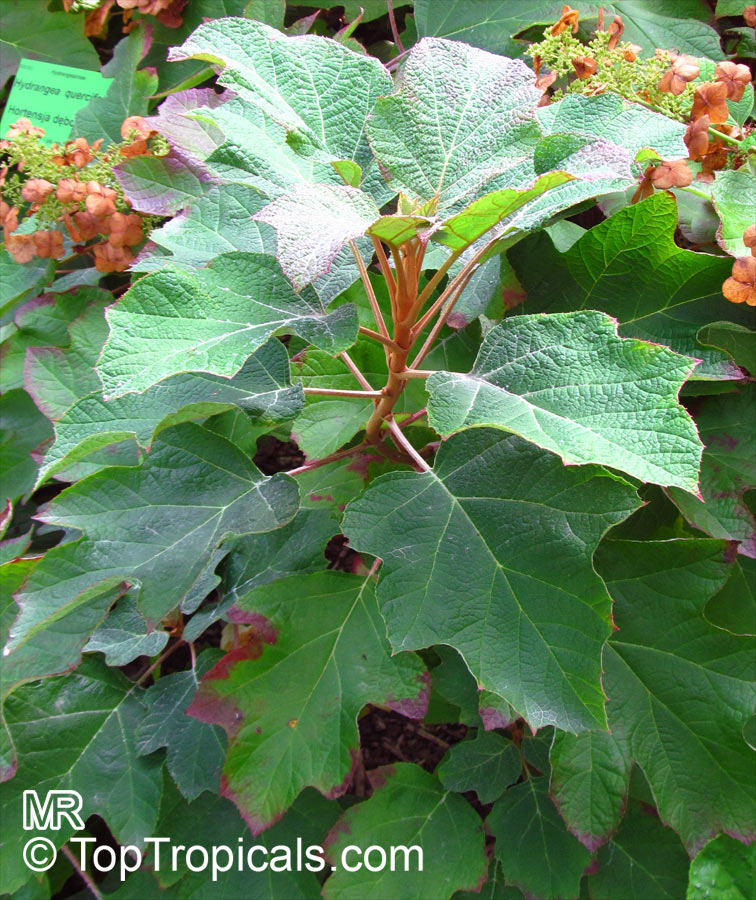
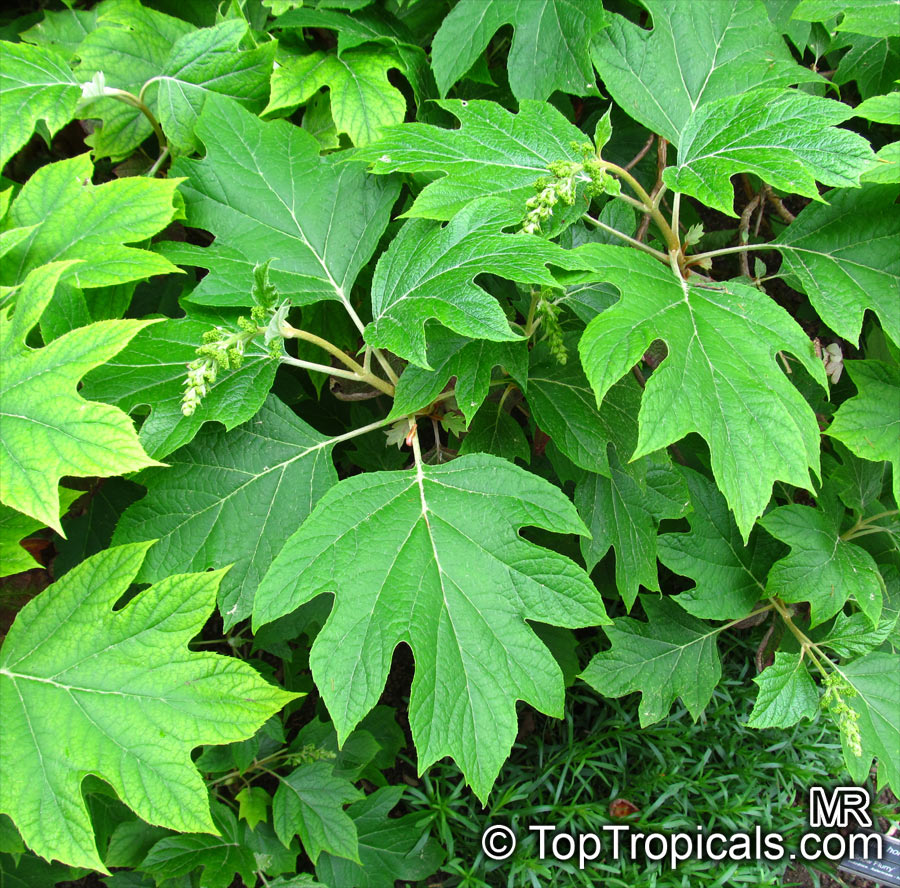
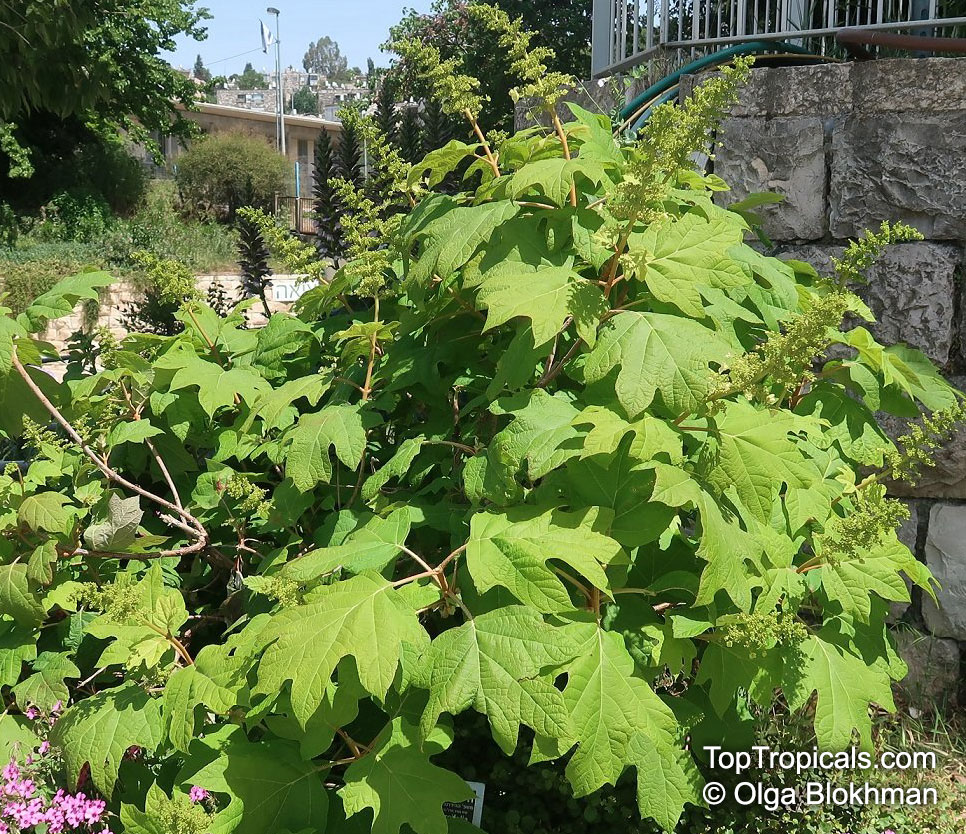
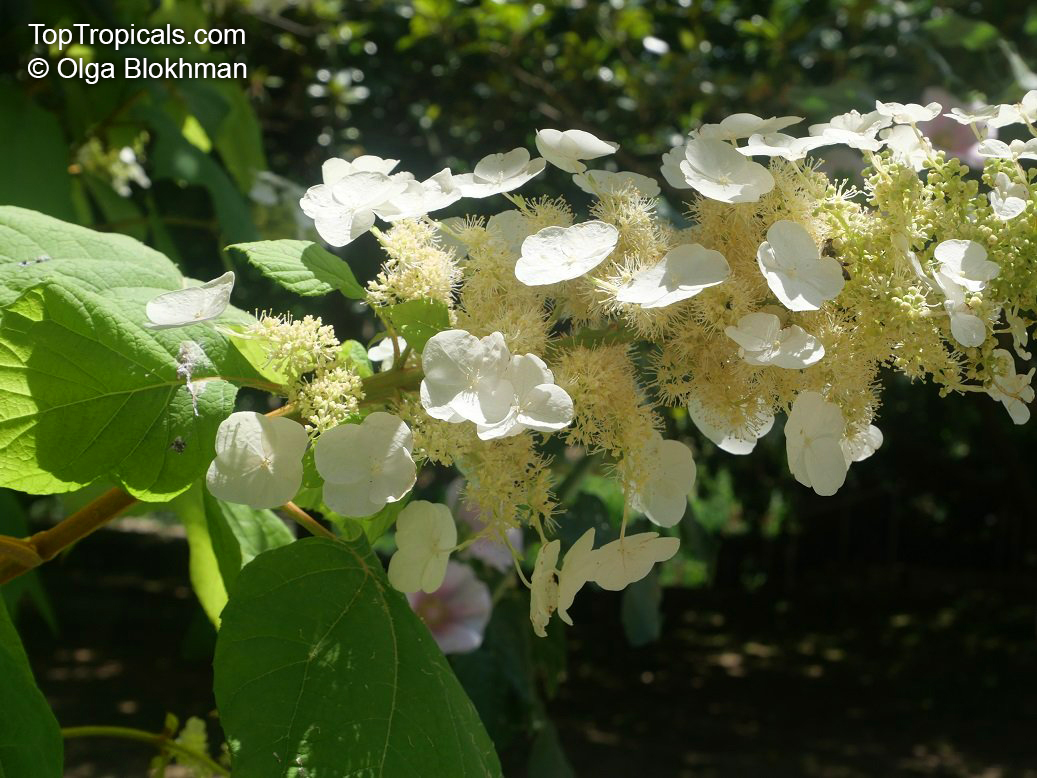
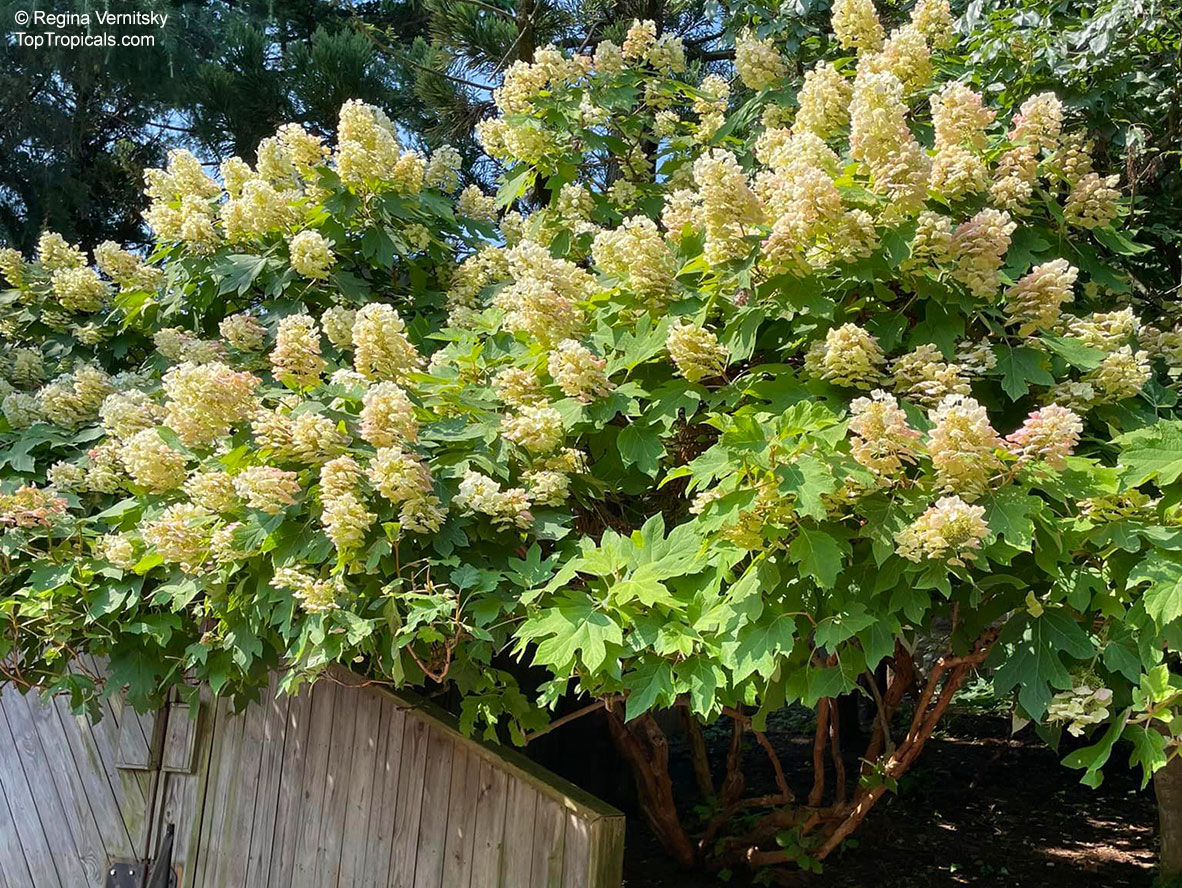
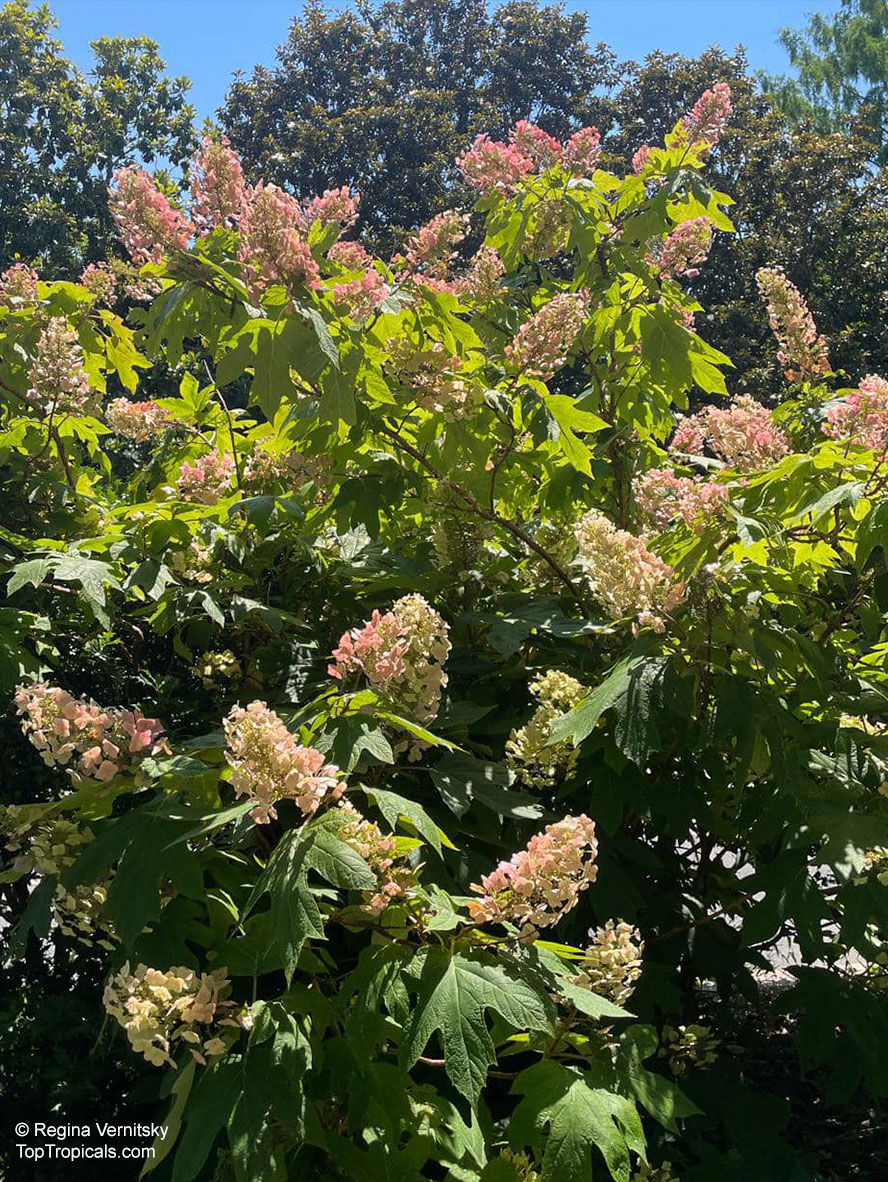
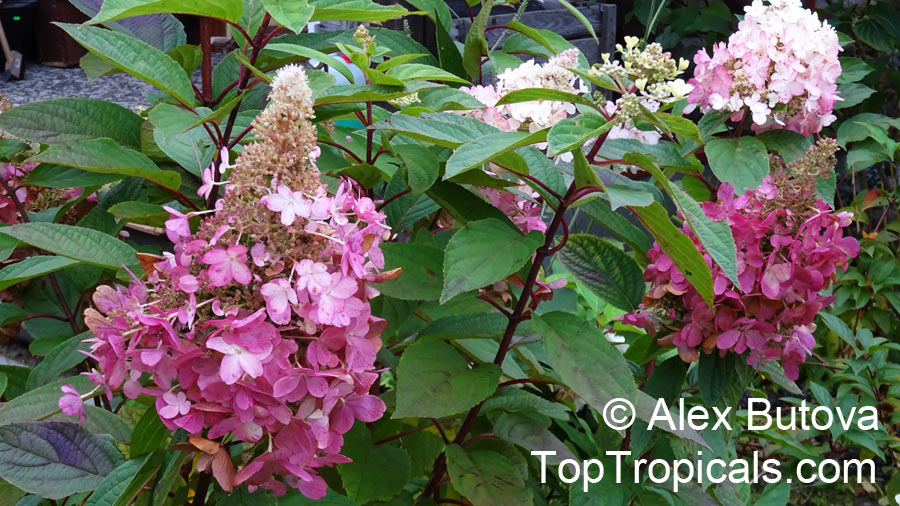
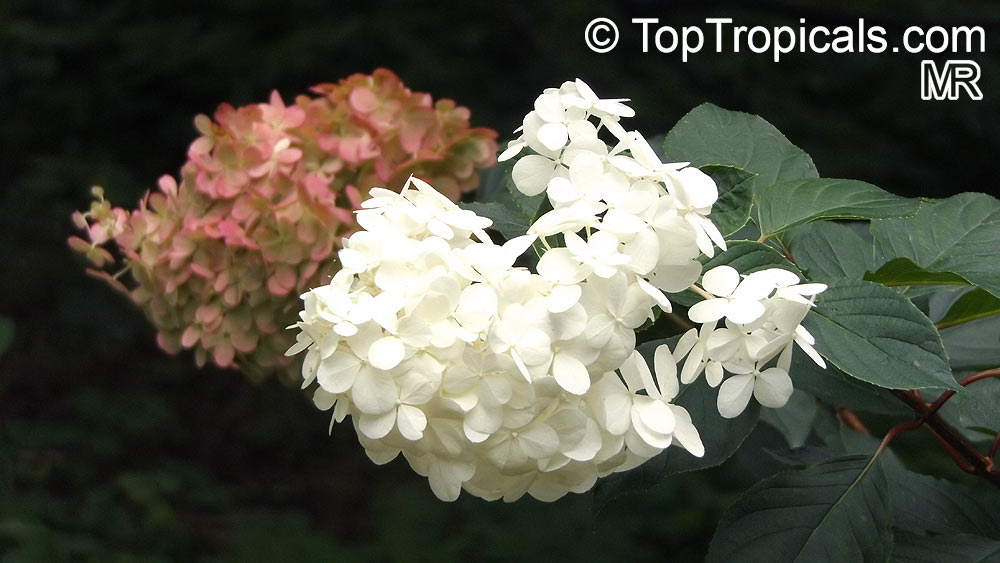
Hydrangea quercifolia is a large shrub, which can grow up to 5 to 10 feet tall, is native to the Southeastern United States. It has oval-shaped, large and toothed leaves, with deep lobes that resemble the leaf of an oak tree. During the bloom season, it features bunches of pink and off-white flowers that sit atop large trusses. Over time, these flowers will take on a brown hue as they age.
Oakleaf Hydrangea is easy to care for and grows best in part shade and with regular watering. It is hardy in USDA Zones 5 to 10, but in colder climates, it is best grown in a container so that it can be brought indoors and kept in a sheltered spot when temperatures drop. Ensure that the potting medium is well-draining and planted in a location that receives morning sunlight.
In the growing season, keep the container watered thoroughly, but be careful not to over-water. Fertilize the plant in early spring before the new growth starts, and then again in mid-summer. Prune the shrub after the flower buds form in mid-spring to keep the shrub an even size, and remove any dead branches.
Overall, Hydrangea quercifolia is an easy-to-care for and rewarding shrub that can bring a bit of beauty to a landscape. With its majestic foliage and delicate flower clusters, it is an all-season eye-catching addition to any garden.
Botanical name: Hydrangea sp.
Common name: Hydrangea
Family: Hydrangeaceae
Origin: Eastern Asia


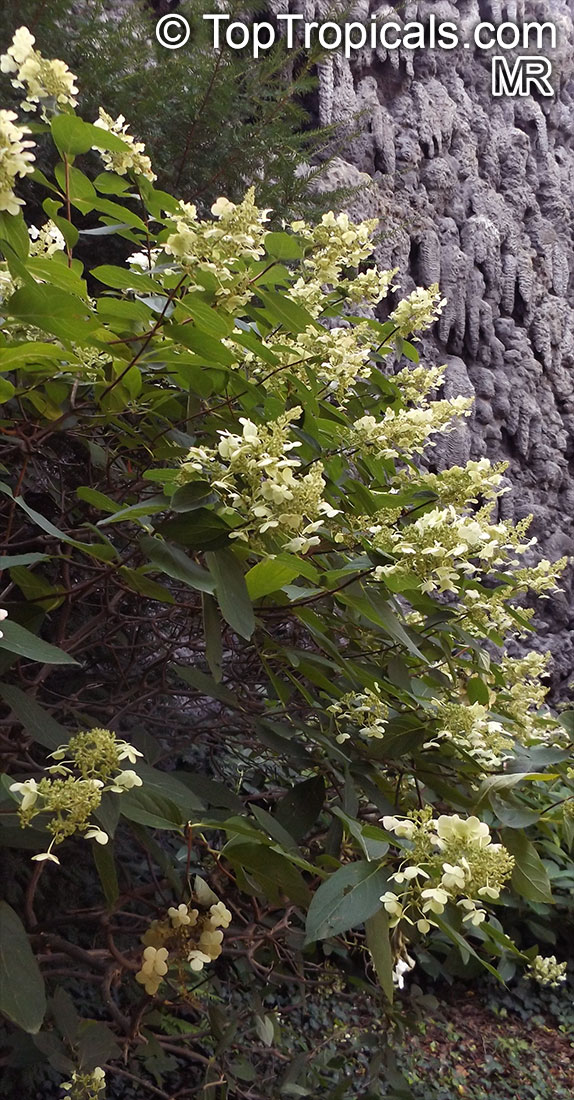
Hydrangeas are an incredibly varied and interesting group of large and small shrubs that have become a staple in many residential gardens throughout the United States. Typically growing 3-10 feet tall at full maturity, this deciduous plant is hardy to USDA Zone 5-9 and, although more sensitive to the cold, even some more northern regions will see hardiness down to the low 30s Fahrenheit for short periods of time.
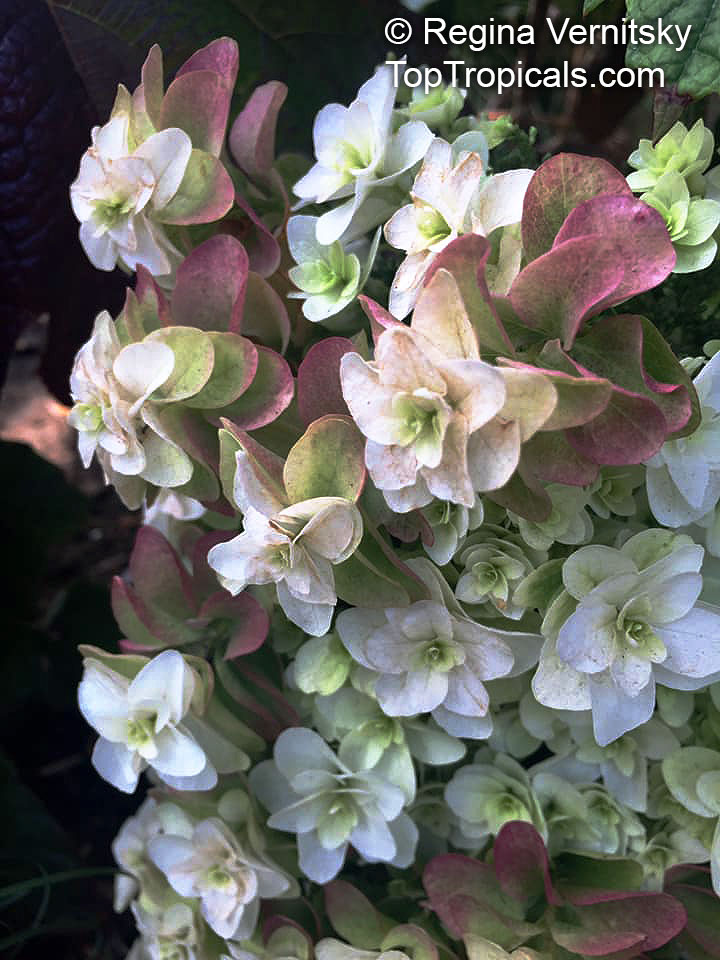
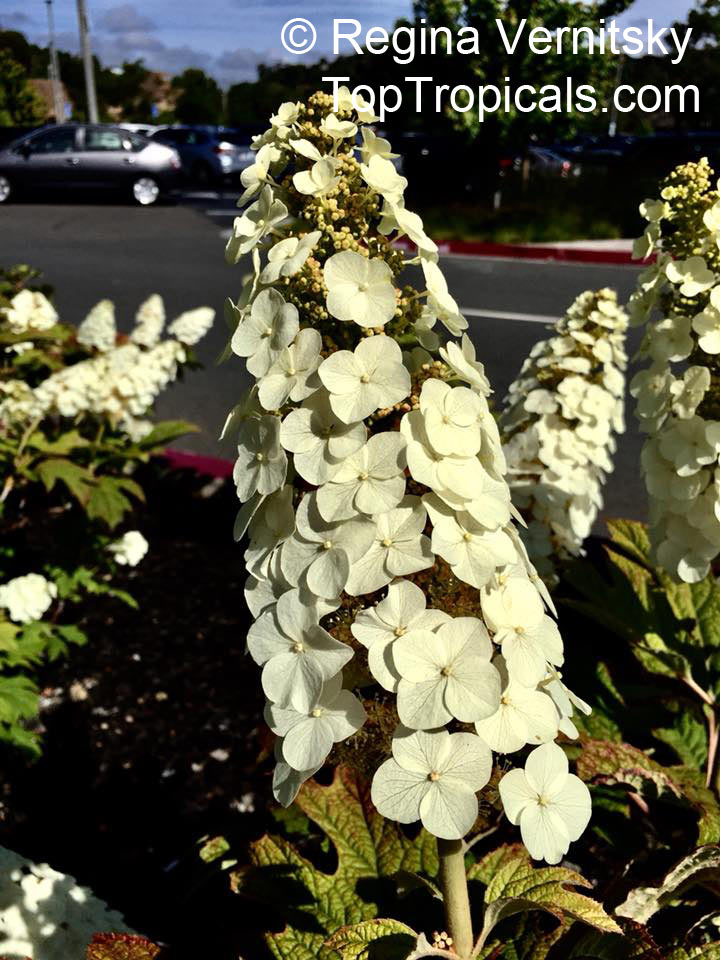
Native to Eastern Asia, hydrangeas are known for their delightful showy flower heads that can be found in shades of pink, white or off-white, blue, lavender and even a unique purple that appears almost as an unusual color. The flowers can also be two-toned with contrasting eyes, speckled or striped with another color for a particularly standout display.
These unique blooms are counterpointed with striking ornamental foliage that can range from large, glossy green leaves to smaller, leathery foliage found in more dwarf or creeping varieties. When it comes to planting, grow hydrangeas in moist but well-drained and slightly acidic soil, enriched with organic matter and also ensure they receive enough shade or semi-shade throughout the day. For those located in colder regions consider growing hydrangeas in a pot to ensure that they have the right conditions to thrive during the winter months.
Hydrangeas are relatively easy to propagate by stem cuttings taken between April to August and can boast an incredibly generous flowering period throughout the summer. This lovely and hardy shrub has become a sought-after addition to many horticultural displays and is sure to bring a burst of color and life to any outdoor area.
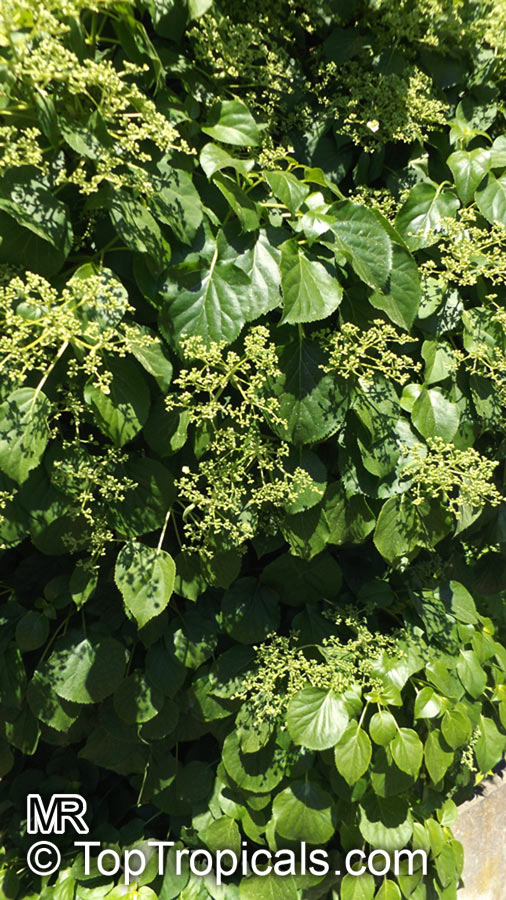
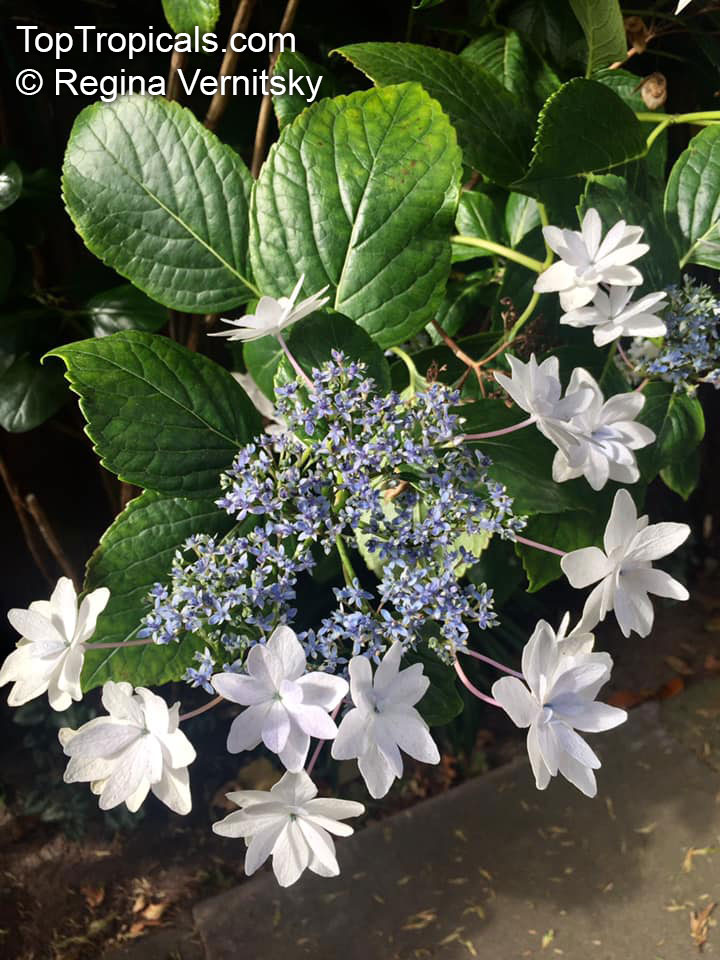
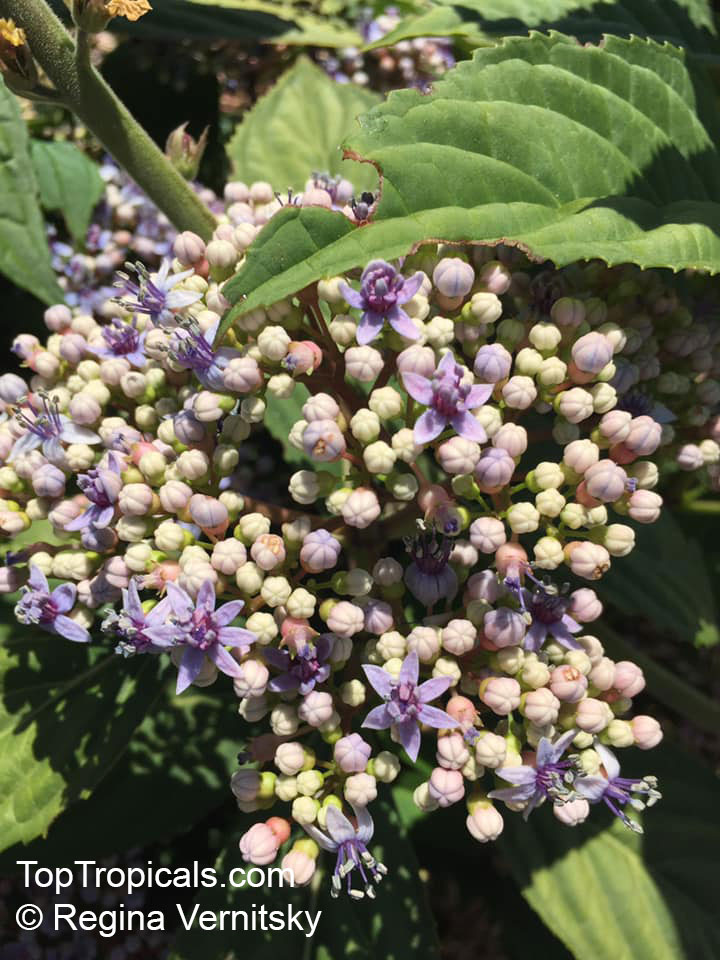
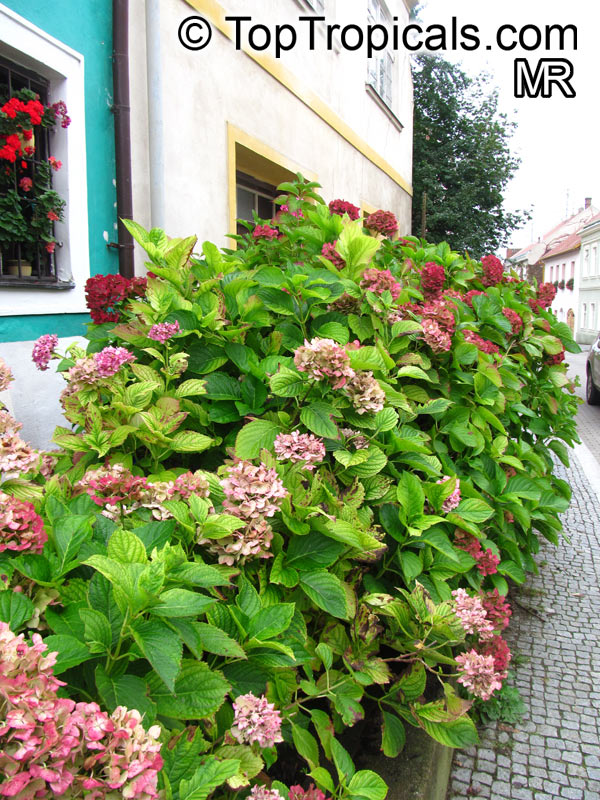
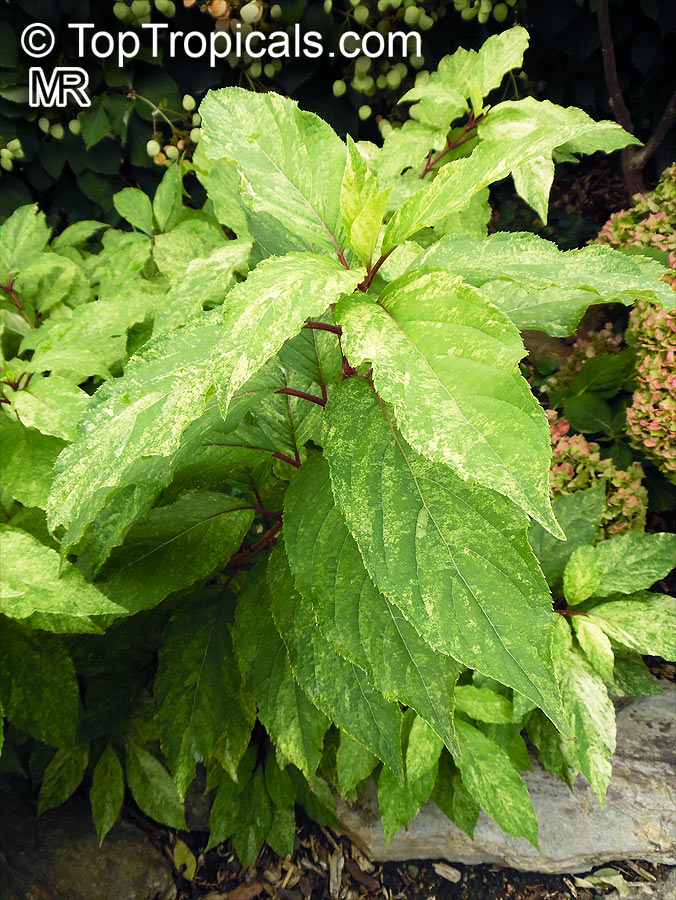
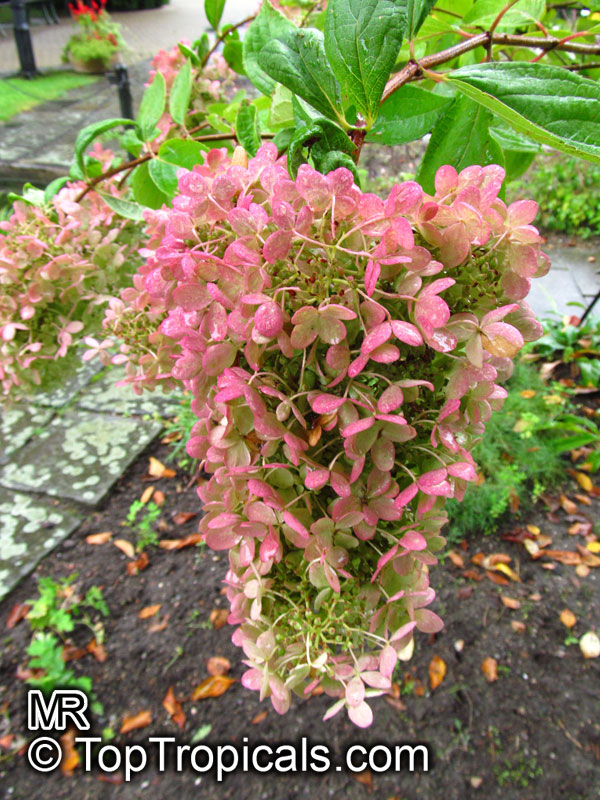
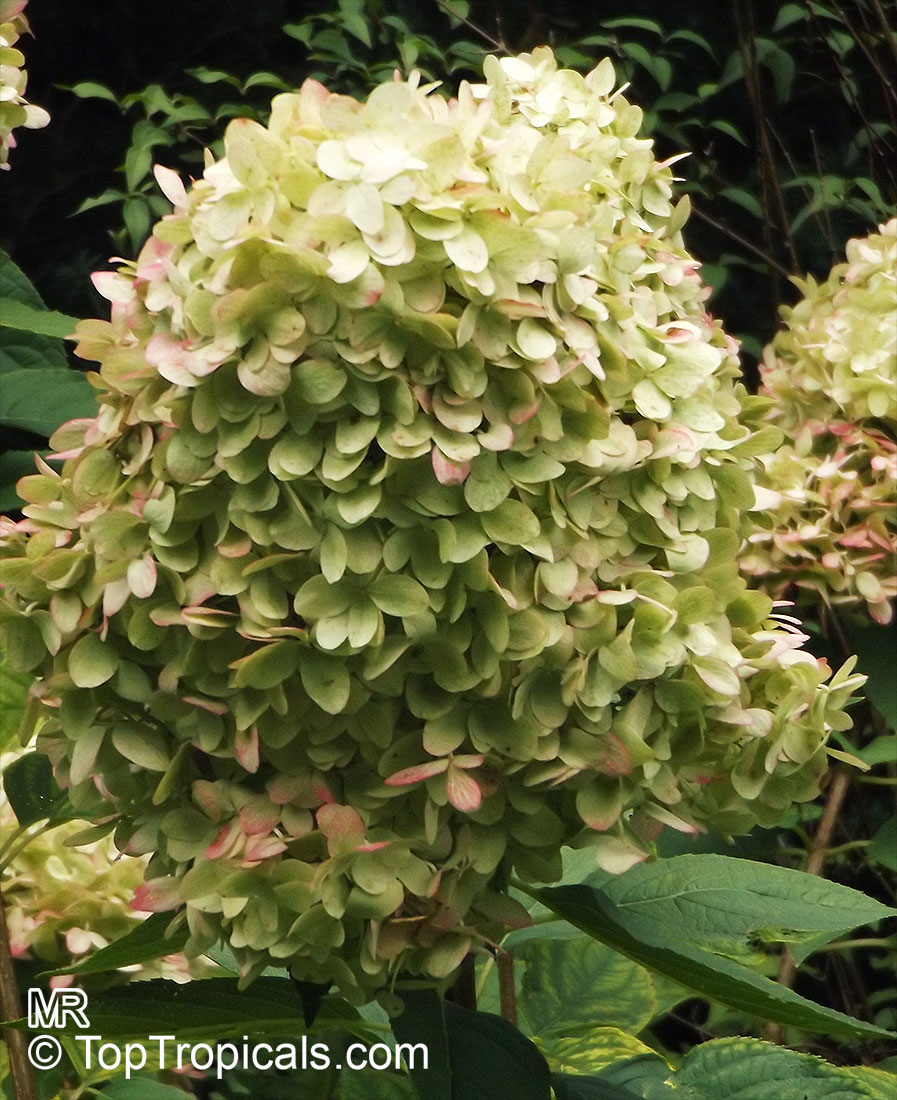
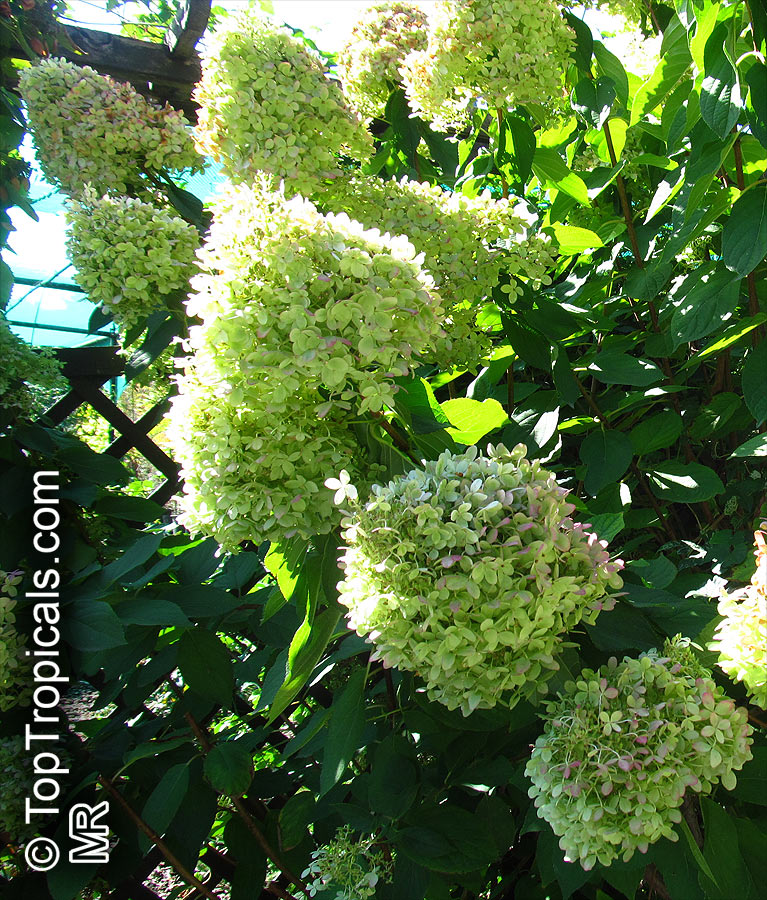
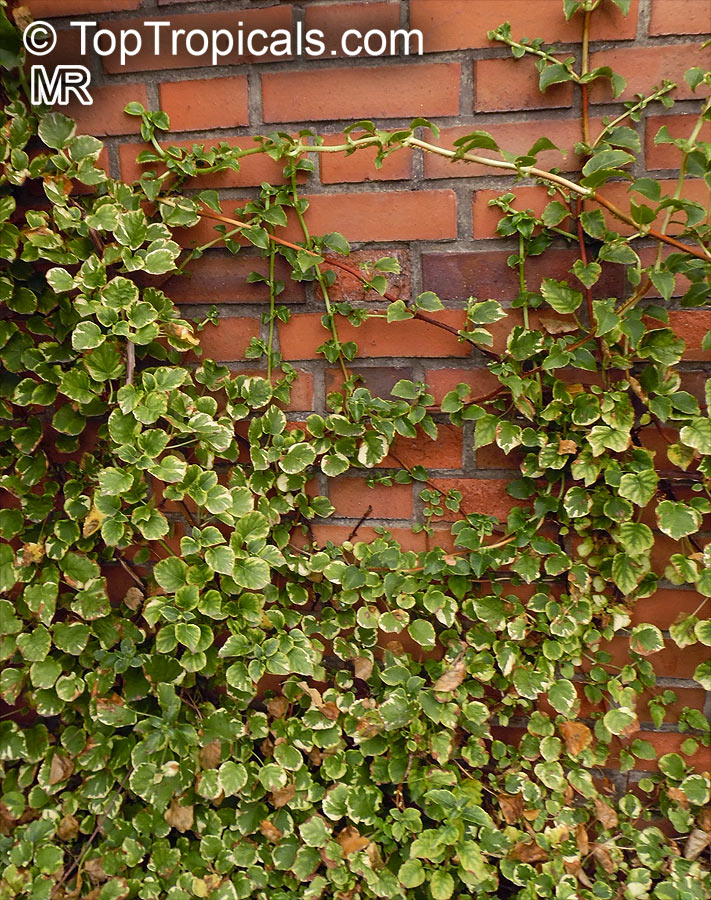
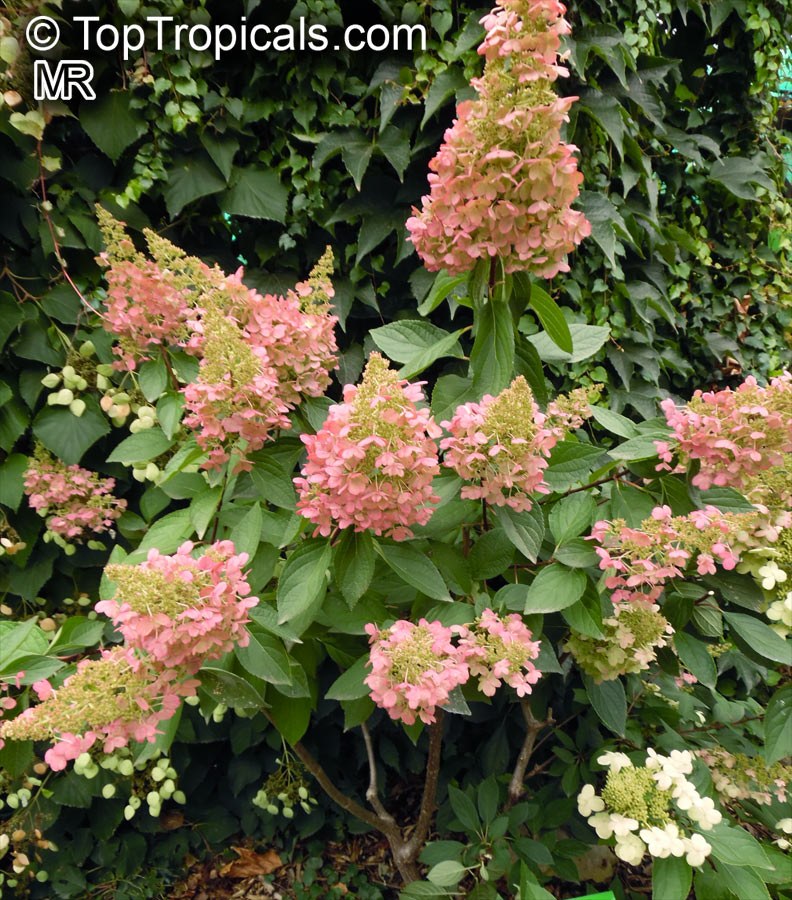
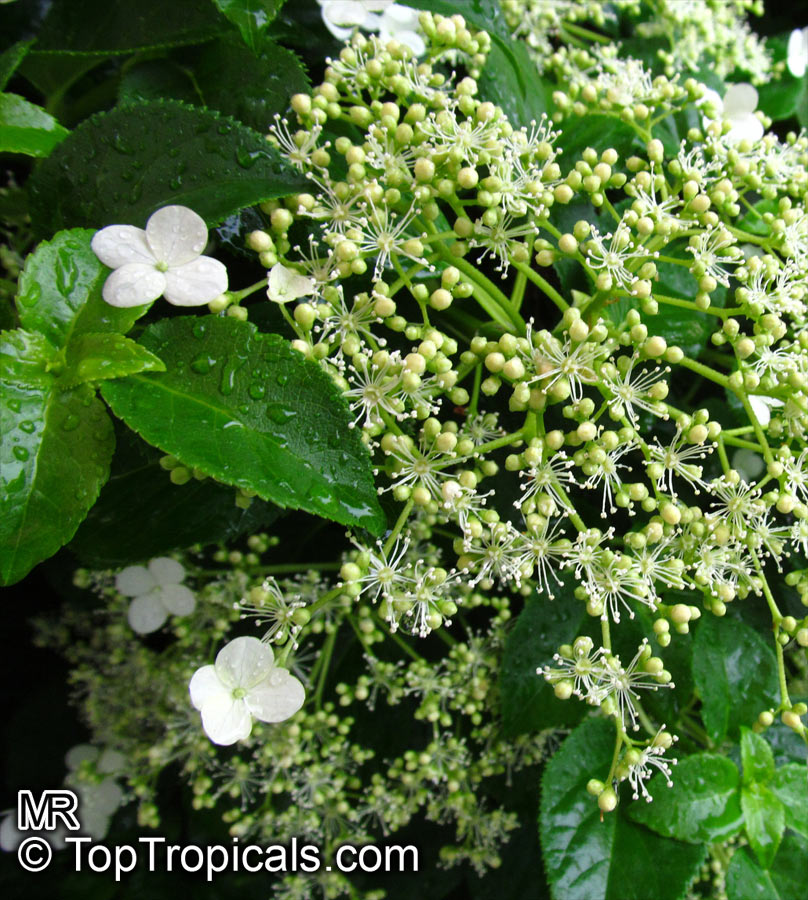
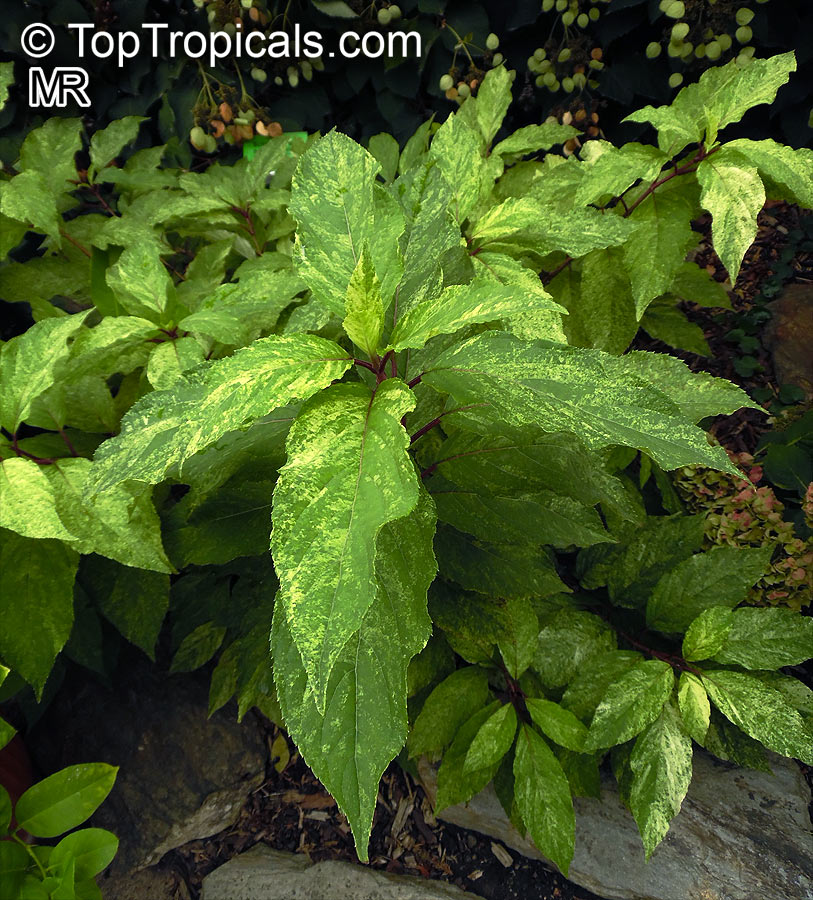
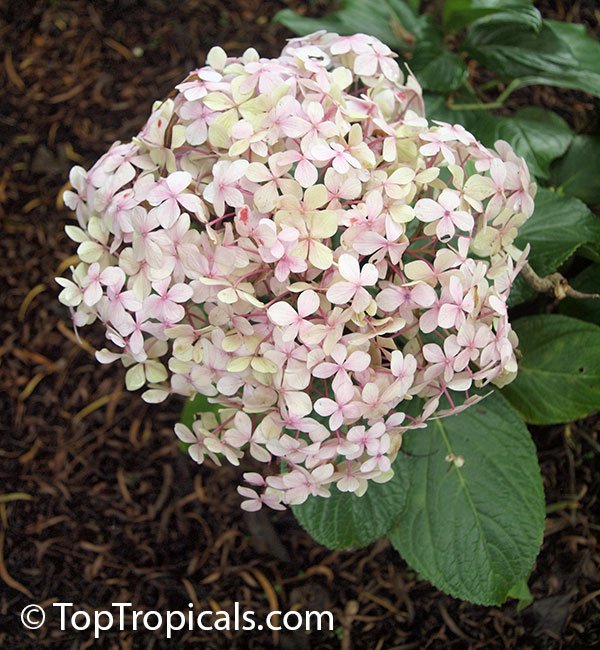
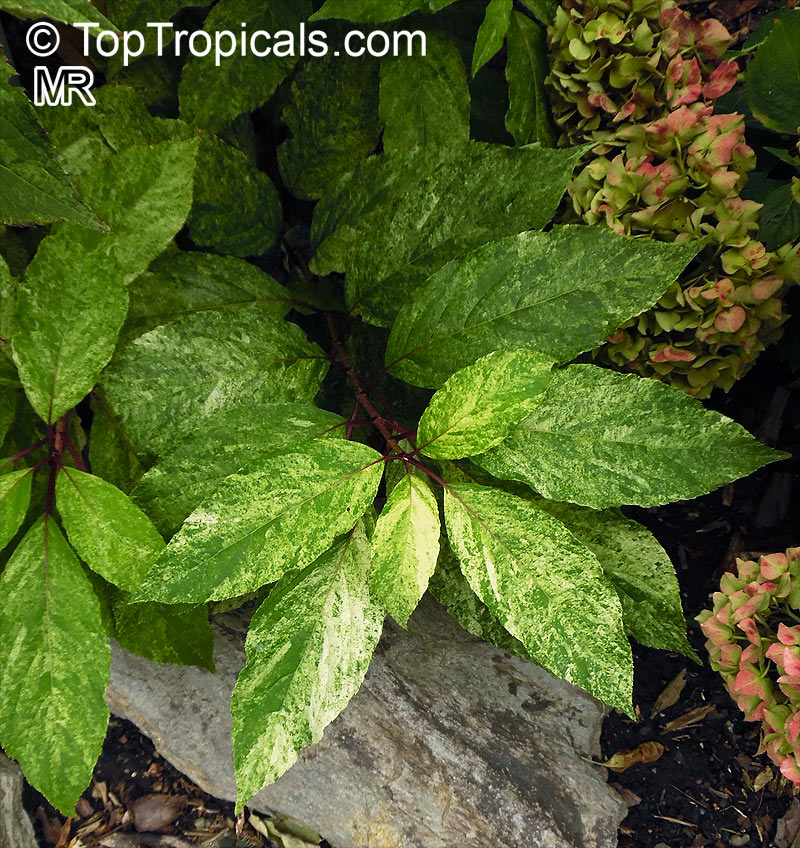
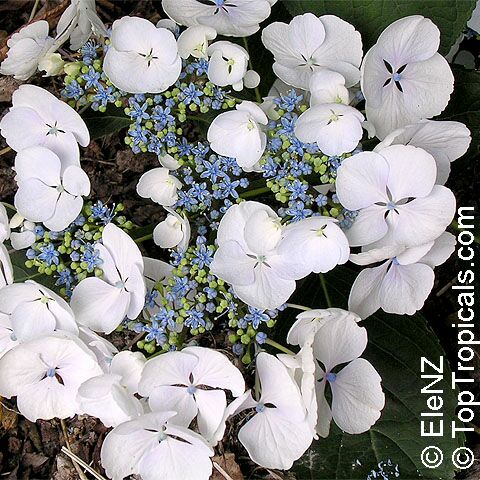
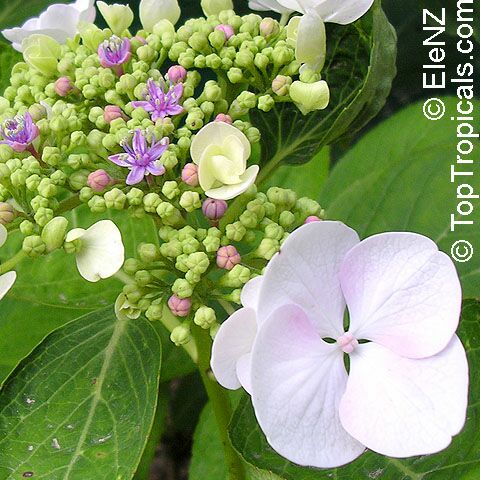
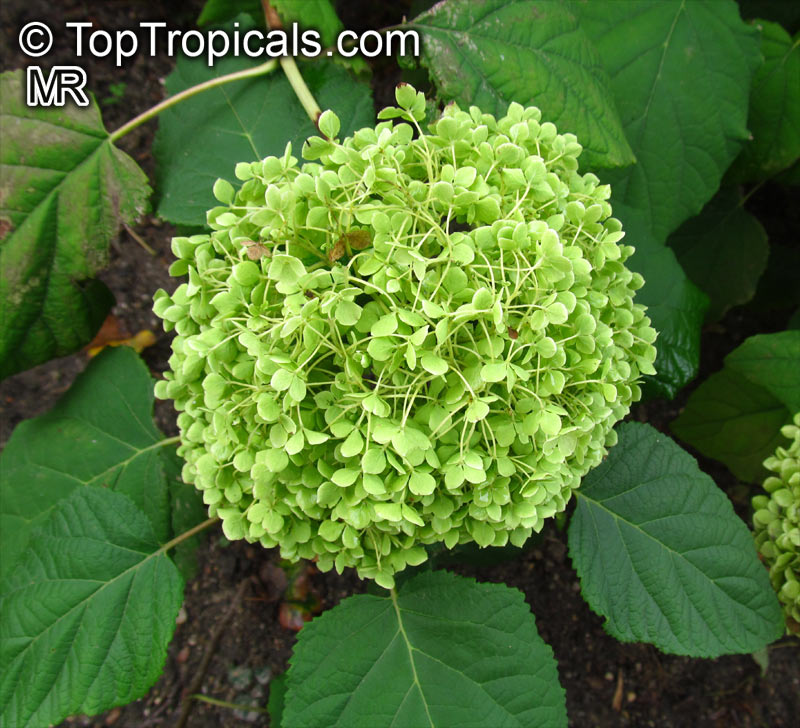
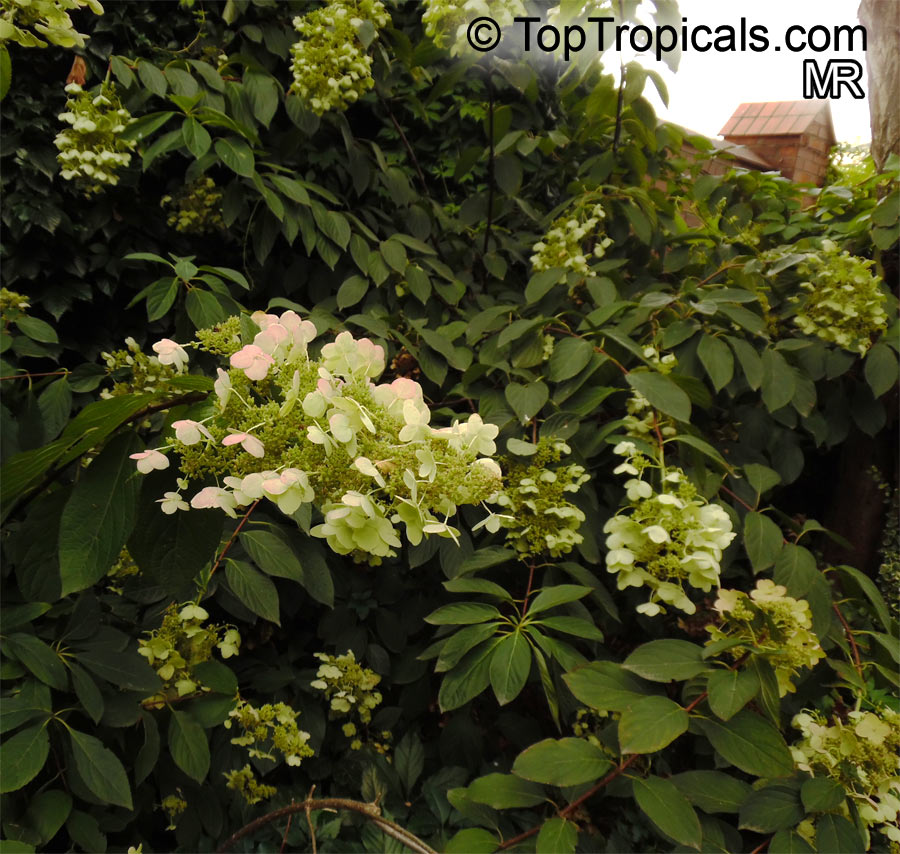
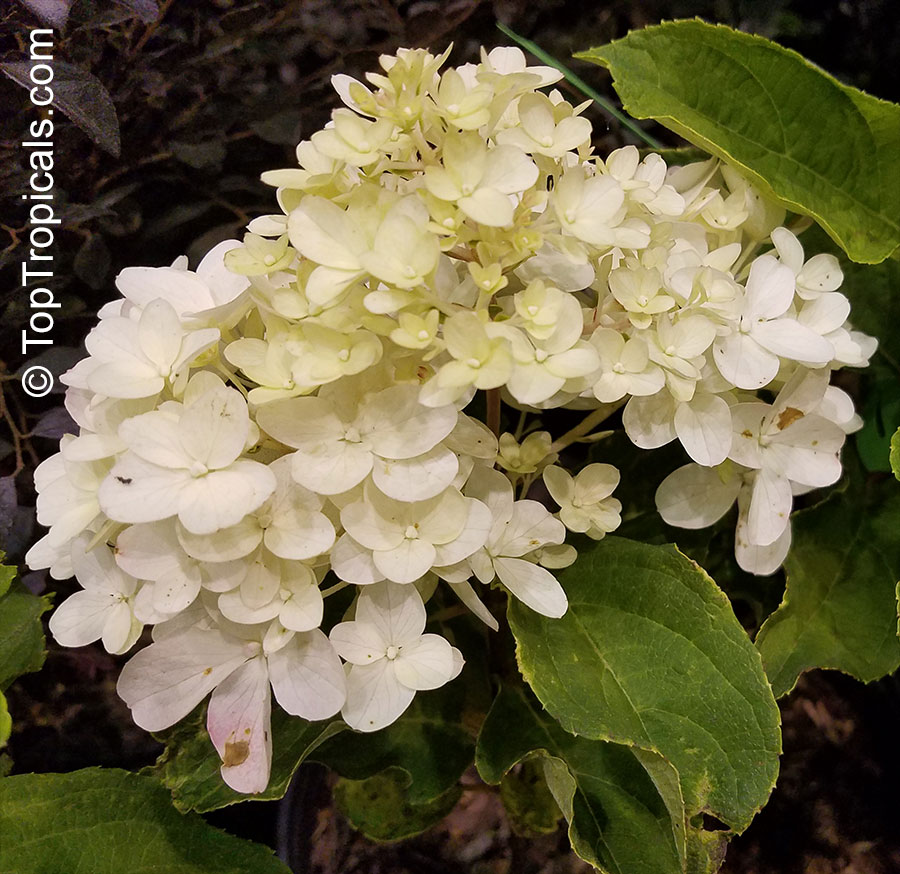
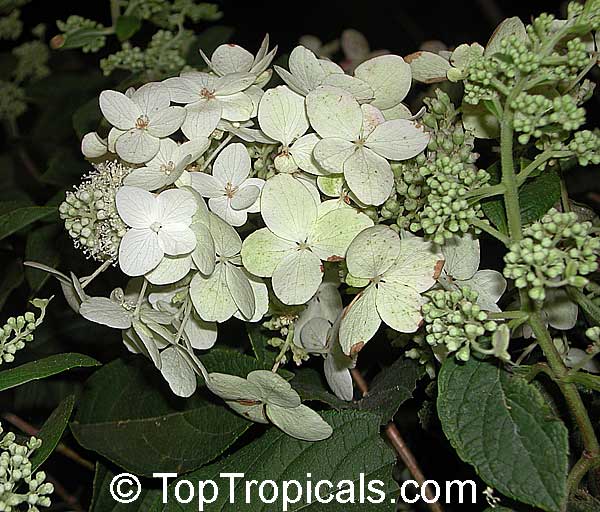
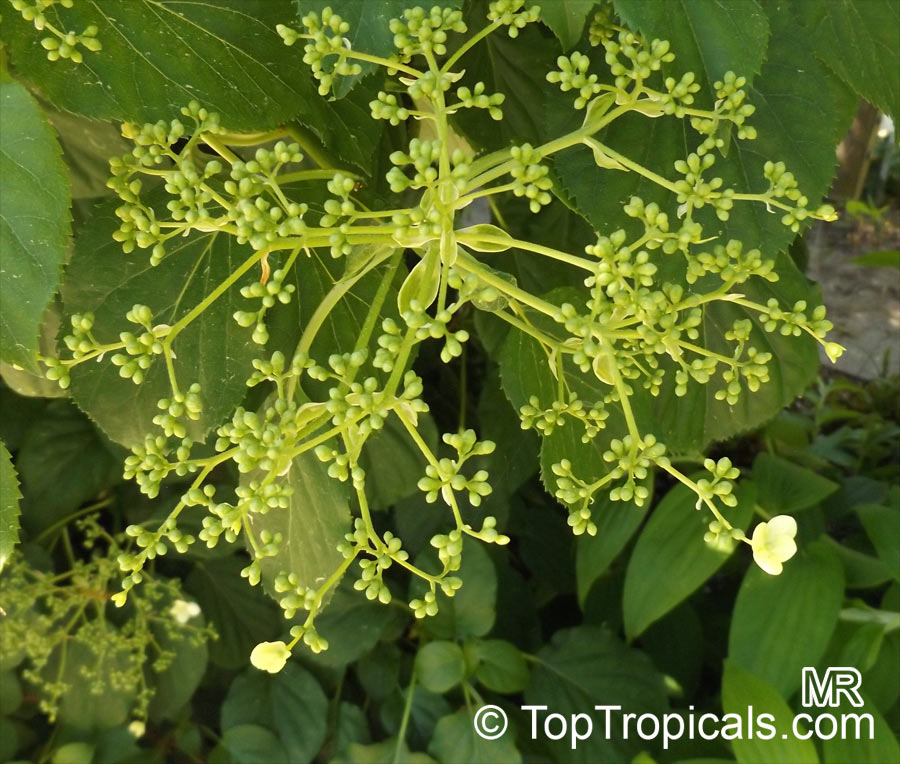
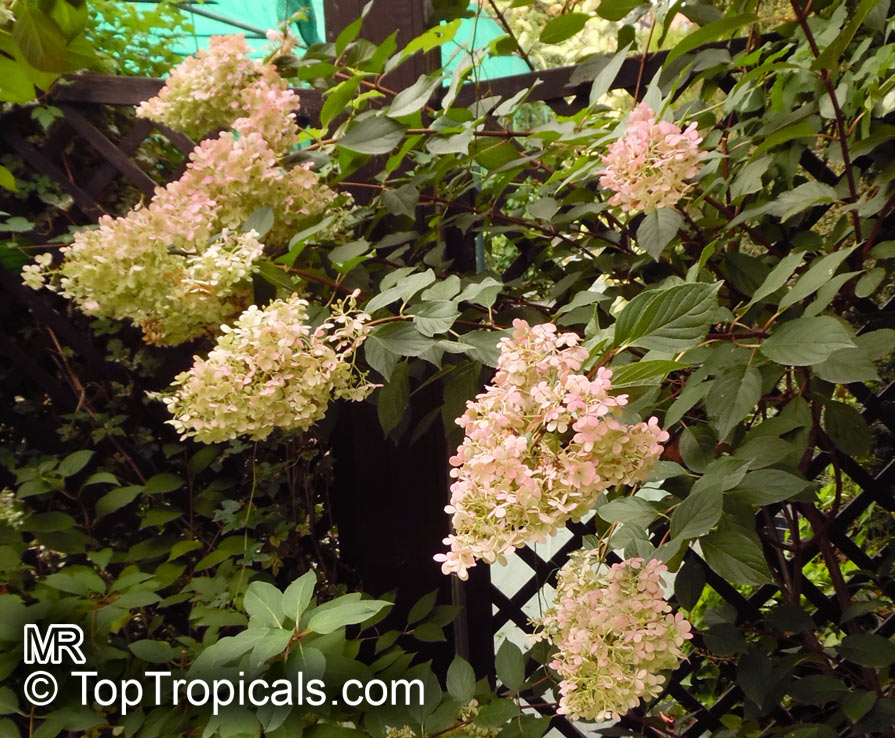
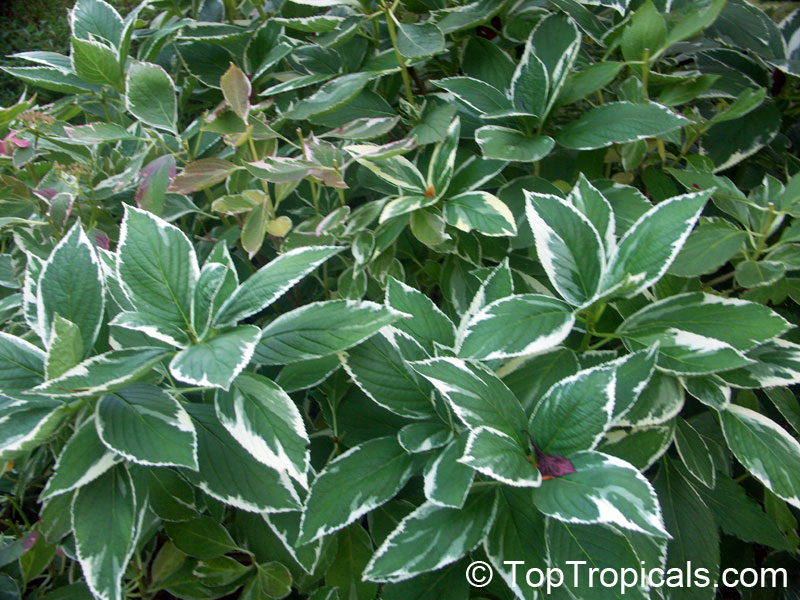
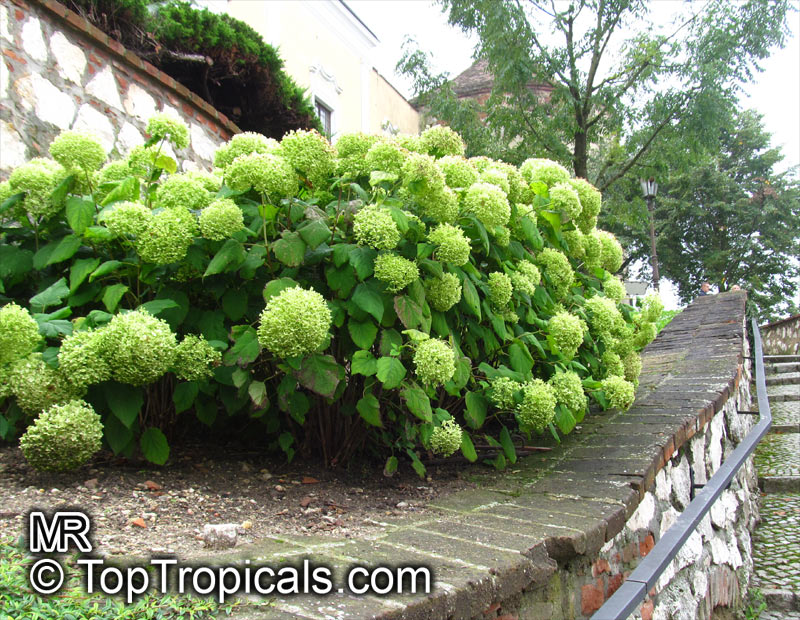
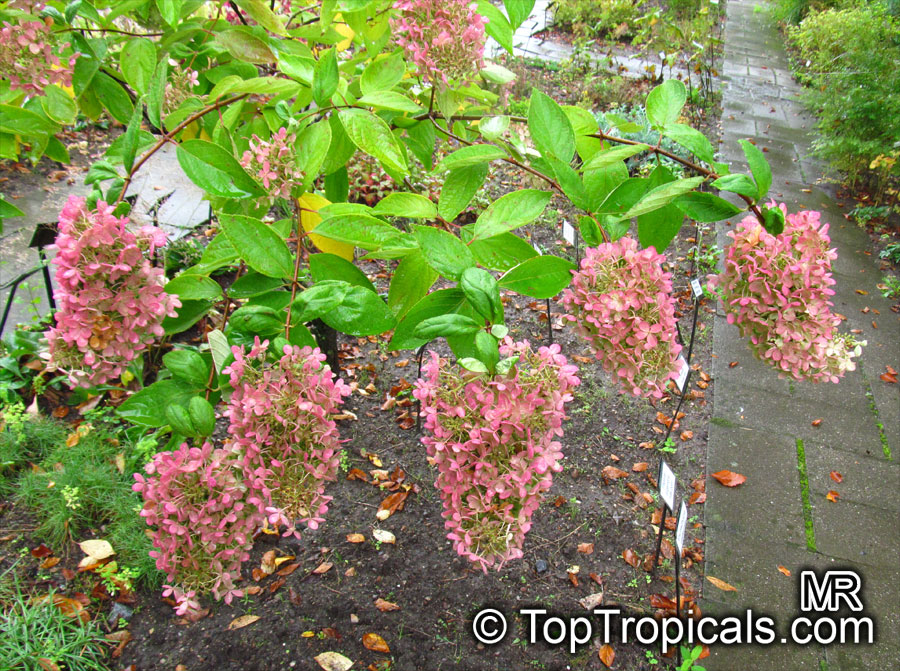
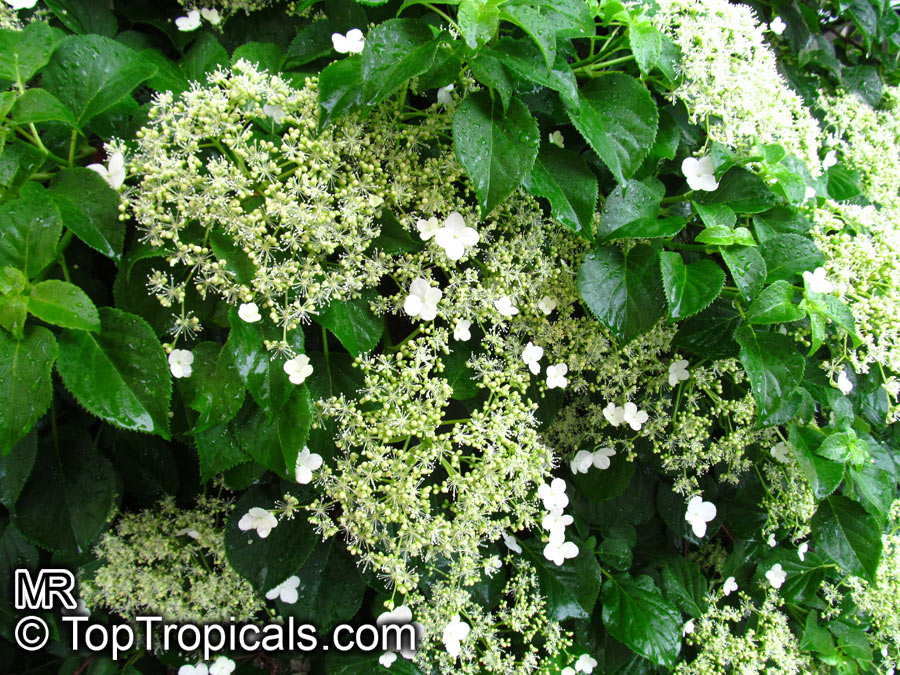
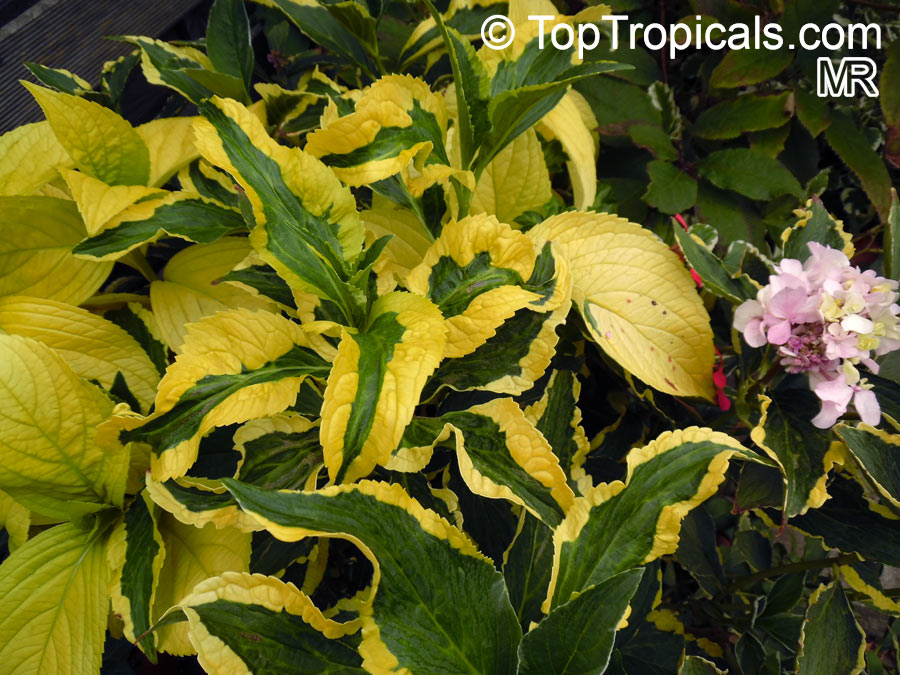
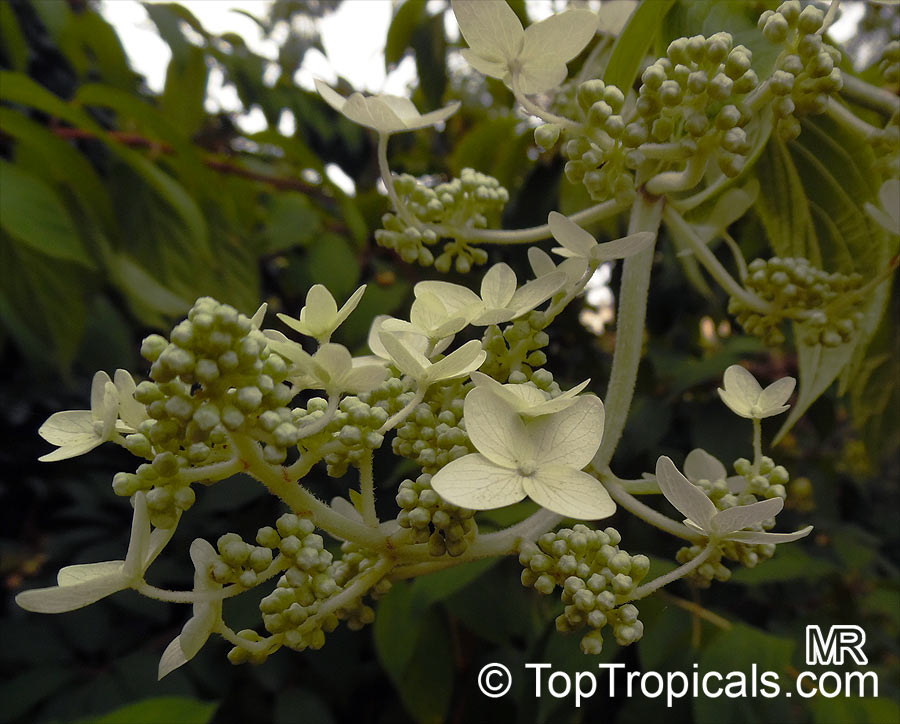
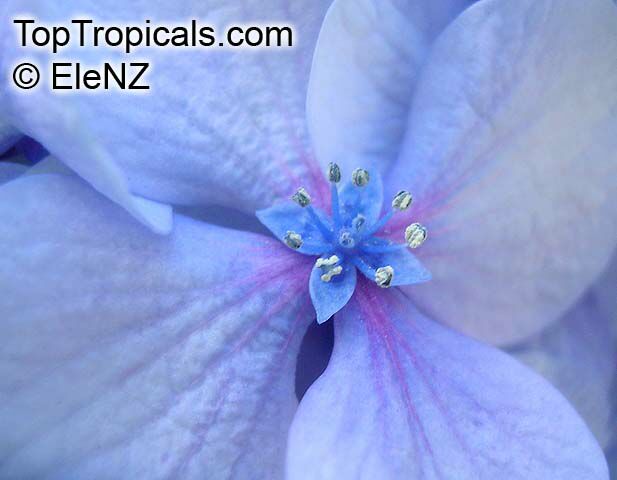
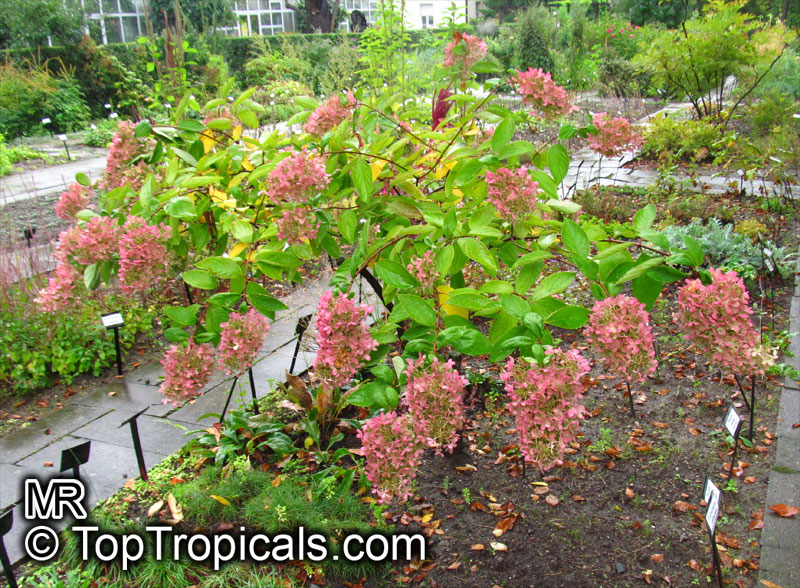
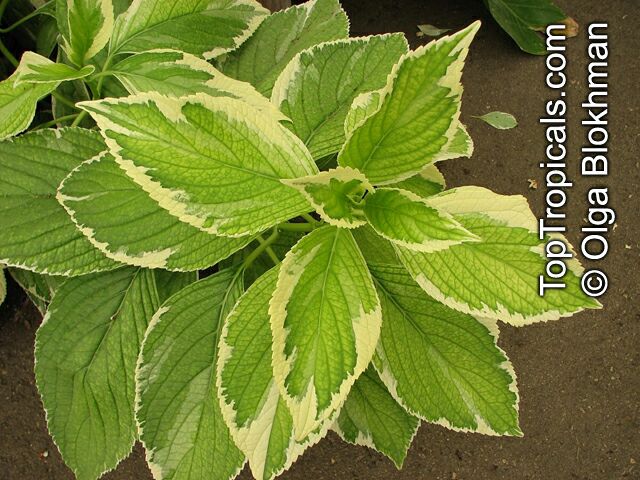
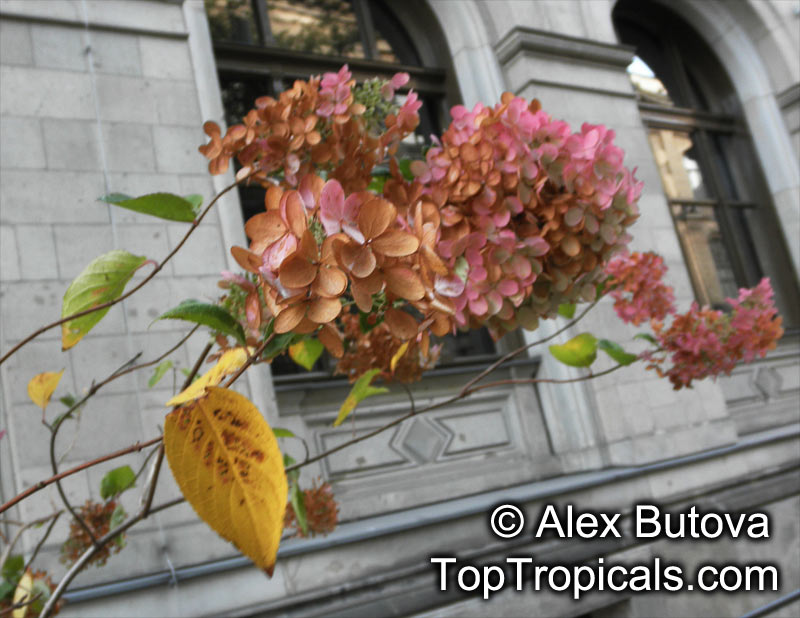
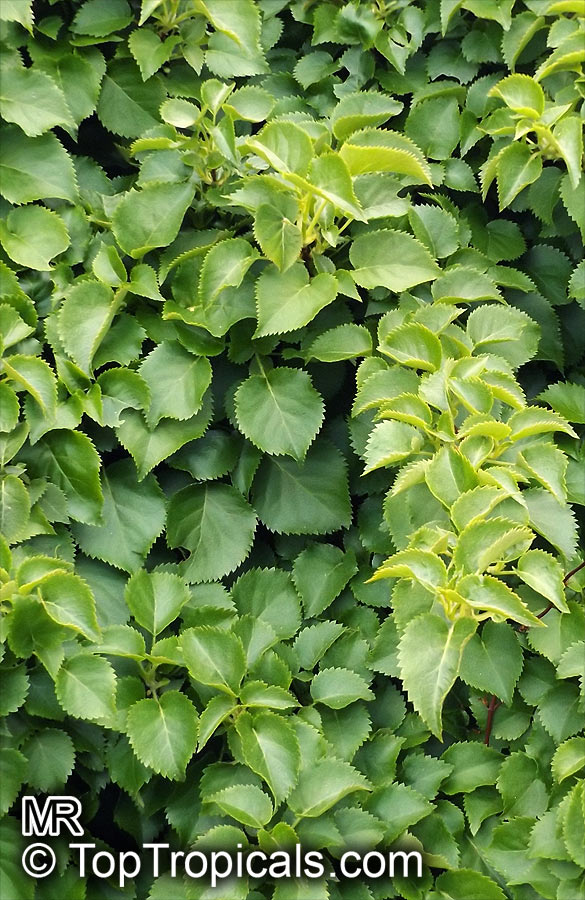
Botanical name: Schizophragma hydrangeoides
Common names: Japanese Hydrangea Vine, Japanese Climbing Hydrangea
Family: Hydrangeaceae
Origin: Korea and Japan

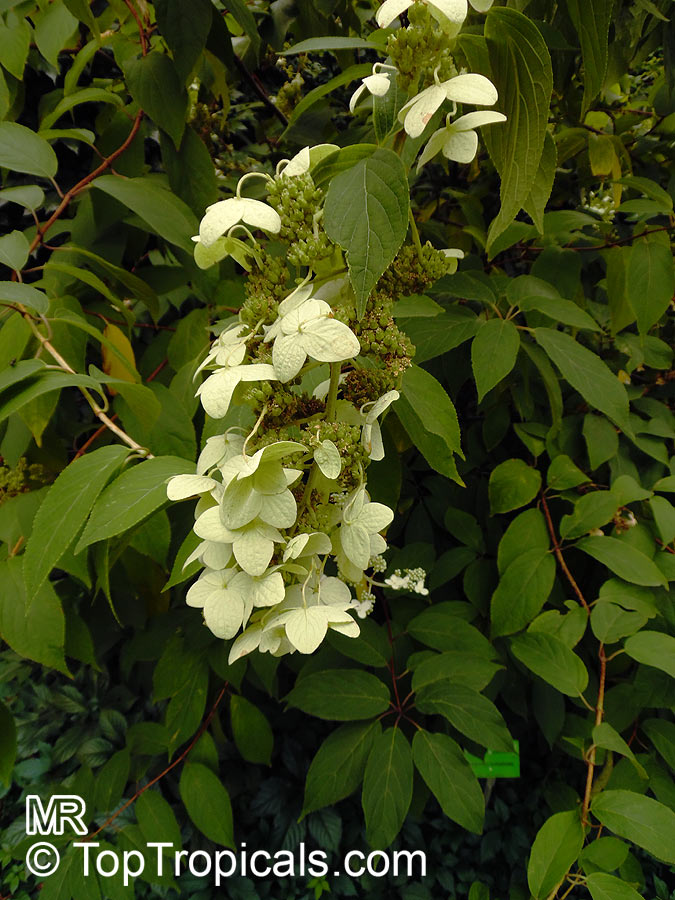
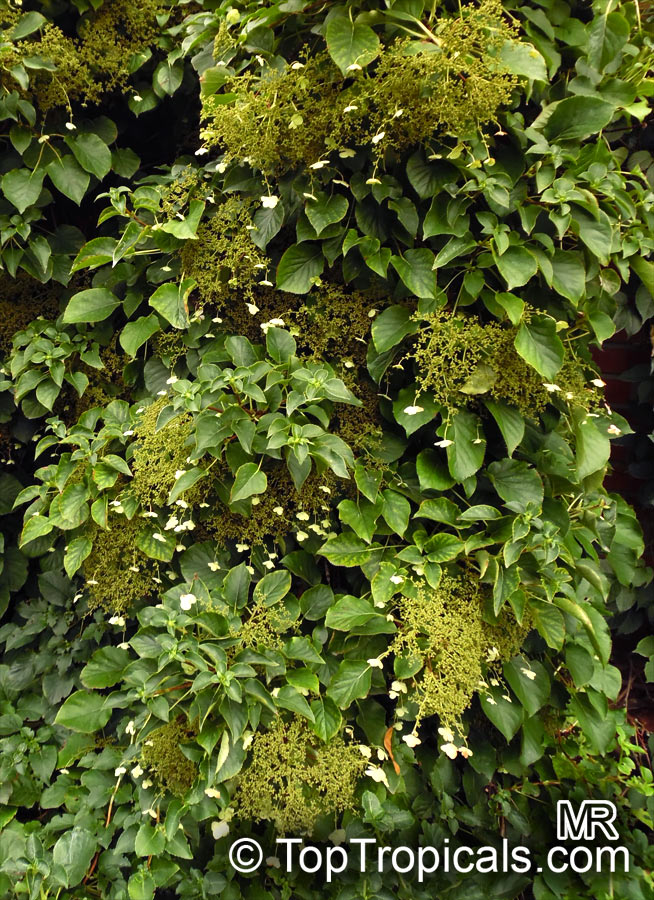
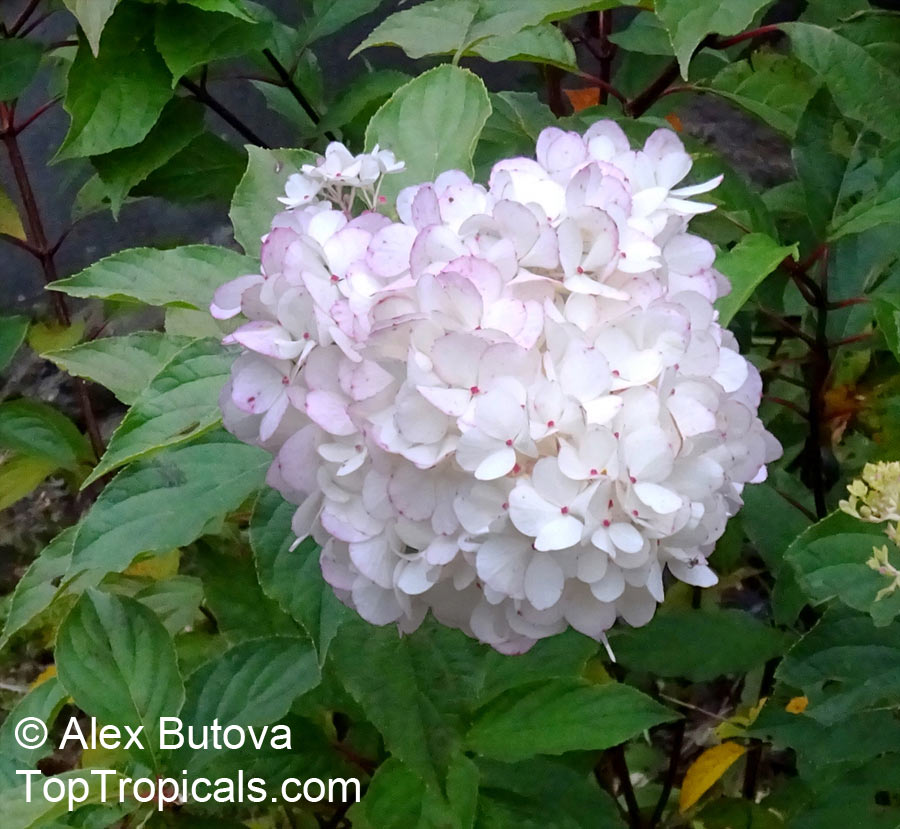
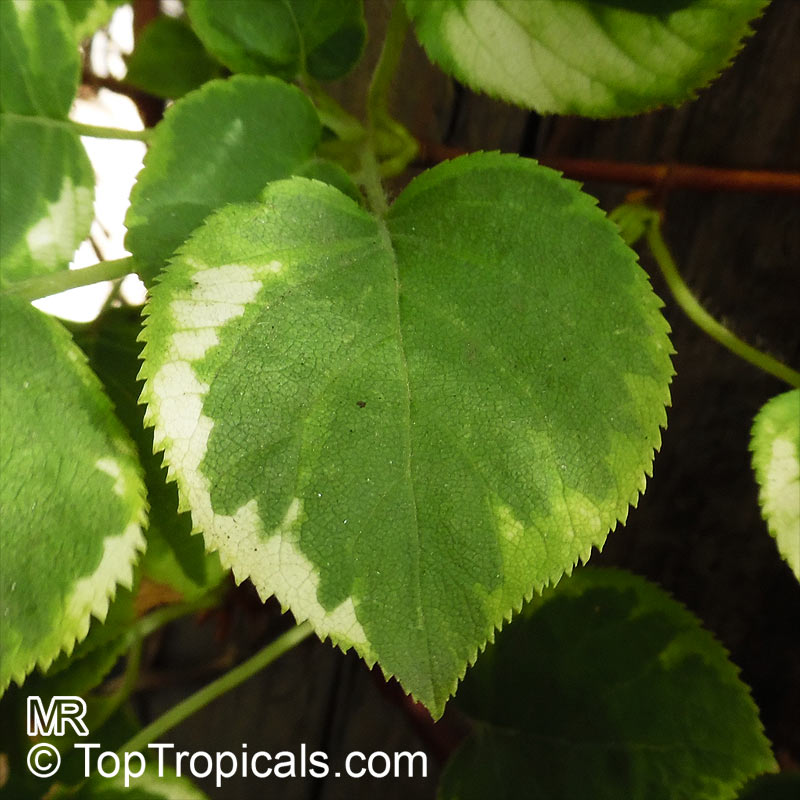
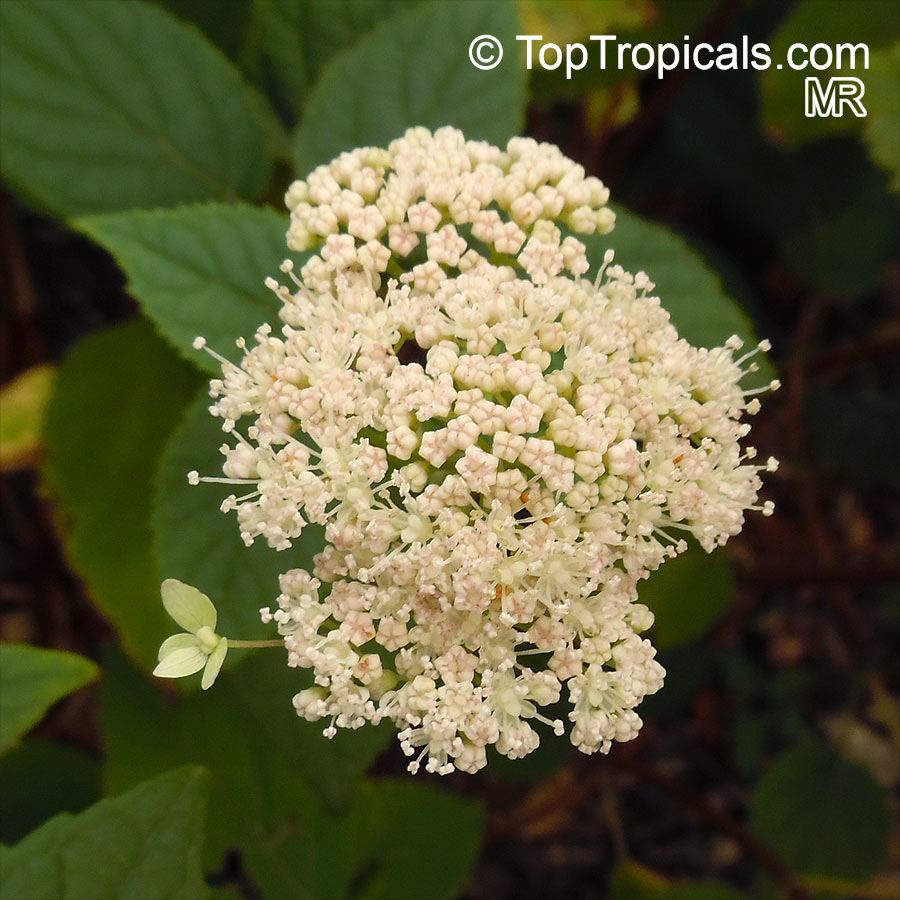
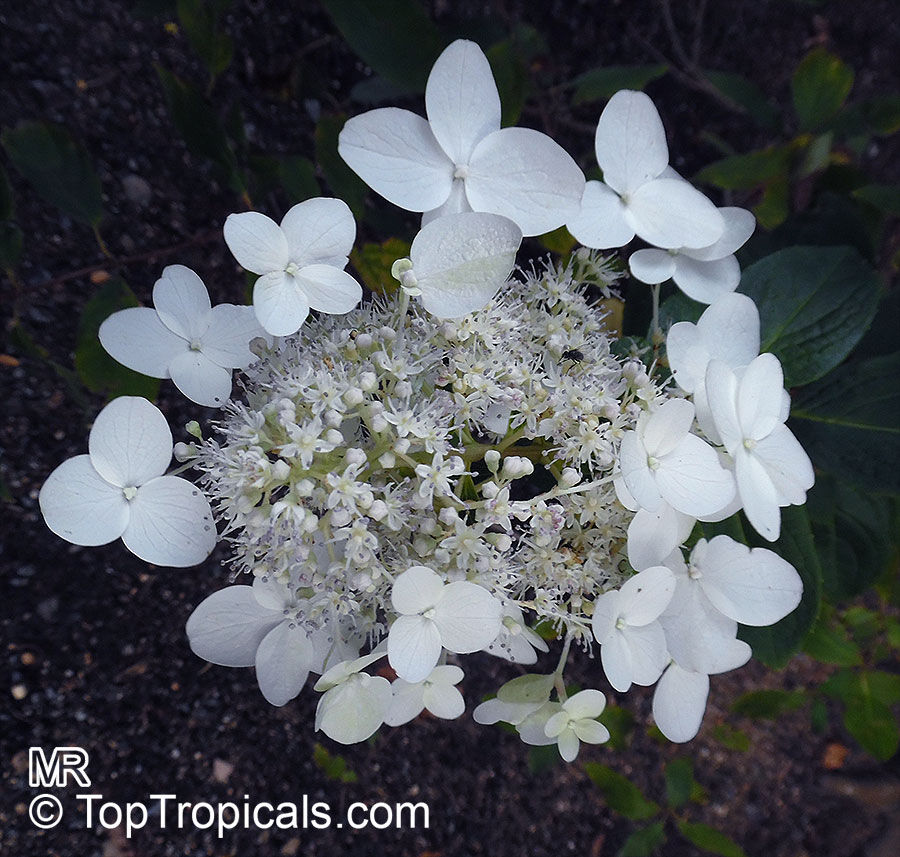
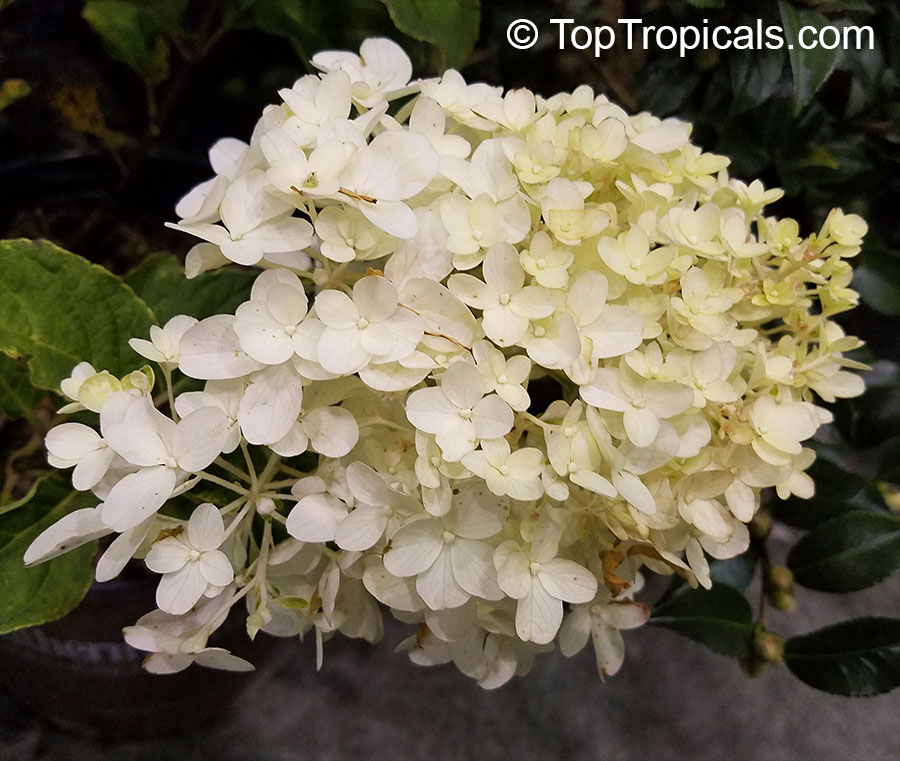
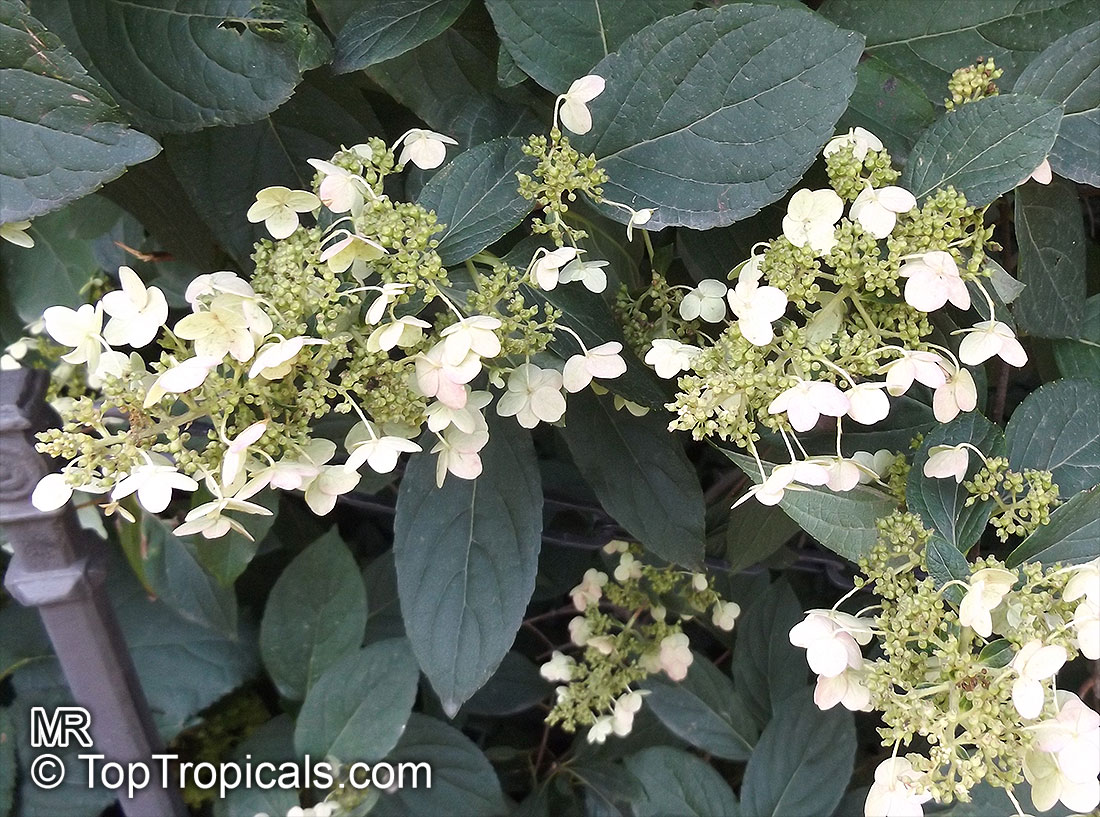
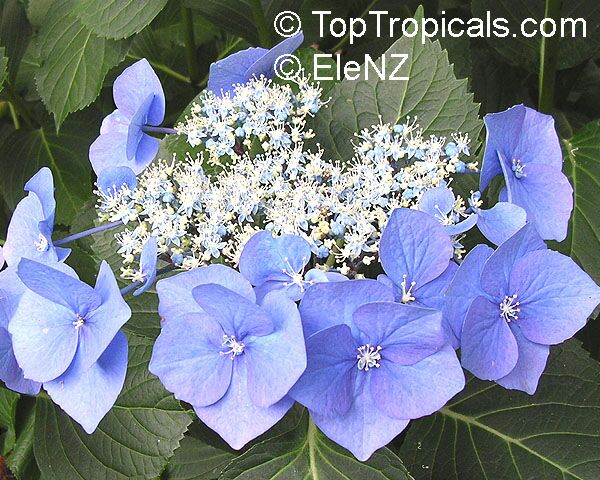
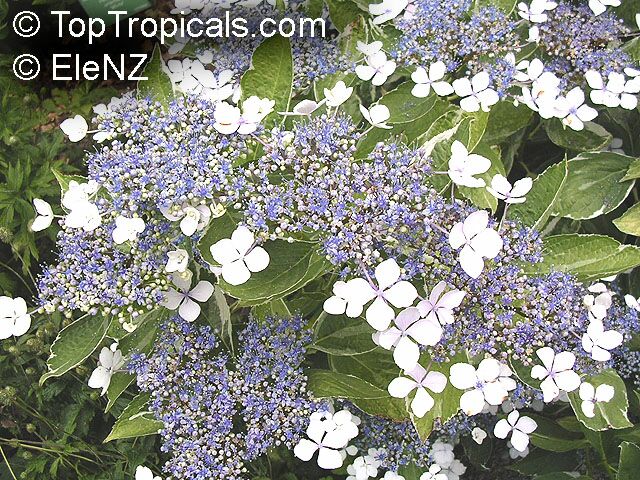
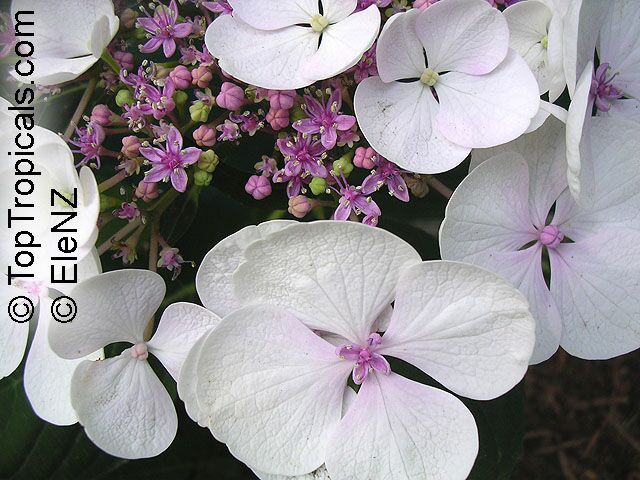
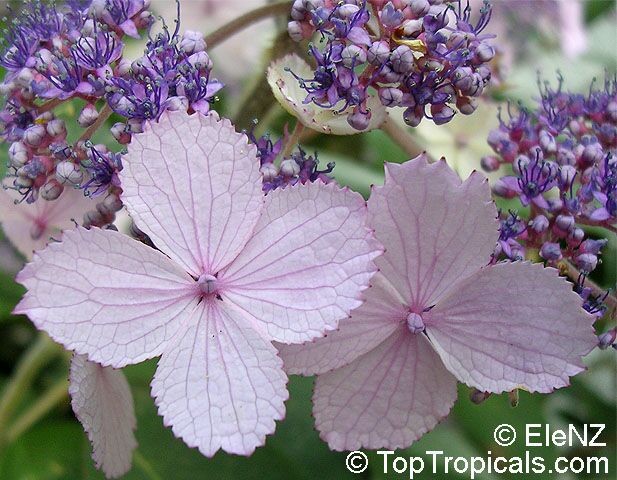
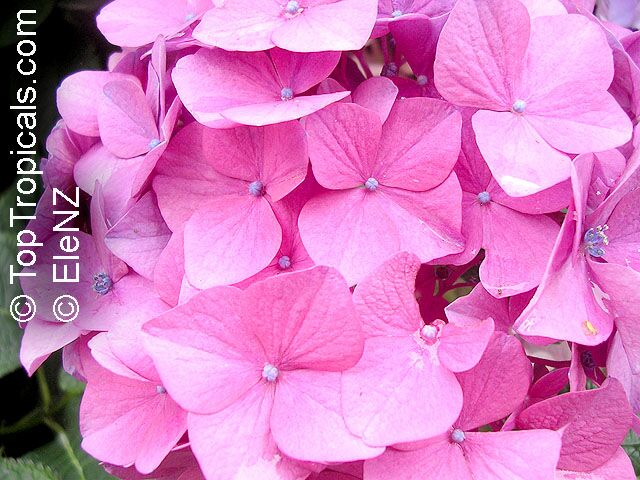
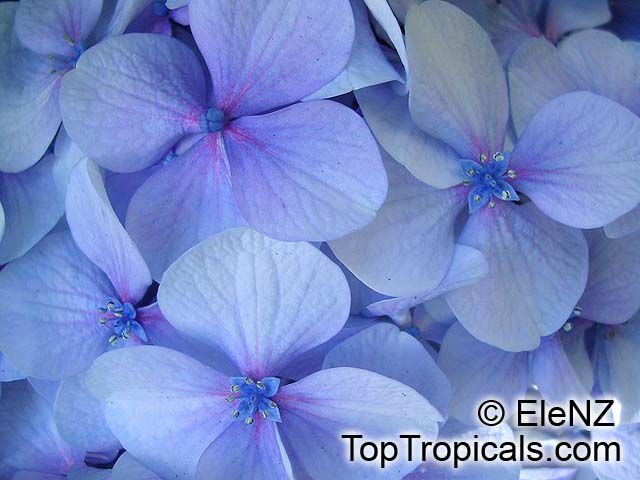
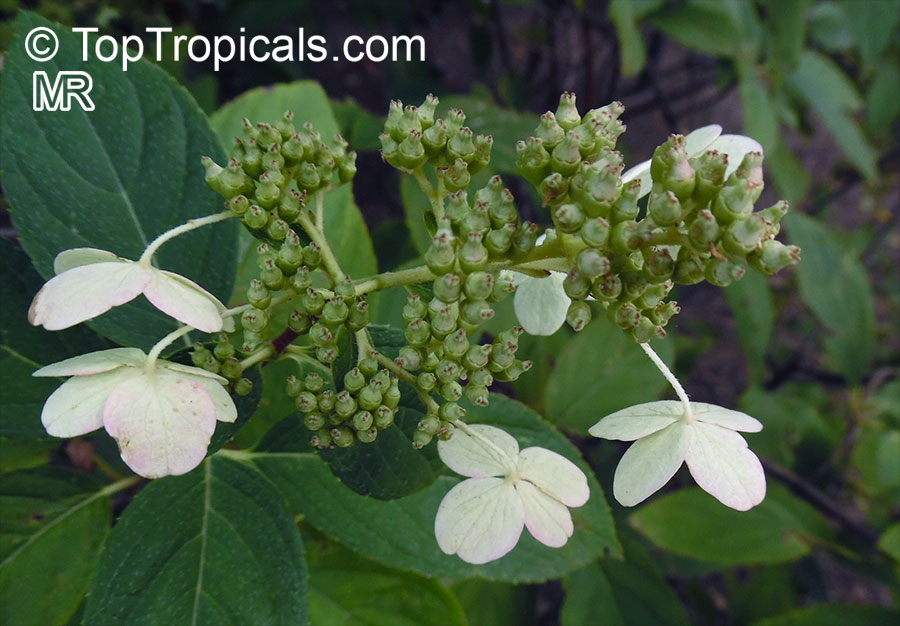
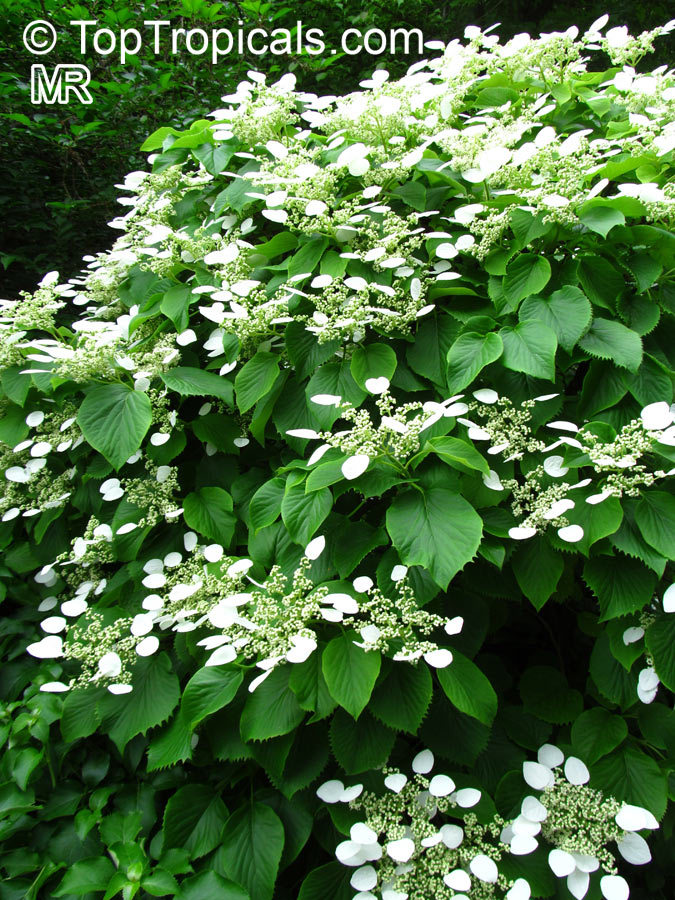
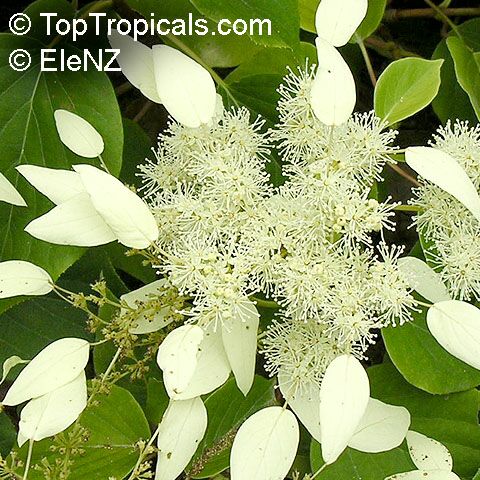
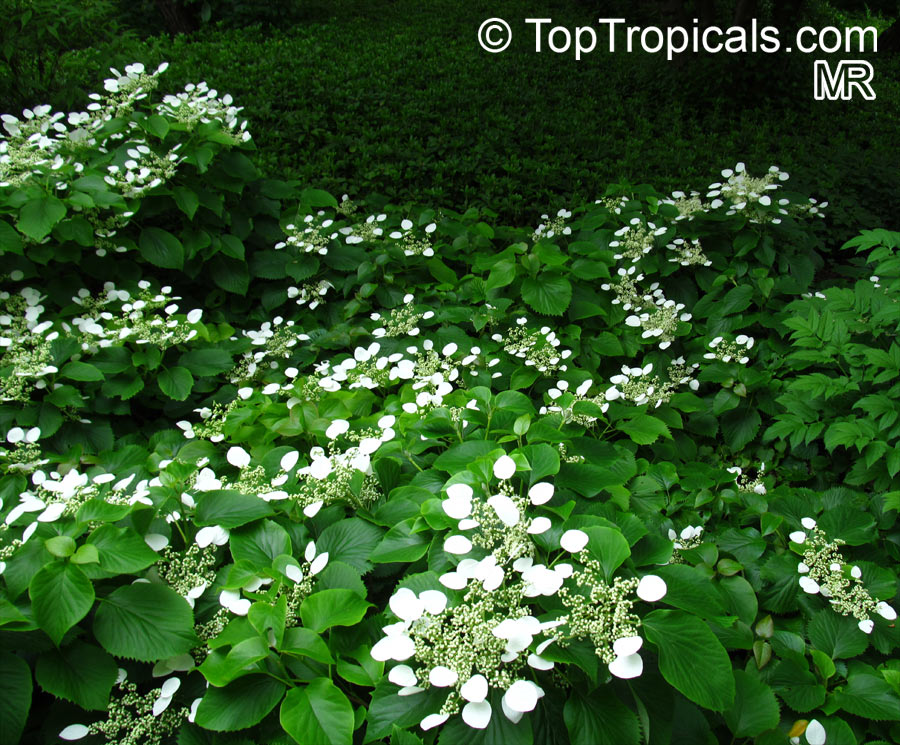
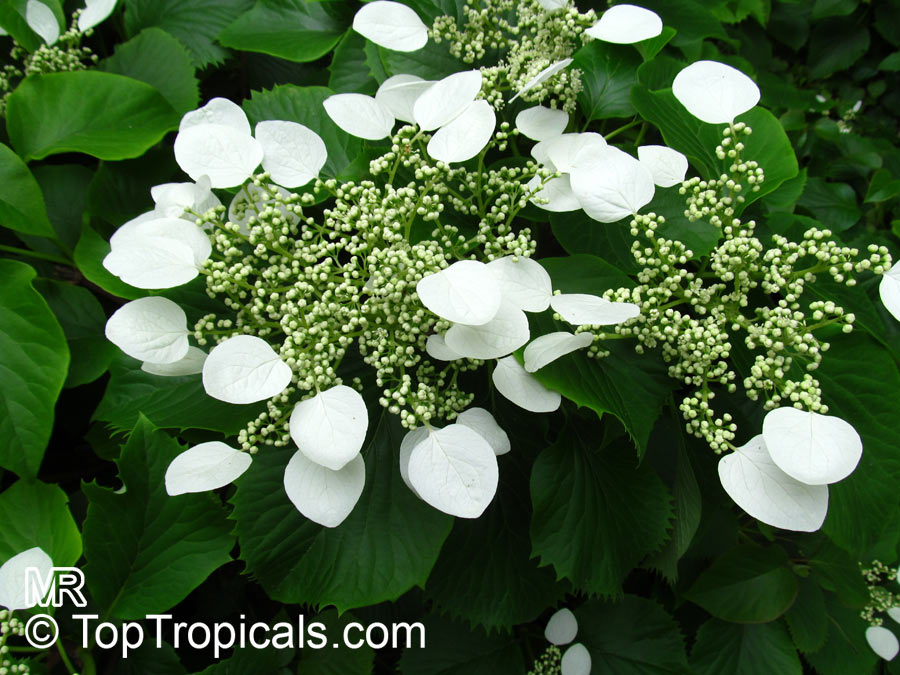
Japanese hydrangea vine is a deciduous, woody-stemmed, climbing vine which is valued for its toothed, heart-shaped, deep green leaves and large, flat-topped, lace cap hydrangea-like clusters of white flowers which bloom in early summer. Foliage turns yellow in fall. Attaches to and grows up flat vertical surfaces such as masonry walls by stem-borne adhesive rootlets. Reddish-brown stems provide some interest in winter. Best grown in rich, medium wet, well-drained soil in part shade to full shade. Prune in late winter to early spring.
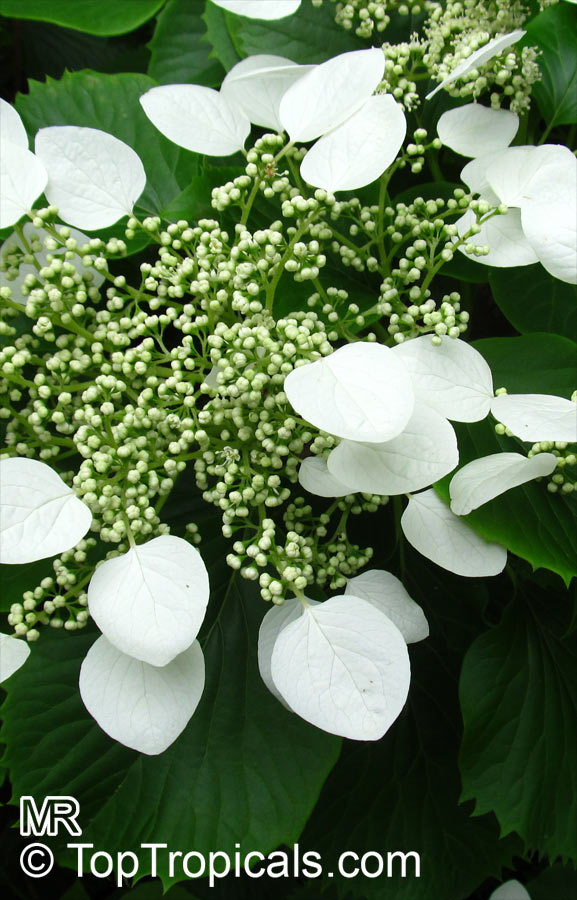
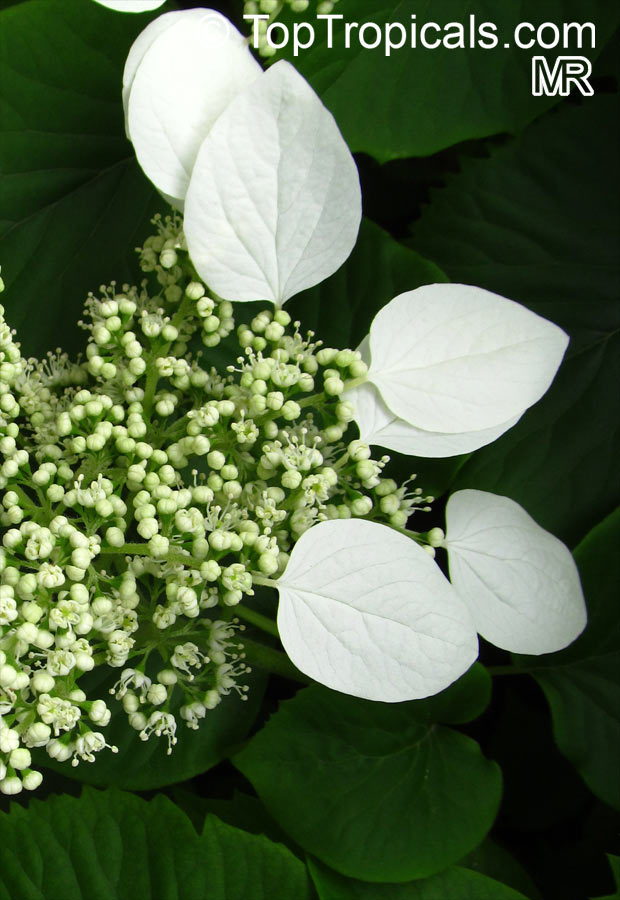
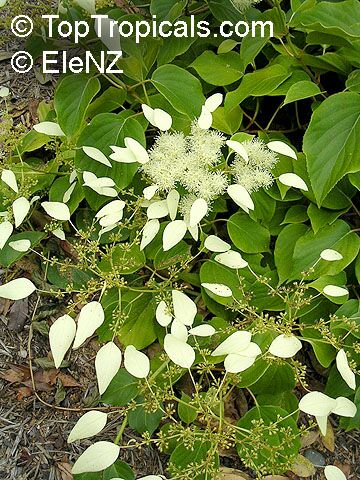

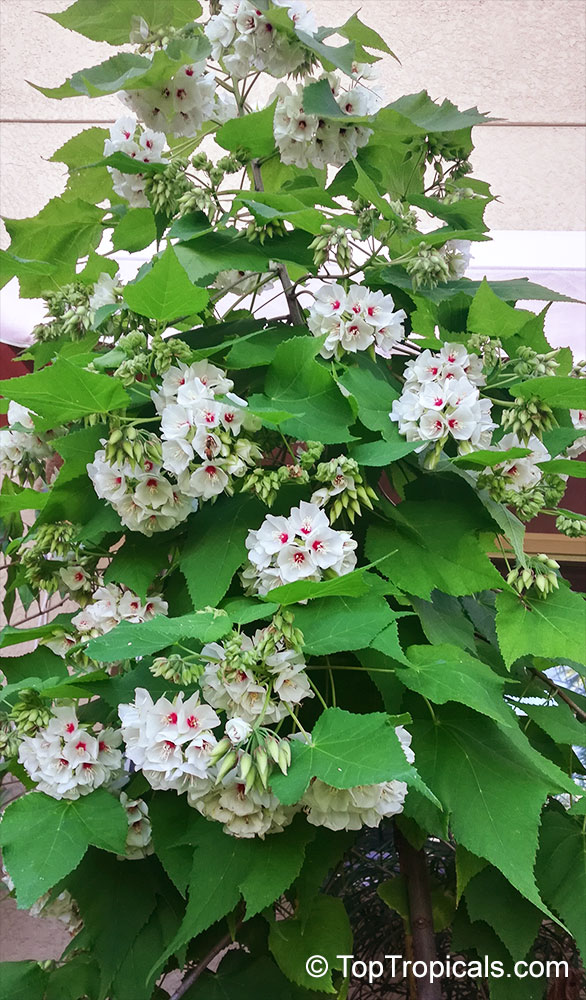
Botanical name: Dombeya burgessiae
Common names: Pink Wild Pear, Pink Dombeya, Tropical Hydrangea
Family: Malvaceae
Subfamily: Dombeyoideae
Origin: South Africa, Zimbabwe


Tropical Hydrangea. Off-white to pinkish showy flowers in bunches during winter and spring. The large leaves are hairy, with shallow, maple-like lobes. Tolerant to both light frost and periods of drought.
Can be propagated with ease by simply collecting the dried flower heads, which contain the seed.
The new variety "Fragrant White" has flowers with fresh pleasant fragrance.
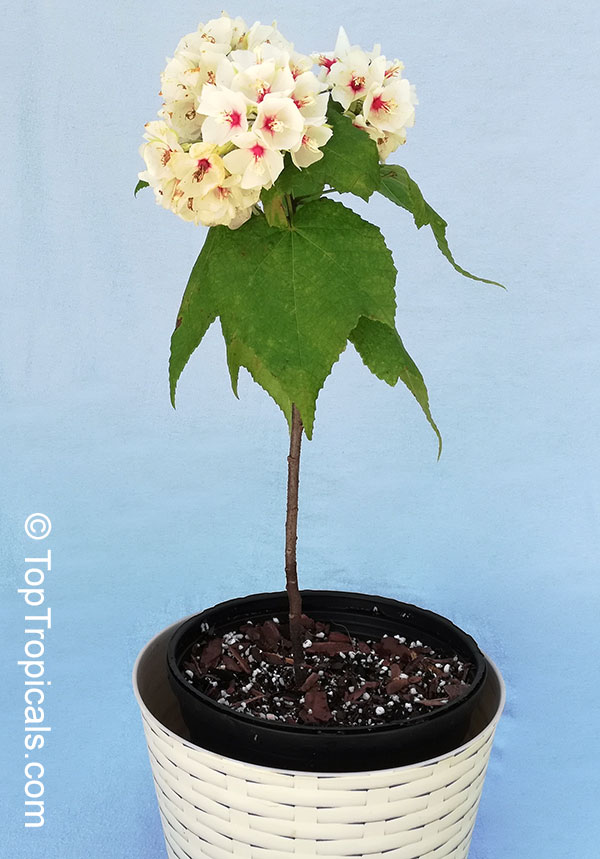
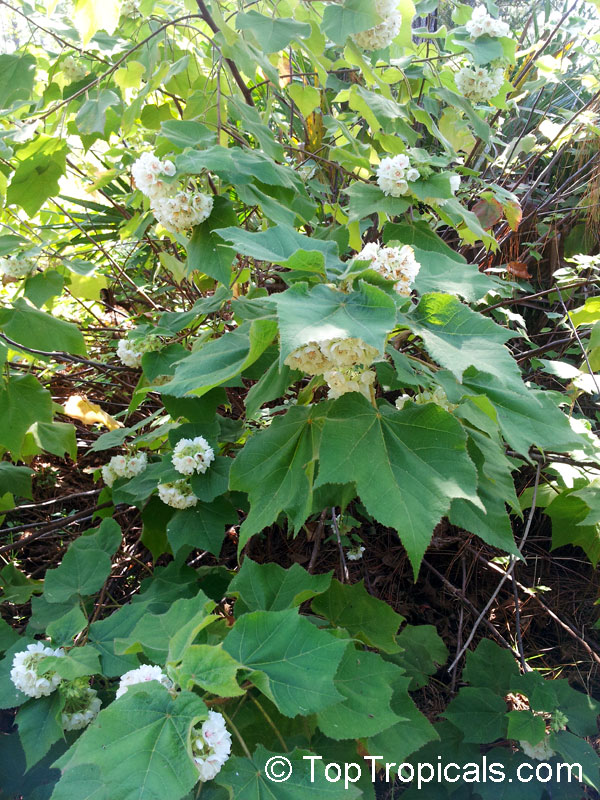
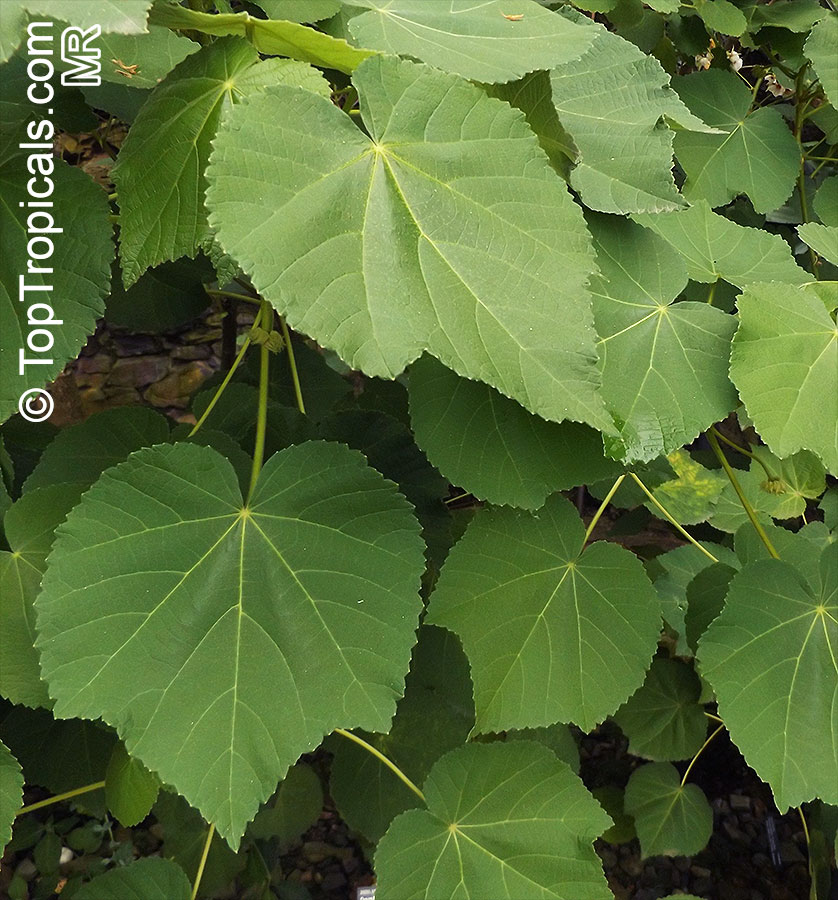
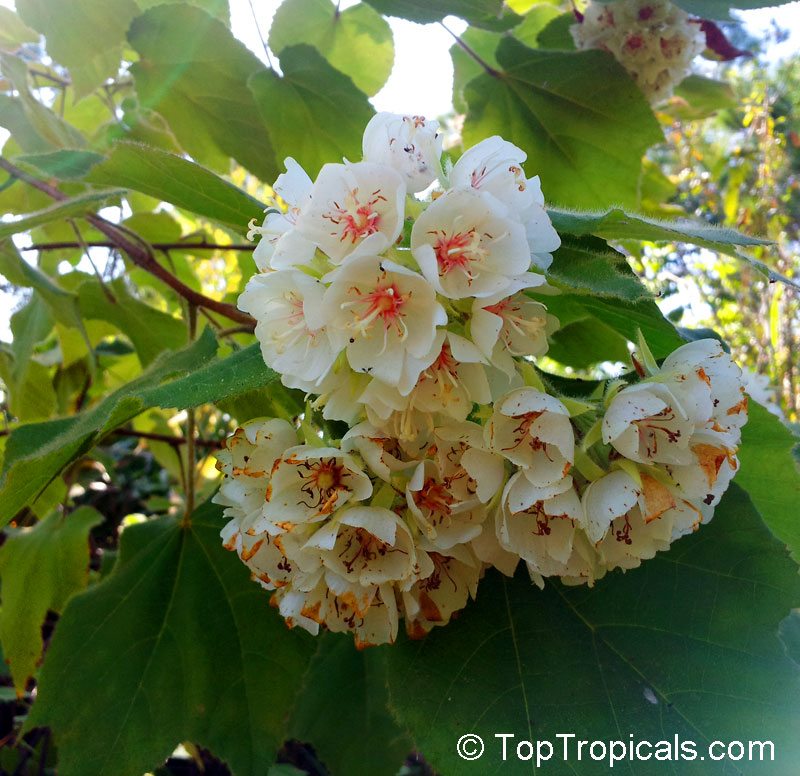
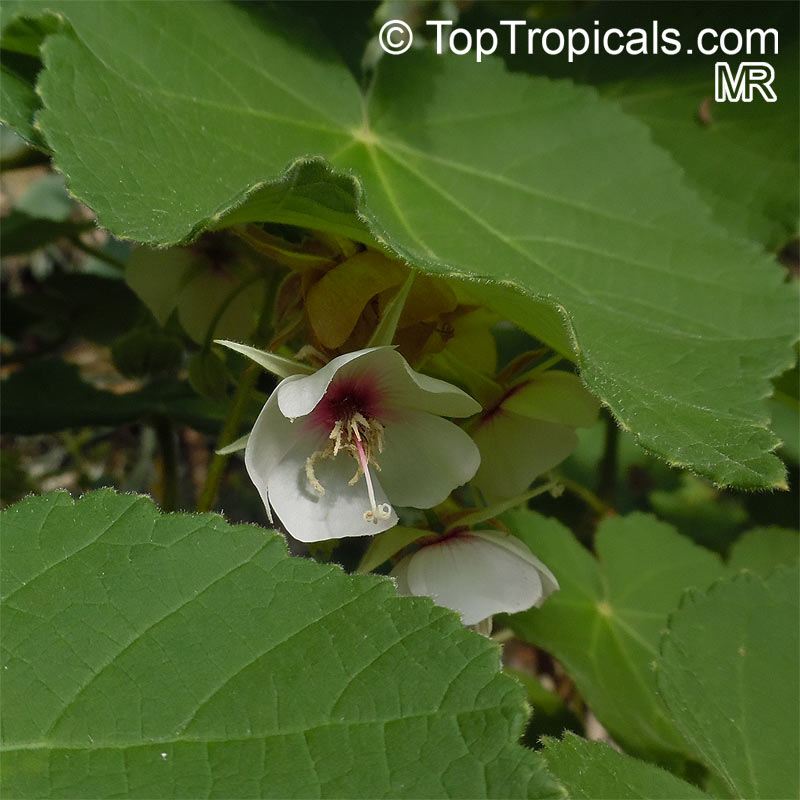
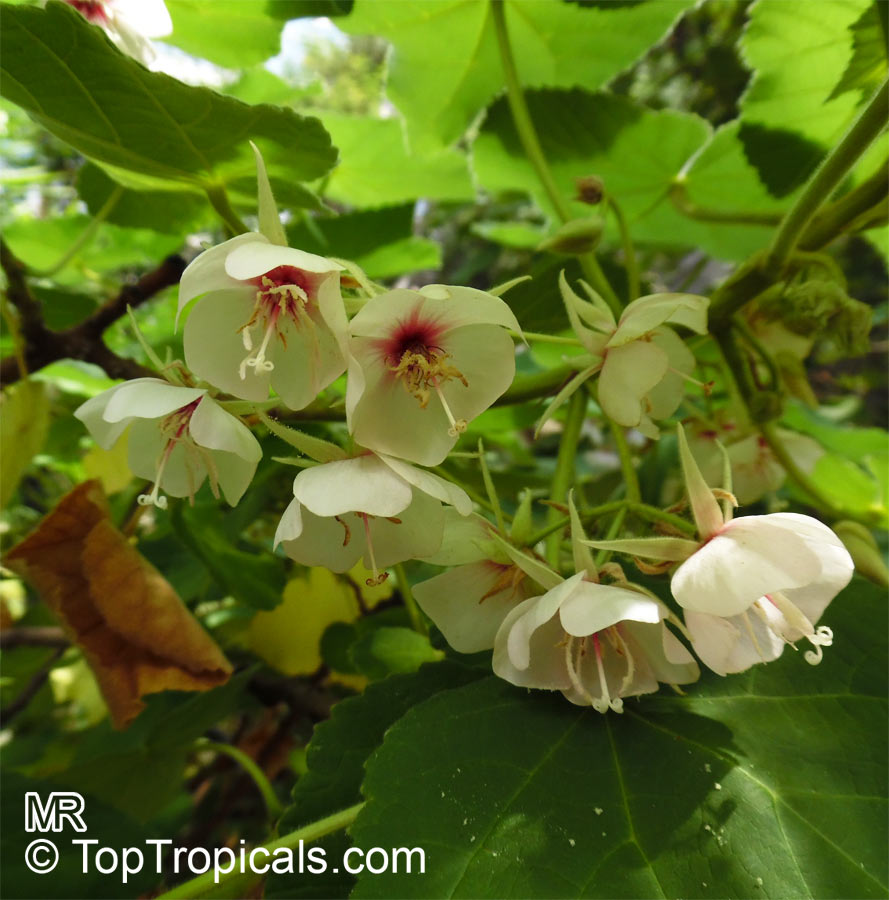
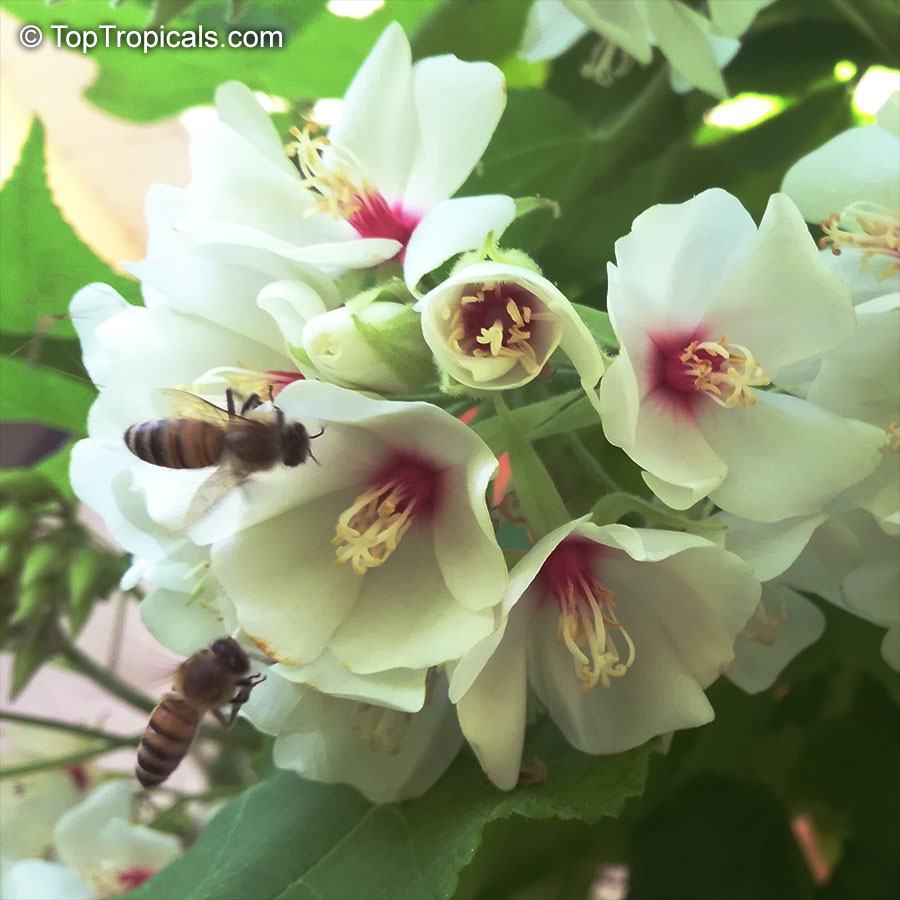
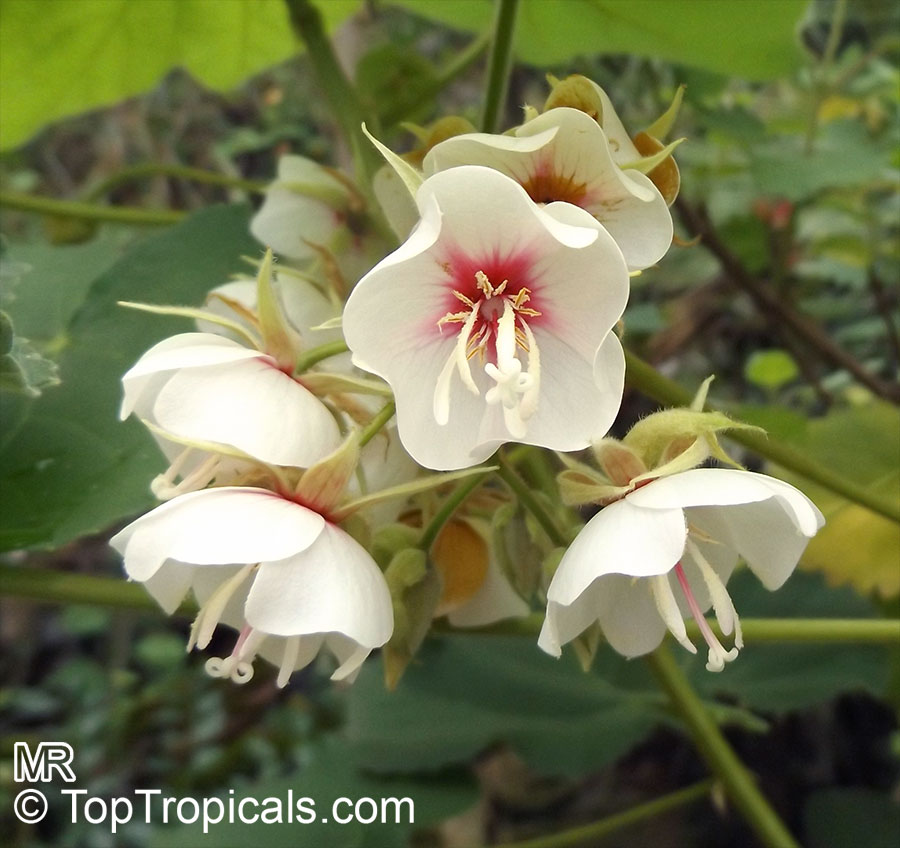
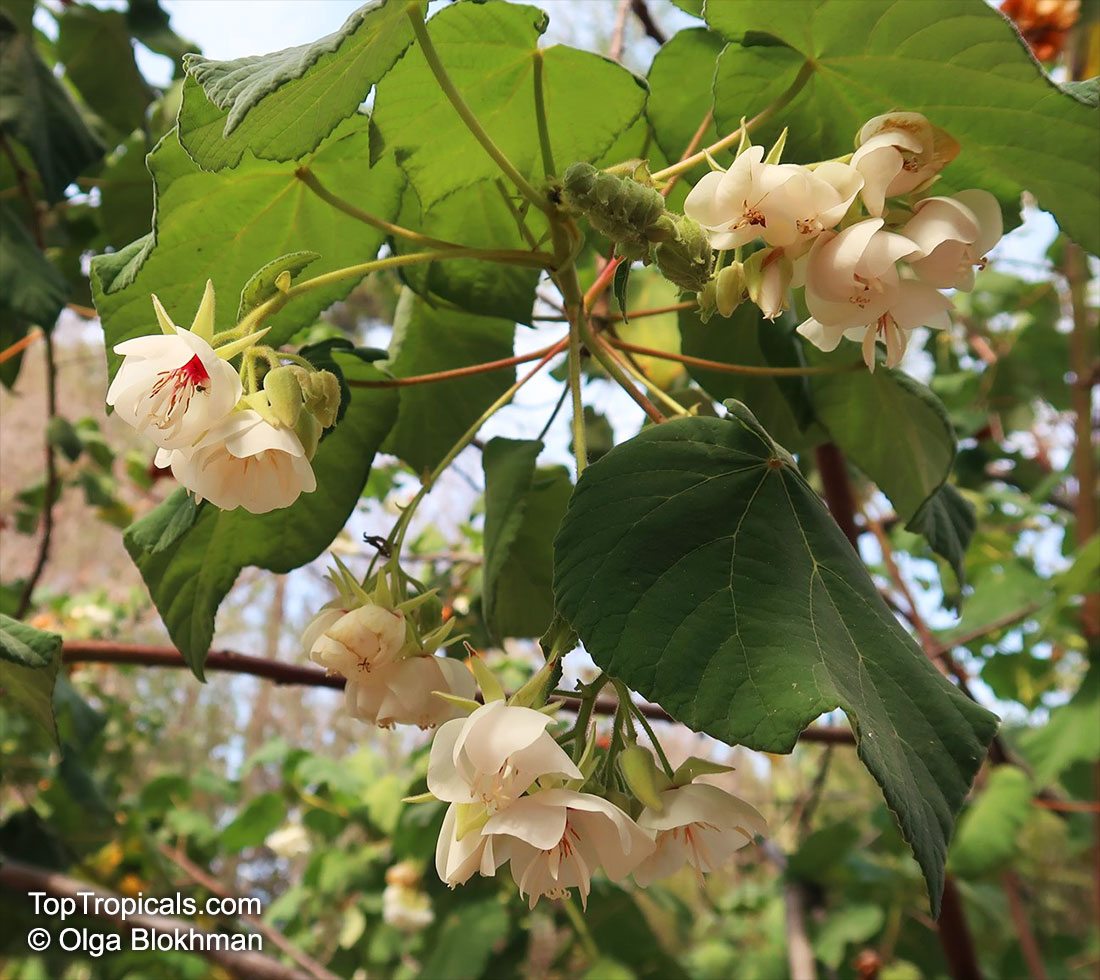
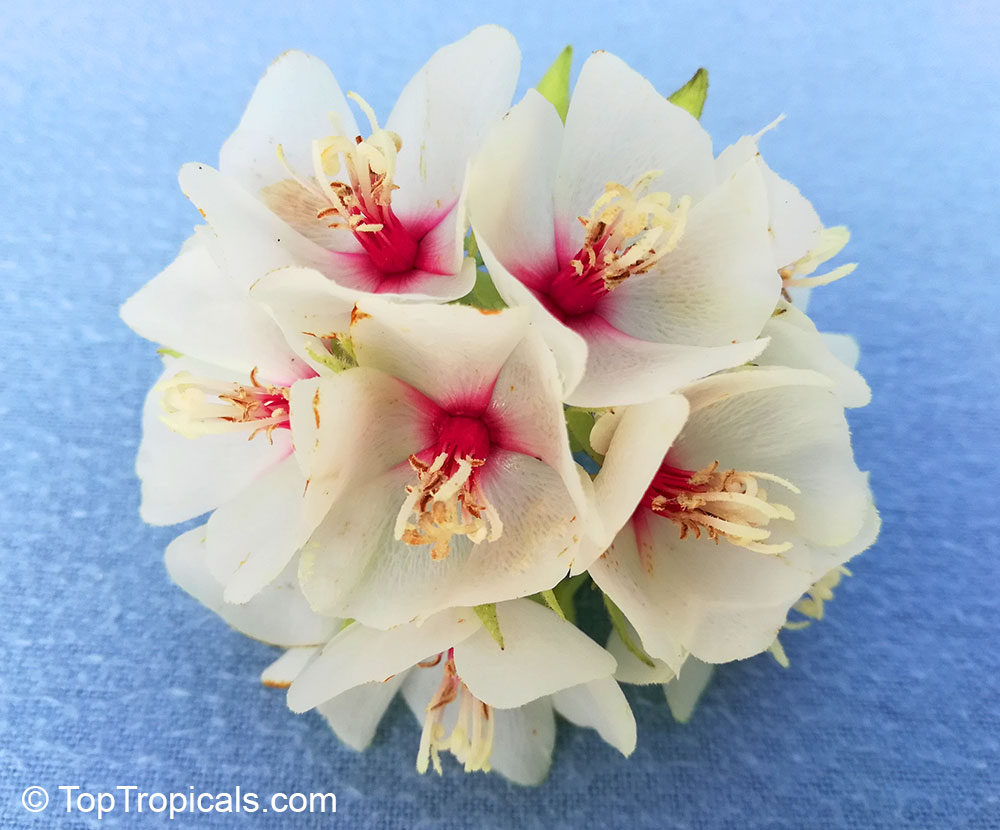

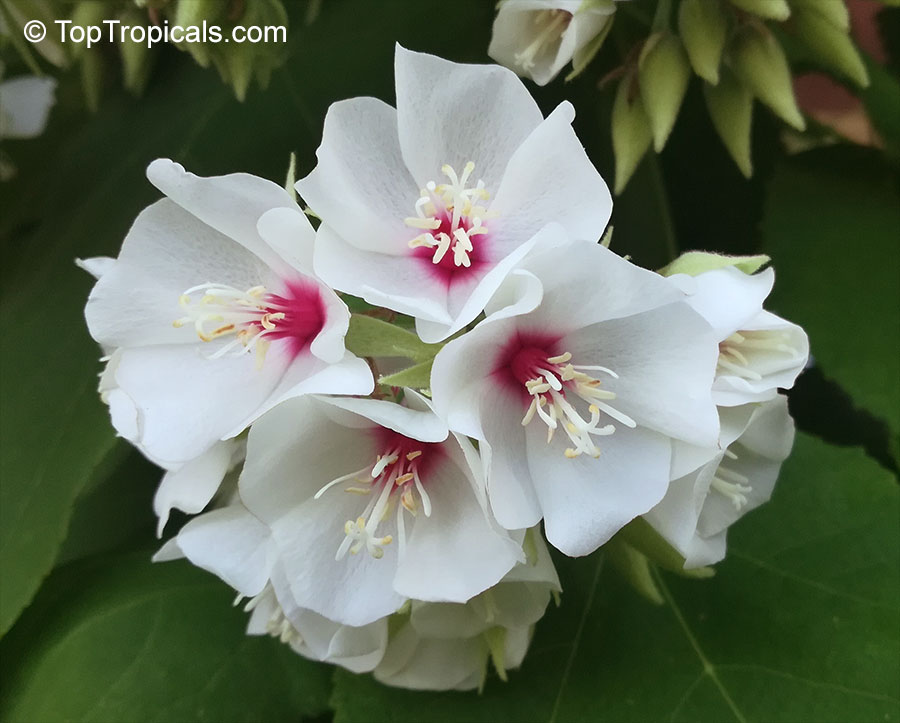
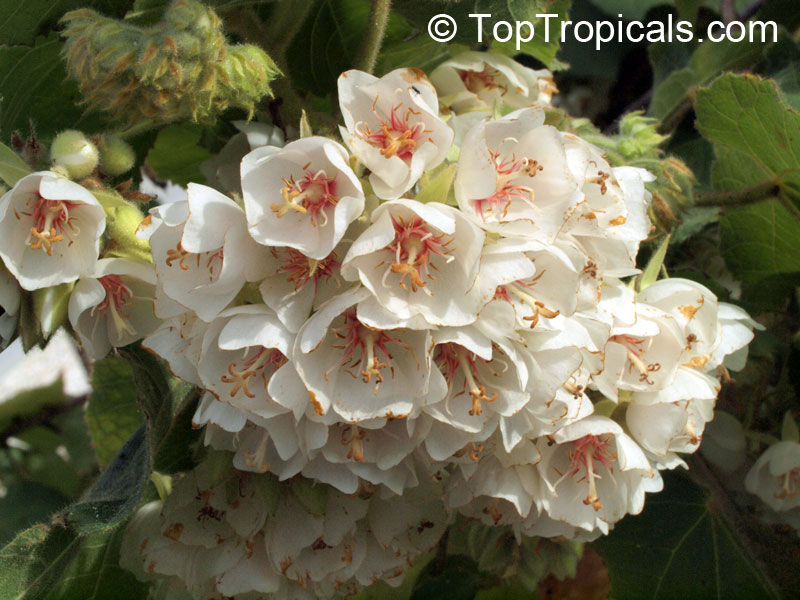
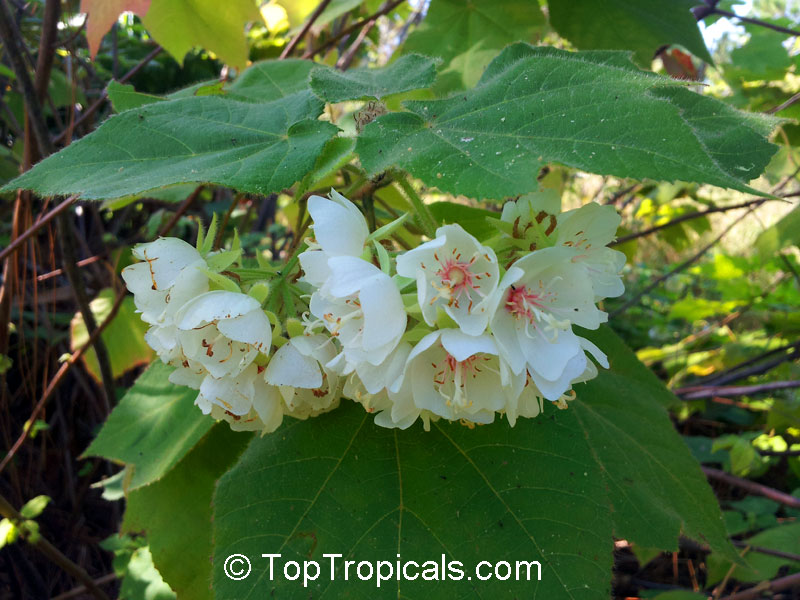
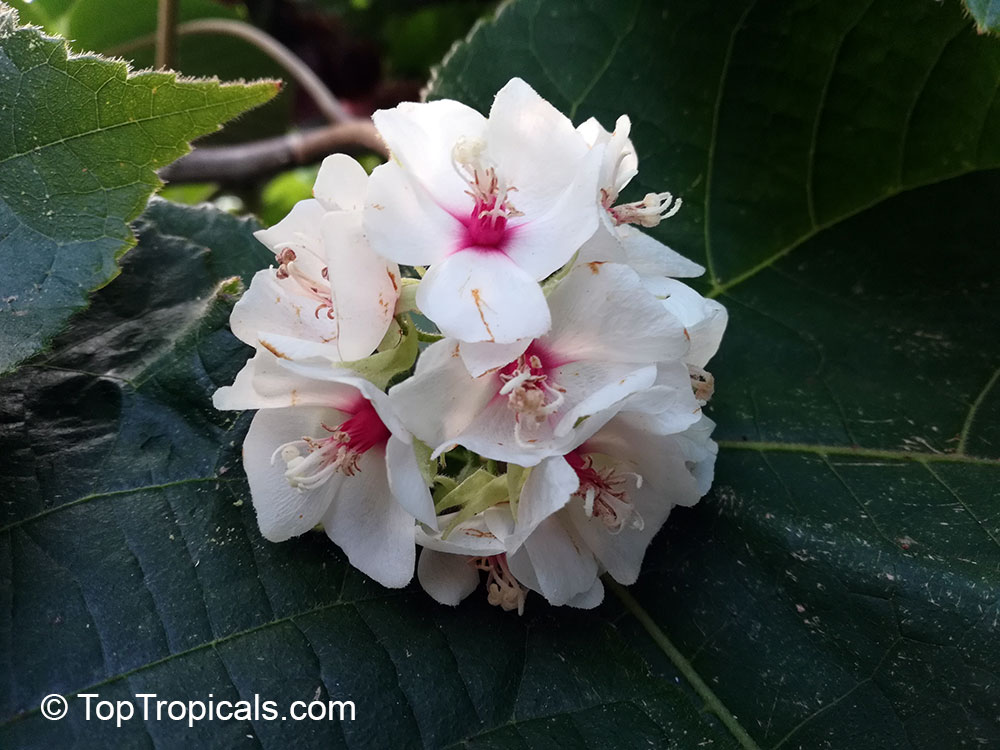
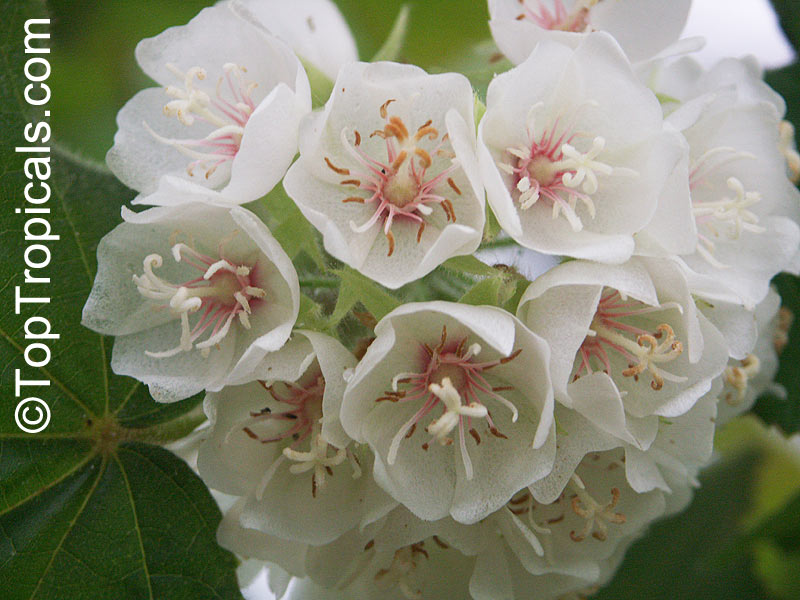
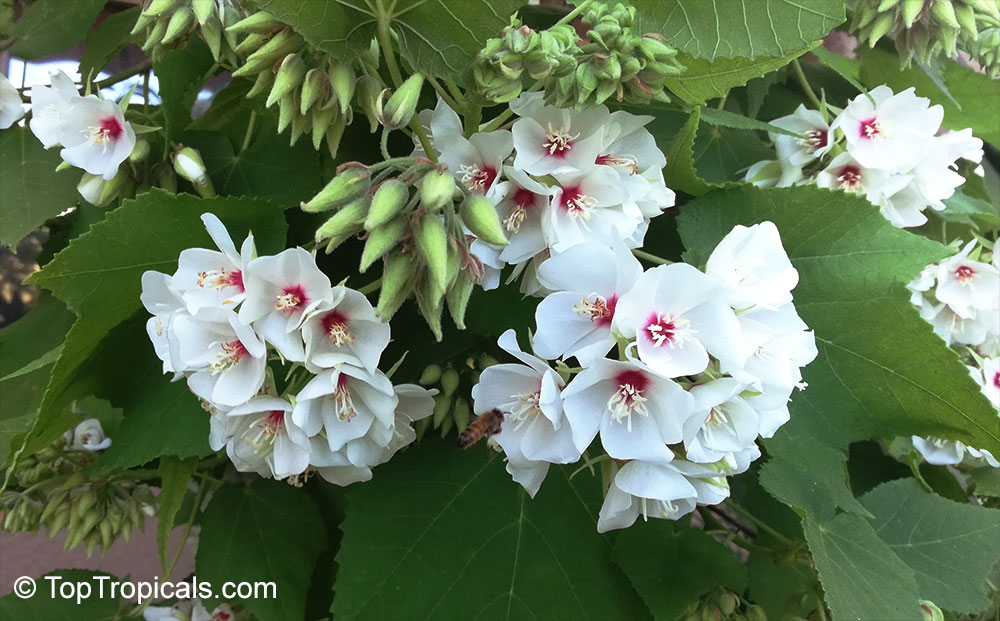

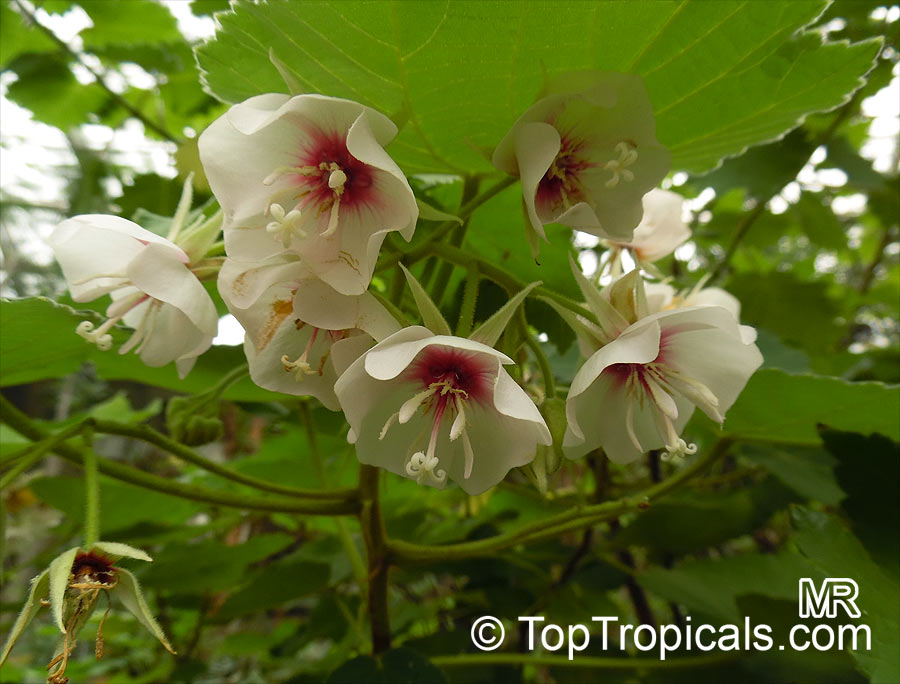

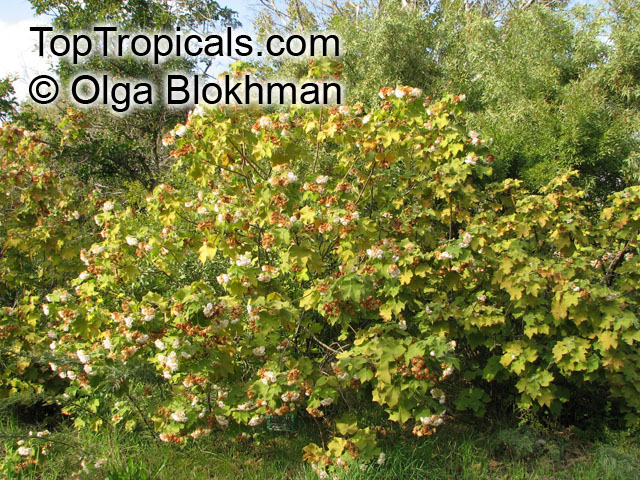
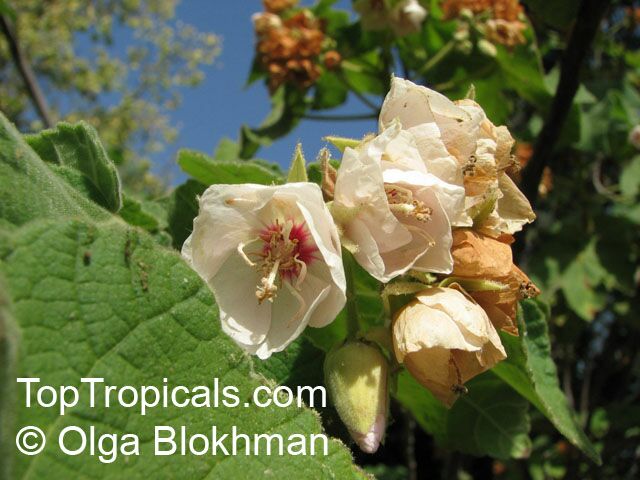
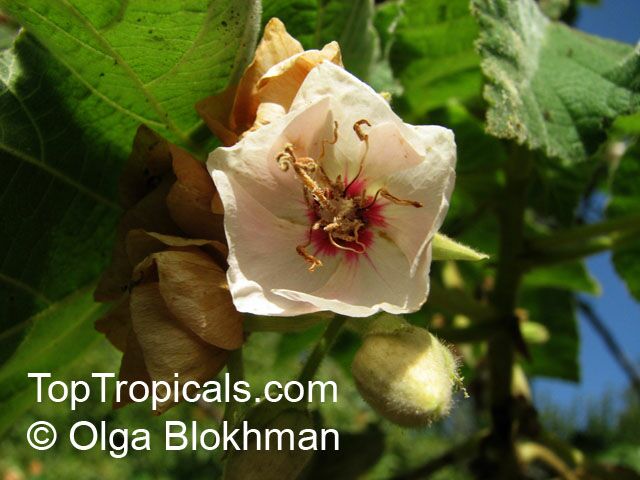
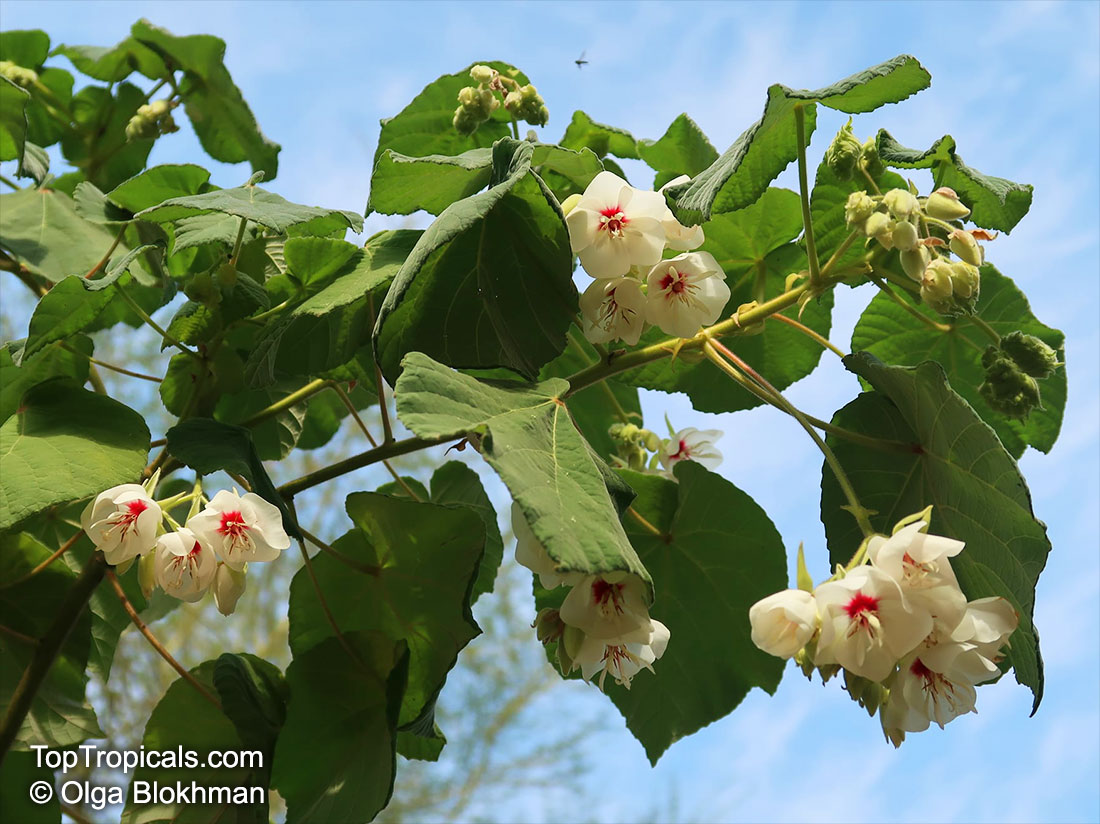
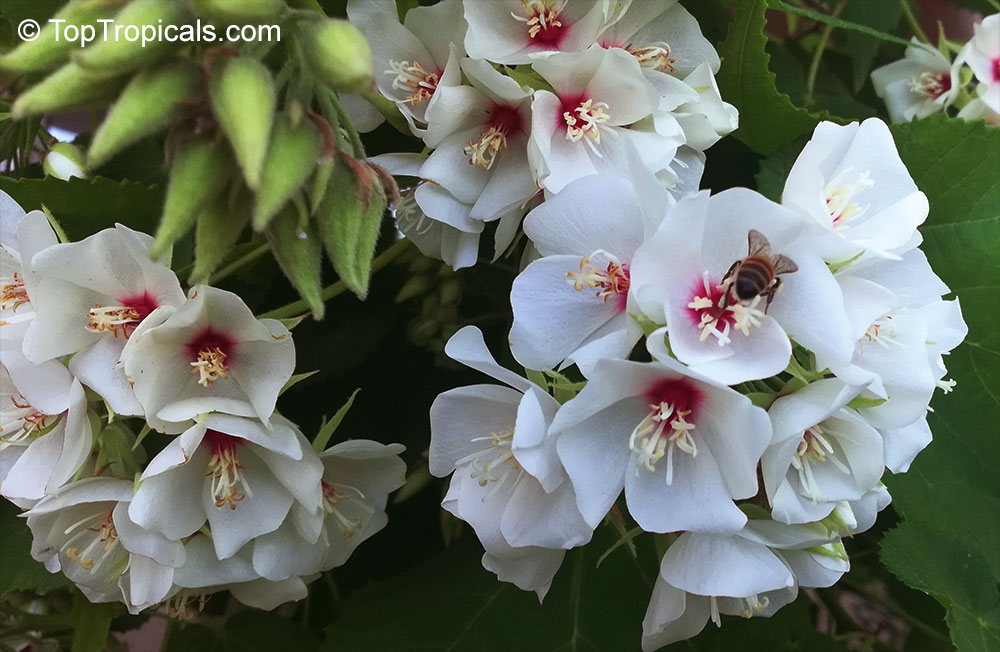
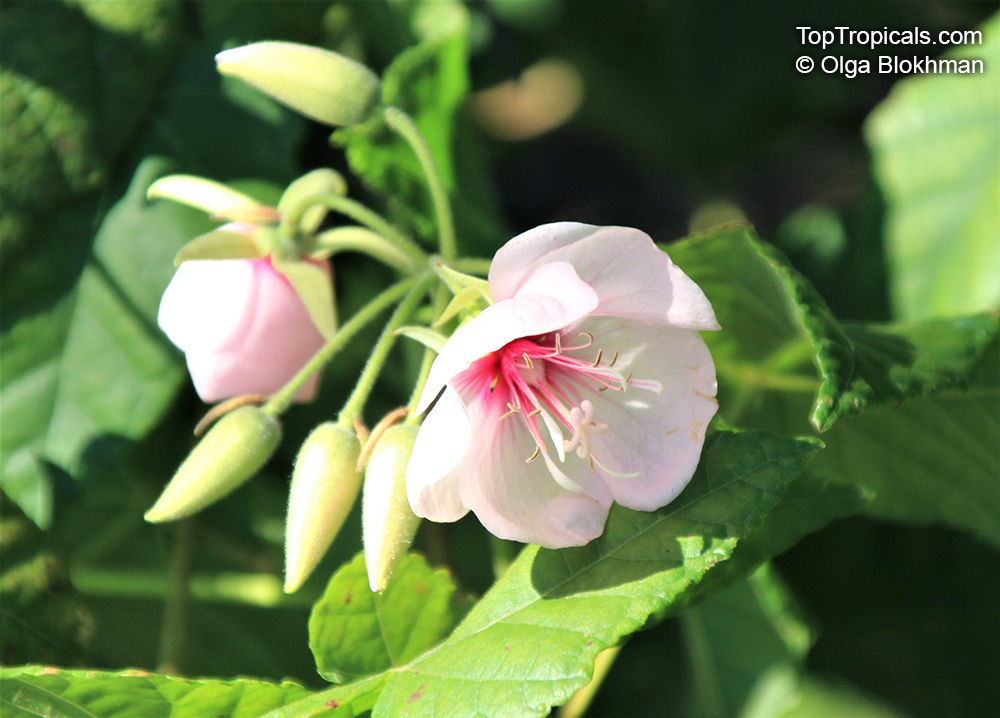
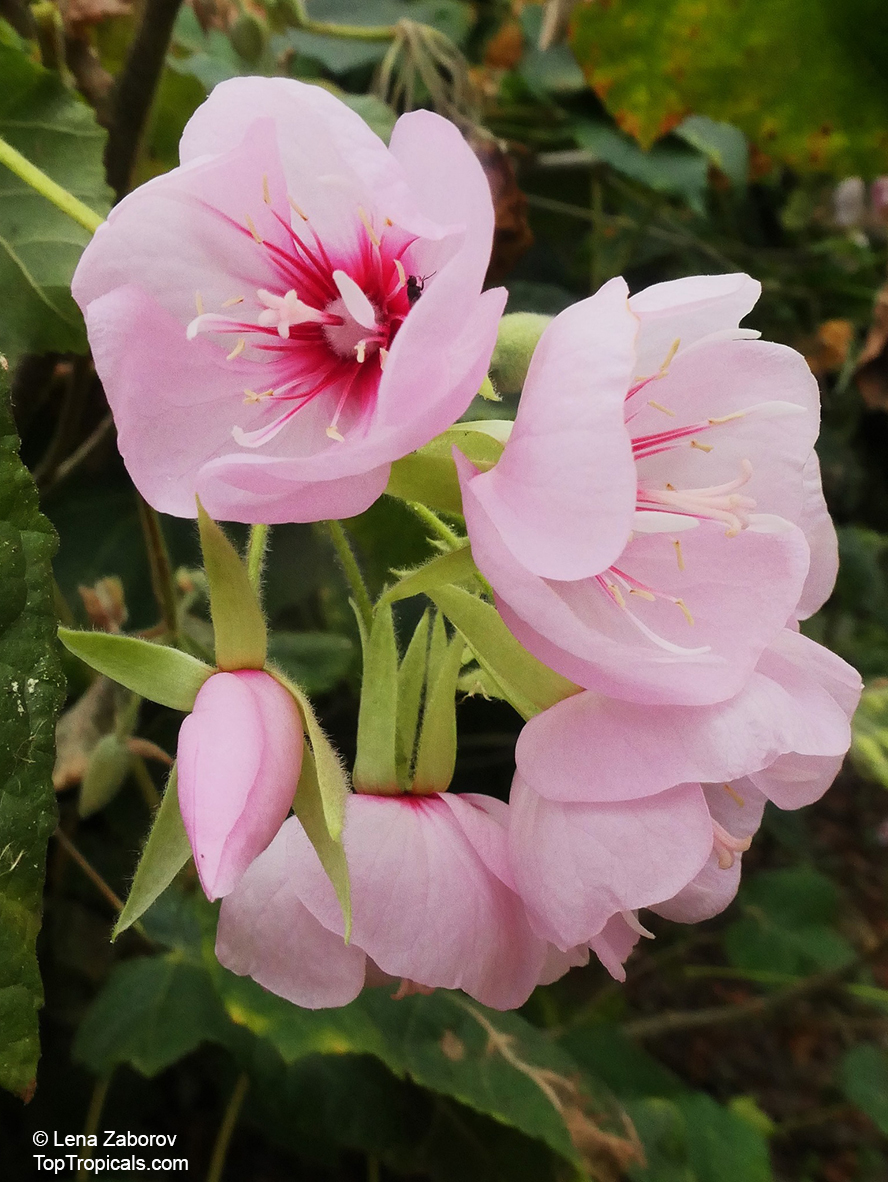
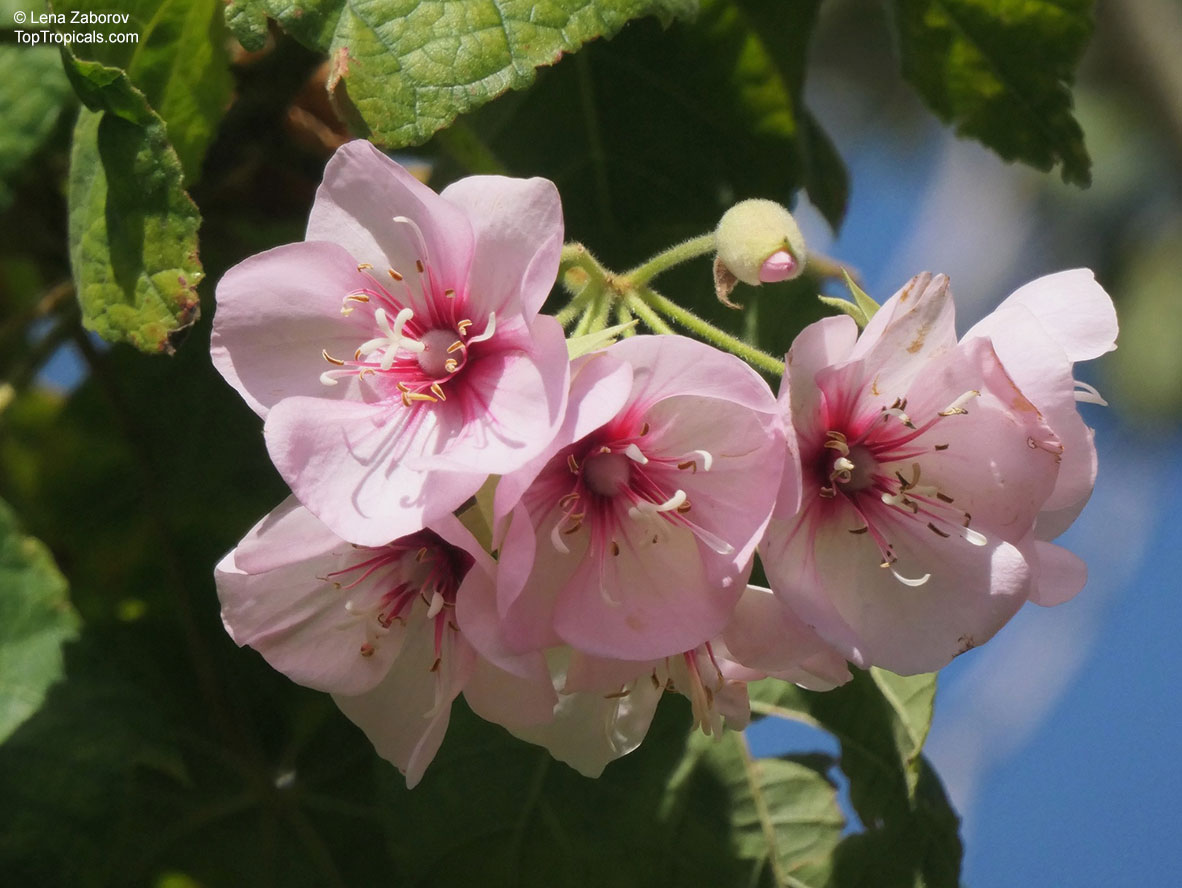
Tropical Hydrangea. Off-white to pinkish showy flowers in bunches during winter and spring. The large leaves are hairy, with shallow, maple-like lobes. Tolerant to both light frost and periods of drought.
Recommended Fertilizer: SUNSHINE Megaflor - Bloom Nutrition Booster
Botanical name: Dombeya Seminole
Common name: Tropical Rose Hydrangea
Cultivar: Seminole
Family: Malvaceae
Subfamily: Dombeyoideae
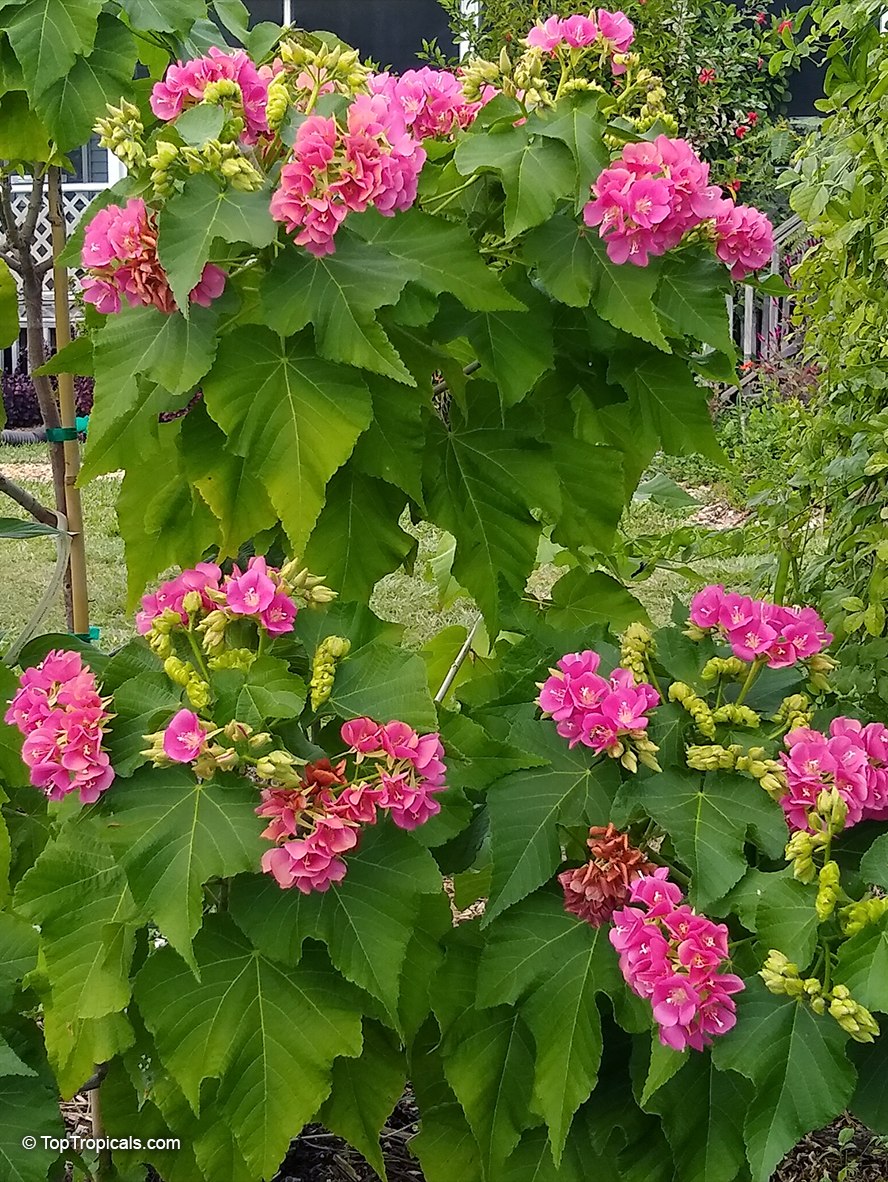
Dombeya 'Seminole' is a tropical shrub known for its bright pink clusters, attractive bark, and adaptable form suited to warm gardens and container growing.
Dombeya 'Seminole' is also encountered under the name Dombeya x seminole.
What makes Dombeya 'Seminole' distinctive?
Dombeya 'Seminole' forms a rounded shrub that ranges from 5-10 ft in the ground to about 2-5 ft in containers, producing dense foliage and abundant showy flower clusters through the warm season. It performs best in full sun or semi-shade with regular deep watering in well-drained soil and responds well to early spring pinching or pruning, which supports a full blooming cycle and balanced branching. As the plant matures, the bark becomes increasingly decorative, adding structural interest even outside the flowering period. In USDA Zones 9-11 it tolerates short drops to about 30F, but roots benefit from mulching in the ground and protection for container plants during colder nights. With steady warmth and moisture, Dombeya 'Seminole' grows reliably and maintains its vivid seasonal display in tropical and frost-free subtropical landscapes.
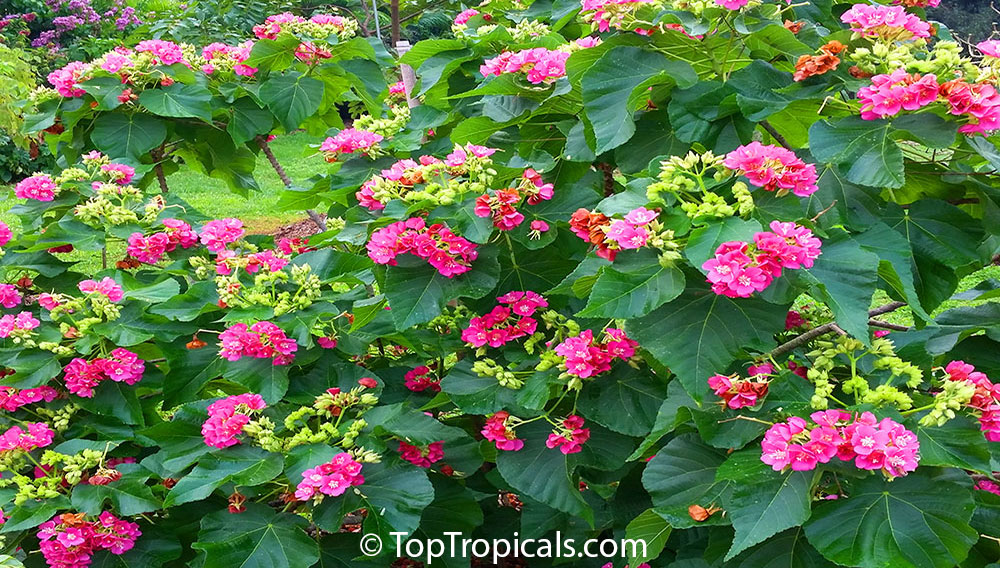
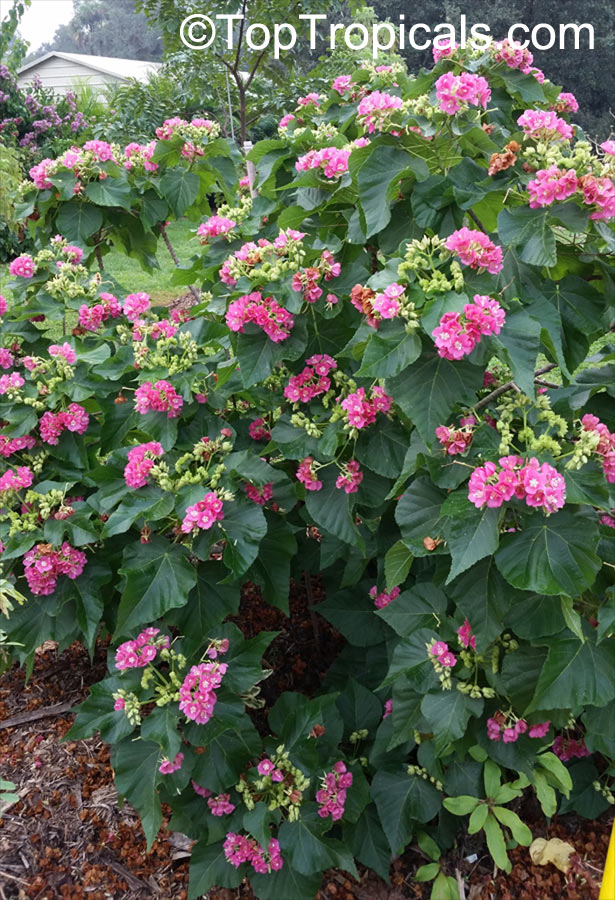
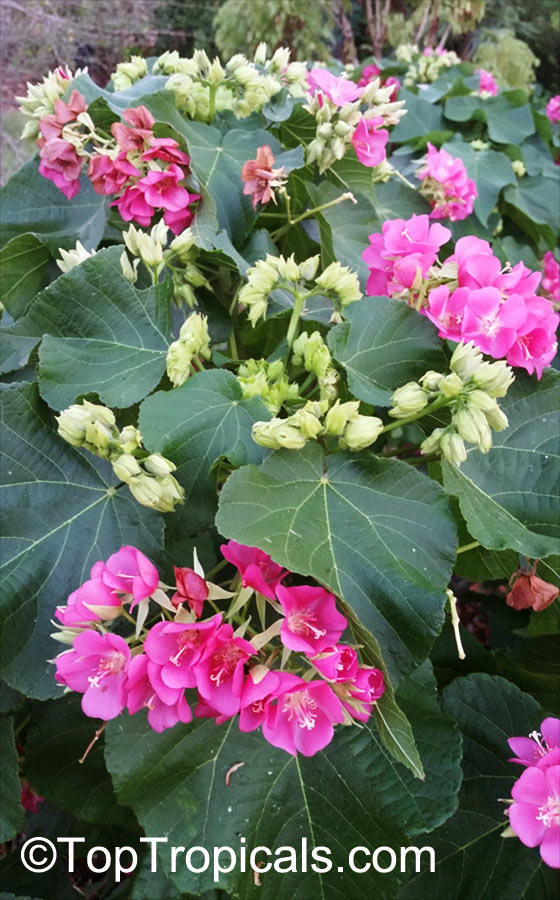
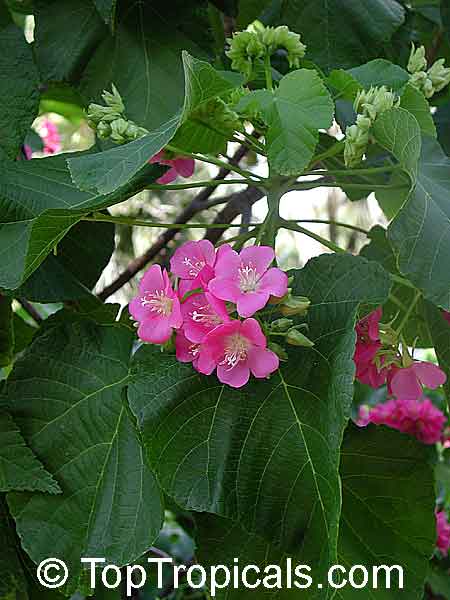

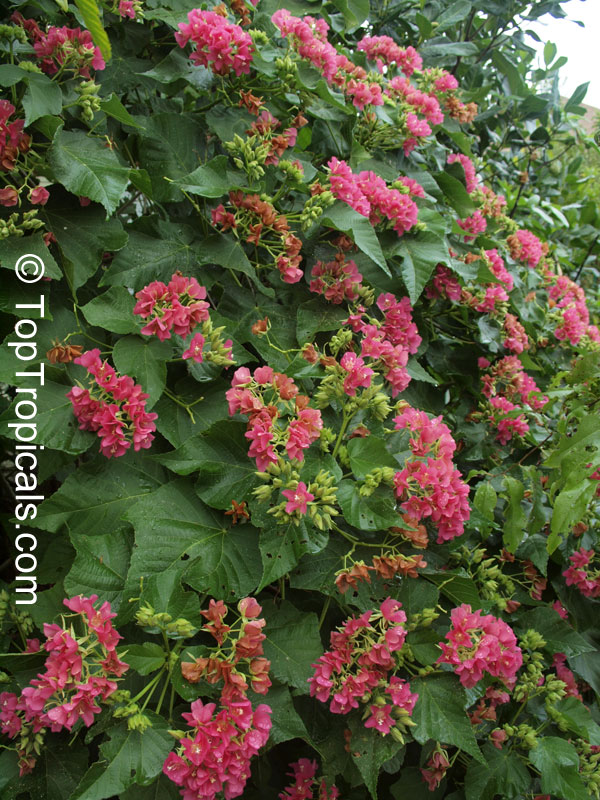
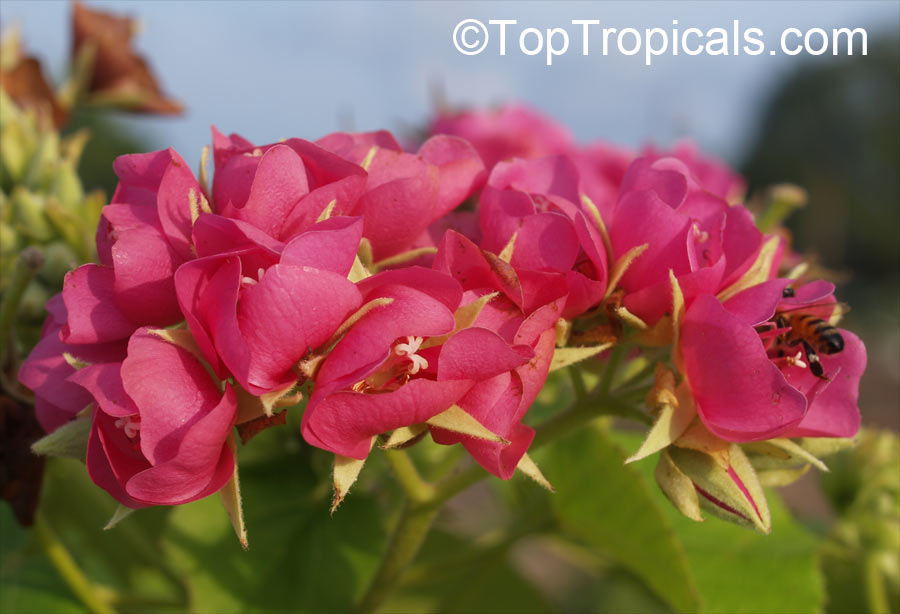
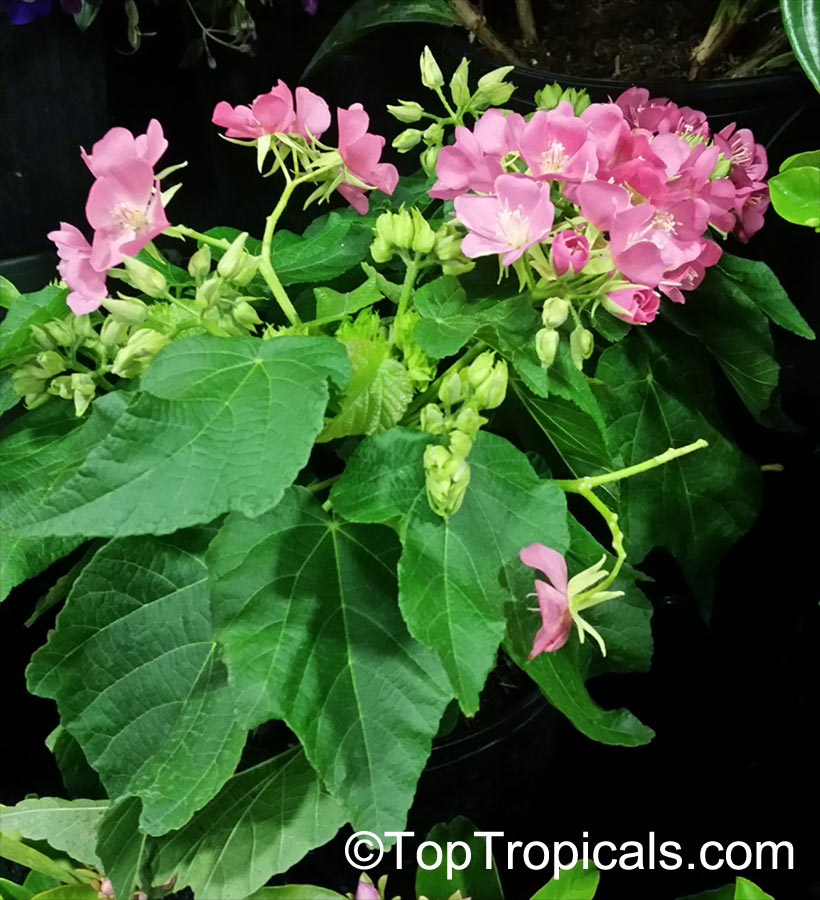
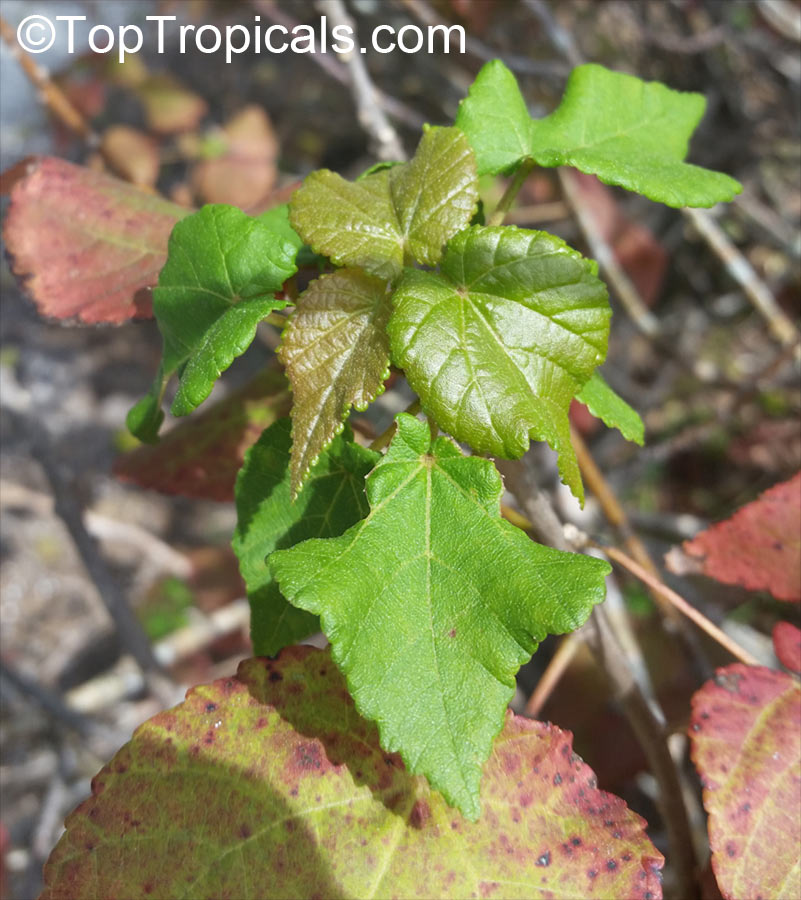
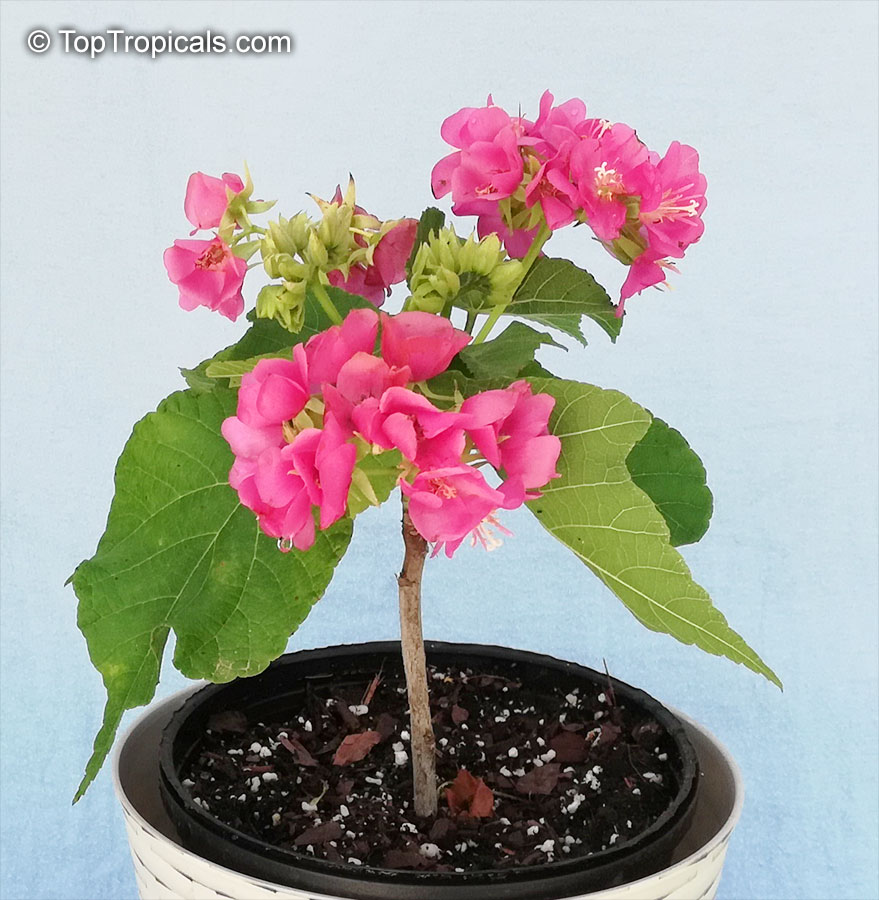
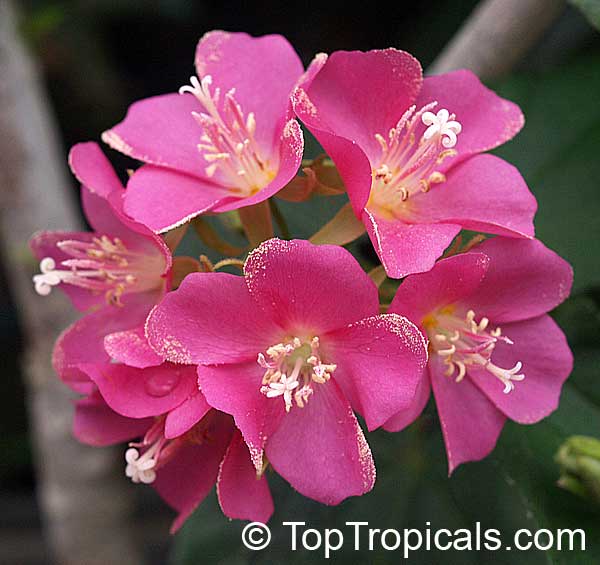
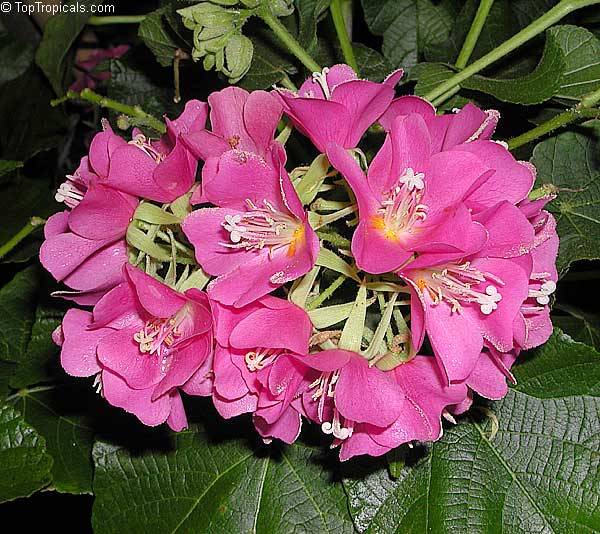
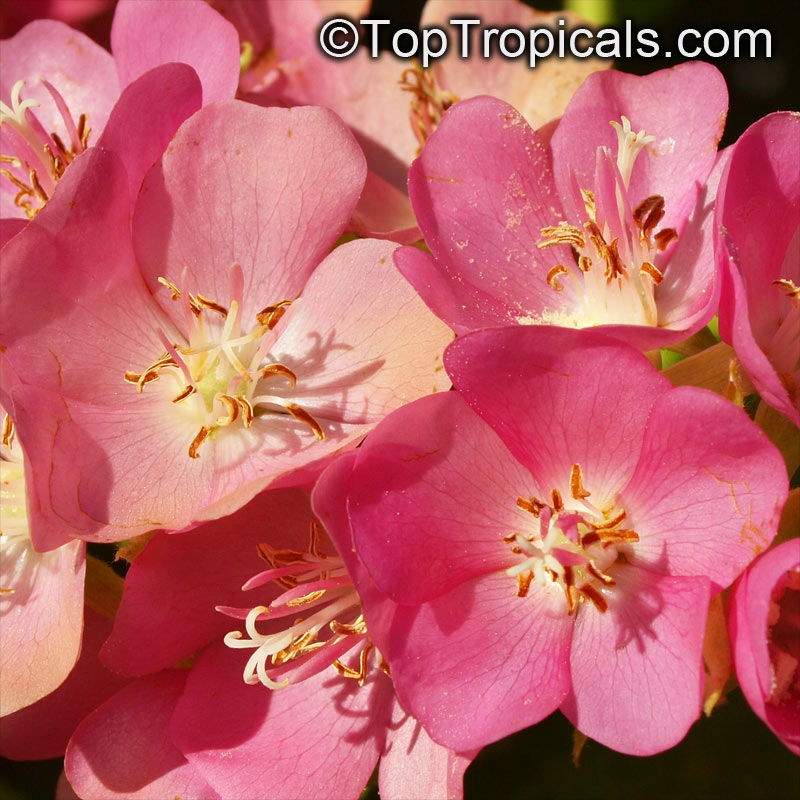
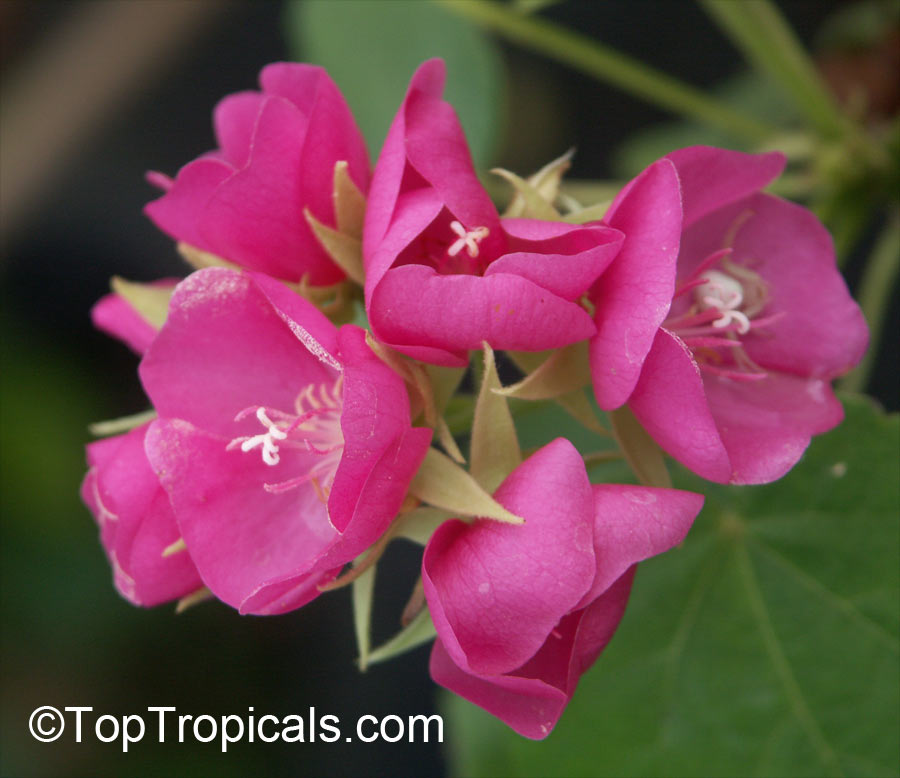
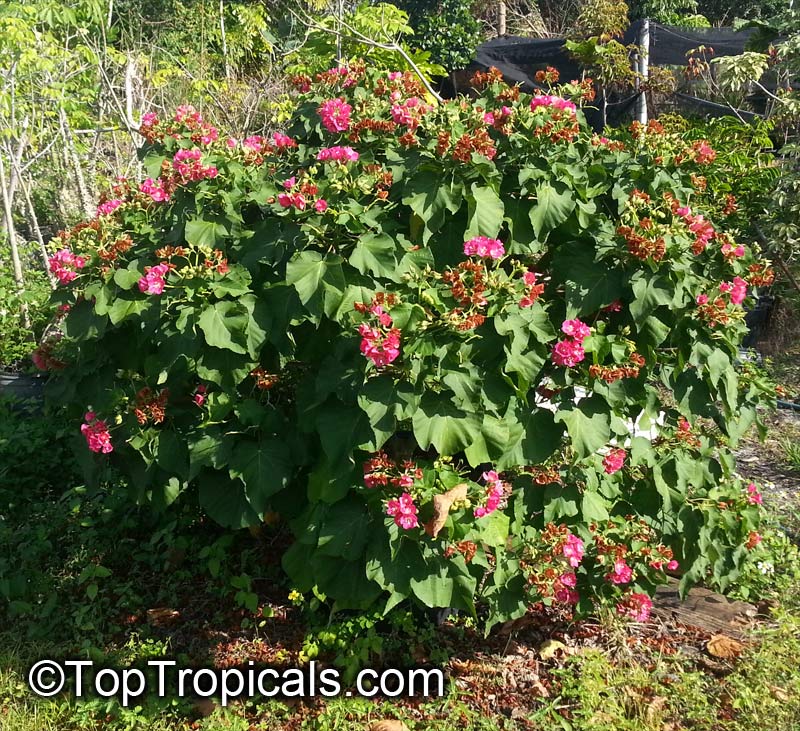
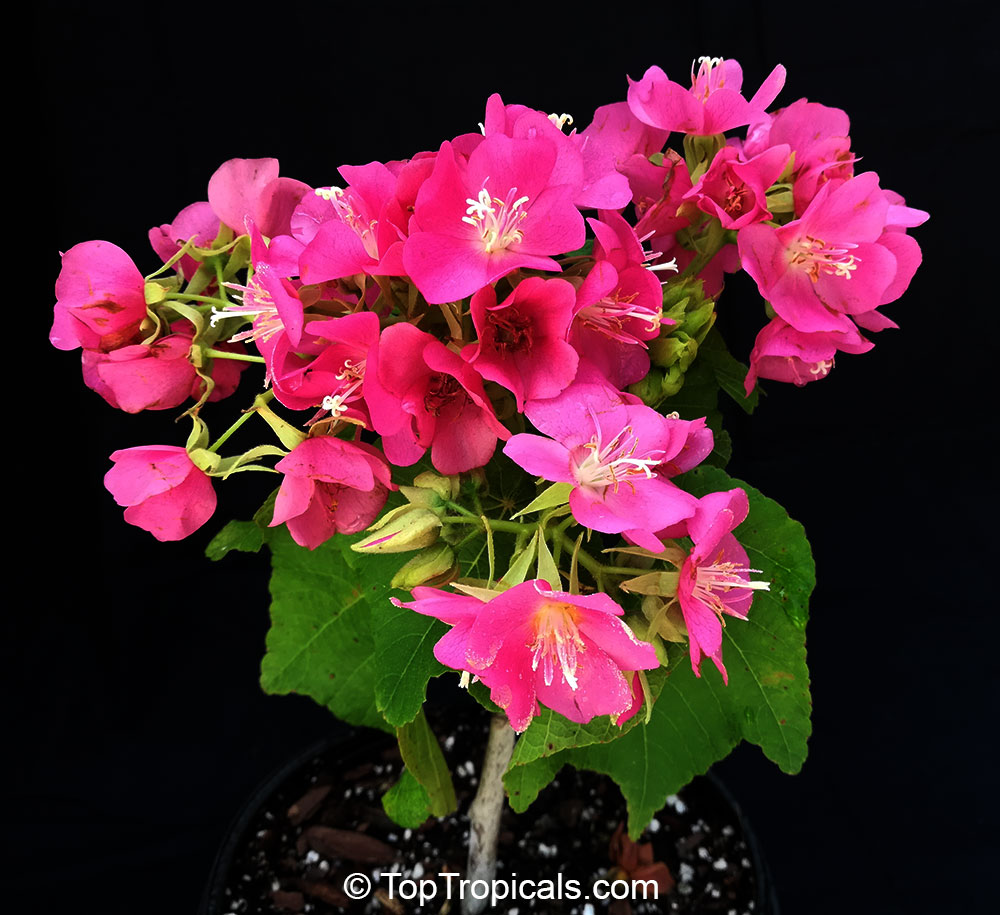
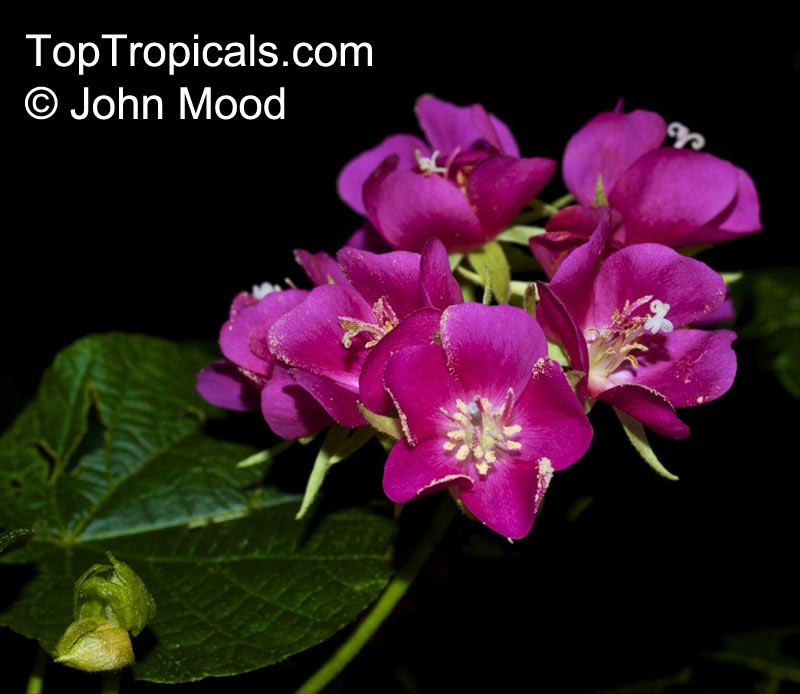
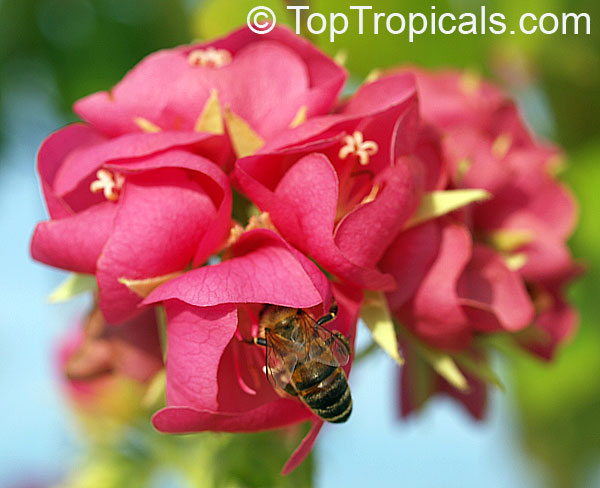
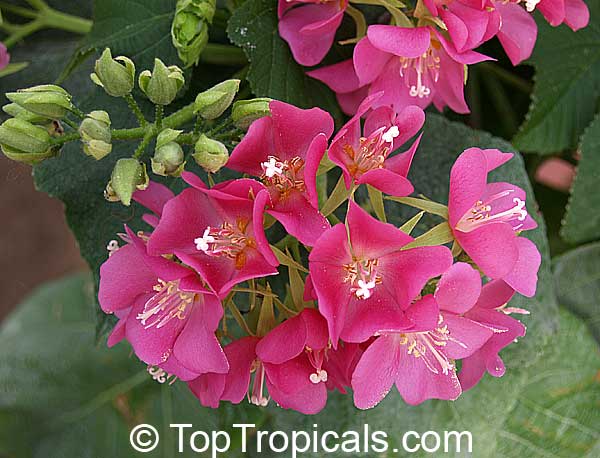
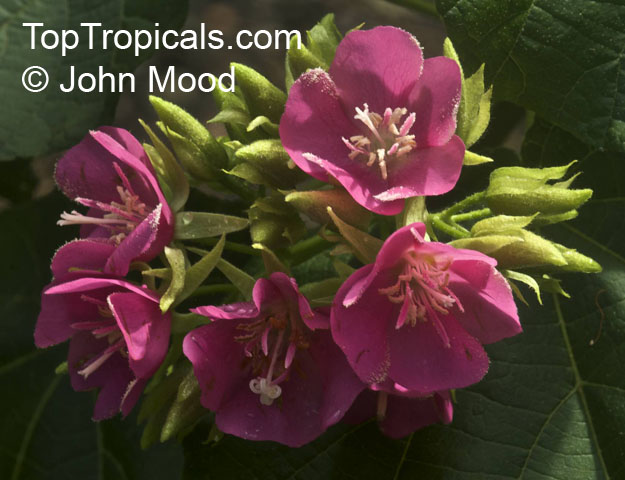
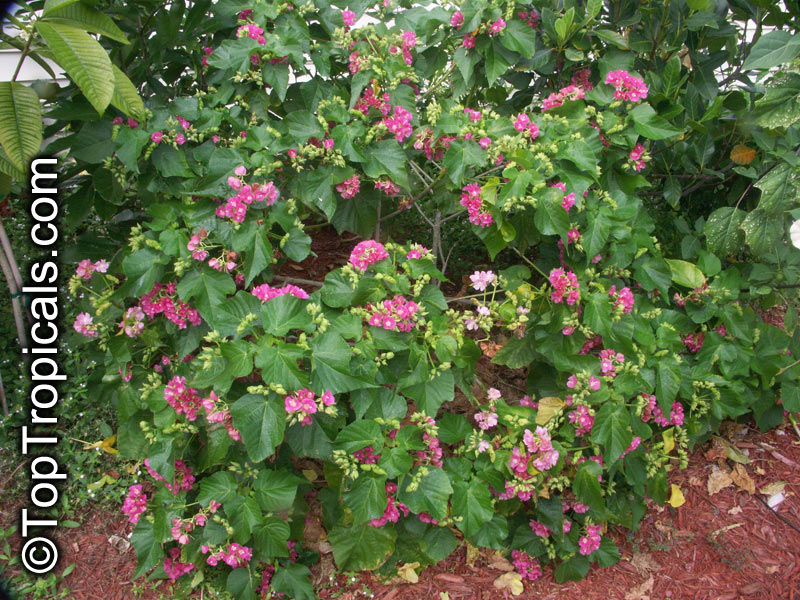
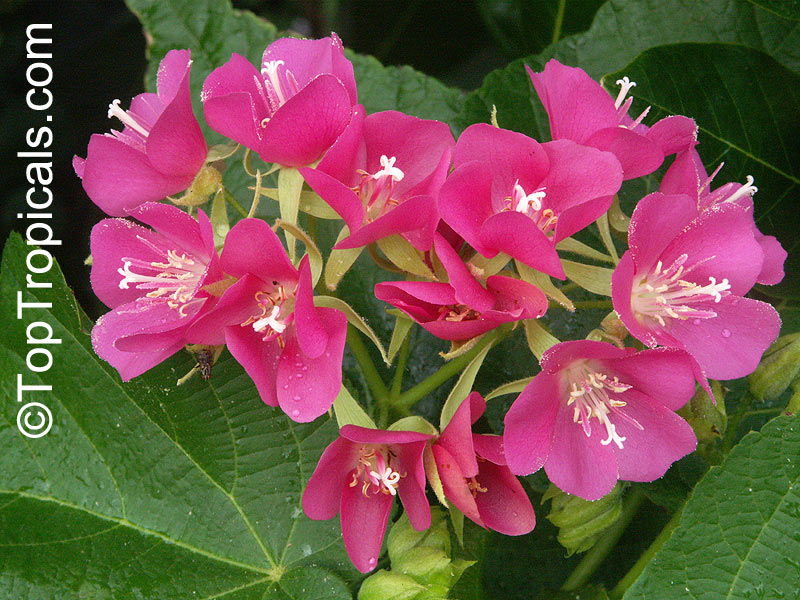
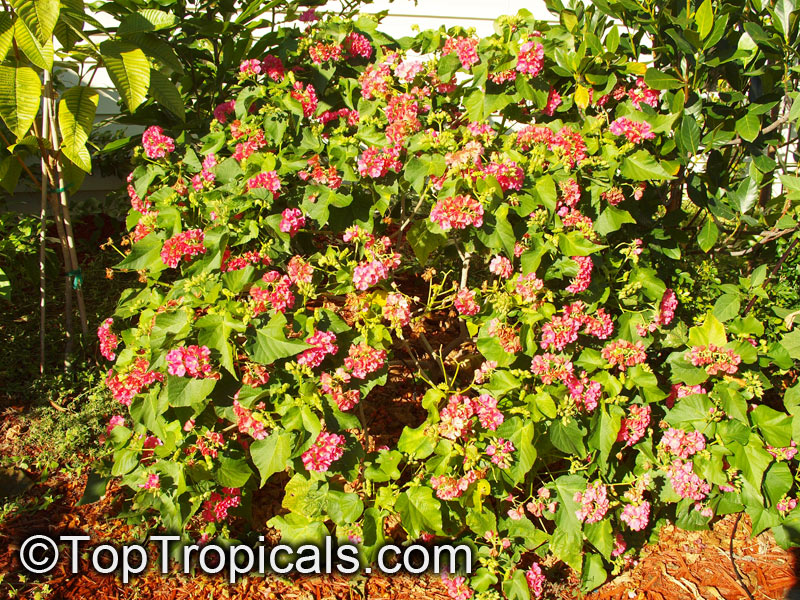
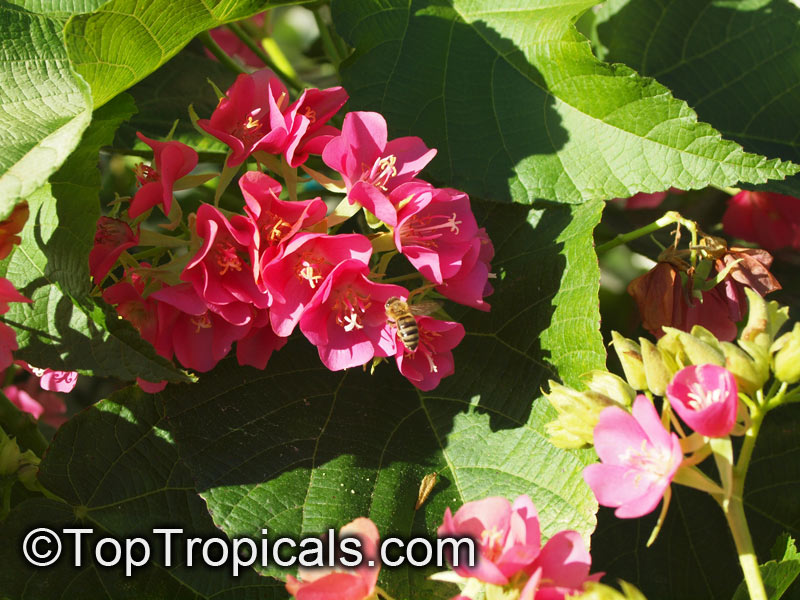
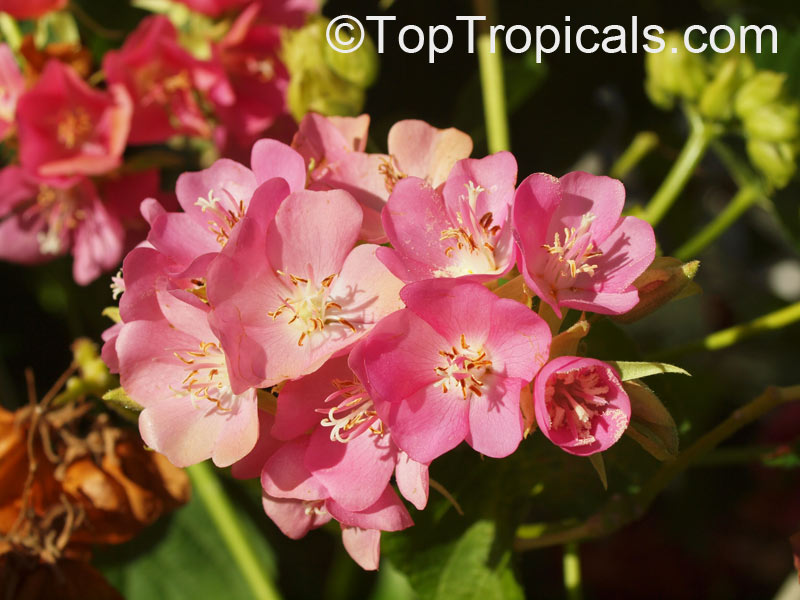
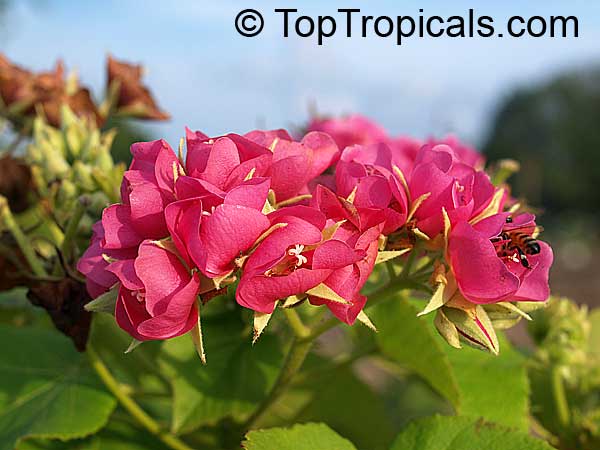
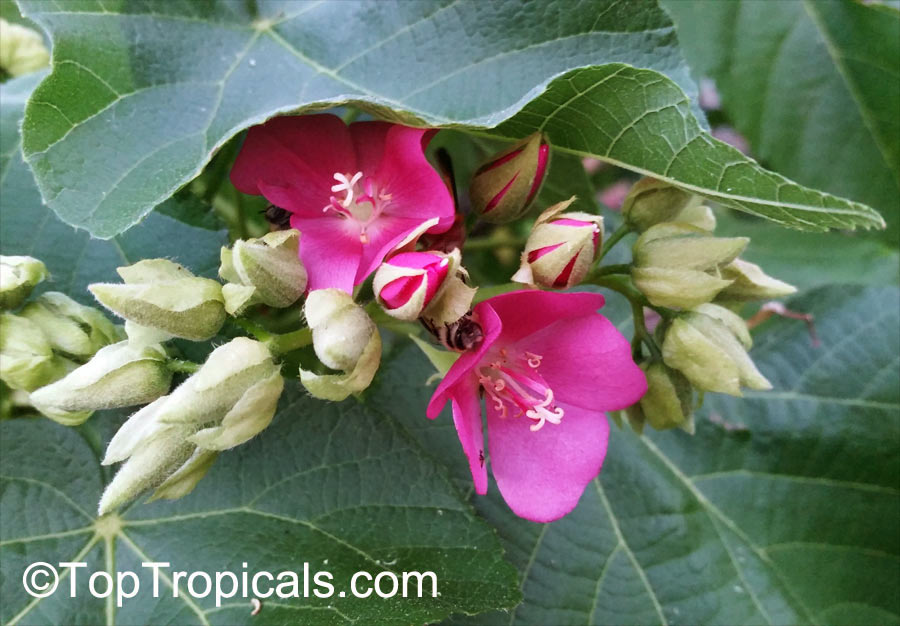
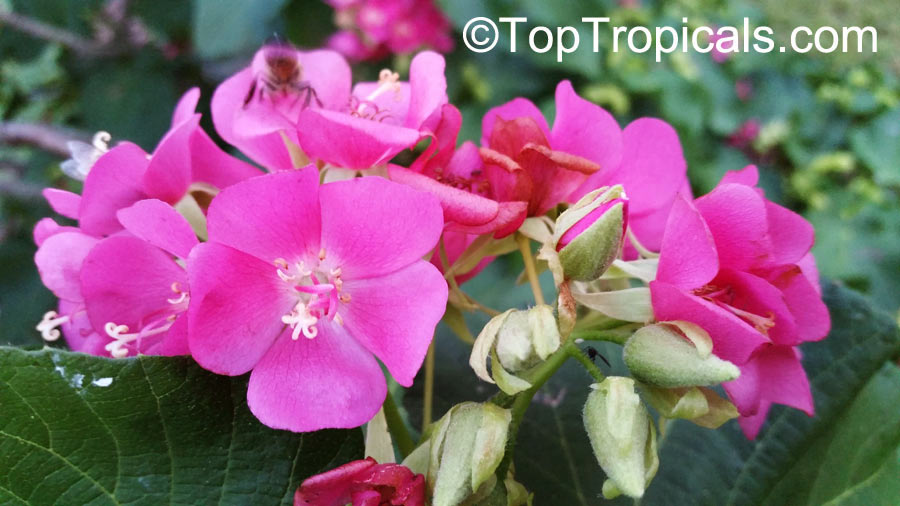
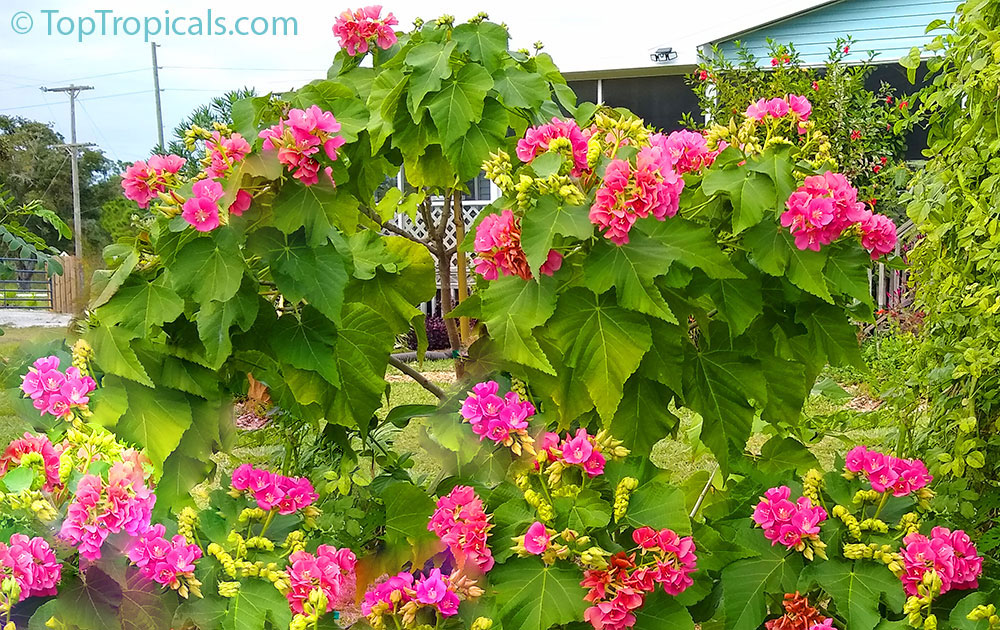
This winter bloomer puts on one of the best flower shows of any shrub here in Florida. It is sometimes called the tropical hydrangea because its flowers are similar to the hydrangeas we know from up North. The flowers are pink to rose color and bloom from fall to spring. That means it's blooming all winter in Naples during season, when the most color is desired and appreciated. Dombeya Seminole is a large shrub that grows 7 feet tall and about the same in width. It can be kept to about 5 feet tall with pruning.
This shrub will grow in full sun to partial shade and will tolerate poor soil. The more sun, the fuller the shrub, and that also encourages the maximum number of flowers. It is also fairly drought-tolerant once established.
Recommended Fertilizer: SUNSHINE Megaflor - Bloom Nutrition Booster
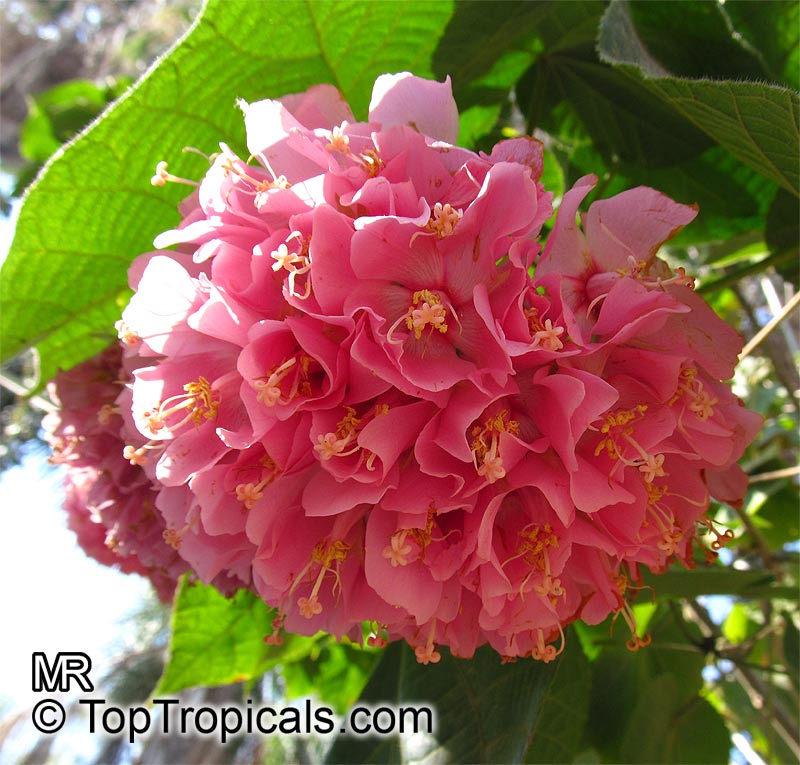
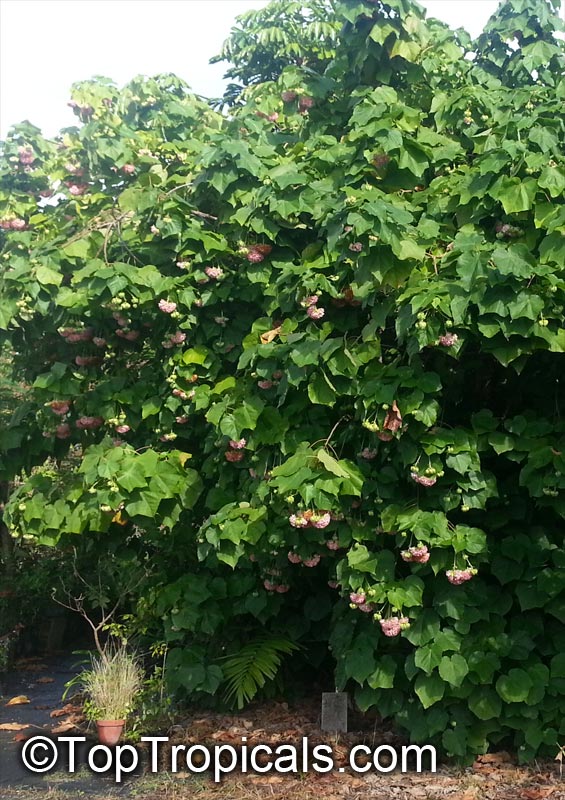
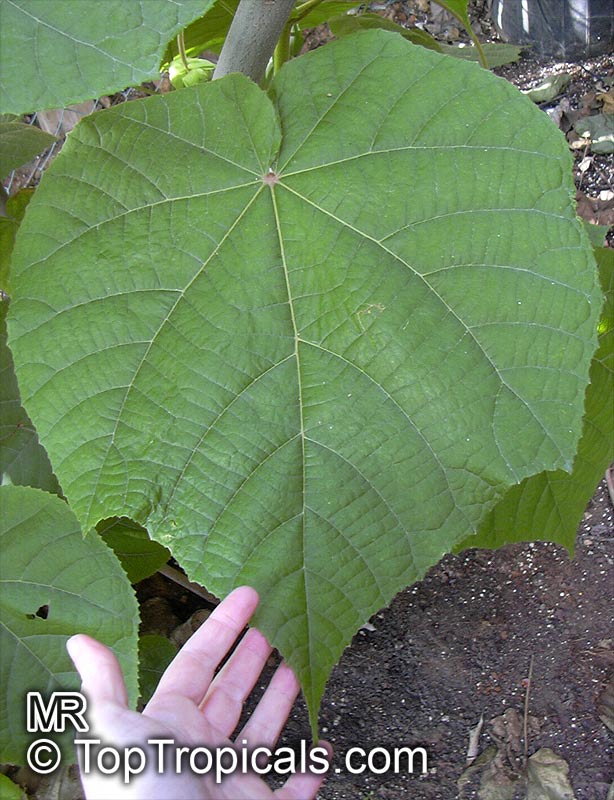
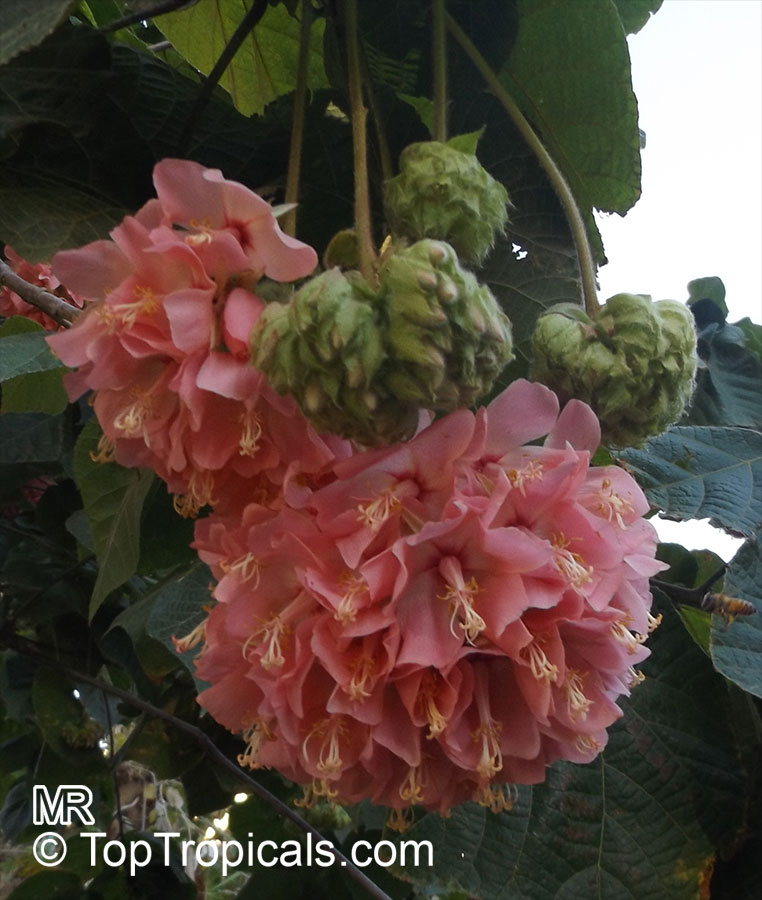
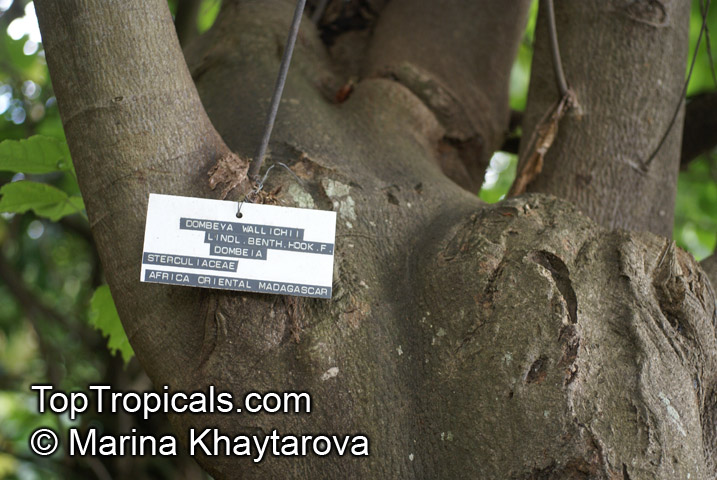
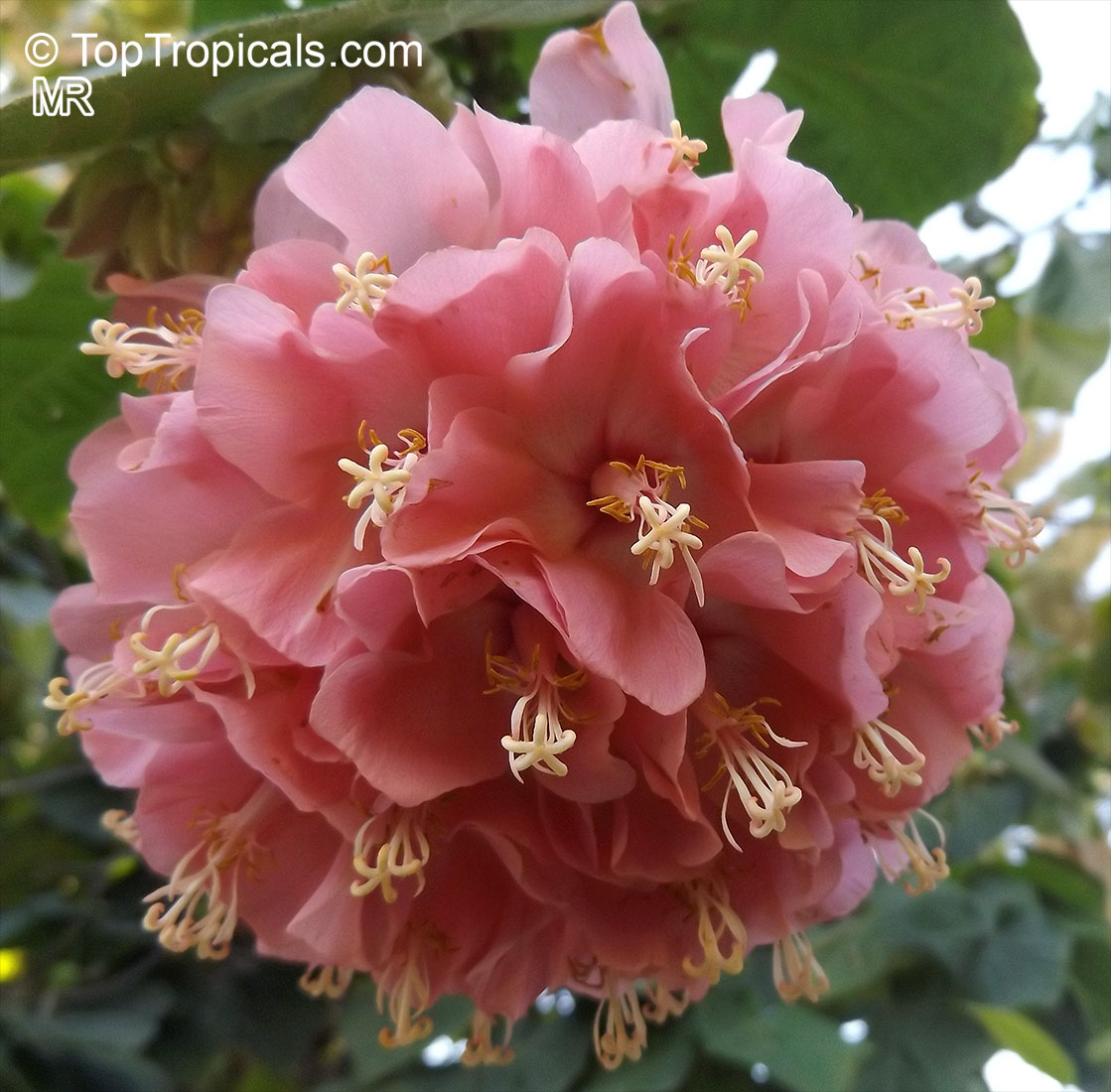
Botanical names: Dombeya wallichii, Dombeya x cayeuxii
Common names: Pink Ball Tree, Tropical Hydrangea
Family: Malvaceae
Subfamily: Dombeyoideae
Origin: Africa, Madagarcar

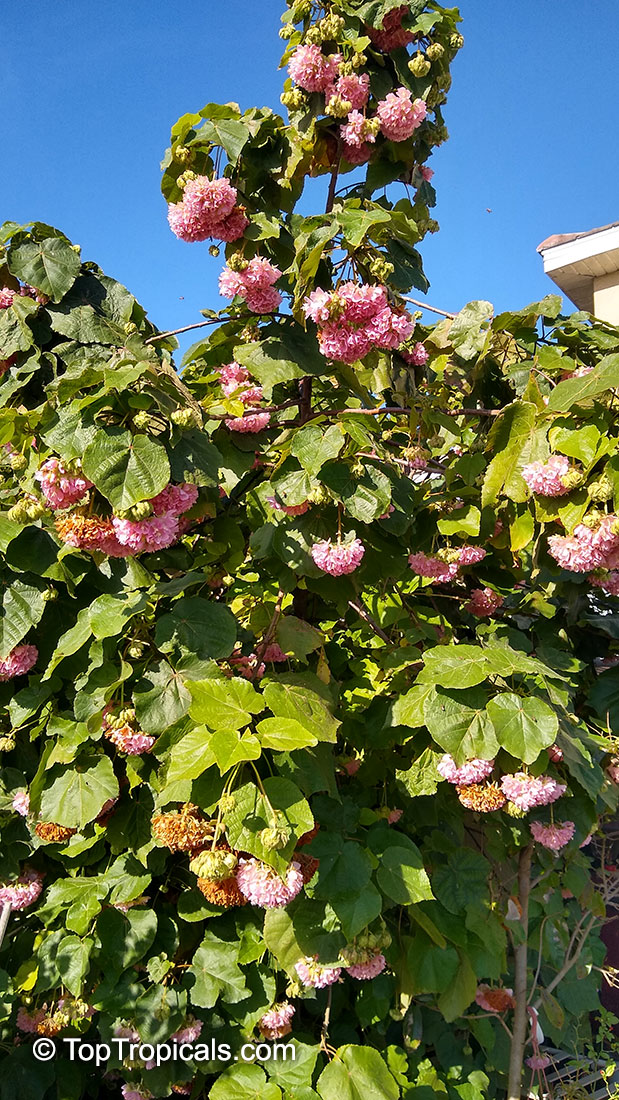
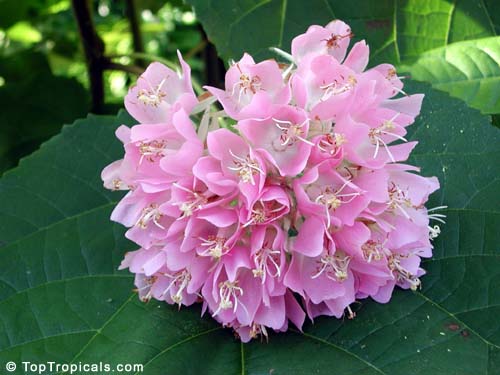
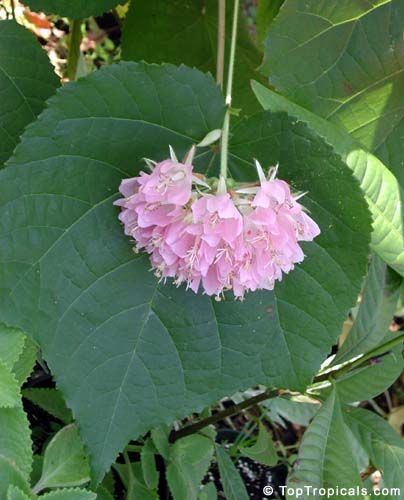
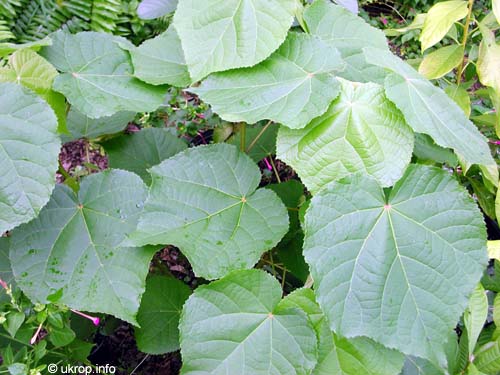
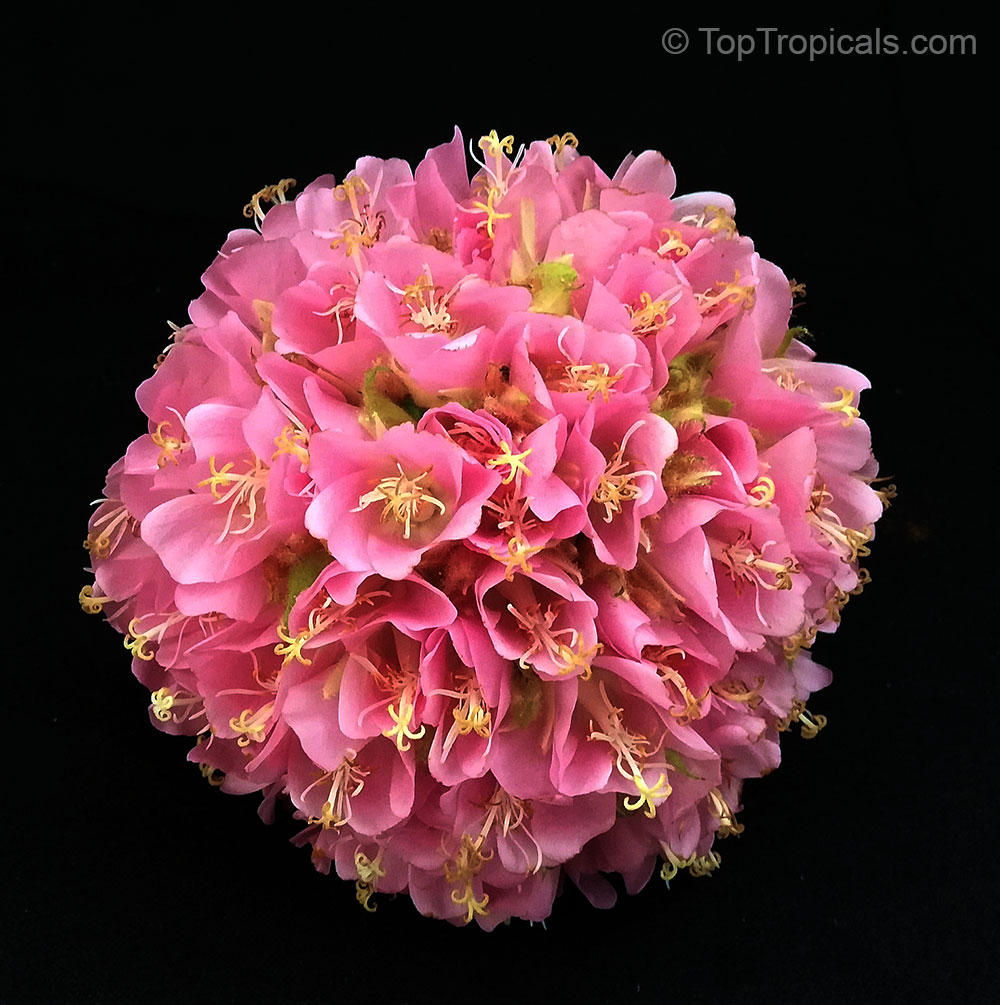
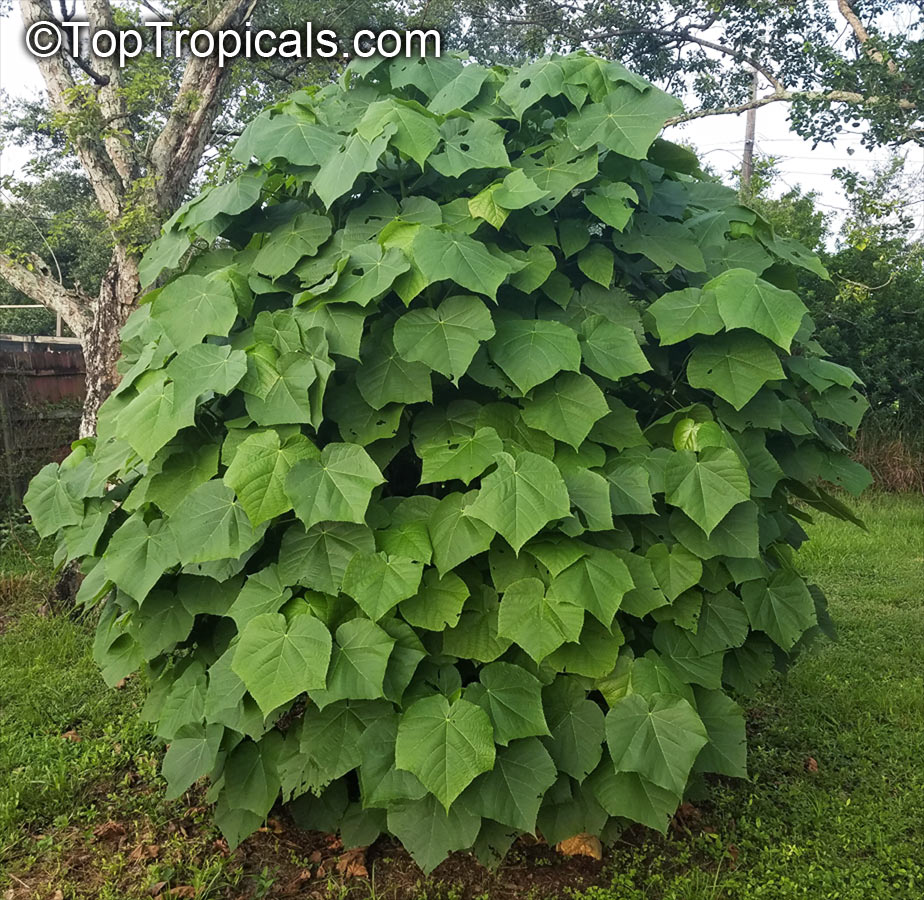
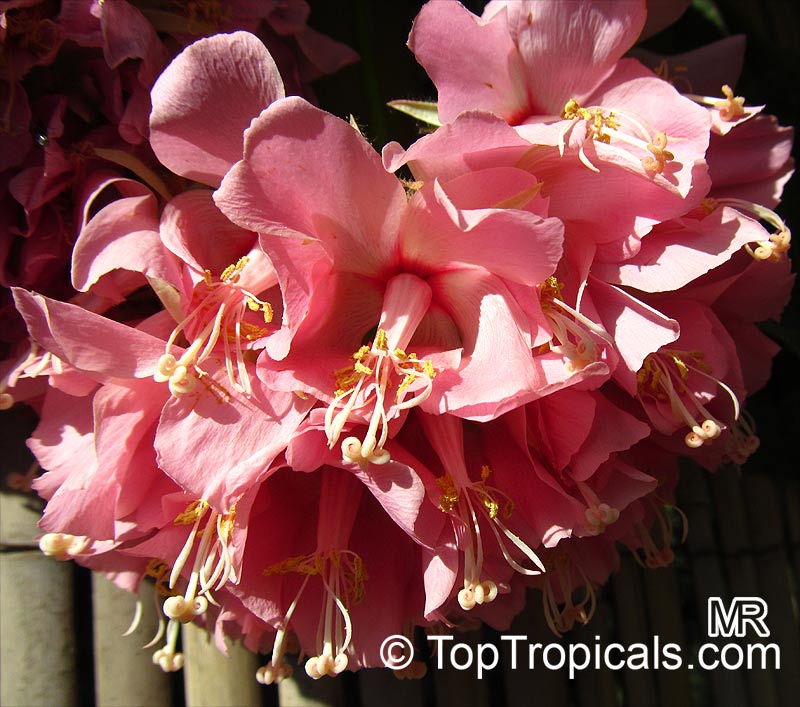
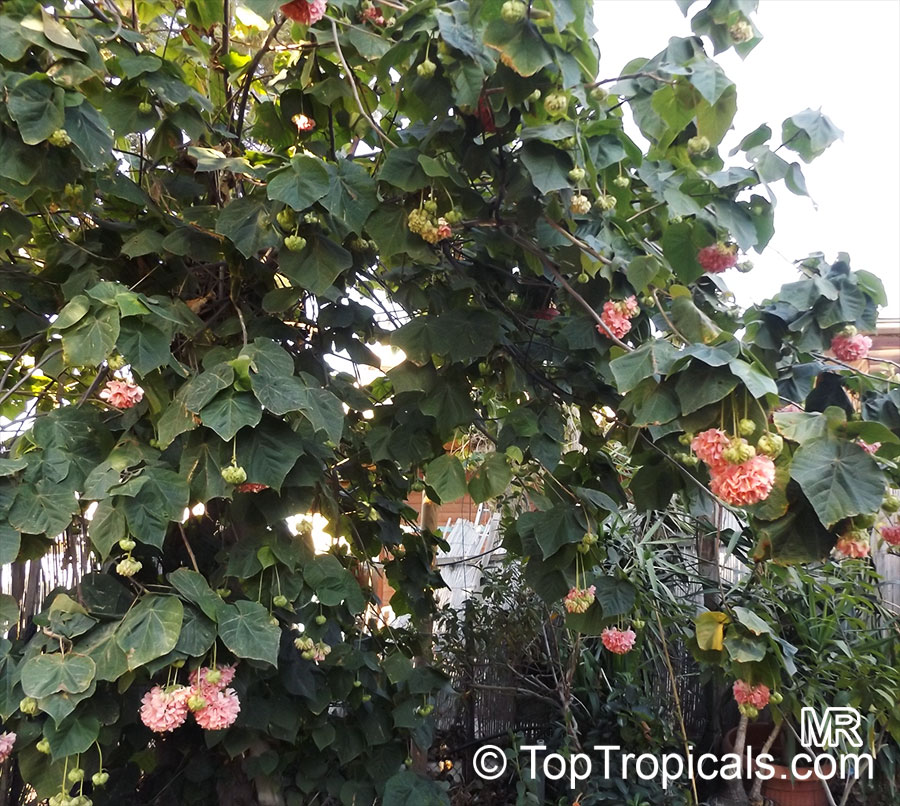
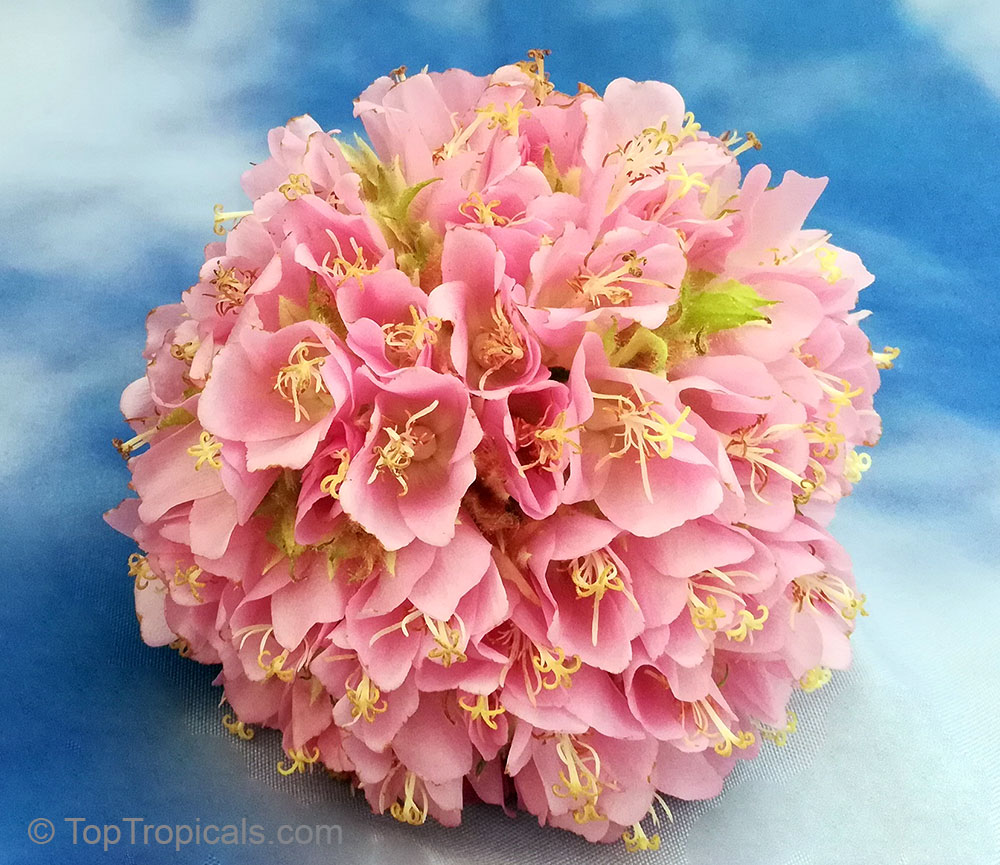
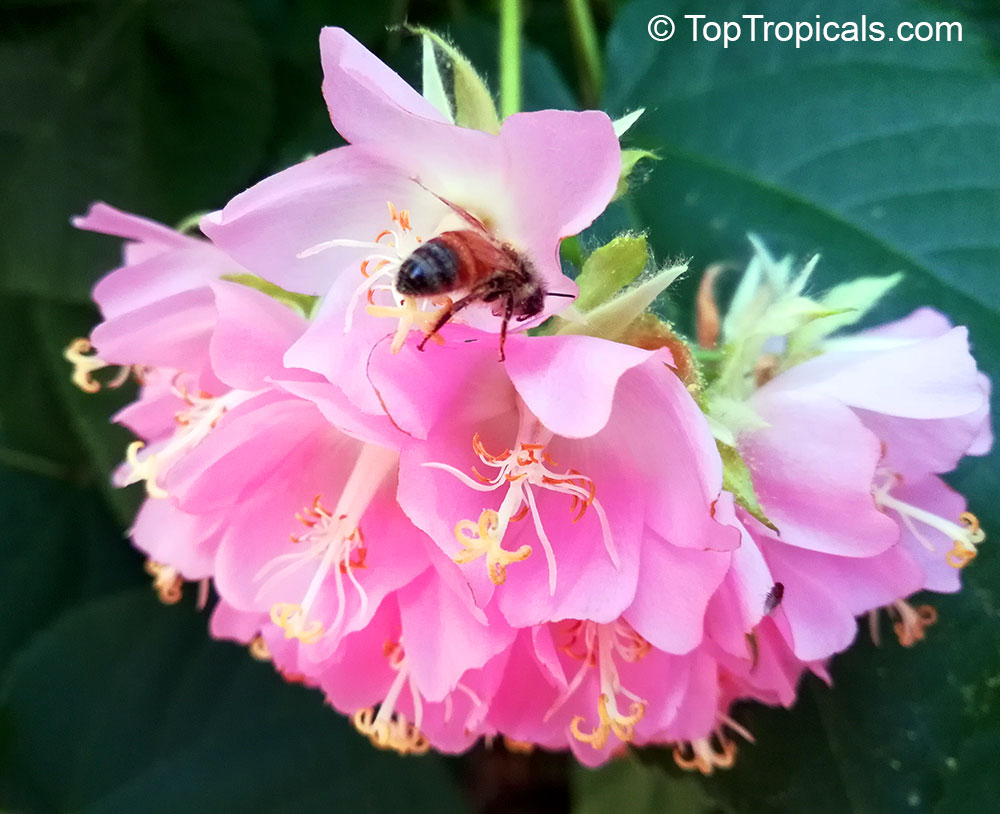
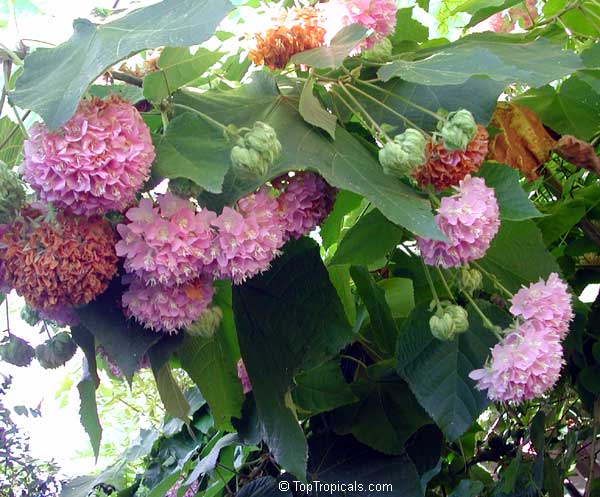
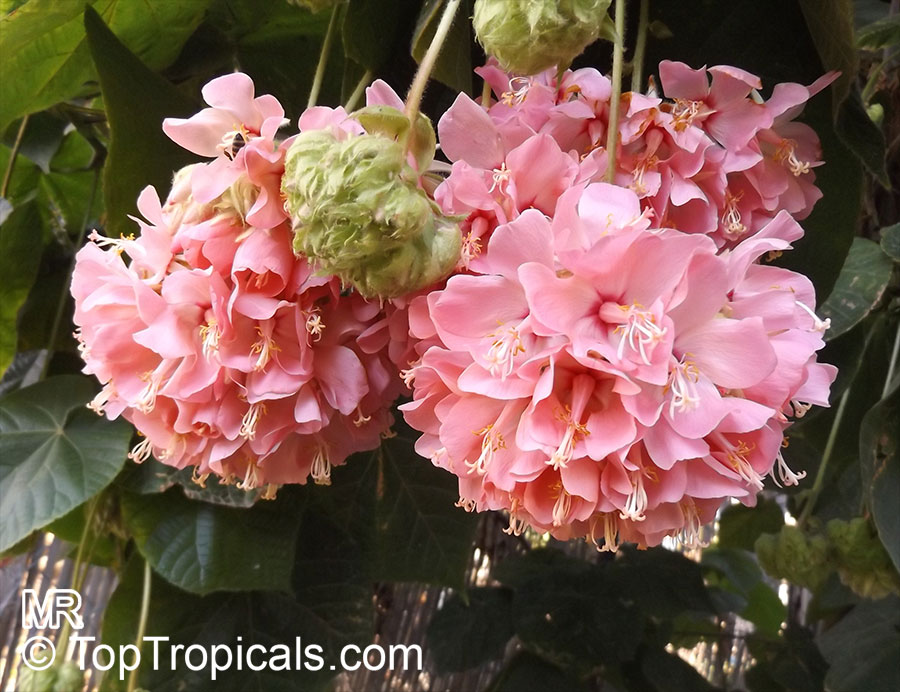
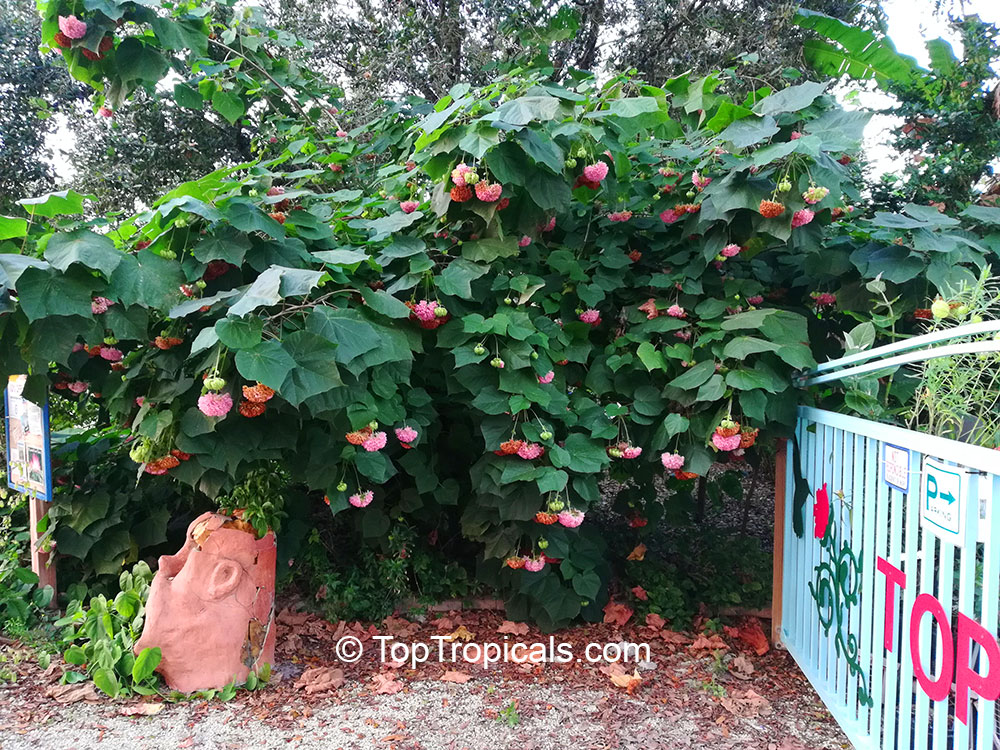
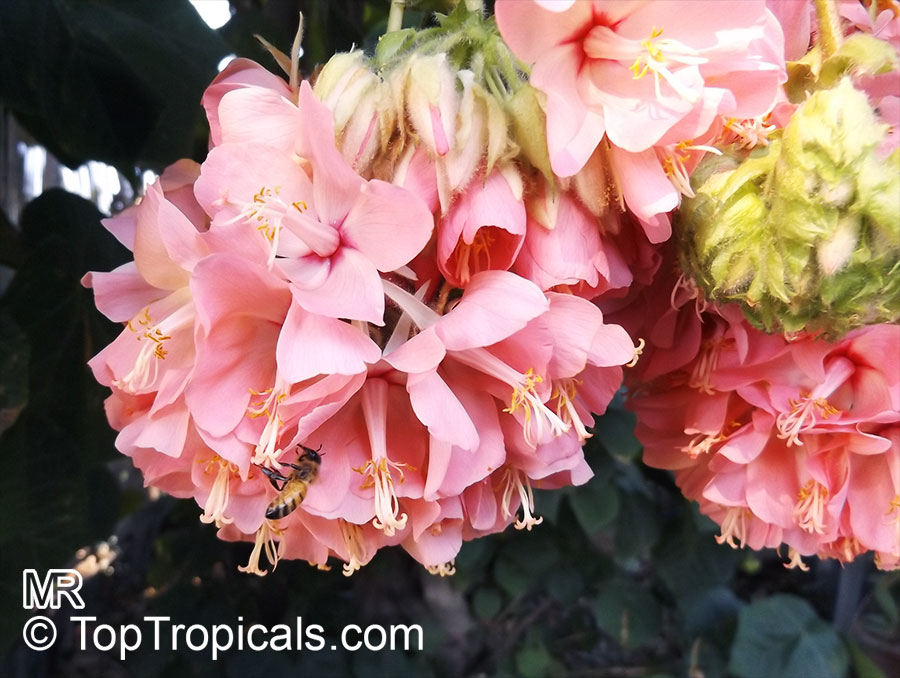
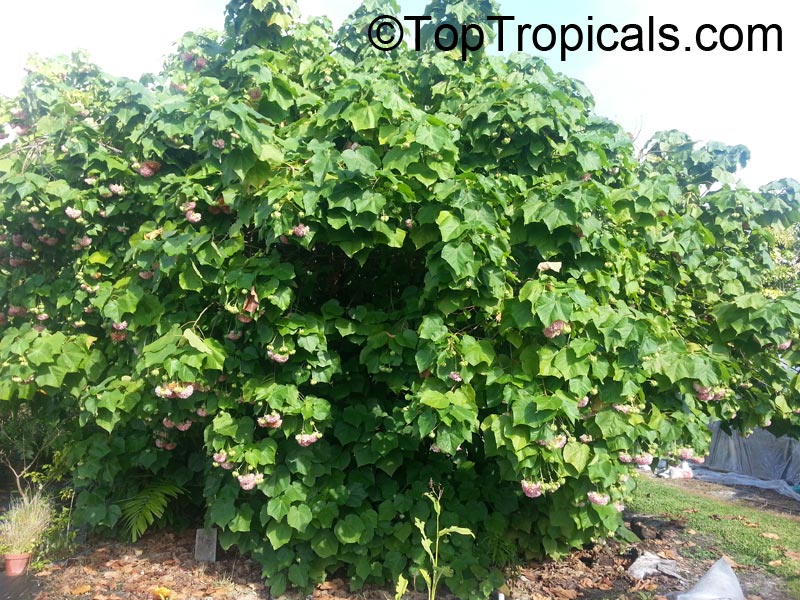
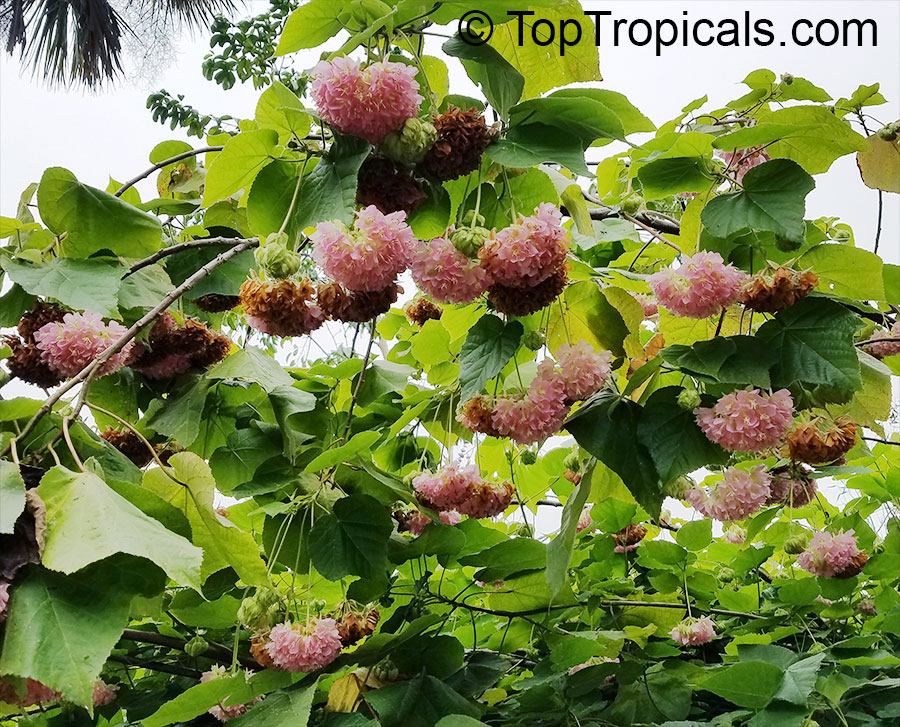
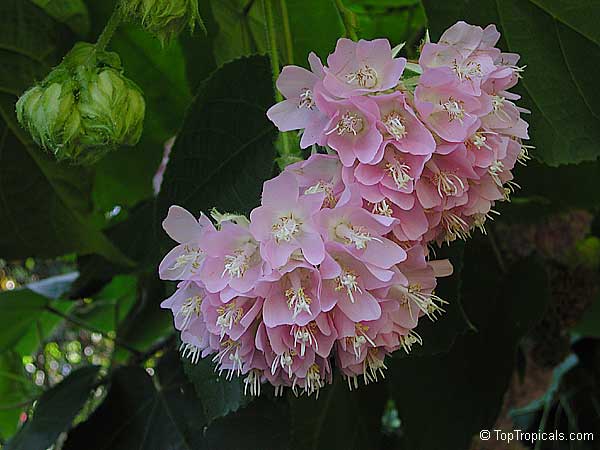
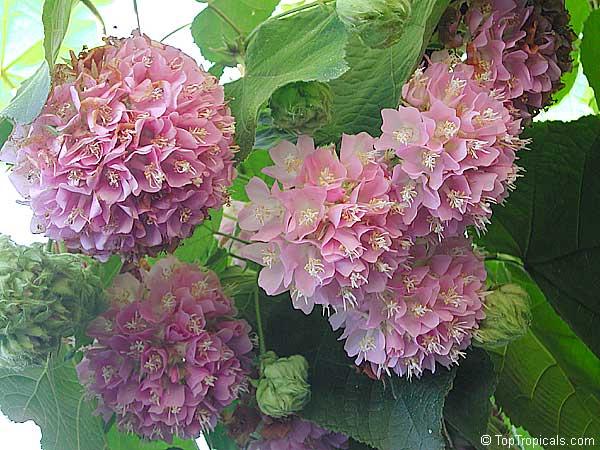
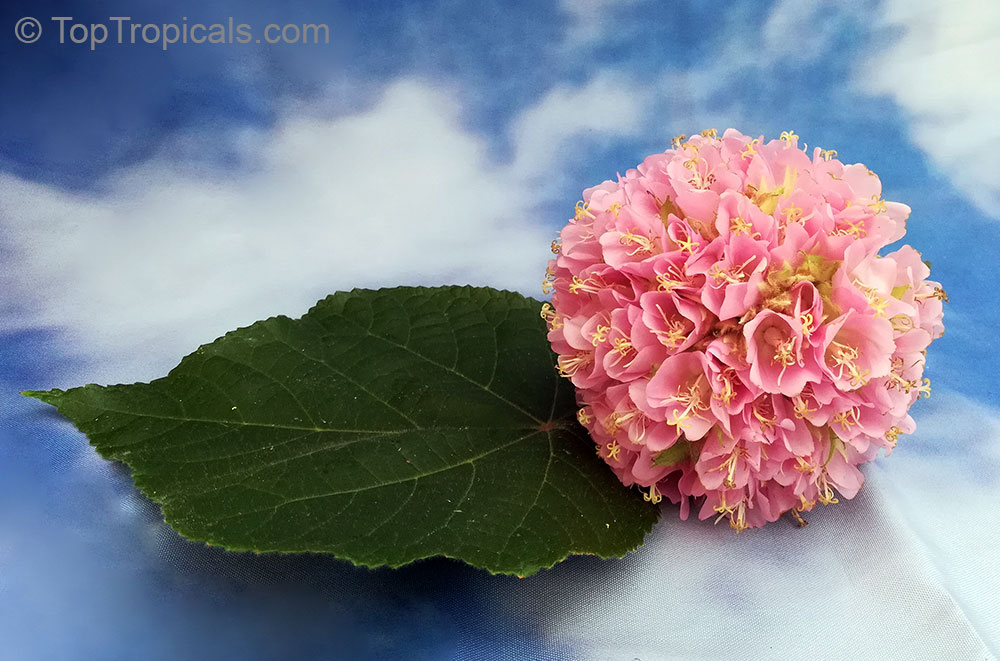
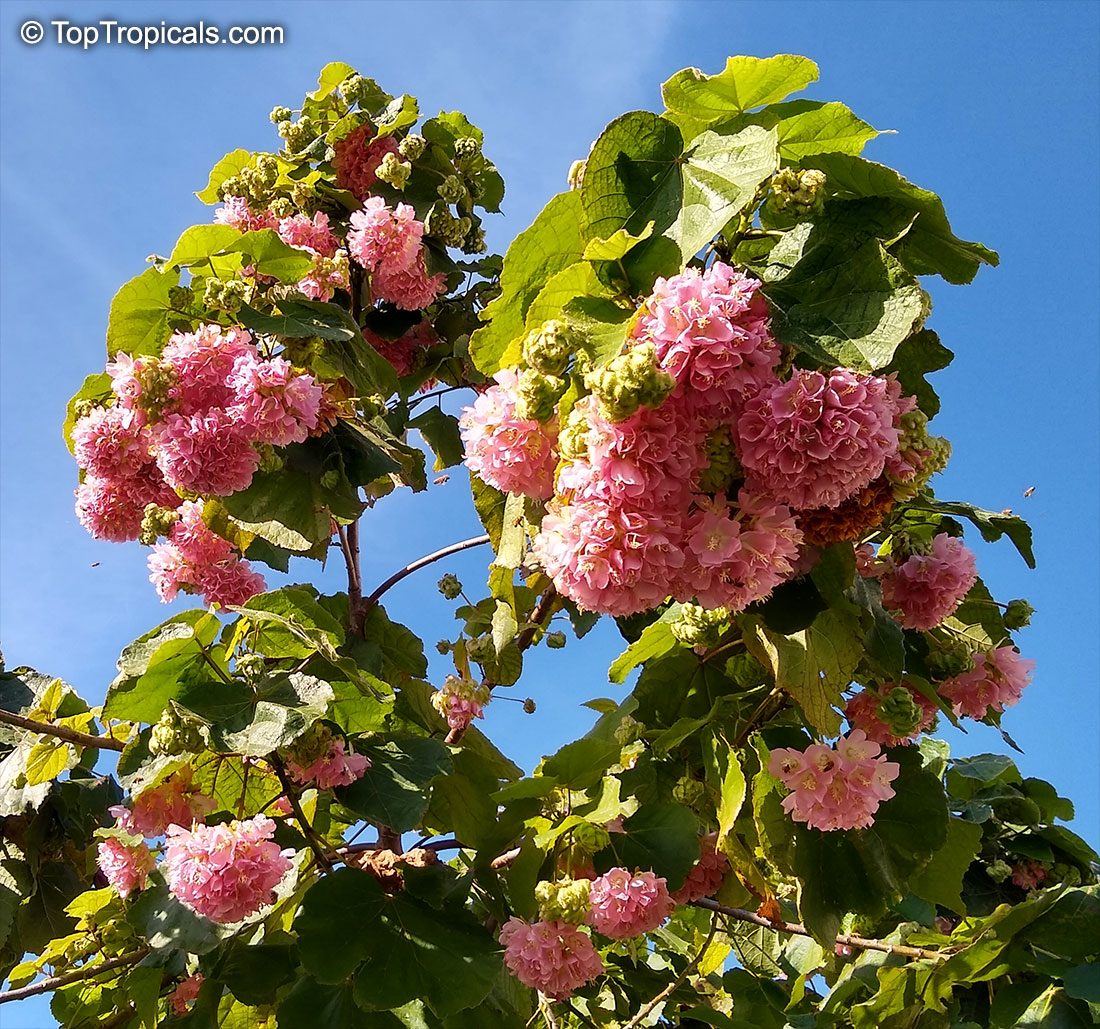
Dombeya wallichii or Pink Ball Tree does best in full sun, but will tolerate light shade. Dombeya wallichii is an amazing large evergreen shrub or small tree, up to 5-10 feet tall and 10-20 feet wide, native to Africa and Madagascar. Very often in horticulture, plants sold under this name are actually Dombeya x cayeuxii (a hybrid of D. wallichii x D. burgessiae), which is very difficult to distinguish visually.
When grown in full sun, the shrub will need moderate water. In colder regions, it should be grown in containers as it is not cold hardy below USDA Zone 9-11. In pot, it should be grown in well-draining soil and it is important to protect it from frost. When established, more drought-tolerant than most other Dombeyas. During the summer, it should be fertilized with a balanced plant food. This will help promote healthy growth and flowering. Pruning should be done in late autumn or winter to keep the plant small and bushy.
It is a great choice for attracting butterflies and hummingbirds due to its fragrant pink flowers, which bloom from autumn to spring. It can also be trained into a standard for a stunning display. Pruning in late autumn or winter will also help keep the plant small and bushy. Dombeya wallichii is an absolute must-have for gardens looking for a spectacular, fragrant winter bloomer.
Recommended Fertilizer: SUNSHINE Megaflor - Bloom Nutrition Booster

Recommended Fertilizer: SUNSHINE Megaflor - Bloom Nutrition Booster
7 gal pot. More developed root system, thicker trunk and branches. Plant height depends on growing season and variety. Dwarf varieties are slow growers and may be shorter. Contact us for exact size description if size/height matters to you. 7 gal plants may be shipped separately from other items by Ground service due to large size. See here time in transit (business days, excluding Sat-Sun!)
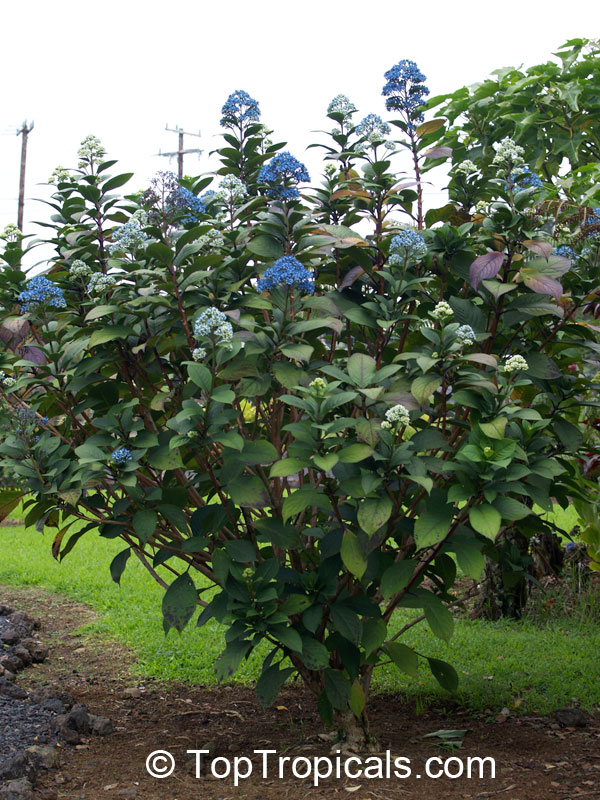
Botanical name: Dichroa sp.
Common name: Dichroa
Family: Hydrangeaceae
Origin: South East Asia
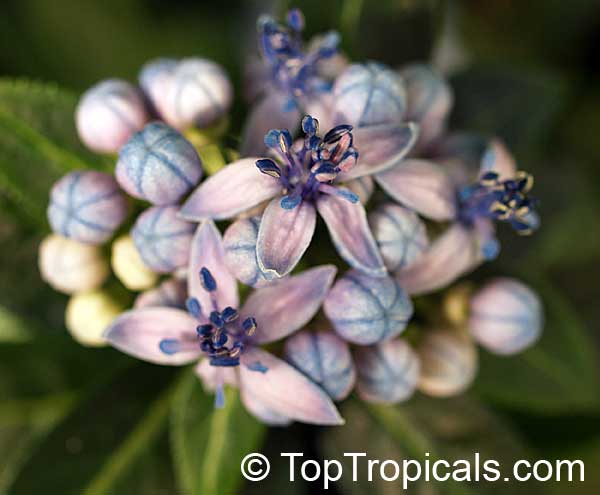
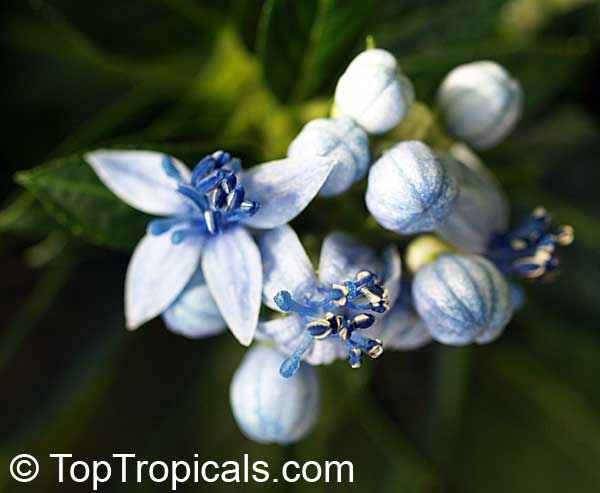
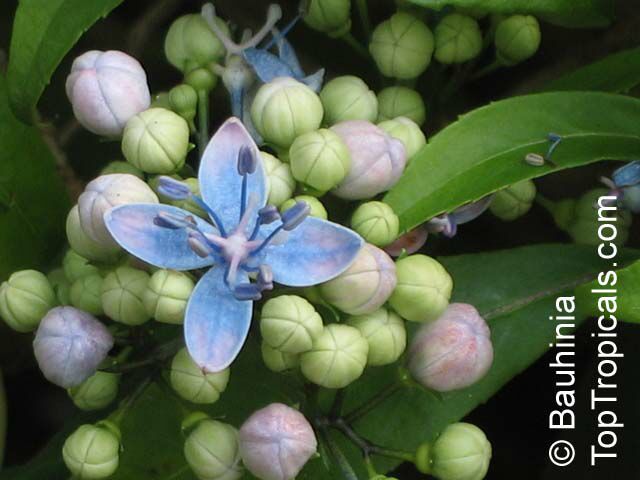
Dichroa is a genus of 12 species of flowering plants. The flowers are produced in a broad inflorescence similar to that of the related genus Hydrangea.
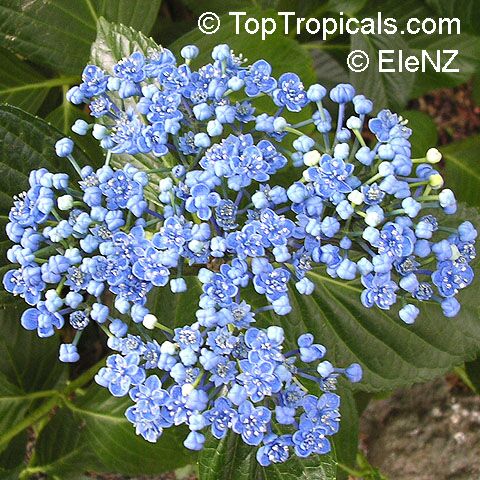
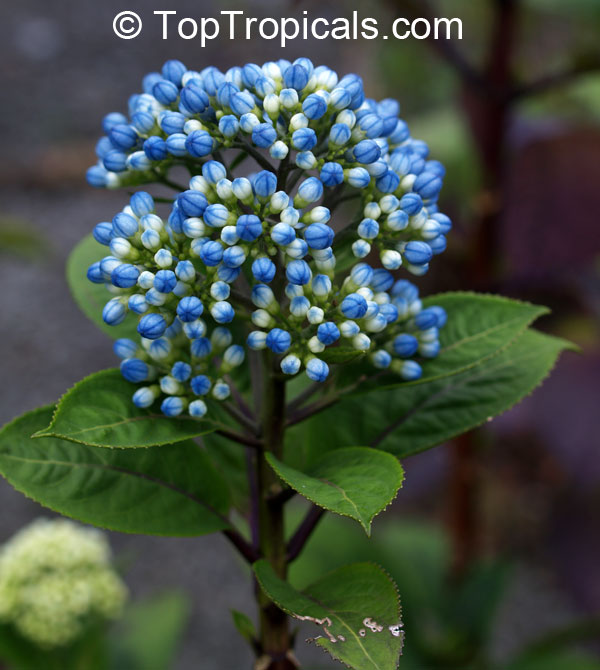
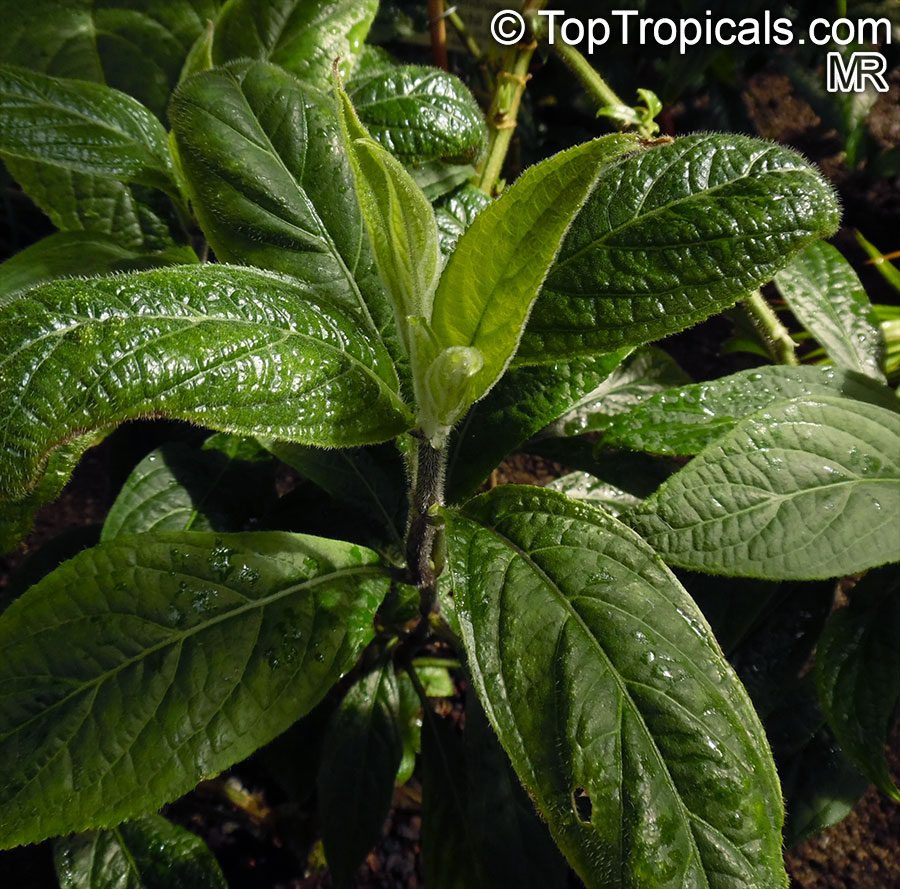
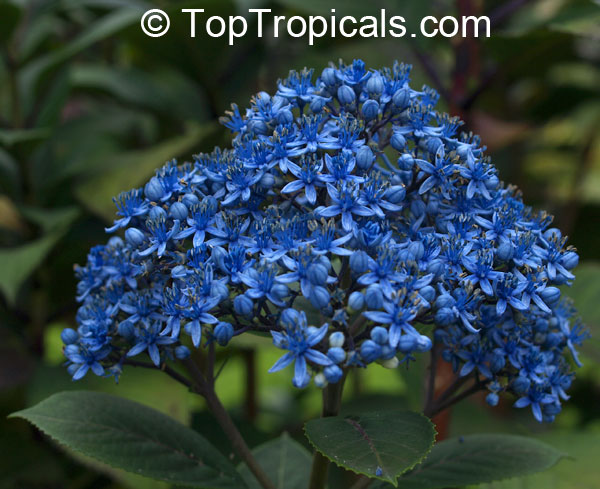
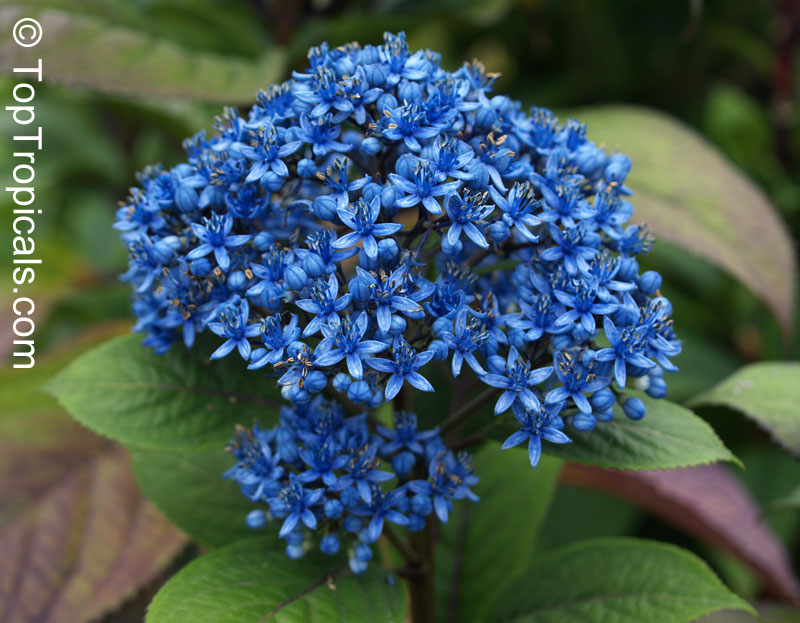
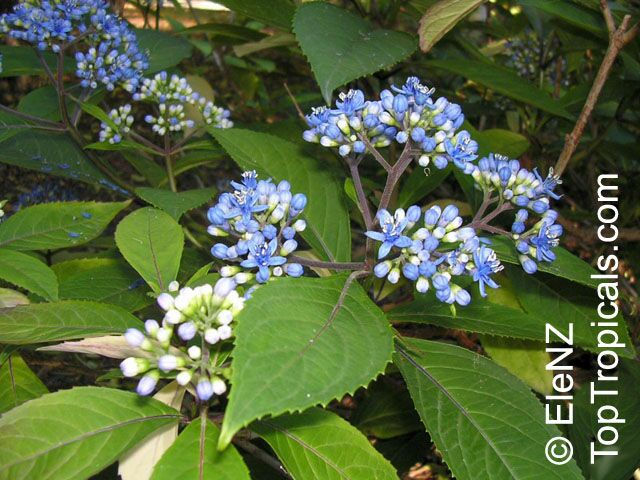
Dichroa febrifuga it blooms in broad domes of small fertile flowers of deep blue. What immediately distinguishes it are the nearly black stems on all new growth.
In some sources Dichroa febrifuga is indicated as synonim of Dichroa versicolor.

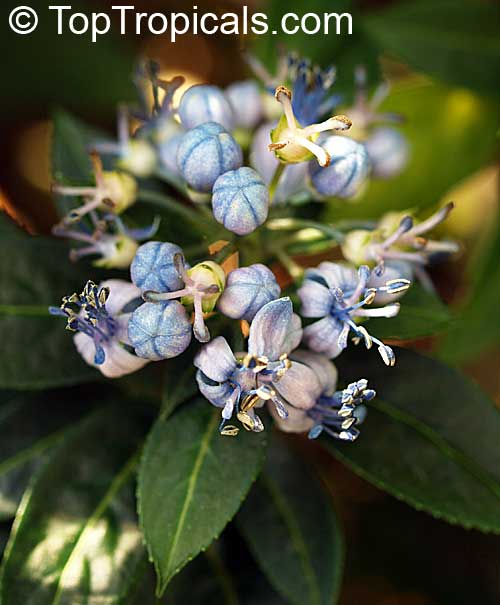
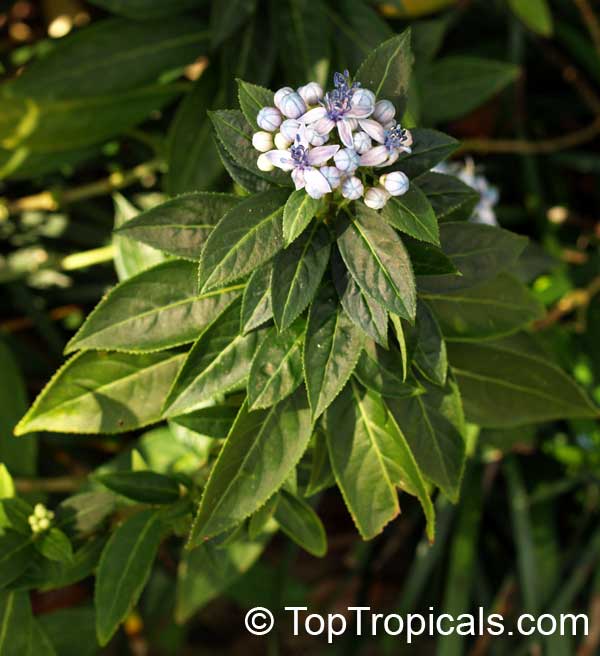

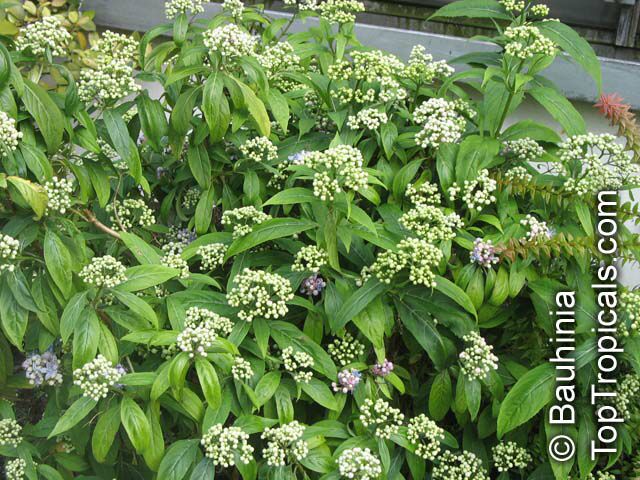
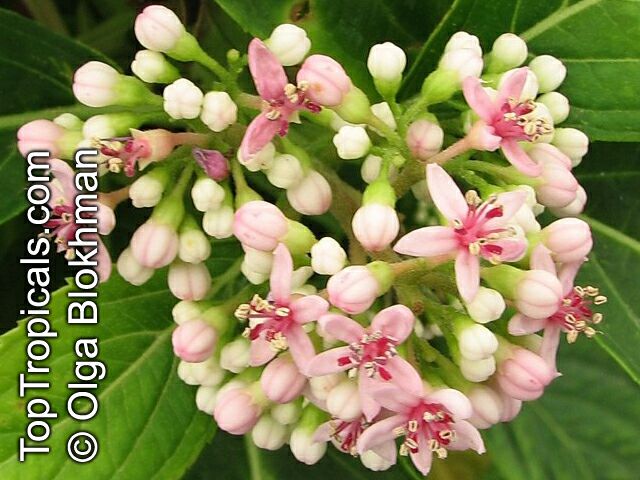
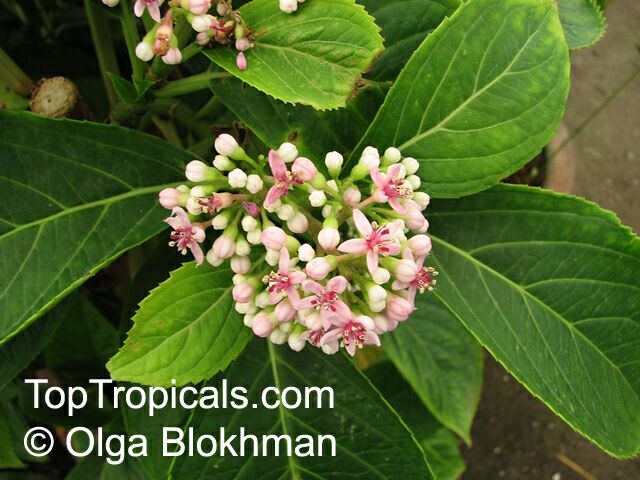
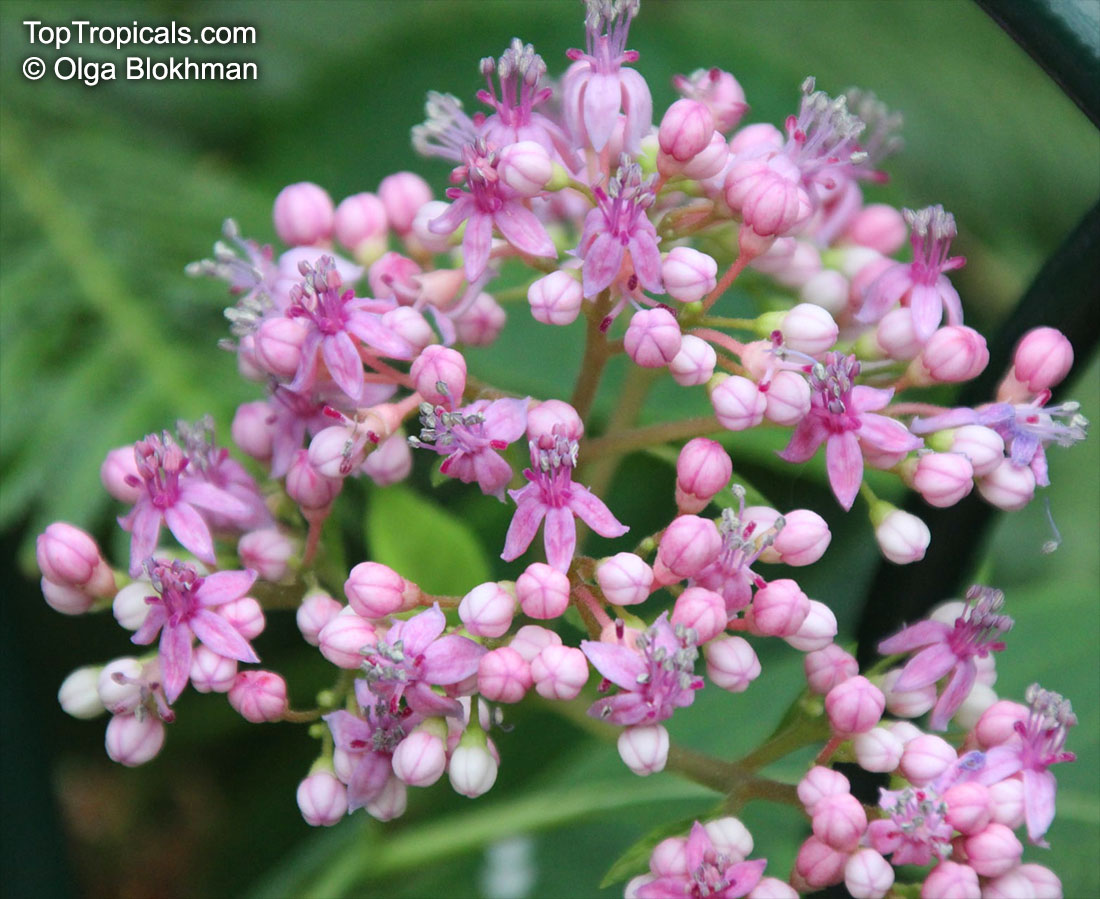
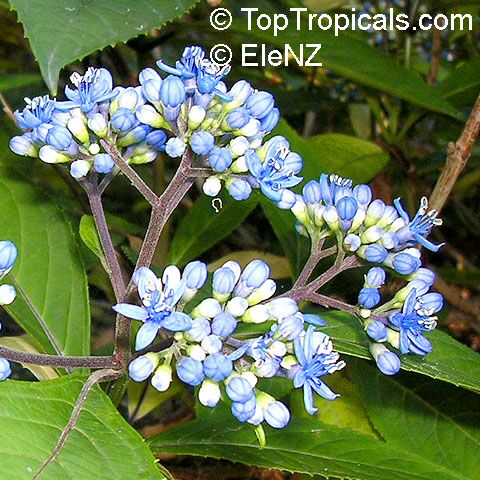
Botanical name: Dichroa versicolor
Common name: Dichroa
Family: Hydrangeaceae
Origin: South East Asia
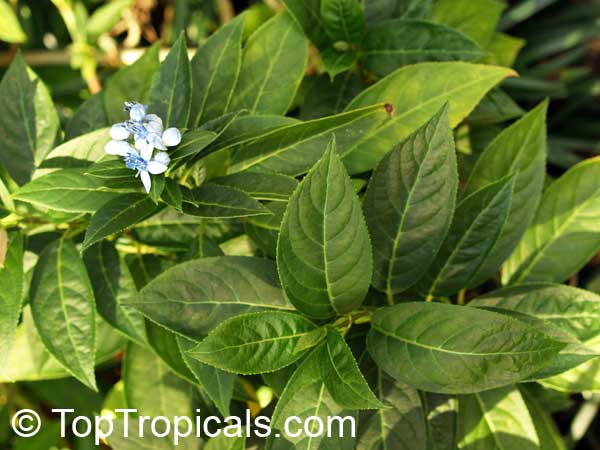
Like Dichroa febrifuga it blooms in broad domes of small fertile flowers of deep blue. What immediately distinguishes it are the nearly black stems on all new growth. This shrub is dense, upright and robust, reaching over six feet. Evergreen and rather tender, it will thrive in most parts of Zones 8-10, but shoud be given a sheltered position. Best planted in sun or shade. It's best to prune to around half size after flowering to maintain vigour and flower performance next summer. Tolerant of dry spells, more so than it's sisters, the hydrangeas. Yellowing of foliage though is a sign that it needs more water, and very likely a little general fertilizer.
| Next | |
Use link to repeat this search:
https://toptropicals.com/cgi-bin/garden_catalog/cat.cgi?find=Hydrangea&search_op=and&keyword_op=and&language=e&number=10
&no_change_lang=1&user=tt&sale=1&first=0