Handroanthus - Plant Encyclopedia Results
| Number of plants found: 3 |
Botanical names: Handroanthus chrysotrichus, Tabebuia chrysotricha
Common name: Dwarf Golden Tabebuia
Family: Bignoniaceae
Origin: Brazil
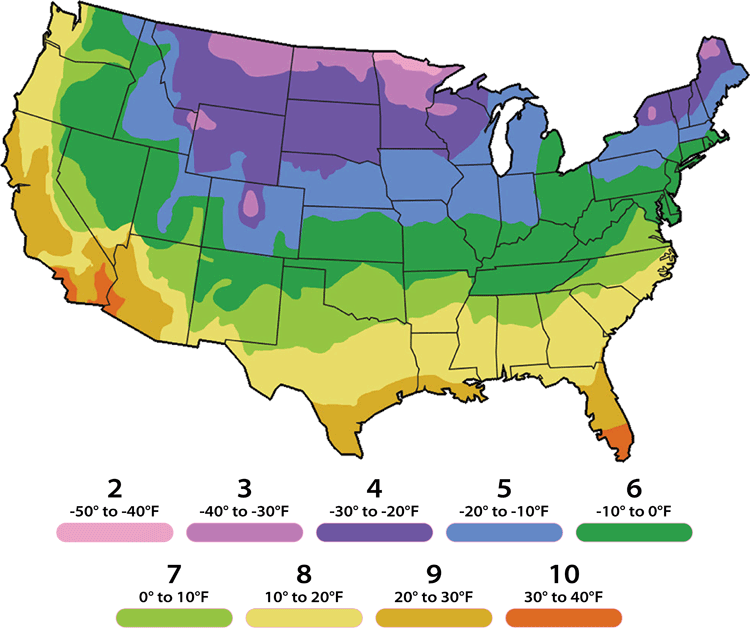
USDA Zone: 9-11


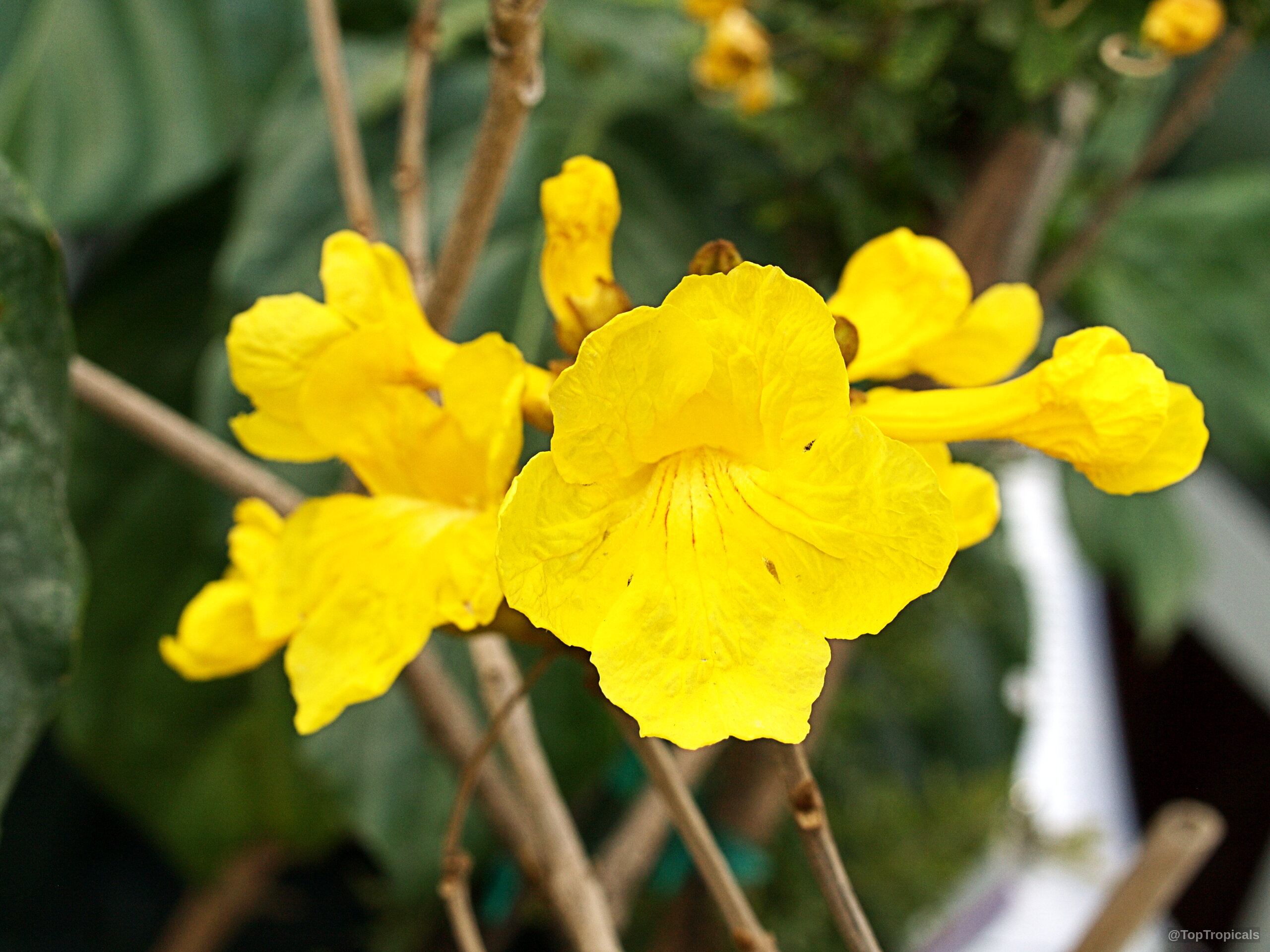
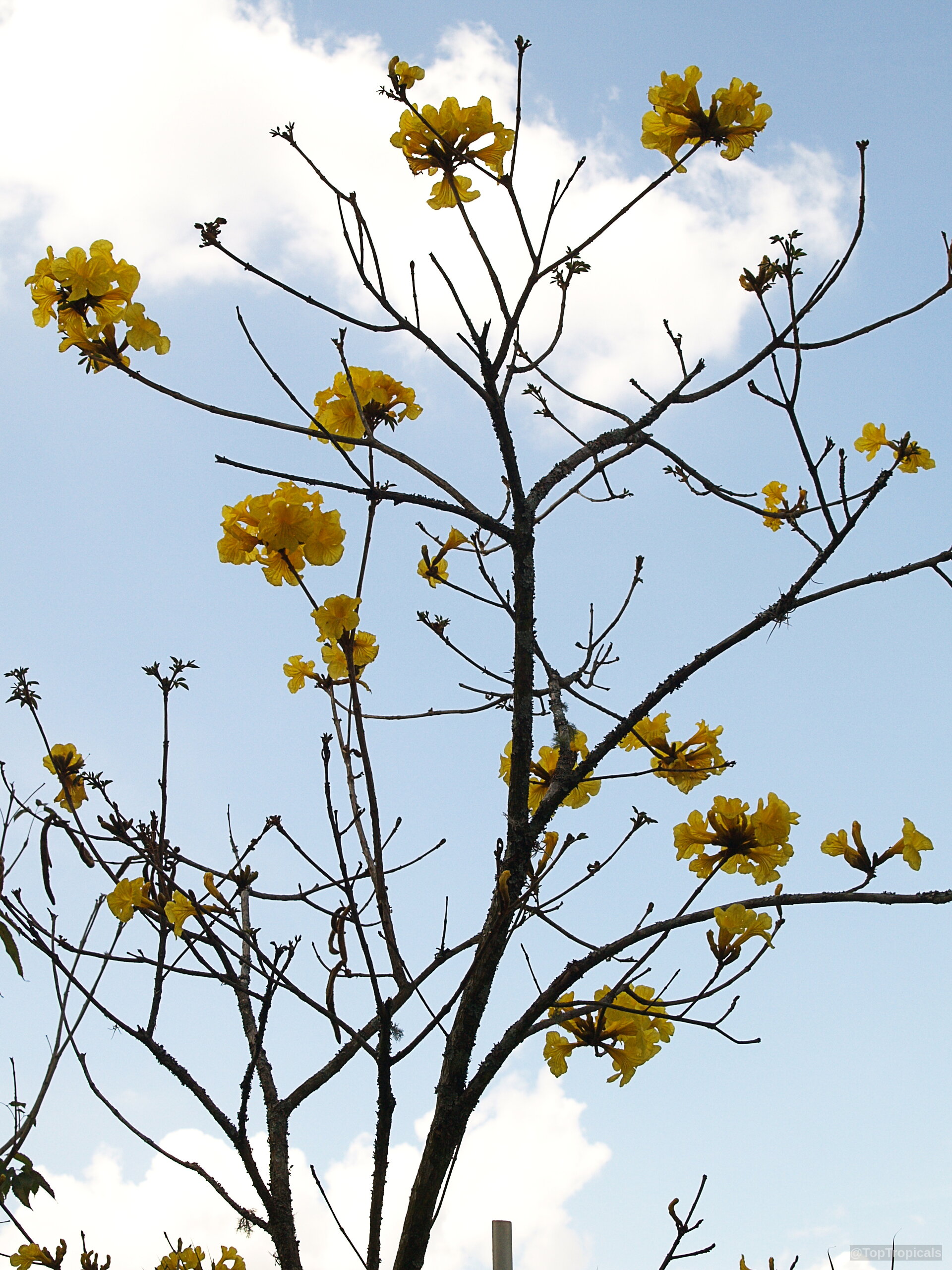
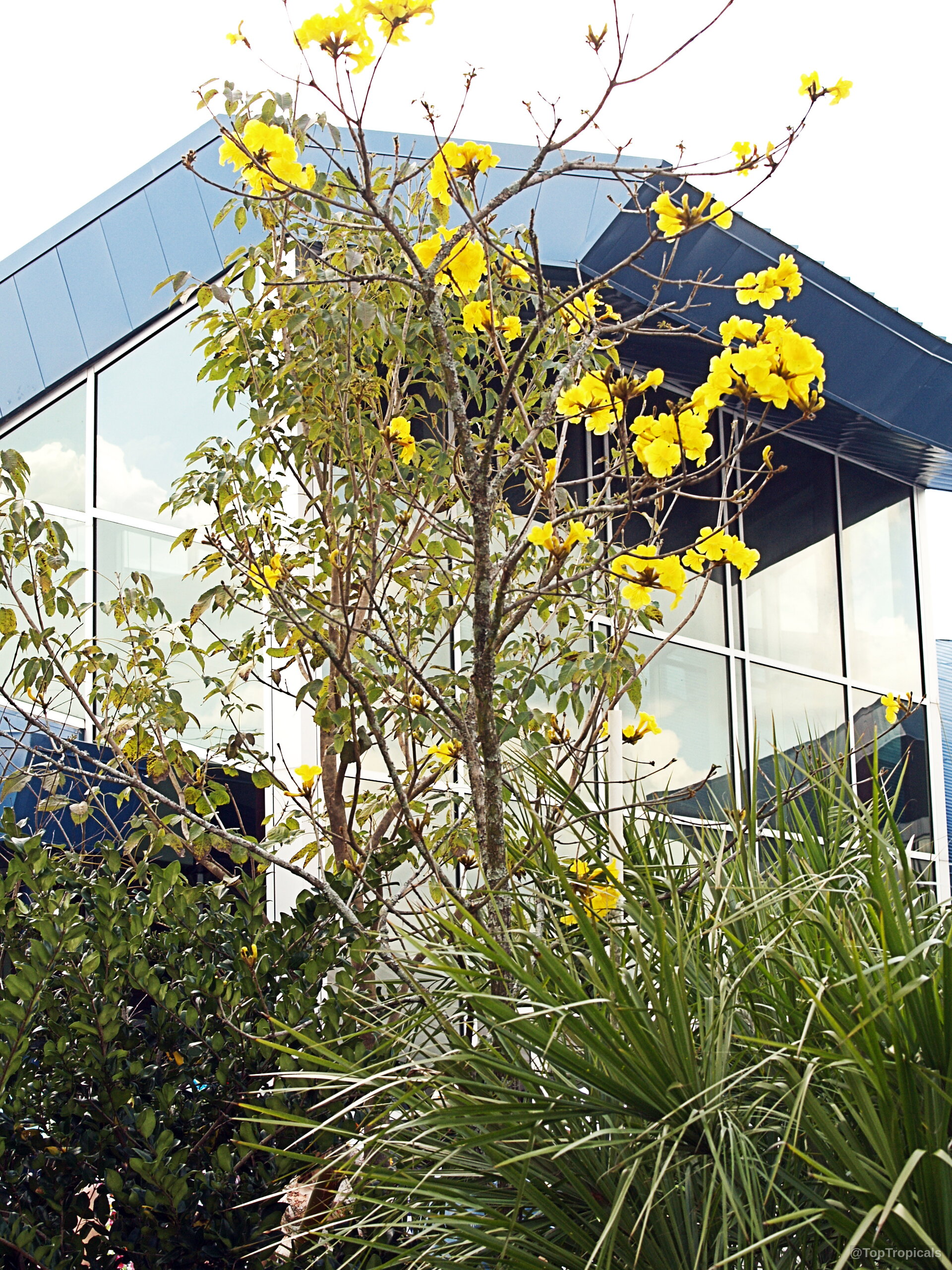
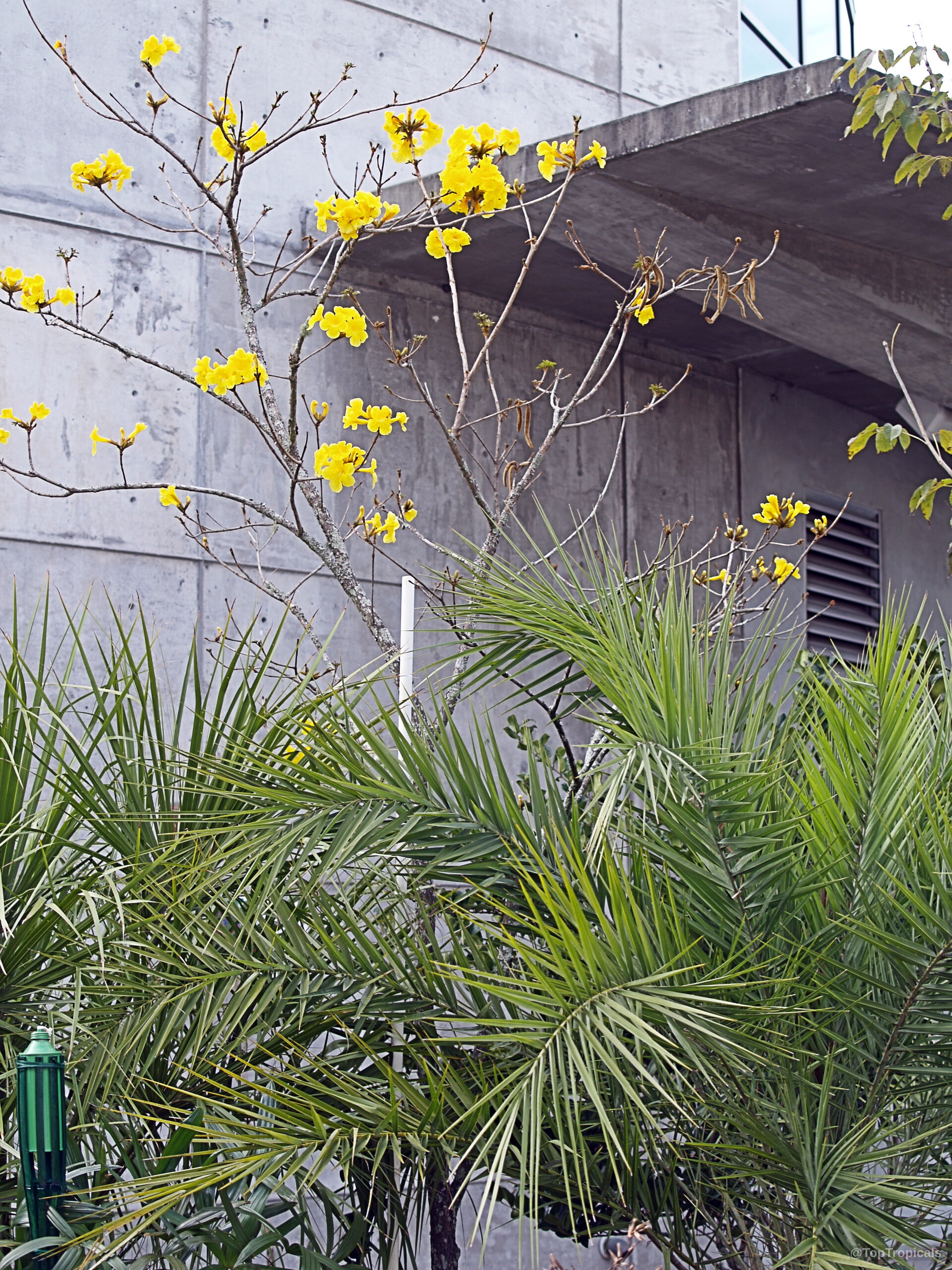
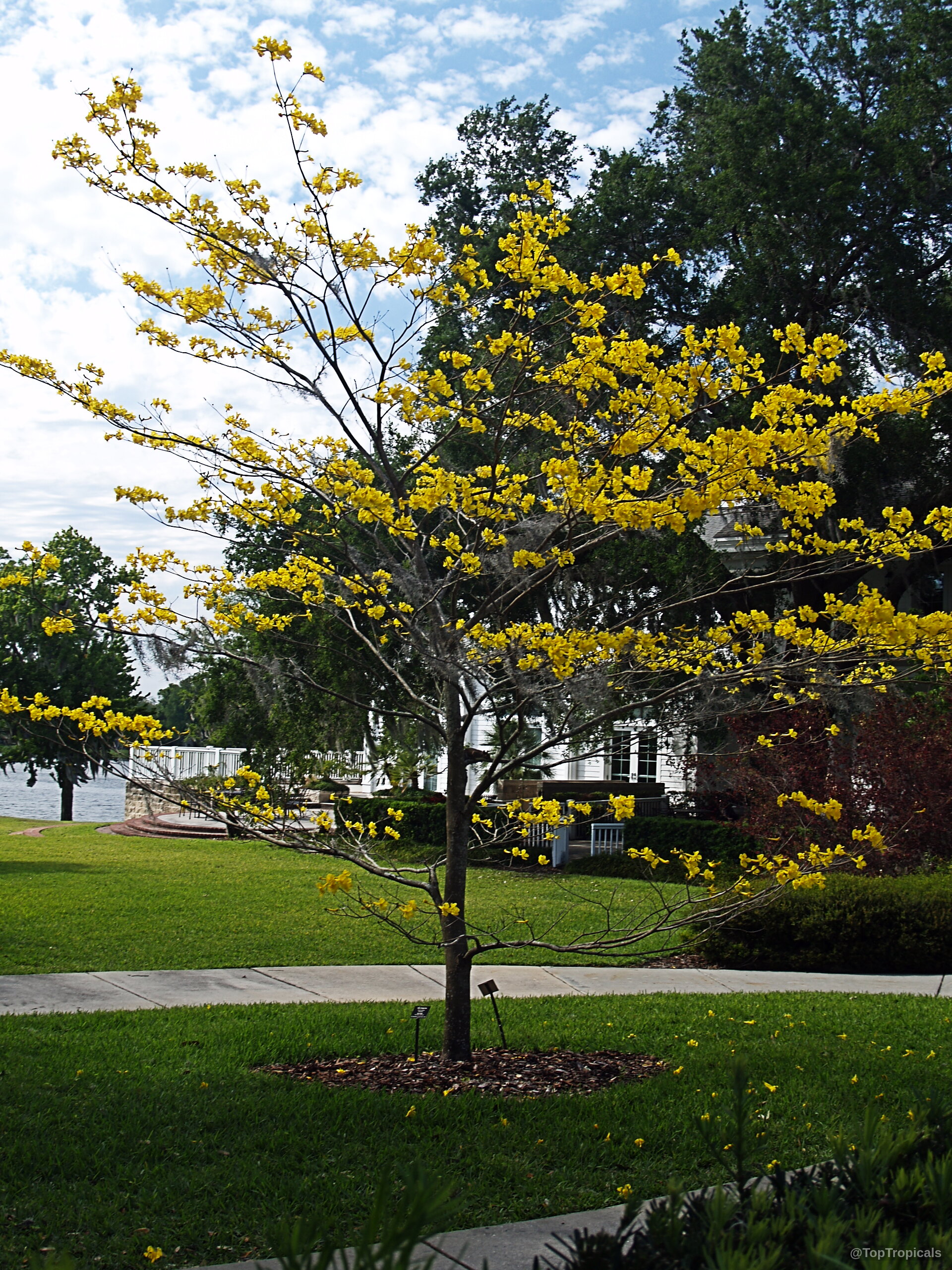
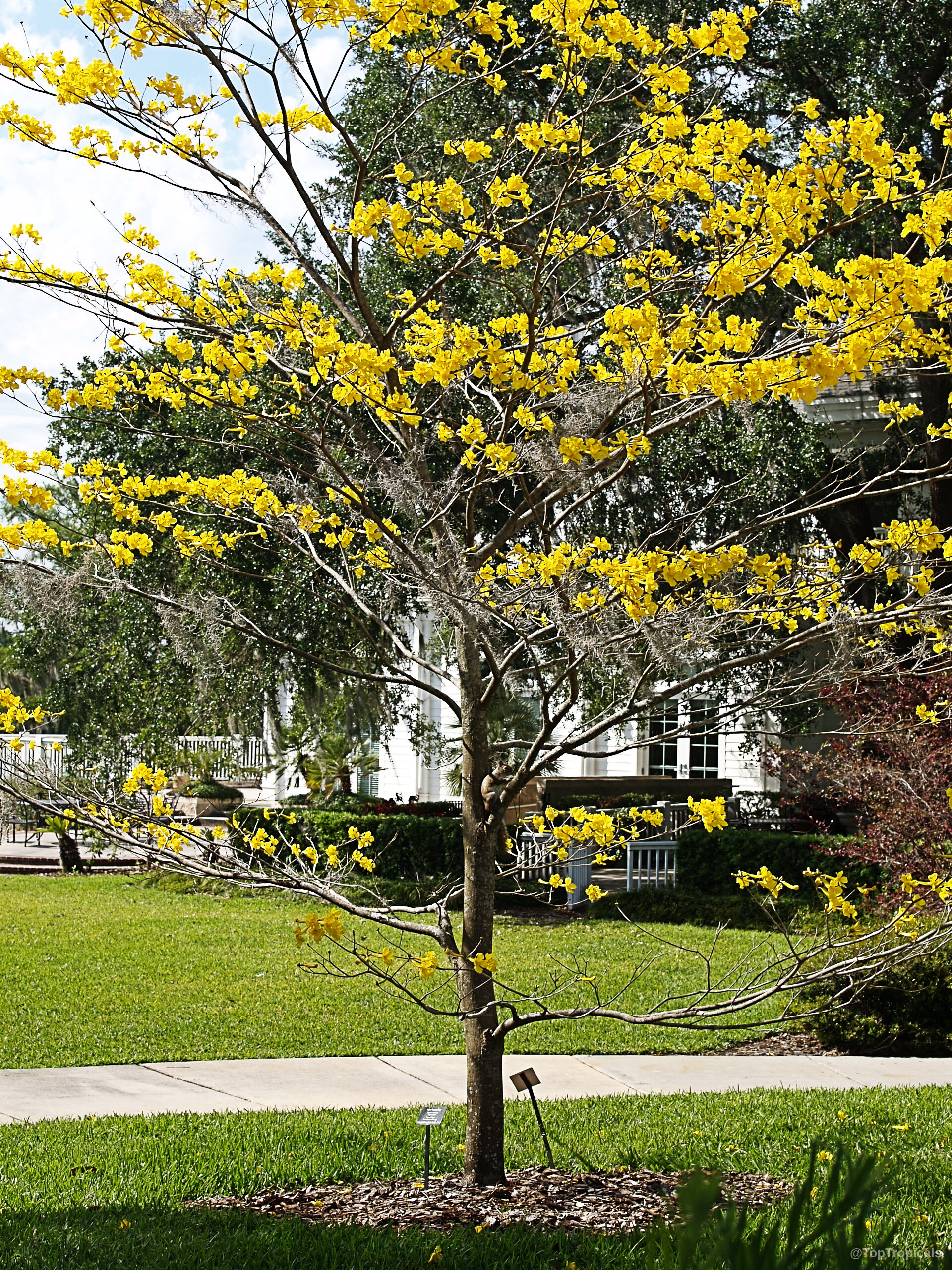
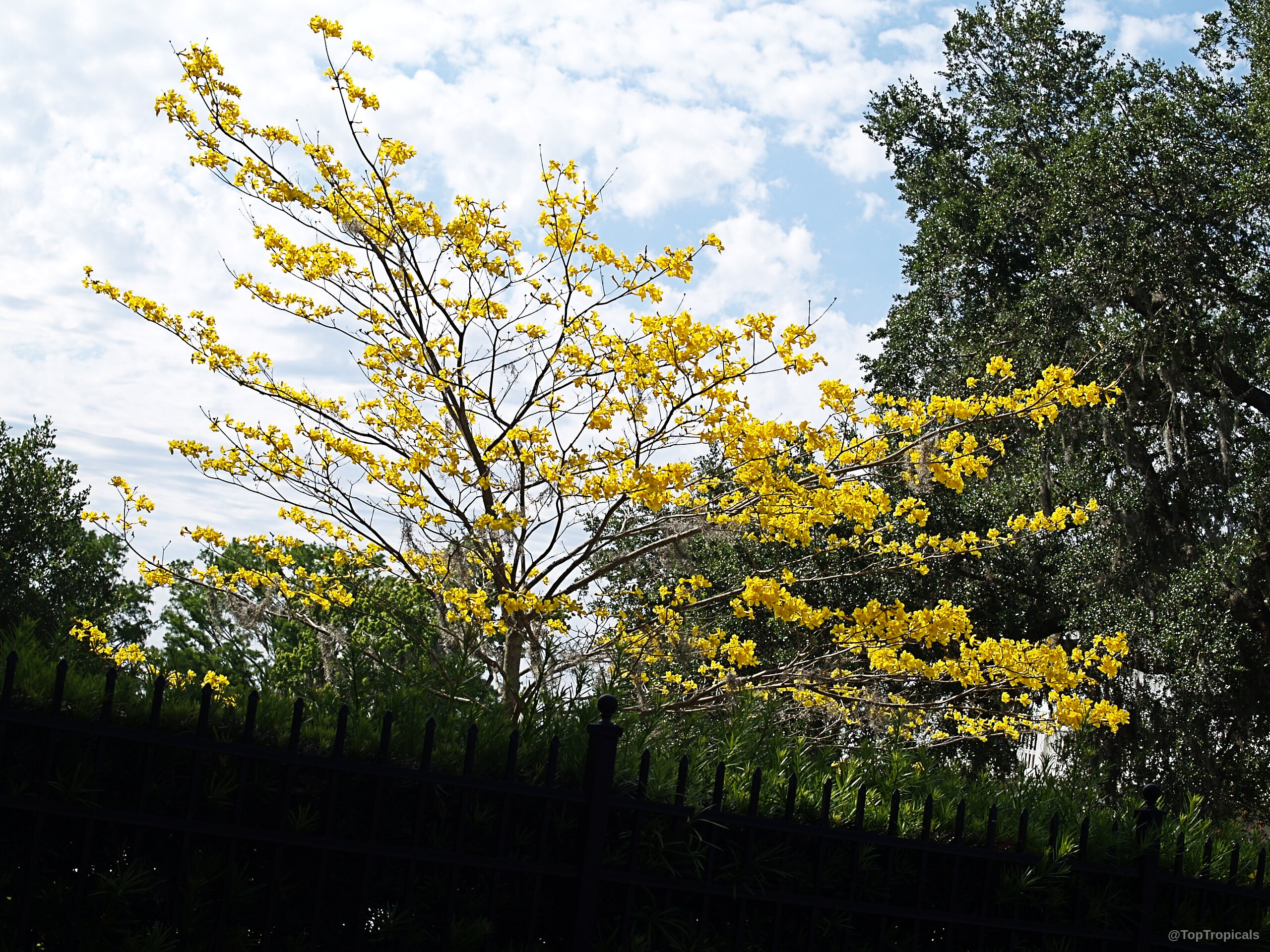
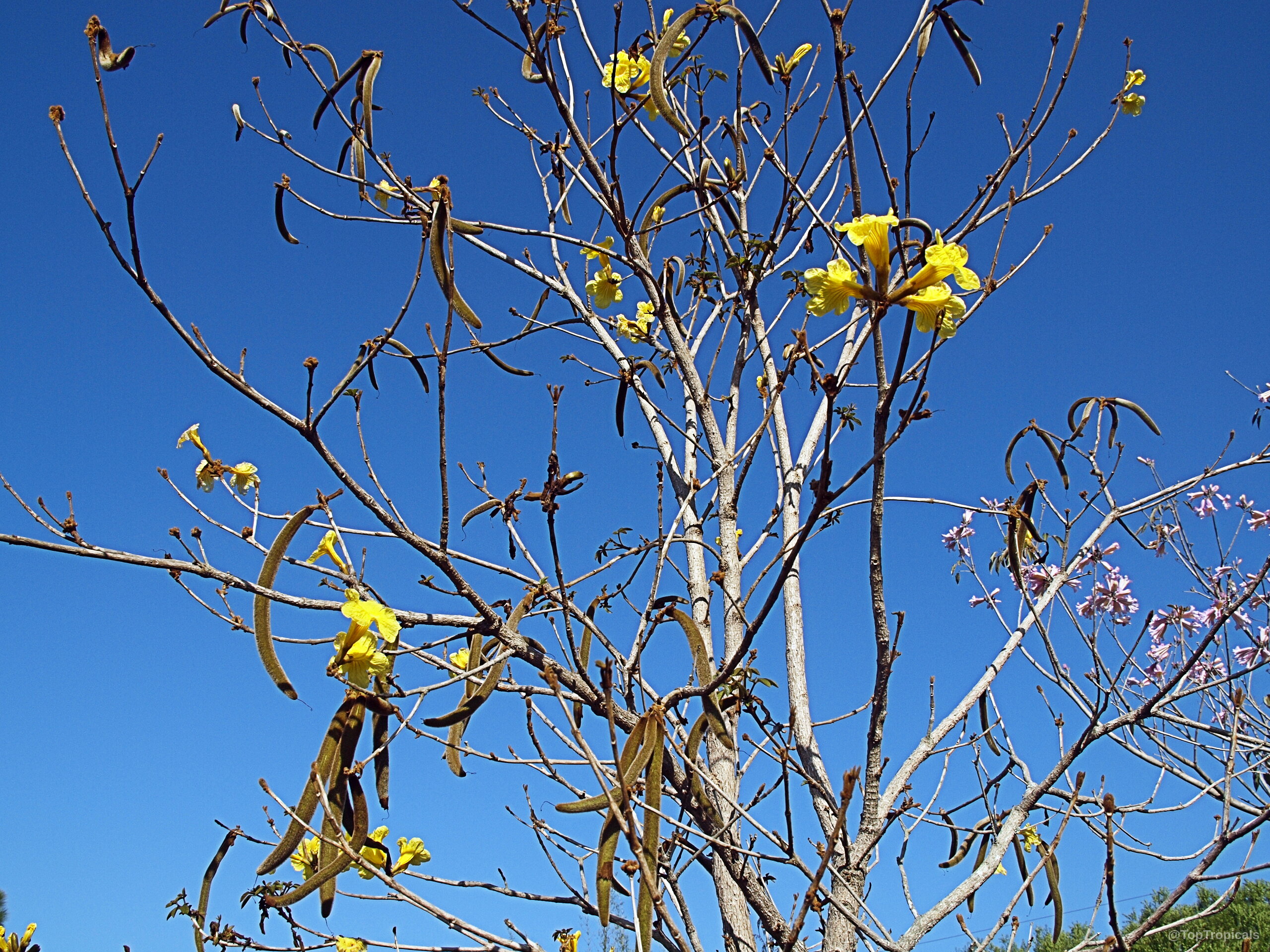
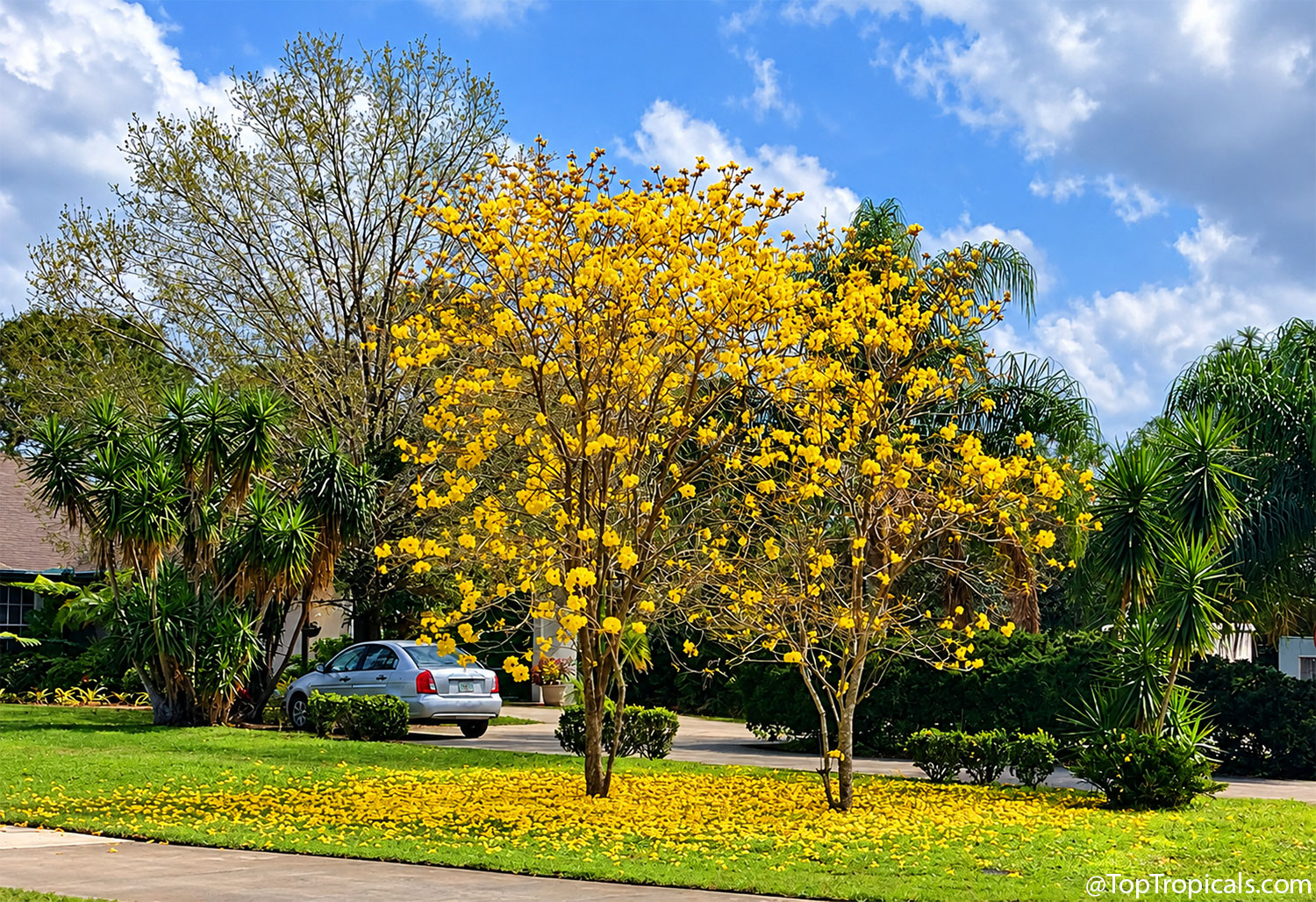
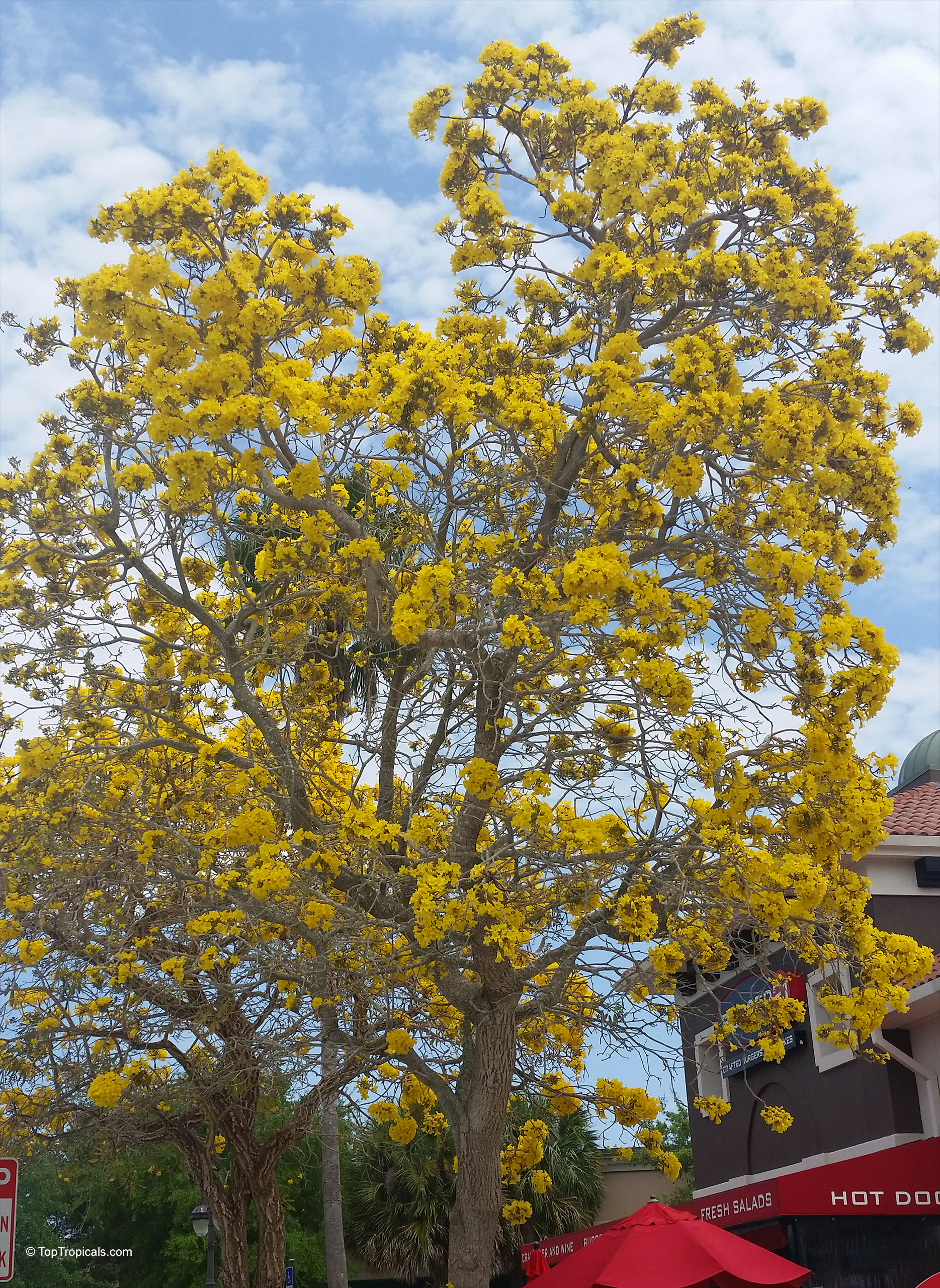
Handroanthus chrysotrichus, commonly known as Golden Trumpet Tree or Yellow Ipe, is a deciduous tree in the Bignoniaceae family, native to the Atlantic Forest of southeastern and southern Brazil. Formerly classified as Tabebuia chrysotricha, it is particularly admired for its spectacular flowering display. Usually reaching 15-30 feet tall in cultivation, it develops a rounded to irregular crown with palmately compound leaves consisting of five leaflets. The young branches, leaf undersides, and flower buds are covered with dense golden-brown hairs, a distinctive feature reflected in the species name chrysotrichus. In late winter or spring, often while the tree is nearly leafless, abundant clusters of brilliant golden-yellow, trumpet-shaped flowers cover the branches. The flowers are followed by elongated capsules containing numerous winged seeds.
Handroanthus chrysotrichus grows best in full sun and well-drained soil, tolerating seasonal drought once established. Flowering is often especially impressive after a relatively dry winter. It is widely cultivated as an ornamental street and garden tree in warm climates, where its moderate size and vivid flowers make it particularly attractive. Suitable for USDA Zones 9b-11, established trees may tolerate brief light frosts, although young plants require protection. It can also be grown in large containers while young, but eventually needs sufficient space for its developing root system and crown.





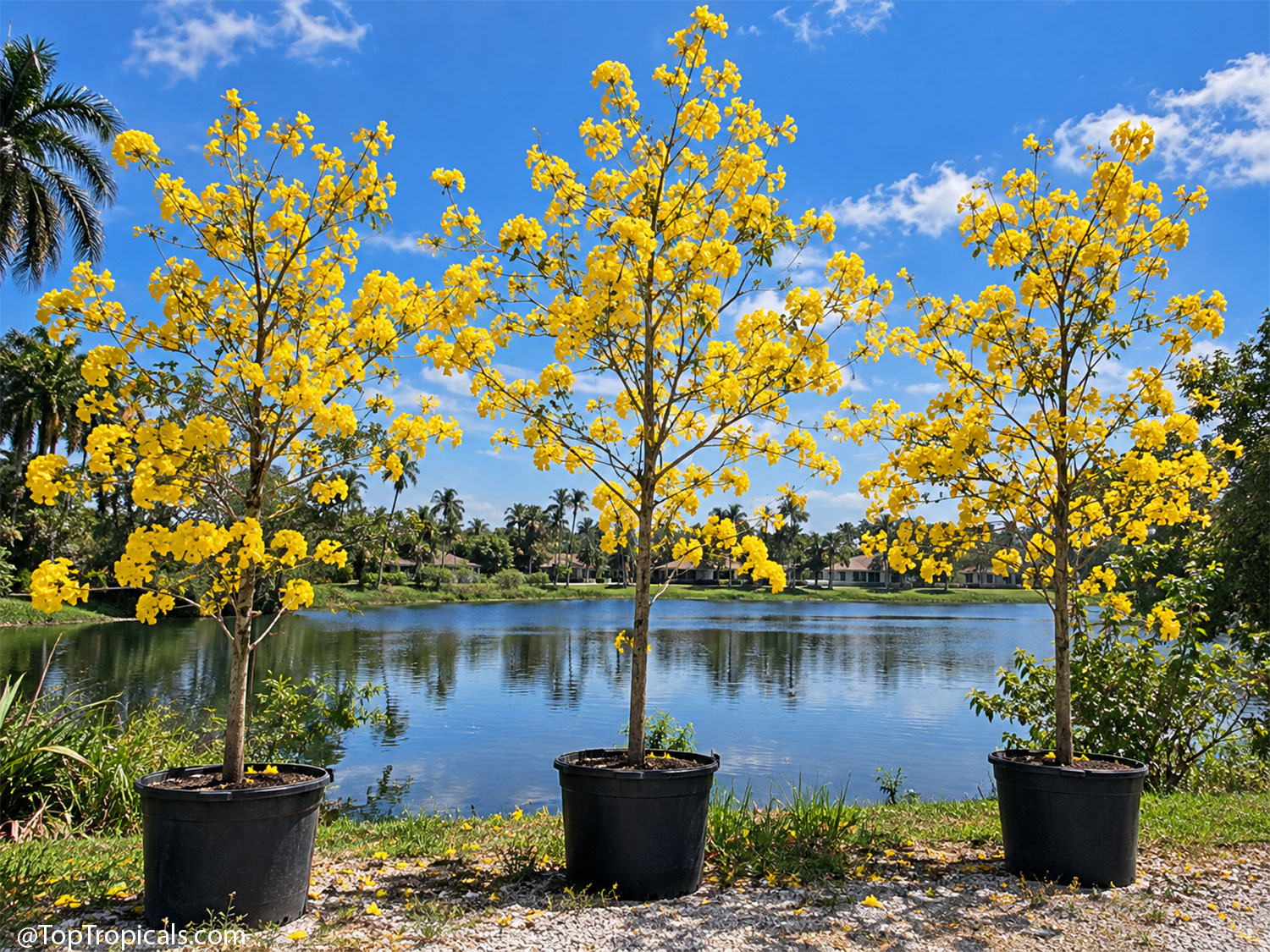

Local pickup only. This item is not available for shipping. Local delivery may be available in Ft. Myers or Sebring, Florida. Contact us for an estimate. Non-pickup orders are subject to restocking fees.
Recommended Fertilizer: SUNSHINE Megaflor - Bloom Nutrition Booster
Ordering seeds info
RECOMMENDED SUPPLIES:
Seed Germination Mix #3, professional grade
SUNSHINE-Epi - Seeds and cuttings booster
SUNSHINE Bombino - Young Plant Booster
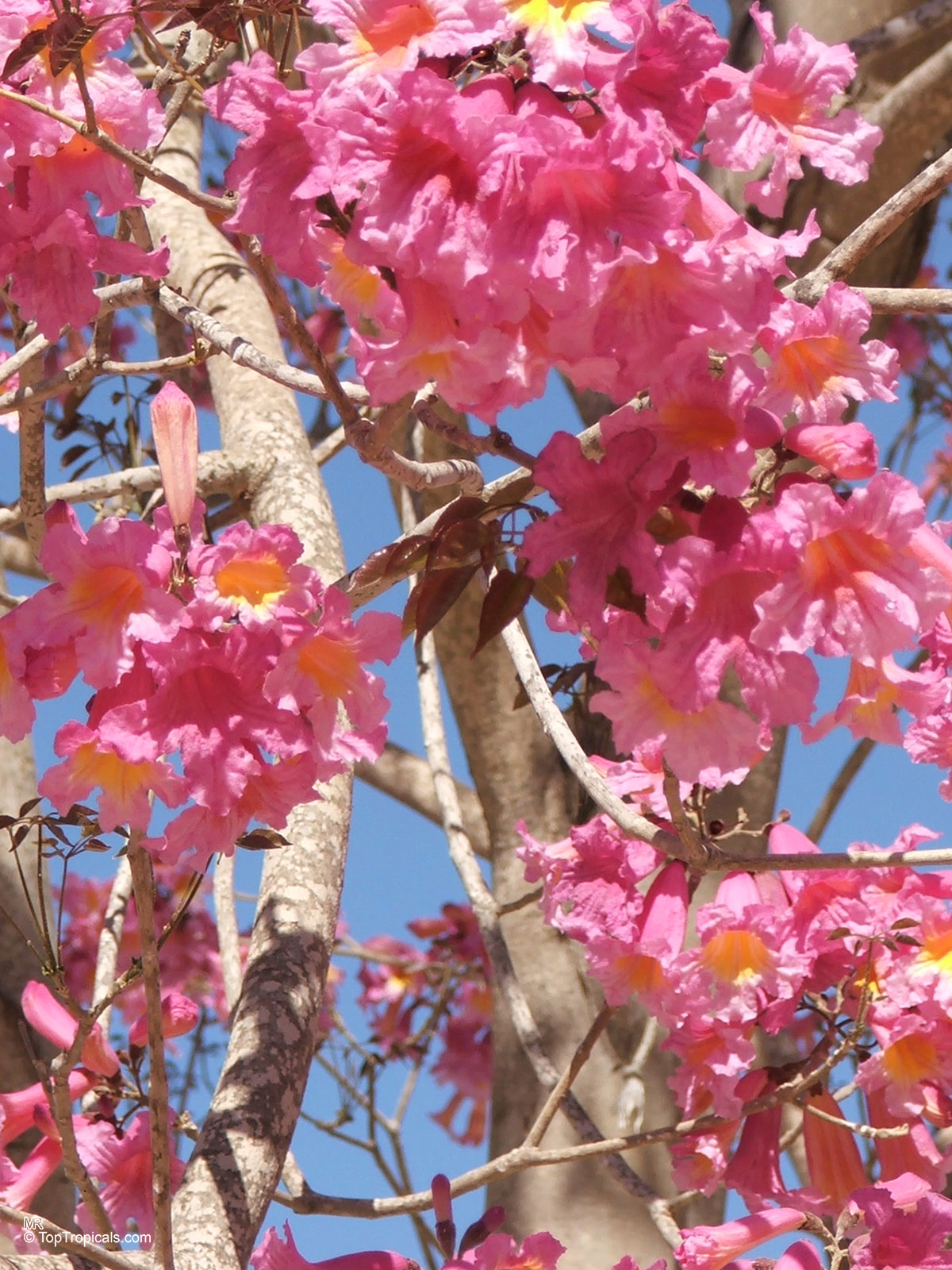
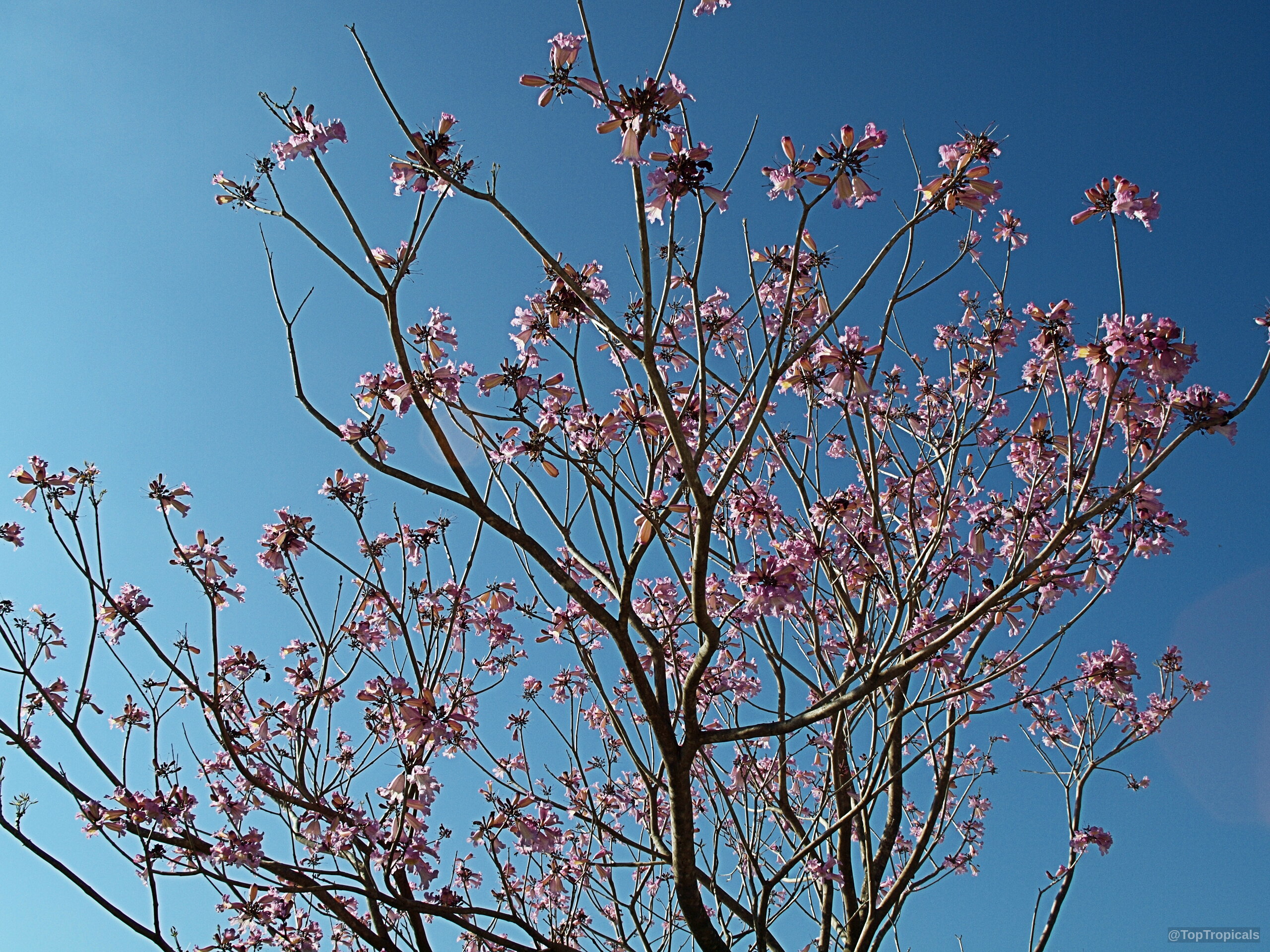
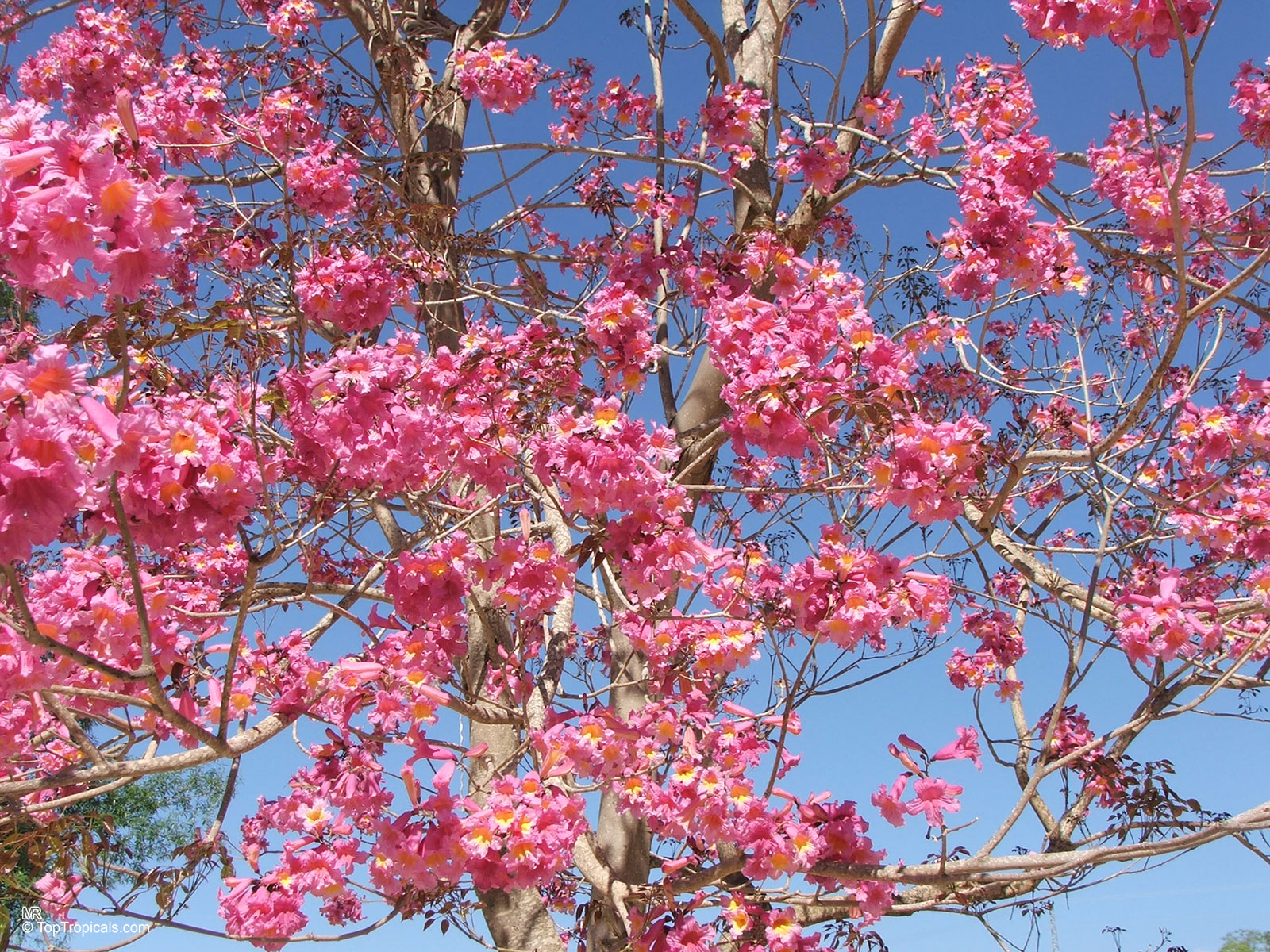
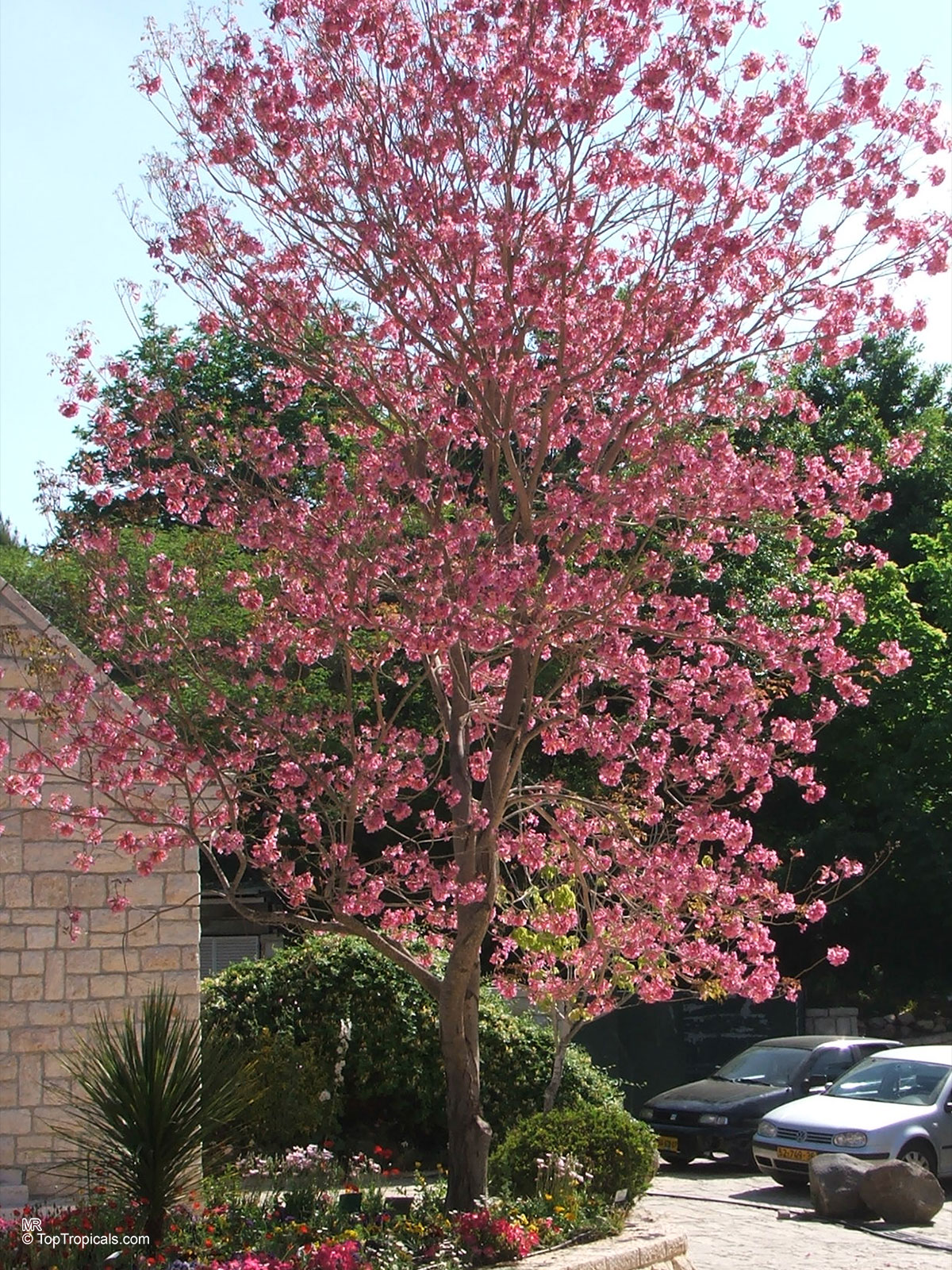
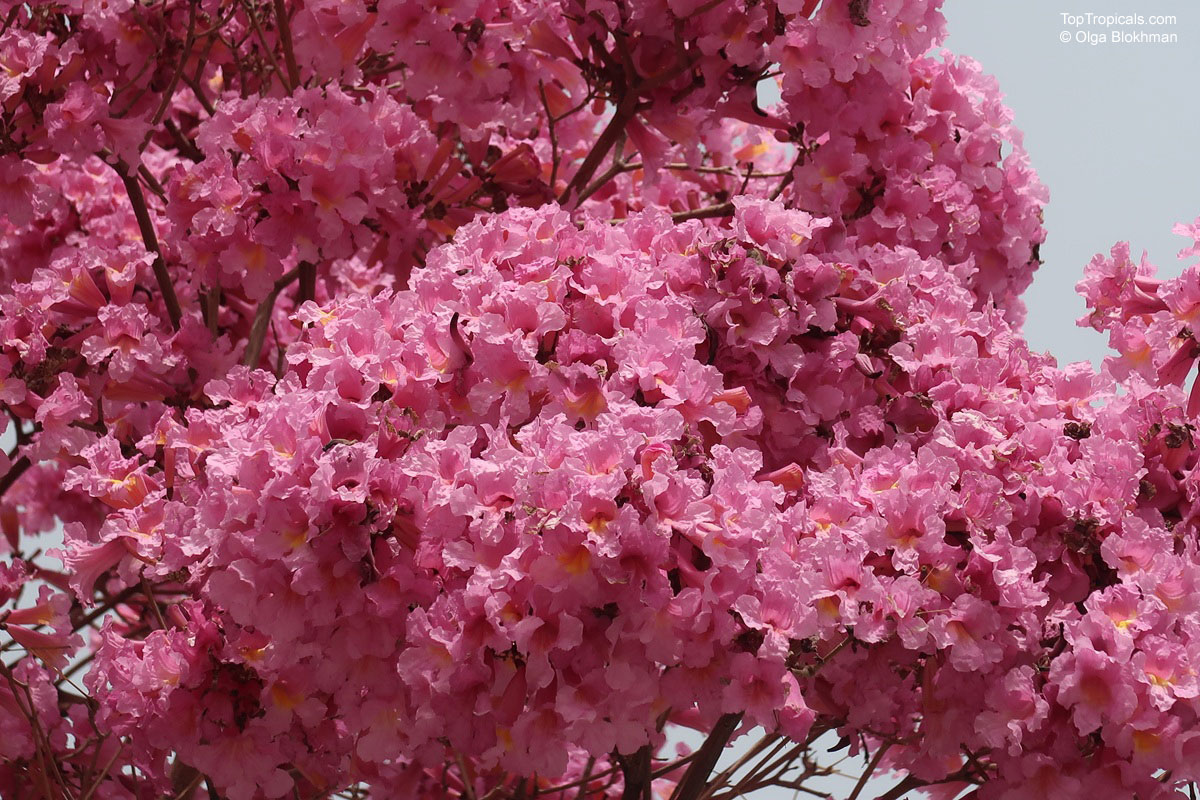
Botanical names: Tabebuia impetiginosa, Handroanthus heptaphyllus, Handroanthus impetiginosus, Tabebuia avellanedae
Common names: Pink Tabebuia, Ant Wood, Pau DArco, Ipe Roxo, Lapacho, Taheebo
Family: Bignoniaceae
Origin: Tropical America
USDA Zone: 9-11
Cold tolerance: 30°F


Handroanthus impetiginosus, formerly known as Tabebuia impetiginosa, is a deciduous tree in the Bignoniaceae family, commonly called Pink Trumpet Tree, Pink Ipe, or Pau d'Arco. Native to tropical and subtropical regions of Central and South America, it occurs in seasonally dry forests and woodlands. The tree typically reaches 20-40 feet in cultivation, although wild specimens may grow considerably taller. Its palmately compound leaves usually have five serrated leaflets, and the young branches and leaf undersides may be covered with fine hairs. In late winter or spring, often before new leaves emerge, the crown becomes covered with dense clusters of trumpet-shaped flowers ranging from pale pink to deep rose-purple, usually with a yellowish throat. The flowers are followed by long, narrow capsules containing numerous winged seeds.
Handroanthus impetiginosus thrives in full sun and well-drained soil, tolerating seasonal drought once established. It is widely cultivated as an ornamental shade and street tree, particularly valued for its spectacular leafless flowering display. Suitable for USDA Zones 9b-11, established trees may tolerate brief light frosts, although young plants require protection from freezing temperatures. Its dense, durable wood is also highly valued, but the species is primarily grown ornamentally for its brilliant seasonal flowers.


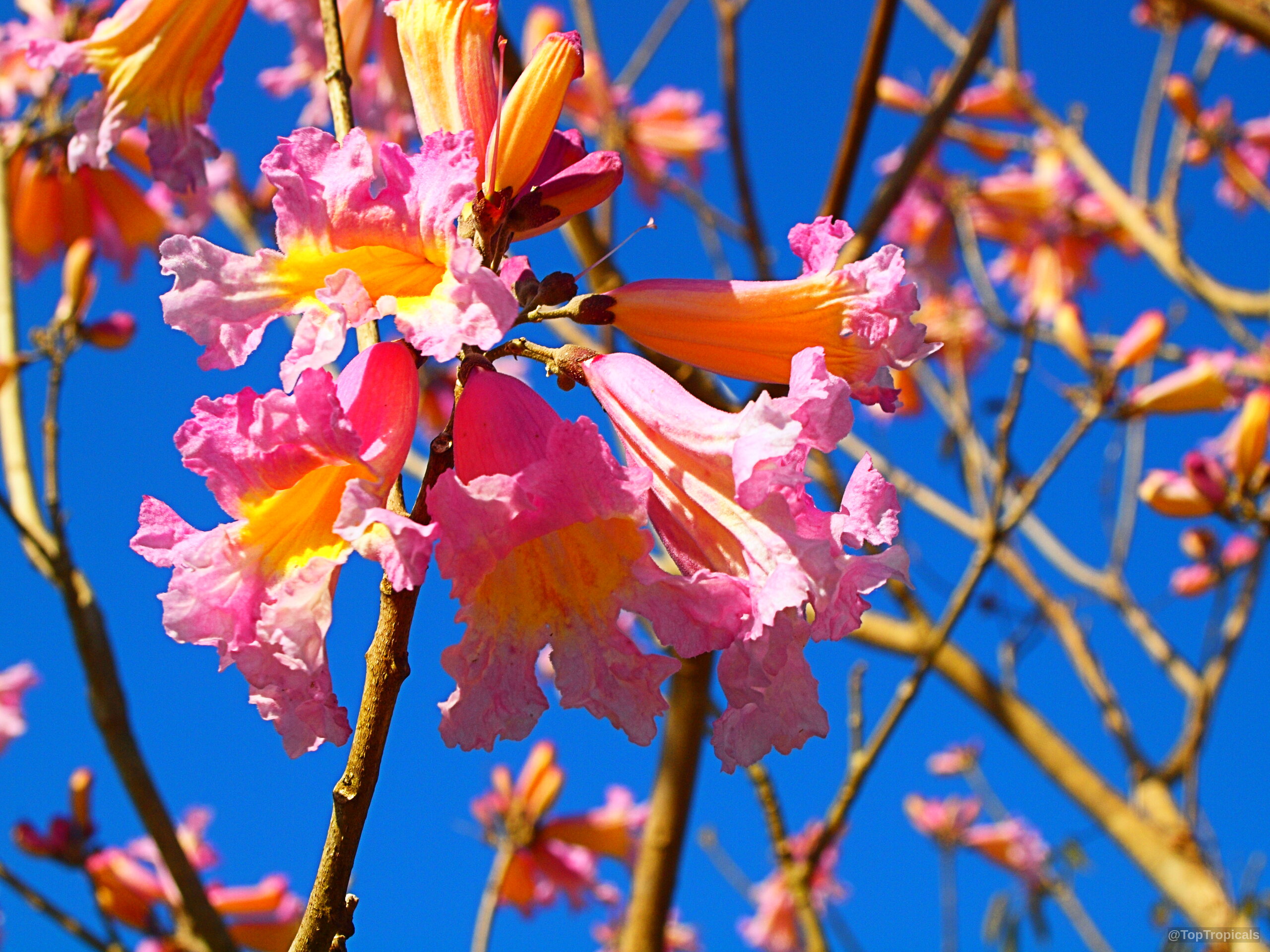
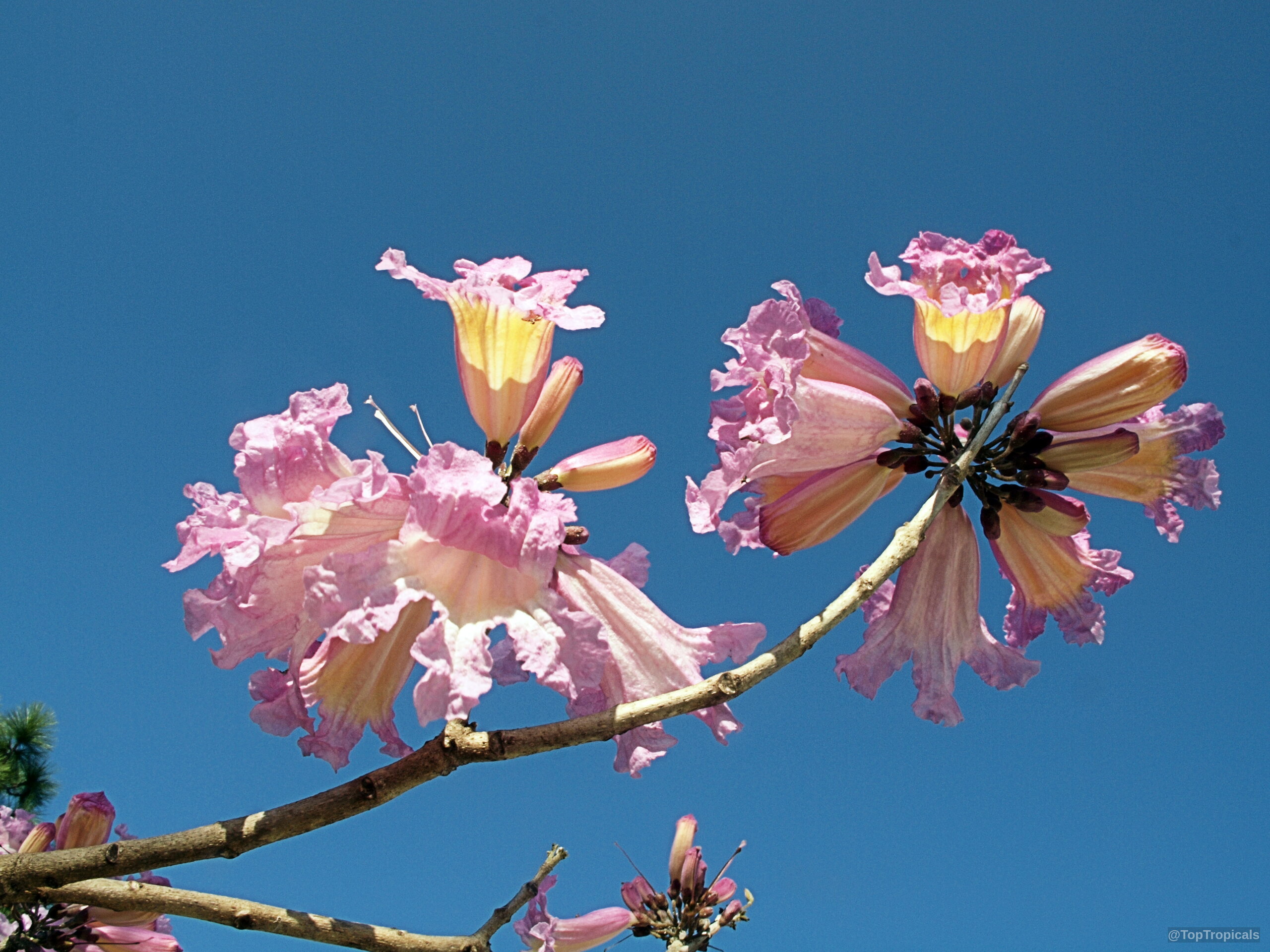
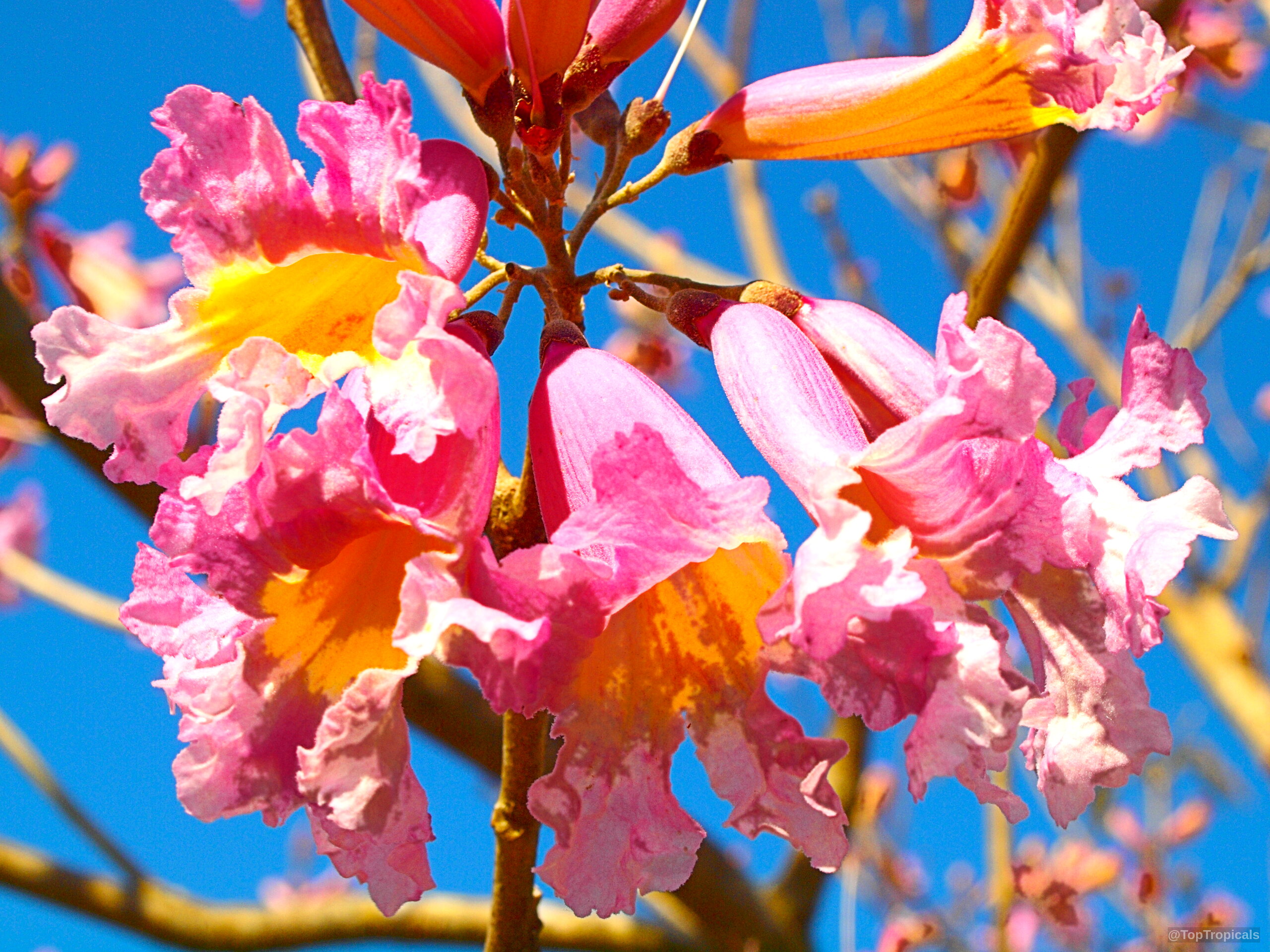




Botanical names: Tabebuia aurea, Tabebuia caraiba, Tabebuia argentea
Common name: Silver Trumpet Tree
Family: Bignoniaceae
Origin: Brazil
USDA Zone: 9-11


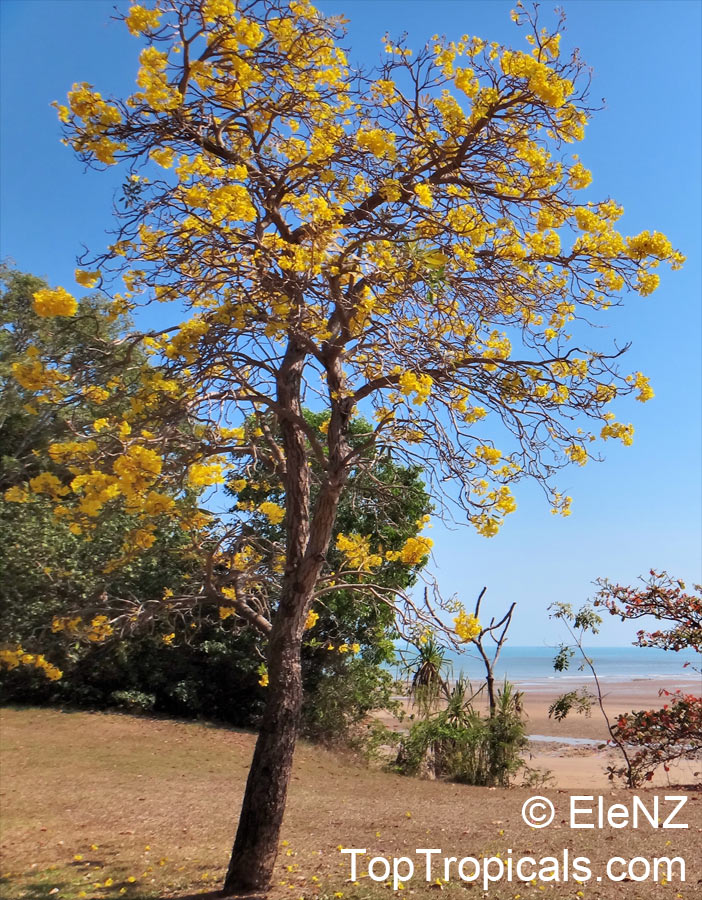
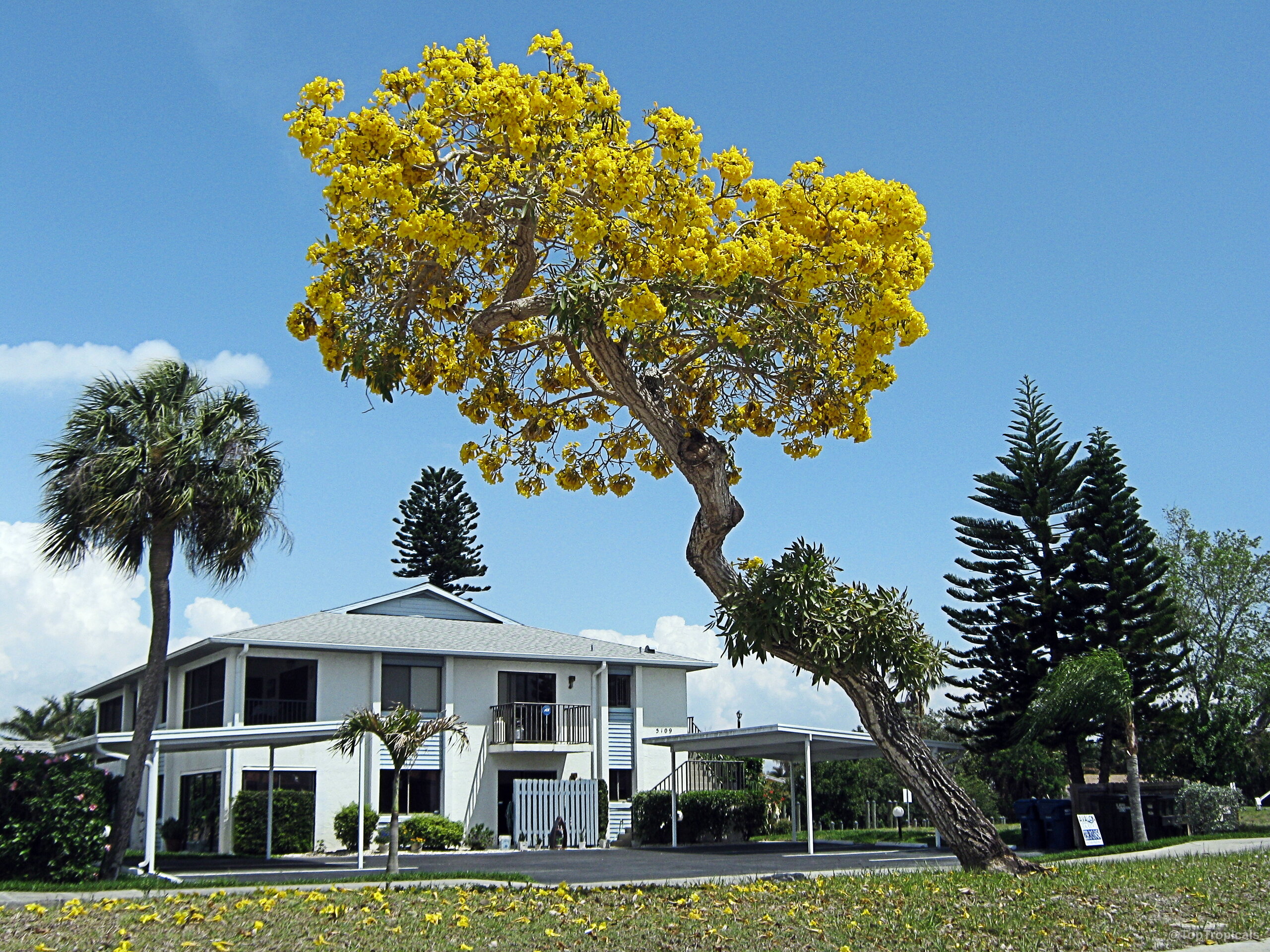
Tabebuia aurea (Silver Trumpet Tree, Yellow Trumpet Tree), formerly known as Tabebuia caraiba and T. argentea, is a deciduous tree in the Bignoniaceae family, native to tropical South America, particularly Brazil, Bolivia, Paraguay, and northern Argentina. Growing in seasonally dry forests, savannas, and the Brazilian Cerrado, it develops a broad, spreading crown, typically reaching 20-40 feet in cultivation. Its distinctive palmately compound leaves have five to seven narrow, elliptic to lance-shaped leaflets with entire margins and silvery-gray to bluish-green surfaces, especially beneath. During the dry season, often before new leaves emerge, the branches become covered with brilliant golden-yellow, trumpet-shaped flowers, followed by long, slender capsules containing winged seeds. Unlike Handroanthus chrysotrichus, which has densely hairy flower buds and calyces, Tabebuia aurea is particularly recognizable by its pale, silvery foliage.
Tabebuia aurea thrives in full sun and well-drained soil, tolerating poor, sandy soils and prolonged seasonal drought. Established trees require little supplemental watering, although young plants benefit from regular moisture. Widely cultivated as an ornamental and street tree, it is suitable for USDA Zones 9b-11, tolerating brief light frosts once established, while young plants need protection from freezing temperatures.


Use link to repeat this search:
https://toptropicals.com/cgi-bin/garden_catalog/cat.cgi?find=Handroanthus&search_op=and&keyword_op=and&language=e&number=10
&no_change_lang=1&user=tt&sale=1&first=0