Echinacea purpurea (Purple Coneflower)
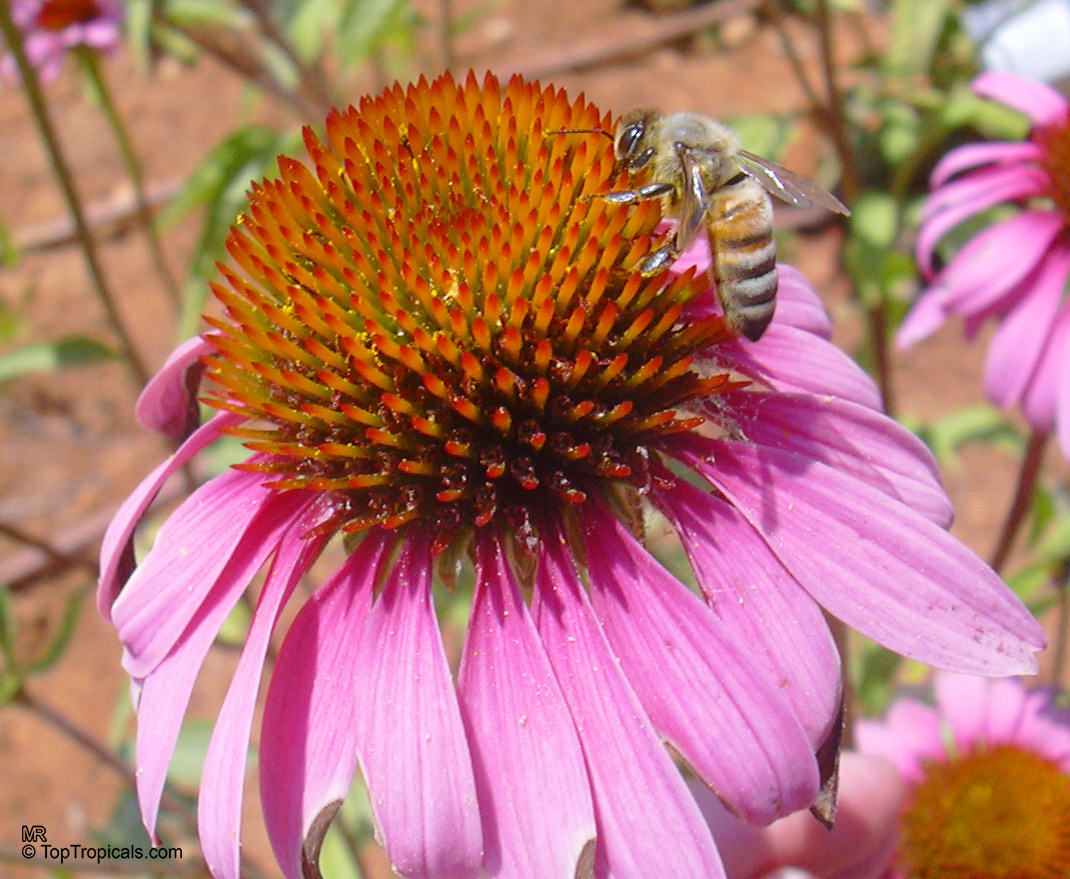
Botanical names: Echinacea purpurea, Rudbeckia purpurea
Common names: Purple Coneflower, Kim's Knee High
Family: Asteraceae
Origin: North America
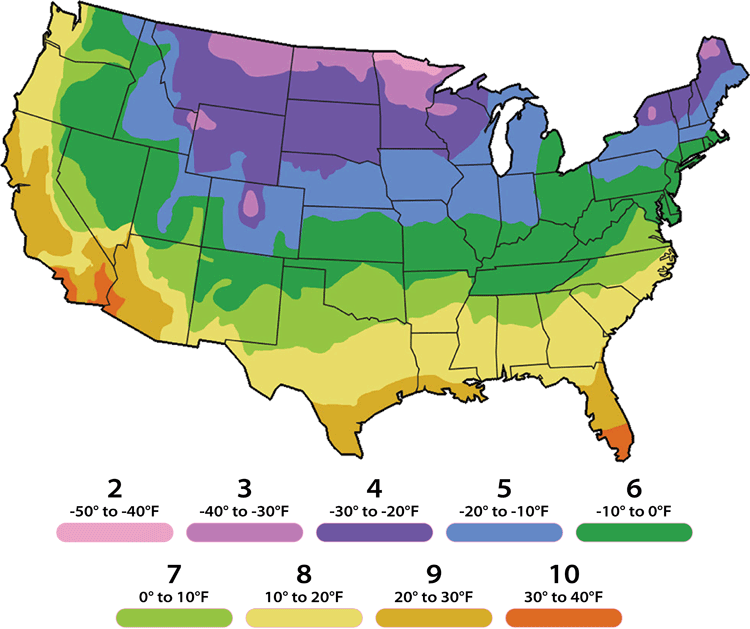
USDA Zone: 3-8
 Plant form: Small
 Mature height: 2-5 ft
 Sun exposure: Full sun or bright light indoor
 Cold tolerance: Frost sensitive. Protect from freezing.
 Watering: Regular; moderate


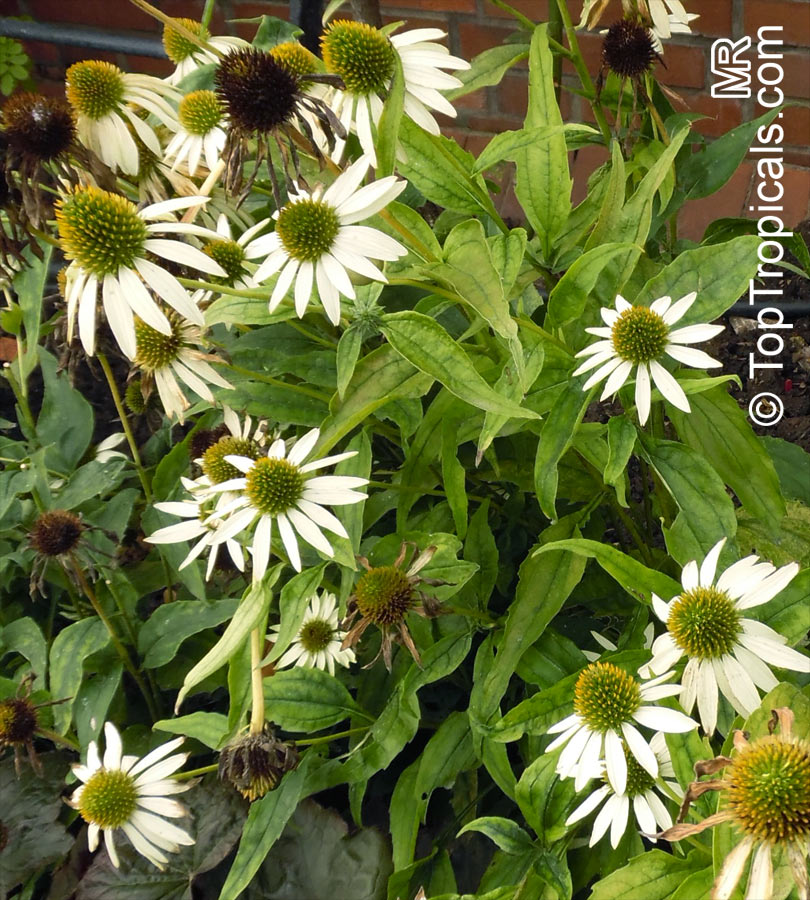
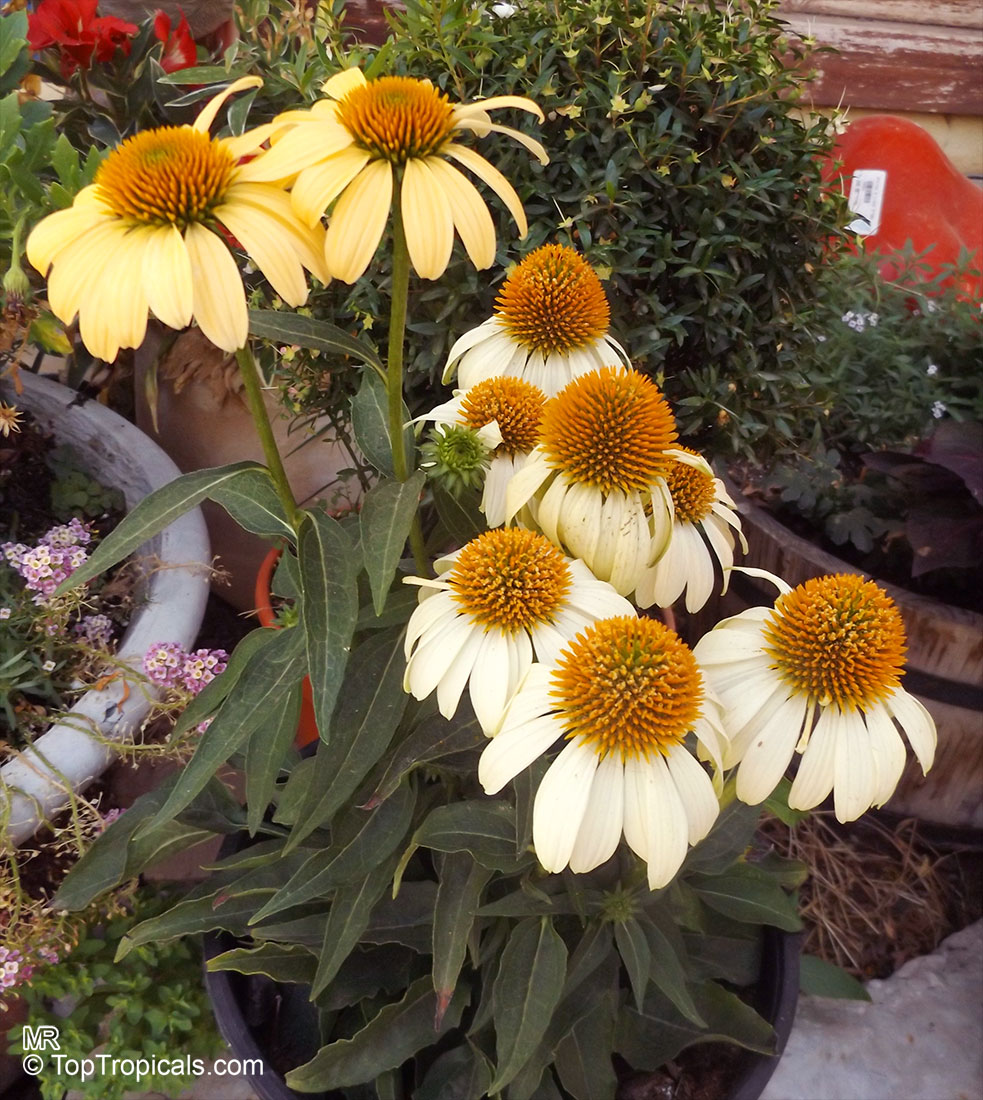
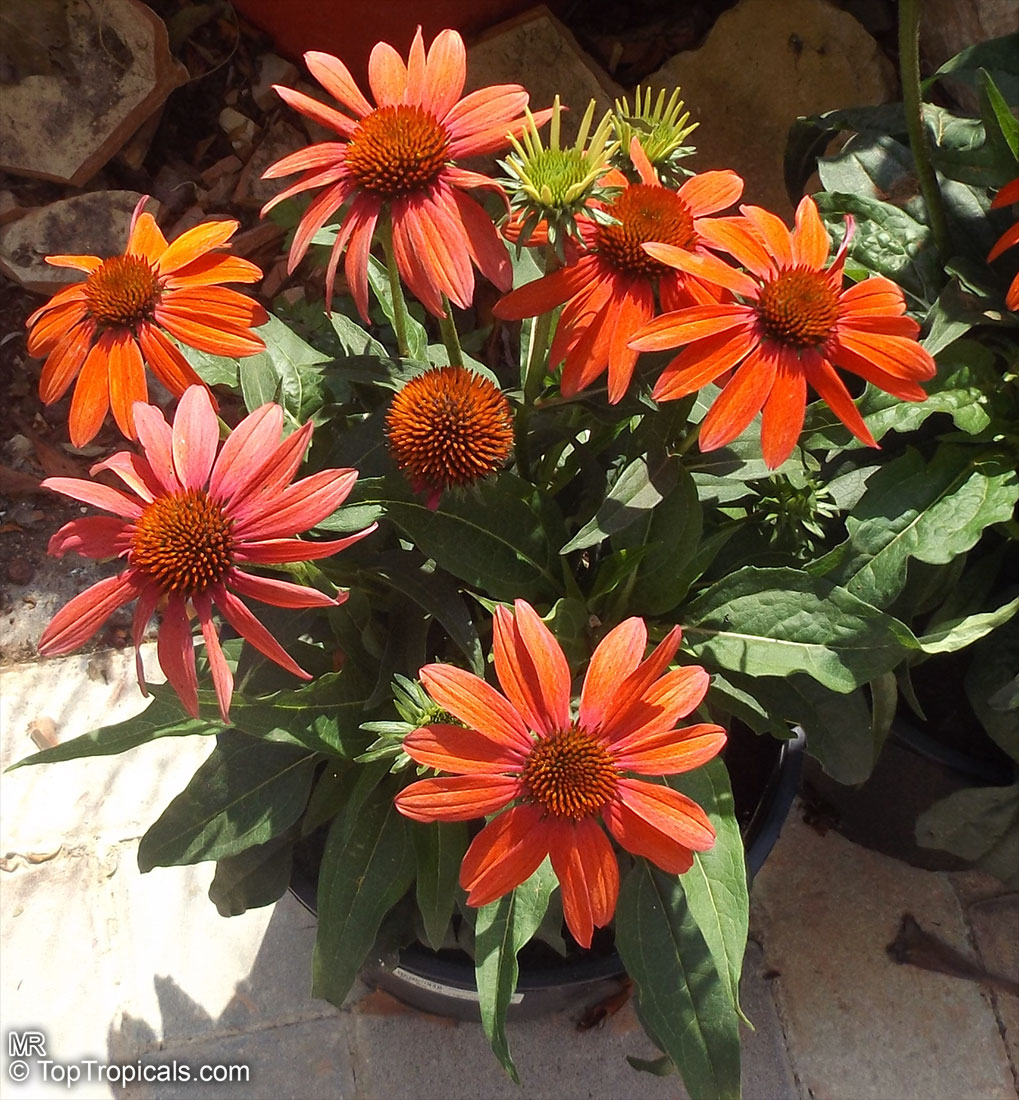
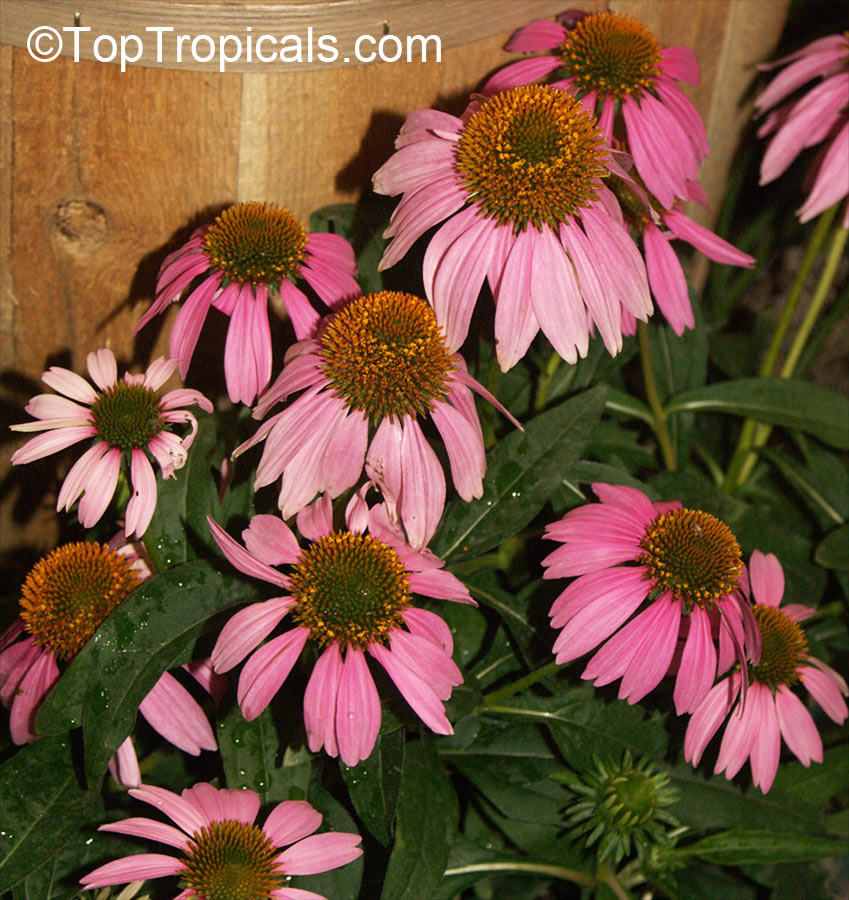
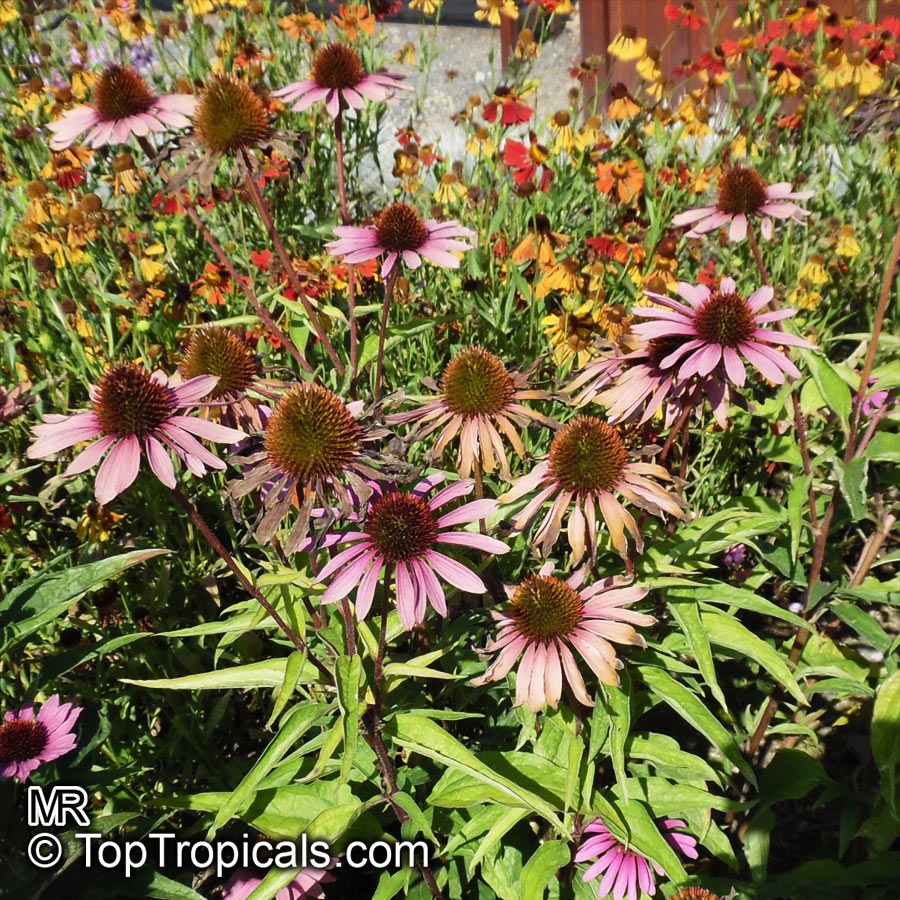
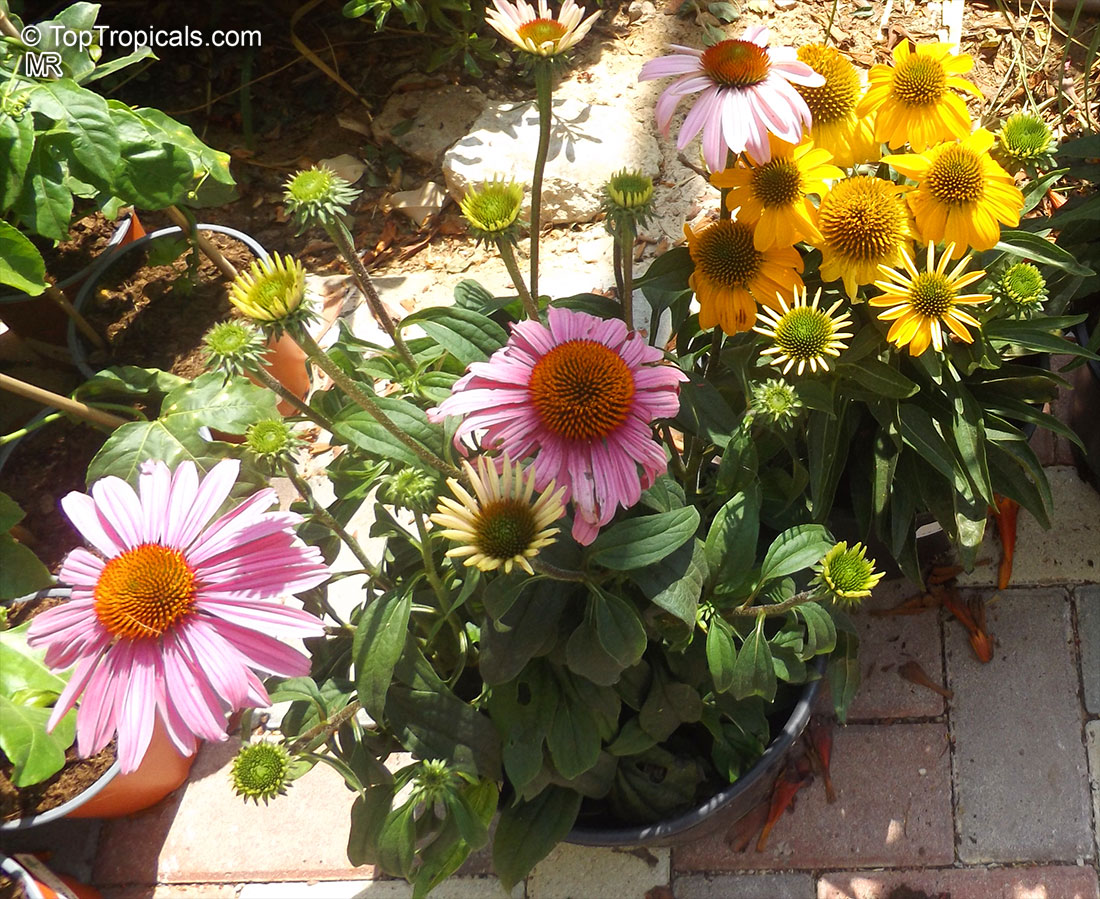
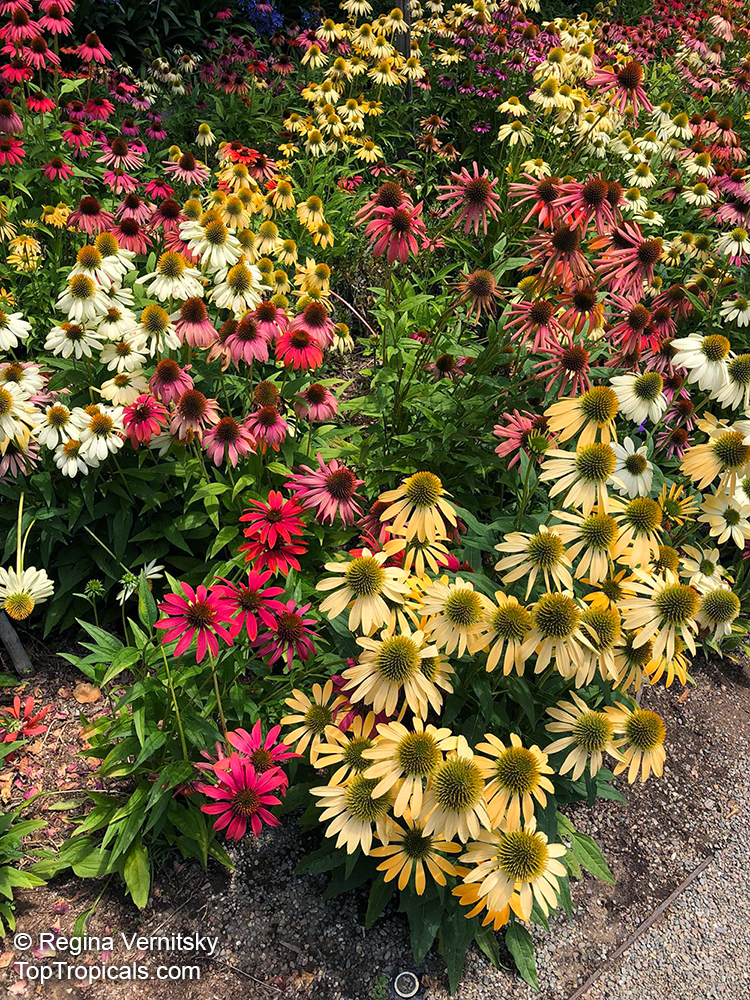
 Flower color: Pink; white and off-white; red, crimson, vinous; yellow, orange
 Suitable for: Outdoors in the suitable USDA zone; small gardens, containers, and indoor growing
 Wildlife: Attracts butterflies and hummingbirds
 Ethnomedical: Ethnomedical plant, traditionally used in folk or indigenous medicine
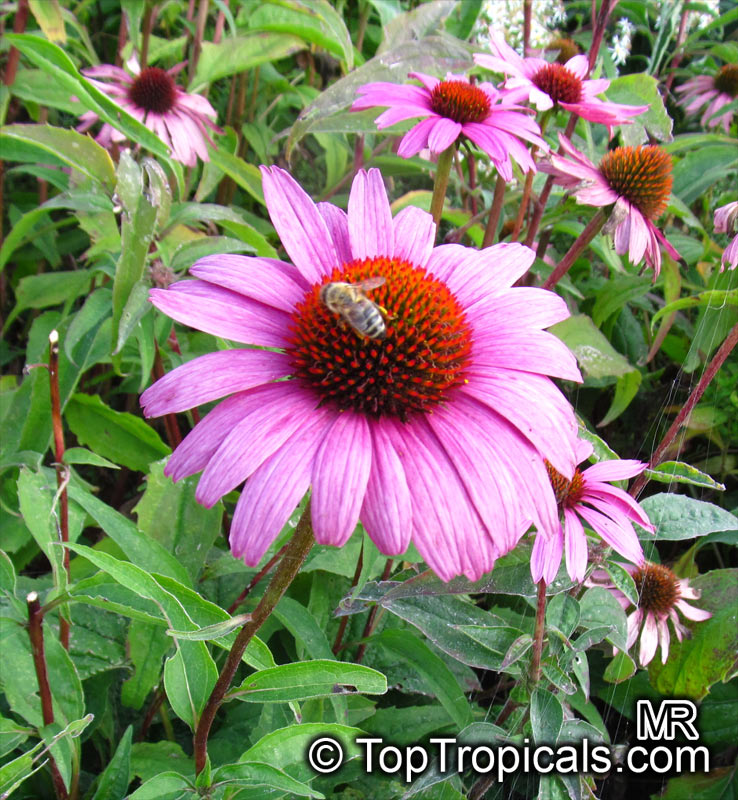
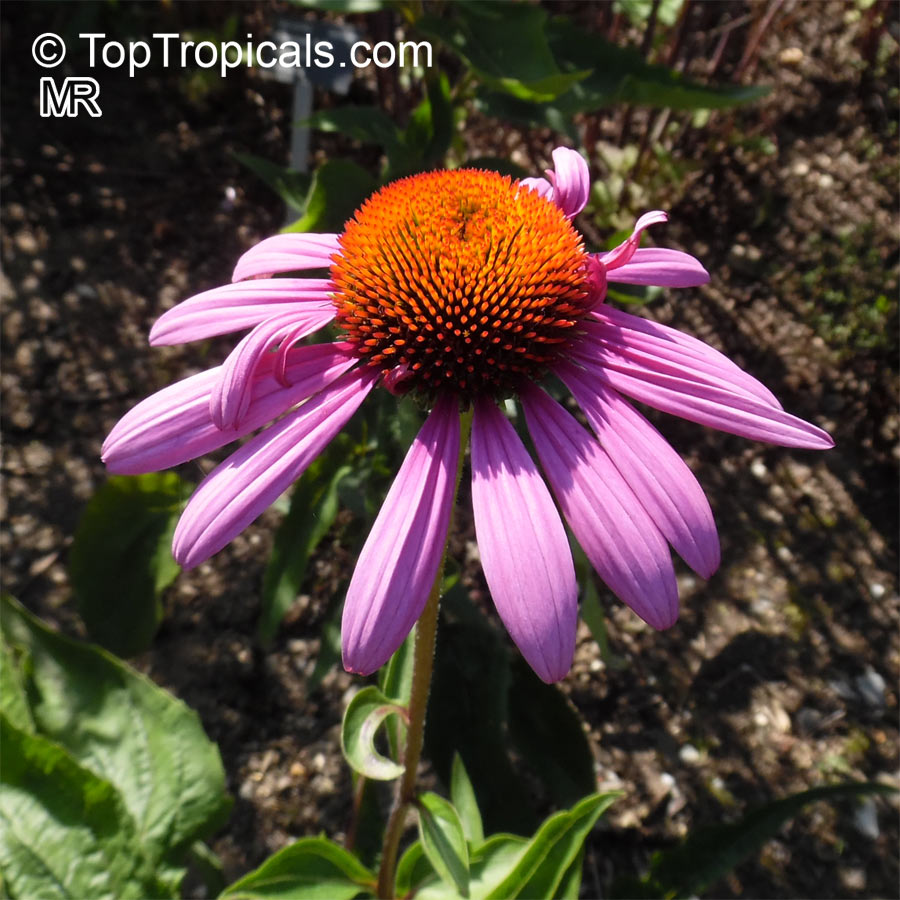
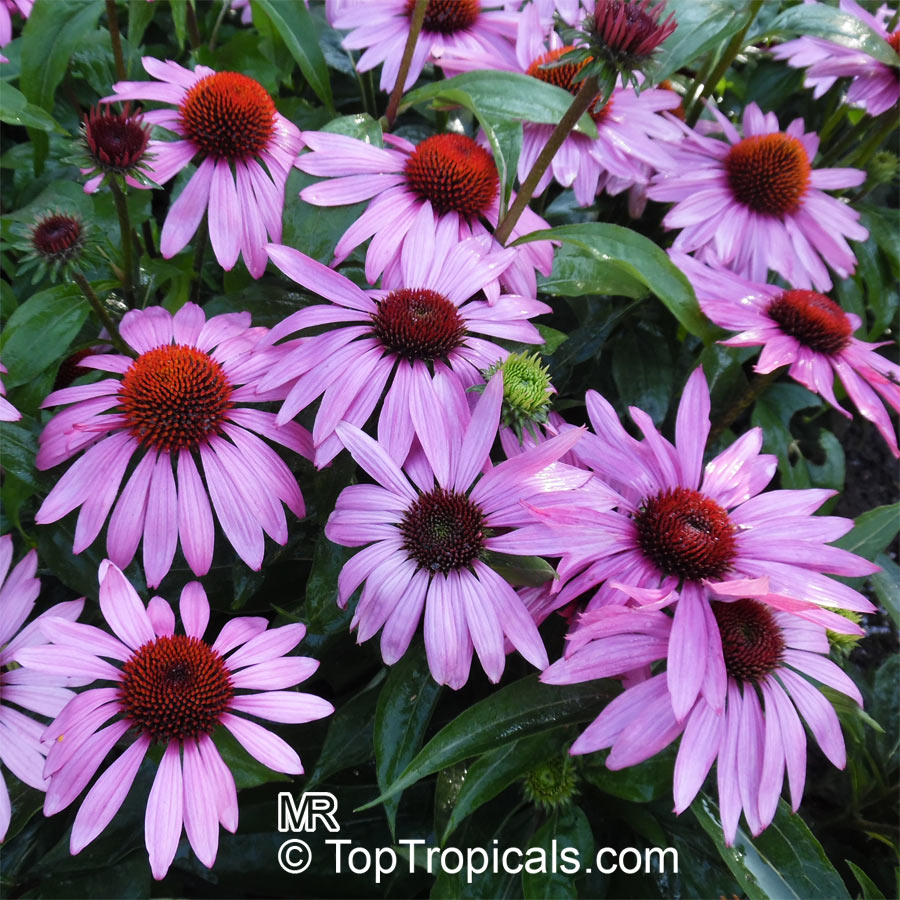
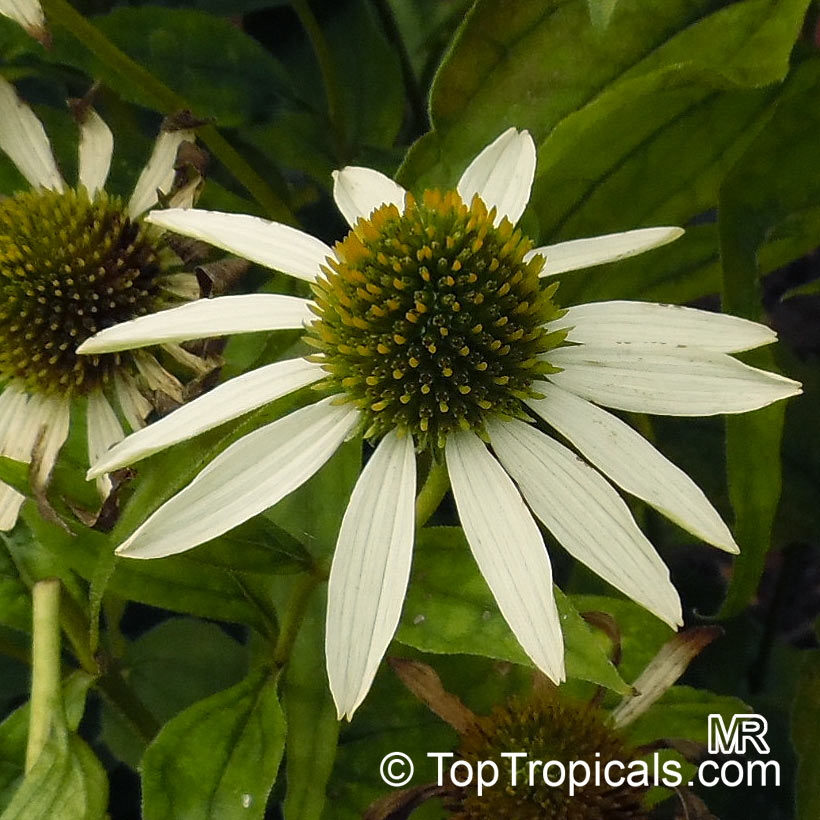
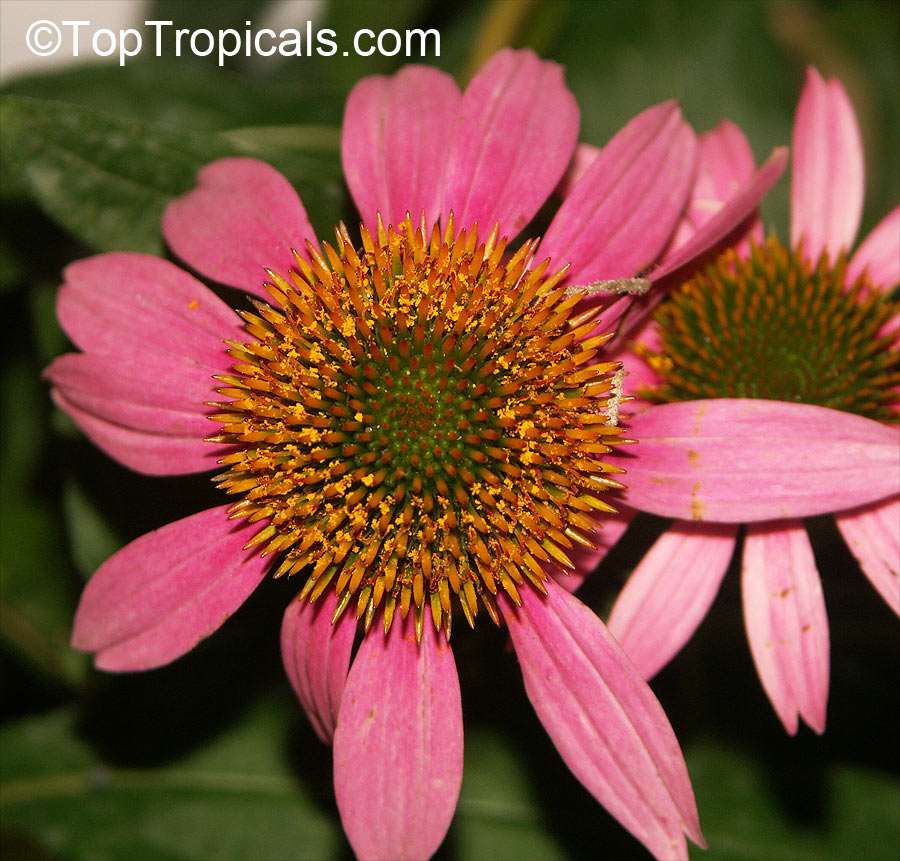
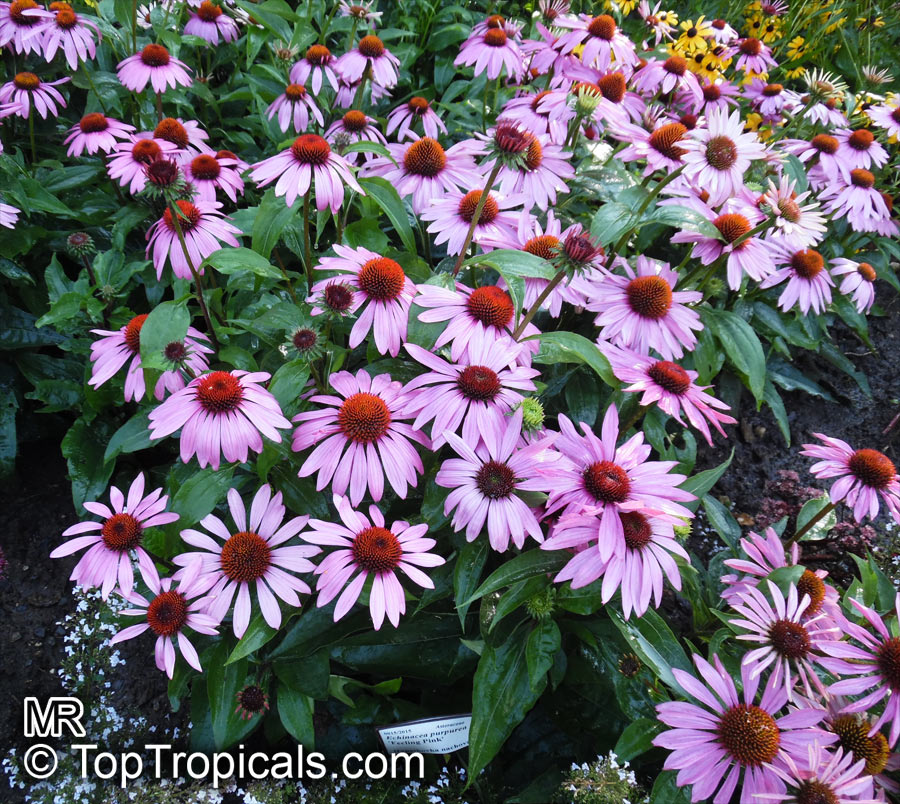
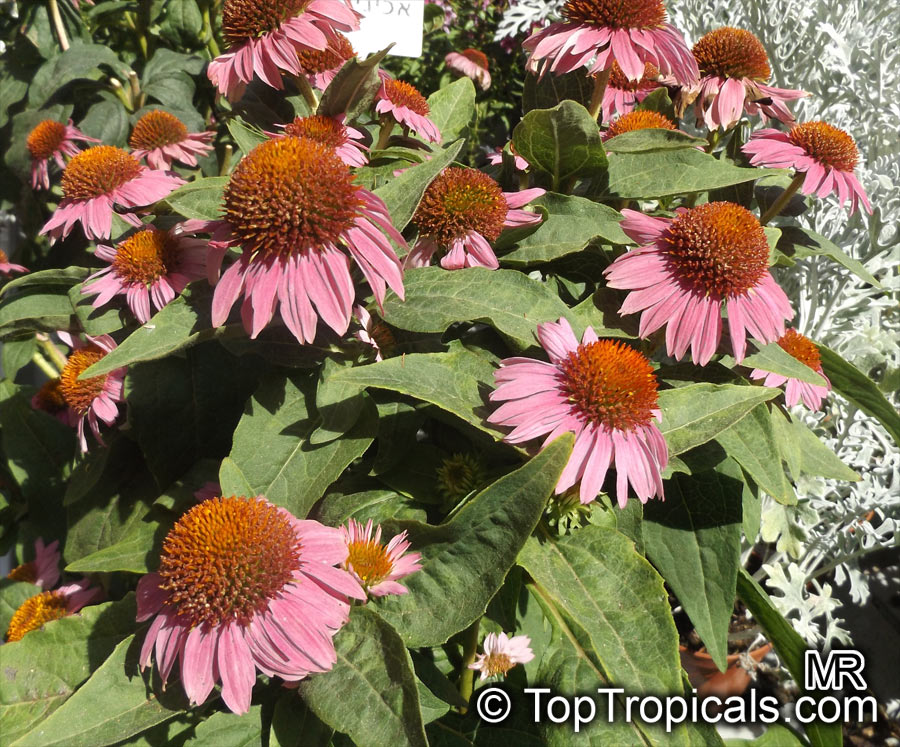
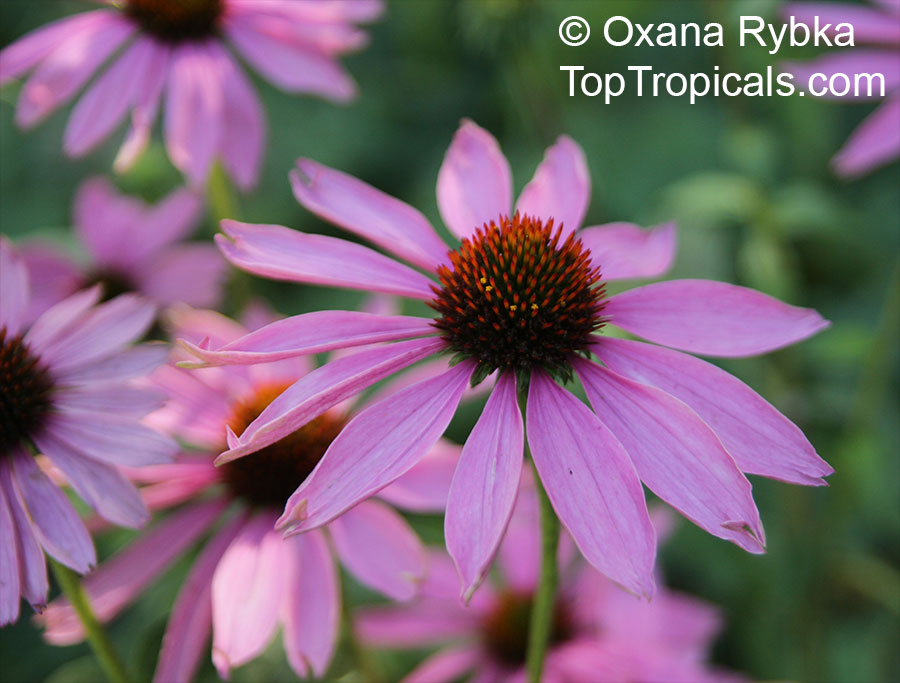
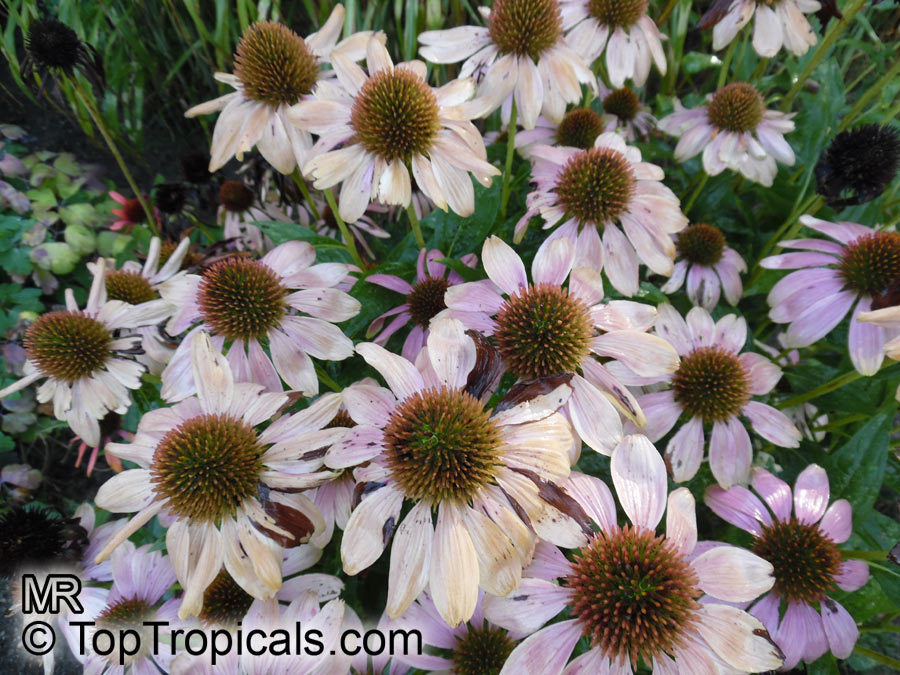
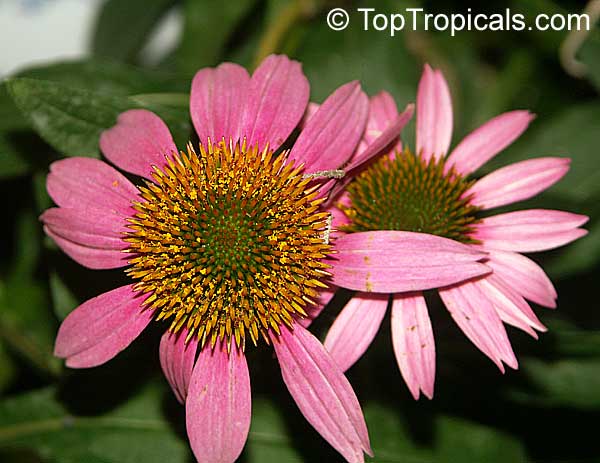
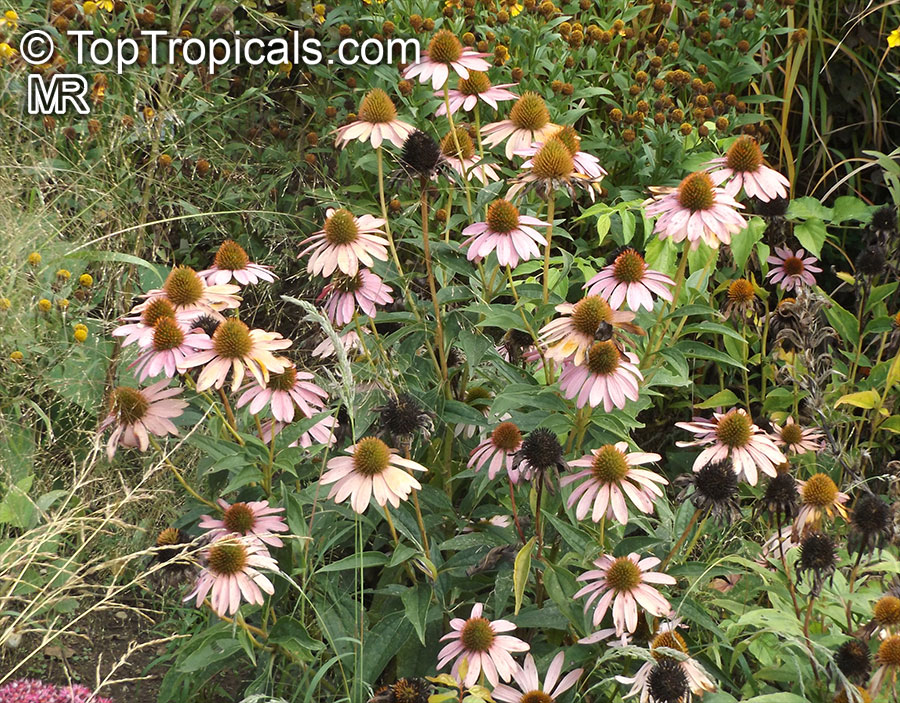
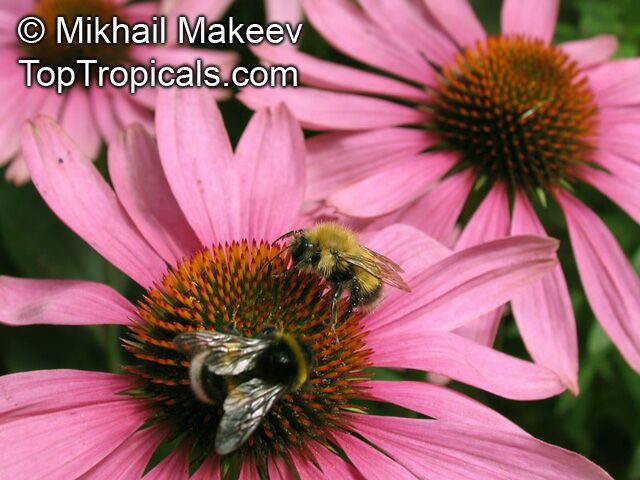
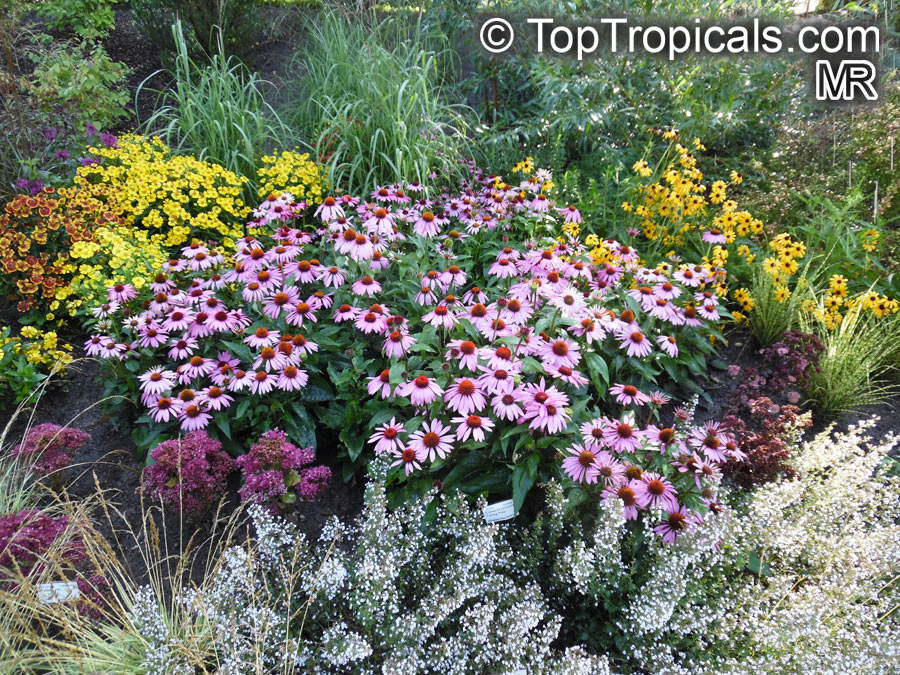
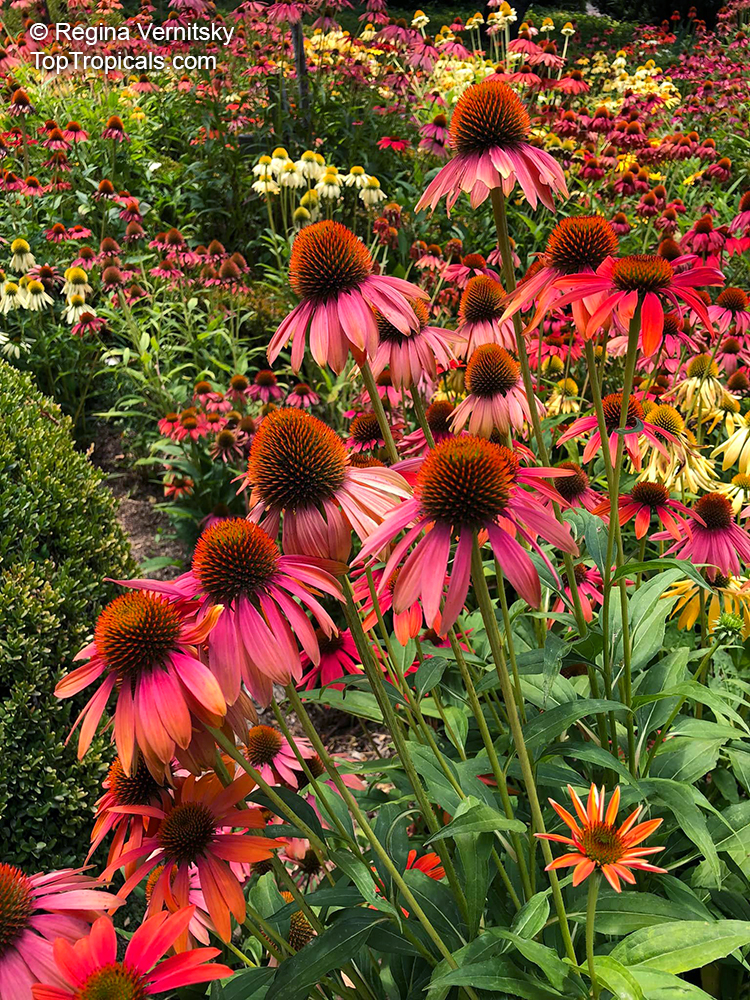
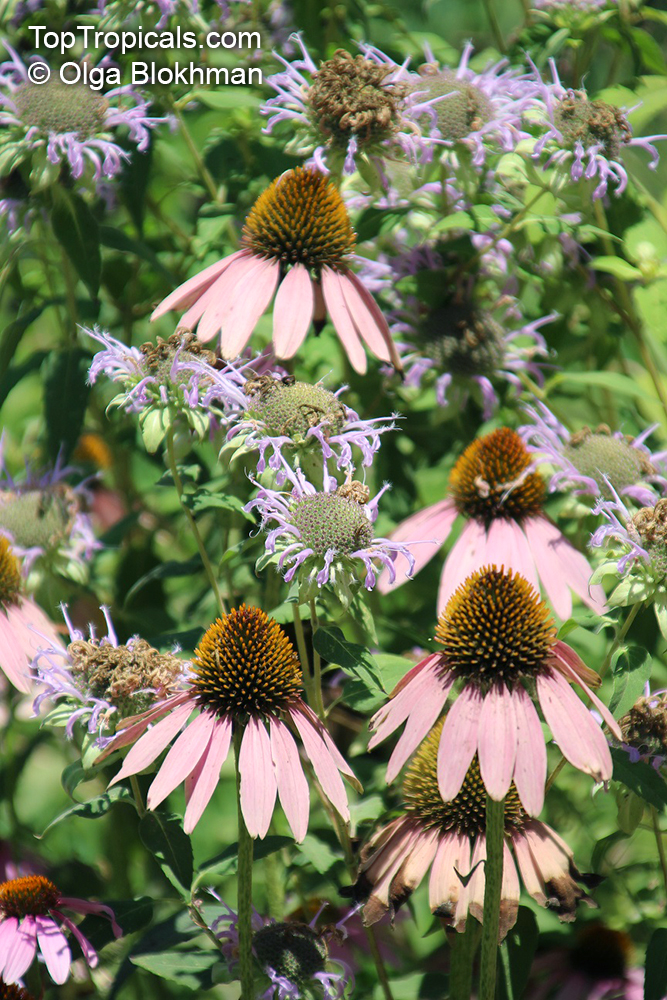
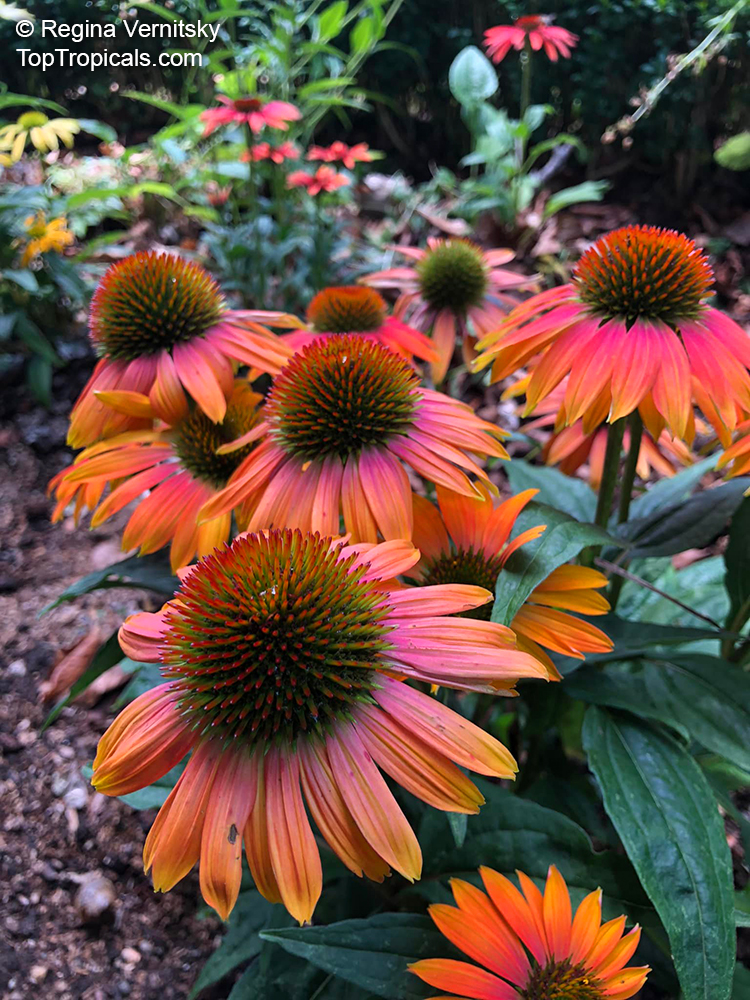
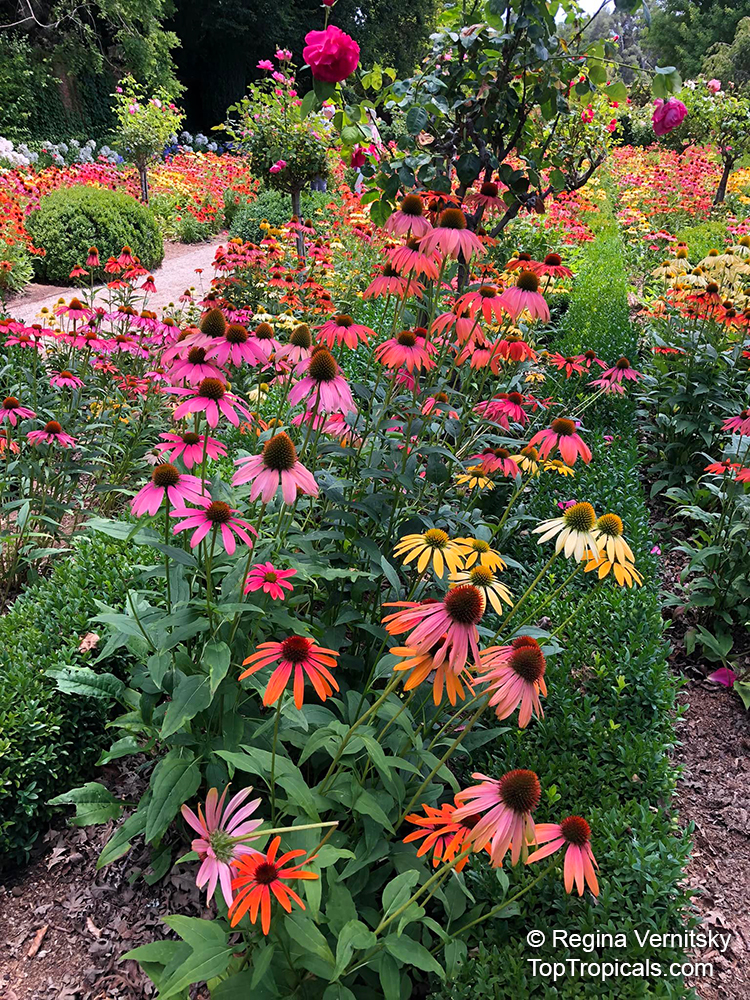
Echinacea purpurea, commonly known as purple coneflower, is a herbaceous perennial in the Asteraceae family native to the central and eastern United States. It forms sturdy upright clumps of coarse, dark green leaves and typically reaches 2-4 ft (60-120 cm) tall. Large daisy-like flower heads appear mainly from early summer into fall, with a prominent orange-brown to reddish-brown spiny central cone surrounded by spreading to drooping pink, rose-purple, or occasionally white ray florets. The flowers attract bees, butterflies, and other pollinators, while the seed heads provide food for birds. Numerous cultivars offer variations in plant size, flower color, and single or double flower forms.
Purple coneflower grows best in full sun and moderately fertile, well-drained soil, although it tolerates light shade and a range of soil conditions. Established plants have good drought tolerance but flower best with moderate moisture. Removing spent blooms can encourage additional flowering, while leaving some seed heads provides winter interest and food for birds. It is an excellent choice for perennial borders, pollinator gardens, naturalistic plantings, and cut flowers. Hardy and adaptable, Echinacea purpurea is generally suitable for USDA Zones 3-8.
Similar plants: Echinacea purpurea (Purple Coneflower)
Use link to repeat this search:
https://toptropicals.com/cgi-bin/garden_catalog/cat.cgi?find=Echinacea&search_op=and&keyword_op=and&language=e&number=10
&no_change_lang=1&user=tt&sale=1&first=0