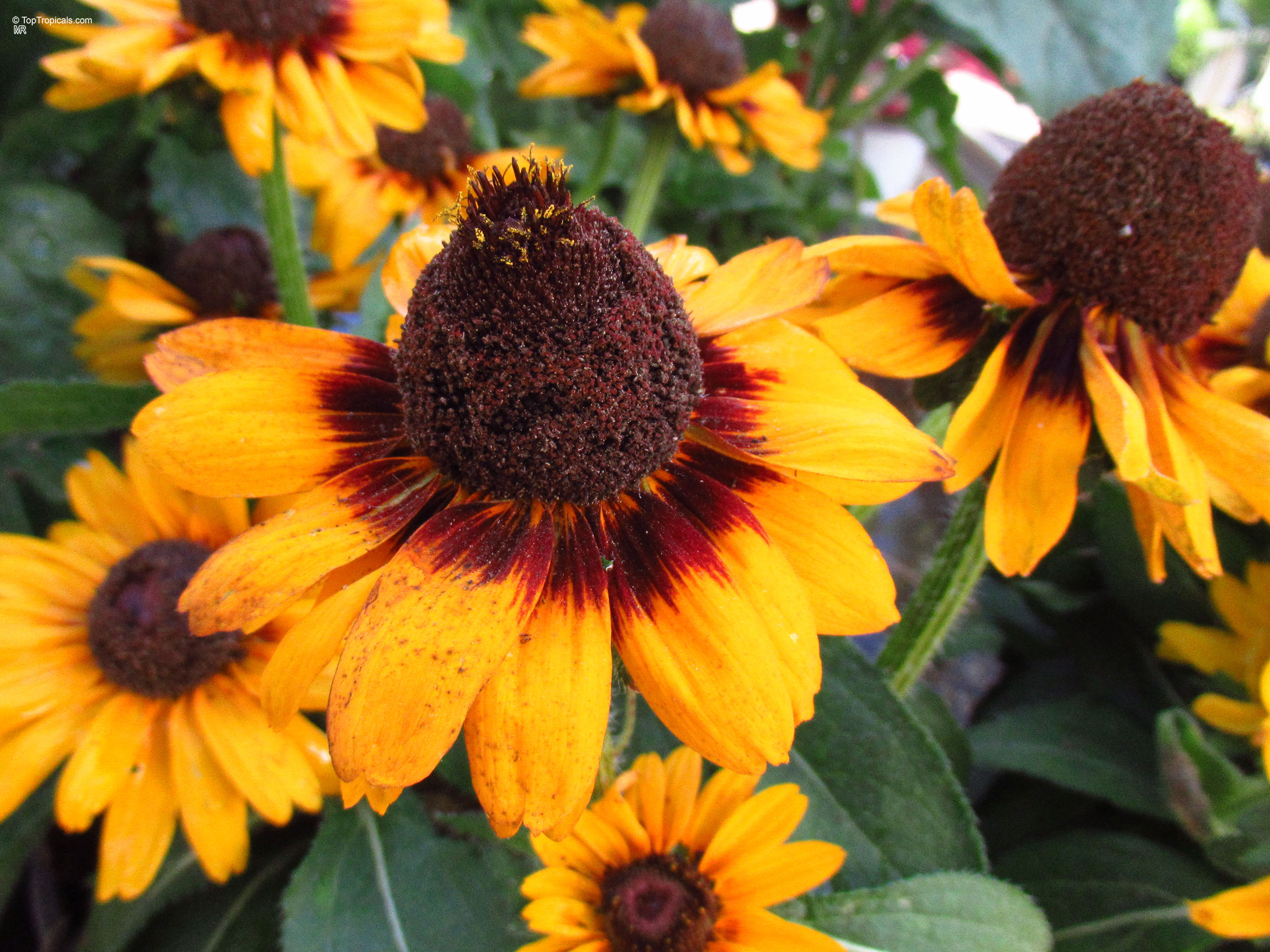
Rudbeckia sp. (Black-eyed Susan)
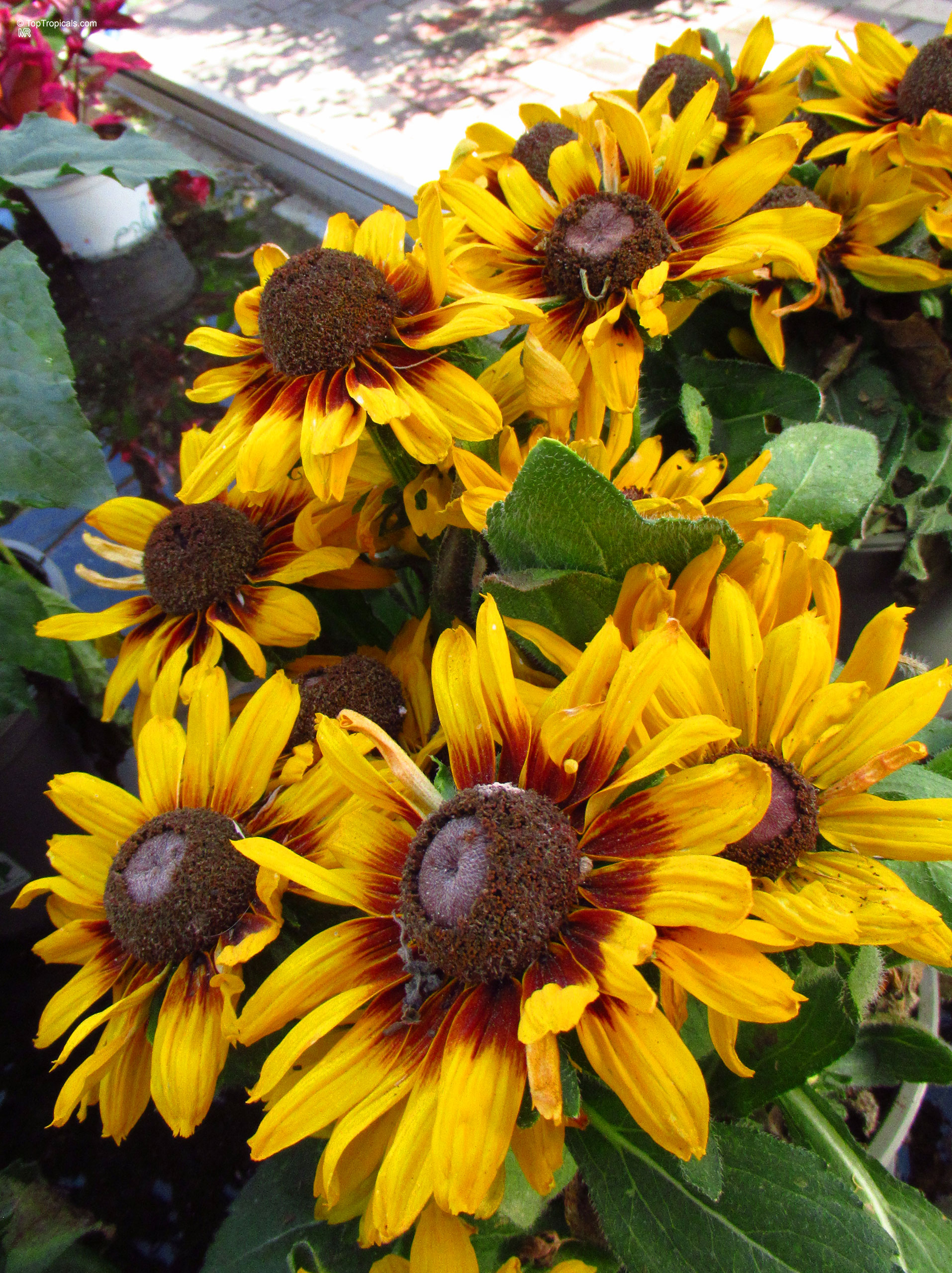
Botanical name: Rudbeckia sp.
Common names: Black-eyed Susan, Coneflower
Family: Asteraceae
Origin: North America
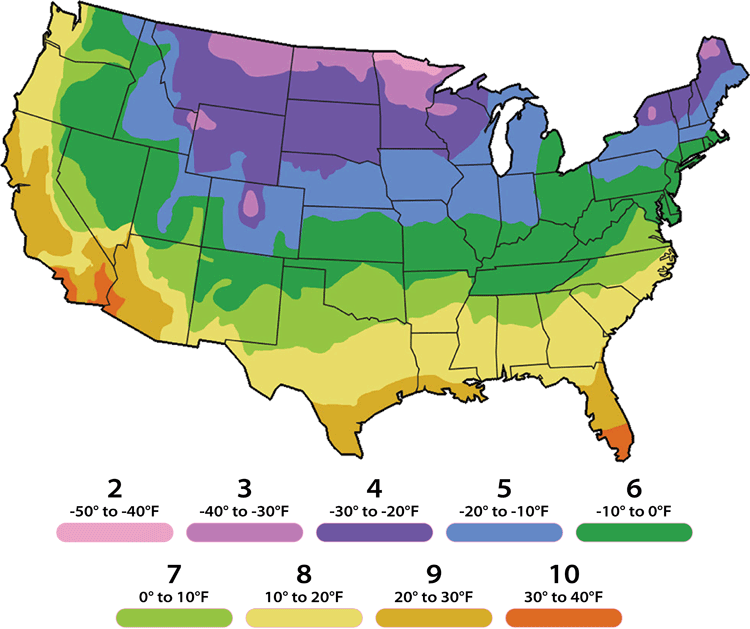
USDA Zone: 3-9
 Plant form: Small
 Mature height: 2-5 ft
 Sun exposure: Full sun or bright light indoor; semi-shade
 Cold tolerance: Tolerates light freezing to about 30°F for short periods (mature plants). Young plants must be protected.
 Watering: Regular; moderate

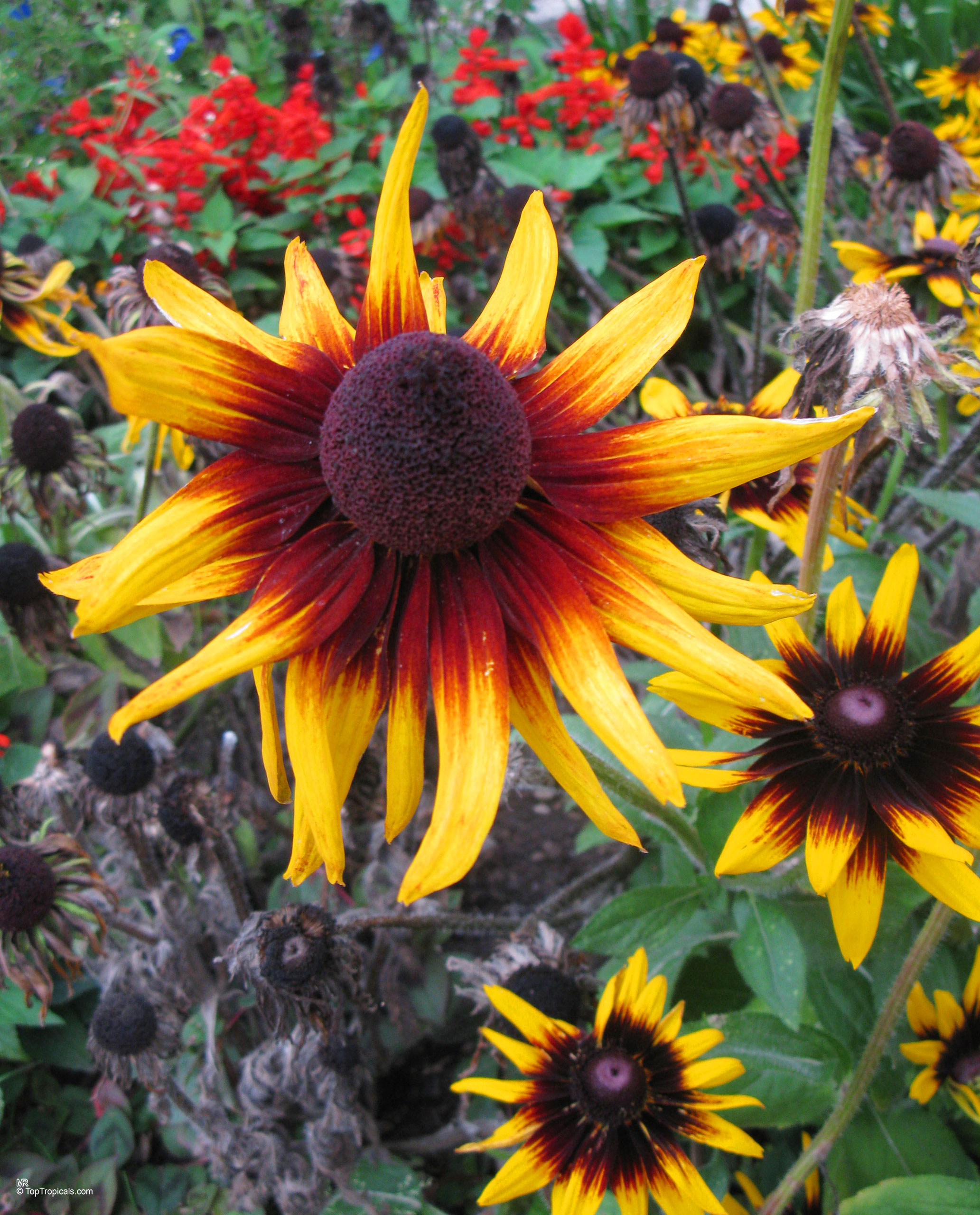
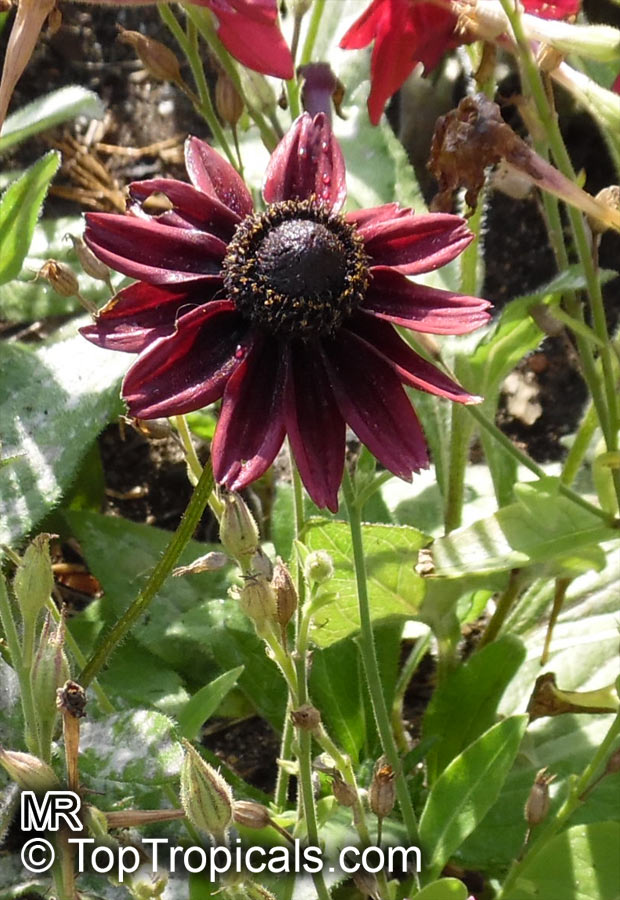
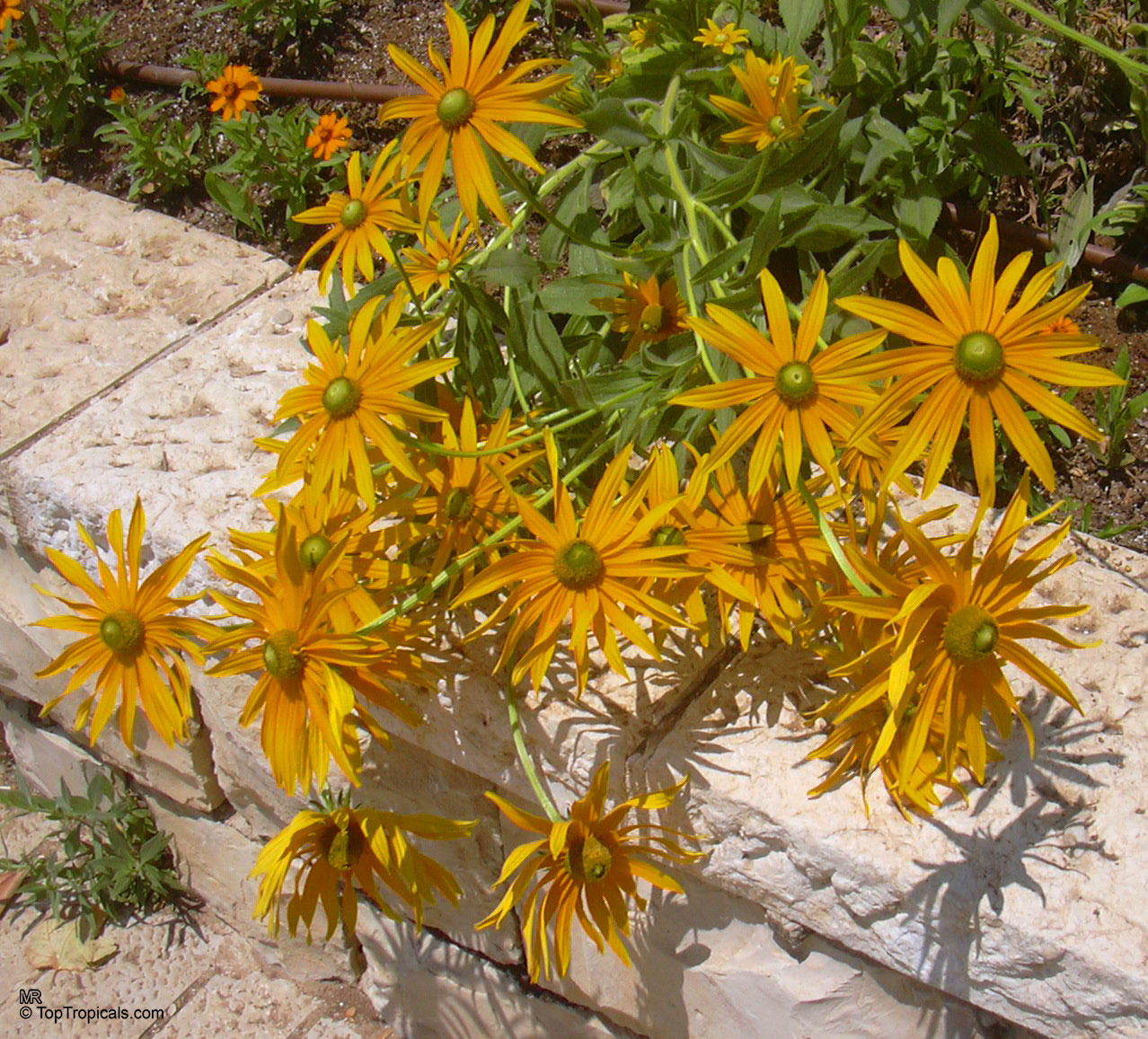
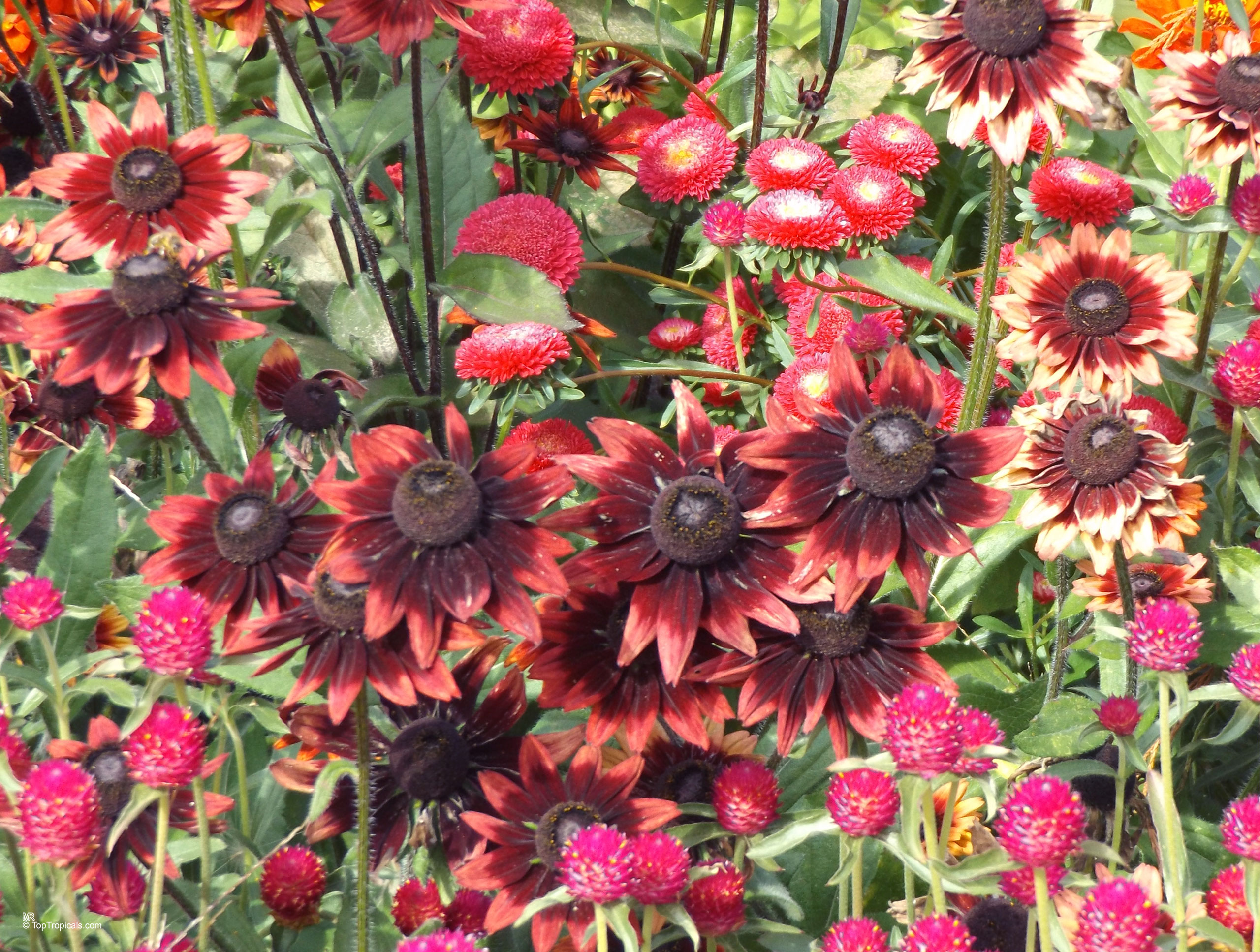
 Flower color: Red, crimson, vinous; yellow, orange; unusual color
 Suitable for: Outdoors in the suitable USDA zone; small gardens, containers, and indoor growing
 Wildlife: Attracts butterflies and hummingbirds
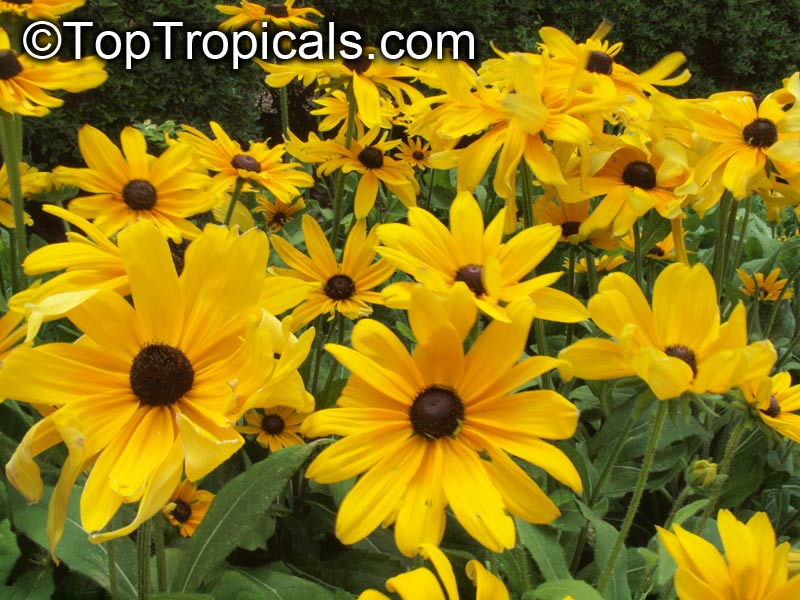
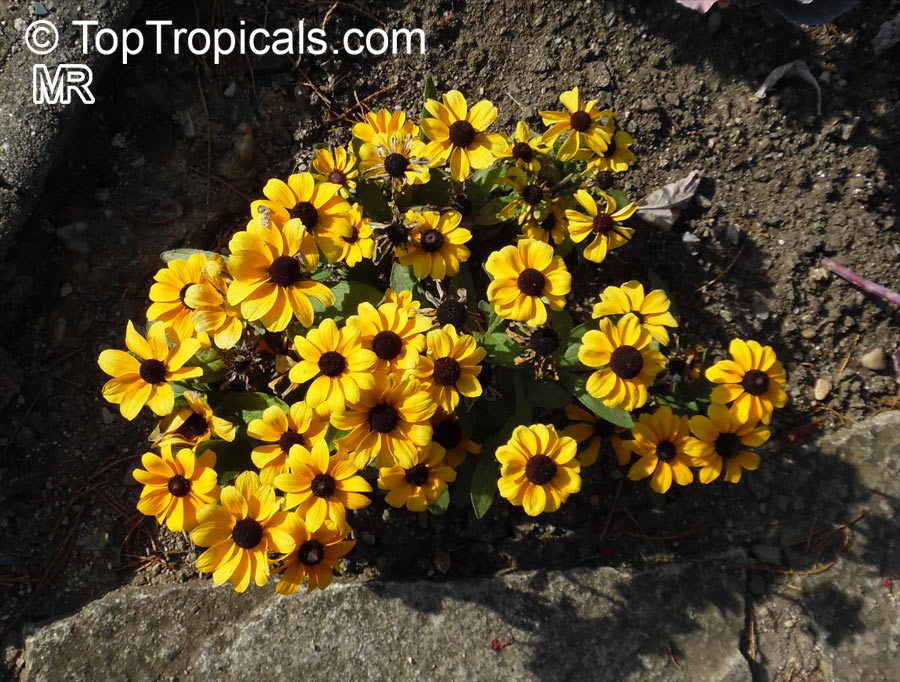
Rudbeckia is a genus of flowering plants in the Asteraceae family comprising about 25 species native to North America. Commonly known as Black-eyed Susans and Coneflowers, these annuals, biennials, and herbaceous perennials are noted for their cheerful daisy-like blooms and long flowering season. Depending on the species, plants range from compact selections under 12 inches (30 cm) tall to robust perennials reaching 7 feet (2.1 m), with upright stems and coarse green foliage.
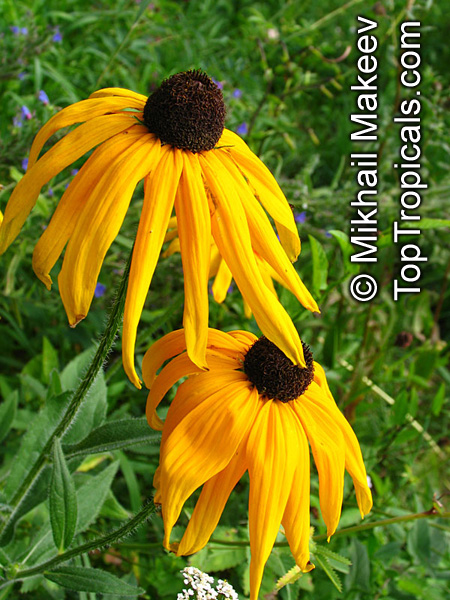
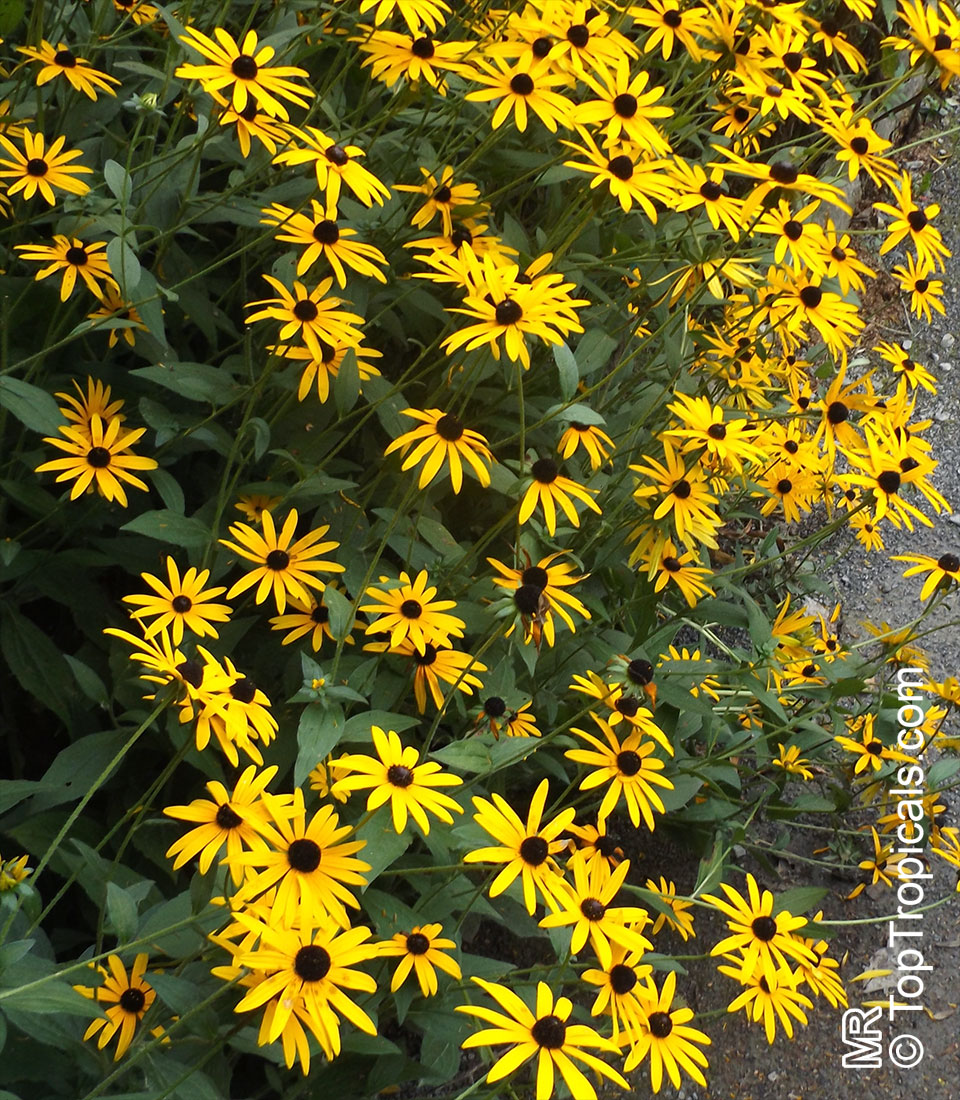
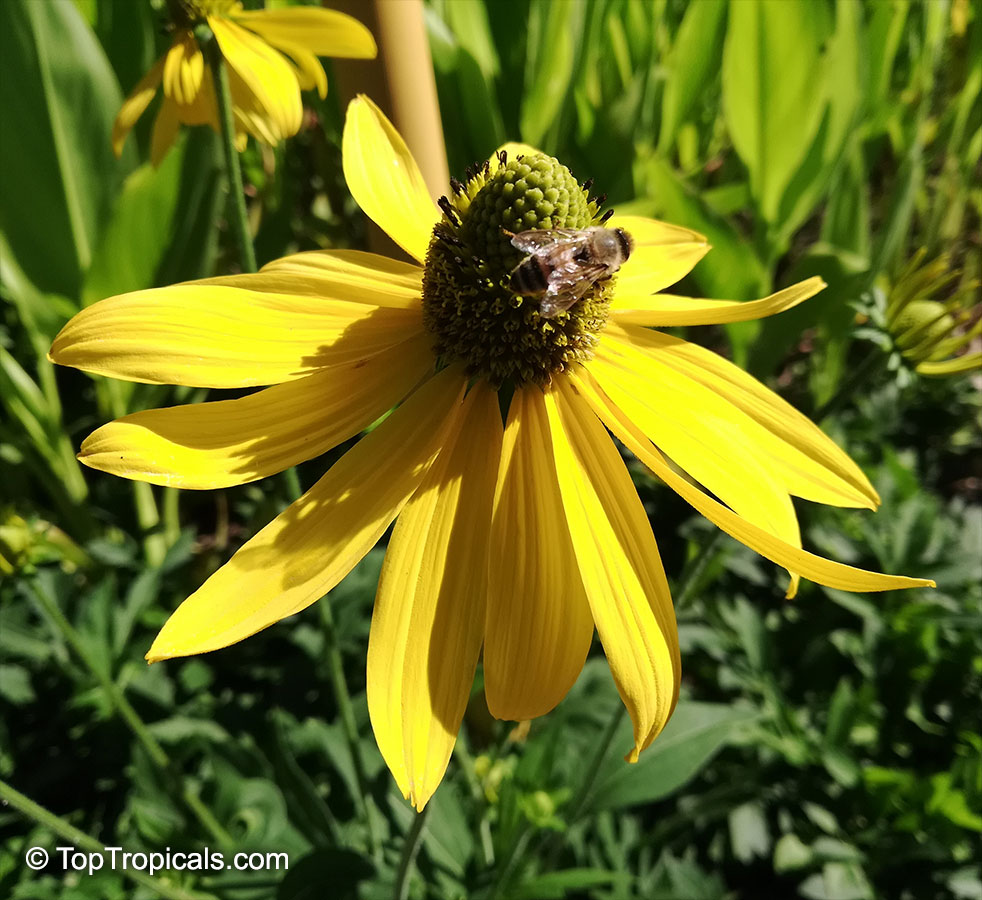
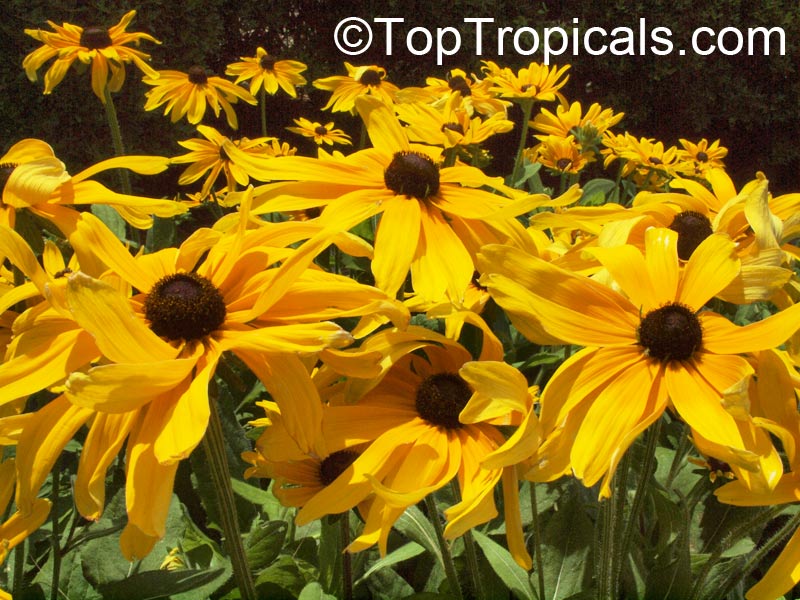
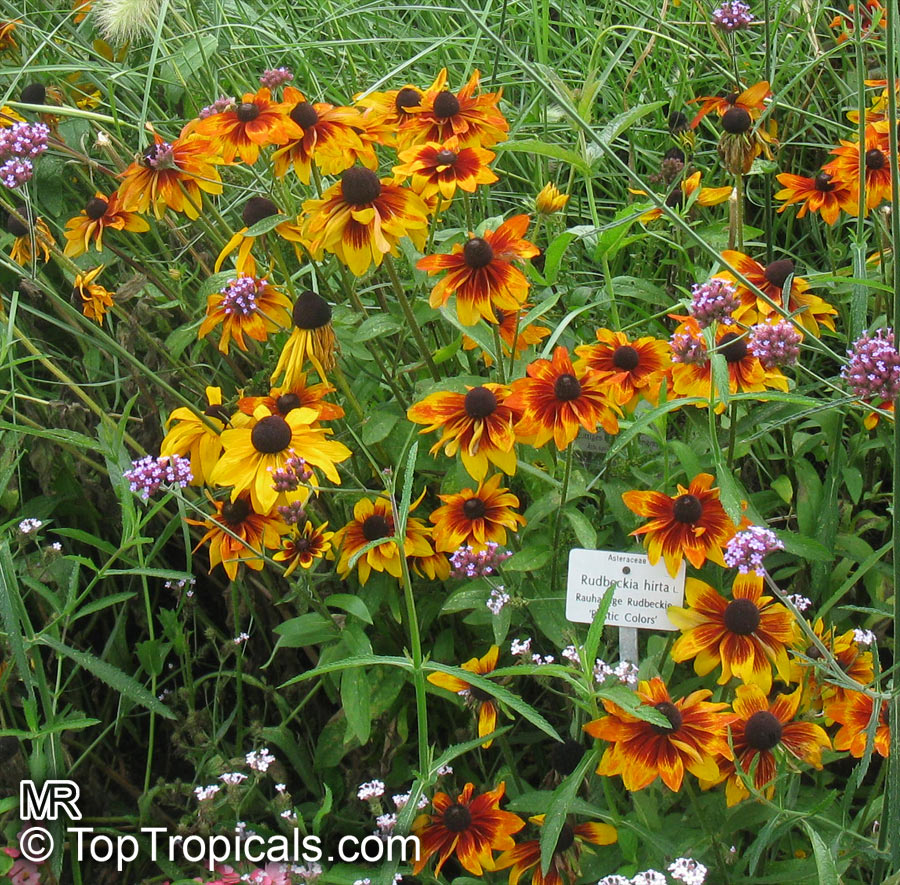
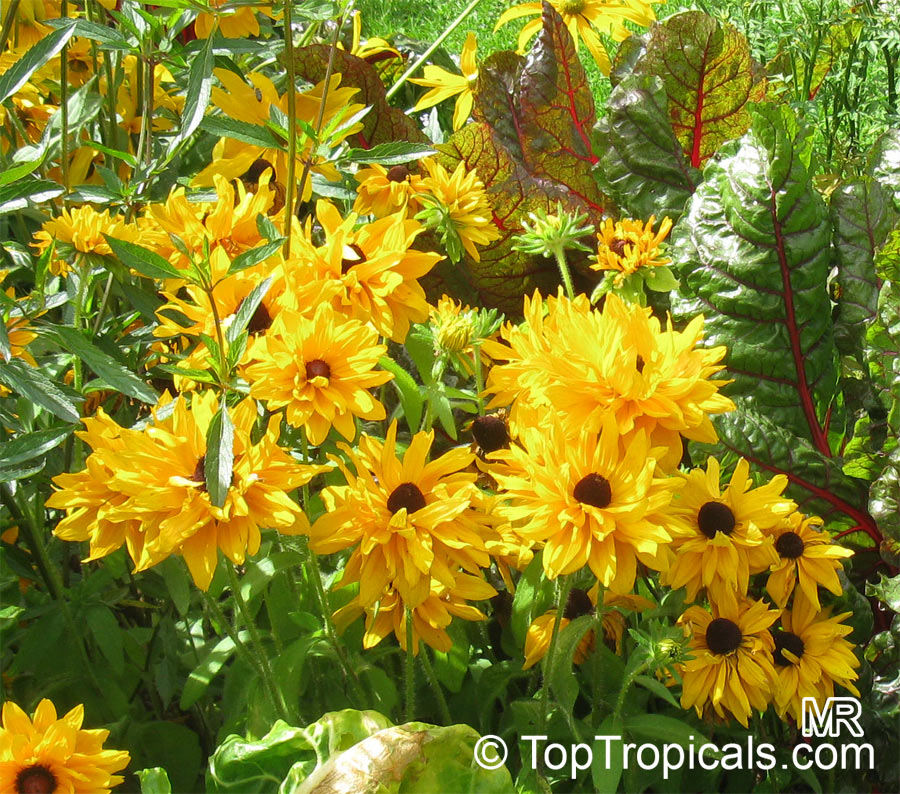
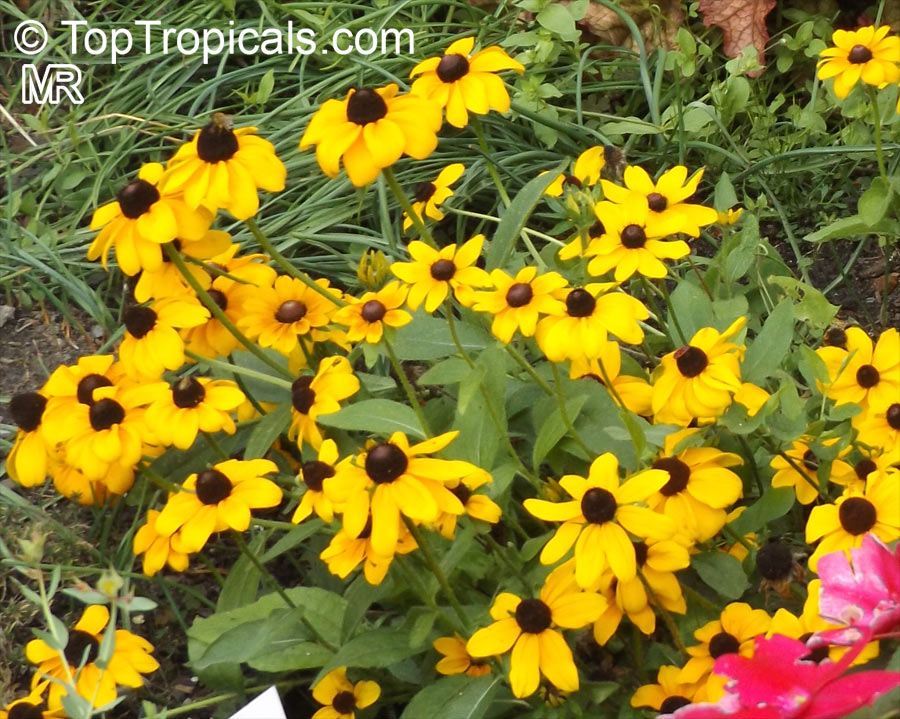
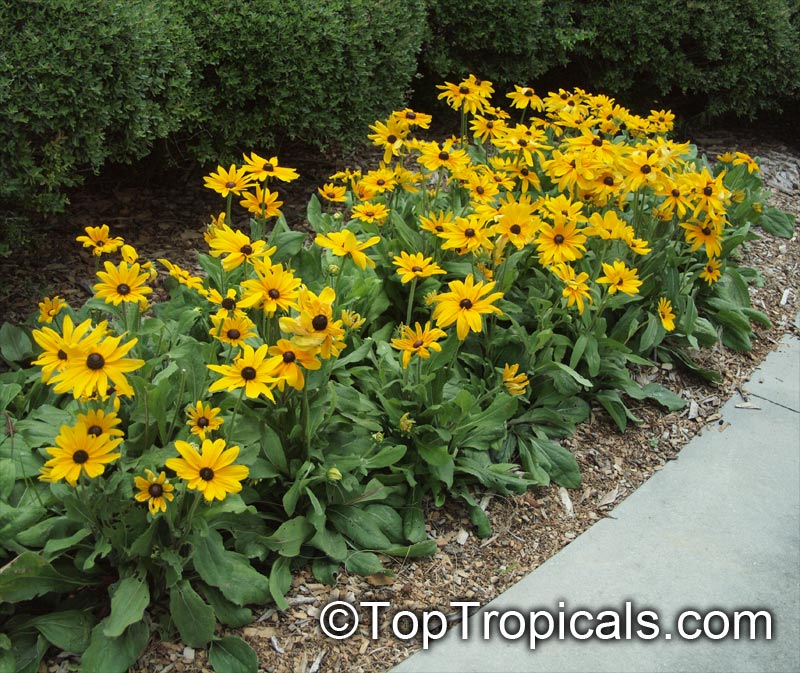
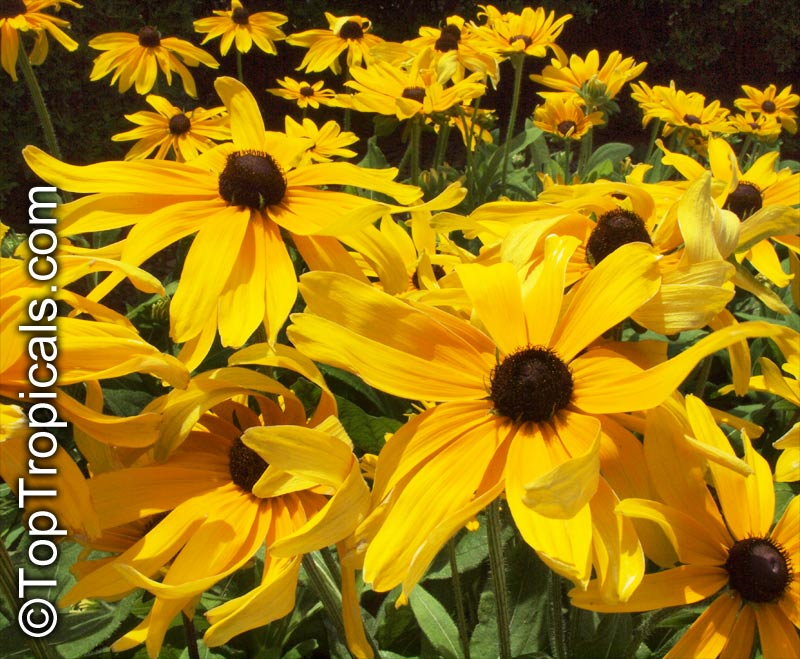
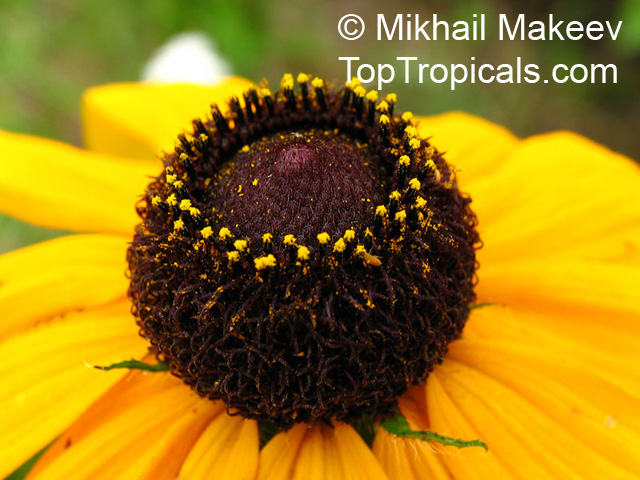
The bright yellow, golden, orange, bronze, or mahogany ray florets surround a distinctive raised central cone, usually dark brown or nearly black. Blooming from summer into fall, Rudbeckias provide abundant nectar and pollen for bees, butterflies, and other beneficial insects. They grow best in full sun and well-drained soil and tolerate heat, drought, and a wide range of garden conditions once established. Most perennial species are hardy in USDA Zones 3-9. Their long-lasting blooms, dependable performance, and versatility have made Rudbeckias enduring favorites for borders, cottage gardens, prairie plantings, wildflower meadows, naturalized landscapes, public plantings, and cut flower arrangements.
Similar plants: Rudbeckia sp. (Black-eyed Susan)