Begonia - Plant Encyclopedia Results
| Number of plants found: 26 | Next | 
|
Go to page: | 1 | 2 | 3 |
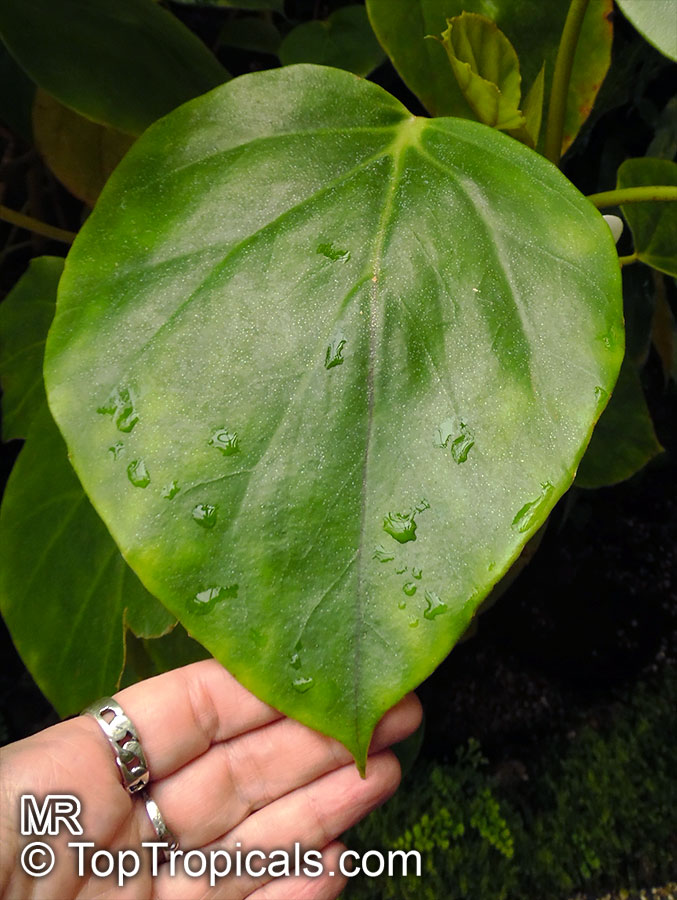
Botanical name: Begonia ampla
Common name: Begonia
Family: Begoniaceae
Origin: Equatorial Africa
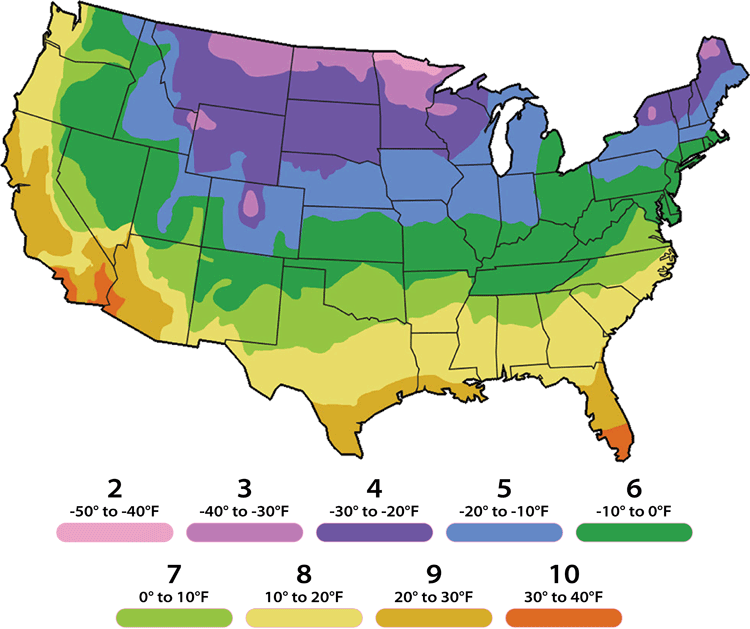
USDA Zone: 9-10


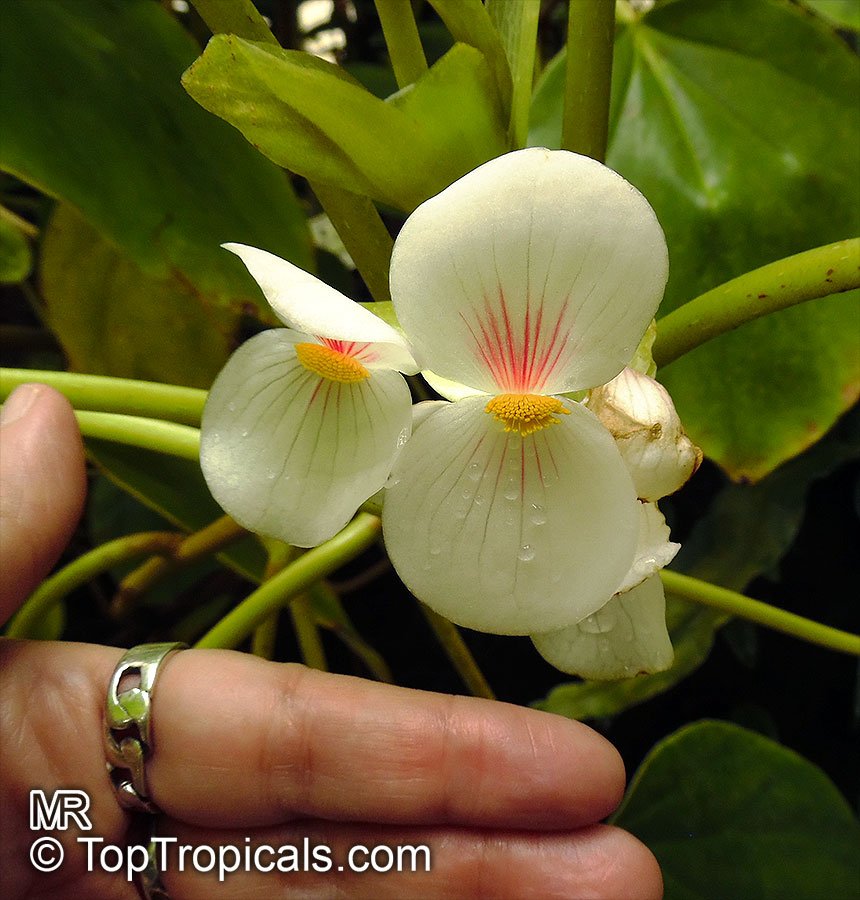
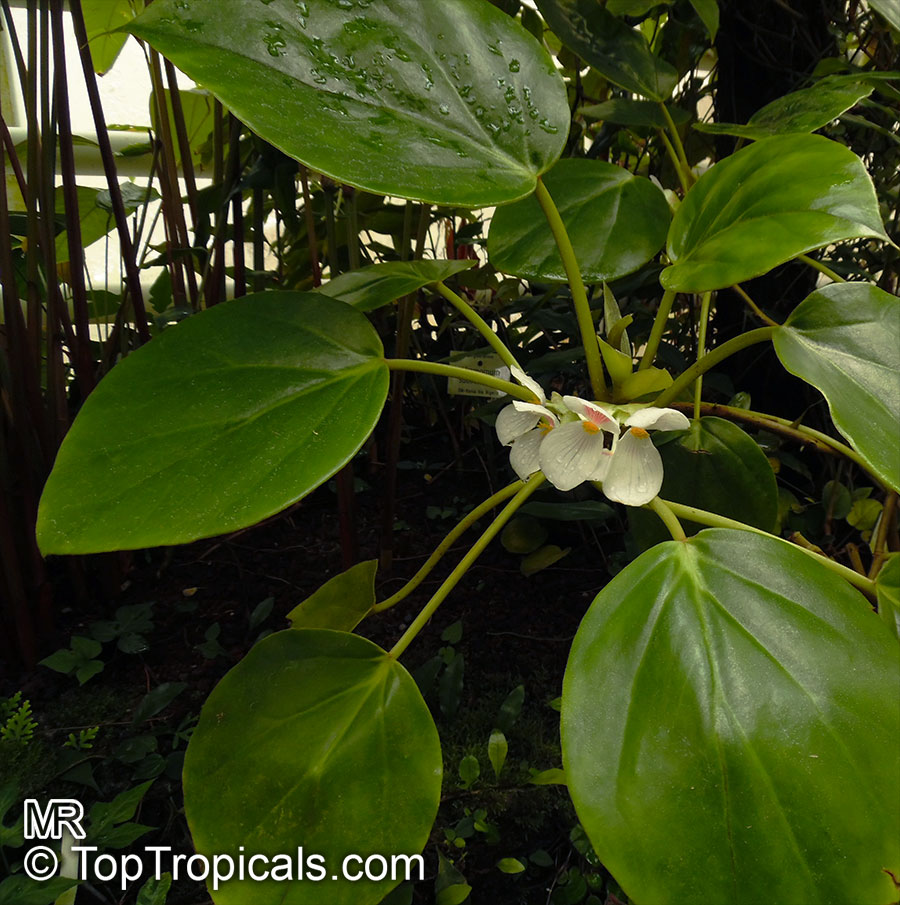
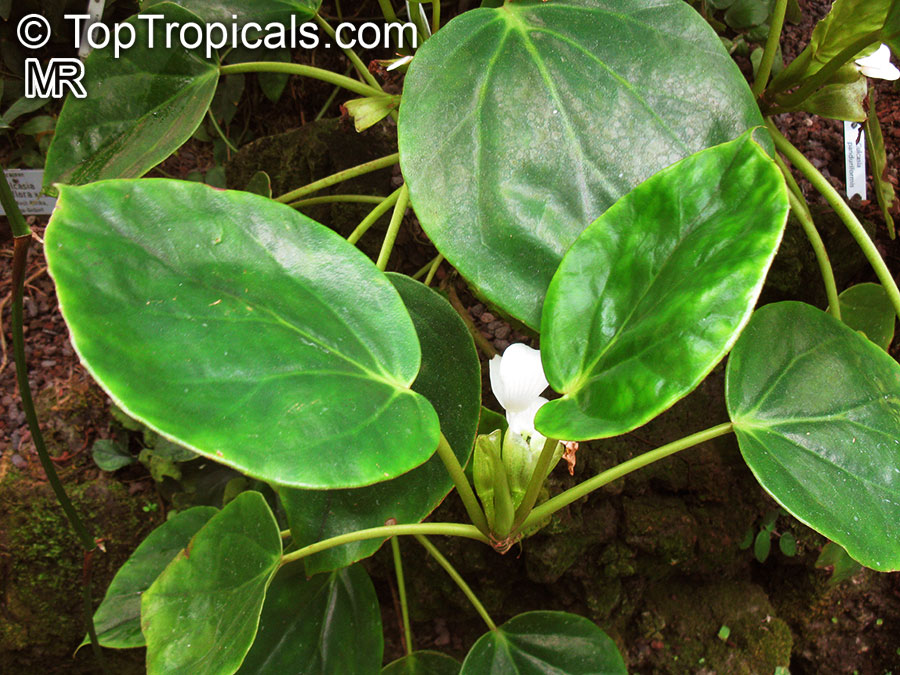
The Begonia ampla is an eye-catching epiphyte with thick creeping stems and large, very broadly ovate leaves. This small shrub is indigenous to equatorial Africa and grows to a height of 2-5 feet when mature. As it prefers cooler temperatures, this makes it an excellent addition to gardens in cooler parts of the world.
When it comes to optimal growth, the Begonia ampla needs a well-draining soil mixture containing a combination of bark, cocopeat, and perlite with semi-shade or light shade and regular watering in the summer and moderate water in the winter.
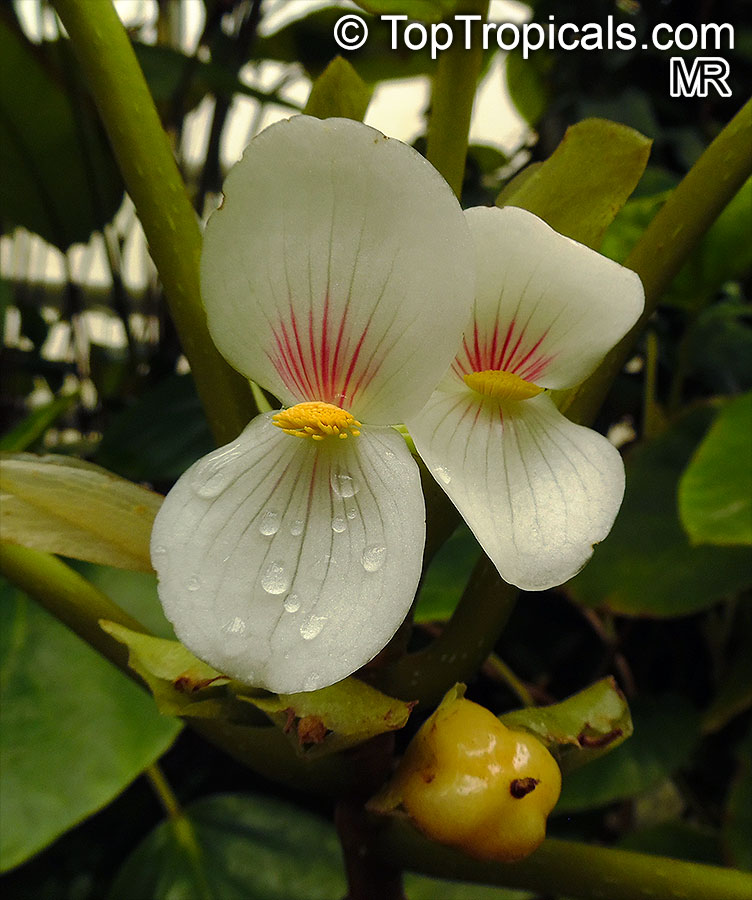
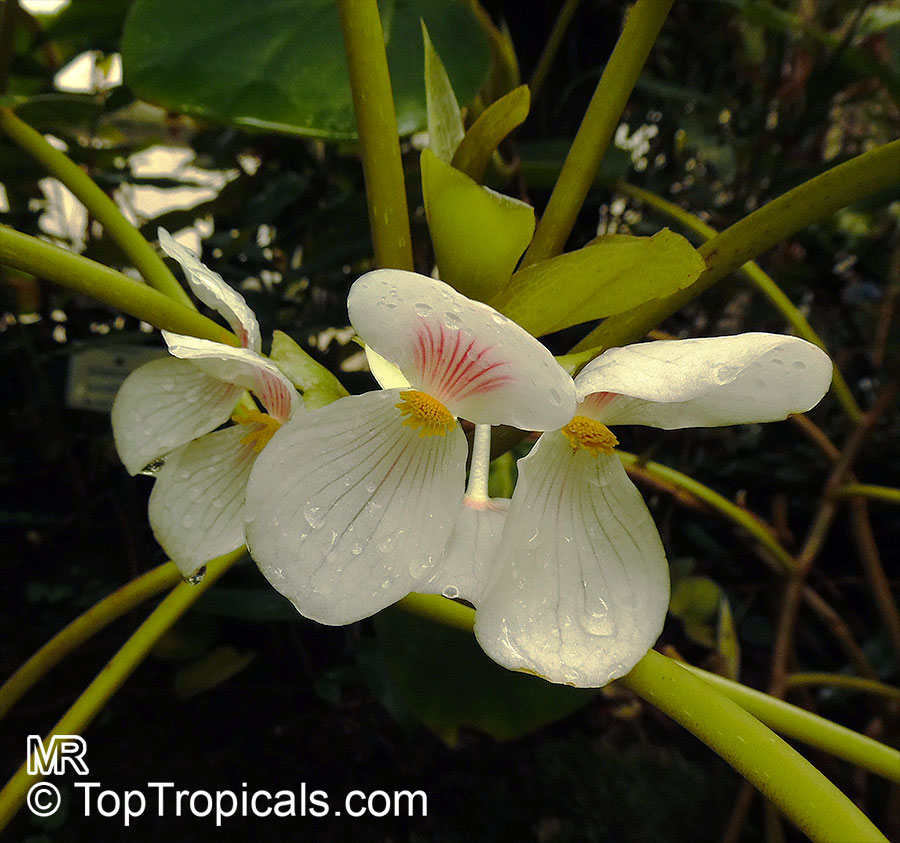
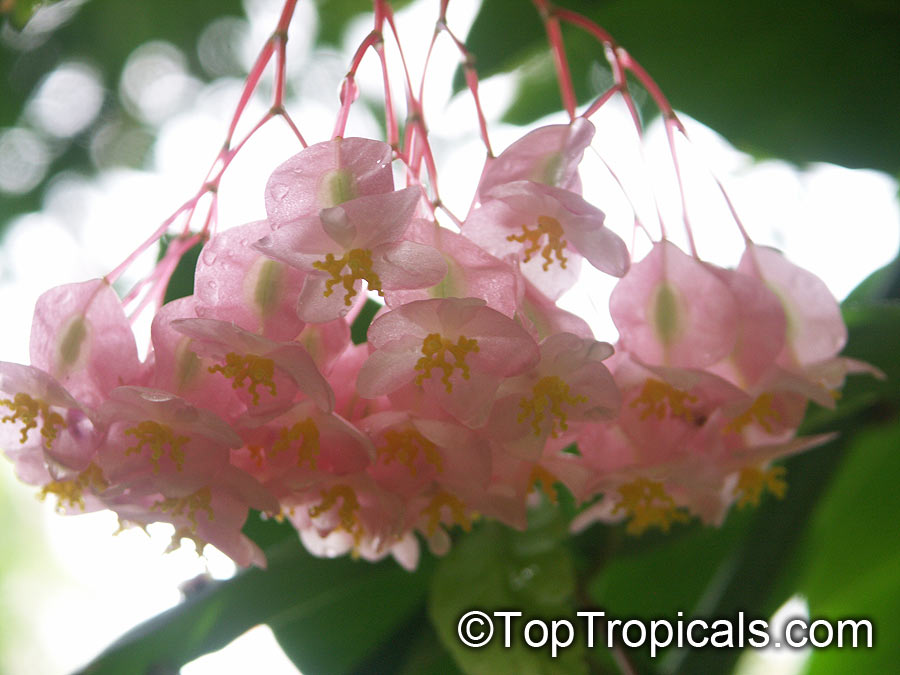
Between late spring and summer, its clusters of delicate, lightly scented flowers will appear in gorgeous shades of pink, off-white and white - rising above the leaves on the stem, creating a truly captivating sight. Repotting should be done every 1-2 years to ensure that the potting mix remains in good condition. Furthermore, a balanced, water-soluble fertilizer should be applied every 2 weeks during the growing season.
Despite being a perennial, the Begonia ampla is USDA hardy only in zones 9-11 and therefore should be kept indoors in cooler climates and protected from temperatures below freezing. The soil should be kept lightly moist but not wet in order to prevent root rot caused by standing water. During winter dormancy, ensure that all water is withheld until the following spring.
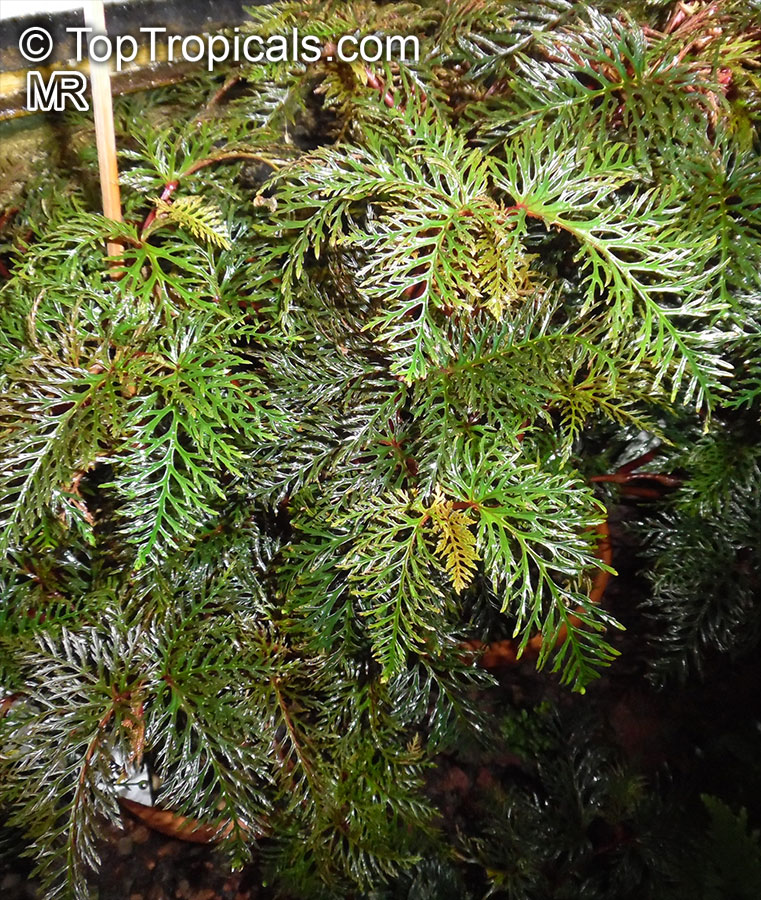
Botanical name: Begonia bipinnatifida
Common name: Fern Leaf Begonia
Family: Begoniaceae
Origin: New Guinea
USDA Zone: 9-10

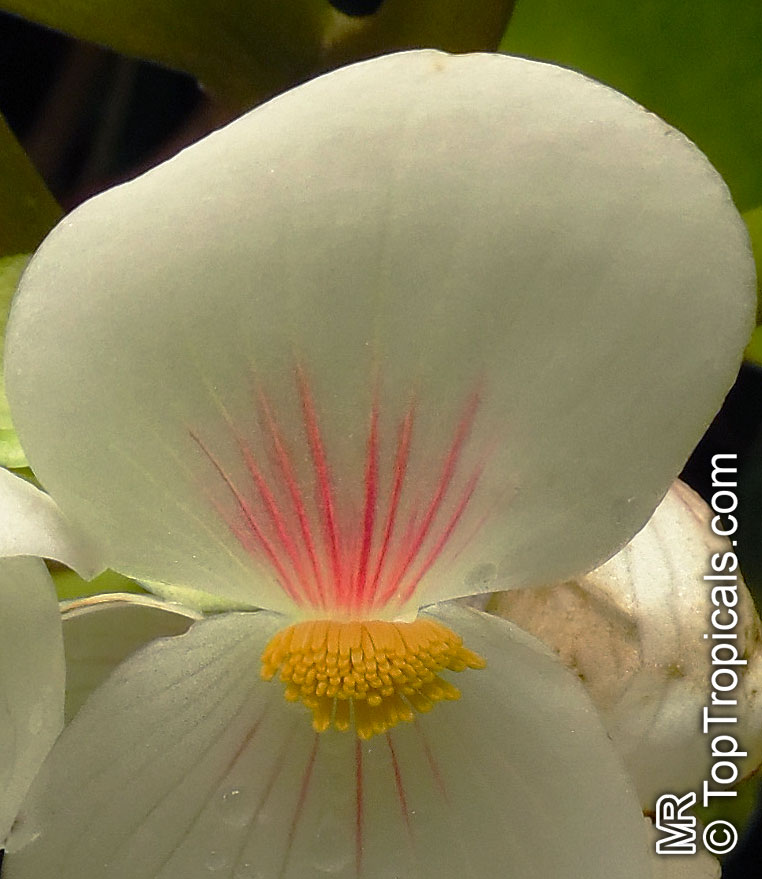
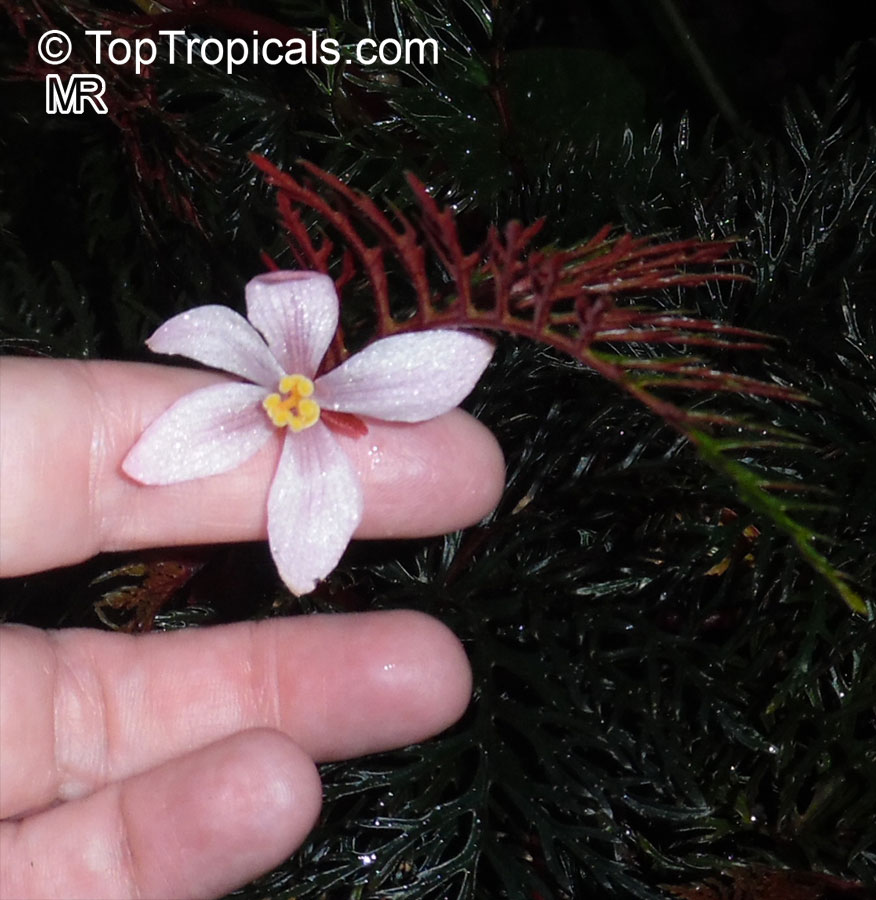
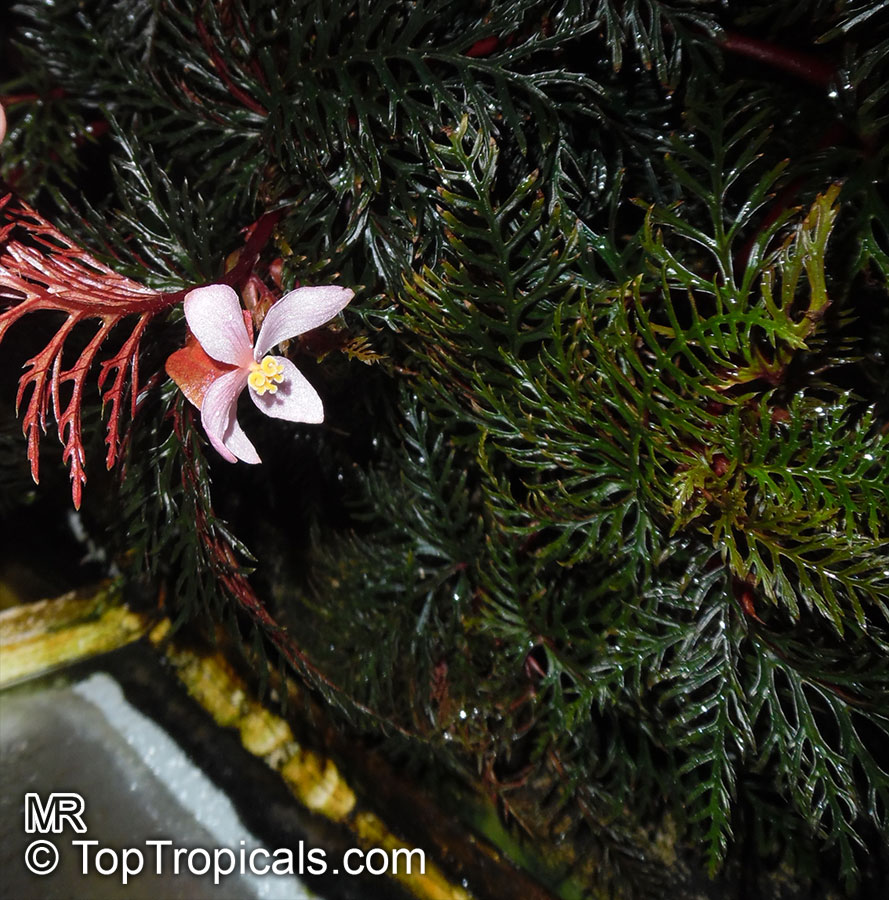
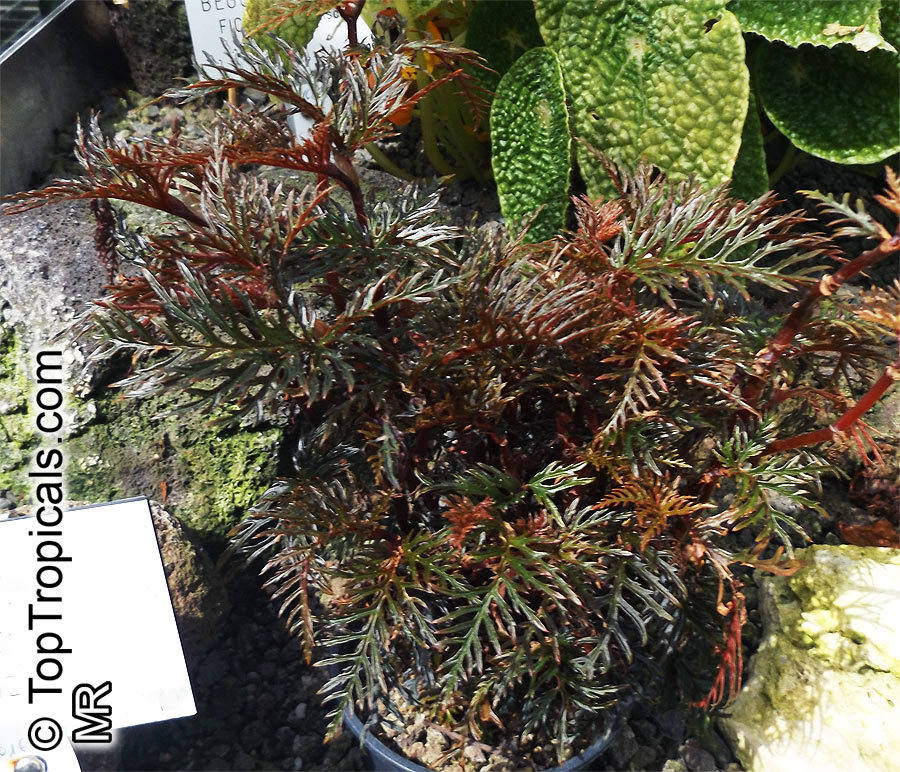
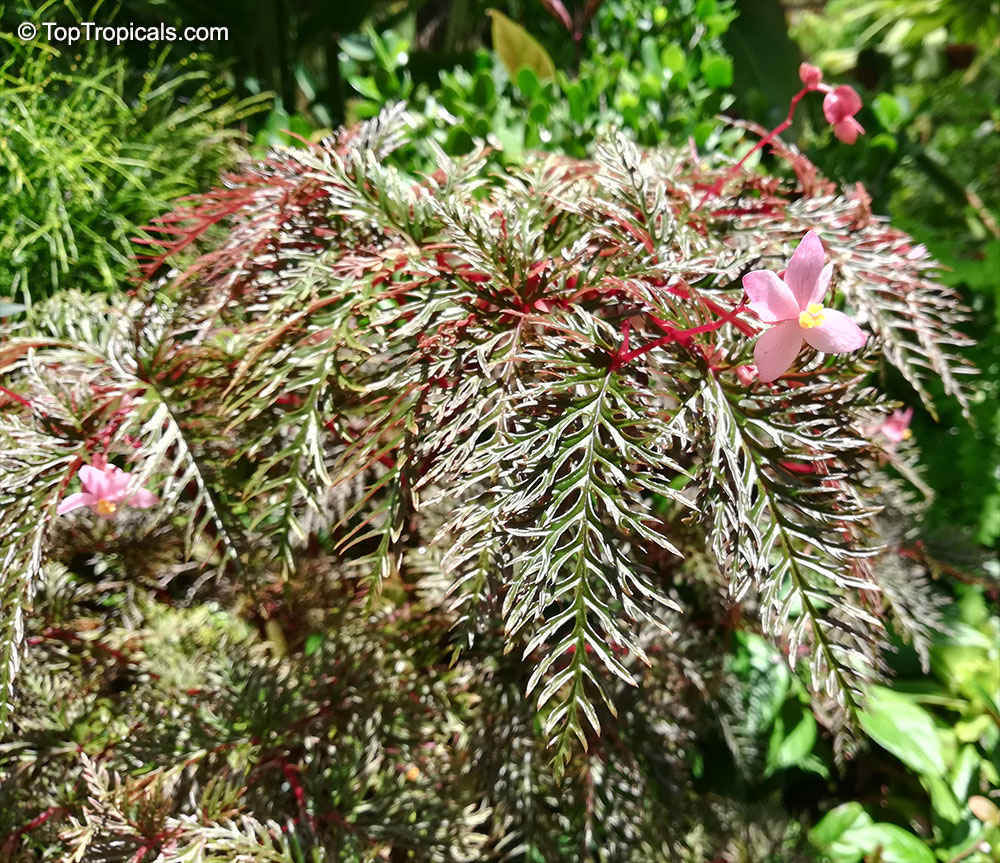
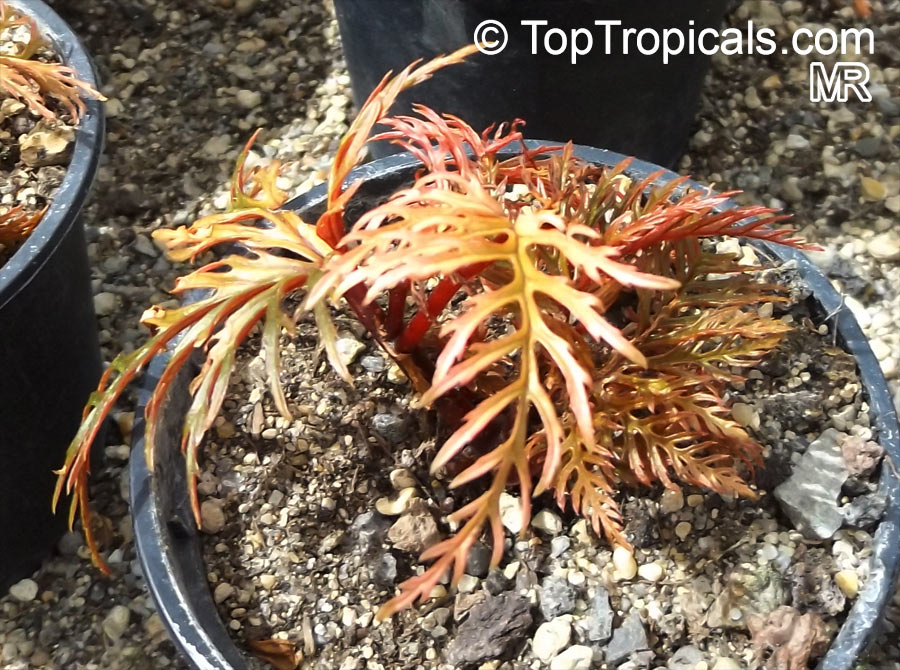
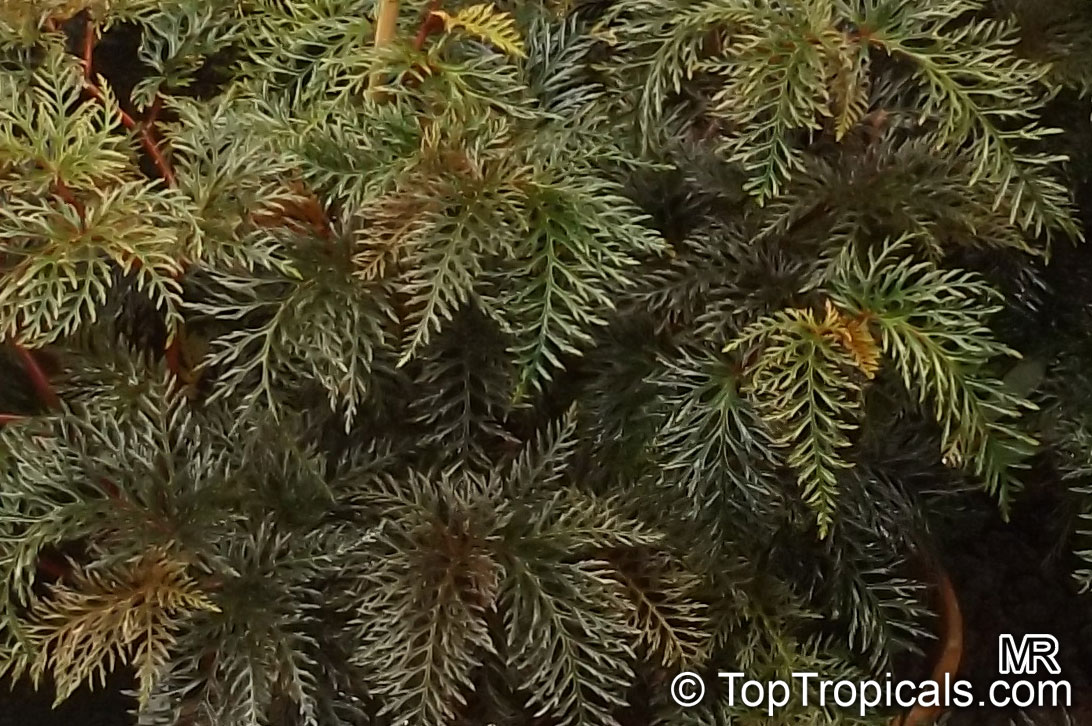
Begonia bipinnatifida offers a very unique finely textured foliage that is dark green with a deep red to almost maroon coloration on the stems and underside of the leaves. Each division of the pinnate leaf is also pinnate: this gives the leaves a fern-like appearance. This plant prefers a warm, humid environment and occasionally produces bright pink flowers.
It does not appreciate cold water, nor does it like water to be constantly on its leaves. Begonia bipinnatifida plants are recommended to be grown in contained atmosphere (terrarium) under horticultural fluorescent lights. They require particularly bright light, therefore they need to be closed to the centre of the light where light levels are most intense.
Alternatively, plants grown under natural sunlight on a windowsill will often perform best when provided with a south facing position in winter and est-facing one in summer.
Botanical name: Begonia boliviensis
Common name: Bolivian Begonia
Family: Begoniaceae
Origin: Bolivia
USDA Zone: 9-10


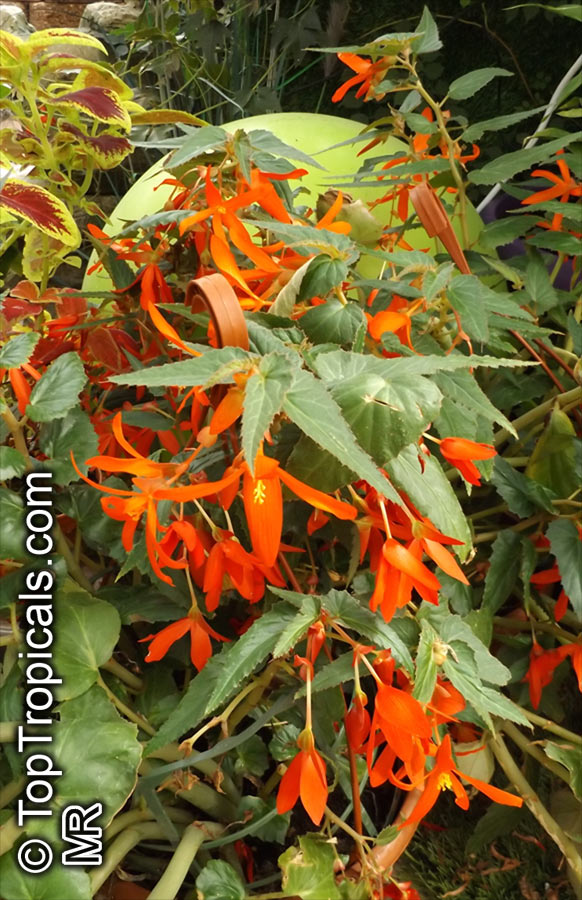
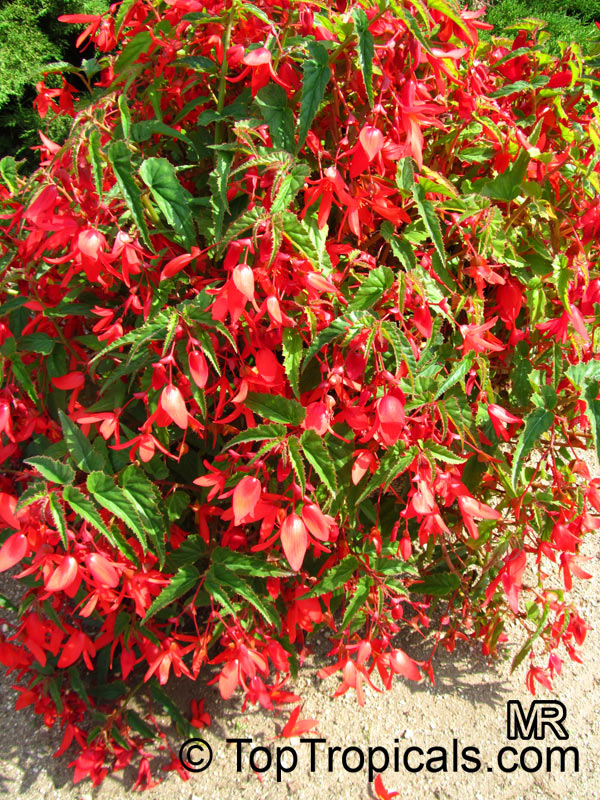
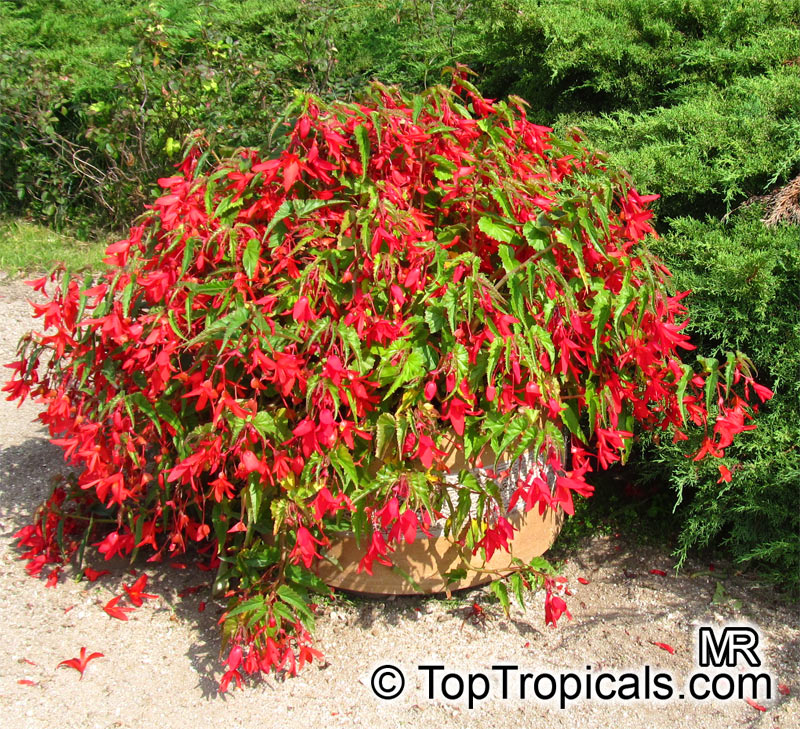
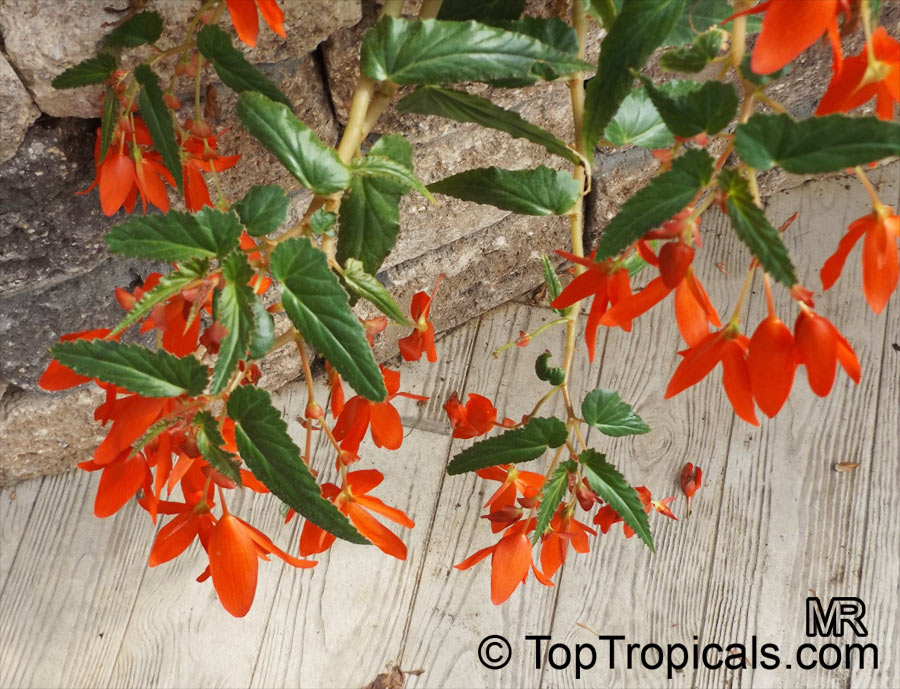
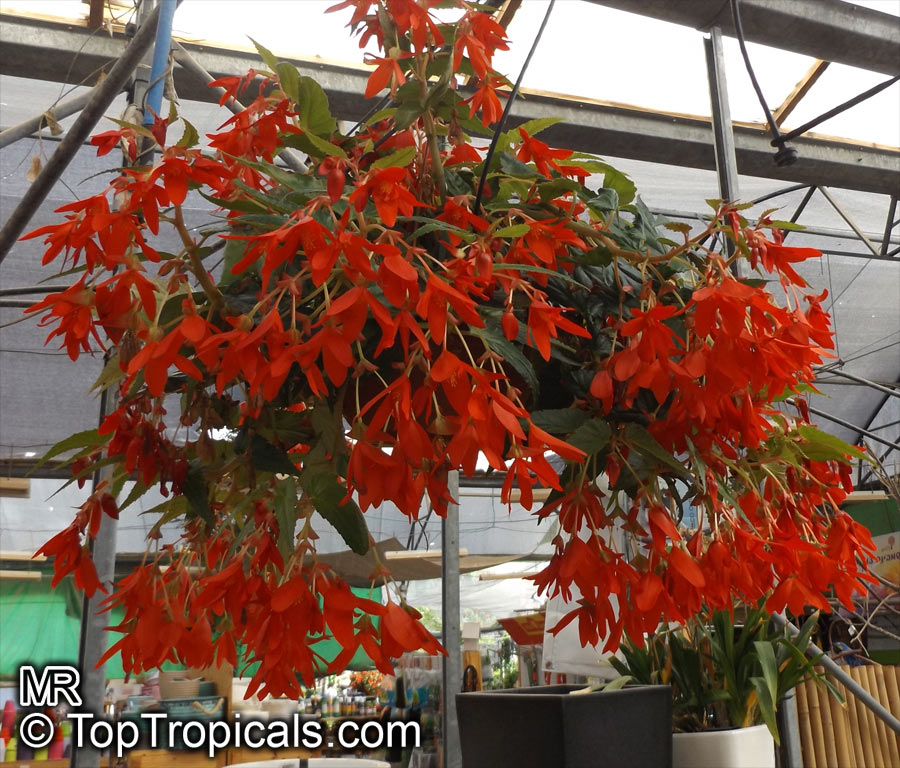
The cultivar, Begonia boliviensis 'Bonfire' is widely available commercially and can be used in containers, in hanging baskets and as a landscape plant.
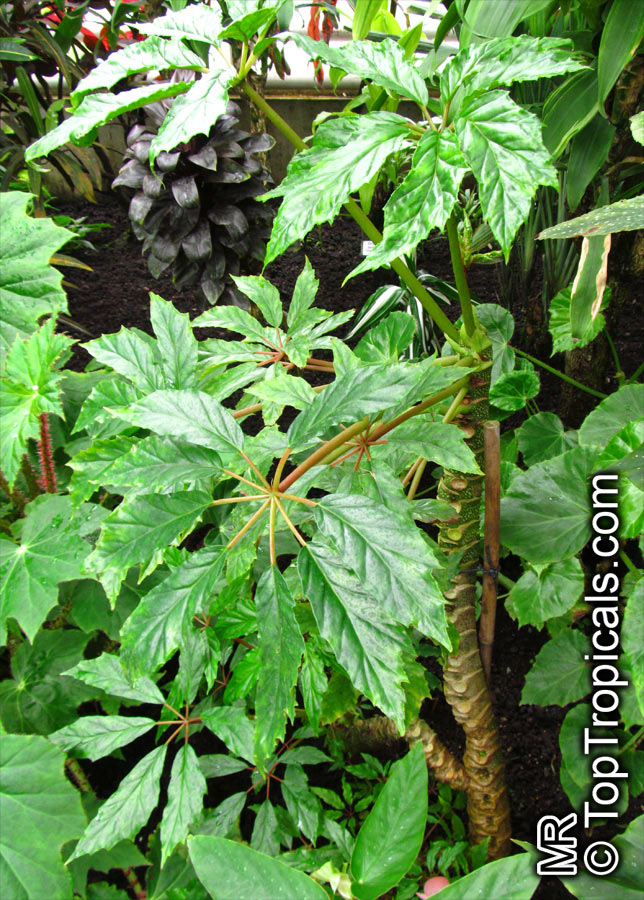
Botanical name: Begonia carolineifolia
Common name: Palm-leaf Begonia
Family: Begoniaceae
USDA Zone: 9-10

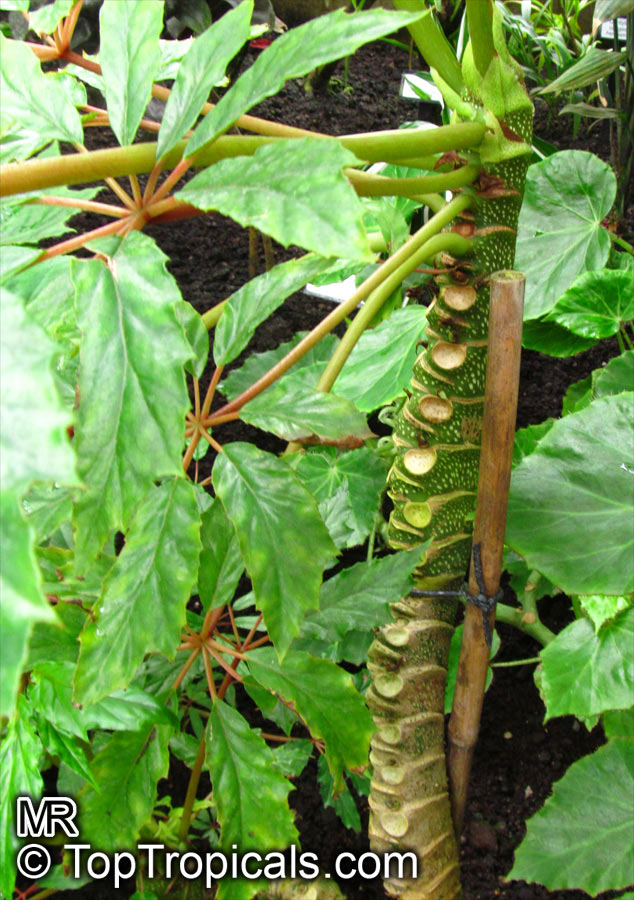
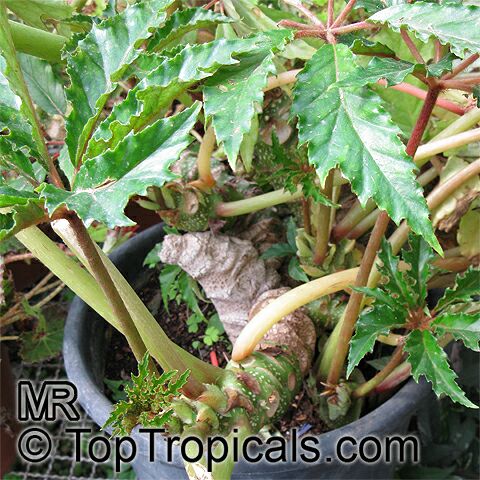
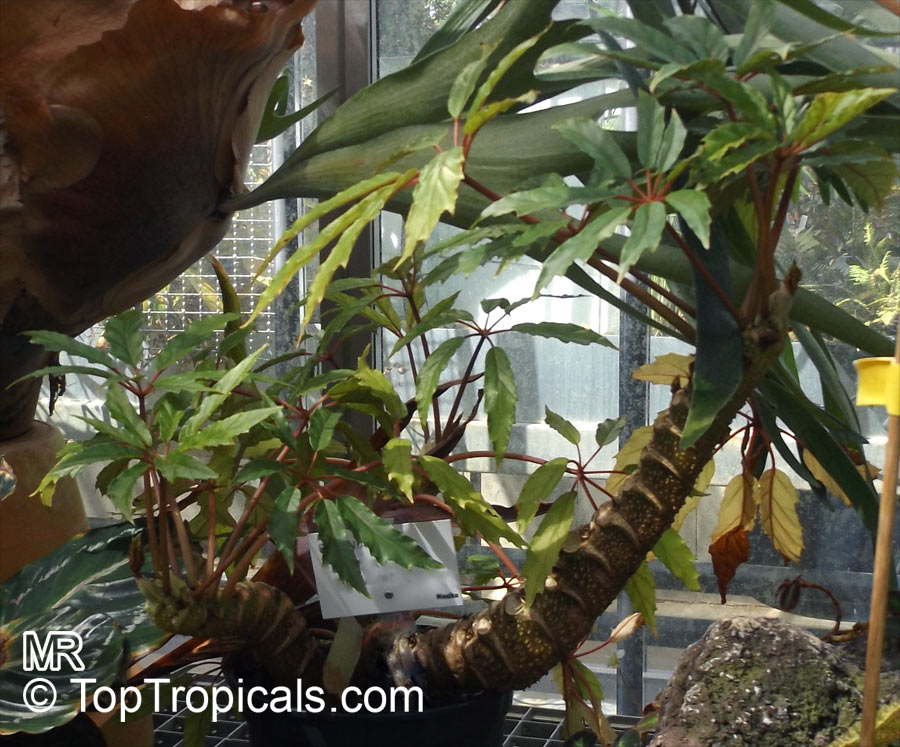
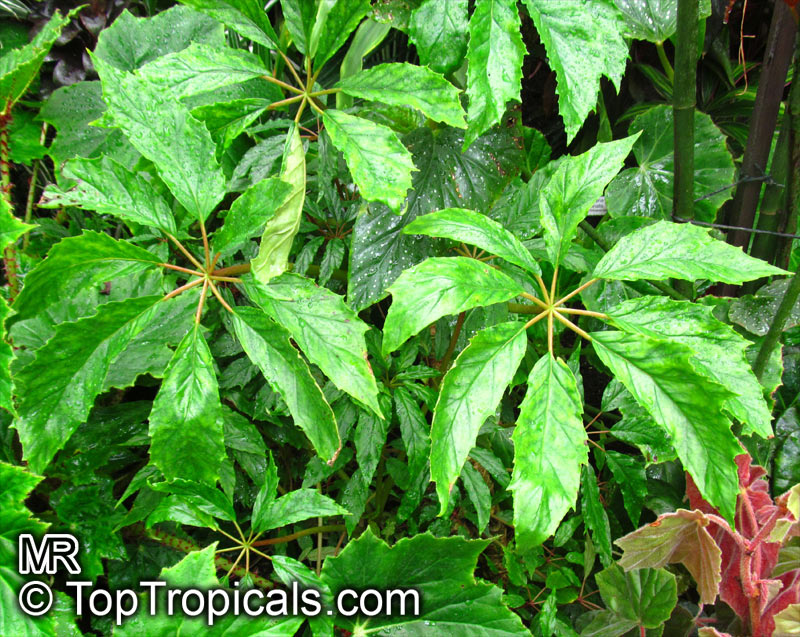
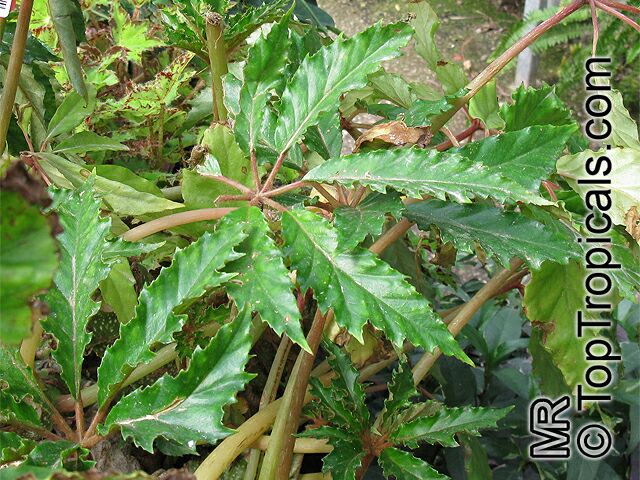
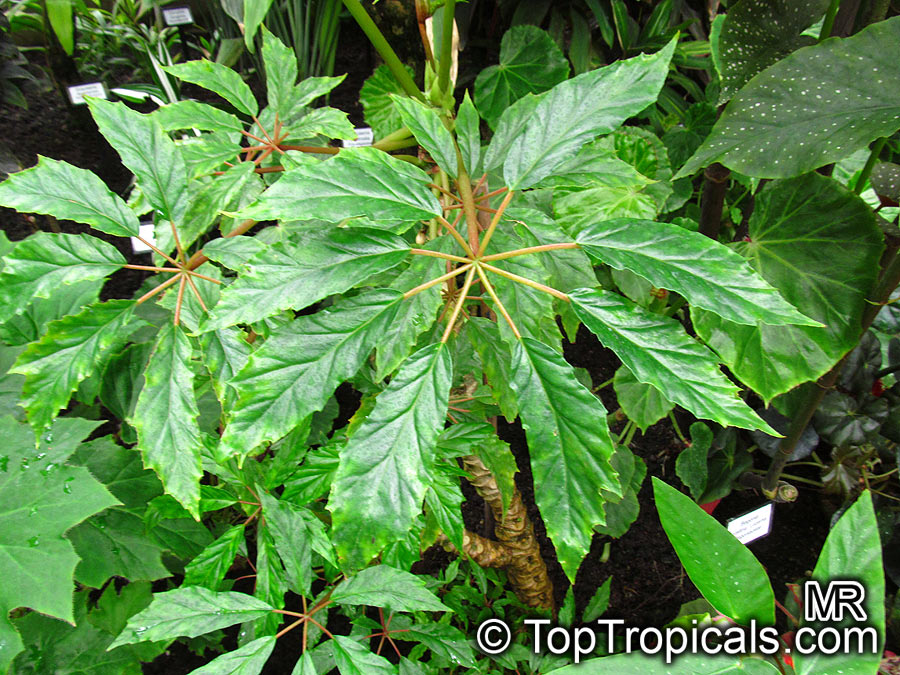
It is a large shrub that can reach 5-10 feet tall, or you can keep it as a small shrub at 2-5 feet. This Begonia thrives in semi-shade, and should be given regular water to keep the foliage in full and glossy form.
This tropical plant has bright pink flowers that reach up to 6 inches wide and bloom in the summer months. The foliage is ornamental and grows to be around 4 inches wide. It is a great choice for both gardeners and flower enthusiasts alike.
Begonia carolineifolia can be grown in USDA Zone 9-11 and is an excellent container plant. During summer months, the container should be kept in a shaded area and watered regularly. During winter months, the container should be kept in a heated space, and waterings should be slightly less frequent. This Begonia is an easy-going houseplant, and will need minimal pruning and occasional fertilizing.
Overall, Begonia carolineifolia is an easy-care and beautiful houseplant that is an excellent choice for any gardener or flower lover. With its bright pink flowers and ornamental foliage, this Begonia is sure to add beauty and a touch of the tropics to any home.
Botanical name: Begonia coccinea
Common name: Angel Wing Begonia
Family: Begoniaceae
Origin: Brazil
USDA Zone: 9-10
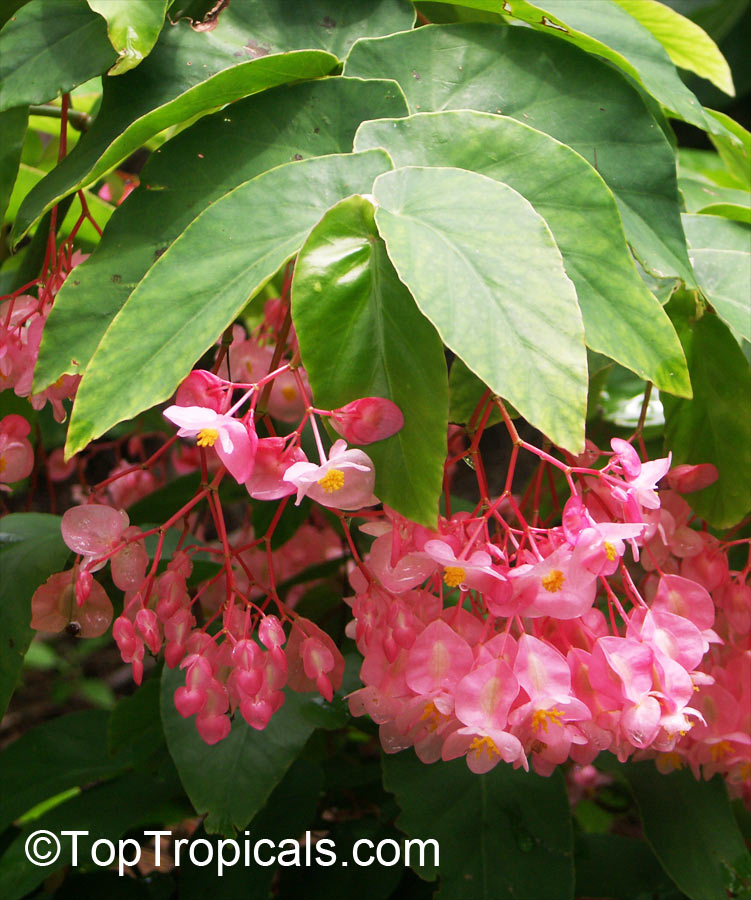
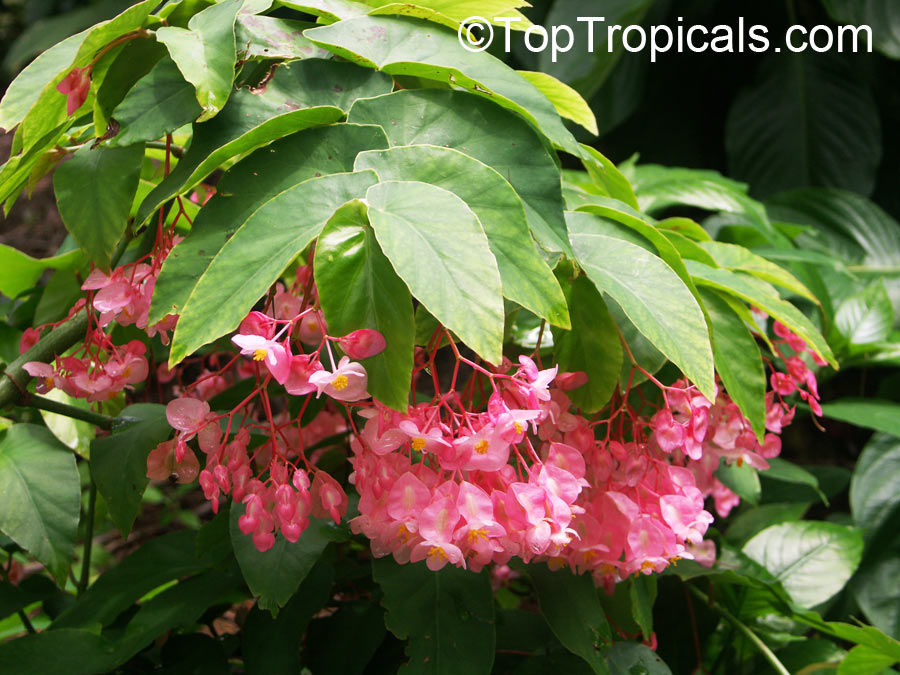
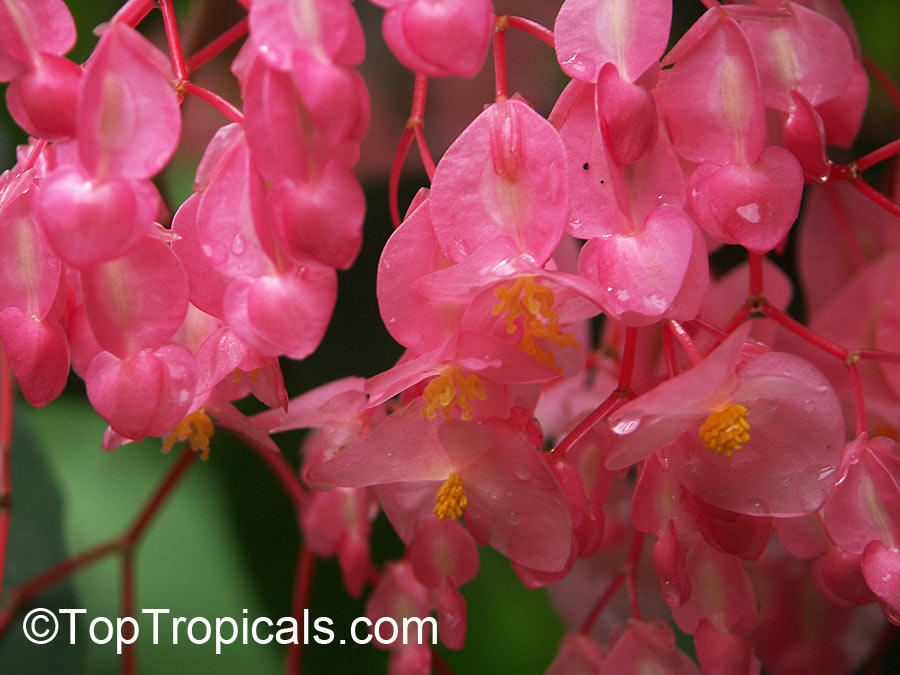
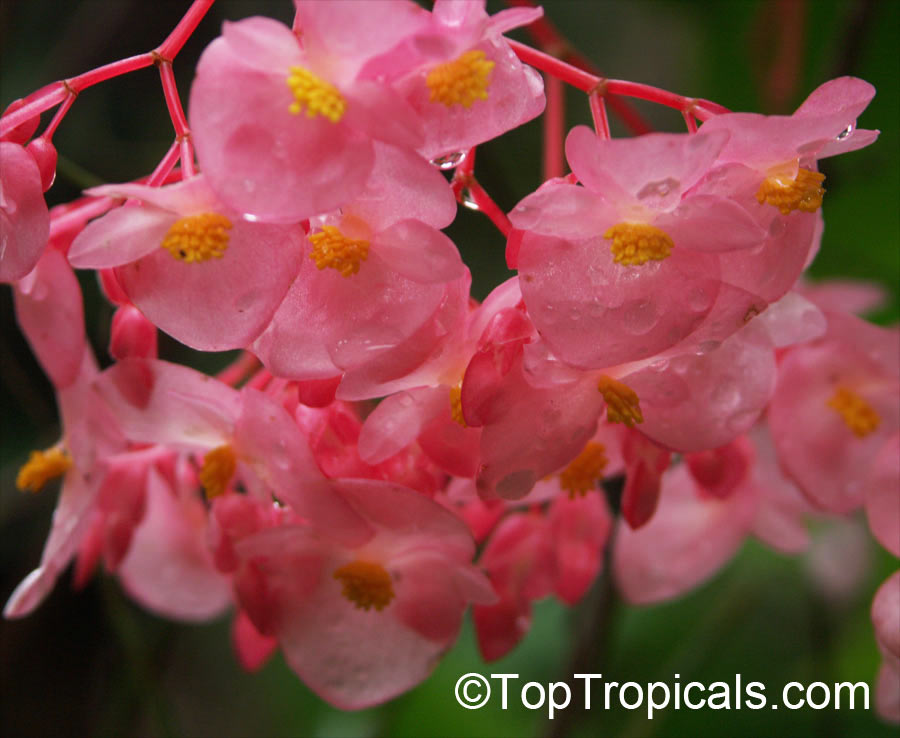
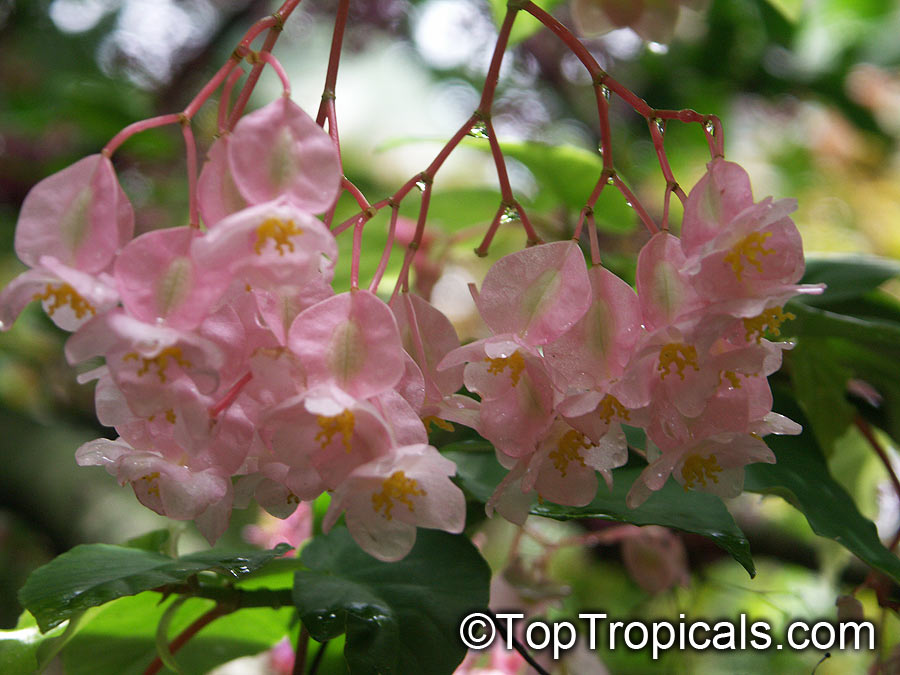
Begonia coccinea is a small shrub that typically grows 2-5 feet with an upright habit. They are native to Brazil and are a jungle plant that likes bright shade or semi-shade. This species usually looks more open and seeding and develops into a whorl of cane branches over time. In general, it prefers regular water and protects it from cold in the winter. They love soil that is constantly moist and likes good air circulation and benefits with a trim to keep its shape and encourage it to branch out and bush up. Angel wing begonias are a great ornamental plant to have year round. The foliage is olive green and the undersides of the leaves are reddish-brown. There are also many varieties of begonias to choose from, many of which have leaves edged in pink or even white. They produce clusters of bright pink to light pink flowers in the spring and summer, making it an attractive and multi-seasonal plant for your garden.
Grown in USDA hardiness zones 9-11, Angel wing begonias can generally withstand a light frost when mature, but for best results in cold regions, it's advisable to grow them in pots. The begonia enjoys the typical indoor environment of temperatures between 65-75 degrees Fahrenheit and 60% humidity. Place it near east or west-facing windows, as too much direct sunlight can damage the foliage. Water on a weekly basis, making sure the soil is evenly moist, and then allow it to dry out before re-watering. Fertilize every six weeks with a liquid fertilizer. Additionally, you will need to mist the Begonia at least once a week to mimic its natural environment.
Botanical name: Begonia conchifolia
Common name: Red Ruby Begonia
Cultivar: Red Ruby
Family: Begoniaceae
Origin: Central America
USDA Zone: 9-11
Cold tolerance: 30°F
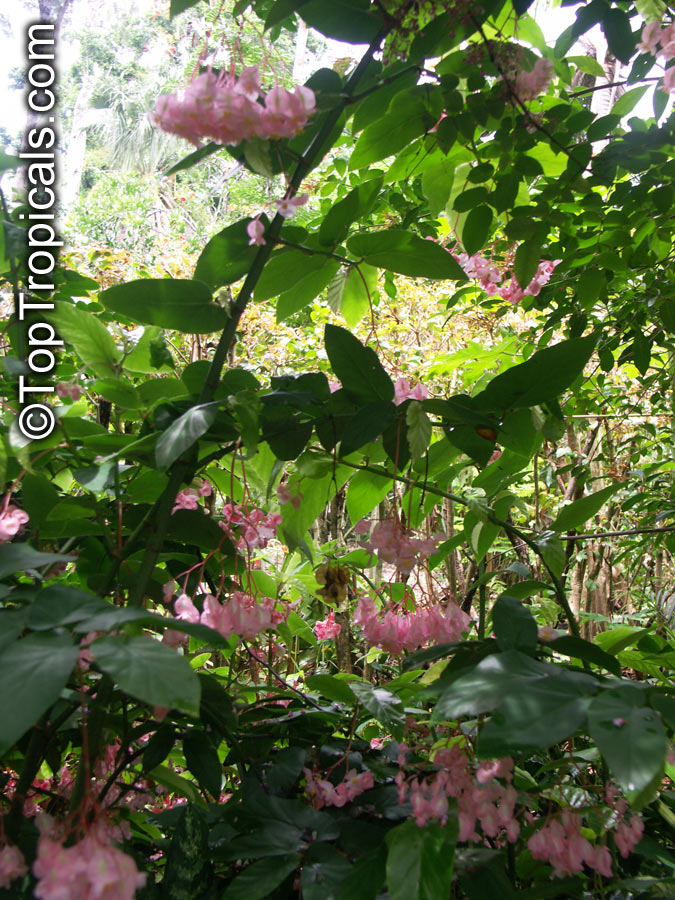
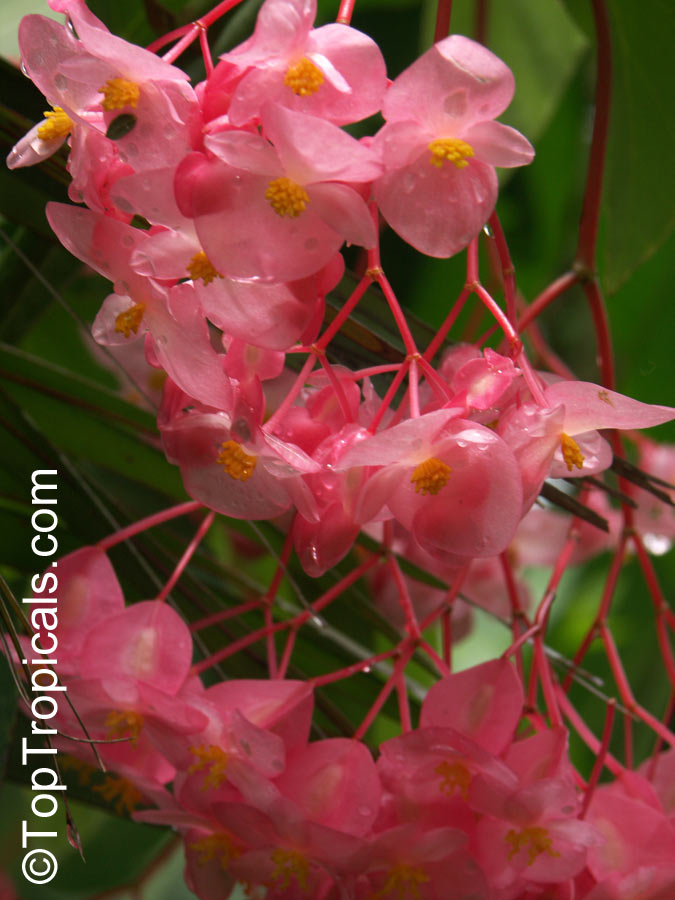
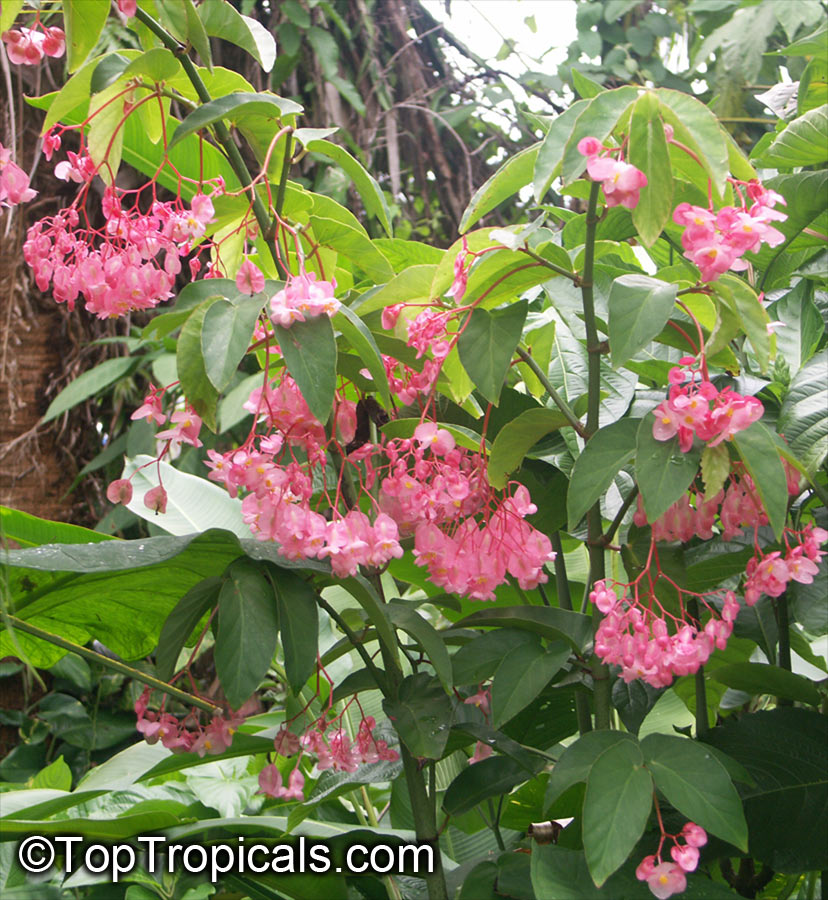
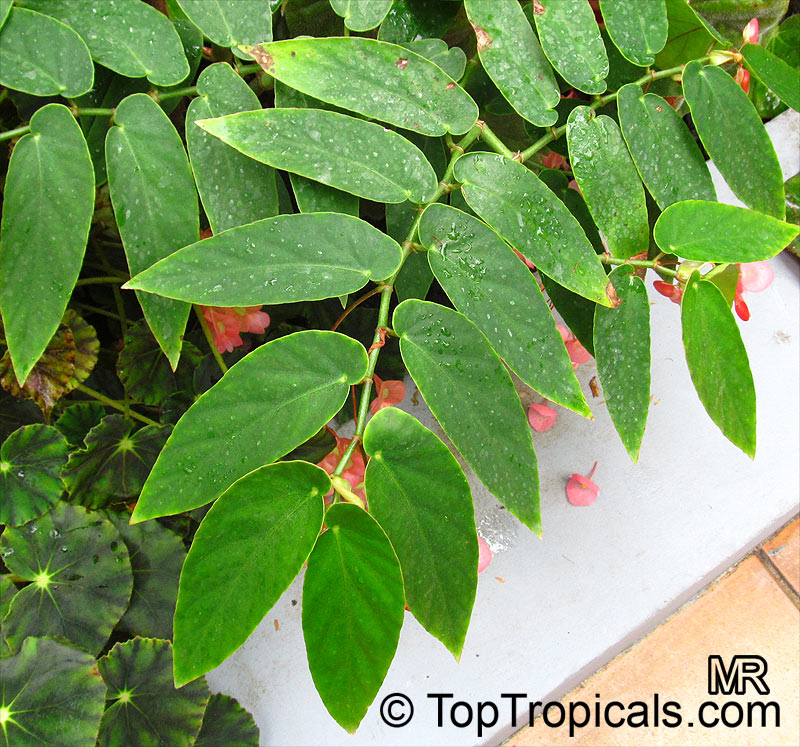
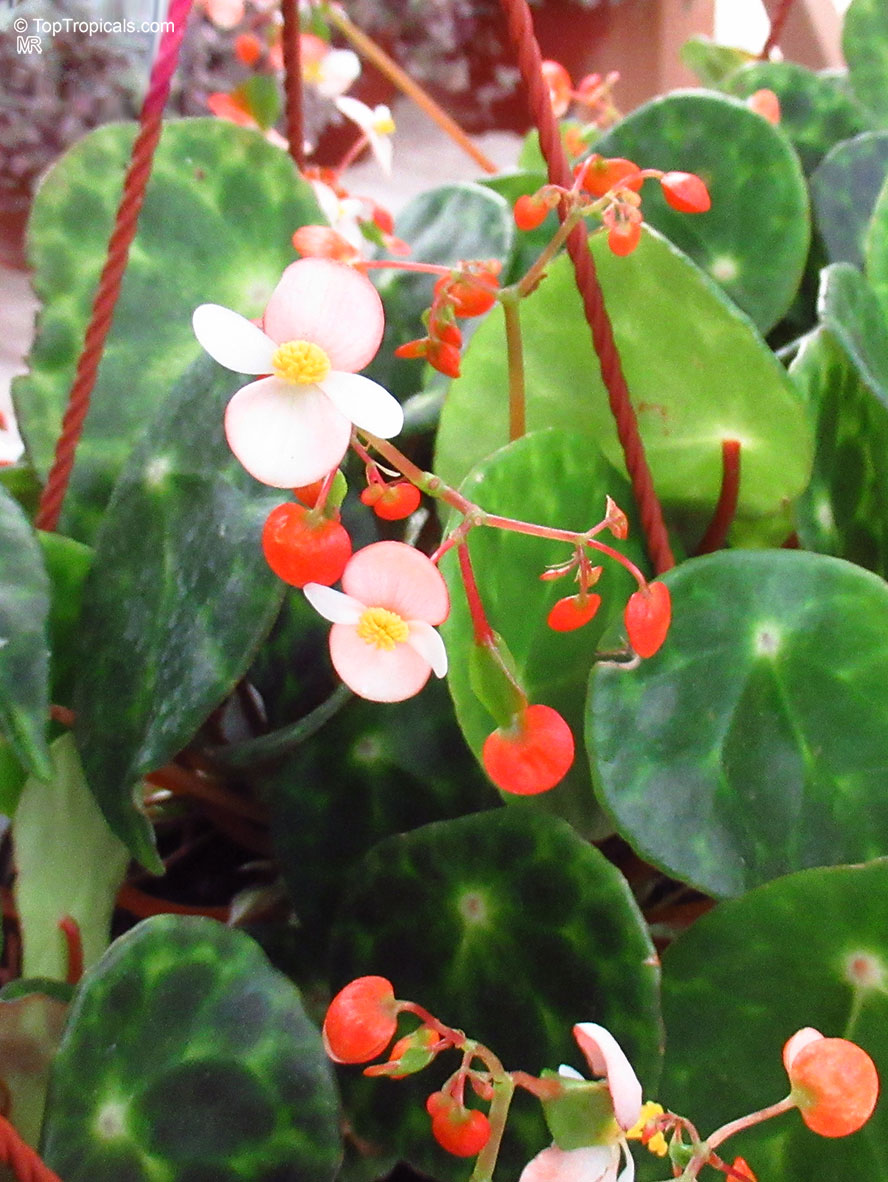
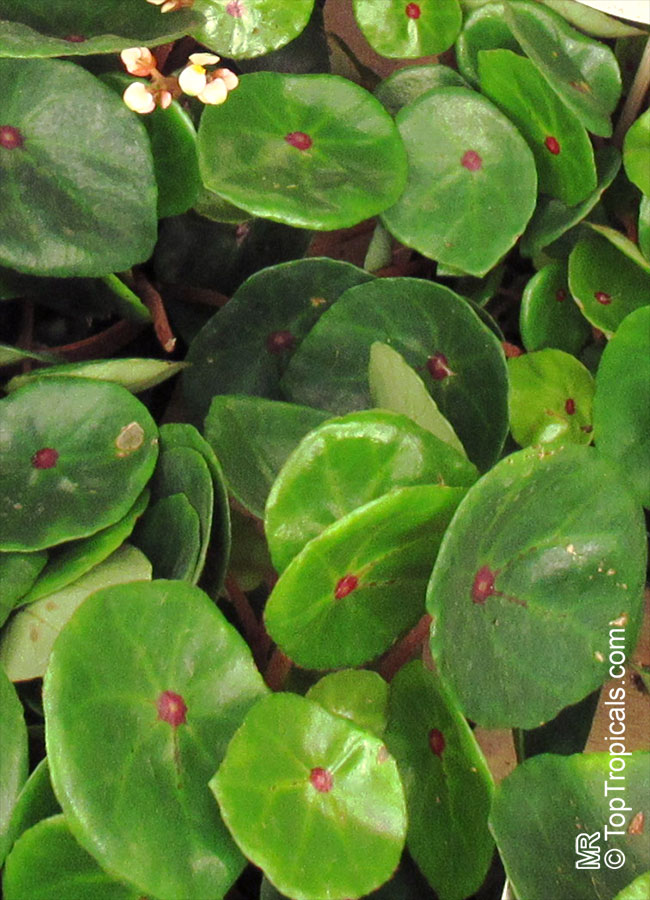
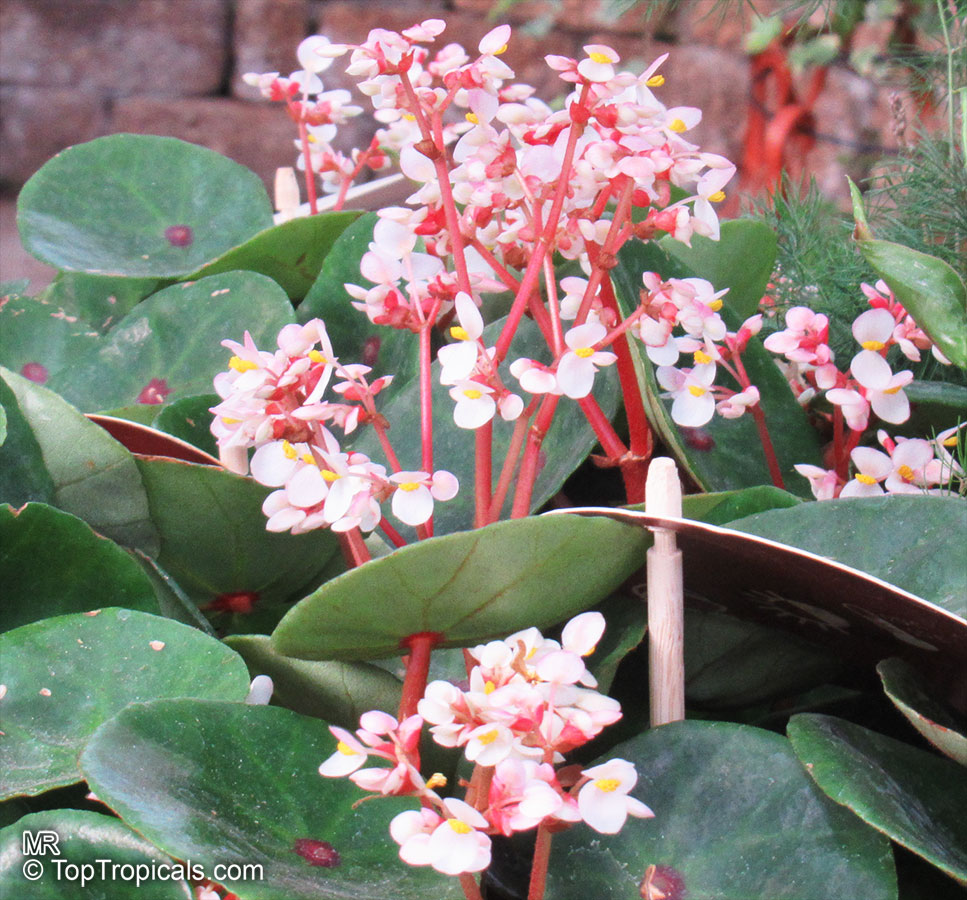
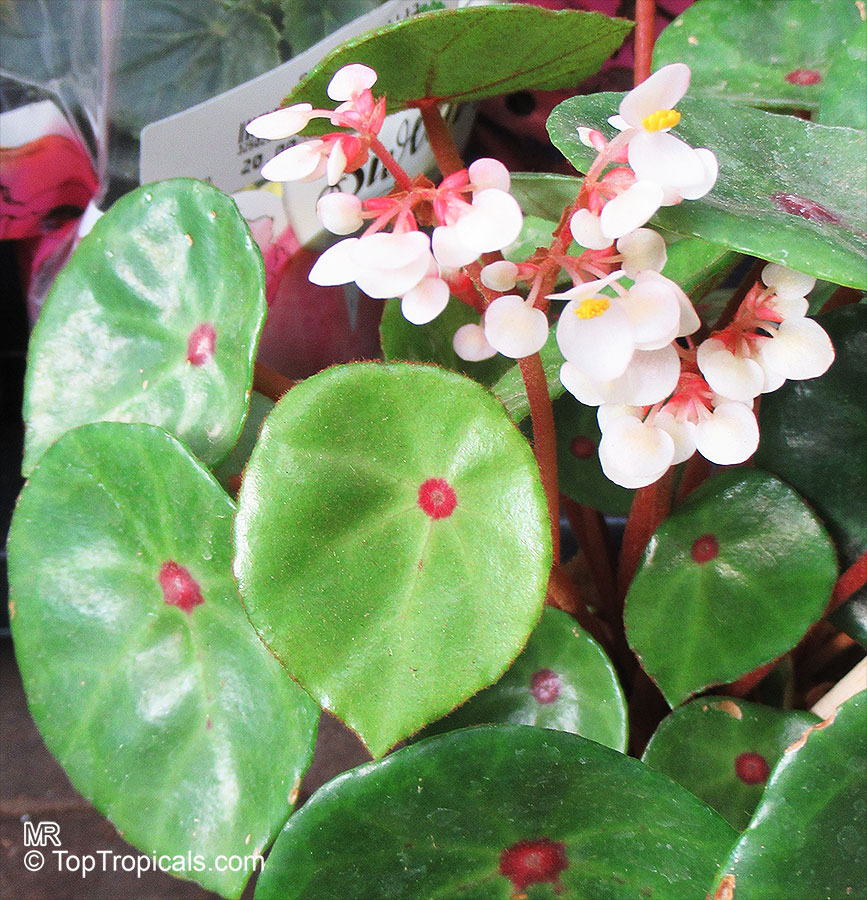
Begonia conchifolia 'Red Ruby' is a compact Central American species with round, glossy green leaves and a bright red central spot. This cultivar is prized for its tidy growth, colorful foliage, and ease of care in low to medium light indoors. It produces delicate white flowers with a yellow center and red-tinted buds that add charm throughout the year.
Botanical name: Begonia corallina
Common name: Cane Begonia
Family: Begoniaceae
Origin: Brazil
USDA Zone: 9-10
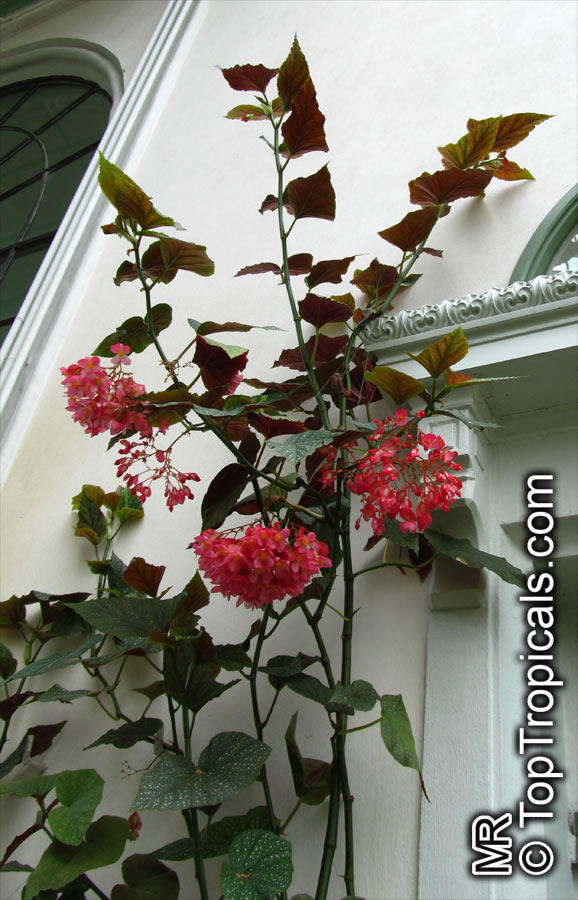
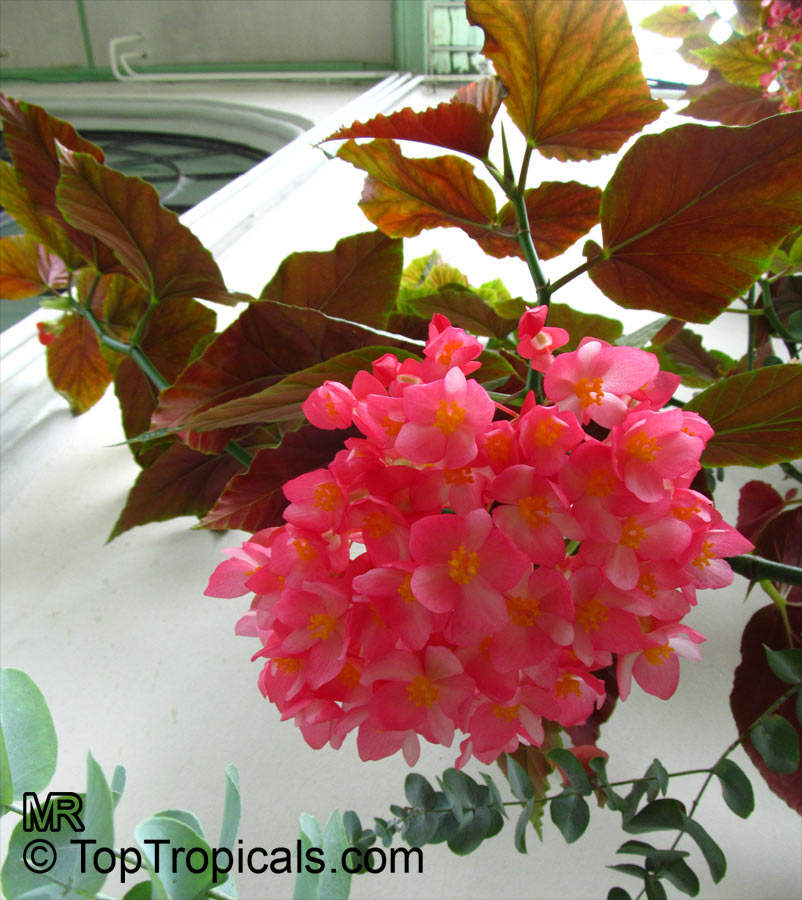
Begonia corallina (Cane Begonia) is a shrub-like plant that is native to Brazil and is evergreen in warm climates. The plant prefers a semi-shade location with regular water to prevent the leaves from scorching in full sun. Humid conditions are also ideal for cane begonia. The oval-shaped leaves of the plant are attractive, with red edges and a ribbed texture. The color of the leaves can range from deep green to purplish bronze, depending on the soil, light, and other conditions.
The most striking feature of the cane begonia is the clusters of small pink flowers that dot the foliage from summer to fall. The blooms contrast beautifully with the foliage and can last for weeks. A single cane begonia can produce hundreds of flowers.
In regions where temperatures do not dip below freezing, Begonia corallina can be grown outdoors. It thrives in USDA Hardiness zones 9-11 and prefers well-drained soil. The plant should be watered regularly to keep the soil evenly moist during the spring through fall months. Fertilizing with an all-purpose fertilizer every 4-6 weeks during the growing season is also recommended.
In colder climates, Begonia corallina is commonly grown indoors as a houseplant. The best results can be achieved by growing the plant in a potting soil mixed with perlite and keeping it in a warm, indirect light location. Watering should be done when the soil surface begins to feel dry to the touch, and the plant should be fertilized twice a month during growing period with a liquid houseplant fertilizer. Moving the plant outdoors during the summer months is recommended.
Begonia corallina is a cane type begonia that gets its name from its stems, which grow tall and woody with prominent bamboo-like joints. It is also one of the easiest begonia species to grow and a wonderful addition to any home or garden with its beautiful foliage and flowers.
Botanical name: Begonia listada
Common name: Striped Begonia
Family: Begoniaceae
Origin: Brazil
USDA Zone: 9-10
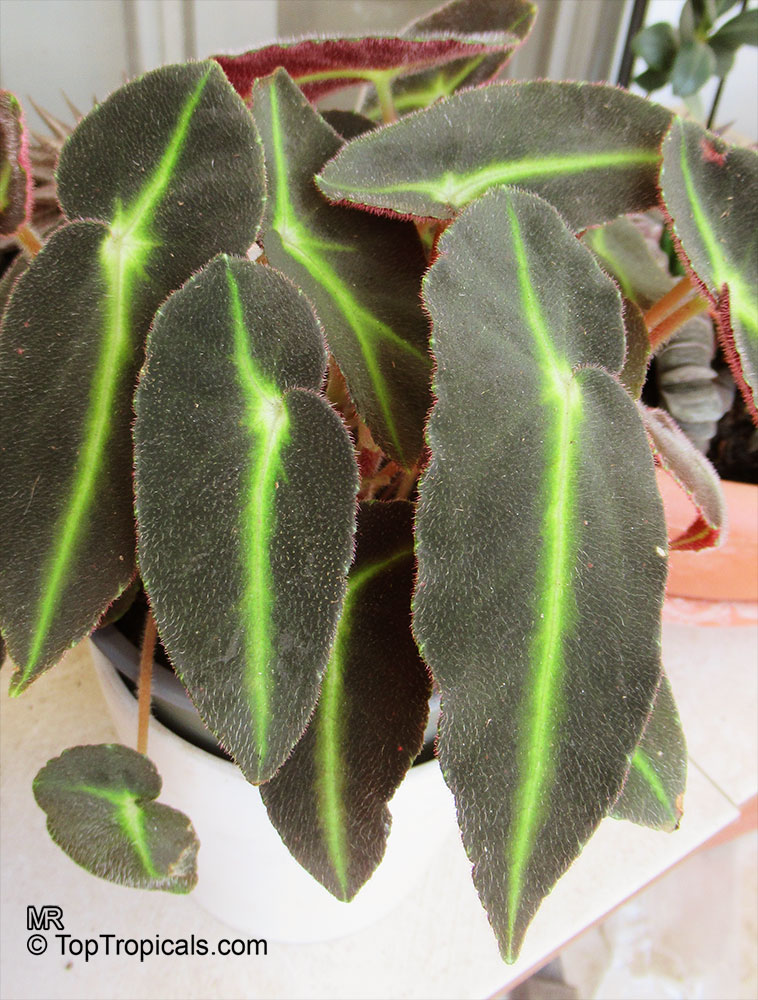
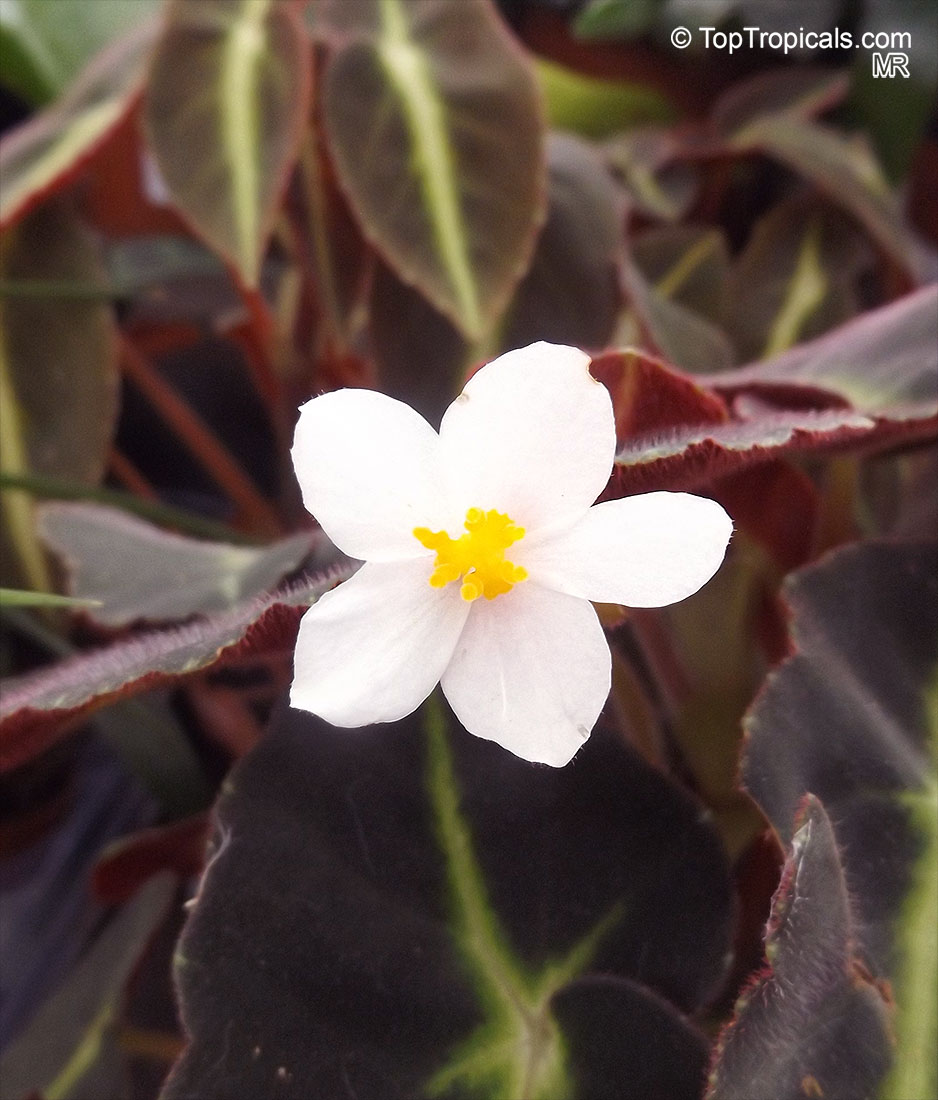
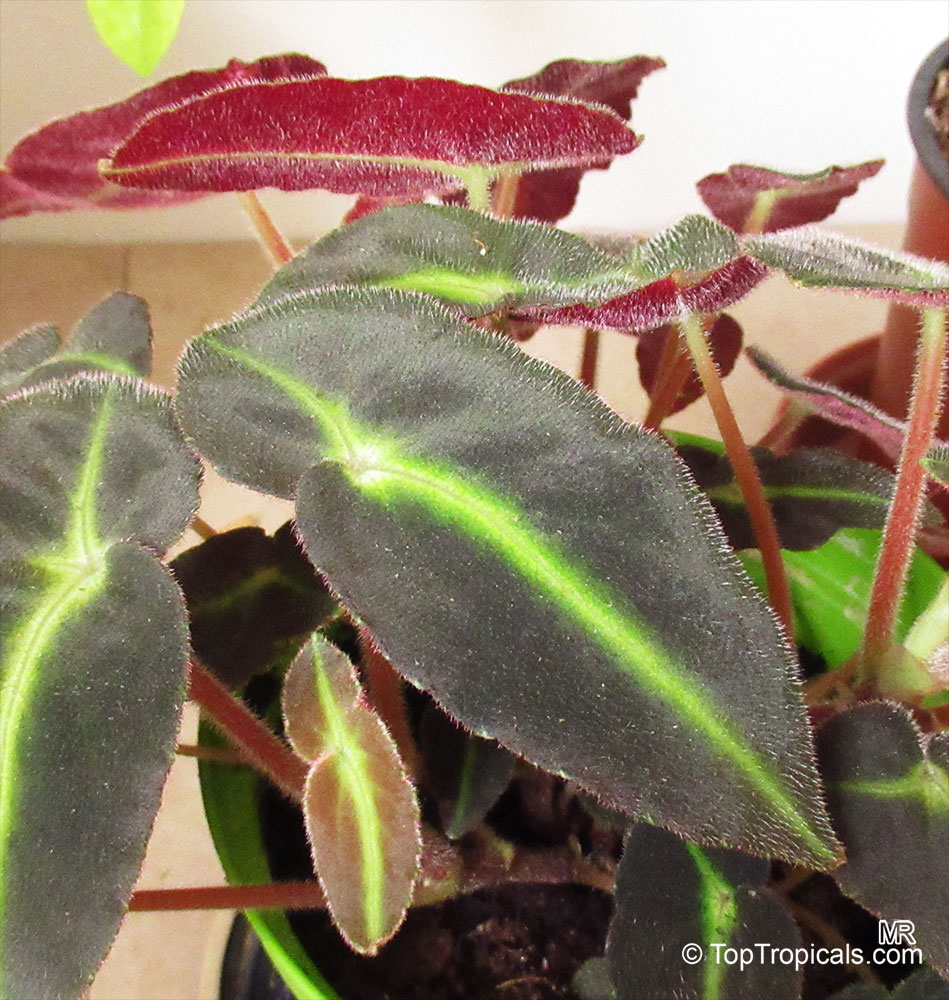
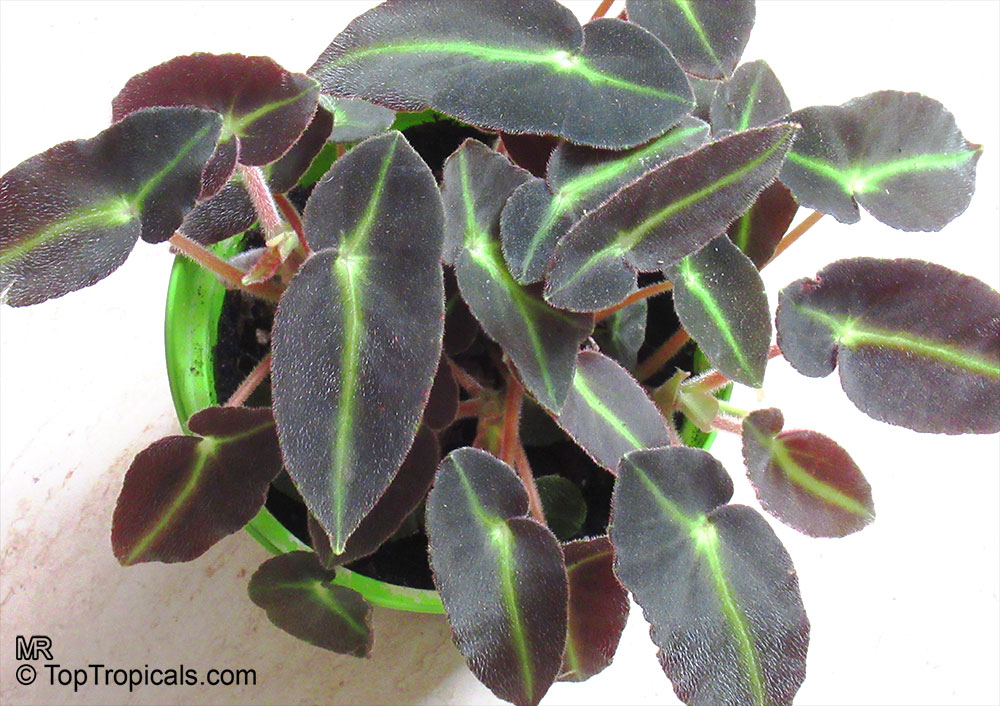
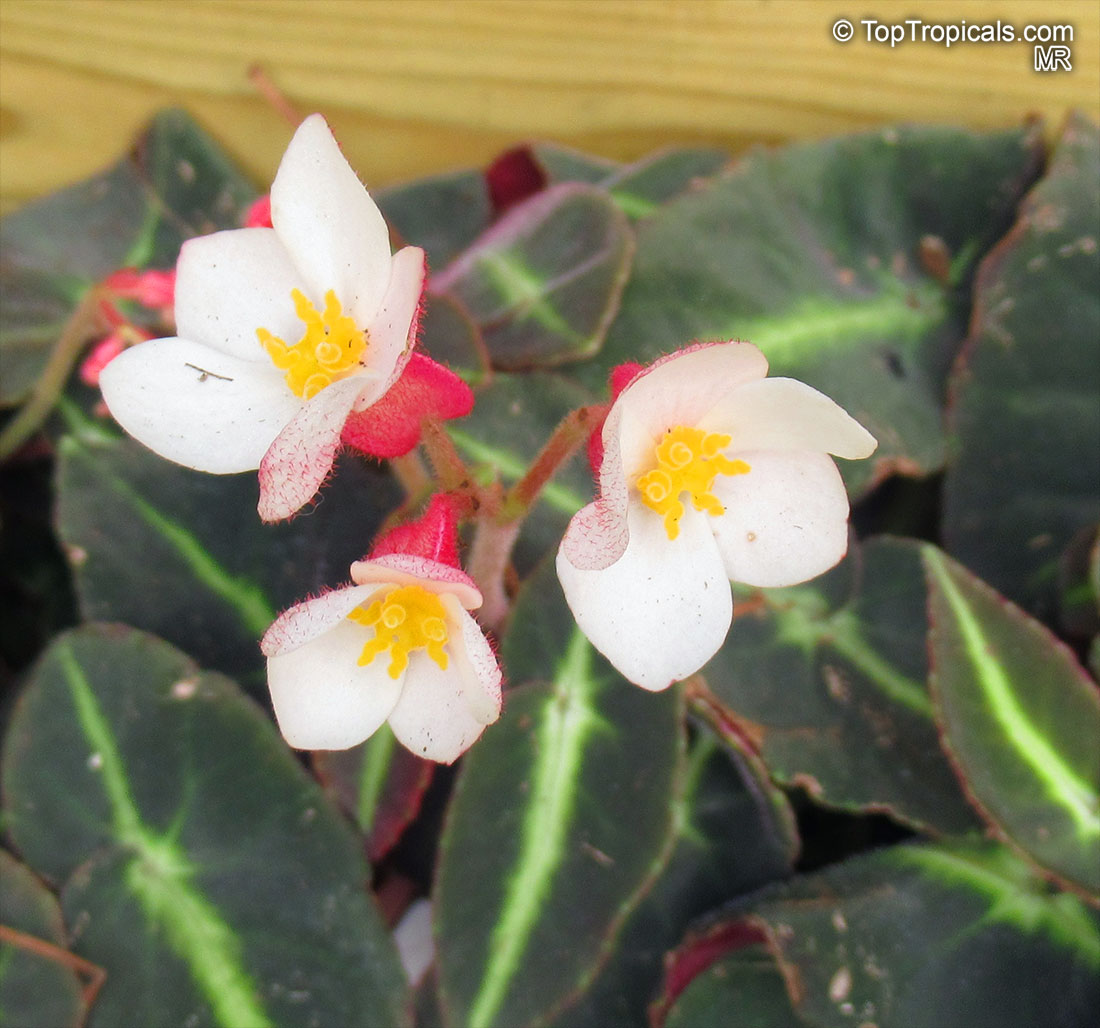
Each leaf features a bright green stripe that dissects the center of the velvet dark green leaves. The underside of each leaf is a rich mahogany color.
Begonia listada is well suited to a bright position, free from direct sunlight.
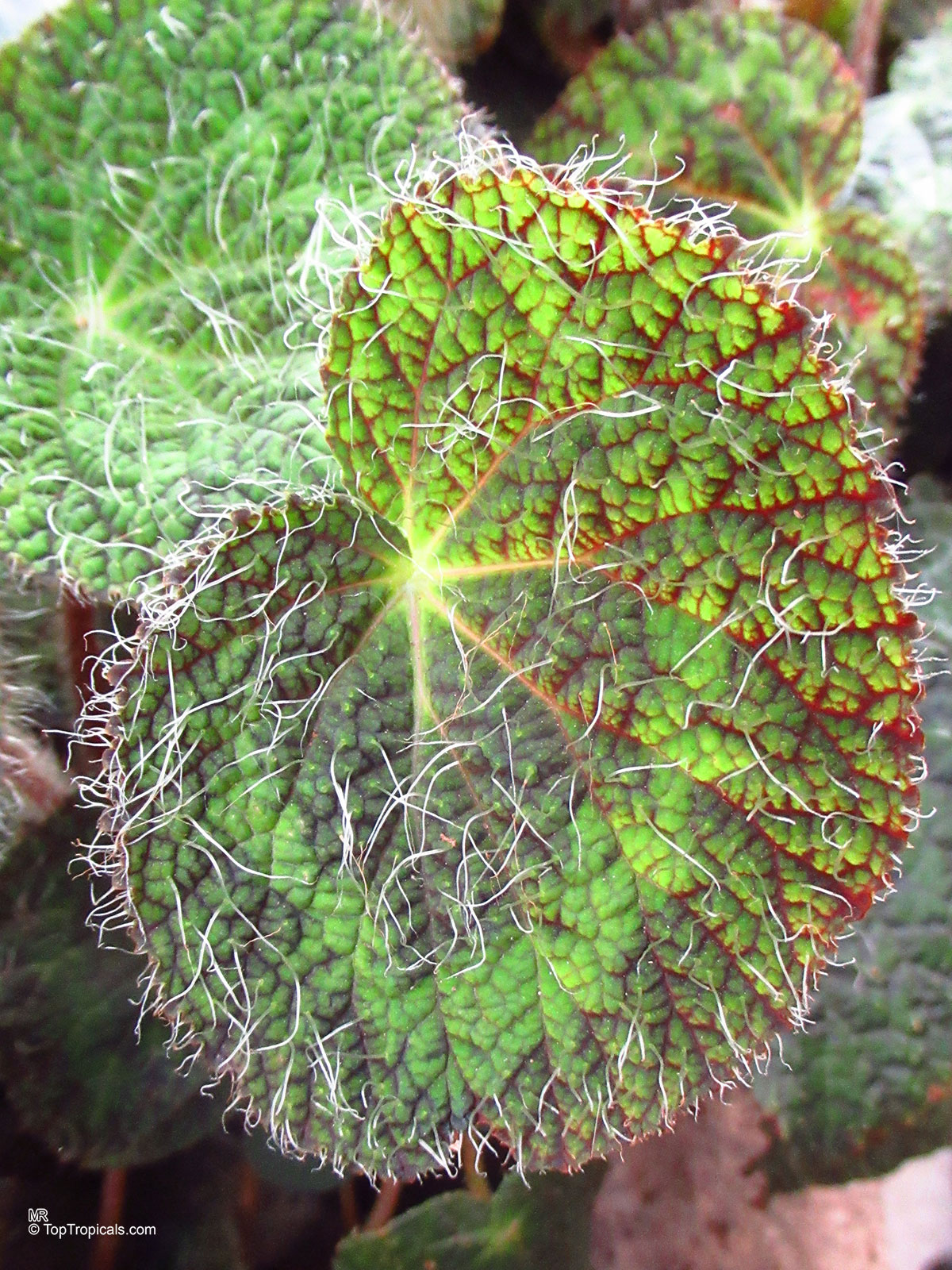
Botanical names: Begonia longiciliata, Begonia sizemoreae
Common name: Hairy-leaf Begonia
Family: Begoniaceae
Origin: Indo-China and southern China
USDA Zone: 9-10
Begonia longiciliata, commonly known as Hairy-leaf Begonia, is a rhizomatous perennial native to southern China, Laos, and Vietnam, valued for its textured foliage covered with long, fine hairs. It forms low, spreading clumps typically up to about 8 inches tall, with asymmetrical leaves that may reach 4 to 6 inches long. The leaf surface is medium to light green, often with subtle patterning or pale zones, while both surfaces and petioles carry distinctive elongated white hairs that give the plant a soft, fringed appearance. Pink flowers are produced on short stalks but are secondary to the foliage display.
This species prefers bright, indirect light, consistently moist but well-drained soil, and elevated humidity, reflecting its origin in shaded, humid habitats. It grows at a moderate pace and responds well to propagation from leaf or stem cuttings. Suitable for USDA zones 10 to 11, it is not frost-tolerant and should be kept above about 50 F. Begonia longiciliata performs best in containers, terrariums, or indoor collections where humidity and moisture can be maintained without waterlogging.
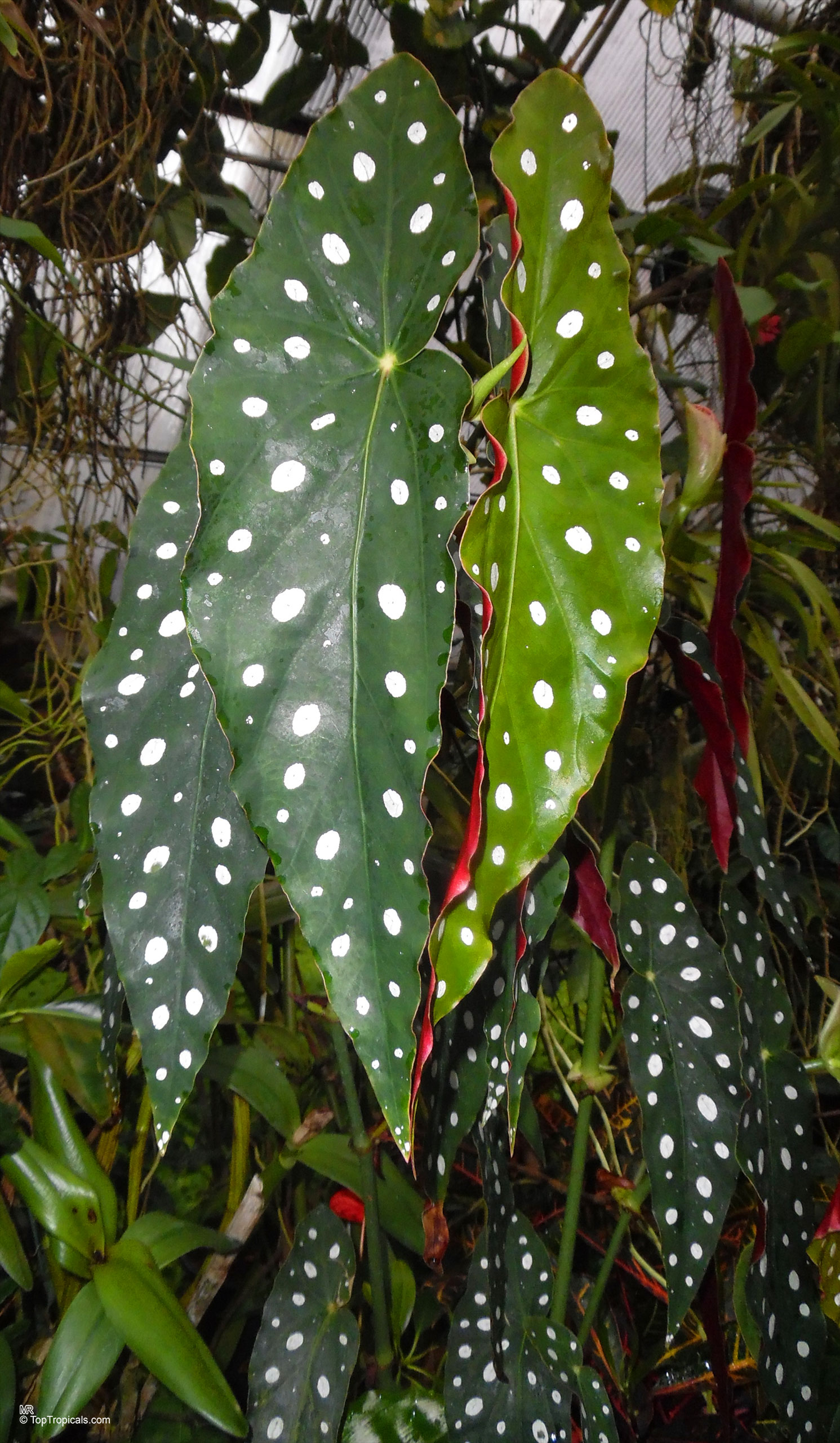
Botanical name: Begonia maculata
Common names: Clown Begonia, Polka Dot Begonia, Wright's Spotted Begonia
Family: Begoniaceae
Origin: Brazil
USDA Zone: 10-11
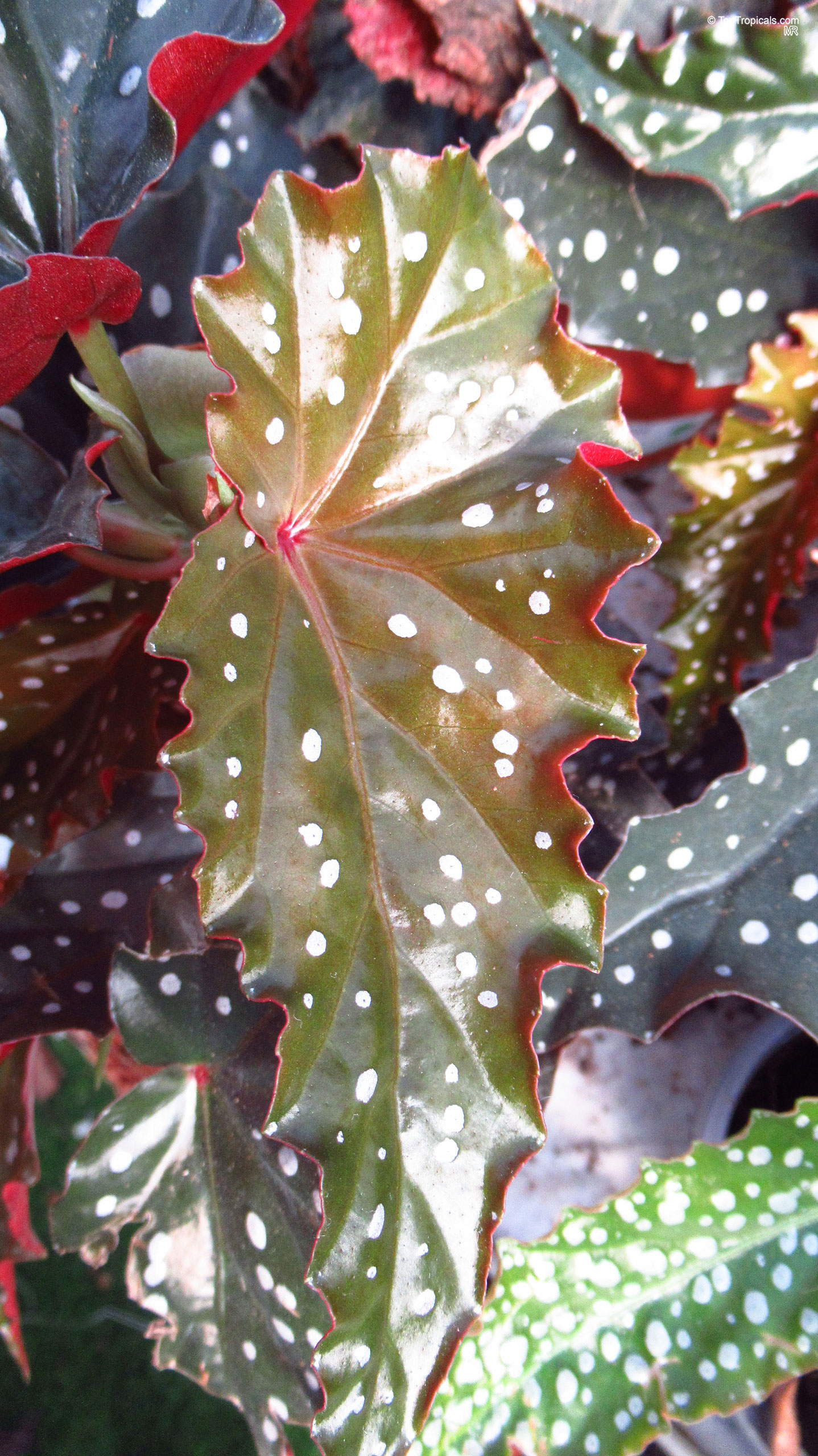
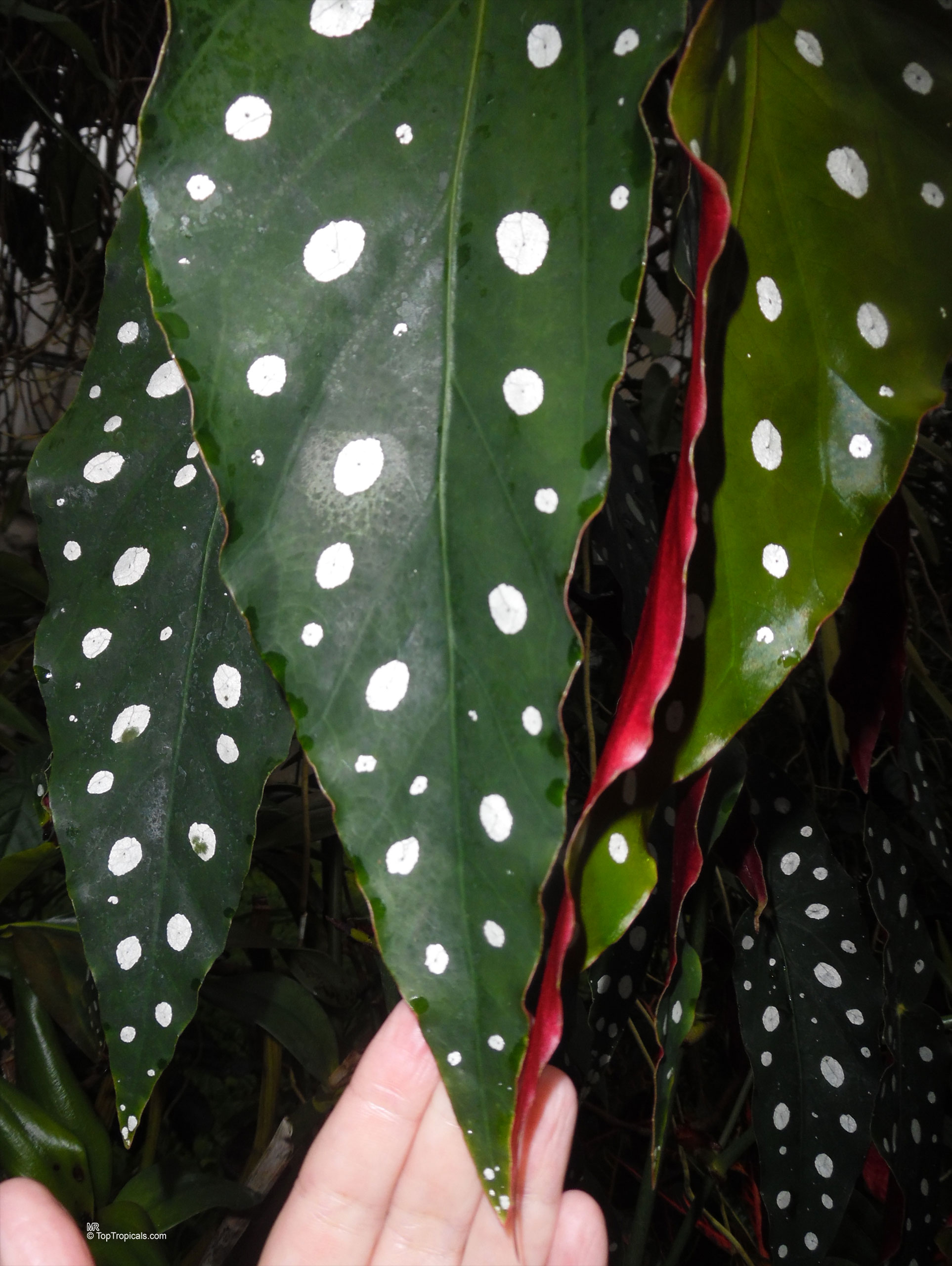
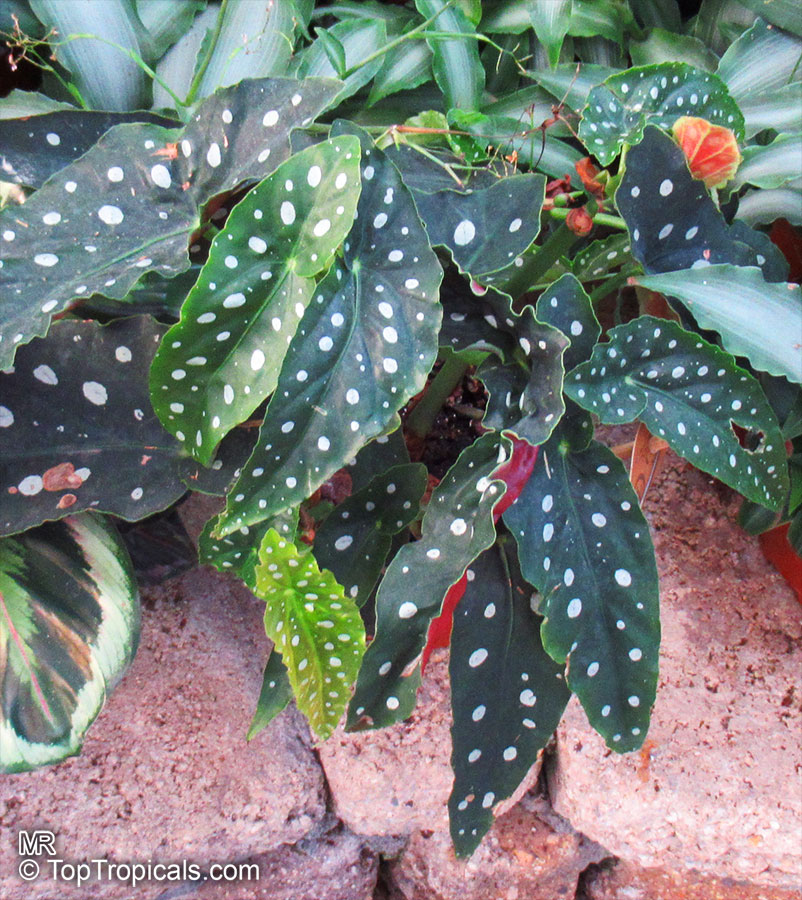
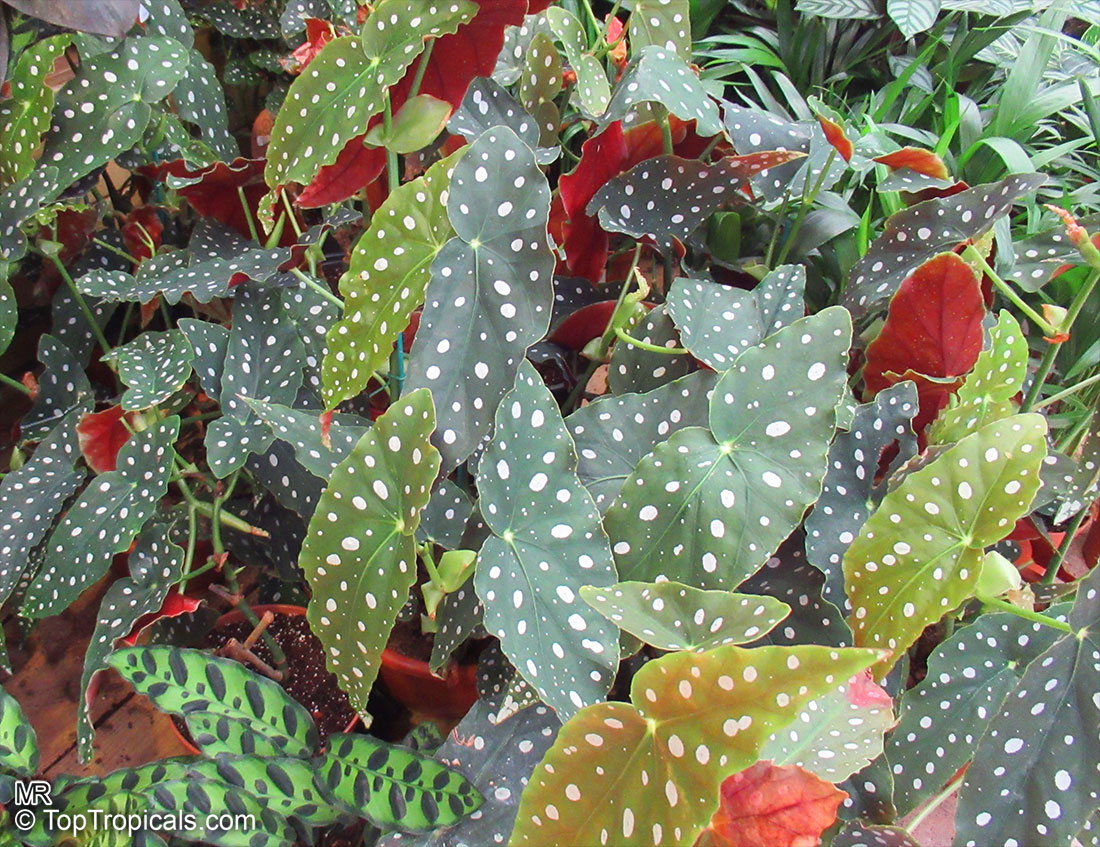
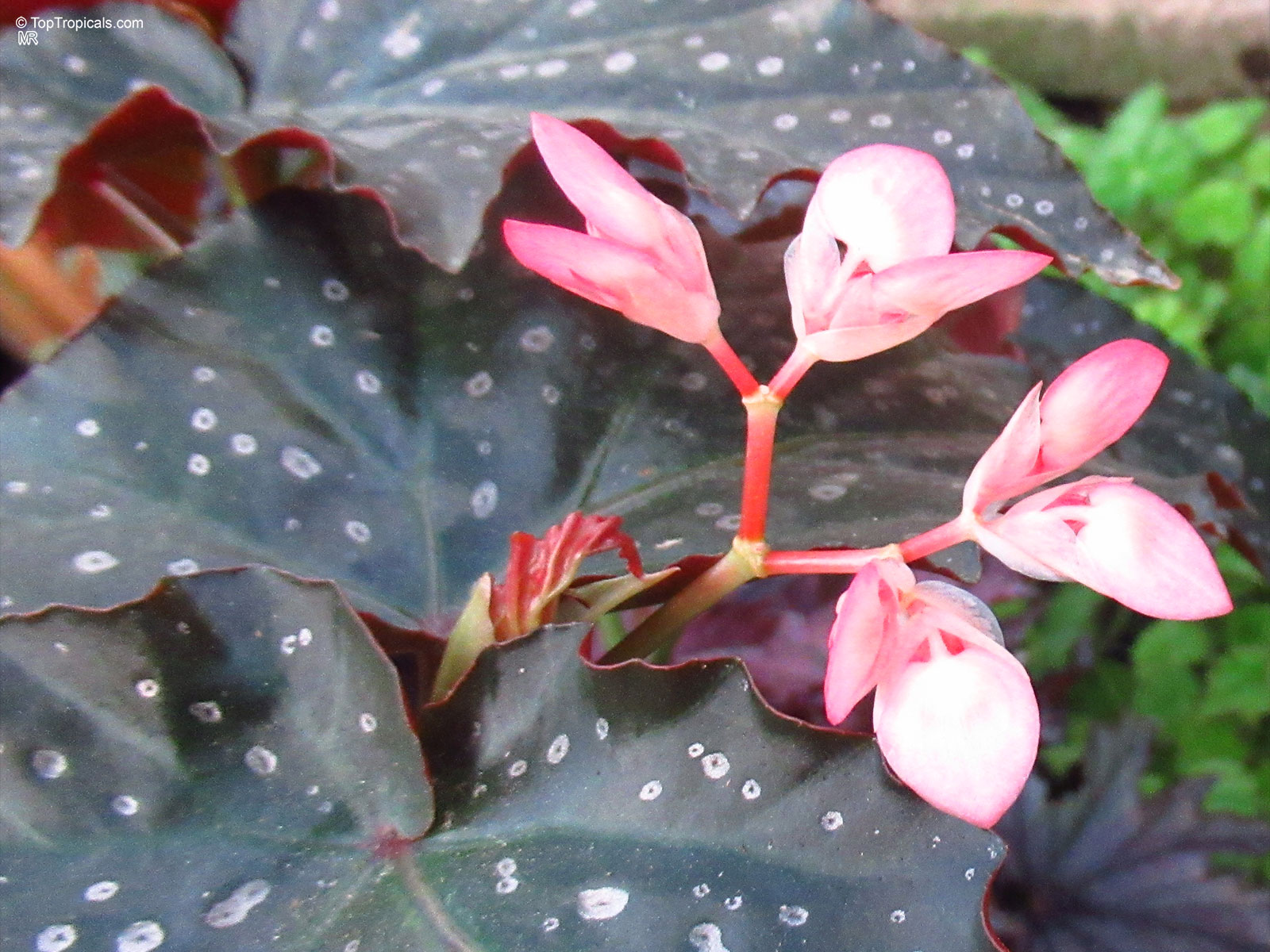
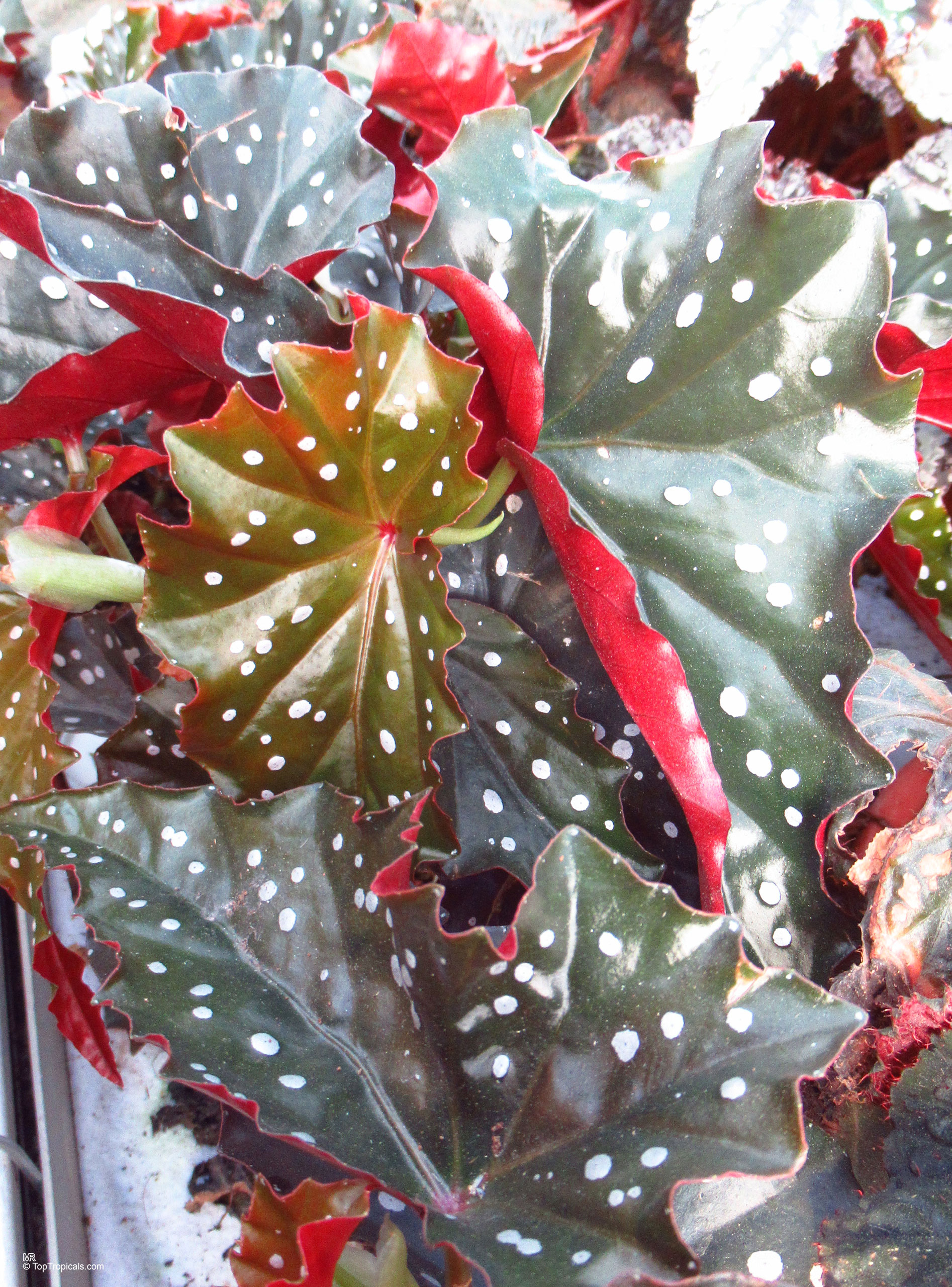
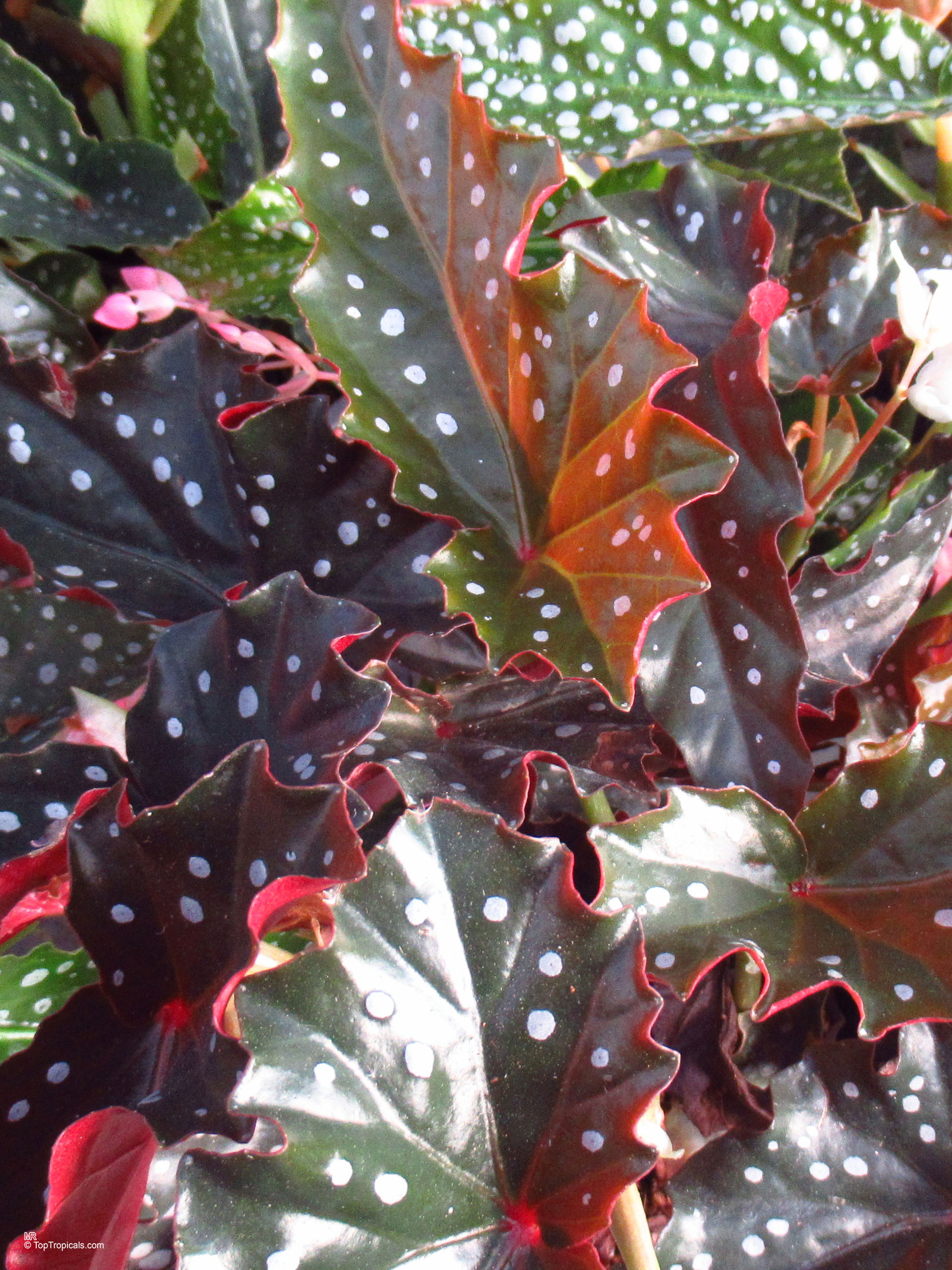
Begonia maculata, commonly known as Polka Dot Begonia or Spotted Begonia, is an evergreen cane-type begonia in the Begoniaceae family native to southeastern Brazil. It develops upright, bamboo-like stems and striking elongated, asymmetrical leaves, deep olive green above with conspicuous silvery-white spots and rich reddish-purple undersides. In favorable conditions, plants may reach 3 to 5 feet (0.9 to 1.5 m) tall, although pruning readily keeps them compact and encourages branching. Clusters of delicate white to pale pink flowers hang from the stems, providing an attractive contrast to the dramatic foliage.
Begonia maculata grows best in bright filtered light or partial shade and a loose, well-drained potting mix that remains moderately moist but never waterlogged. It appreciates warm temperatures and relatively high humidity but also needs good air circulation. Pinching or pruning tall stems encourages a fuller plant, and stem cuttings root readily for propagation. Hardy in USDA Zones 10-12, it can be grown outdoors in frost-free tropical and subtropical climates but is most familiar as a container and houseplant elsewhere.
| Next | |
Use link to repeat this search:
https://toptropicals.com/cgi-bin/garden_catalog/cat.cgi?find=Begonia&search_op=and&keyword_op=and&language=e&number=10
&no_change_lang=1&user=tt&sale=1&first=0