Paullinia alata (Paullinia)
Botanical name: Paullinia alata
Common name: Paullinia
Family: Sapindaceae
Origin: Central America
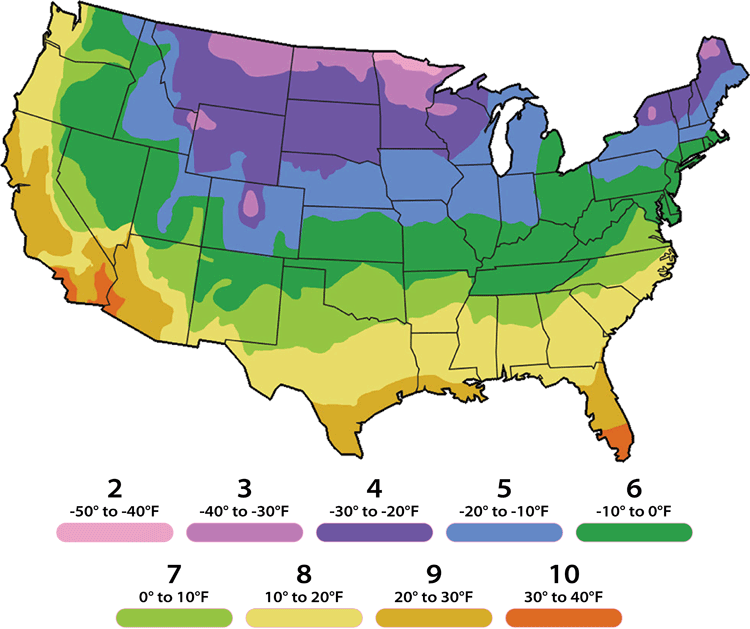
USDA Zone: 10-11


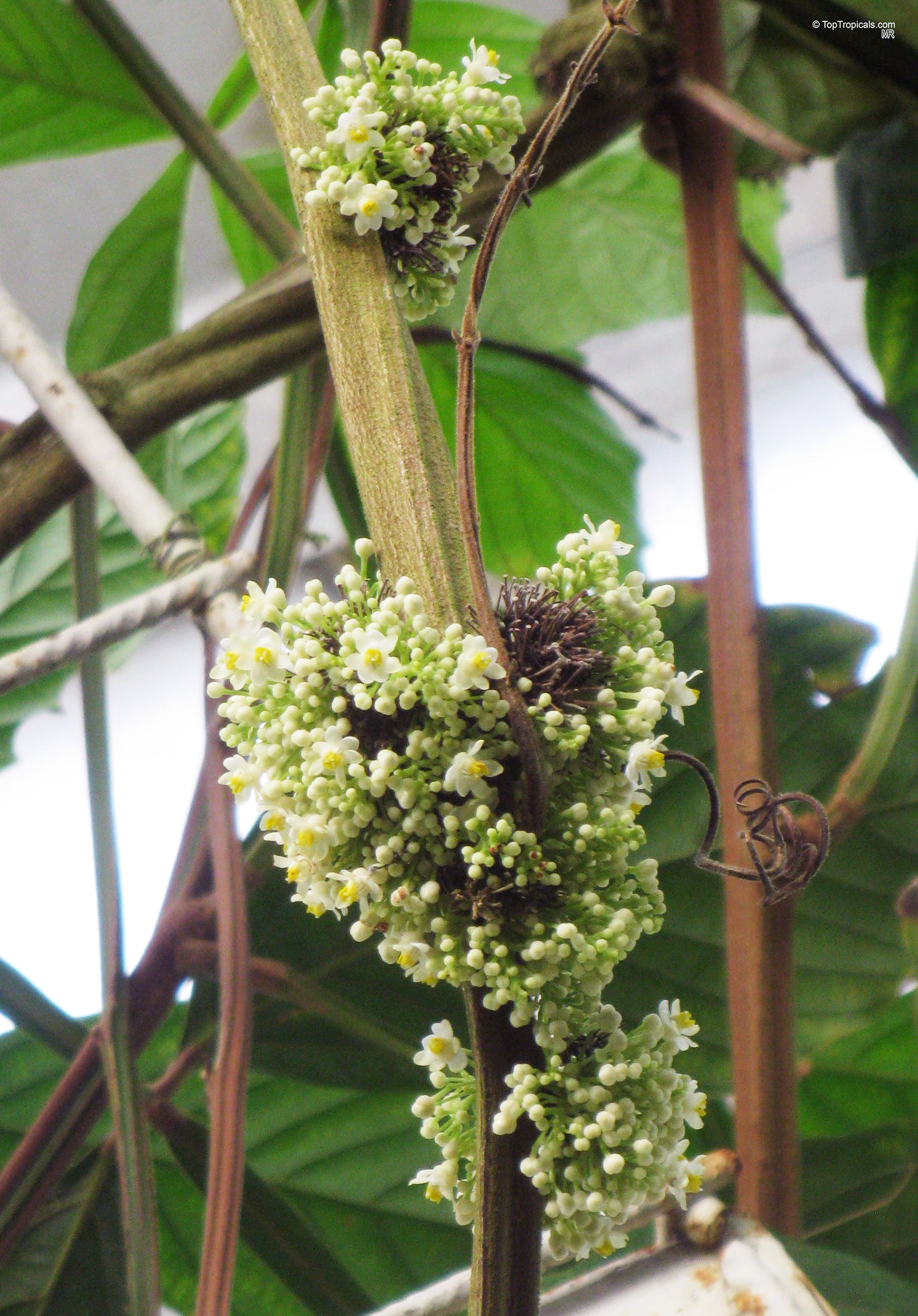
Paullinia alata is a vigorous evergreen woody climber in the Sapindaceae family, native to tropical America from Mexico and Central America into northern South America. Like other members of the genus, it climbs through surrounding vegetation with the help of tendrils and may develop long, woody stems in favorable tropical conditions. The compound leaves are divided into several leaflets, while the stems and leaf axes often show distinctive longitudinal wings, a feature reflected in the specific name alata, meaning "winged." Small, inconspicuous whitish to greenish flowers are produced in elongated clusters.
The flowers are followed by conspicuous red to orange-red capsules that split open at maturity, exposing dark seeds partly surrounded by a contrasting white aril. This colorful fruit display is one of the plant's most ornamental features and also attracts birds, which help disperse the seeds. Paullinia alata should not be confused with the related Paullinia cupana, the source of commercial guarana; they are separate species despite occasional confusion in horticultural and online references. It grows best in warm, humid conditions with partial shade to filtered sun and fertile, well-drained soil with regular moisture. Hardy in USDA Zones 10-12, it is best suited to tropical gardens where adequate support and space can be provided for its vigorous climbing growth.