Passiflora mollissima (Banana Passionfruit)
Botanical names: Passiflora mollissima, Passiflora tarminania
Common names: Banana Passionfruit, Taxo, Curuba
Family: Passifloraceae
Origin: South America
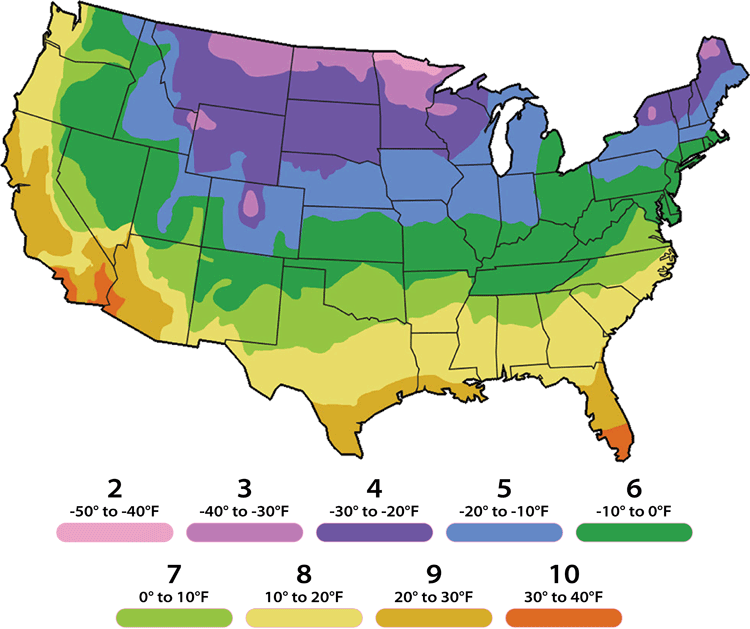
USDA Zone: 8-10
 Plant form: Climbing or creeping vine
 Sun exposure: Full sun or bright light indoor; semi-shade
 Cold tolerance: Tolerates light freezing to about 30°F for short periods (mature plants). Young plants must be protected.
 Watering: Regular; moderate

 Flower color: Pink; white and off-white; blue, lavender, purple
 Suitable for: Outdoors in the suitable USDA zone; small gardens, containers, and indoor growing
 Wildlife: Attracts butterflies and hummingbirds
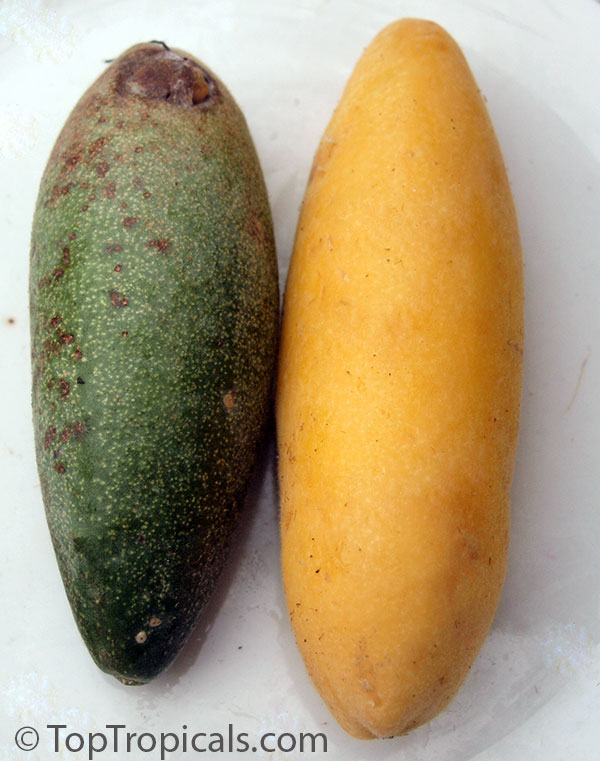
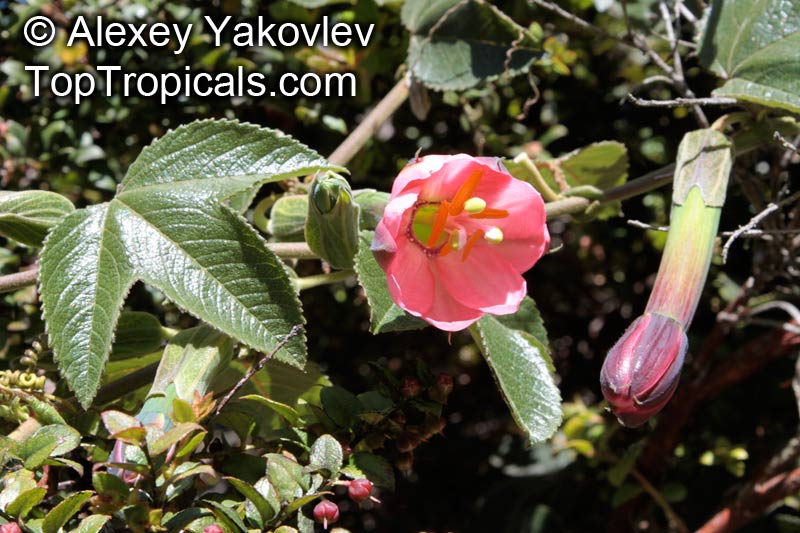
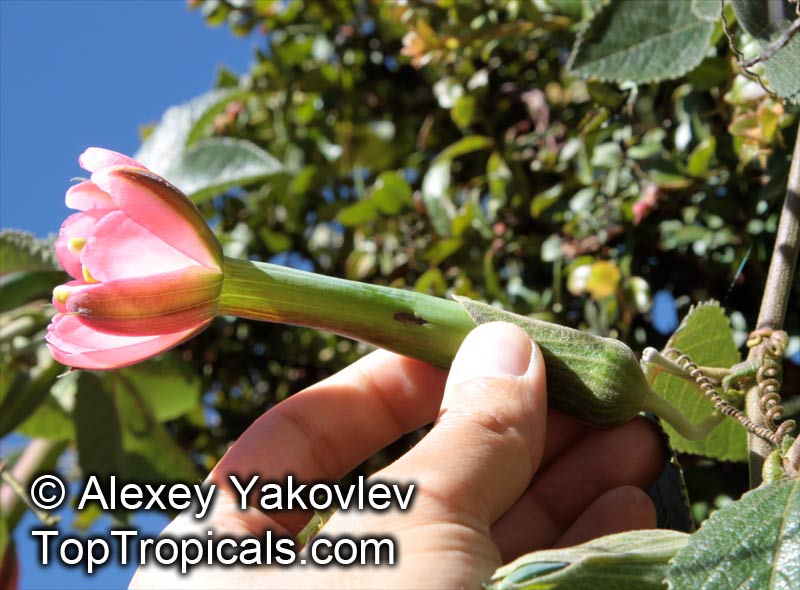
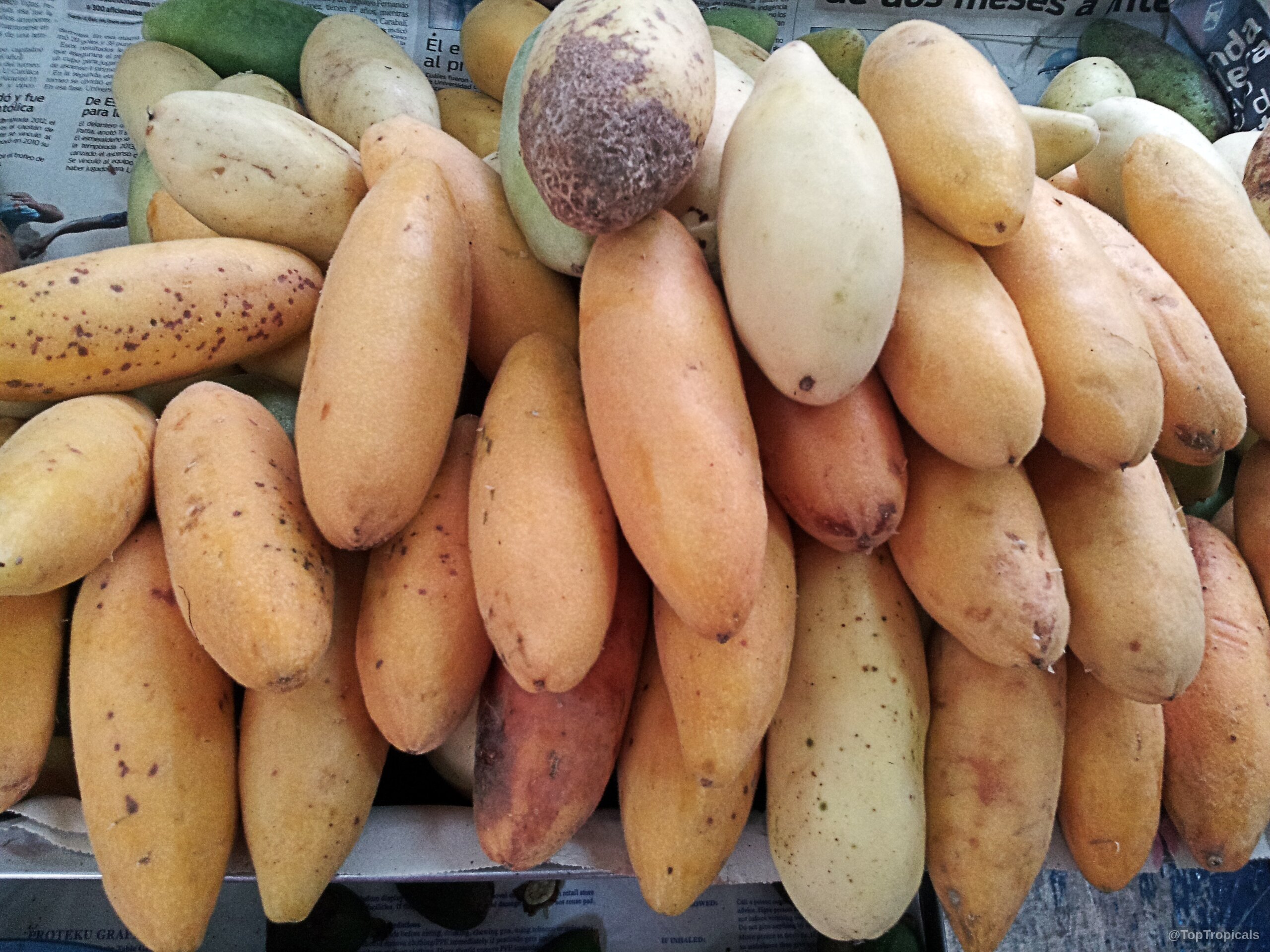
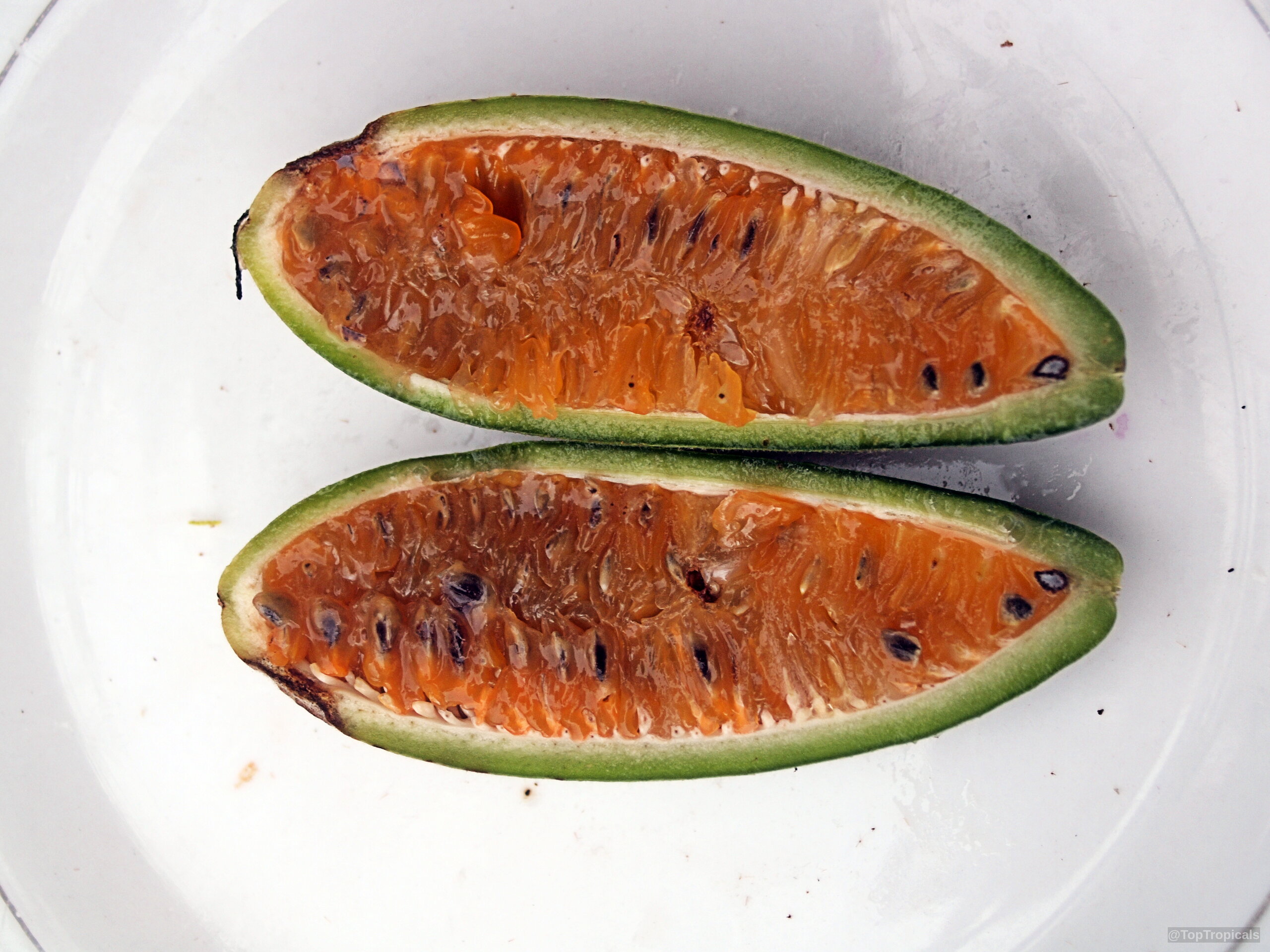
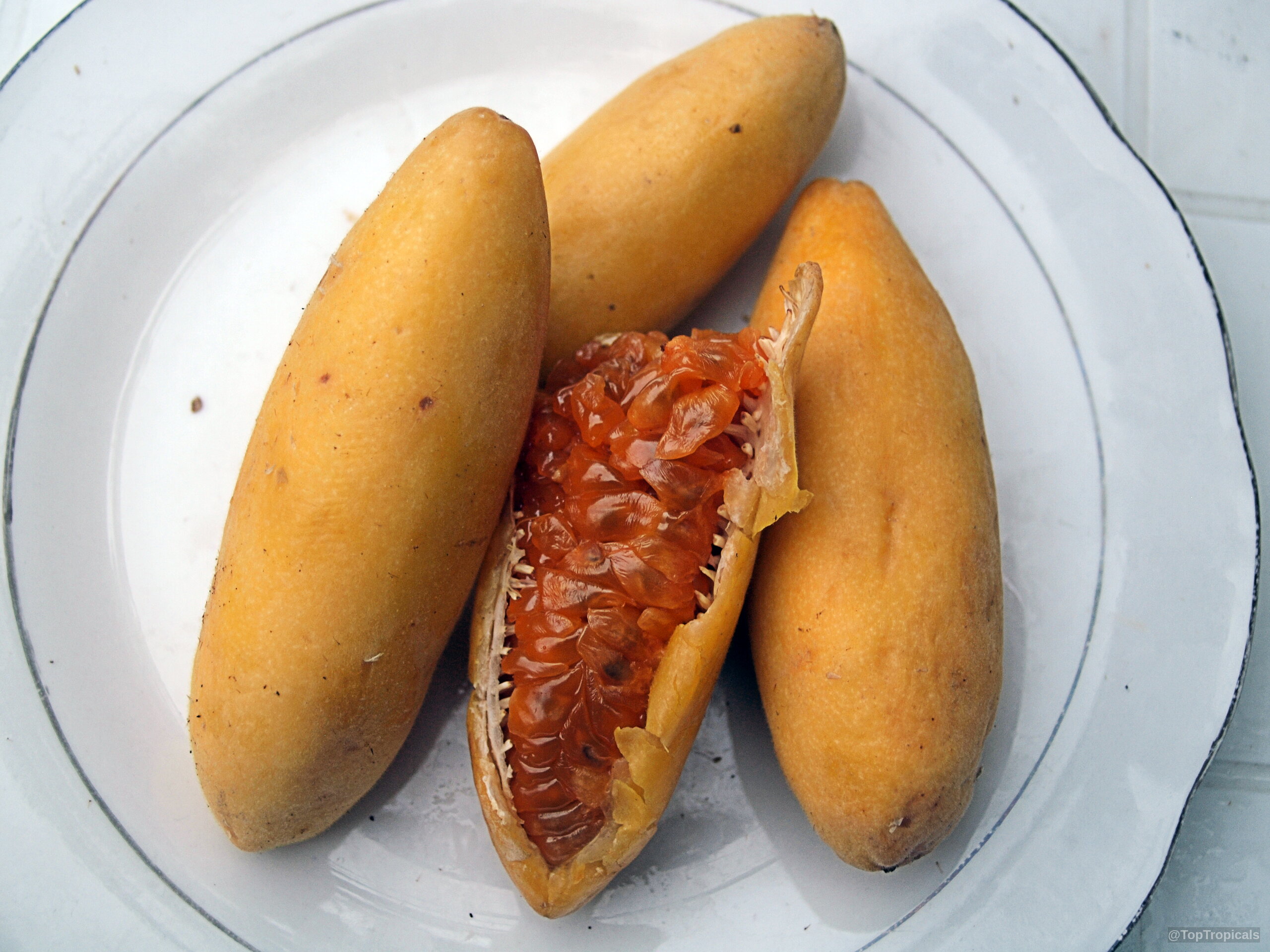
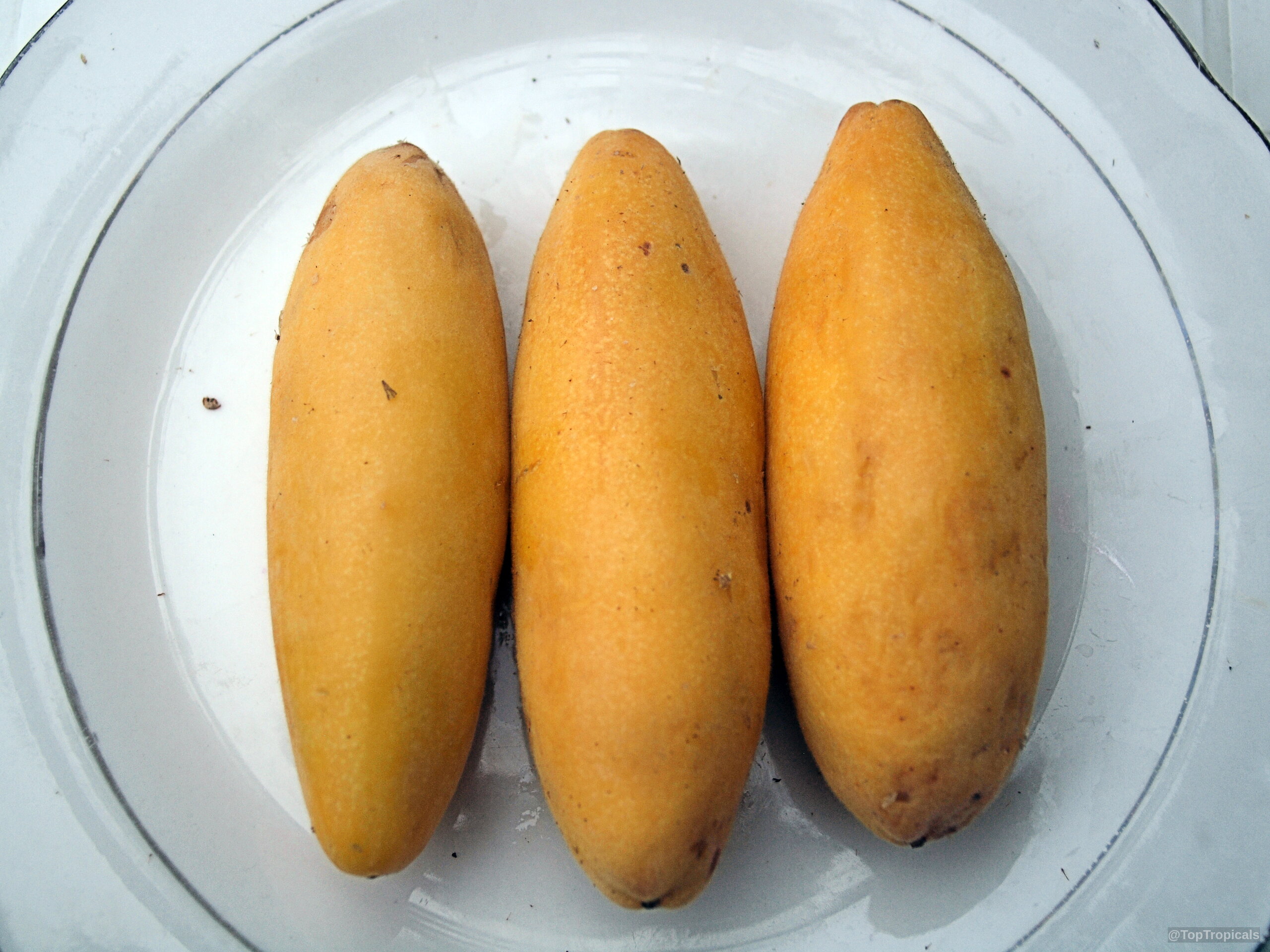
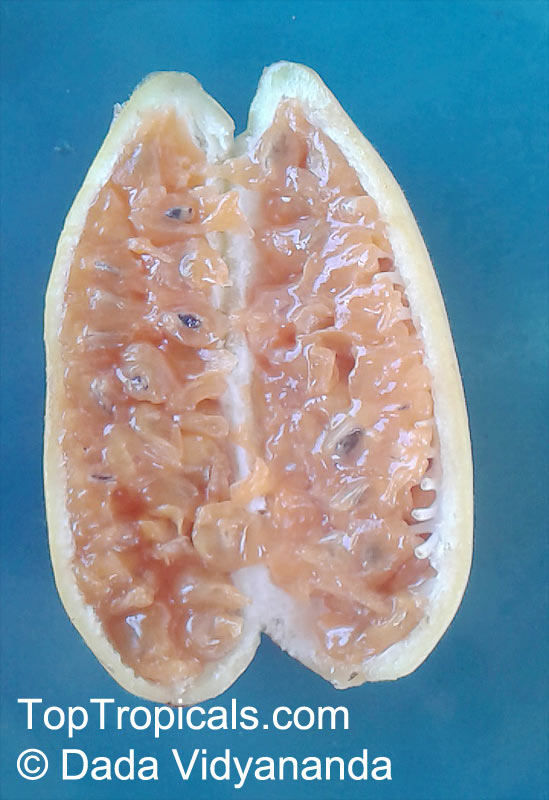
The fruit looks somewhat like a straight, small banana with rounded ends. It was given this name in New Zealand, where passionfruit are also prevalent. In Hawaii, it is called banana poka. In its Latin American homeland, it is known as curuba, curuba de Castilla, or curuba sabanera blanca Vines with cylindrical stems densely coated with yellow hairs, and are vigorous climbers, growing up to seven metres. The leaves are a shiny green with clearly defined veins, the flower is large, pink and green petalled with a yellow and white centre. The fruit is yellow-orange when ripe and contains a sweet edible orange-colored pulp with black seeds.
Similar plants: Passiflora mollissima (Banana Passionfruit)
- Passiflora alata (Winged-Stem Passionflower)
- Passiflora caerulea (Common Passion Flower)
- Passiflora citrina (Yellow Passion Flower)
- Passiflora coccinea (Red Passion Flower)
- Passiflora colinvauxii (Colinvaux's Passion Flower)
- Passiflora coriacea (Wild Sweet Calabash)
- Passiflora edulis (Passion Fruit)
- Passiflora foetida (Wild Maracuja)
- Passiflora incarnata x cincinnata ''Incense'' (Passiflora 'Incense')
- Passiflora lanuginosa (Woolly Passion Flower)