Pachypodium succulentum (Caudiciform Pachypodium)
Botanical name: Pachypodium succulentum
Common name: Caudiciform Pachypodium
Family: Apocynaceae
Origin: Southern Africa
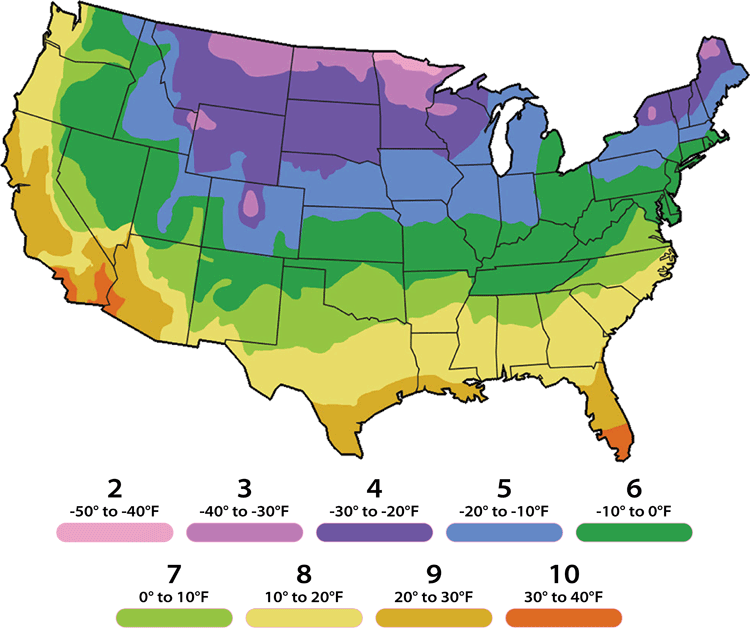
USDA Zone: 9-11

 Plant form: Small; plant with caudex
 Mature height: 2-5 ft

 Sun exposure: Full sun or bright light indoor; semi-shade
 Cold tolerance: Frost sensitive. Protect from freezing.
 Watering: Moderate

 Flower color: Pink; white and off-white
 Suitable for: Outdoors in the suitable USDA zone; small gardens, containers, and indoor growing
 Thorns: Thorny or spiny
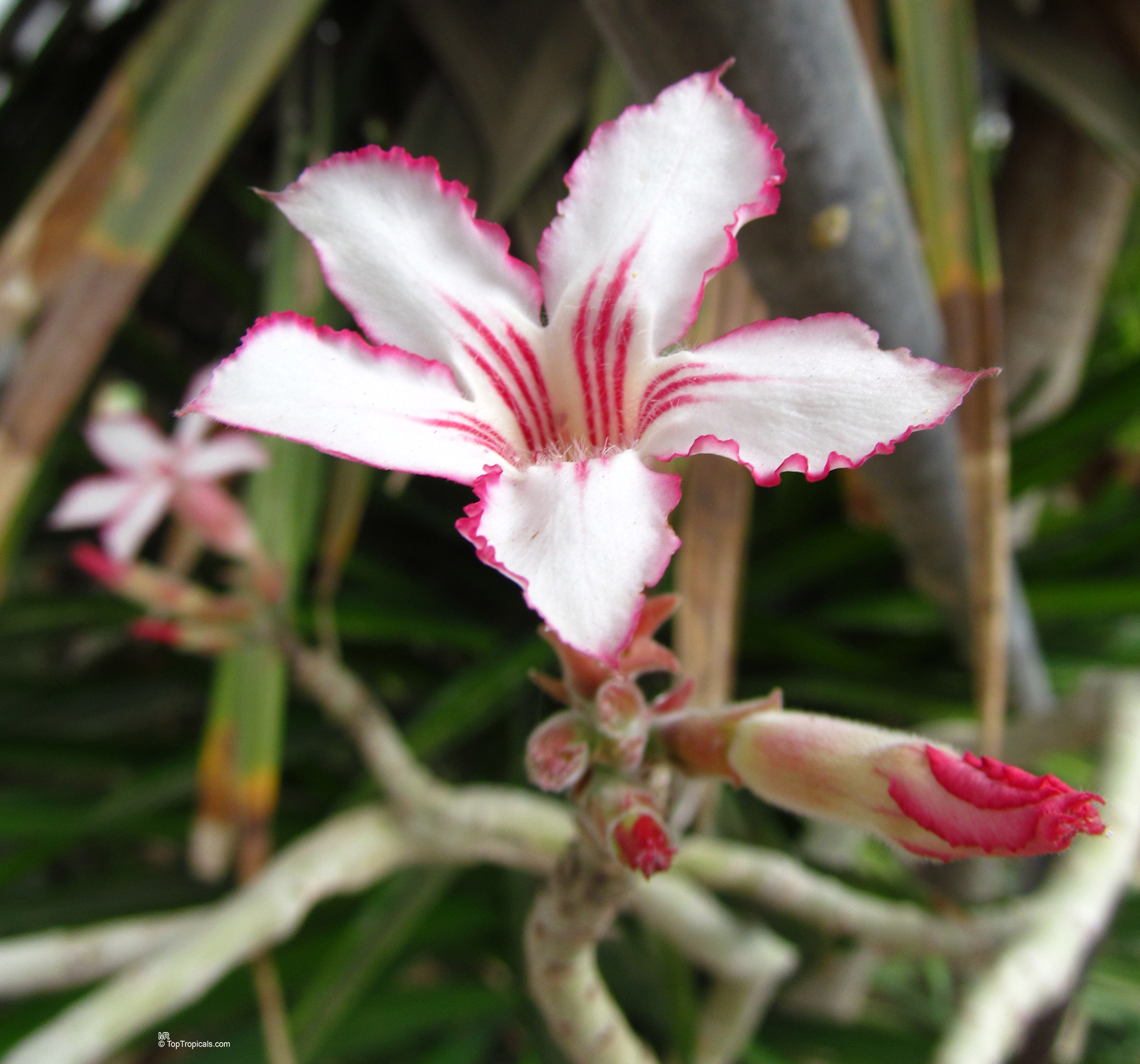
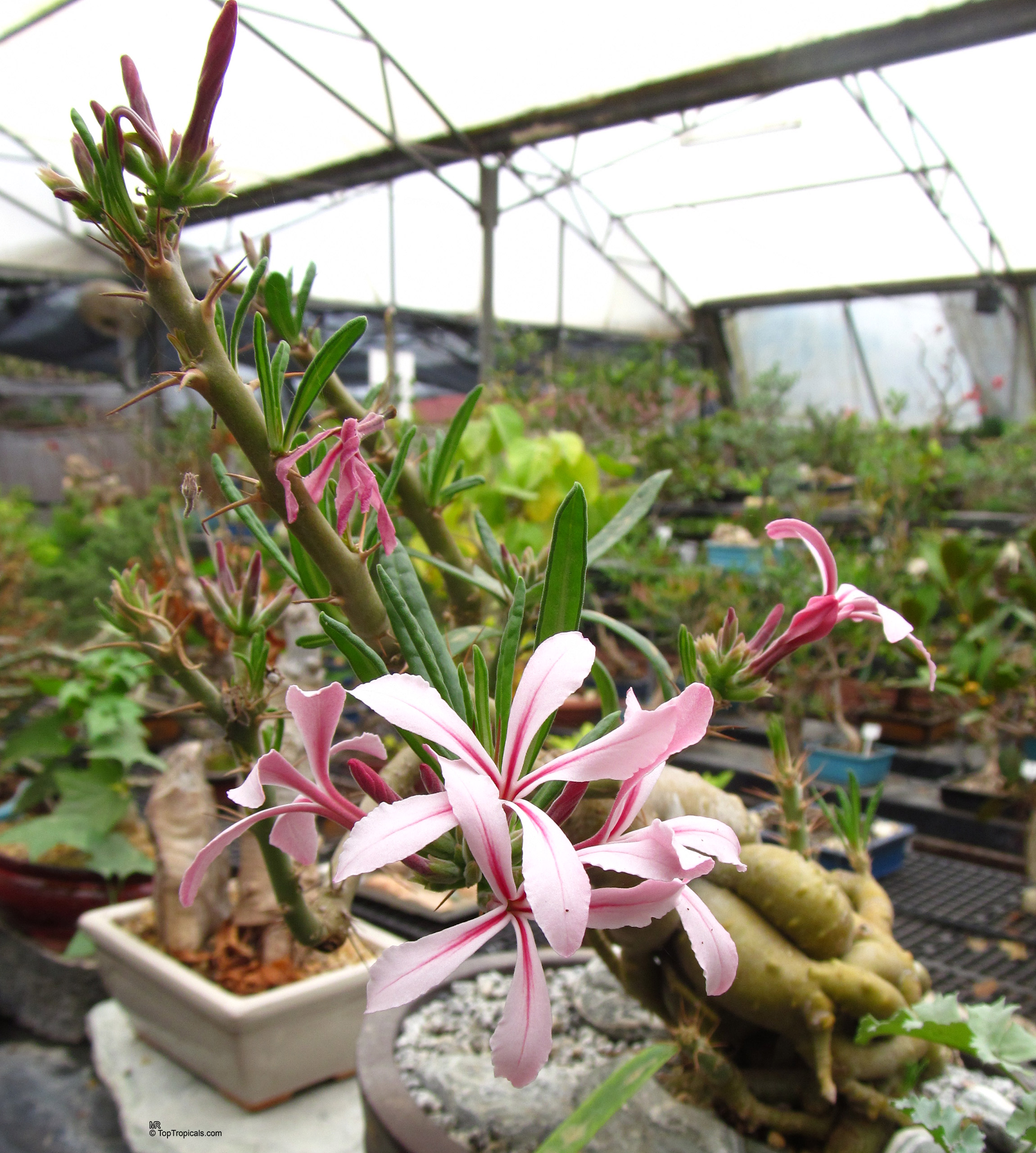
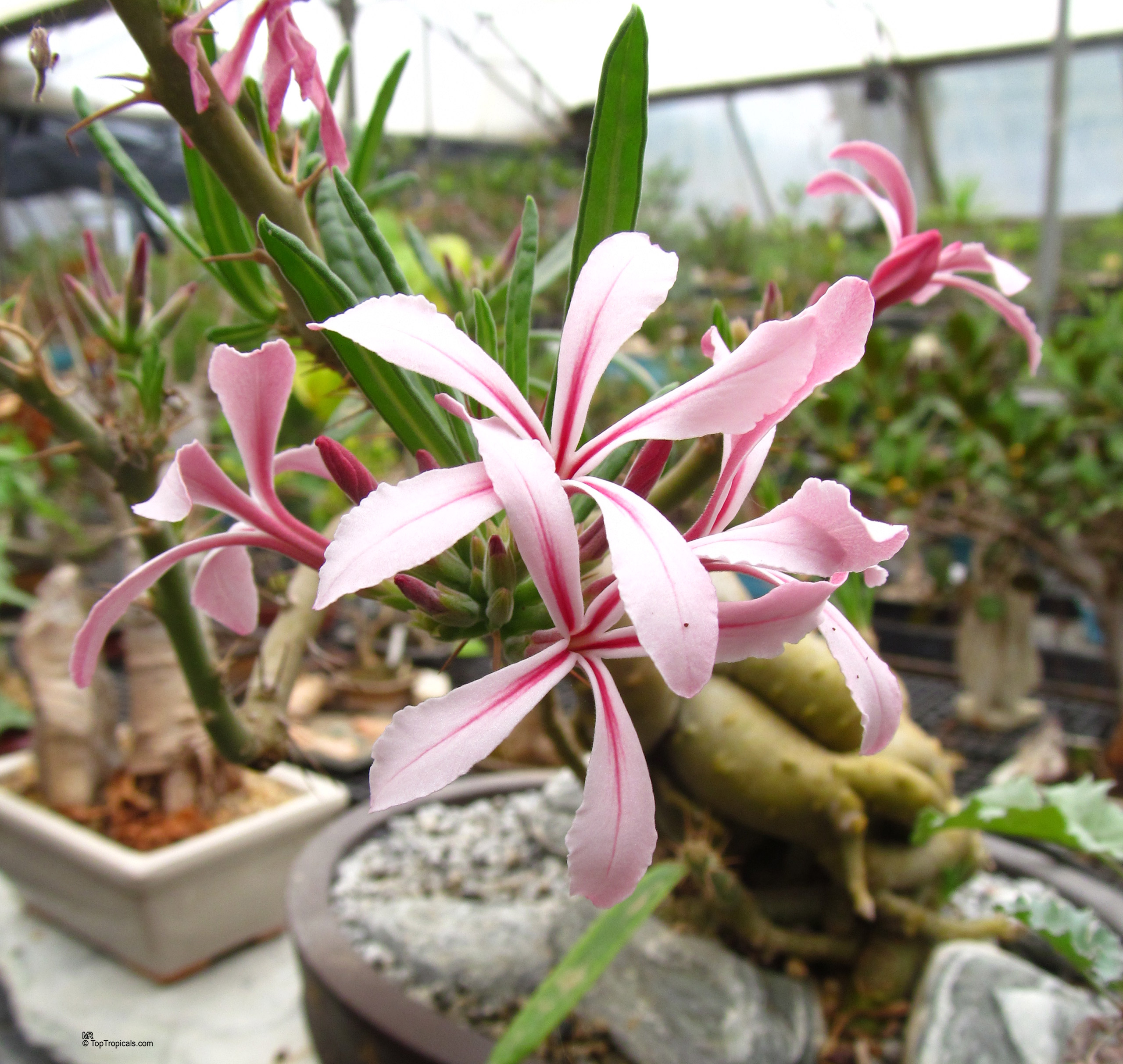
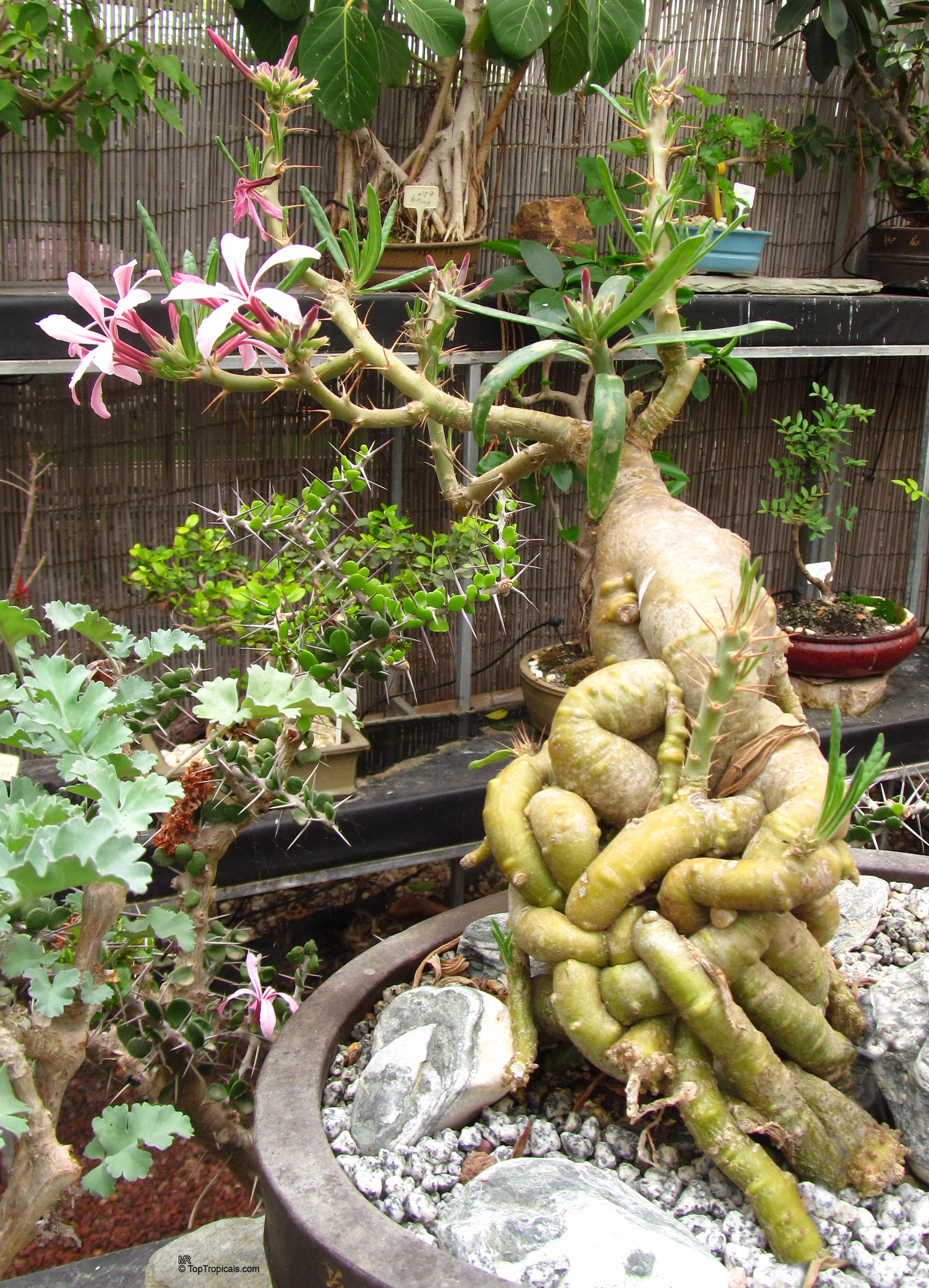
Pachypodium succulentum, commonly known as Bushman's Poison, is a caudiciform succulent in the Apocynaceae family, endemic to South Africa, particularly the Eastern Cape and adjacent regions. It inhabits dry, rocky grasslands and scrub, often growing among stones with much of its swollen, tuberous stem buried underground. The large, irregularly shaped caudex produces slender, branching, thorny shoots bearing narrow, elongated leaves during the growing season. Paired spines arise along the branches, which may become leafless during dormancy. The flowers are tubular, with five spreading lobes, usually pale pink to white with a deeper pink or reddish throat. Unlike the more familiar tree-like pachypodiums, this species remains a low, spreading shrub, with branches generally reaching one to three feet.
Pachypodium succulentum requires full sun and sharply drained, sandy or rocky soil. Water during active growth, allowing the soil to dry between waterings, and keep it nearly dry during winter dormancy. Unlike most Madagascar pachypodiums, it tolerates occasional subfreezing temperatures when dry, although cold, wet soil can cause rot. USDA Zones 9-11 are a cautious recommendation for outdoor cultivation. It is well suited to containers, where the caudex can be displayed partially above the soil. The species is considered Vulnerable in the wild, partly because of illegal collection for the succulent trade.
Similar plants: Pachypodium succulentum (Caudiciform Pachypodium)
- Pachypodium bispinosum (Pachypodium )
- Pachypodium densiflorum (Pachypodium)
- Pachypodium horombense (Pachypodium)
- Pachypodium lamerei (Madagascar Palm)
- Pachypodium namaquanum (Pachypodium)
- Pachypodium rosulatum (Elephant's Foot Plant)
- Pachypodium rutenbergianum (Madagascar Palm)
- Pachypodium saundersii (Pachypodium saundersii)
- Pachypodium sp. (Pachypodium)