Cubanola domingensis (Cubanola)
Botanical names: Cubanola domingensis, Portlandia domingensis
Common names: Cubanola, Tree Lily, Campanita Criolla
Family: Rubiaceae
Origin: Dominican Republic
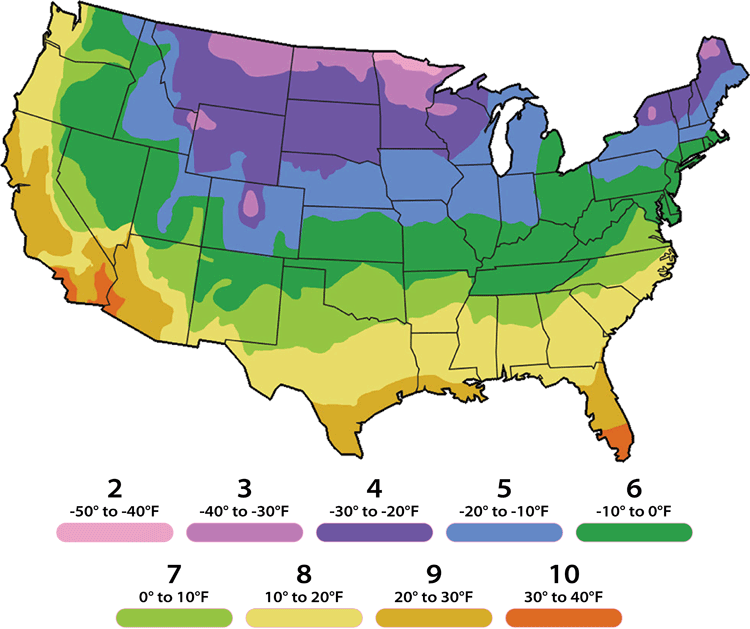
USDA Zone: 10-11

 Plant form: Large bush or small tree
 Mature height: 10-20 ft
 Sun exposure: Semi-shade
 Cold tolerance: Frost sensitive. Protect from freezing.
 Watering: Regular
 Flower color: White and off-white
 Suitable for: Outdoors in the suitable USDA zone; small gardens, containers, and indoor growing
 Fragrance: Fragrant; perfume plant
 Wildlife: Attracts butterflies and hummingbirds
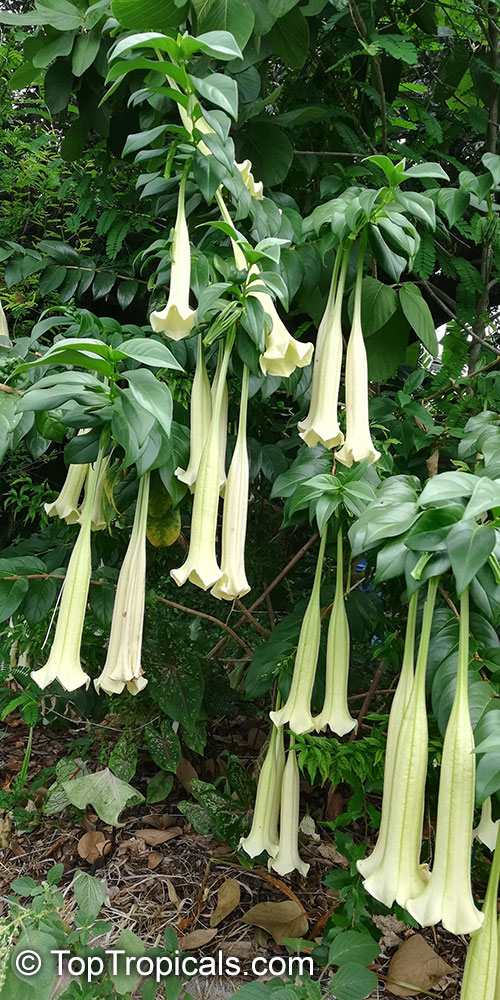
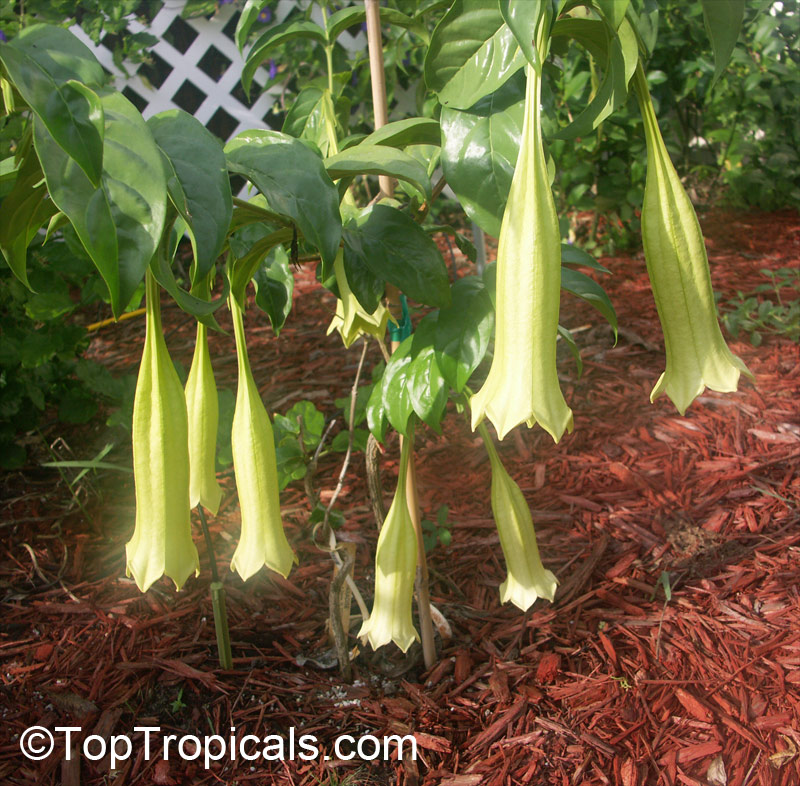
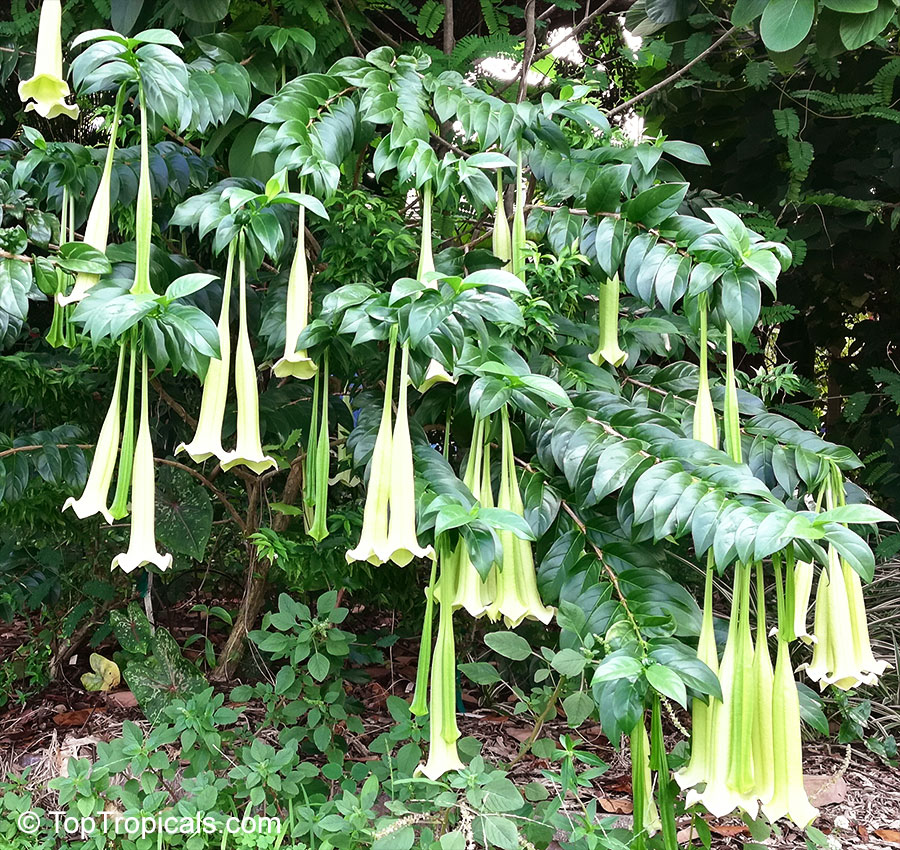
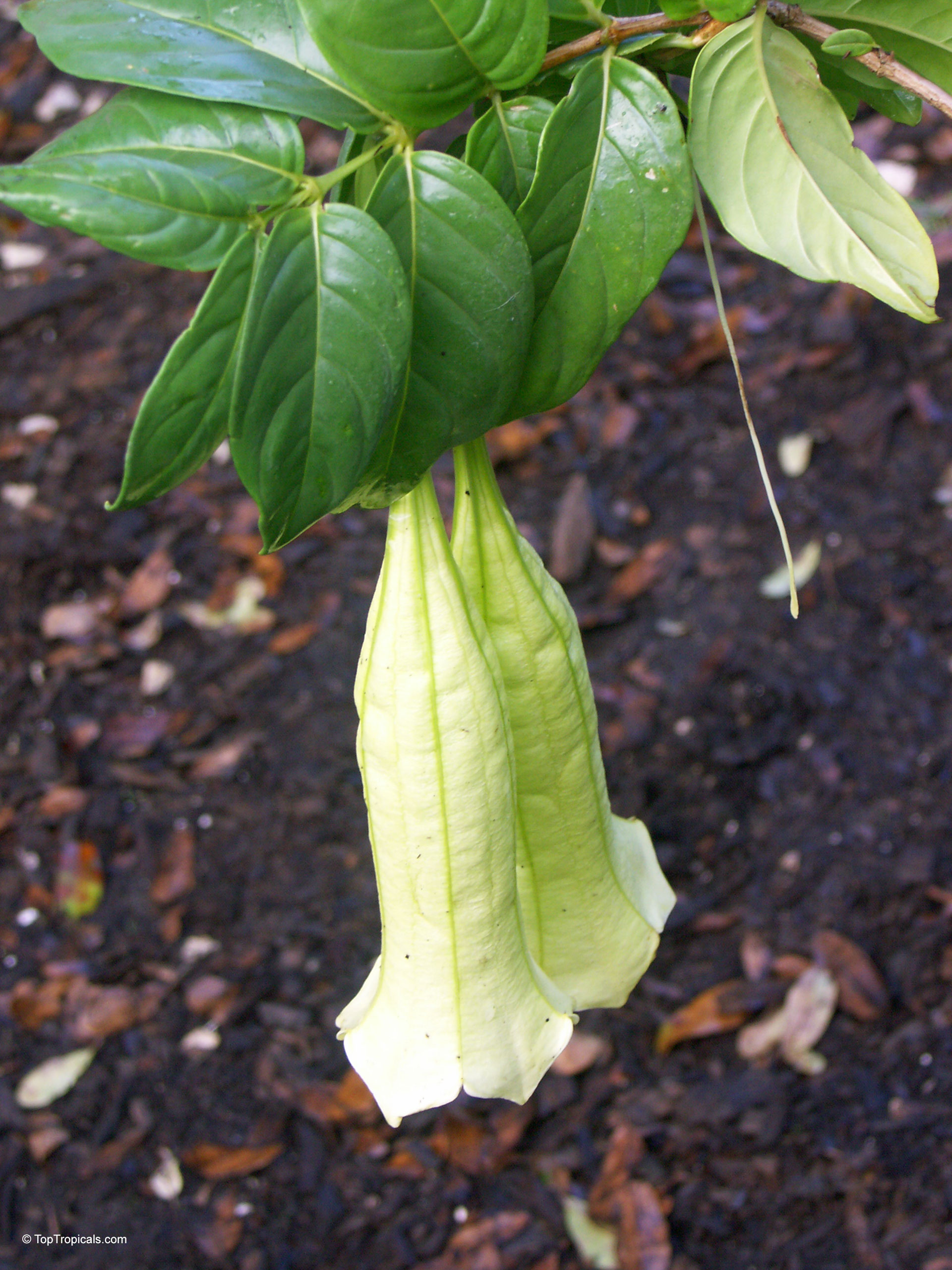
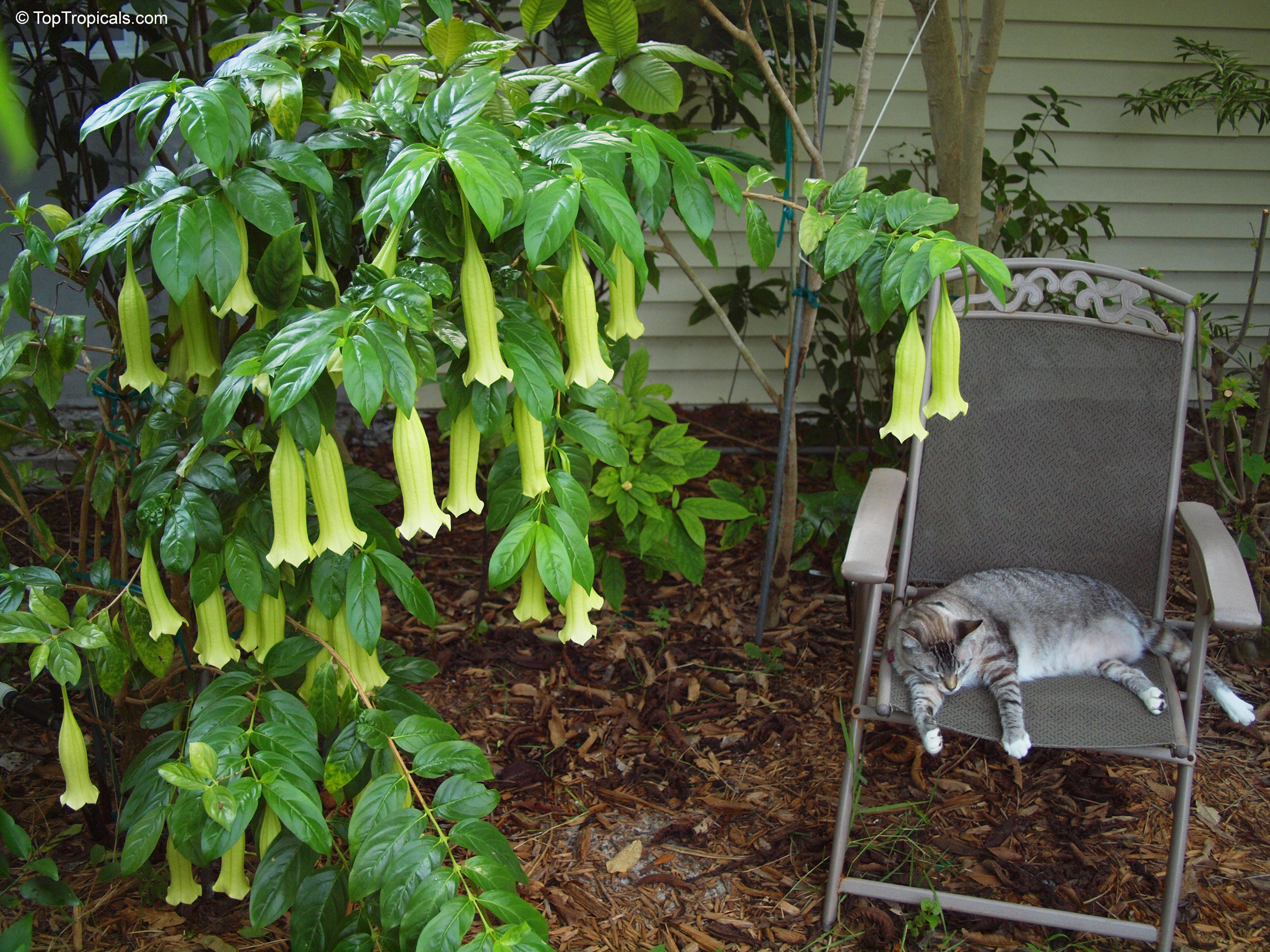
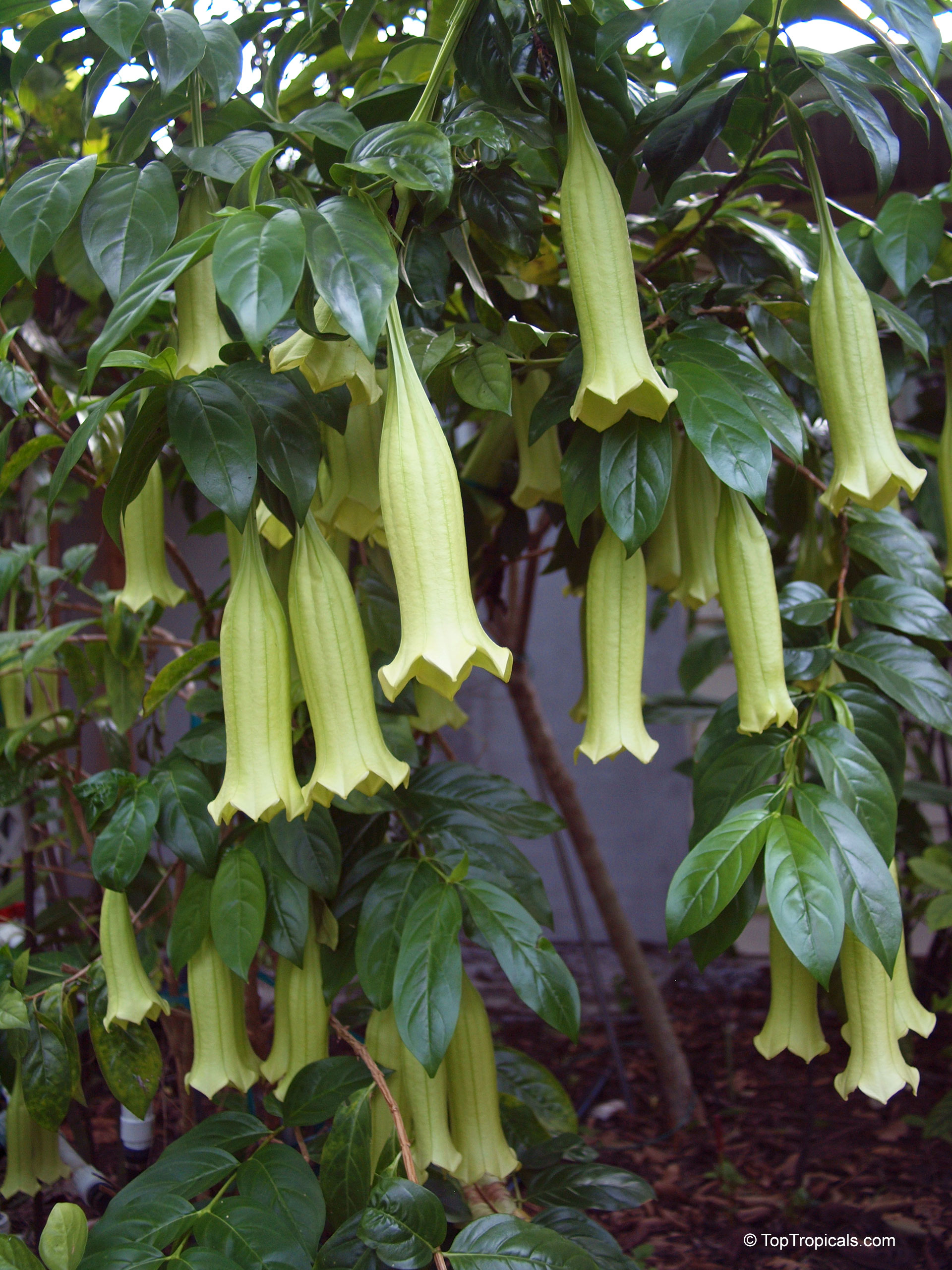
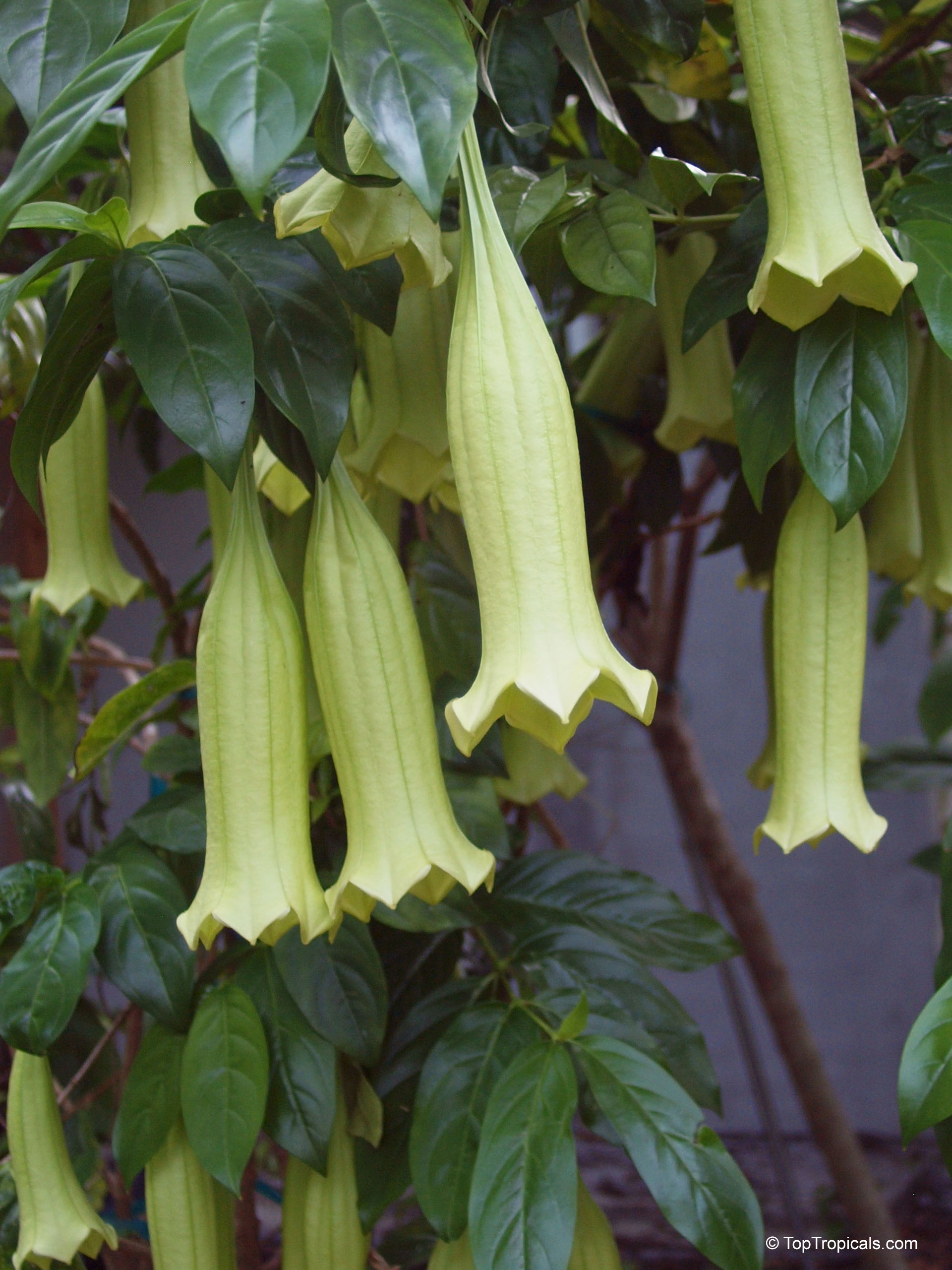
Cubanola domingensis, commonly known as Cubanola or Dominican Bellflower, is a rare evergreen shrub or small tree in the Rubiaceae family, the same family as coffee and gardenia. Endemic to the Dominican Republic, it naturally grows in tropical forests and coastal limestone habitats, typically reaching 5 to 8 feet (1.5 to 2.5 m) in cultivation, though it may become larger in its native habitat. Its glossy green foliage provides an attractive backdrop for the plant's spectacular pendent flowers, making it a prized ornamental for tropical and subtropical gardens.
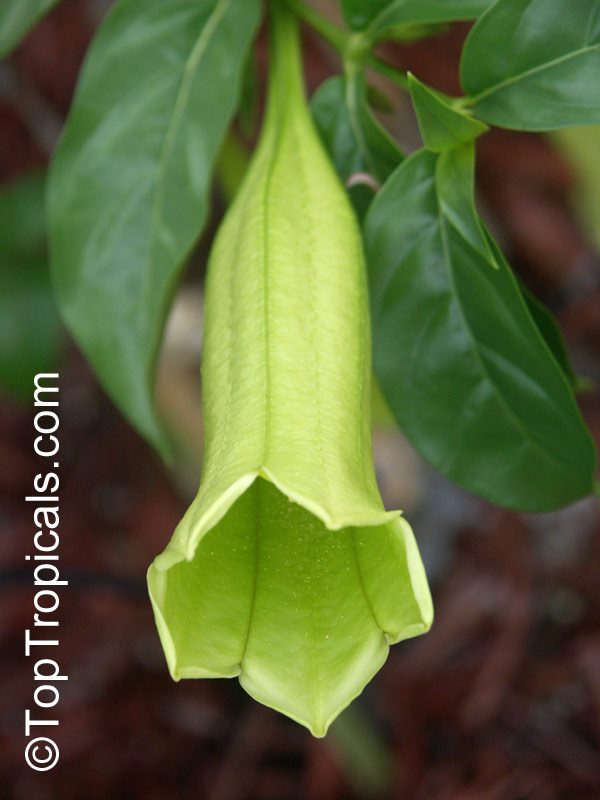
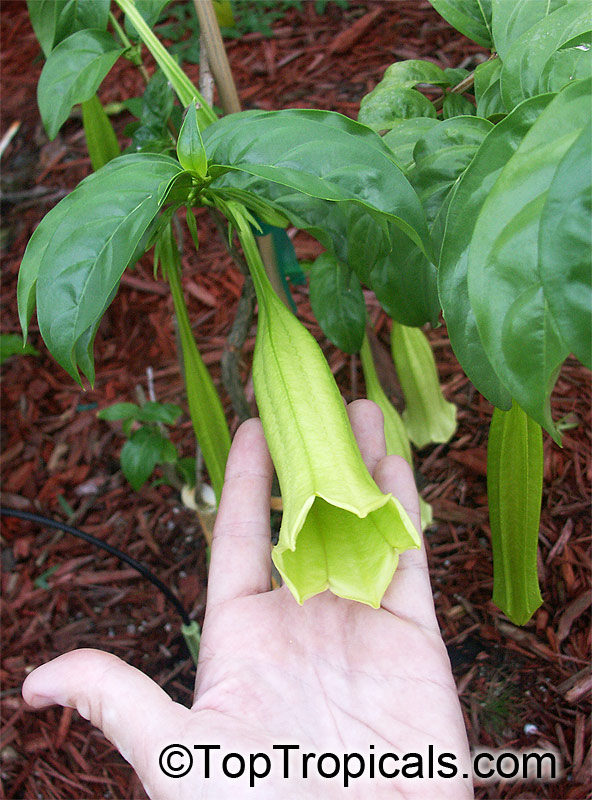
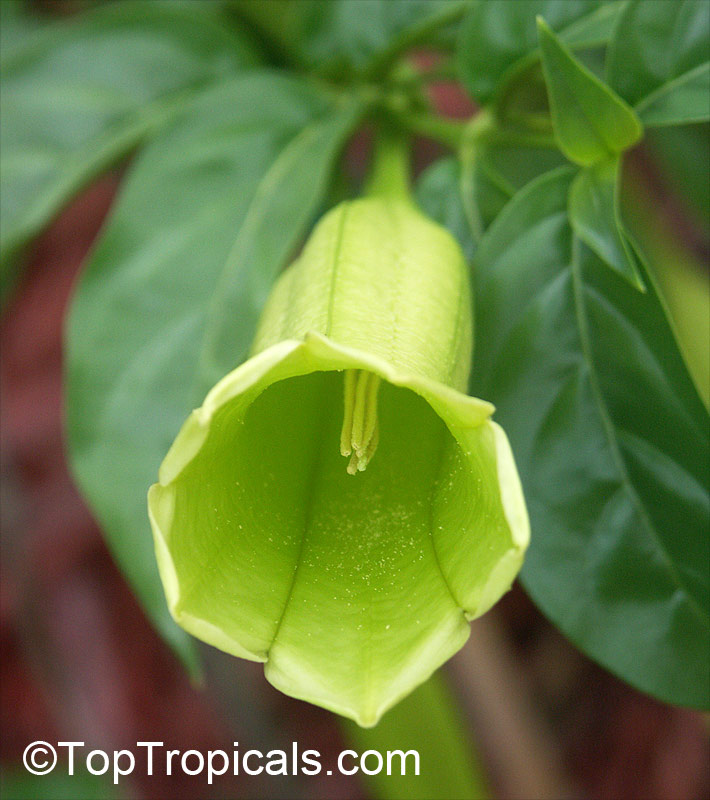
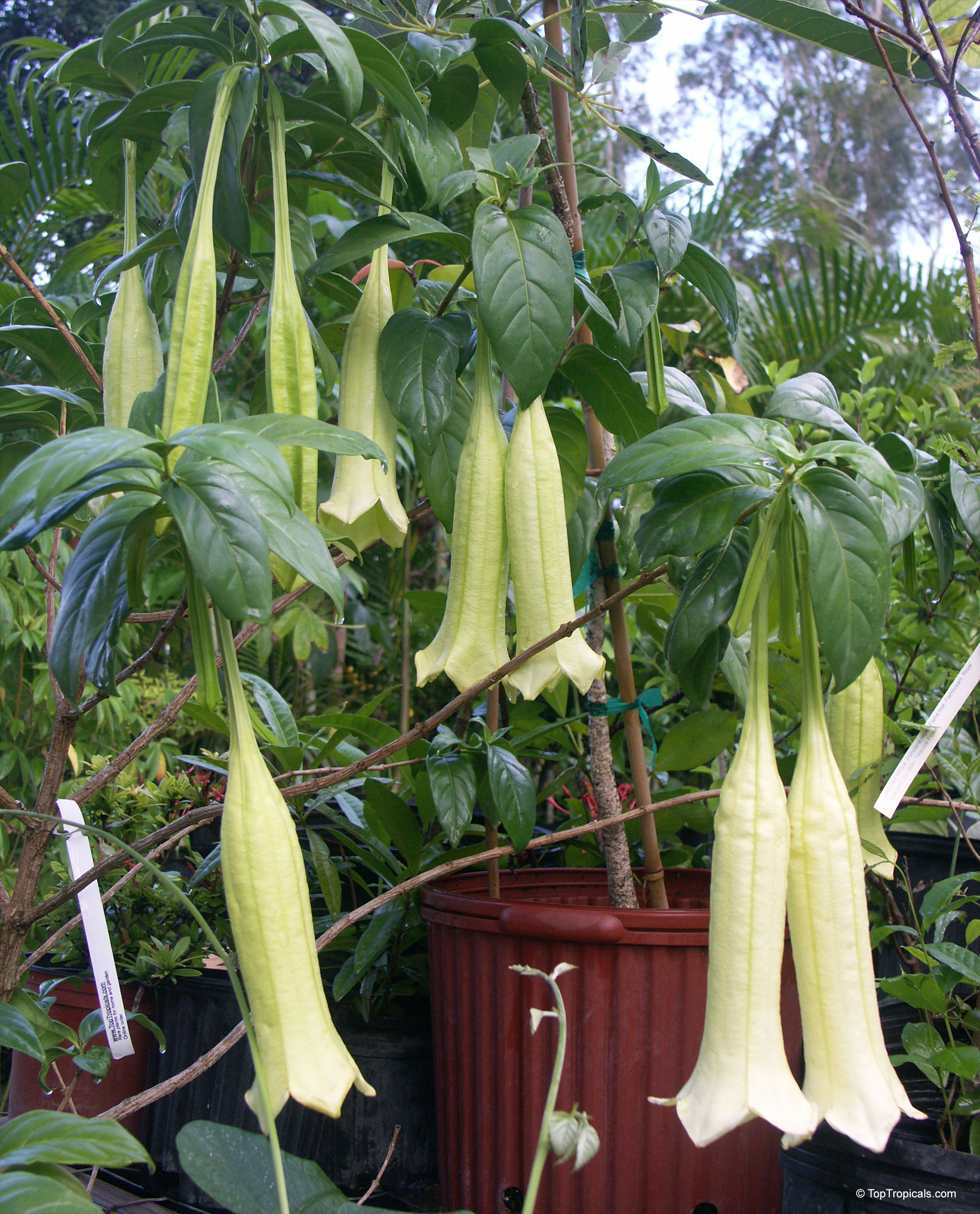
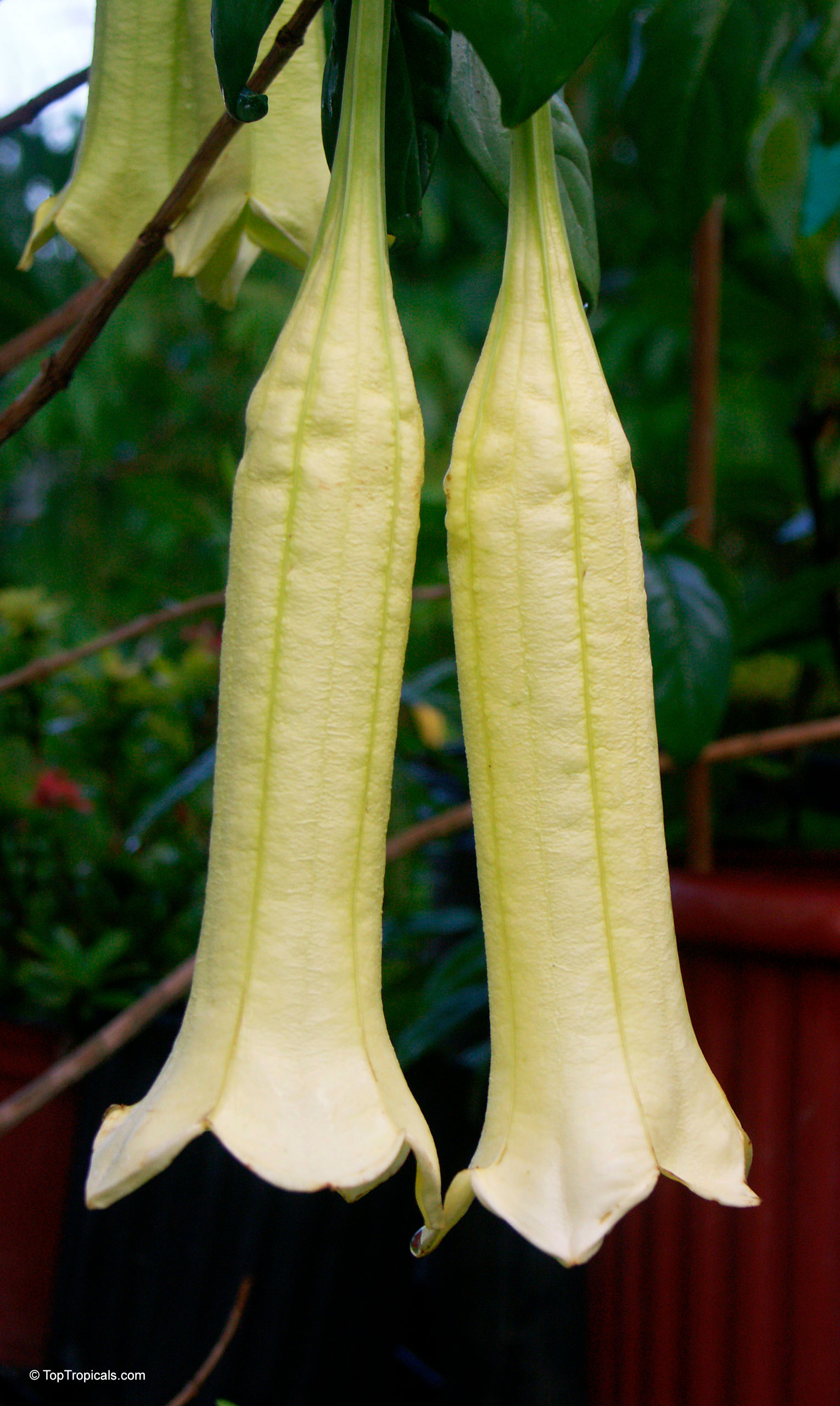
The long, trumpet-shaped flowers are creamy white to pale greenish white, often 7 to 8 inches (18 to 20 cm) long, making them among the largest in the Rubiaceae family. Intensely fragrant in the evening and early morning, they produce a distinctive sweet scent often compared to warm chocolate. Their size, shape, and fragrance are thought to be adaptations for pollination by nectar-feeding bats and large moths. Cubanola domingensis blooms repeatedly during the warm season and grows best in partial shade or bright filtered light with fertile, well-drained soil and regular moisture. It is sensitive to frost, hardy in USDA Zones 10b-12, and also makes an excellent container specimen in frost-free climates.
Similar plants: Cubanola domingensis (Cubanola)