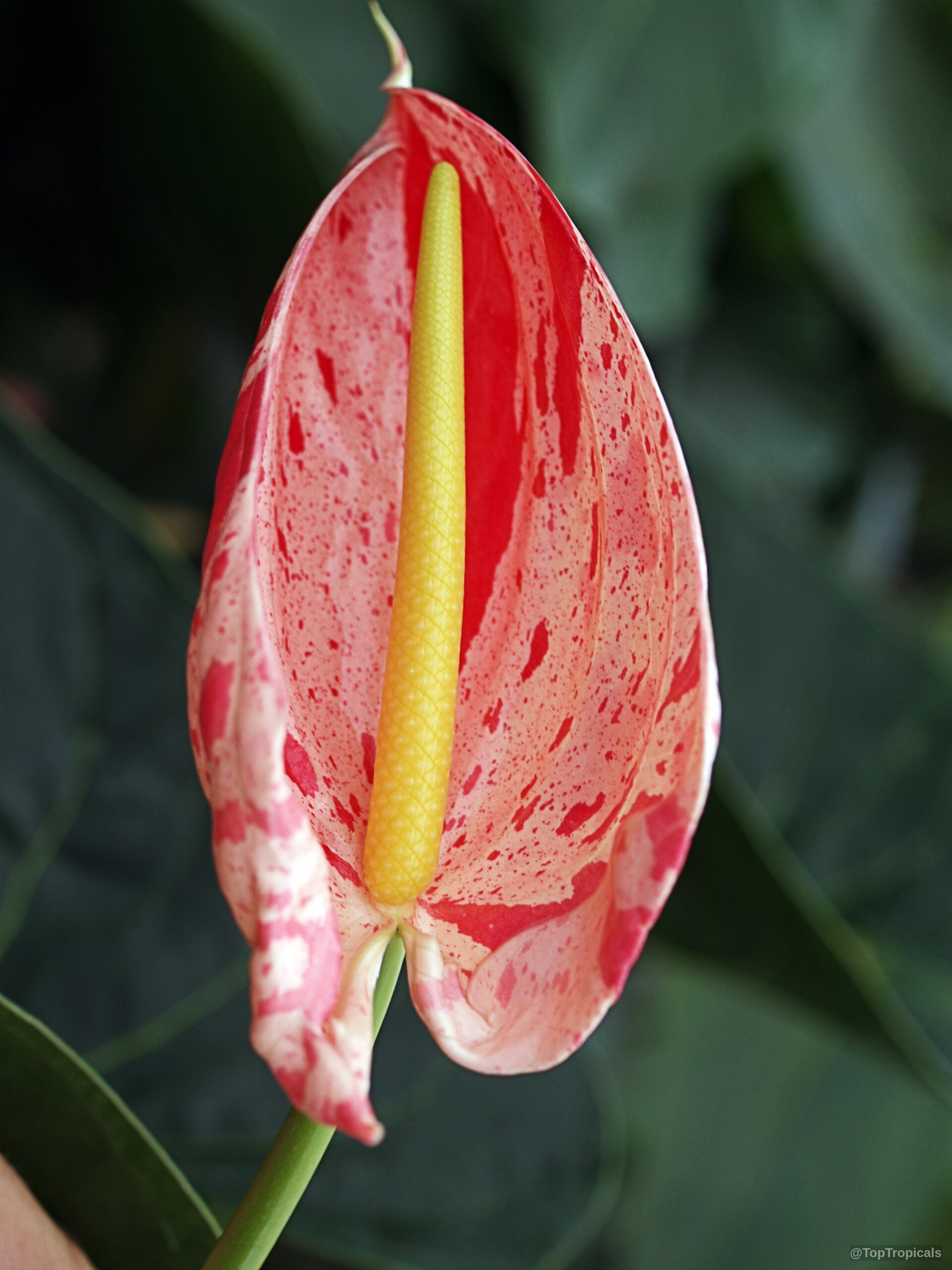
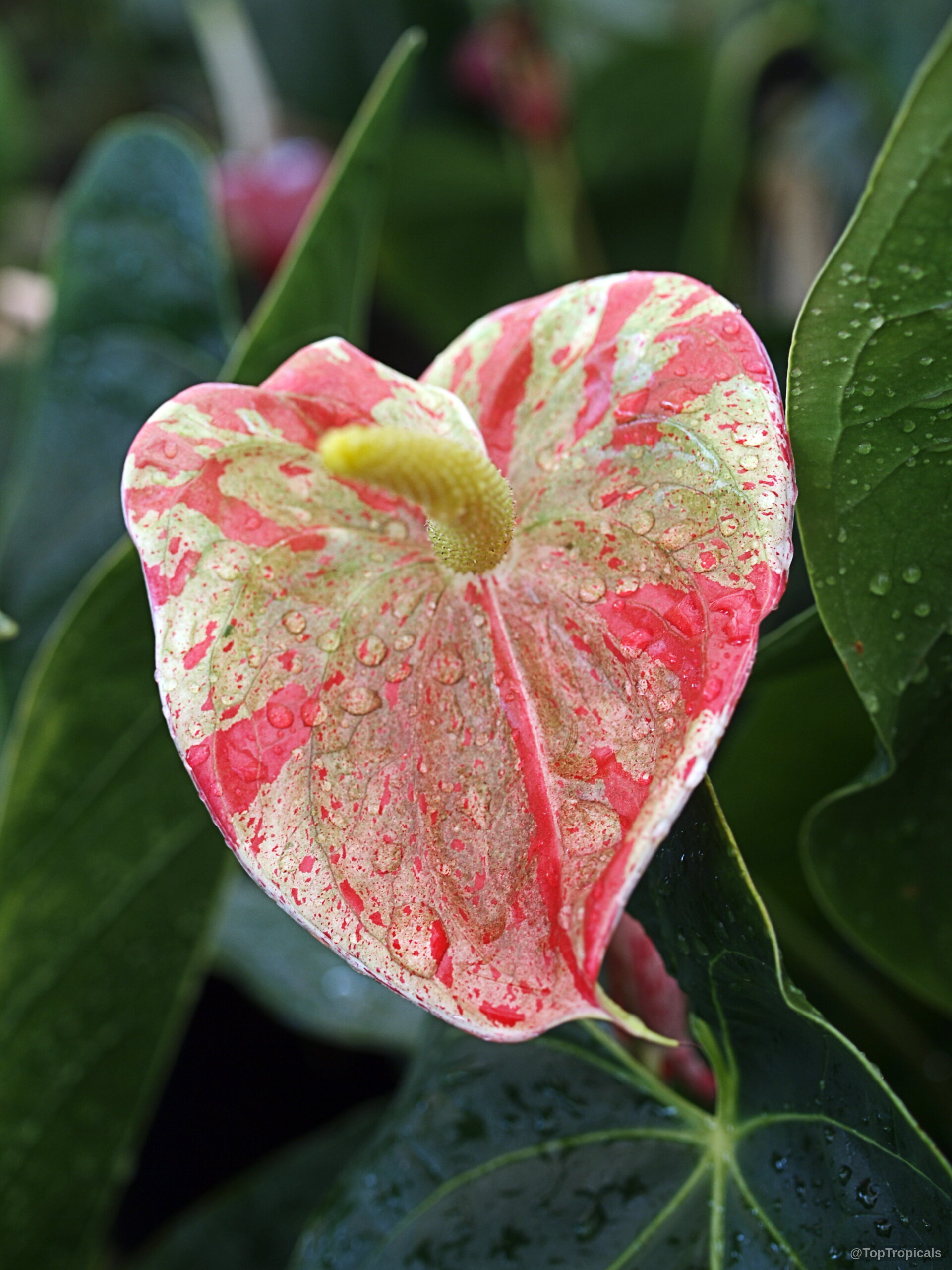
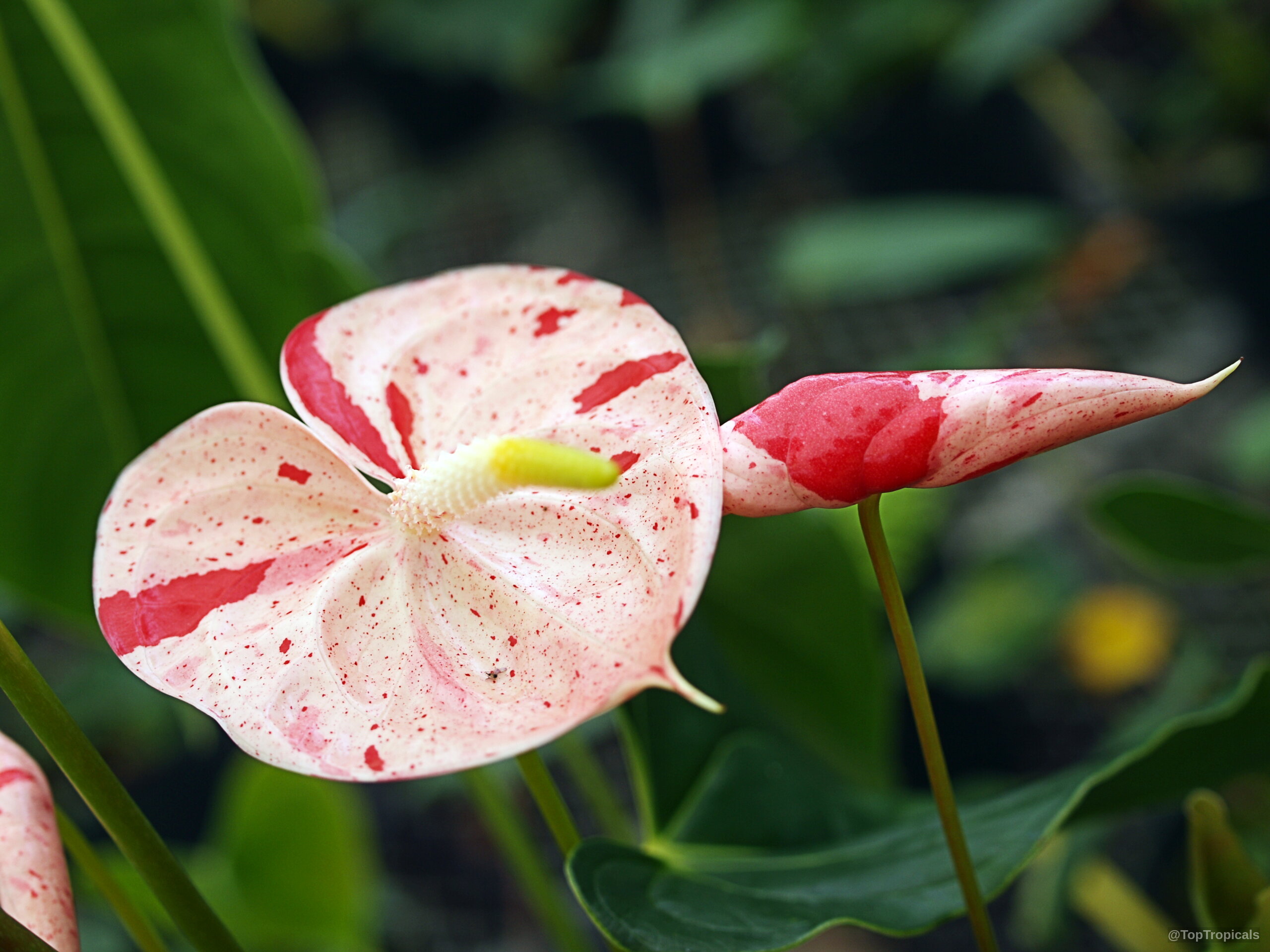
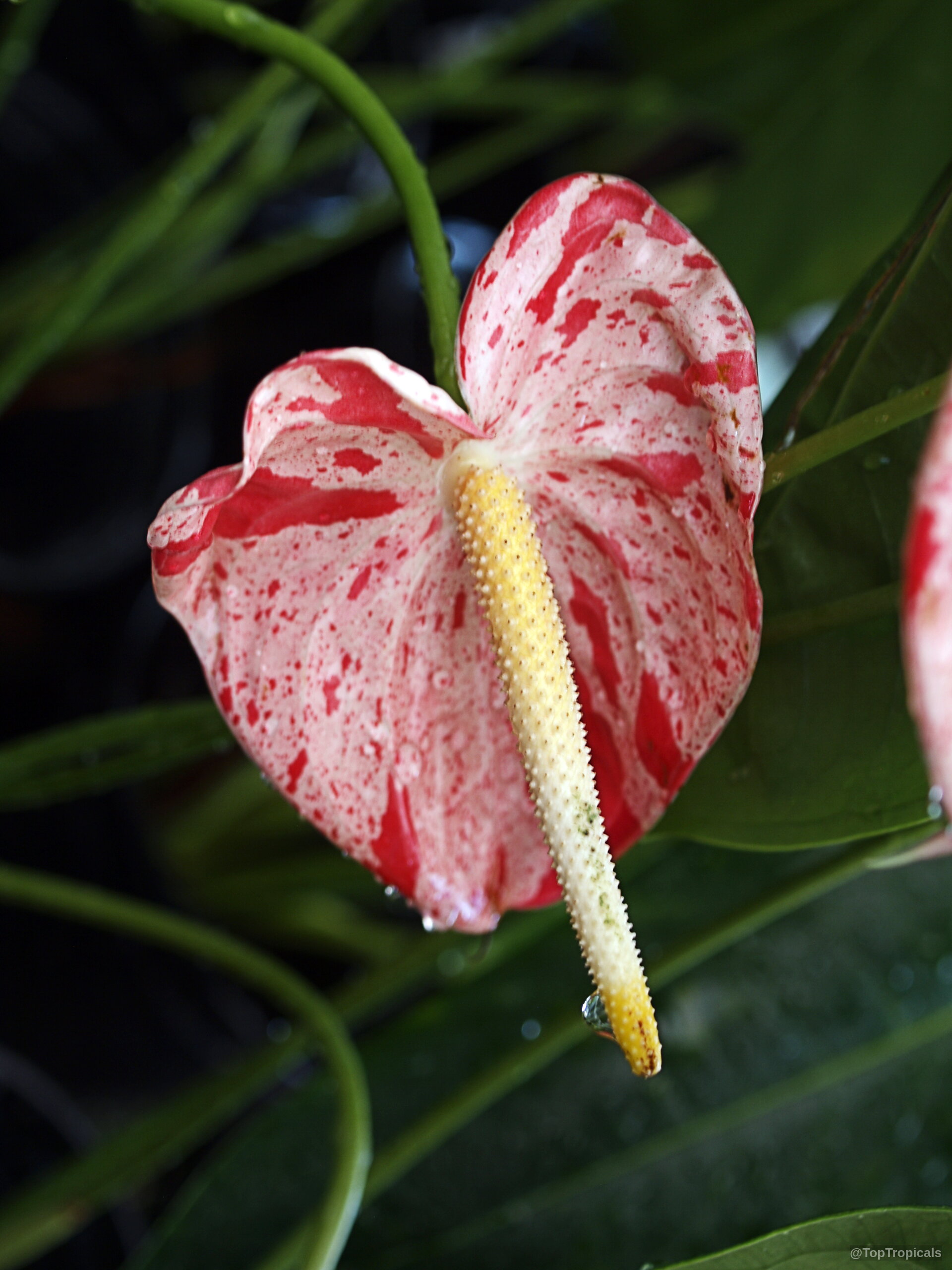
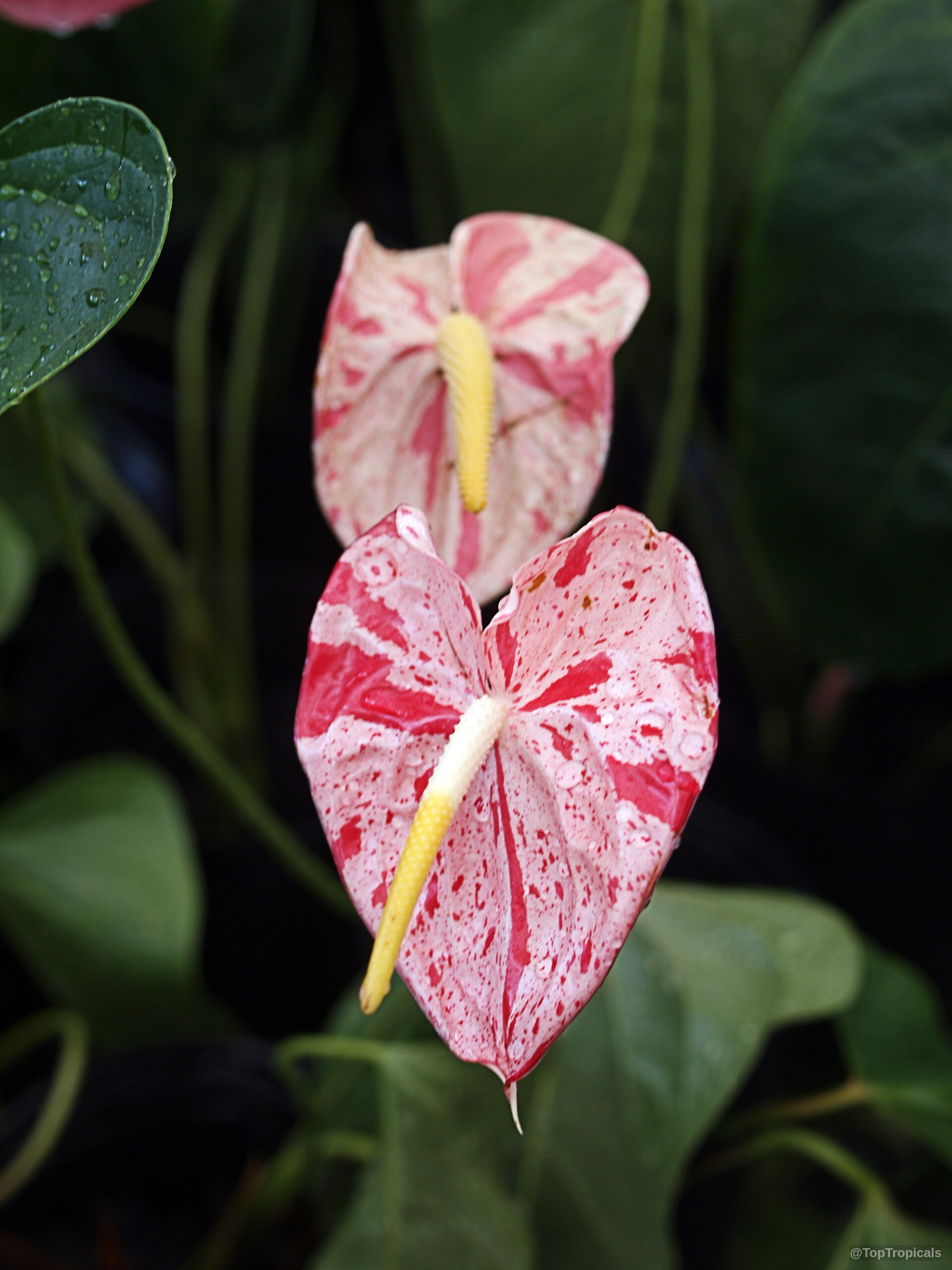
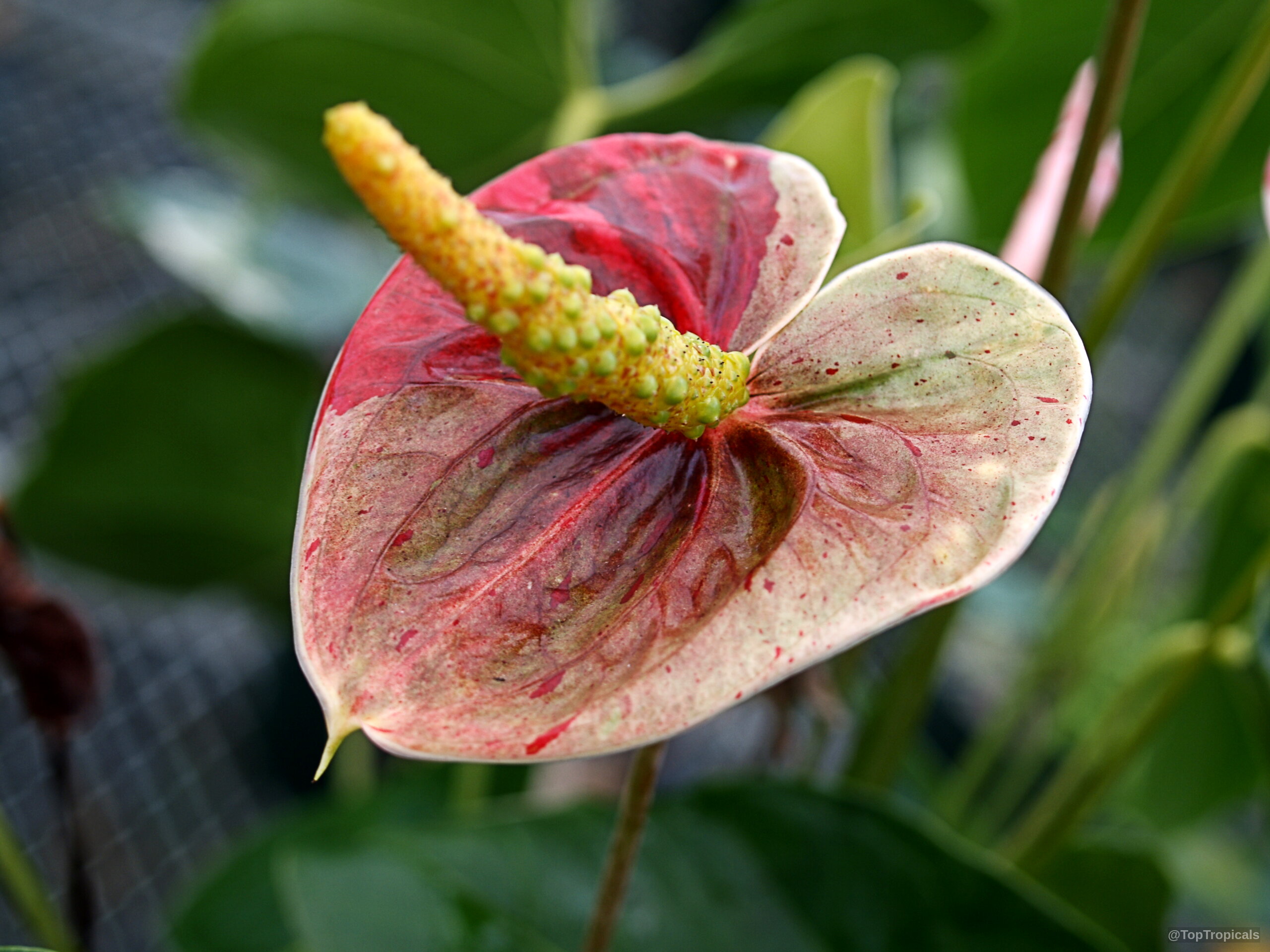
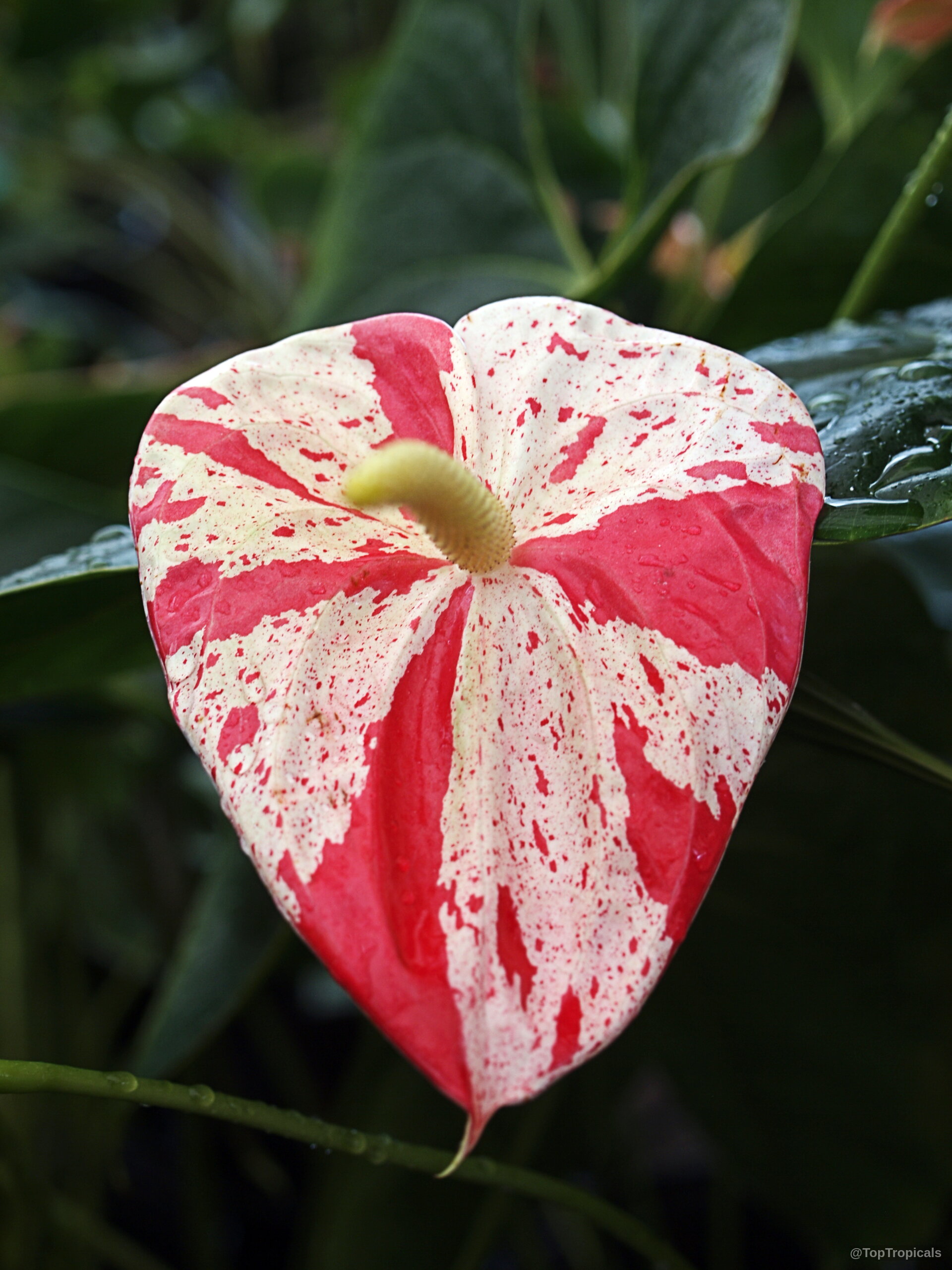
Anthurium sp. 'Shibori' (Flamingo Flower)
Botanical name: Anthurium sp.
Common names: Flamingo Flower, Variegated Flower Anthurium
Cultivar: Shibori
Family: Araceae
Origin: South America, Central America, Mexico
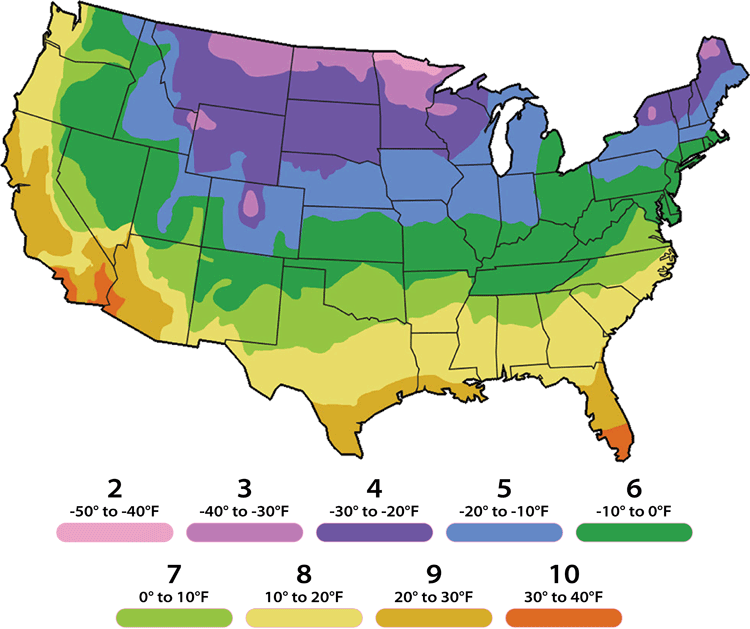
USDA Zone: 10-11
 Plant form: Small
 Mature height: 2-5 ft
 Sun exposure: Semi-shade
 Cold tolerance: Frost sensitive. Protect from freezing.
 Watering: Regular


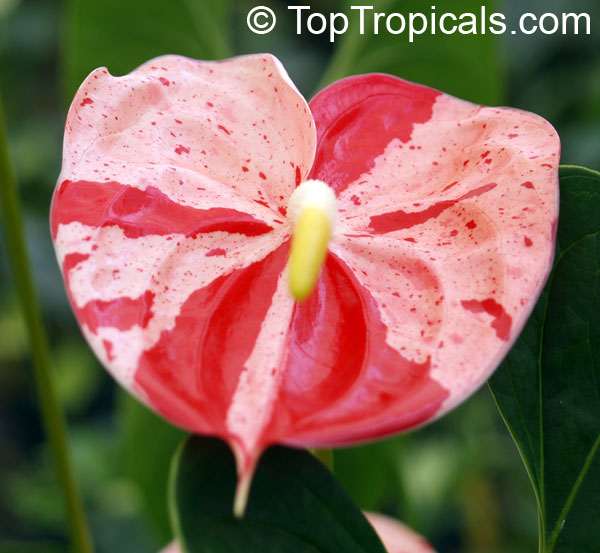
 Flower color: Pink; white and off-white; red, crimson, vinous; unusual color
 Suitable for: Outdoors in the suitable USDA zone; small gardens, containers, and indoor growing
 Foliage color: Ornamental foliage
Anthurium is a large and diverse genus of evergreen plants in the Araceae family, native to tropical regions of the Americas, with its greatest diversity in Central and South America. Species range from small terrestrial plants to climbing and epiphytic aroids, and their foliage may be heart-shaped, arrow-shaped, deeply divided, velvety, leathery, or dramatically veined. The characteristic inflorescence consists of a spadix bearing numerous tiny flowers accompanied by a spathe. In popular flowering hybrids, derived largely from Anthurium andraeanum and related breeding lines, the spathe may be red, pink, white, orange, purple, green, or bicolored and can remain attractive for weeks. Other Anthuriums, including many forms related to A. crystallinum, A. magnificum, and A. veitchii, are cultivated primarily for spectacular foliage.
Anthurium generally grows best in warm, humid conditions with bright filtered light and an airy, organic-rich, well-drained substrate. Epiphytic species particularly benefit from excellent root aeration, while terrestrial species may prefer somewhat more moisture-retentive mixes. Water regularly during active growth but avoid prolonged waterlogging. Plants are widely grown in containers and interiors, while flowering cultivars are also important commercial cut flowers. Propagation is by division, stem sections, seed, or tissue culture. Most tropical Anthuriums are frost sensitive and are best suited outdoors to USDA Zones 10-11, although requirements vary among species. All parts contain irritating calcium oxalate crystals and should not be eaten.
See Photo Gallery of Exotic Anthuriums.
A tropical beauty from the heart of Central and South America, the Anthurium hybrid Shibori (otherwise known as the Flamingo Flower) is at home in the tropical and subtropical climates of USDA Hardiness Zones 10-11. If given the right conditions and care, it will reward you with its showy and variegated flowers. A stunning sight of pink, off-white and white, the flowers can also come in an unusually colored mix of red, crimson and vinous.
Anthurium hybrid Shibori is named for its unusual foliage. Despite preferring to grow in light shade, it is a very fast-growing plant that can spread out to 2 feet and become a low-growing shrub of up to 5 feet tall. It is a great option for gardeners who are looking for a fast-growing groundcover and ornamental shrub.
The key to success with Anthurium hybrid Shibori is meeting its need for humidity and regular water. While it is a relatively tough plant, it will struggle in temperatures below 55F and should be brought indoors if the temperature drops that low. It can be potted up and moved indoors in cold regions, but it must be watered regularly to maintain its health.
With a little extra care, Anthurium hybrid Shibori is an attractive and unusual addition to any garden and a conversation piece, with its stunning variegated blooms and luscious foliage.
Related cultivars: Anthurium sp. 'Shibori' (Flamingo Flower)
Similar plants: Anthurium sp. 'Shibori' (Flamingo Flower)
- Anthurium andraeanum (Flamingo Flower)
- Anthurium bakeri (Anthurium)
- Anthurium clarinervium (White-Veined Anthurium)
- Anthurium coriaceum (Paddle-leaf Anthurium )
- Anthurium crenatum (Scalloped Laceleaf)
- Anthurium crystallinum (Crystal anthurium)
- Anthurium gracile (Red Pearls Anthurium)
- Anthurium guayanum (Anthurium)
- Anthurium hookeri (Bird's Nest Anthurium)
- Anthurium livescens (Royal Awe)