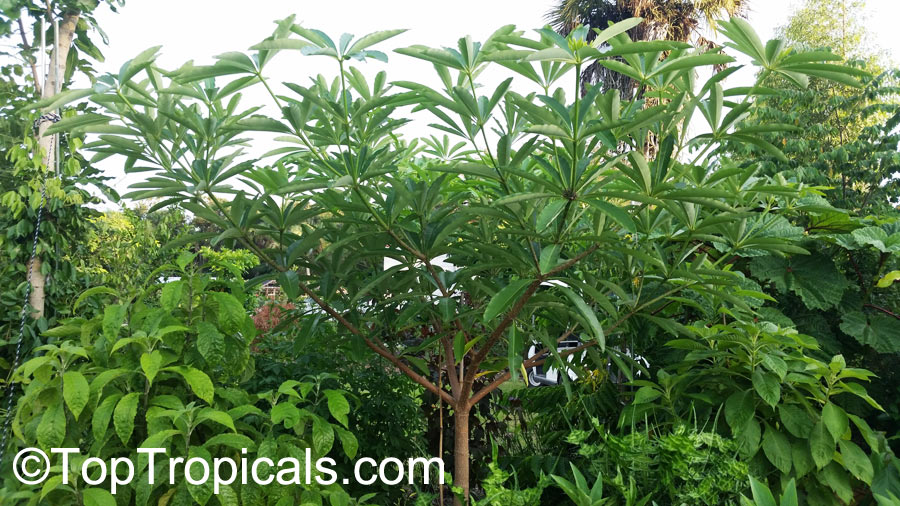
Alstonia scholaris (Blackboard Tree)
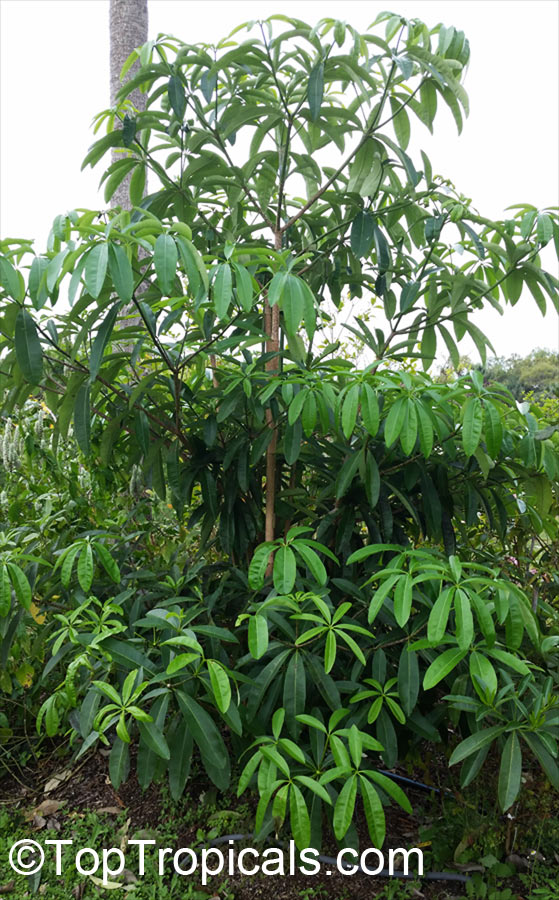
Botanical name: Alstonia scholaris
Common names: Blackboard Tree, Indian Devil Tree, Sapthaparni, Ditabark, Milkwood Pine, White Cheesewood
Family: Apocynaceae
Origin: Southeastern Asia
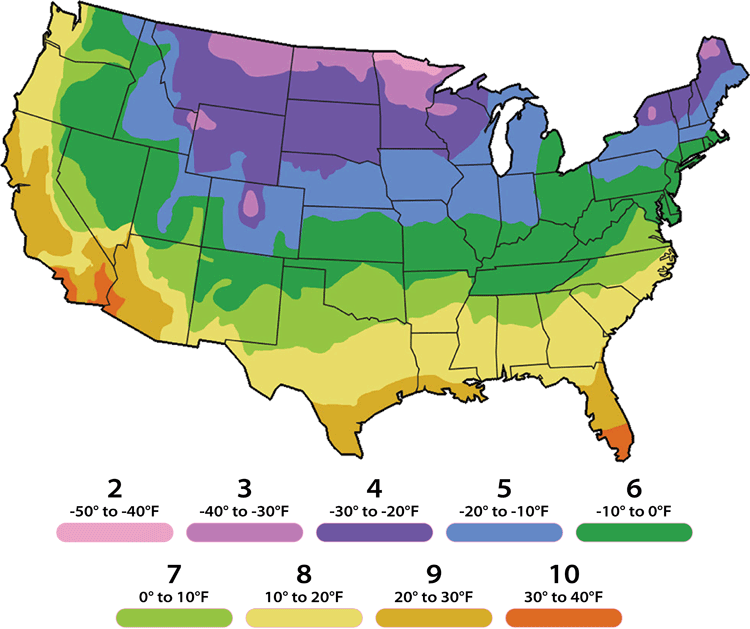
USDA Zone: 9-10

 Plant form: Large or medium tree
 Mature height: 20 ft or more
 Sun exposure: Full sun or bright light indoor; semi-shade
 Cold tolerance: Tolerates light freezing to about 30°F for short periods (mature plants). Young plants must be protected.
 Watering: Regular
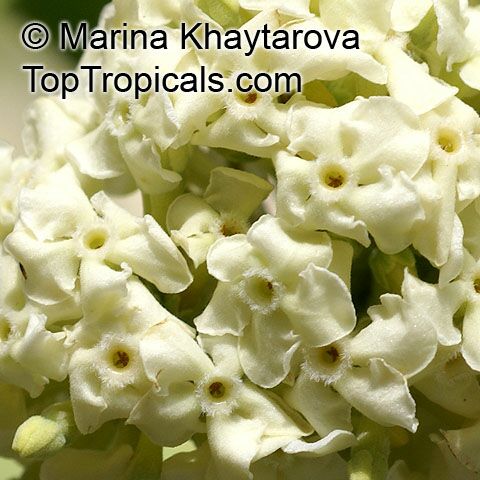
 Flower color: White and off-white
 Suitable for: Outdoors in the suitable USDA zone; large gardens
 Irritating or toxic: Toxic plant/plant part
 Fragrance: Fragrant; perfume plant
 Wildlife: Attracts butterflies and hummingbirds
 Ethnomedical: Ethnomedical plant, traditionally used in folk or indigenous medicine
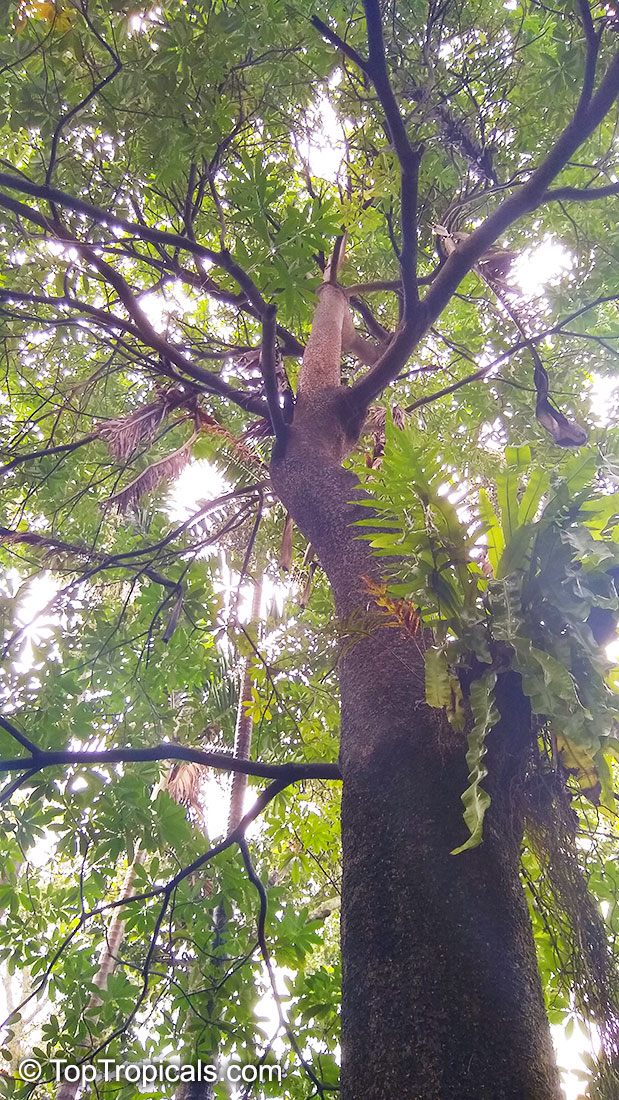
This fascinating rare plant with white, strongly perfumed flowers is valued as a fast growing, impressive ornamental shade tree.
Popularly known as Devil Tree, as plant is believed to the devil's abode - probably due to the intoxicating fragrance emitted by flowering trees, especially at night.
The tree is of great cultural significance in the intellectual circle, as traditionally its leaves were awarded to scholars and teachers during convocation ceremonies by the Visva Bharati University (can't think of a better name than Alstonia scholaris!). This tradition was started by Rabindranath Tagore.
Similar plants: Alstonia scholaris (Blackboard Tree)