Vanilla, orchid - Plant Encyclopedia Results
| Number of plants found: 5 |

Botanical name: Vanilla dilloniana
Common names: Leafless Vanilla Orchid, Dillons Vanilla
Family: Orchidaceae
Origin: North America

USDA Zone: 9-11
Cold tolerance: 30°F


Vanilla dilloniana, commonly known as Dillon's Vanilla, is distributed throughout the West Indies and had been reported on the banks of the Miami River in South Florida. Shoots form a multi-branched, leafless vine that can reach lengths up to 15 ft. The light green flowers are similar to Vanilla barbellata but the petals and sepals are longer and the fluted lip is a deep reddish-purple with a yellow crest. This orchid grows in areas with a limestone substrate, such as coastal berms and hardwood hammocks.
Vanilla dilloniana is considered vulnerable across its range and endangered in Florida. Although this species may be extirpated in Florida, pieces of plants from the original colony have been shared and may be found in local collections.
See the Video of Robert Riefer's unique specimen, the biggest potted specimen in the World, grown in 100 gal pot, originated in 1927, awarded in 2011 with CHM (Certificate of Horticultural Merit) by American Orchid Society.


Vanilla dilloniana is a very rare species and considered vulnerable, endangered across its range. Pieces of plants from the original colony have been shared and may be found in local collections.
See the Video of the original specimen.
Recommended Fertilizer: SUNSHINE Orchidasm - Rapid Growth Booster

Botanical names: Vanilla planifolia, Vanilla fragrans
Common names: Madagascar Bourbon Vanilla Bean, French Vanilla, Vanilla Orchid
Family: Orchidaceae
Origin: South East Mexico and Guatemala
USDA Zone: 9-11


This leafy climbing orchid from hot, wet tropical America is grown for its pods which, when dried, become the commercial vanilla. The flowers are hand pollinated. The Aztec Indians in Mexico used Vanilla Pods to flavor their chocolate drink 'Xoco-latl'. Vanilla was introduced to Europe, and French started to grow it in Africa. Vanilla Pods are picked green when they have no scent. The lengthy curing process, which develops fragrant aroma, is one reason for its high cost. Vanilla was believed to be a tonic for the brain. They need a large pot and support for climbing. If really happy, Vanilla planifolia can exceed 100 feet in length in just a few years. They flower only when mature, which takes a few years. Propagated generally by cutting. Plant becomes Epiphytic with age. Water freely, less water in winter.
Watch video: How to produce my own Vanilla? Secrets of Vanilla pollination.


Recommended Fertilizer: SUNSHINE Orchidasm - Rapid Growth Booster
Recommended Fertilizer: SUNSHINE Orchidasm - Rapid Growth Booster

Botanical name: Vanilla sp.
Common name: Vanilla Orchid
Family: Orchidaceae
Origin: Tropical America
USDA Zone: 10-11
They come in white, yellow, and orange hues, and may have a length up to 50 cm.
Vanilla sp. requires a warm and humid location; it does best in semi-shade and will appreciate a sheltered spot away from the wind. The plant needs regular watering and fertilizing, but taking care not to over-water it in the winter, when growth is slower. Occasional misting of the leaves is beneficial. It can be grown both as an epiphyte in well-aerated soil, and as a terrestrial in a sandy, well-draining soil with organic material. Vanilla sp. is known to be hardy to USDA Zones 9 to 11. In colder regions, it is best grown in a greenhouse or container that can be brought inside during the cold months. For potted plants, make sure to use a potting mix with excellent drainage. Water them thoroughly, then allow the soil to dry slightly between waterings. Fertilizing should be done monthly from spring to autumn.
Overall, Vanilla sp. is an easy-care tropical native prized for its fragrant and showy white and off-white, yellow, and orange flowers that attract butterflies and hummingbirds.
The flowers are pollinated by bees, hummingbirds, and butterflies, and after pollination, the plant produces green seed pods, also known as vanilla beans.
To produce vanilla extract, the beans are harvested and cured by a process that involves drying, sweating, and fermentation. The cured beans are then soaked in alcohol to extract the flavorful compounds and create the characteristic vanilla flavor that we know and love.
Vanilla is widely used in the food industry as a flavor and fragrance, and it is also used in cosmetics, perfumes, and other products. It is considered one of the most popular flavors in the world and is used in a wide range of dishes, including ice cream, cakes, and other baked goods, as well as savory dishes like sauces and marinades.
This dainty yet resilient climber is an excellent choice for an exotic touch to your garden.


Botanical name: Vanilla pompona
Common name: West Indian Vanilla
Family: Orchidaceae
Origin: Mexico
USDA Zone: 9-10
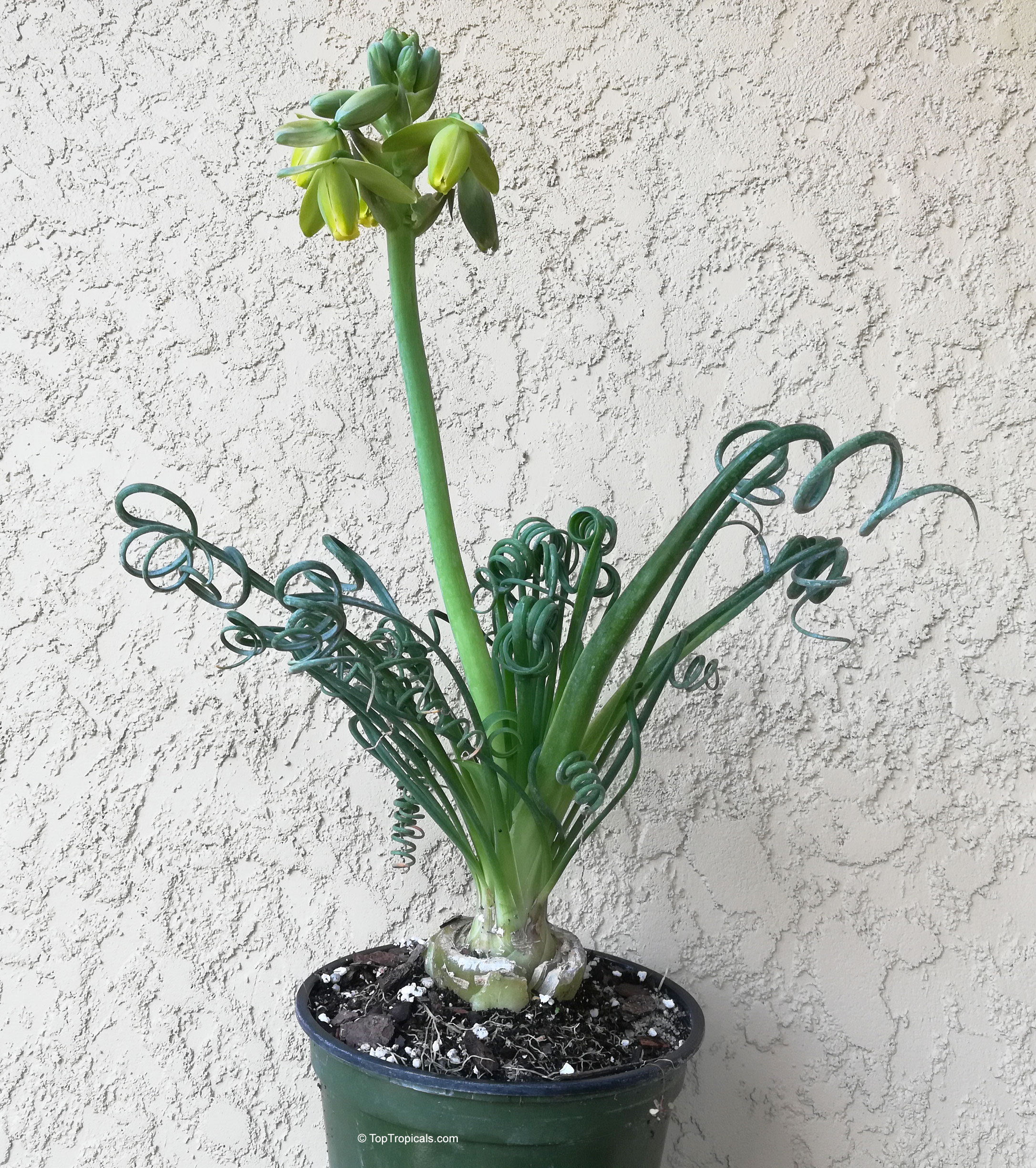
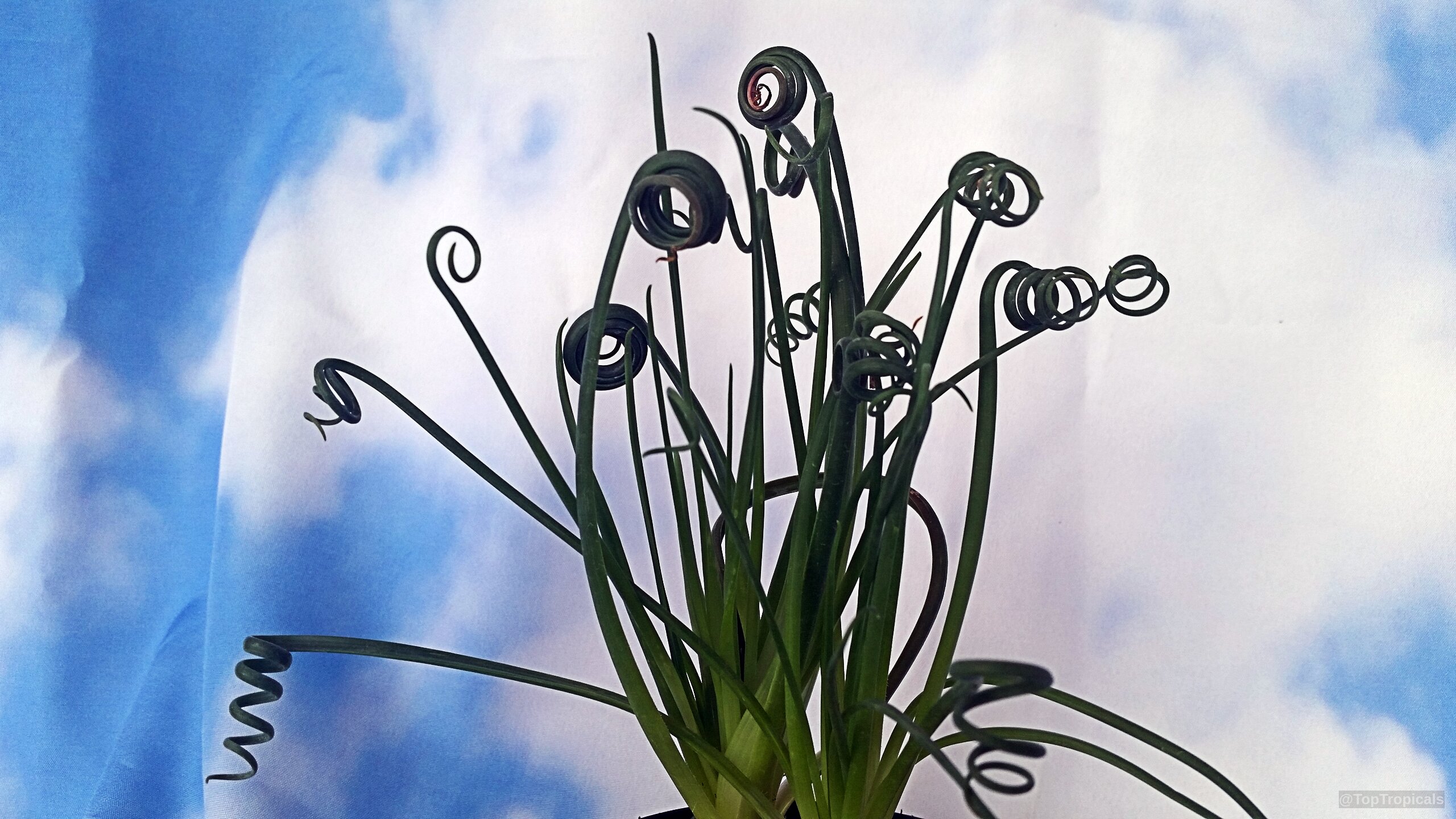
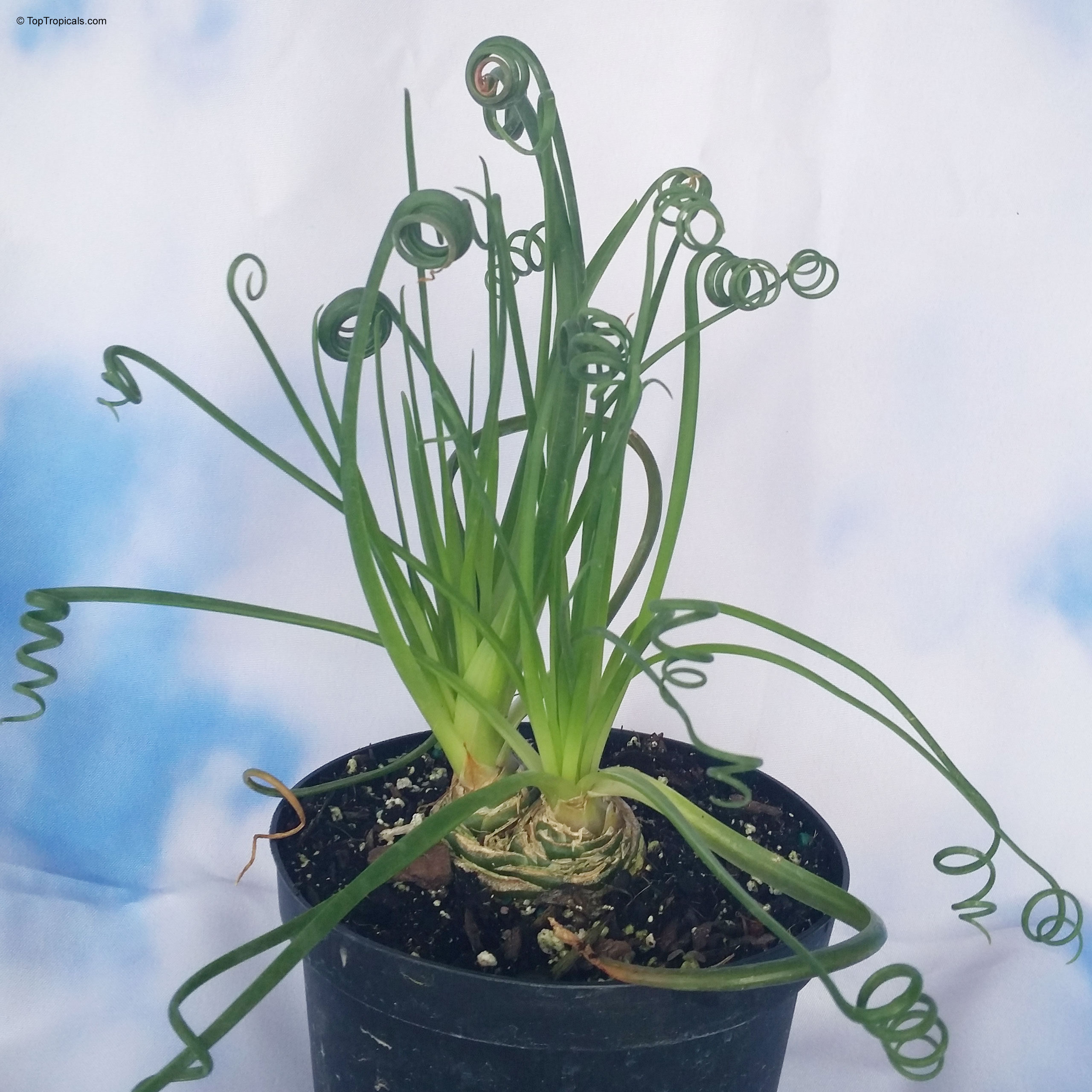
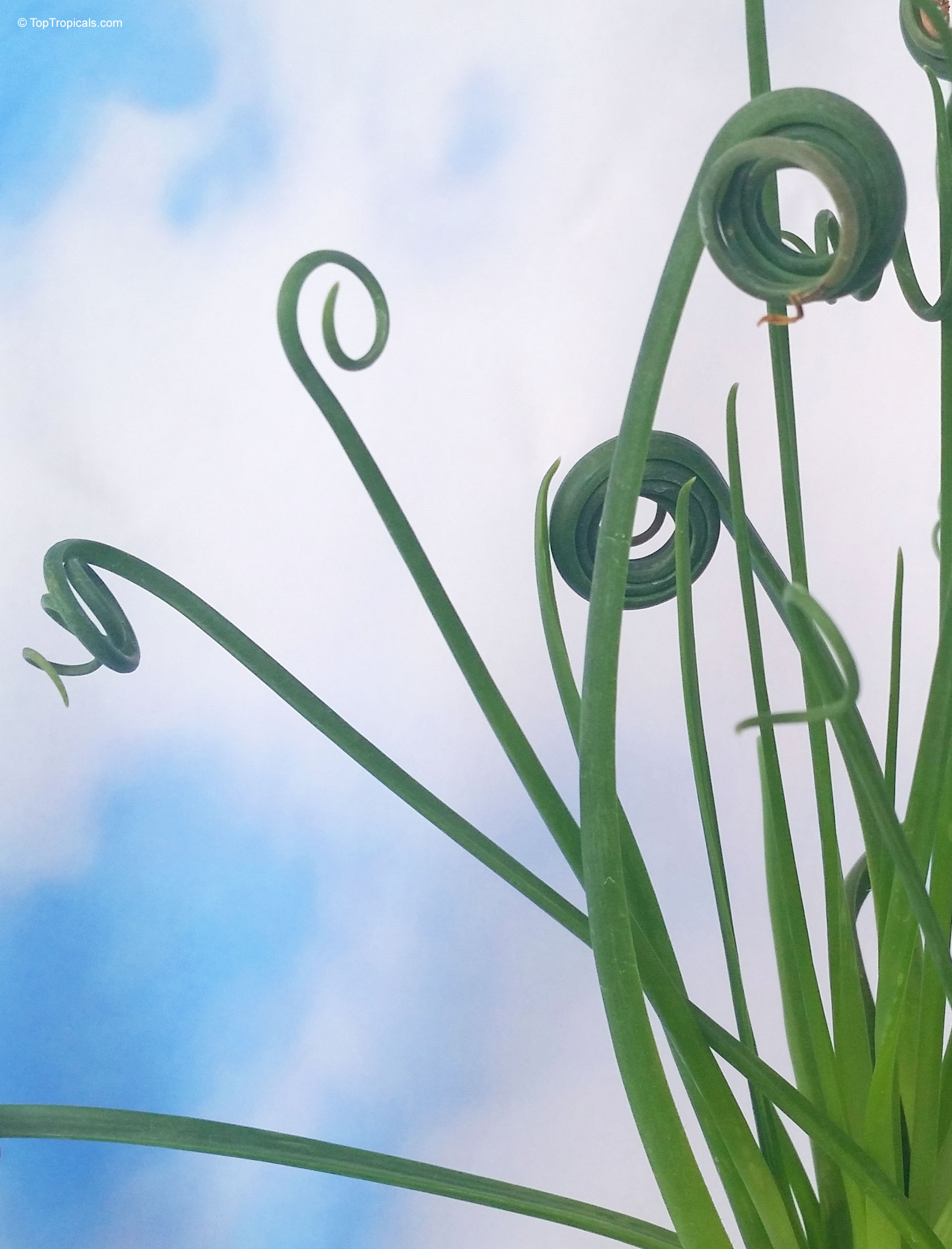
Botanical name: Albuca spiralis
Common names: Frizzle Sizzle, Corkscrew Albuca
Family: Asparagaceae (Formerly:Hyacinthaceae / Liliaceae)
Subfamily: Scilloideae
Origin: South Africa
USDA Zone: 8-10


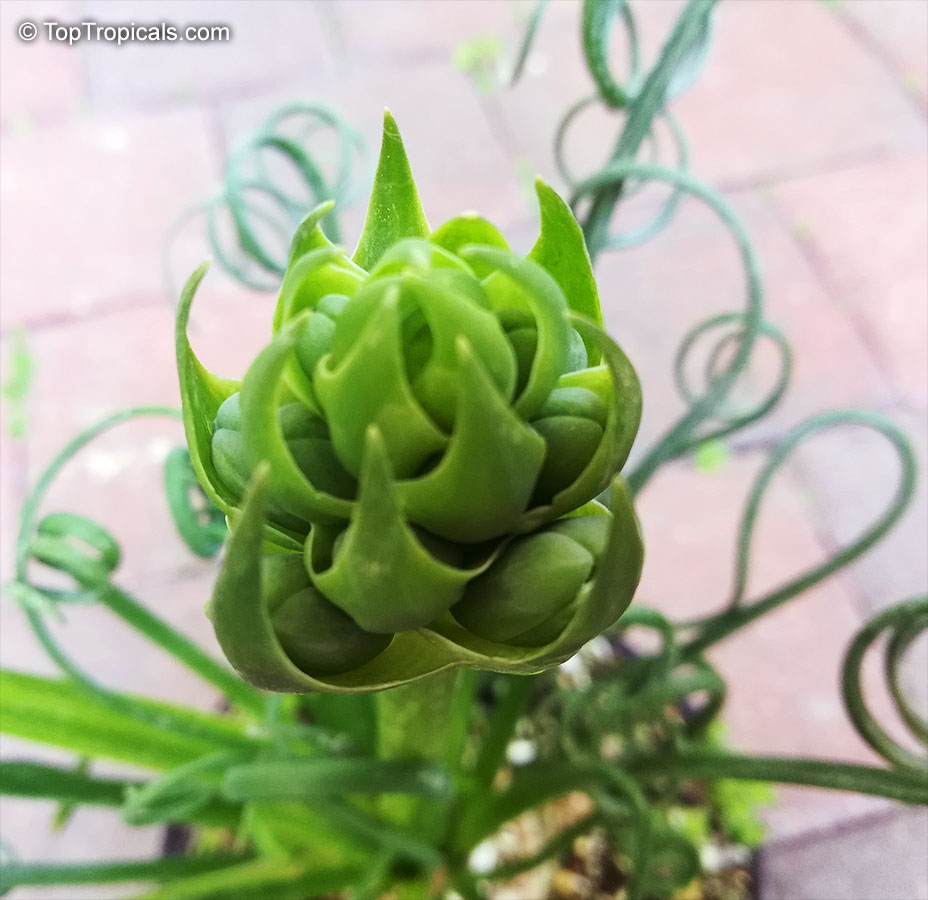
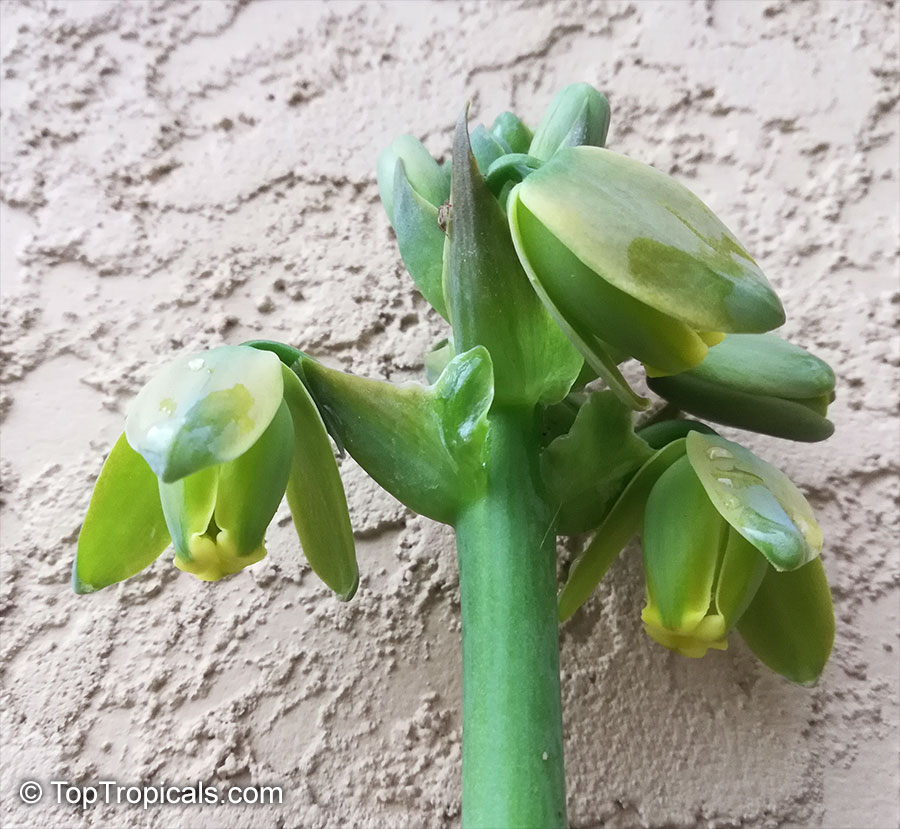
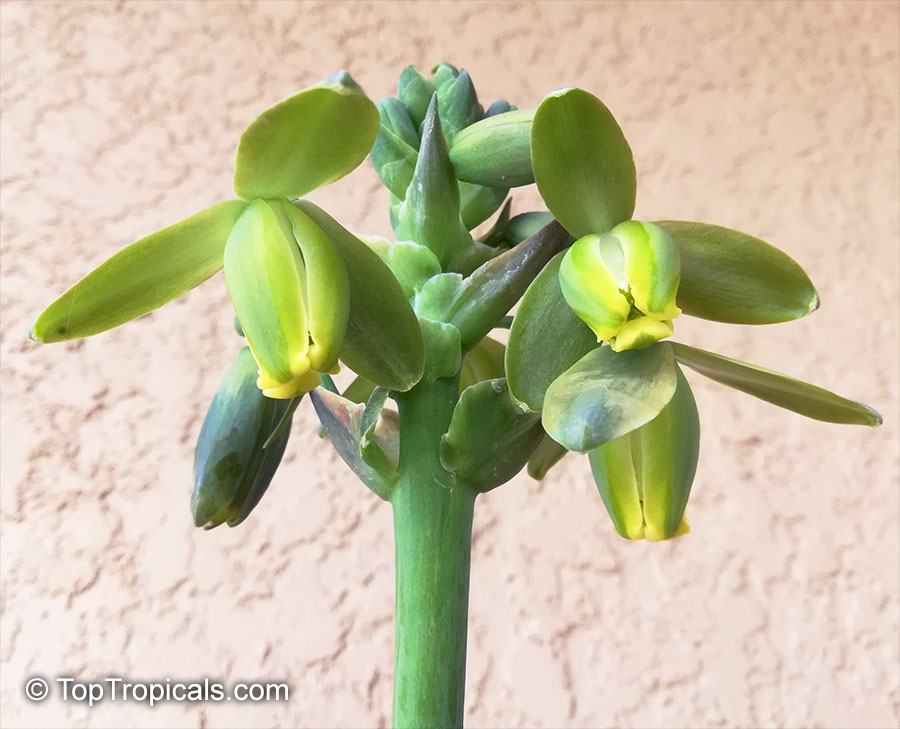
Albuca spiralis or Frizzle Sizzle, also known as the Corkscrew Albuca, is a unique and easy-to-grow plant native to South Africa. With green onion-like leaves that appear curled, each plant has its own distinct personality. It can reach between 2 to 5 feet tall with a spread of 5 to 10 feet, making it suitable for use as a groundcover or low-growing border. It also looks great in rock walls, perennial beds, and cottage gardens and can even be used for bonsai training.
In the spring, the plant produces spikes of orchid-like chartreuse-yellow flowers that have a light vanilla fragrance. It may occasionally rebloom later in the season. Frizzle Sizzle is hardy in USDA Zone 8-10, or it can be grown as a houseplant in colder regions. Just be sure to bring it indoors if the temperature drops below freezing. To care for this plant, give it lots of sun and well-draining soil, and allow the soil to dry out between waterings, similar to how you would care for a succulent.
Frizzle Sizzle is an ideal plant for home gardens as it is low maintenance and has no pest or disease problems. In colder climates, it can be overwintered indoors on a sunny window sill or allowed to go dormant by stopping watering and storing in a cool, dry location. So if you're looking for a fun and eye-catching plant that's easy to grow, consider adding Frizzle Sizzle to your collection.
Use link to repeat this search:
https://toptropicals.com/cgi-bin/garden_catalog/cat.cgi?find=vanilla-orchid&search_op=and&keyword_op=and&language=e
&number=10&no_change_lang=1&user=tt&sale=1&first=0