Plant attracts butterflies, hummingbirds - Plant Encyclopedia Results
| Number of plants found: 1670 | Next | 
|
Go to page: | 1 | 2 | 3 | 4 | 5 | Last |
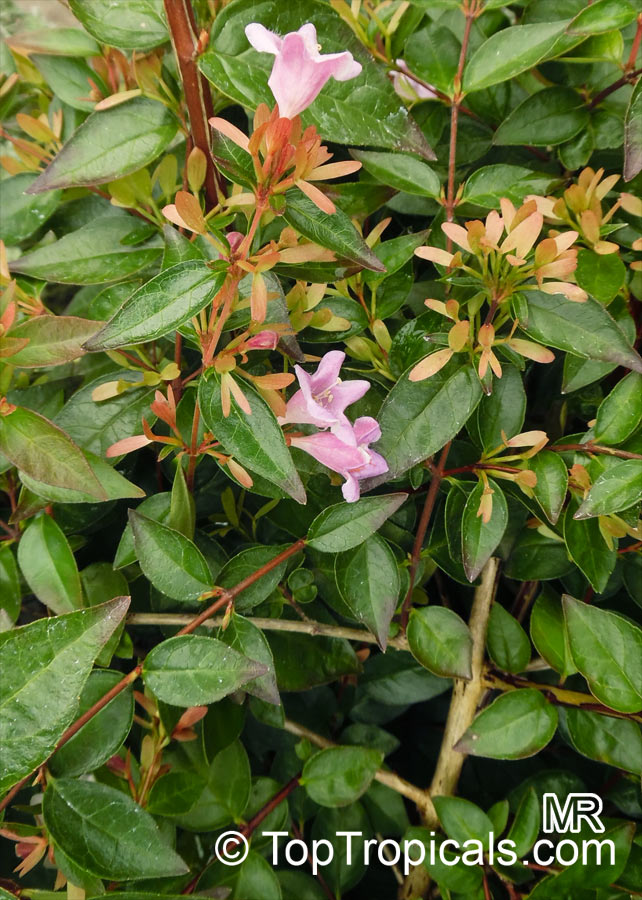
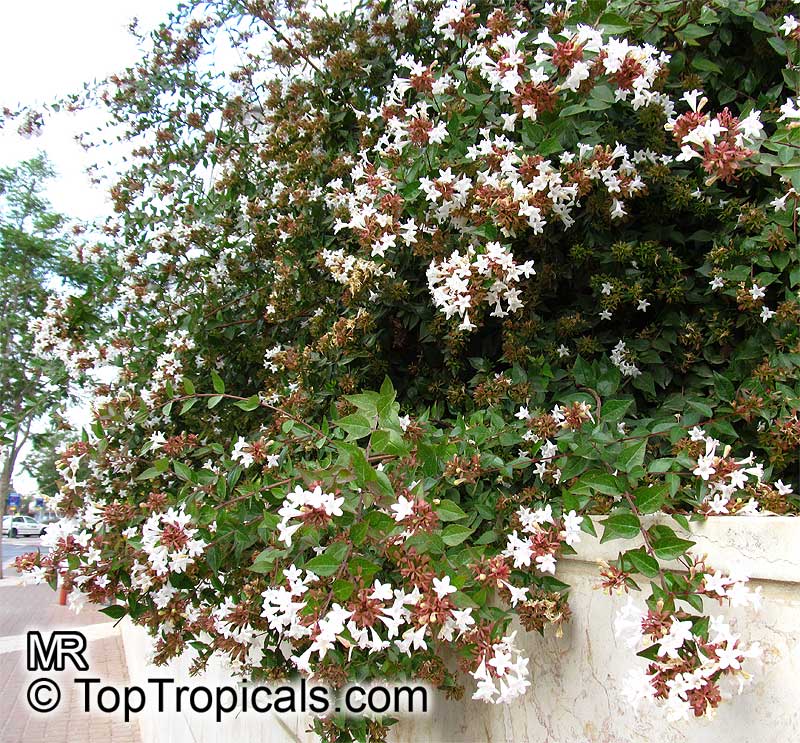
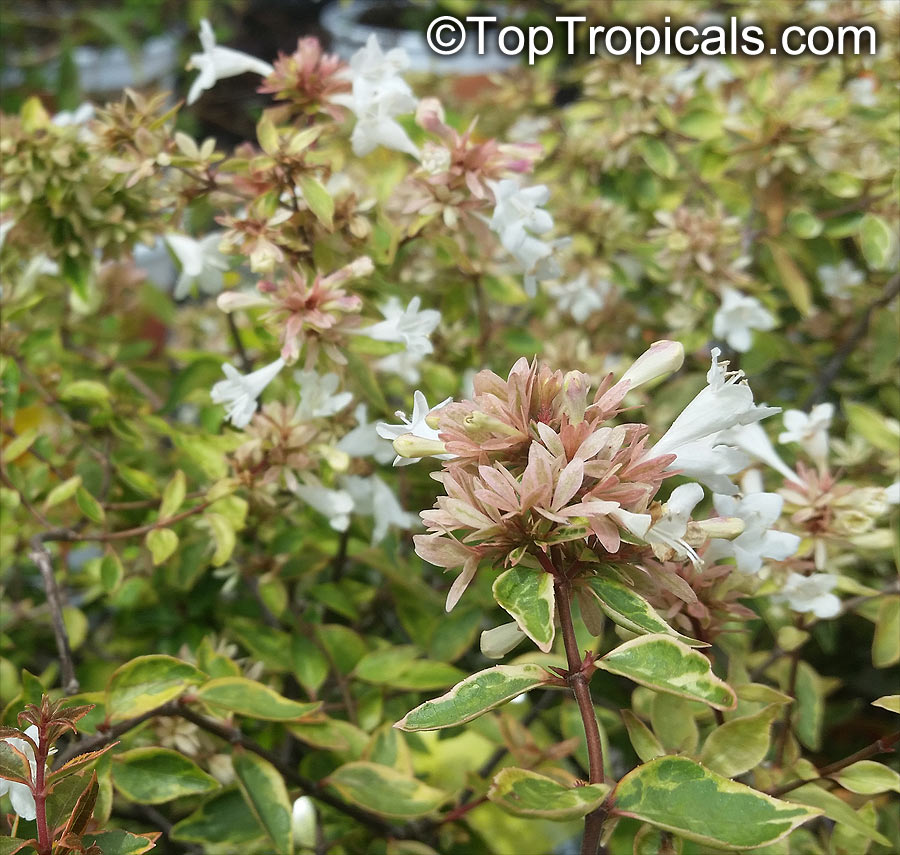
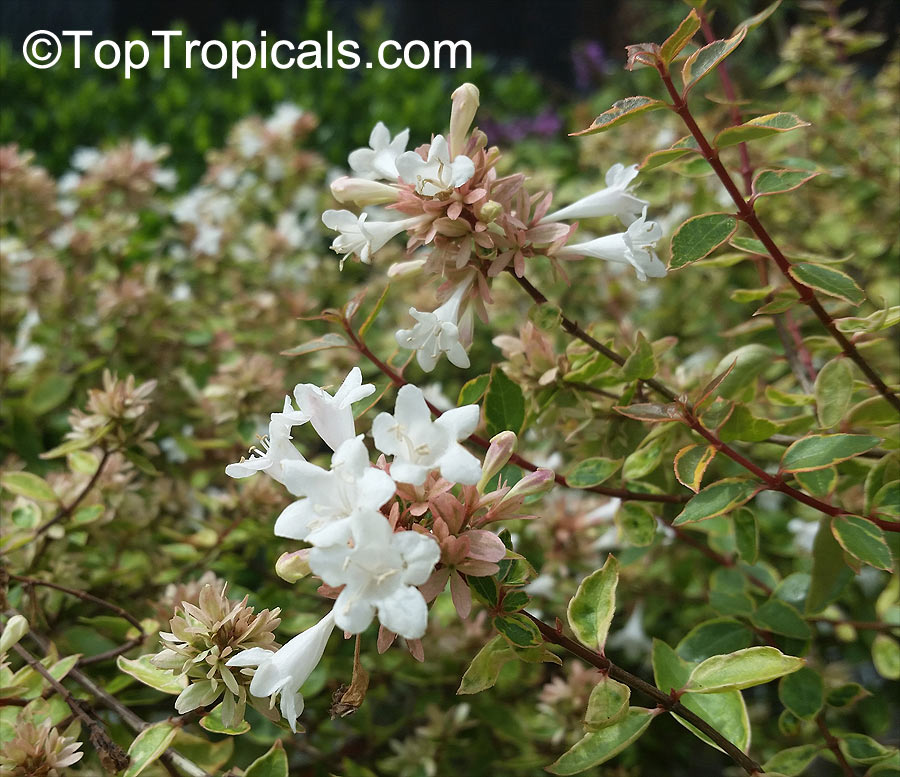
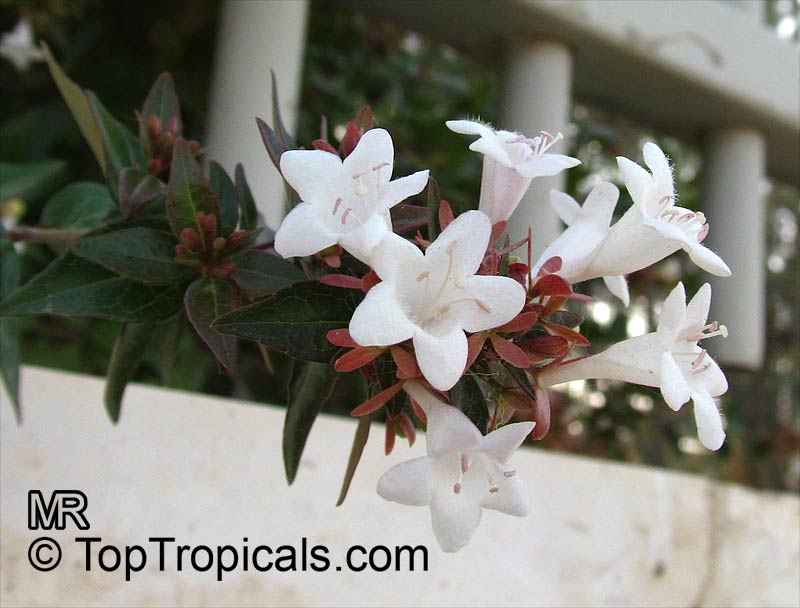
Botanical name: Abelia grandiflora
Common name: Glossy Abelia
Family: Caprifoliaceae
Origin: China
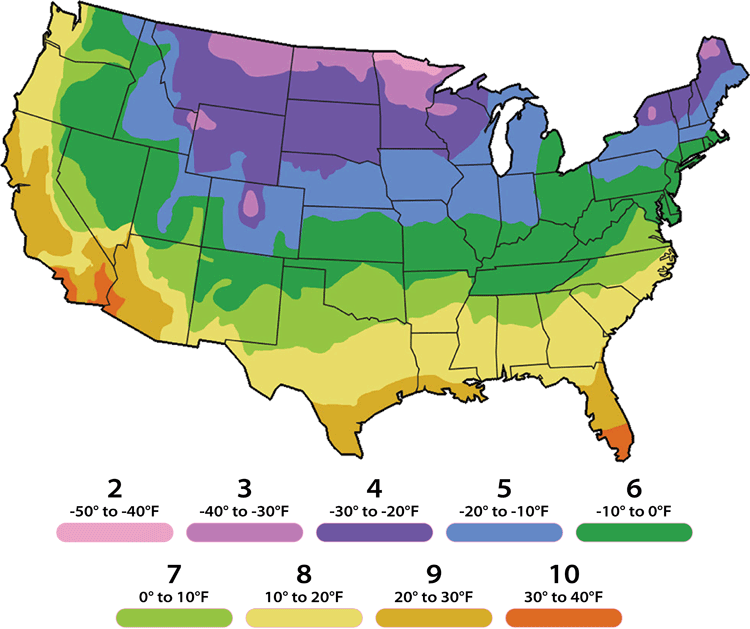
USDA Zone: 8-9


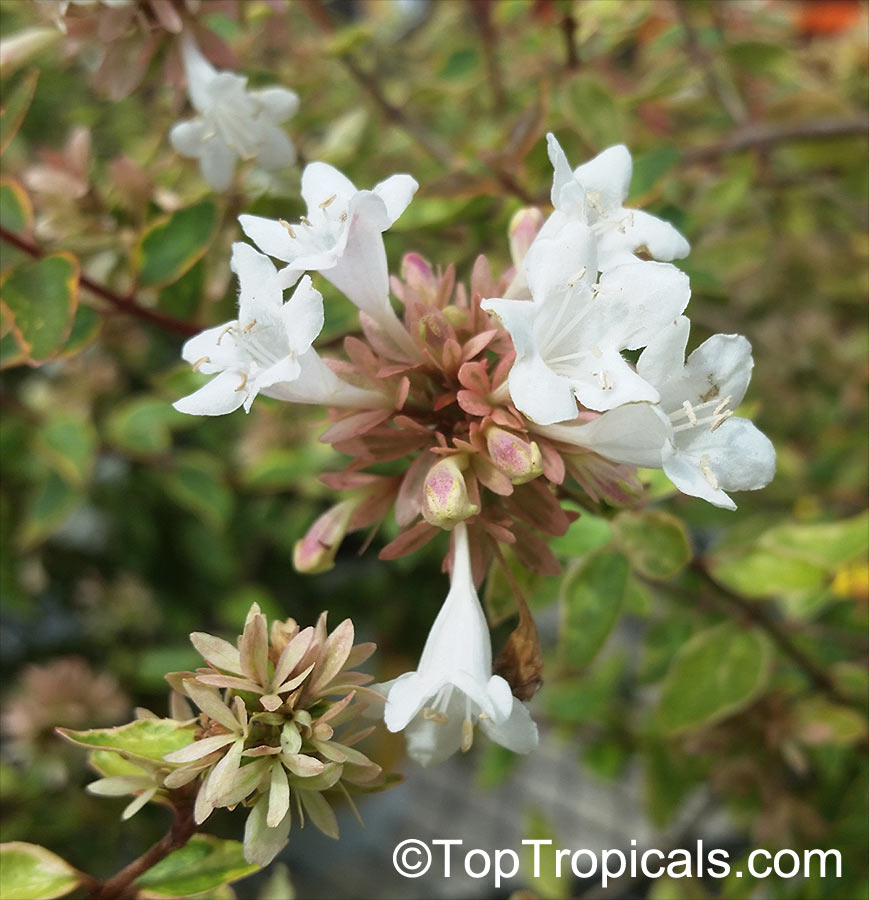
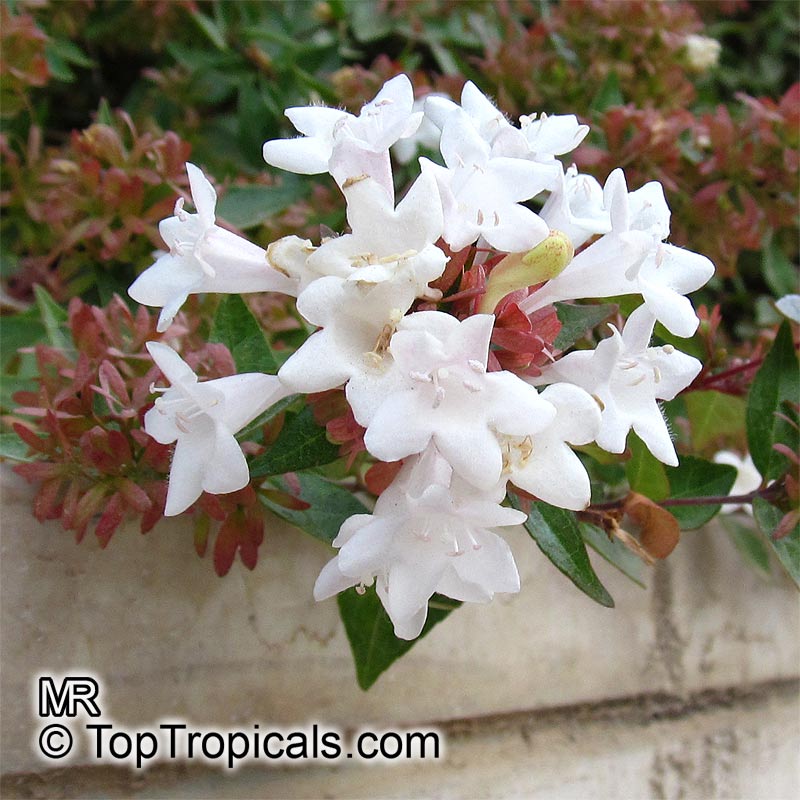
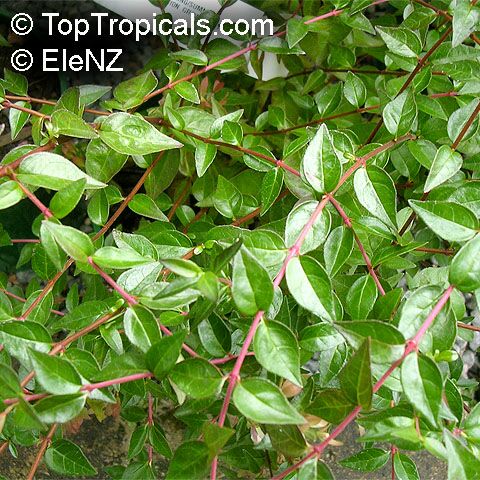
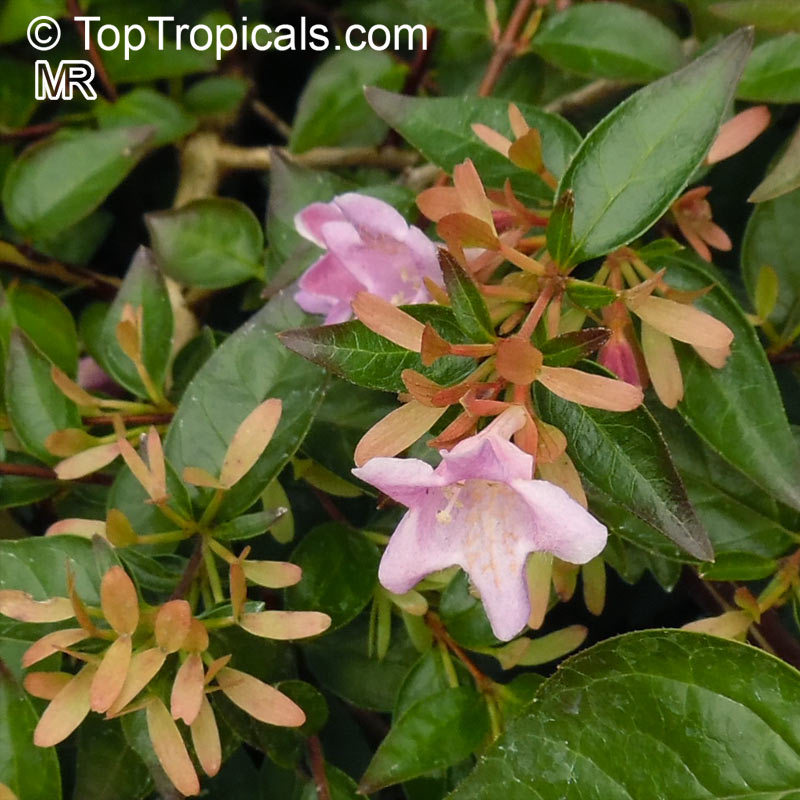
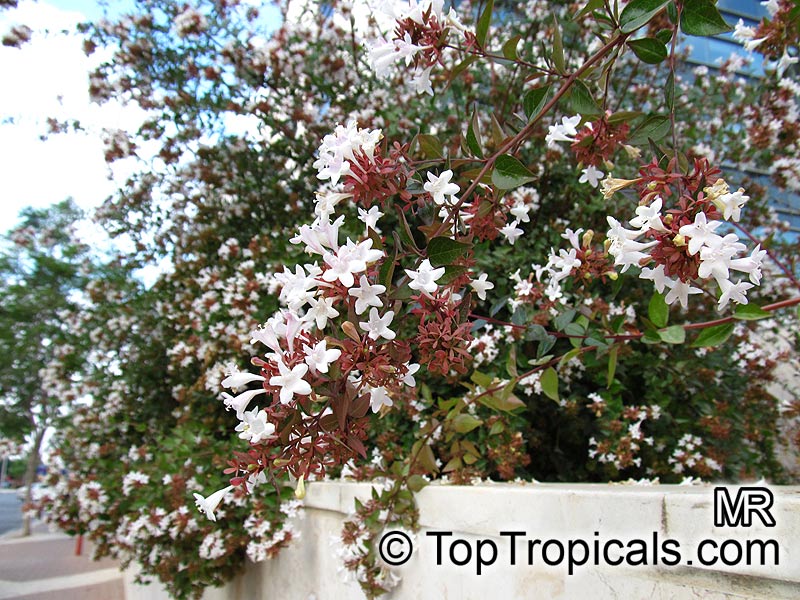
Abelia is a popular evergreen or semi-evergreen shrub with a rounded, fountain-like growth habit. It is fast-growing, growing up to 4-8 feet tall and 4-6 feet wide. Its leaves are fine-textured, glossy, oval, and dark green, usually 2 inches long, and the new growth has a bronze color. Abelia produces small, white and pink tubular flowers in clusters at the end of its stems, from summer to fall. The flowers are barely one inch long, but they are slightly fragrant - which attracts hummingbirds and butterflies.
This shrub is a great choice for planting near a pool, as it loves both full sun and semi-shade exposure. When watering it, allow the soil to dry out between waterings. It is mostly pest- and disease-free. Mature Abelias can withstand temperatures as low as 30 degrees Fahrenheit for a limited time.
Hyperacanthus amoenus is another popular evergreen shrub. It has pinkish red flowers with off-white petals that are fragrant, followed by green fruits that turn brown when ripe. This shrub is easy to grow, needing only full sun and regular watering - though it should be in USDA Zones 8 -9 for full protection from cold weather. For areas with colder climates, it is recommended to keep the plant in a pot and move it indoors in winter. In such a case, extra care should be taken to make sure it has enough water, light and fertilizer. Pruning may also be necessary to ensure the plant remains within the size desired.
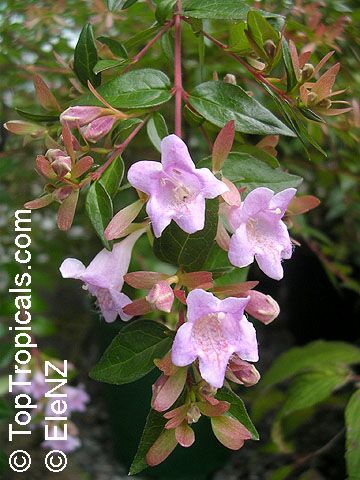
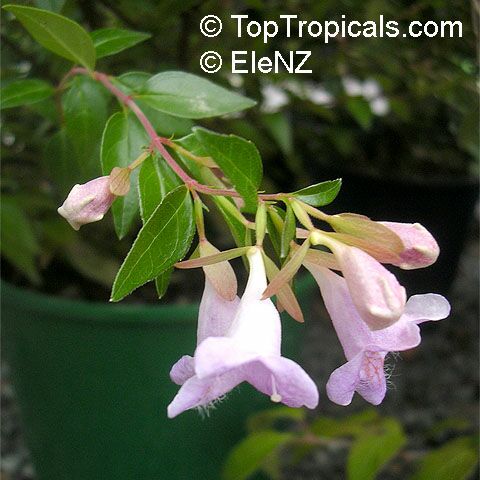
Botanical name: Abelmoschus manihot
Common names: South Sea Salad Tree, Bele tree, Sunset Muskmallow, Sunset Hibiscus, Hibiscus Manihot
Family: Malvaceae
Origin: Southeast Asia
USDA Zone: 8-10
Cold tolerance: 20°F


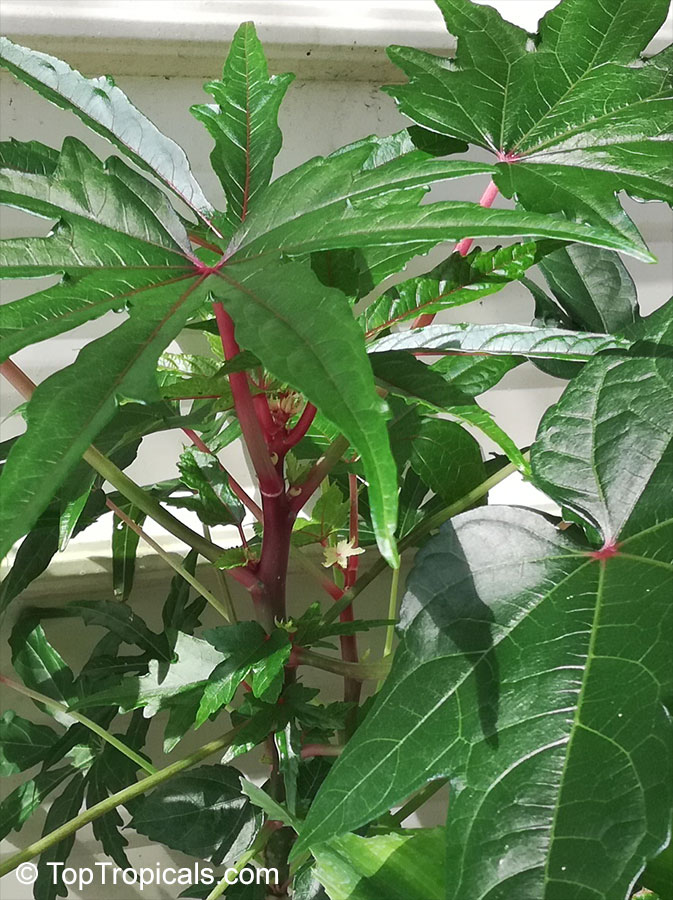
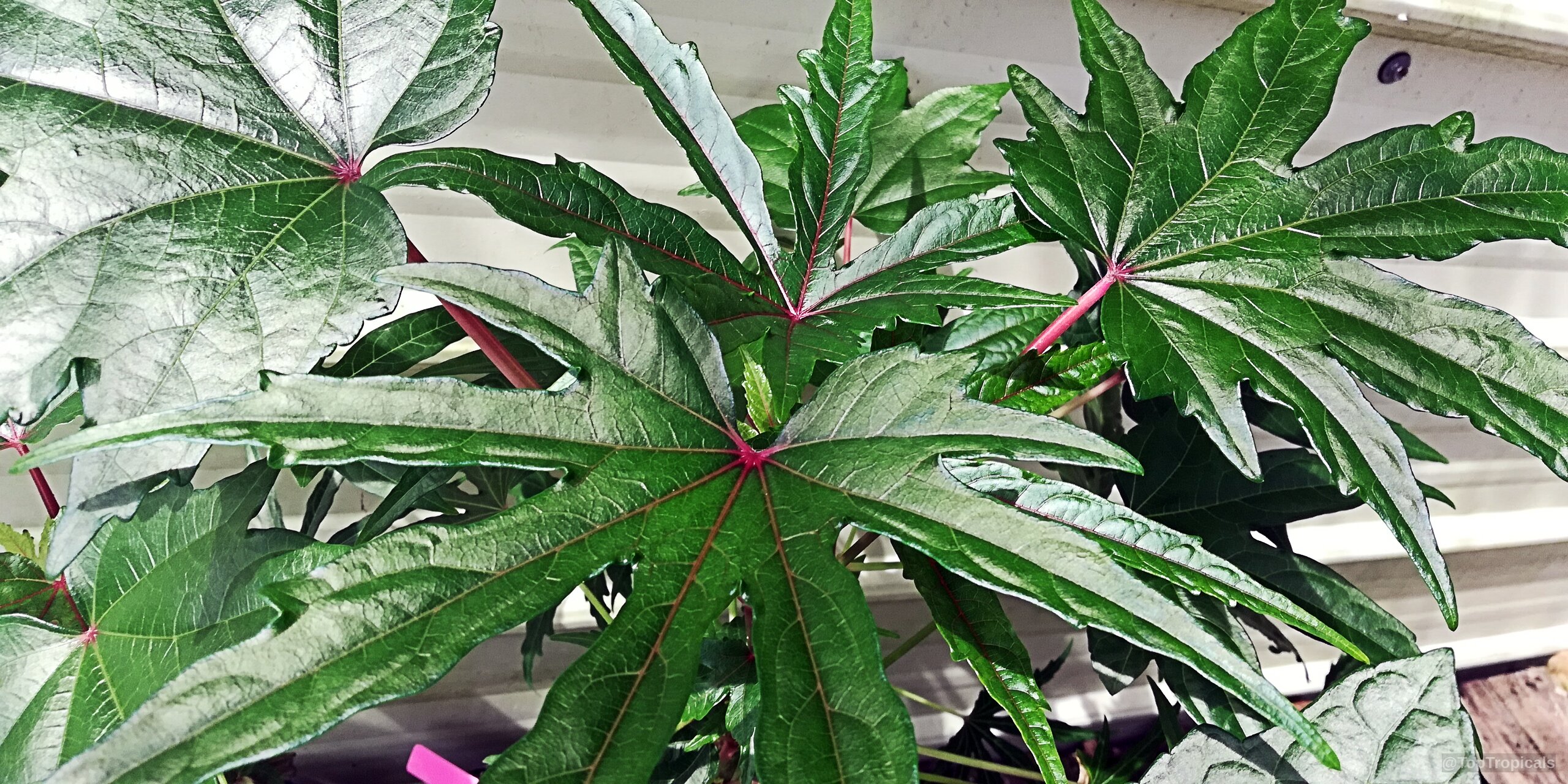
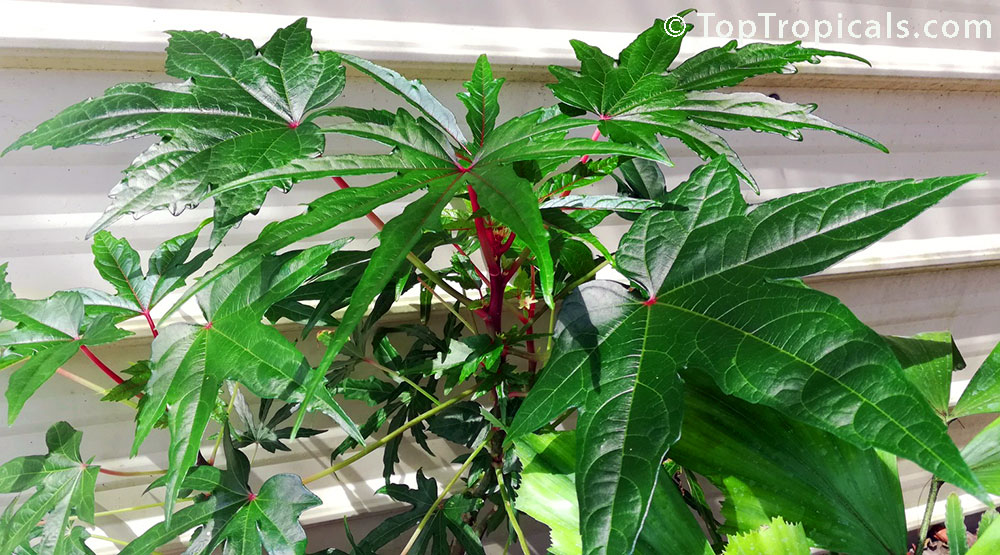
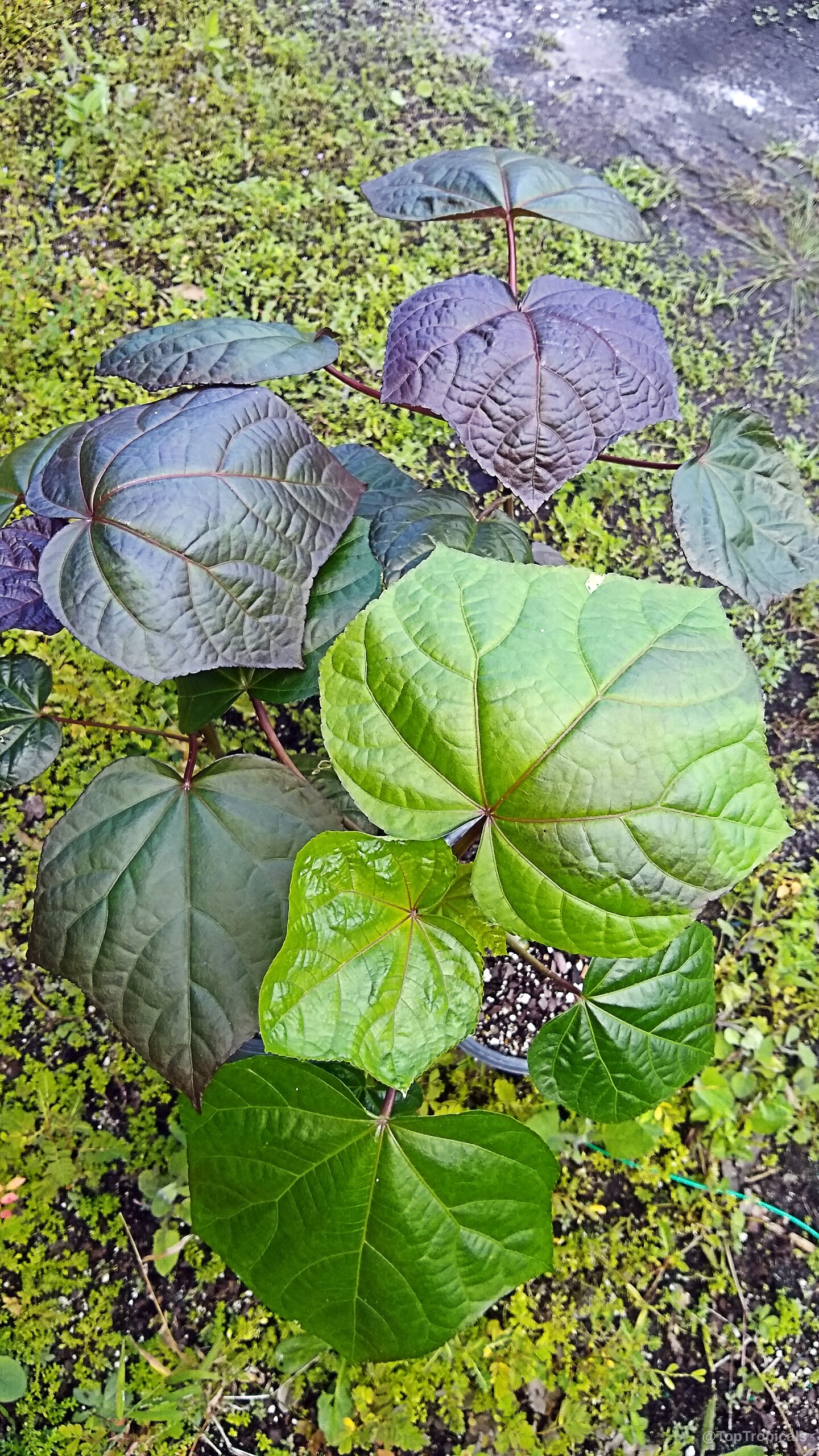
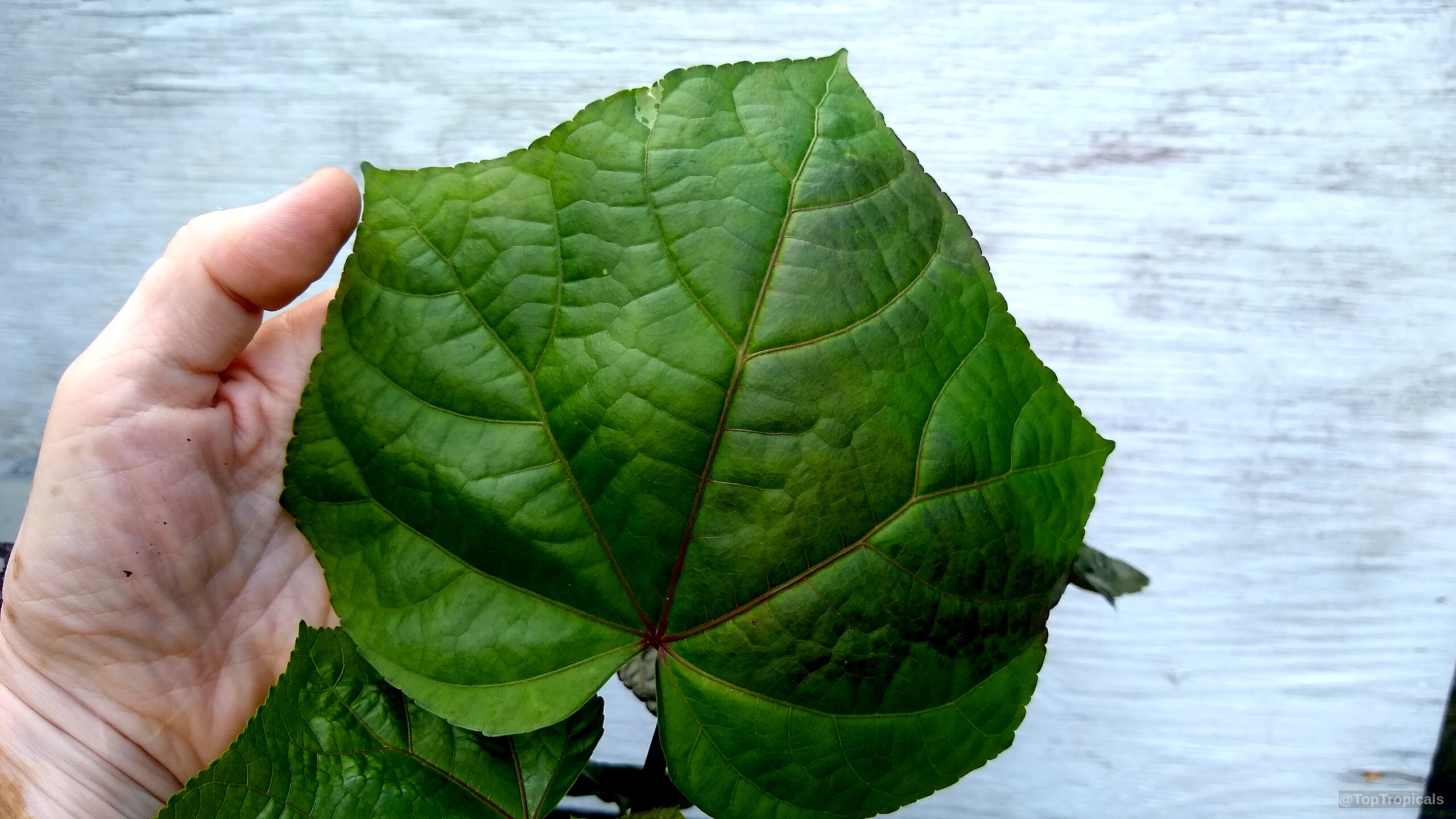
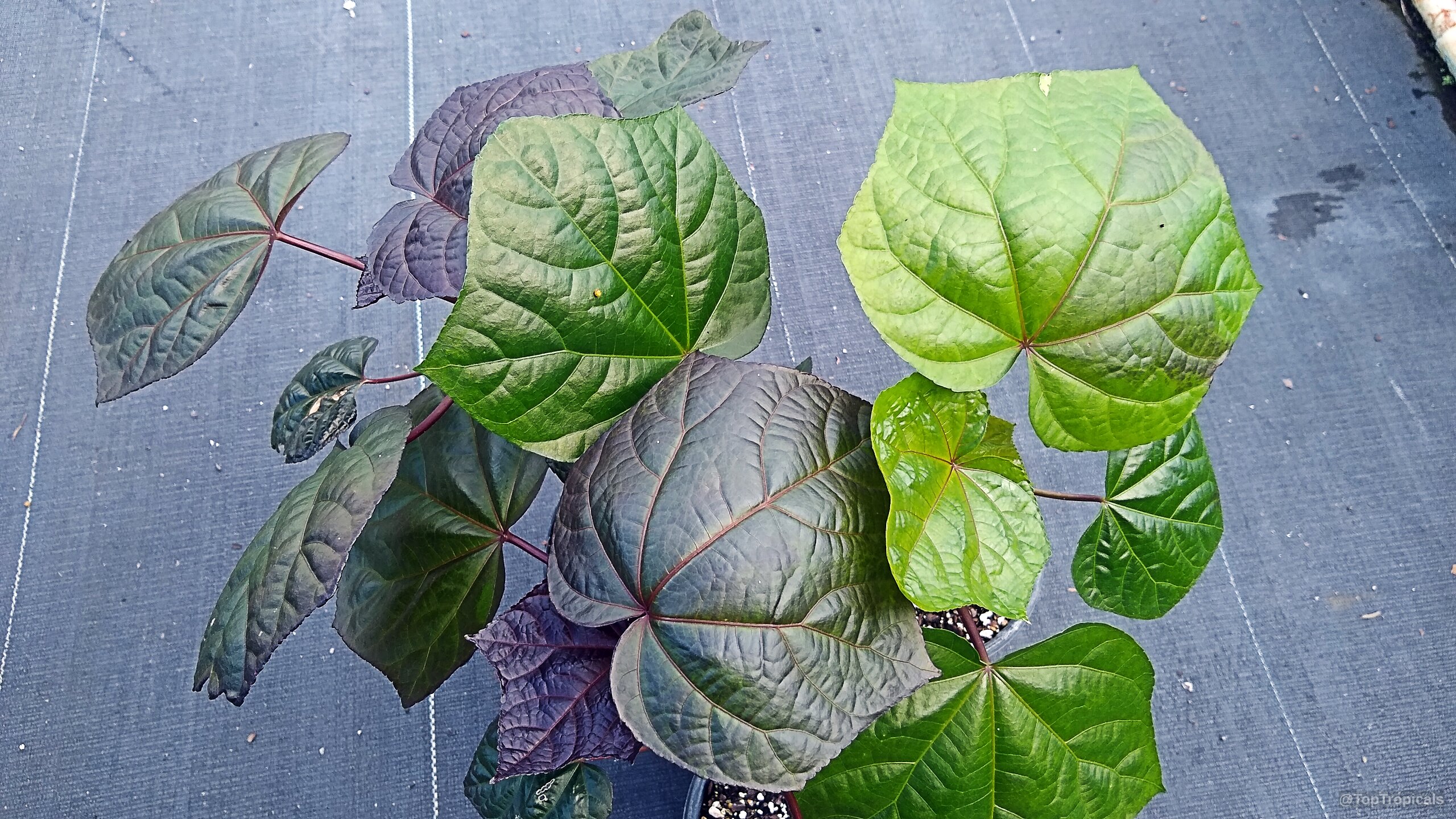
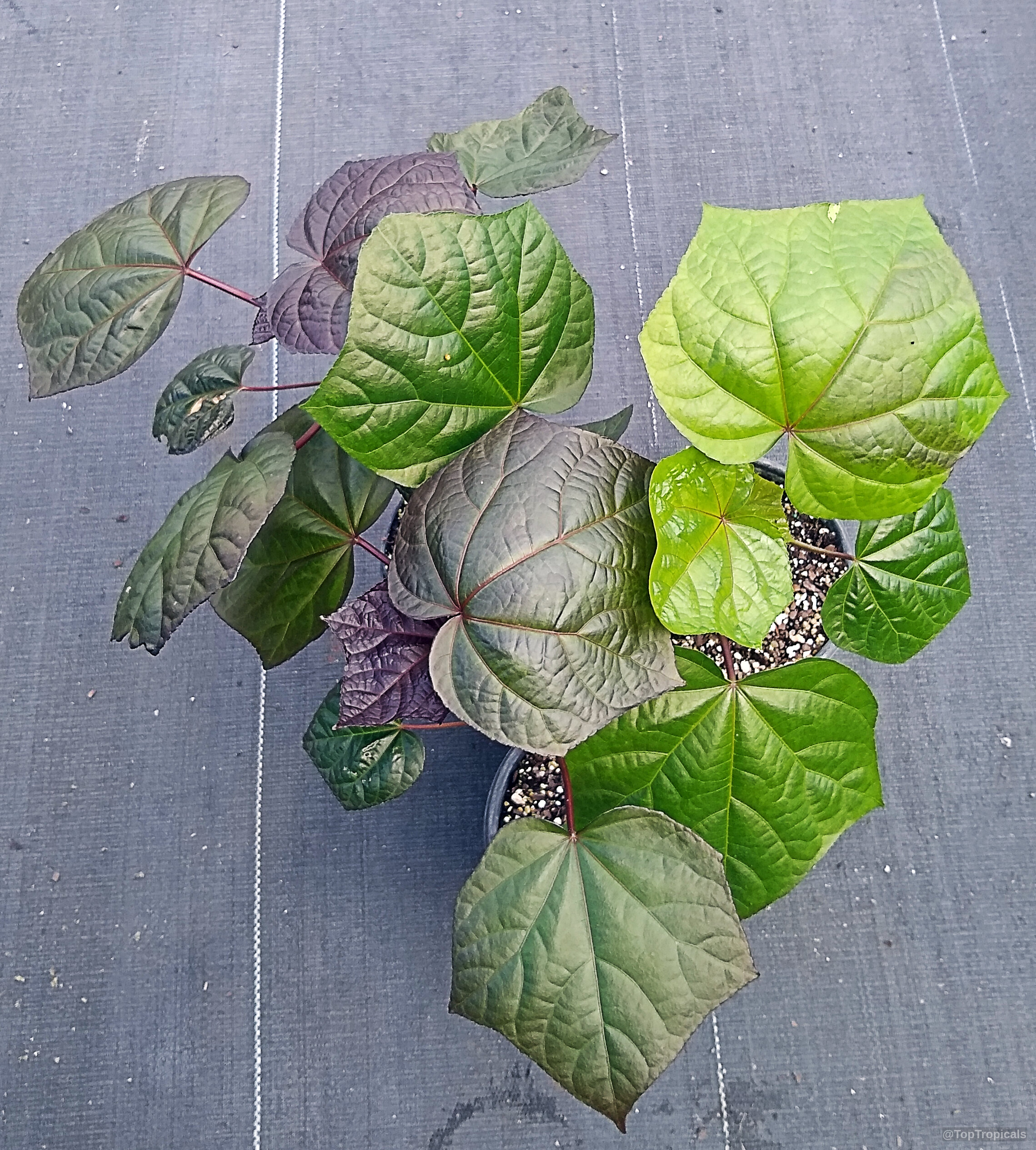
Its palmate leaves are highly dissected with five to nine deep lobes. The largest, widest leaves form at the base of the plant, where there may be some small side branches. The blooms (4-5" in diameter) are pale yellow with a dark maroon to purple center eye, and emerge from the terminal end of a central flowering stalk.It is easily propagated from cuttings, easy to cultivate, relatively disease-resistant and even is considered to be of medicinal value. It is widely planted either along borders of gardens or as an intercrop throughout many traditional gardens in the tropics. A nice flowering addition to the vegetable garden.

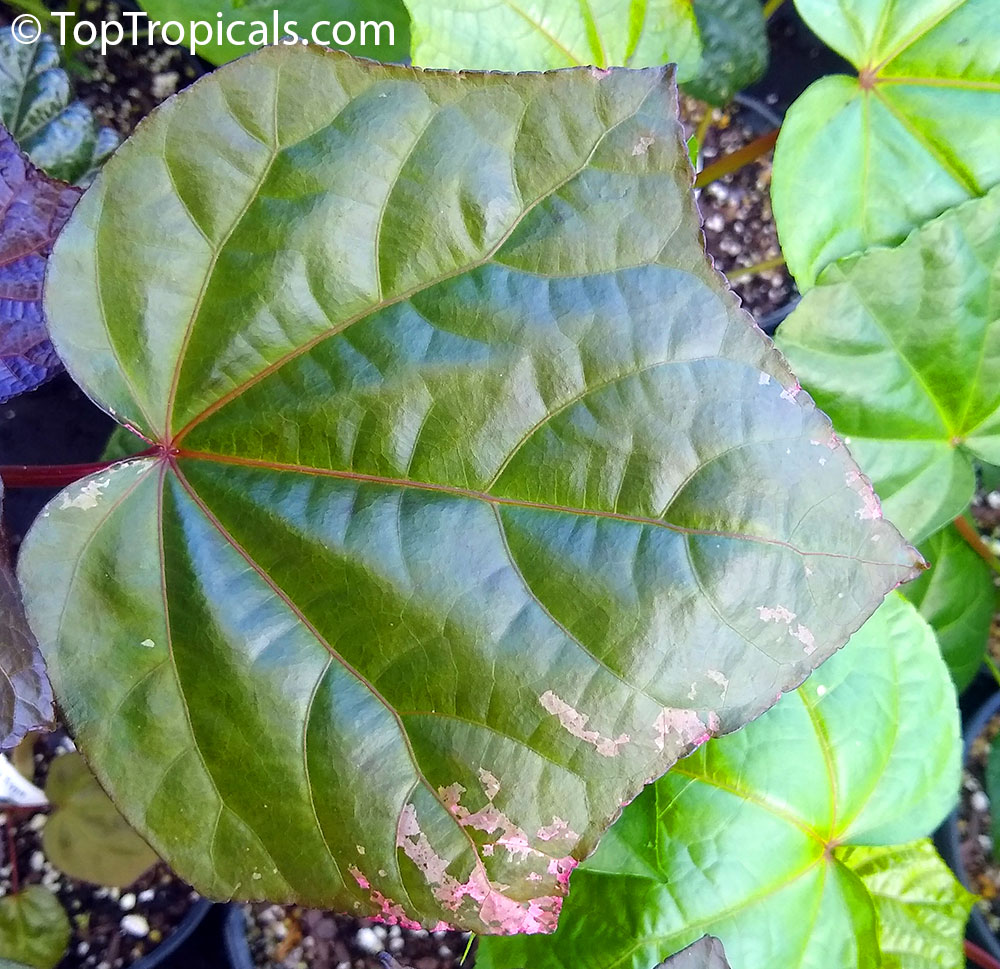
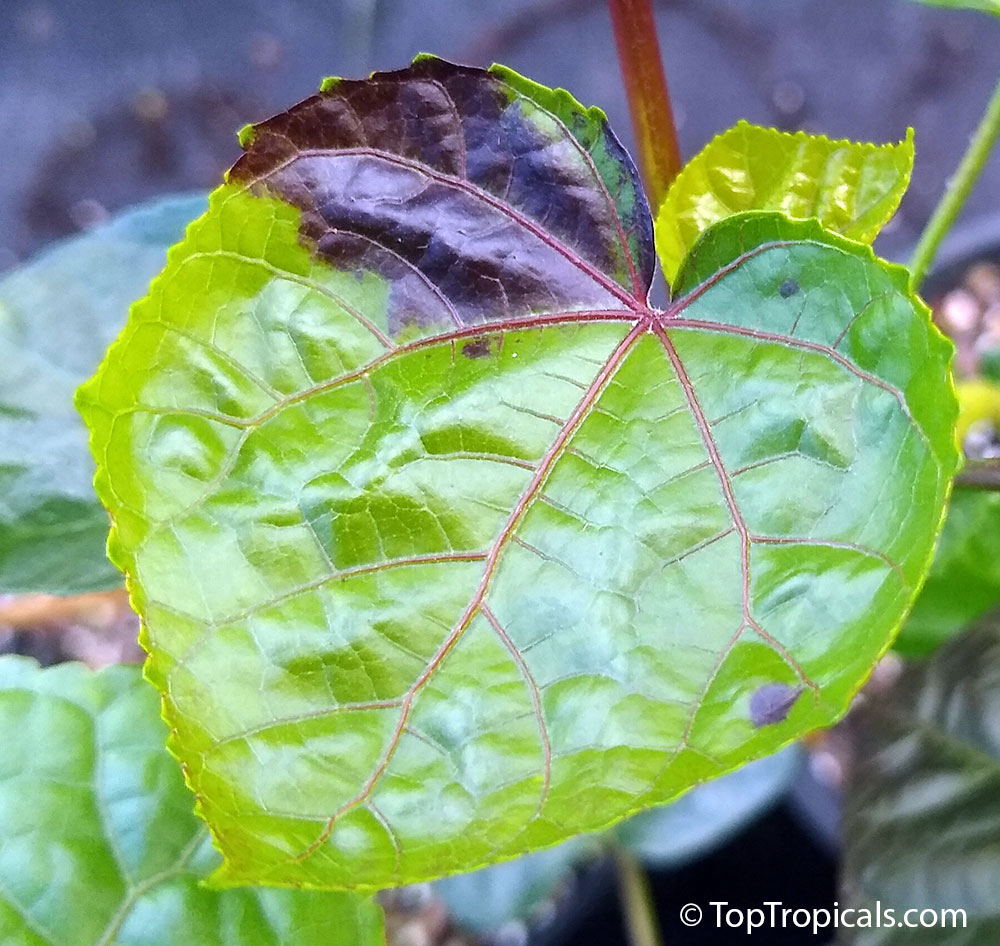
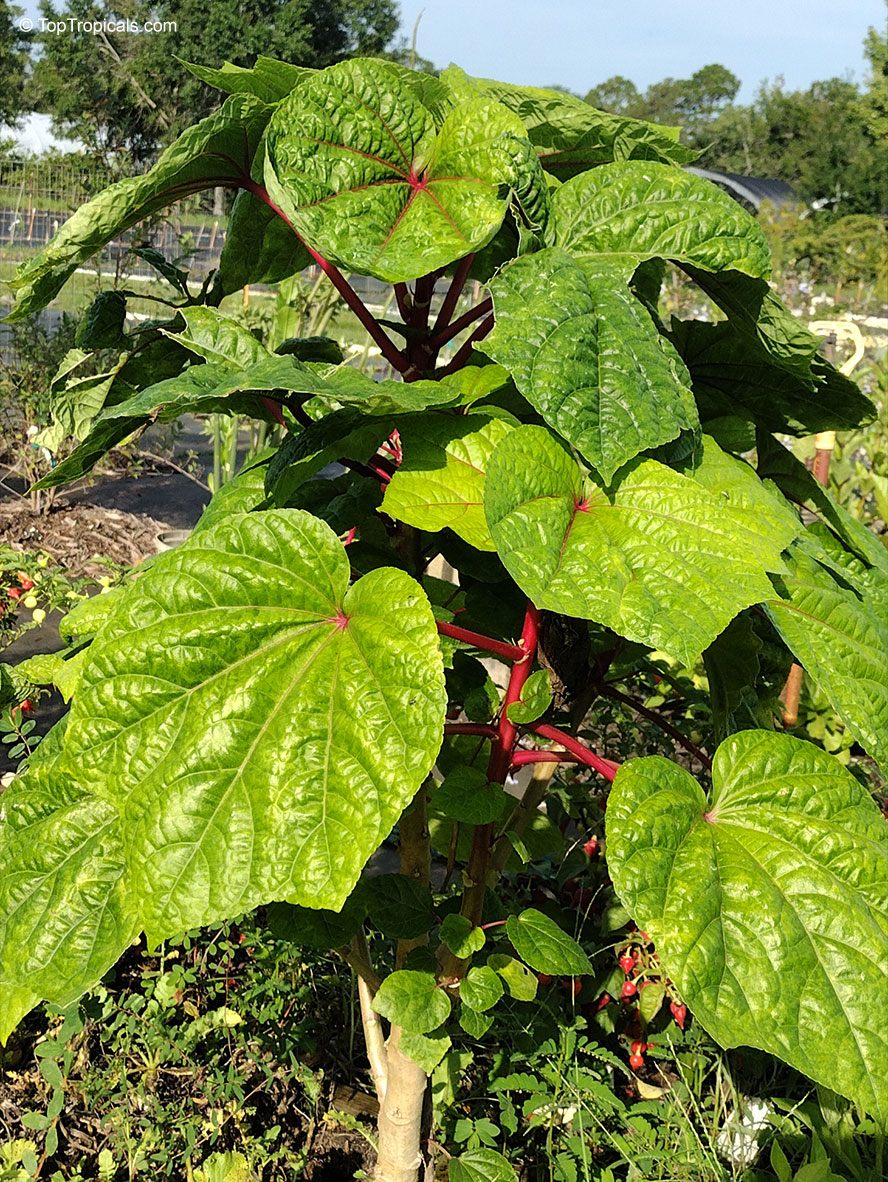

Botanical names: Abutilon megapotamicum, Abutilon vexillarium, Callianthe megapotamica
Common names: Flowering Maple, Trailing Abutilon, Brazilian Bell-flower
Family: Malvaceae
Origin: Brazil, Uruguay
USDA Zone: 9a-10b

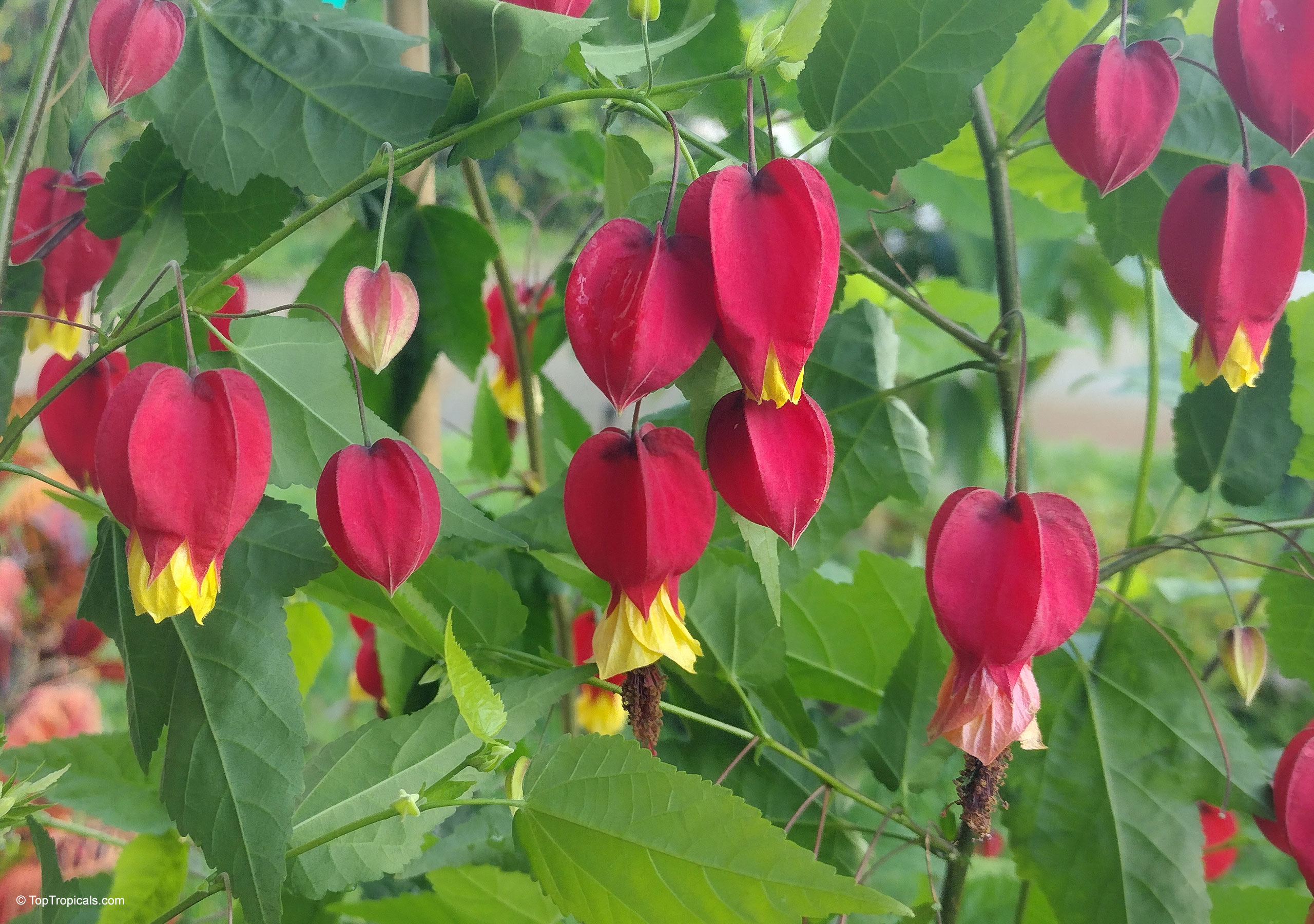
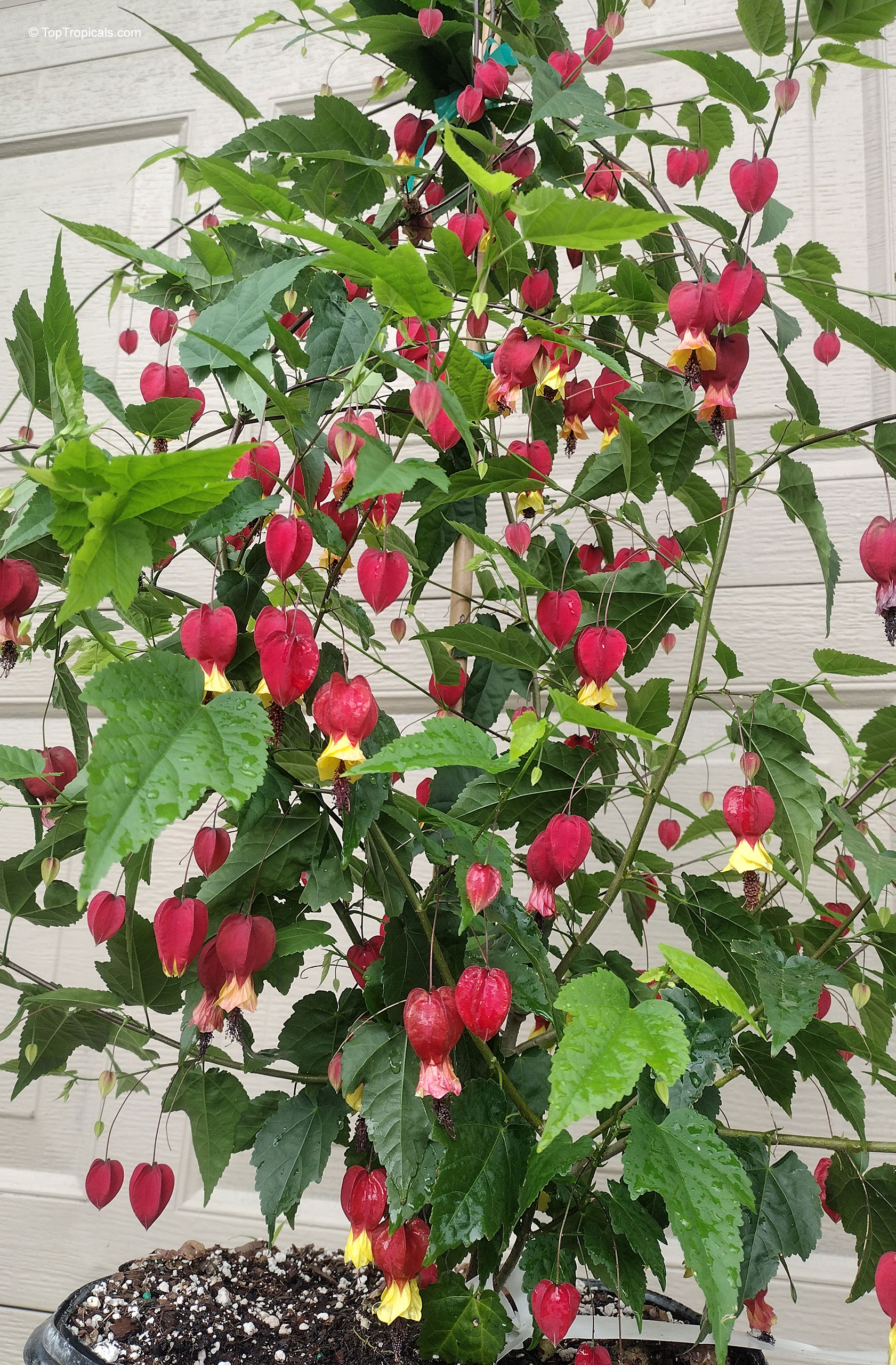
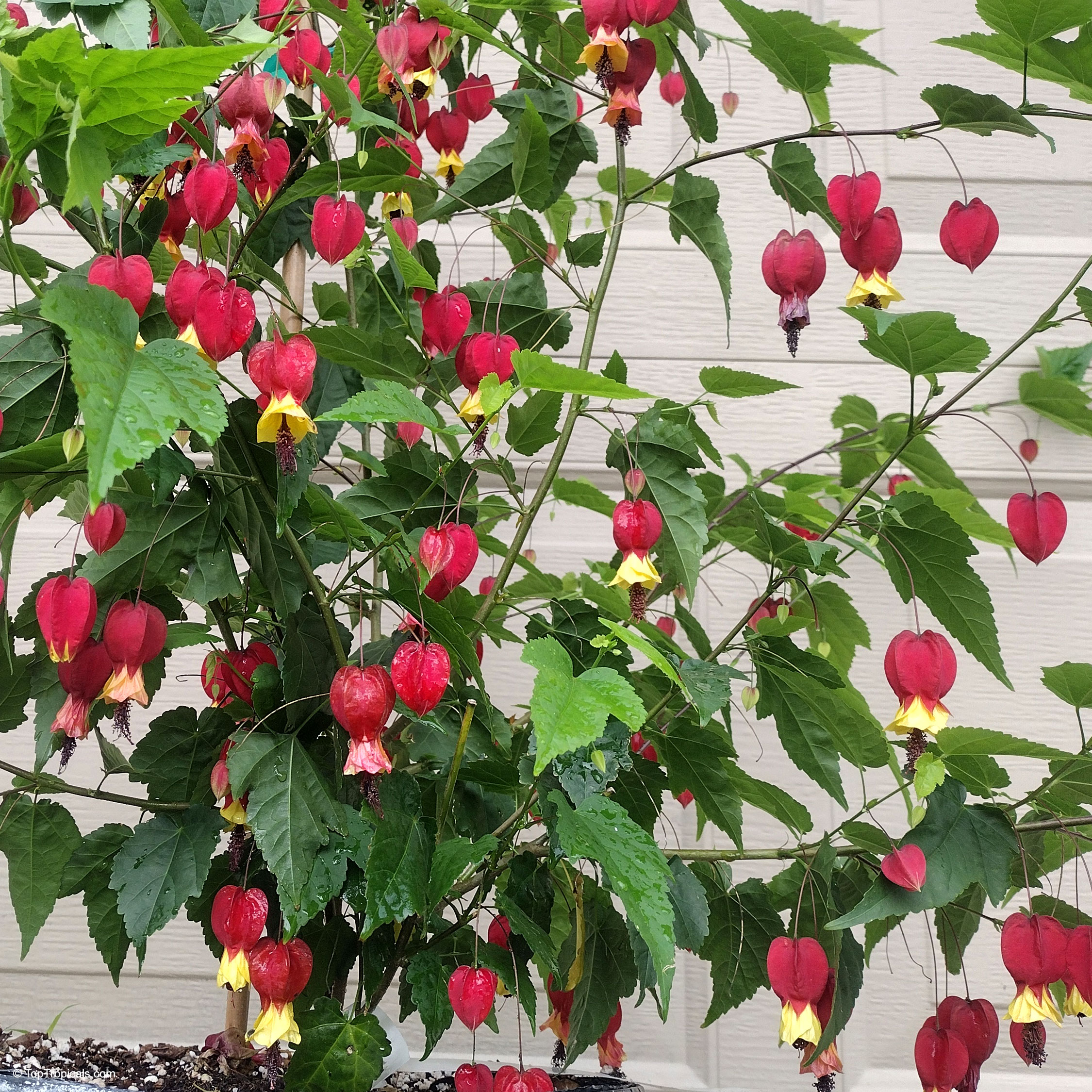
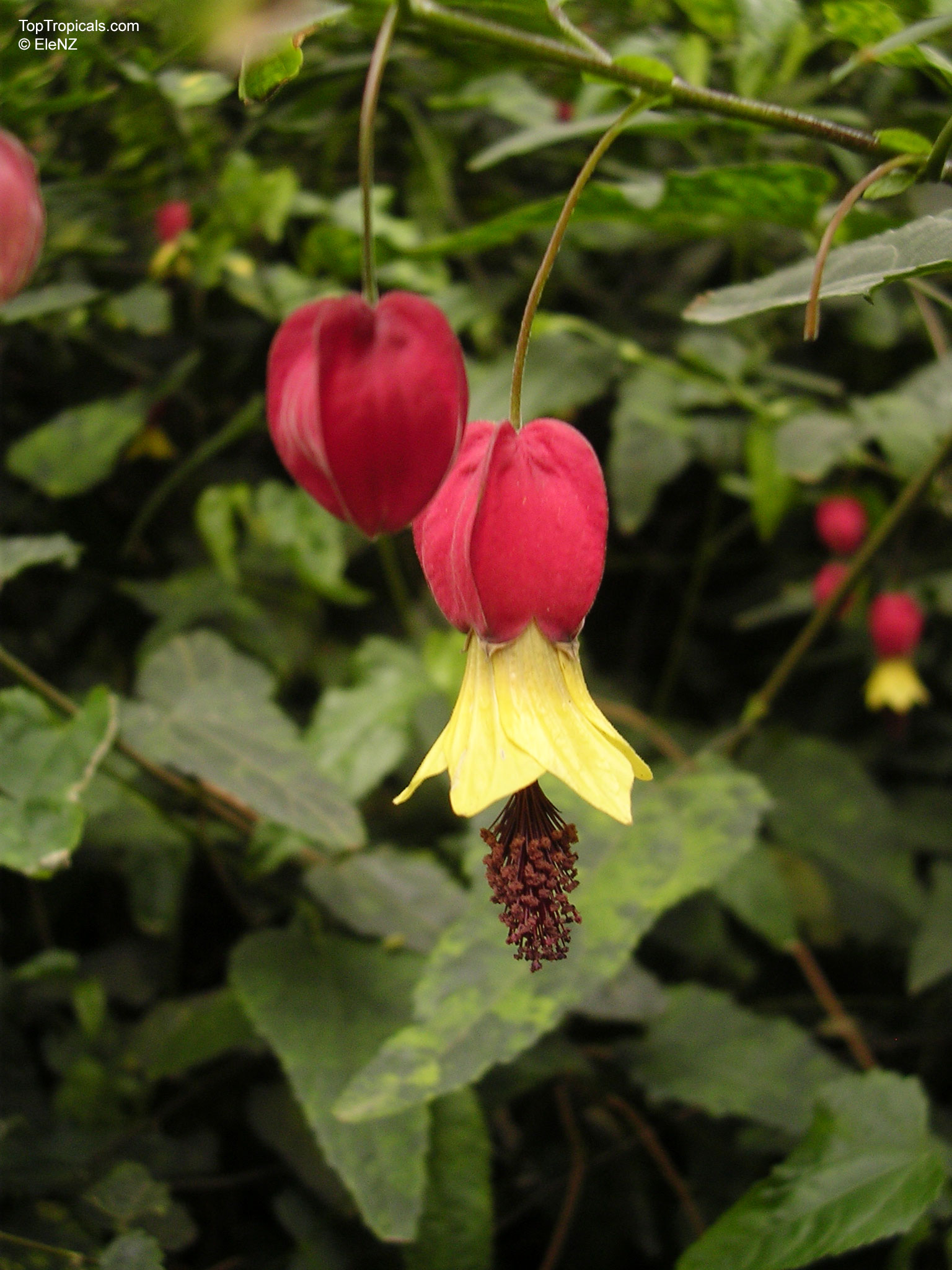
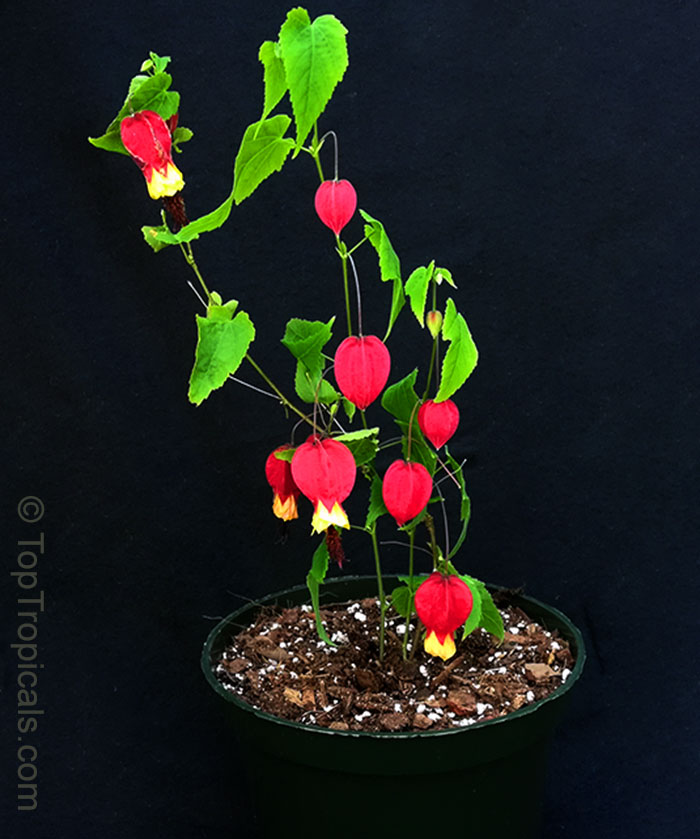
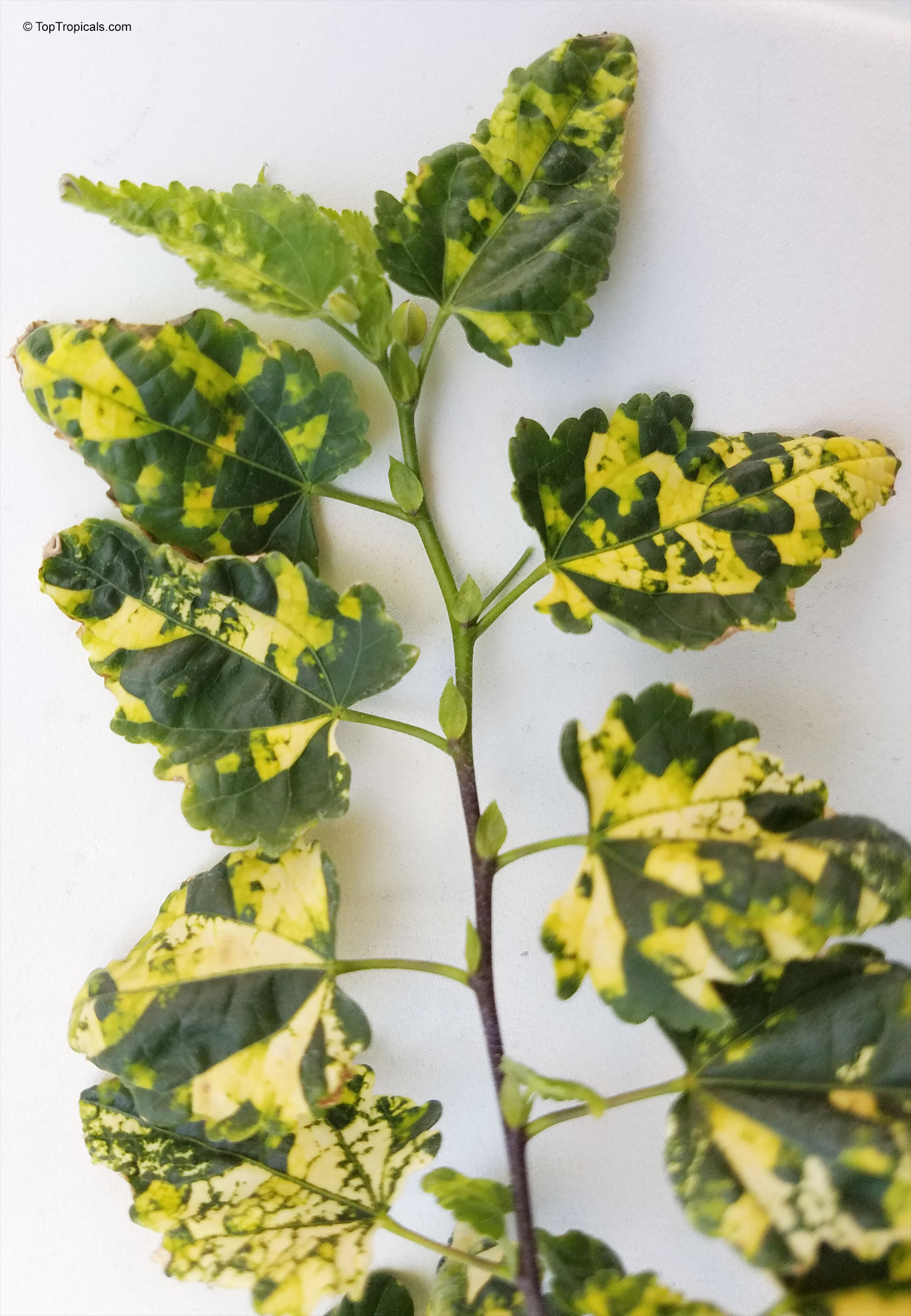
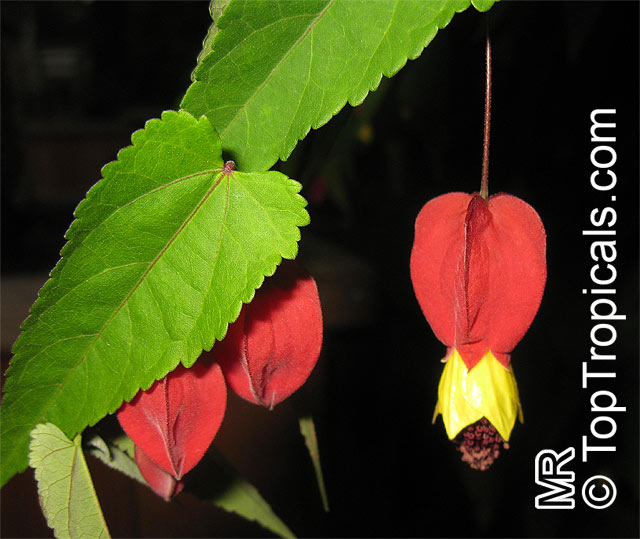
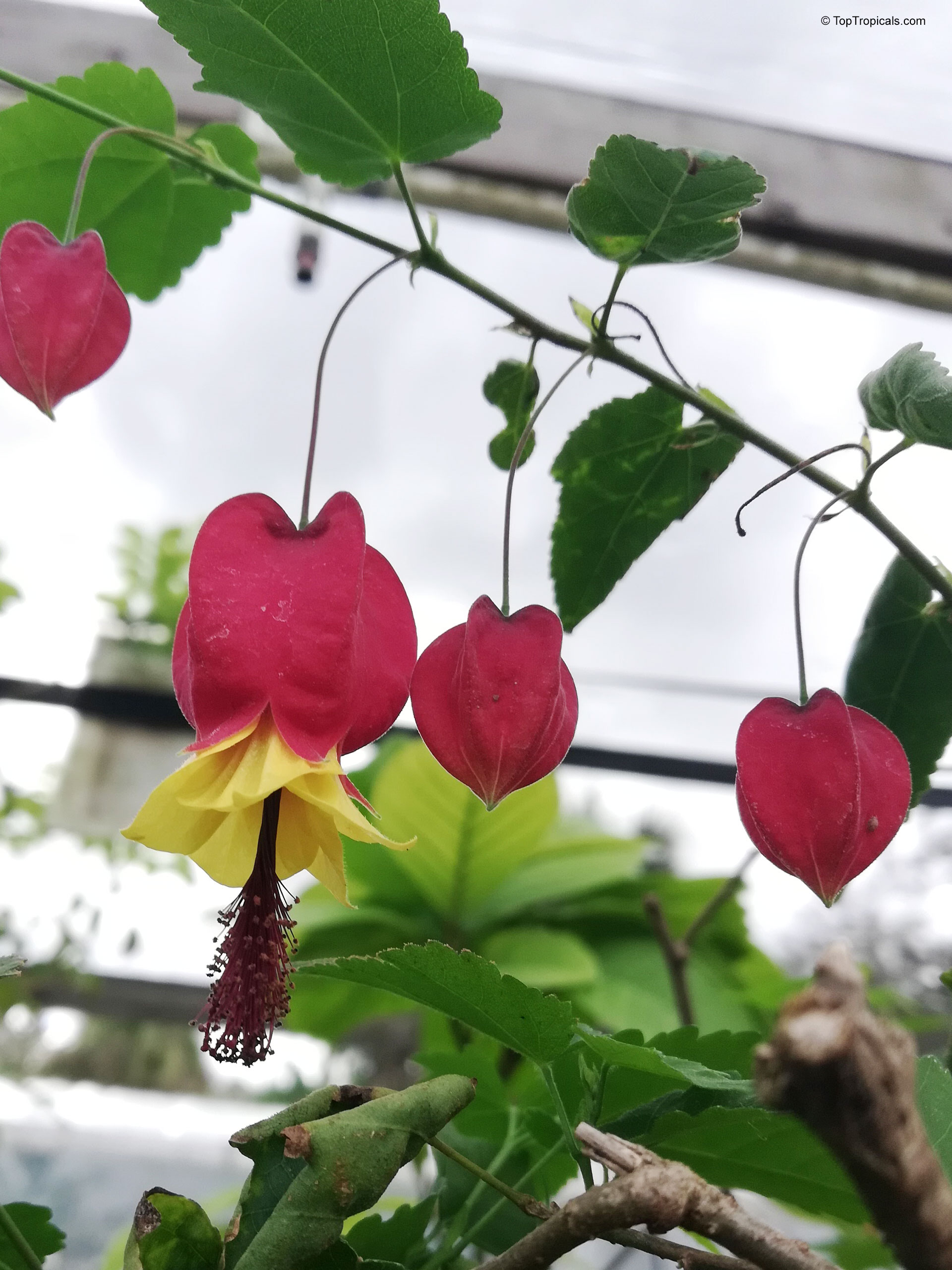
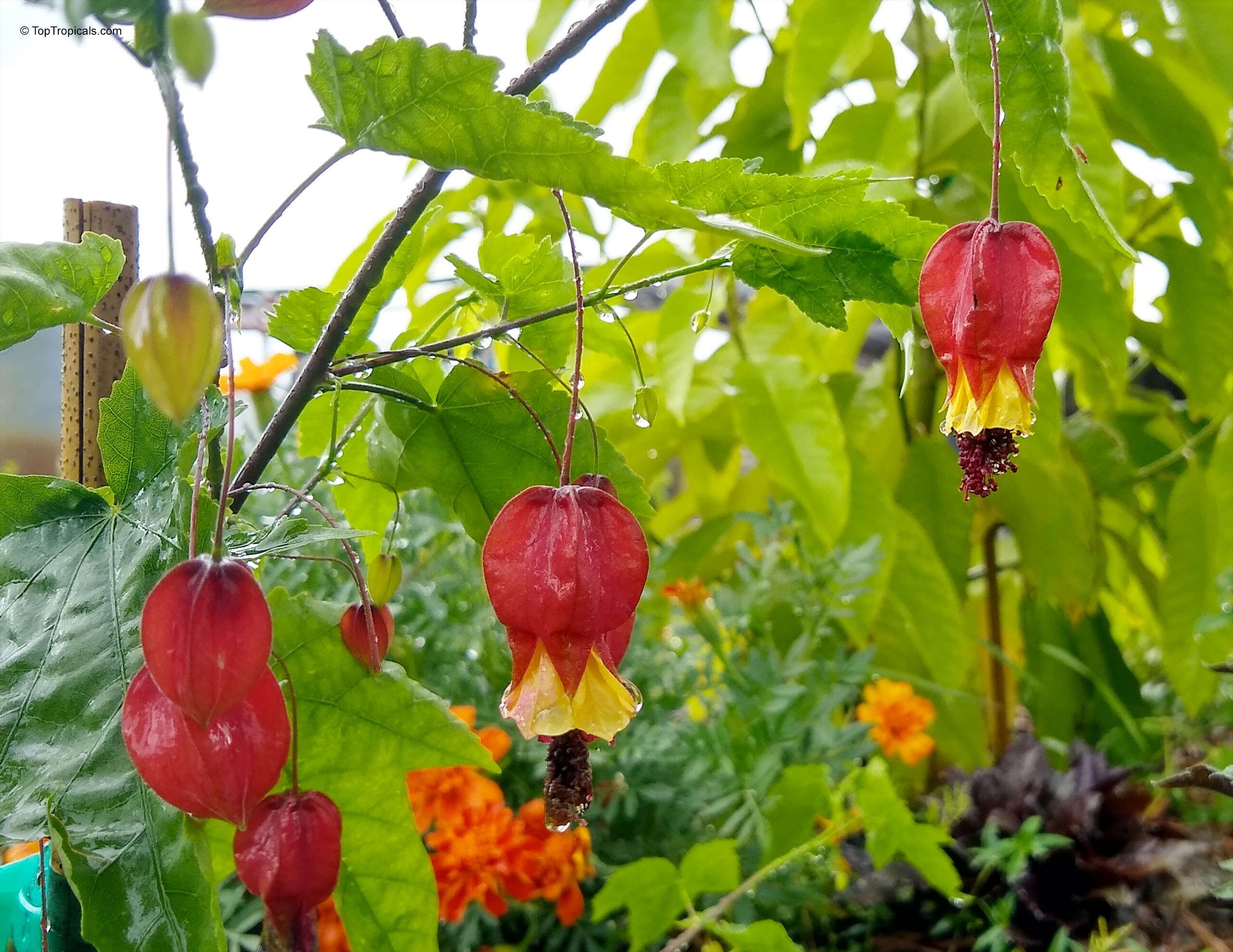
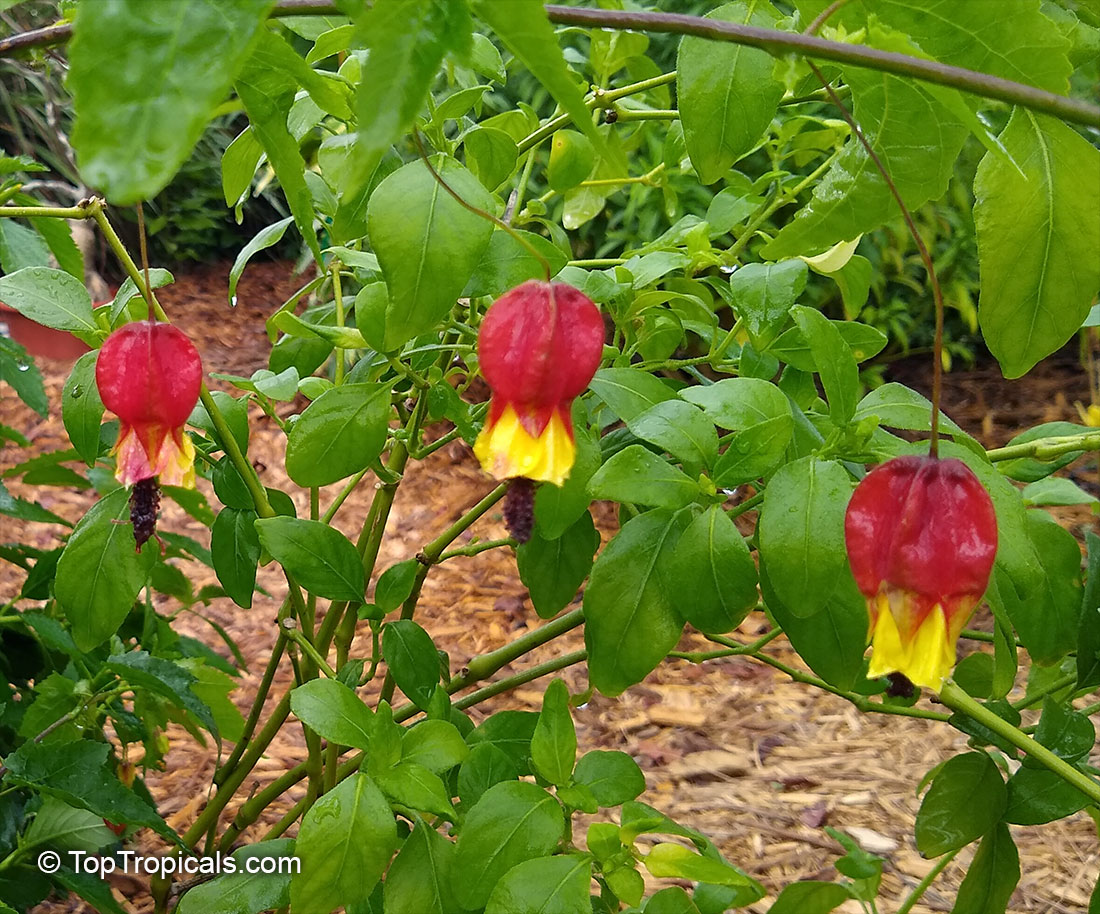
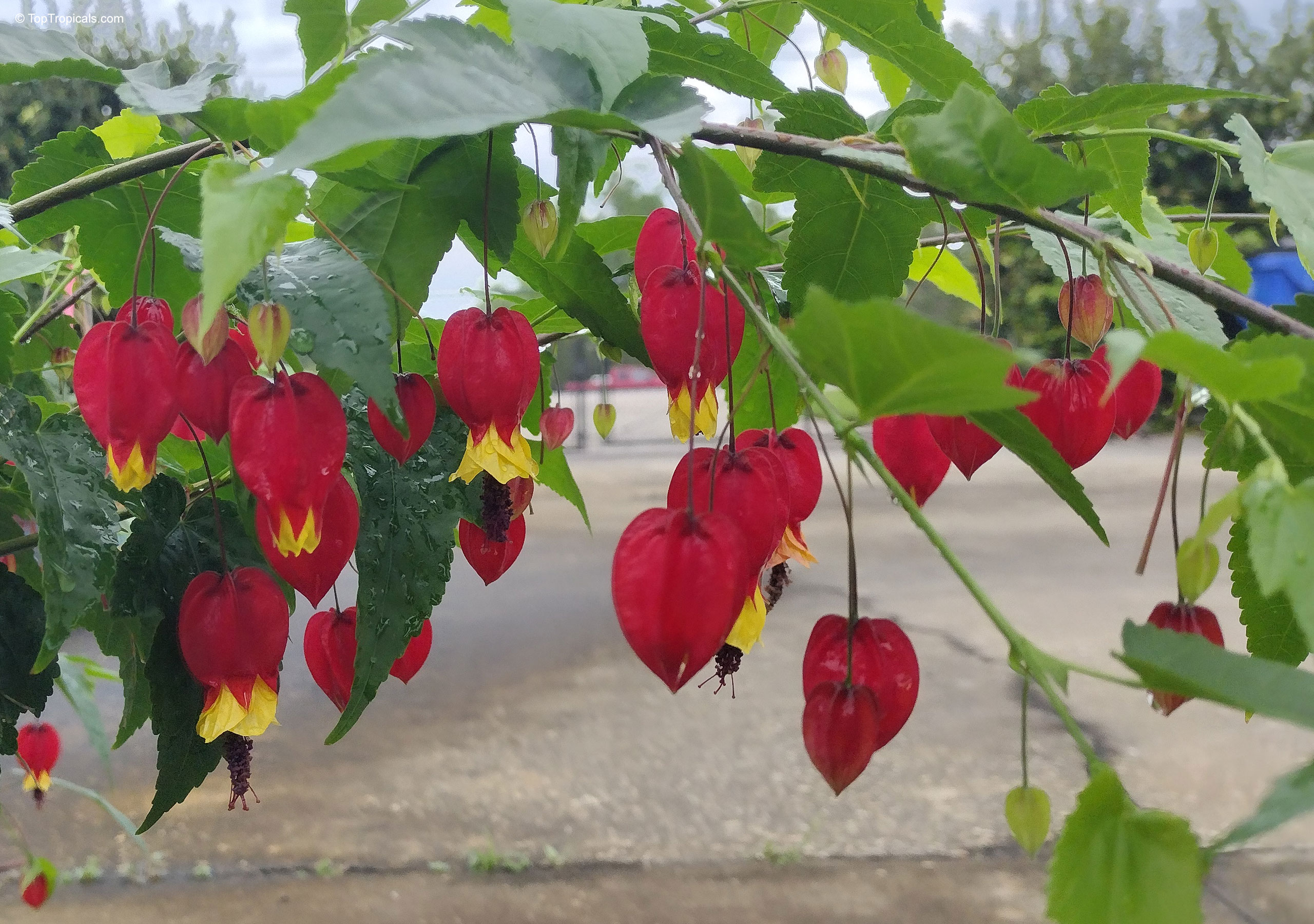
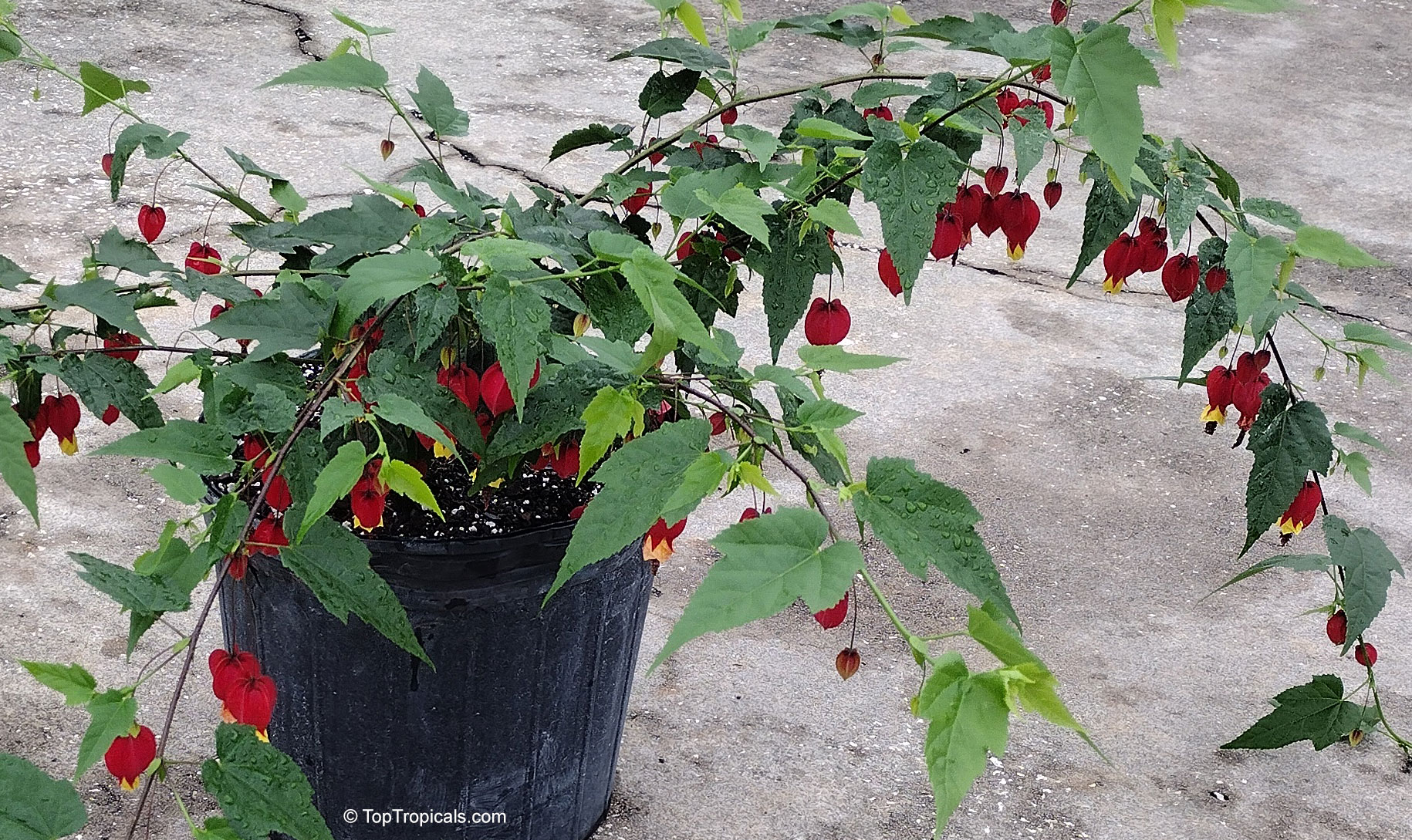
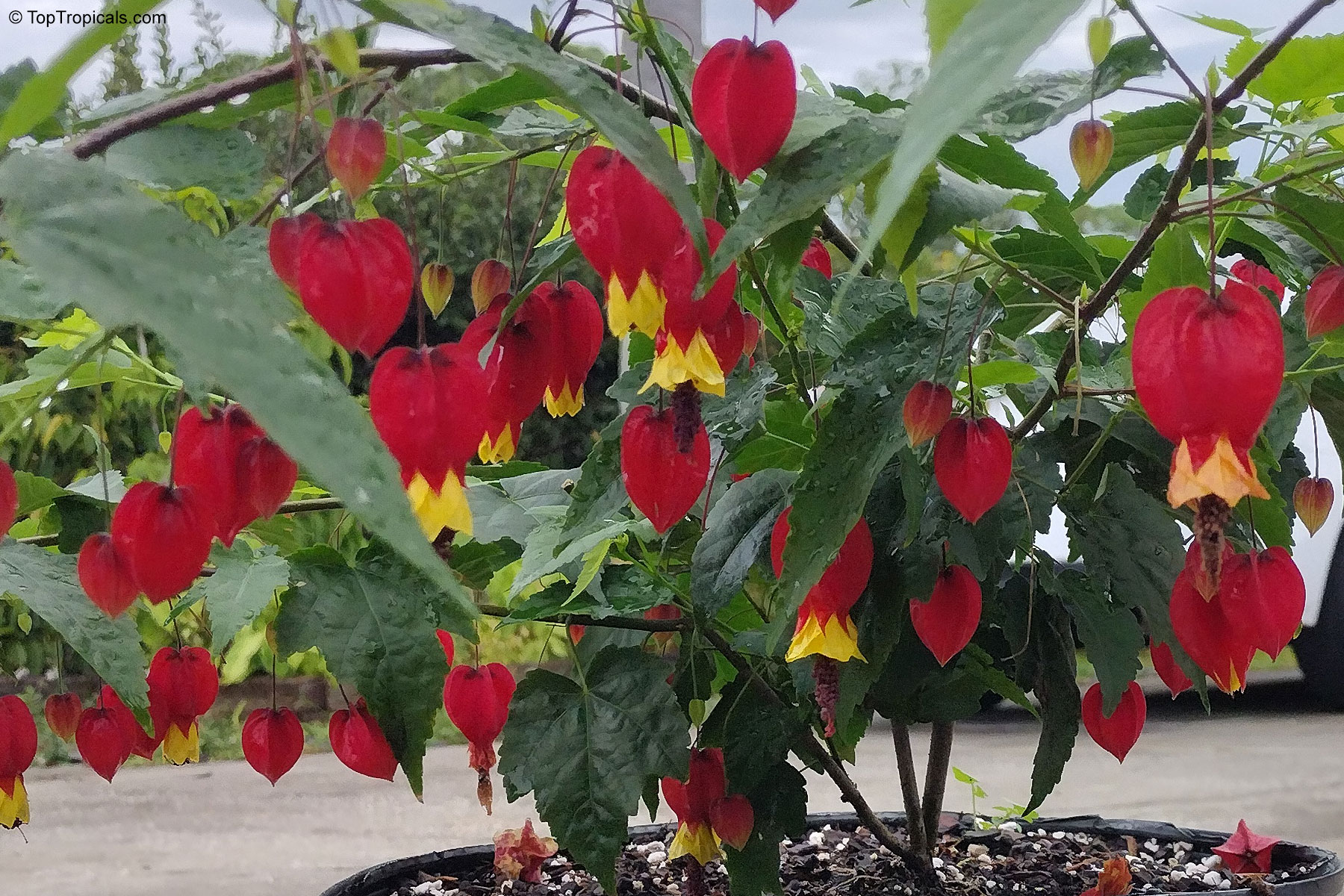
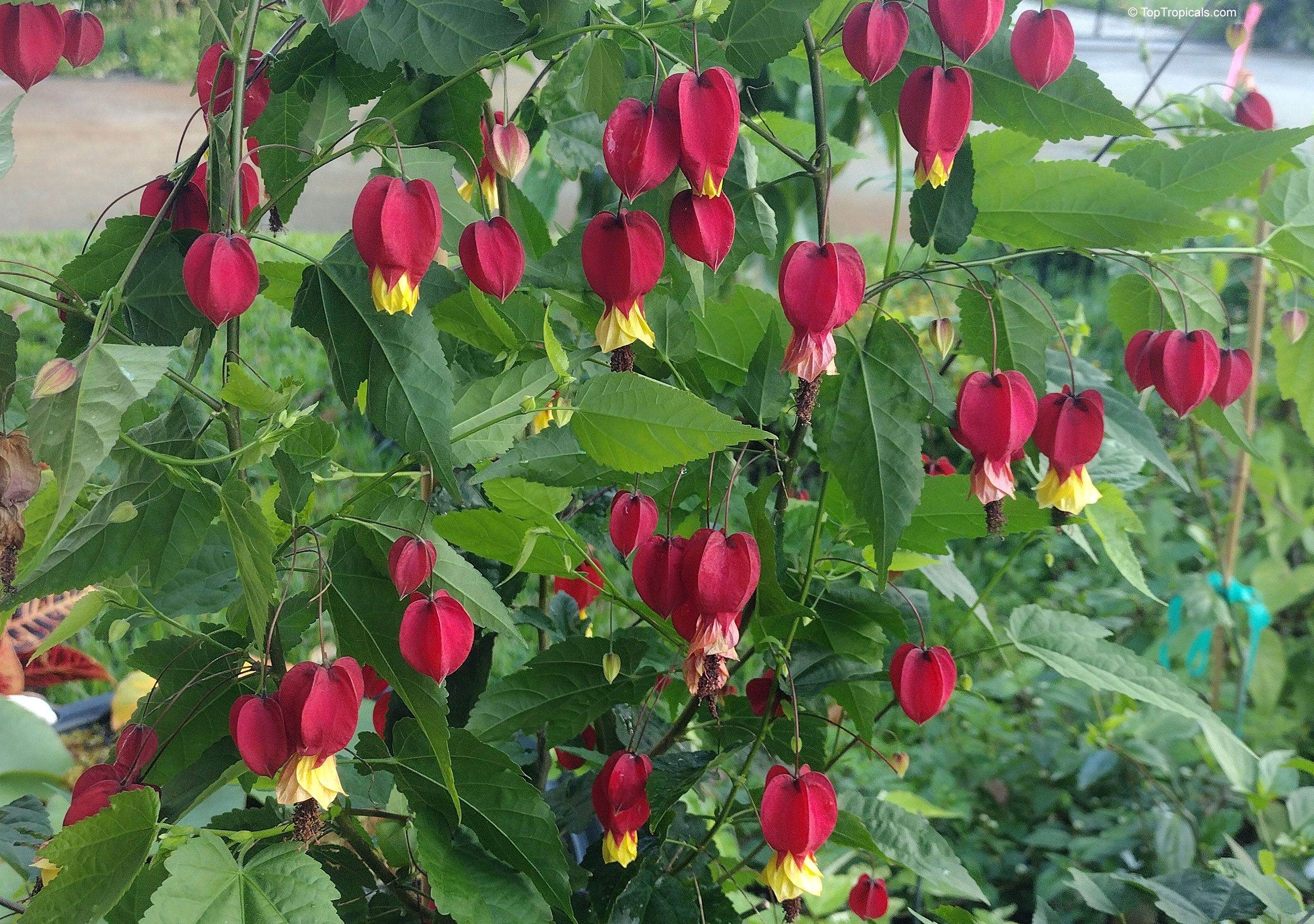
Abutilon megapotamicum, commonly known as Trailing Abutilon, Brazilian Bellflower, or Chinese Lantern, is a graceful evergreen to semi-evergreen shrub native to southern Brazil, Uruguay, and northeastern Argentina. A member of the Malvaceae family, it is prized for its slender arching branches and distinctive lantern-like flowers that bloom over an exceptionally long season. Reaching 5 to 8 feet (1.5 to 2.5 m) tall with a similar spread, it can be grown as a free-standing shrub, trained on a trellis, or allowed to cascade from hanging baskets and containers.
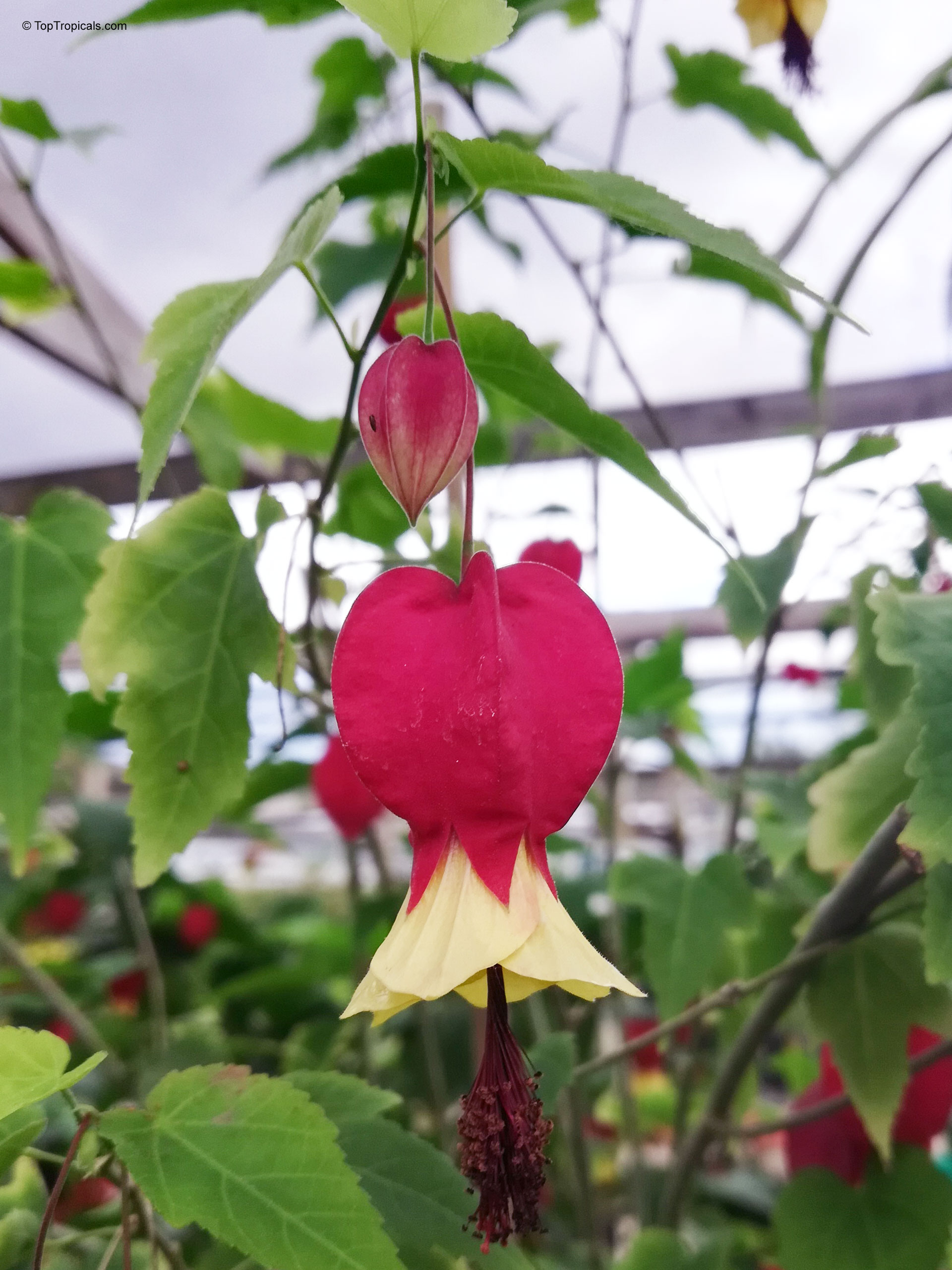
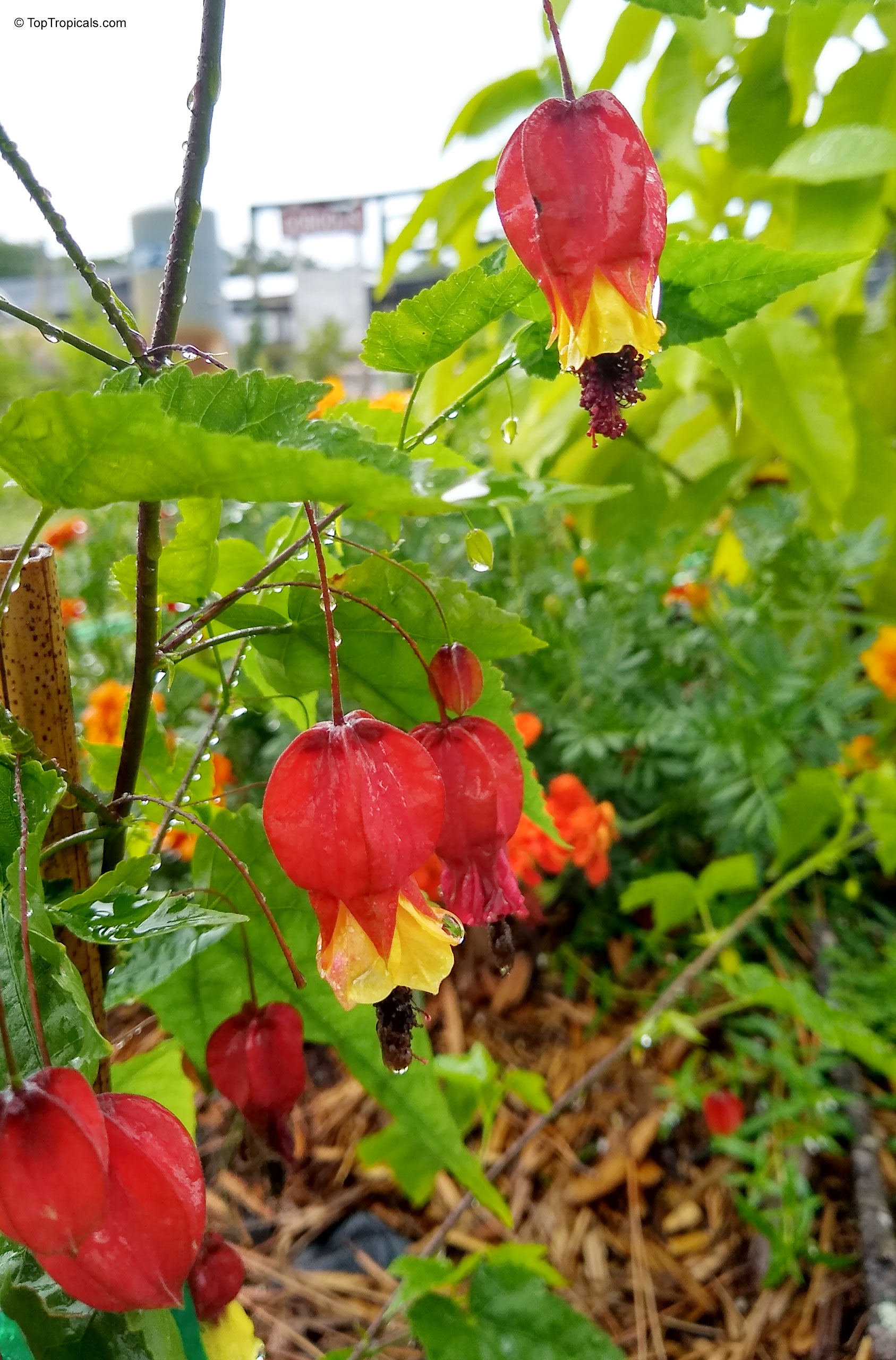
Its small, soft green leaves provide an attractive backdrop for the dangling flowers, each featuring a bright red inflated calyx surrounding protruding yellow petals and a prominent purple-brown staminal column. Blooming is often continuous from spring through fall, and nearly year-round in frost-free climates, attracting hummingbirds, butterflies, and other pollinators. Abutilon megapotamicum grows best in full sun to partial shade and fertile, well-drained soil with regular moisture, although established plants tolerate brief dry spells. Light pruning encourages a fuller habit and more abundant flowering. Hardy in USDA Zones 9b-11, it is an excellent choice for cottage gardens, patios, mixed borders, and containers where its unusual pendant blooms can be appreciated up close.

Recommended Fertilizer: SUNSHINE Megaflor - Bloom Nutrition Booster
Last one
Botanical name: Abutilon pictum
Common names: Golden Rain Flowering Maple, Thompsons Flowering Maple, Bell Flower
Family: Malvaceae
Origin: South America
USDA Zone: 8-10
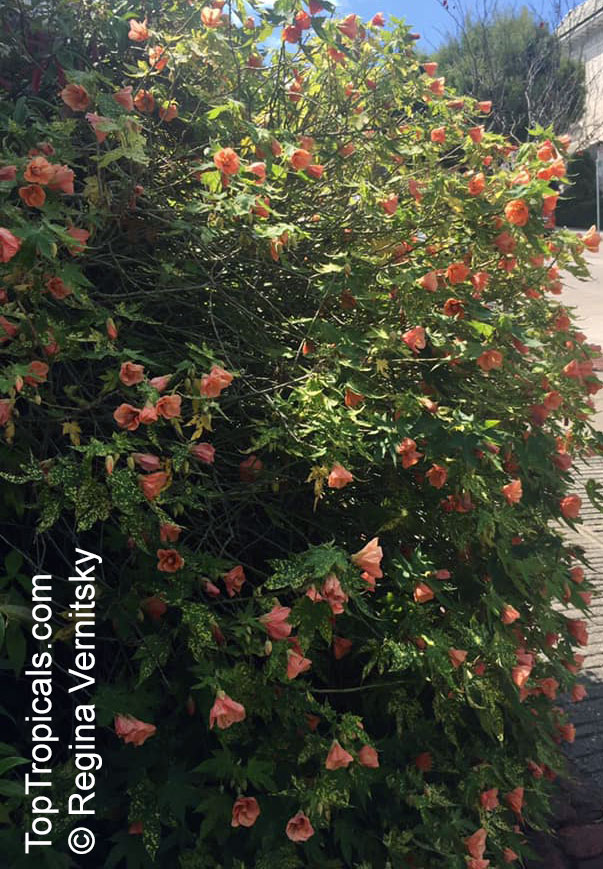
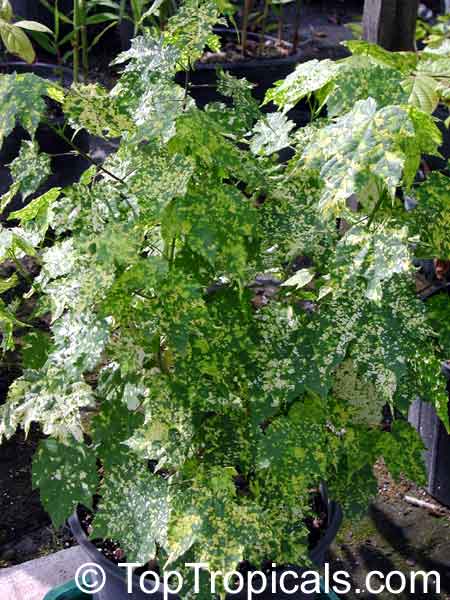
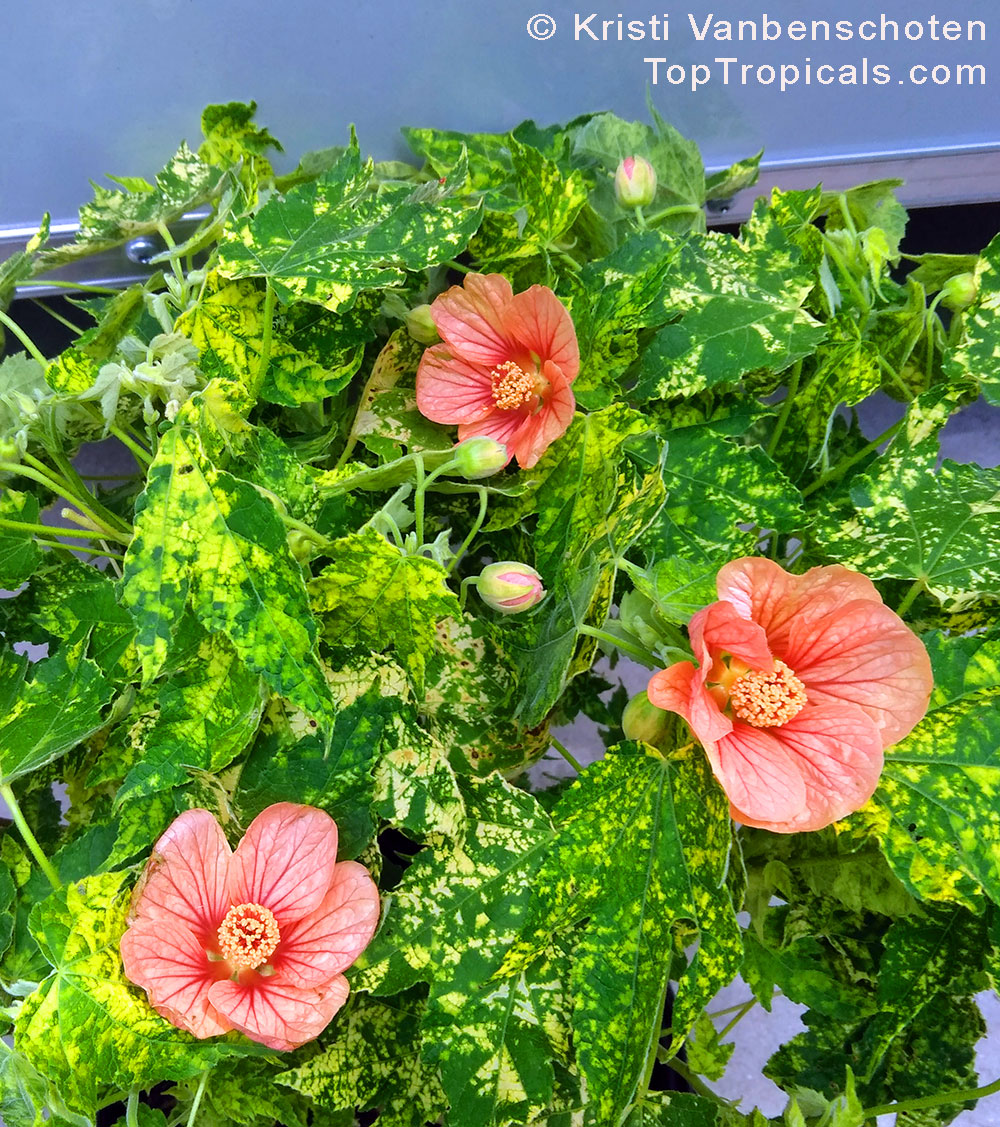
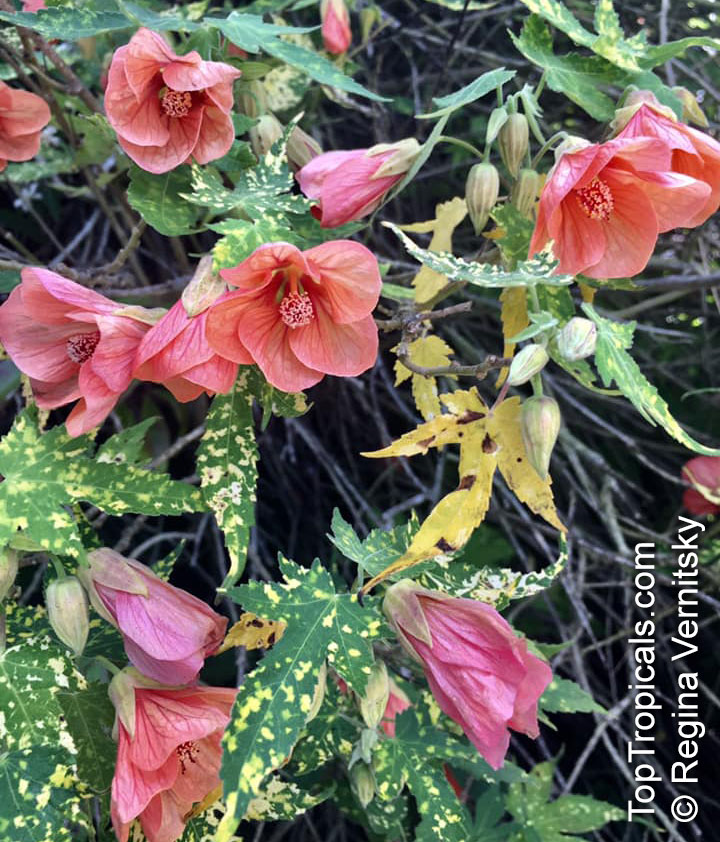
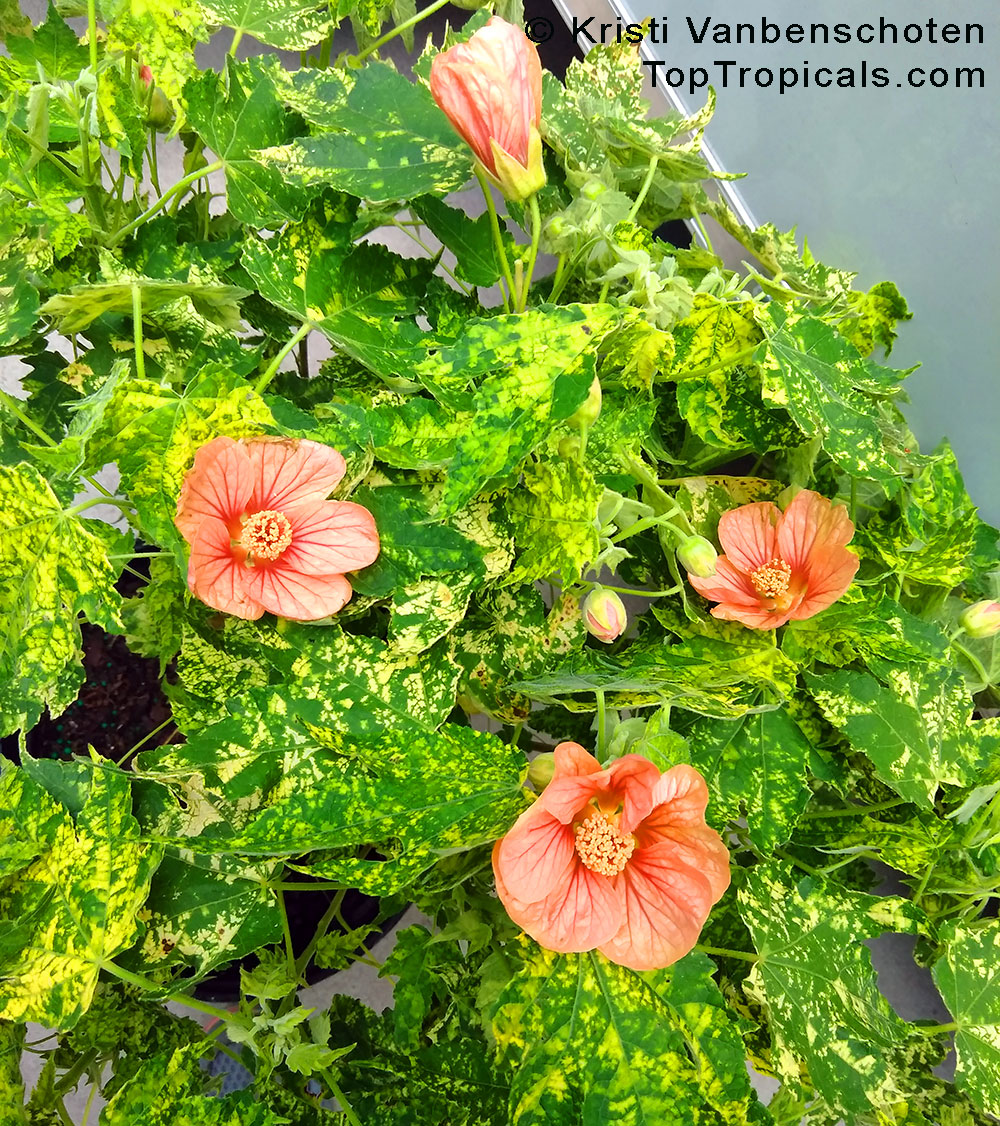
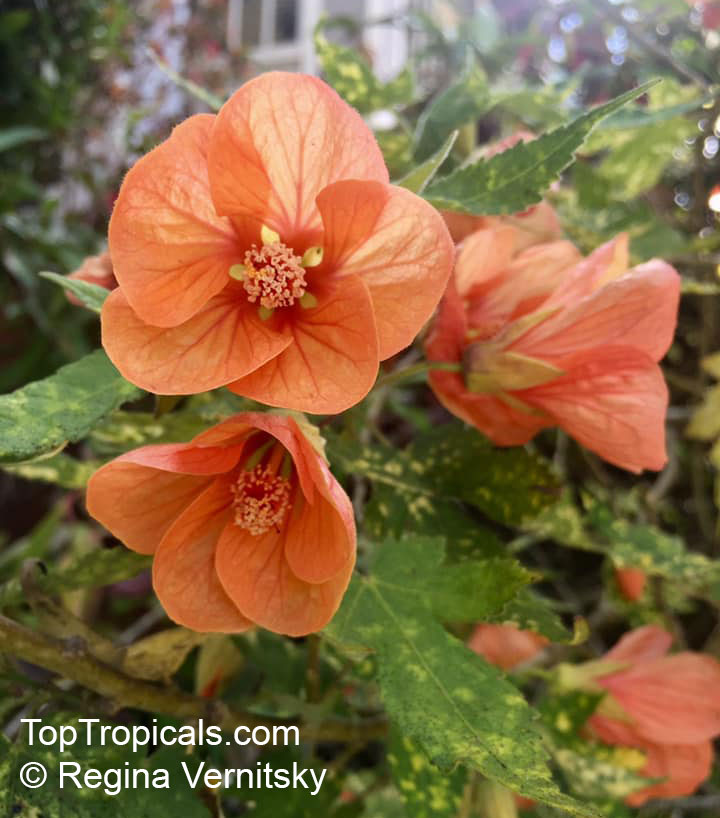
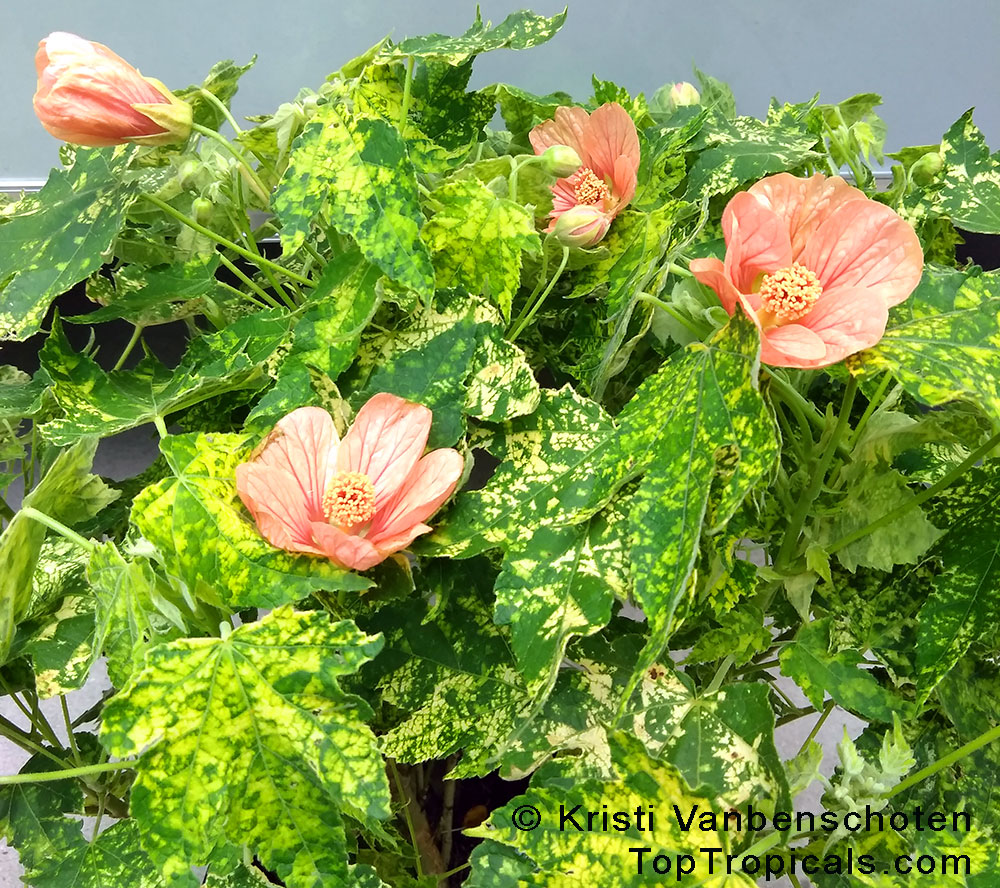
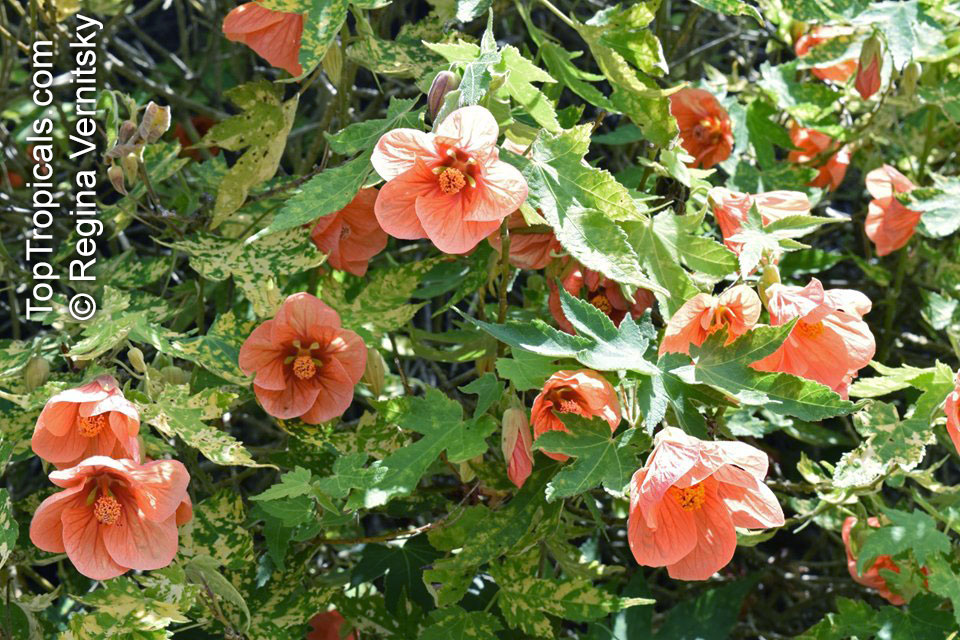
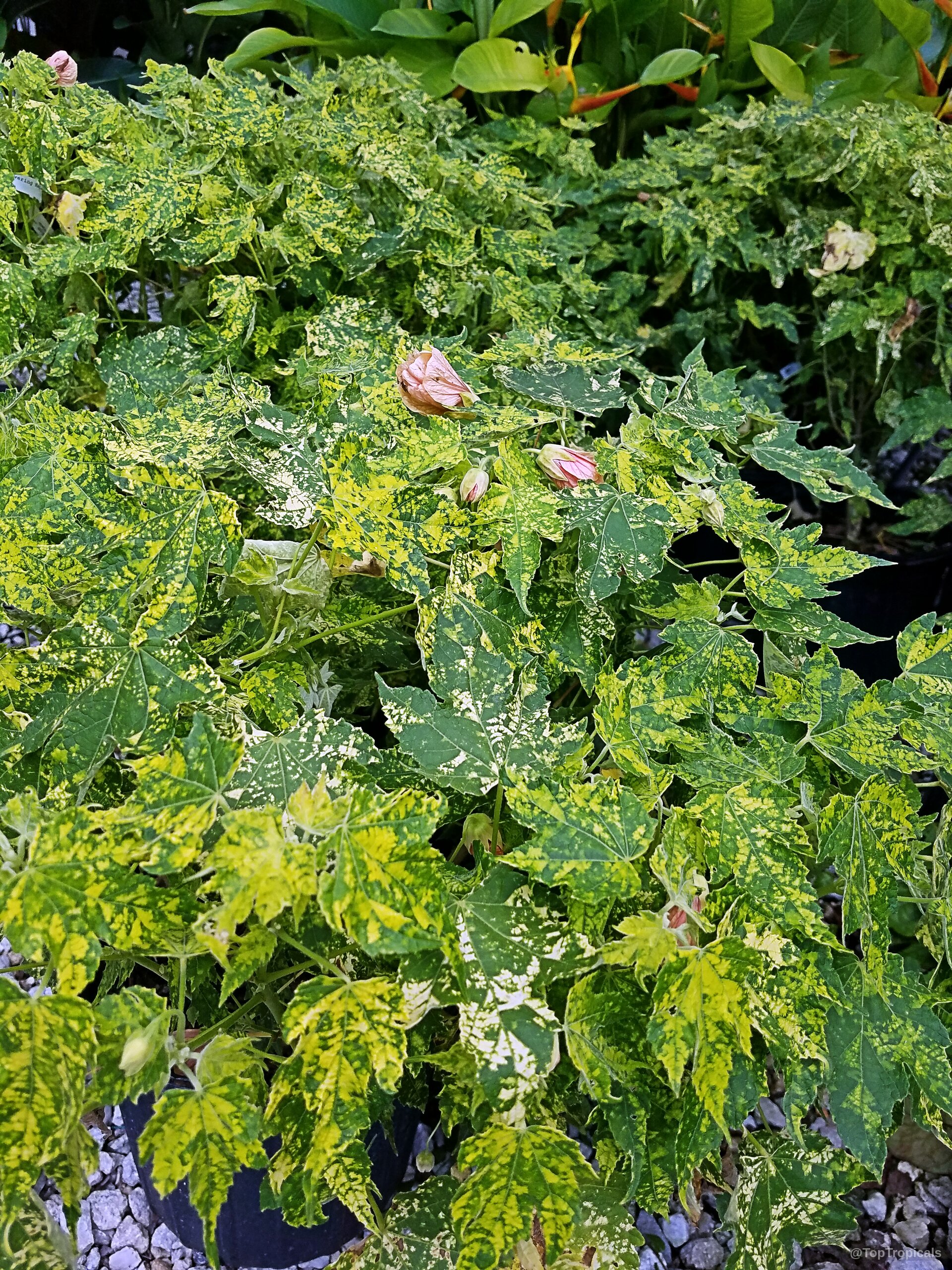
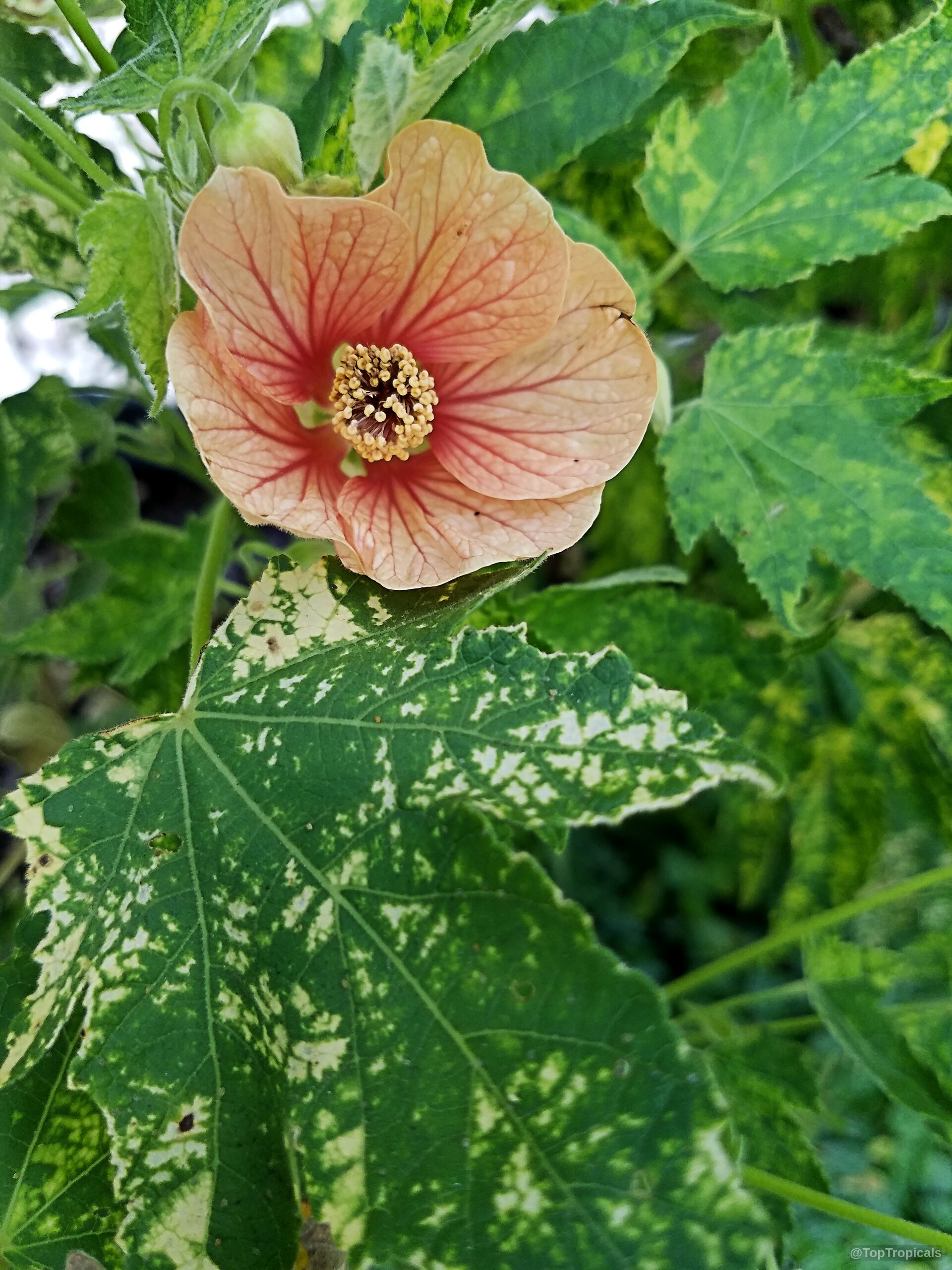
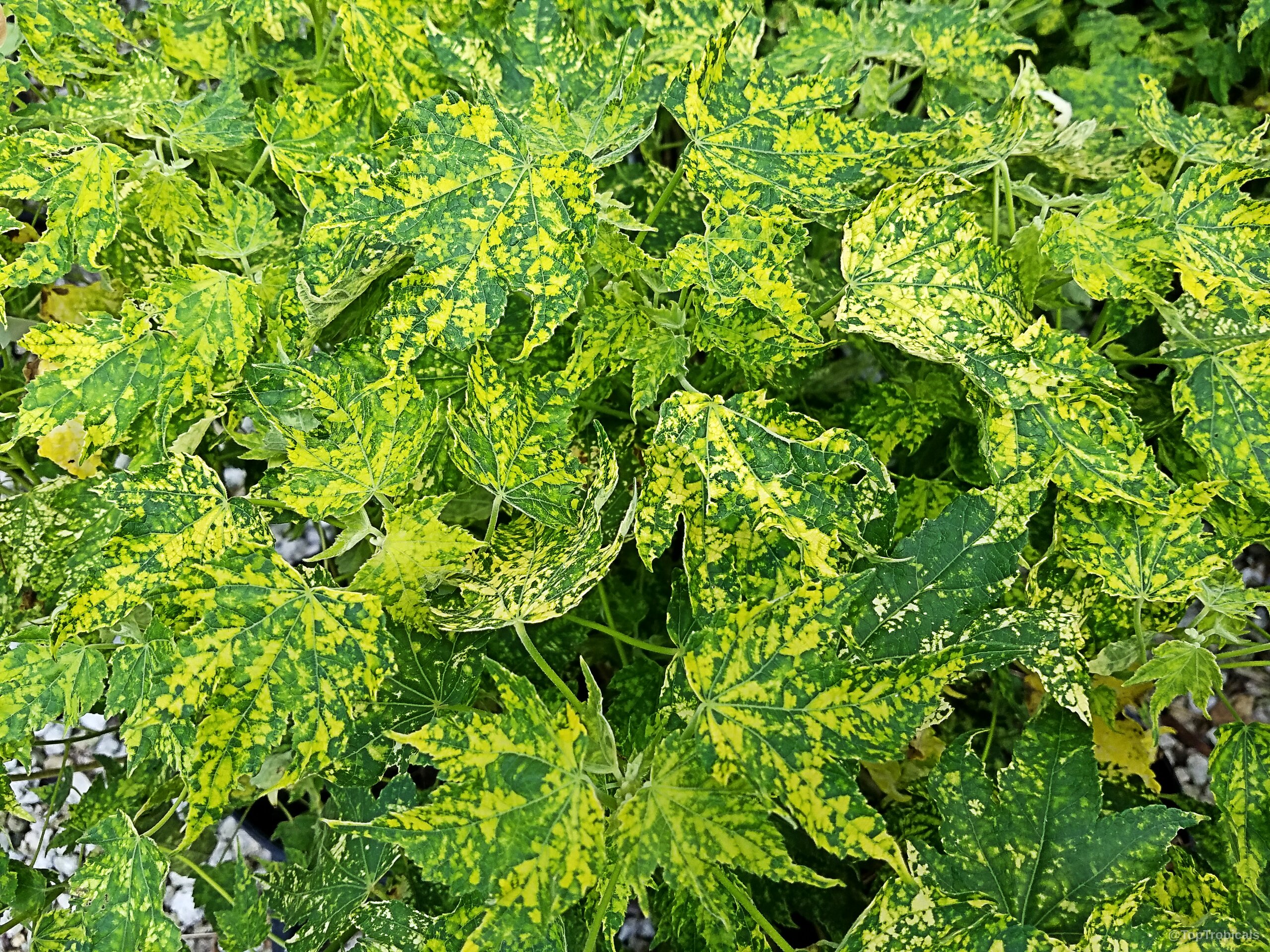
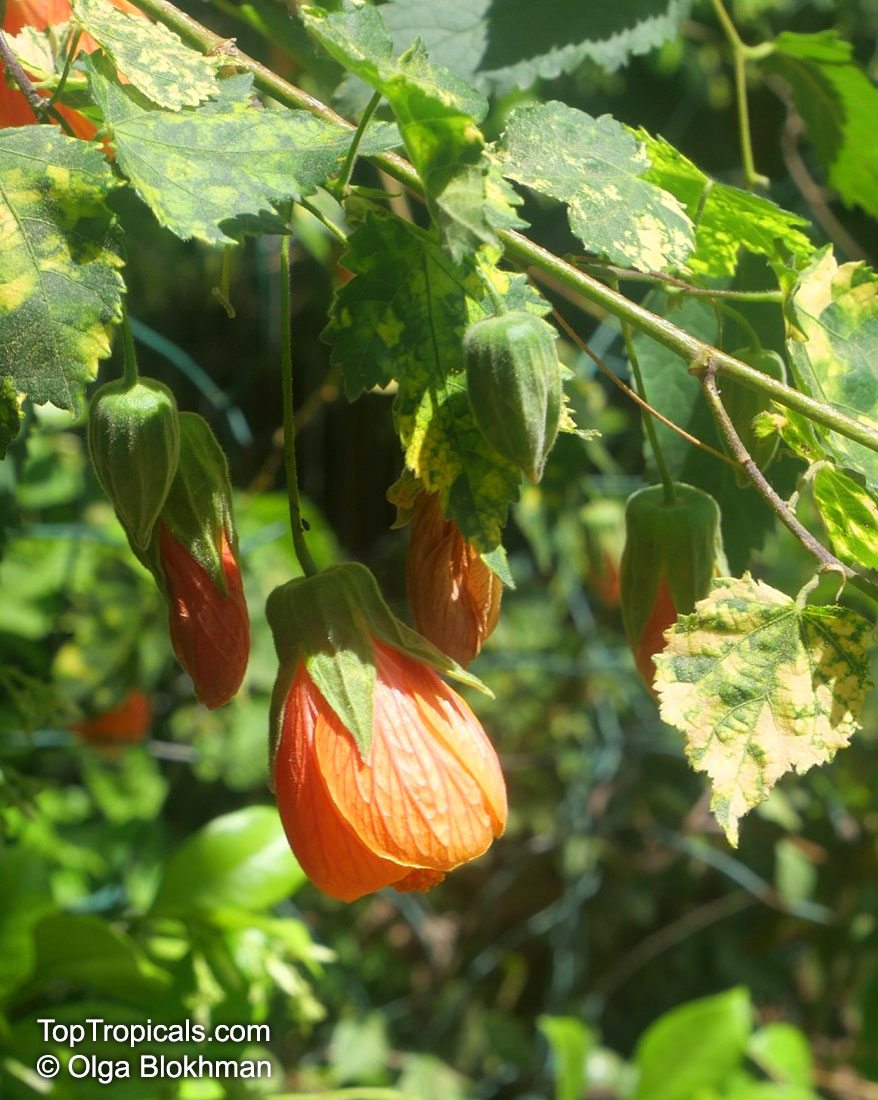
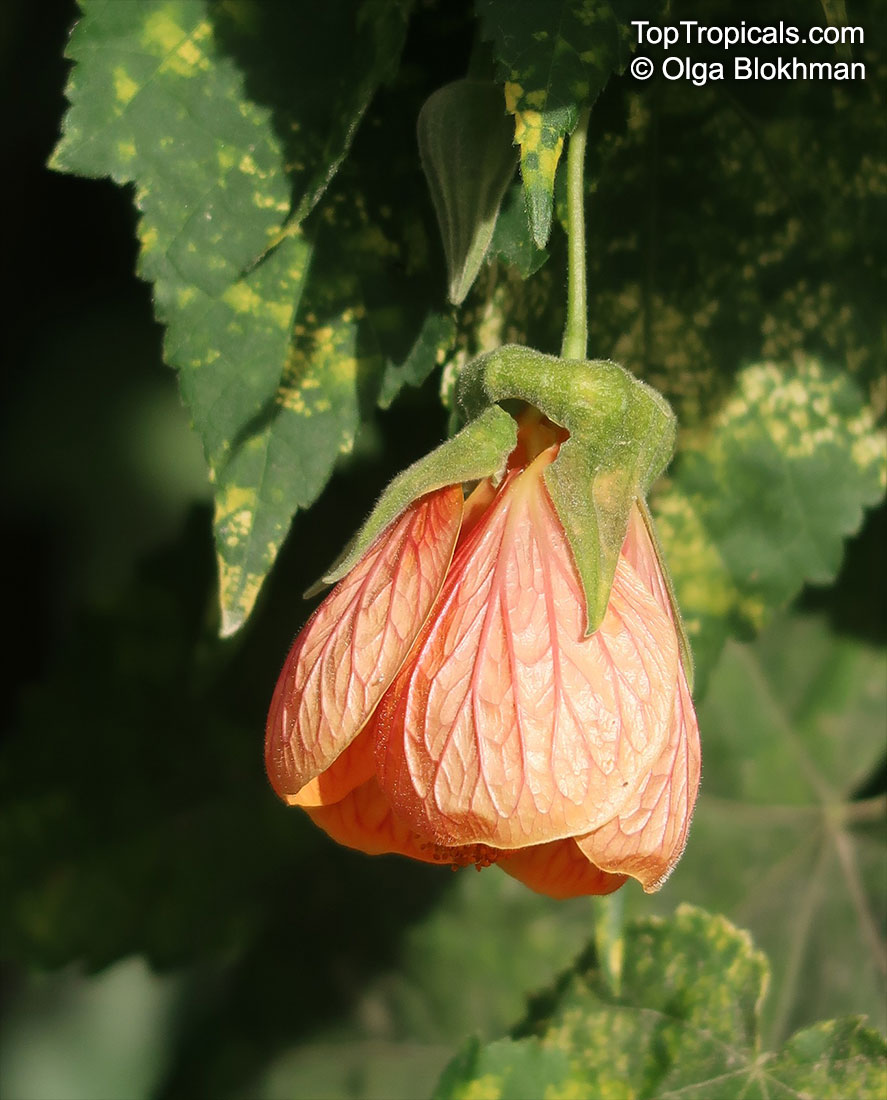
Abutilon pictum, also known as the Golden Rain Flowering Maple, is a fast-growing tropical flowering shrub that is prized for its speckled, maple-shaped leaves and showy, coral-orange flowers. This striking shrub is a great accent or border plant for areas that don't experience frost, as it can easily be espaliered against a wall. Abutilon pictum Thompsonii, a variety with golden leaf variegation and peach colored flowers with red veins, is an especially showy container specimen and a beautiful addition to any bright patio or indoor location.
Abutilon pictum is native to South America and is grown in USDA Plant Hardiness Zones 8-10. It requires a wa


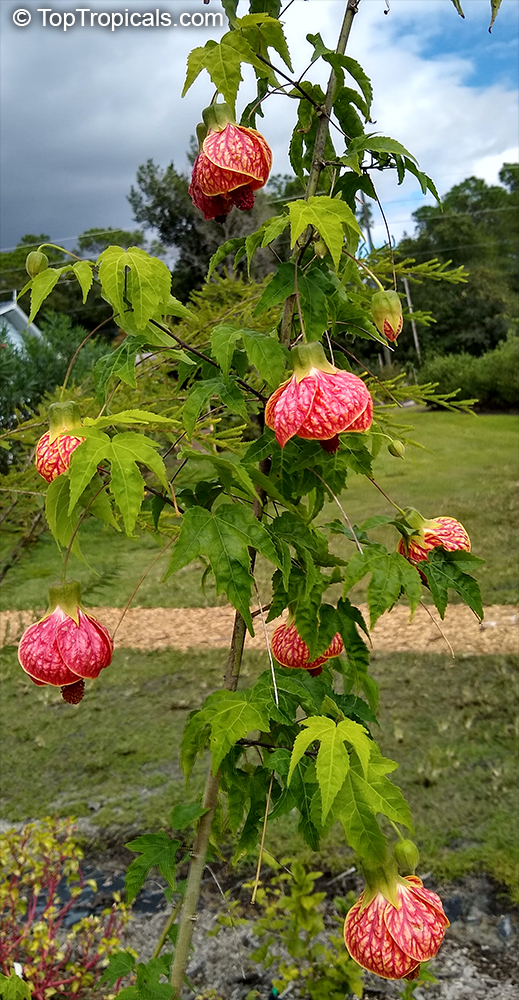
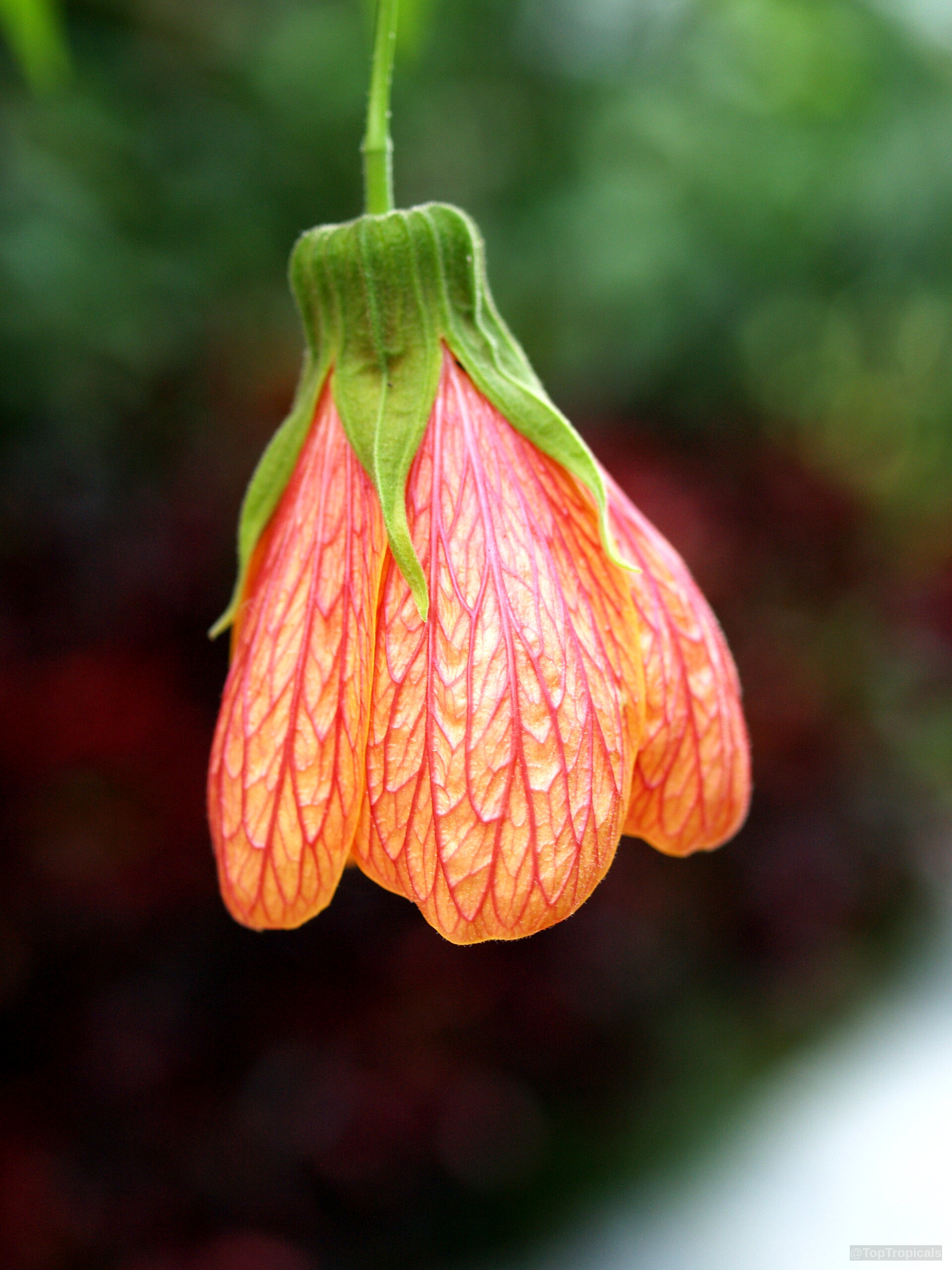
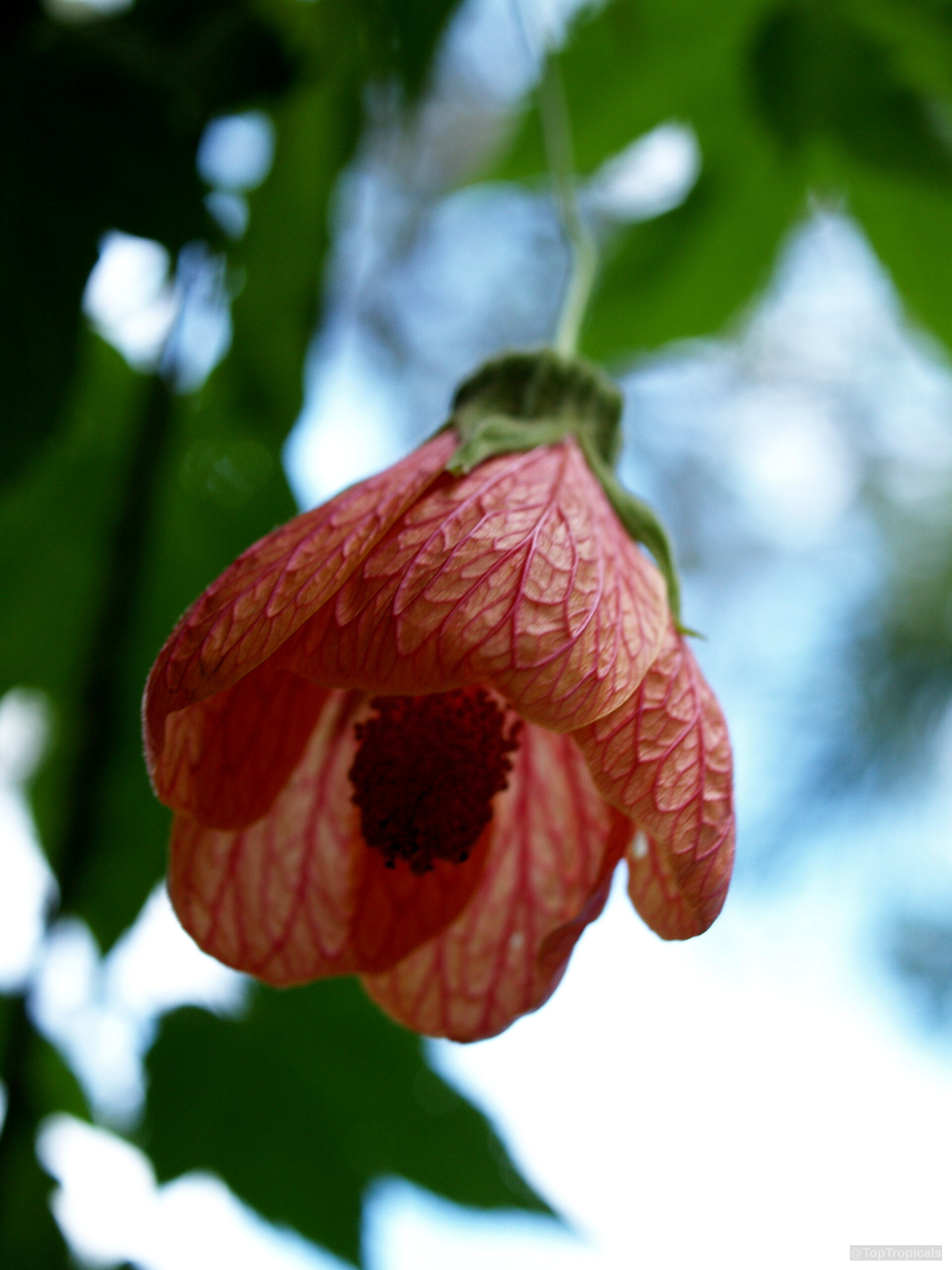
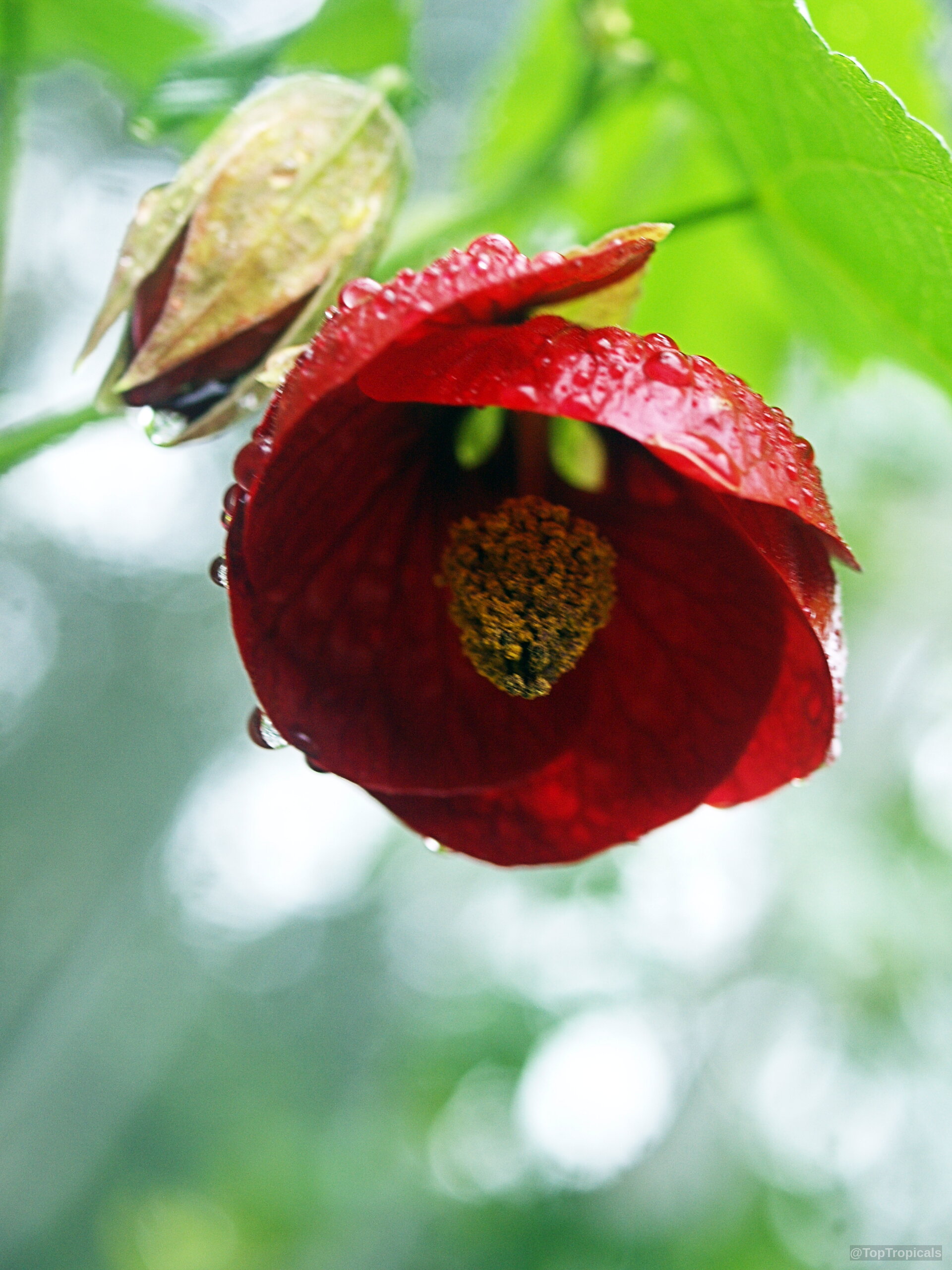
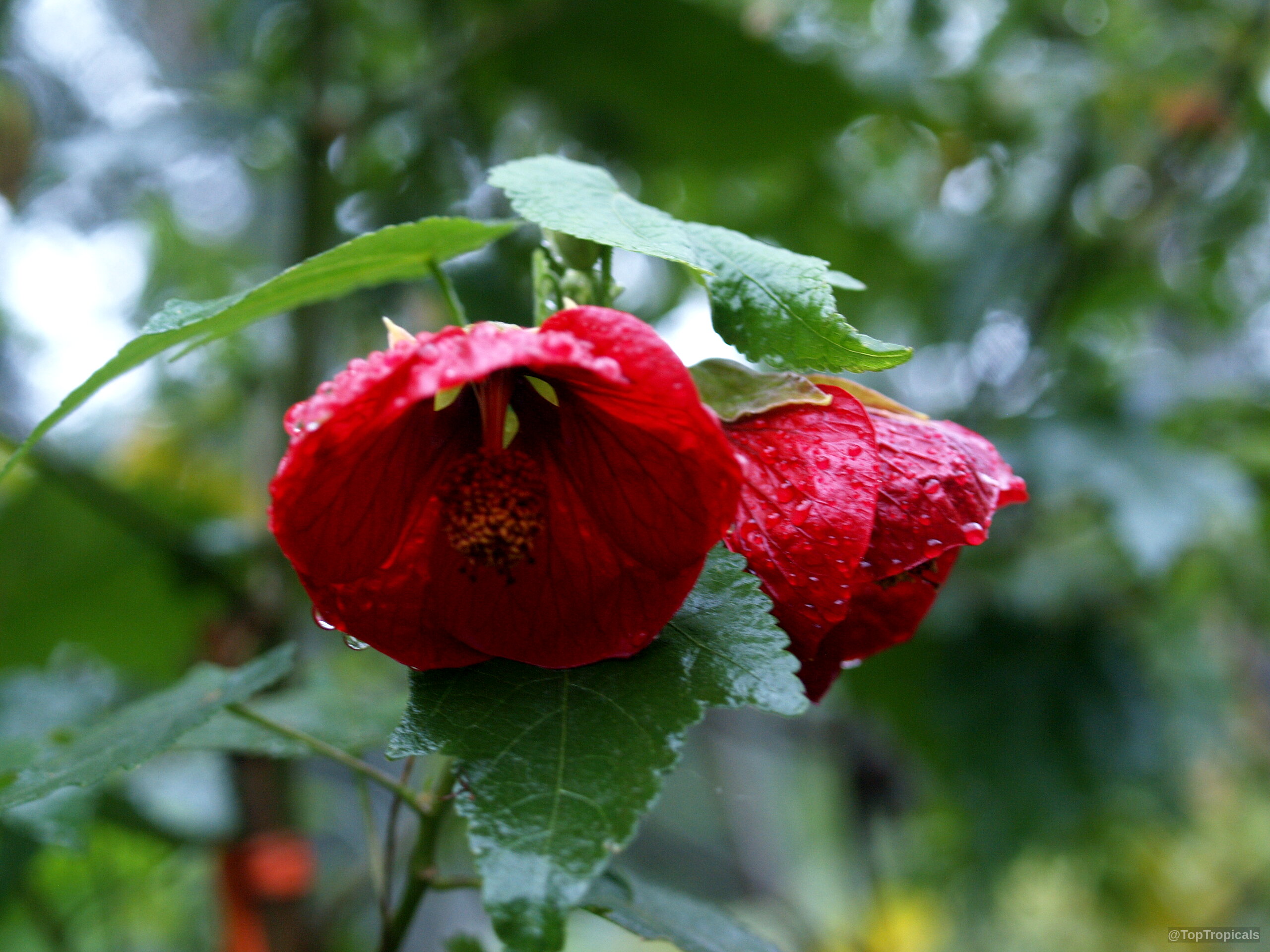
Botanical name: Abutilon sp.
Common names: Flowering Maple, Weeping Maple,Chinese Lantern
Family: Malvaceae
Origin: South America
USDA Zone: 8-11
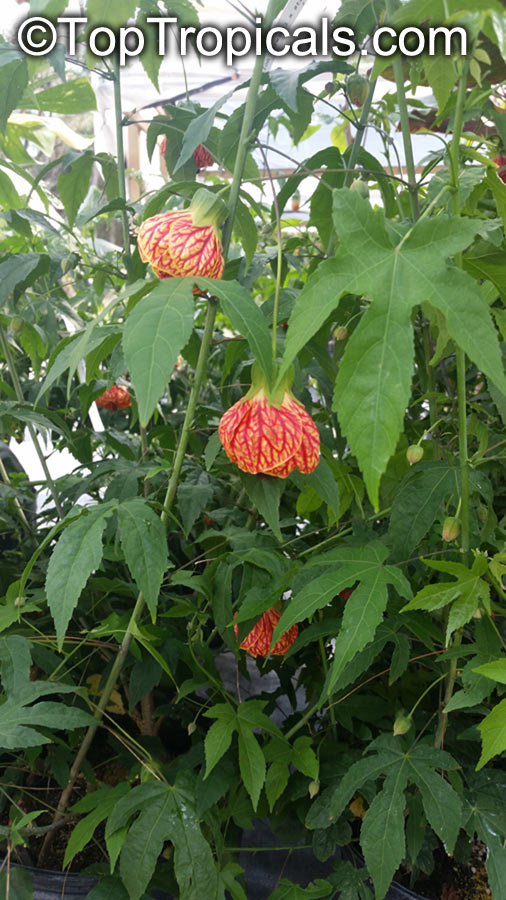
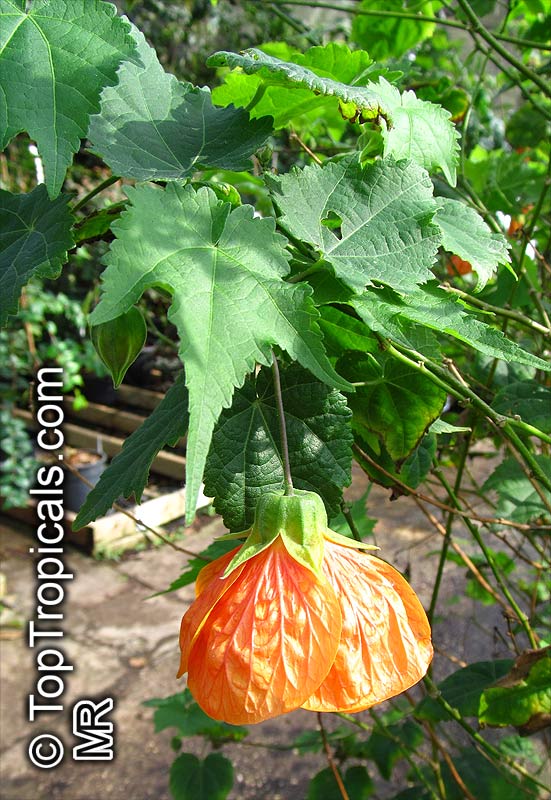
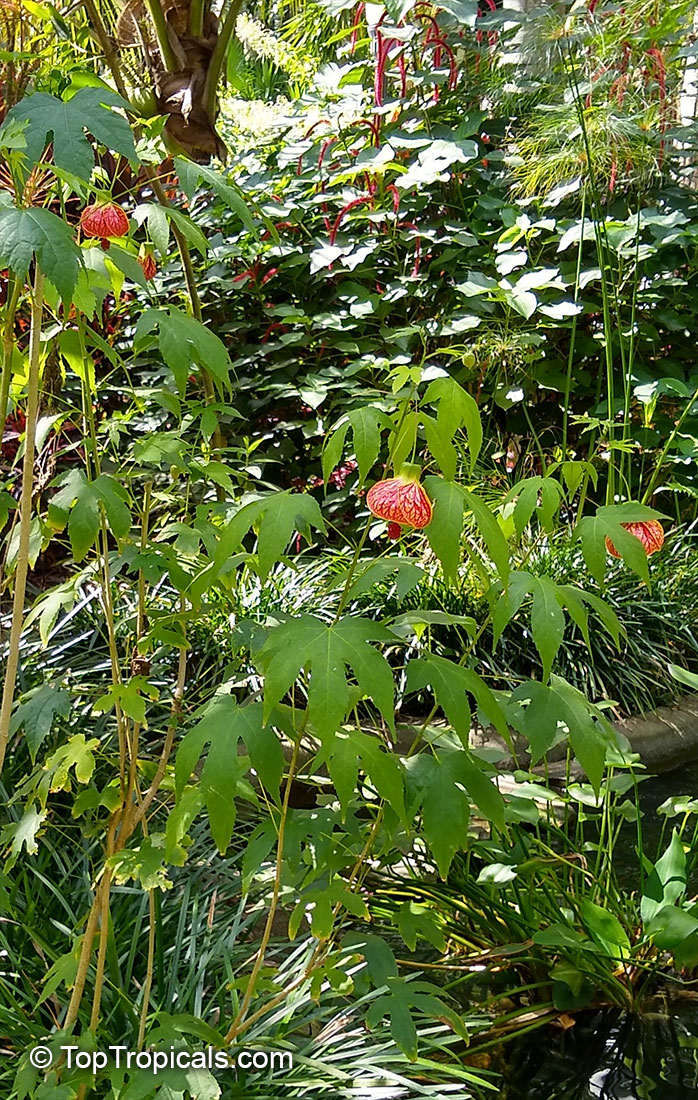
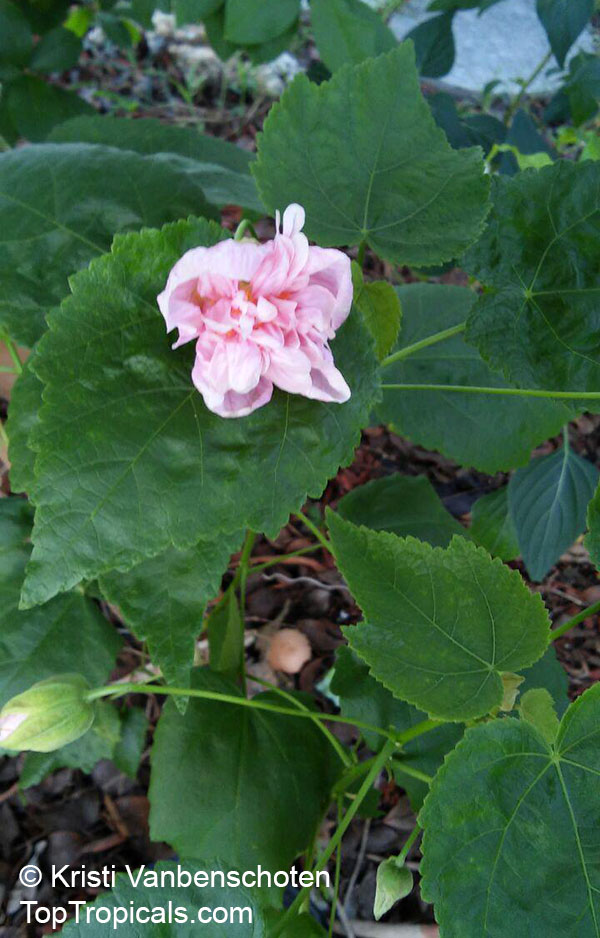
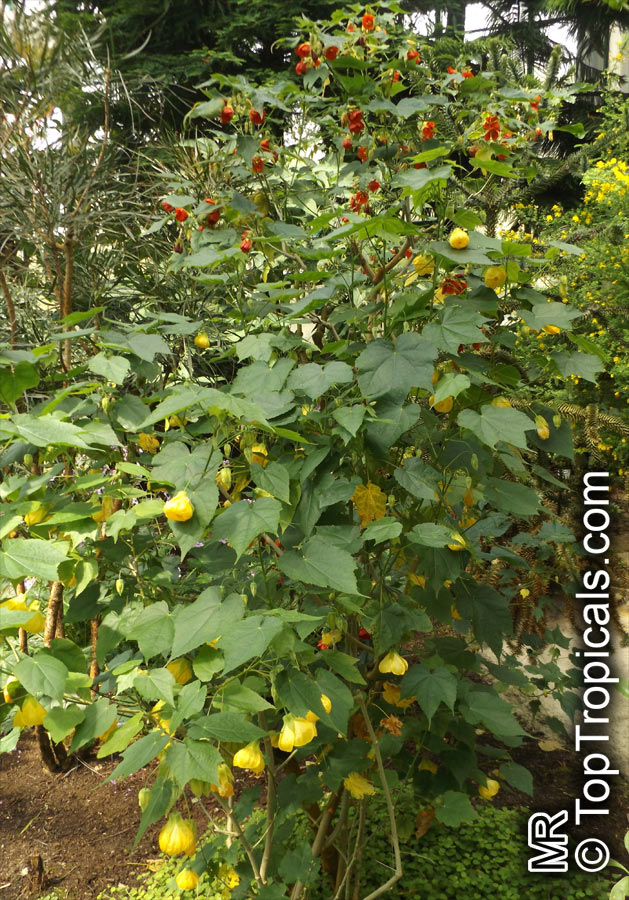
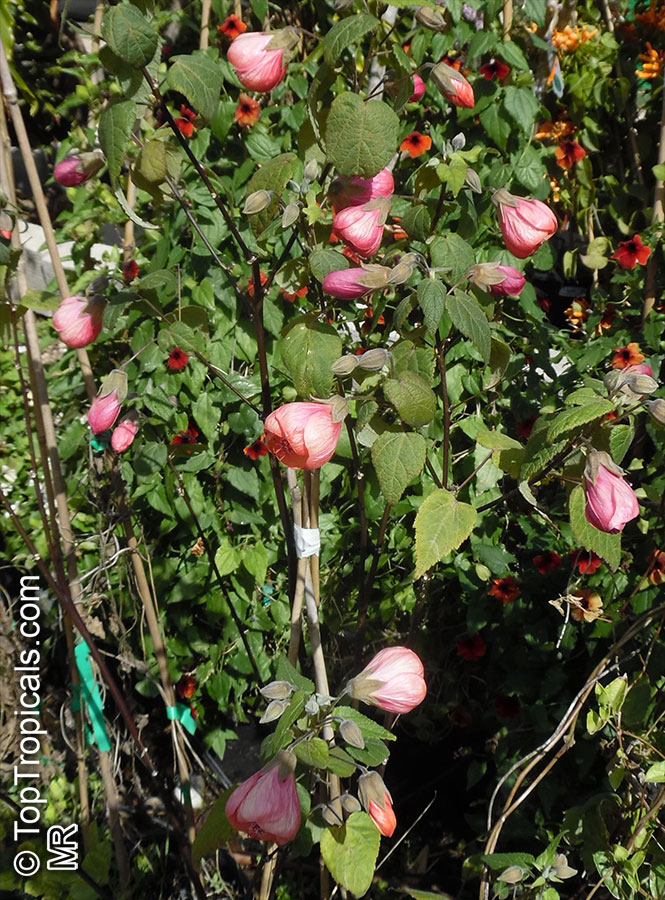
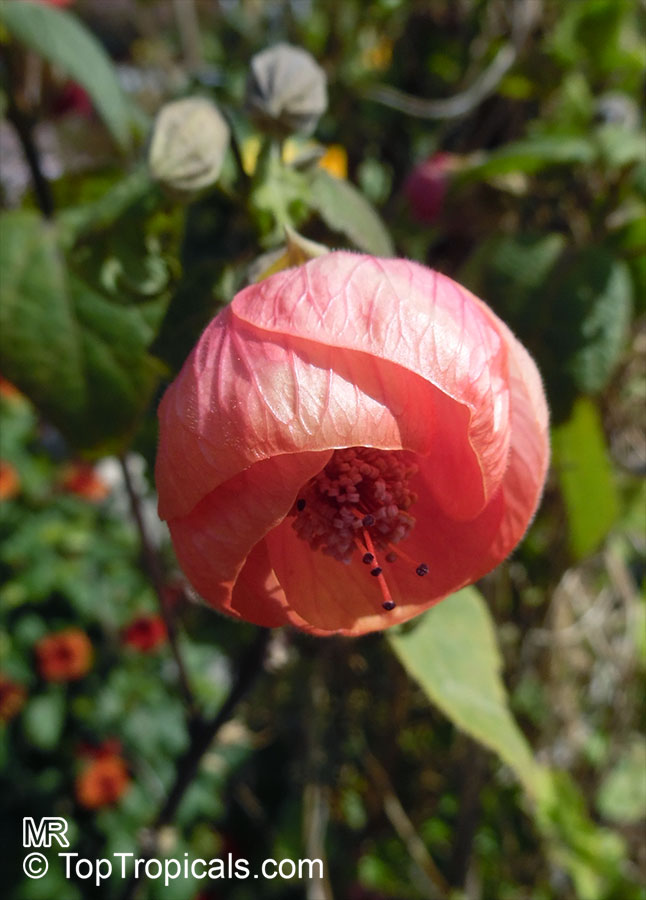
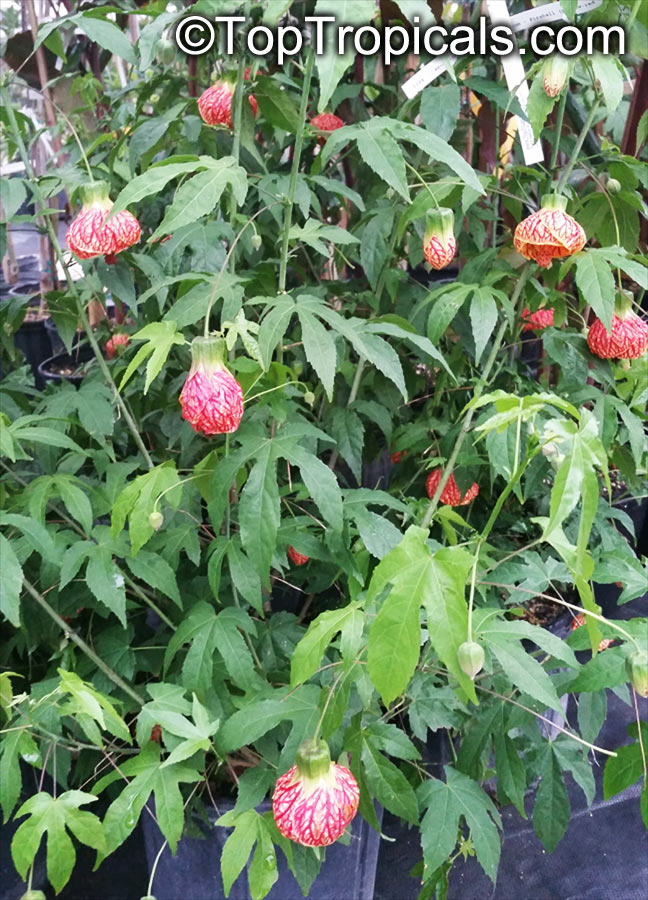
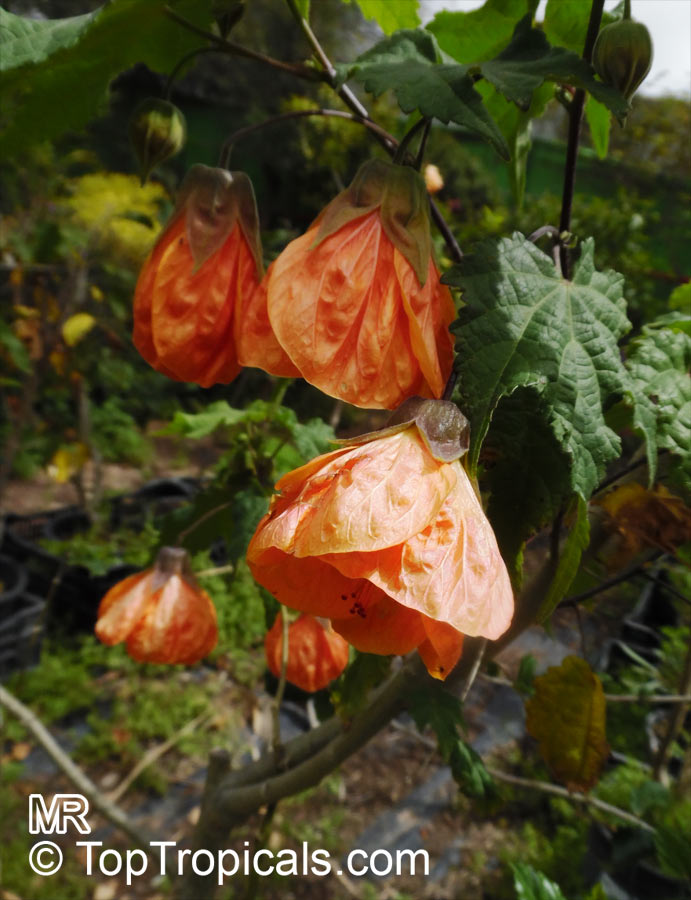
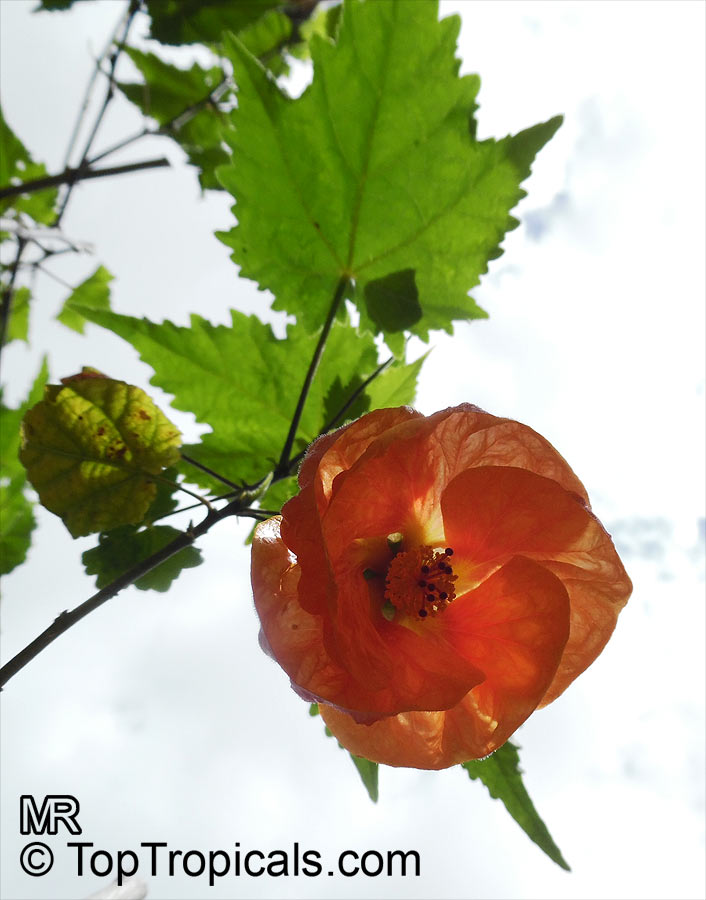
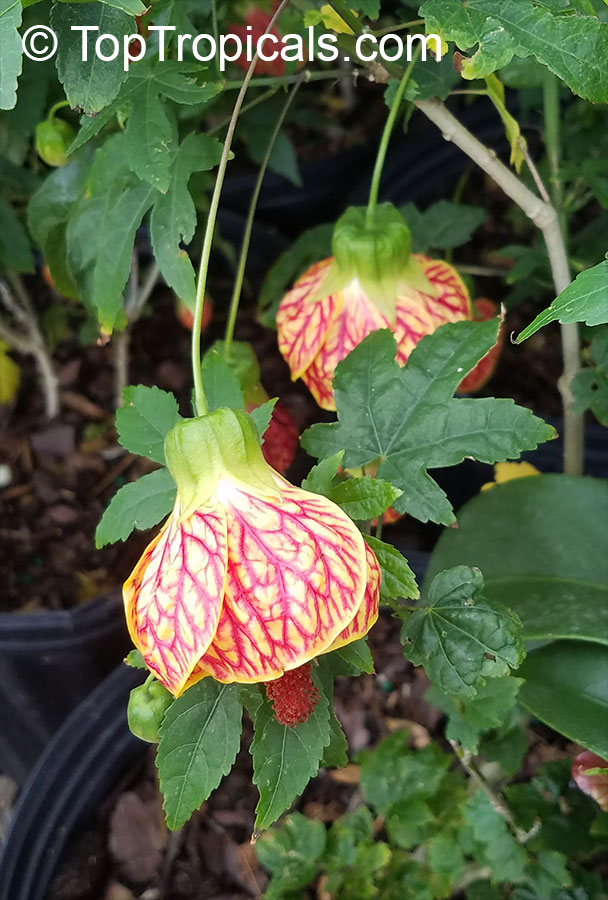
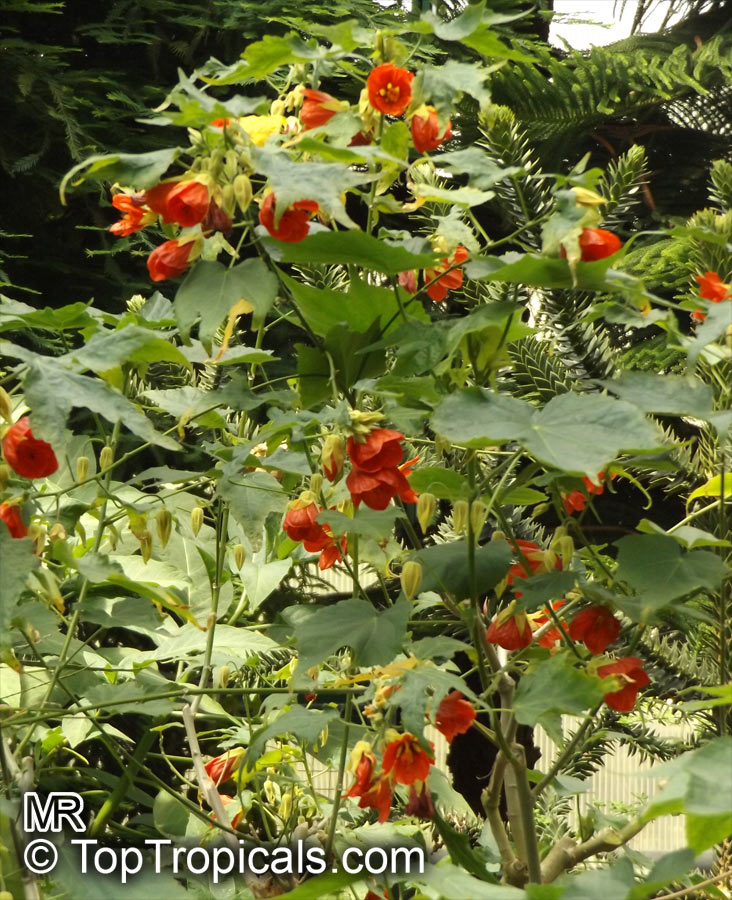
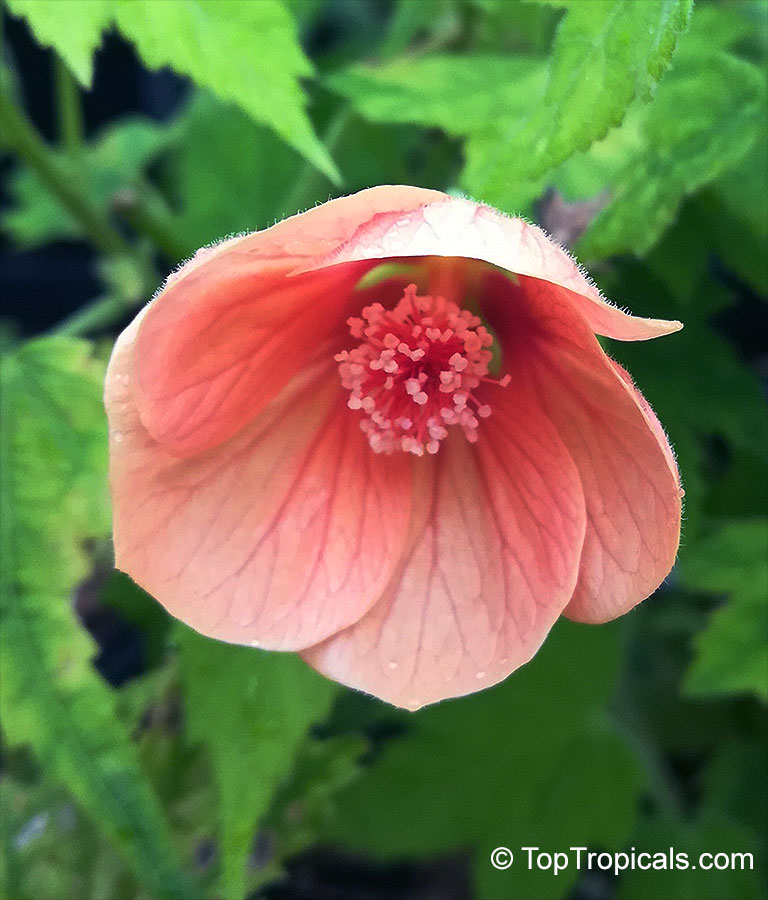
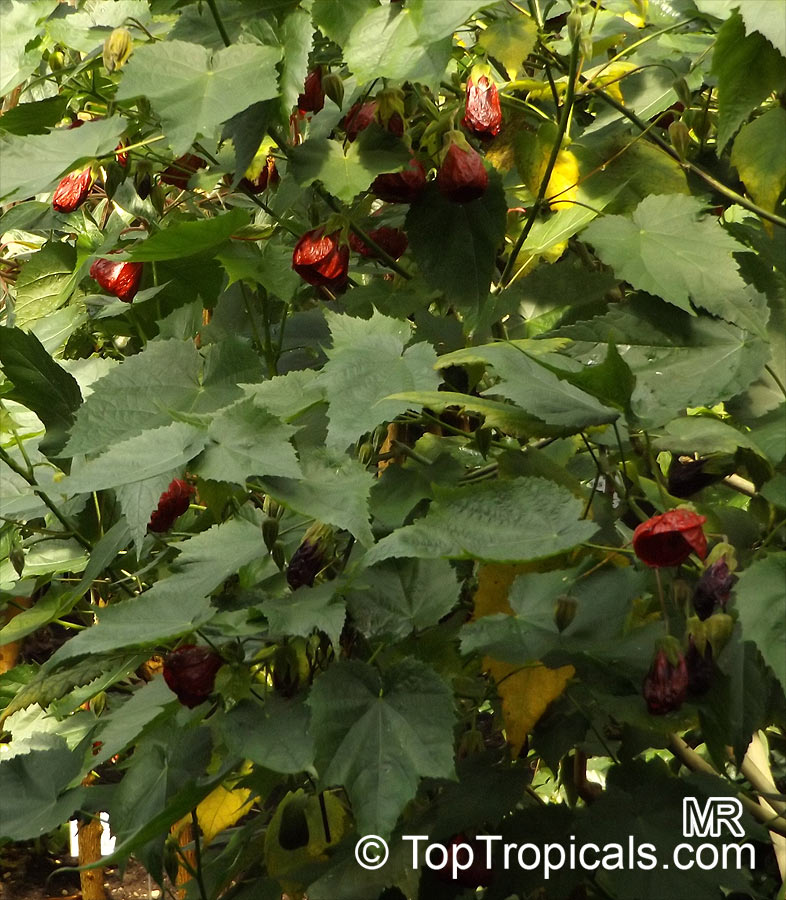
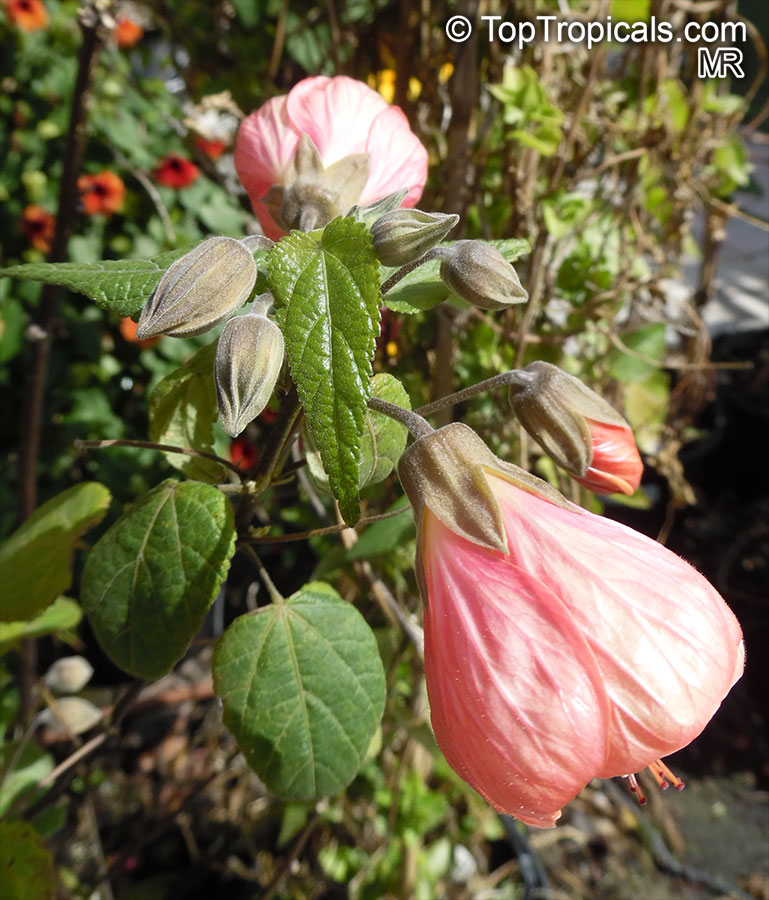
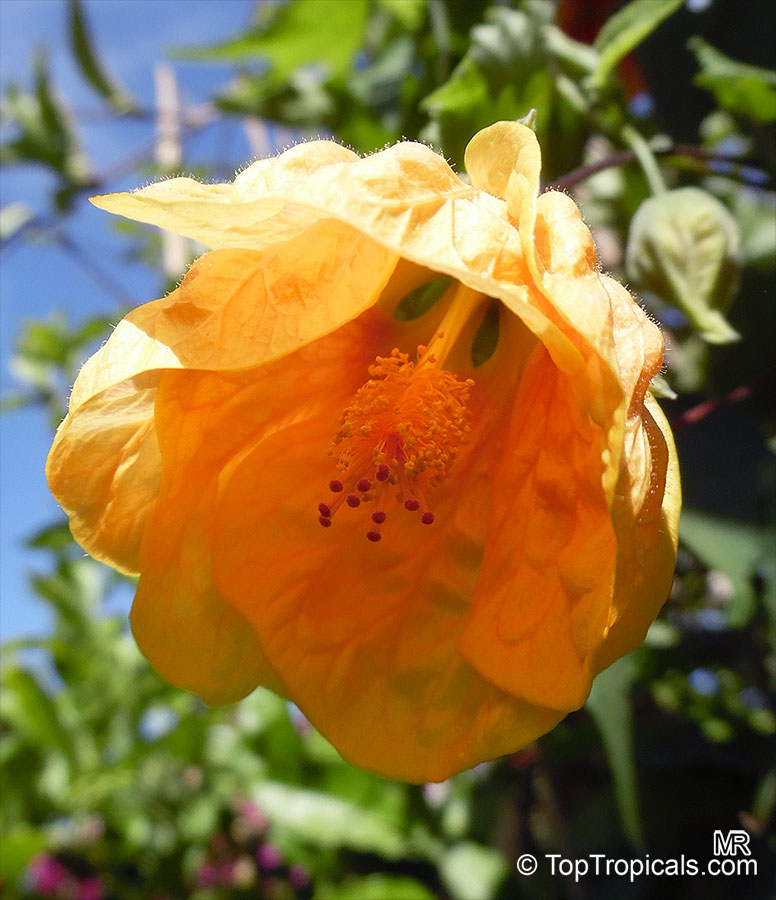
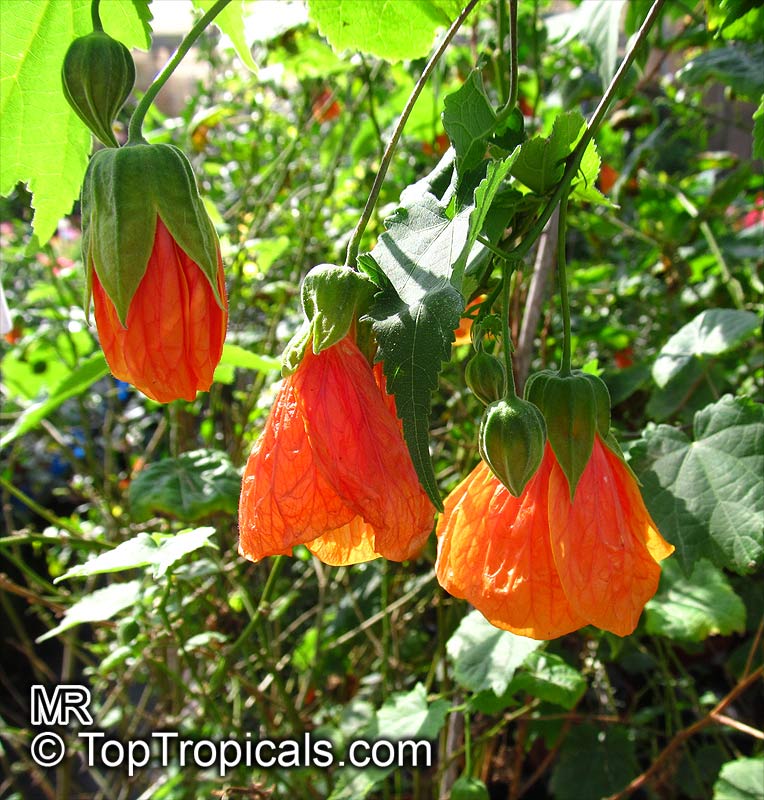
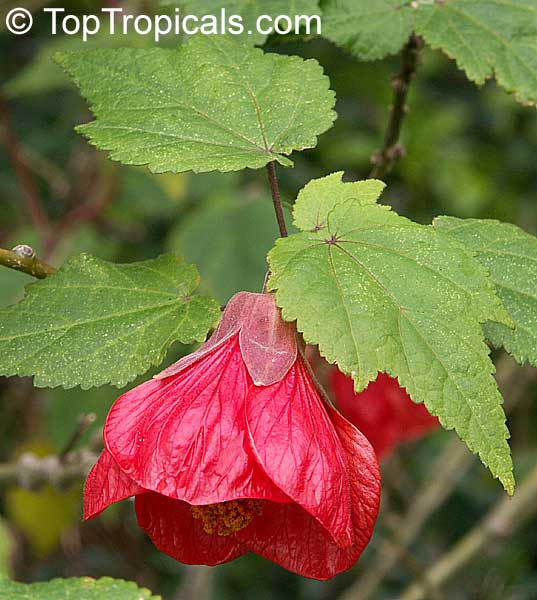
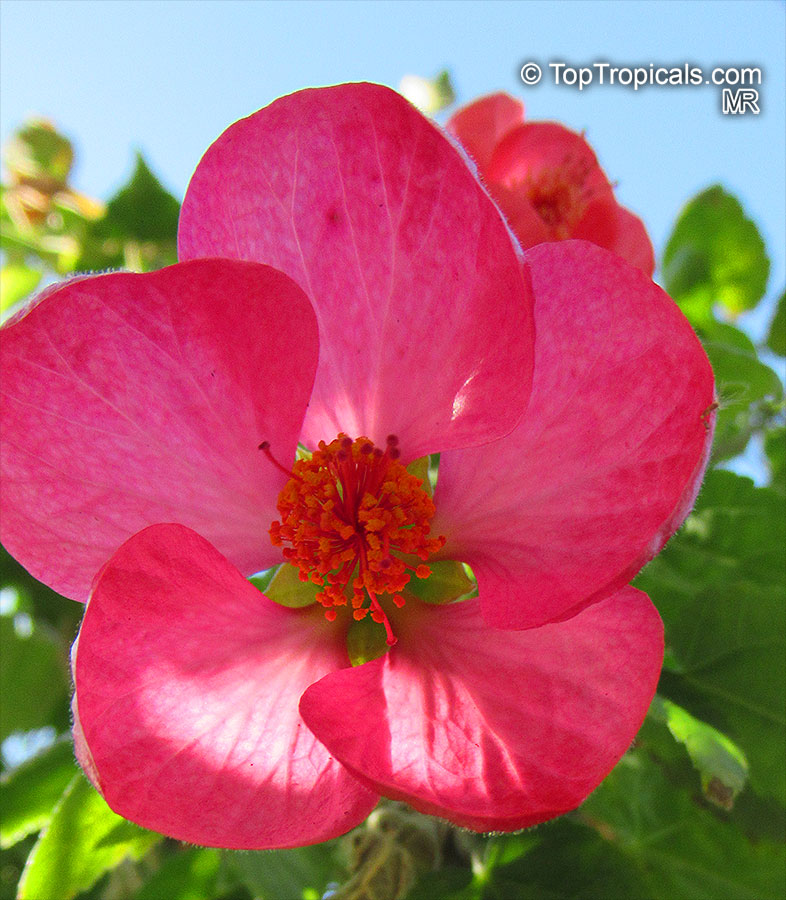
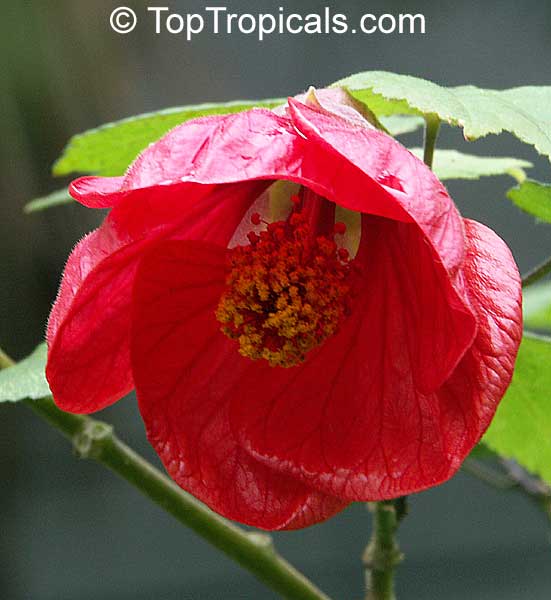
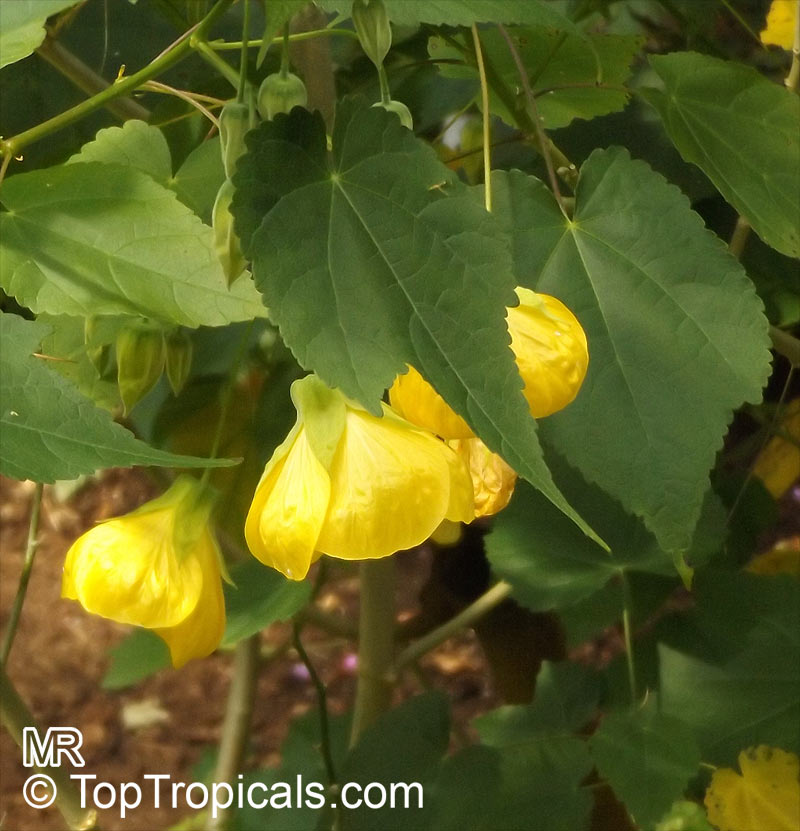
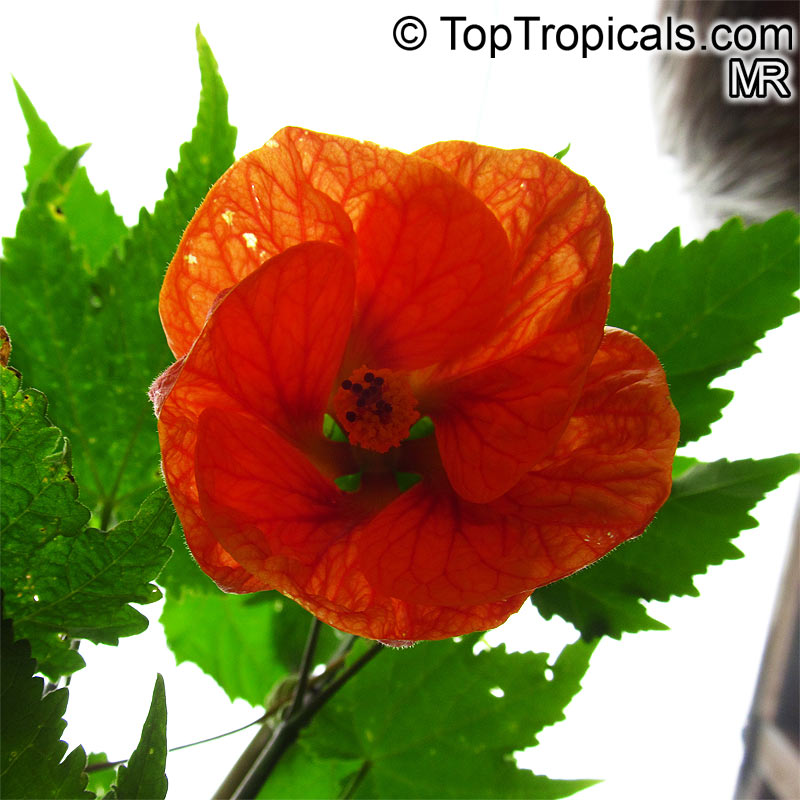
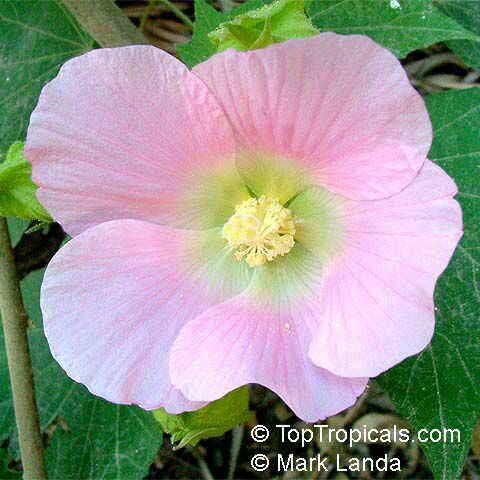
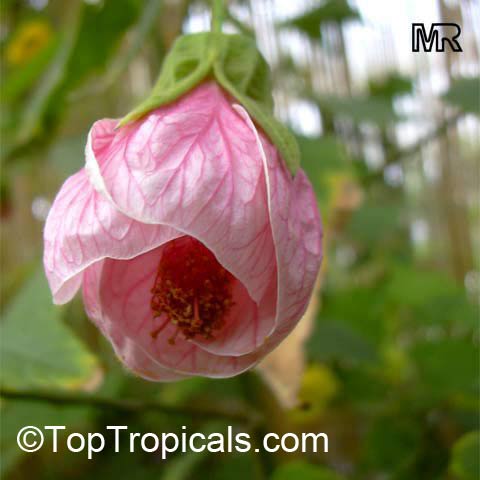
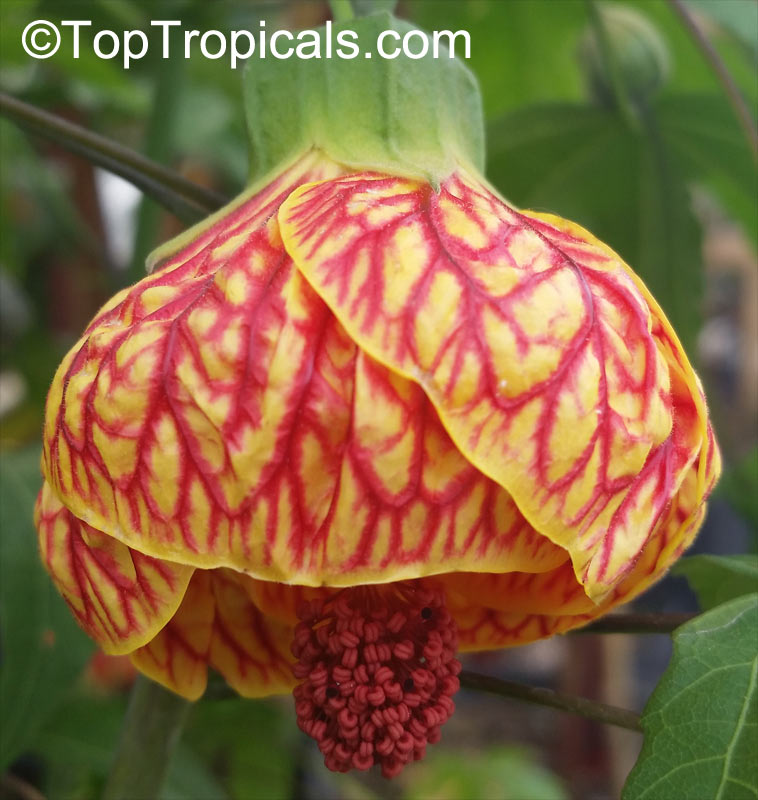
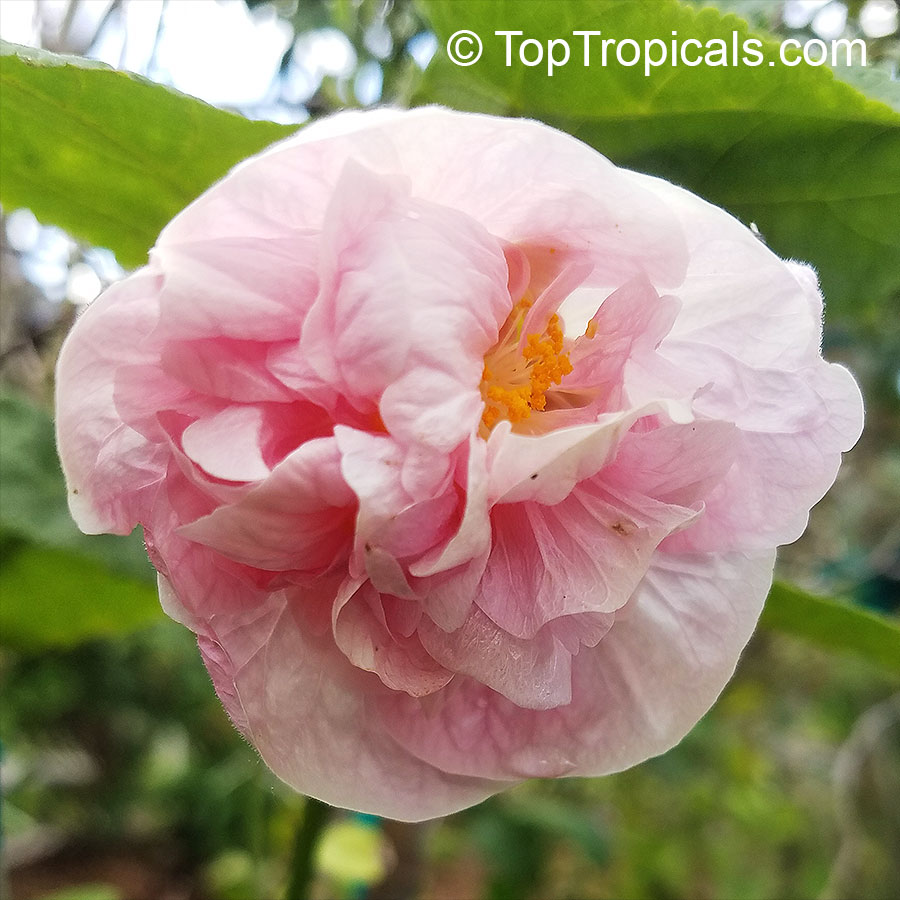
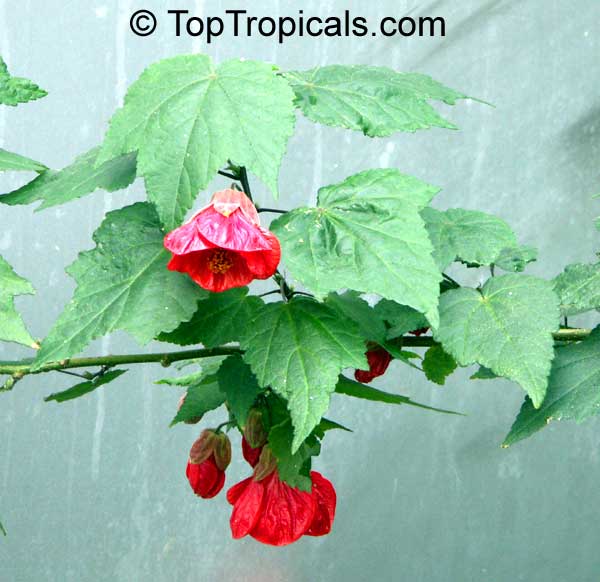
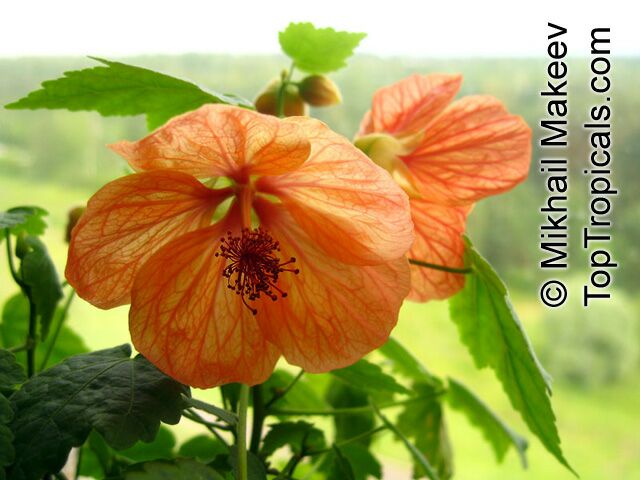
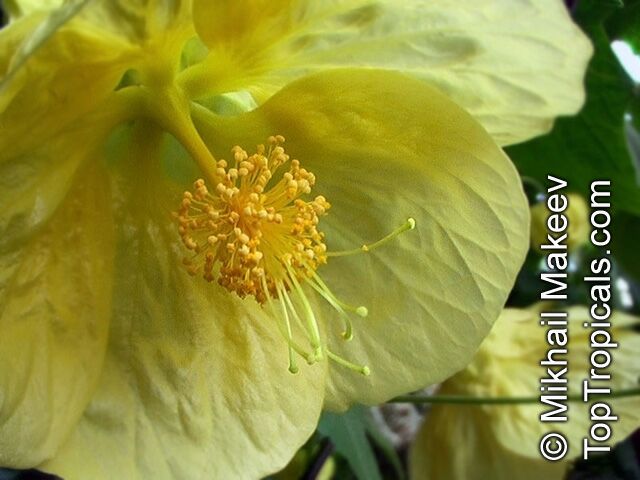
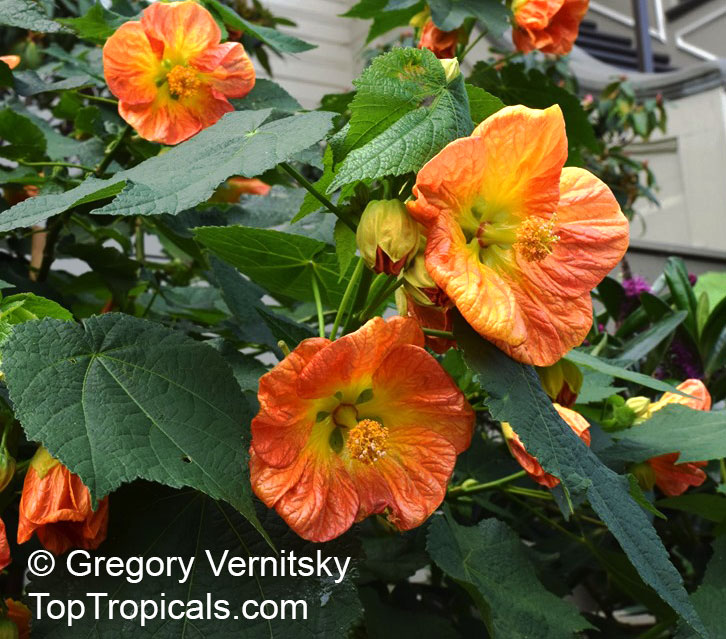
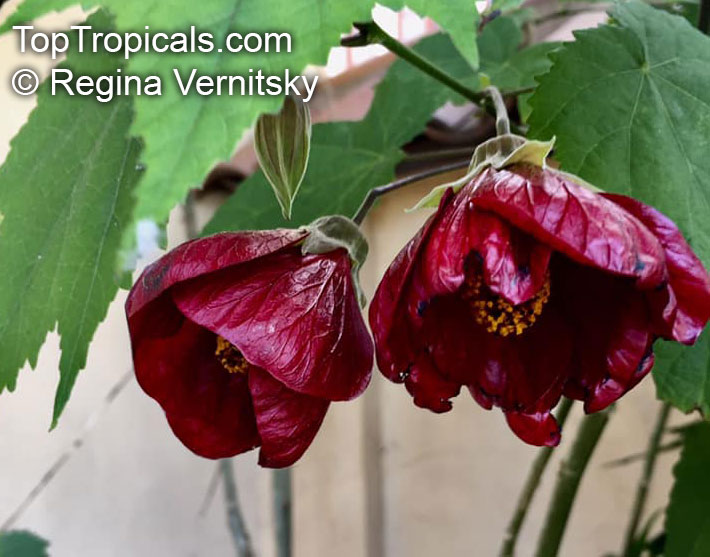
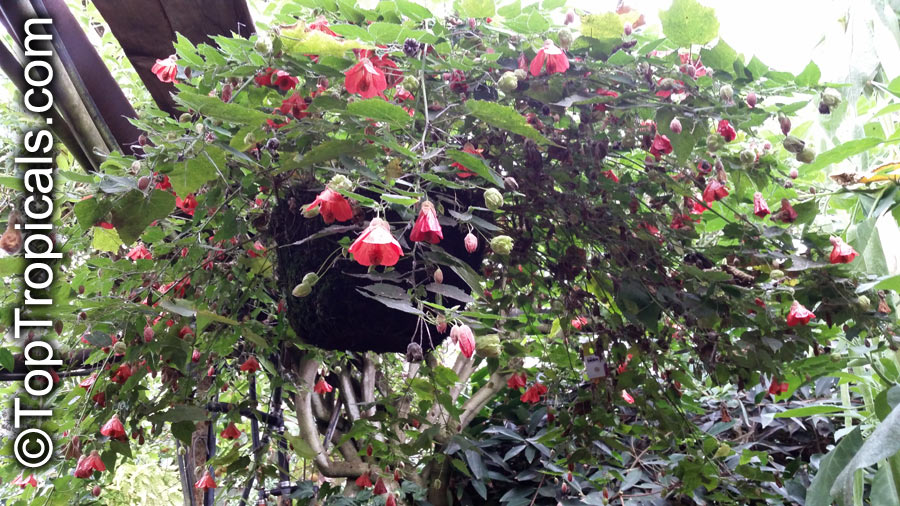
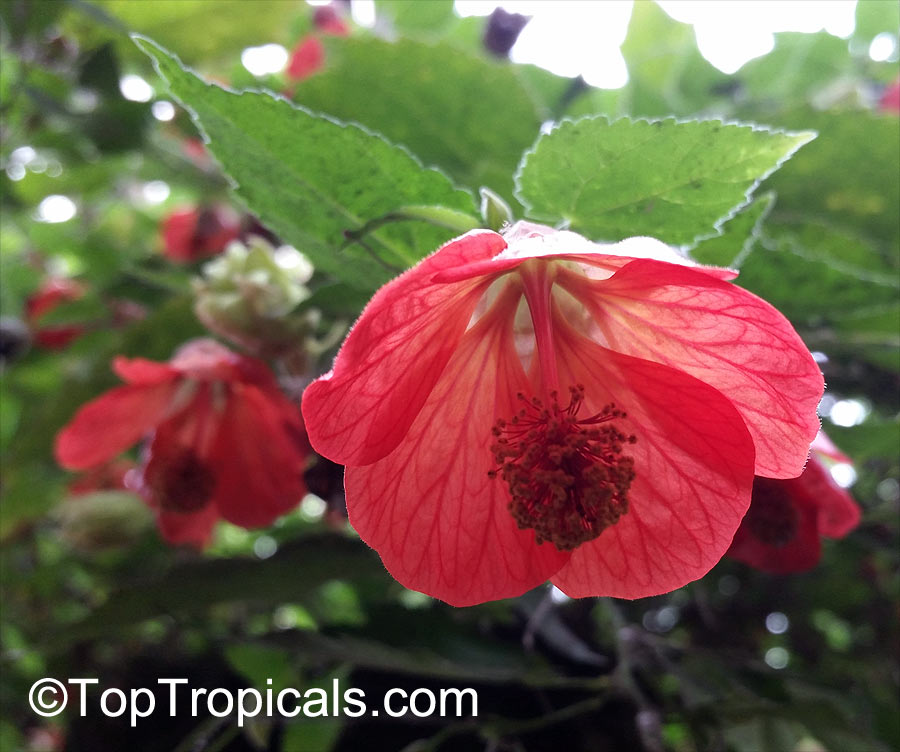
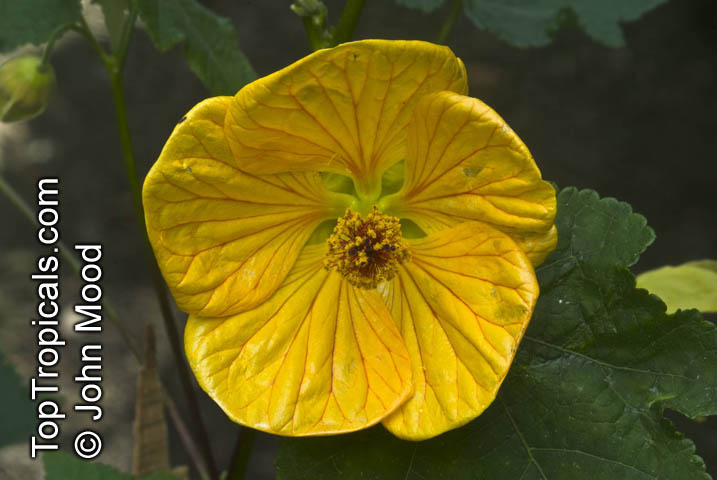
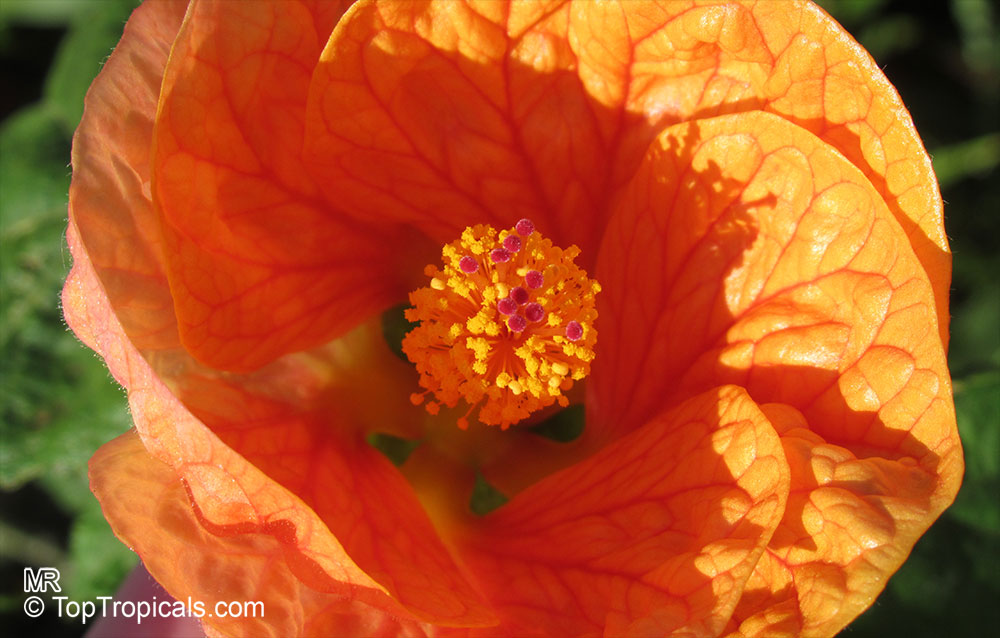
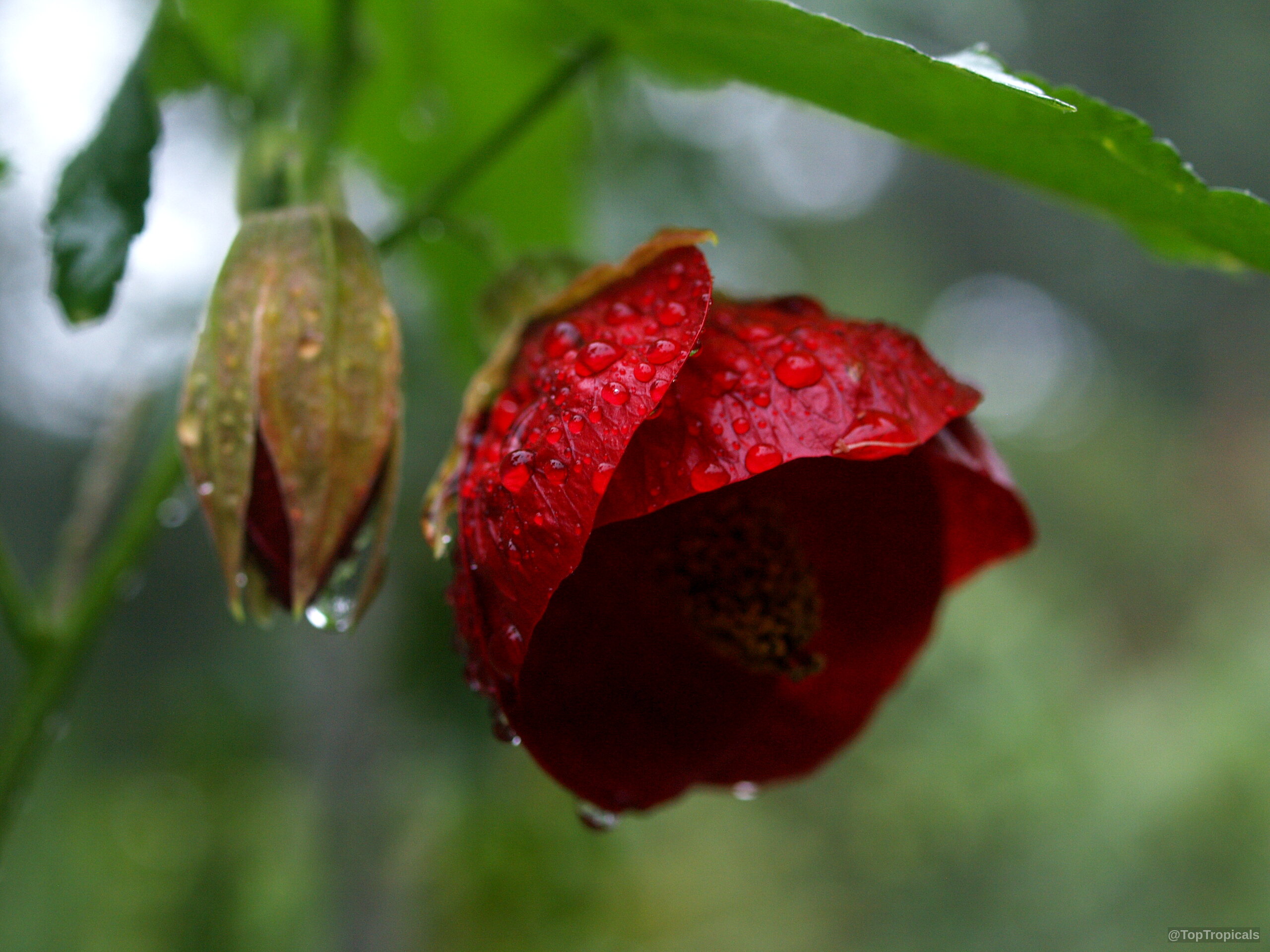
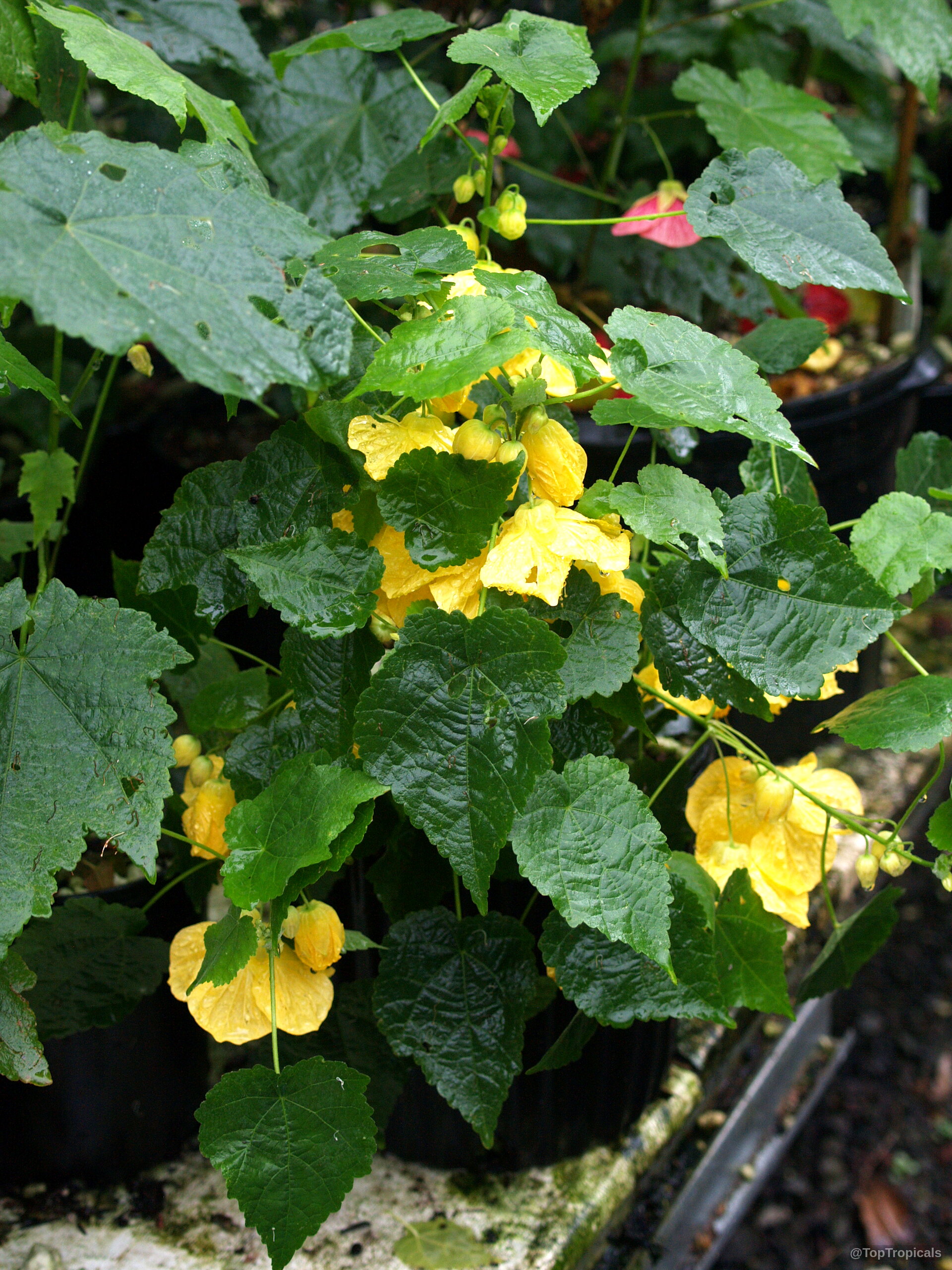
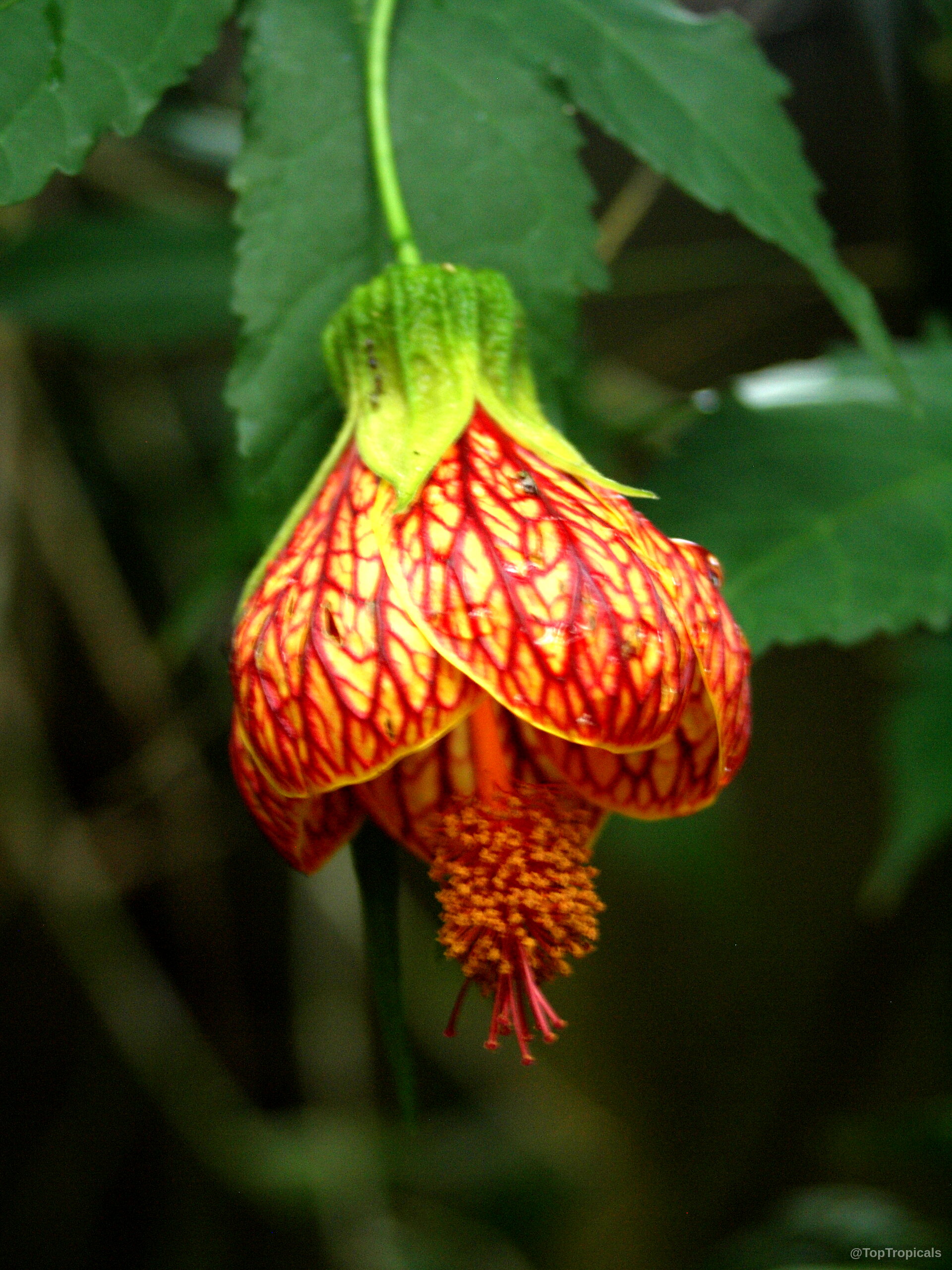
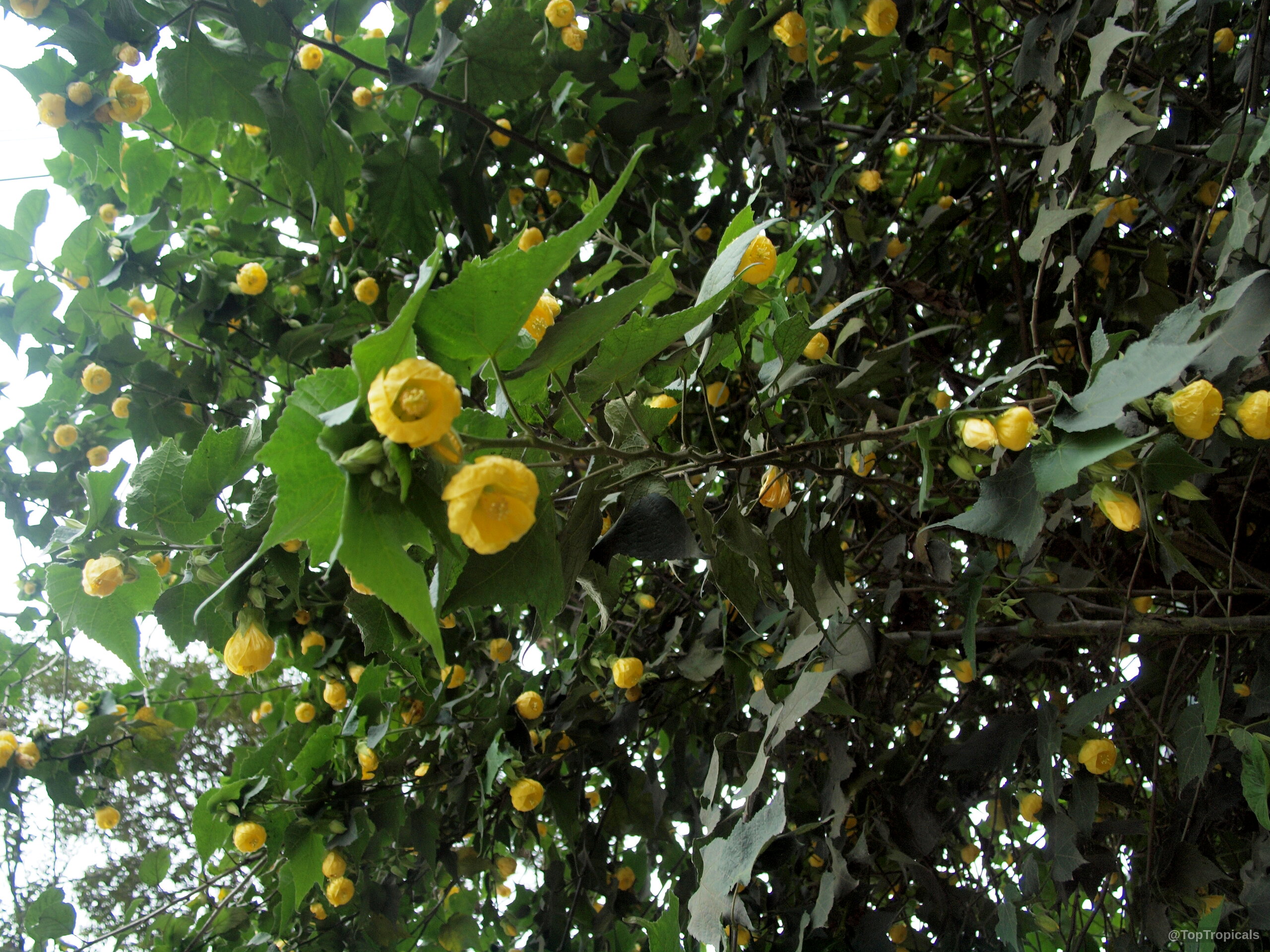
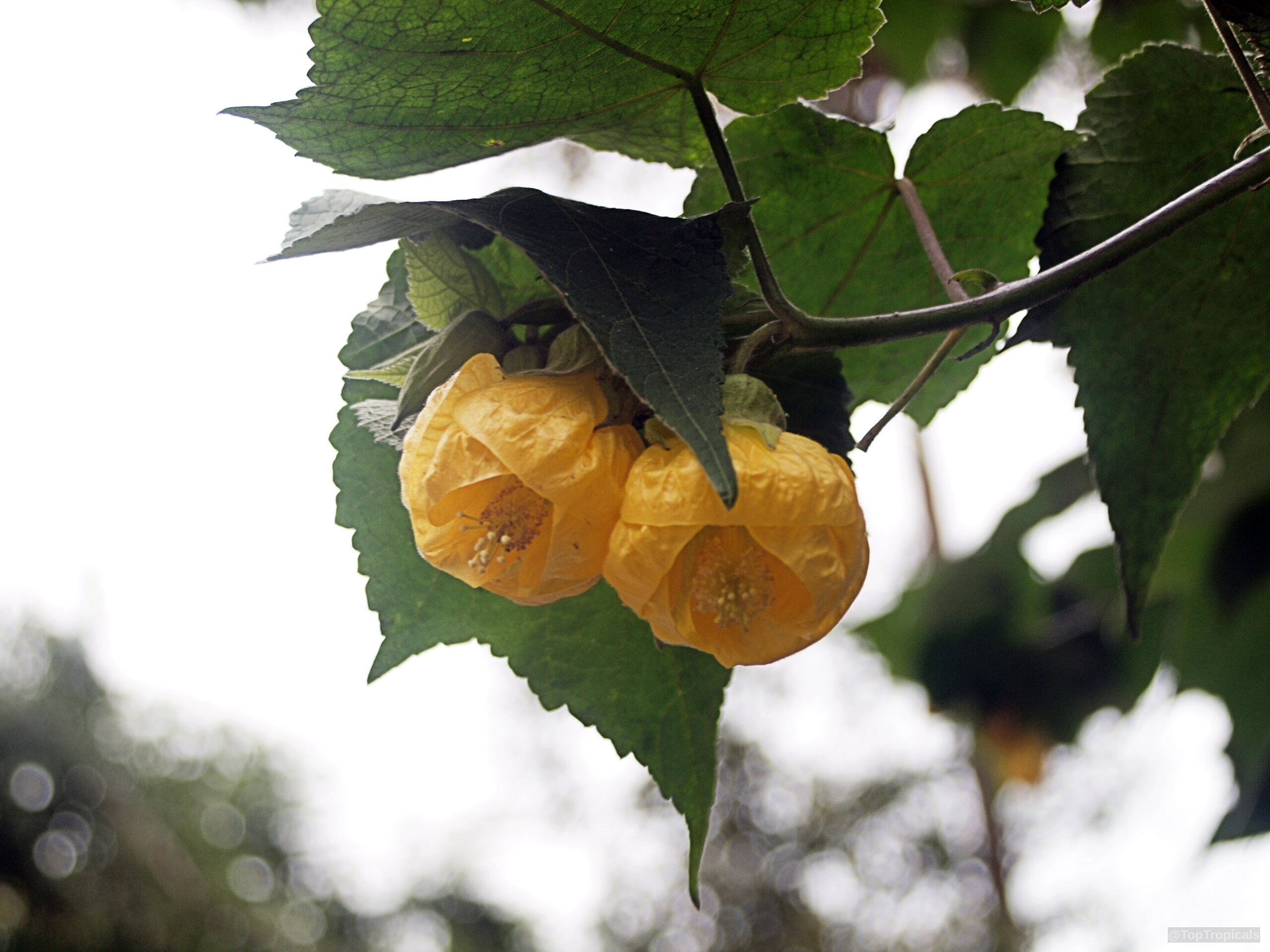
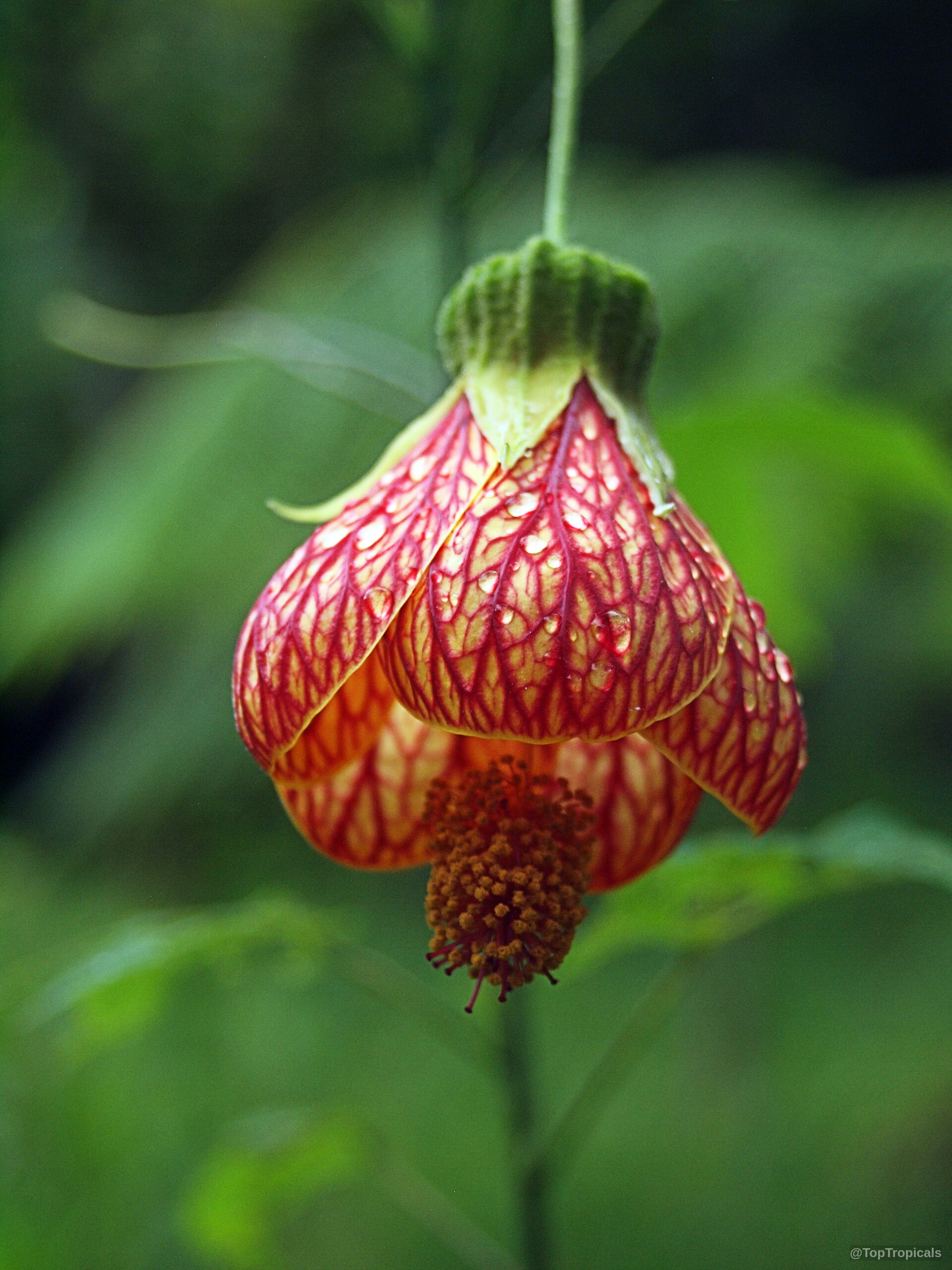
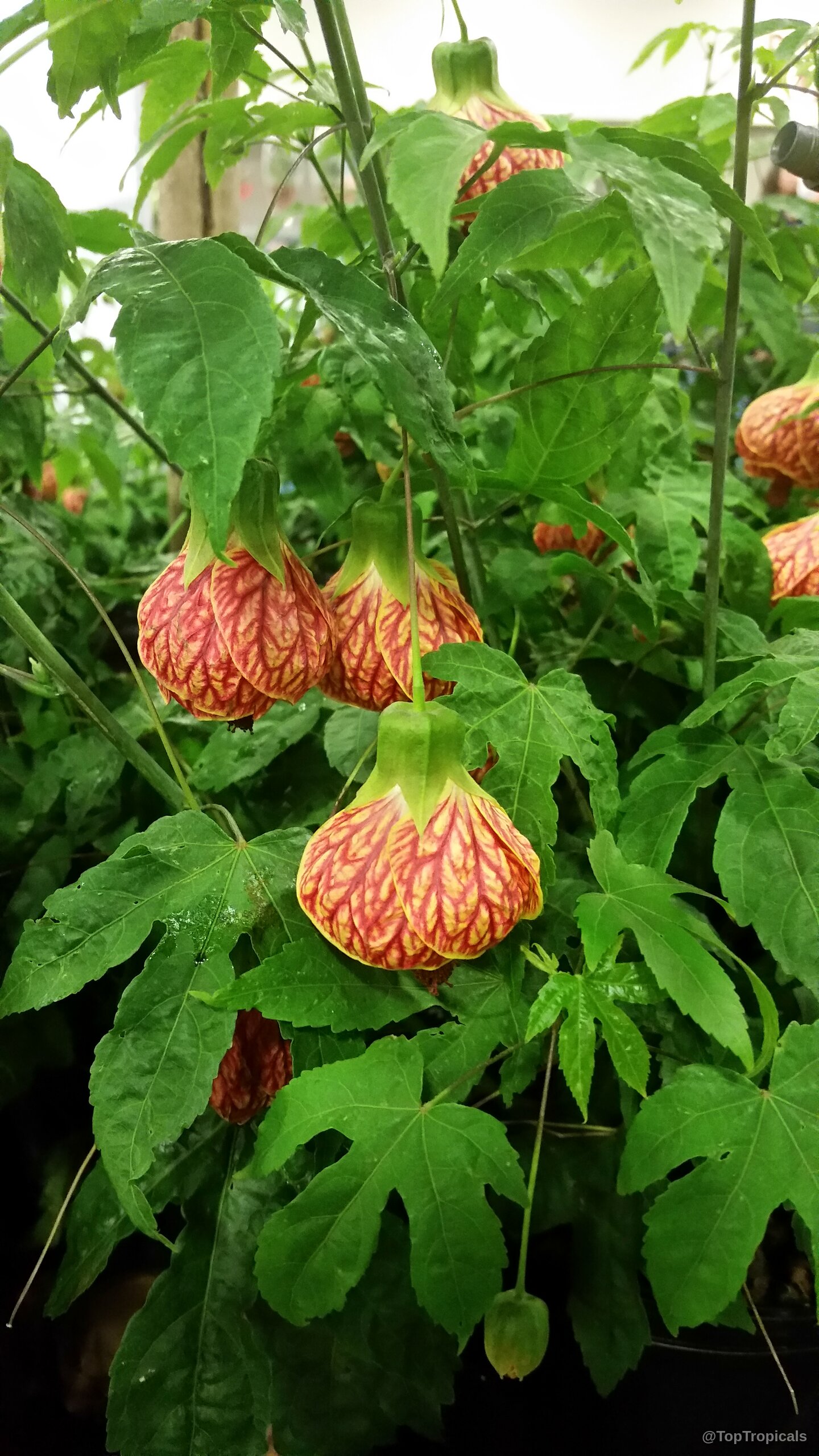
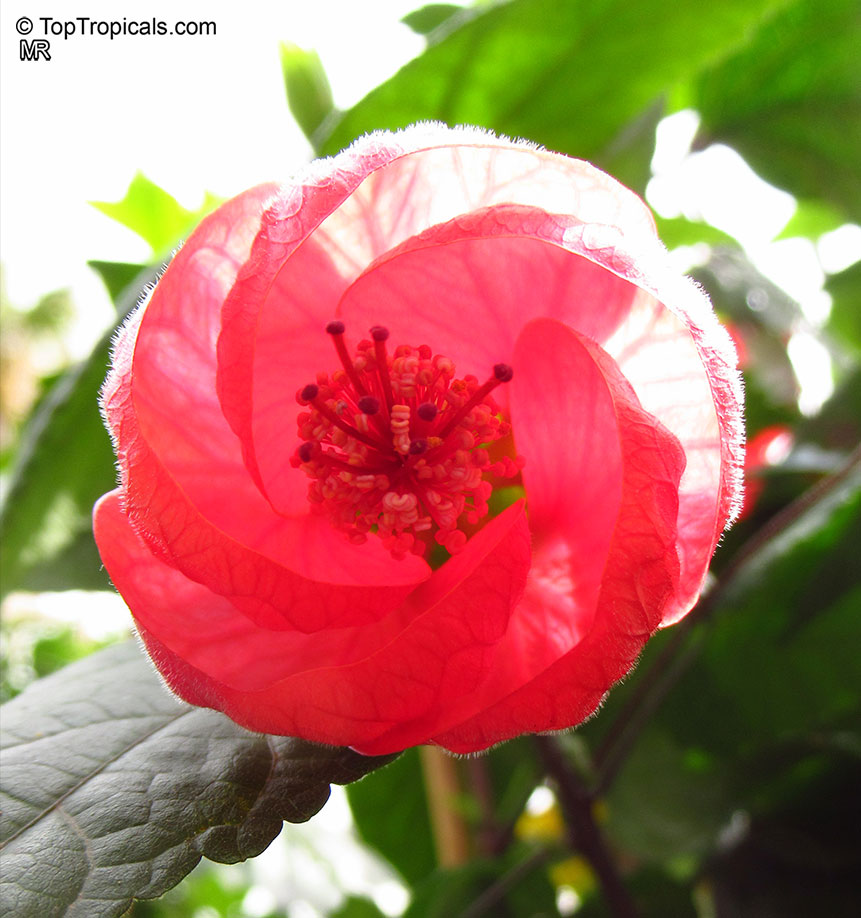
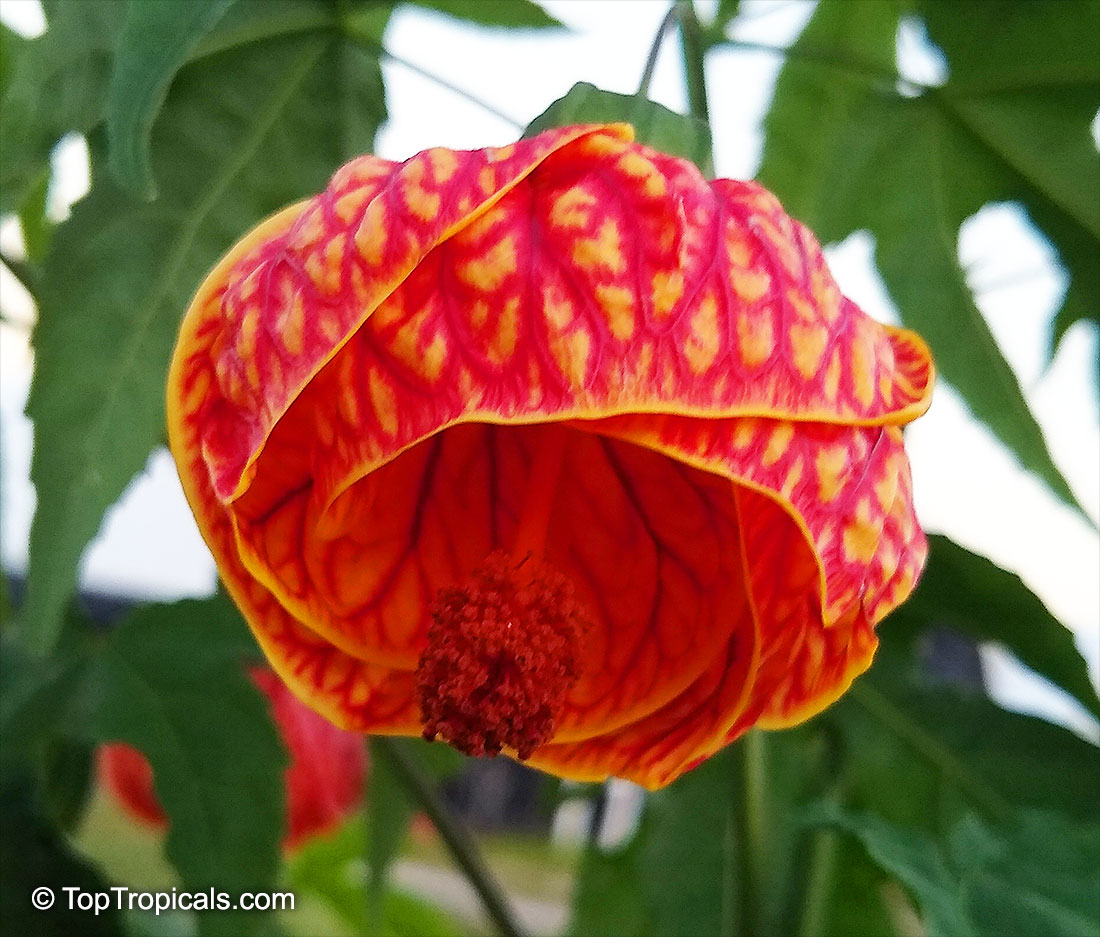
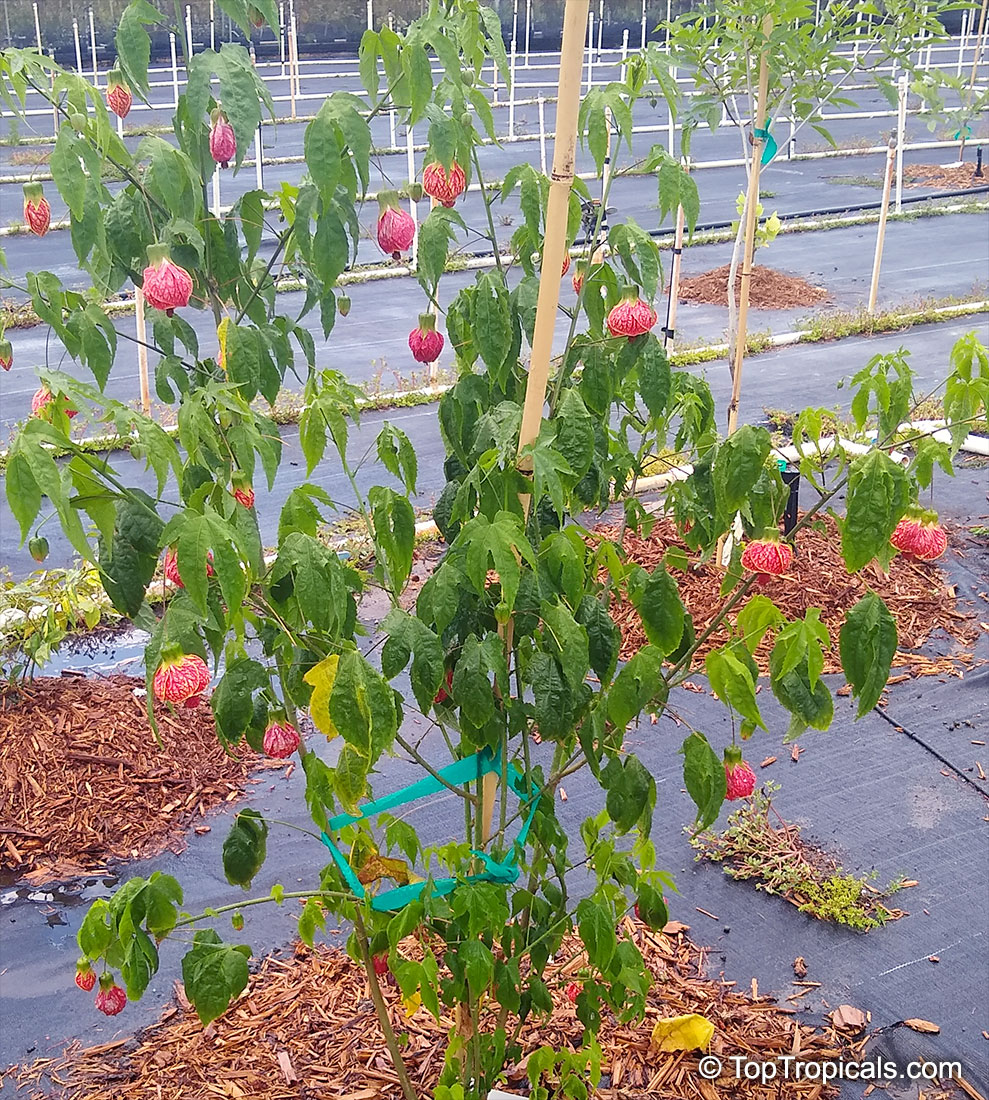
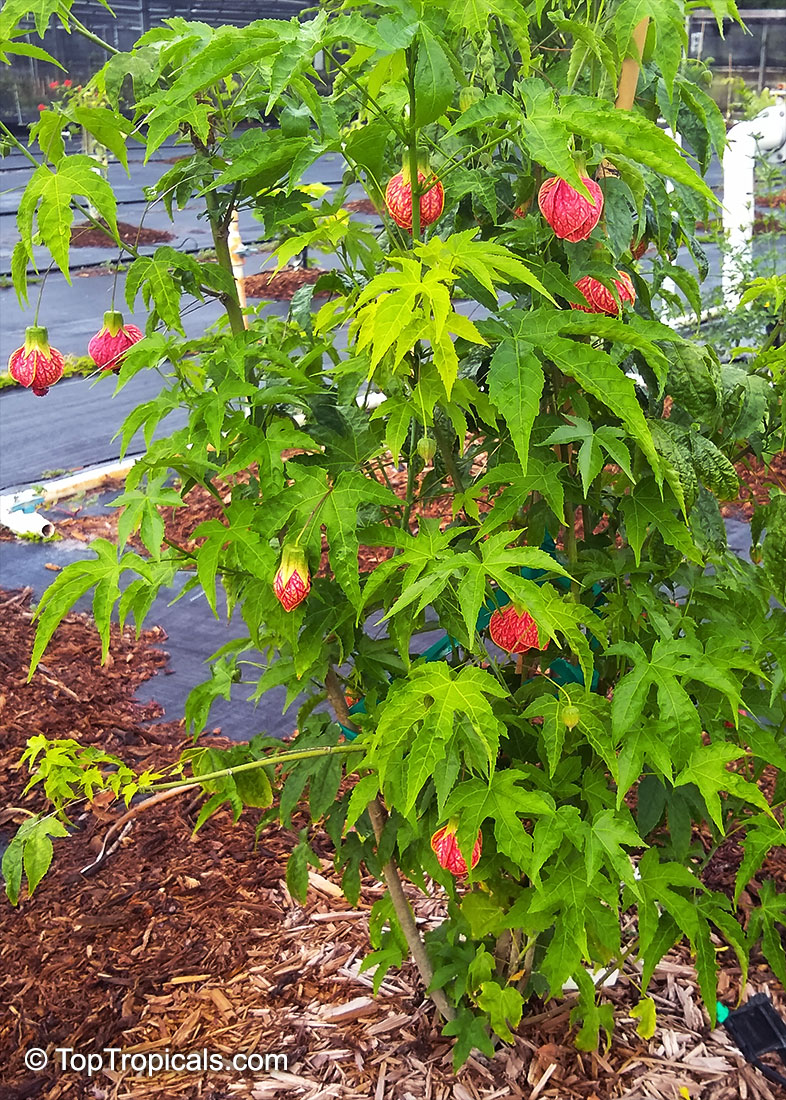
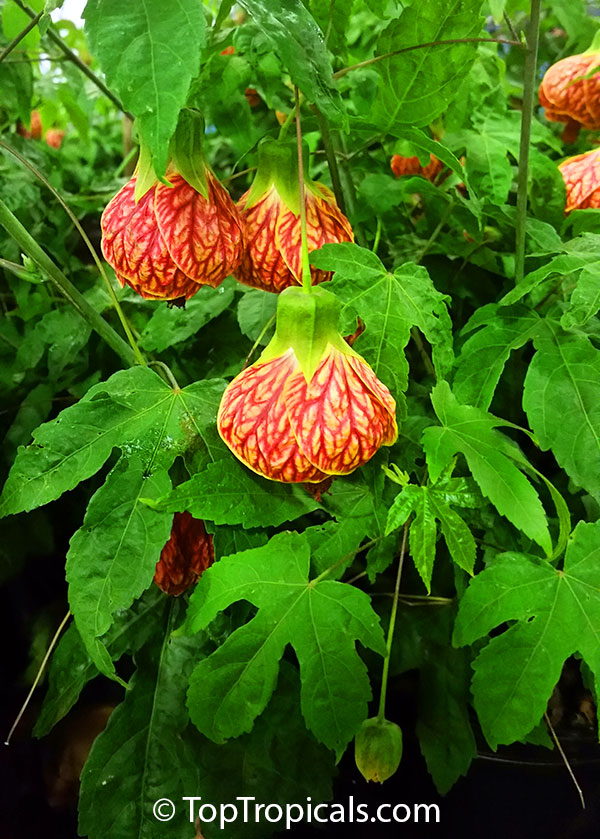
Abutilon species, commonly known as flowering maples or Chinese lanterns, are evergreen or semi-evergreen shrubs grown for their attractive maple-like foliage and pendant, bell-shaped blooms. Many garden forms are complex hybrids, combining traits from several South American species. These hybrids are valued for their long flowering season, compact to medium growth habit, and wide color range including white, yellow, orange, pink, and red. Some cultivars feature variegated leaves, adding extra ornamental appeal.
Hybrid abutilons thrive in full sun to partial shade and prefer fertile, well-drained soil with regular watering. They benefit from pruning in early spring to maintain shape and encourage branching, and pinching growing tips promotes a bushier form. Hardy in USDA Zones 8-11, they can tolerate brief drops to near freezing but require frost protection. In colder climates, hybrids are well-suited to container culture, allowing them to be overwintered indoors or in sheltered areas. Regular feeding during the growing season supports continuous blooming, and spent flowers should be removed to prolong display.
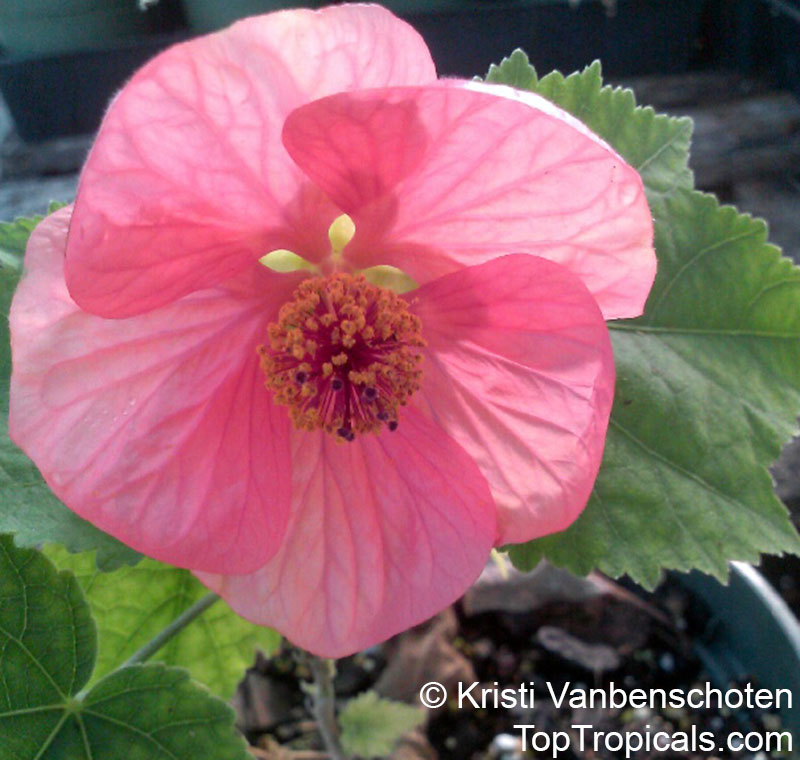
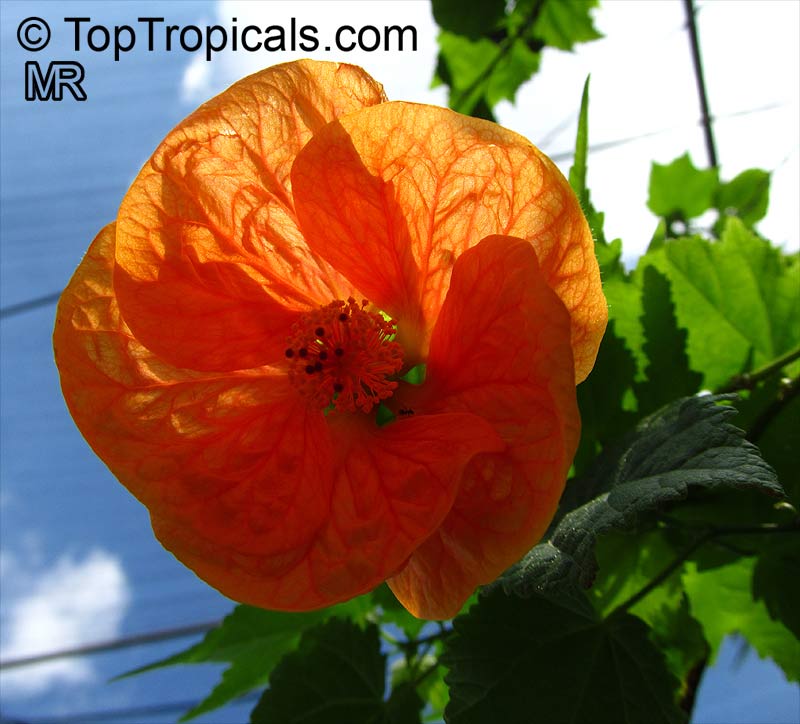
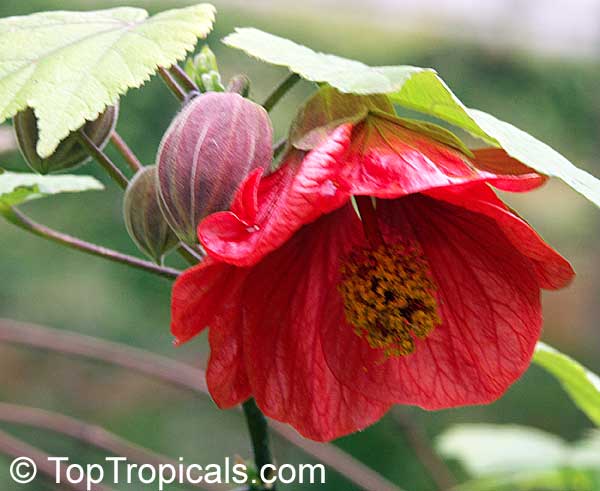
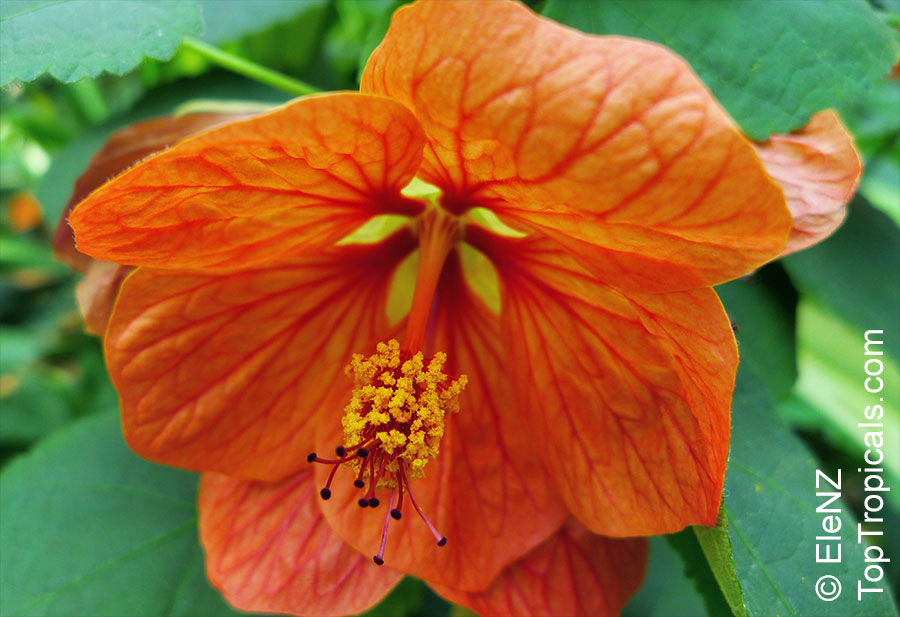


Recommended Fertilizer: SUNSHINE Megaflor - Bloom Nutrition Booster
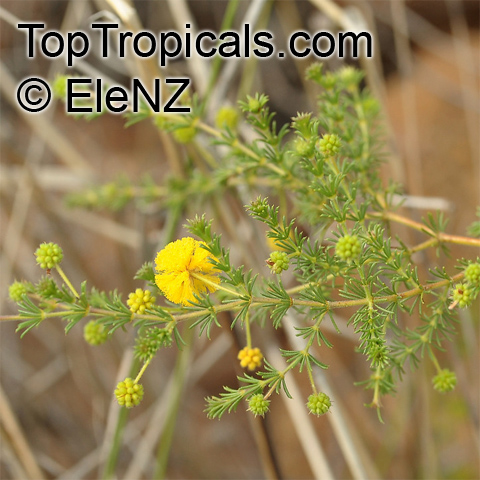
Botanical name: Acacia adoxa
Common name: Acacia
Family: Fabaceae
Subfamily: Mimosoideae
Origin: Australia
USDA Zone: 9-10

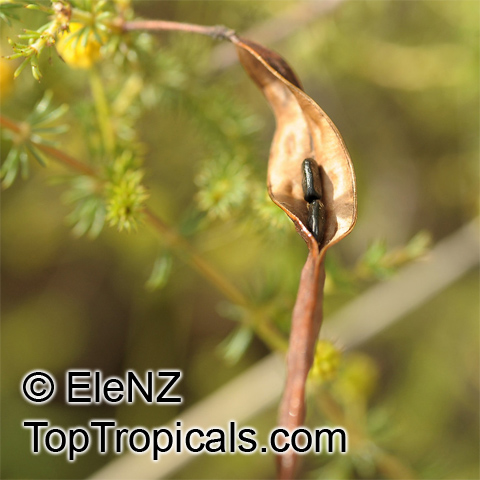
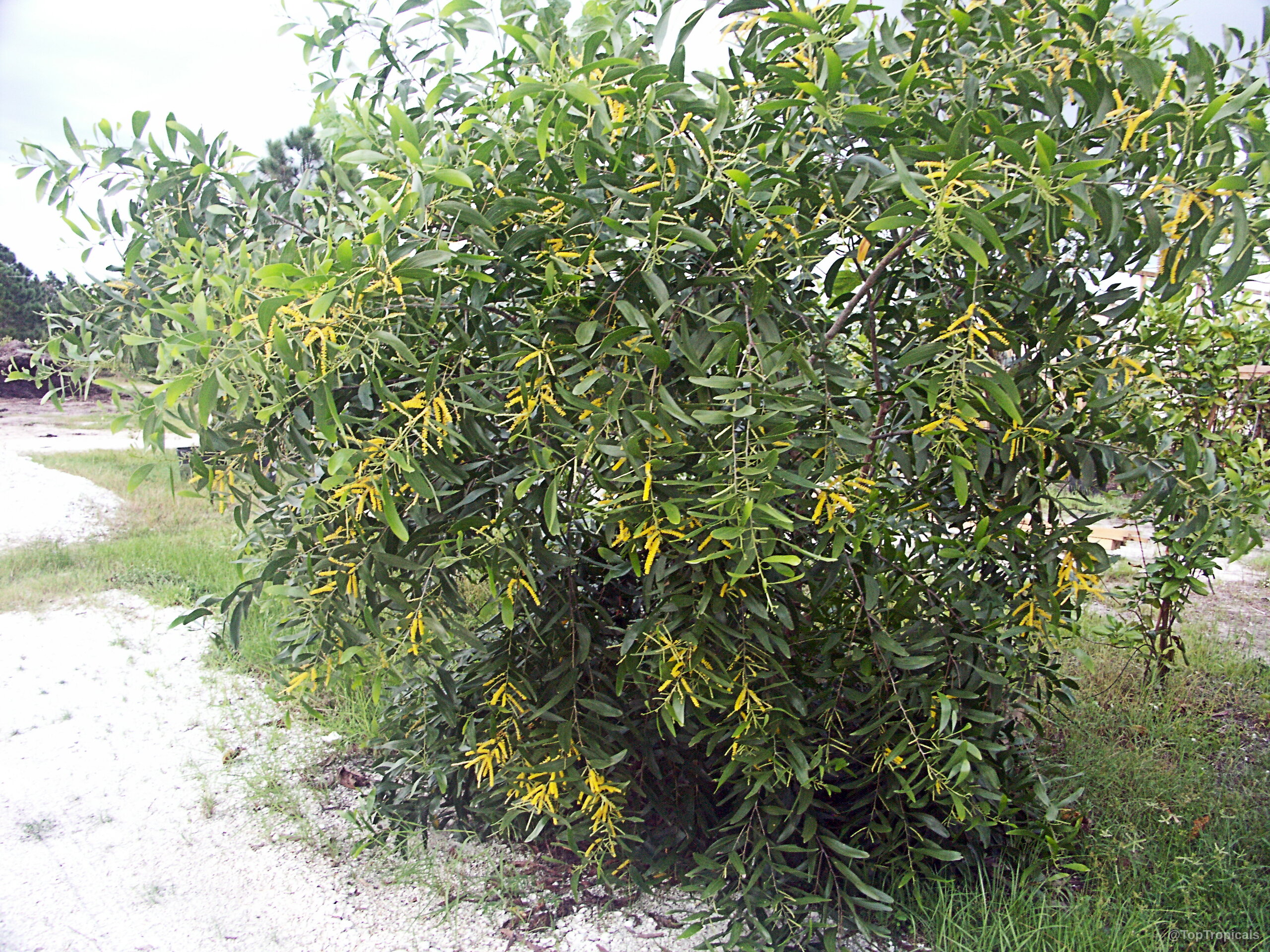
Botanical name: Acacia auriculiformis
Common names: Darwin Black Wattle, Ear Pod Wattle
Family: Fabaceae
Subfamily: Mimosoideae
Origin: Australia, New Guinea
USDA Zone: 9-11

Very fast growing, undemanding ornamental and shade tree. Honey-sweet, showy yellow flowers attract bees and butterflies. The plant is amazing in its ability to recolonize waste. Hard to kill. Can grow as much as 6-8 ft per season. Mature trees are medium sized. If you are looking for a fast result, this shade tree is for you. The plant is amazing in its ability to recolonize waste, paper mill sludge; even uranium spoils. This is the only tree found on a 20-year old uranium spoil. Cold hardy to some freeze.


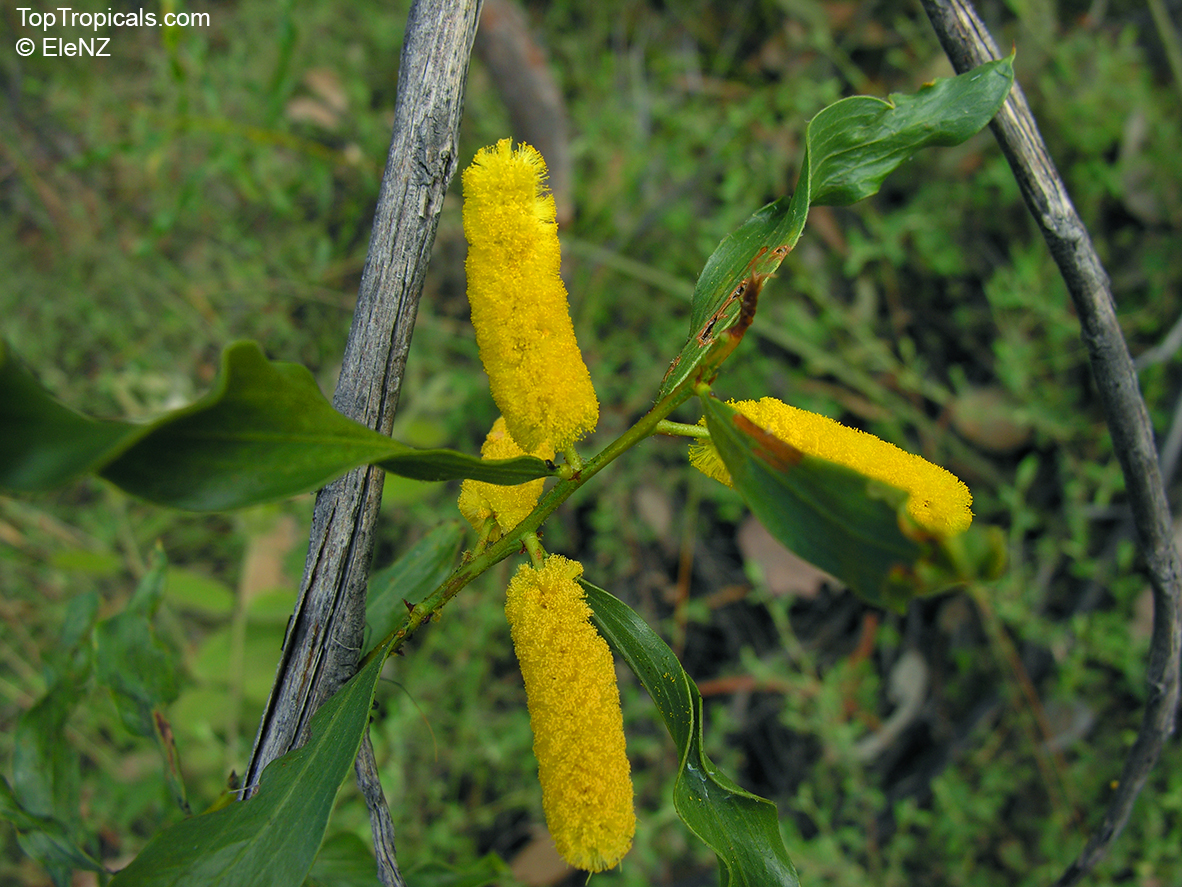

Botanical name: Acacia baileyana
Common name: Purple Fernleaf Acacia
Cultivar: Purpurea
Family: Fabaceae
Subfamily: Mimosoideae
USDA Zone: 9-11

Acacia baileyana 'Purpurea' (Purple Fernleaf Acacia) is a small, drought tolerant tree that can reach 10-20 feet in height in the right conditions. It thrives in full sun, and requires moderate water, which decreases once established. It has ornamental foliage, and produces beautiful yellow, orange flowers. These fragrant blooms attract butterflies and hummingbirds to your garden. It grows best in USDA hardiness zones 9-11.
When planting Acacia baileyana 'Purpurea', dig a hole that is twice as wide as the root ball and around the same depth. This will ensure the roots have plenty of space to spread out. Once planted, water deeply to help the roots establish.
For cold regions, it is best to plant Acacia baileyana 'Purpurea' in a pot and move it indoors in cold winter months. Make sure the pot is well drained and replant every few years for optimal growth. Feeding with a fertilizer in the spring and summer will help promote growth. If you see any signs of disease or pests, treat them as early as possible with an appropriate product.
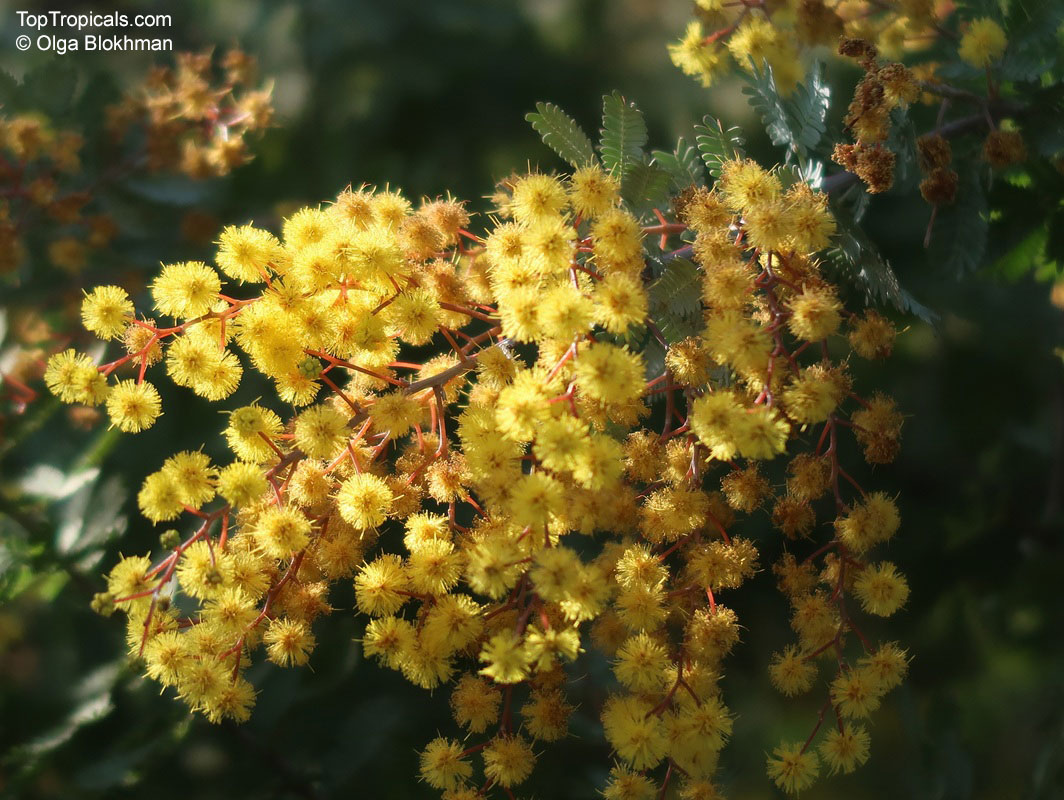
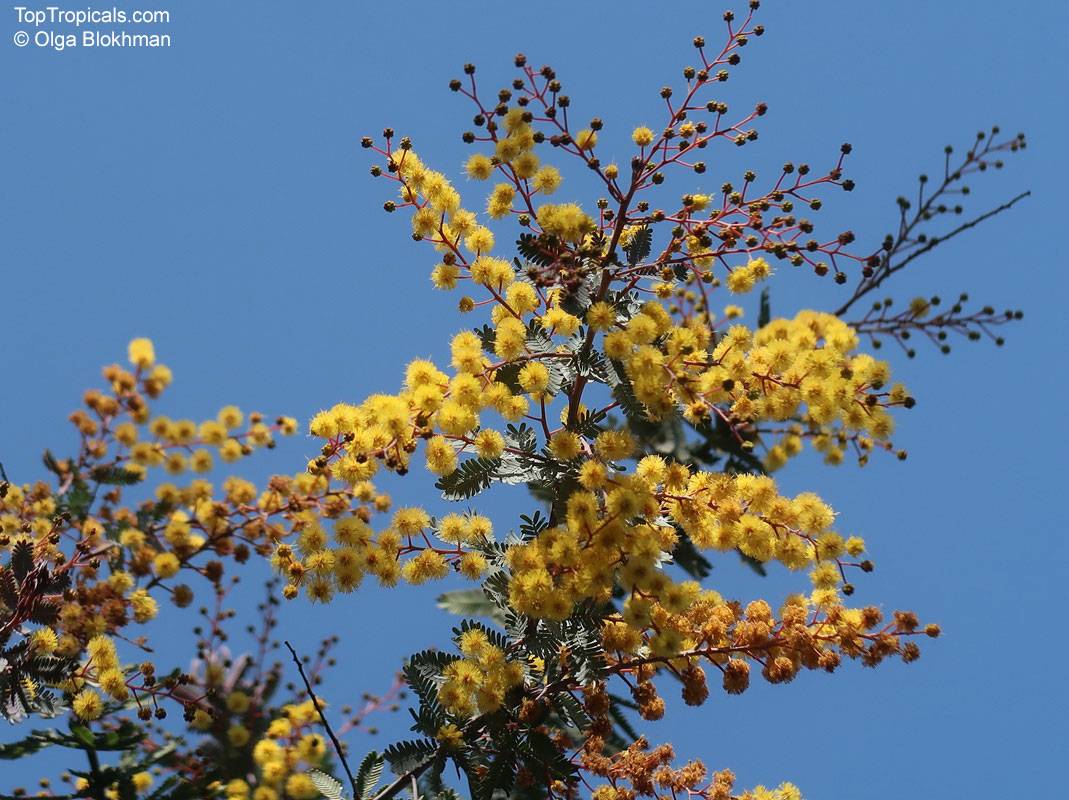
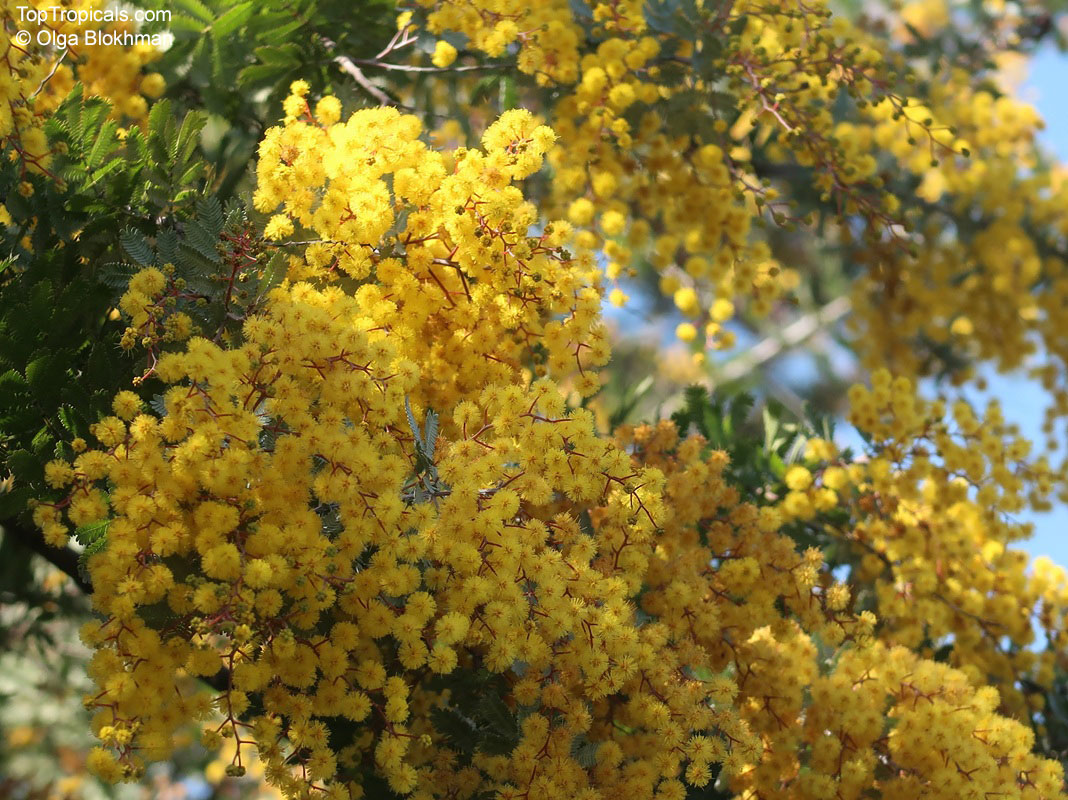
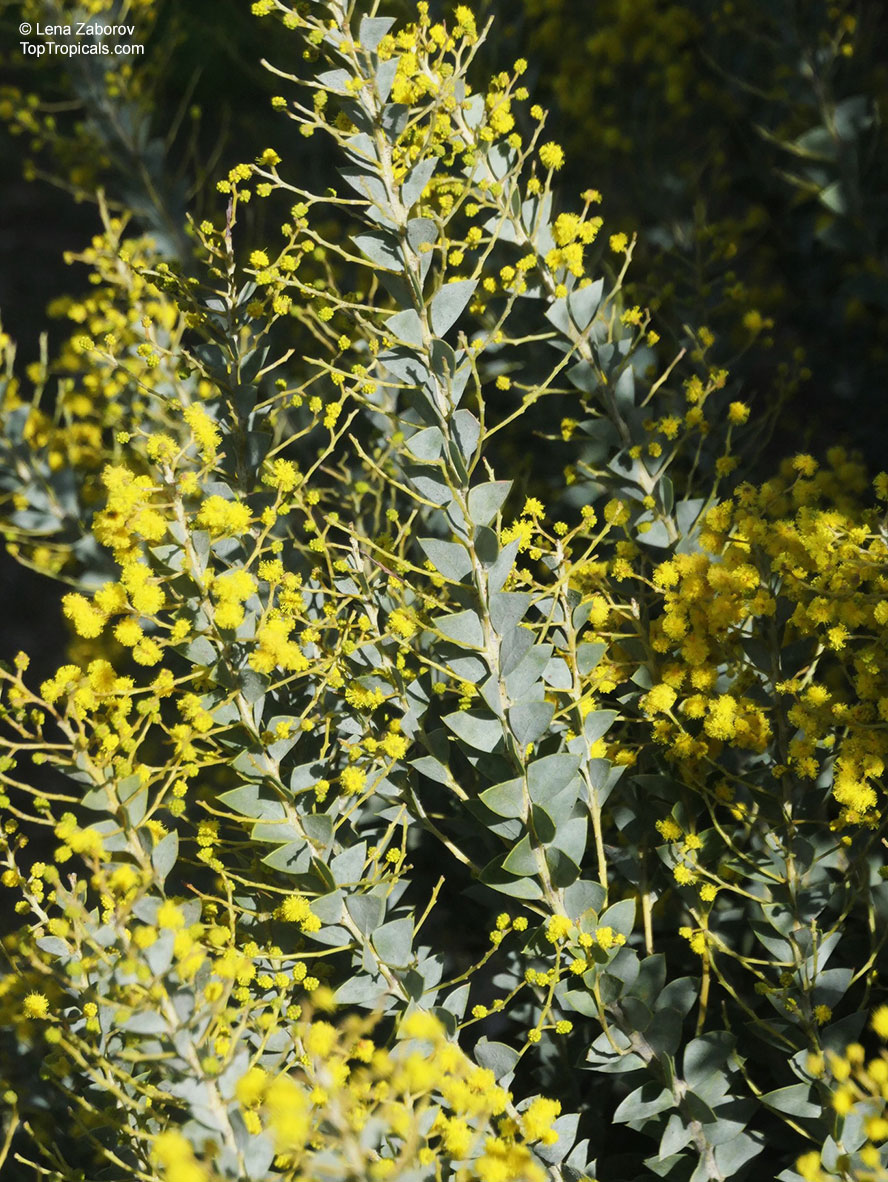
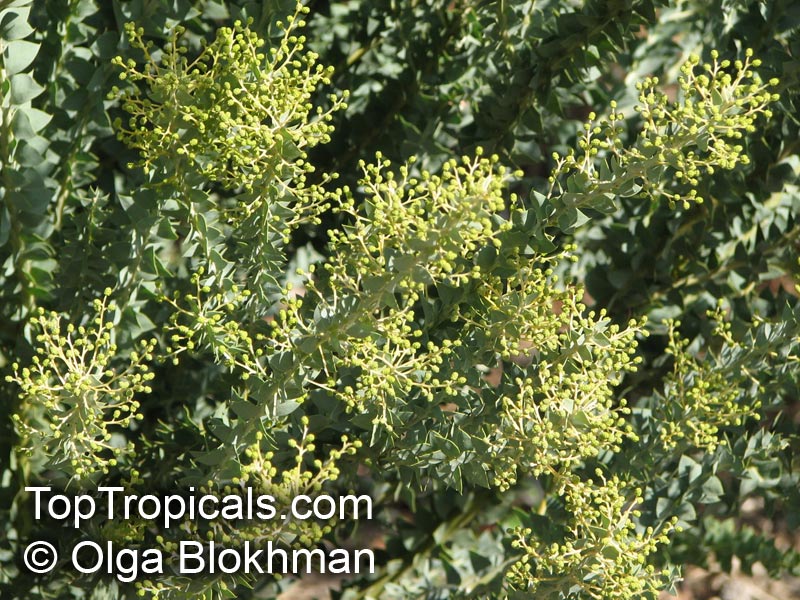
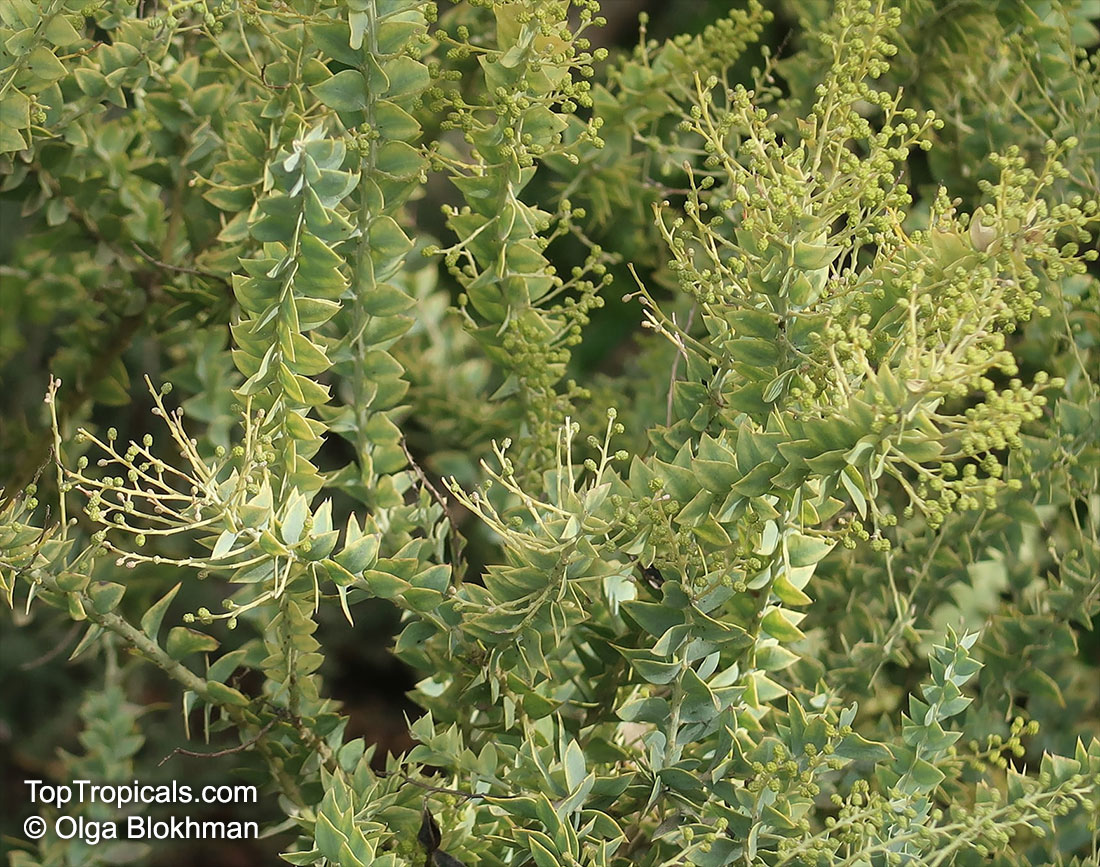
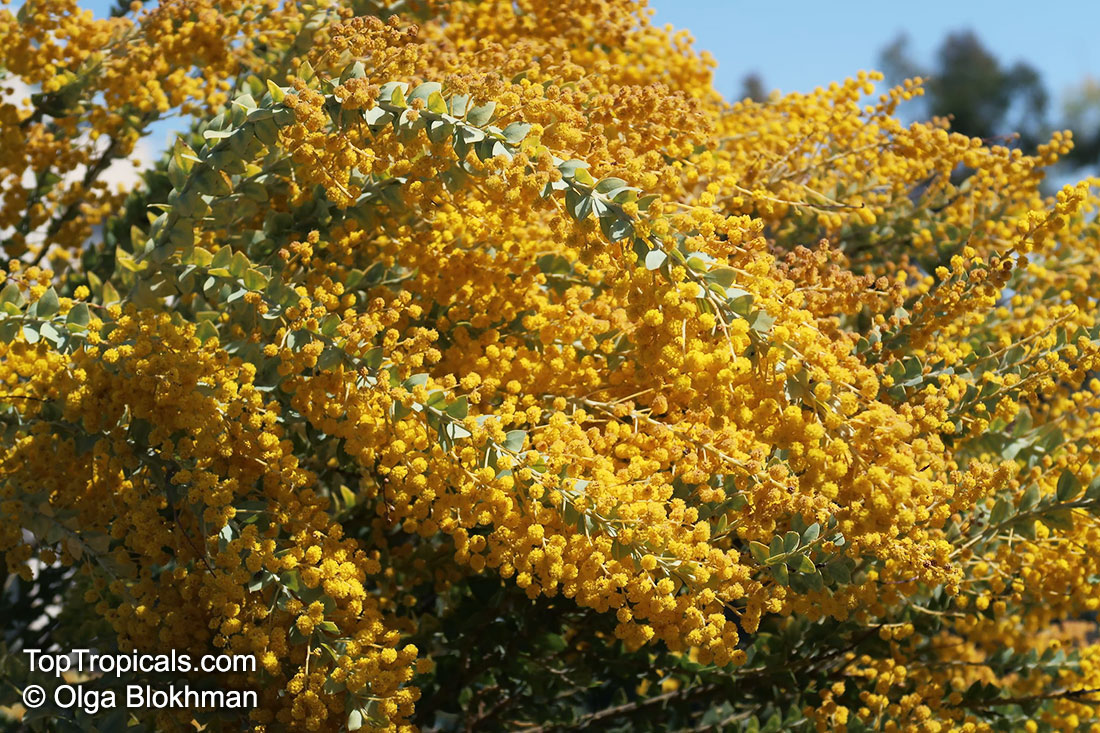
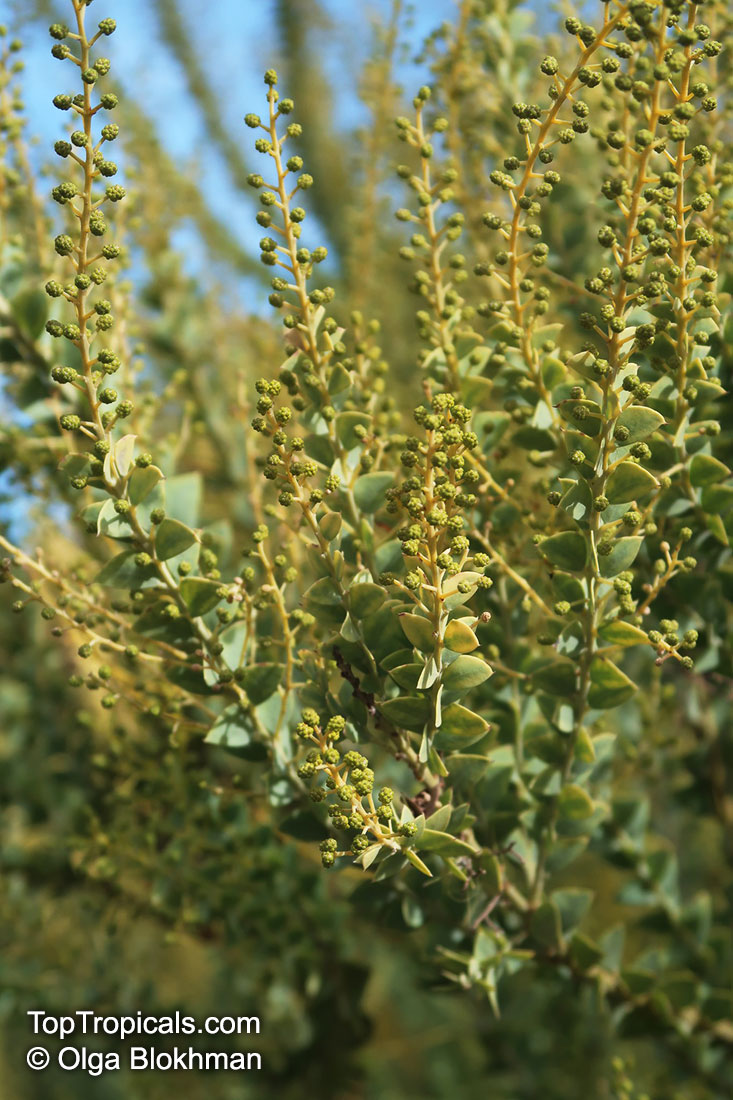
Botanical name: Acacia cultriformis
Common names: Knife-leaf Wattle, Dogtooth Wattle, Half-moon Wattle, Golden-glow Wattle
Family: Fabaceae
Subfamily: Mimosoideae
Origin: Australia
USDA Zone: 9a-11
Cold tolerance: 25°F
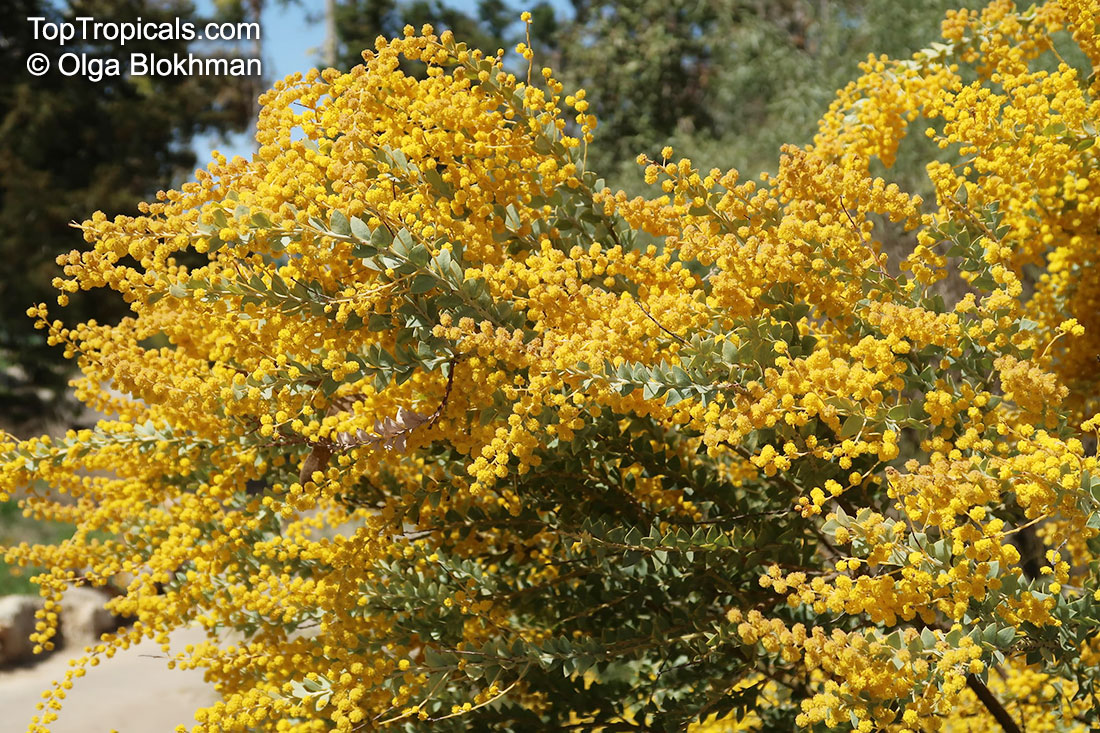
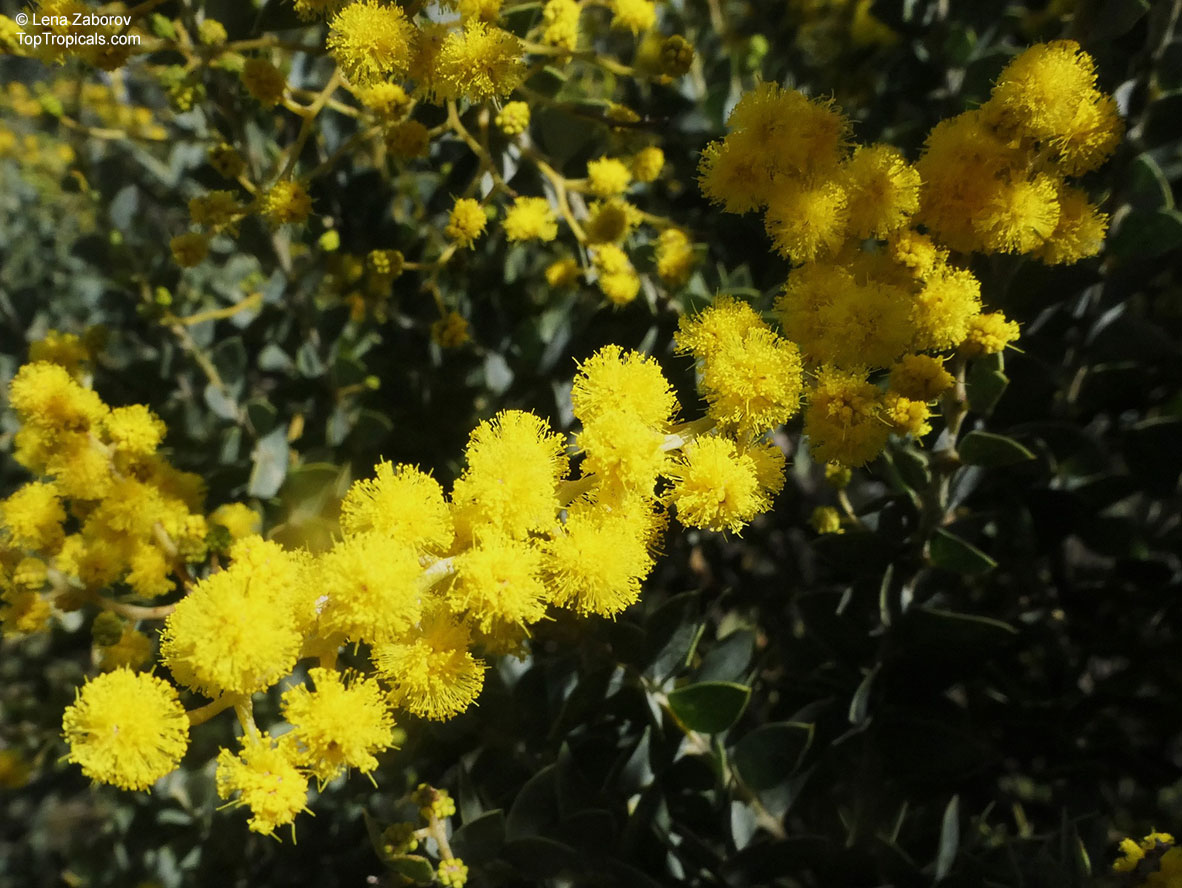
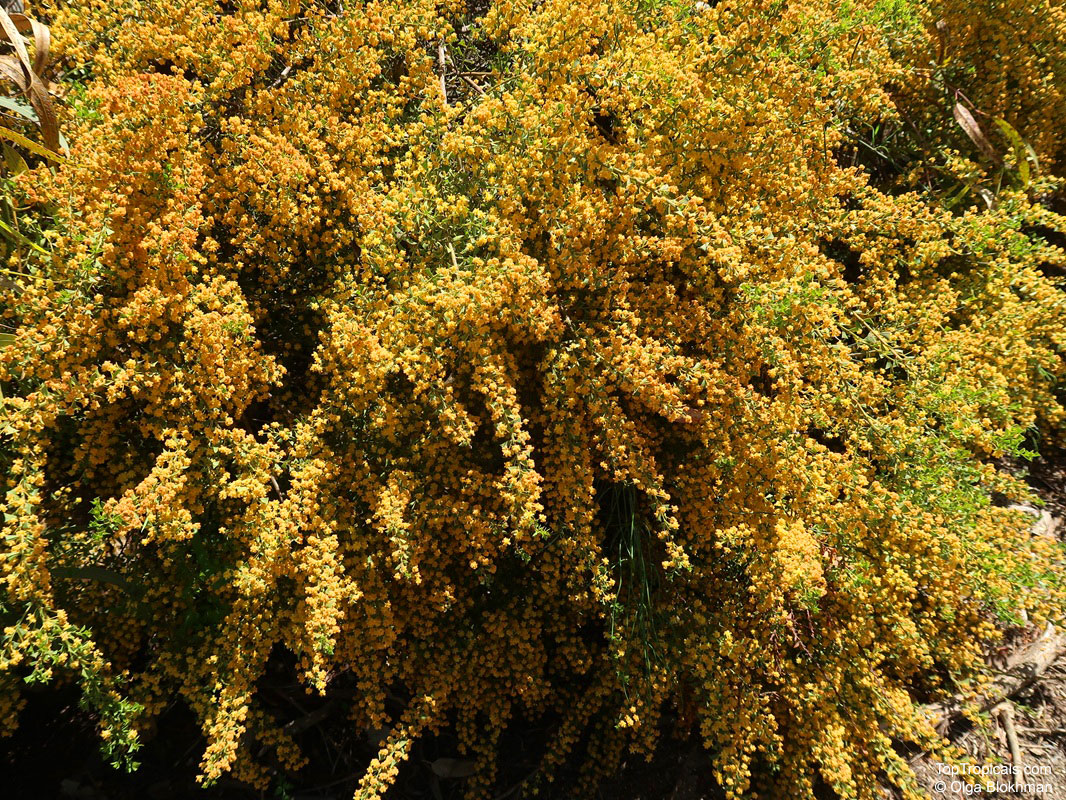
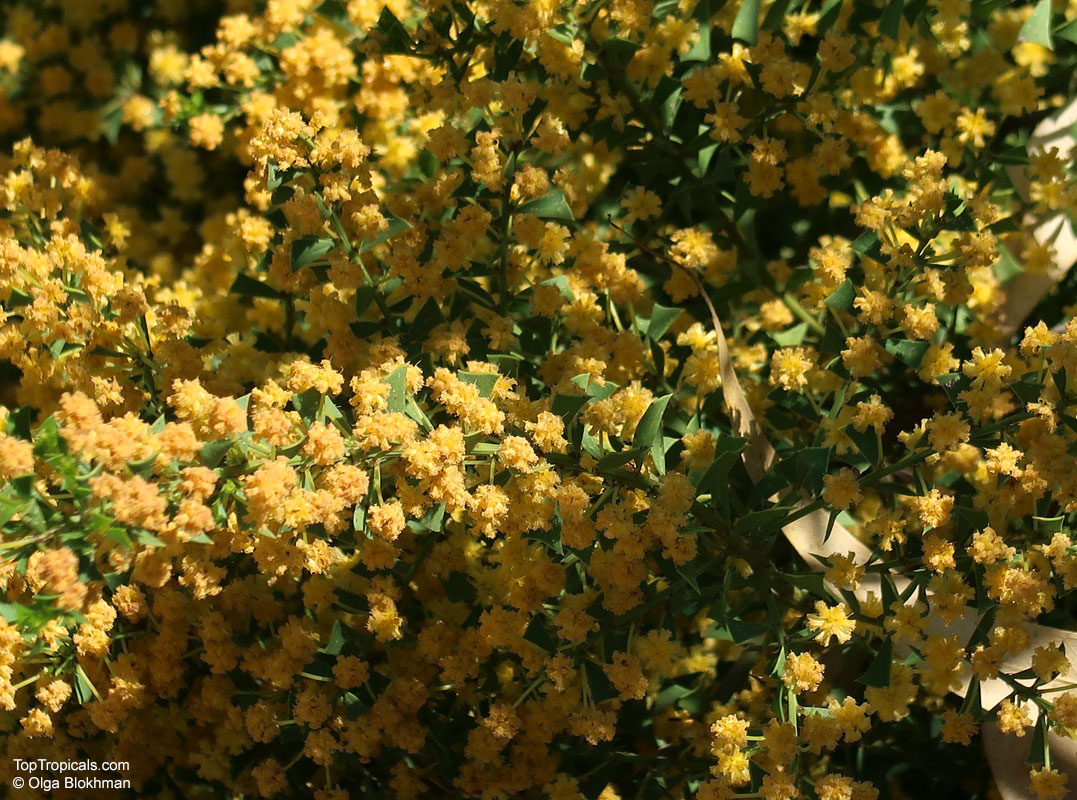
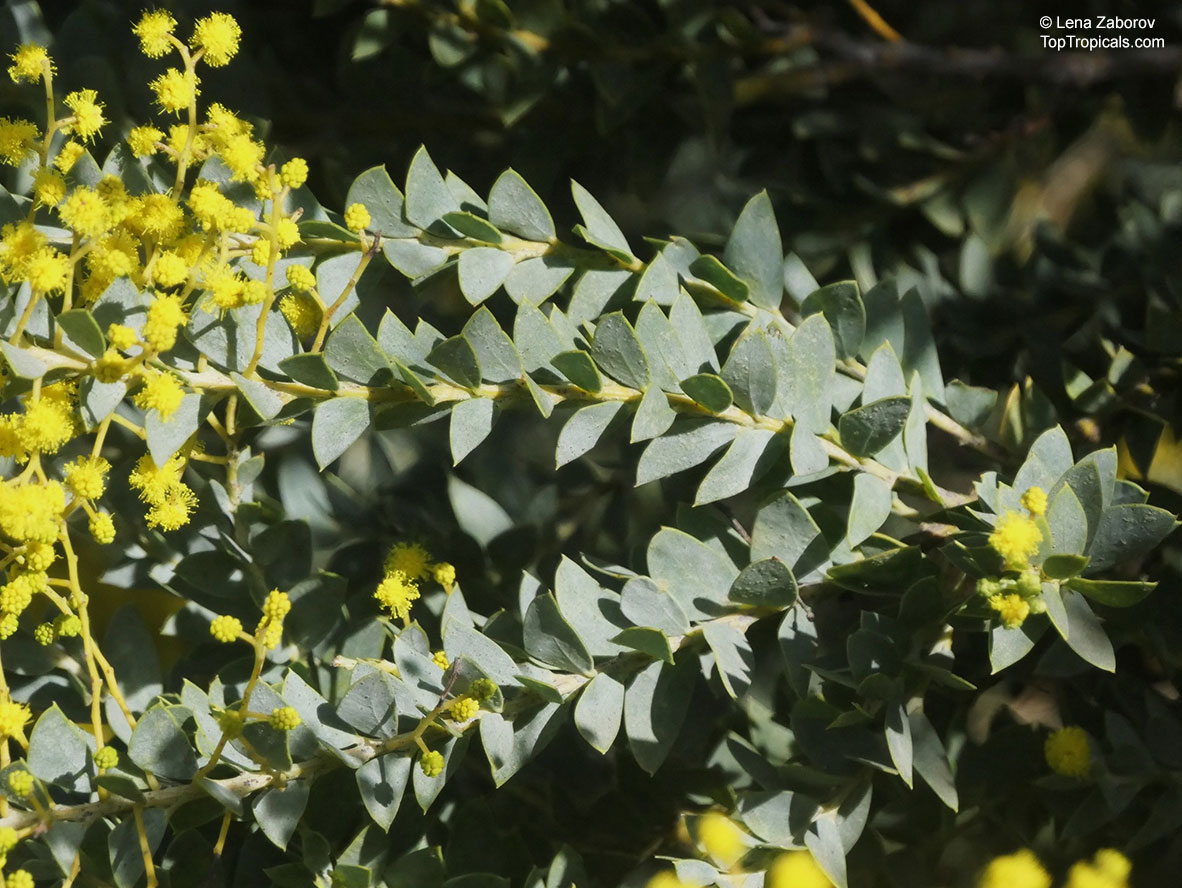
Acacia cultriformis is a woody shrub with an upright or spreading habit that grows to 4 m (13 ft) in height.
Its bright flowers and attractive leaves make Acacia cultriformis one of the most popular wattles in cultivation. Drought tolerant, it can be used to combat soil erosion.
The flowers are edible and they are an ingredient used in some fritters. Yellow dye is extracted from the flowers and green dye is extracted from the seed pods
Botanical name: Acacia dealbata
Common names: Silver Wattle, Winter Mimosa tree
Family: Fabaceae
Subfamily: Mimosoideae
Origin: Australia
USDA Zone: 9-11
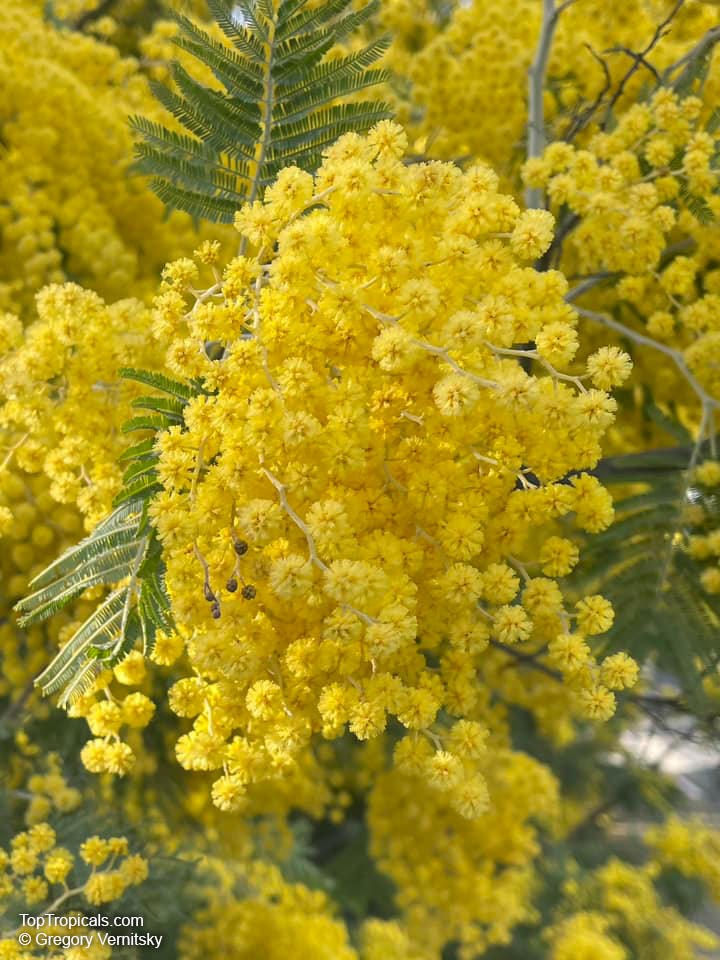
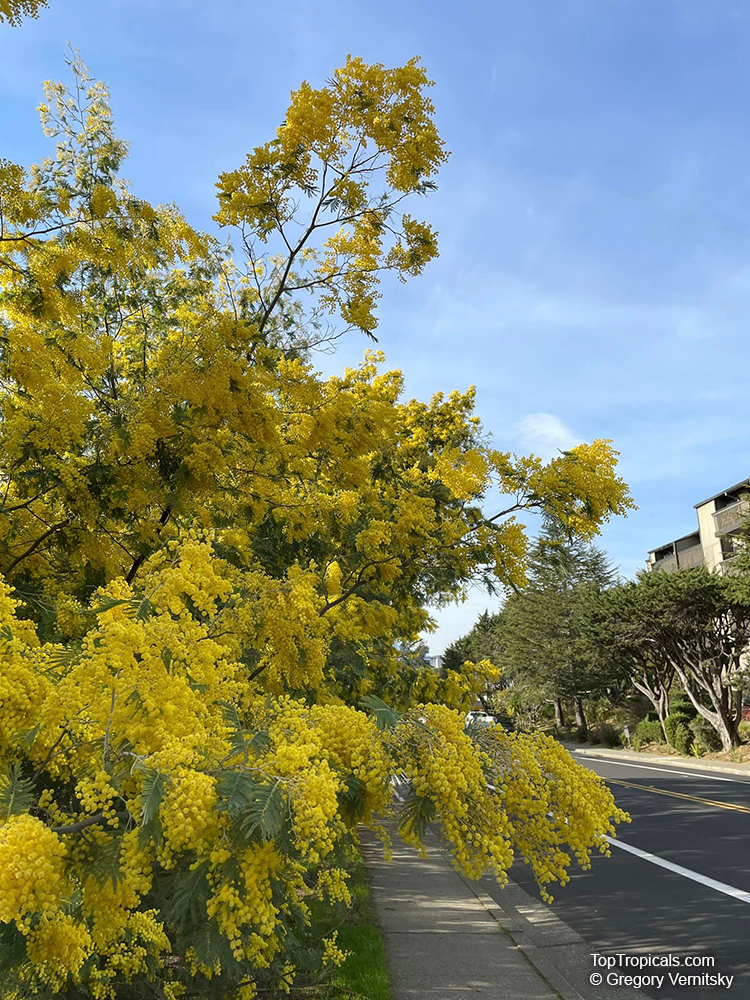
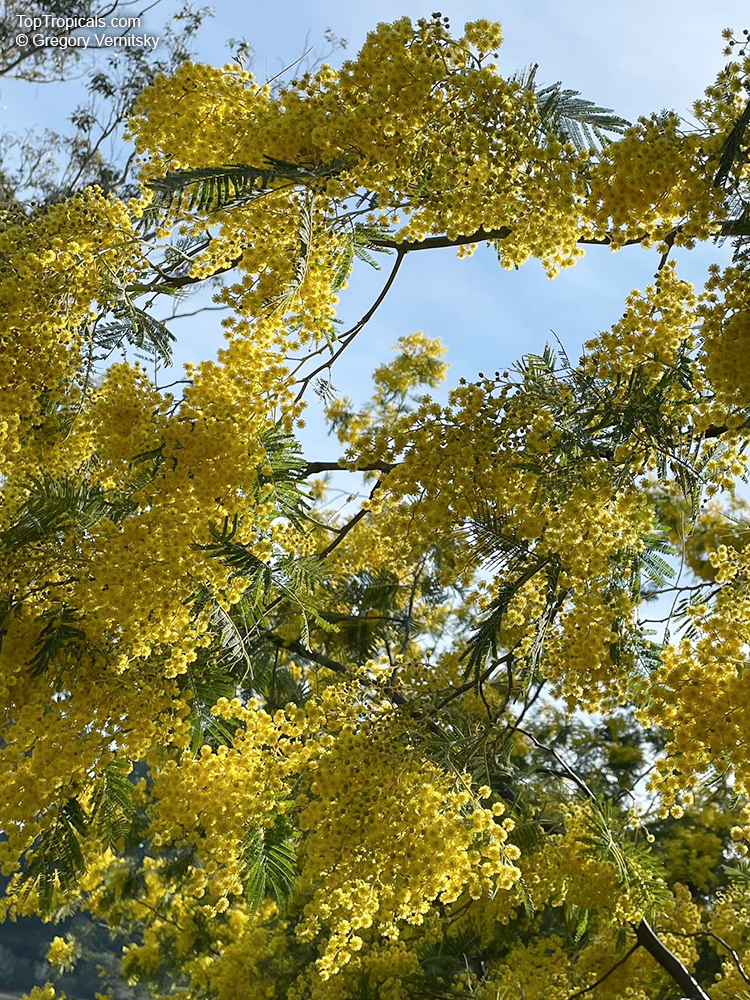
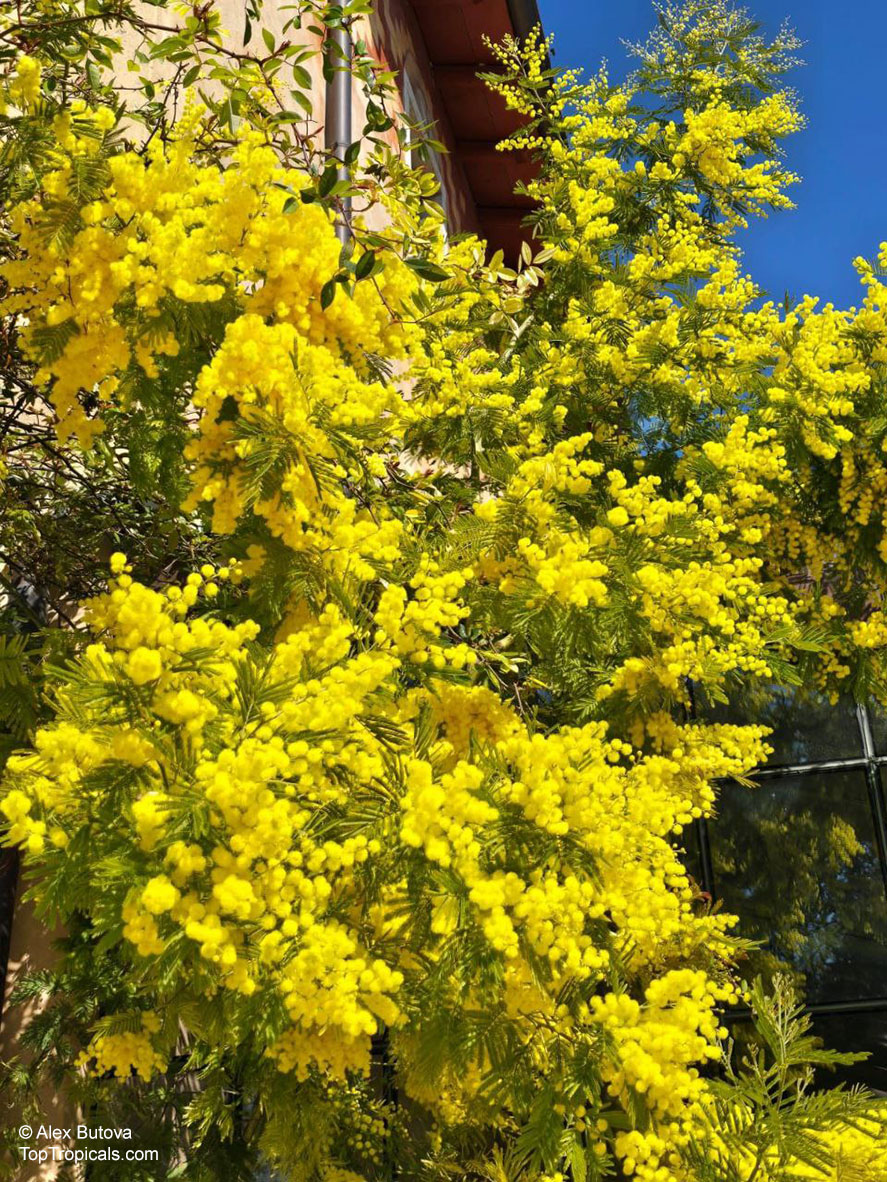
Acacia dealbata (Silver Wattle) is usually found growing in full sun and can tolerate a range of soils as long as it is well drained. It appreciates moderate water and should be kept evenly moist; it is also moderately drought tolerant once established. This small tree is native to Australia and grows to a height of 10-20 feet, with a spread of 8-15 feet. This tree is invaluable in the landscape due to the profusion of fragrant, yellow or orange flowers that are produced in early spring. Not only do they add much beauty and fragrance to the garden, but they attract both butterflies and hummingbirds.
It thrives in USDA zones 9-11. When planting Acacia dealbata, choose a spot where it can be in full sun and keep the soil evenly moist. In cold regions, the Silver Wattle does best in a container rather than planted directly in the ground. Be sure the container is large enough for the tree to reach its full height, with plenty of drainage. During the colder months, mulch heavily around the container to protect the roots. Water when the soil is dry to a depth of an inch or so, and avoid over-watering as this can lead to root rot. Fertilizer should be applied occasionally during the growing season.
Overall, Acacia dealbata is a unique and beautiful addition to the garden, with its fragrant blooms and stunning foliage.
| Next | |
Use link to repeat this search:
https://toptropicals.com/cgi-bin/garden_catalog/cat.cgi?search_op=and&keyword_op=and&language=e&number=10&no_change_lang=1
&v1=bfy&user=tt&sale=1&first=0