Tabernaemontana - Plant Encyclopedia Results
| Number of plants found: 18 | Next | 
|
Go to page: | 1 | 2 |
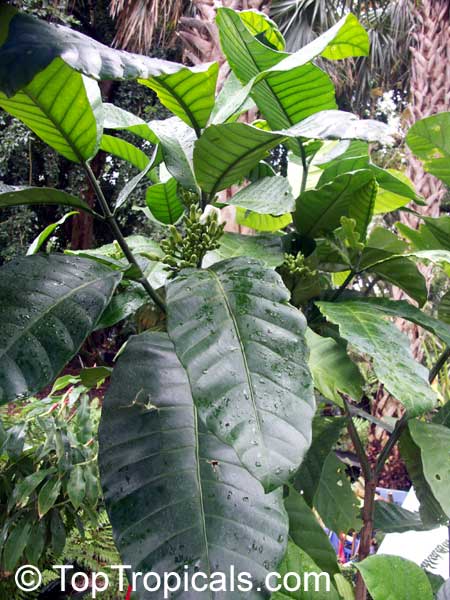
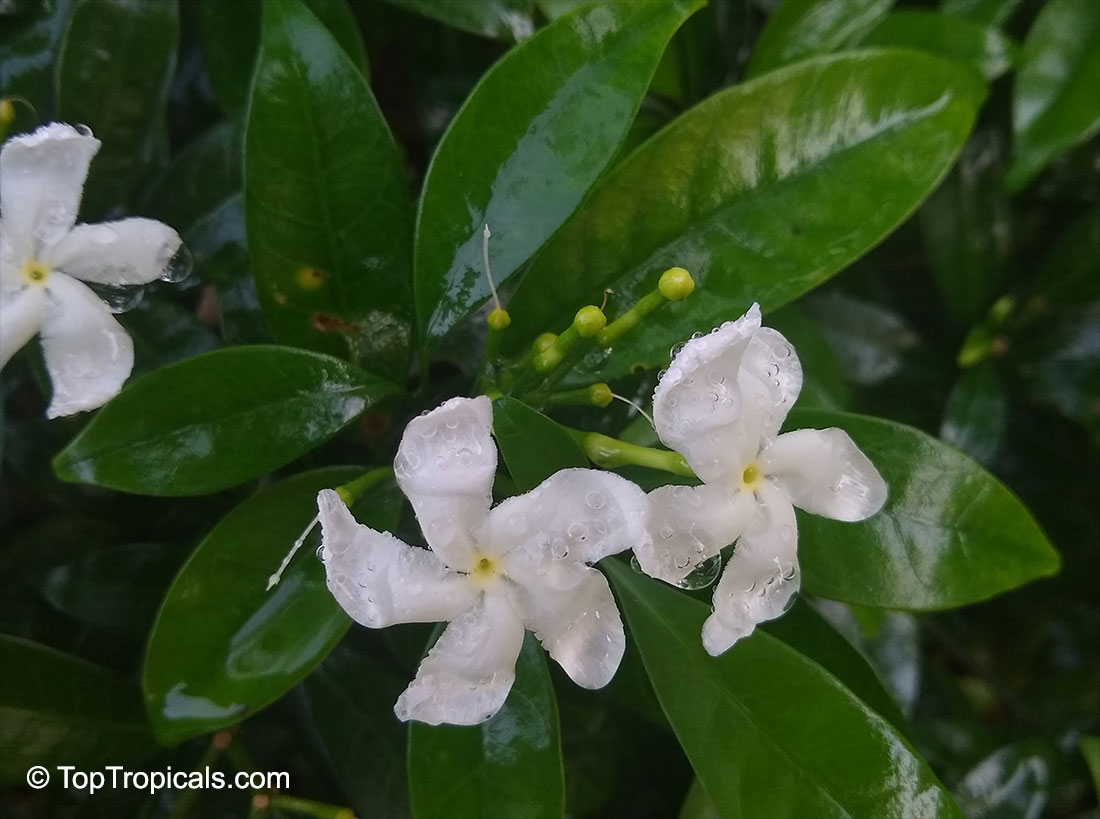
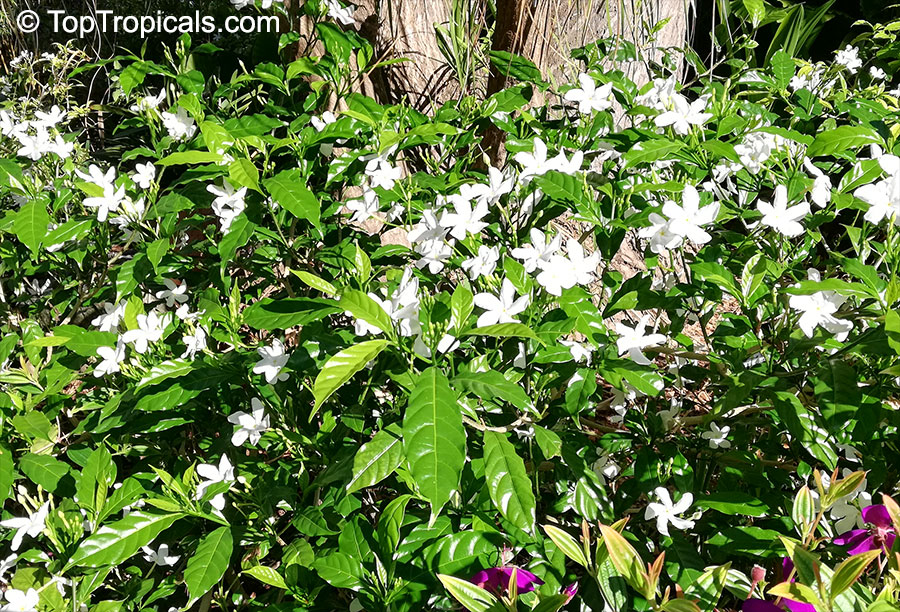
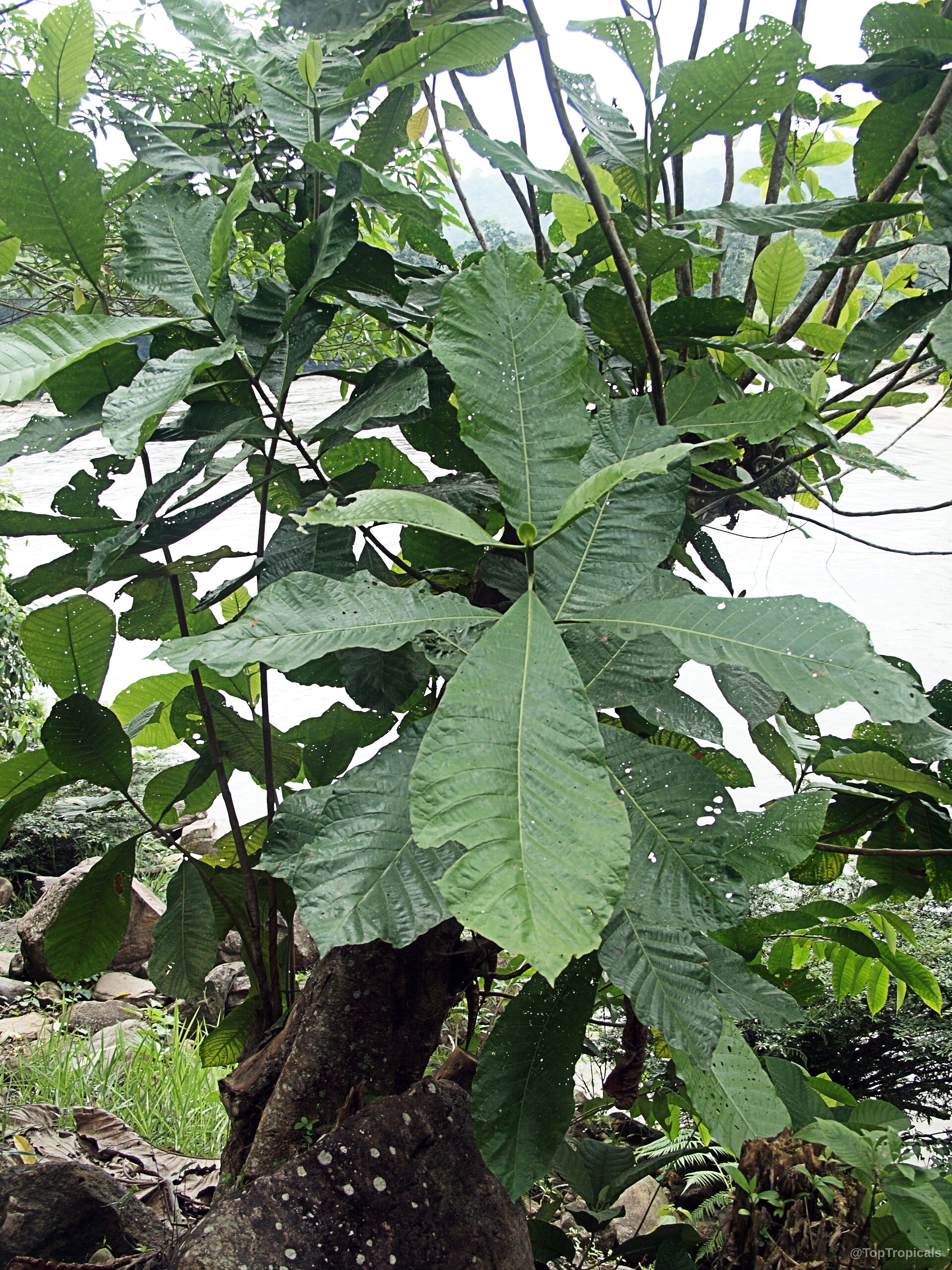
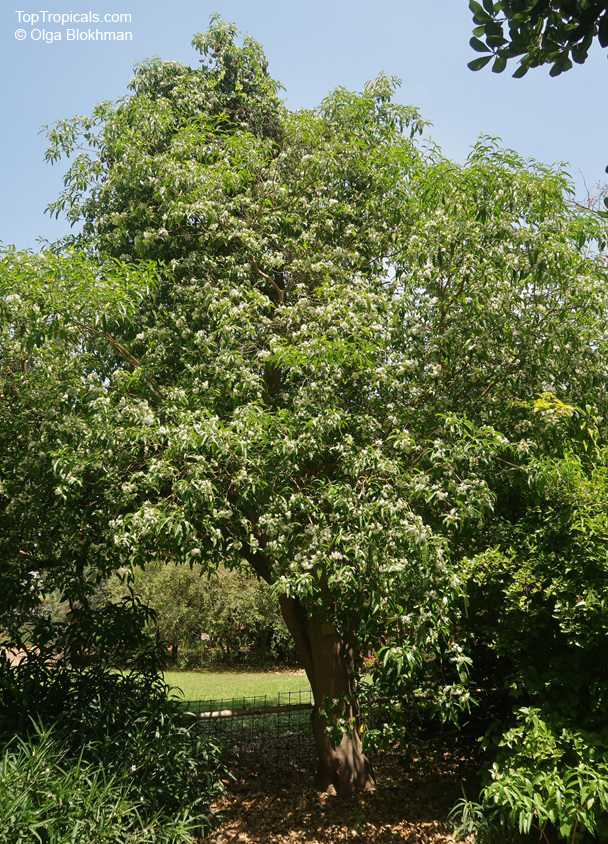
Botanical names: Tabernaemontana pachysiphon, Tabernaemontana holstii
Common name: Giant Tabernaemontana
Family: Apocynaceae
Origin: Tropical Africa
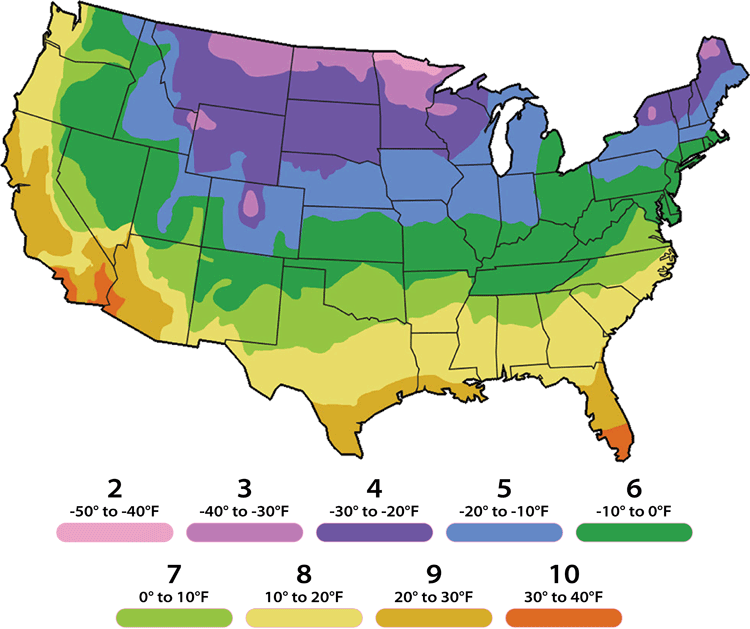
USDA Zone: 10-11


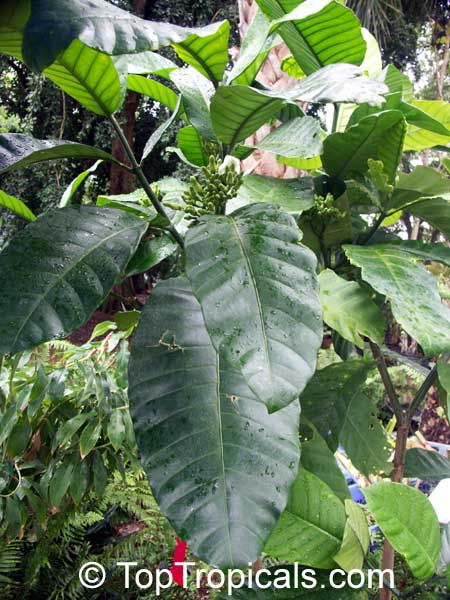
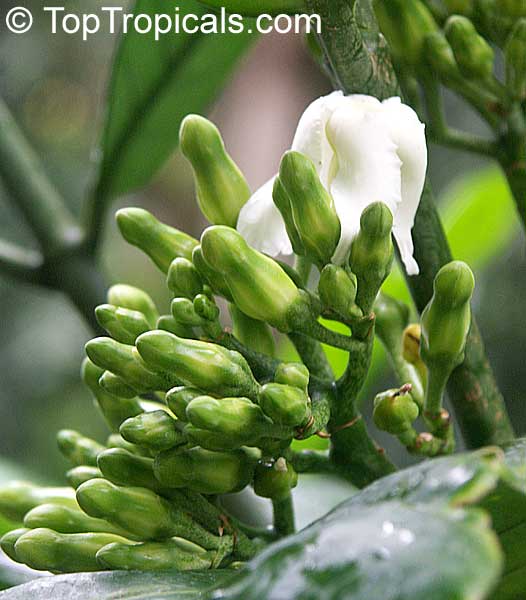
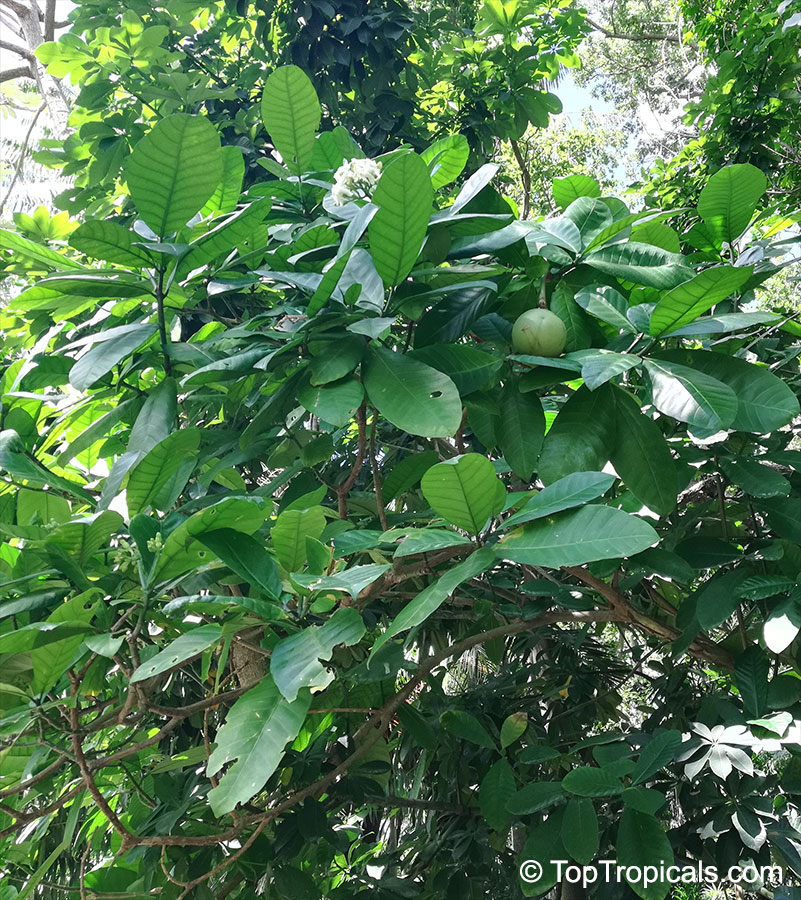
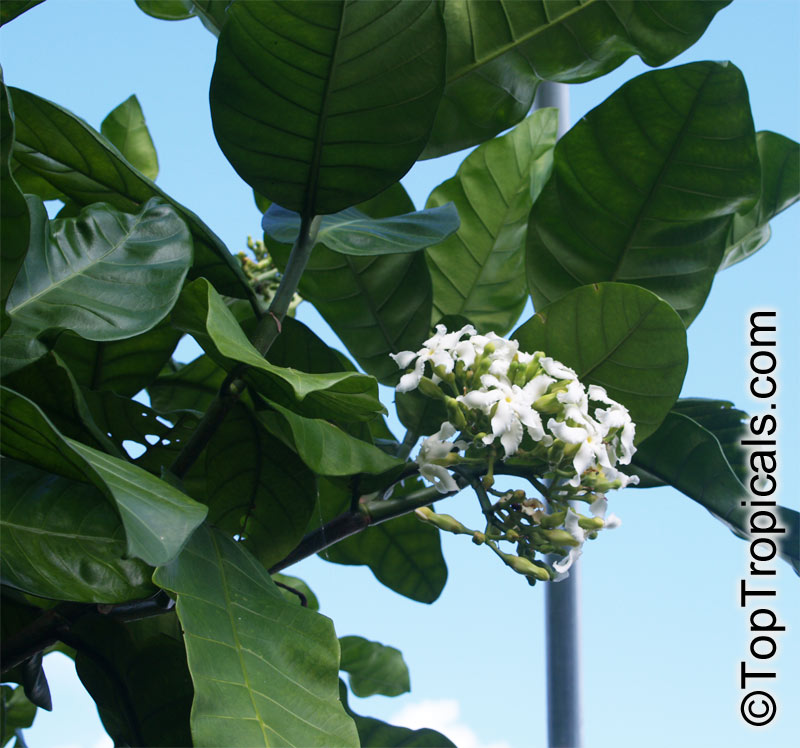
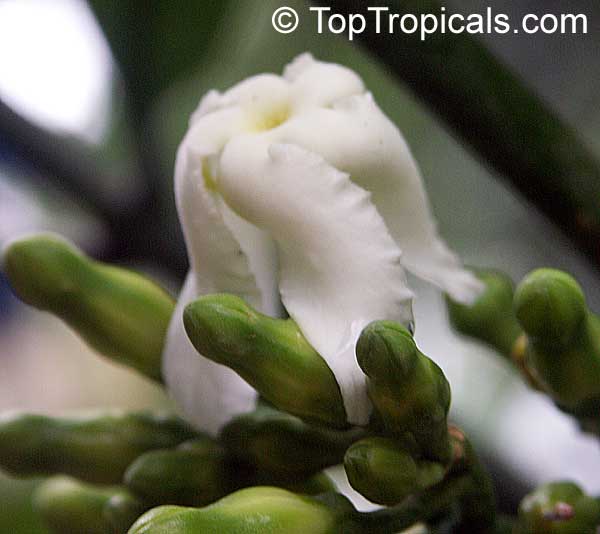
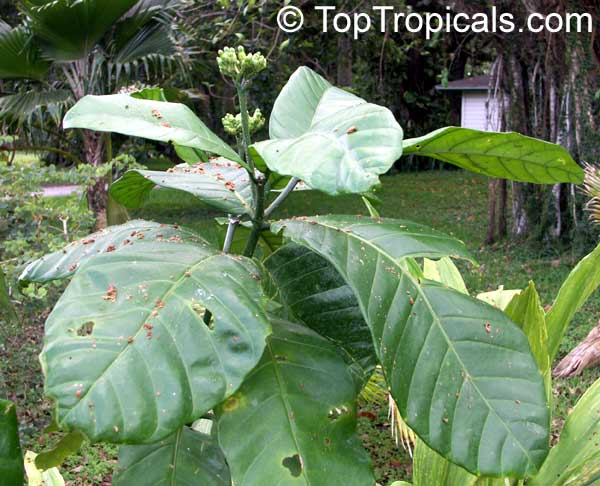
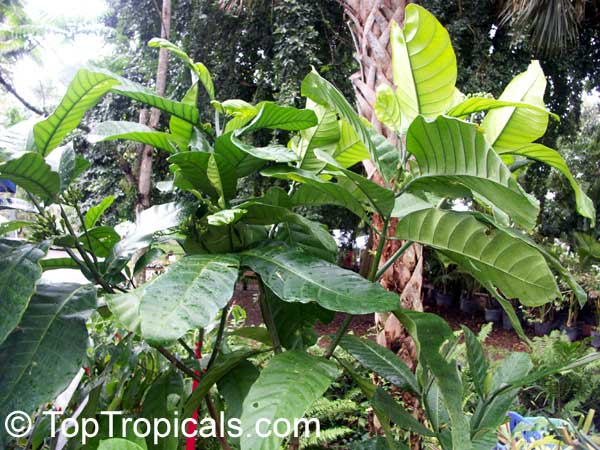
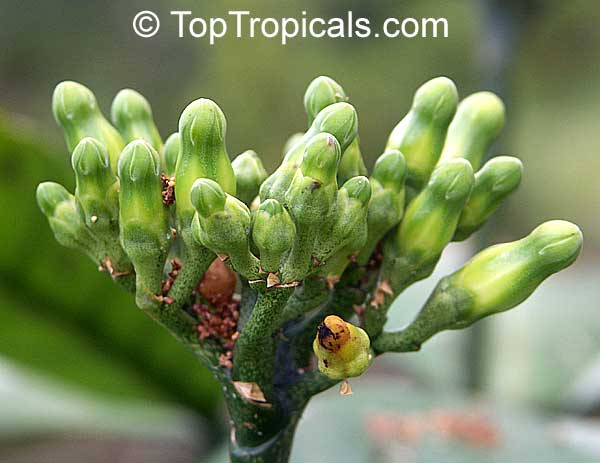
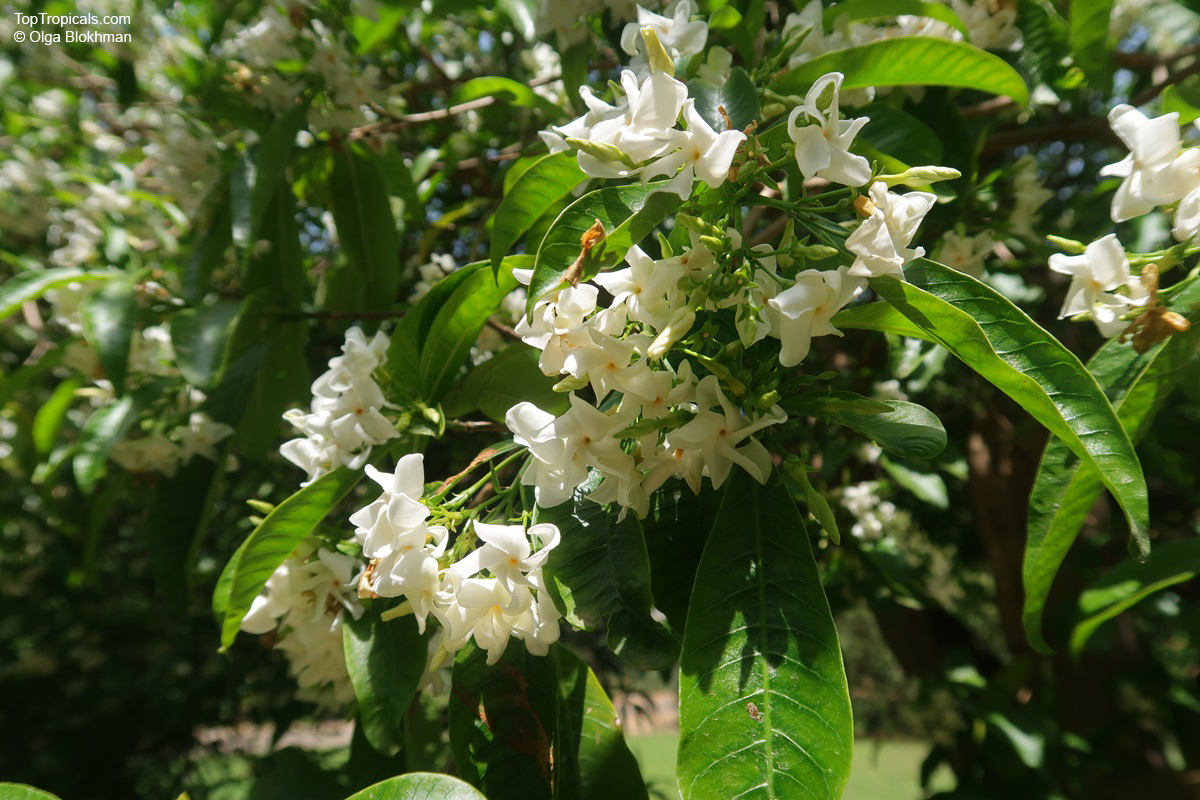
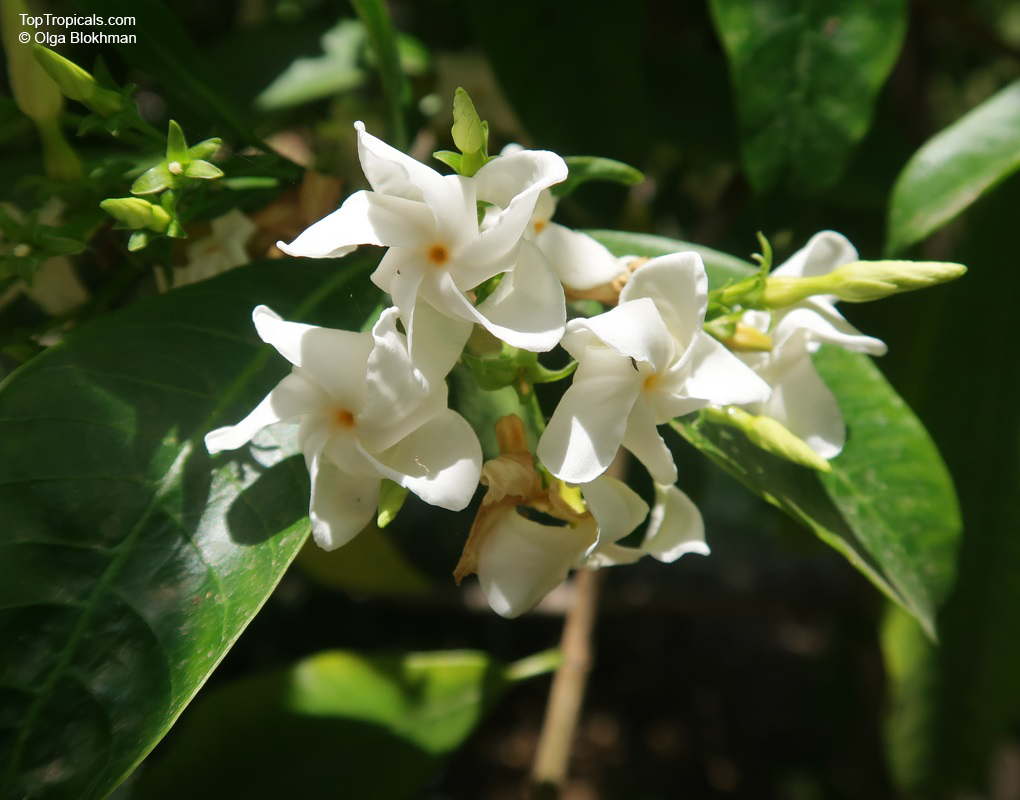
Medium size evergreen tree, has a wide and dense canopy with very large (18" x 7") dark green shiny leaves. Clusters of large white flowers, very fragrant. Blooms spring to fall. Cold hardy to upper 20F. This species has a synonym T. holstii, which previously was misused for Tabernaemontana africana.
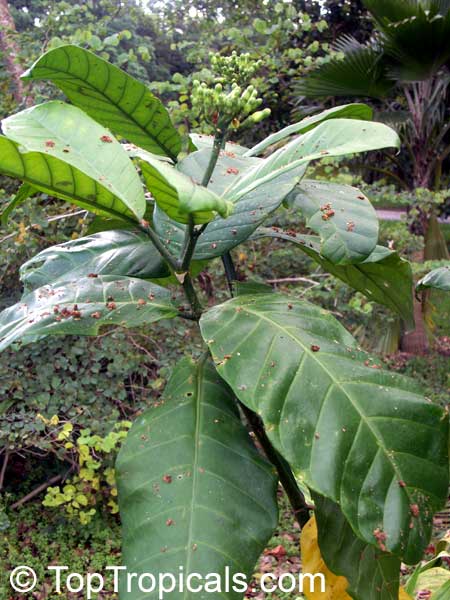
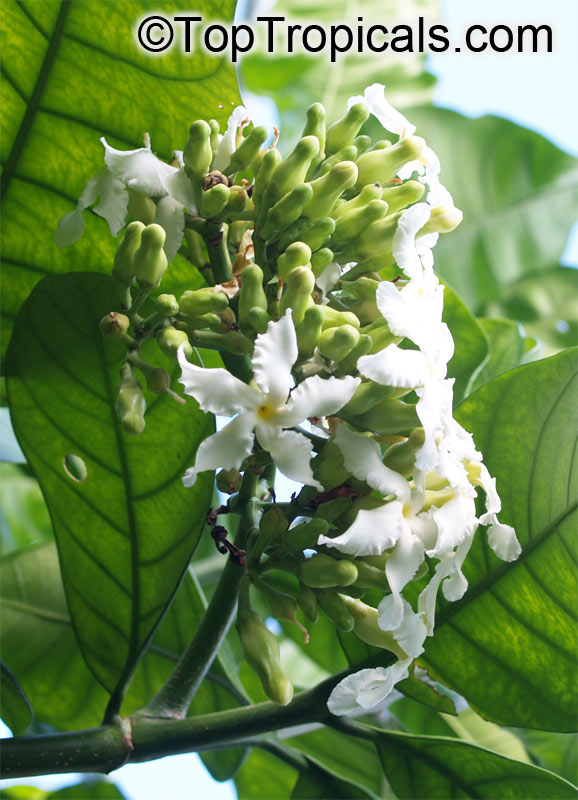
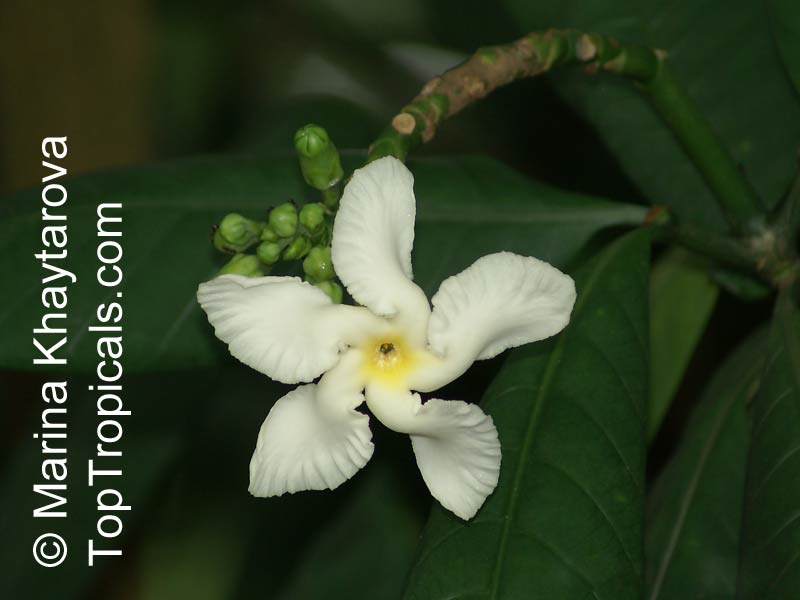
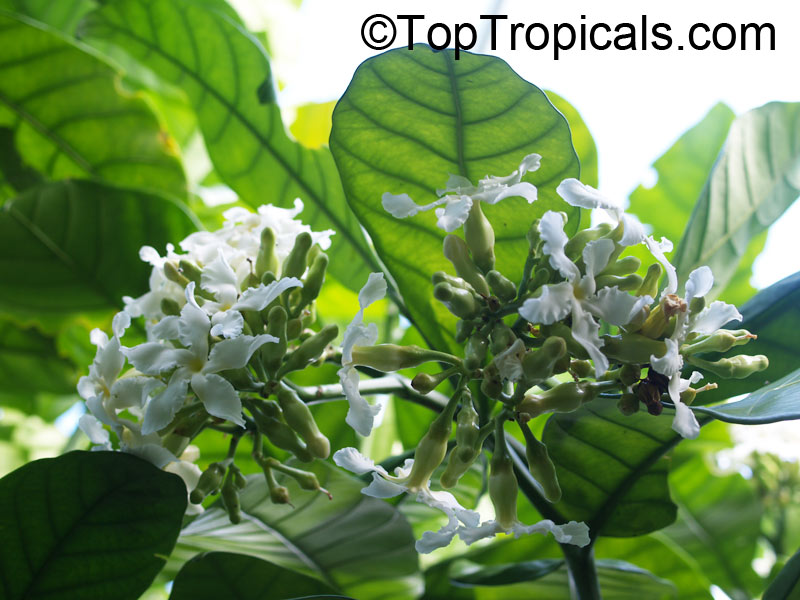
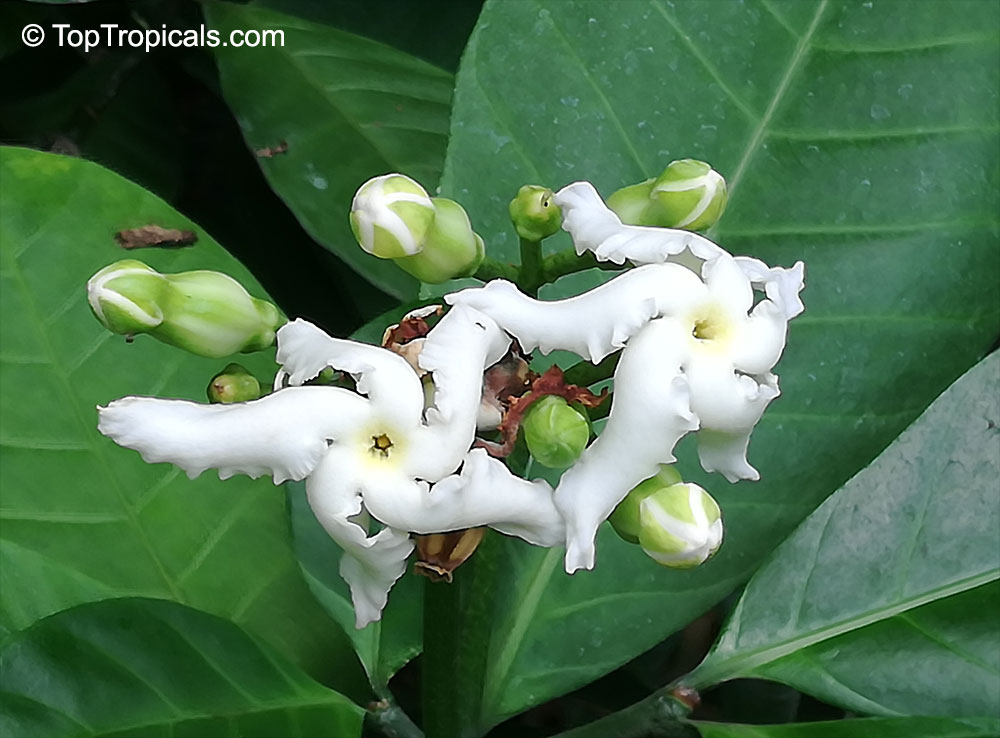
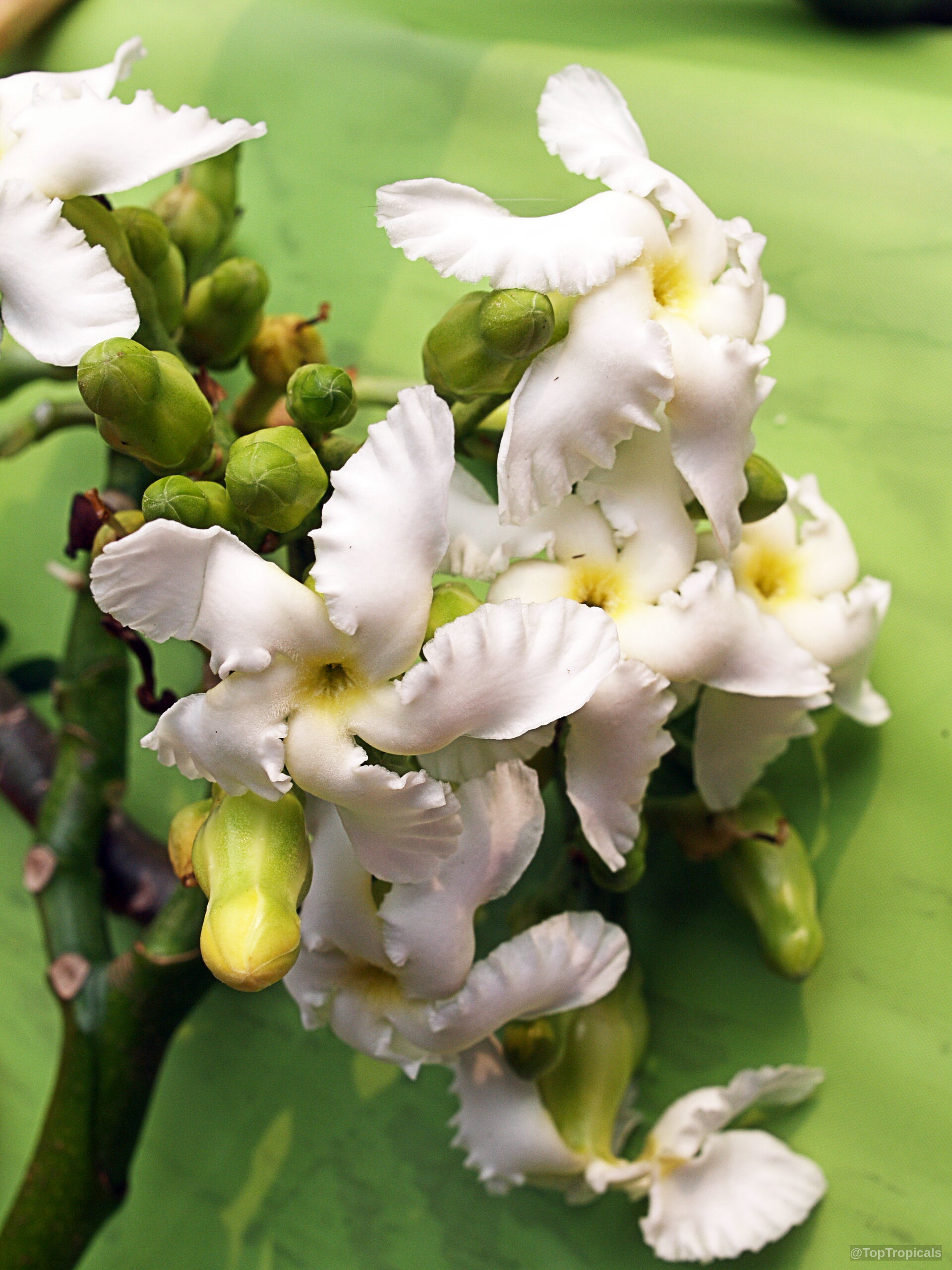

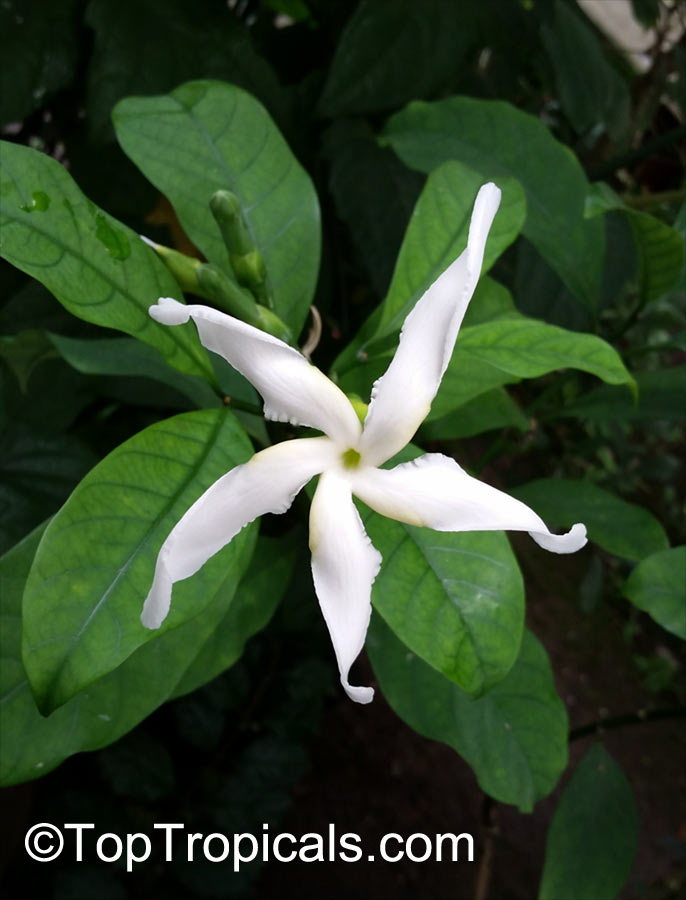
Botanical name: Tabernaemontana sp.
Common name: Tabernaemontana
Family: Apocynaceae
Origin: Tropical Africa and Asia
USDA Zone: 9-12


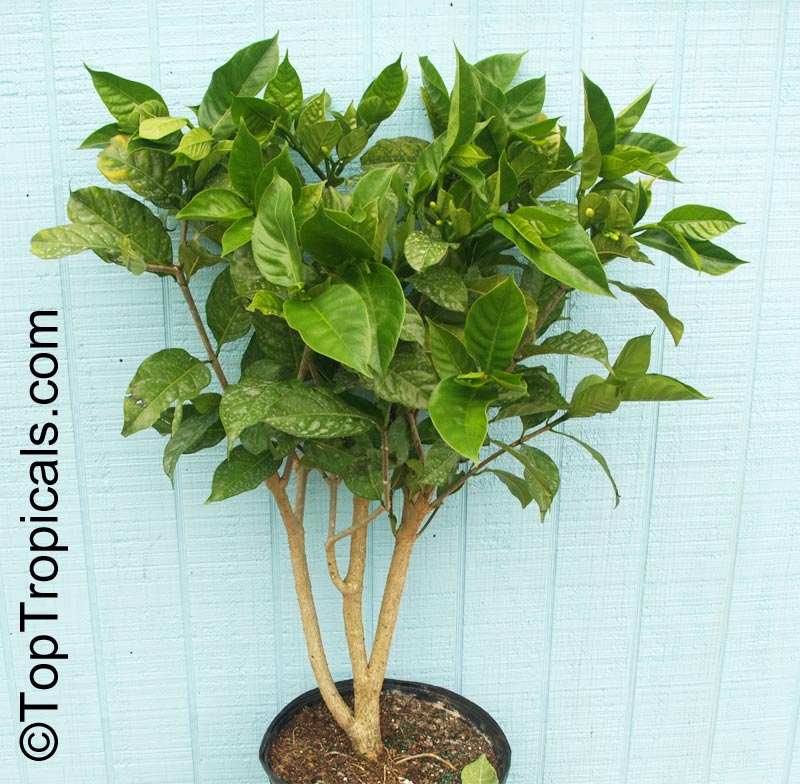
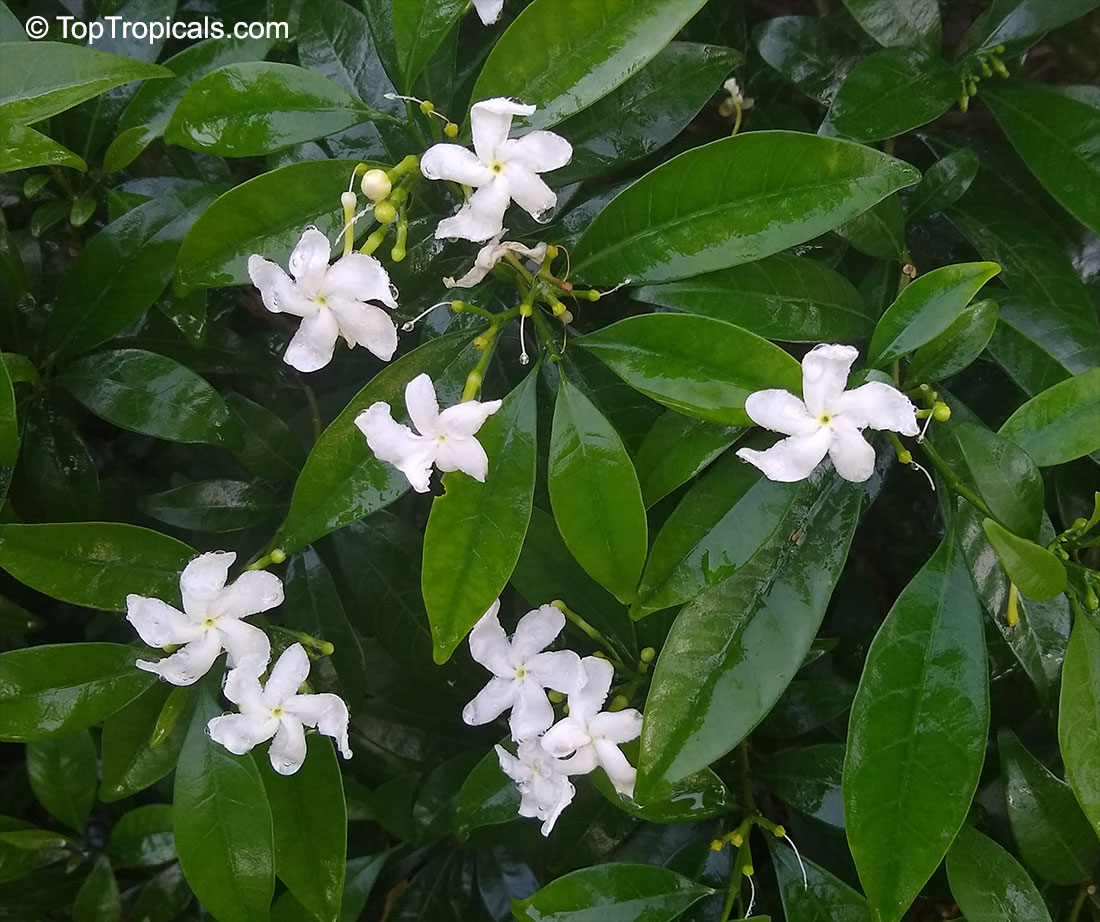
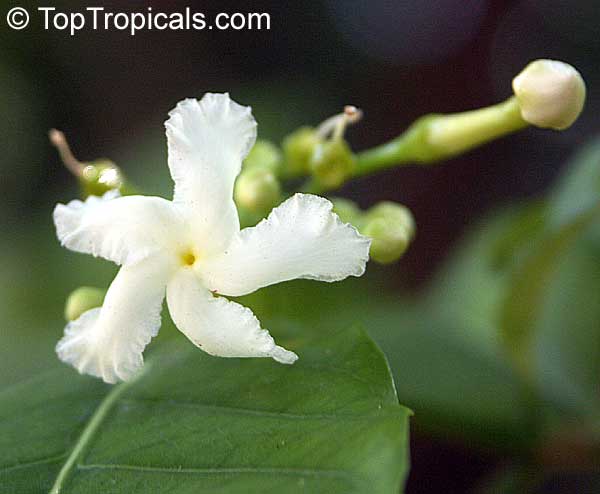
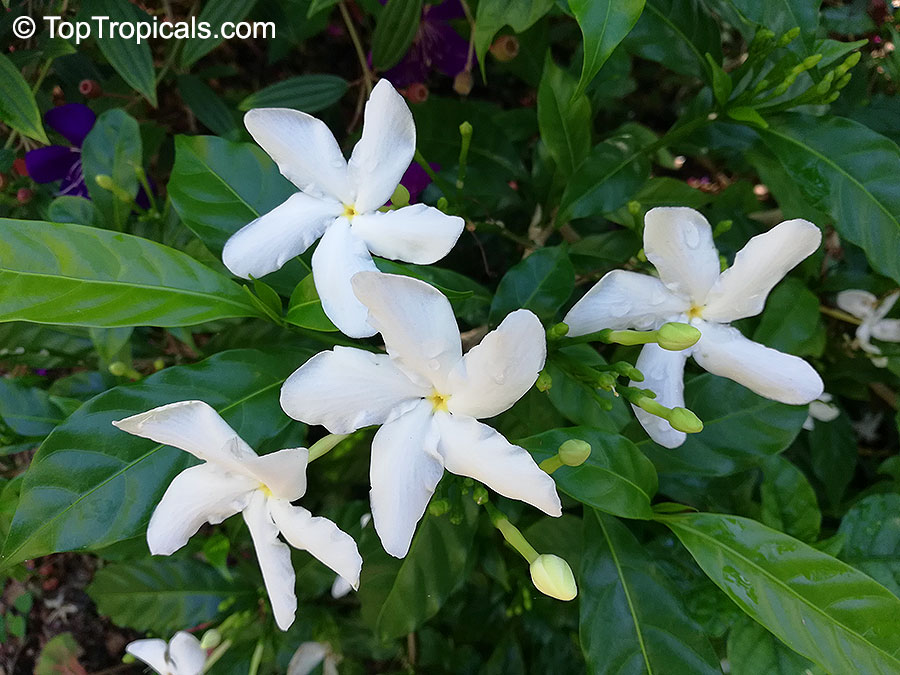
Tabernaemontana is a genus of evergreen shrubs or small trees native to tropical regions of Africa, Asia, Central, and South America. These plants feature large, glossy, dark green leaves arranged oppositely, with smooth margins and prominent veins. When damaged, they exude a characteristic milky sap. The flowers are funnel-shaped or star-like, often with twisted petals that resemble a pinwheel. They are typically white or creamy and sometimes emit a sweet, jasmine-like fragrance. Blooming is often profuse throughout the warm seasons. Tabernaemontana makes an attractive landscape plant, suitable for hedges or as a standalone specimen. It can also be grown in containers and overwintered indoors in cooler climates.
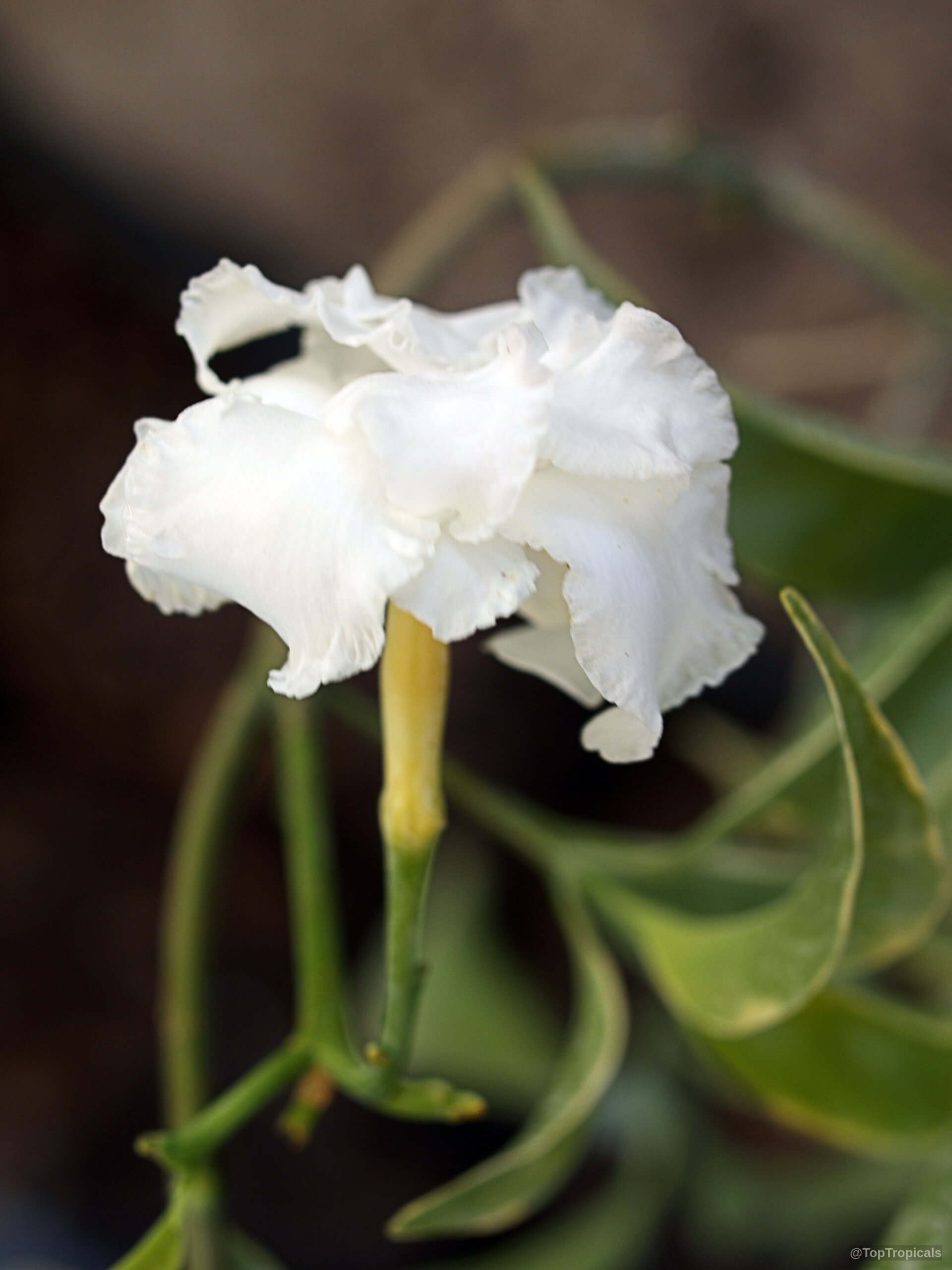
Botanical name: Tabernaemontana sp.
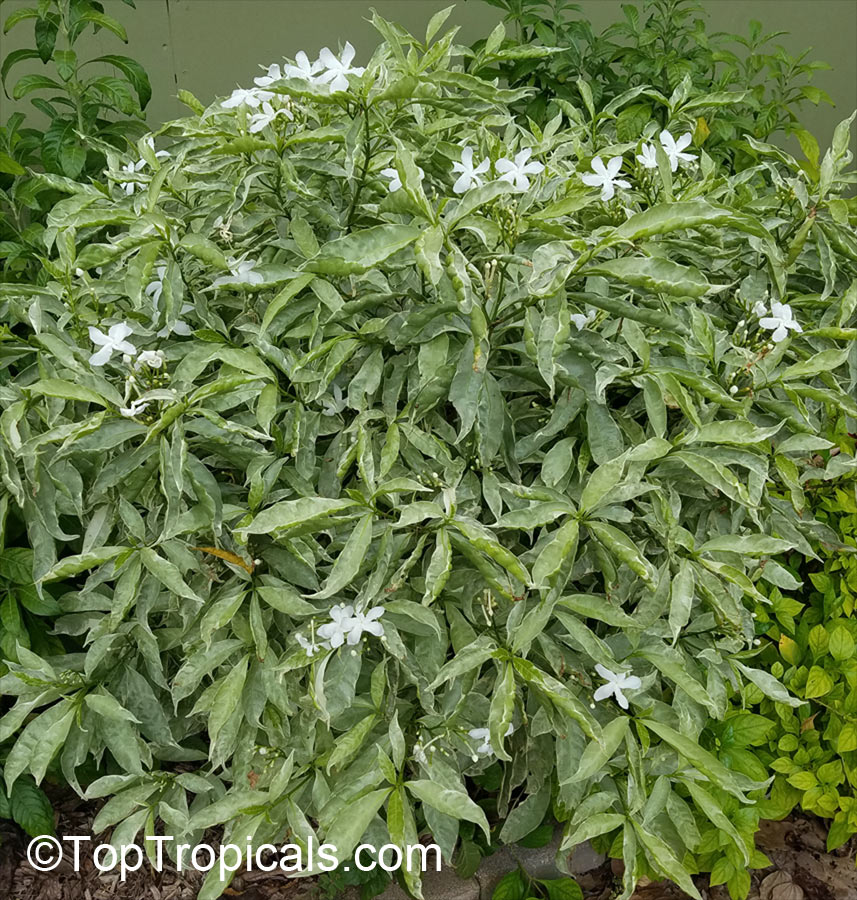
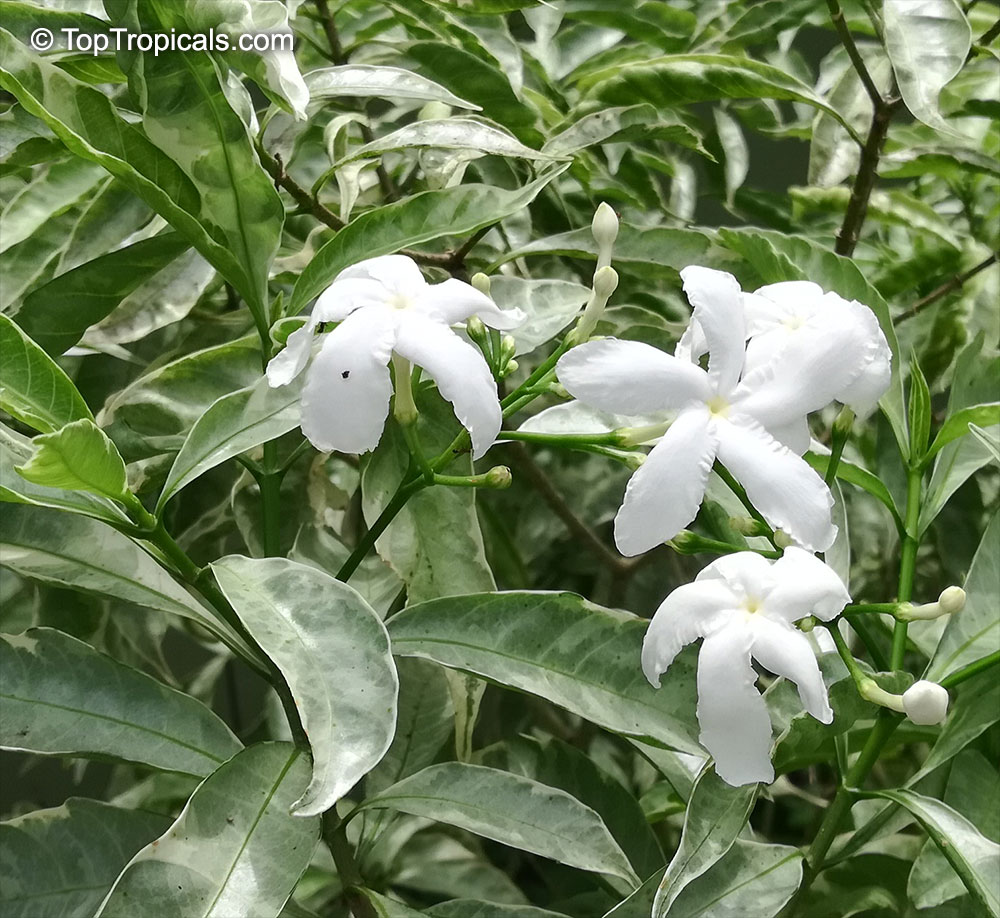
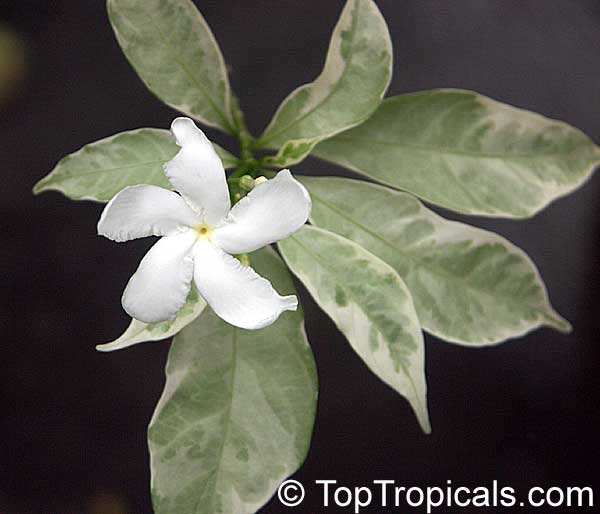
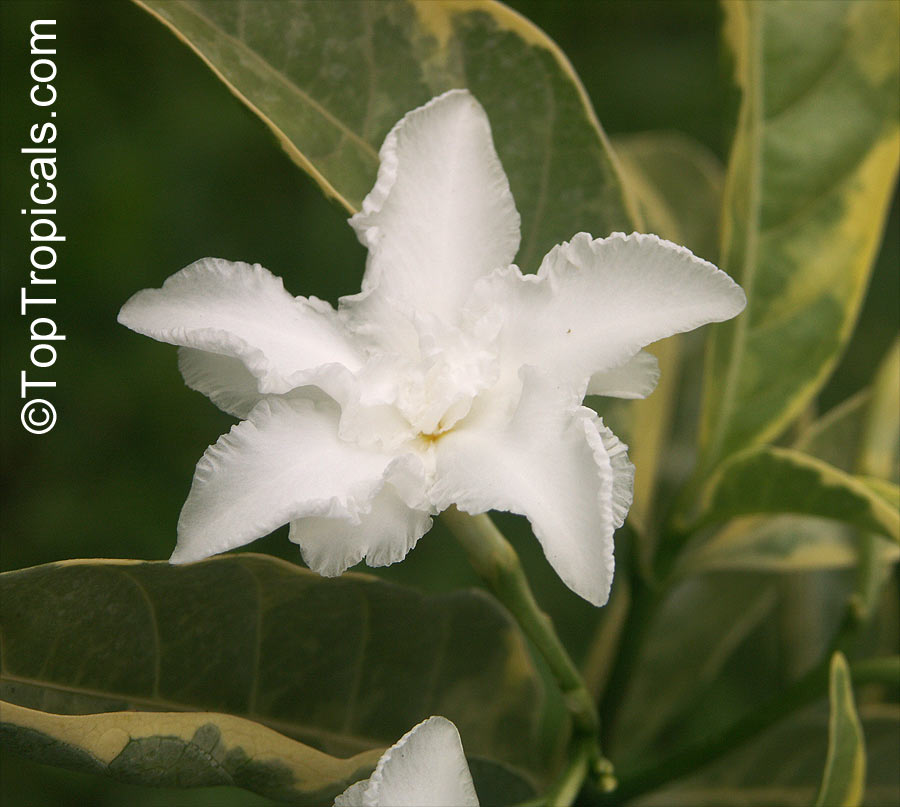
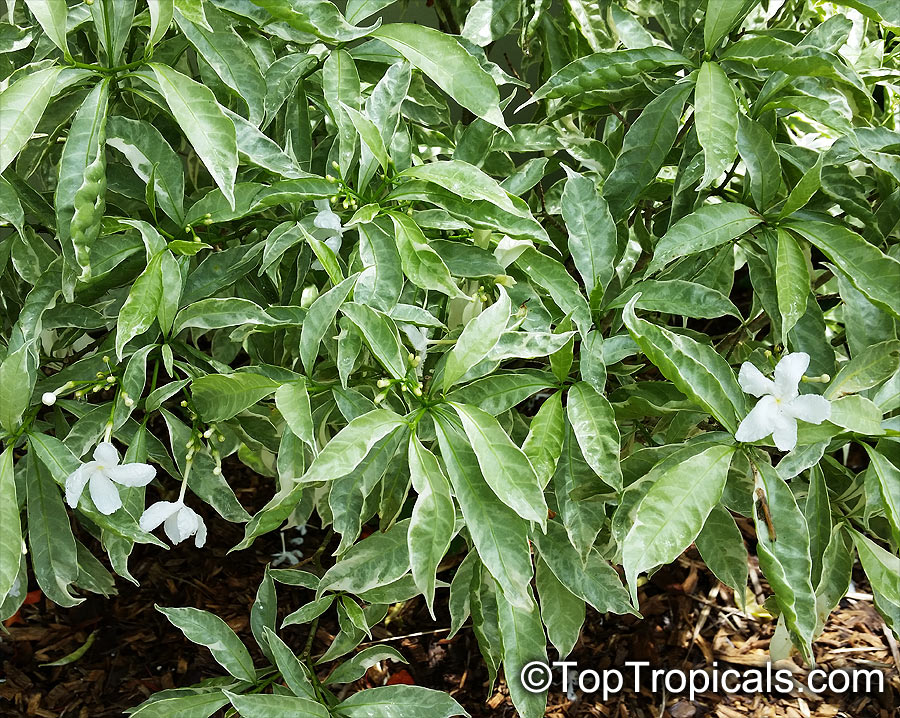
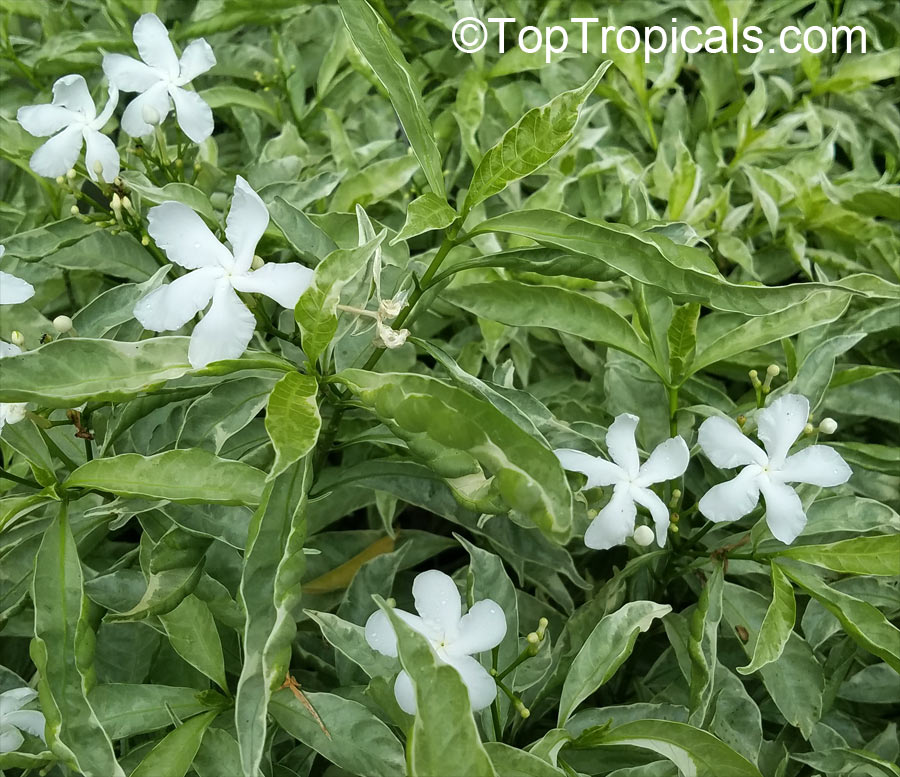
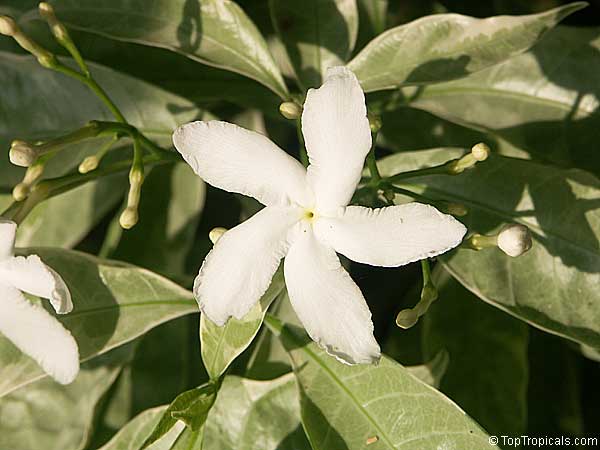
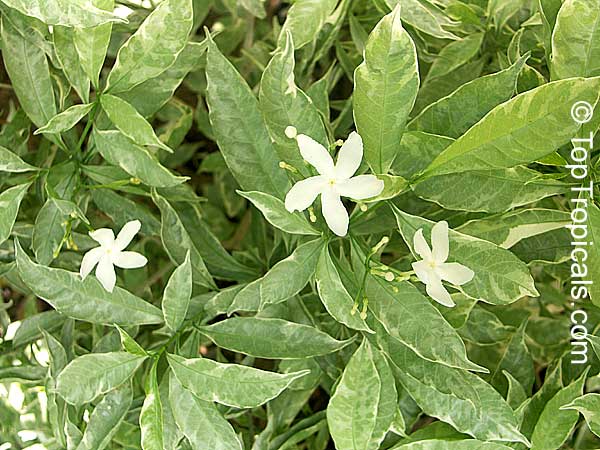
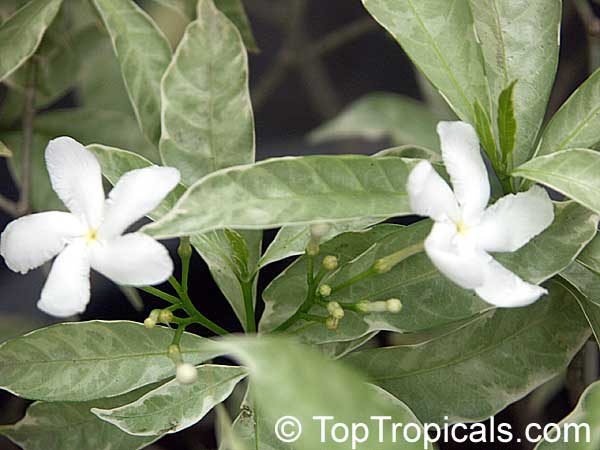
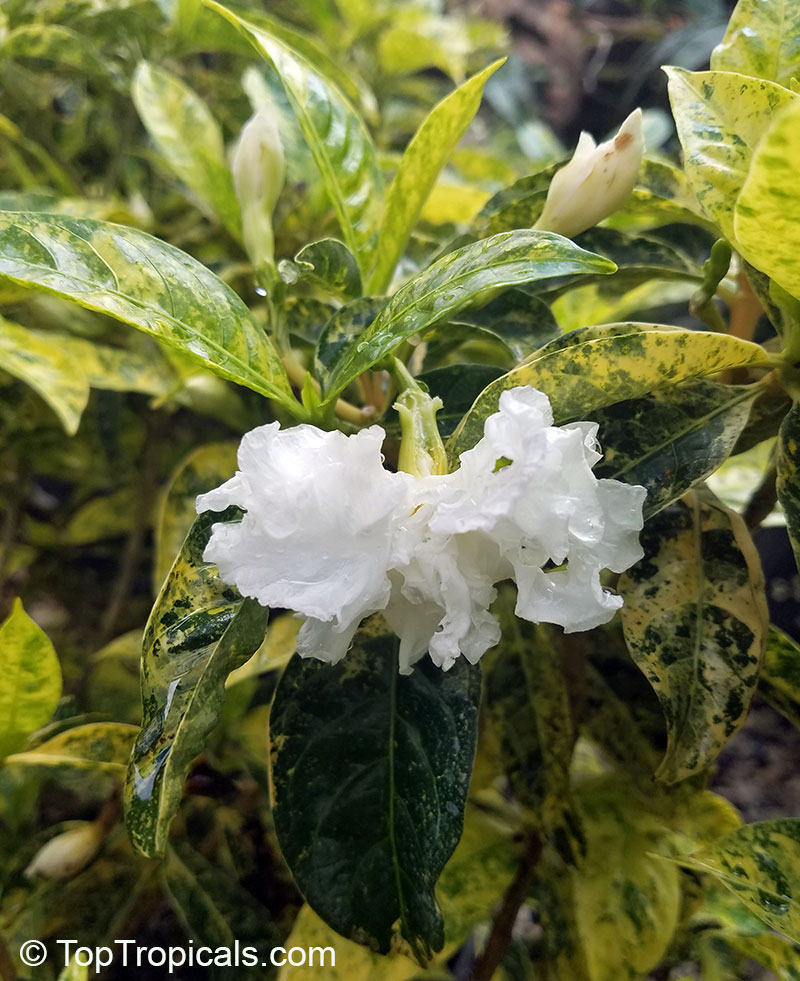
Common name: Variegated Tabernaemontana
Cultivar: Variegata
Family: Apocynaceae
Origin: South Asia
USDA Zone: 10-11

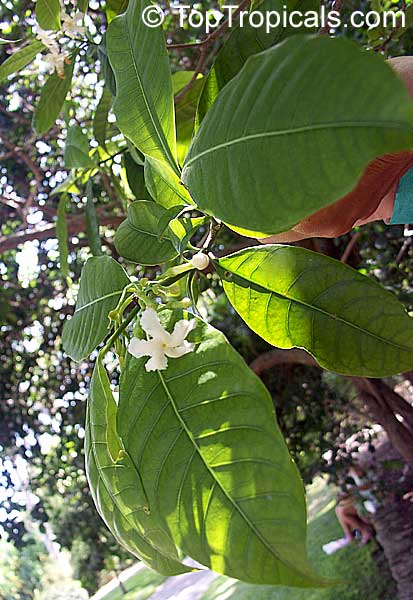
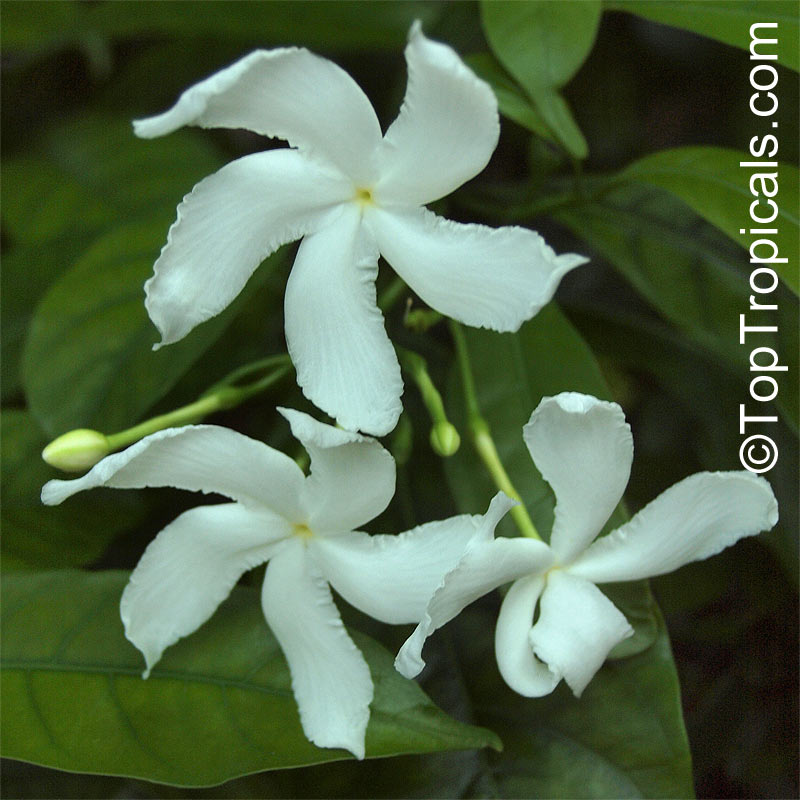
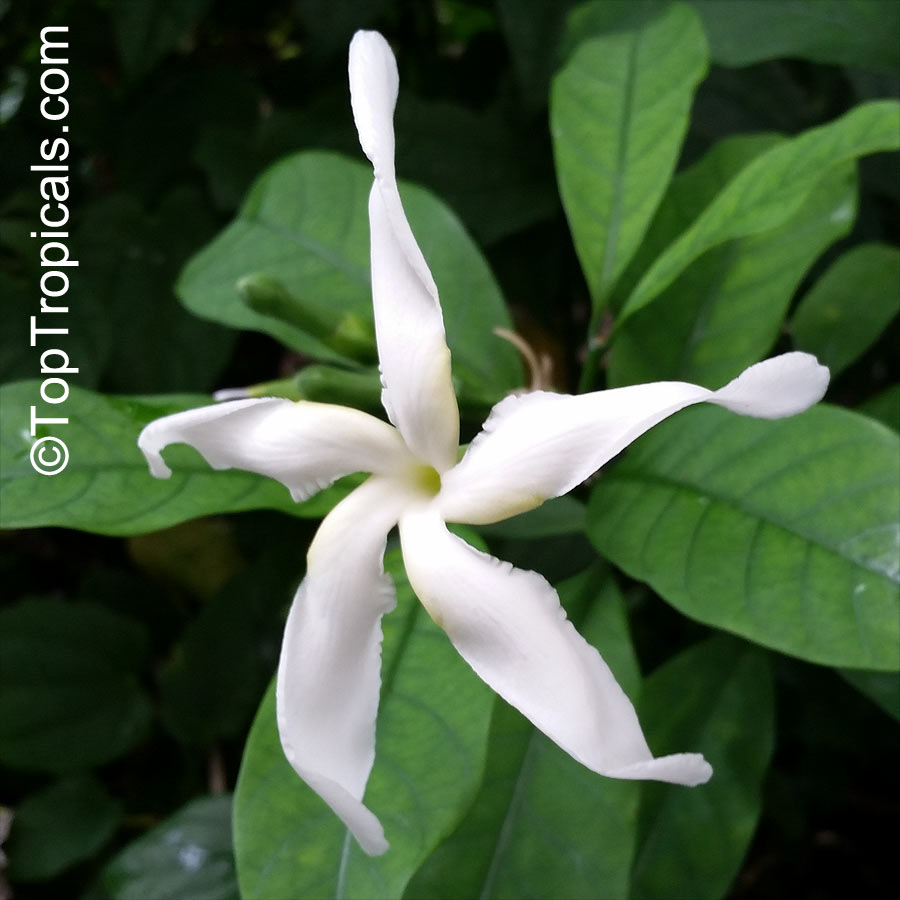
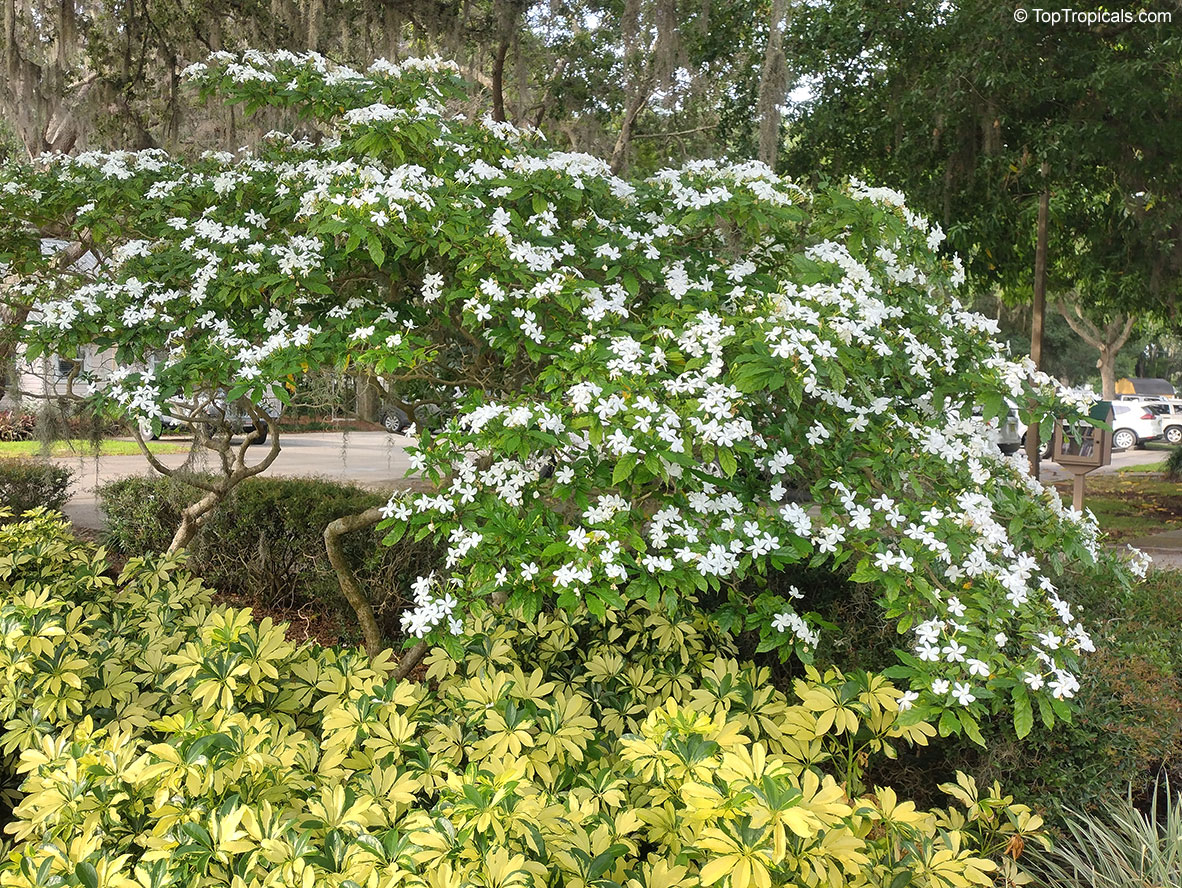
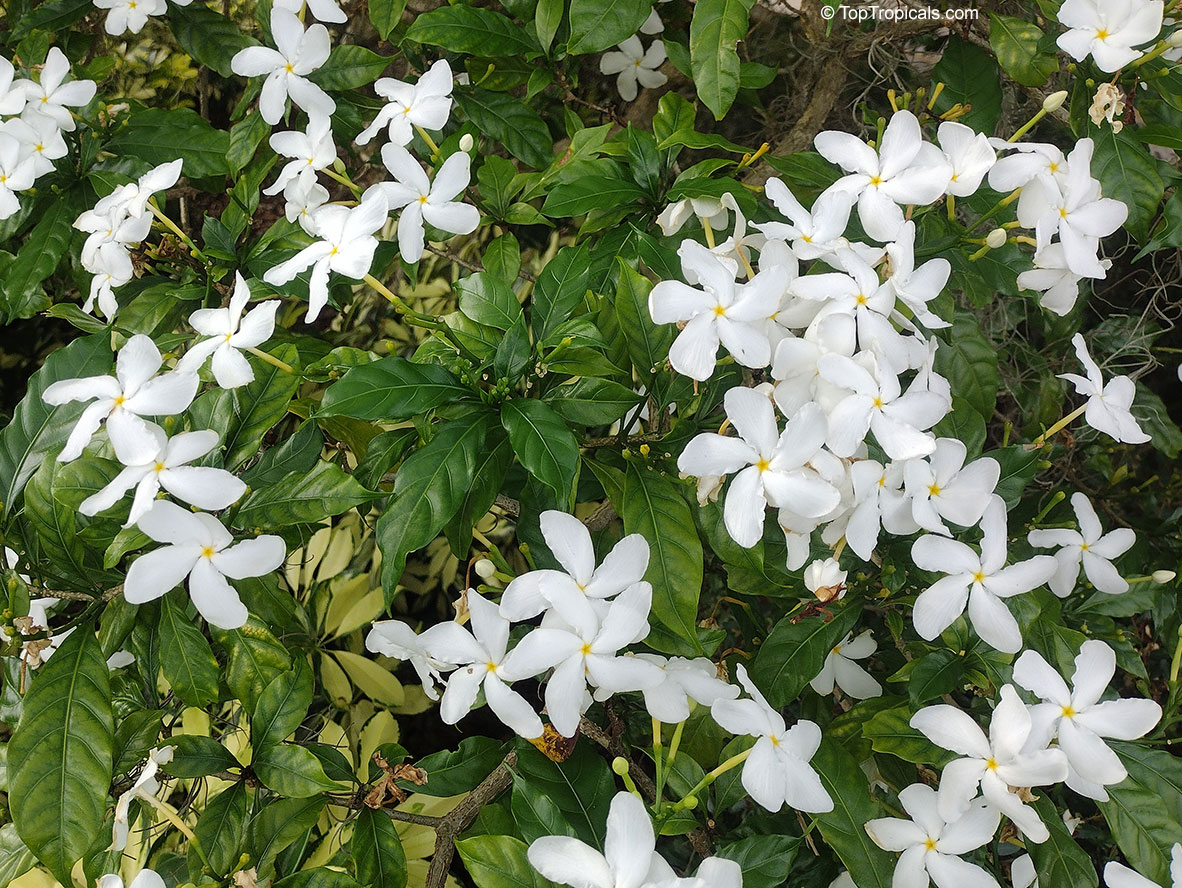
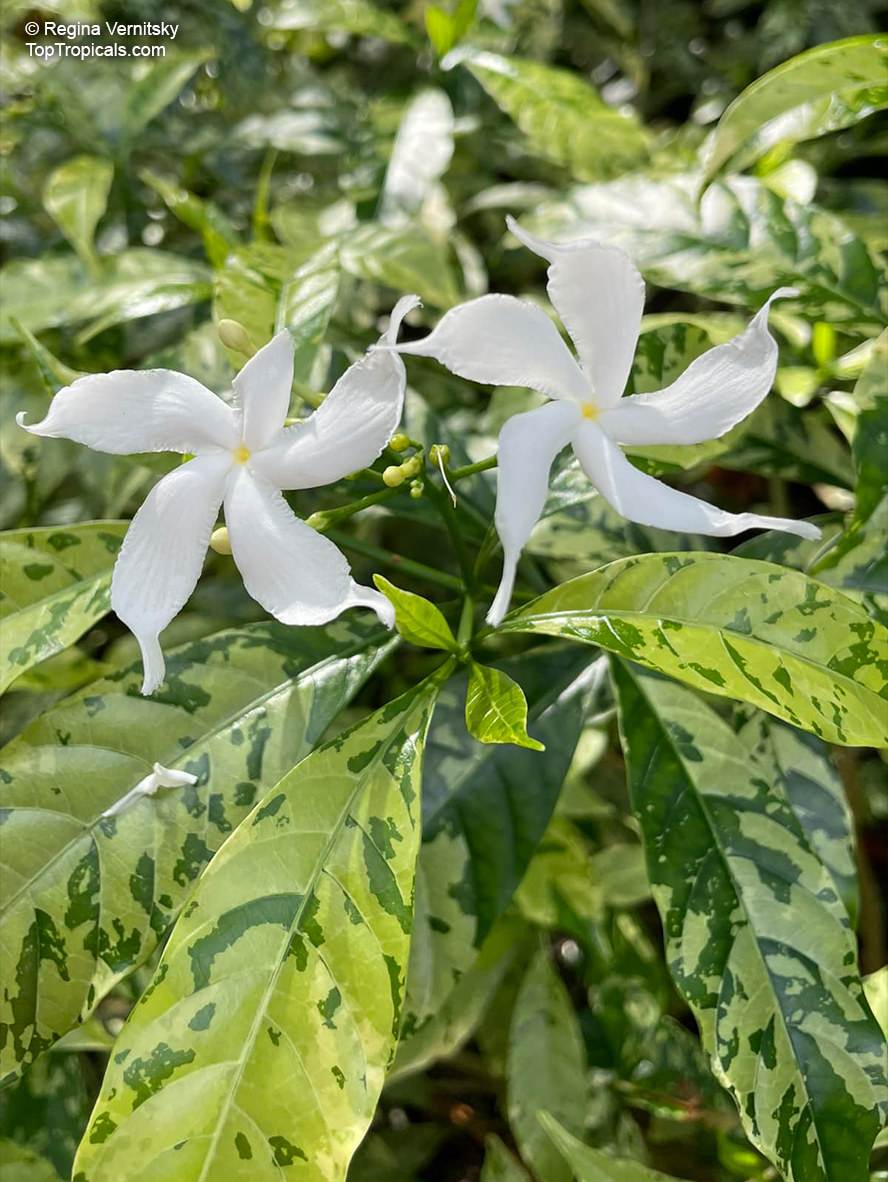
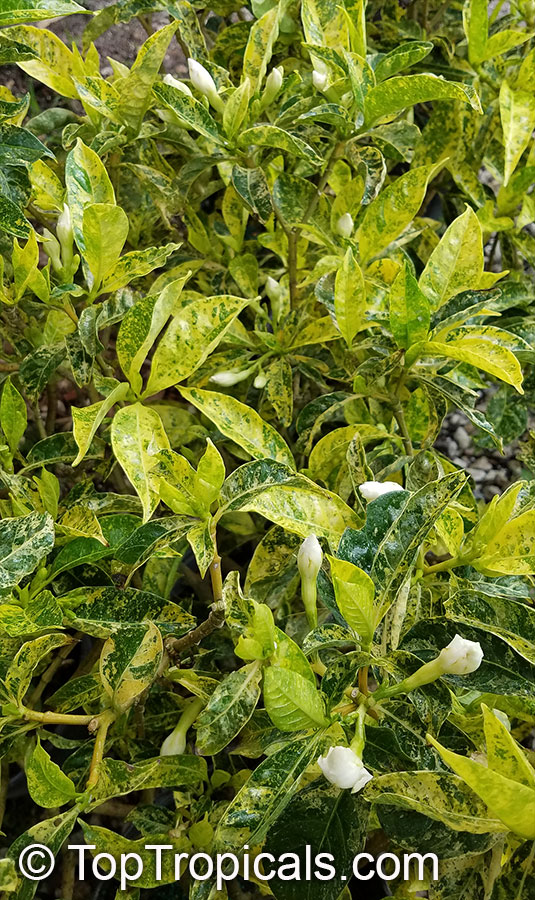
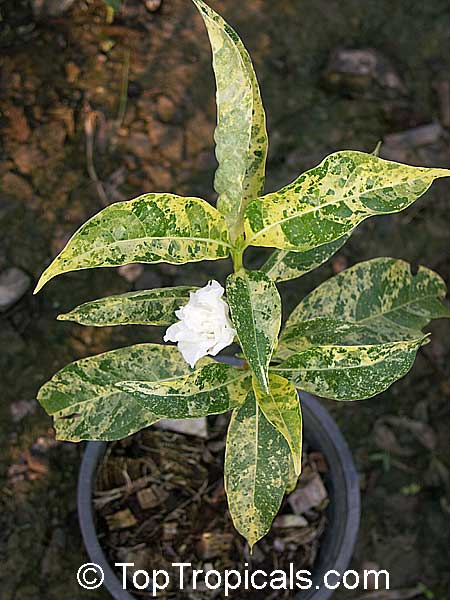
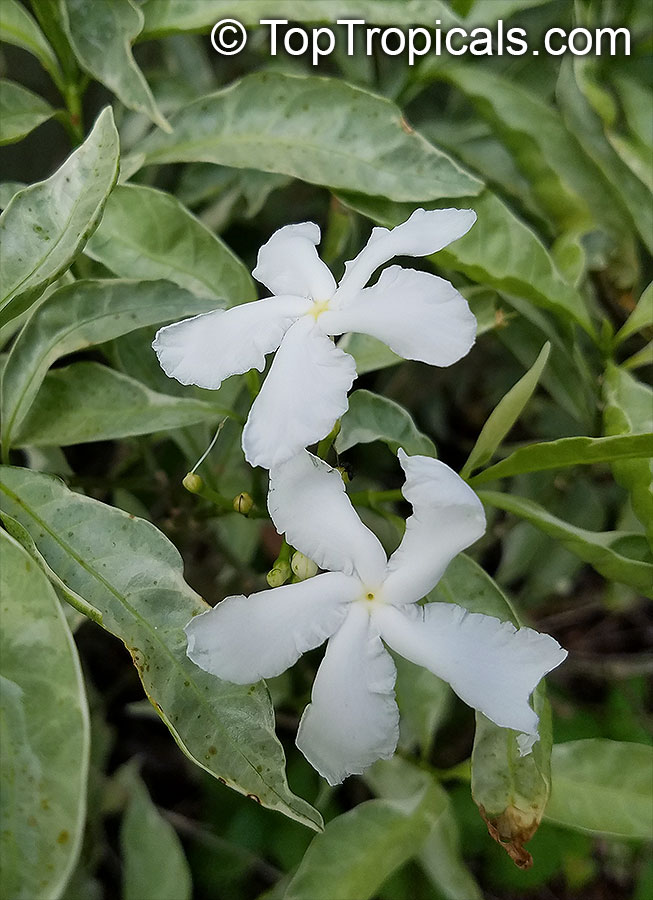
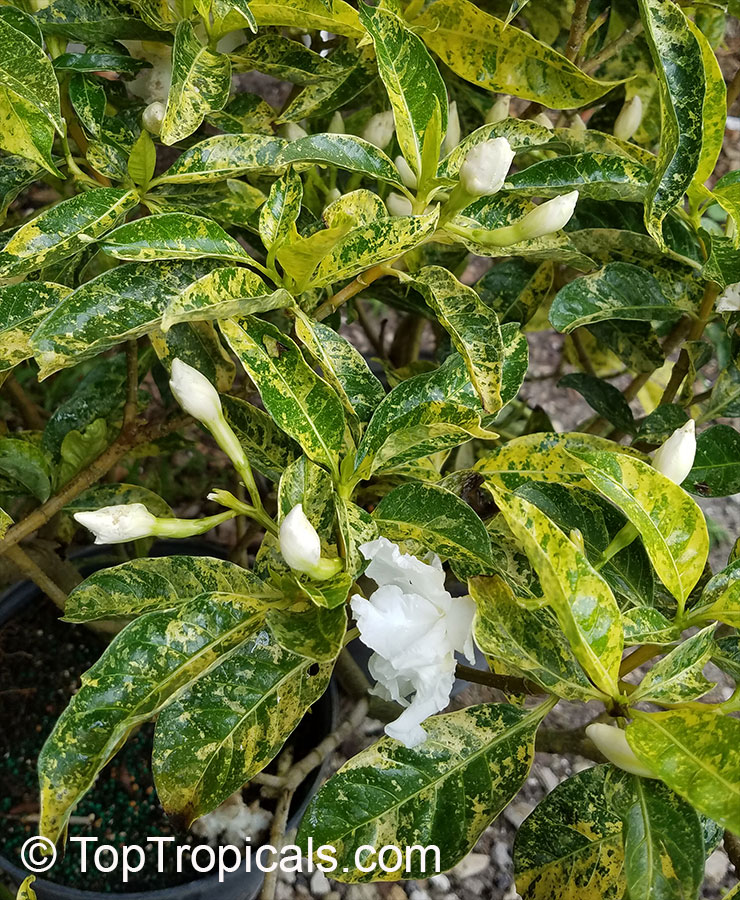
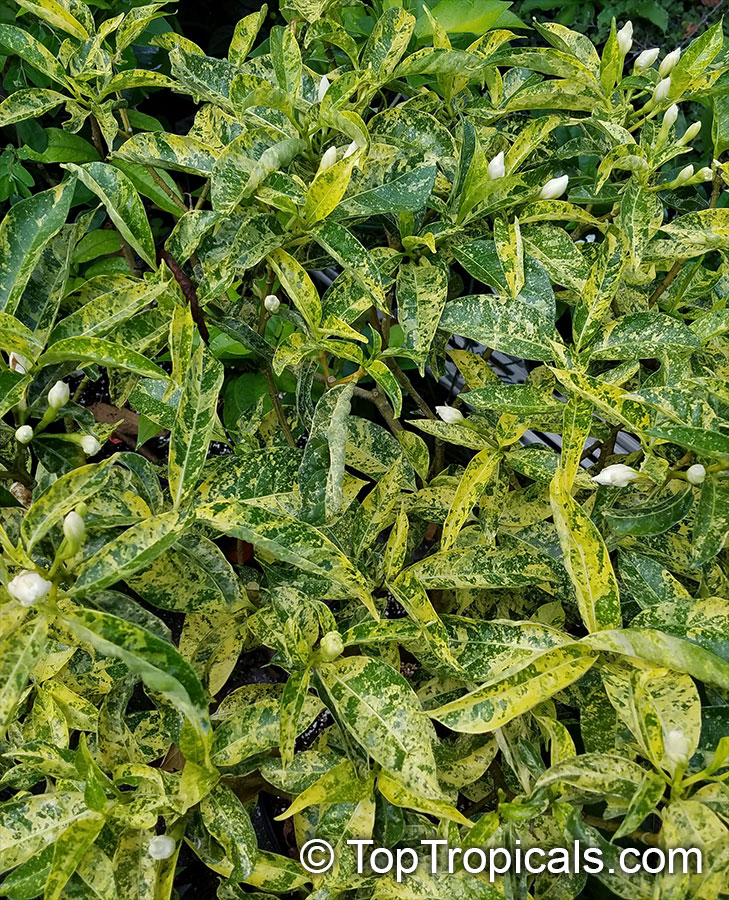
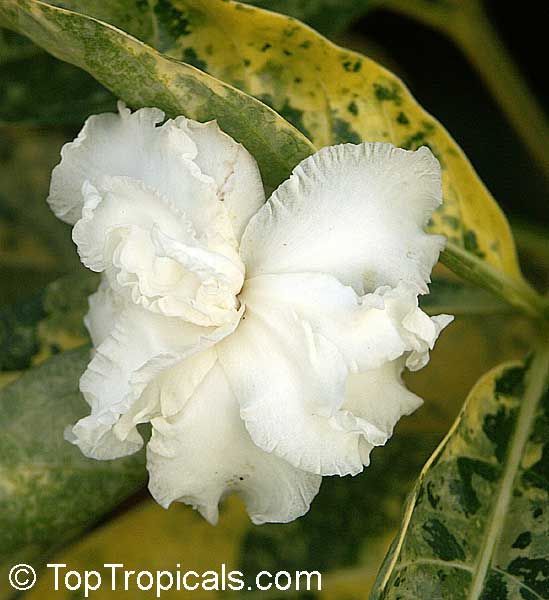
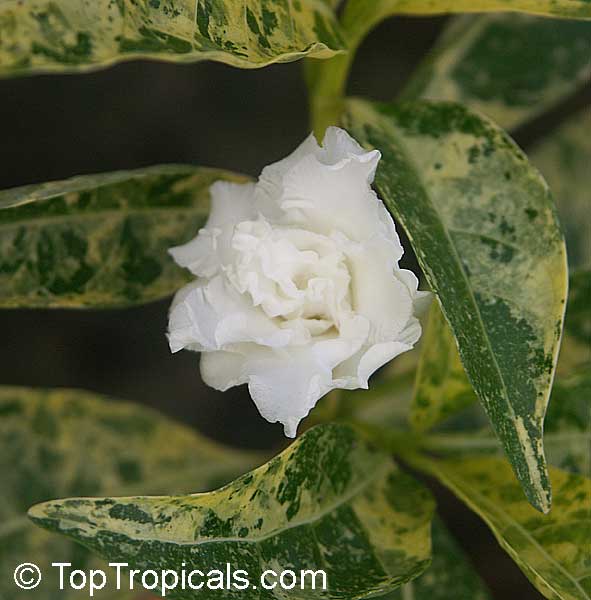
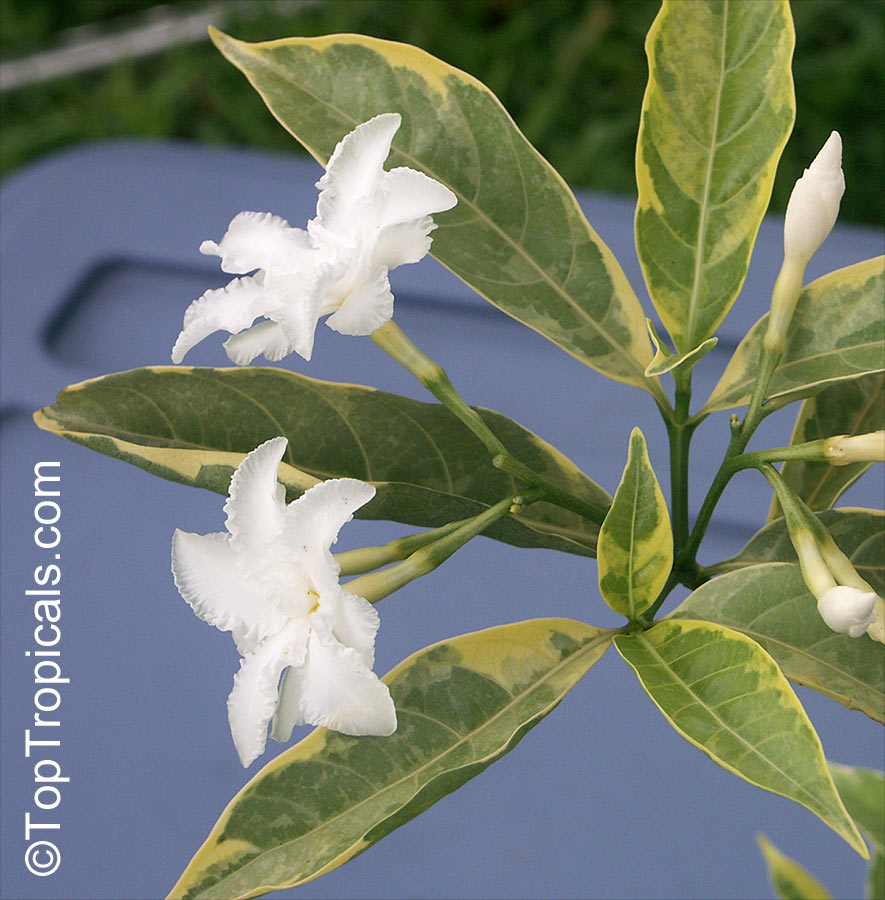
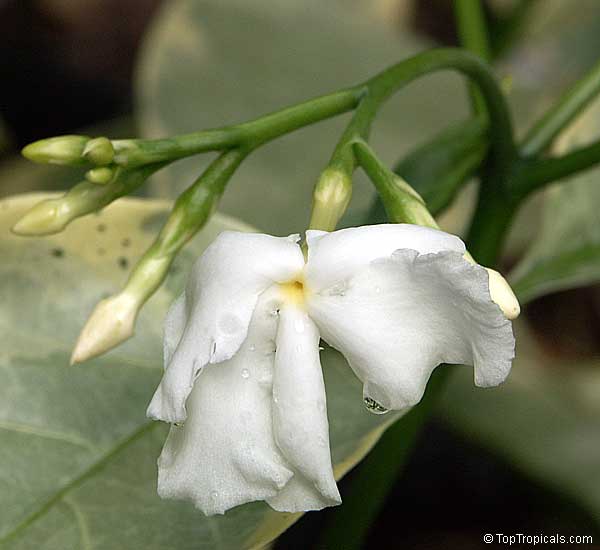
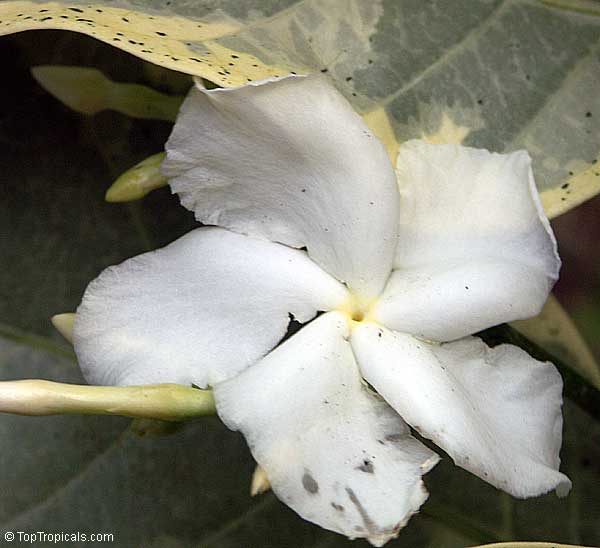
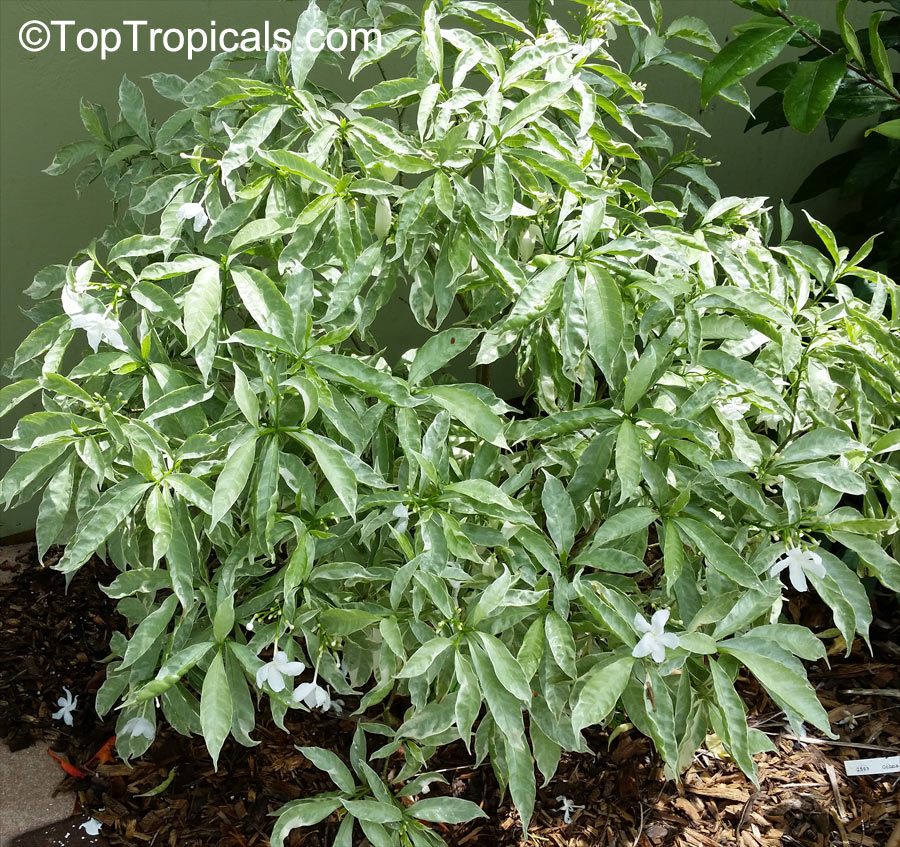
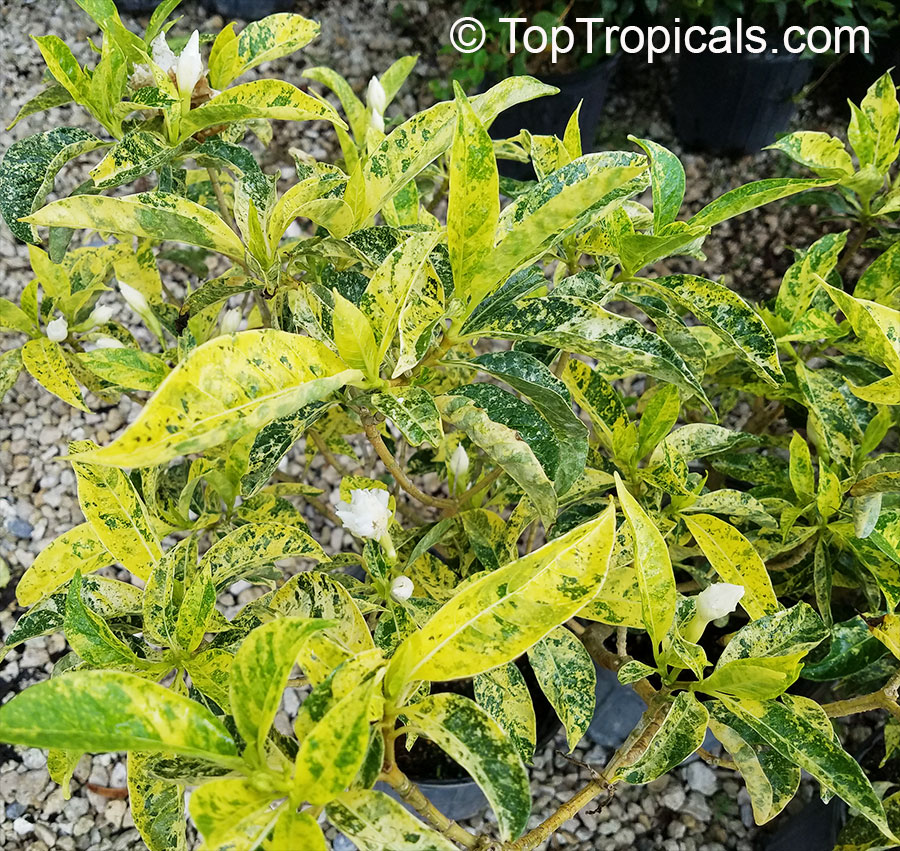
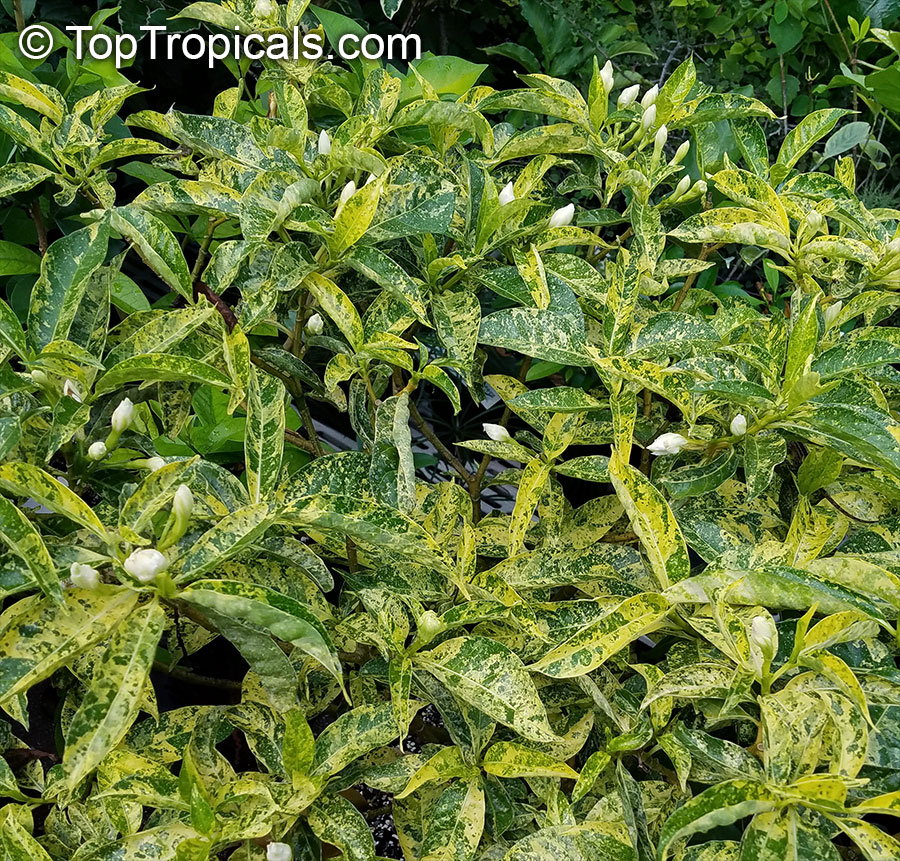
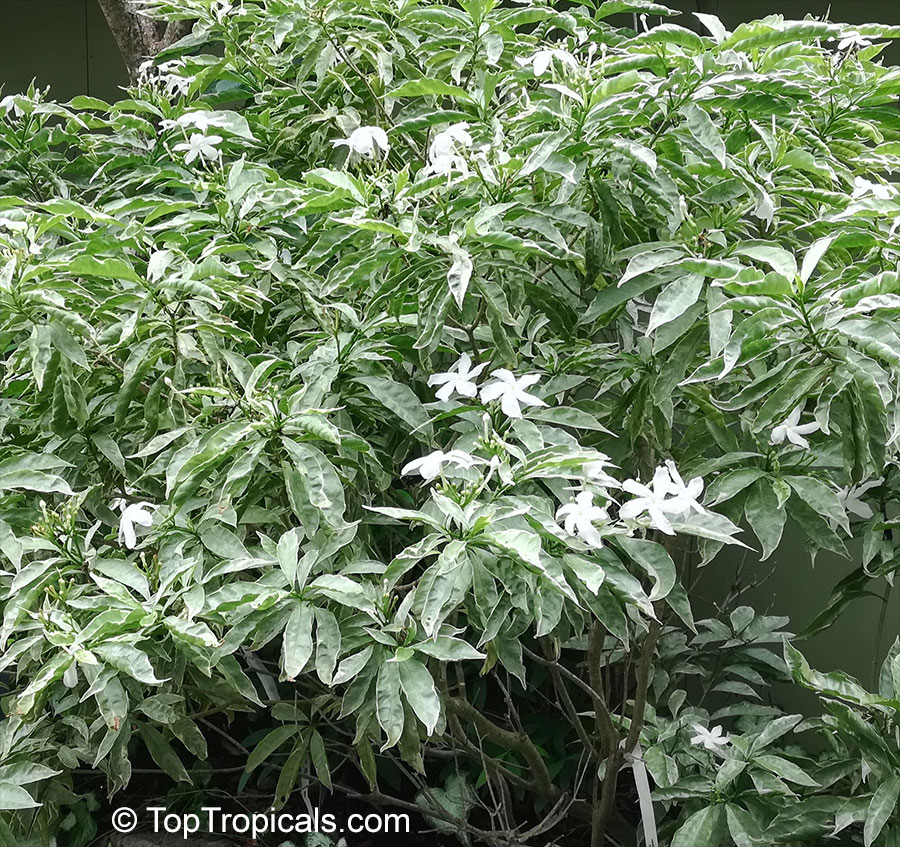
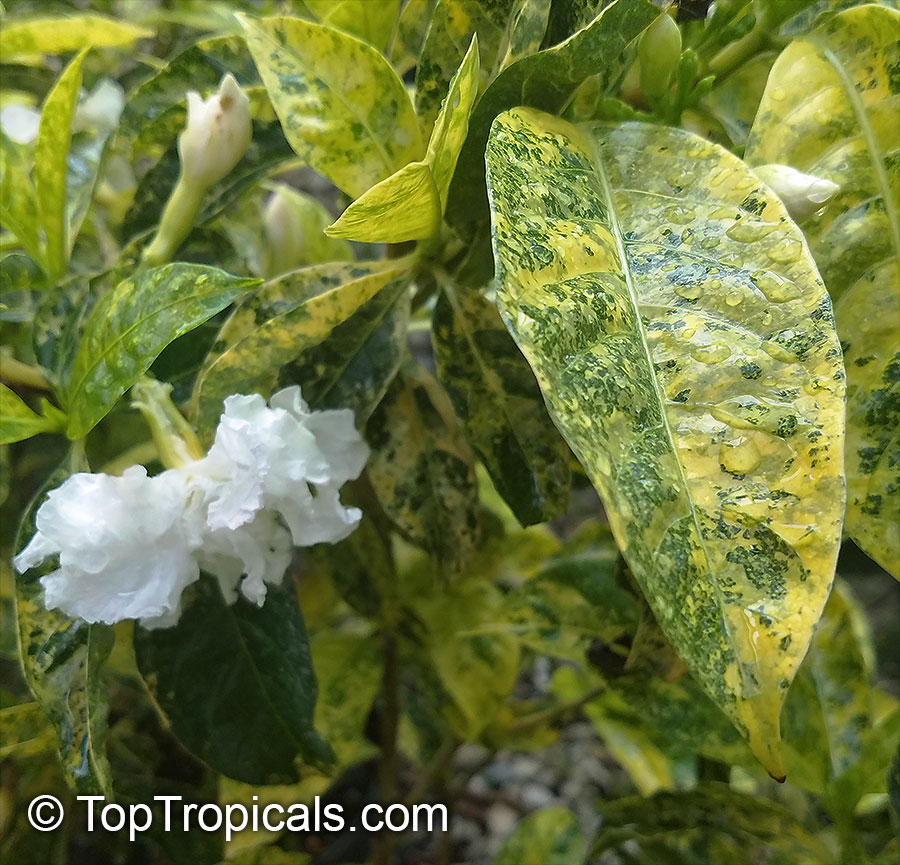
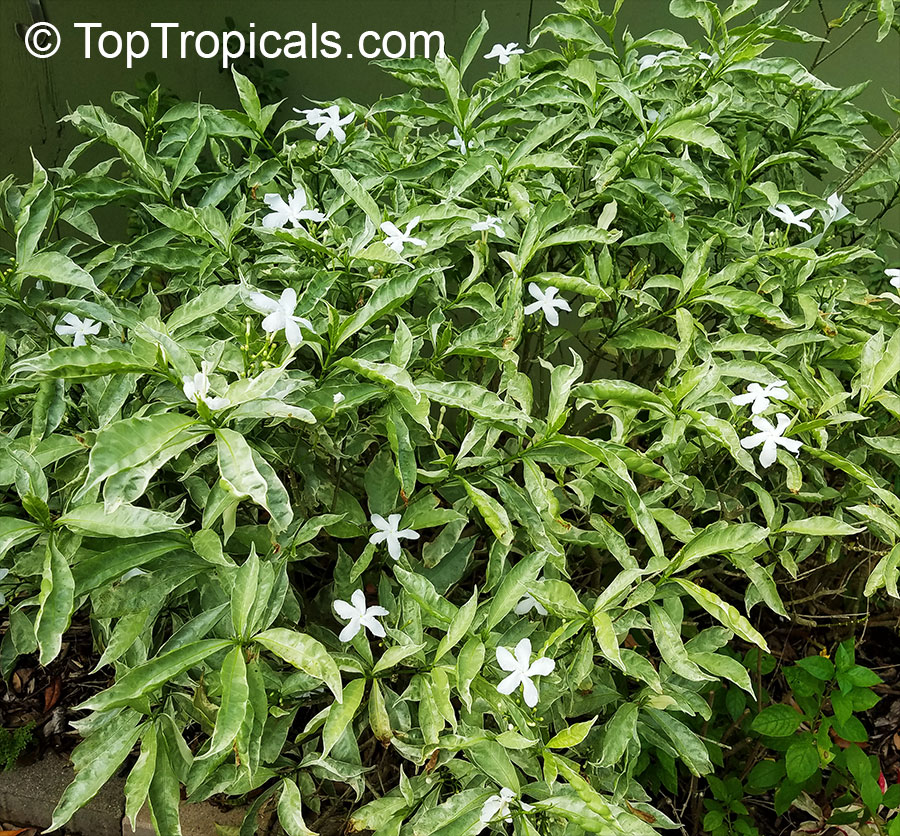
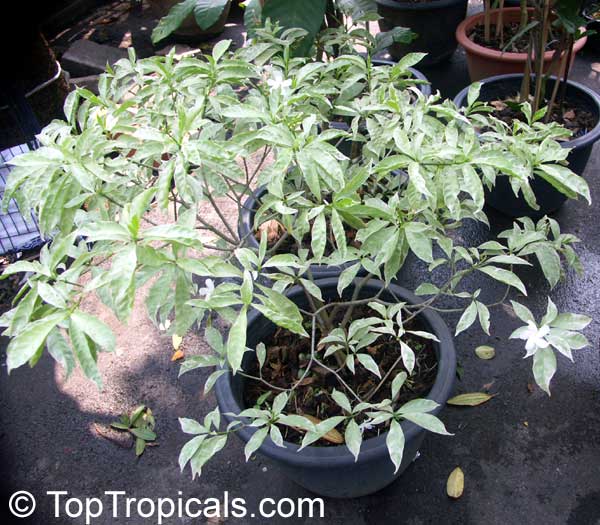
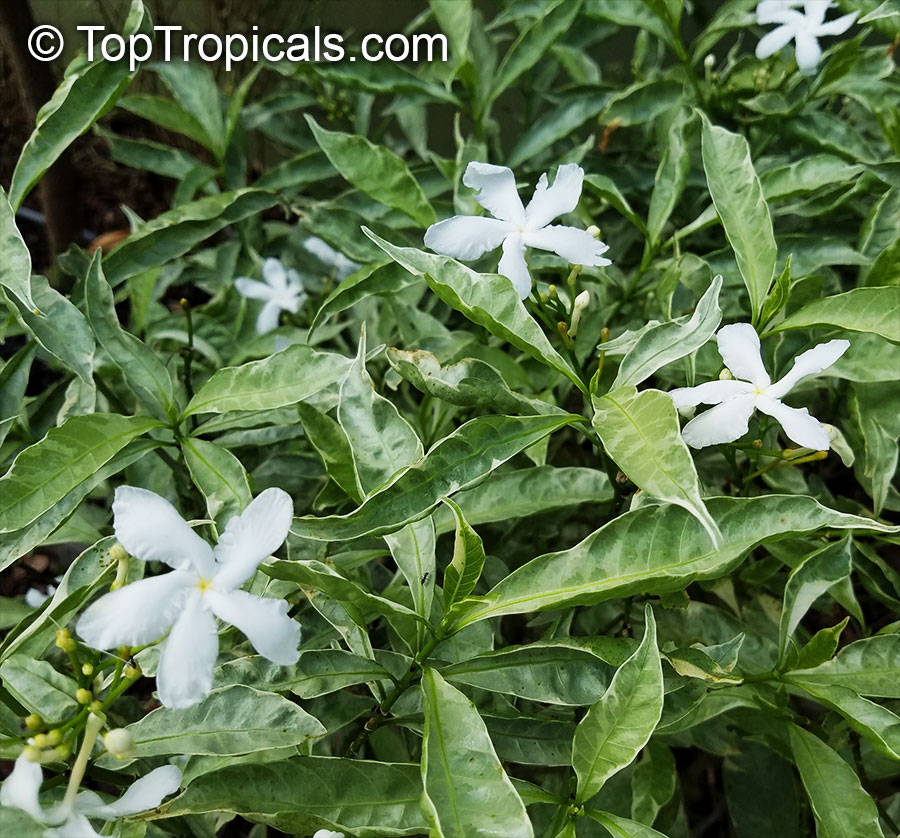
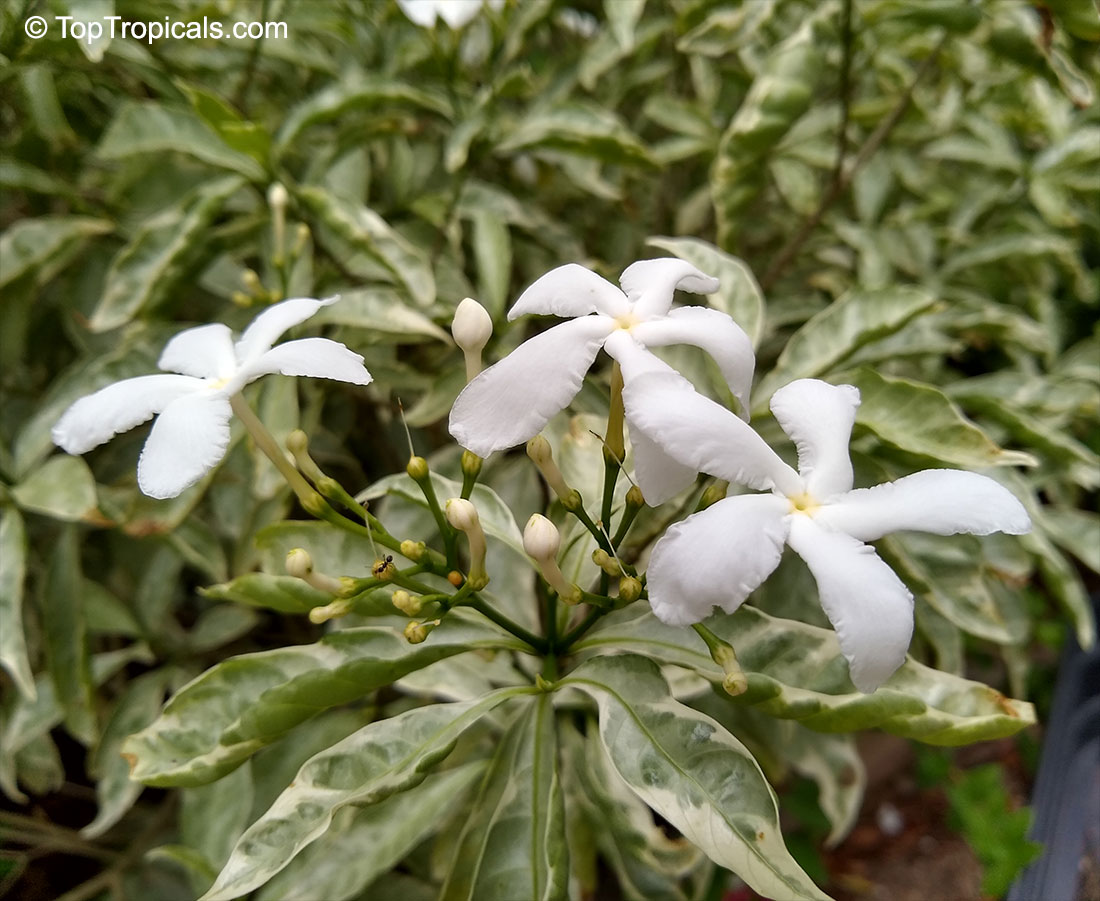
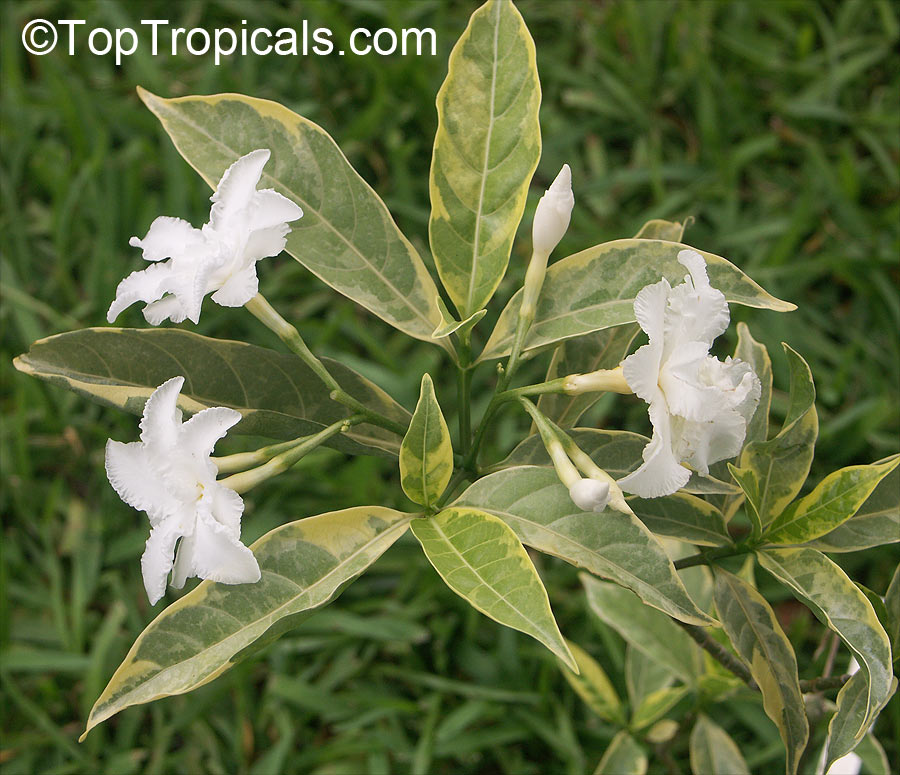
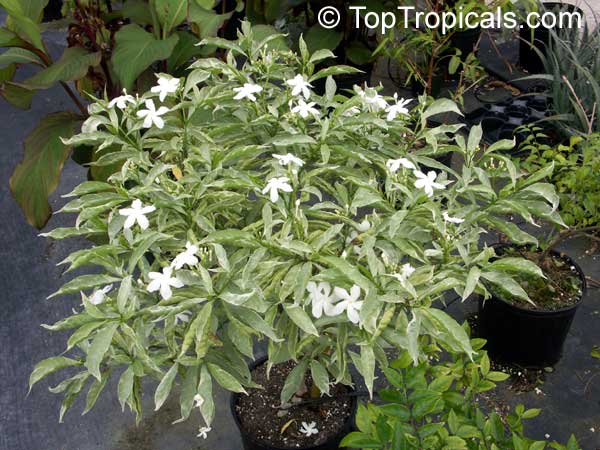
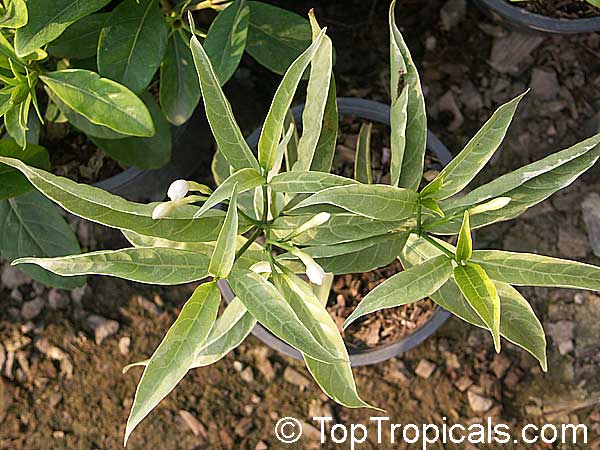
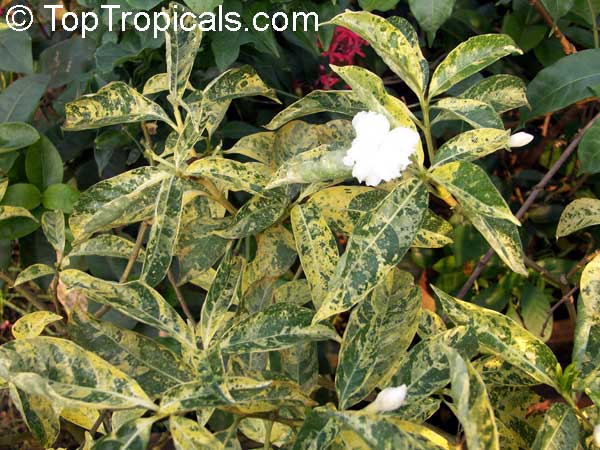
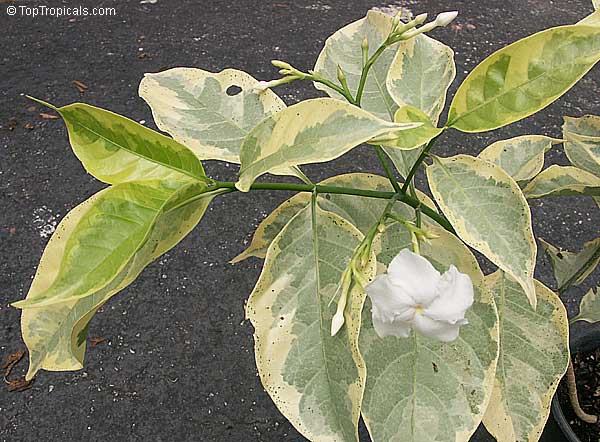
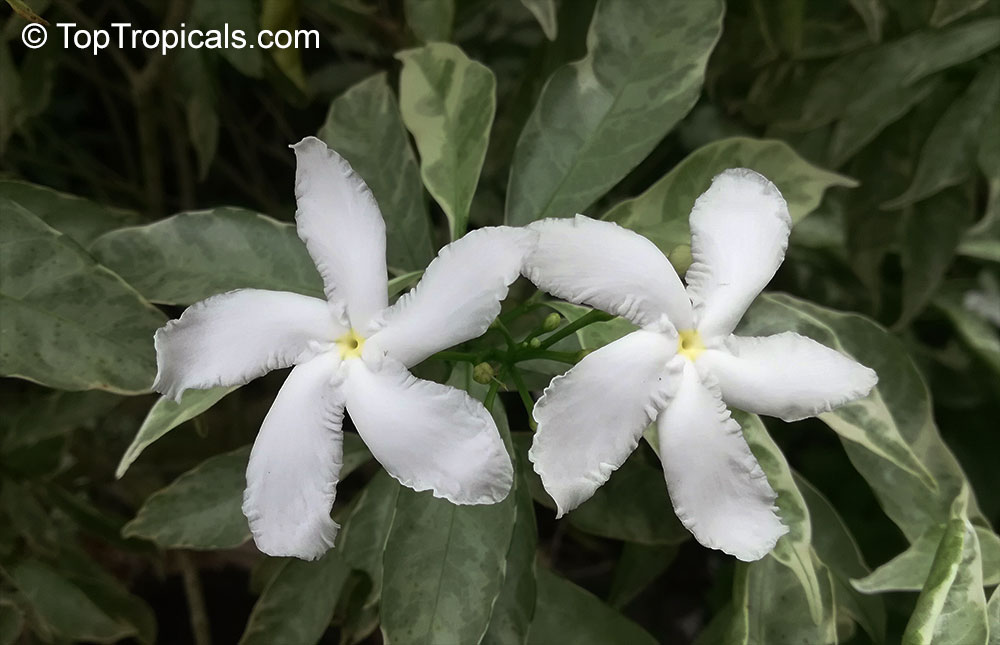
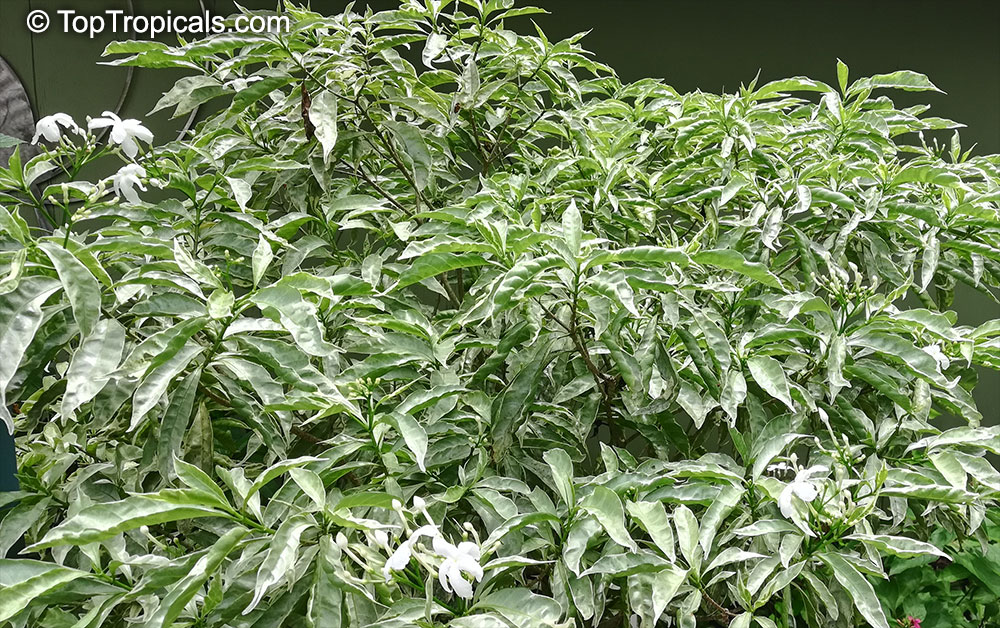
Small compact bushy shrub, looks similar to Tabernaemontana divaricata (same growth habit), but foliage is variegated, and flowers are fragrant. There are several varieties of the variegated tabernaemontana, including Silver Rain, Gold - they differ by shade of variegated leaves, from silvery to golden. Nice specimen plant, very hard to find.
If you think you've seen every tropical shrub out there, meet Golden Rain: a rare and beautiful variety of the Tabernaemontana genus with variegated foliage that steals the show.
What makes it special?
The leaves: Instead of plain green, the foliage has golden or silvery variegation think green with bright flashes of gold or white. This gives the shrub an art-piece look.
The flowers: Like other Tabernaemontana, it produces white, fragrant blooms (often in clusters), so you get both perfume and foliage.
Growth habit: It stays fairly compact and rounded, making it suitable as a specimen in containers or smaller gardens.
Versatility: It's reported to tolerate both full sun and partial shade, which gives you more flexibility in placement.
How to grow it:
Light: Give it bright light; full sun is fine if you re in a warm region but partial shade helps preserve the variegation.
Soil and water: Use well-draining soil. Water regularly but allow a little drying between waterings once the plant is established.
Placement: As this is a rare shrub, treat it like a special feature - near a patio, entrance, or in a stylish container where people pass by and notice the leaves.
Cool weather: It's tropical-friendly, so protect it if you hit near-freezing temperatures. If you're in zone 9 or warmer, it'll likely be very happy outdoors.
Maintenance: Not high-maintenance, but since the variegation is part of the appeal, keep an eye out for signs of stress (loss of variegation, chlorosis) and address issues like nutrient deficiency or poor light.
Why youll love it? Because it's rare. Because the leaves look like they've been splashed with gold. Because it smells lovely and stands out in any garden. If you like plants that turn heads and spark conversations - this Golden Rain is a perfect fit.

Recommended Fertilizer: SUNSHINE Megaflor - Bloom Nutrition Booster
Local pickup only. This item is not available for shipping. Local delivery may be available in Ft. Myers or Sebring, Florida. Contact us for an estimate. Non-pickup orders are subject to restocking fees.
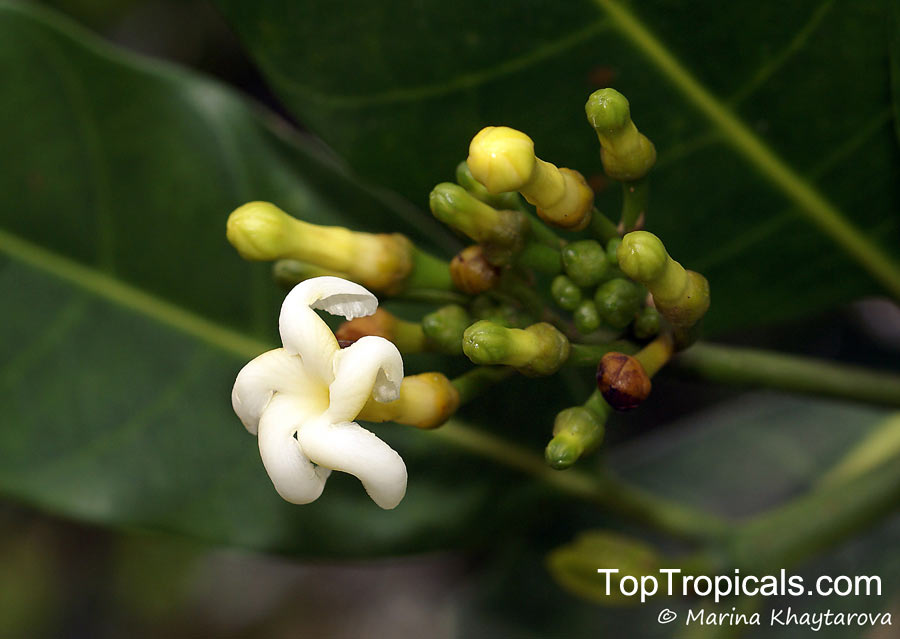
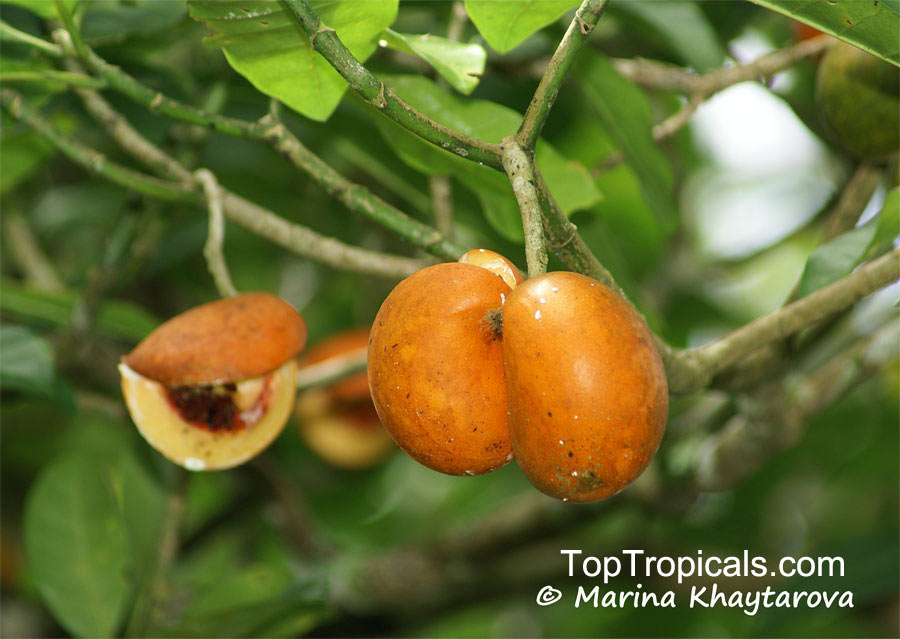
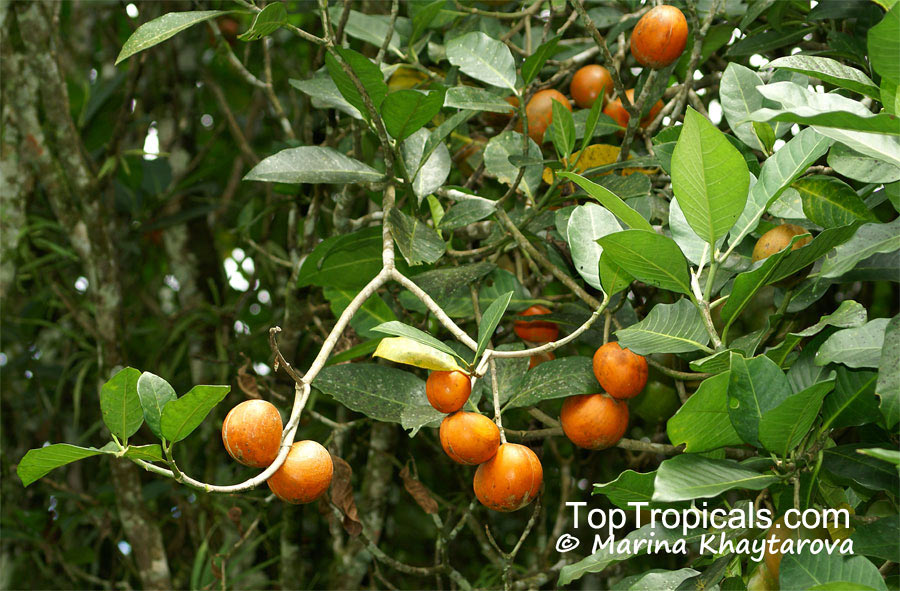
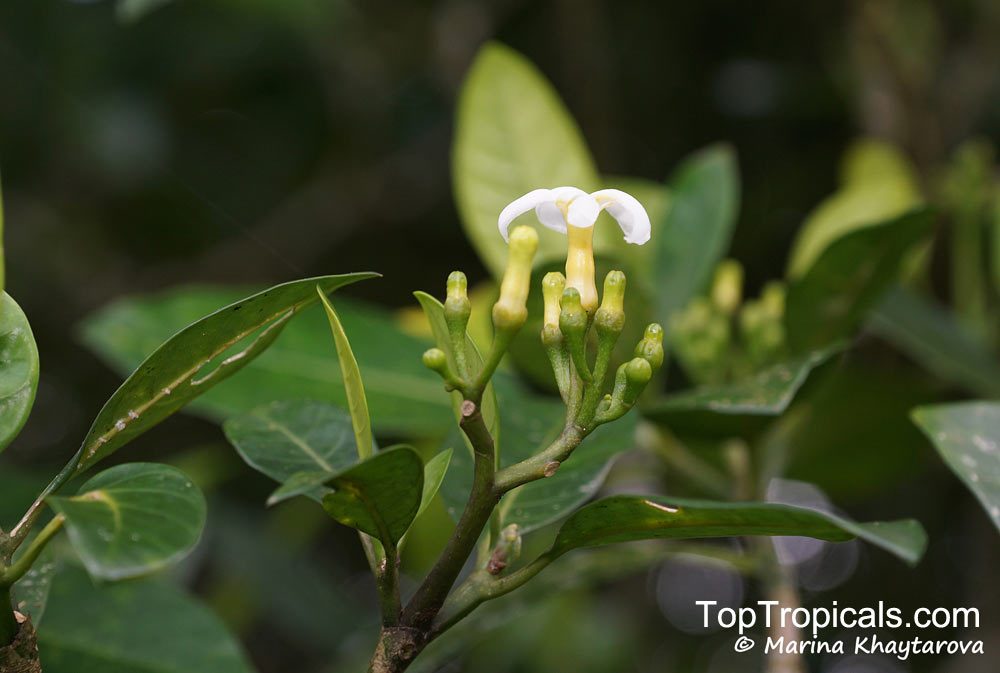
Botanical name: Tabernaemontana macrocarpa
Common name: Tabernaemontana
Family: Apocynaceae
Origin: Southeast Asia
USDA Zone: 9-10

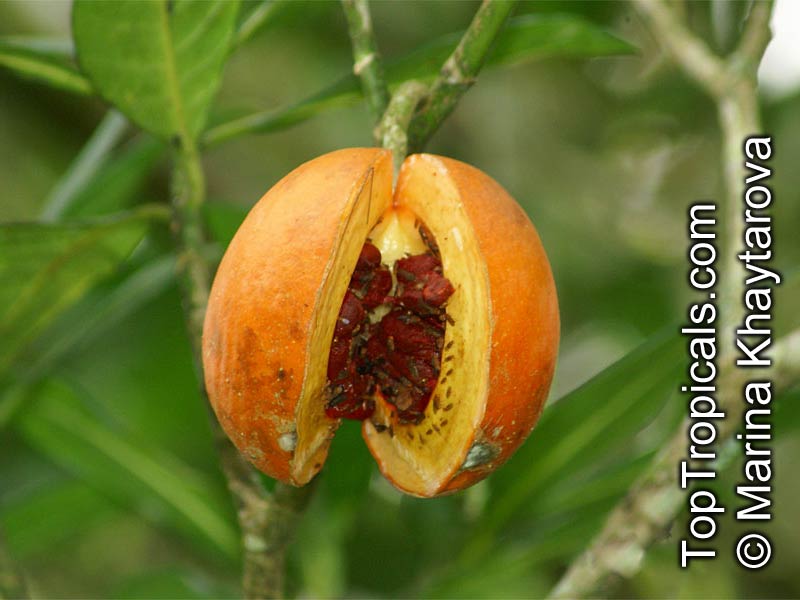
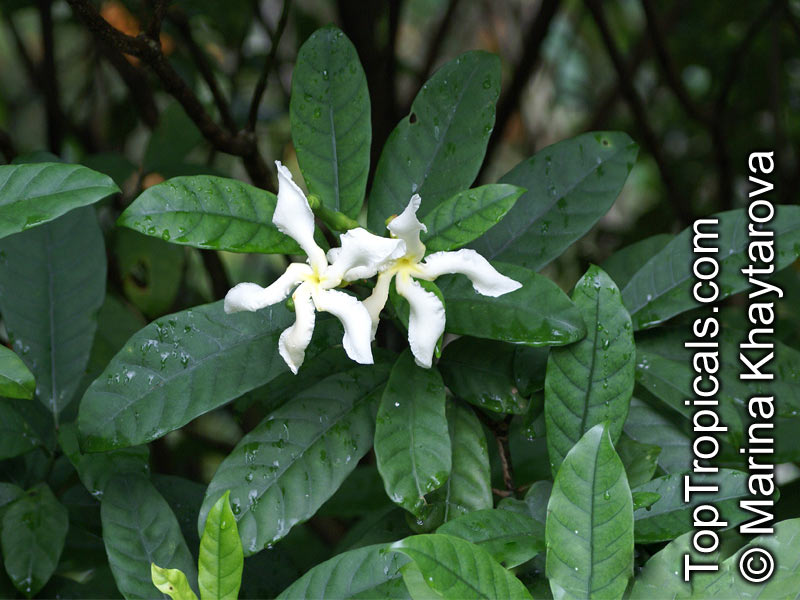
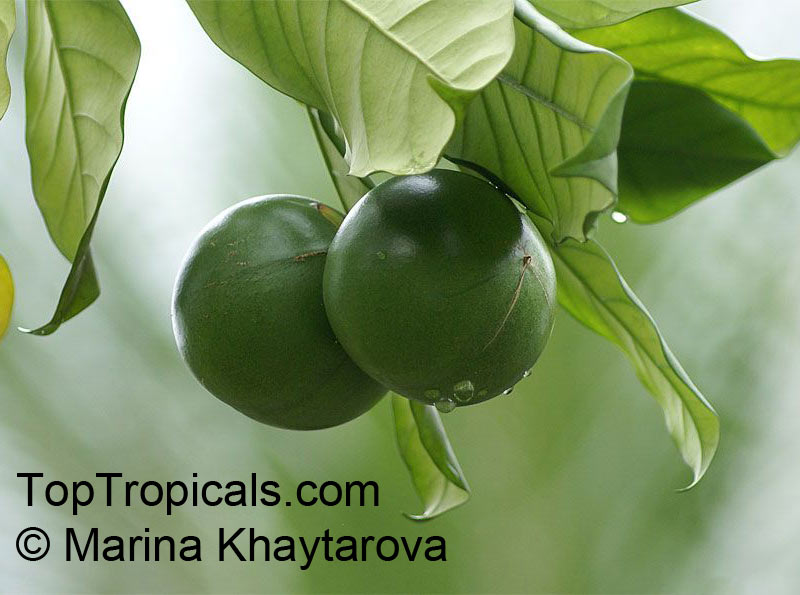
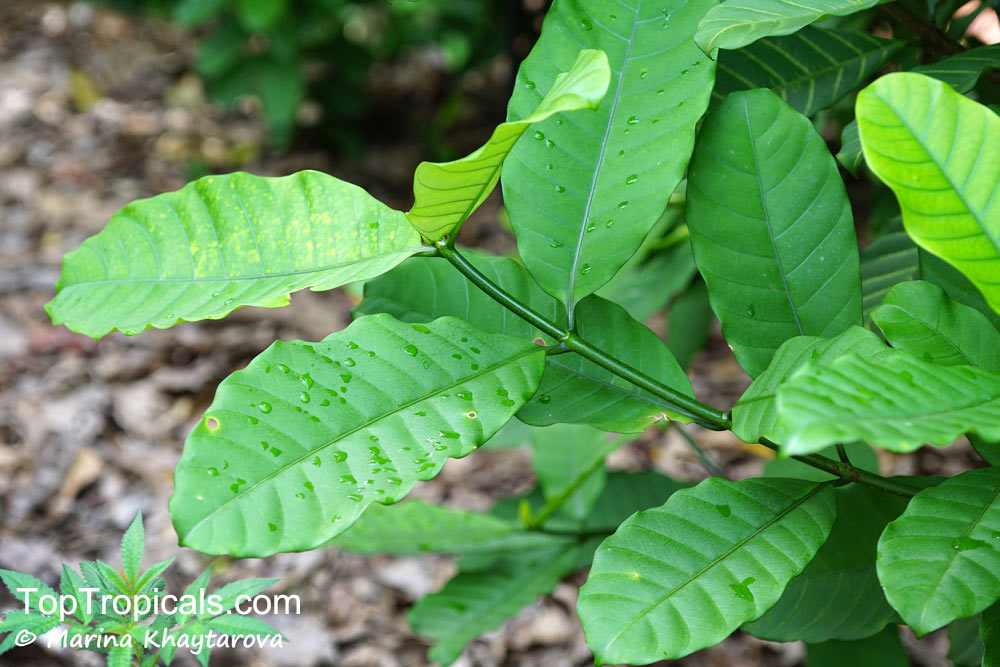
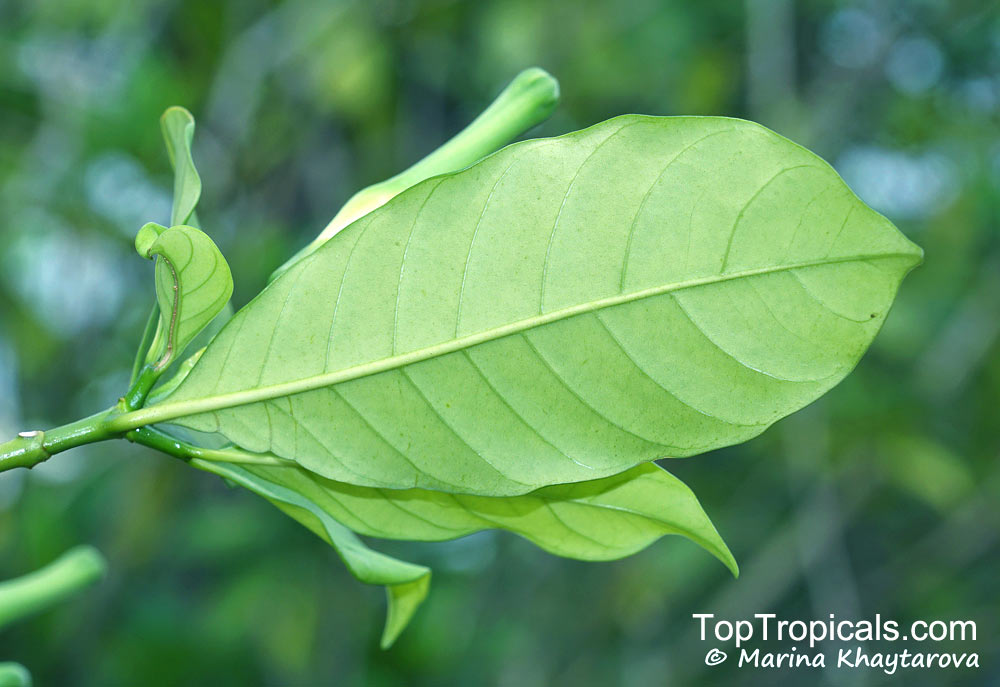
Botanical name: Tabernaemontana africana
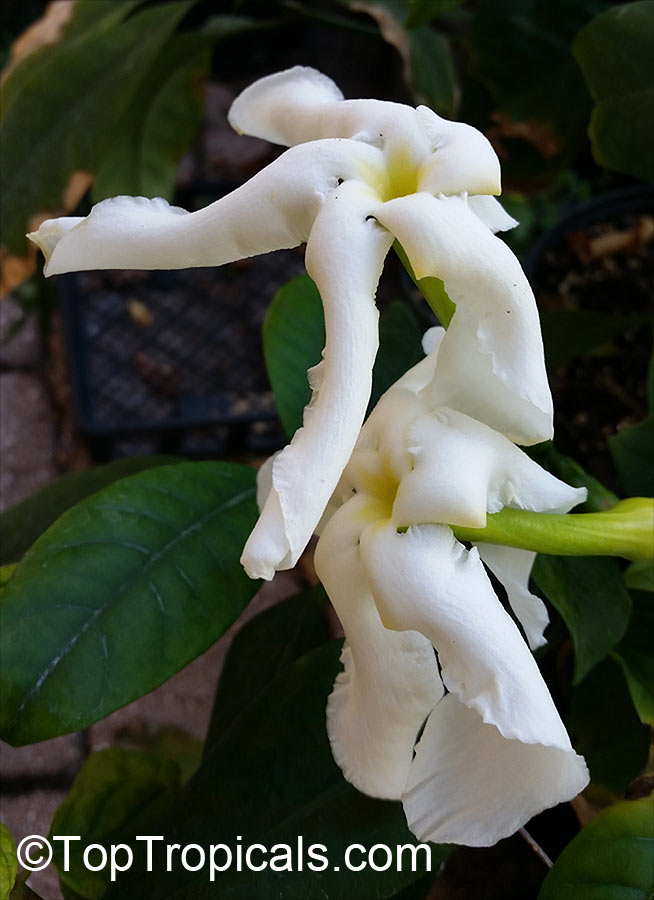
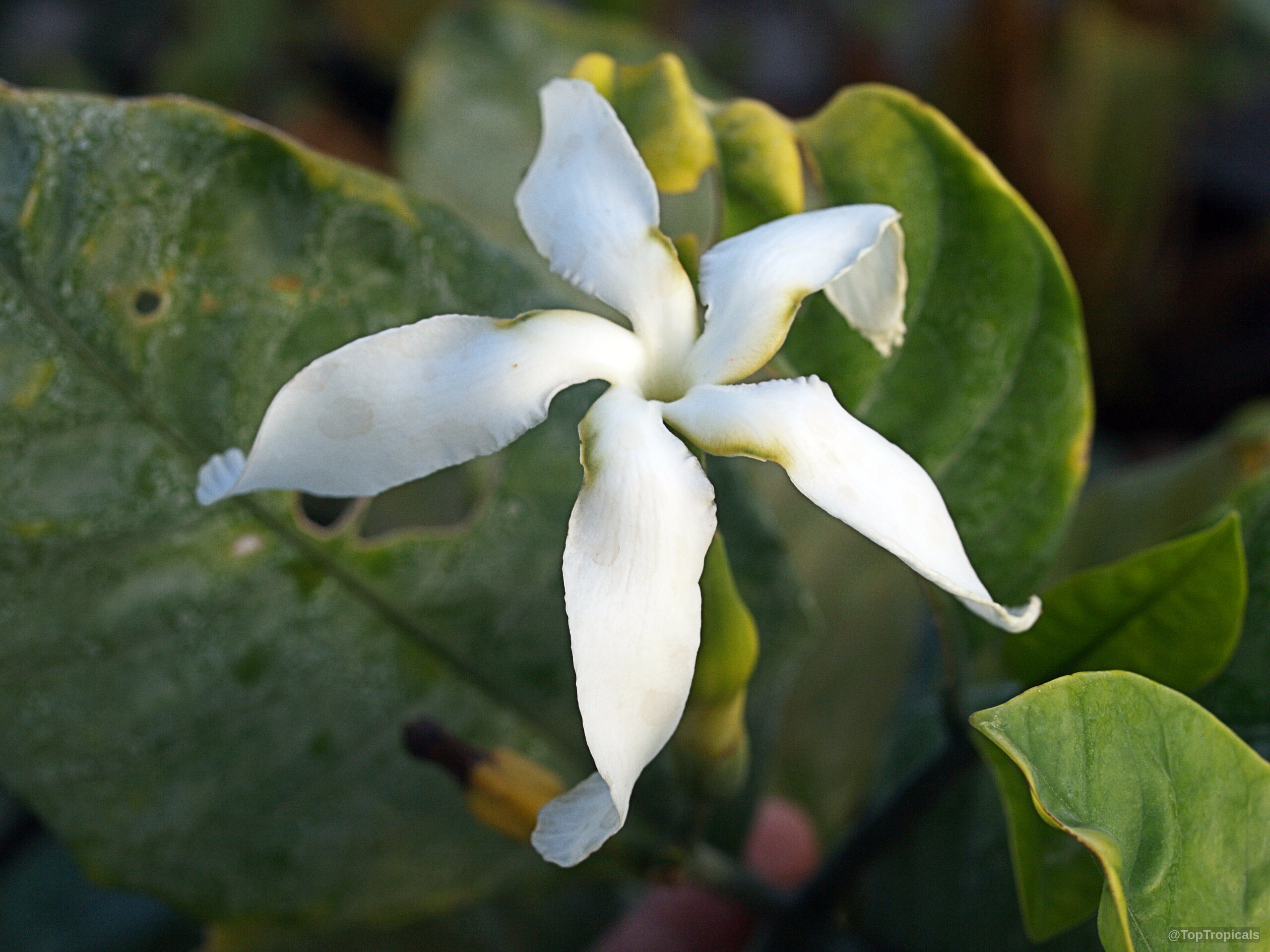
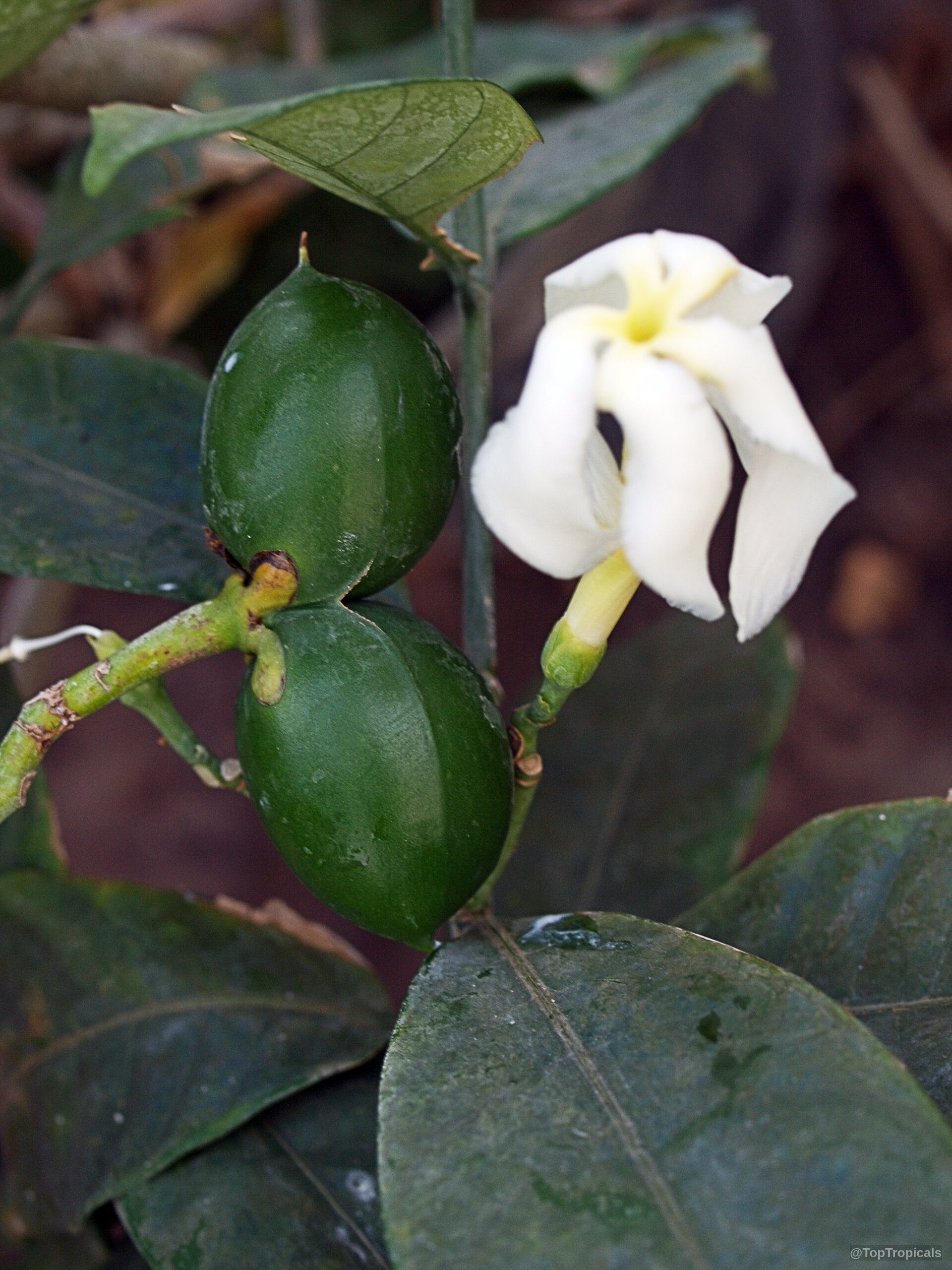
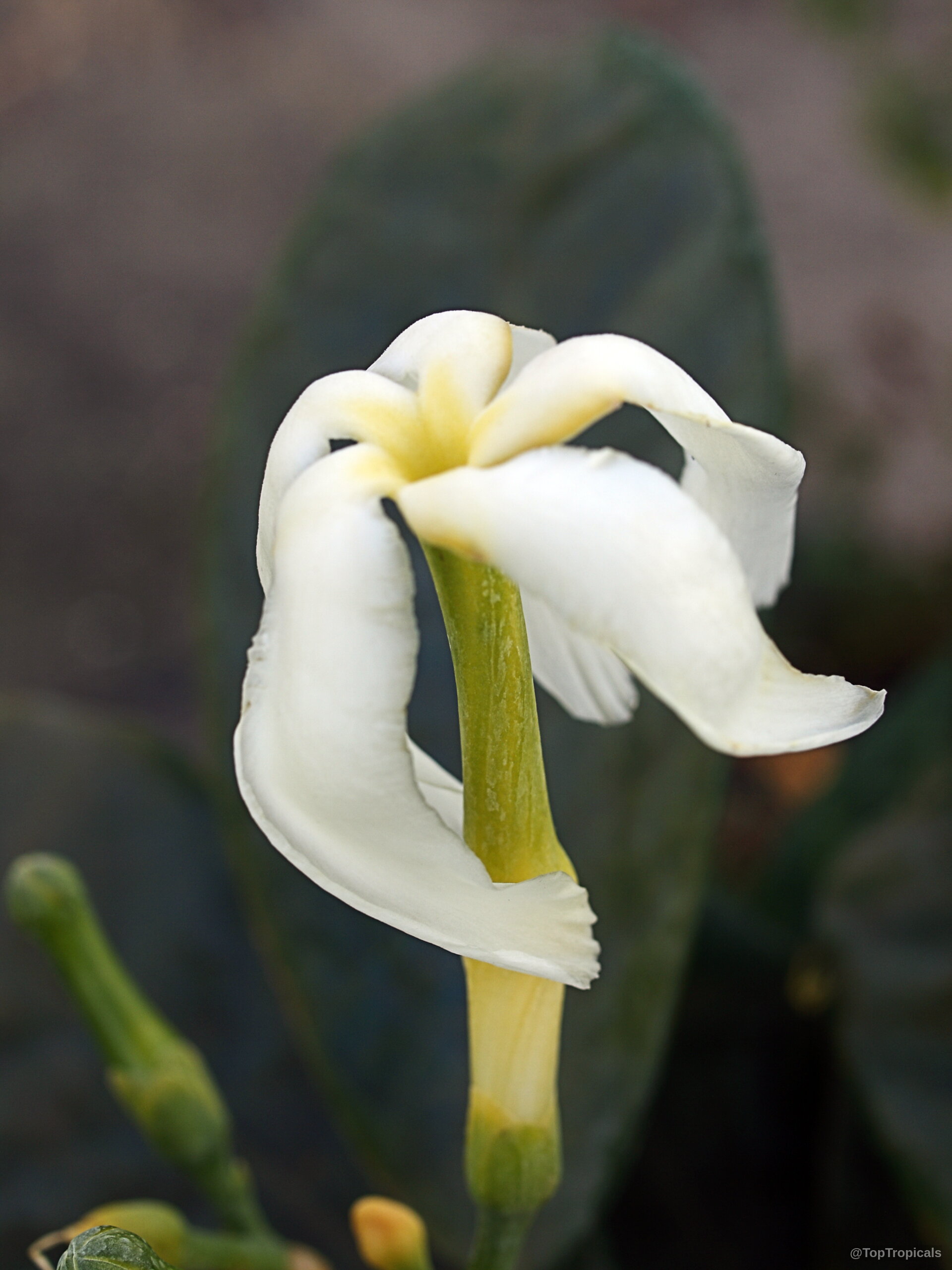
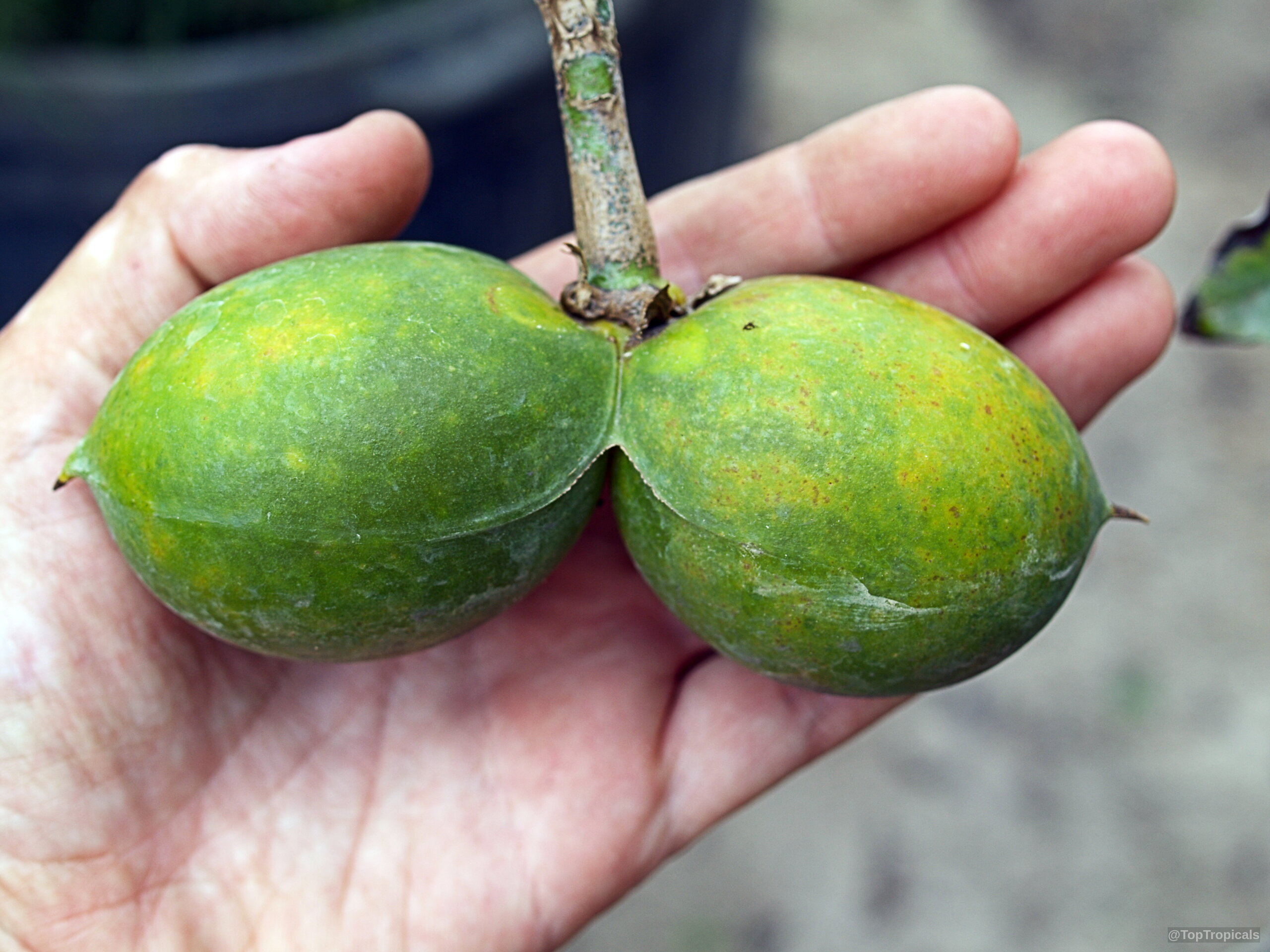
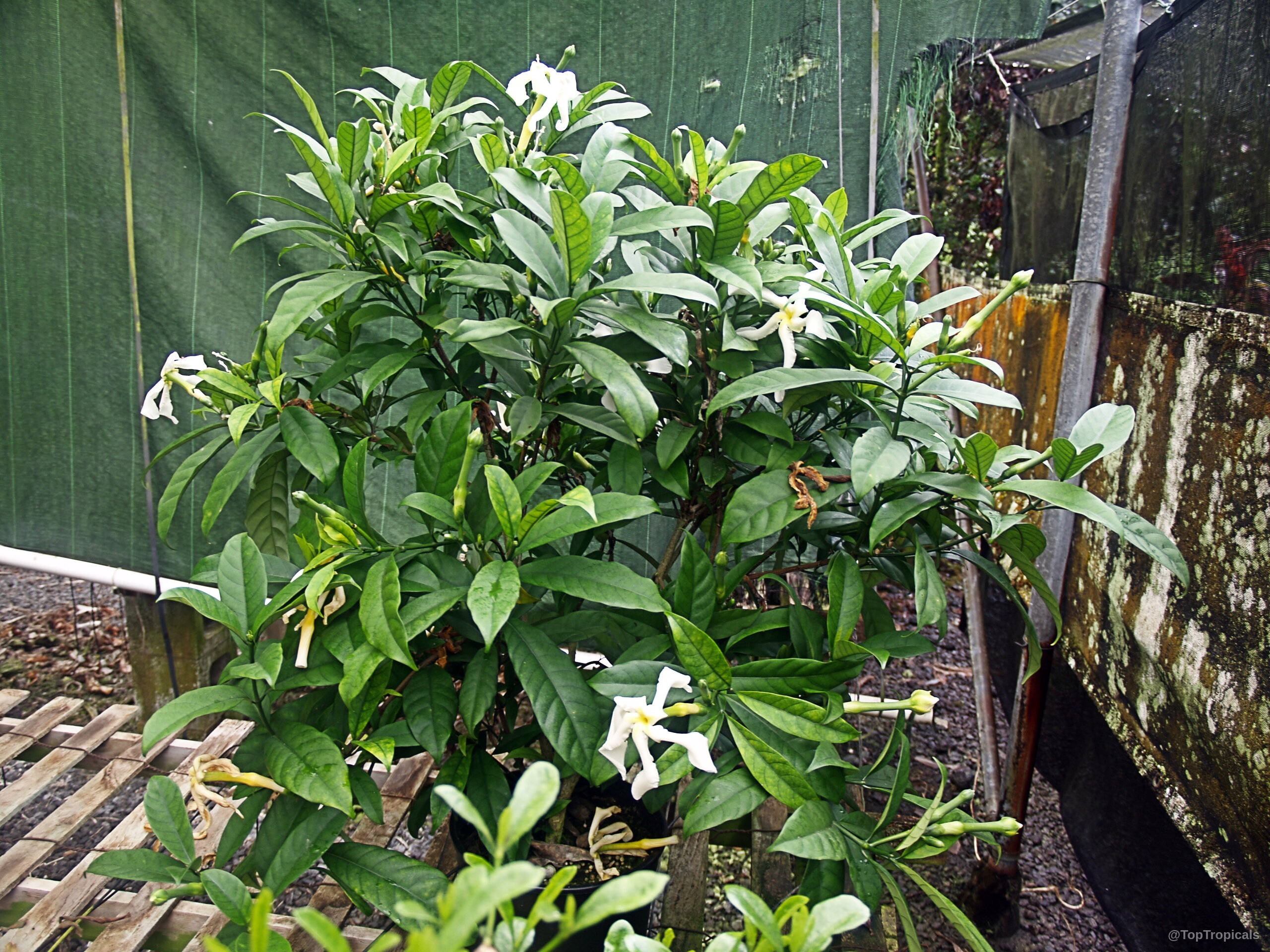
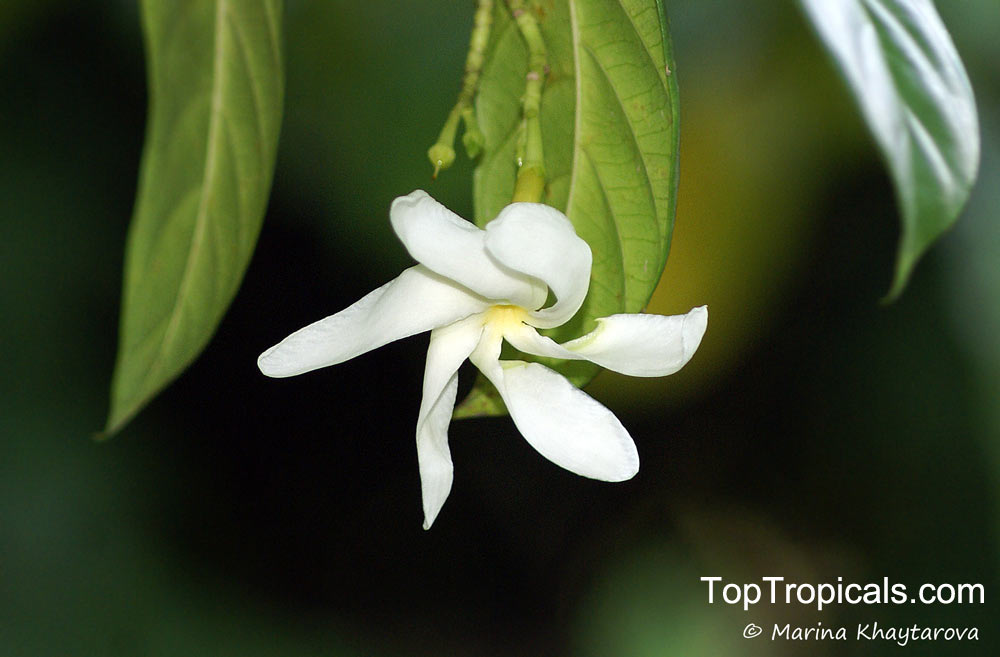
Common name: Samoan Gardenia
Family: Apocynaceae
Origin: Tropical West Africa, Senegal to Ghana
USDA Zone: 10-11
Tabernaemontana africana (Samoan Gardenia) is a tropical shrub that grows best in warm regions with temperatures above 55°F and prefers partial shade, but can tolerate full sun in the right conditions.
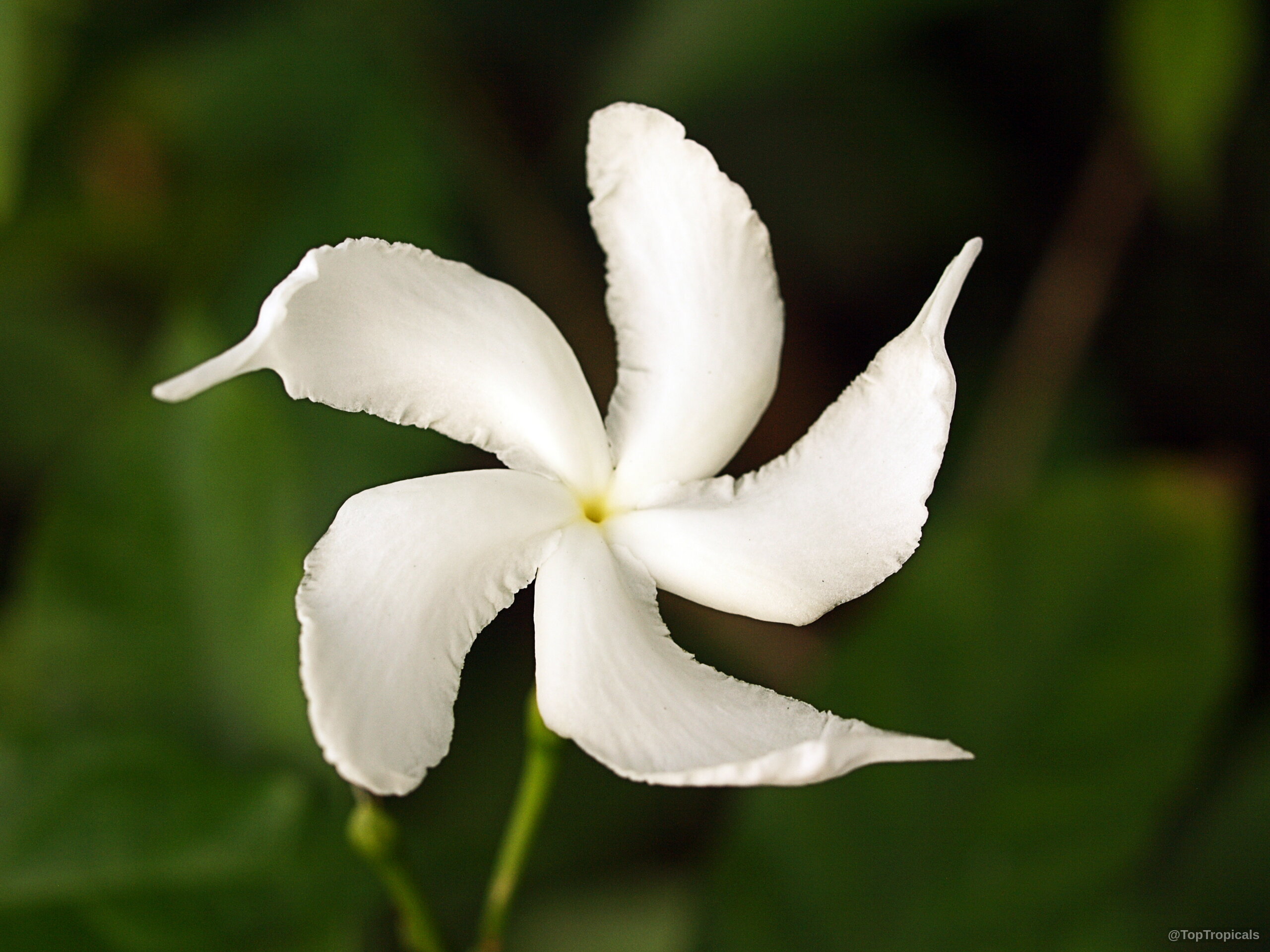
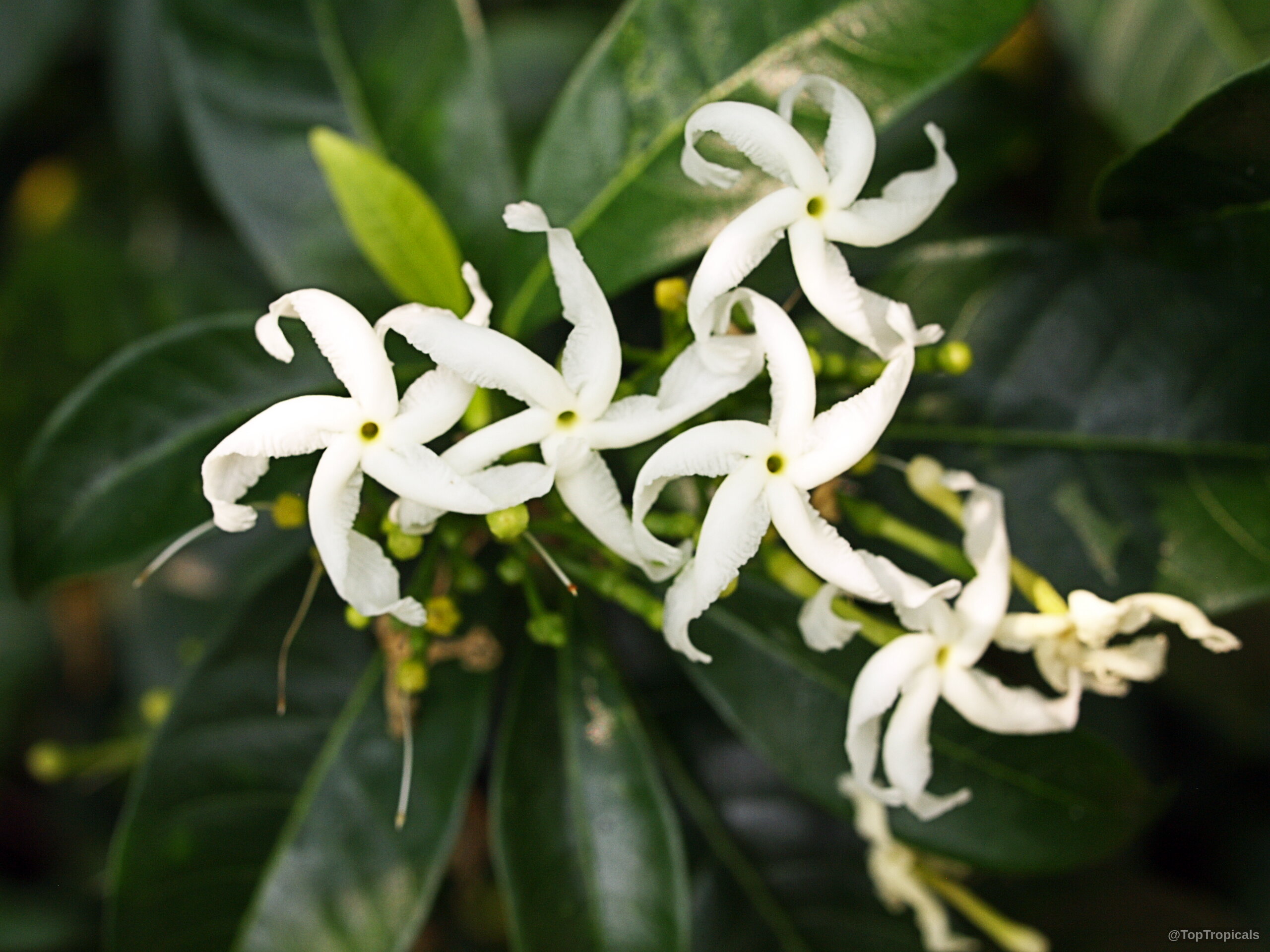
The intoxicating sweet fragrant creamy white blossoms are pinwheel shaped .The plant blooms almost all year and has a wonderful spicy fragrance that carries a good distance both day and night, unlike many other white blooming plants, which are only fragrant at night. Blooming can be heavy or light depending on the bloom cycle. Flowers with 5 petals average 4 inches across and stand out nicely against the dark-green foliage
Provide the shrub with a regular watering schedule and be careful not to let the soil remain too wet. The shrub is popular with local wildlife, attracting butterflies, hummingbirds, and other pollinators. When caring for your Samoan Gardenia, annual pruning and fertilization will keep the plant looking healthy and encourage blooming. Take care not to over-fertilize to avoid burning the foliage. In colder climates, Samoan Gardenia can be grown in a container indoors when temperatures drop below 50F, or moved to a sheltered patio for the winter. Make sure to provide the plant with bright light and direct sun, as well as regular watering to replicate the tropical environment.
This species very often mis-called as Tabernaemontana holstii , but according to taxonomic revision of Dr. Leeuwenberger (1988), Tabernaemontana holstii is actually a synonym of Tabernaemontana pachysiphon, close related species with larger leaves.
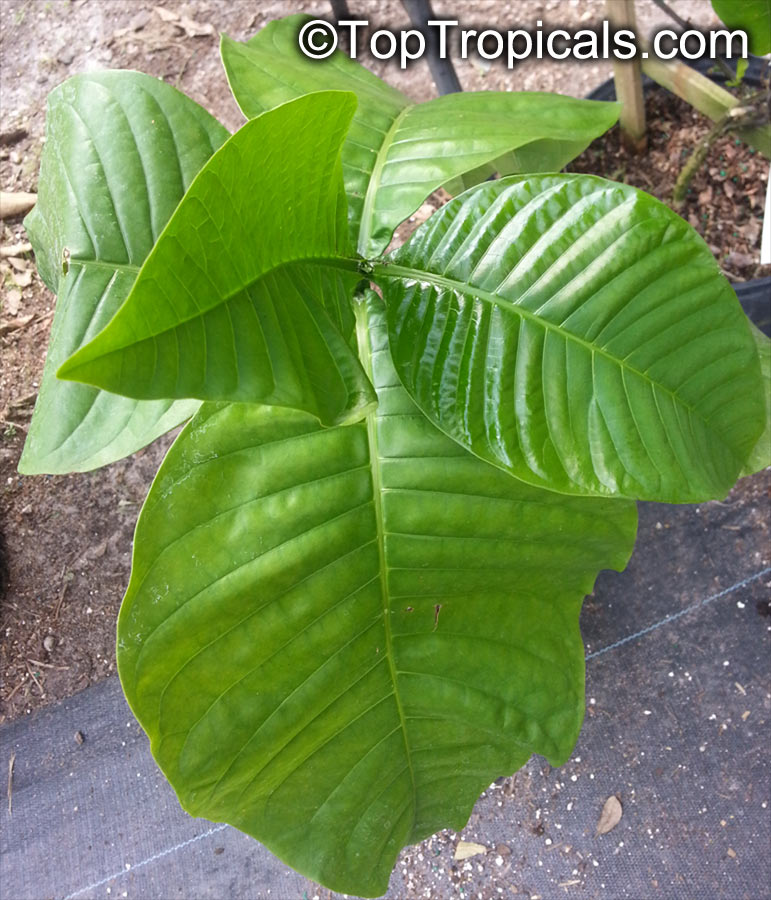
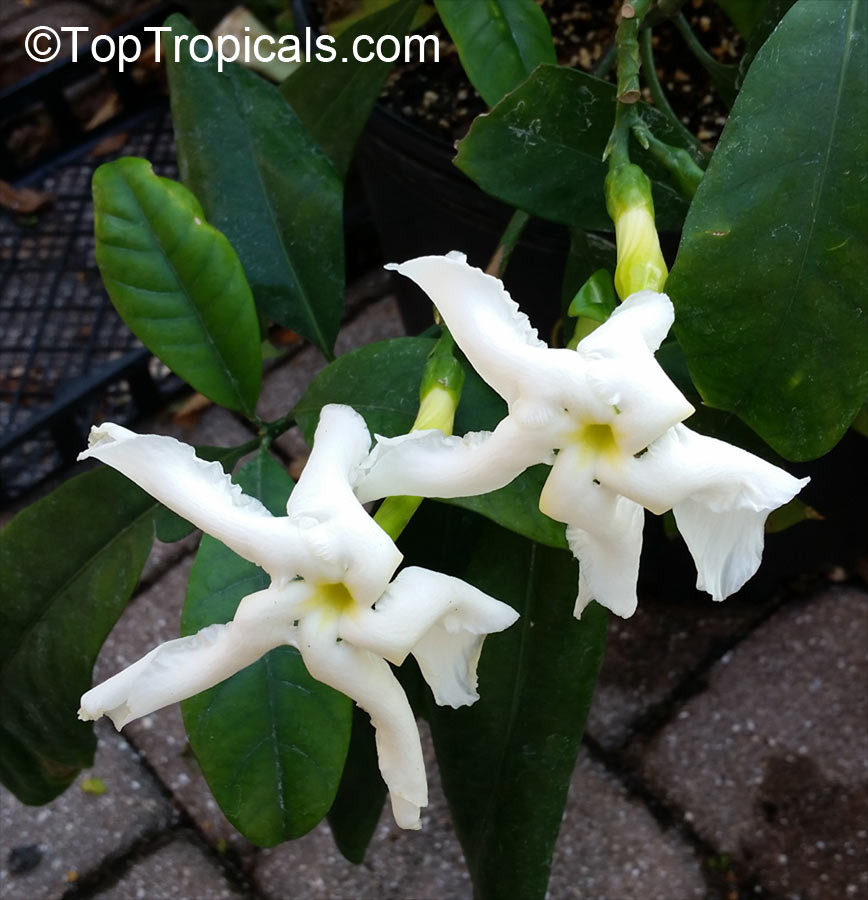
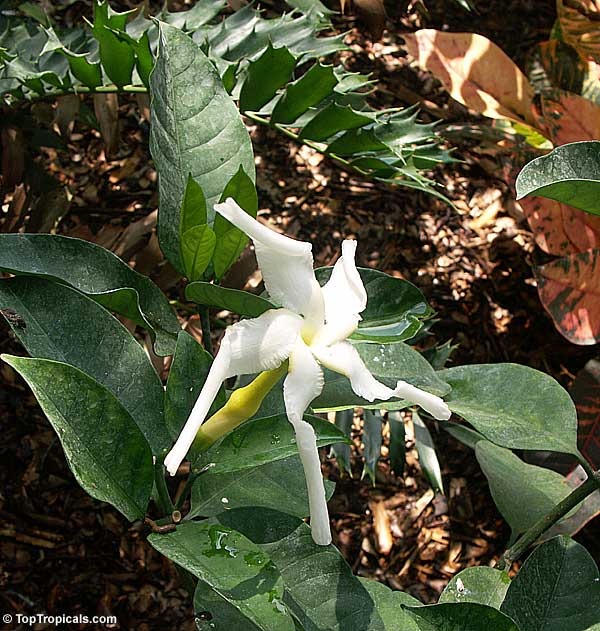
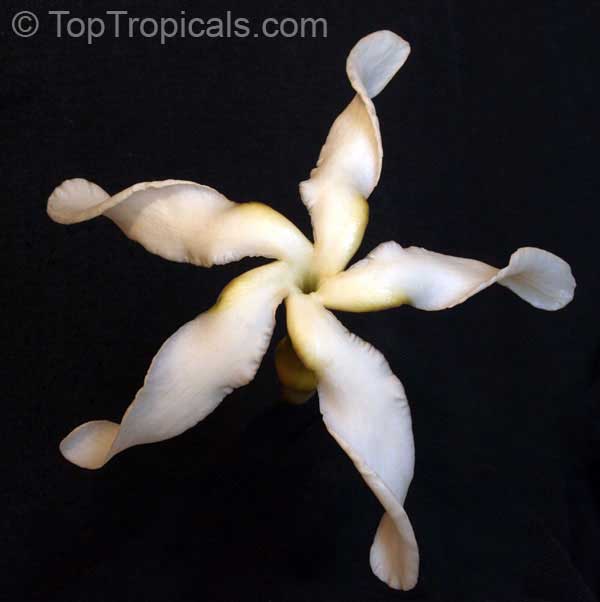
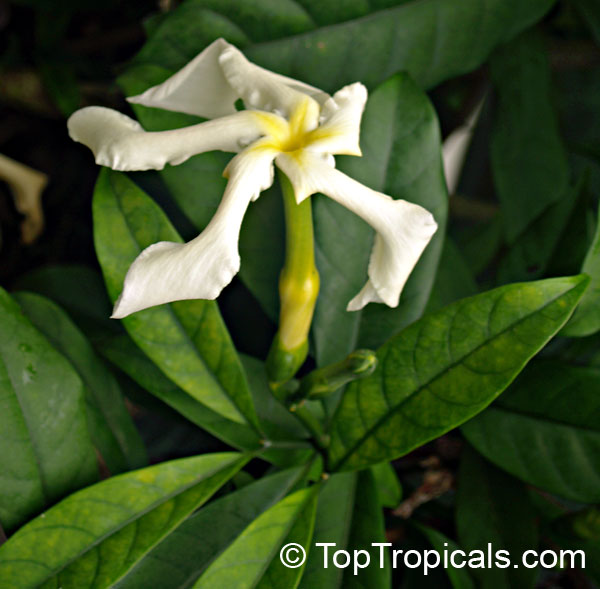
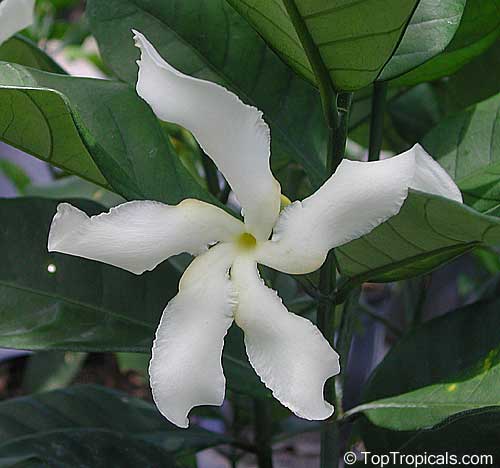
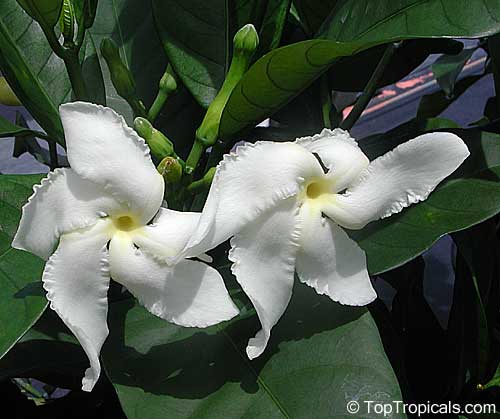
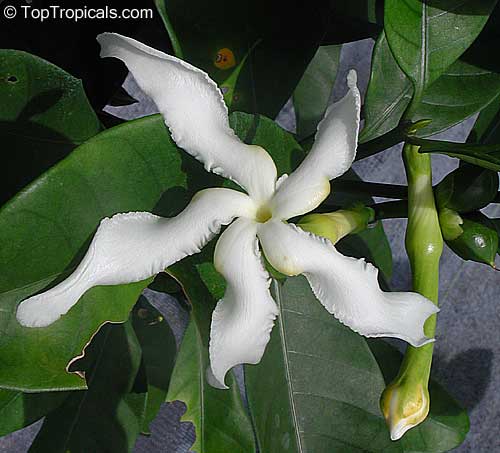
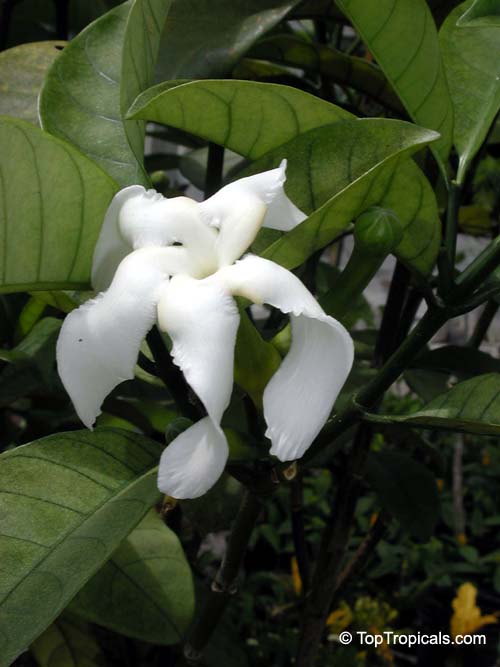
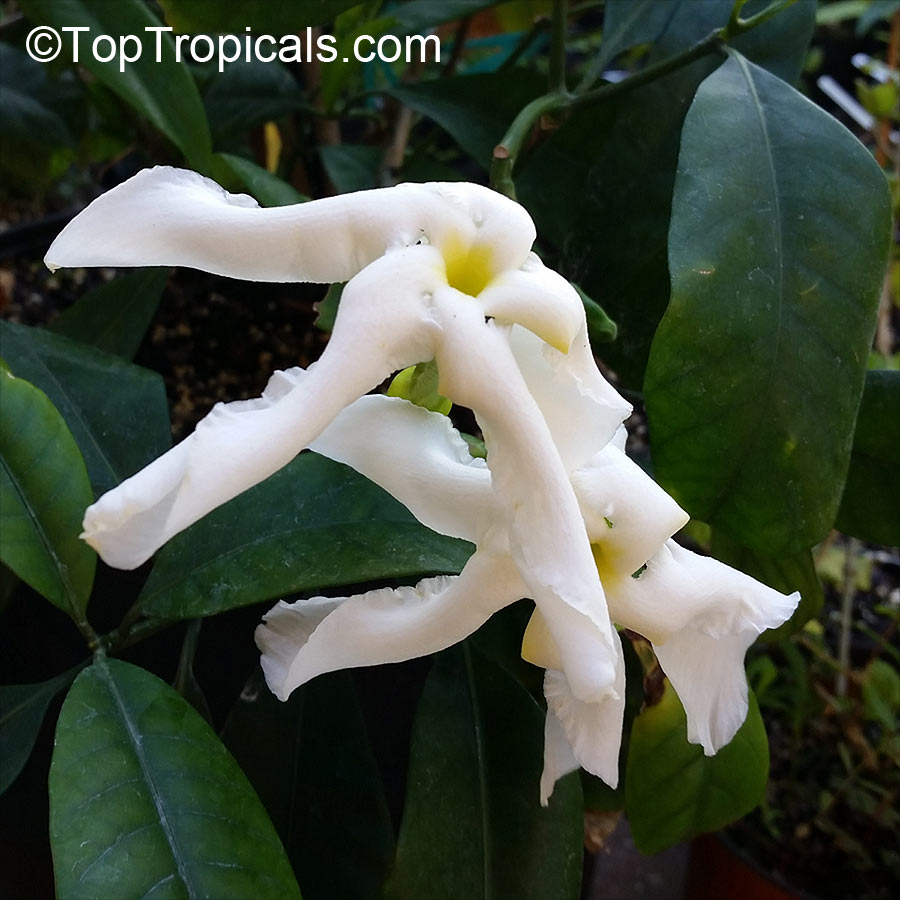
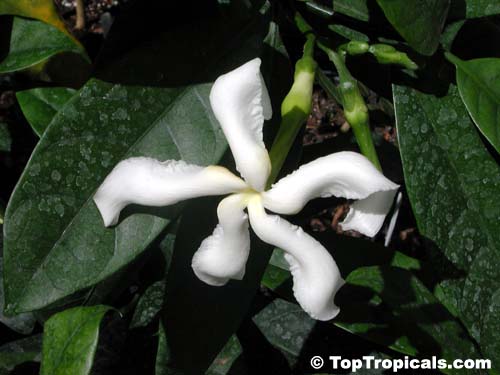
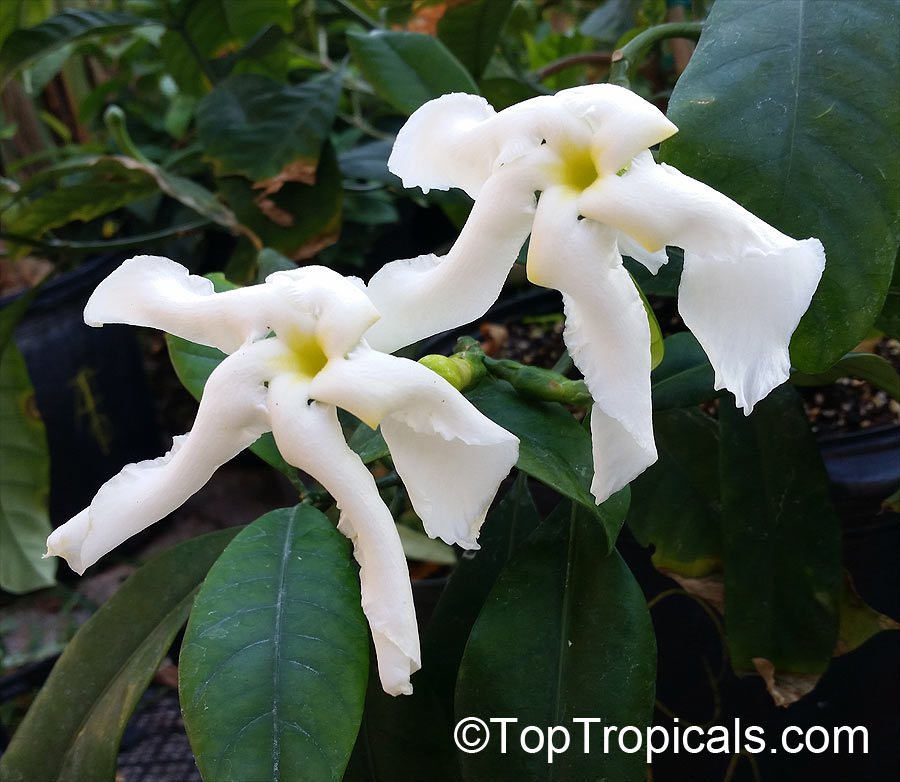
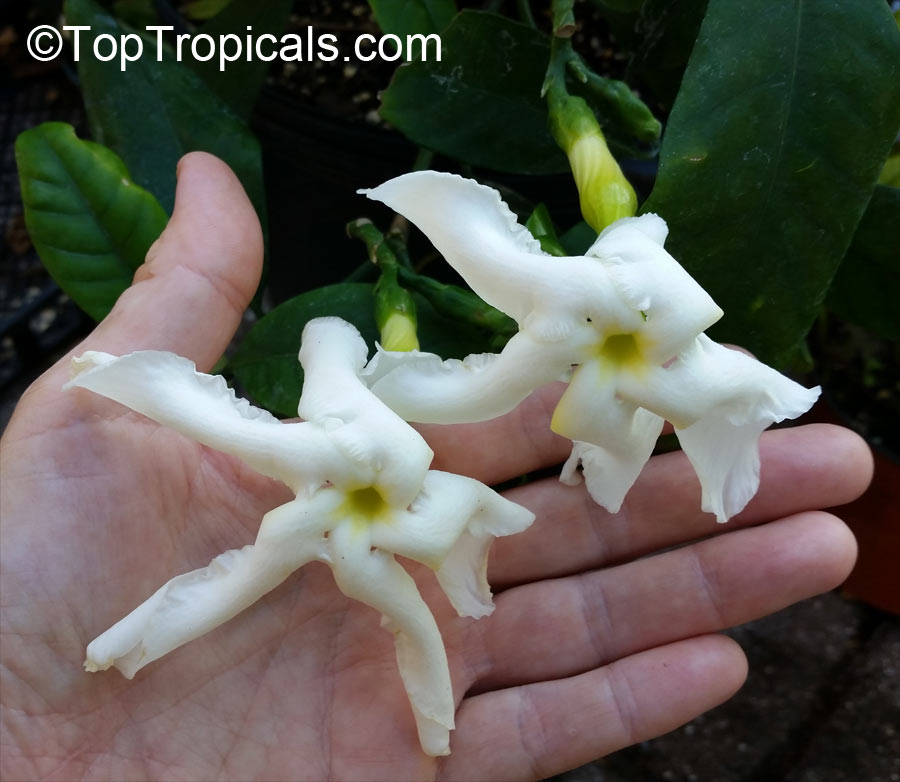
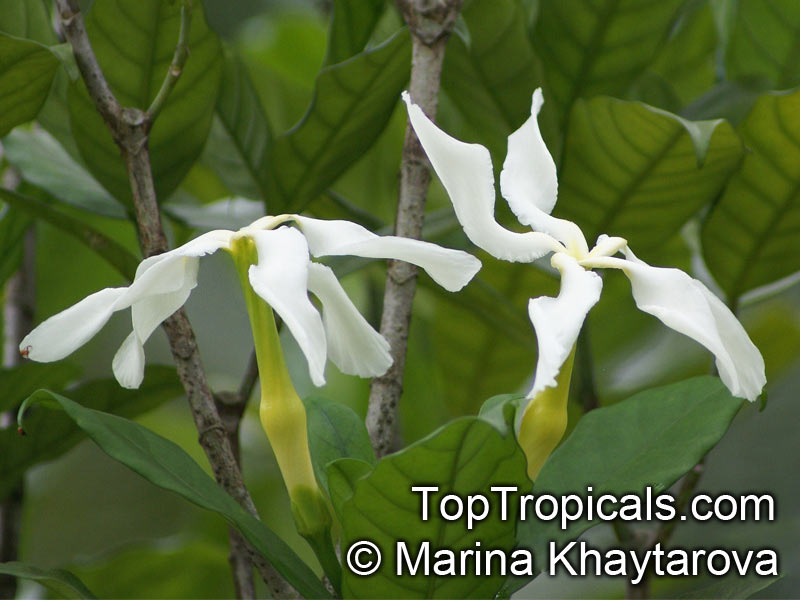
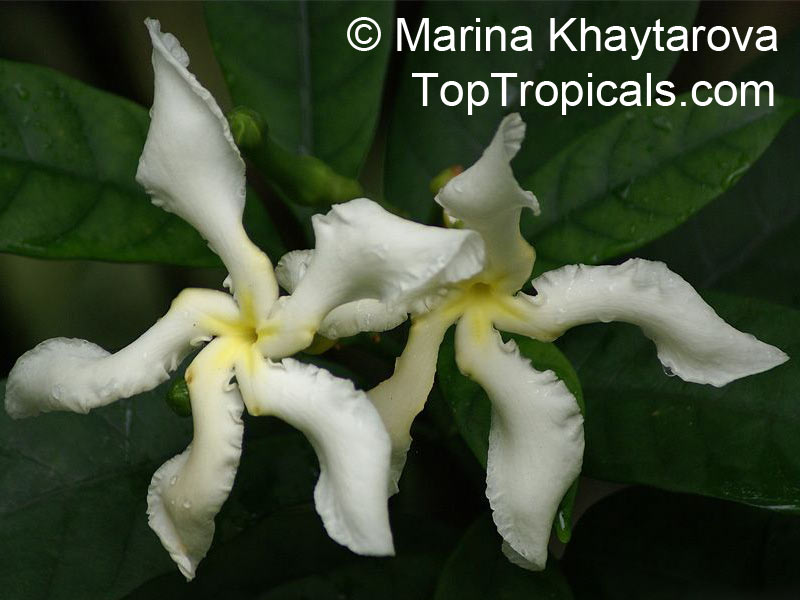
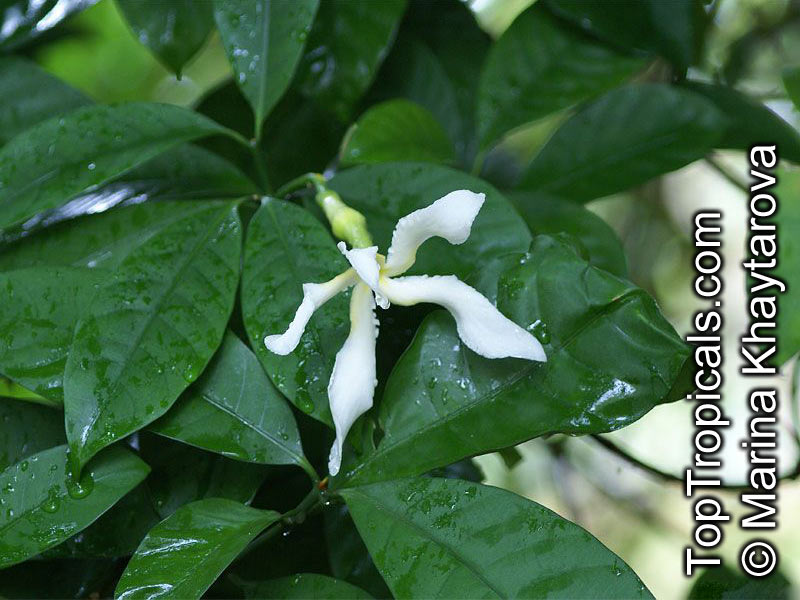



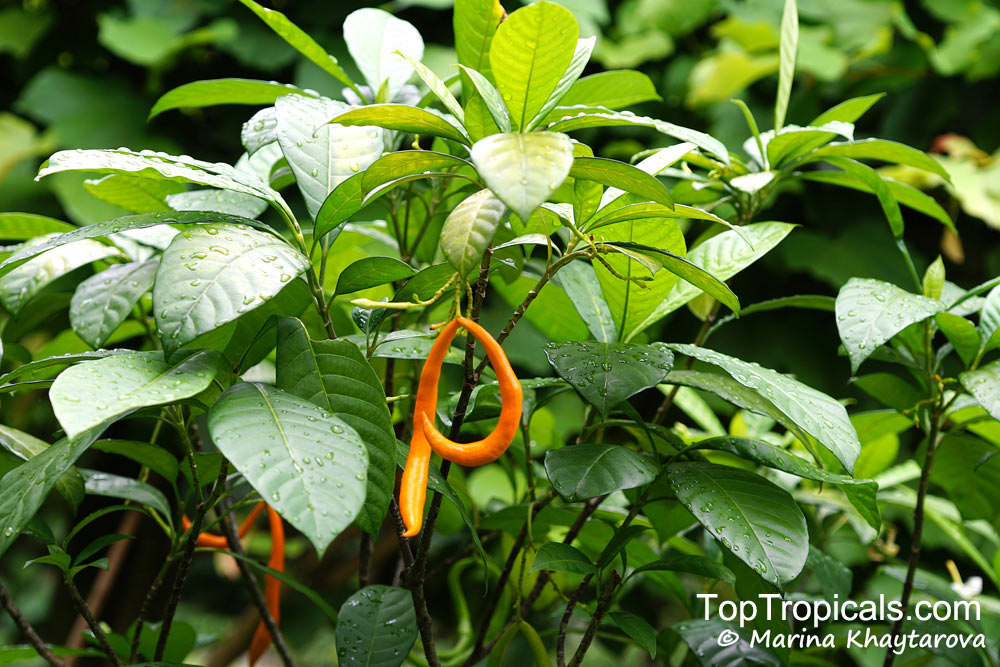
Botanical name: Tabernaemontana aurantiaca
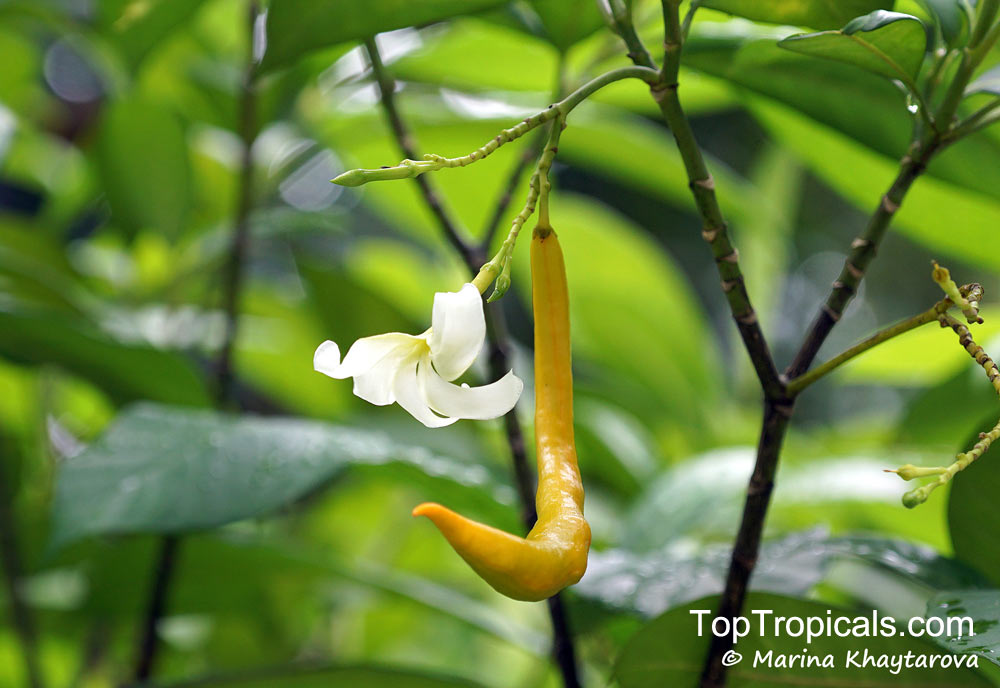
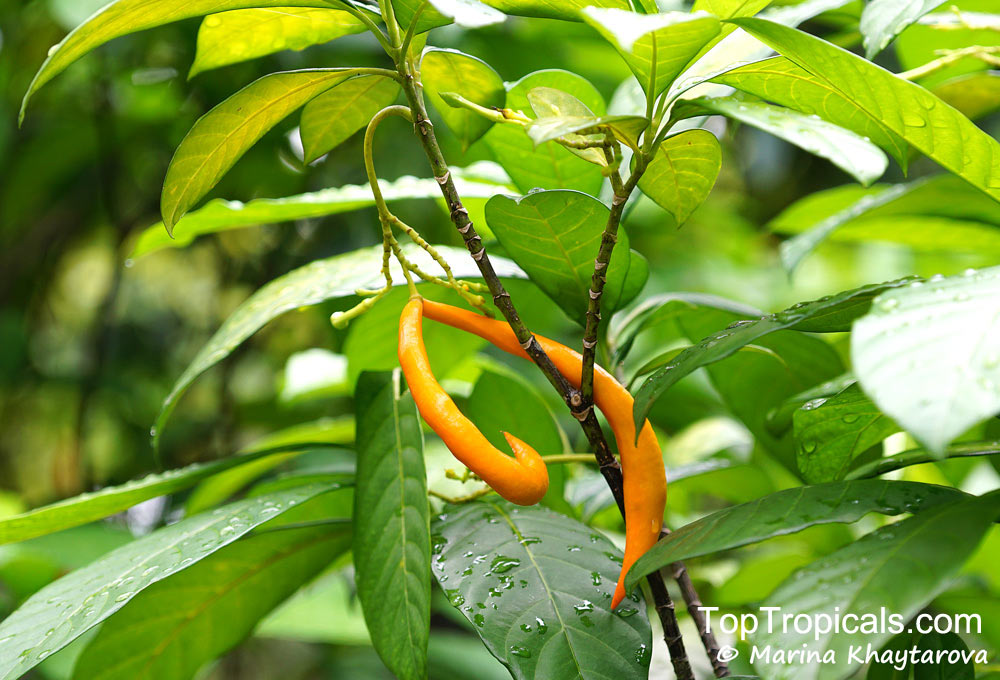
Common name: Orange Milkwood
Family: Apocynaceae
Origin: New Guinea
USDA Zone: 9-10

Tabernaemontana aurantiaca, or Orange Milkwood, is a species of large shrub or small tree native to Malesia, New Guinea and surrounding islands. They range in size from 5-10 ft tall when in the form of a shrub and 10-20 ft when growing as a tree. They thrive best in full sun but can tolerate some semi-shade.
The Orange Milkwood flowers are its most notable feature, five-petalled and ranging from a bright white to a creamy off-white. The foliage can often be seen sporting variegated shades of pale yellow, tan, and green.
In terms of water, the Orange Milkwood is considered to be both flood tolerant and regular water loving. It is best to provide moderate water for this plant to be able to reach its full potential.
As an ethnomedical plant, the Orange Milkwood is used in traditional medicine in many cultures.
Orange Milkwood is suitable for planting in USDA Zones 9-11. For the care of Orange Milkwood, it is best to plant in an area with well-drained soil and regular watering. In cold regions, the plant should be grown in a container and protected from frost. To ensure the healthiest growth, feed the plant an all-purpose fertilizer at the start of the growing season. Prune the shrub or tree for shaping or to encourage new growth, doing so right after flowering.
Once established, the Orange Milkwood is a hardy plant that adds a great deal of color and texture to a garden. It is an ideal choice for a specimen, garden border, hedge, or container plant.
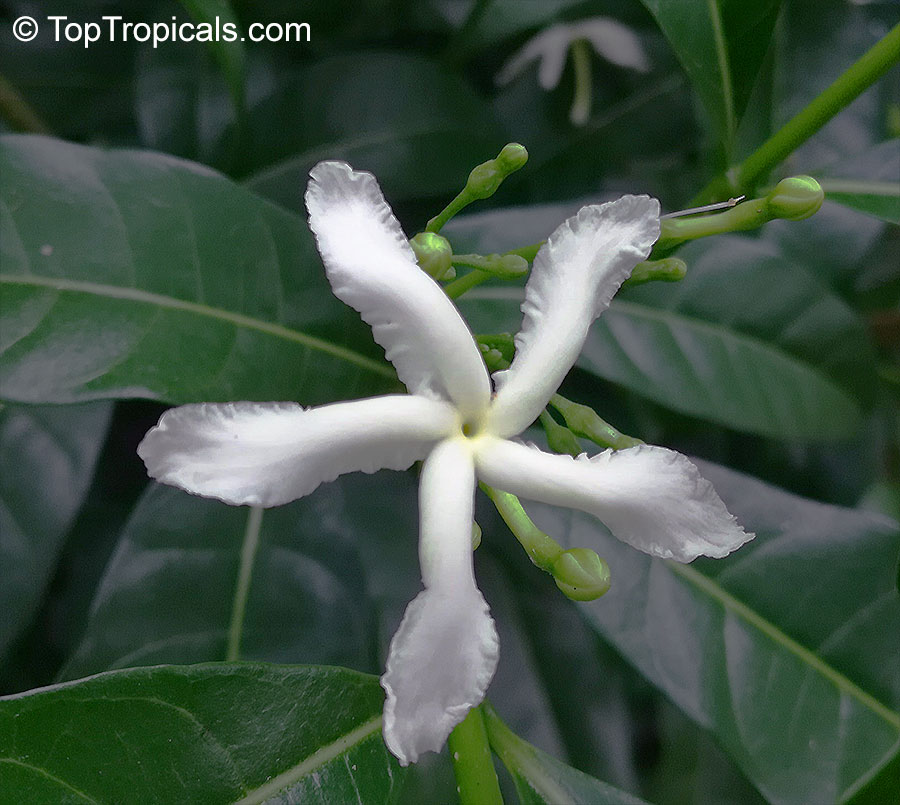
Botanical name: Tabernaemontana australis
Common name: Australian Pinweel
Family: Apocynaceae
Origin: Australia
USDA Zone: 9-11

With its fragrant white flowers of a beautiful shape and very dark green waxy leaves, elongated and pointed, this plant is an amazing addition to a rare fragrant plant collection.
Slow growing, and low growing bush which makes it very valuable for landscape understory. It can be trimmed and maintained in small size 3-4 ft; however if you let it go it will grow into very attractive, dense and bushy specimen up to 5-6 ft tall. Great specimen, accent plant, and container plant.
This rare species of Tabernaemontana is often confused with T. divaricata (commonly known as Pinwheel Jasmine) and T. orientalis (Banana Bush). However this Australian relative of Pinwheen Jasmine has its own distinctive features, and flowers look more like T. africana, although smaller size (1" in diameter).
Learn more: How to establish Tabernaemontana and get more fragrant blooms
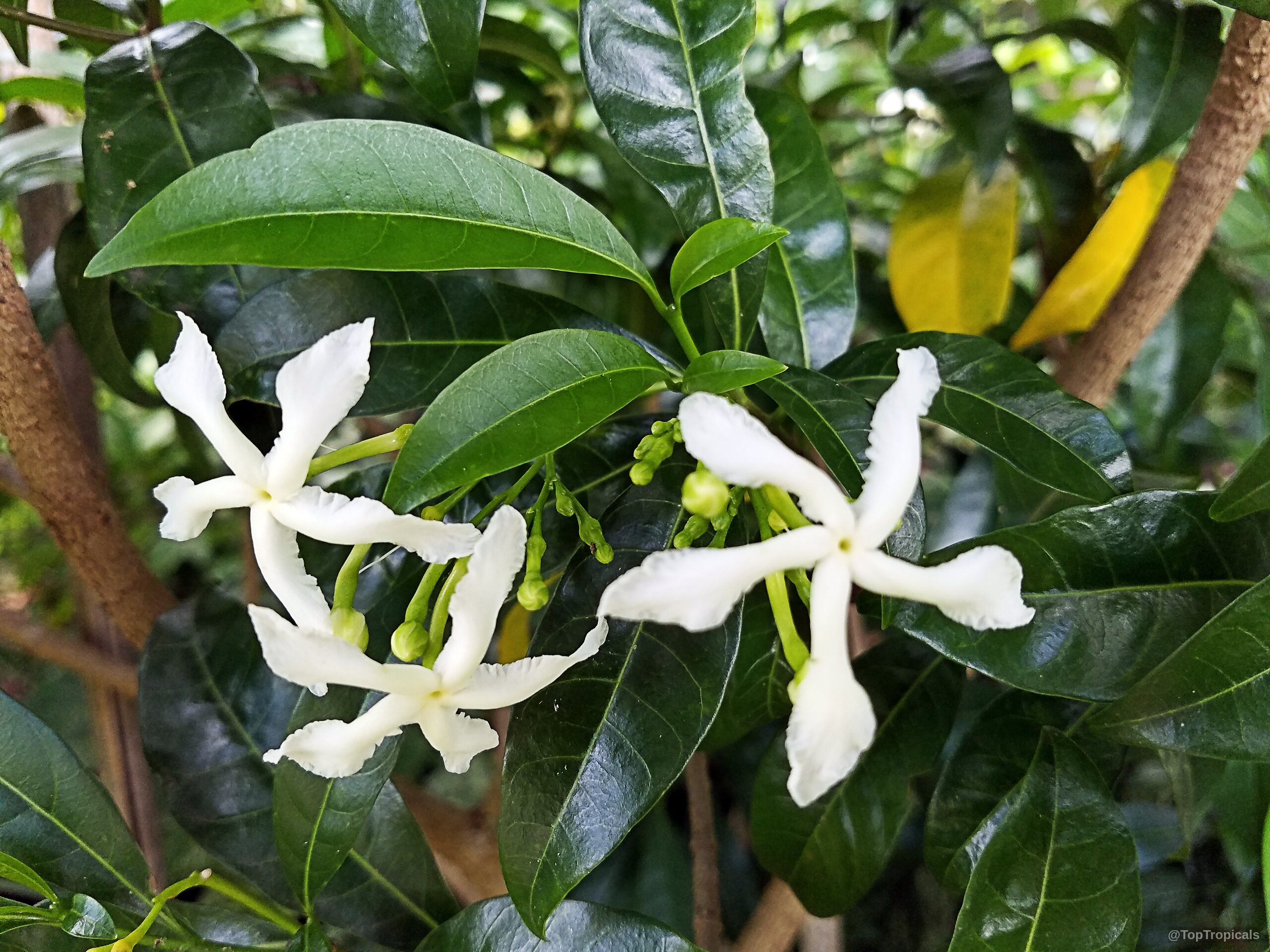


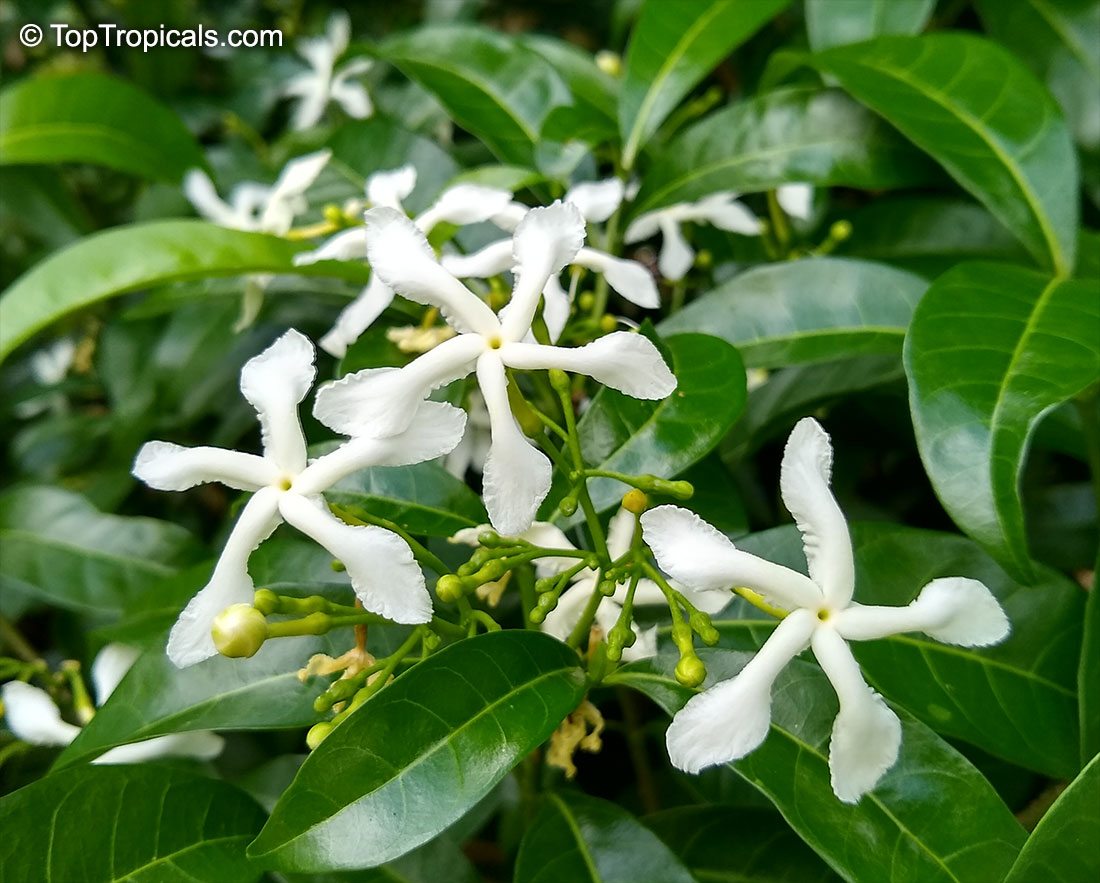
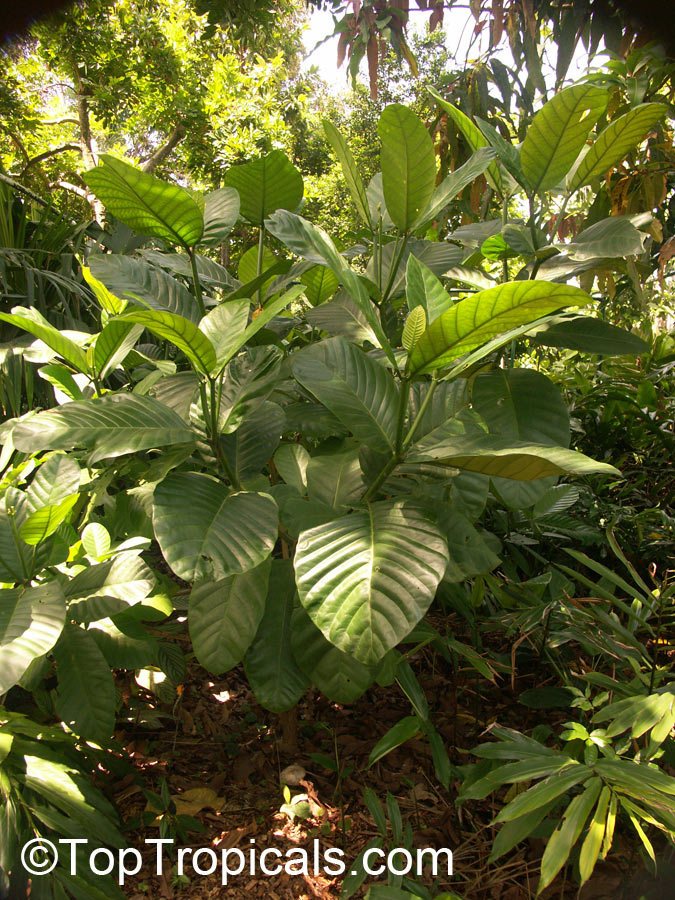
Botanical names: Tabernaemontana crassa, Conopharyngia crassa, Conopharyngia durissima
Common name: Adam's Apple
Family: Apocynaceae
Origin: Tropical Africa
USDA Zone: 9-10
Tabernaemontana crassa is a small shrub, typically ranging from 2 to 5 feet in height. It has glossy green leaves, and dense clusters of white, off-white flowers which are highly fragrant. This plant is ideal for USDA Zones 9-11 and can be grown outdoors in full sun and with regular watering.
It is a popular ethnomedical plant often used in traditional African healing practices. Tabernaemontana crassa contains a large number of indole alkaloids with interesting pharmacological activities. The alkaloid content is similar to that of Tabernaemontana pachysiphon, another medicinally important species. In West Africa pulped leaves and latex from the stem and bark of Tabernaemontana crassa have several uses, the main ones being as a local anesthetic. The latex is also applied as a hemostatic, as it forms a film over the wound. It is taken internally as an anthelmintic. Powdered bark is traded internationally in herbal medicine shops.
This tropical African native is a beautiful addition to any garden or yard. It grows quickly and is easy to care for with proper maintenance. When planted in a pot in colder regions, it is important to move the plant inside during winter and provide extra protection for the roots. Fertilize regularly with a balanced fertilizer and make sure the soil is well-drained. Water your plant often, but not to overwater it, as this can cause root rot or pest problems. Pruning is recommended to keep the shrub looking neat and producing flowers. Deadheading the flowers can also help promote further blooming and encourage healthy growth. With proper care, Tabernaemontana crassa will provide years of beauty and fragrance.
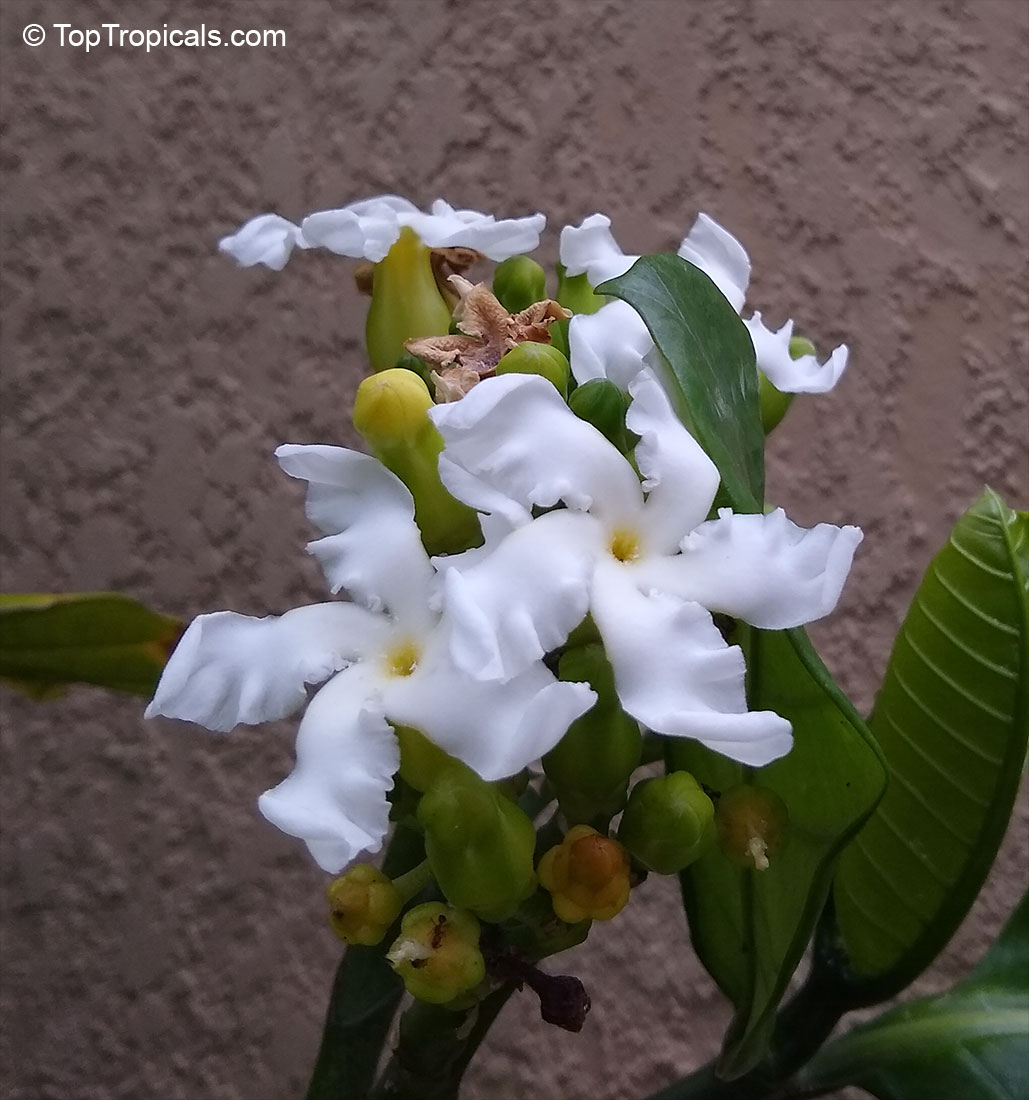
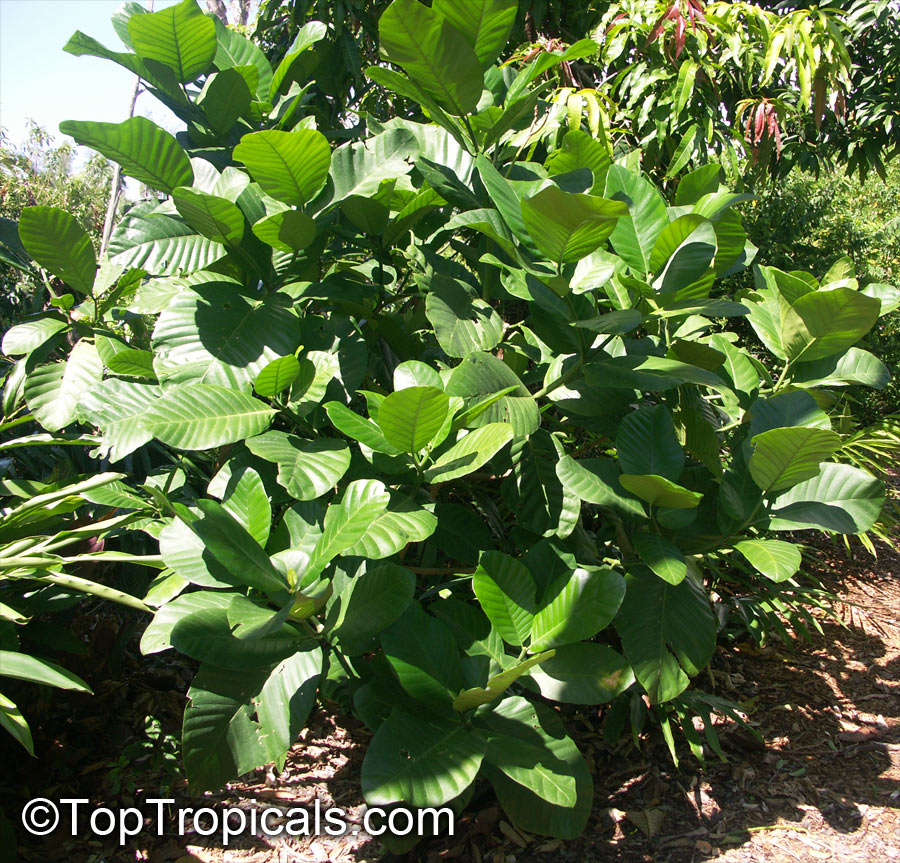
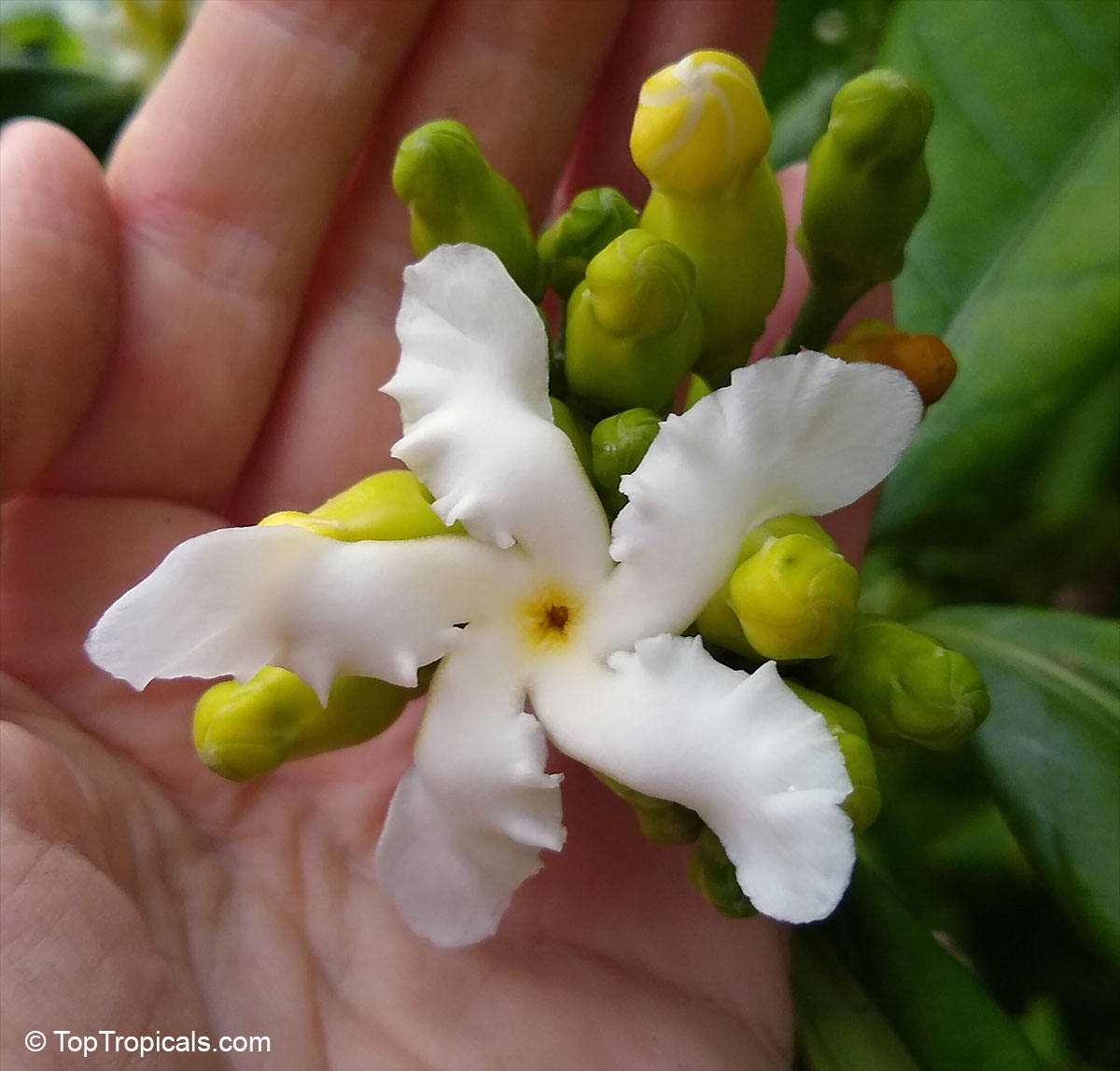
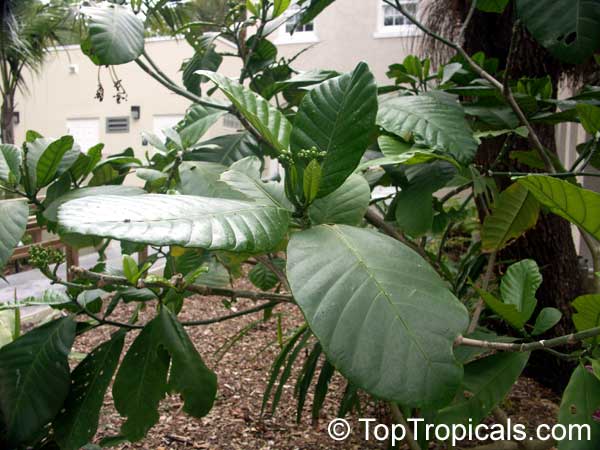
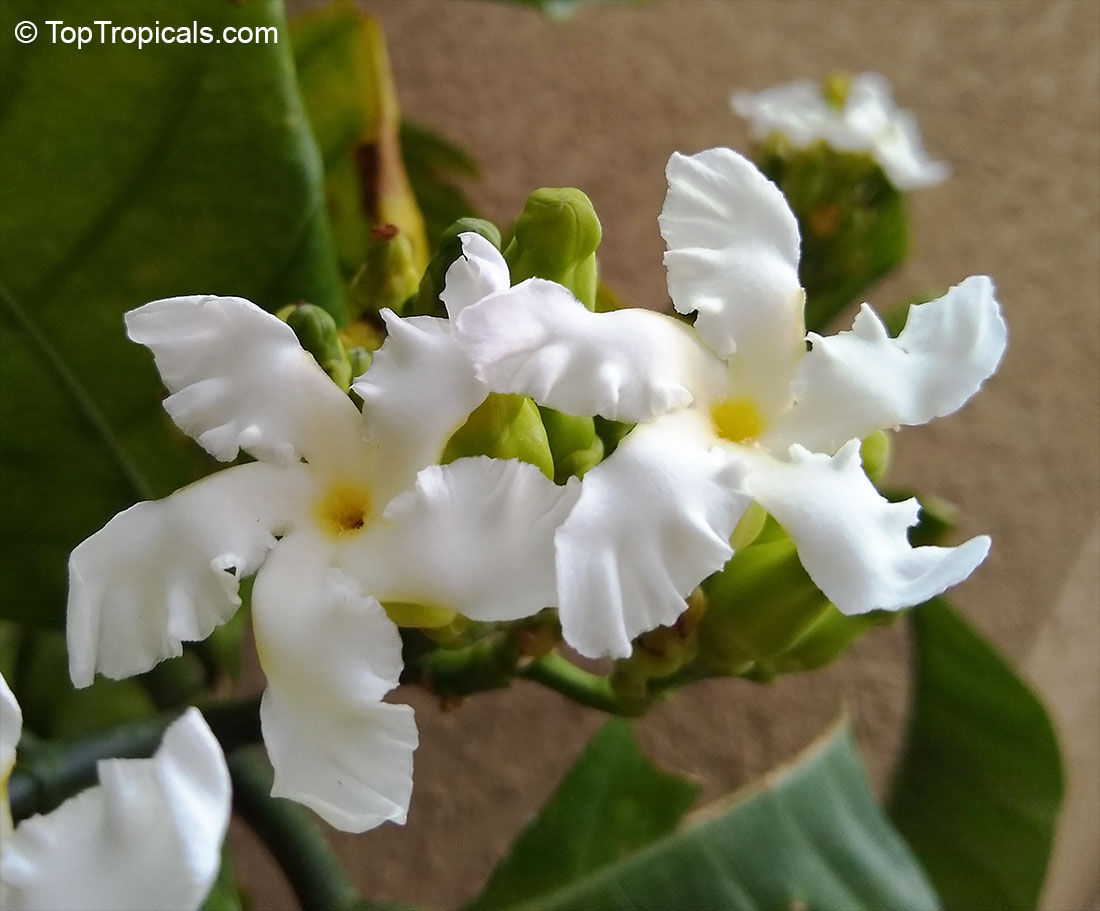
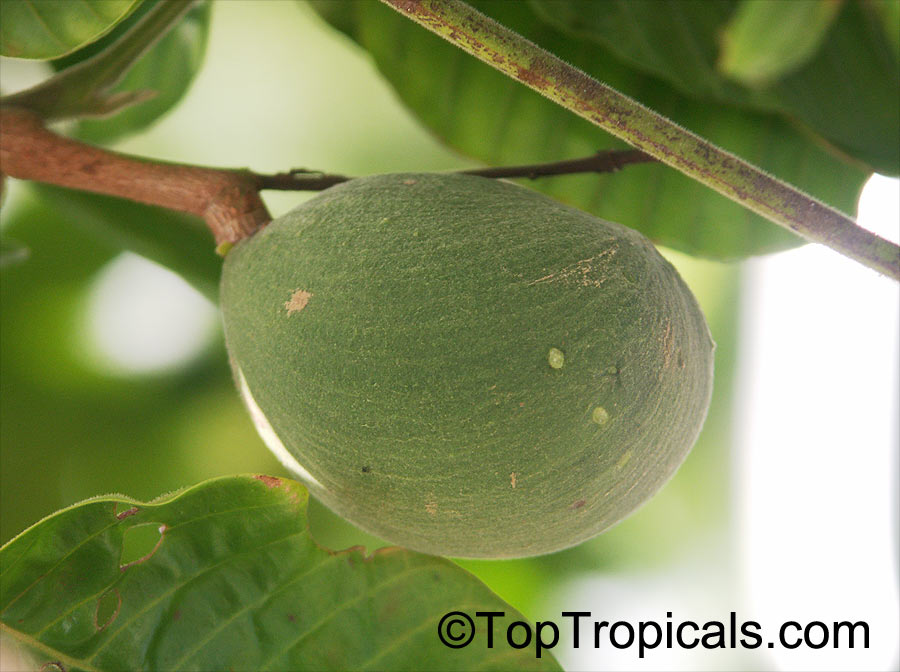
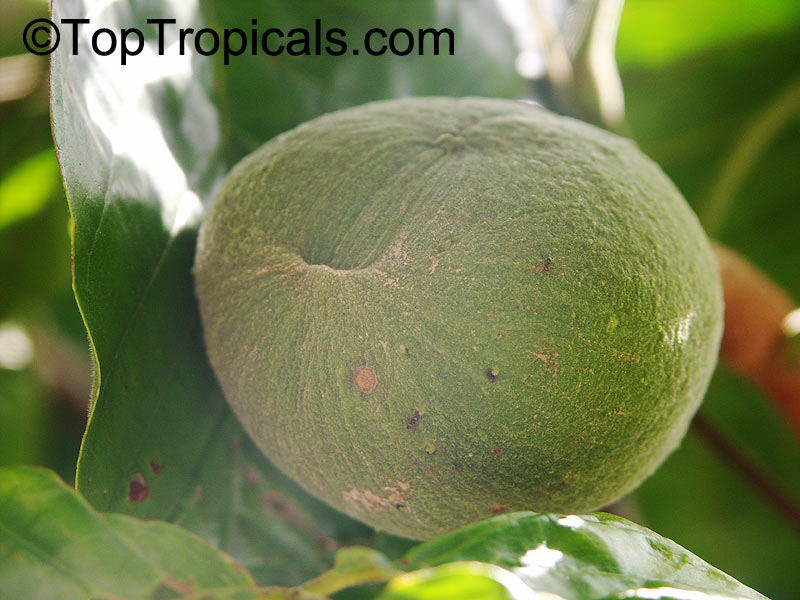
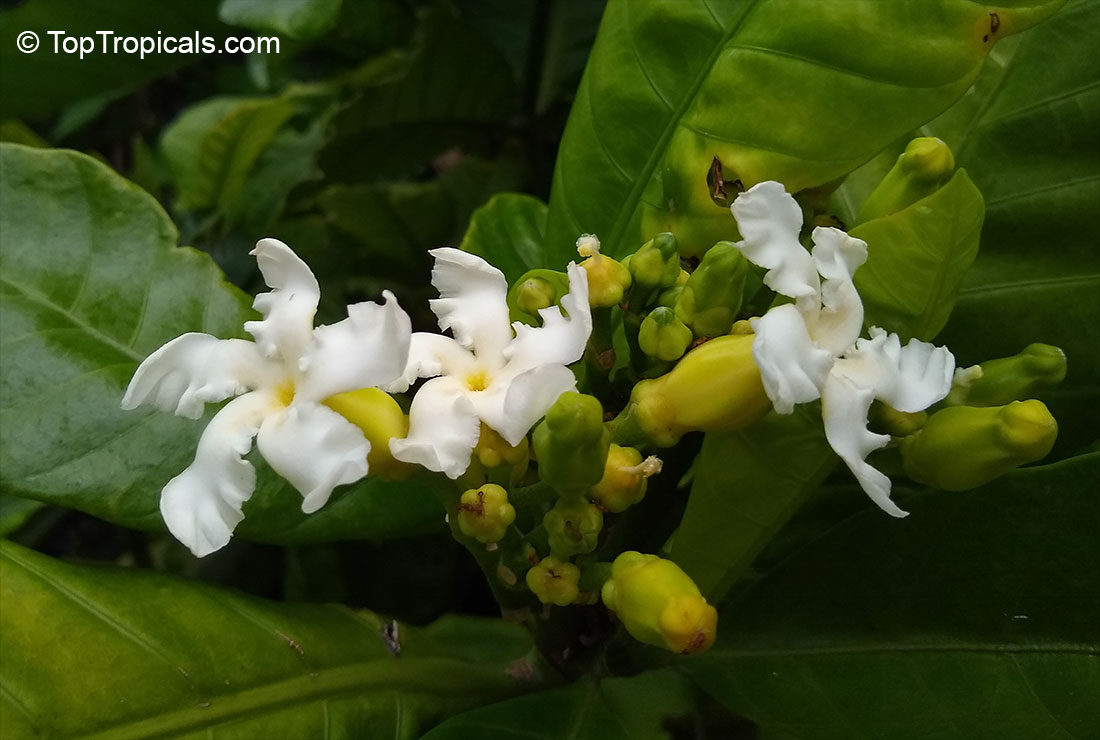
Botanical names: Tabernaemontana divaricata, Tabernaemontana coronaria, Ervatamia divaricata, Ervatamia coronaria
Common names: Pinwheel Jasmine, Crape Jasmine, Crepe Gardenia
Family: Apocynaceae
USDA Zone: 9-11

Tabernaemontana divaricata (Pinwheel Jasmine) is a large shrub that can reach 5-10 feet tall and wide, with smallish, fragrant, pinwheel-like white or off-white flowers that bloom from spring to fall. This low-maintenance plant is perfect for adding a tropical feel to any garden or yard, and it will attract butterflies, hummingbirds, and other pollinators. It requires full sun with some semi-shade and regular watering as needed, making it a great last-minute addition to your garden.
If you live in a cold region, you can even still enjoy Pinwheel Jasmine. With a bit of extra preparation, this plant is surprisingly easy to grow in pots. Look for a pot that is large enough to fit the root system, so the plant can grow and thrive. Use quality potting soil, and make sure to keep the soil consistently moist but not soggy. If you can find a sheltered spot with morning sun and afternoon shade, that would be best for the plant.
What sets Pinwheel Jasmine apart is its salt-tolerance and ability to tolerate seaside conditions. As long as the soil is well-drained and not too alkaline, the plant will do well even in salty soil and air. It is hardy in USDA Zones 9-11, but with some extra care it will survive even colder regions.
Overall, Tabernaemontana divaricata (Pinwheel Jasmine) is an attractive, low-maintenance choice for gardeners who are looking for a splash of color throughout the year. With its fragrant white flowers, salt-tolerance and hardiness, this large shrub is perfect for any garden. Add some to your landscape today and enjoy its beauty all year round!
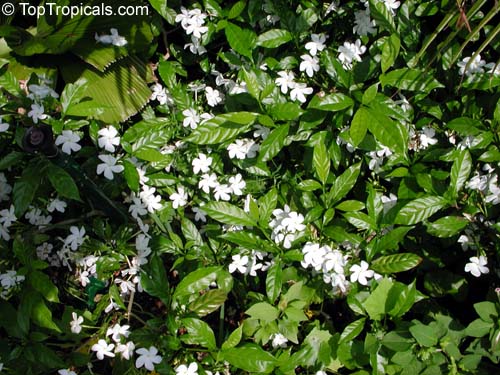
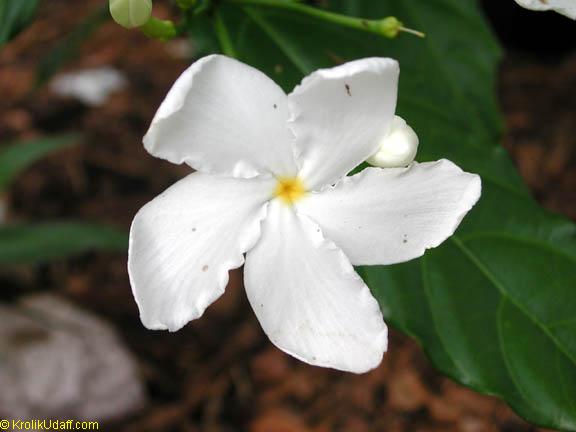
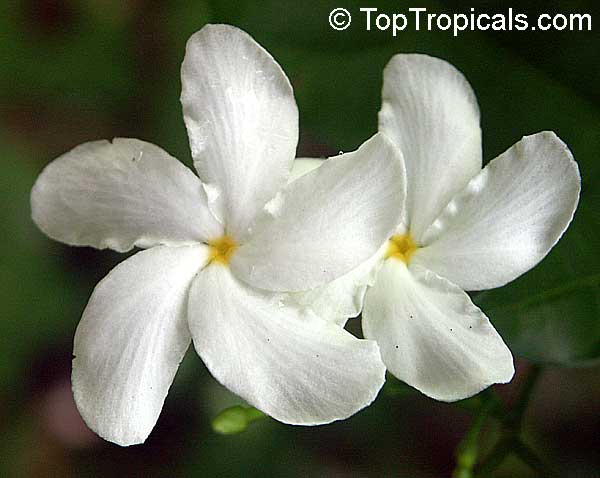
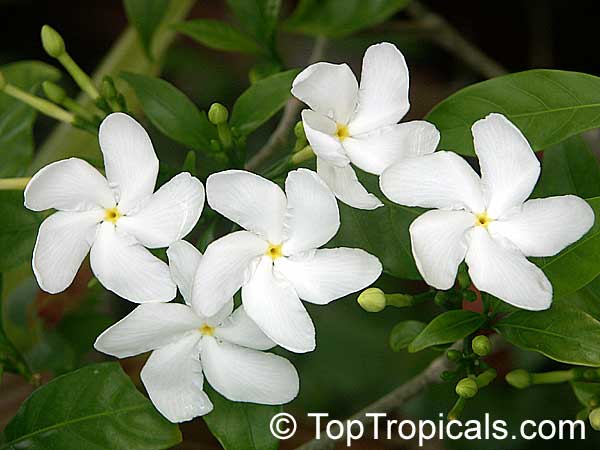
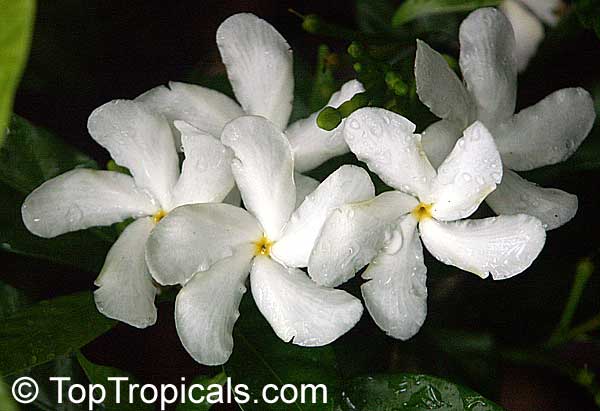


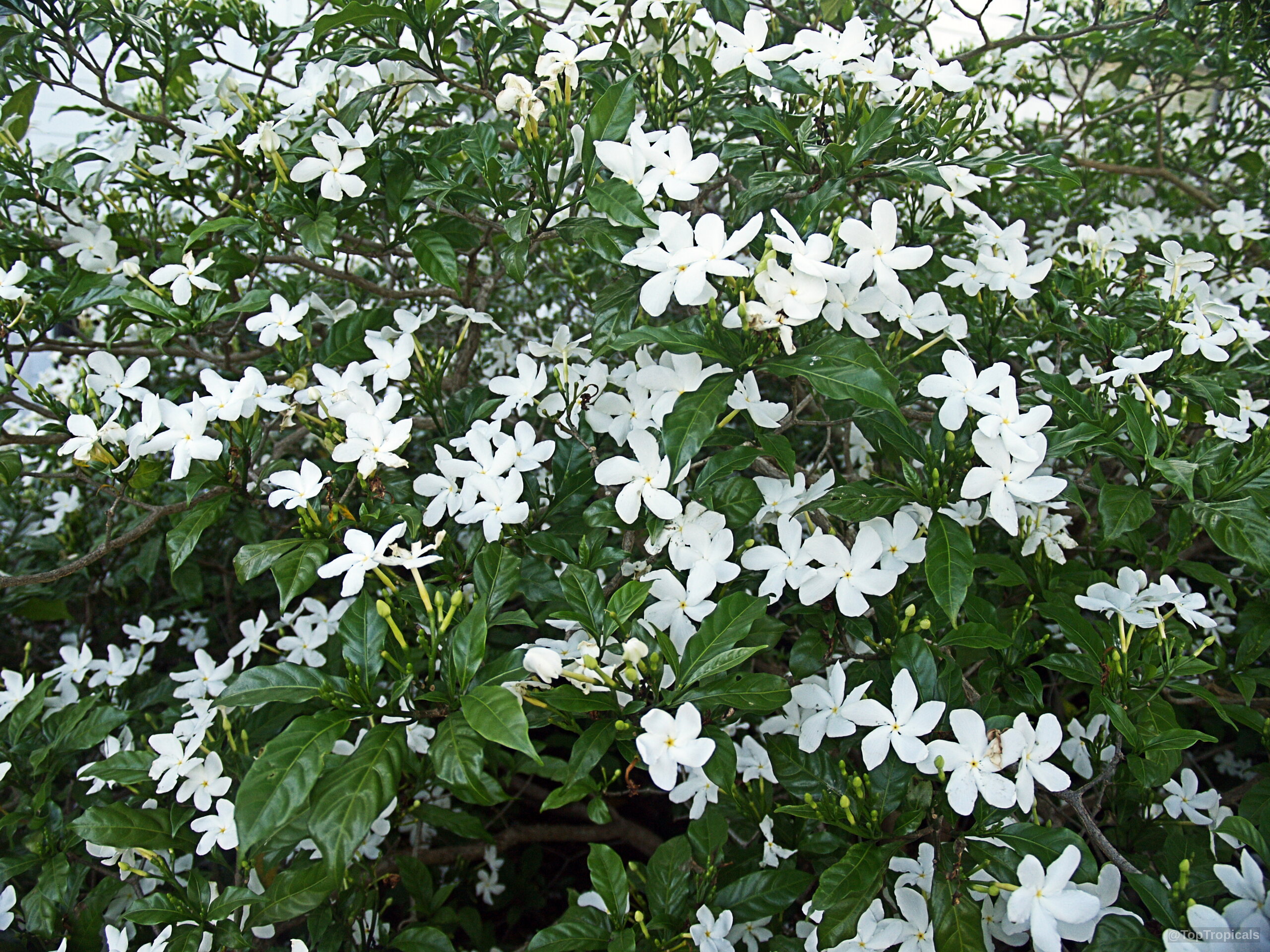


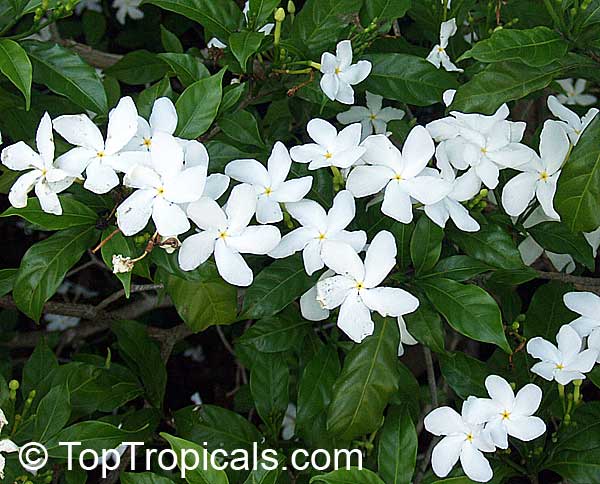
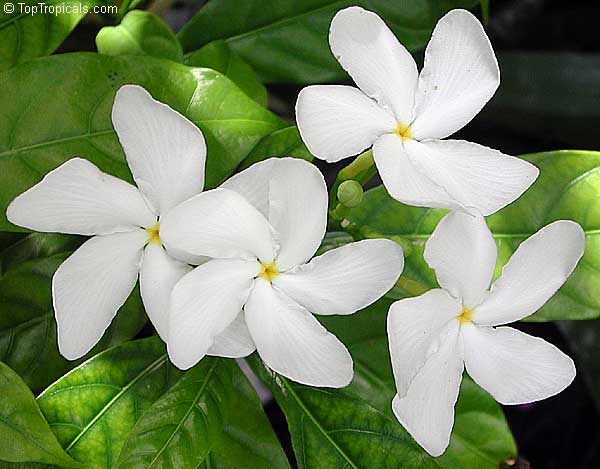

Botanical names: Tabernaemontana orientalis, Ervatamia orientalis, Ervatamia pubescens, Ervatamia floribunda
Common names: Banana Bush, Native Gardenia
Family: Apocynaceae
Origin: Asia
USDA Zone: 9-10

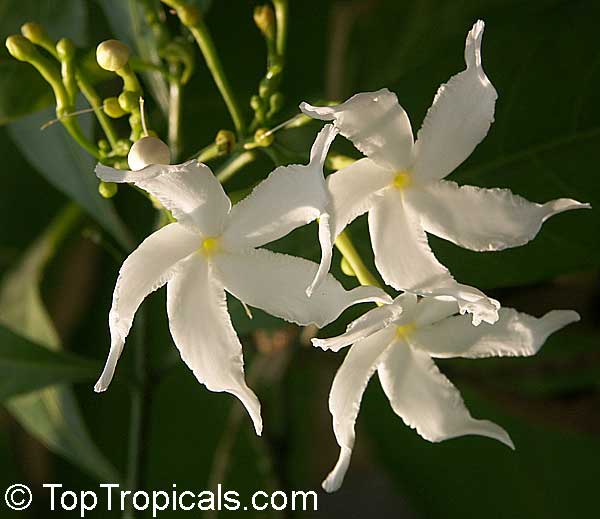
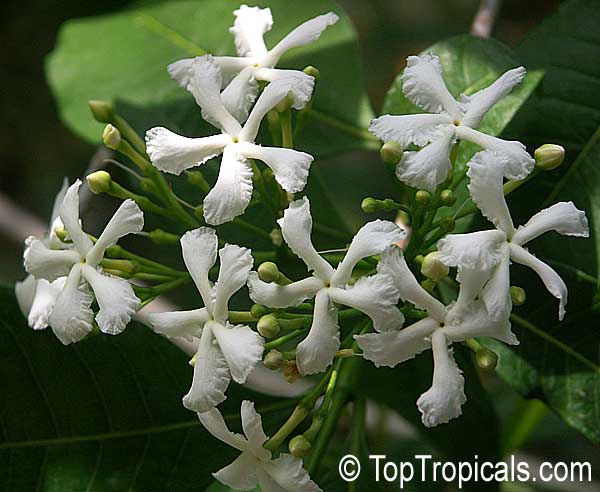
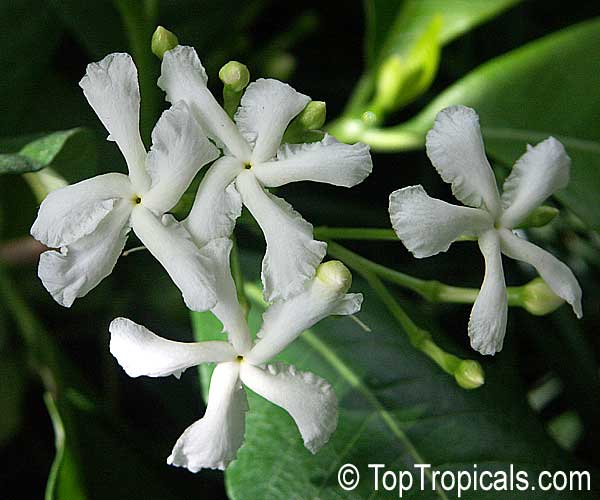
Tabernaemontana orientalis, also known as the Banana Bush, is a large shrub that is native to Asia. It can grow up to 10 feet tall, but is smaller when grown in pots, reaching only up to 5 feet in height. This plant thrives in full sun to semi-shade and requires regular watering.
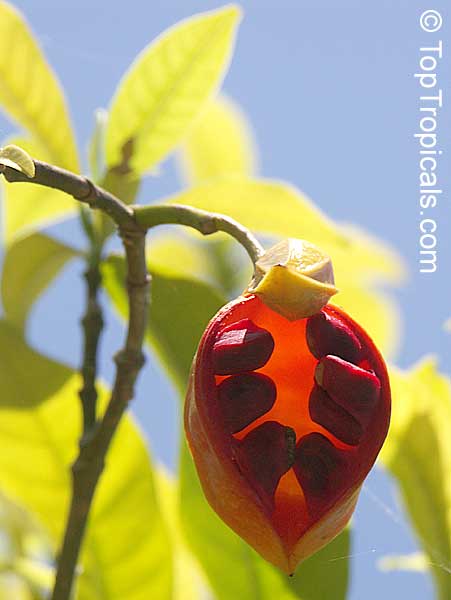
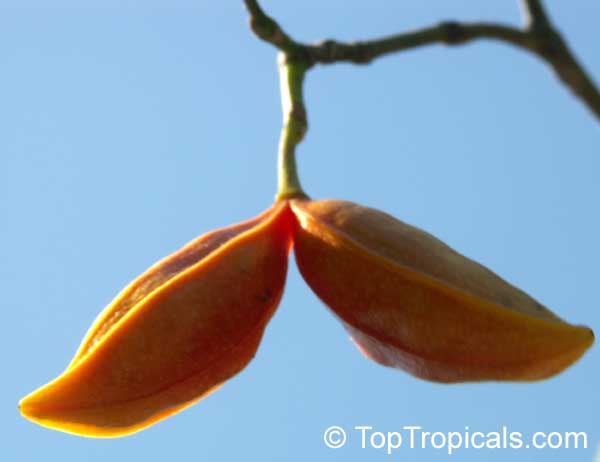
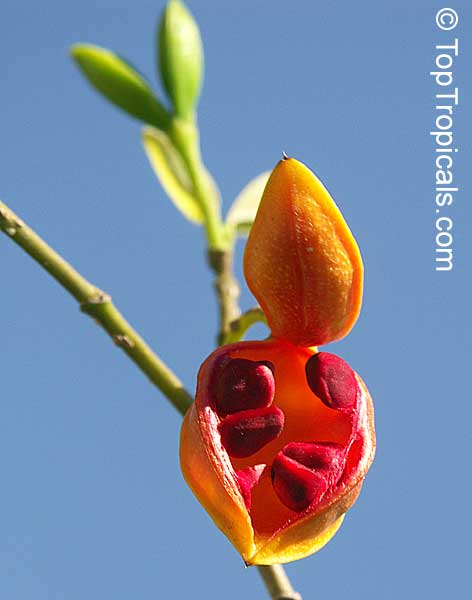
The Banana Bush produces highly fragrant, white or off-white, Jasmine-like pin-wheeled flowers that are attractive to butterflies and hummingbirds. The flowers have five petals that fuse together to form a tube, regularly symmetrical, and have long tips. The foliage and stems of this plant exude white latex when damaged. When grown in too bright light, the foliage may turn yellow. The fruit consists of pairs of orange-yellow fused banana-shaped capsules, similar to those found in other species.
In addition to its beauty, Tabernaemontana orientalis is also used in traditional Asian medicines. It is a deciduous plant and is recommended for USDA Zones 9-11. This plant's stunning blooms and low-maintenance care make it a great addition to any outdoor space.



| Next | |
Use link to repeat this search:
https://toptropicals.com/cgi-bin/garden_catalog/cat.cgi?find=Tabernaemontana&search_op=and&keyword_op=and&language=e
&number=10&no_change_lang=1&user=tt&sale=1&first=0