Opuntia - Plant Encyclopedia Results
| Number of plants found: 12 | Next | 
|
Go to page: | 1 | 2 |

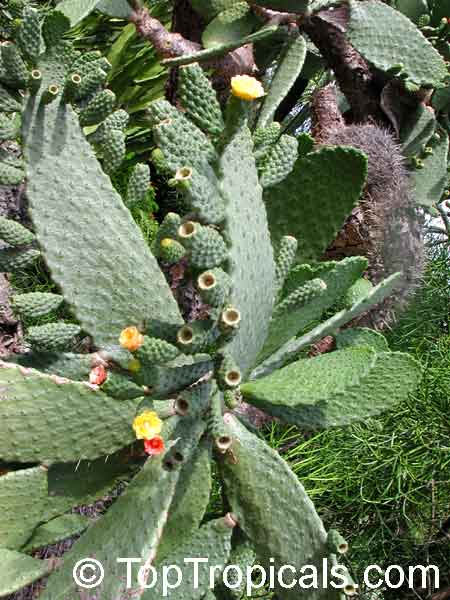
Botanical names: Austrocylindropuntia cylindrica, Opuntia cylindrica
Common names: Cane Cholla, Cylindrical Opuntia
Family: Cactaceae
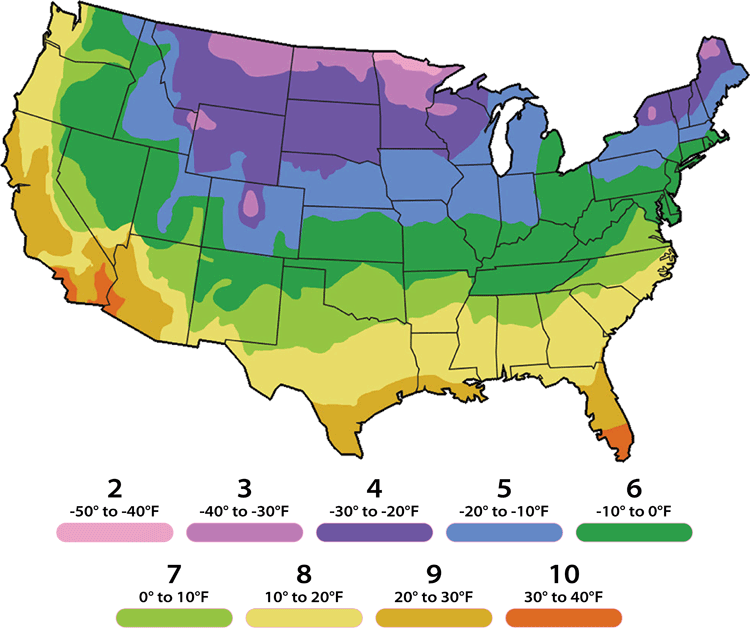
USDA Zone: 9-11


Austrocylindropuntia cylindrica, commonly known as Cane Cactus or Cylindrical Opuntia, is a shrubby to tree-like cactus in the Cactaceae family, native to the Andes of Ecuador and Peru. Formerly classified as Opuntia cylindrica, it grows on rocky slopes and in dry mountain habitats, developing upright, branching, cylindrical stems that may reach 6-12 feet tall. The green stems bear prominent, elongated tubercles arranged in a spiral pattern, with areoles producing sharp spines and small, fleshy, cylindrical leaves that eventually fall. Flowers are usually red to orange-red, followed by fleshy fruits. The unusual crested form, Austrocylindropuntia cylindrica f. cristata, develops flattened, fan-shaped, densely folded stems instead of normal cylindrical branches, creating sculptural, irregular growth patterns.
Austrocylindropuntia cylindrica thrives in full sun and sharply drained, sandy or rocky soil. It tolerates drought well once established but benefits from occasional watering during active growth. The species is cultivated as an ornamental cactus, particularly in dry gardens and succulent collections, while the crested form is especially prized by collectors and is usually grown in containers. Suitable for USDA Zones 9b-11, established plants may tolerate brief light frosts when kept dry, but prolonged freezing and cold, wet soil can cause serious damage.

Botanical names: Opuntia cochenillifera, Nopalea cochenillifera, Opuntia nuda
Common names: Cochineal Cactus, Warm hand, Velvet Opuntia, Nopales Opuntia, Nopal Cactus
Family: Cactaceae
Origin: Mexico
USDA Zone: 8-11


This variety of opuntia has thornless, pleasant to touch thick leaves. During summer hot day leaves warm up and their touch reminds of a warm hand touch. The plant will form a nice ornamental shrub. Flowers are bright red to crimson. Very fast growing, will thrive in neglect, tolerates almost any conditions. Perfect plant for a lazy gardener.
This is a nearly spineless variety of cactus that is easy to prepare, and has a delightful taste both raw and cooked. Sometimes can be confused with Opuntia monacantha that usually has more thorns. Related species - Opuntia tomentosa.


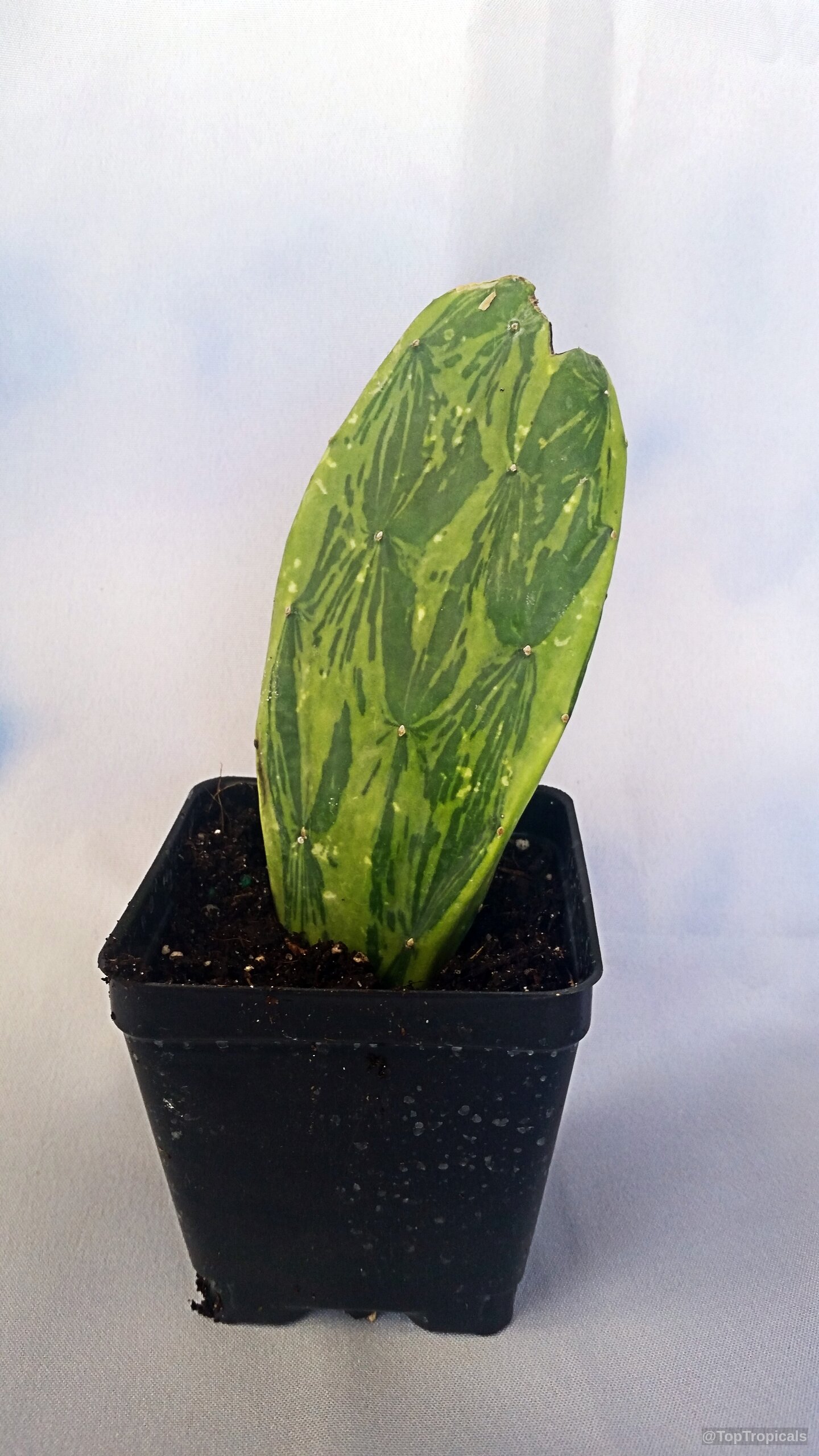
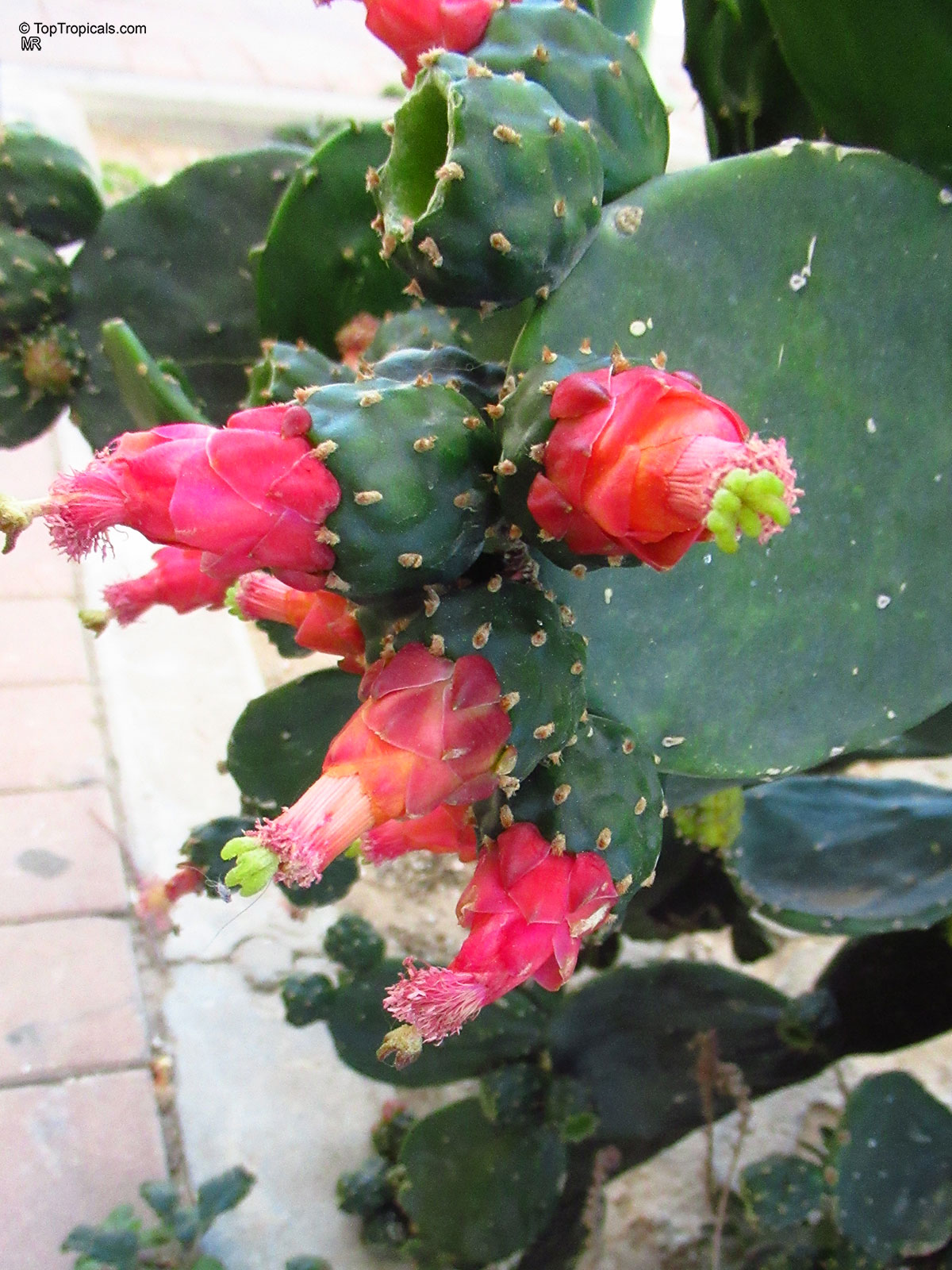


Botanical name: Opuntia tomentosa
Common names: Tree Pear, Velvet Opuntia
Family: Cactaceae
Origin: Mexico
USDA Zone: 9-10


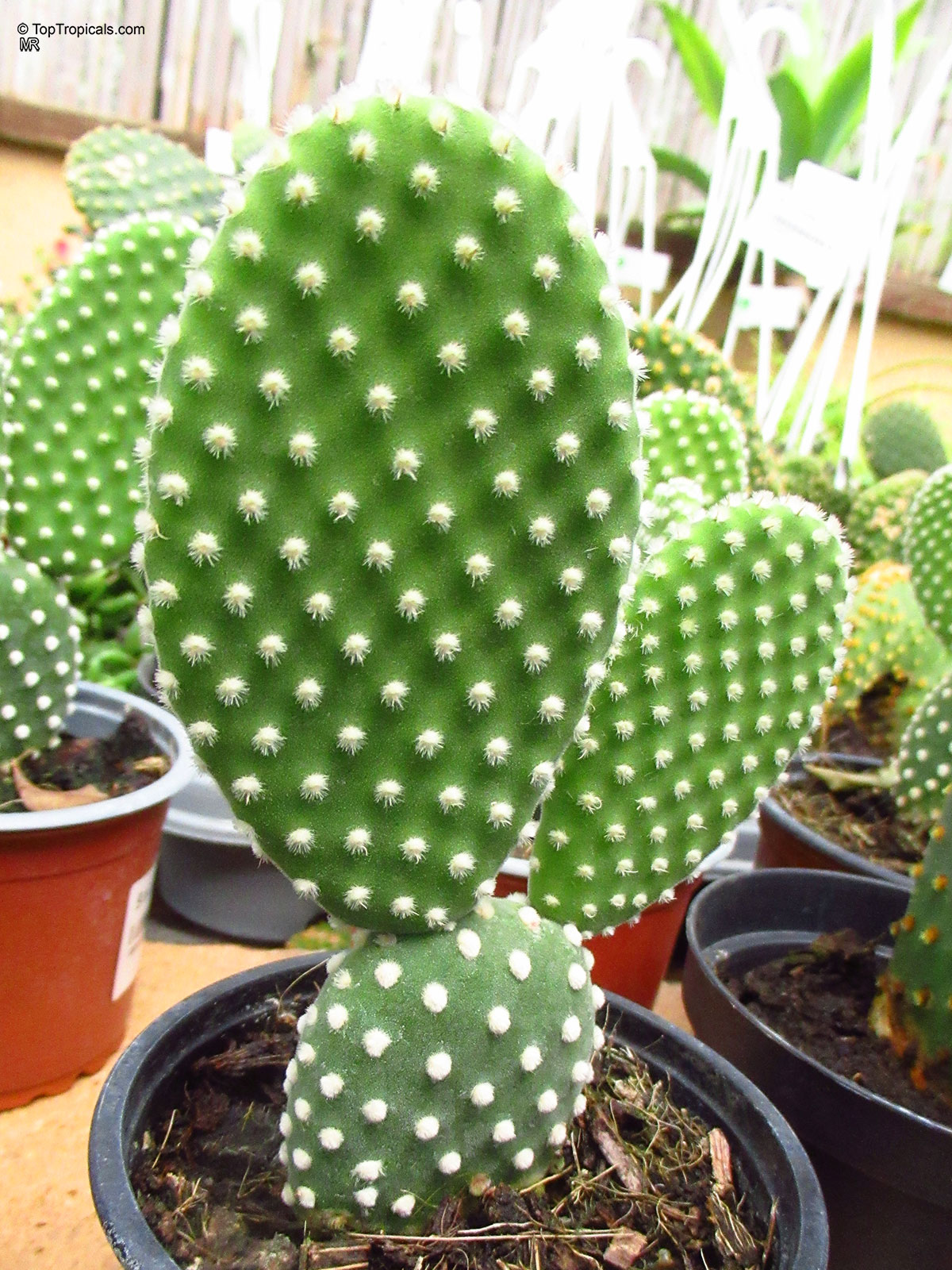
Botanical name: Opuntia microdasys
Common names: Angel's-wings, Bunny Ears Cactus, Bunny Cactus, Polka-dot Cactus
Family: Cactaceae
Origin: Mexico
USDA Zone: 9-11
Cold tolerance: 35°F

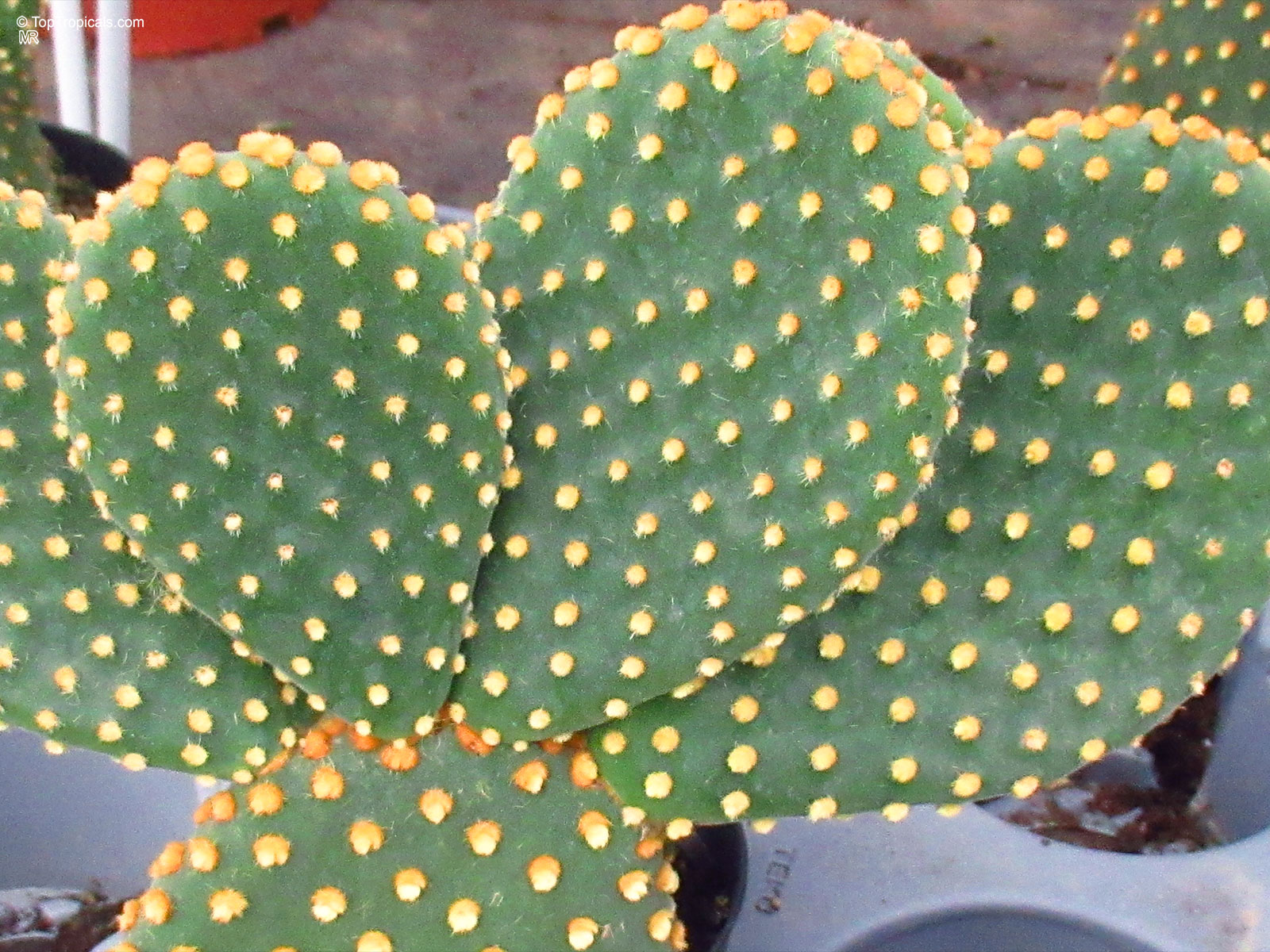
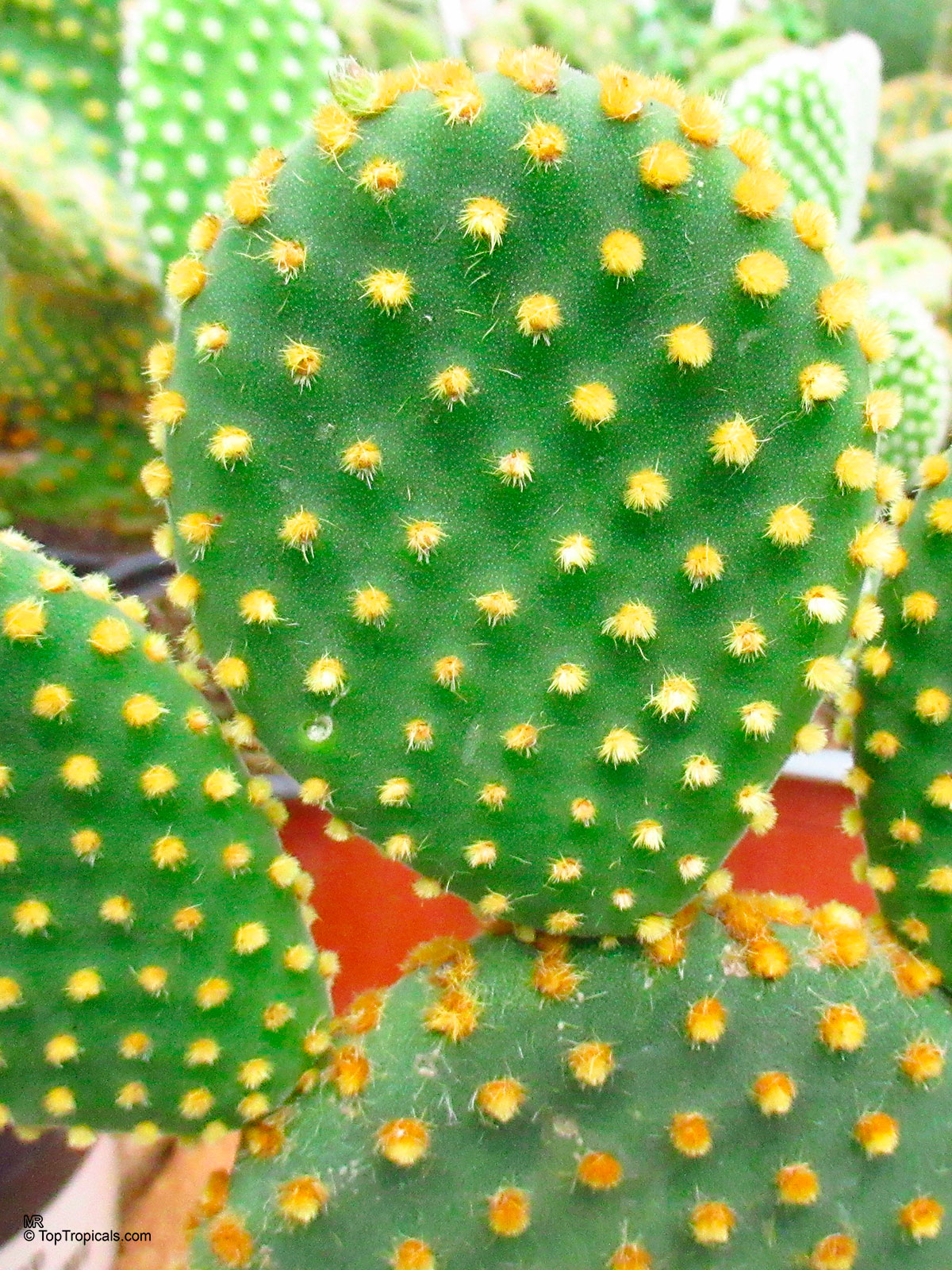
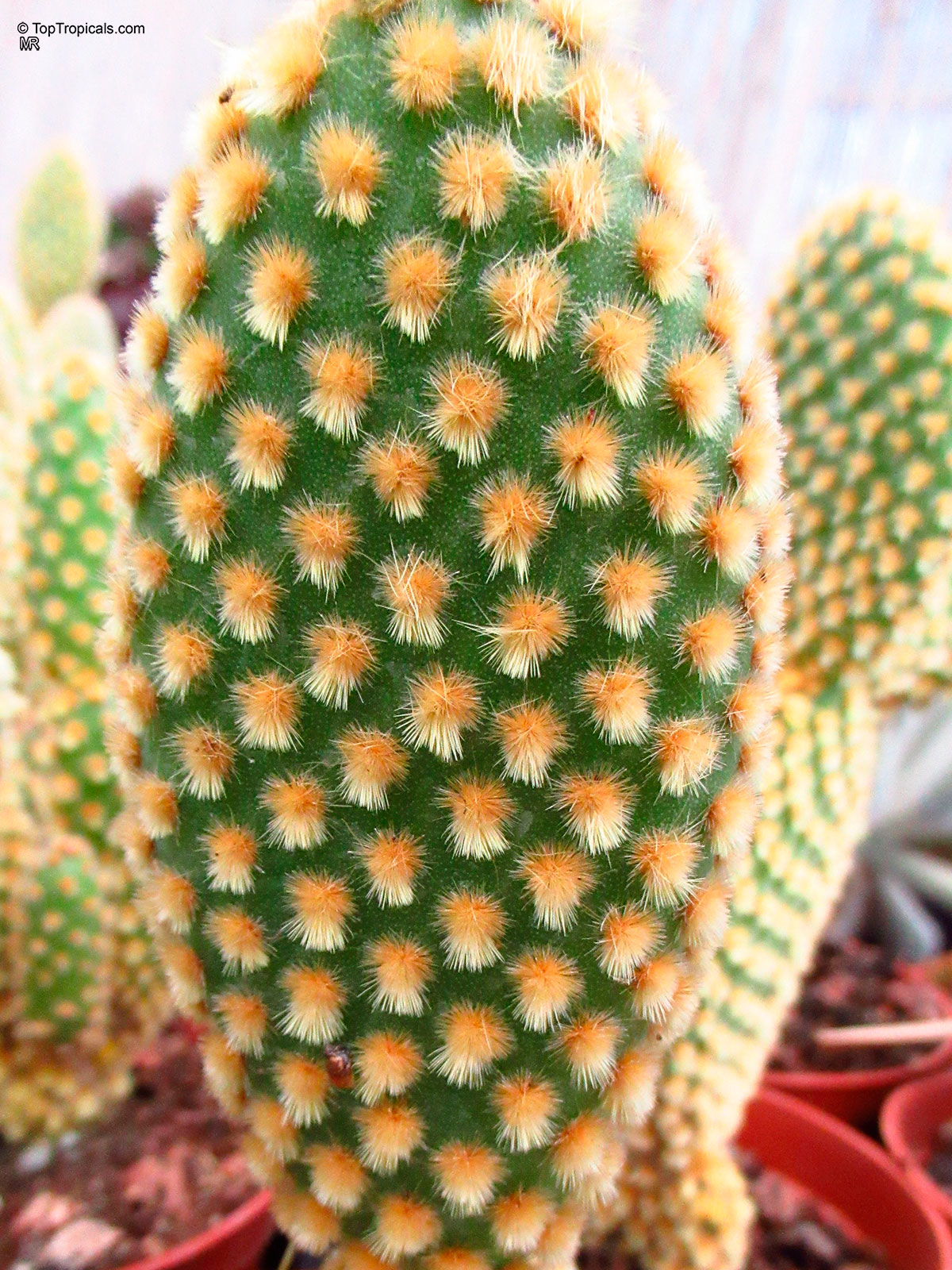
Opuntia microdasys, commonly known as Bunny Ears Cactus, is a compact, branching cactus in the Cactaceae family native to Mexico. It forms clusters of flattened, oval pads that resemble small ears, typically reaching 1 to 3 ft in height. The pads are covered with dense tufts of fine, hair-like glochids in yellow or white rather than long spines, giving the plant a soft appearance despite being irritating to the skin. In warm conditions, it may produce small, cup-shaped yellow flowers followed by red to purple fruits.
This species prefers full sun and very well-drained, sandy or mineral soil. Water sparingly, allowing the soil to dry completely between applications. Growth rate is moderate under warm conditions. Cold tolerance is limited, with damage likely below about 25 to 28F; best suited to USDA Zones 9 to 11. Opuntia microdasys is well suited to container growing and requires protection from excess moisture and frost.



Botanical names: Opuntia phaeacantha, Opuntia engelmanii
Common name: Prickly Pear
Family: Cactaceae
Origin: North American deserts
USDA Zone: 8-11

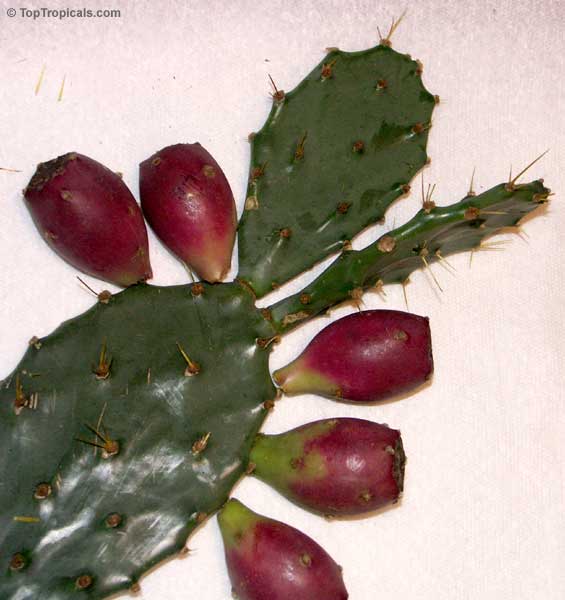
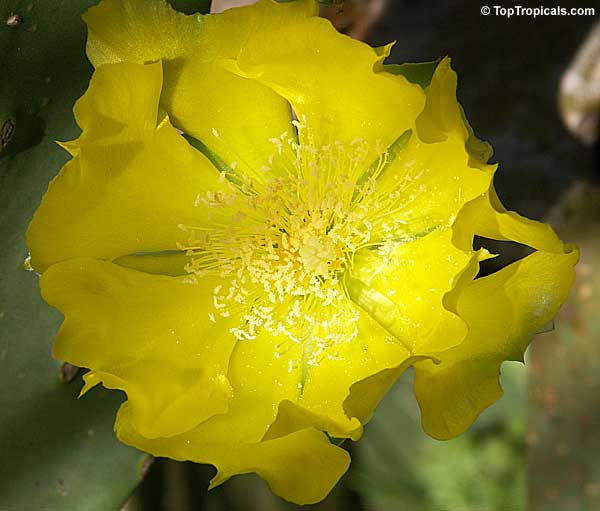
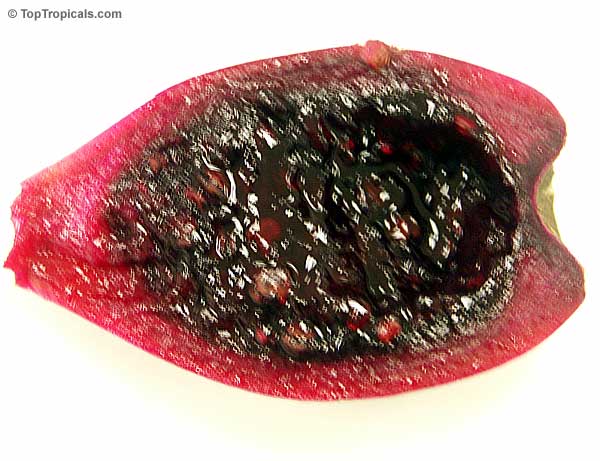
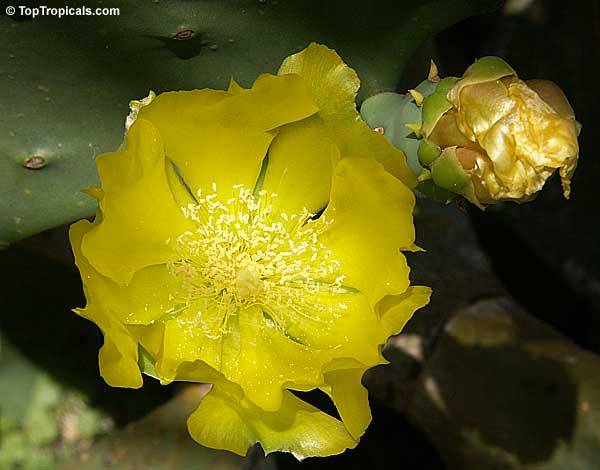
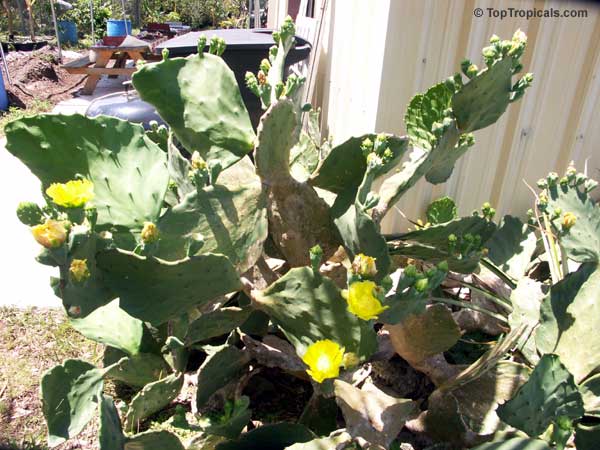
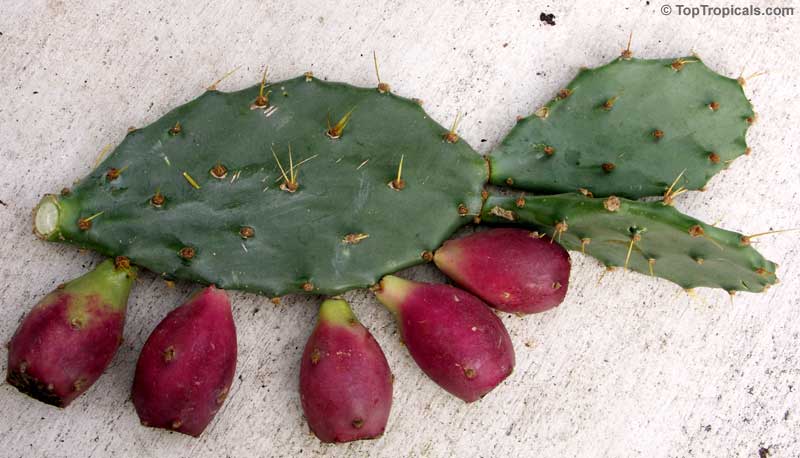
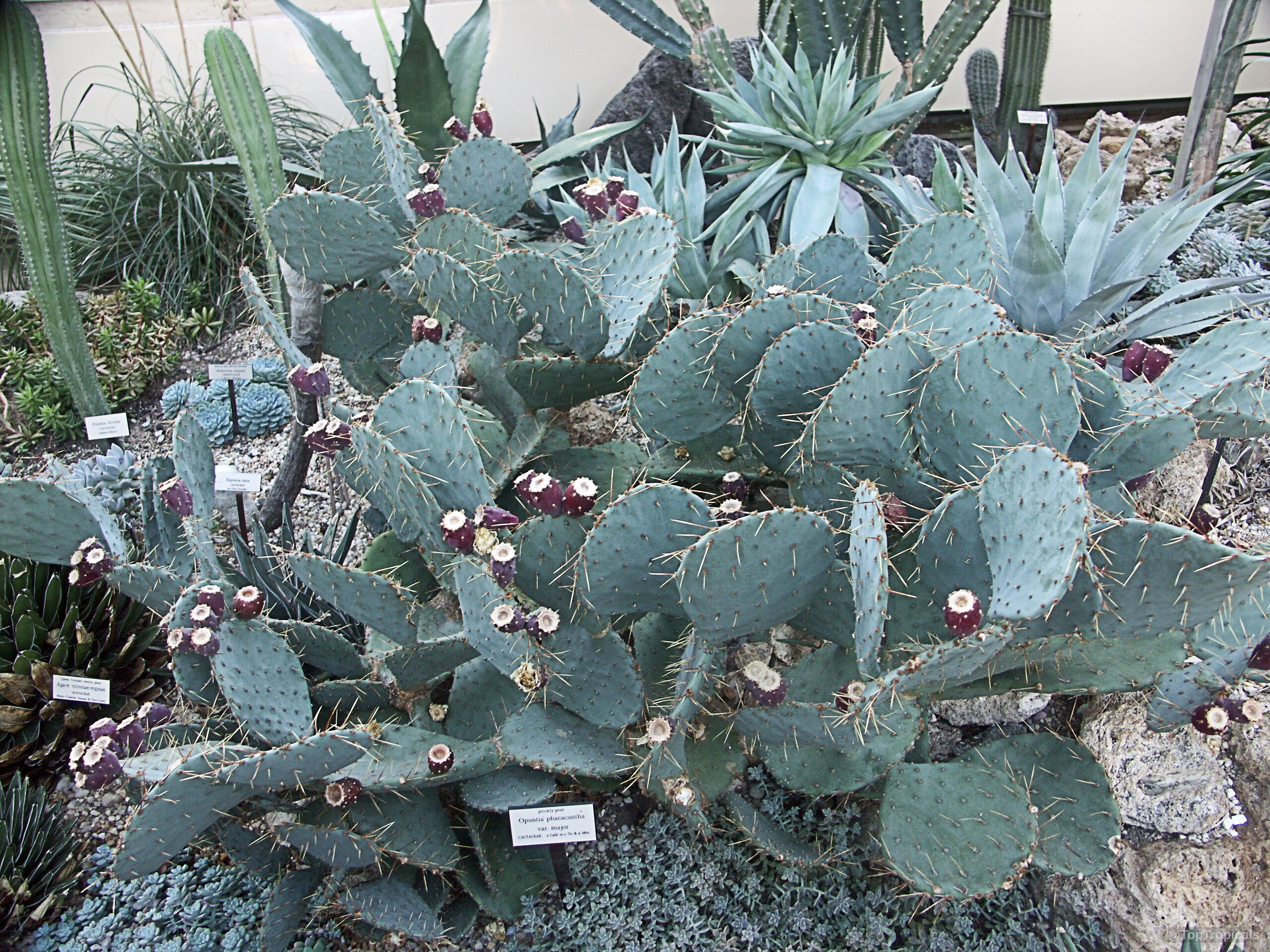
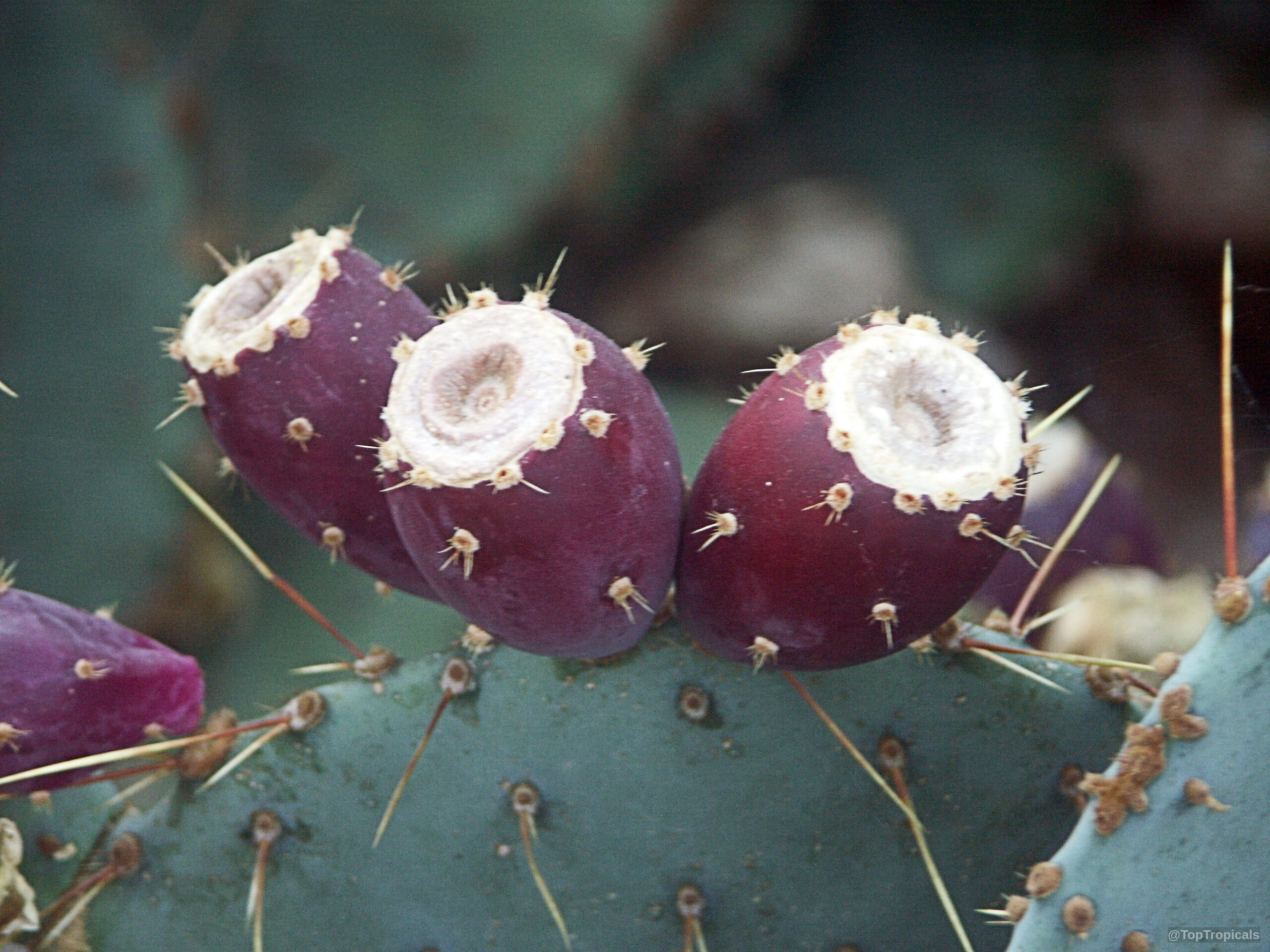
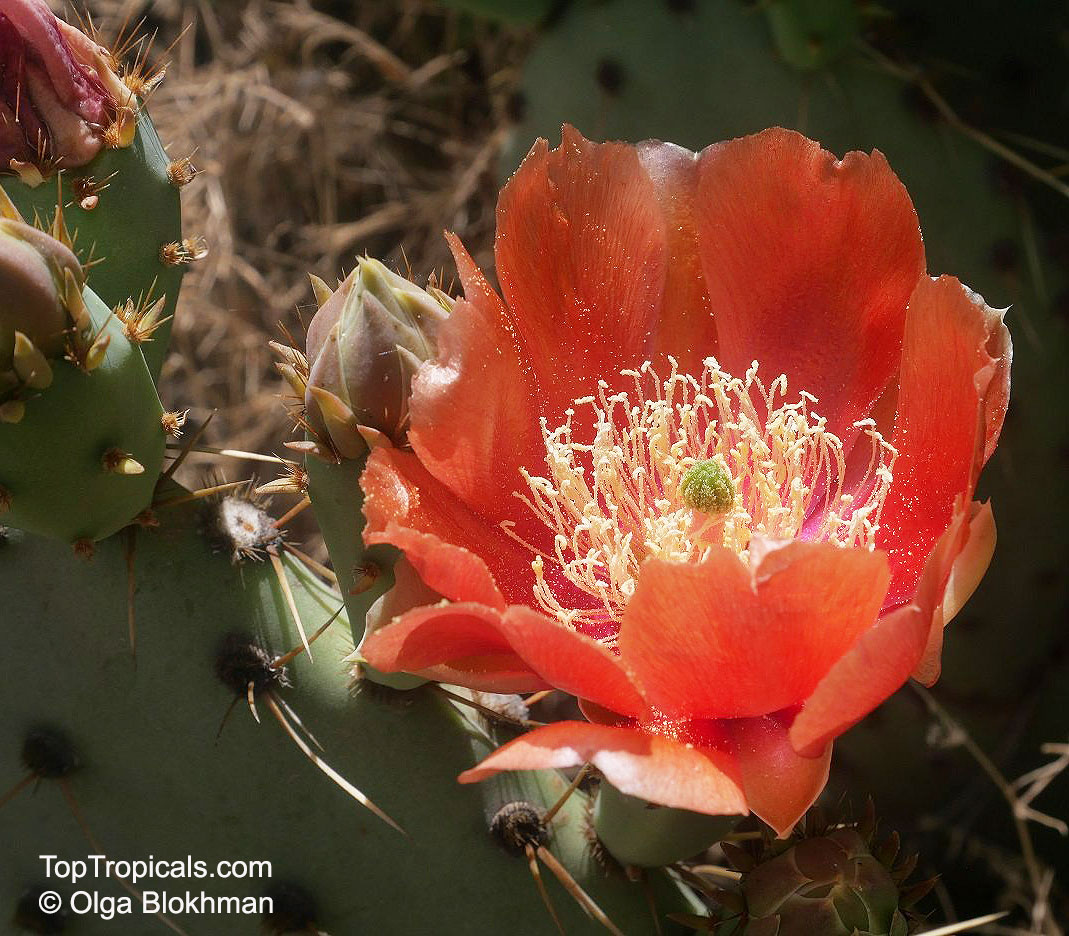
Prickly pear cactus are found in all of the deserts of the American Southwest, with different species having adapted to different locale and elevation ranges. Most require course, well-drained soil in dry, rocky flats or slopes. All have flat, fleshy pads that look like large leaves. The pads are actually modified branches or stems that serve several functions - water storage, photosynthesis and flower production. Members of the Opuntia genus are unique because of their clusters of fine, tiny, barbed spines called glochids. Found just above the cluster of regular spines, glochids are yellow or red in color and detach easily from the pads. Glochids are often difficult to see and more difficult to remove, once lodged in the skin. The fruits of most prickly pears are edible. Prickly pear branches (the pads) are also cooked and eaten as a vegetable. Because of the glochids, great care is required when harvesting or preparing prickly pear cactus. Most prickly pear cactus have yellow, red or purple flowers, even among the same species. There are many varieties, non-native imports and hybrids, so identification can often be difficult.
There has been medical interest in the Prickly Pear plant. Some studies have shown that the pectin contained in the Prickly Pear pulp lowers levels of "bad" cholesterol while leaving "good" cholesterol levels unchanged. Another study found that the fibrous pectin in the fruit may lower diabetics need for insulin. Both fruits and pads of the prickly pear cactus are rich in slowly absorbed soluble fibers that help keep blood sugar stable. Both fruits and pads of the prickly pear cactus are rich in slowly absorbed soluble fibers that may help keep blood sugar stable. There are on going studies and at this point there are no proven results on humans.
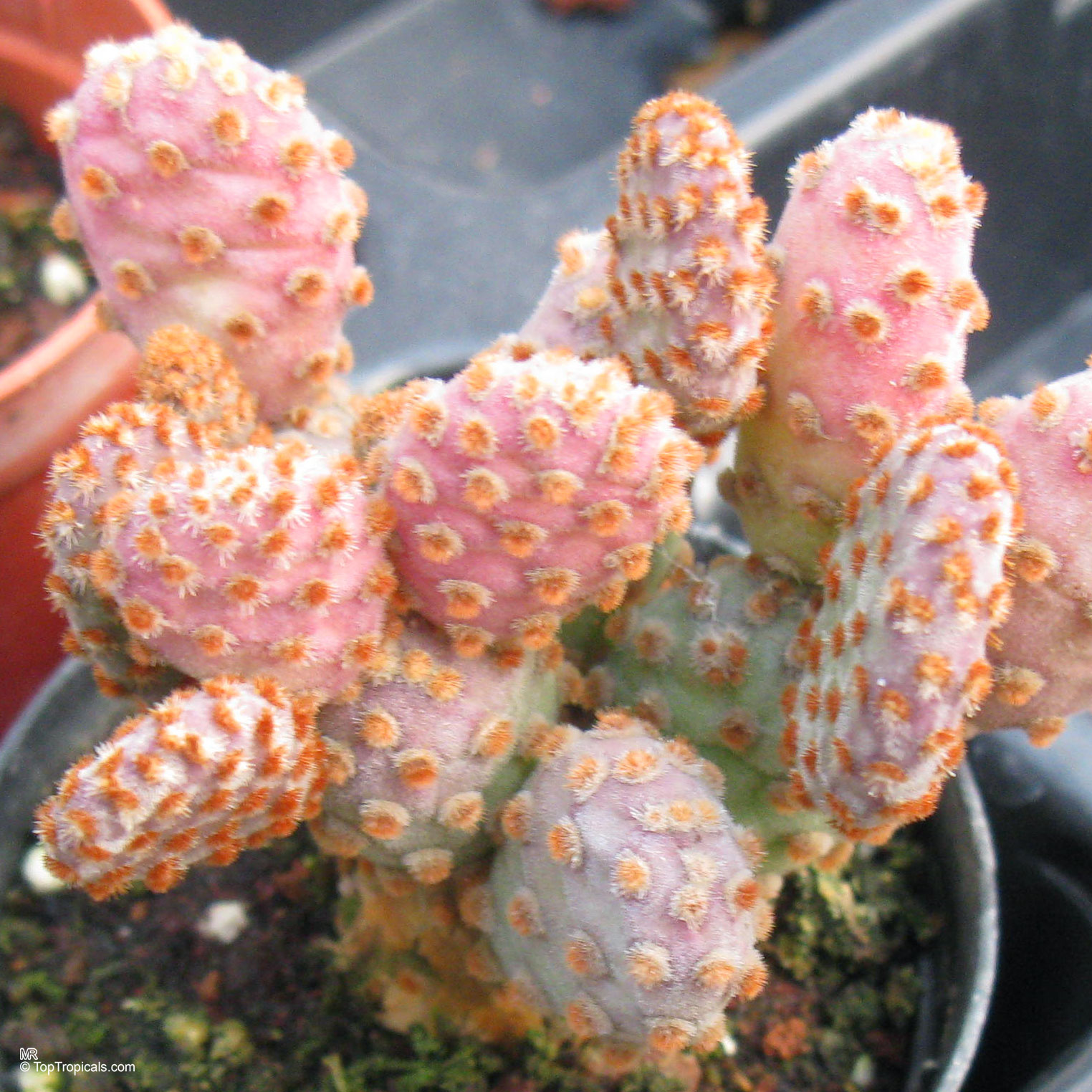
Botanical name: Opuntia rufida
Common name: Prickly Pear
Family: Cactaceae
Origin: Mexico
USDA Zone: 9-10
The plant is closely related to Opuntia microdasys, and is sometimes taken as its subspecies, Opuntia microdasys subsp. rufida.


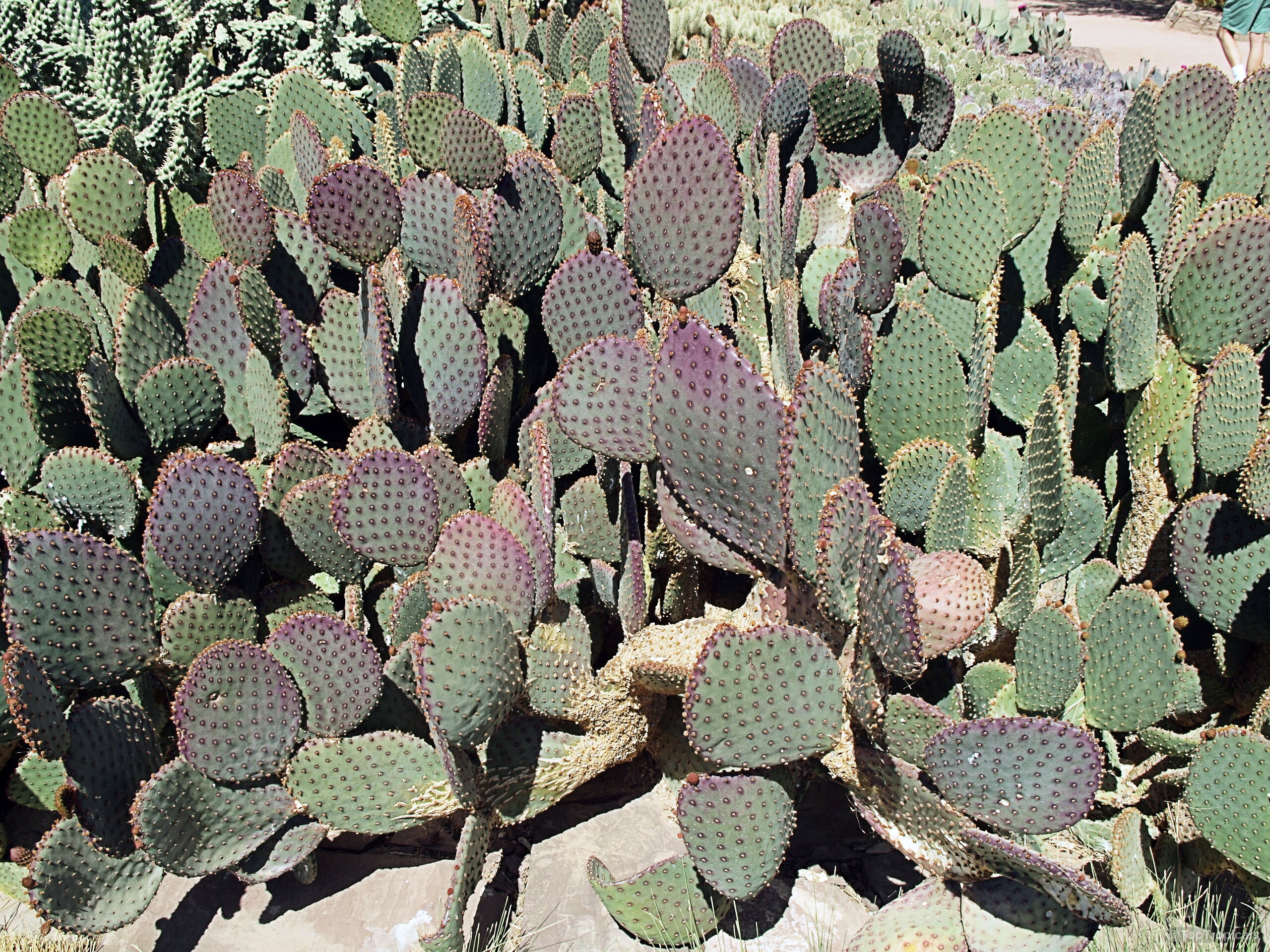
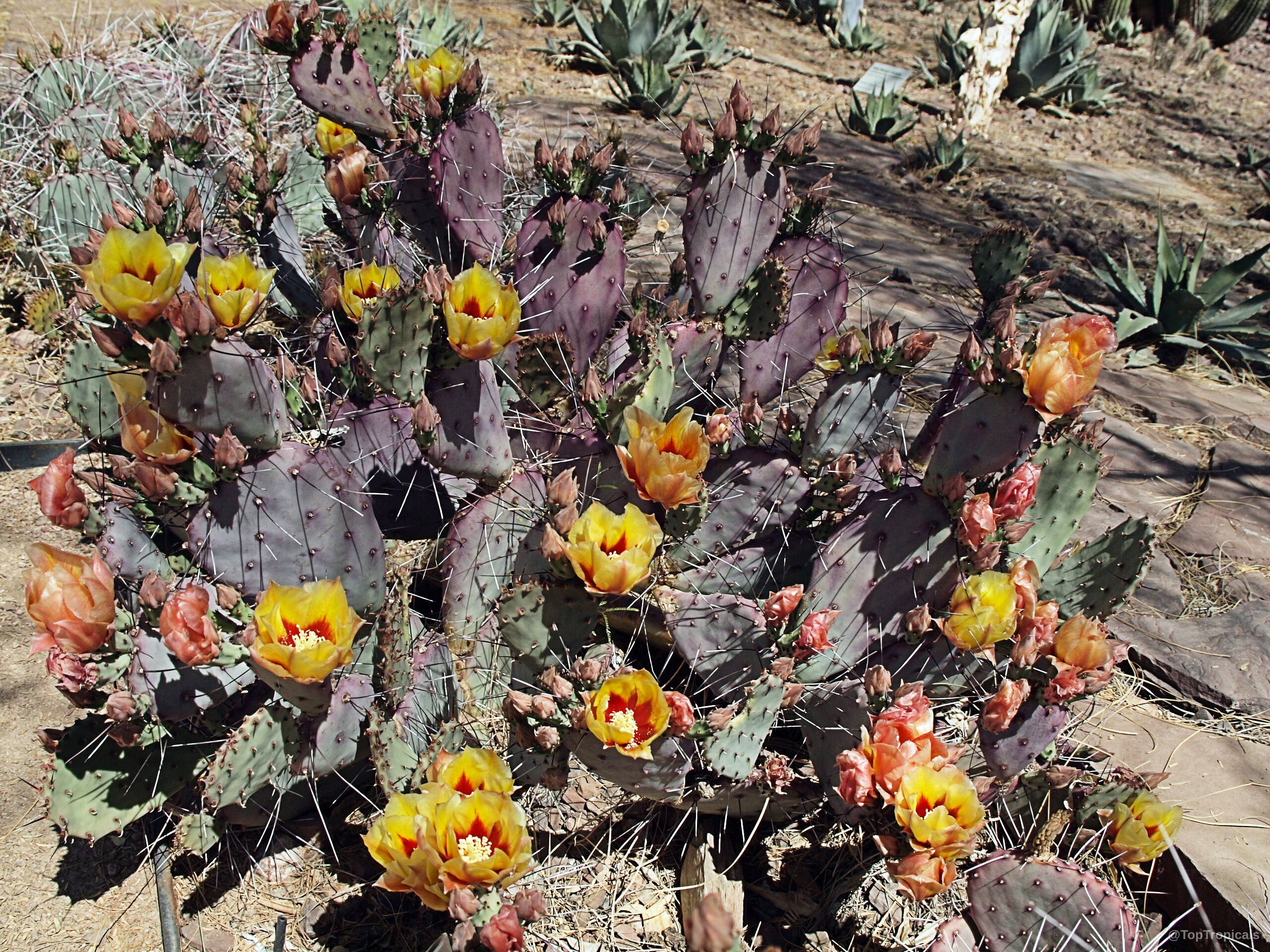
Botanical name: Opuntia sp.
Common name: Prickly Pear
Family: Cactaceae
USDA Zone: 3-11
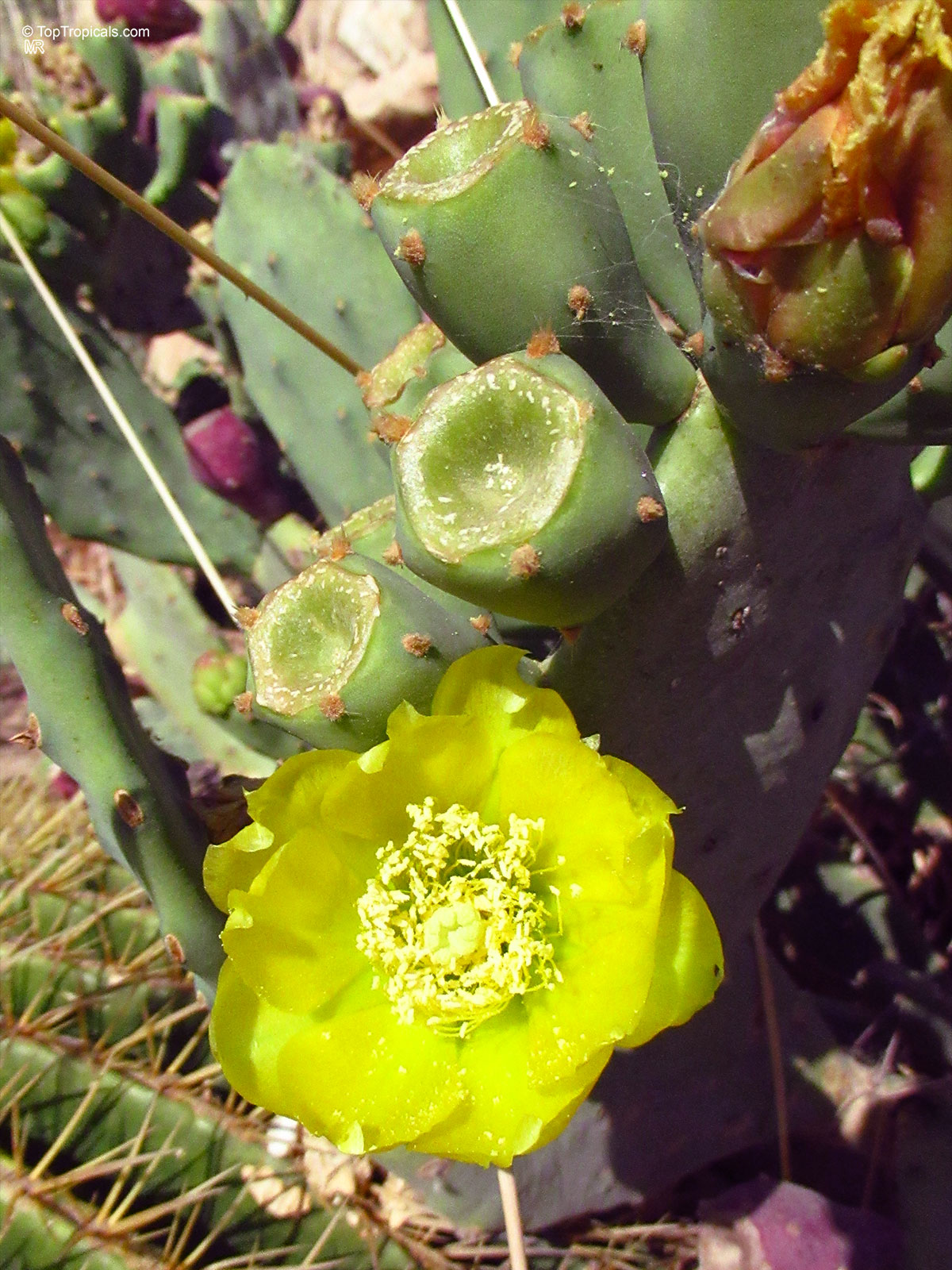
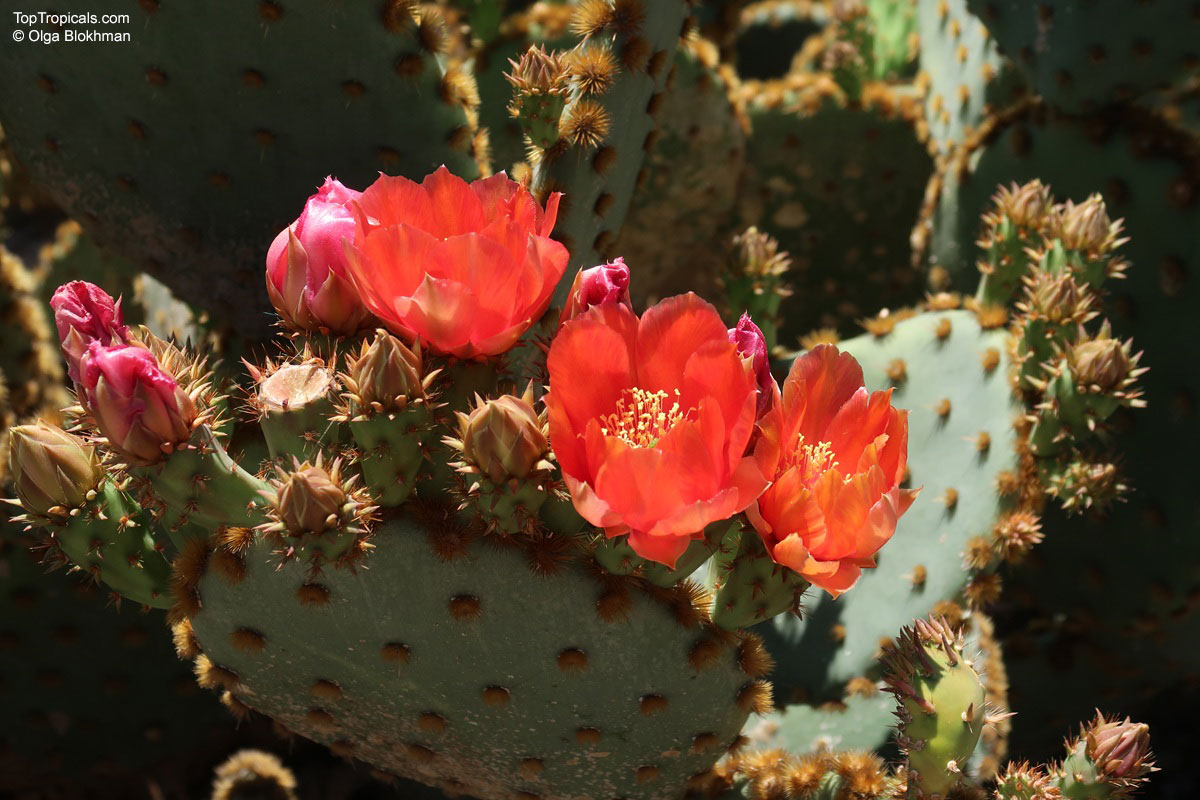
Opuntia, commonly known as Prickly Pear Cactus, is a large genus of succulent plants in the Cactaceae family, native to the Americas, from Canada to southern South America. Species inhabit deserts, rocky slopes, grasslands, and tropical dry forests. Most develop flattened, jointed stem segments called cladodes or pads, which perform photosynthesis in place of leaves. The areoles bear spines and characteristic clusters of tiny, barbed glochids that readily detach on contact. Growth forms range from low, spreading groundcovers to large, tree-like cacti exceeding 15 feet tall. Showy flowers, usually yellow, orange, pink, or red, develop along the pad margins and are followed by fleshy fruits, often called prickly pears. Familiar species include Opuntia ficus-indica, cultivated for its edible fruits and pads, and O. microdasys, distinguished by its dense clusters of glochids.
Opuntia species generally prefer full sun and sharply drained, sandy or rocky soil. Most are highly drought-tolerant, although cold hardiness varies considerably. Depending on the species, cultivation ranges from USDA Zones 3-11, with hardy North American species surviving severe winter freezes and tropical species requiring frost-free conditions. Many are grown ornamentally, while selected species provide edible fruits and young pads. Care is necessary when handling even apparently spineless plants because their glochids can cause persistent skin irritation.


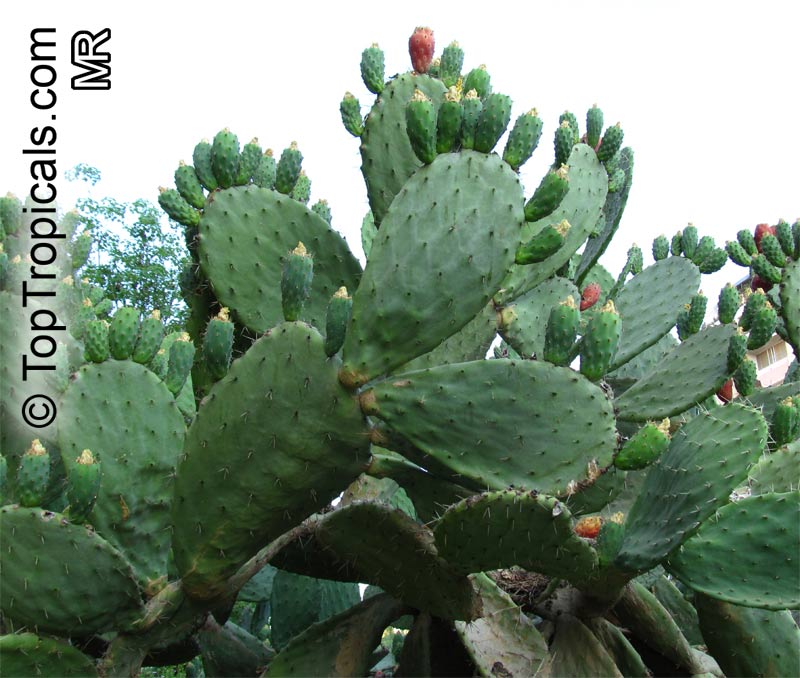


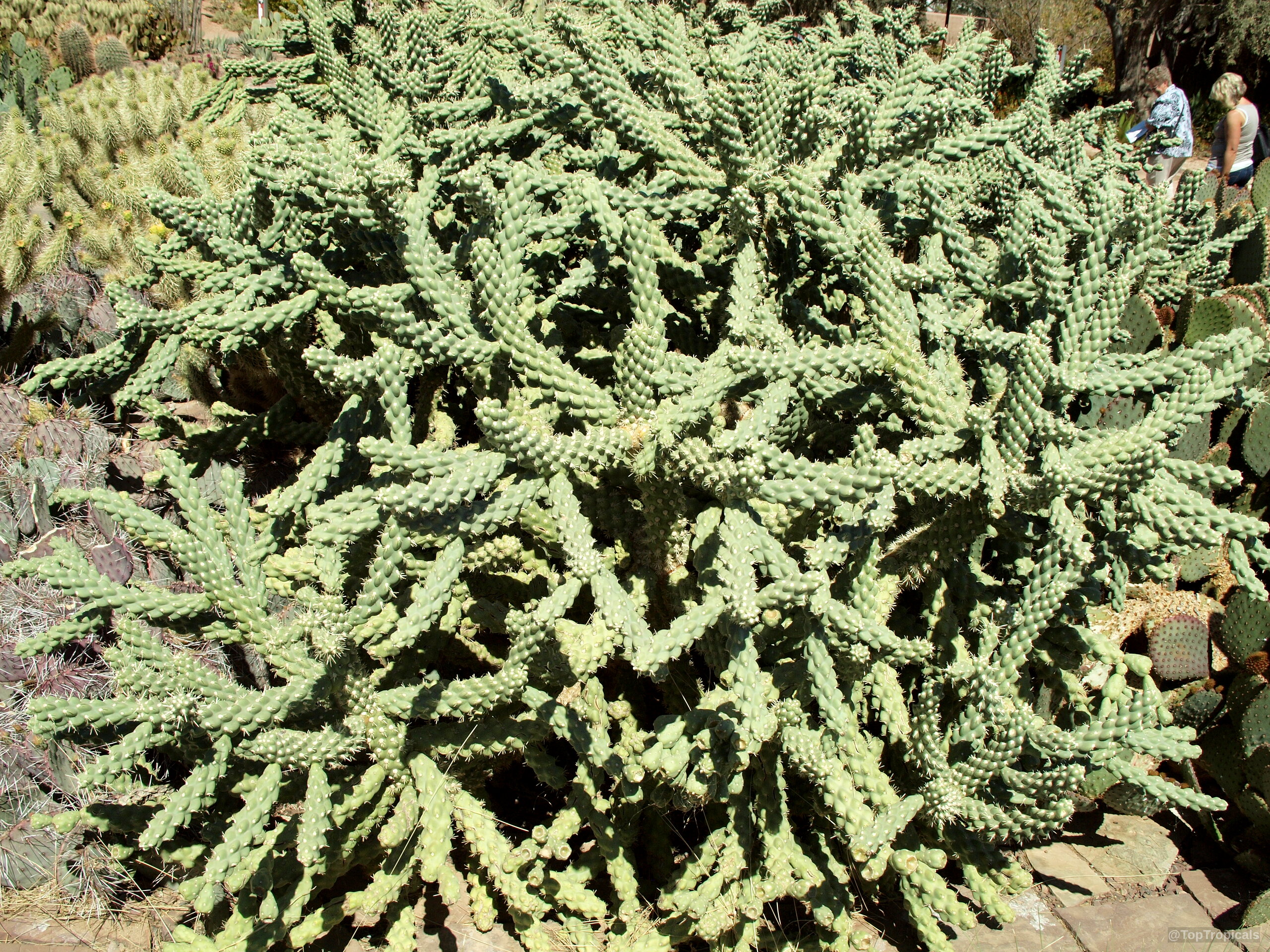
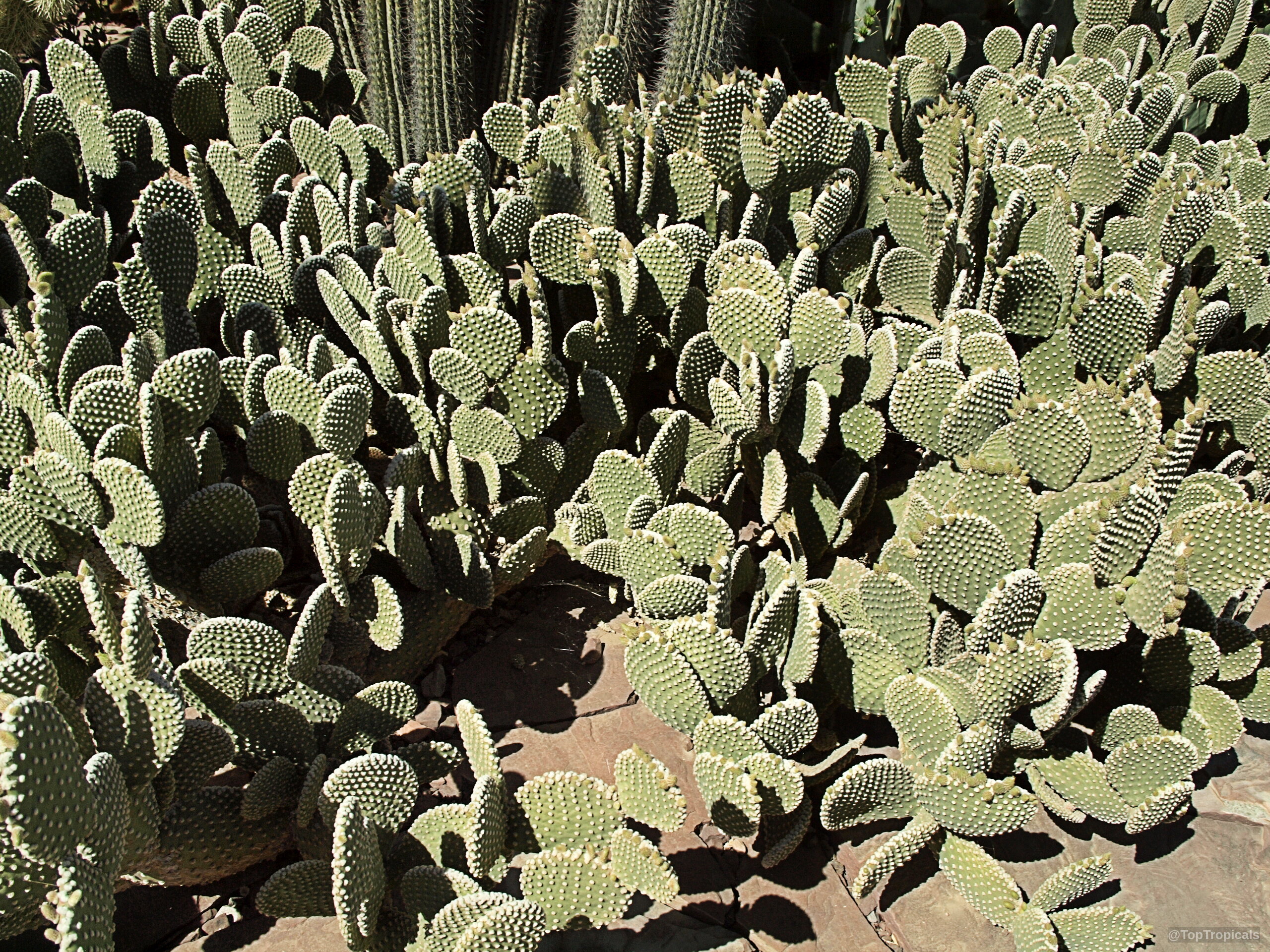




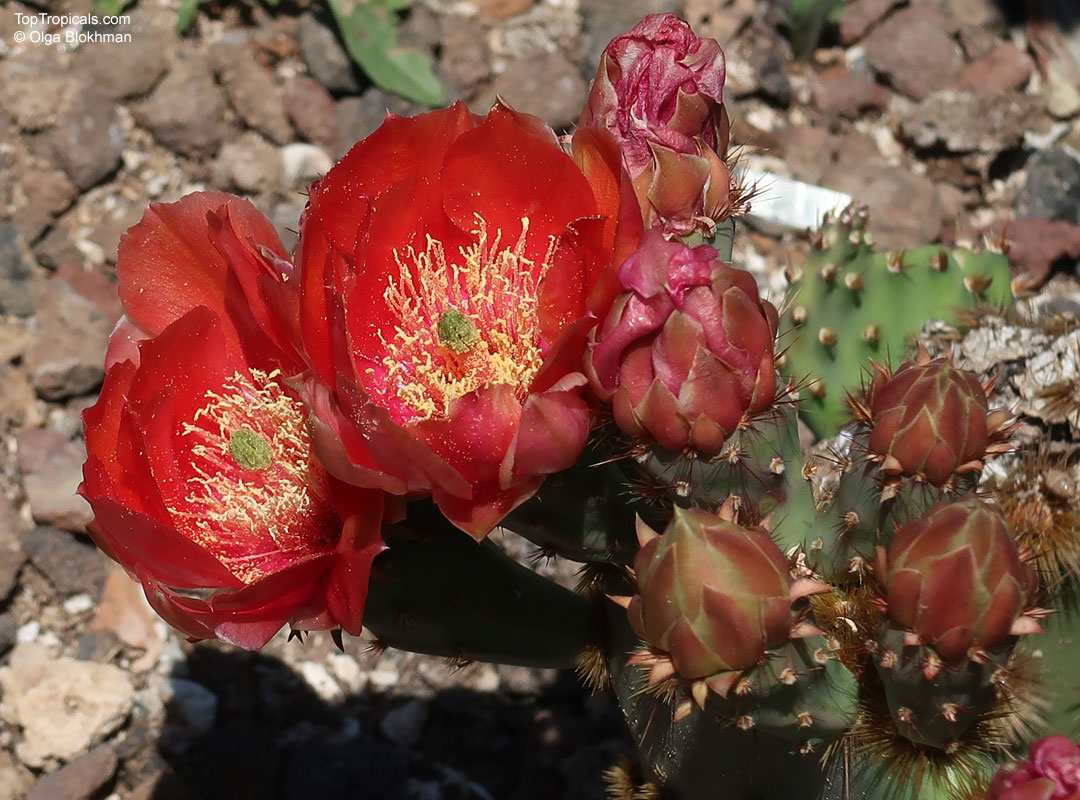
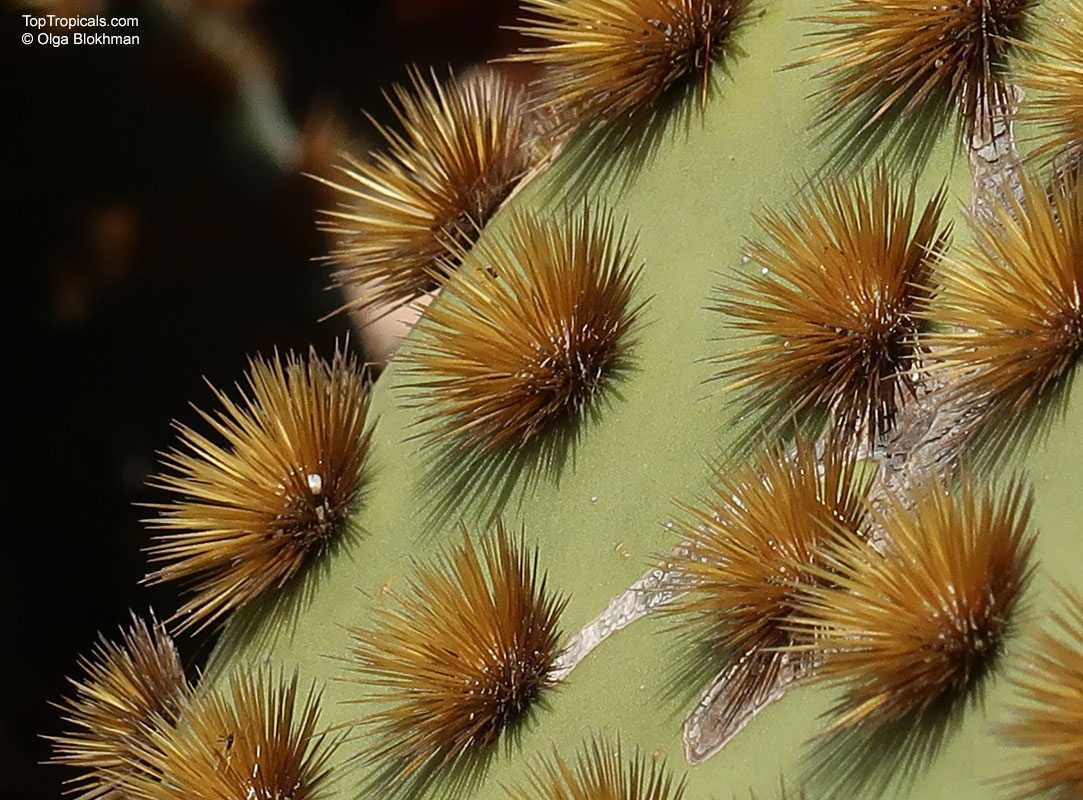

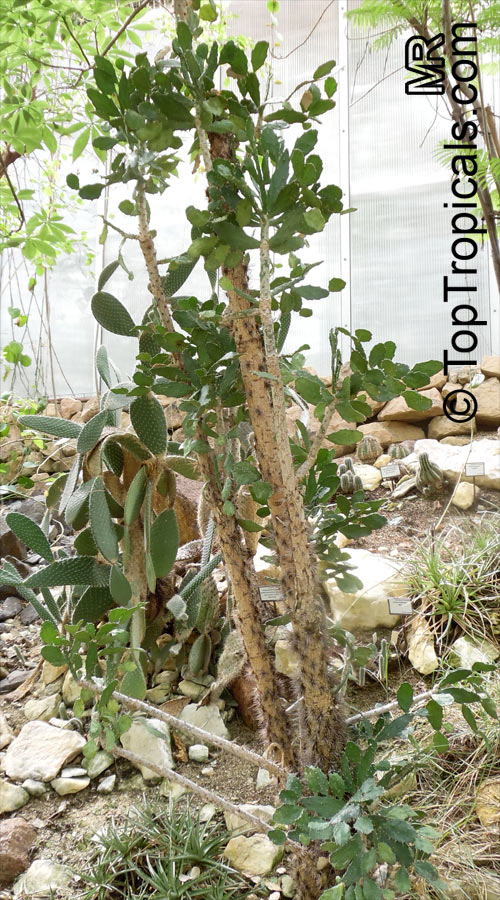
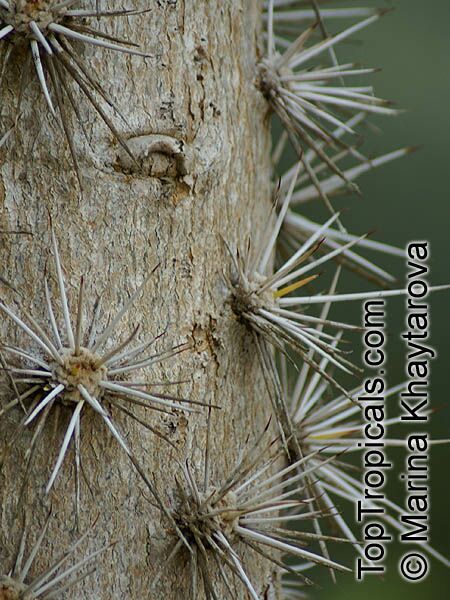
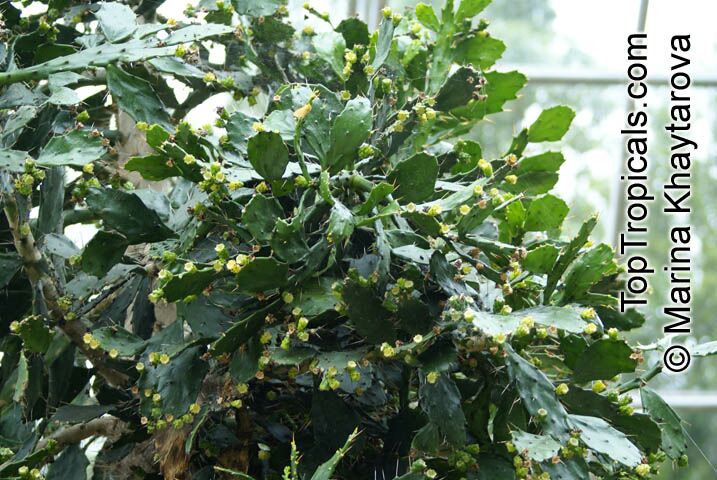
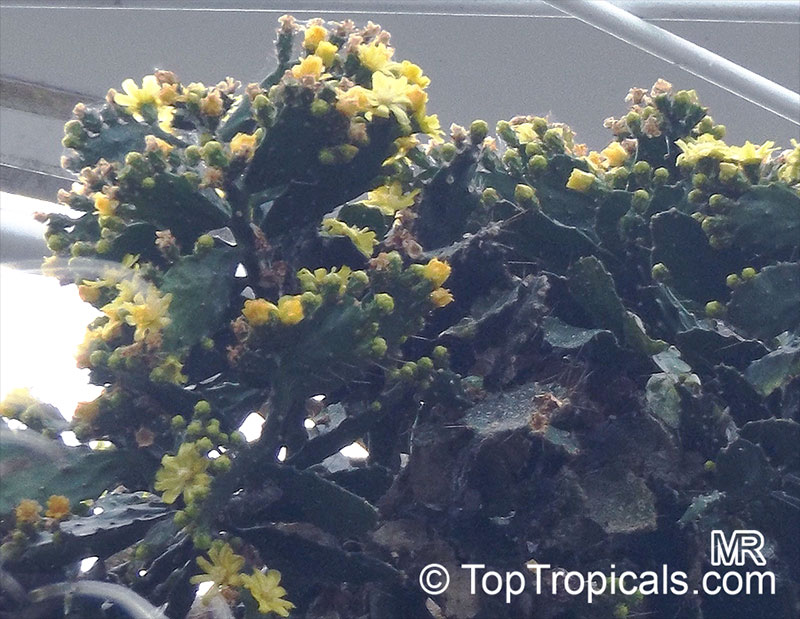
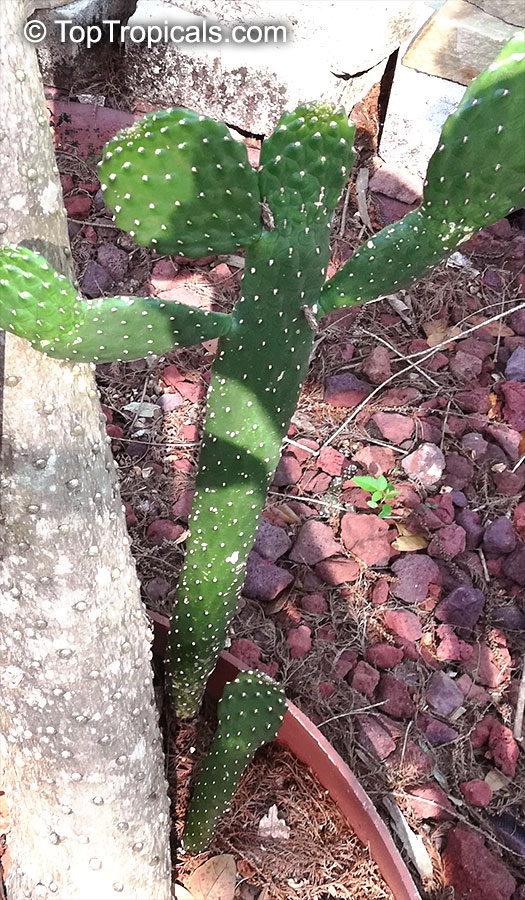
Botanical names: Brasiliopuntia brasiliensis, Opuntia brasiliensis
Common name: Brazilian Prickly Pear
Family: Cactaceae
Origin: Central America, South America
USDA Zone: 9-10
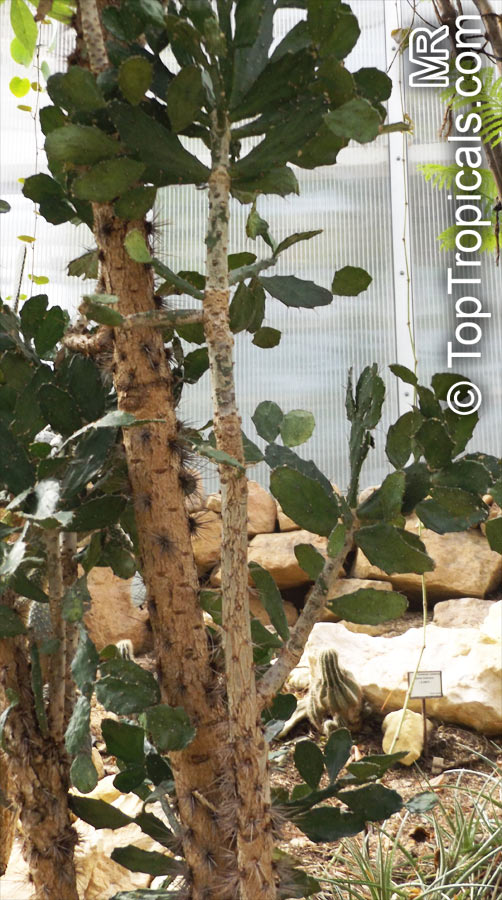
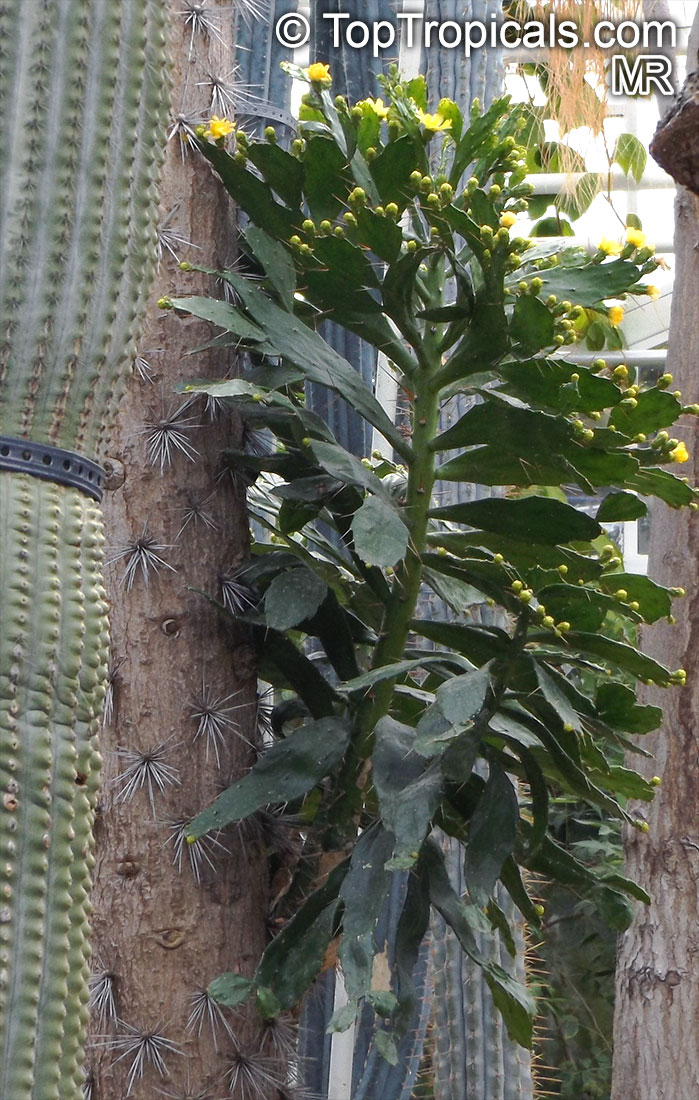
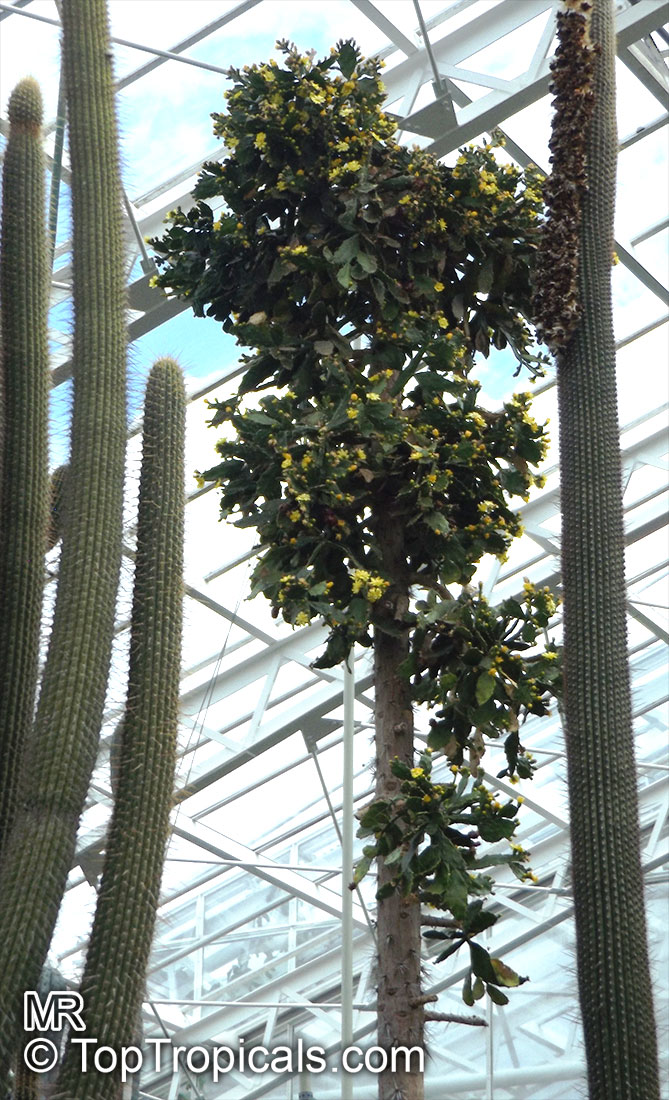
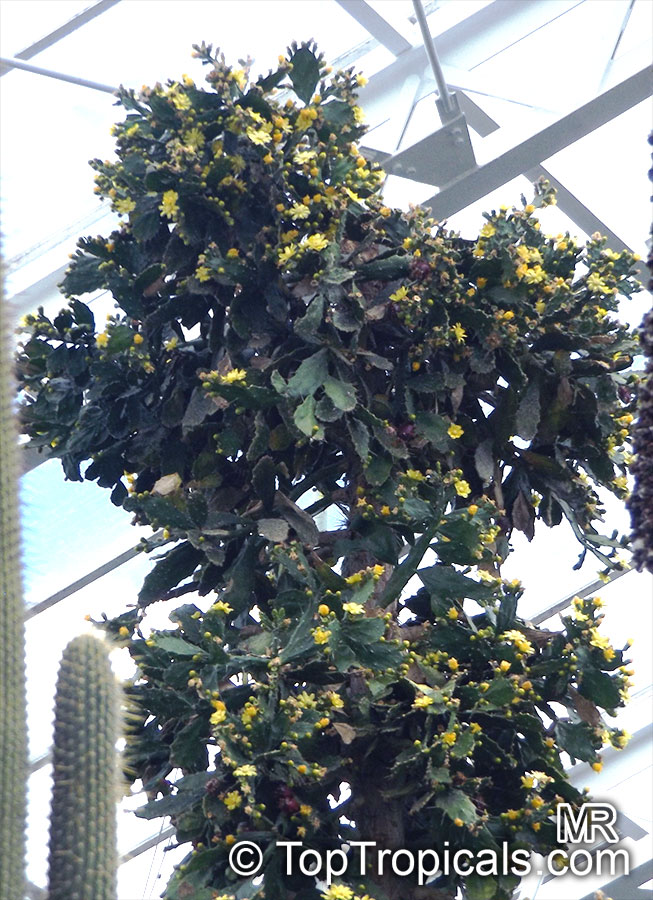
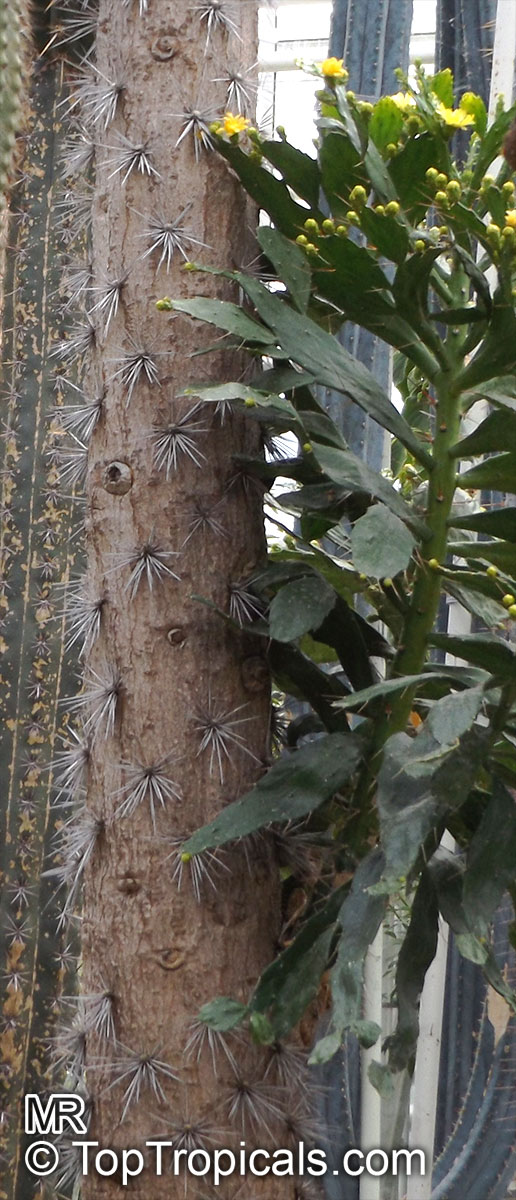
Botanical names: Consolea rubescens, Opuntia rubescens
Common name: Road Kill Cactus
Family: Cactaceae
Origin: Caribbean
USDA Zone: 9-10

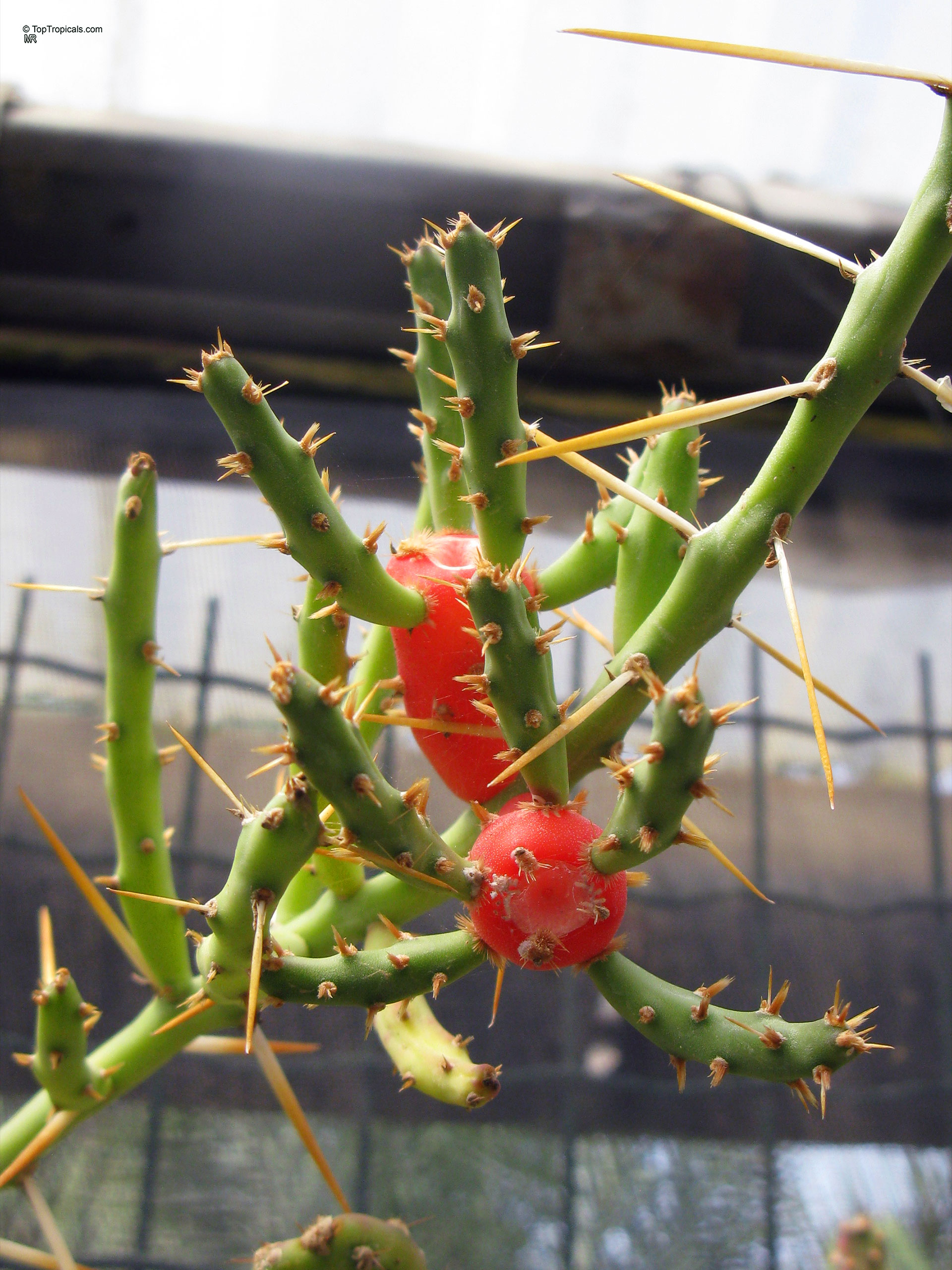
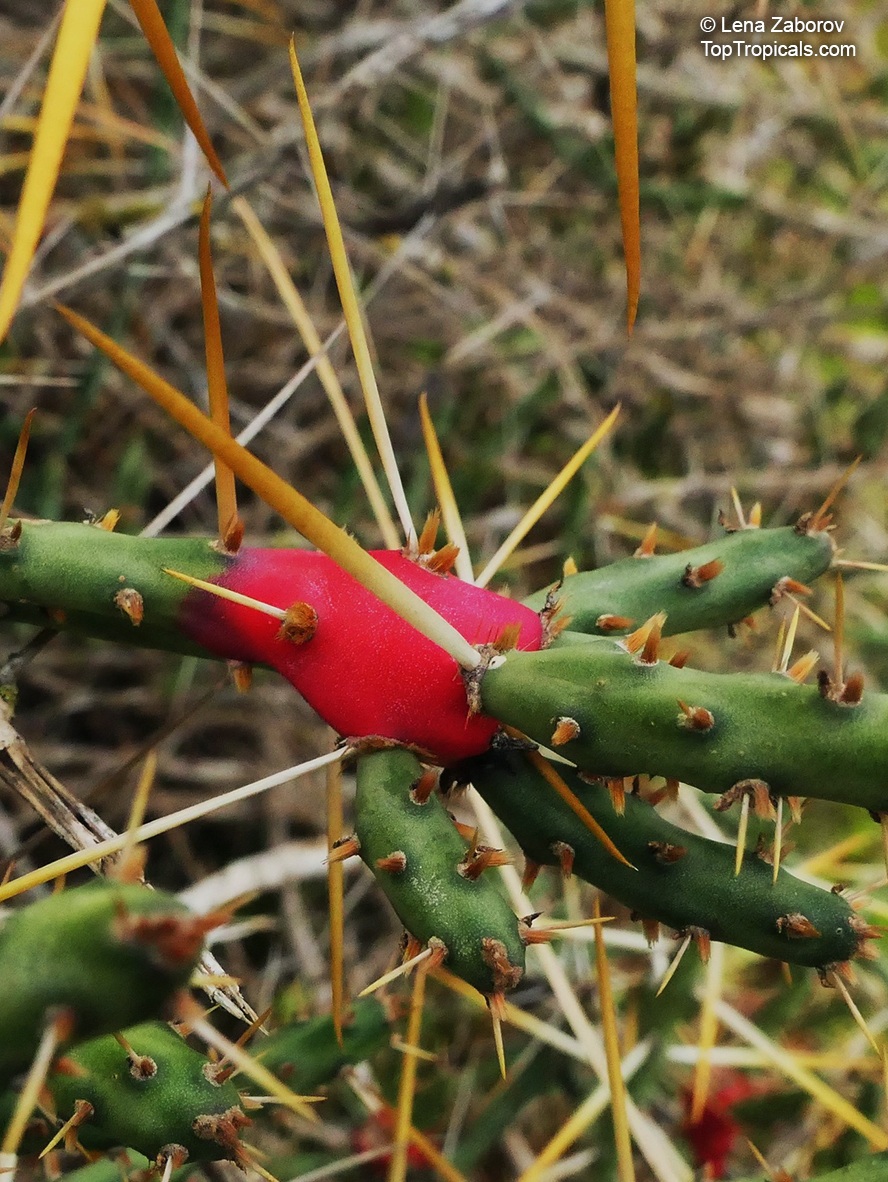
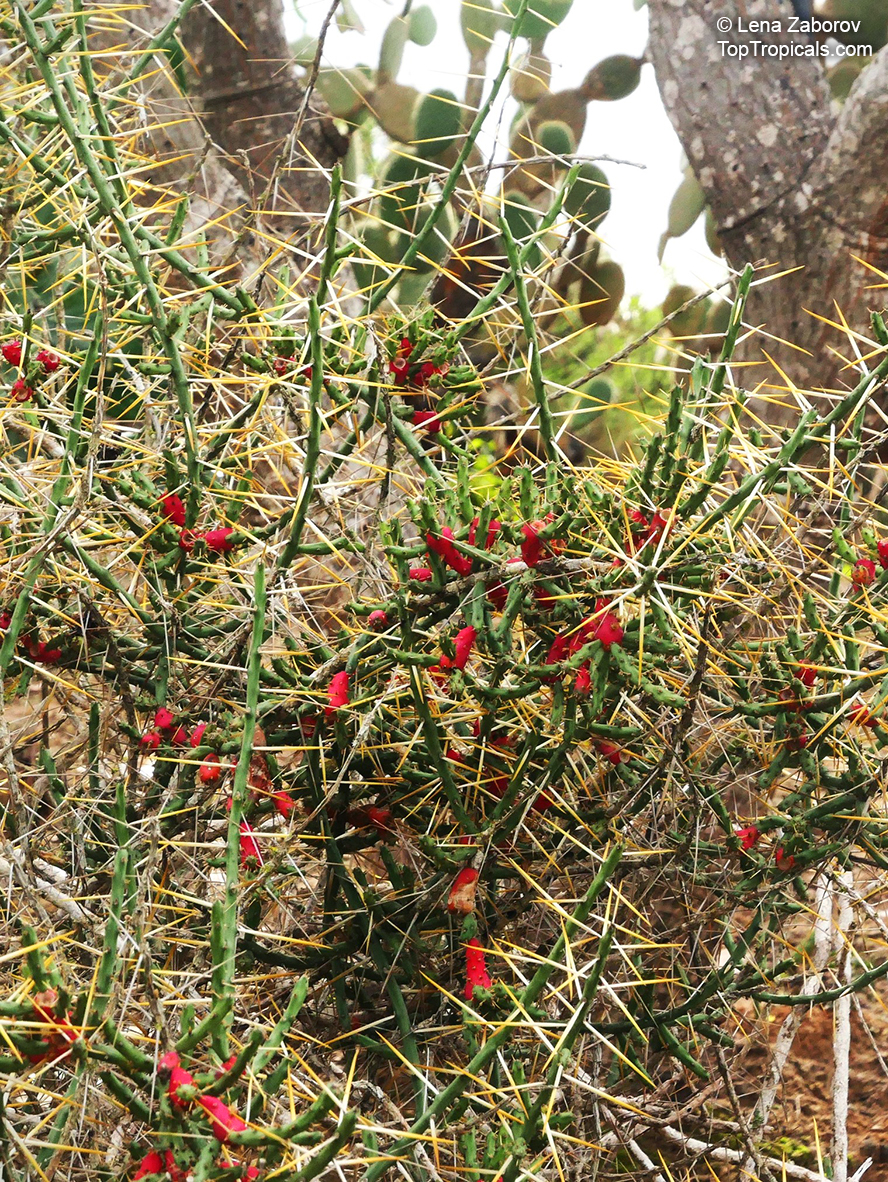
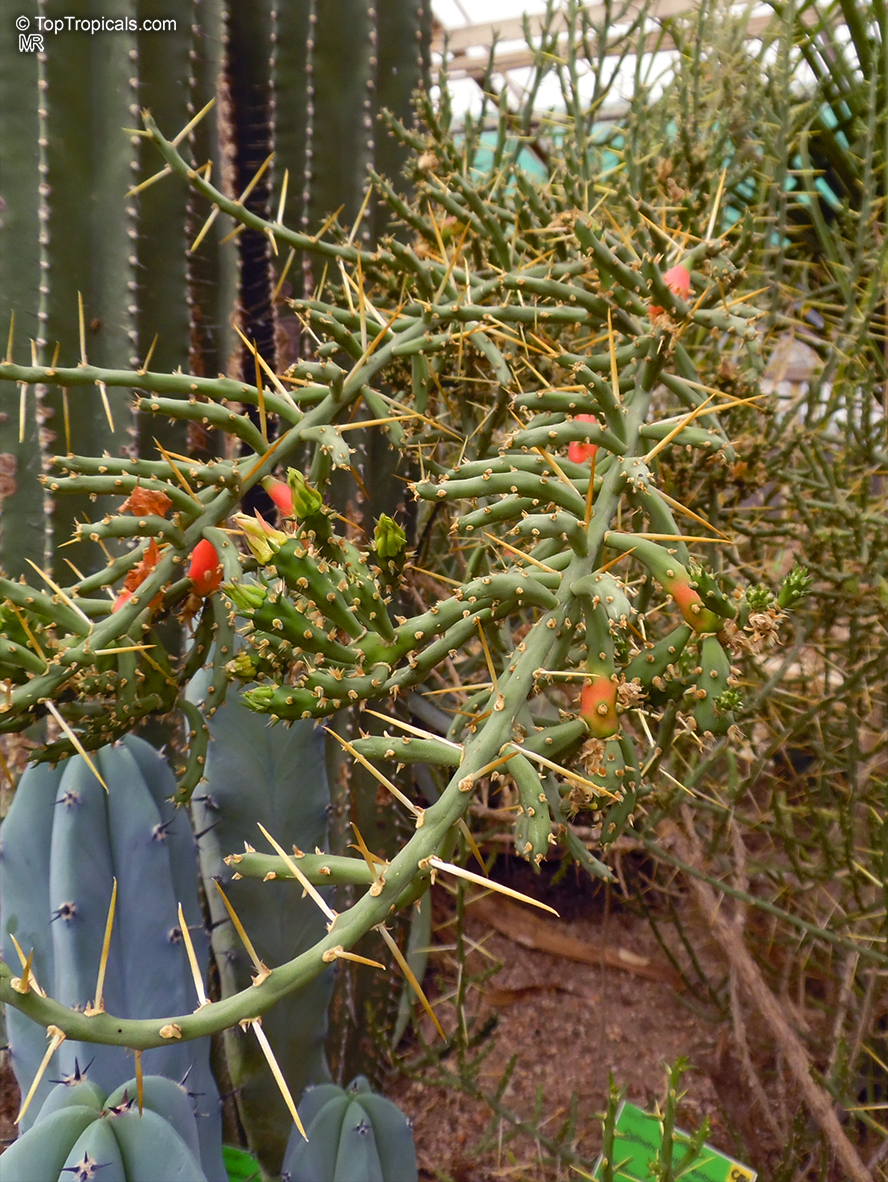
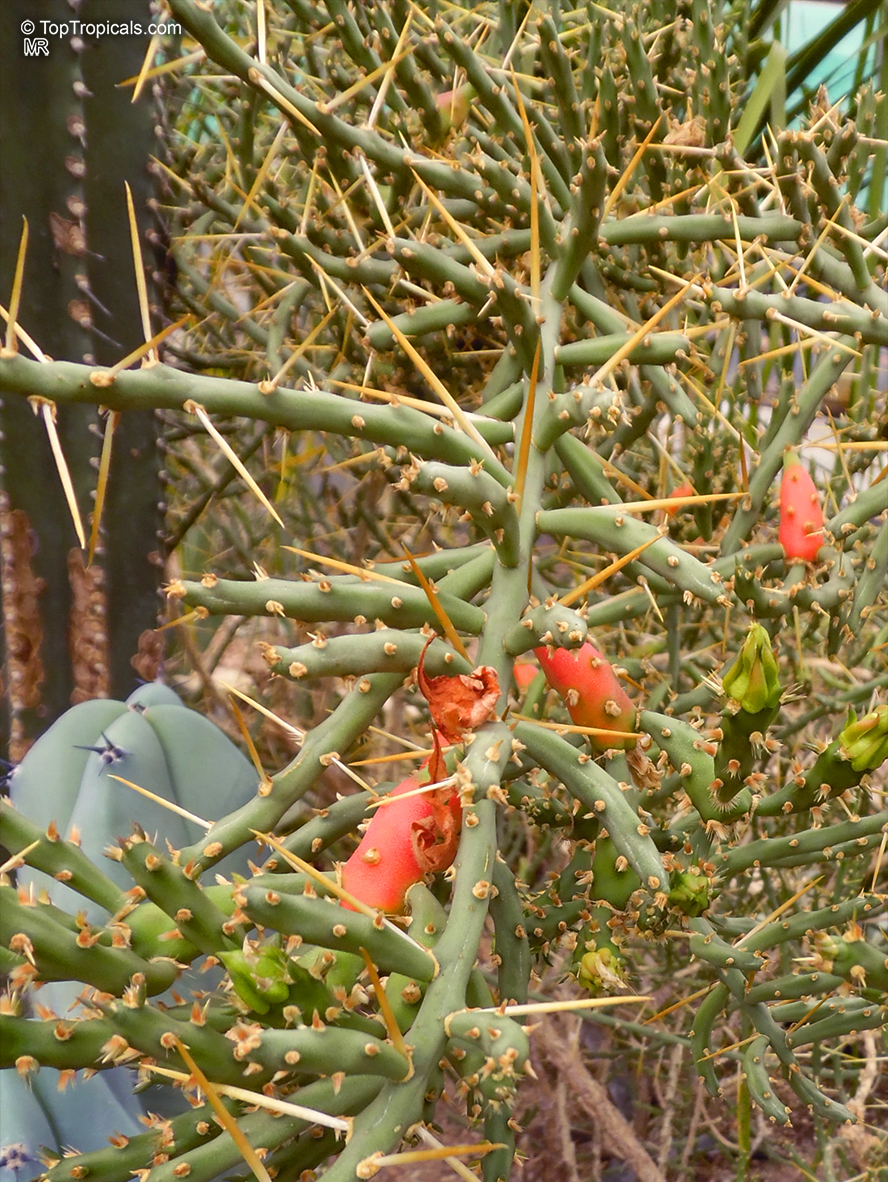
Botanical names: Cylindropuntia leptocaulis, Opuntia leptocaulis
Common names: Desert Christmas Cactus, Desert Christmas Cholla, Pencil Cactus
Family: Cactaceae
Origin: Mexico
USDA Zone: 9-11
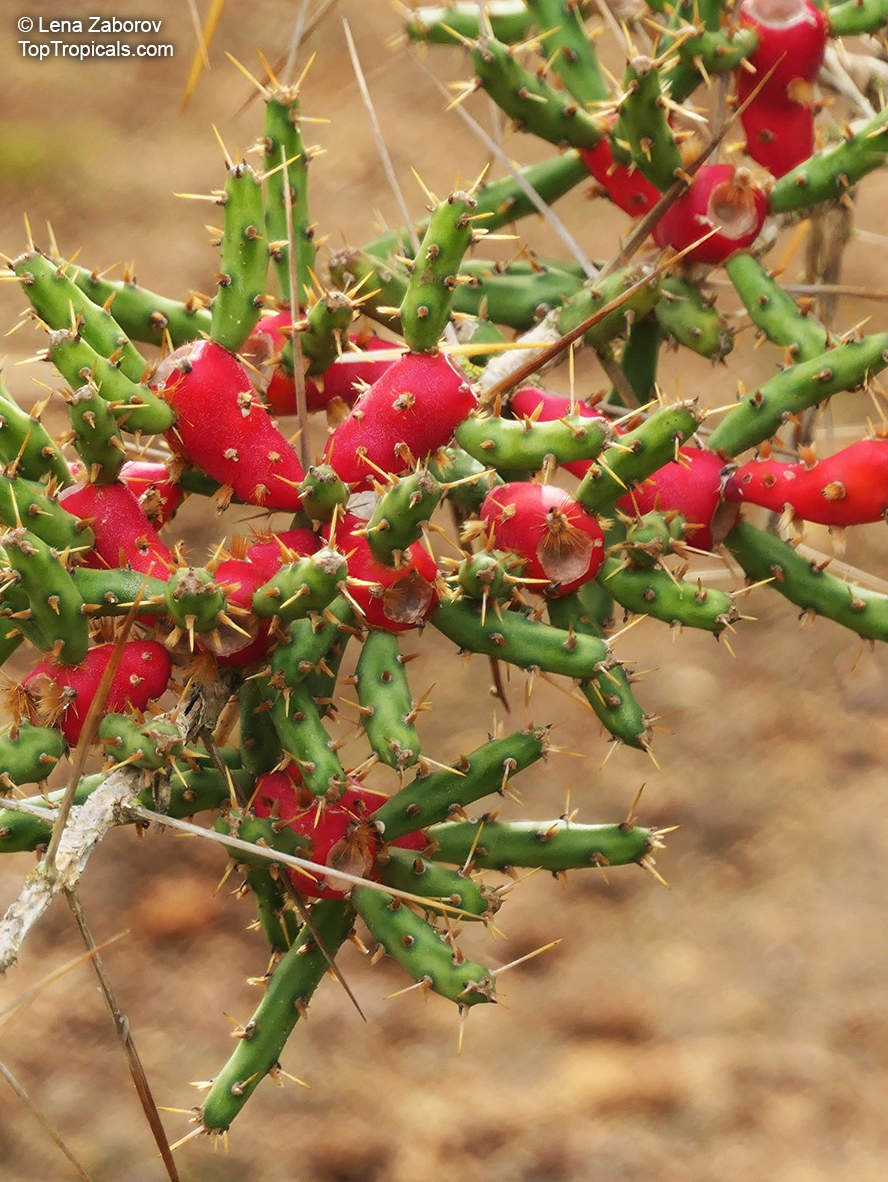
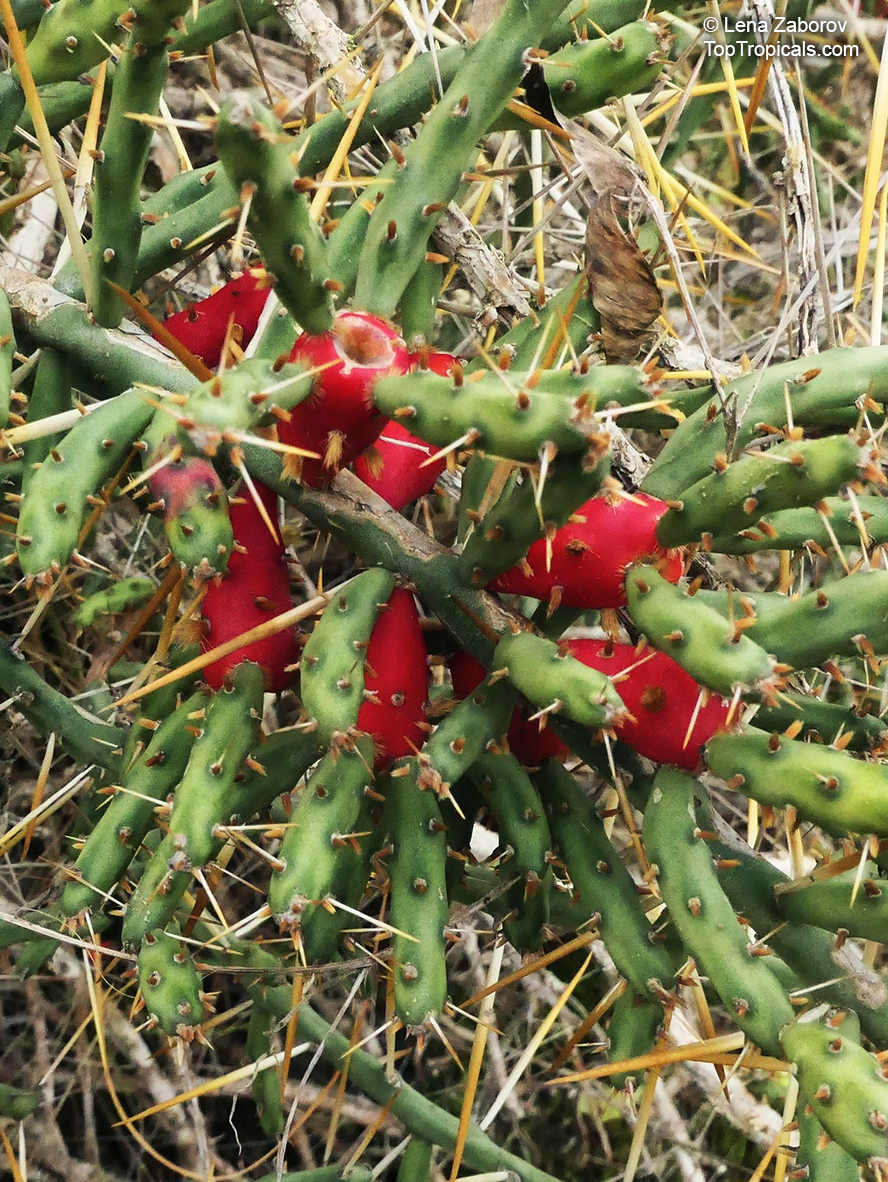
Cylindropuntia leptocaulis, commonly known as Tasajillo or Christmas Cholla, is a slender, much-branched cactus native to the southwestern United States and northern Mexico. Unlike many larger members of the genus, this species produces exceptionally thin cylindrical stems only 0.1-0.3 inches in diameter, giving the plant a delicate, twig-like appearance. The stems are divided into short segments armed with small clusters of fine spines and tiny deciduous leaves that appear briefly during active growth.
Small greenish-yellow to bronze flowers appear in spring, followed by bright red, fleshy fruits that often persist through winter. These colorful fruits provide ornamental interest long after flowering and are the origin of the common name "Christmas Cholla." A remarkable feature of this species is that the fruits retain active areoles - the specialized buds from which cacti produce spines, flowers, and new shoots. As a result, the fruits themselves may sprout up to four new vegetative branches directly from their upper areoles, allowing the plant to spread vegetatively as well as by seed. Birds readily feed on the fruits, helping to disperse the seeds. Cylindropuntia leptocaulis thrives in full sun and sharply drained soil and is highly tolerant of heat, drought, and poor rocky soils. Suitable for USDA Zones 7-11, it is among the most cold-hardy species of Cylindropuntia and requires very little supplemental watering once established. Its fine-textured branching, persistent fruits, and unusual fruit-borne shoots make it an attractive choice for xeriscapes, desert gardens, and naturalistic plantings.
| Next | |
Use link to repeat this search:
https://toptropicals.com/cgi-bin/garden_catalog/cat.cgi?find=Opuntia&search_op=and&keyword_op=and&language=e&number=10
&no_change_lang=1&user=tt&sale=1&first=0