Pontederiaceae - Botanical Family
| Number of plants found: 3 |
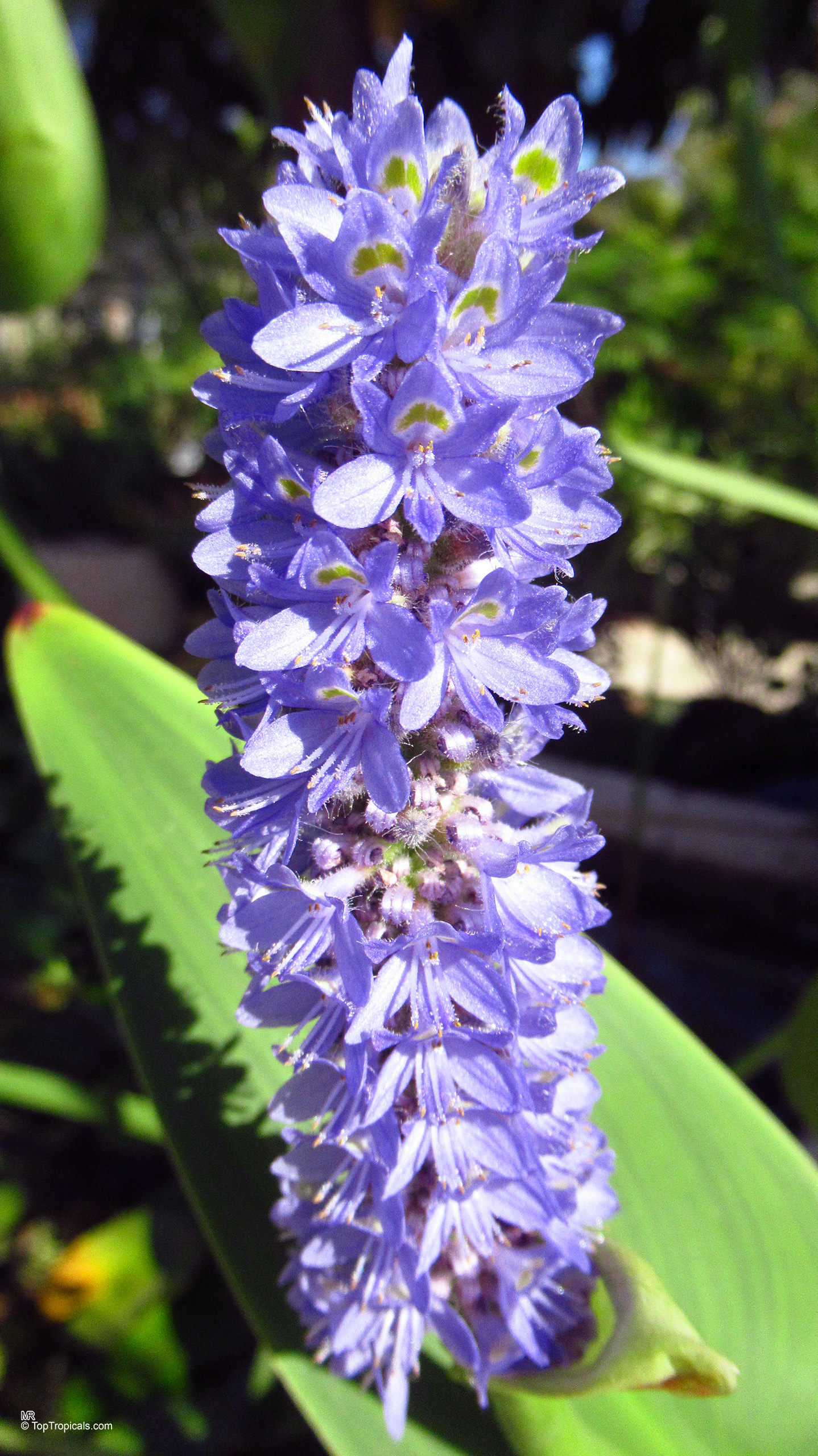
Botanical name: Pontederia cordata
Common names: Pickerel Plant, Pickerelweed, Blue Pickerel
Family: Pontederiaceae
Origin: Eastern North America
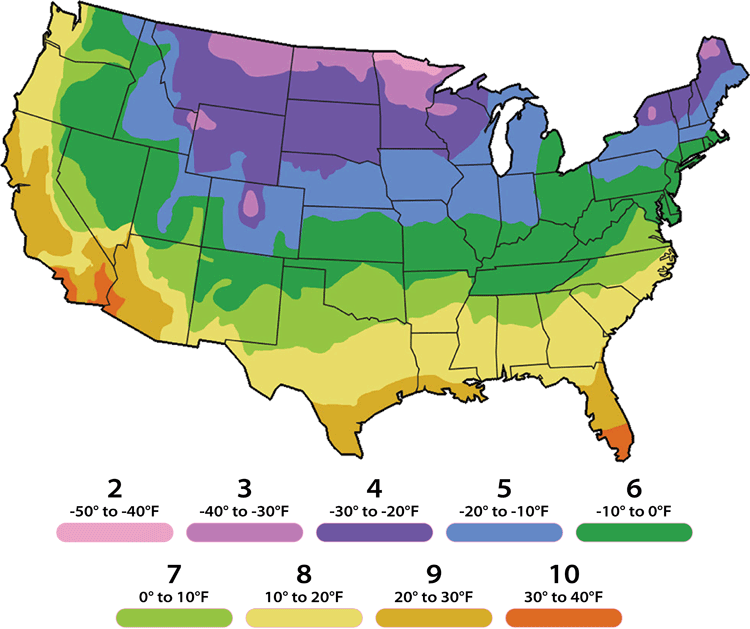
USDA Zone: 3-10


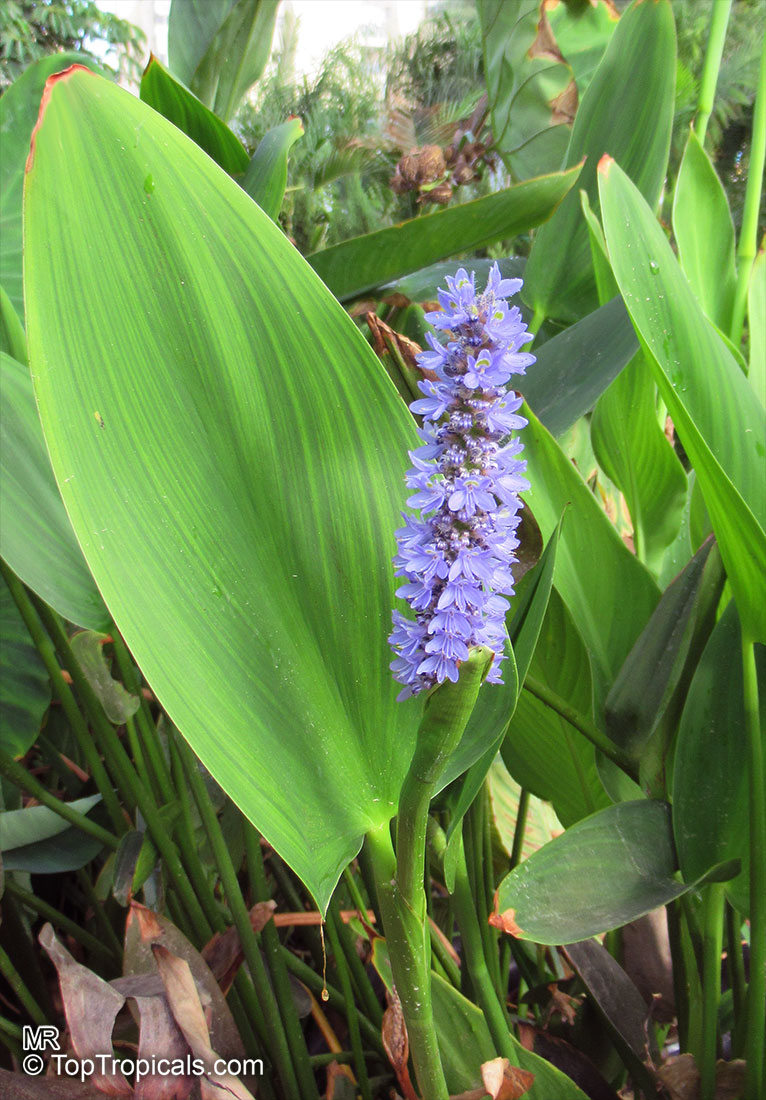
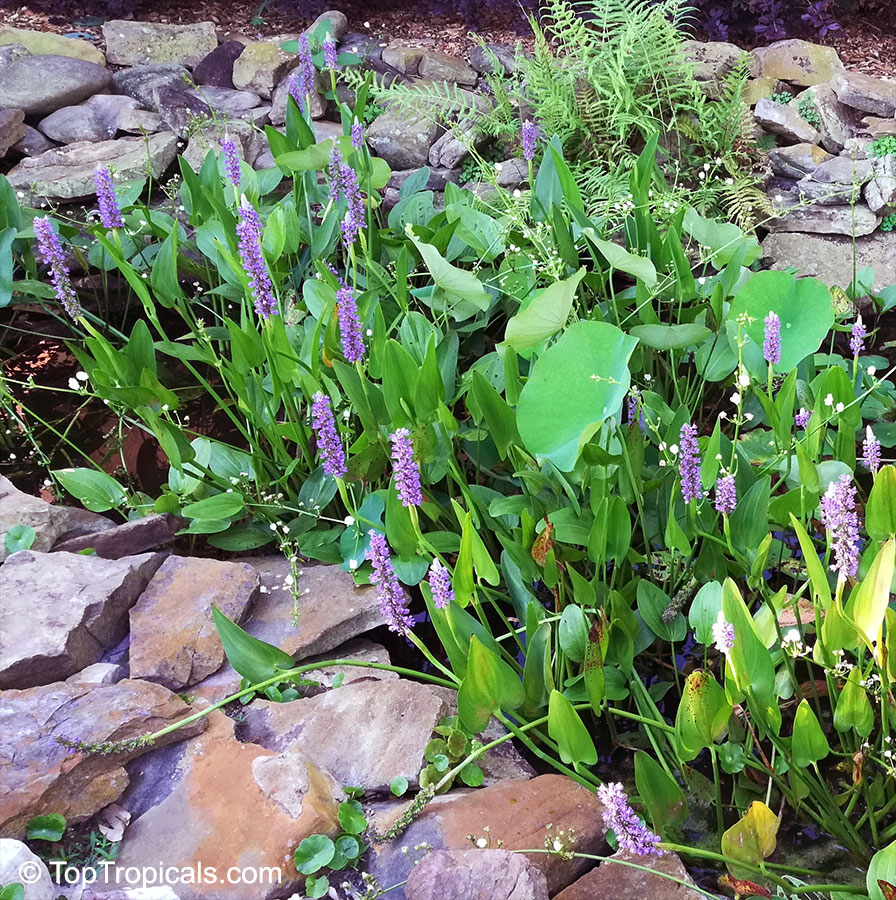
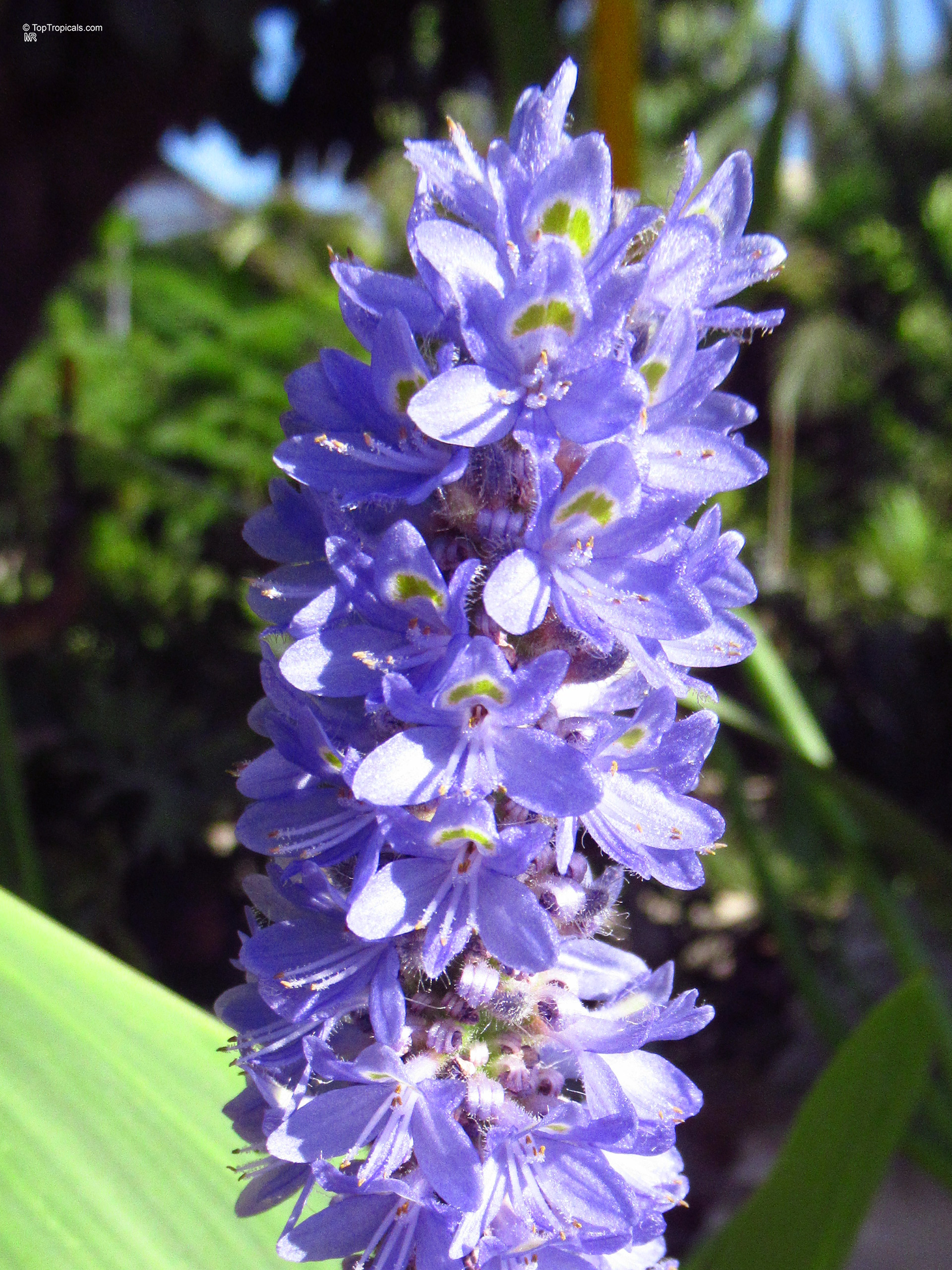
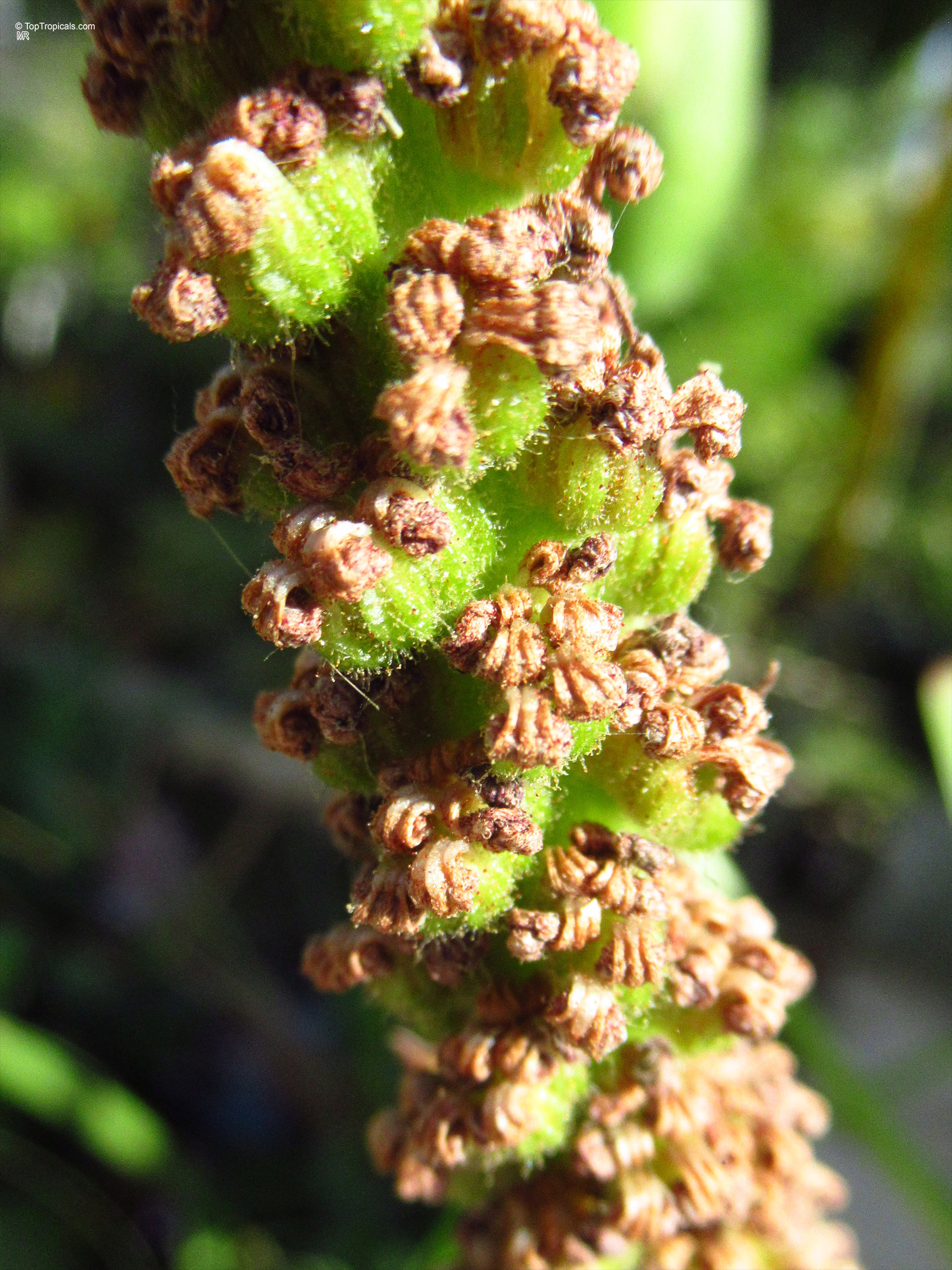
Pickerelweed typically grows to about 2 to 3 Ft tall. Pickerelweed is an aquatic or marsh perennial with a cluster of erect arrowhead-shaped leaves arising from a single basal clump. Its leaves are large, up to 5" wide, and are usually twice as long. Leaf shapes are variable, but are usually lance-shaped. The easiest way to recognize pickerelweed is by its spike of violet-blue flowers. Sometimes the flowers are white. Plant pickerelweed in the margins of a garden pond or water garden. You can plant it in a pot, then set the pot in the water. That way you can change the depth and position of the plant if necessary. Cut flowers are strikingly beautiful when viewed up close, and although each individual flower lasts only one day, more will open each day and the entire inflorescence will last for several days in a vase of water. Propagation: The rootstock of large plants is easily divided.
Botanical names: Pontederia crassipes, Eichhornia crassipes
Common name: Water Hyacinth
Family: Pontederiaceae
Origin: South America
USDA Zone: 9-11


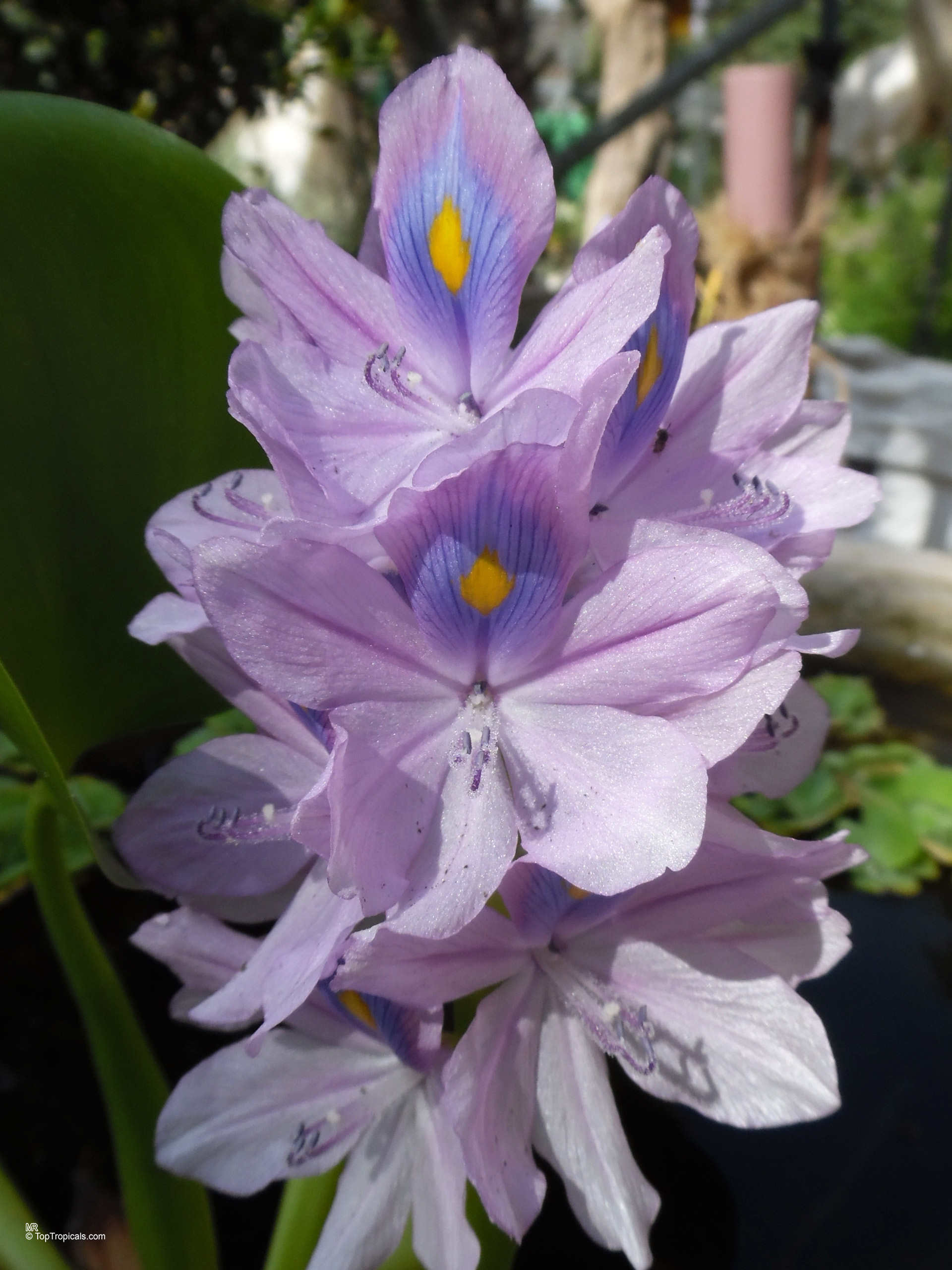
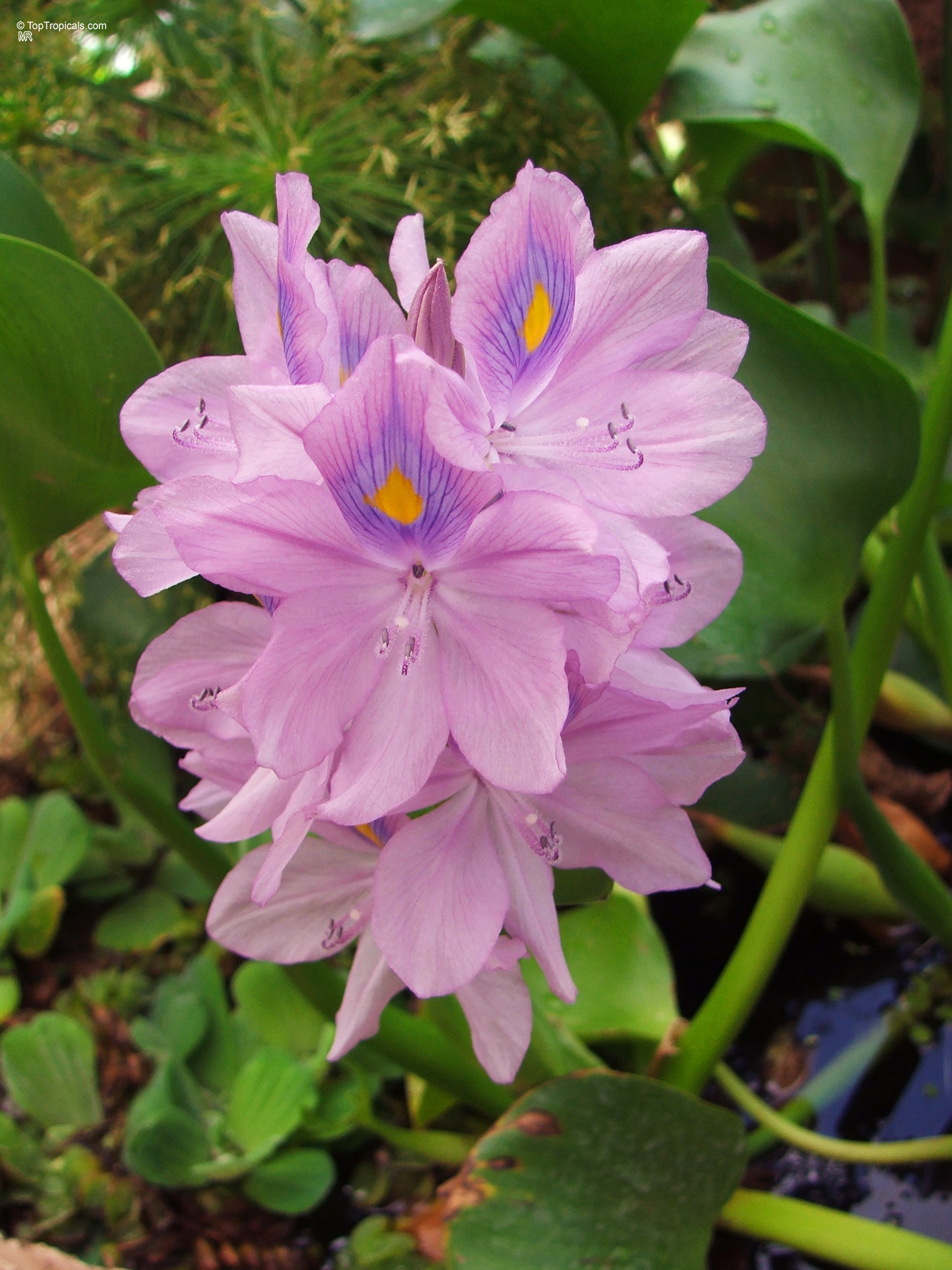
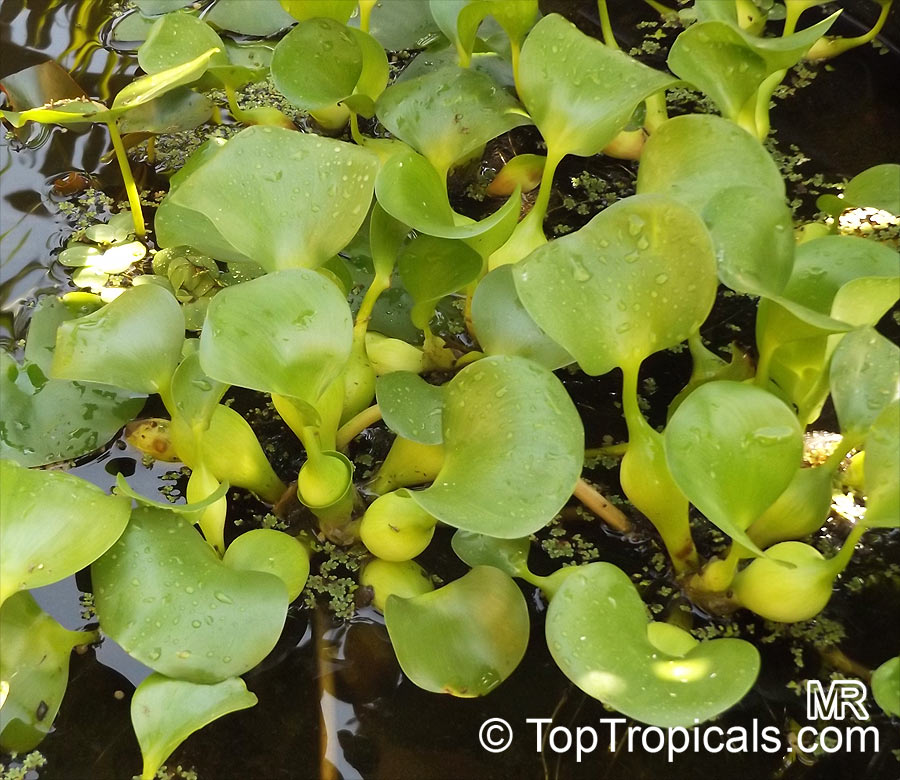
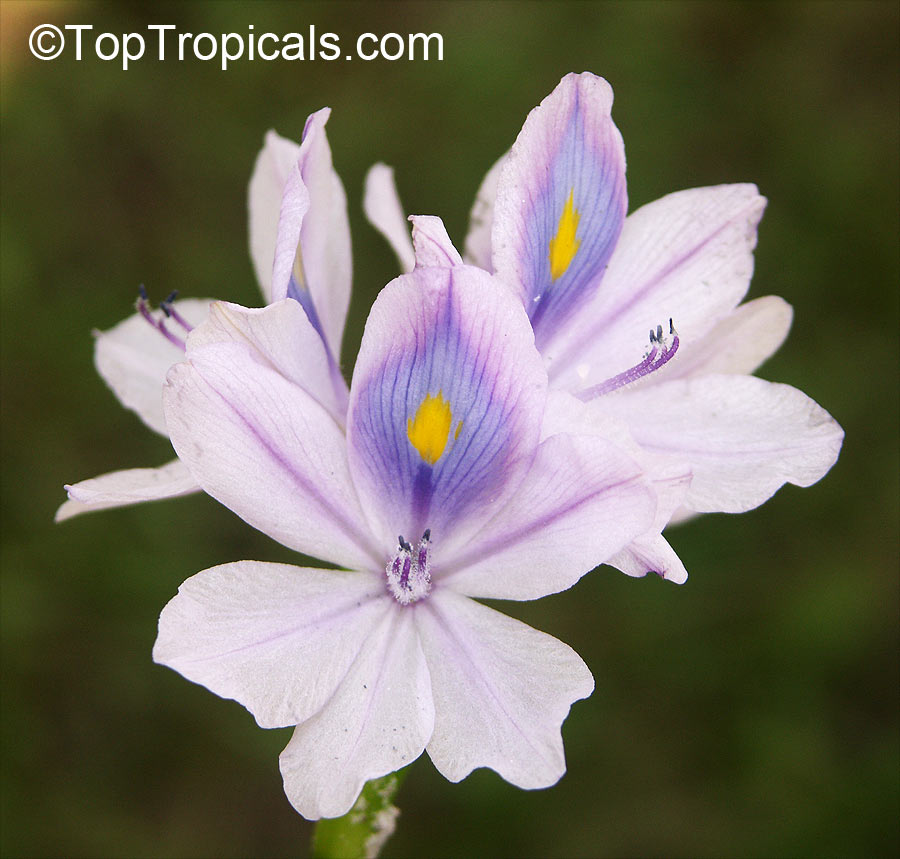
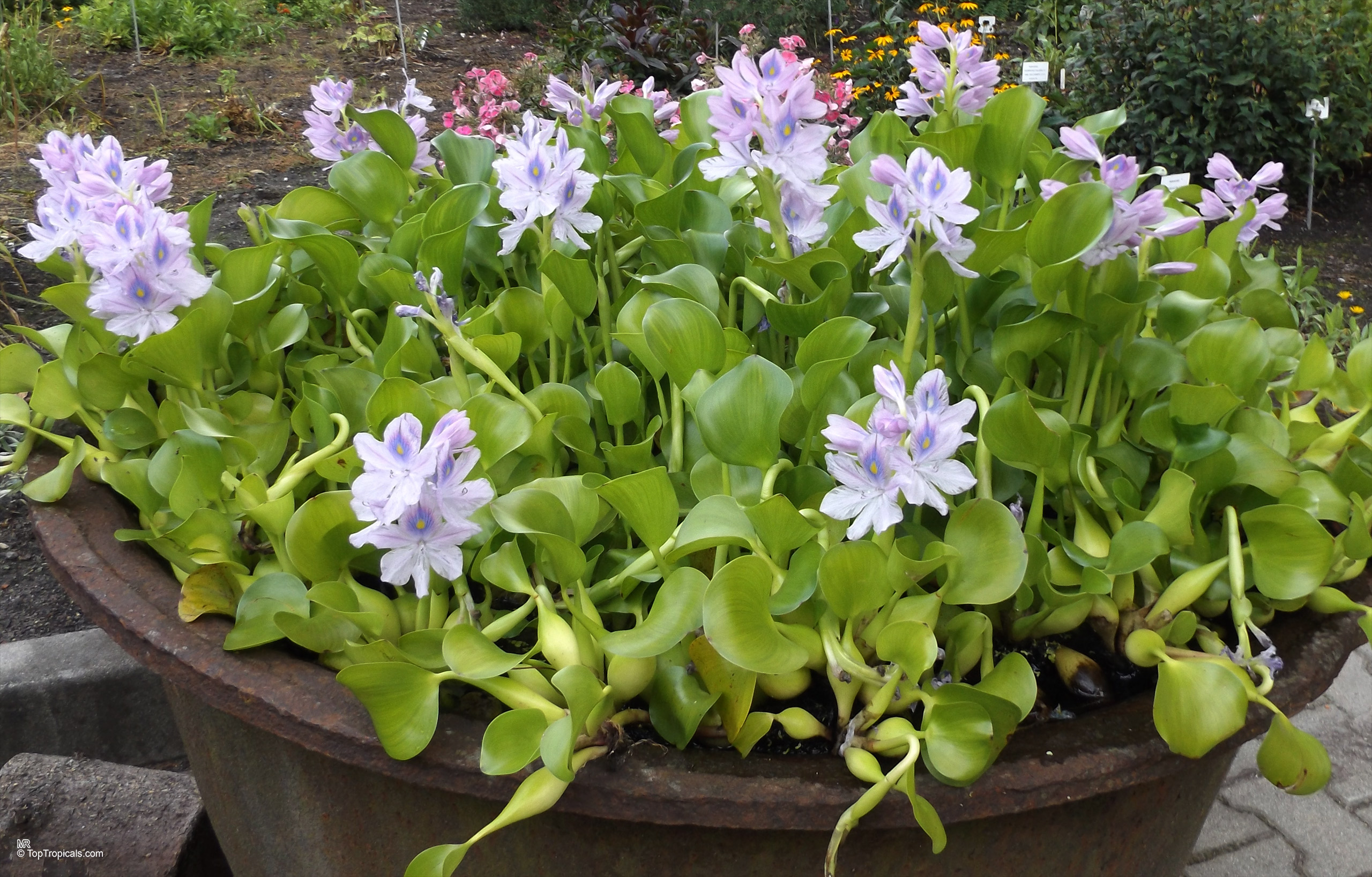
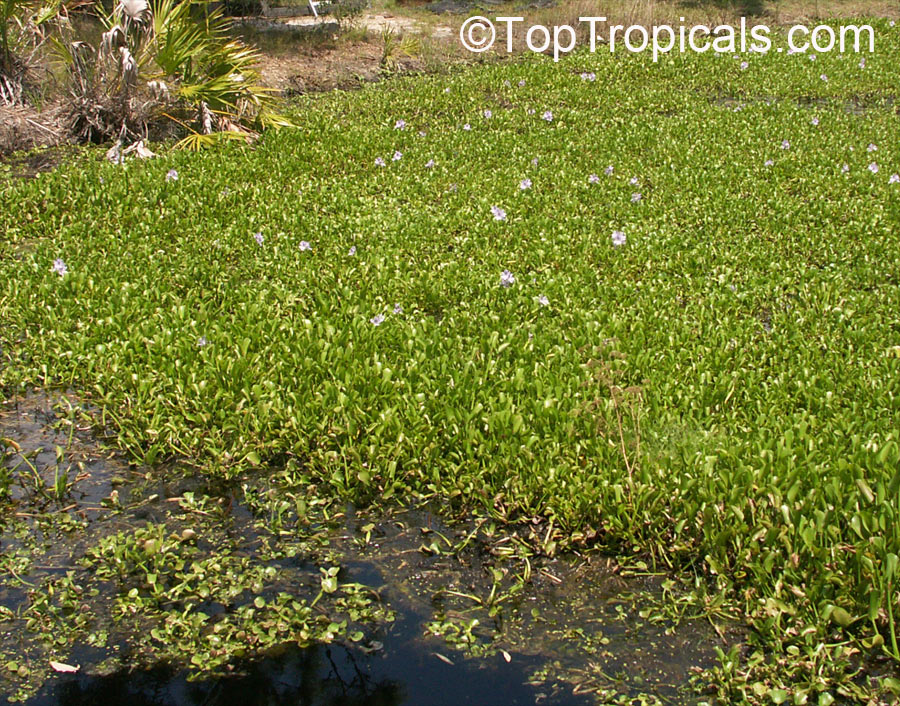
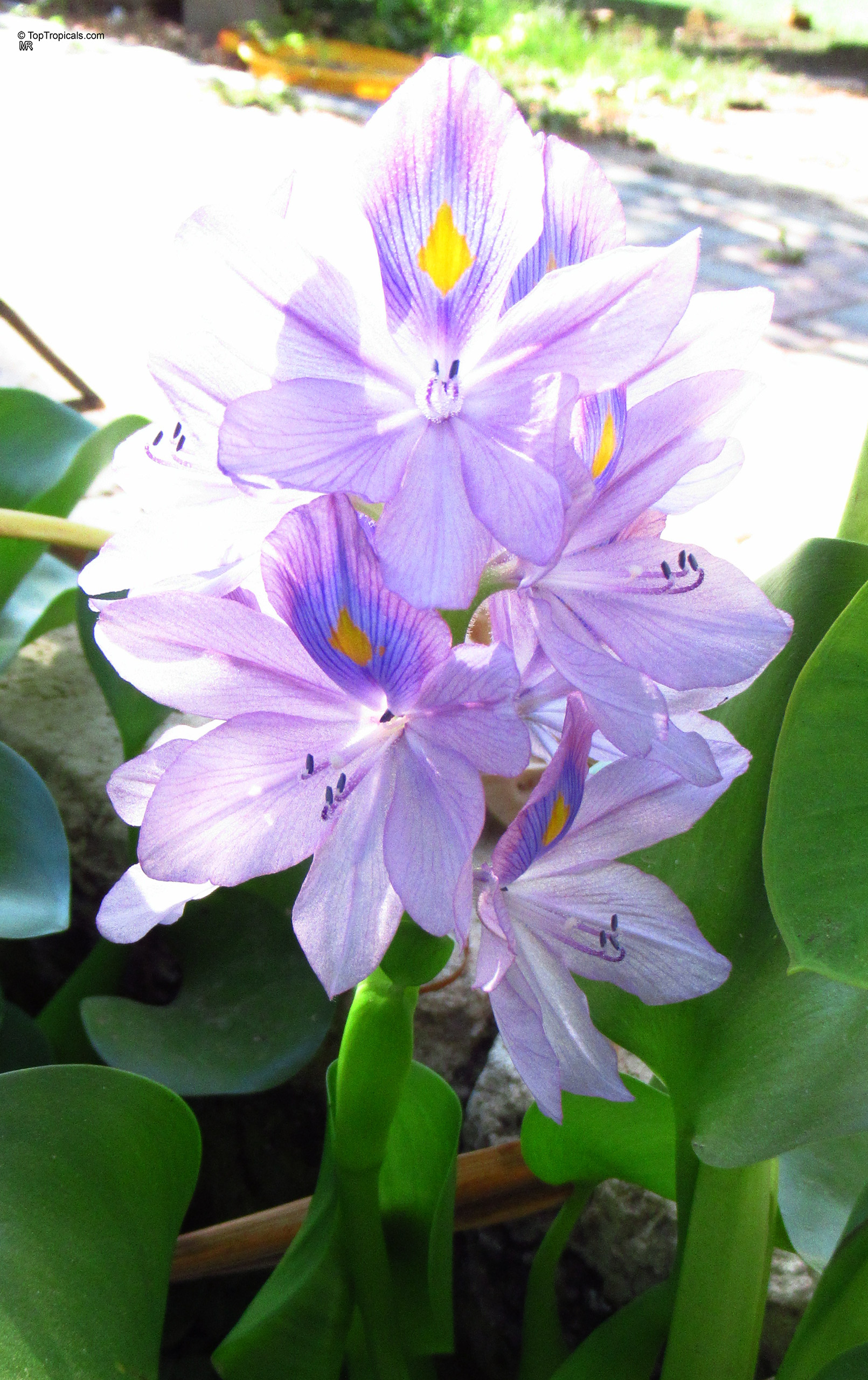
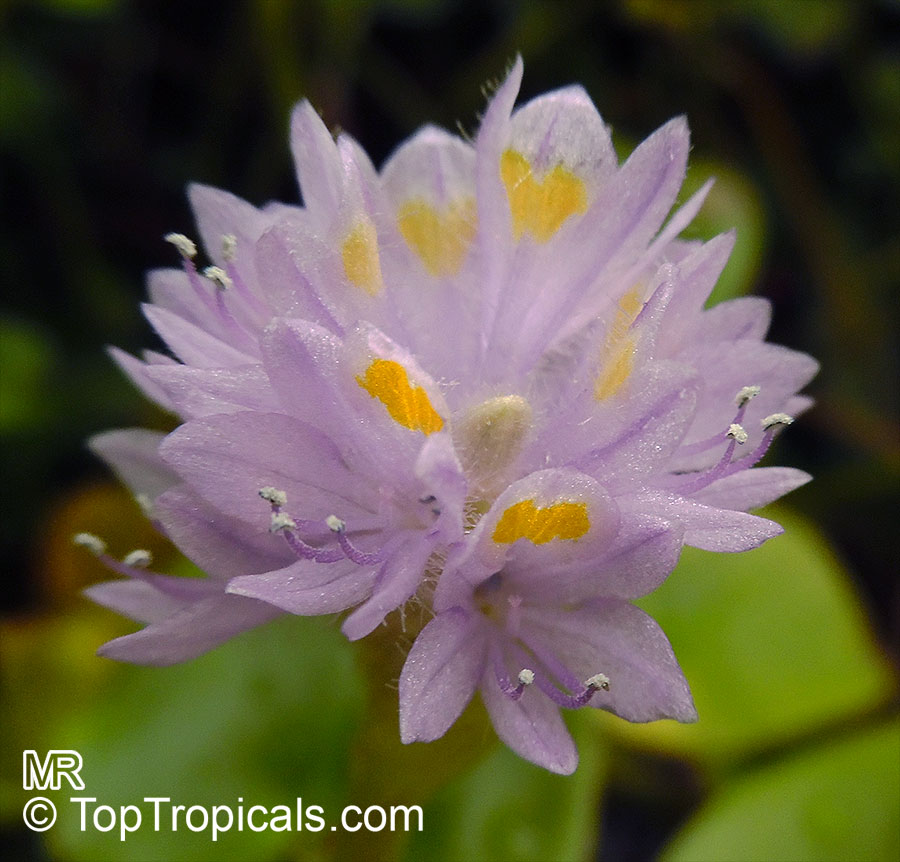
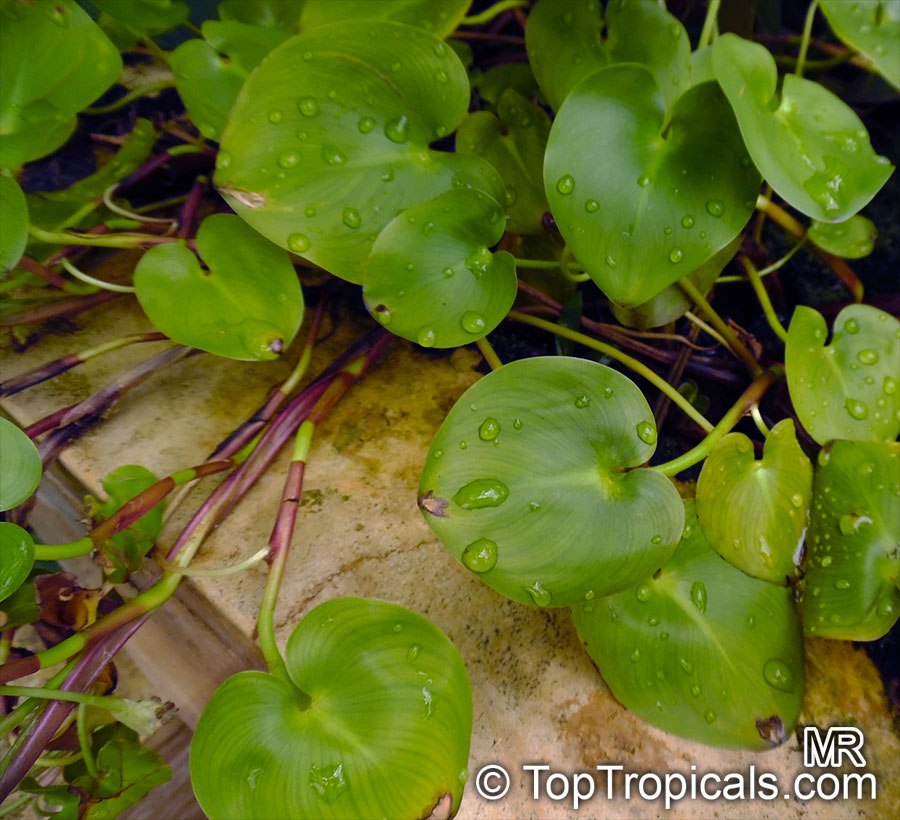
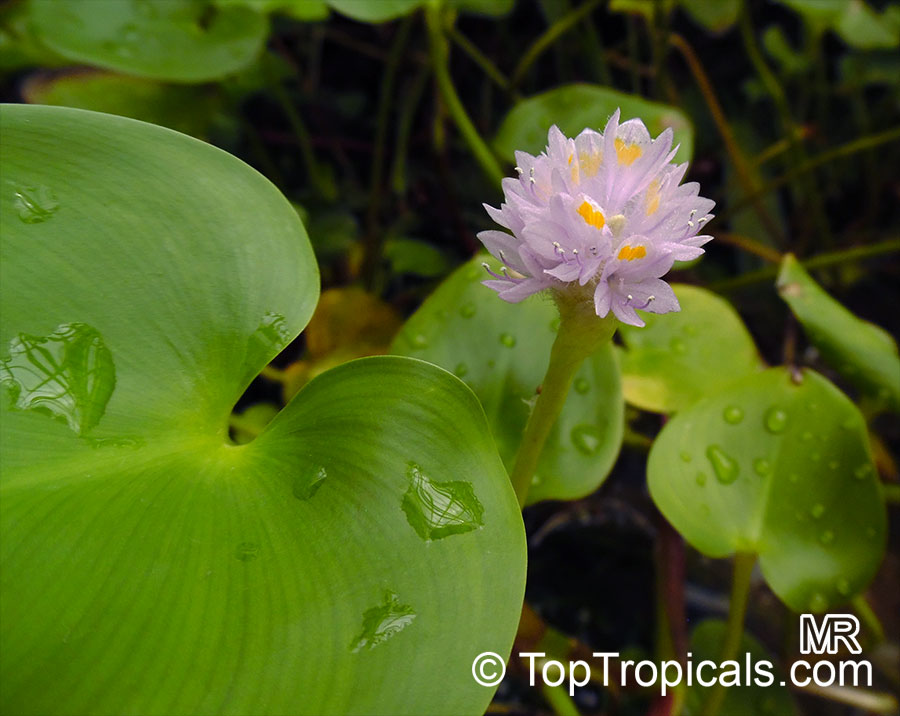
Pontederia crassipes, commonly known as Water Hyacinth, is a free-floating aquatic perennial in the Pontederiaceae family native to tropical and subtropical South America. Formerly known as Eichhornia crassipes, a name still extremely widespread in horticulture and older literature, it forms rosettes of glossy, rounded leaves with characteristically swollen, buoyant petioles. Long feathery roots hang freely beneath the plants, while rapid production of stolons allows colonies to expand across the water surface. Upright flower spikes carry showy lavender to violet flowers, each upper petal typically marked with a conspicuous yellow spot surrounded by deeper blue or purple.
Water Hyacinth grows best in full sun and warm, nutrient-rich, still or slow-moving water and can multiply extremely rapidly under favorable conditions. It is generally hardy in USDA Zones 9-11, while colder winters may kill exposed plants. Although attractive in ponds and water gardens, Pontederia crassipes is one of the world's most invasive aquatic plants, capable of forming dense floating mats that block waterways, reduce light and oxygen levels, and displace native vegetation. Its cultivation, transport, or sale is therefore restricted or prohibited in many regions, and local regulations should always be checked before growing or distributing this species.
Botanical name: Pontederia rotundifolia
Common name: Tropical Pickerelweed
Family: Pontederiaceae
Origin: Central and South America
USDA Zone: 9-10

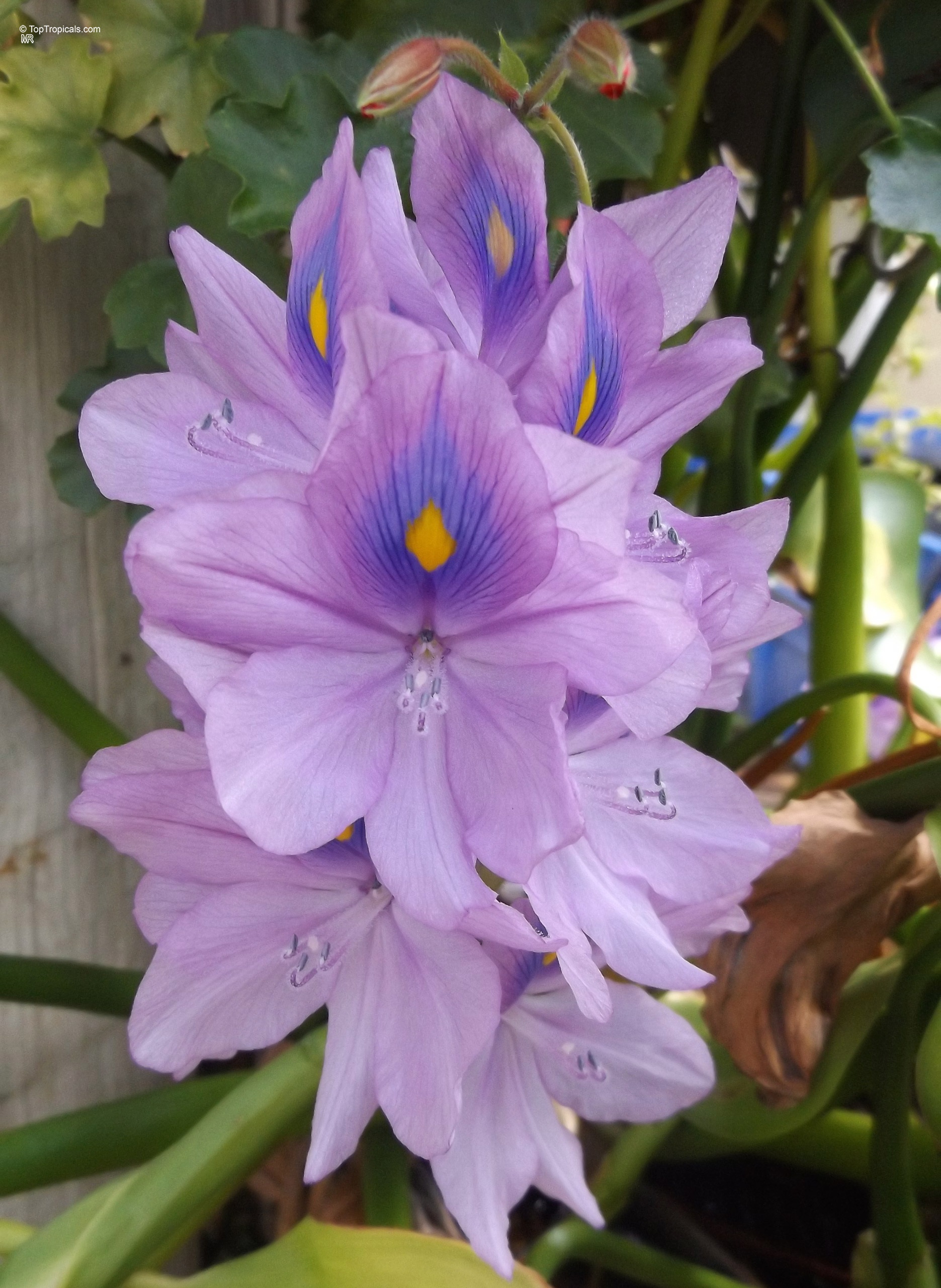
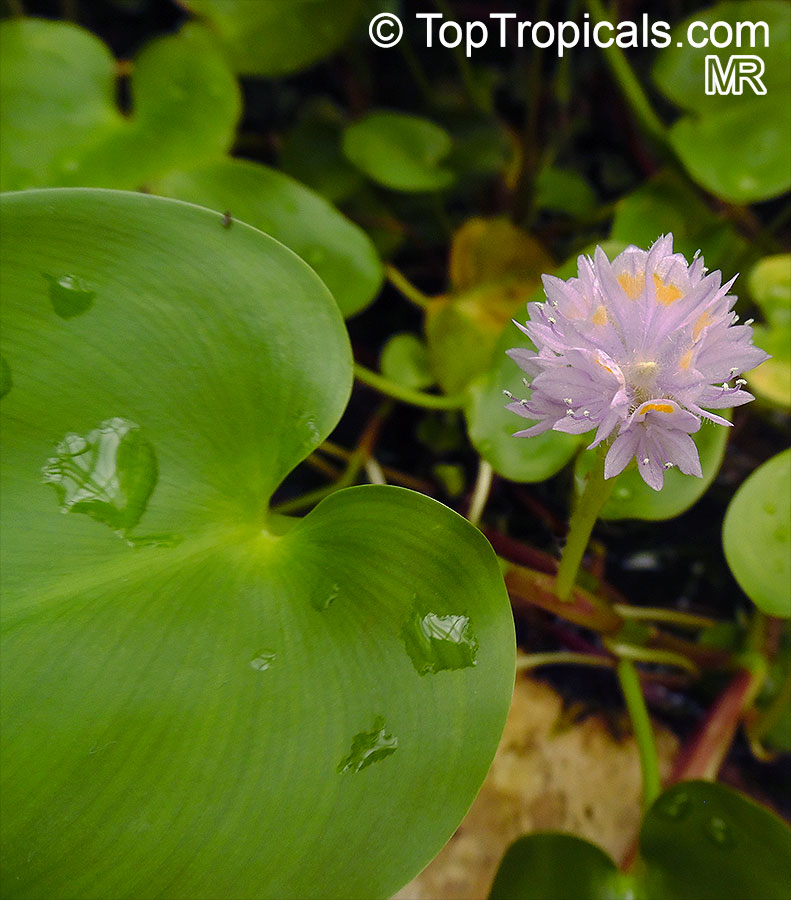
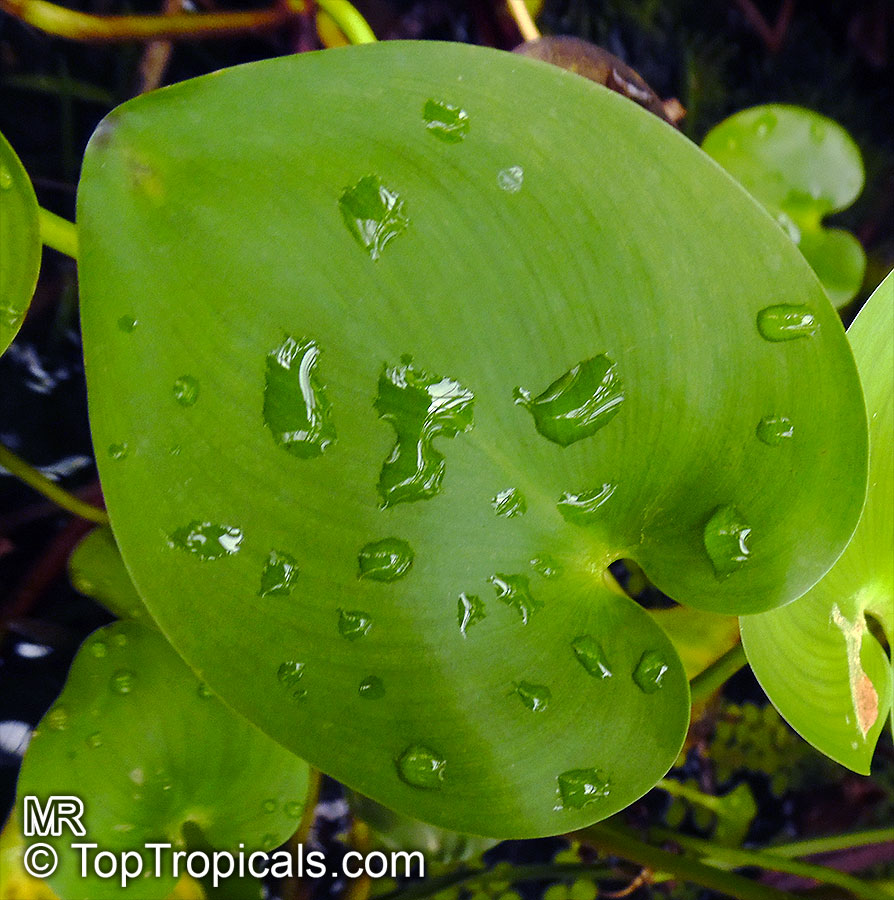
Pontederia rotundifolia, also known as Tropical Pickerelweed, is a small plant native to Central and South America. It prefers full sun to semi-shade and thrives in bog or aquatic environments. This plant blooms with beautiful pink, blue, and lavender, purple flowers.
Grown all year long and in USDA Zones between 9 and 11
This plant is considered invasive and prohibited to grow in Florida
Use link to repeat this search:
https://toptropicals.com/cgi-bin/garden_catalog/cat.cgi?search_op=and&keyword_op=and&language=e&family=Pontederiaceae
&number=10&no_change_lang=1&user=tt&sale=1&first=0