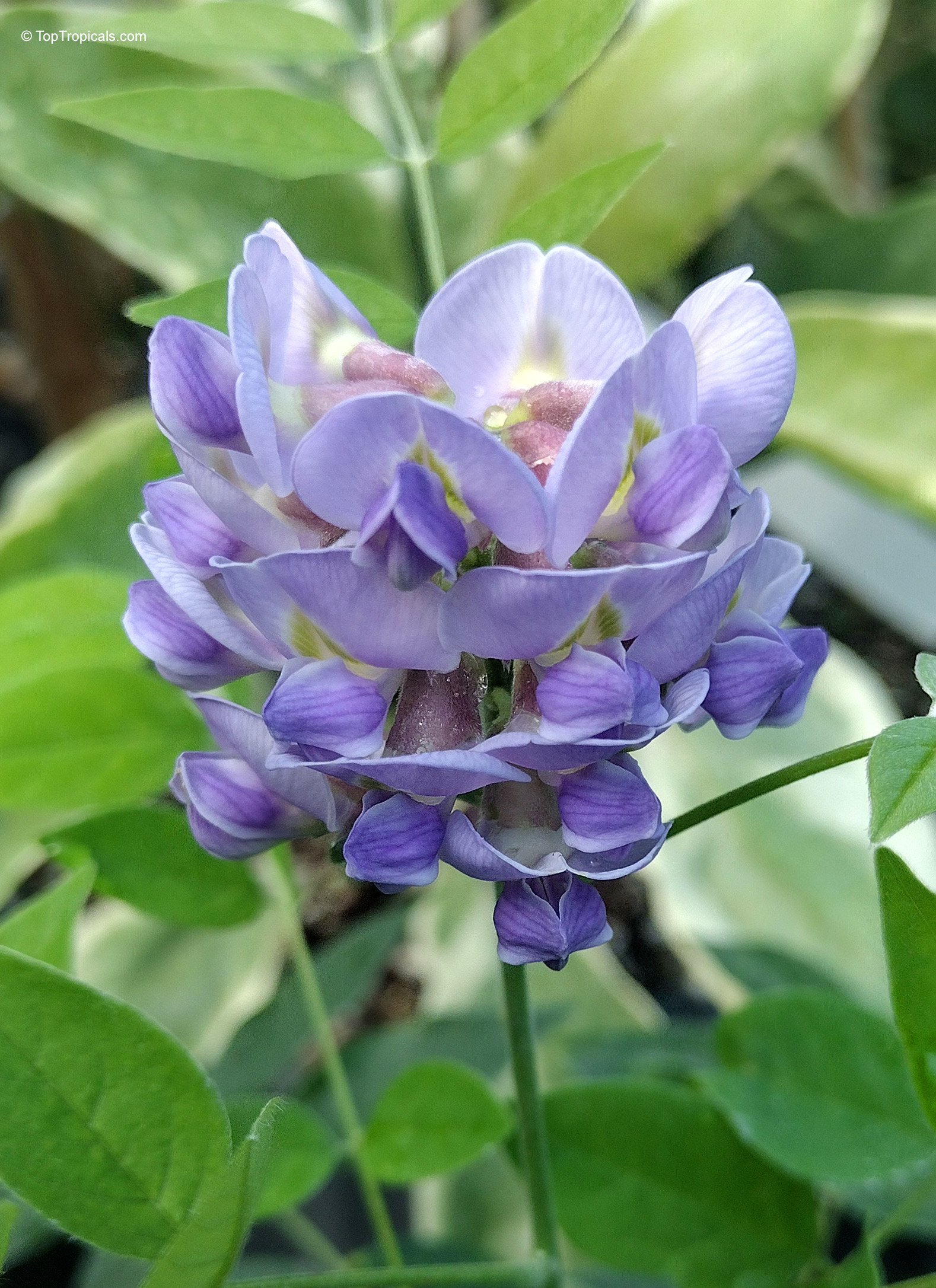
Wisteria frutescens (American Wisteria)

Botanical name: Wisteria frutescens
Common name: American Wisteria
Subfamily: Faboideae
Origin: Southeastern United States
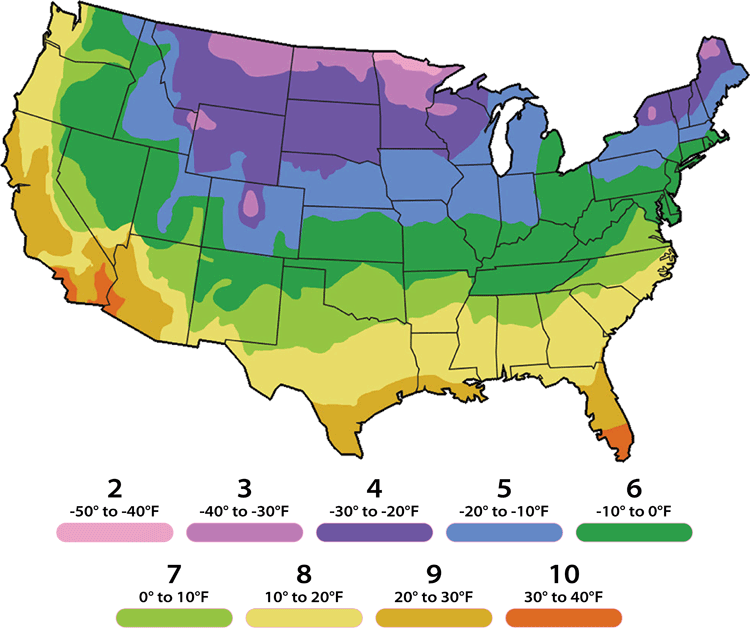
USDA Zone: 5-9
Cold tolerance: -20°F

 Plant form: Climbing or creeping vine; suitable for bonsai

 Sun exposure: Semi-shade; shade
 Cold tolerance: Tolerates light freezing to about 30°F for short periods (mature plants). Young plants must be protected.
 Watering: Regular
 Flower color: Blue, lavender, purple
 Suitable for: Outdoors in the suitable USDA zone; small gardens, containers, and indoor growing
 Foliage: Deciduous
 Irritating or toxic: Toxic plant/plant part
 Fragrance: Fragrant; perfume plant
 Wildlife: Attracts butterflies and hummingbirds
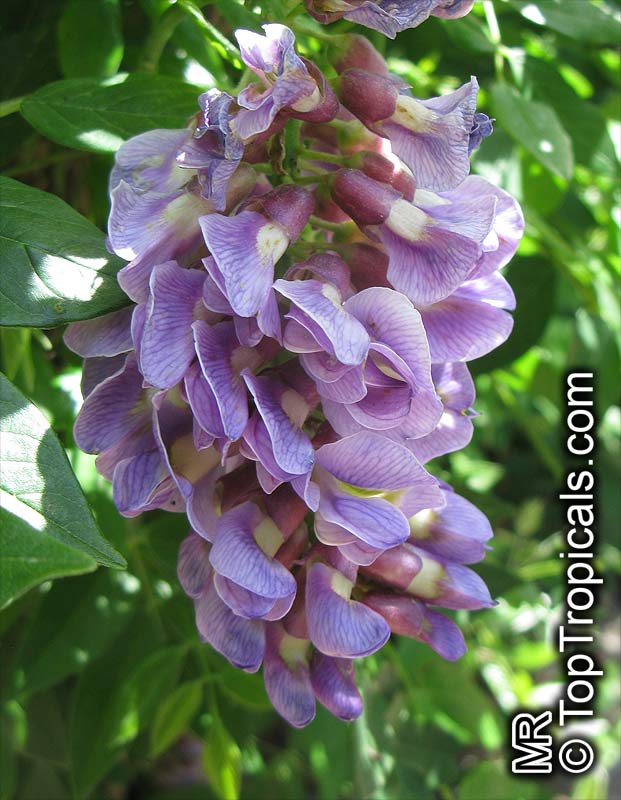
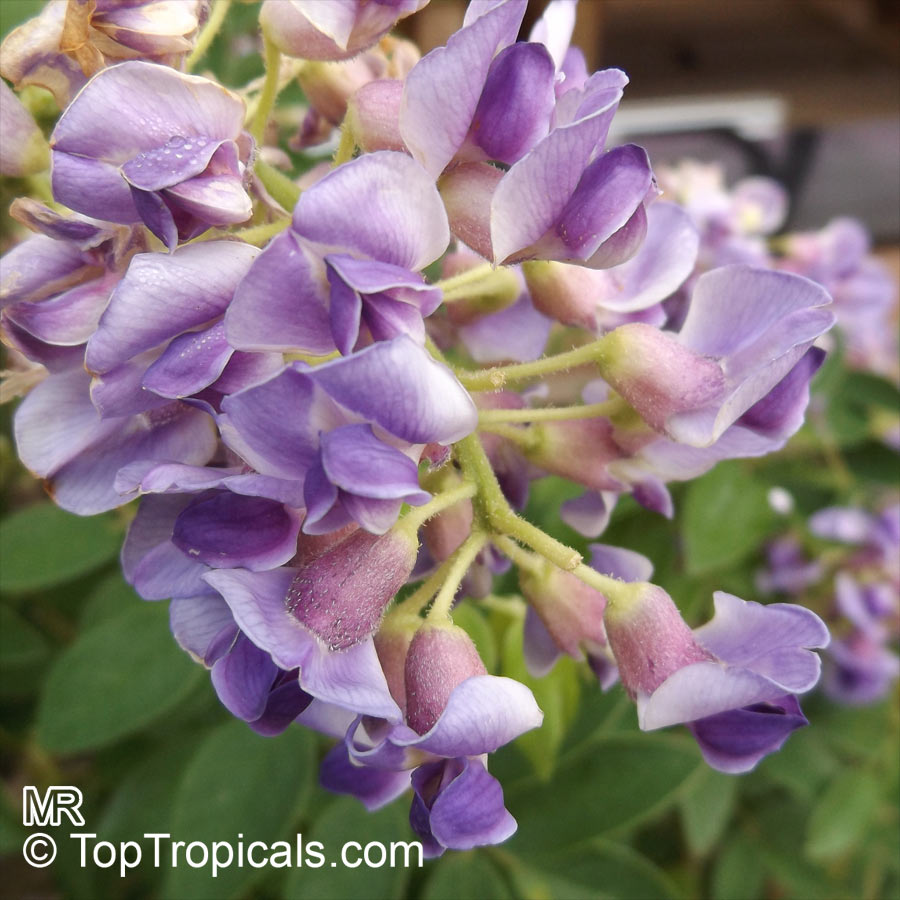
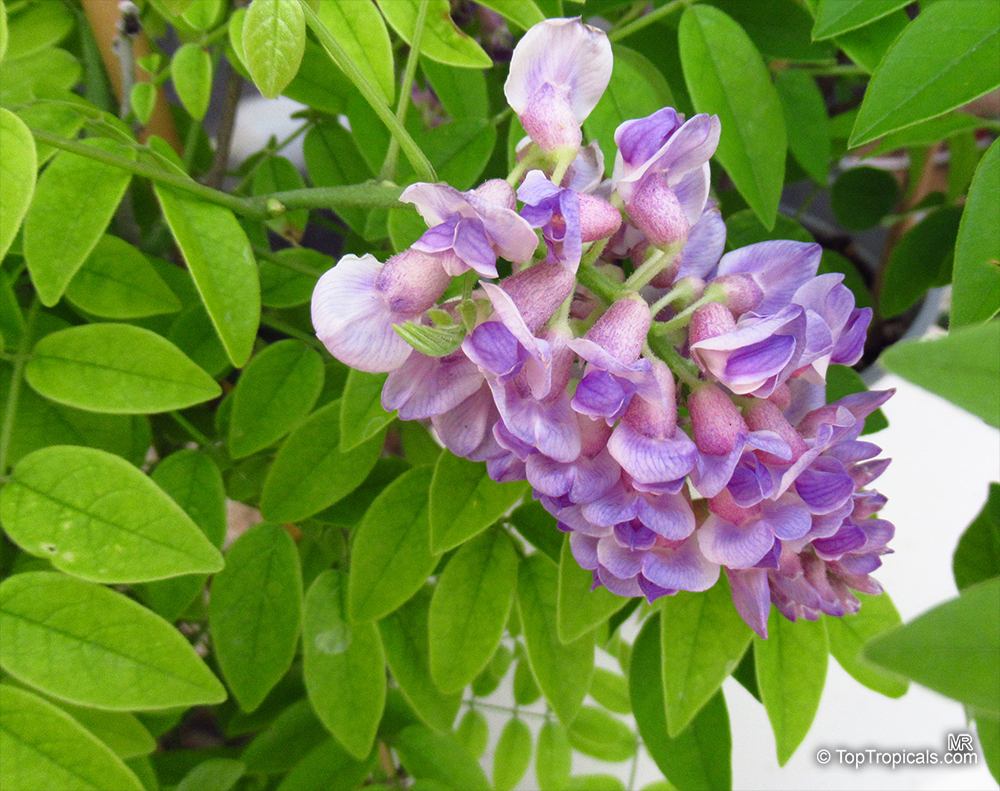
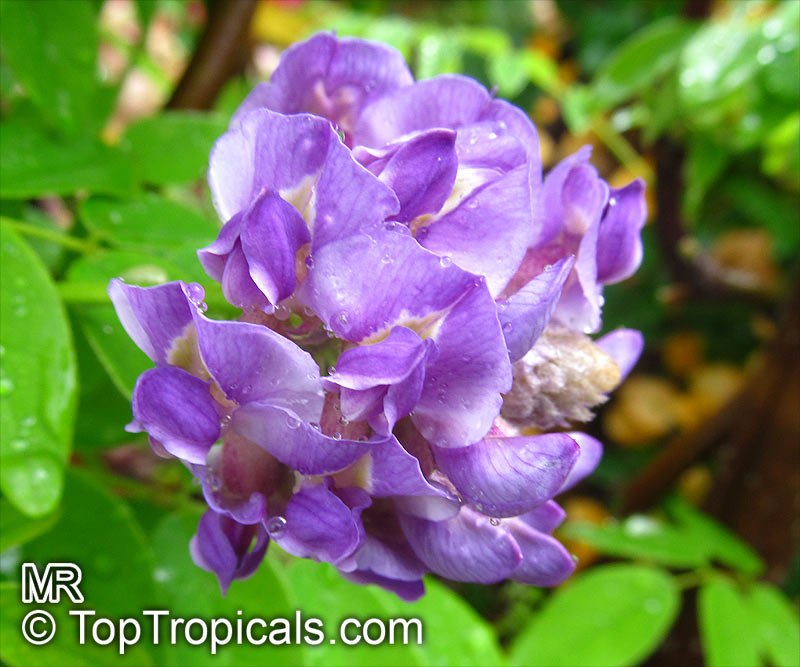
Wisteria frutescens, commonly known as American Wisteria, is a deciduous, woody climbing vine in the Fabaceae family, native to the southeastern United States, where it grows along streams, in moist woodlands, and in swamp margins. Its vigorous, twining stems can reach 15-30 feet, supported by trees, fences, or trellises. The pinnately compound leaves consist of nine to fifteen oval to lance-shaped leaflets. In late spring to early summer, usually after the foliage emerges, it produces dense, hanging clusters of fragrant, violet-blue to lavender-purple, pea-shaped flowers, occasionally followed by shorter flowering flushes. The flowers develop into smooth, elongated seed pods. Unlike the Asian wisterias, and W. floribunda, American Wisteria has shorter, more compact flower clusters and is generally less aggressive in growth.
Wisteria frutescens thrives in full sun to partial shade and moist, well-drained soil, although established plants tolerate occasional flooding and short dry periods. Full sun encourages the most abundant flowering. Regular pruning helps control its growth and promotes flowering on trained specimens. Suitable for USDA Zones 5-9, it is a useful ornamental climber for pergolas, arbors, and fences, especially where a less vigorous alternative to Asian wisterias is desired. All parts of the plant, particularly the seeds and pods, are toxic if ingested.
Wisteria 'Amethyst Falls' comes from a premium plant breeding program and as a result exhibits a less aggressive and slightly smaller Wisteria than others of the genus. Many bonsai artists employ American wisteria for its manageably-sized flowers, and it is charming as a woodland flowering vine.
Similar plants: Wisteria frutescens (American Wisteria)