Sorghum bicolor (Great Millet)
Botanical name: Sorghum bicolor
Common names: Great Millet, Broomcorn, Milo
Family: Poaceae
Origin: Africa
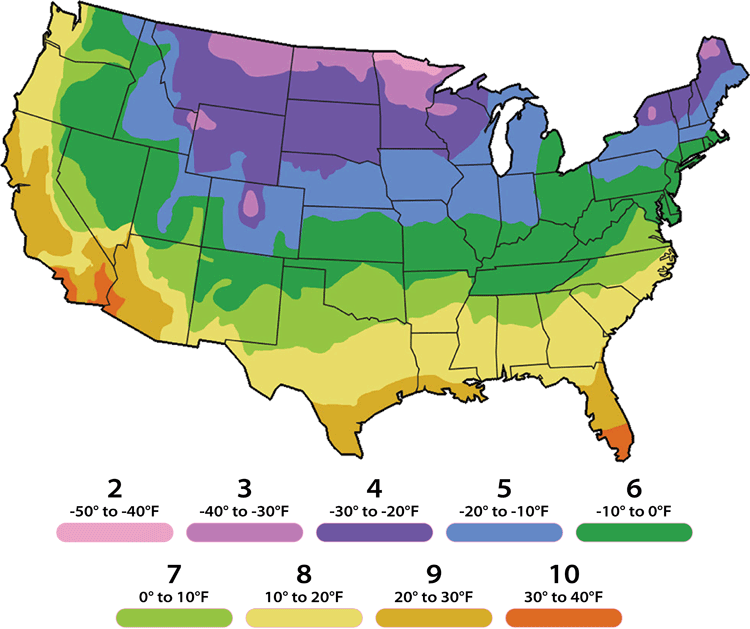
USDA Zone: 8-11
Cold tolerance: 35°F
 Plant form: Small
 Mature height: 2-5 ft
 Sun exposure: Full sun or bright light indoor
 Cold tolerance: Tolerates light freezing to about 30°F for short periods (mature plants). Young plants must be protected.
 Watering: Moderate
 Suitable for: Outdoors in the suitable USDA zone; small gardens, containers, and indoor growing
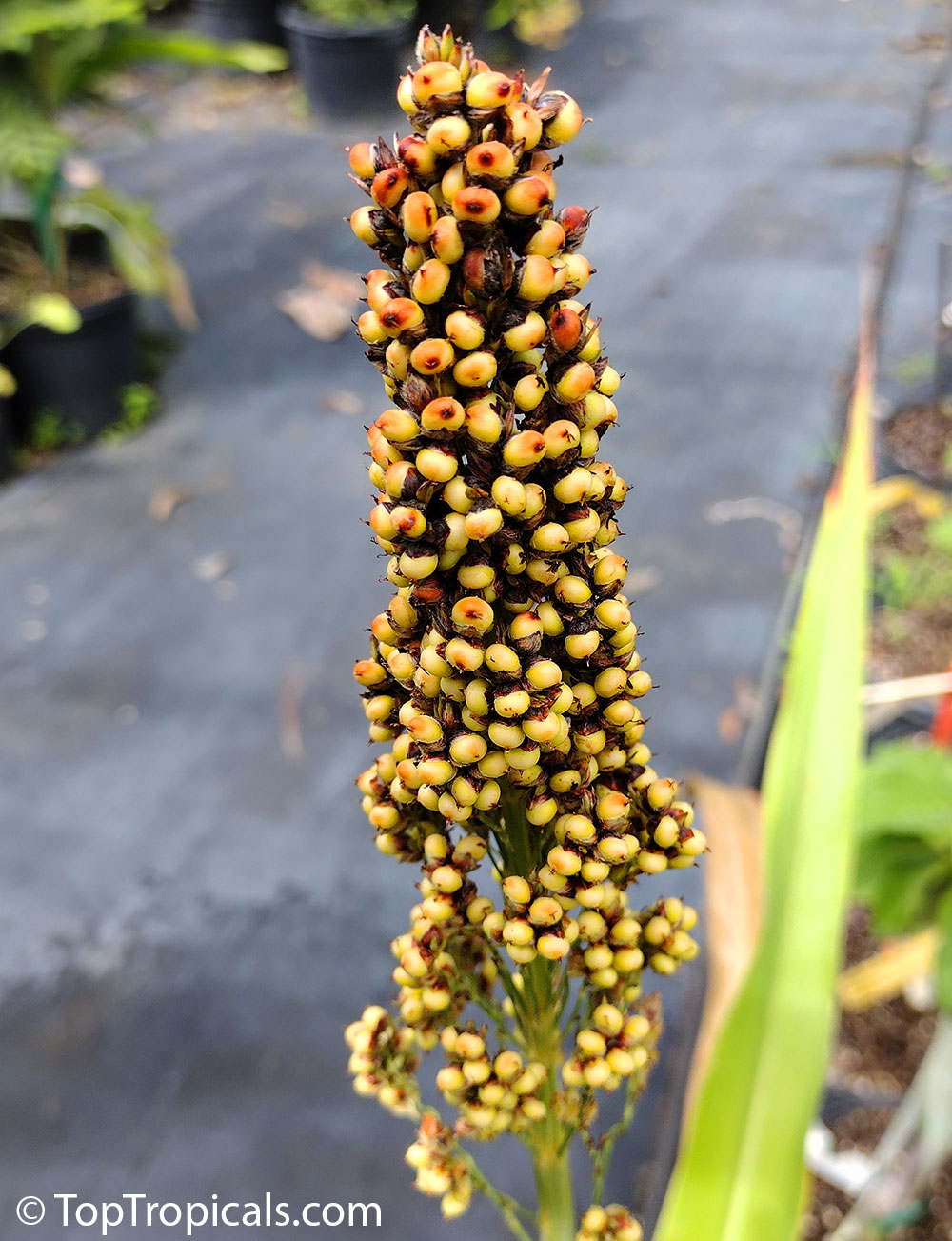
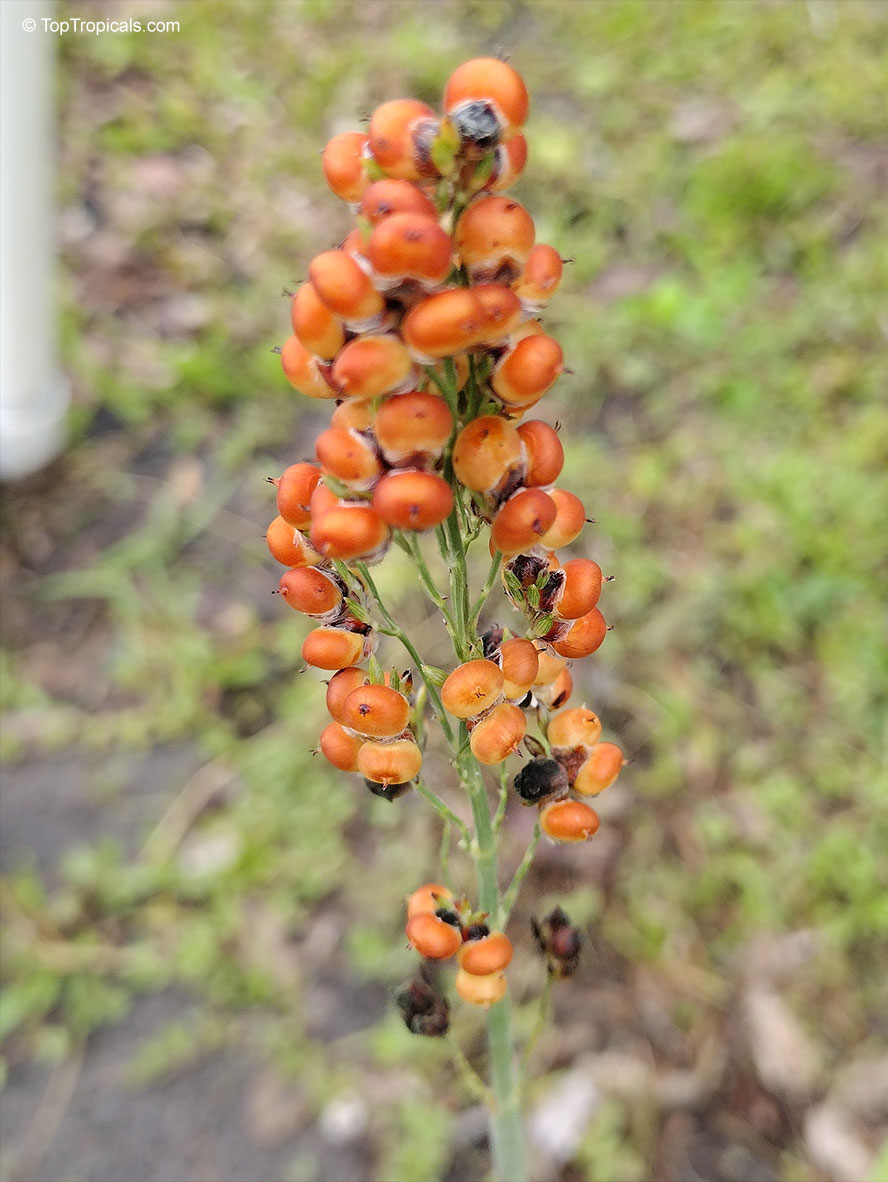
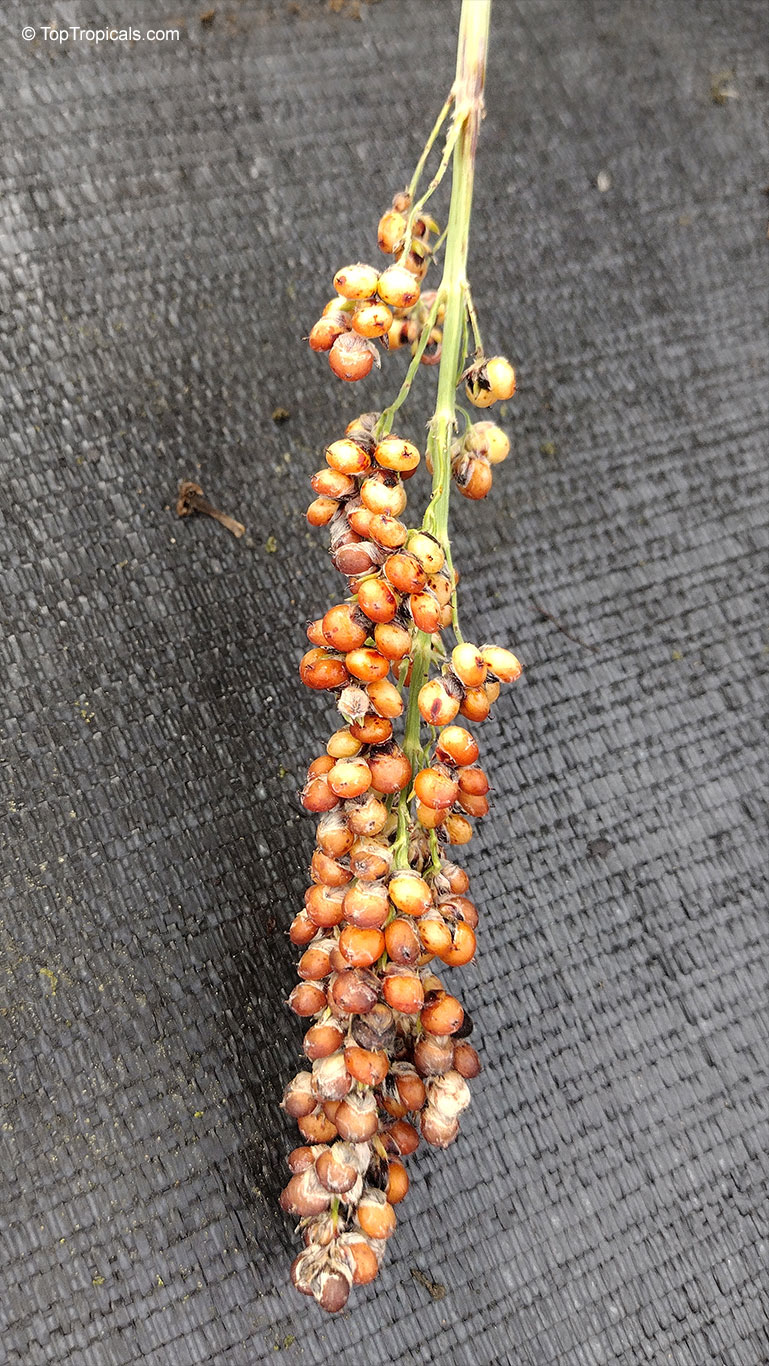
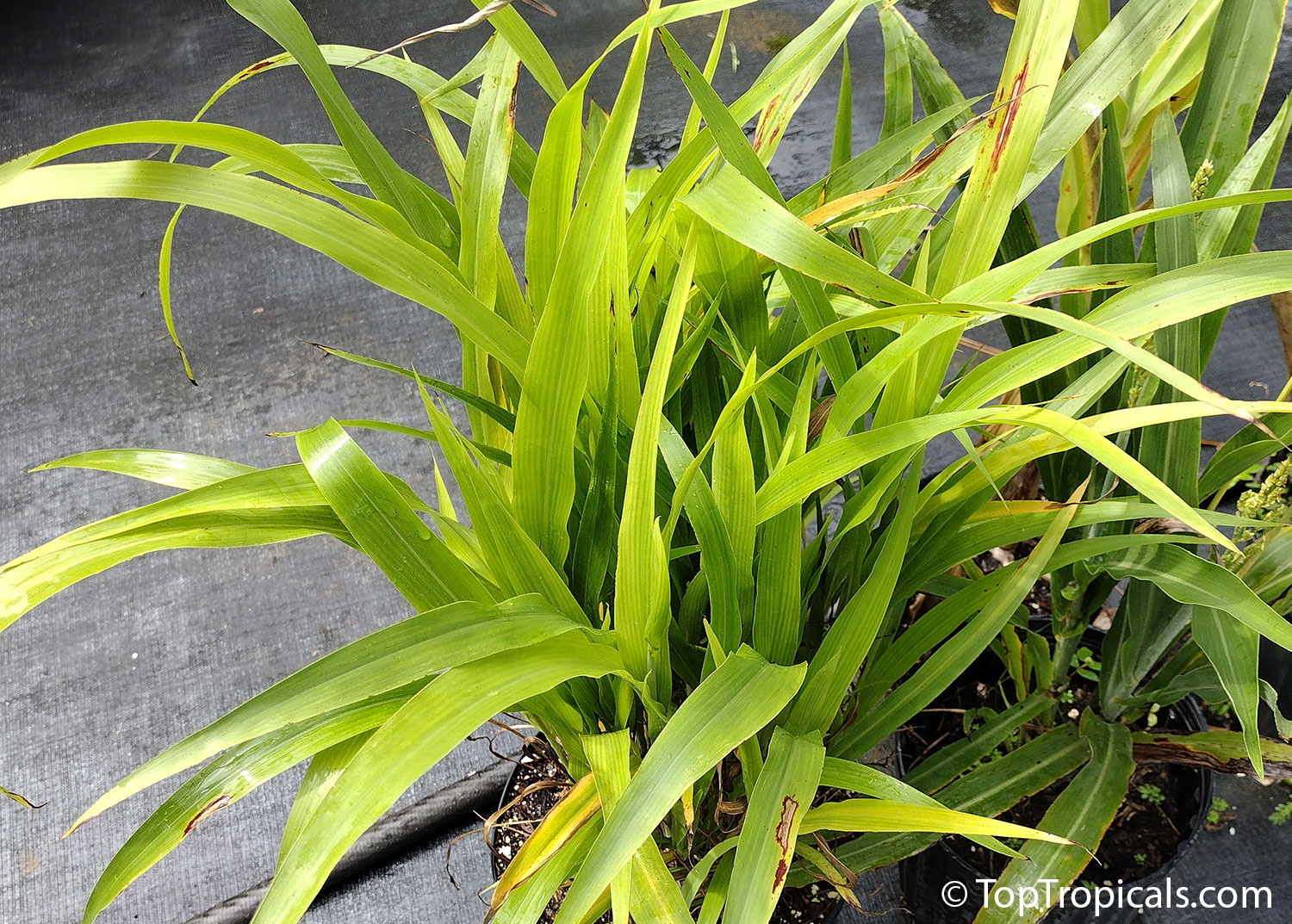
Sorghum bicolor (Sorghum) is a tall annual grass native to Africa, widely cultivated in warm climates for both ornamental and practical purposes. Reaching 3 15 ft in height, it produces upright stems topped with dense seed heads that can be loose and open or tight and compact depending on the variety. The leaves are long, arching, and grass‑like, lending a bold vertical accent in the garden. Seeds range in color from white and yellow to red and dark brown, and are valued for grain, syrup, and bird feed. Some ornamental forms are grown for their striking seed panicles and deep‑colored foliage.
This heat‑loving plant thrives in full sun and well‑drained soil, tolerating drought once established. Water regularly during early growth, then reduce as plants mature. Sorghum is best suited for USDA Zones 9 11 as a warm‑season annual and can be sown directly in the ground after frost danger passes. In cooler climates, it is grown as a summer ornamental or grain crop. Provide shelter from strong winds to prevent lodging of the tall stems.