Passiflora caerulea (Common Passion Flower)
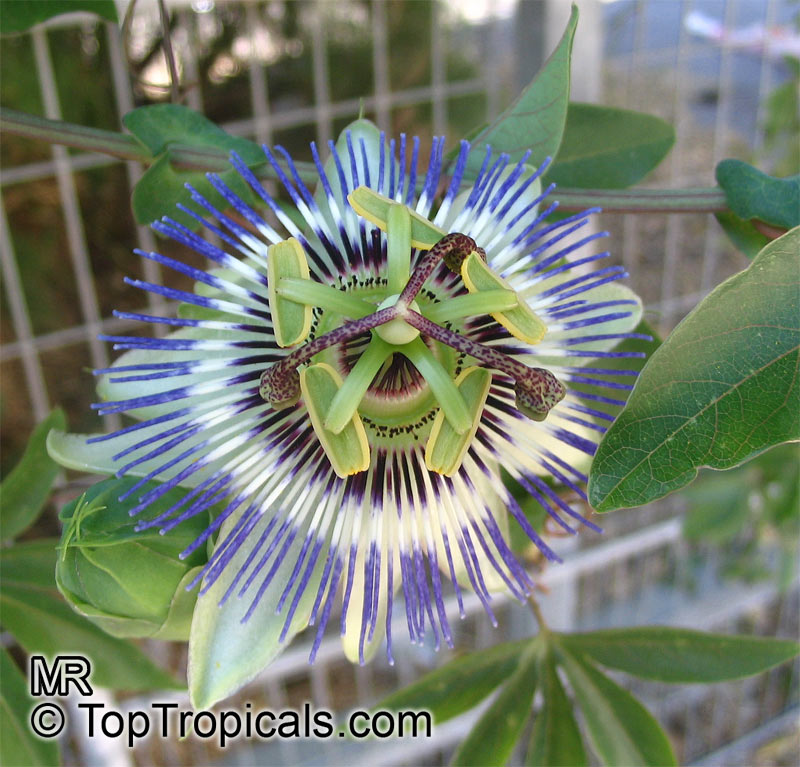
Passiflora caerulea (Common Passion Flower) with radiating purple filaments and central green reproductive parts above foliage.
Botanical name: Passiflora caerulea
Common name: Common Passion Flower
Family: Passifloraceae
Origin: South America
USDA Plant Hardiness Zone Map
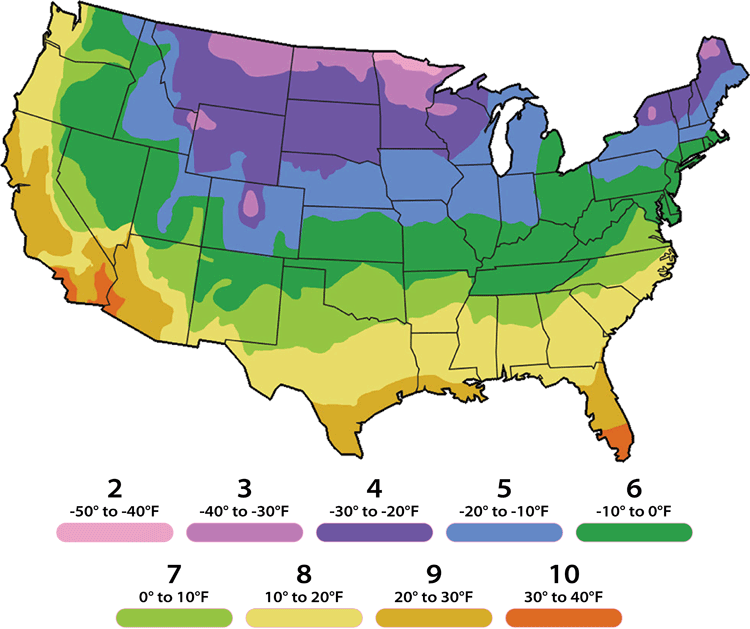
USDA Zone: 9-10
Plant type: Fruit or edible
Fruit type: Fruit or edible
 Plant form: Climbing or creeping vine
 Sun exposure: Full sun or bright light indoor
 Cold tolerance: Frost sensitive. Protect from freezing.
 Watering: Regular; moderate
 Flower color: White and off-white; blue, lavender, purple
 Suitable for: Outdoors in the suitable USDA zone; small gardens, containers, and indoor growing
 Wildlife: Attracts butterflies and hummingbirds
 Ethnomedical: Ethnomedical plant, traditionally used in folk or indigenous medicine
A woody vine capable of growing to 15-20 m high where supporting trees are available. The leaves are alternate, palmately five-lobed (sometimes three or seven lobes).
The white and purple-blue flowers which appear in summer may be as large as 4 in (10.2 cm) across. The fruit is an oval orange-yellow berry.
Numerous crosses have been made between P. caerulea and Passiflora racemosa, Passiflora alata, and Passiflora Amethyst.
Similar plants: Passiflora caerulea (Common Passion Flower)
- Passiflora alata (Winged-Stem Passionflower)
- Passiflora citrina (Yellow Passion Flower)
- Passiflora coccinea (Red Passion Flower)
- Passiflora colinvauxii (Colinvaux's Passion Flower)
- Passiflora coriacea (Wild Sweet Calabash)
- Passiflora edulis (Passion Fruit)
- Passiflora foetida (Wild Maracuja)
- Passiflora incarnata x cincinnata ''Incense'' (Passiflora 'Incense')
- Passiflora lanuginosa (Woolly Passion Flower)
- Passiflora laurifolia (Water lemon)
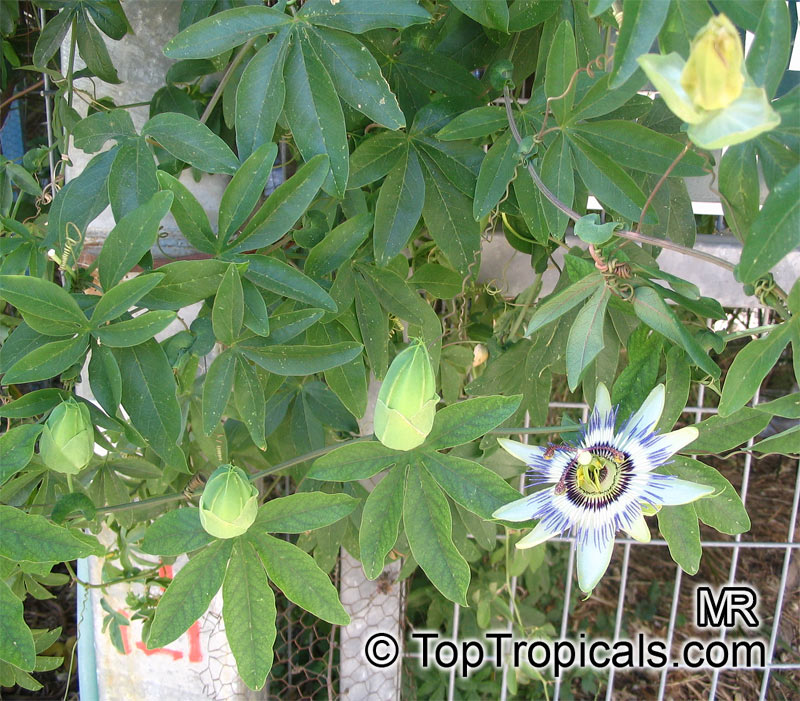
Passiflora caerulea (Common Passion Flower) showing a single intricate flower alongside several developing green buds
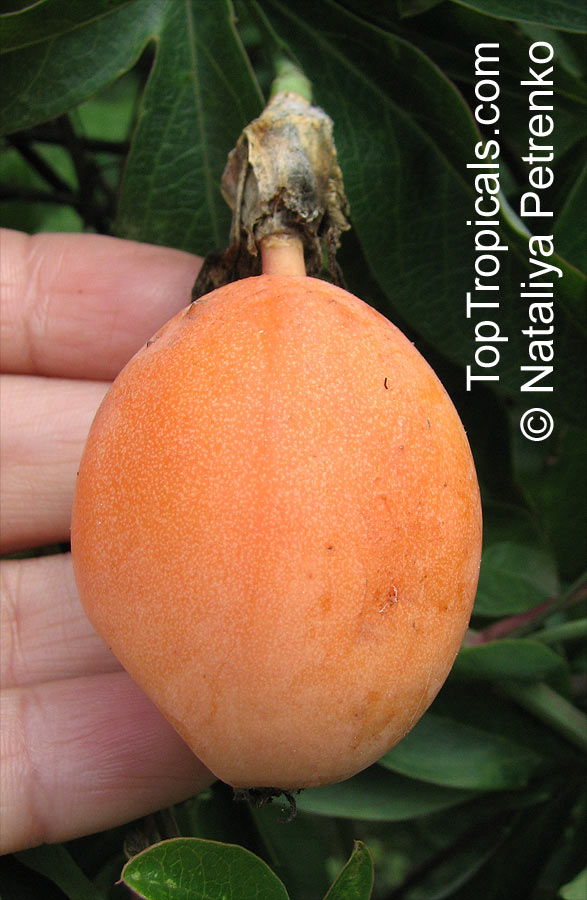
Passiflora caerulea (Common Passion Flower) showing a rounded orange fruit held in a human hand
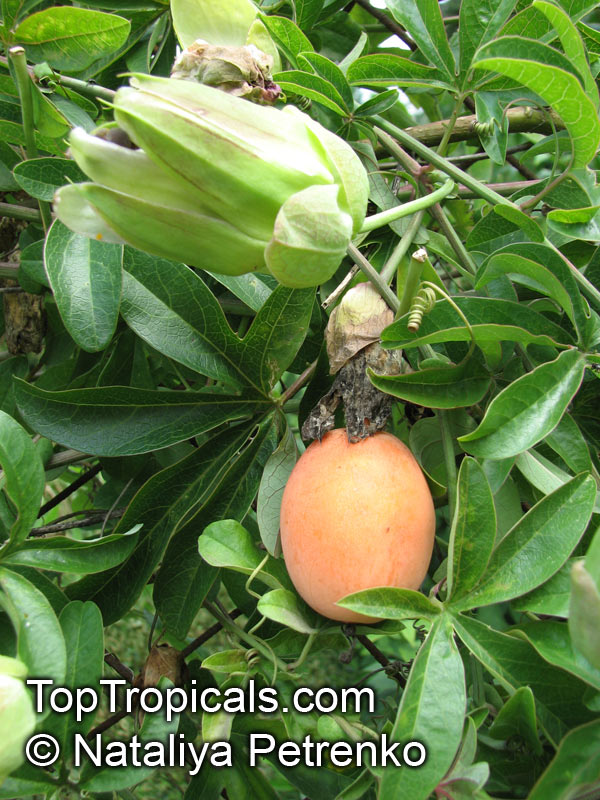
Passiflora caerulea (Common Passion Flower) showing a single orange fruit hanging among deep green foliage.
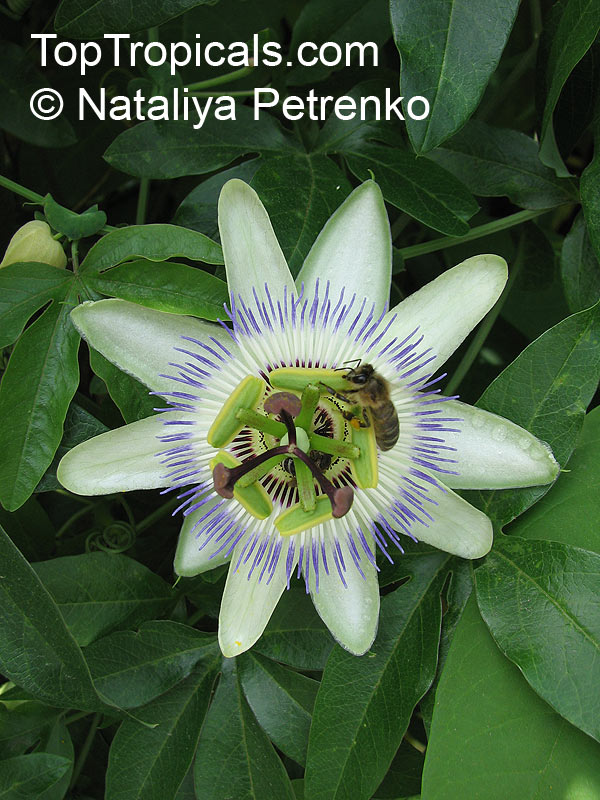
Passiflora caerulea (Common Passion Flower) white purple flower with a honeybee landing on the central area
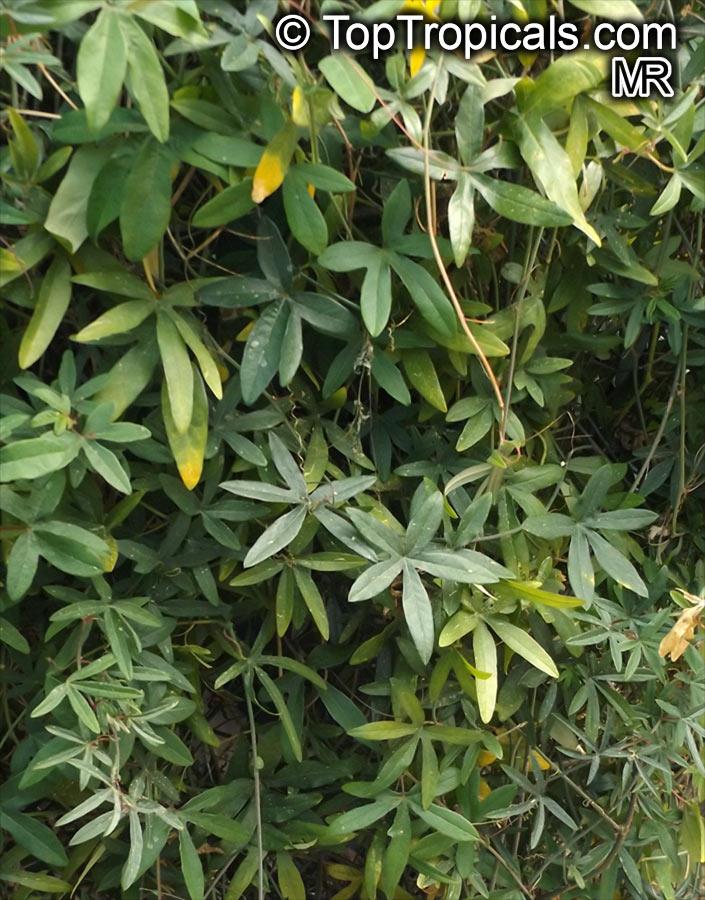
Passiflora caerulea (Common Passion Flower) showing many thick green leaves covering the area
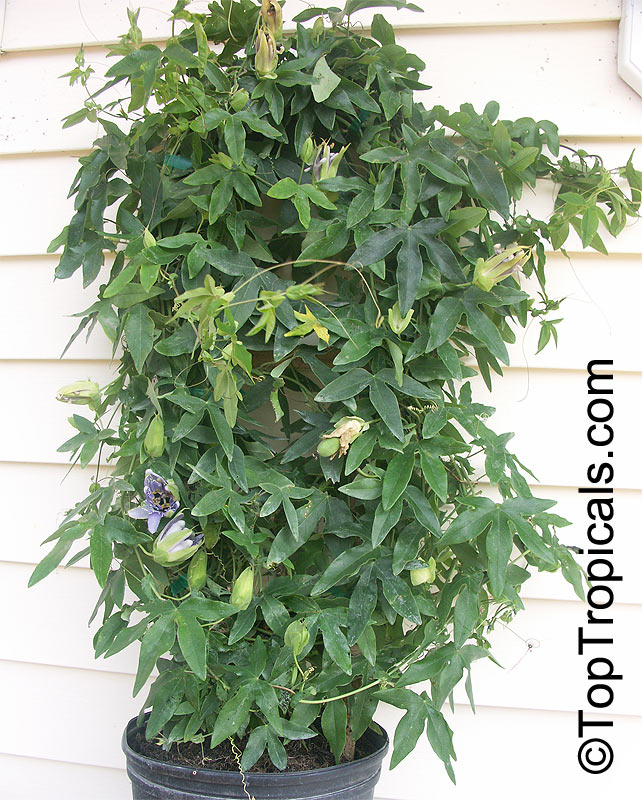
Passiflora caerulea (Common Passion Flower) vine with dense green leaves and open blue flower
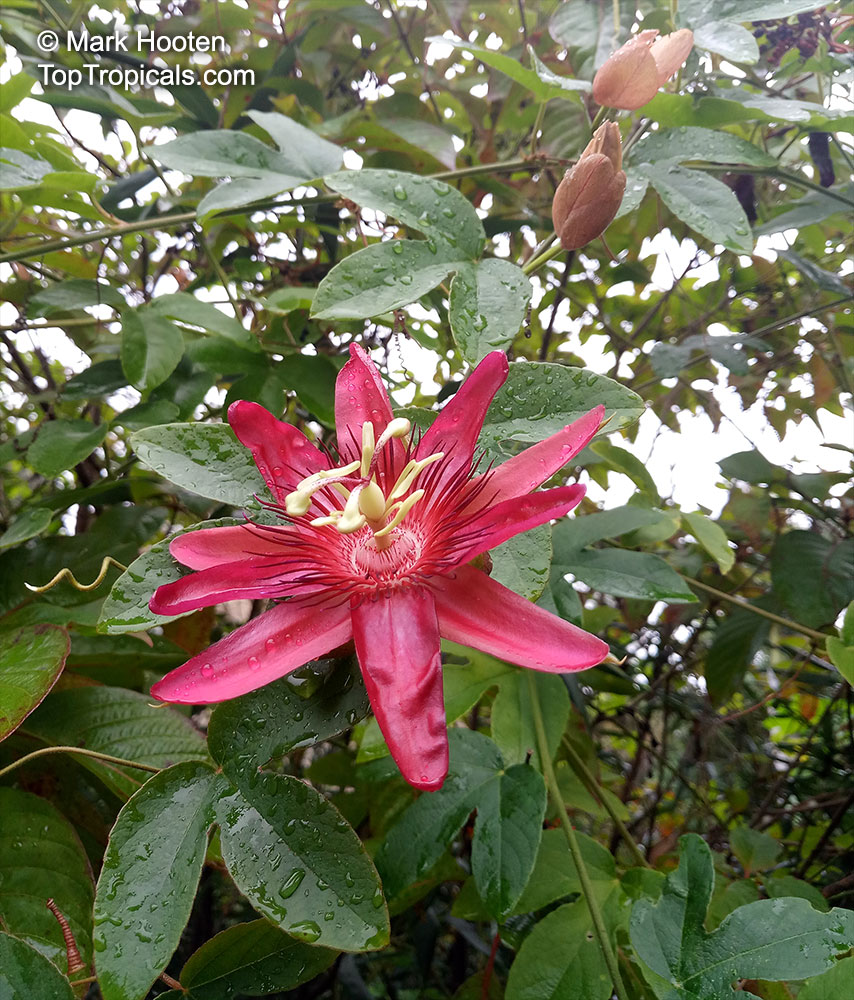
Passiflora caerulea (Common Passion Flower) pink flower surrounded by green foliage with raindrops on petals.
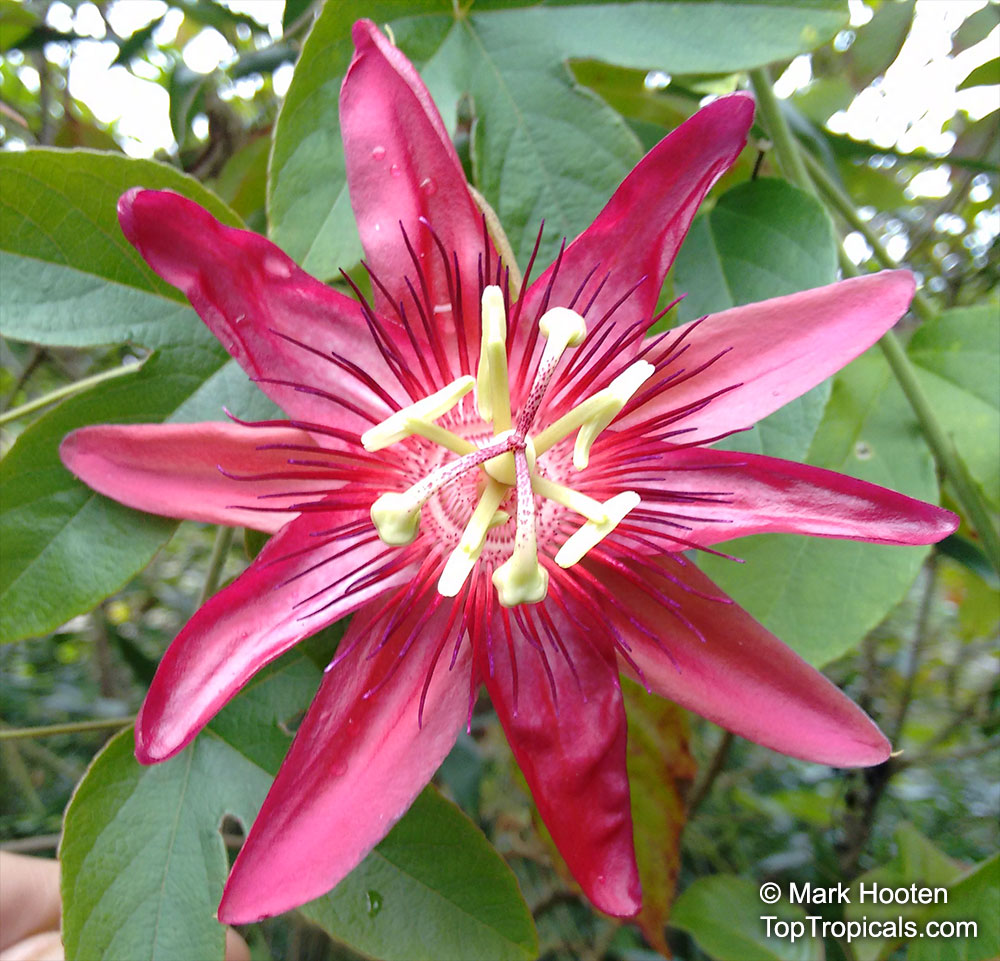
Passiflora caerulea (Common Passion Flower) pink flower with long petals and intricate central stamen detail
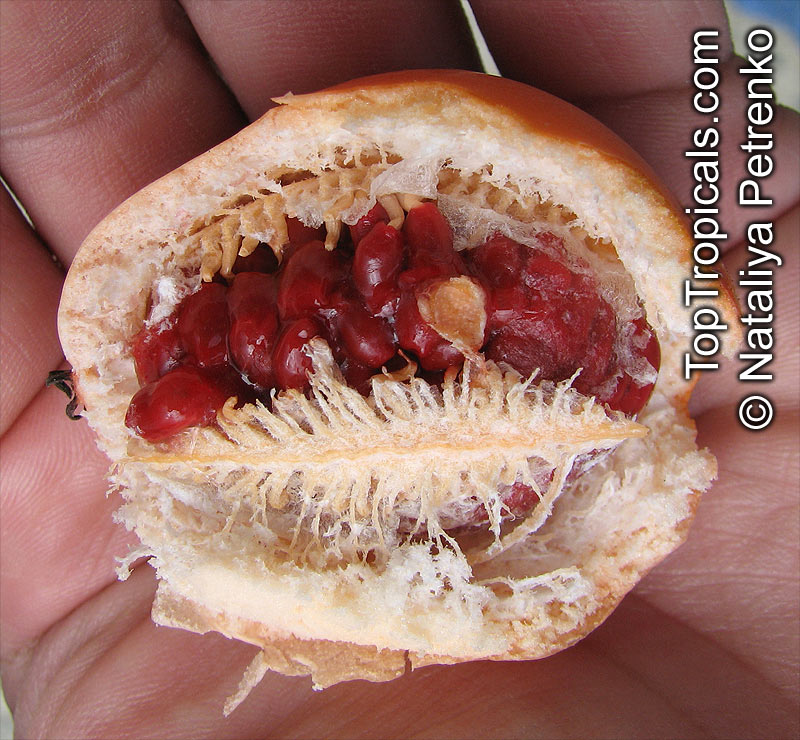
Passiflora caerulea (Common Passion Flower) fruit split open revealing deep red pulp and seeds
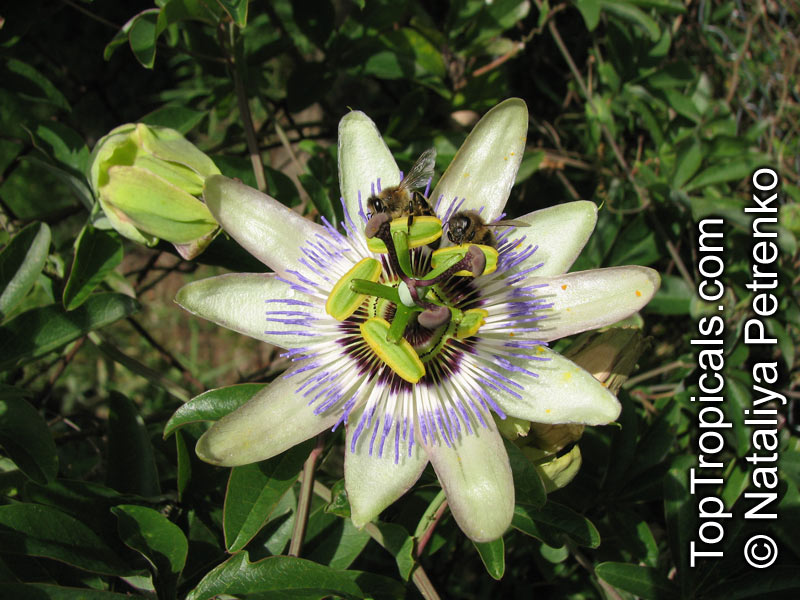
Passiflora caerulea (Common Passion Flower) white purple flower with bees gathering nectar on intricate central filaments
Link to this plant:
https://toptropicals.com/catalog/uid/passiflora_caerulea.htm