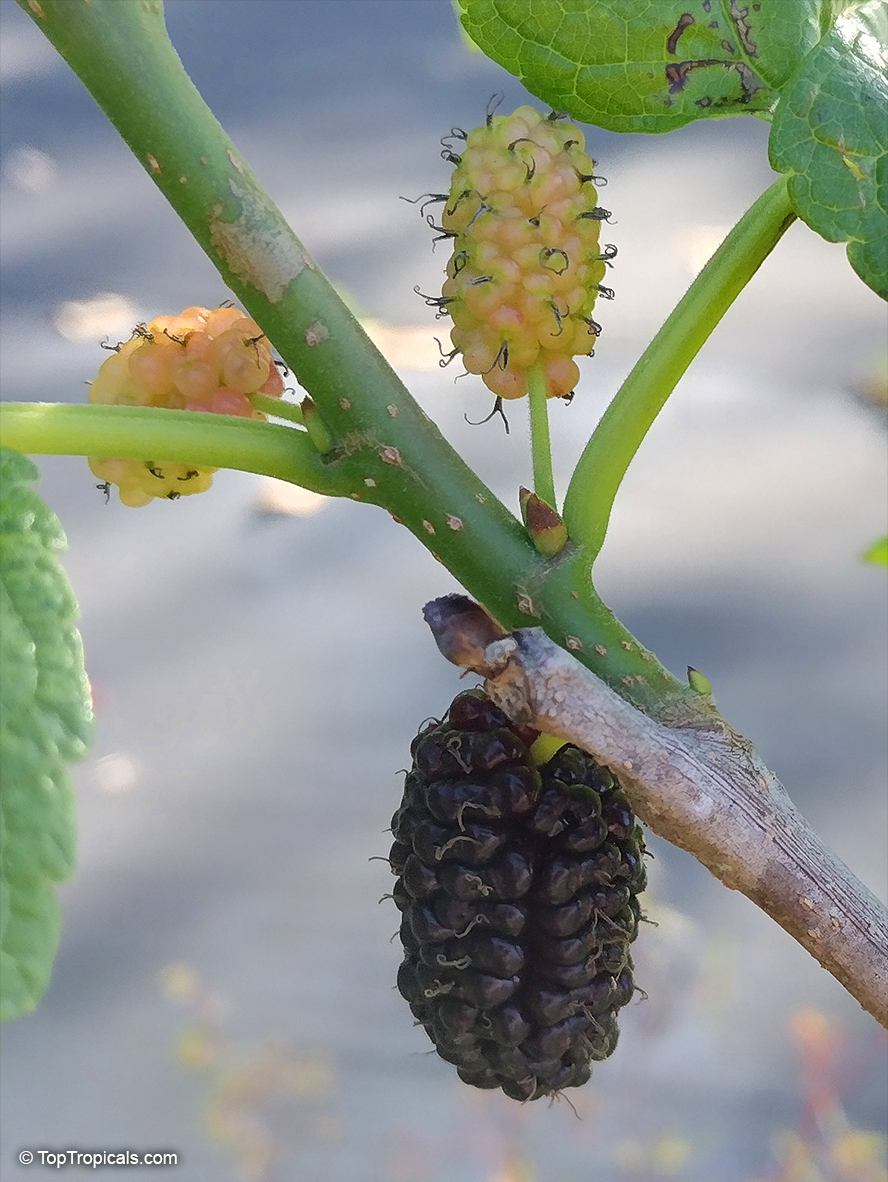
Morus sp. 'Tice' (Tice Mulberry)
Botanical name: Morus sp.
Common name: Tice Mulberry
Cultivar: Tice
Family: Moraceae
Origin: Asia

USDA Zone: 8-11

 Plant form: Large or medium tree
 Mature height: 20 ft or more
 Sun exposure: Full sun or bright light indoor
 Cold tolerance: Frost sensitive. Protect from freezing.
 Watering: Regular
 Suitable for: Outdoors in the suitable USDA zone; large gardens
Morus, commonly known as Mulberry, is a genus of deciduous or occasionally evergreen trees and shrubs in the Moraceae family, native to temperate and subtropical regions of Asia, Europe, Africa, and the Americas. The leaves are alternate, usually serrated, and remarkably variable in shape, even on the same tree, ranging from unlobed to deeply lobed. Small, inconspicuous flowers are borne in catkin-like clusters, with male and female flowers occurring on the same or separate plants, depending on the species. The familiar mulberry fruit is actually a multiple fruit formed from an entire female inflorescence, becoming fleshy as it matures. Important species include Morus alba (White Mulberry), traditionally cultivated for silkworm feeding, M. nigra (Black Mulberry), prized for its richly flavored fruits, and M. rubra (Red Mulberry), native to eastern North America.
Morus species generally grow best in full sun and fertile, well-drained soil, although many tolerate poorer soils and seasonal drought once established. Many commonly cultivated mulberries are fast-growing trees that respond well to pruning, and selected dwarf or weeping forms are suitable for smaller gardens or large containers. Fruit colors range from white and pink to red and nearly black, depending on species and cultivar; the names White, Red, and Black Mulberry do not reliably indicate fruit color. Cold hardiness varies considerably: commonly cultivated temperate species generally grow in USDA Zones 4-9, while some subtropical species require warmer conditions. Ripe fruits are edible fresh or processed into jams and desserts, but fallen berries can stain paving and attract wildlife.
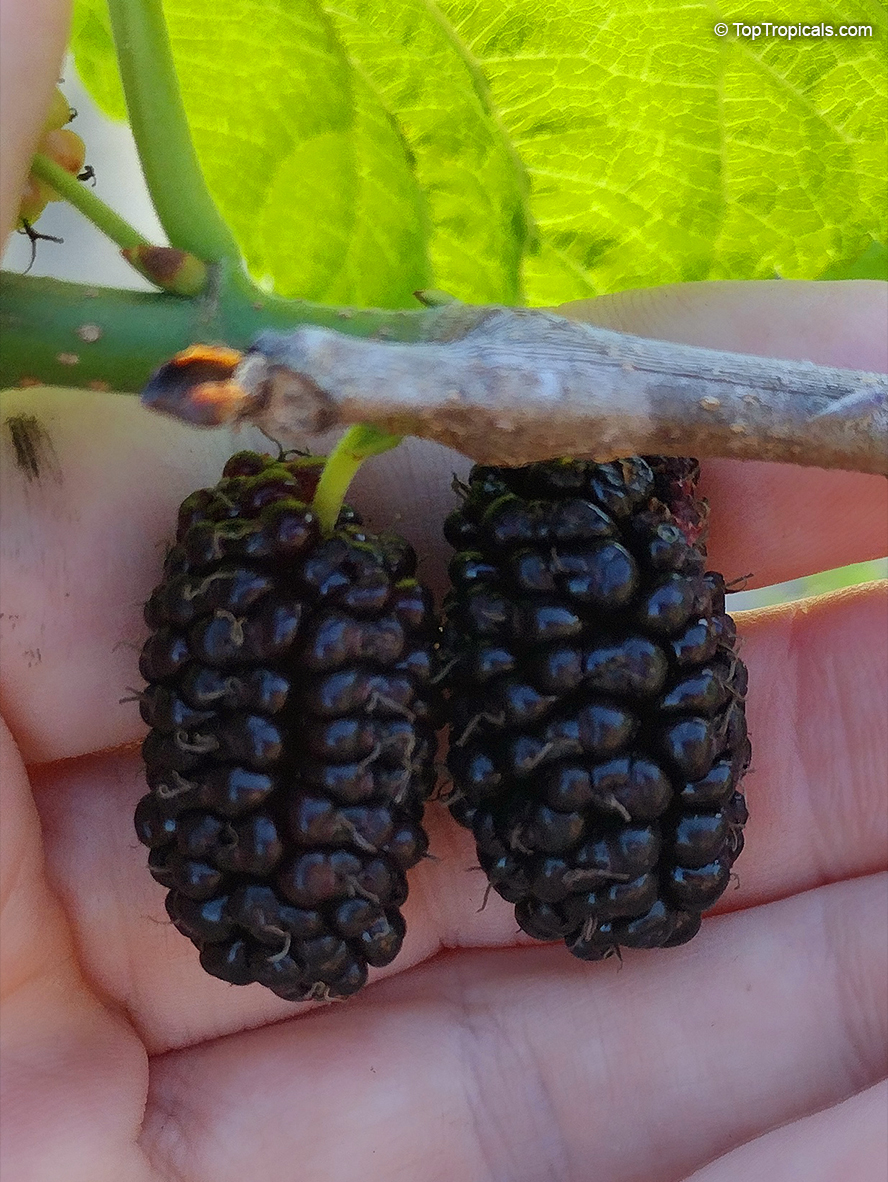
Morus 'Tice' is a productive mulberry cultivar selected in Florida and valued for its vigorous growth and reliable crops. It produces large, sweet dark berries with a rich flavor and is widely grown in warm climates for fresh eating.
Related cultivars: Morus sp. 'Tice' (Tice Mulberry)
- Morus sp. ''Australian Green'' (Australian Green Mulberry)
- Morus sp. ''Illinois Everbearing'' (Illinois Everbearing Mulberry)
- Morus sp. 'Dwarf Cultivars'
Similar plants: Morus sp. 'Tice' (Tice Mulberry)