Homalocephala texensis

Botanical names: Homalocephala texensis, Echinocactus texensis
Family: Cactaceae
Origin: Mexico

USDA Zone: 8-11
 Plant form: Small
 Mature height: 2-5 ft
 Sun exposure: Full sun or bright light indoor
 Cold tolerance: Frost sensitive. Protect from freezing.

 Watering: Moderate; tolerates dry conditions
 Flower color: Pink
 Suitable for: Outdoors in the suitable USDA zone; small gardens, containers, and indoor growing
 Thorns: Thorny or spiny
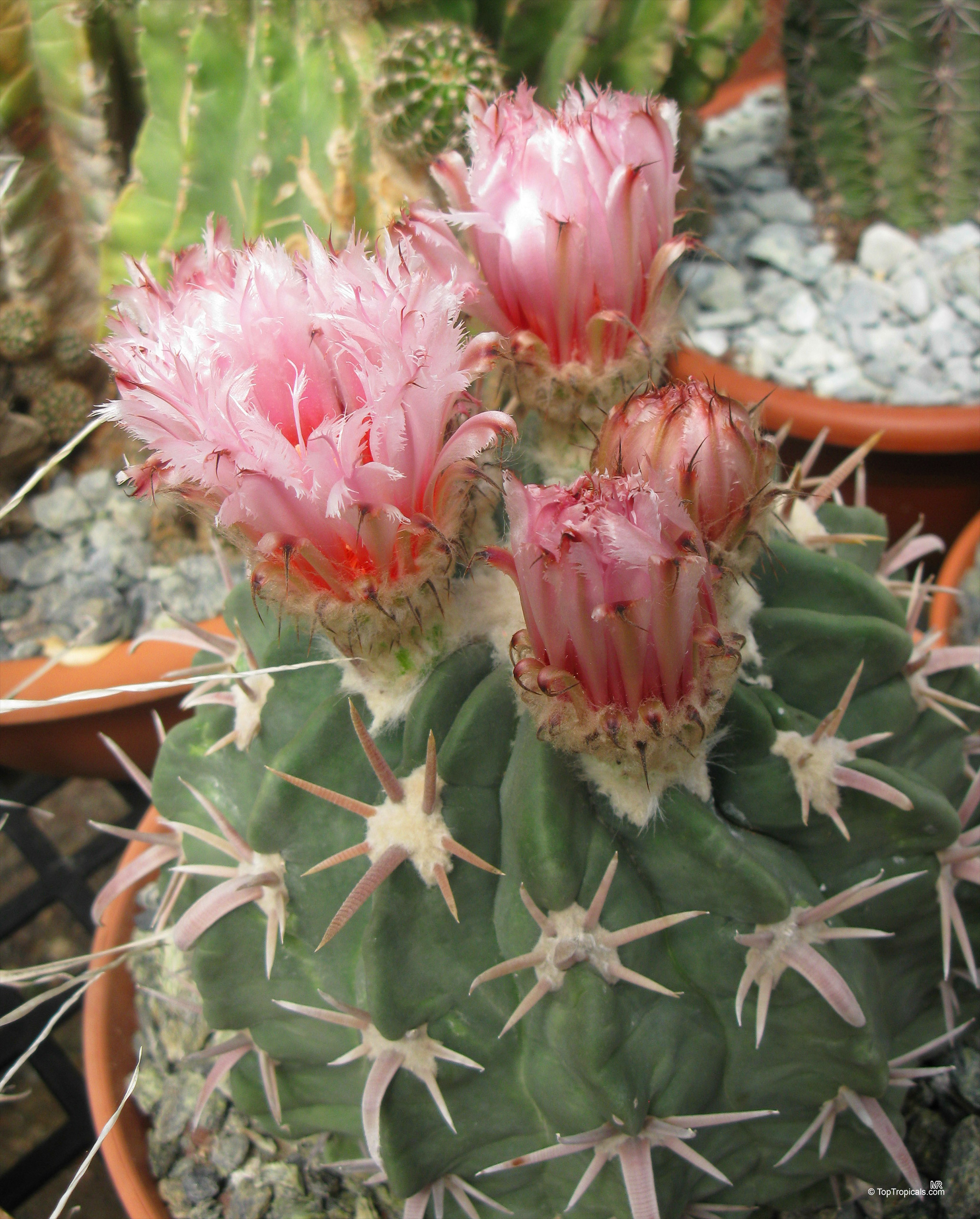
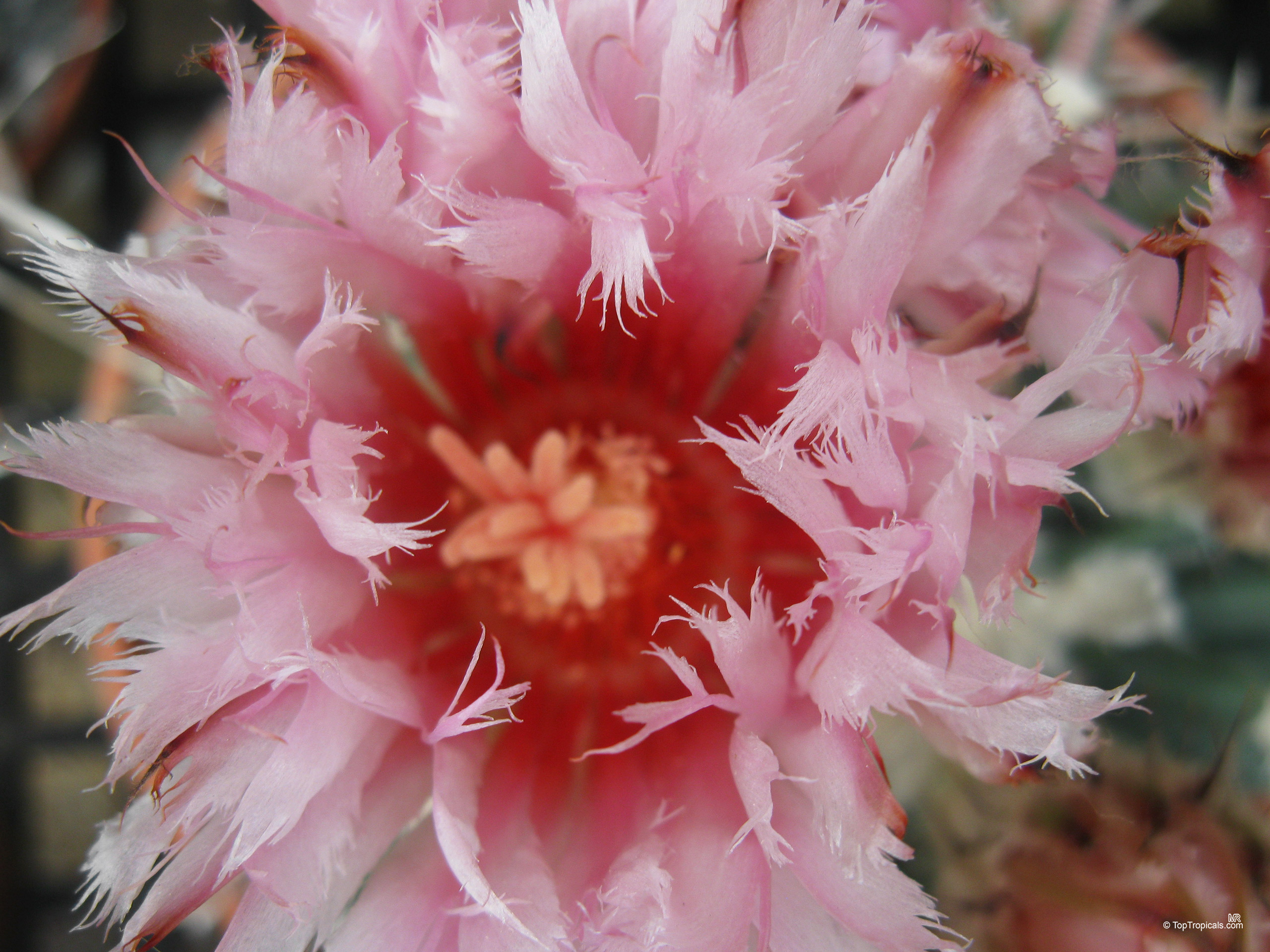
Homalocephala texensis, commonly known as Horse Crippler, Candy Cactus, or Devil's Head, is a low-growing cactus in the Cactaceae family, native to southwestern Oklahoma, southeastern New Mexico, Texas, and northeastern Mexico. It inhabits dry grasslands, thorn scrub, open woodland, and limestone hills, often growing partly sunken among grasses. The broad, ribbed stem reaches about eight inches tall and 12 inches across. Its stout central spine is characteristically flattened, transversely ridged, and often curved downward. Large spring flowers are pink to rose-purple, darker toward the throat, with distinctive fringed, almost feathery petal margins. Fleshy red fruits follow flowering. The familiar name Echinocactus texensis is a synonym under Kew's current classification.
Homalocephala texensis requires full sun, exceptionally well-drained soil, and little water during winter dormancy. It tolerates considerable frost when kept dry, but prolonged winter moisture greatly increases the risk of rot. USDA Zone 8 and warmer is a cautious recommendation for outdoor cultivation in dry-winter conditions; in wetter or colder climates, container cultivation with winter protection is preferable.
Similar plants: Homalocephala texensis