Echeveria sp. 'Dionysos' (Echeveria)
Botanical name: Echeveria sp.
Common name: Echeveria
Cultivar: Dionysos
Family: Crassulaceae
Origin: northwestern South America
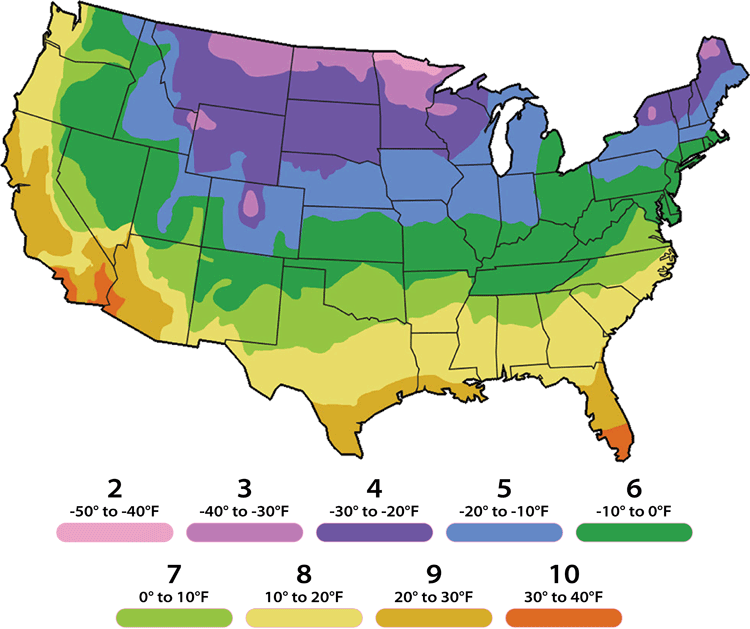
USDA Zone: 9-11
Cold tolerance: 30°F
 Plant form: Small
 Mature height: 2-5 ft
 Sun exposure: Full sun or bright light indoor
 Cold tolerance: Frost sensitive. Protect from freezing.
 Watering: Moderate
 Flower color: Red, crimson, vinous
 Suitable for: Outdoors in the suitable USDA zone; small gardens, containers, and indoor growing
Echeveria is a popular genus of rosette-forming succulents native primarily to Mexico, with additional species found in Central America and northwestern South America. Members of the genus are adapted to rocky slopes and cliffs, where they grow in well-drained soils under bright conditions. Depending on the species, plants range from miniature rosettes only a few inches across to larger forms exceeding a foot in diameter. Their leaves vary from bright green and bluish gray to pink, purple, or nearly black, often developing more intense coloration in bright light or cool weather.
The remarkable diversity of leaf shapes, colors, and surface textures has made Echeveria one of the most widely cultivated succulent genera, with hundreds of cultivars and hybrids available. Many produce offsets to form attractive colonies, while others remain as solitary rosettes. Slender flower stalks bearing bell-shaped blossoms in shades of yellow, orange, pink, or red usually appear from spring through summer and are attractive to hummingbirds and pollinating insects. Echeverias grow best in full sun to bright light and sharply drained soil, allowing the growing medium to dry completely between waterings. Suitable for USDA Zones 9-11, they are especially popular as container plants, thriving in rock gardens, succulent arrangements, and indoor collections with adequate light.
x Graptoveria 'Fred Ives' - Graptopetalum paraguayense X Echeveria gibbiflora
Pachyveria - hybrids between the Pachyphytum and Echeveria
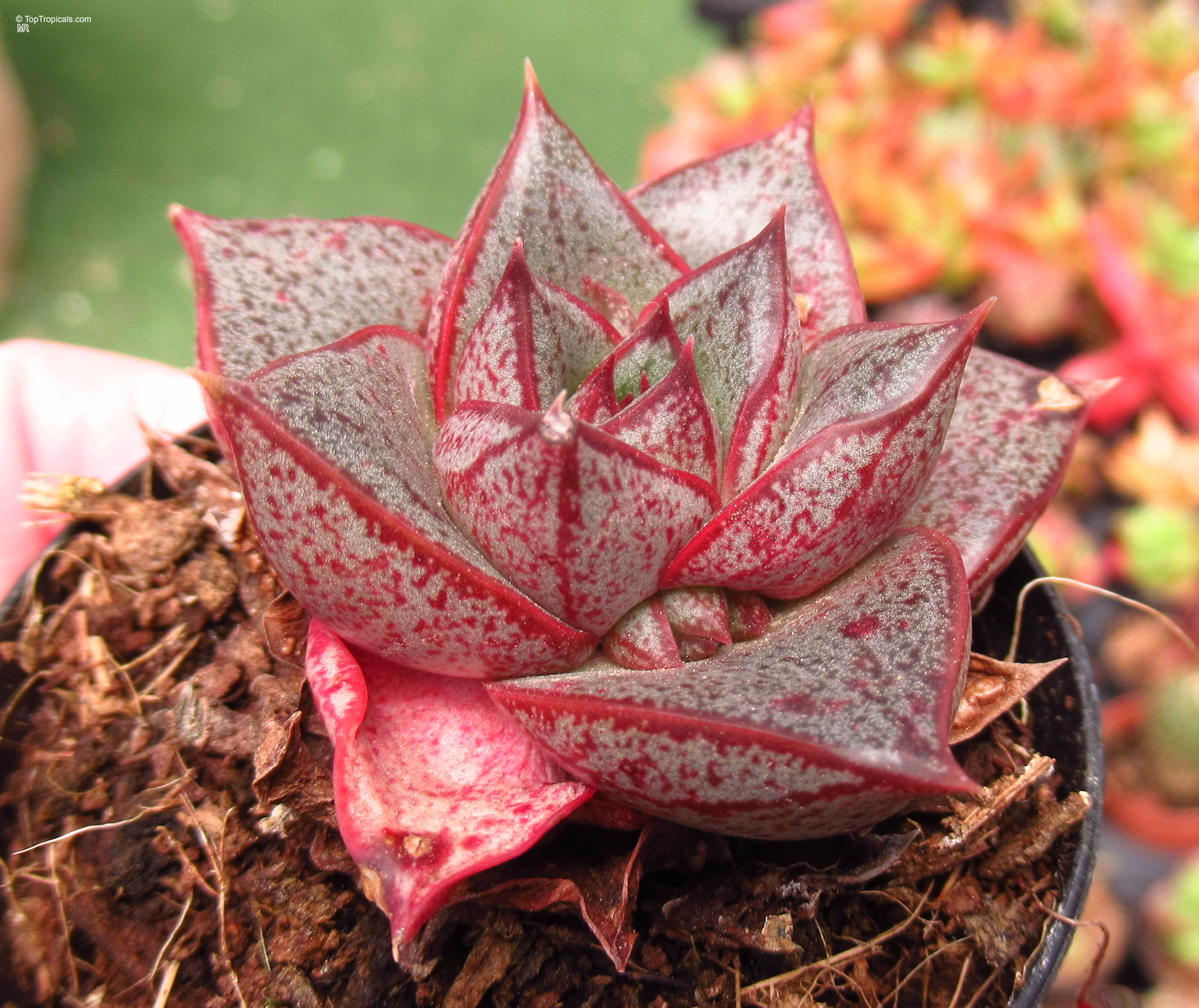
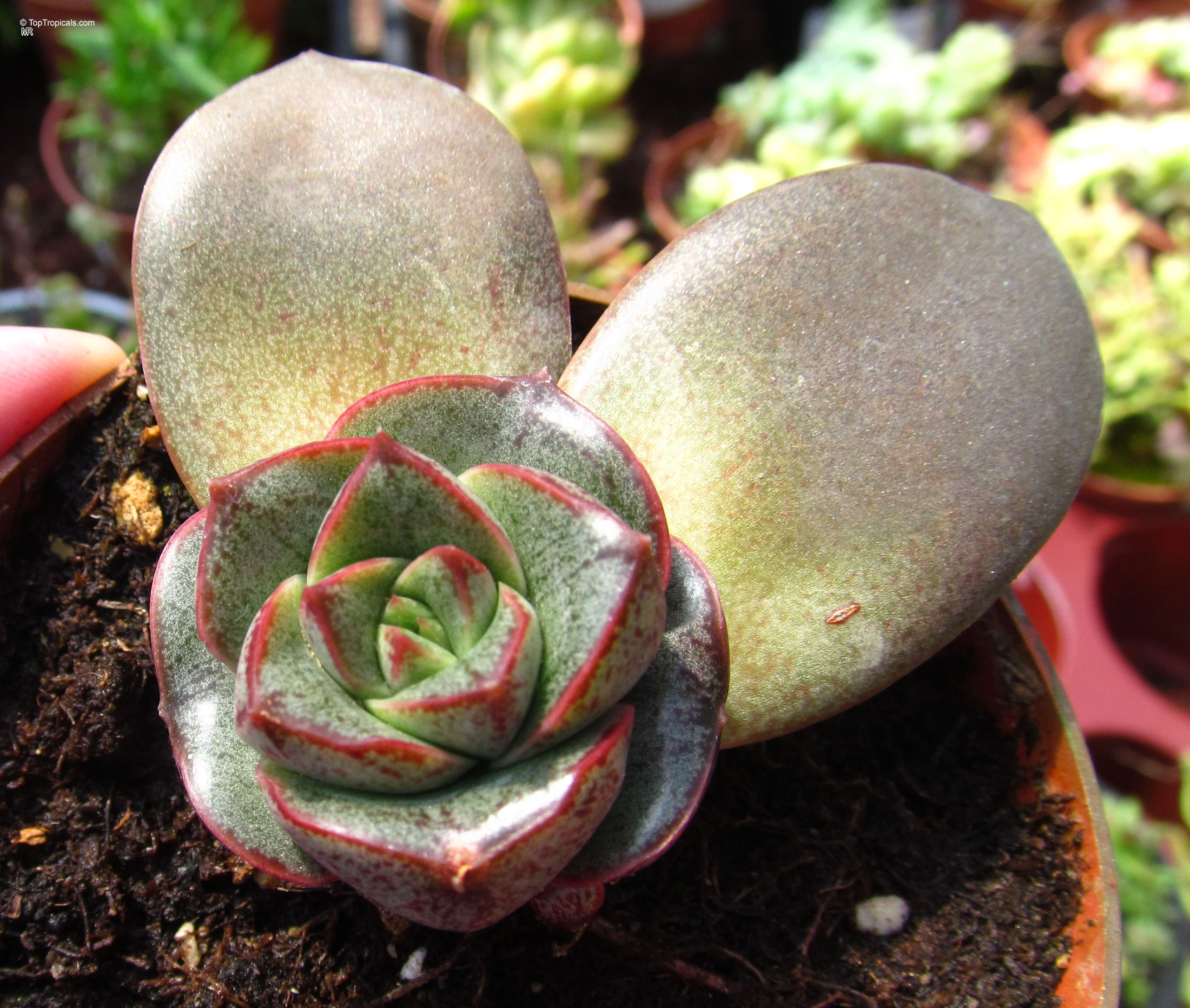
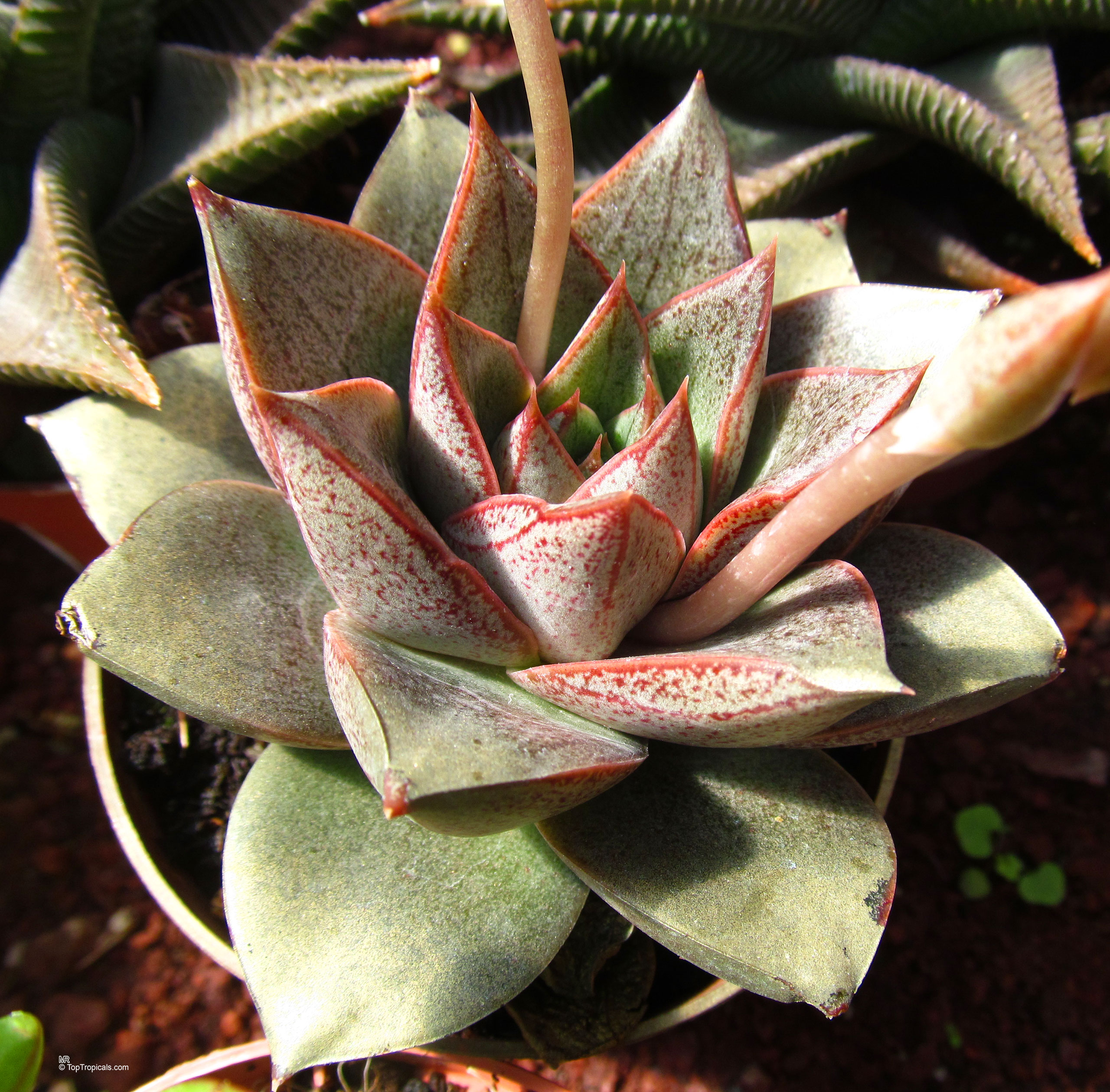
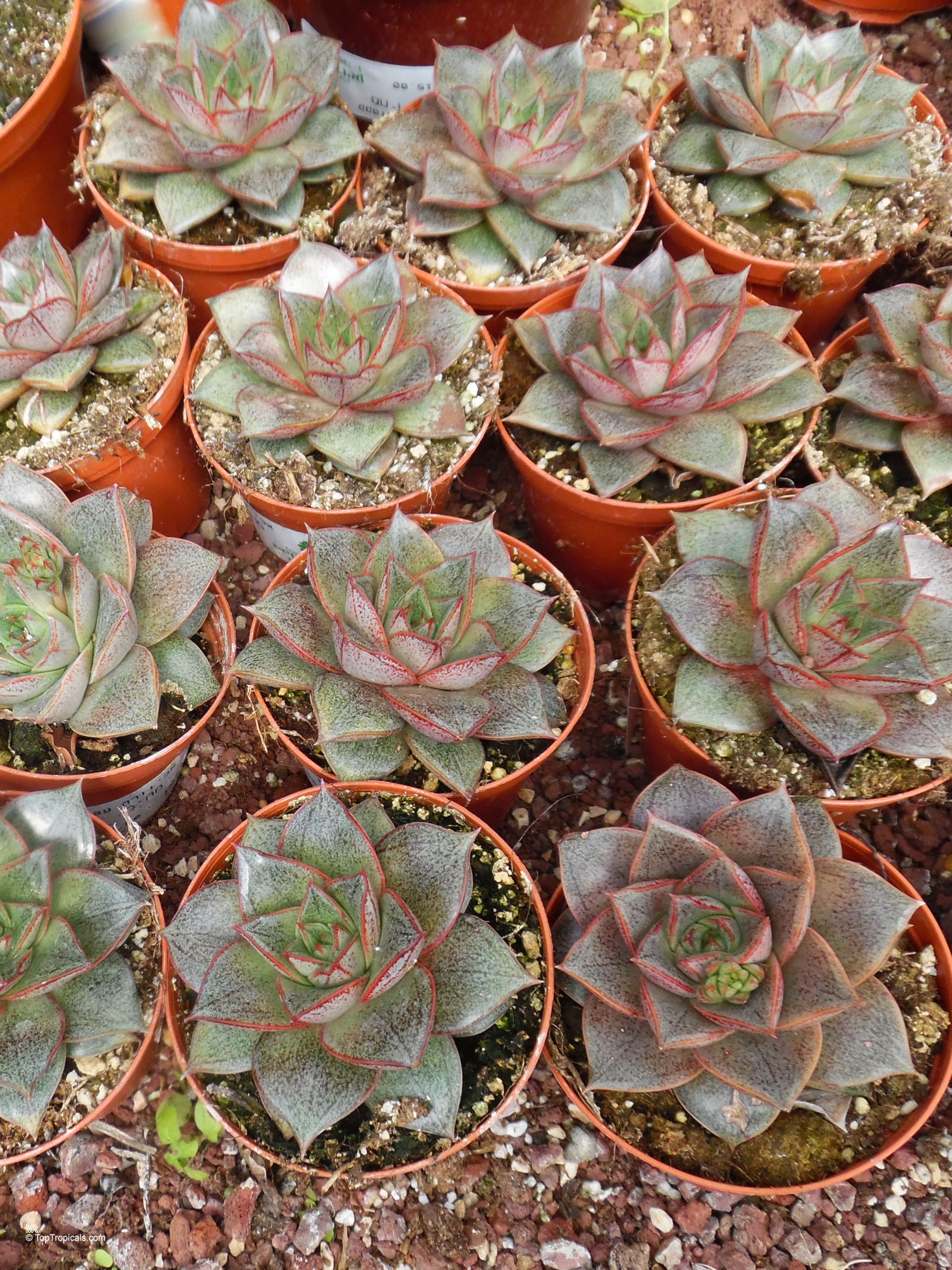
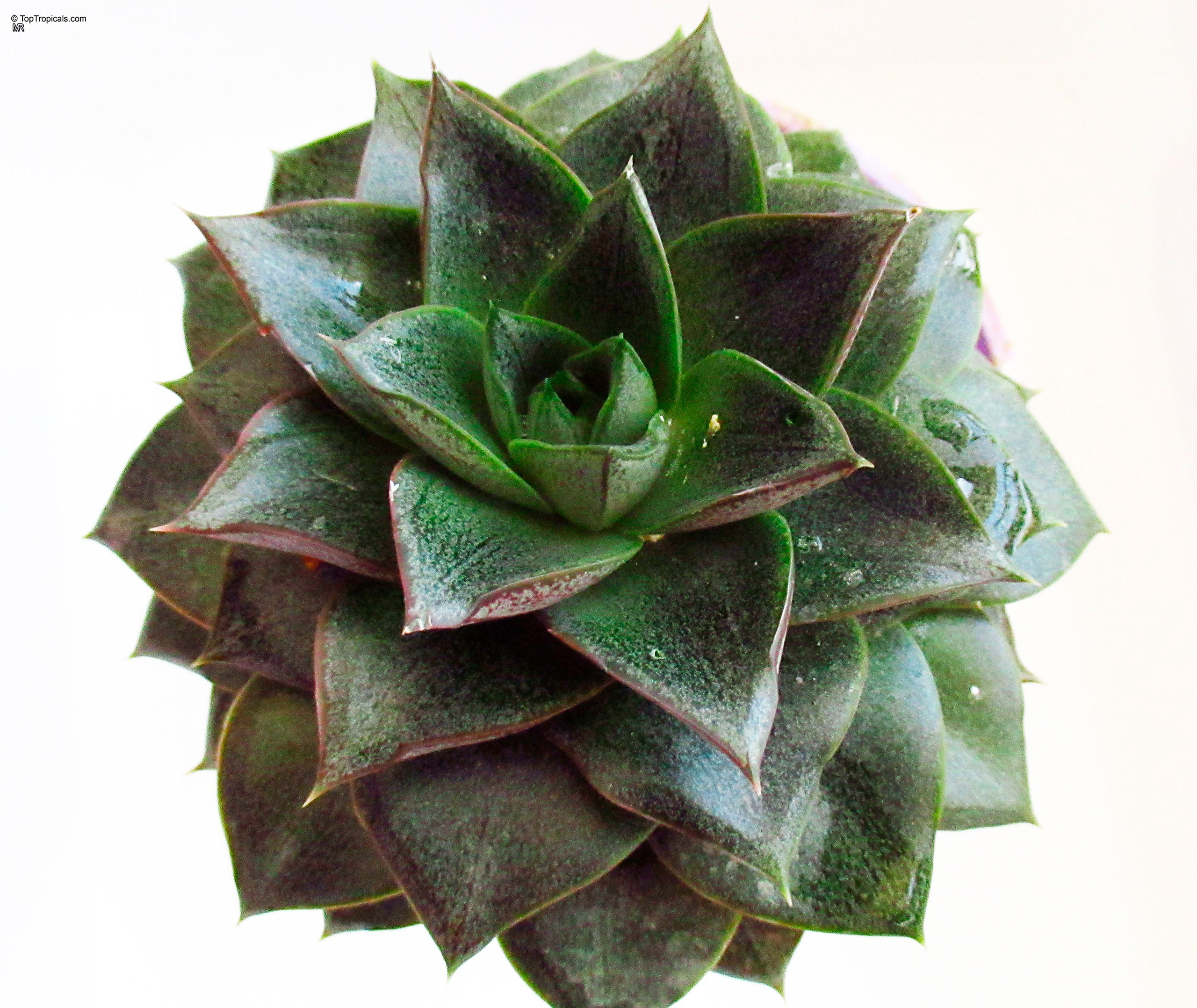
Echeveria 'Dionysos' is a compact hybrid closely related to Echeveria purpusorum and has often been sold under that species name. It forms dense rosettes typically 4-6 inches across. The thick triangular leaves are gray-green to olive green and are heavily decorated with irregular reddish-brown mottling, giving each plant a distinctive appearance.
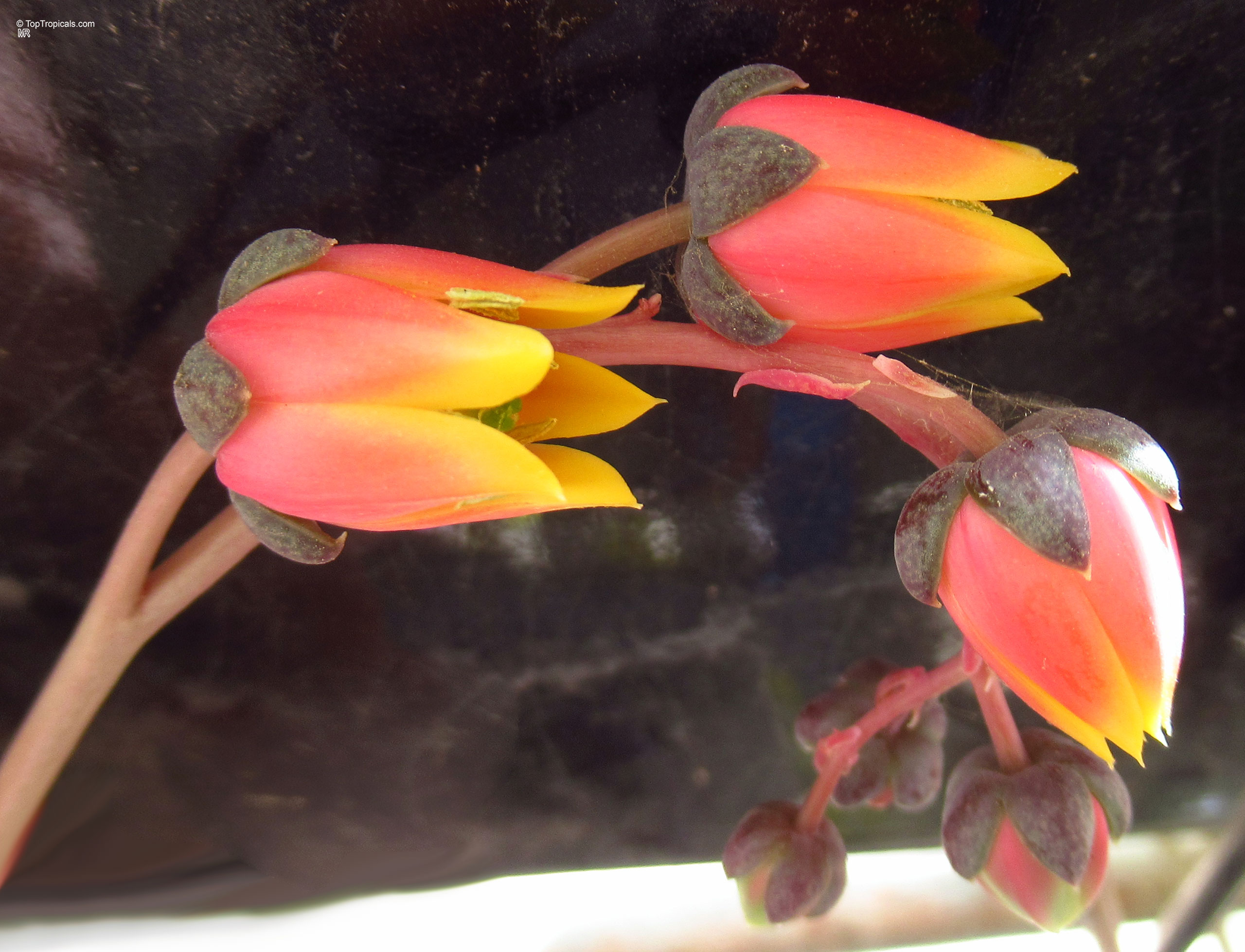
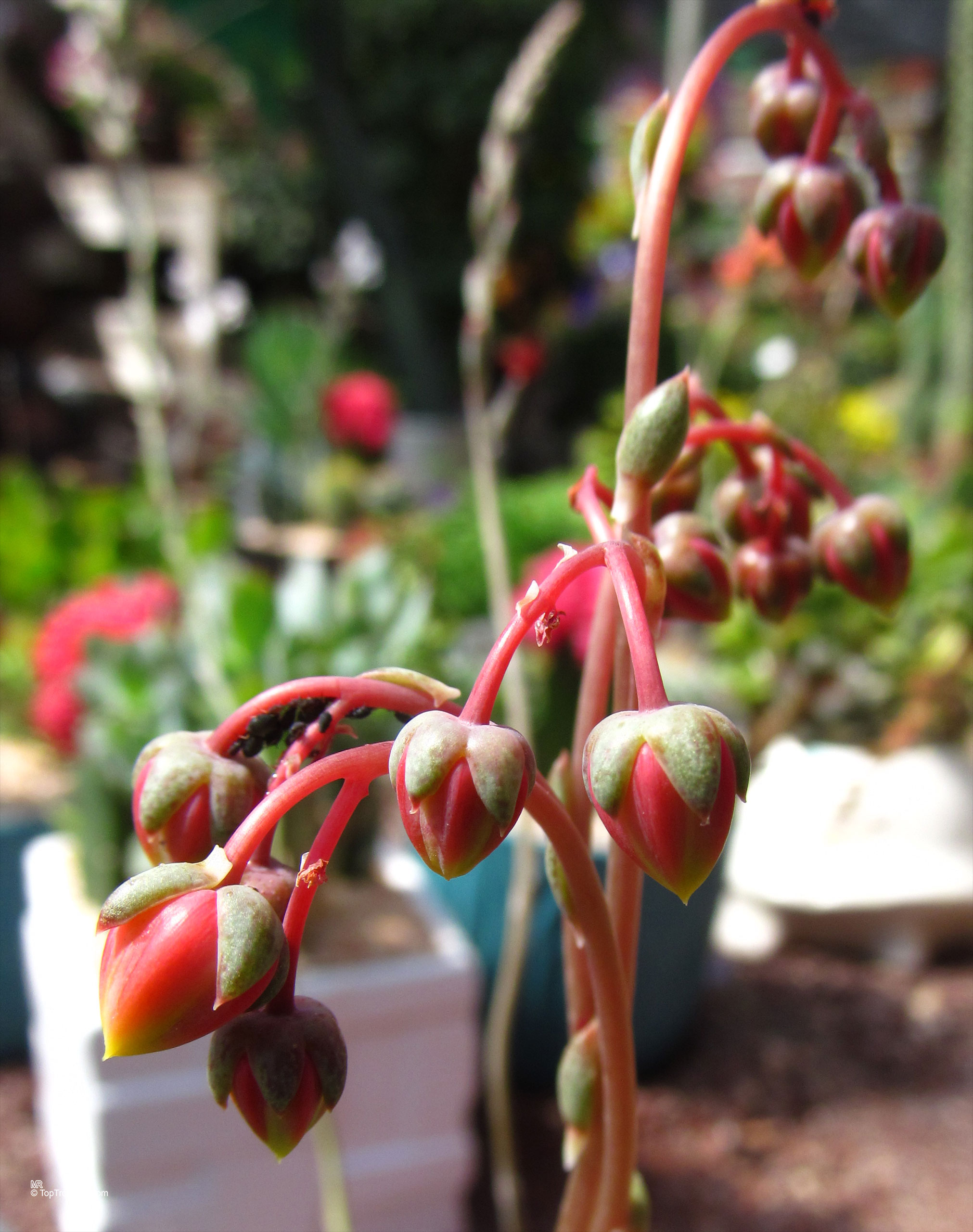
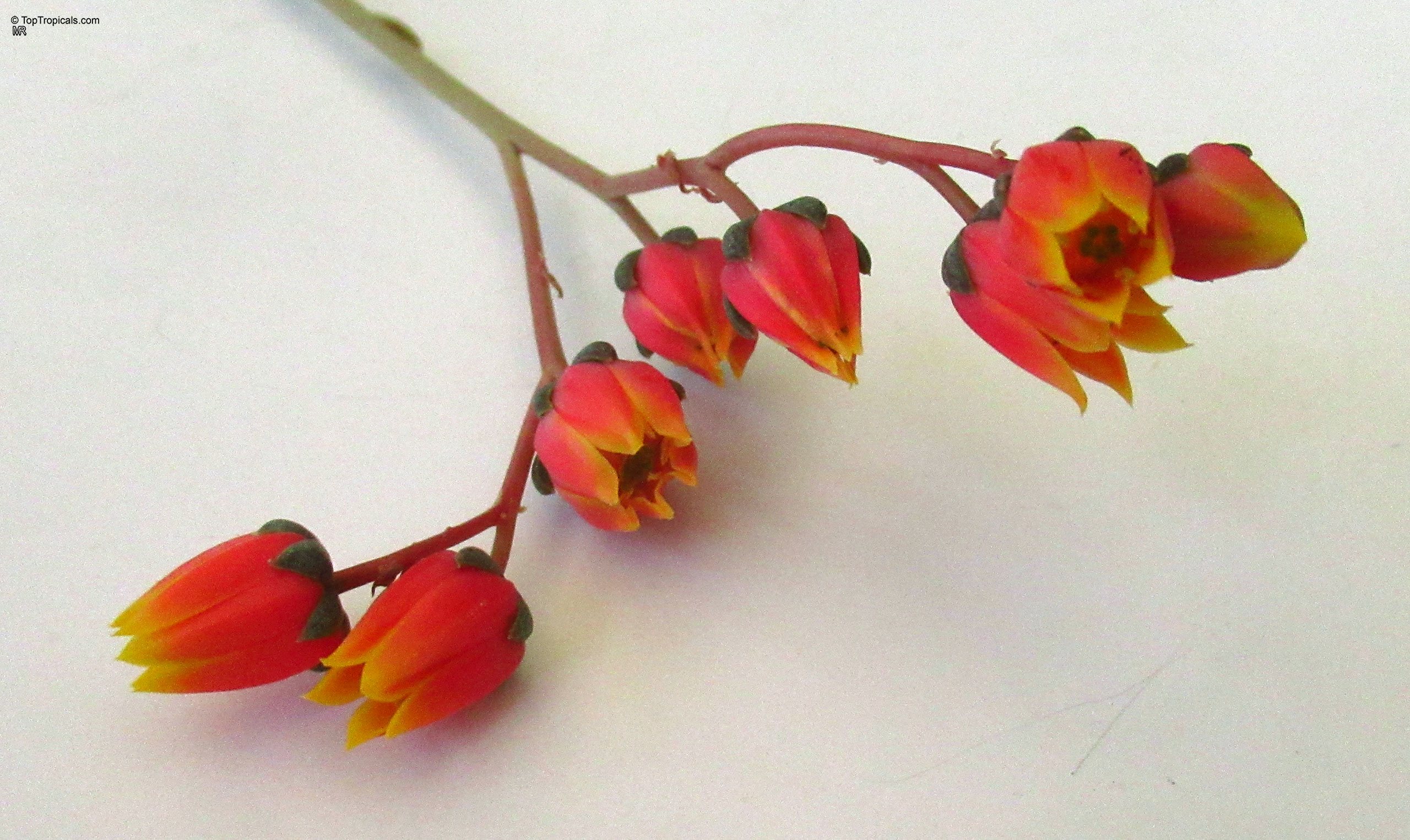
Unlike many echeverias prized mainly for colorful sun stress, Echeveria 'Dionysos' remains ornamental throughout the year because of its naturally patterned foliage. In spring or summer, mature plants produce slender flower stalks bearing small bell-shaped flowers that are pinkish-red outside with yellow interiors, attracting pollinators. Like most echeverias, it grows best in full sun to bright light and sharply drained soil. Allow the growing medium to dry thoroughly between waterings, especially during cooler weather, to help prevent root rot. Suitable for USDA Zones 9-11, it is most often grown as a container plant, where its compact size, slow growth, and striking leaf pattern make it an excellent choice for windowsills, patios, rock gardens, and succulent collections.
Similar plants: Echeveria sp. 'Dionysos' (Echeveria)