Cereus repandus (Night Blooming Cereus)
Botanical names: Cereus repandus, Cereus peruvianus
Common names: Night Blooming Cereus, Peruvian Apple, Column Cactus, Apple Cactus
Family: Cactaceae
Origin: South America
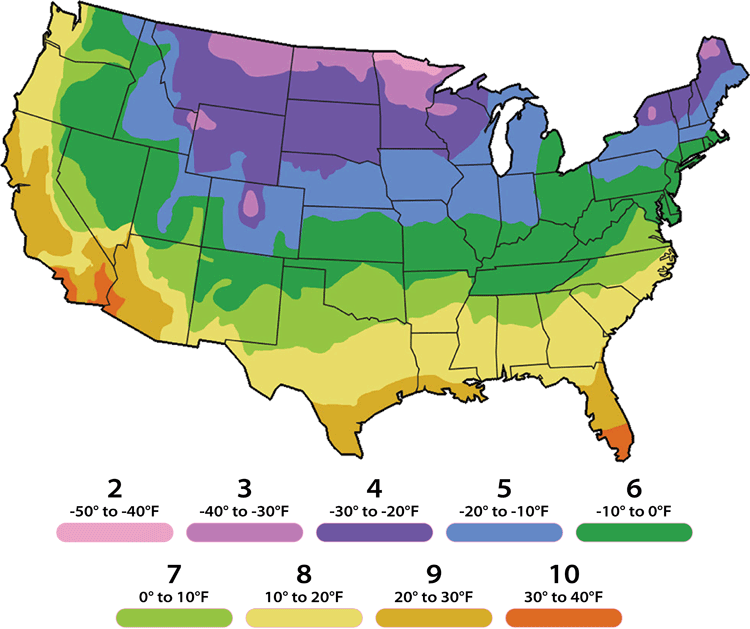
USDA Zone: 9-11
Cold tolerance: 30°F
 Plant form: Large bush
 Mature height: 5-10 ft
 Sun exposure: Full sun or bright light indoor
 Cold tolerance: Frost sensitive. Protect from freezing.
 Watering: Moderate
 Flower color: White and off-white
 Suitable for: Outdoors in the suitable USDA zone; small gardens, containers, and indoor growing
 Thorns: Thorny or spiny
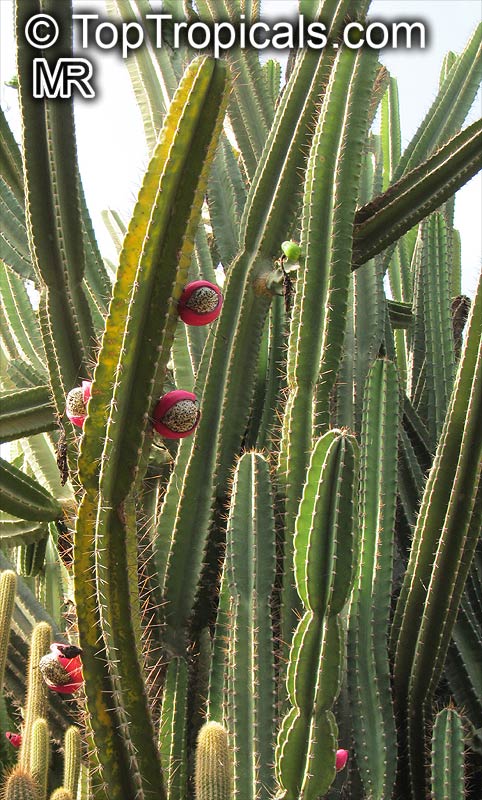
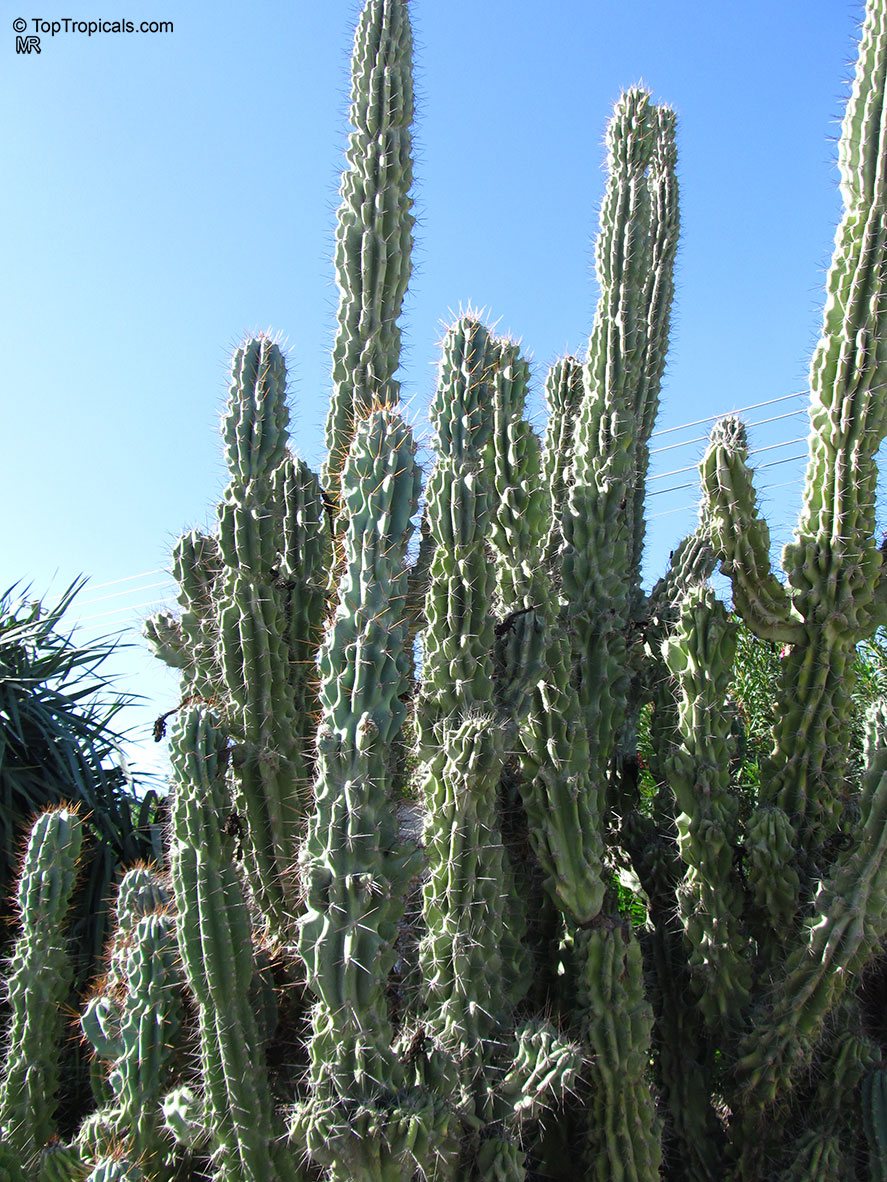
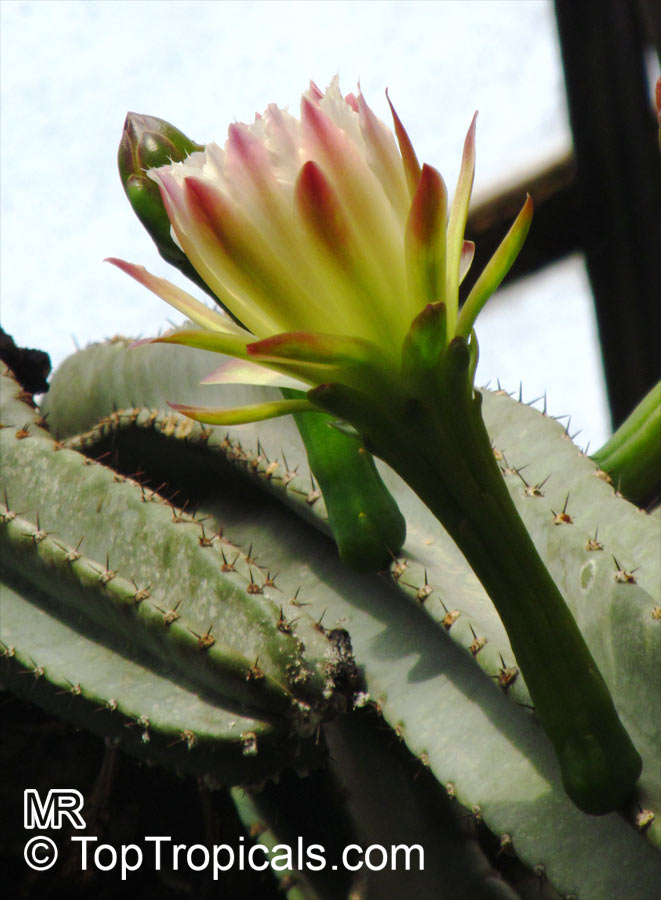
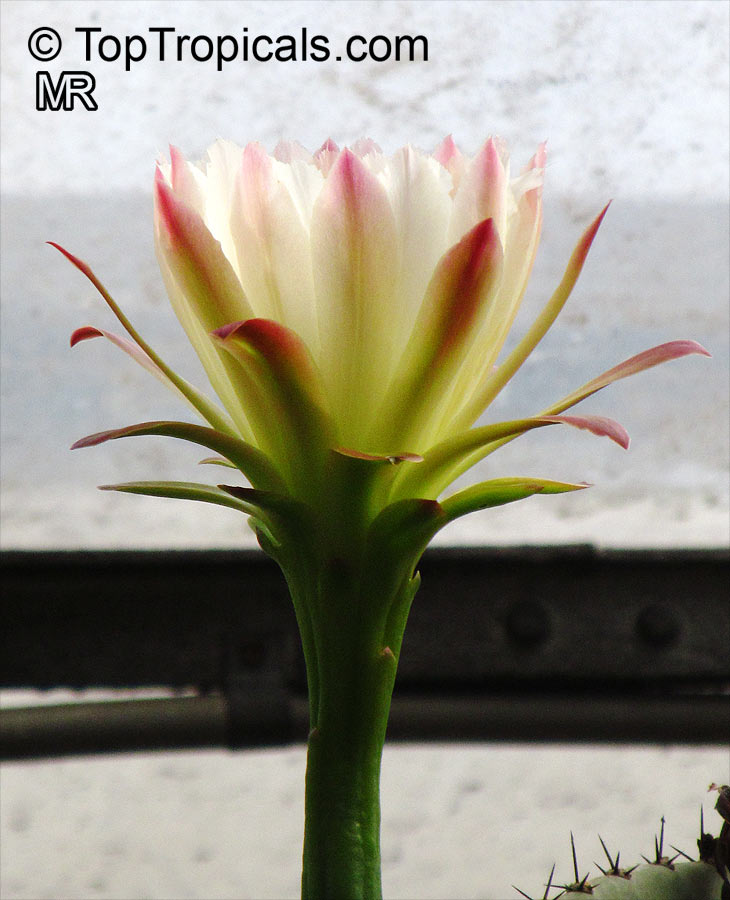
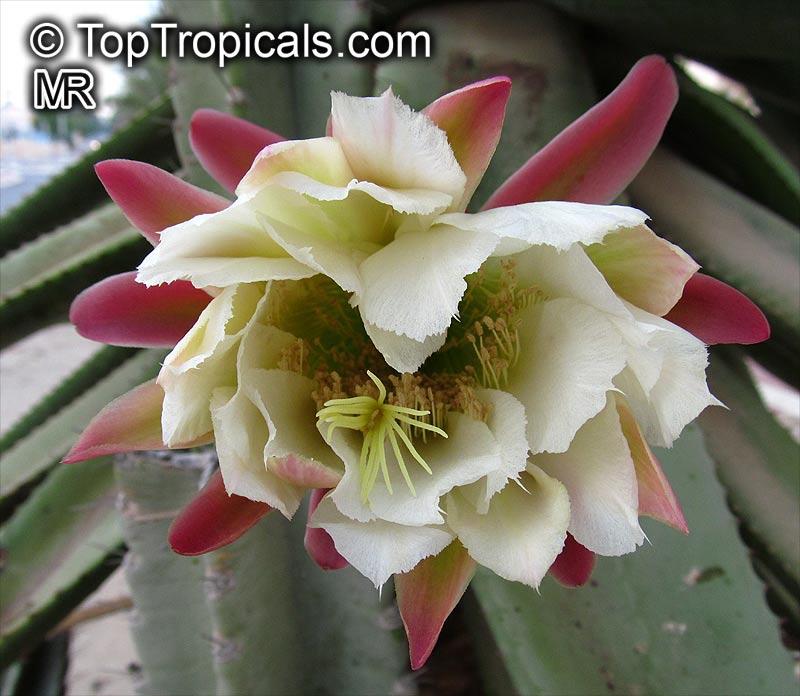
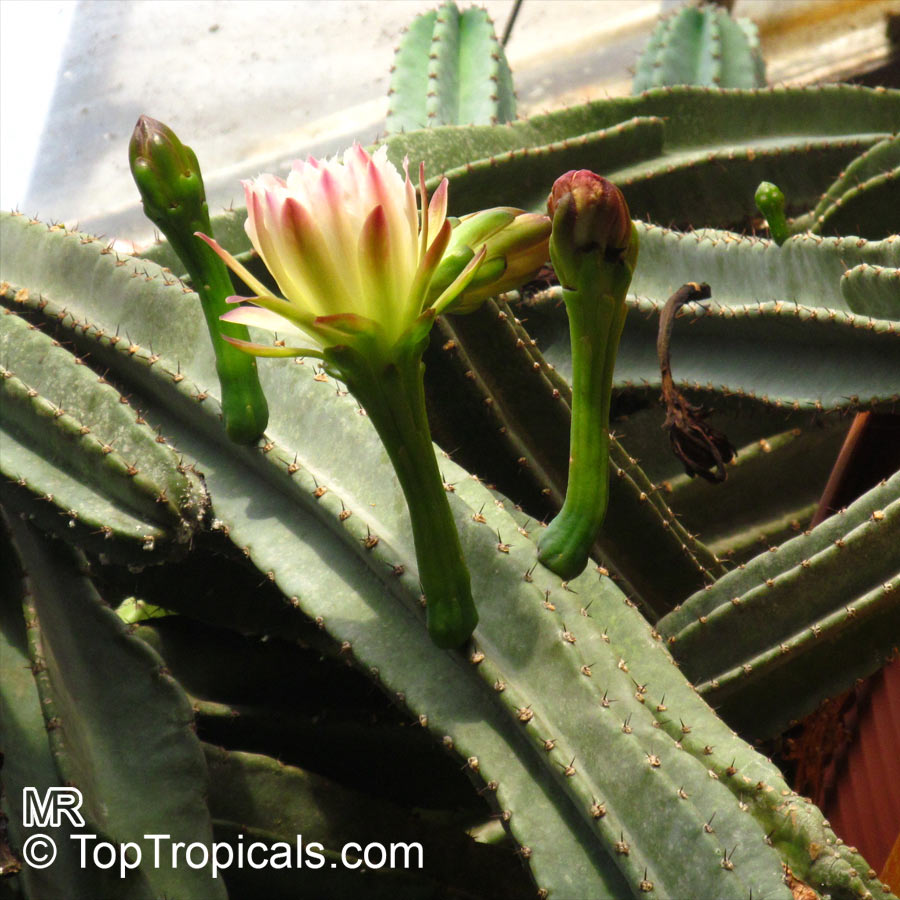
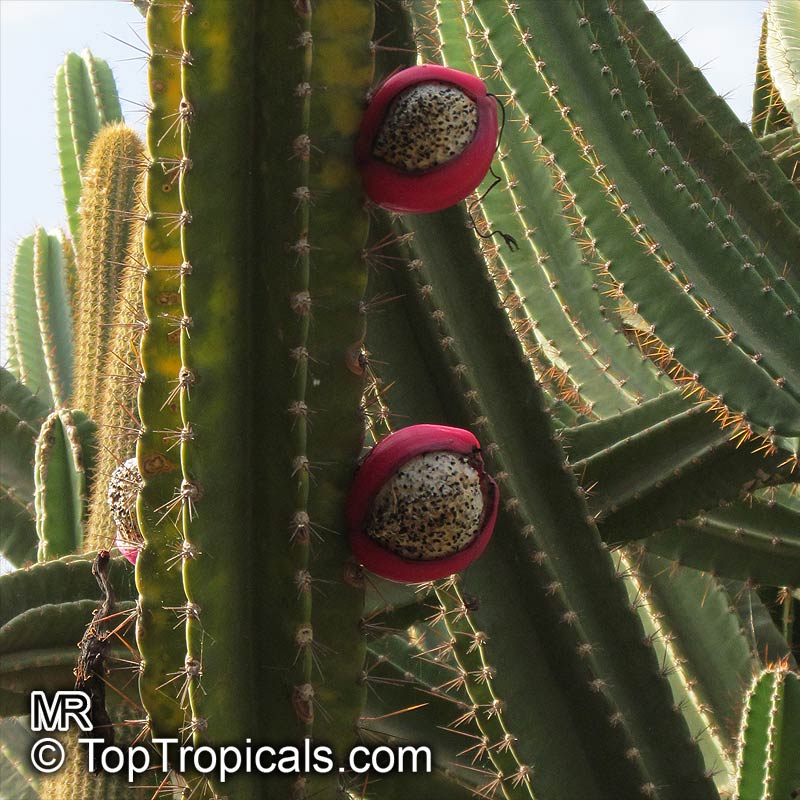
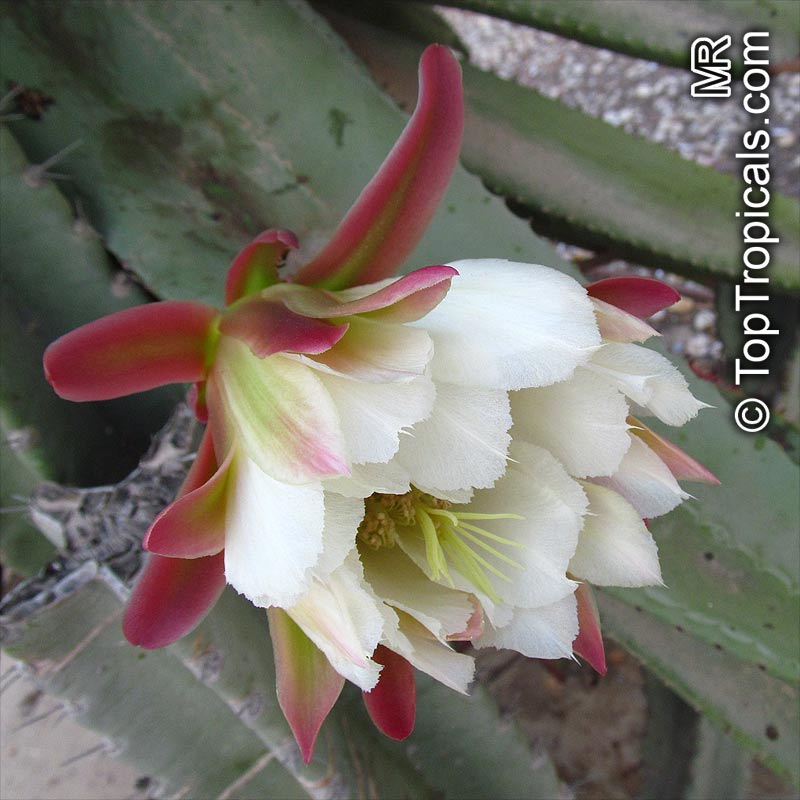
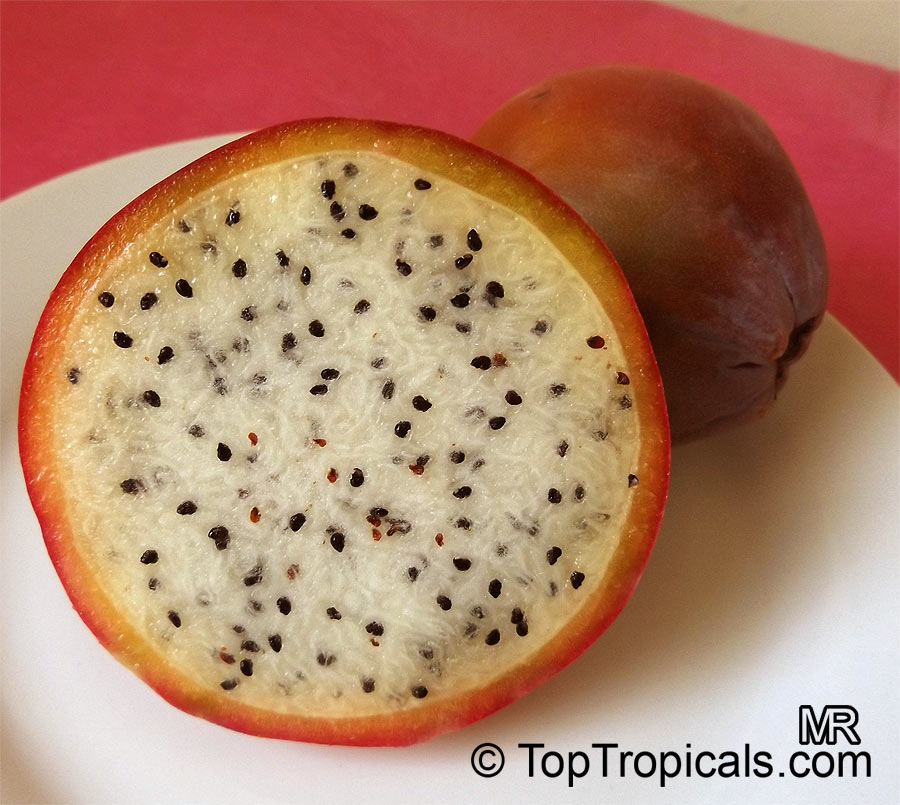
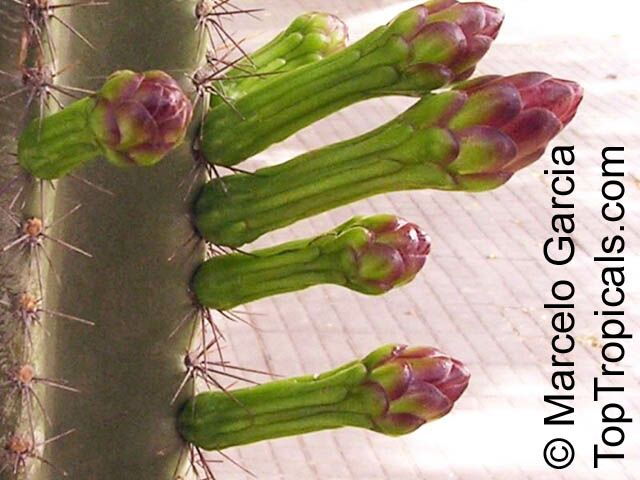
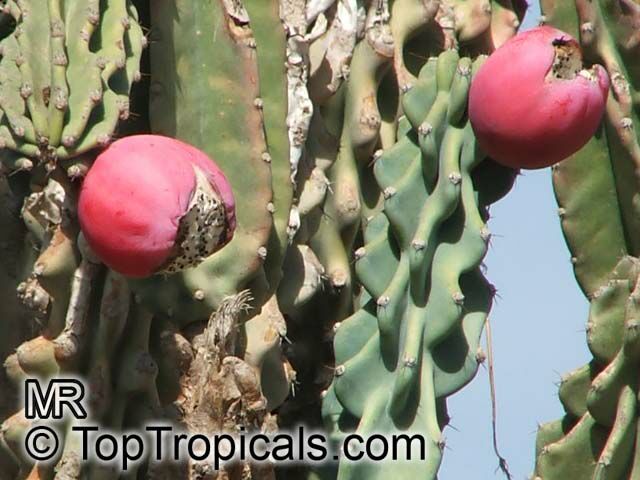
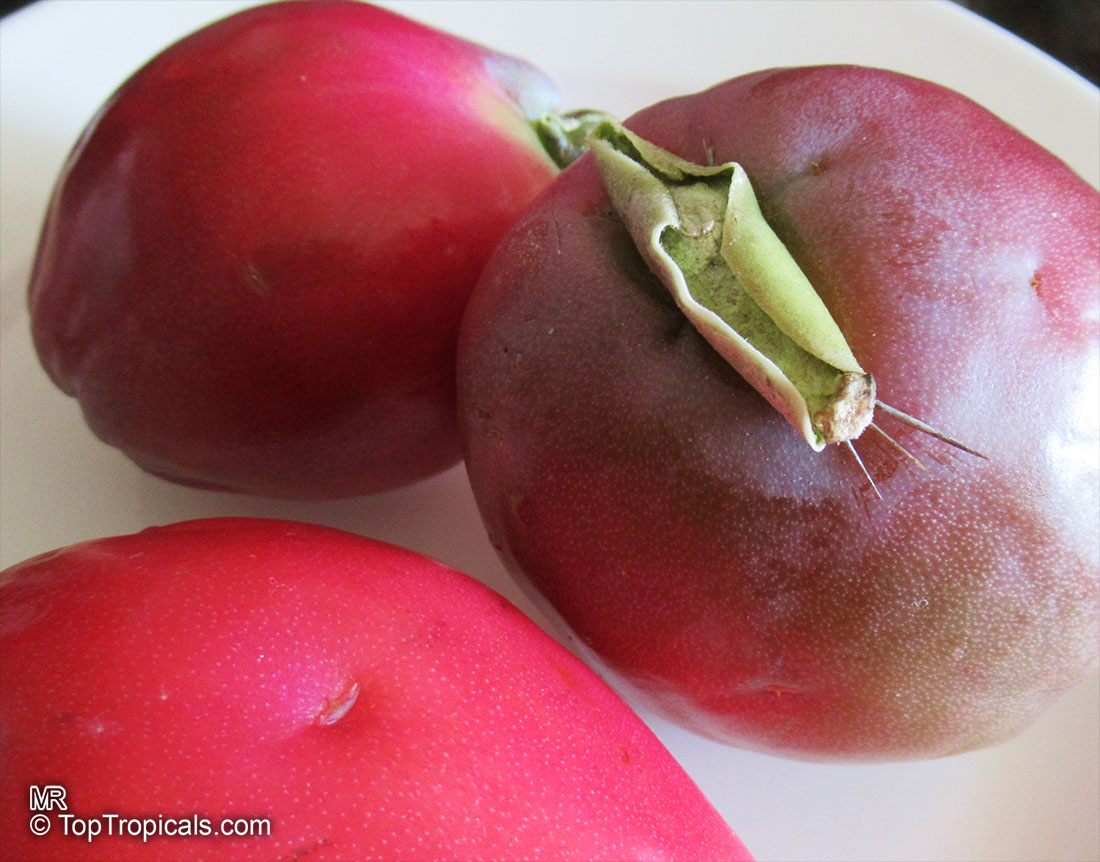
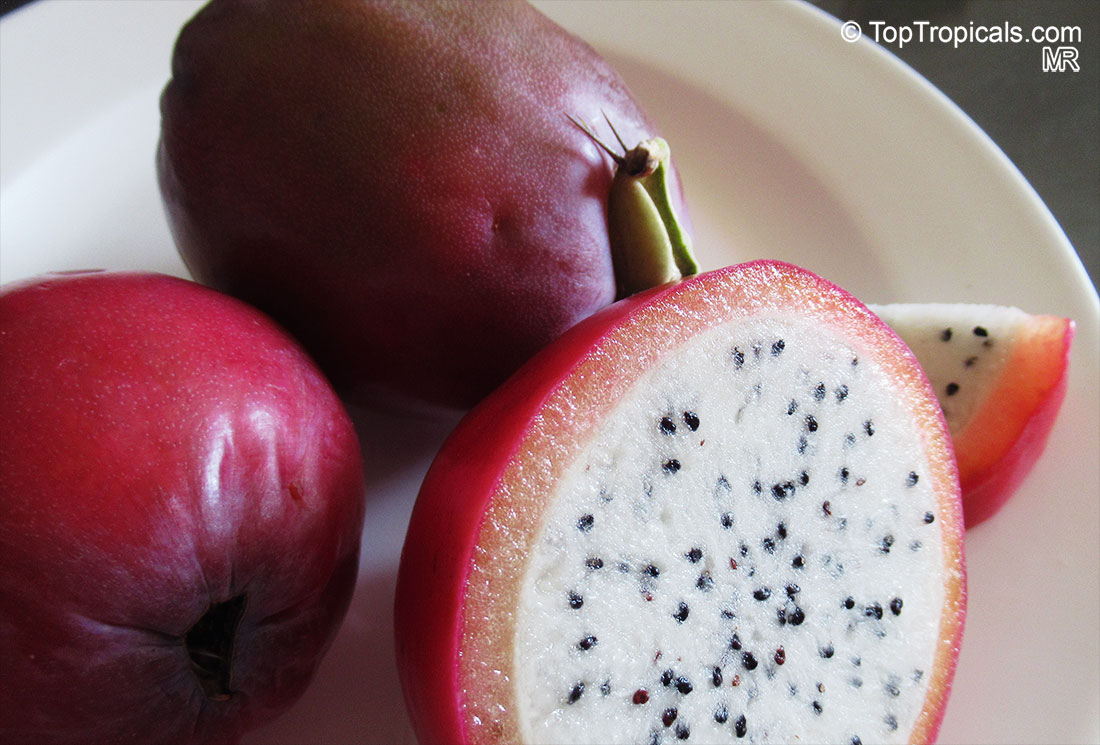
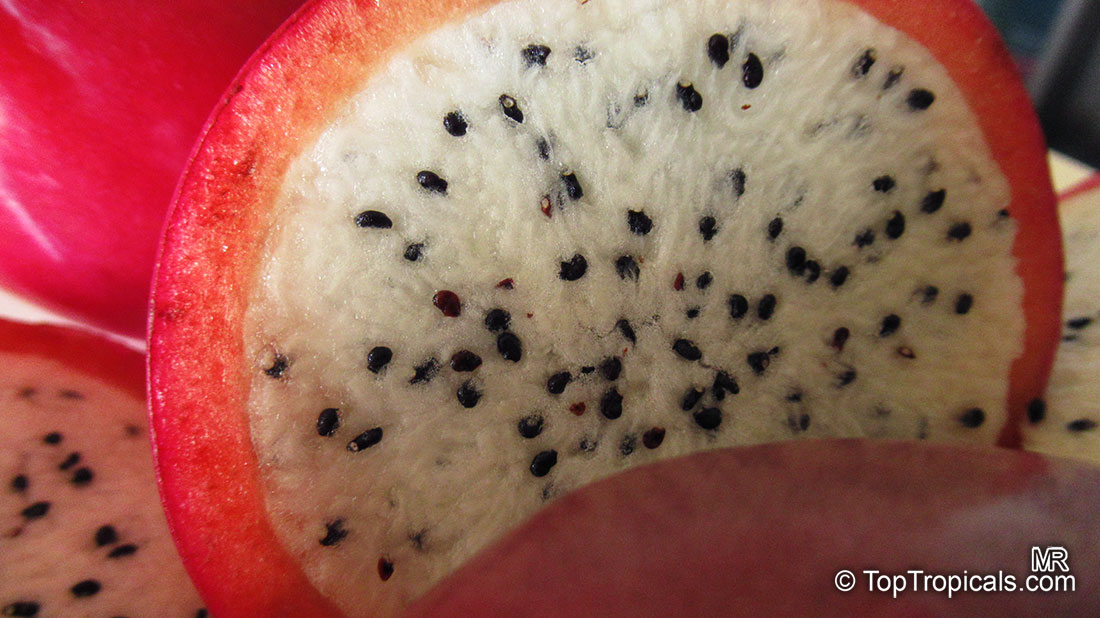
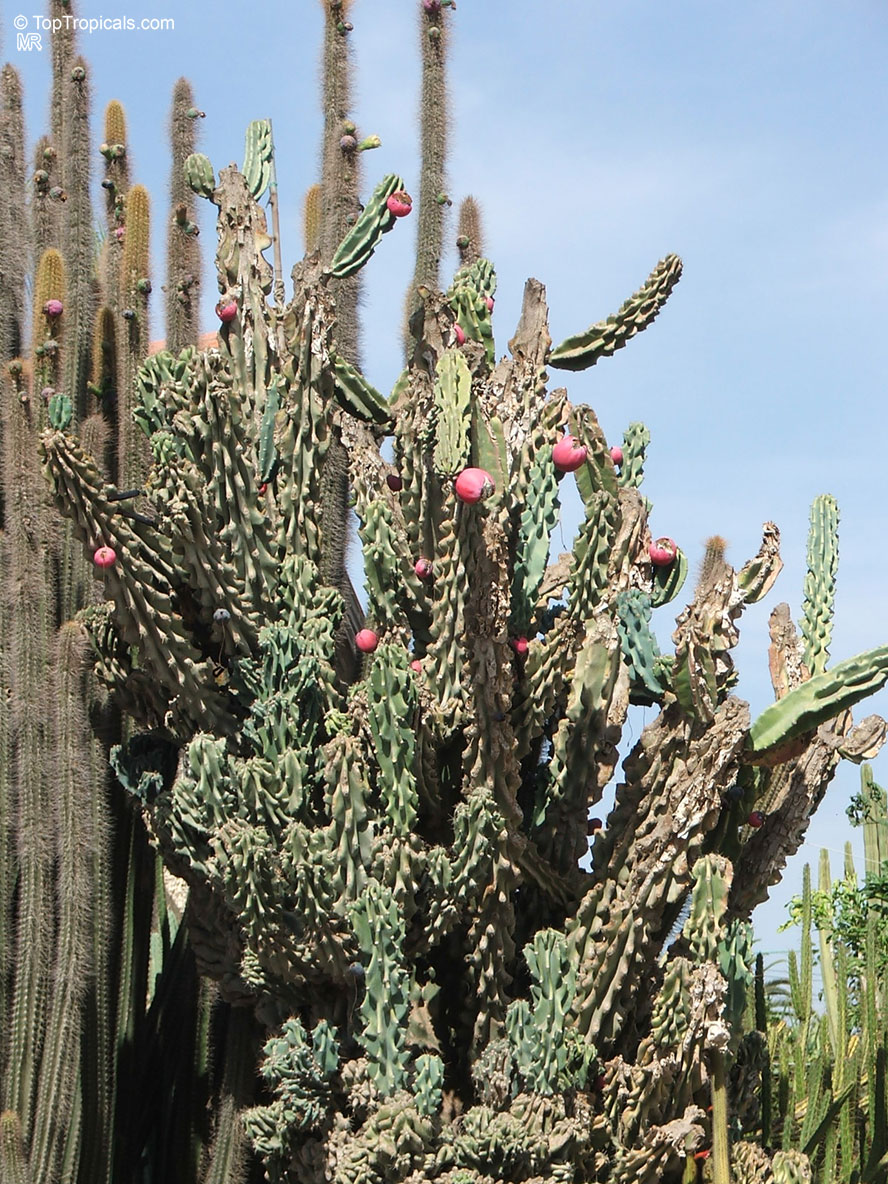
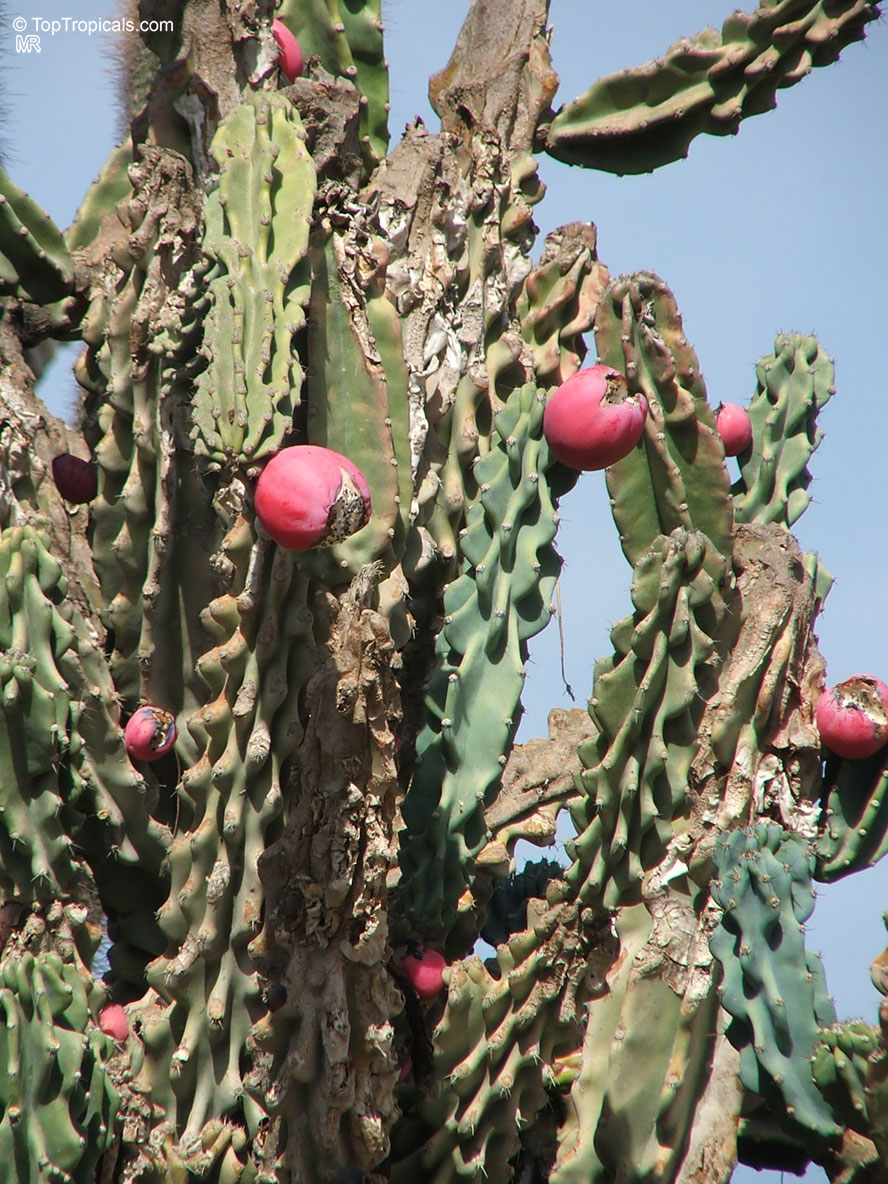
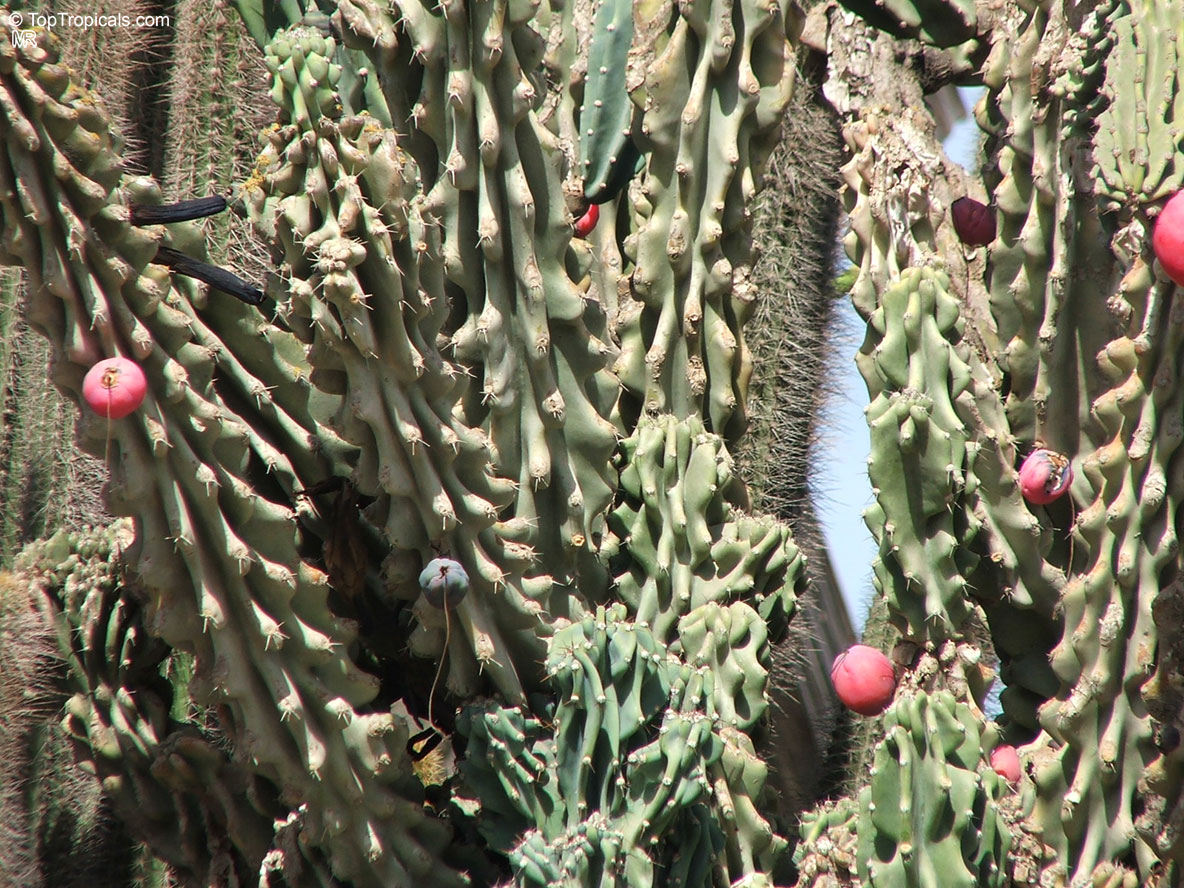
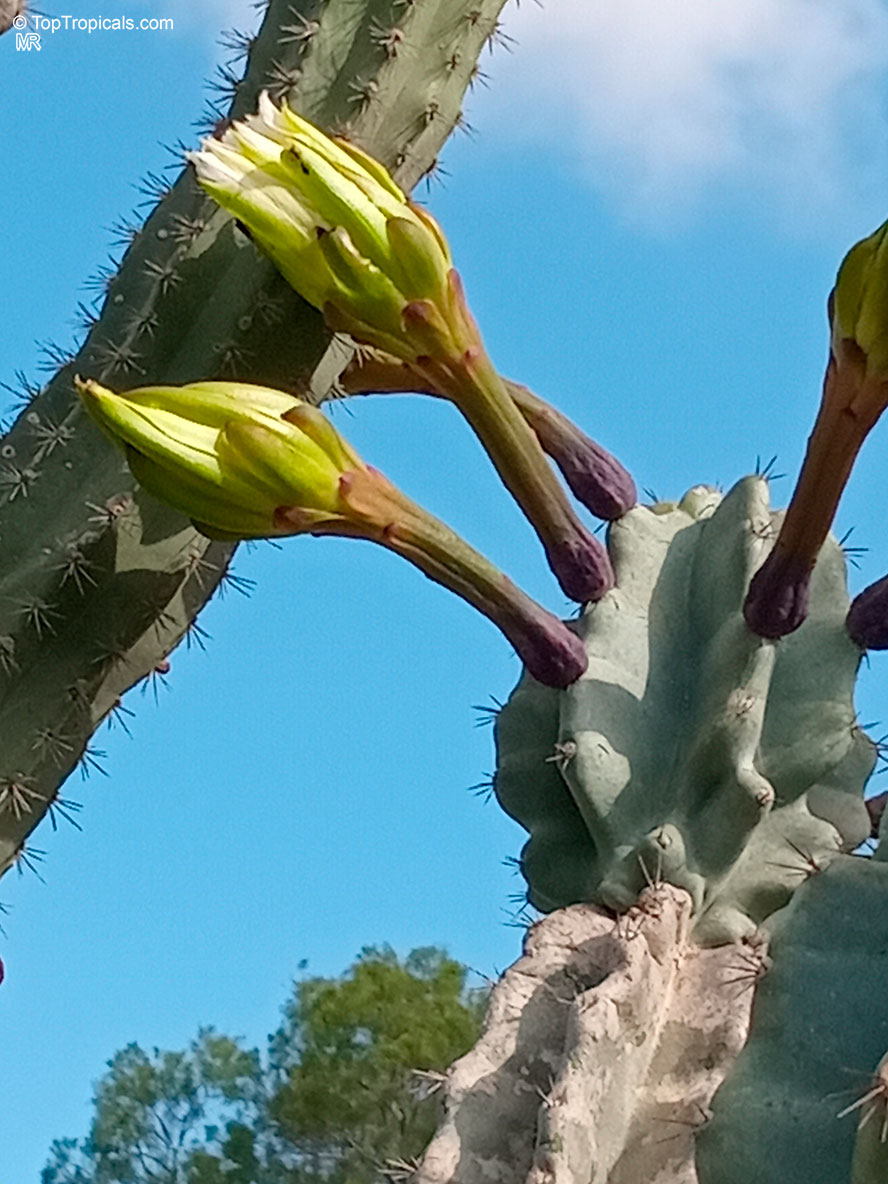
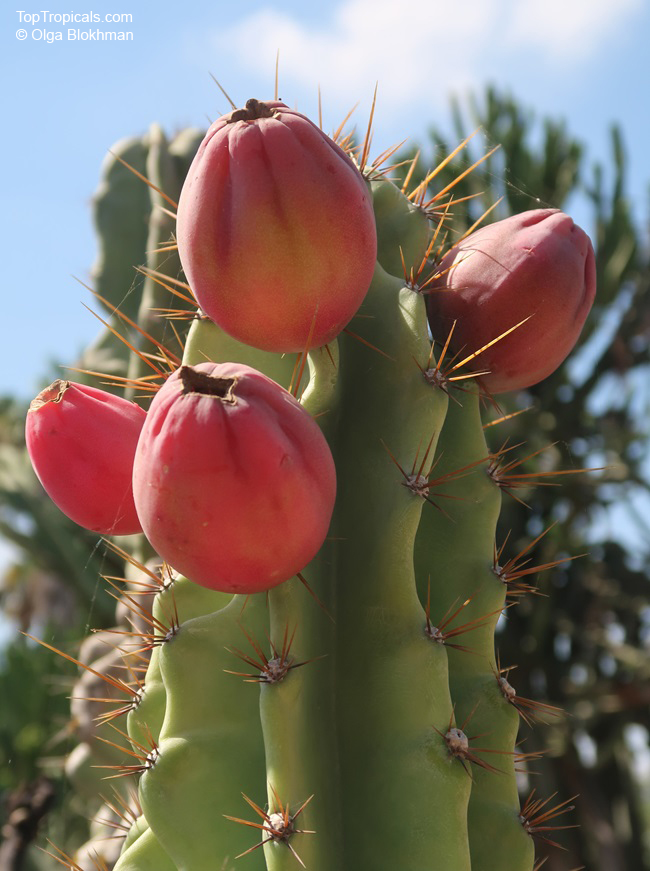
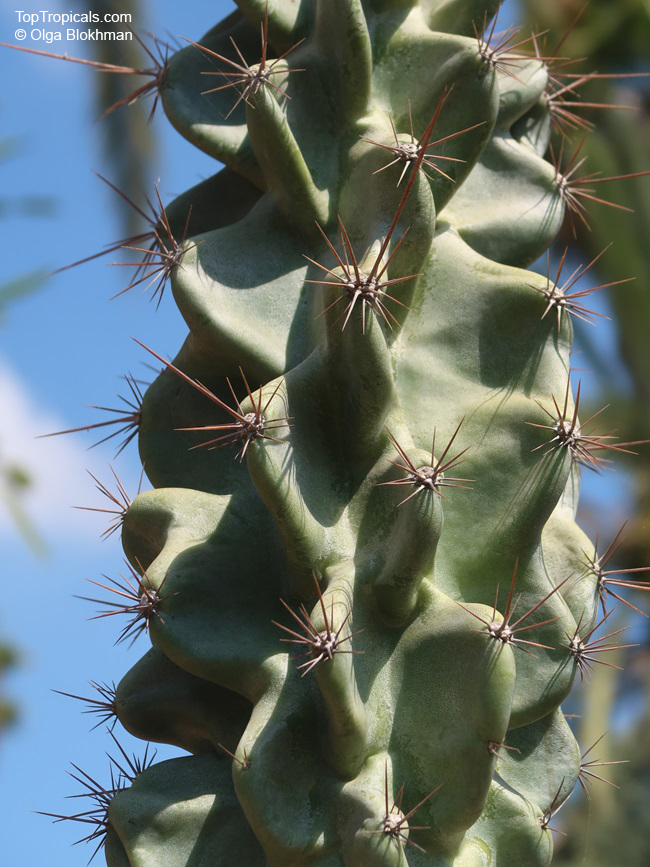
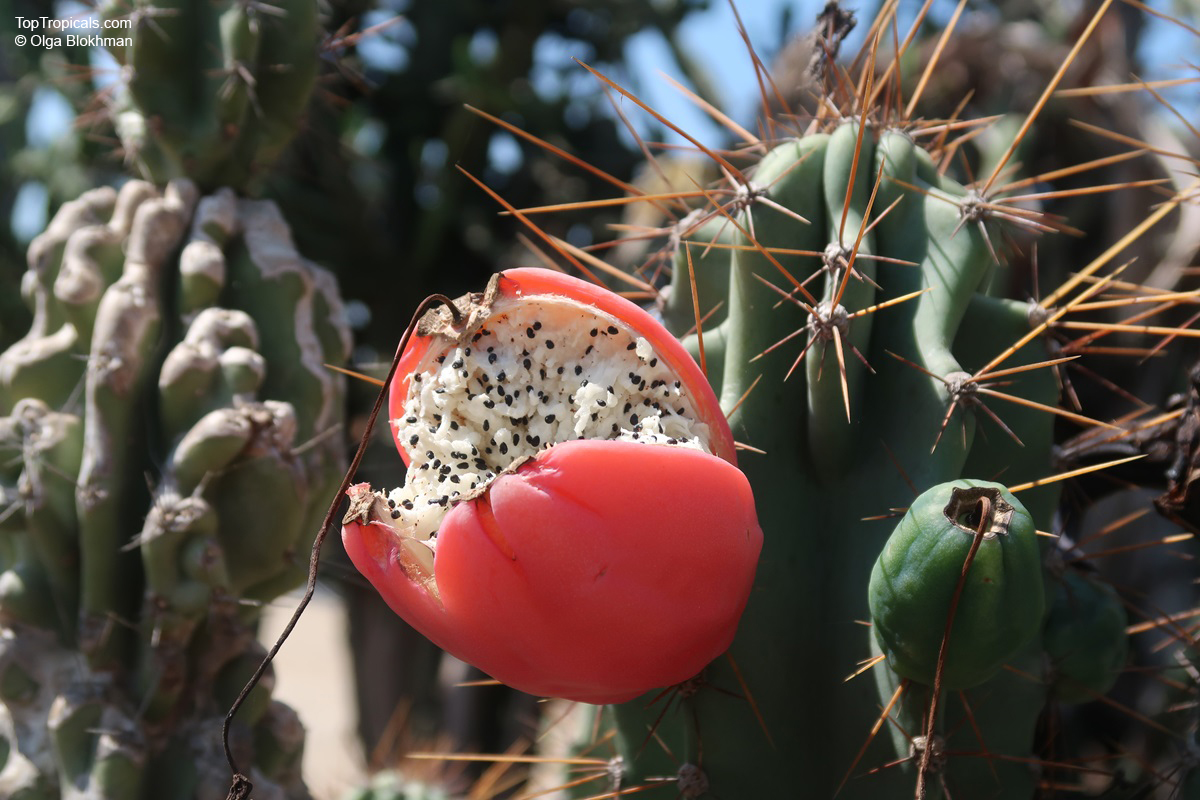
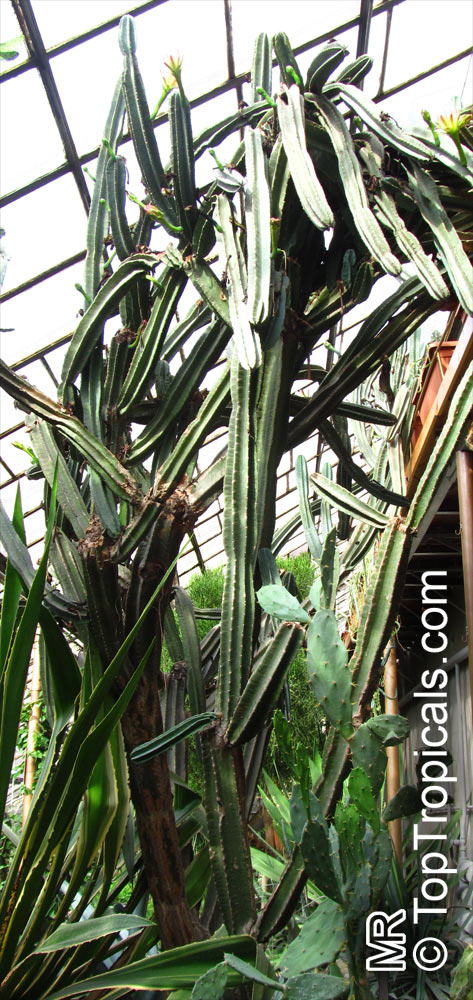
Cereus repandus, commonly known as Peruvian apple cactus, is a large columnar cactus in the Cactaceae family, native to northern South America and the Caribbean region. It is still much better known in horticulture under the familiar name Cereus peruvianus, which is widely used in nurseries and older literature. Plants develop tall, branching blue-green to gray-green stems with prominent ribs and clusters of spines, eventually forming impressive tree-like specimens. Large white, fragrant flowers open mainly at night and are followed by rounded to oval, usually red to purplish-red fruits with white edible pulp and numerous black seeds. The fruits are sometimes called Peruvian apples and can be eaten fresh. Monstrose forms with irregular, knobby or contorted stems are especially popular in cultivation, and cristate forms with fan-shaped growth also occur.
Cereus repandus thrives in full sun and sandy or rocky, very well-drained soil. Established plants are highly drought tolerant but grow faster with occasional deep watering during warm weather. Excess moisture, especially in cool conditions, can cause rot. Its upright form makes it useful as a dramatic accent, barrier, or large container specimen in dry landscapes. It is generally suitable for USDA Zones 9b-11 and tolerates brief light frost when established.
Cultivars: Cereus repandus (Night Blooming Cereus)
Similar plants: Cereus repandus (Night Blooming Cereus)