Allamanda blanchetii (Cherry Allamanda)
Botanical names: Allamanda blanchetii, Allamanda violacea
Common names: Cherry Allamanda, Purple Allamanda
Family: Apocynaceae
Origin: Brazil
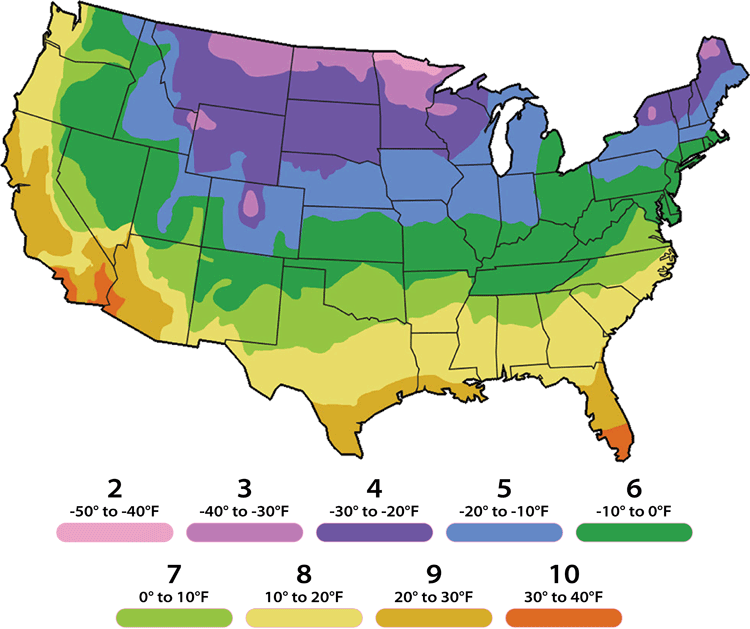
USDA Zone: 9a-11
 Plant form: Climbing or creeping vine
 Sun exposure: Full sun or bright light indoor; semi-shade
 Cold tolerance: Tolerates light freezing to about 30°F for short periods (mature plants). Young plants must be protected.
 Watering: Regular
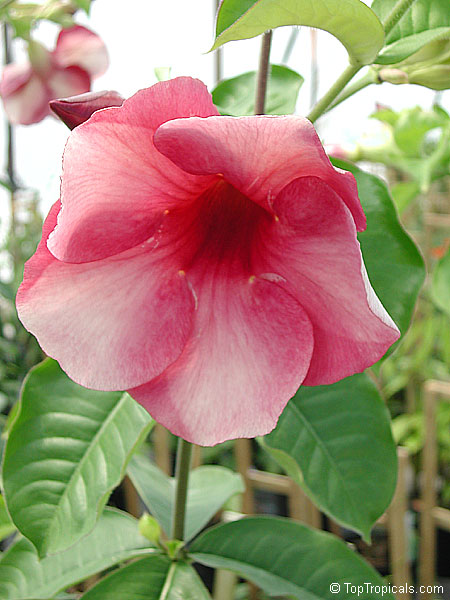
 Flower color: Pink
 Suitable for: Outdoors in the suitable USDA zone; small gardens, containers, and indoor growing
 Irritating or toxic: Irritating
 Wildlife: Attracts butterflies and hummingbirds
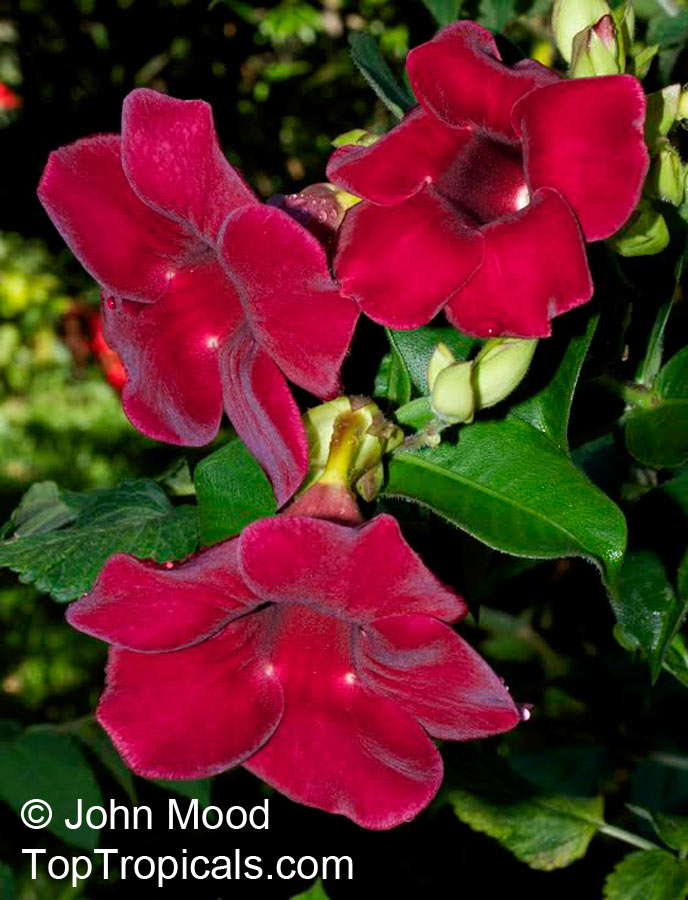
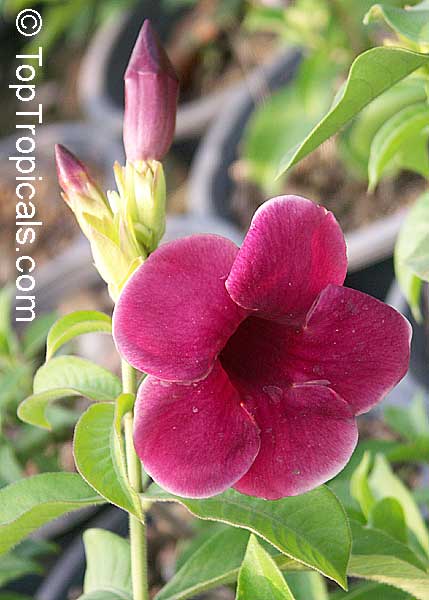
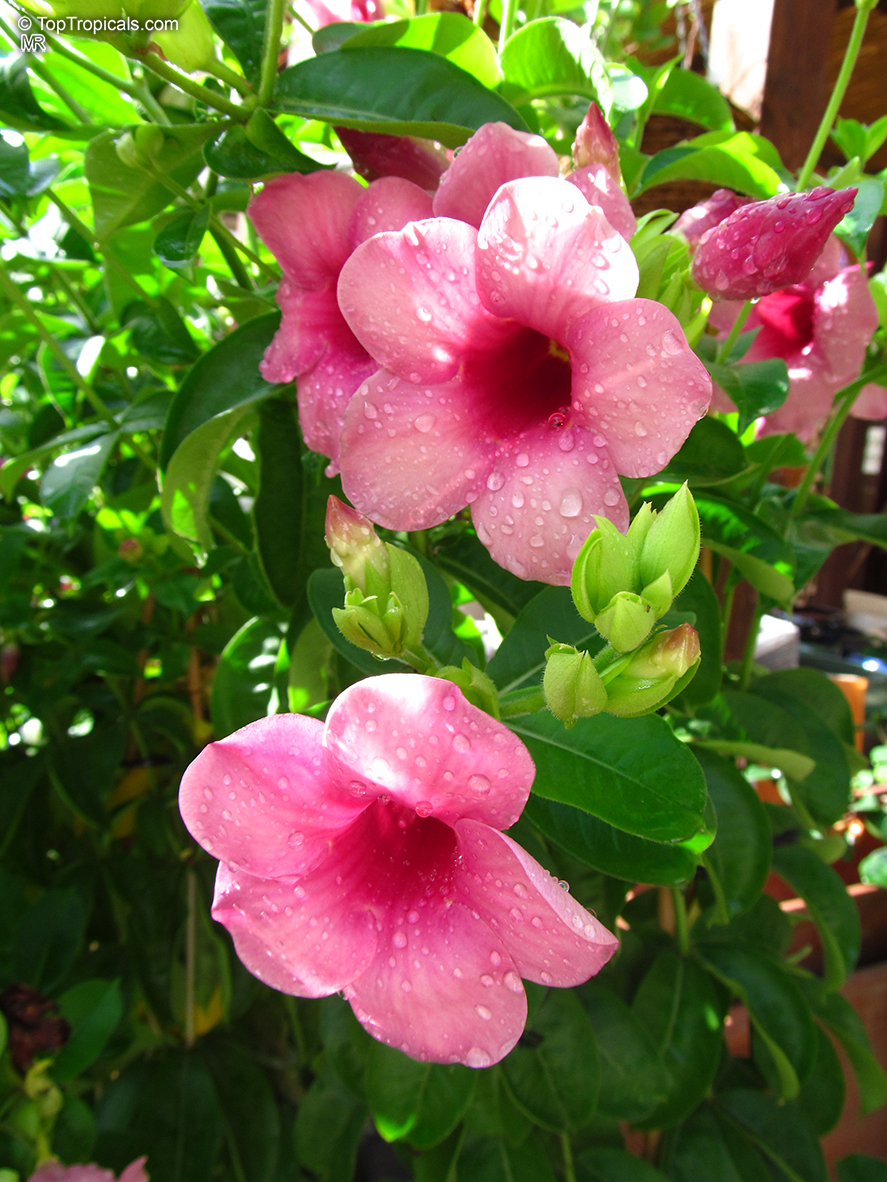
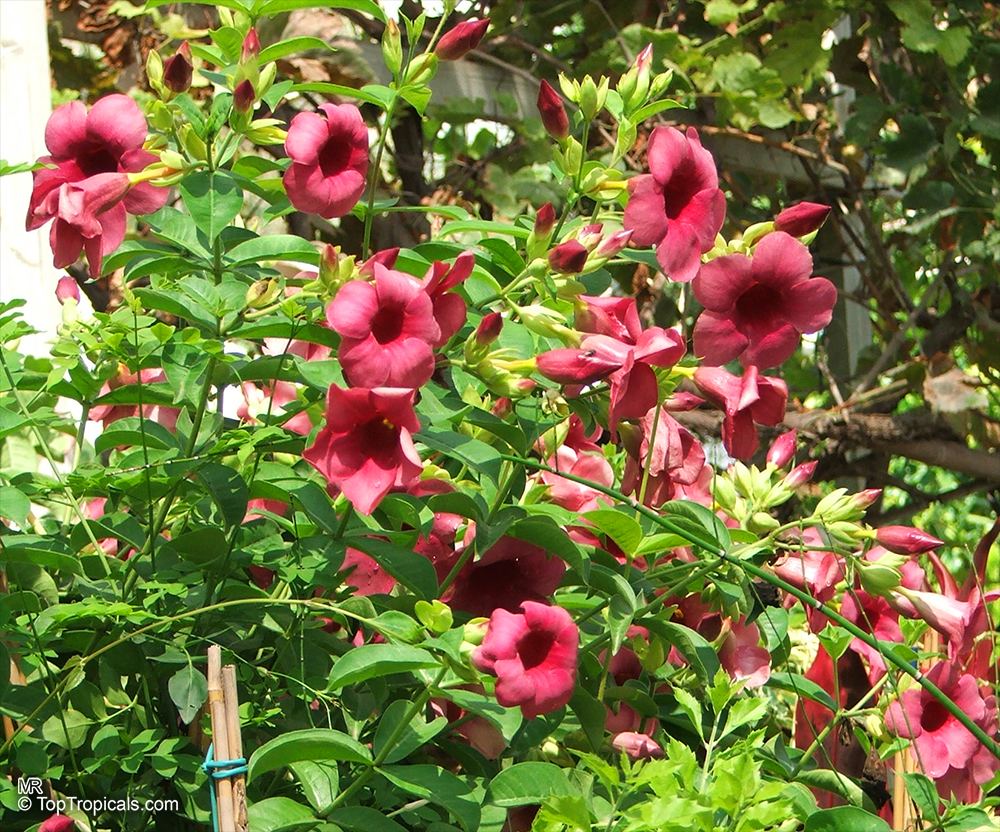
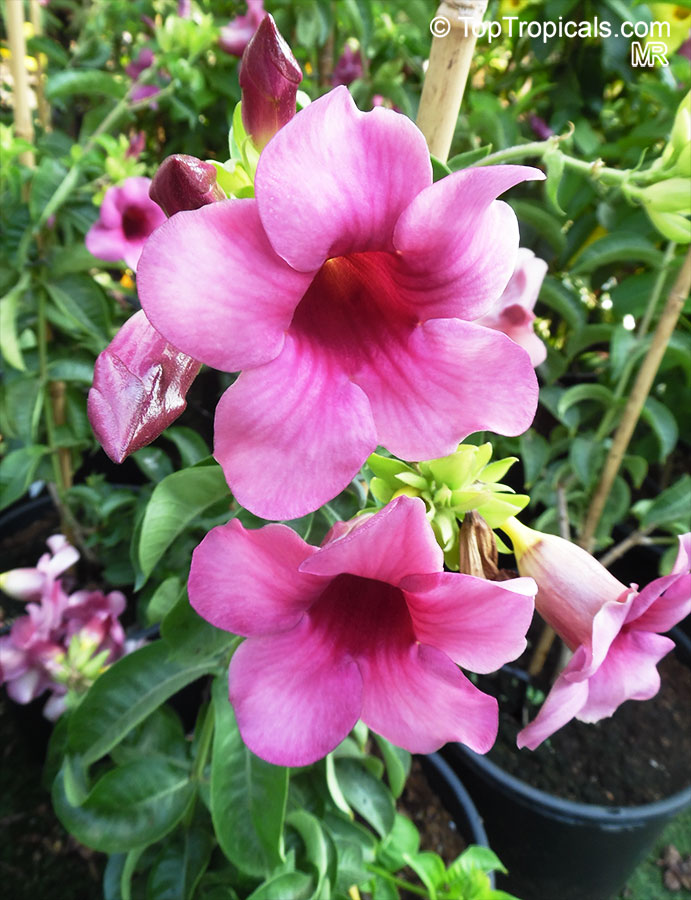
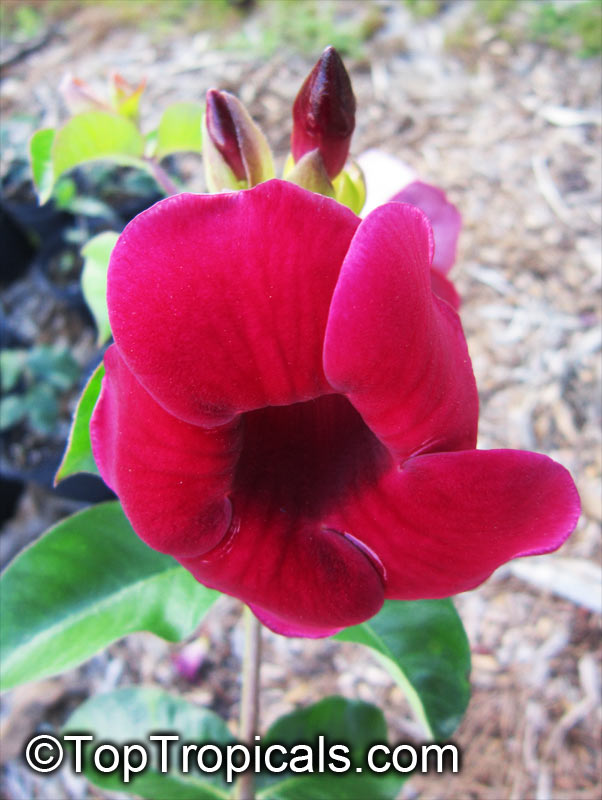
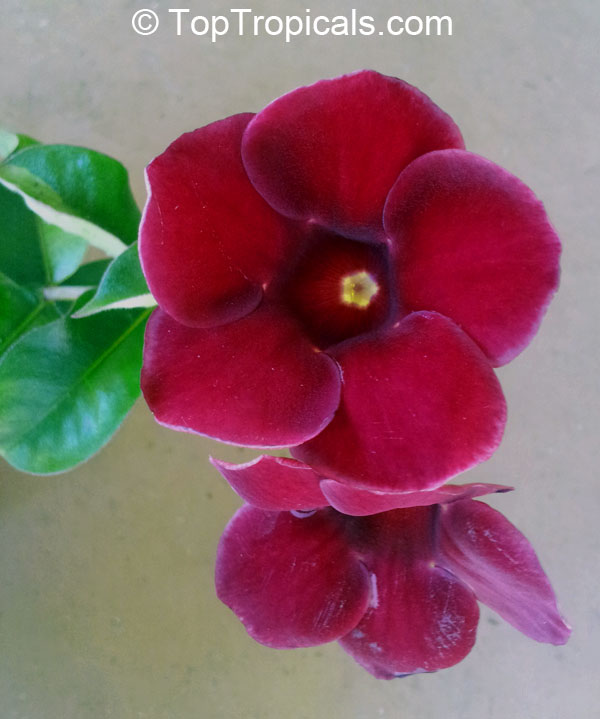
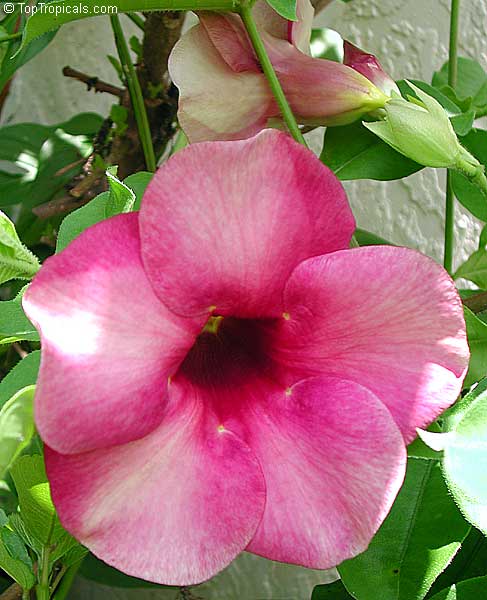
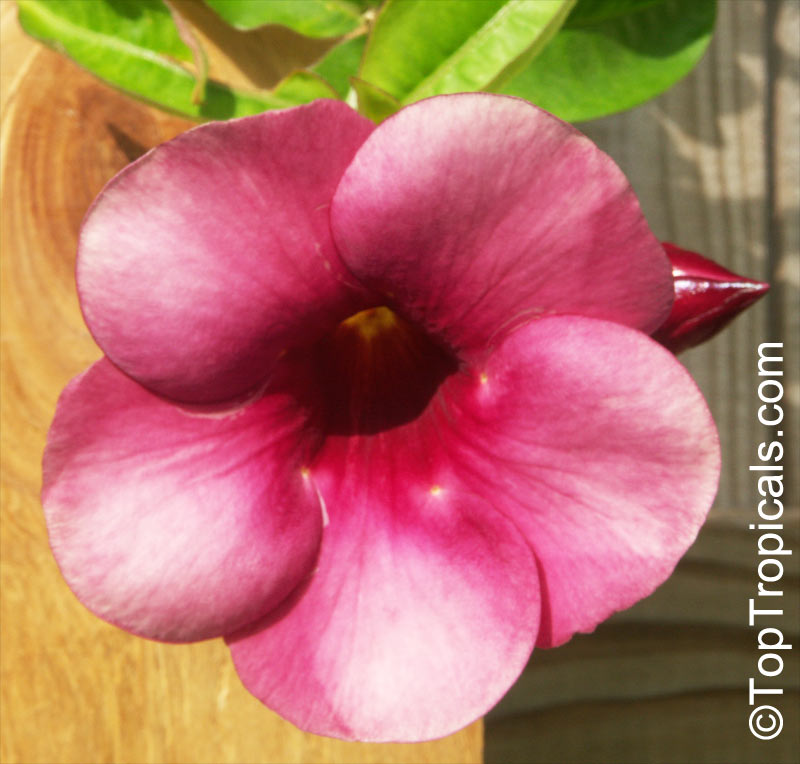
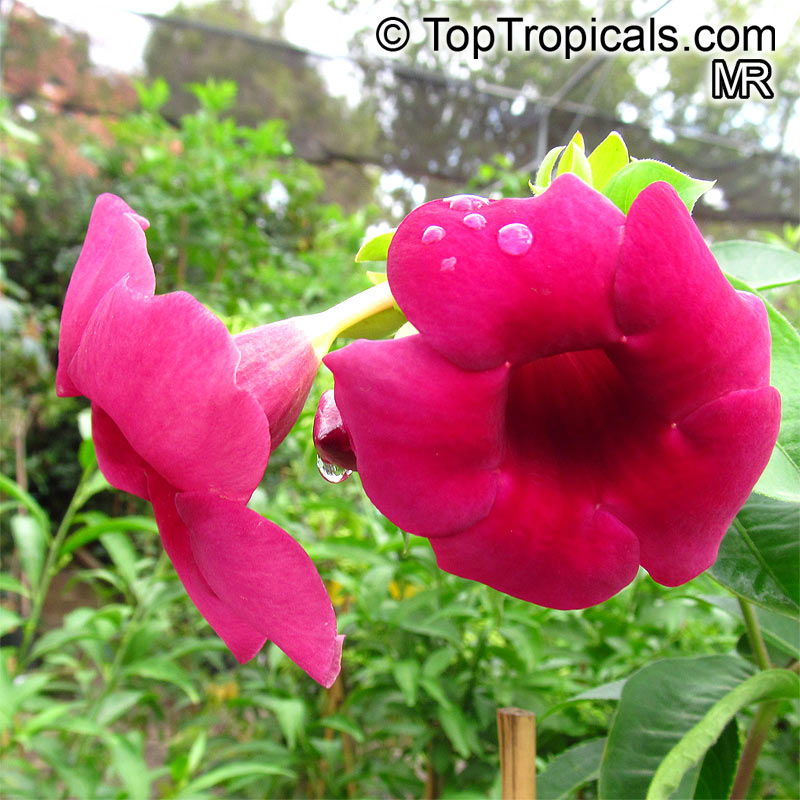
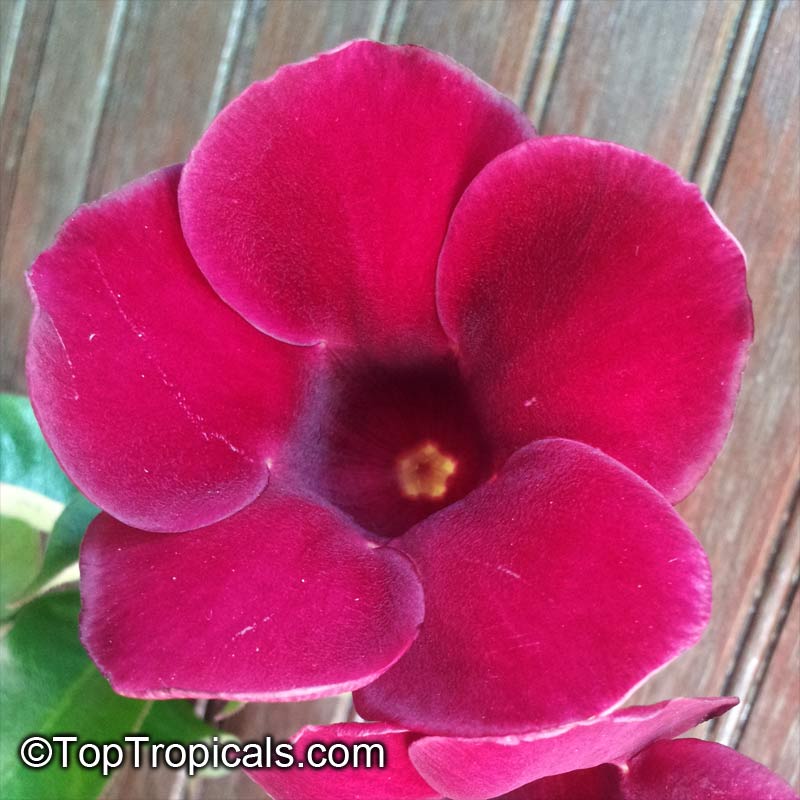
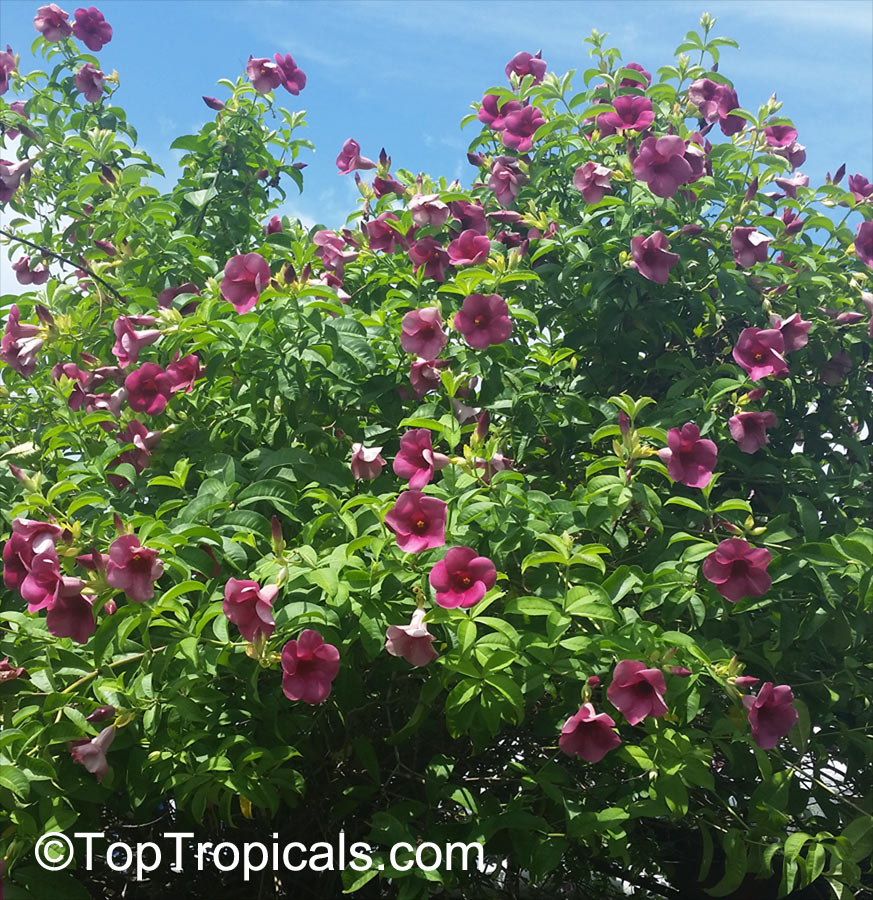
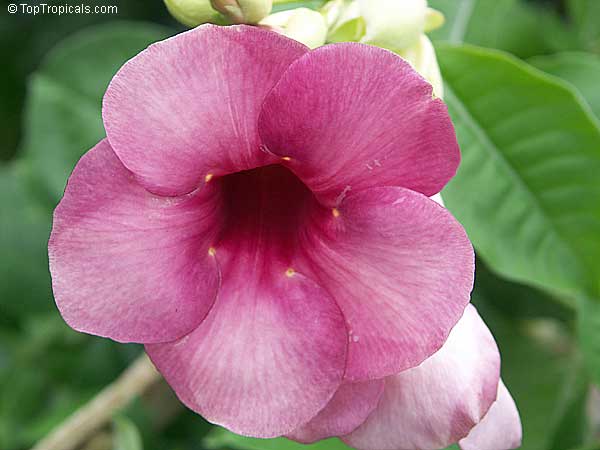
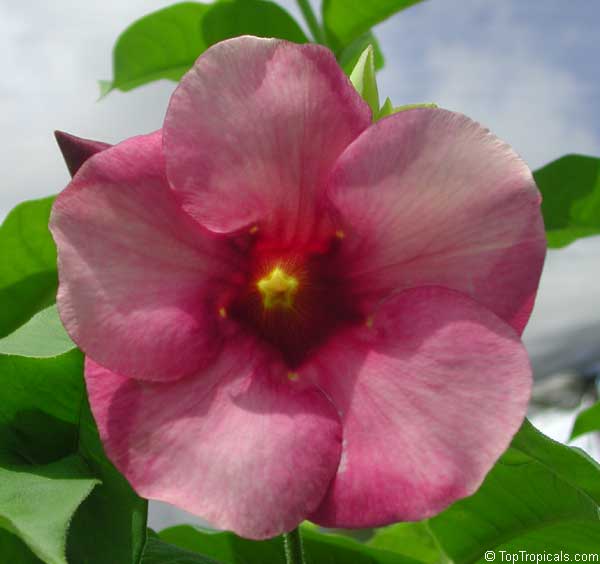
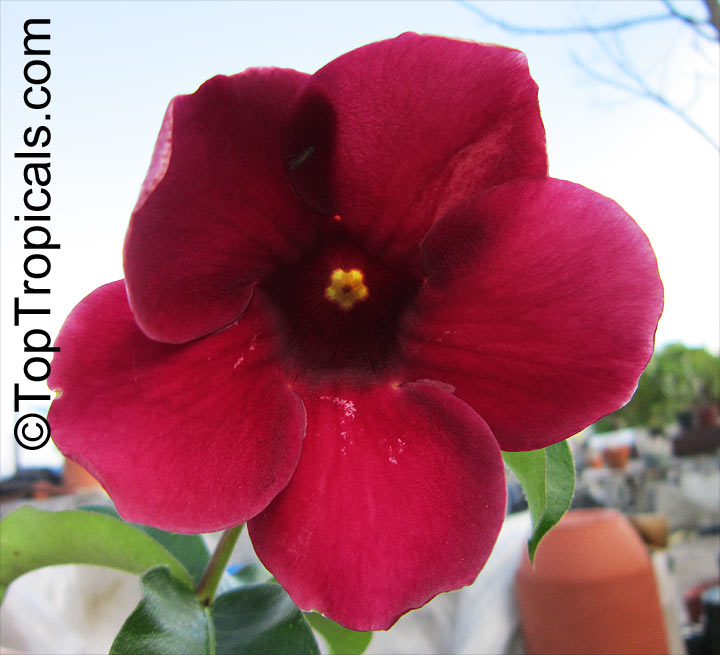
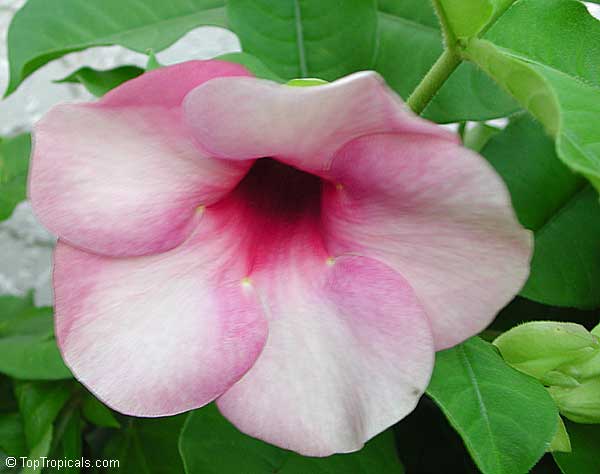
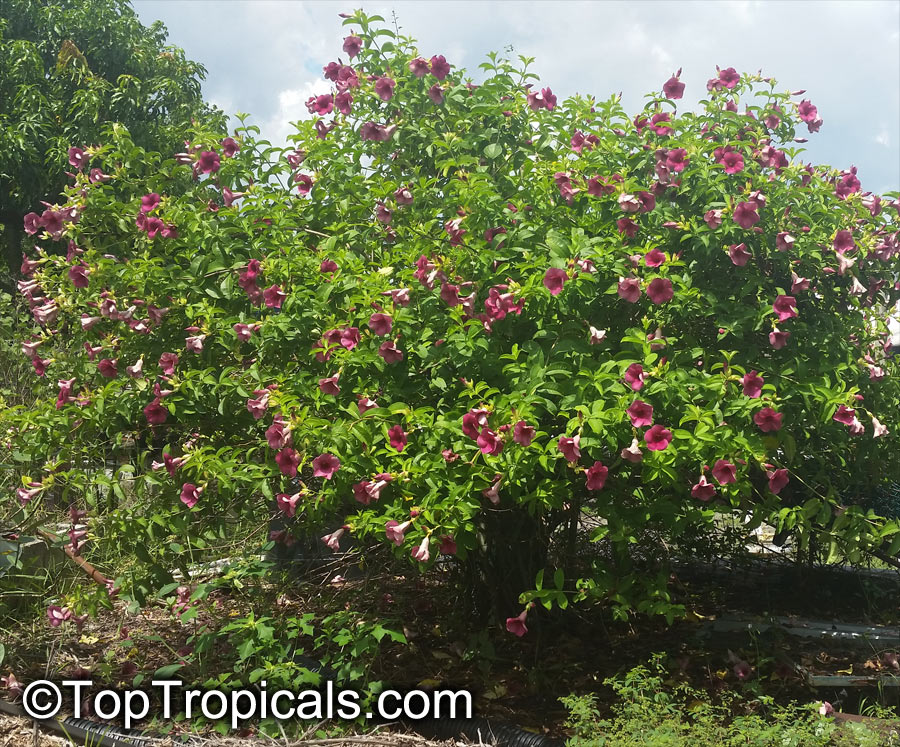
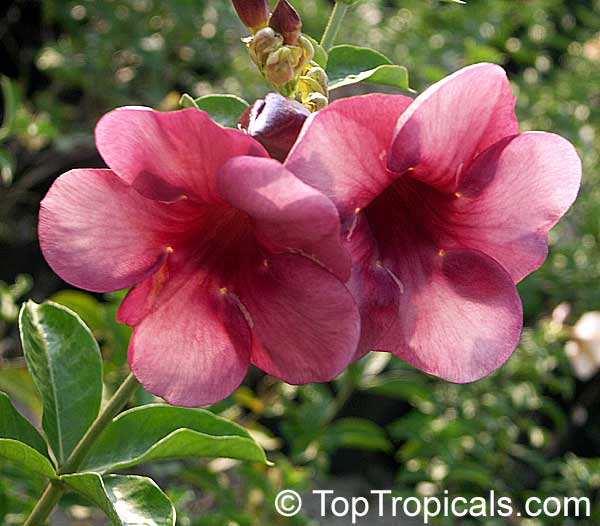
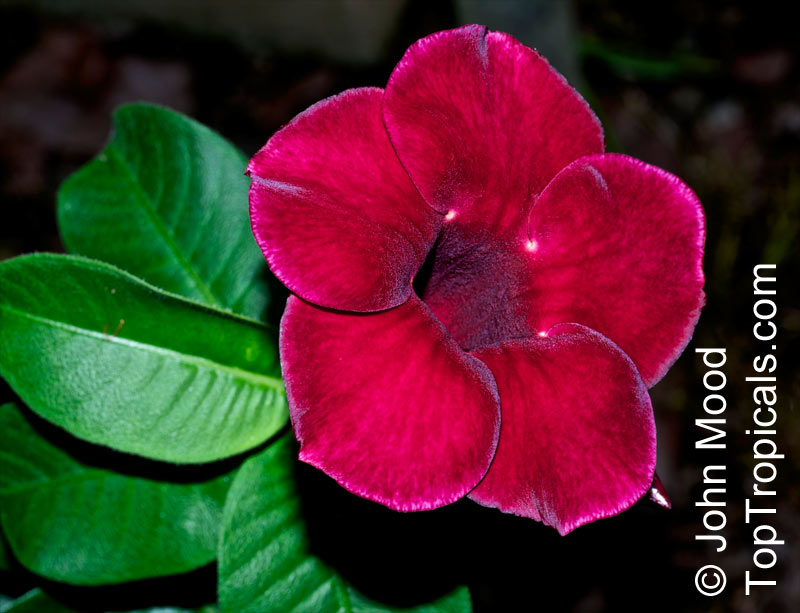
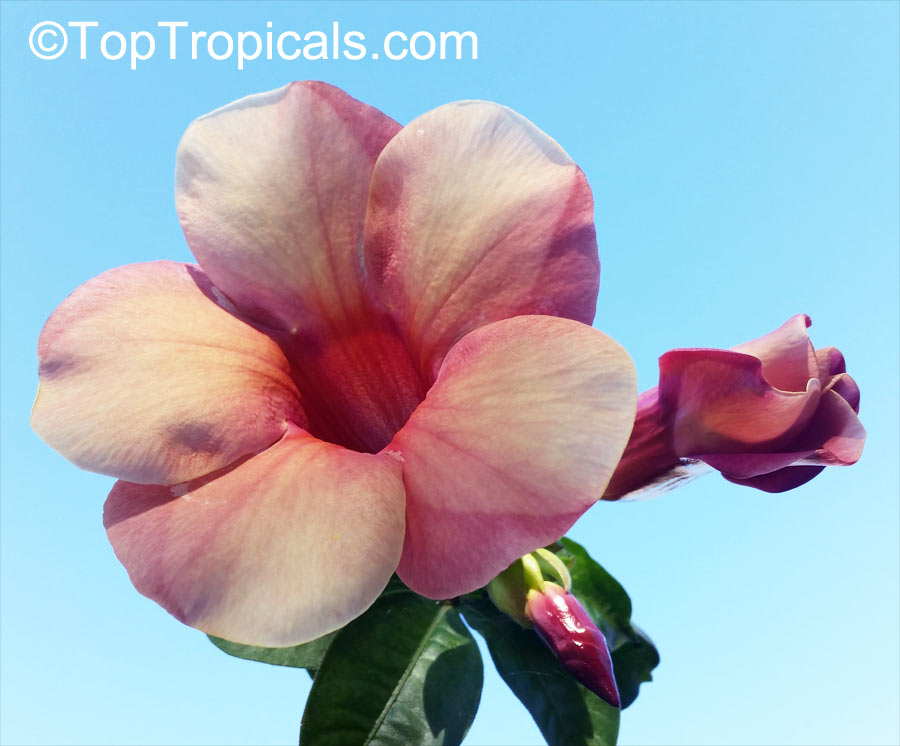
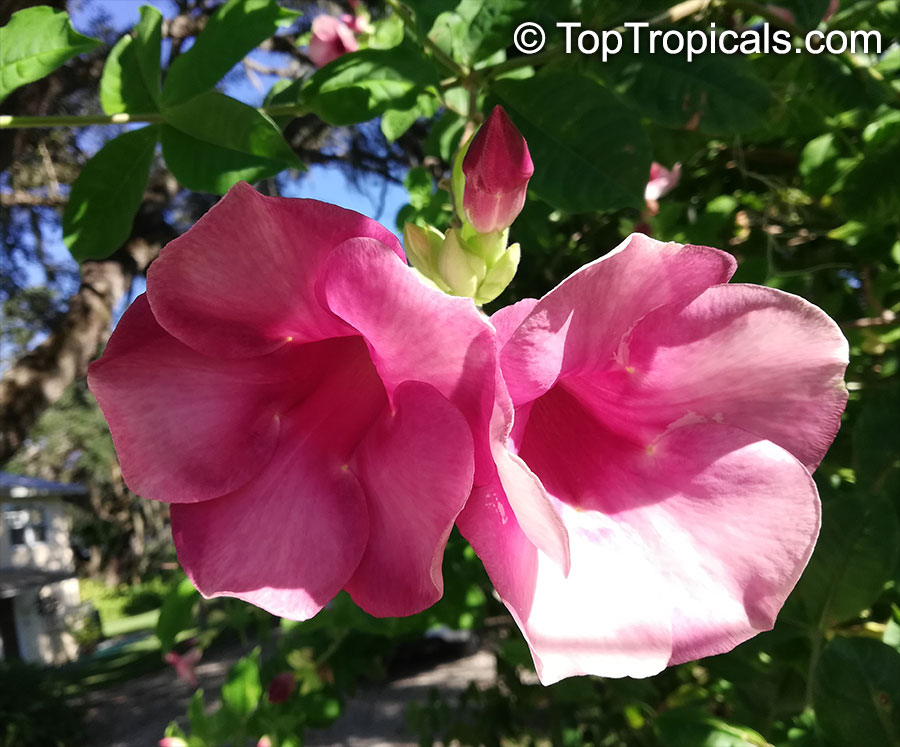
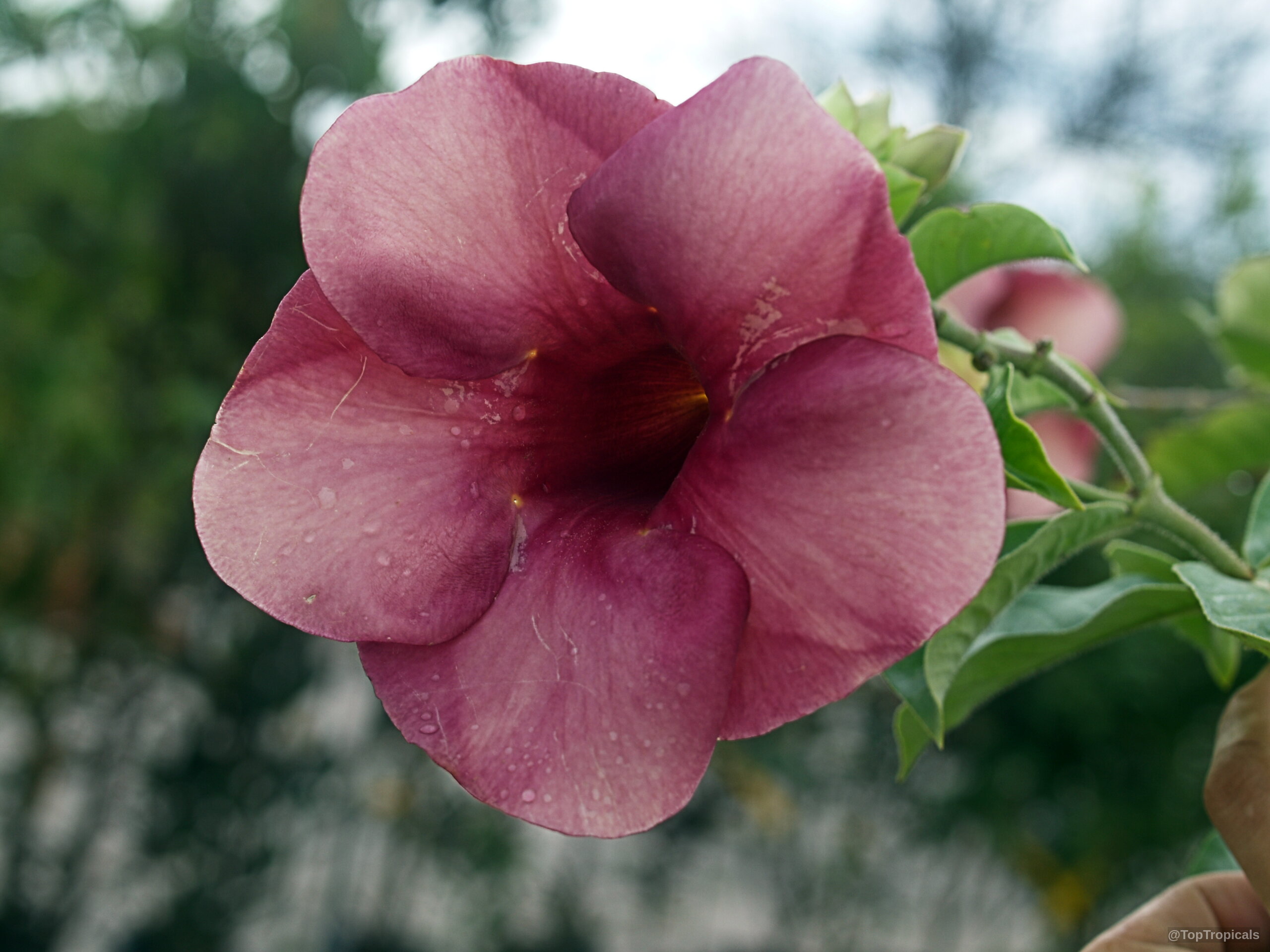
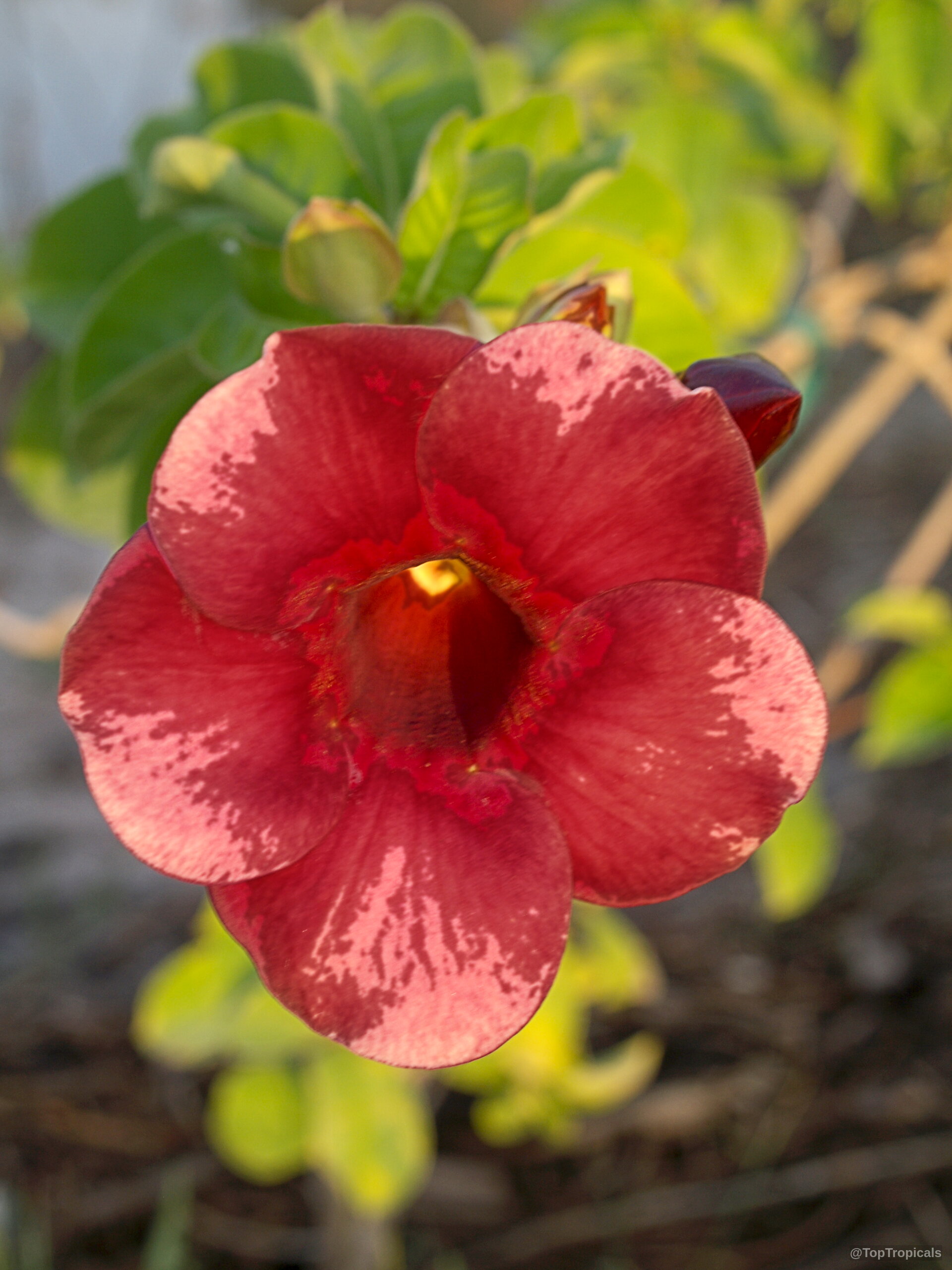
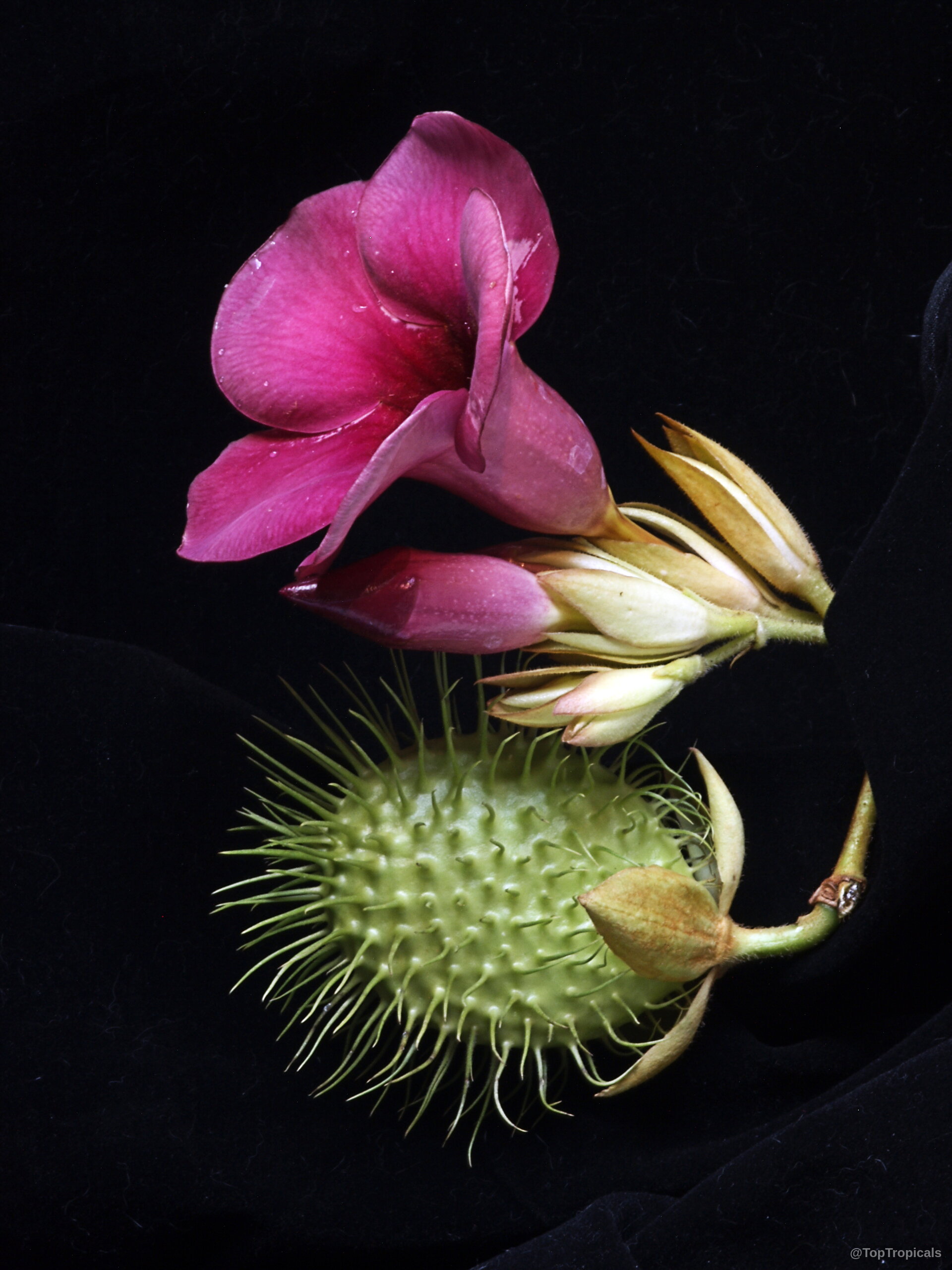
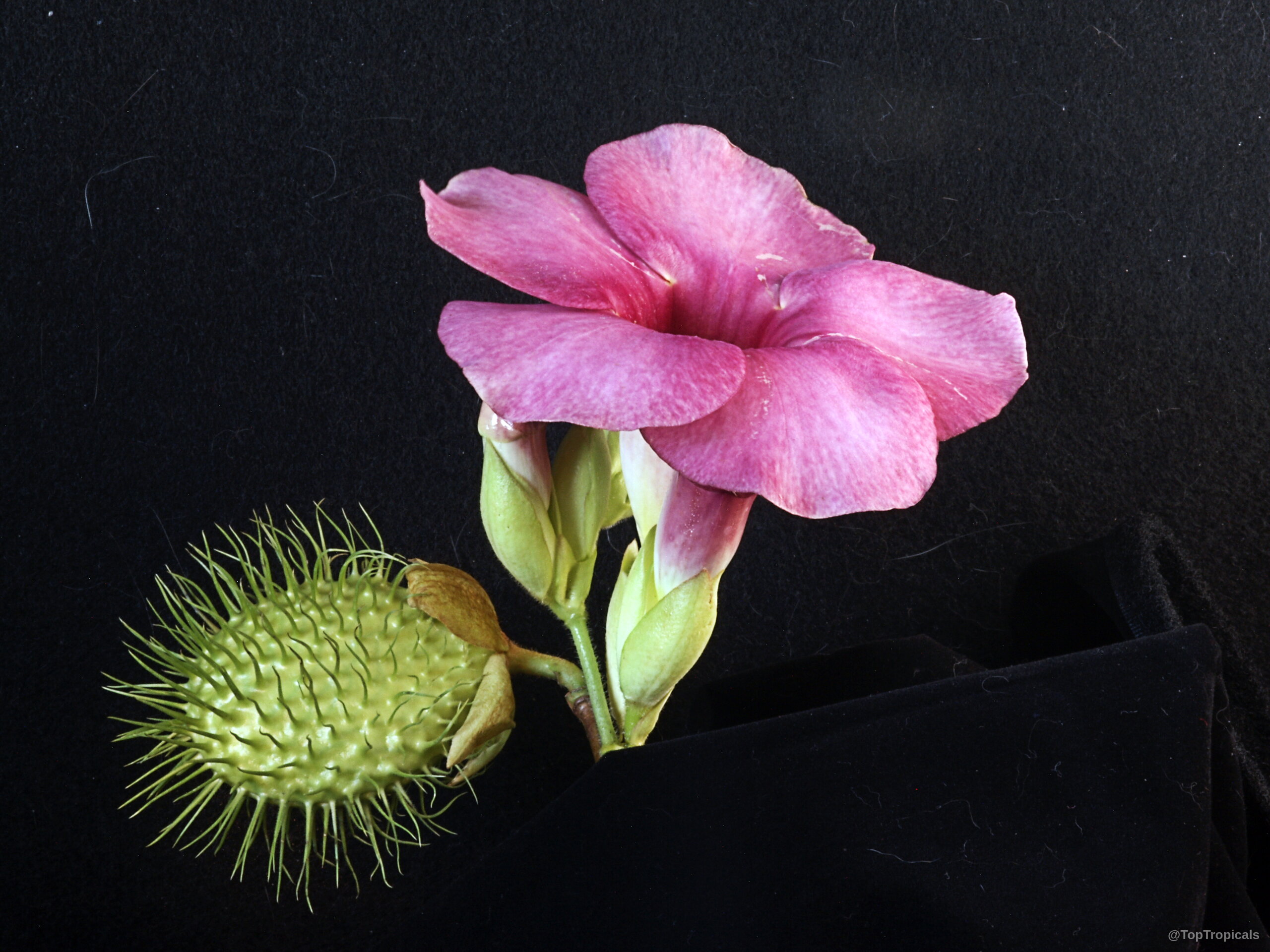
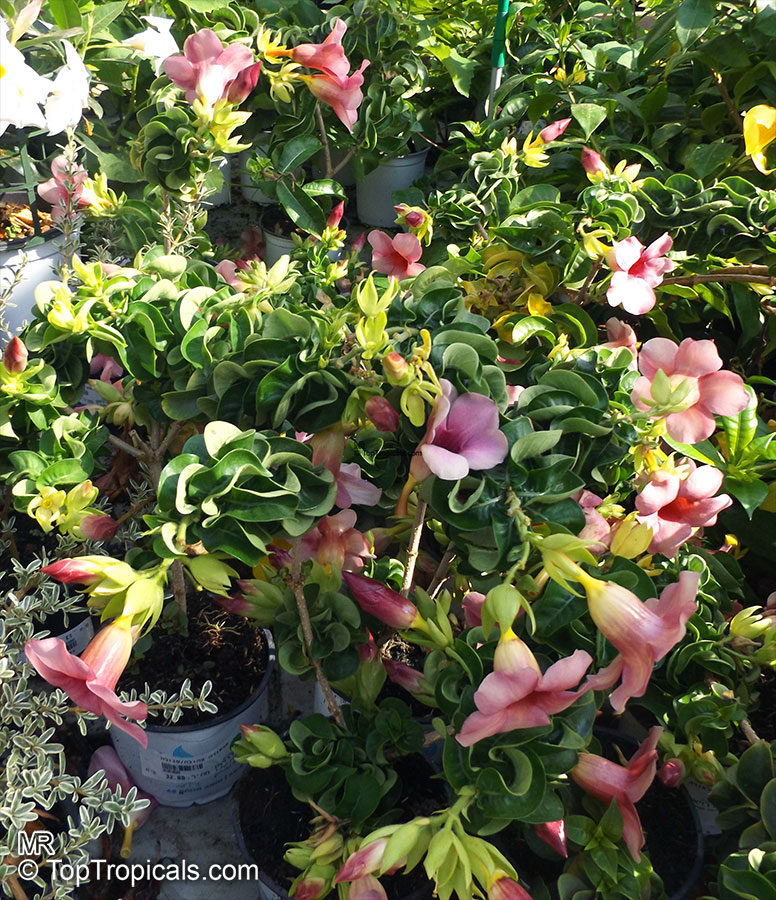
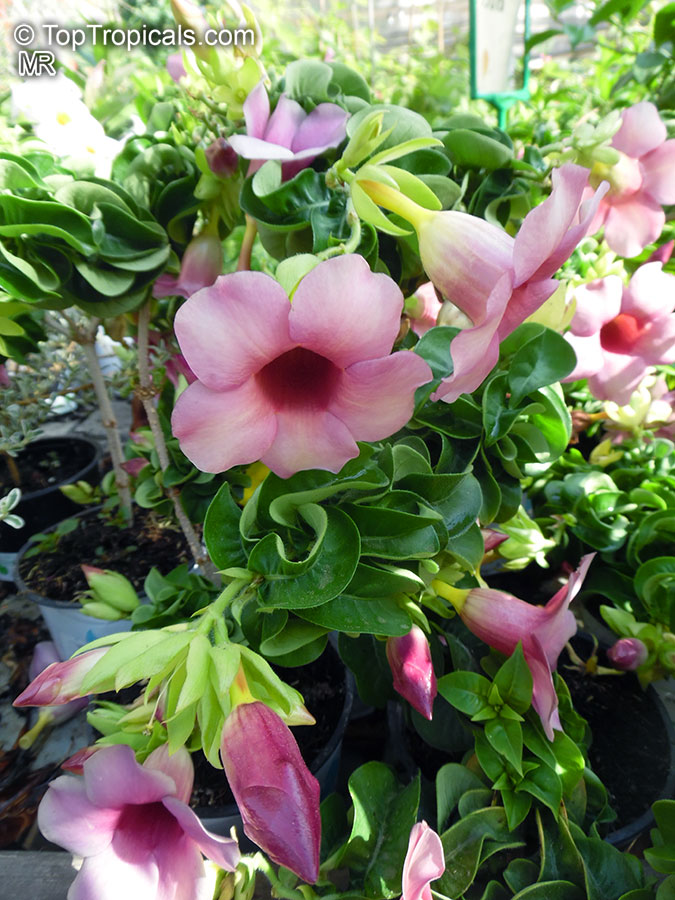
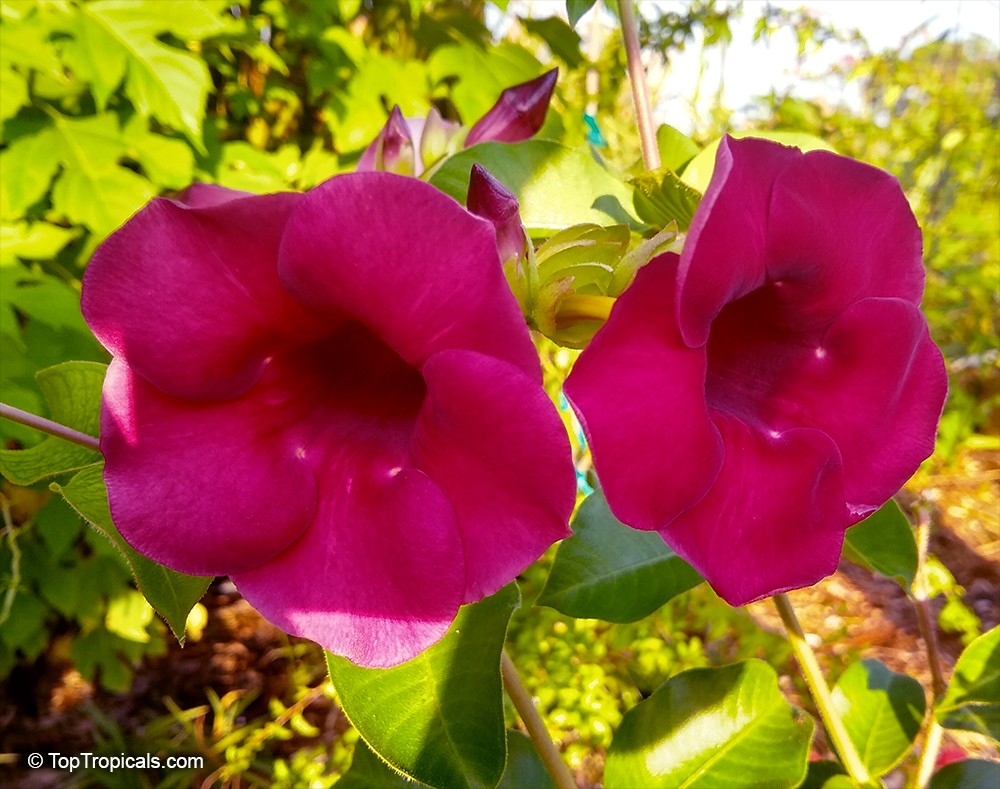
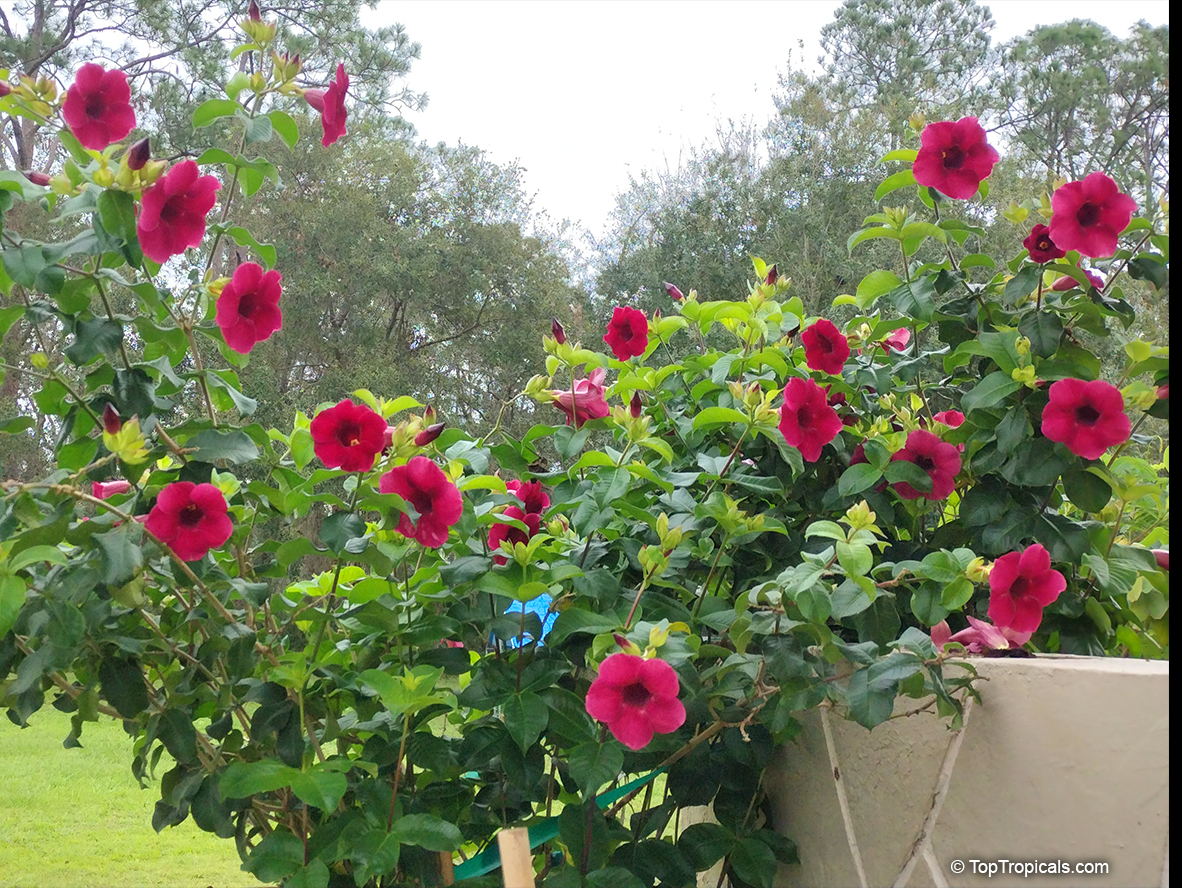
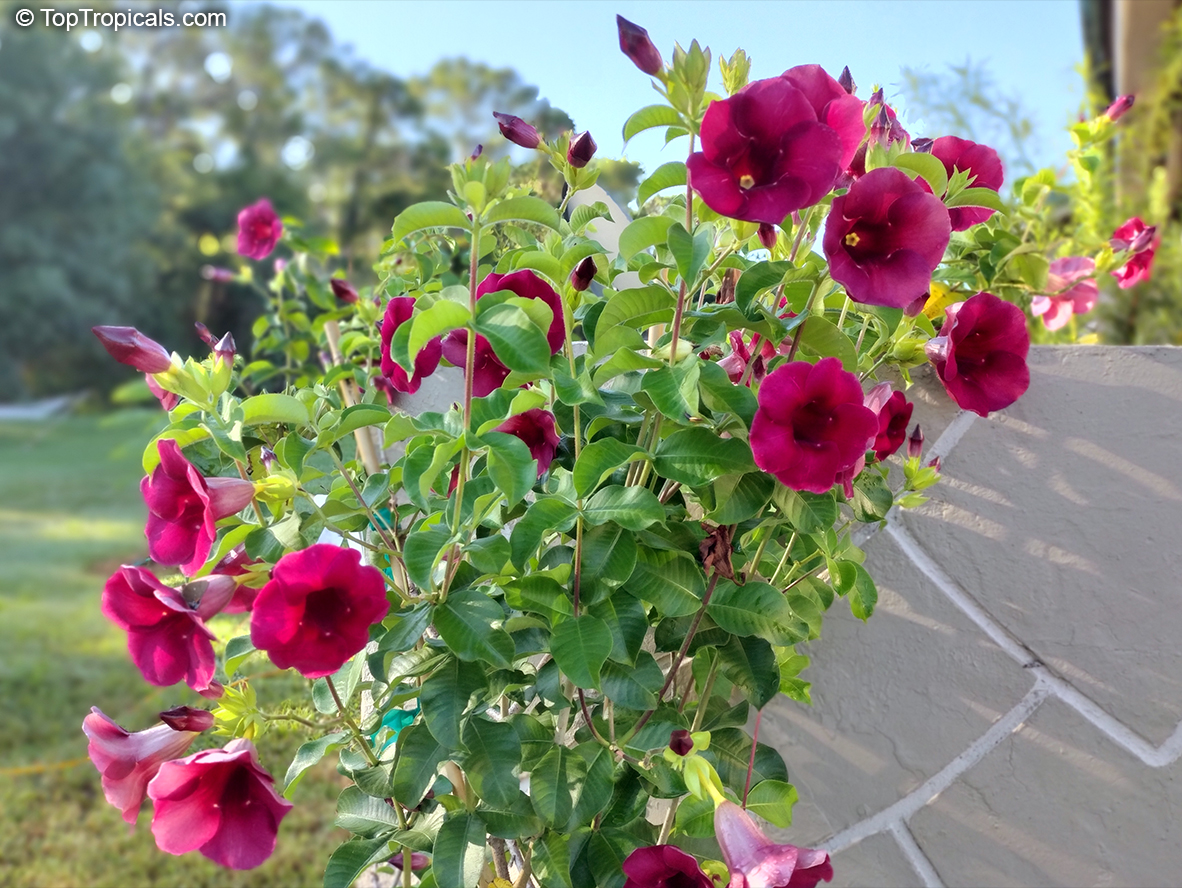
This evergreen tropical vine blooms during summer and fall: glossy point burgundy-brown buds open into flowers with 5 partially overlapped petals of an unusual tint of pink - cherry ice cream. Their narrow, funnel-shaped basements are a bit darker. In cool weather the petals change it's color for more saturate. The flowers are followed by thorny ovoid seed-capsules. Long, bright green, fuzzy leaves with slightly wavy edges are gathered in whisks on weak creeping stalks. During a season allamanda grows up for 2" to 9", highest possible height is 9-18ft. Using regular prune you can have a shrub or a twister. The plant has neither thorns nor tendrils it demands support to keep it's shape. It twists around in a certain specific direction. Do not try to change the direction - it may cause damage to the vine! As flowers are usually generated on young sprouts, late or too short prune may result in poor blossoming. The best time for pruning is November. Allamanda grows well in full sun or in light shade and prefers soil with good drainage. It does not tolerate either drought or flooding. From November till February the plant should have a time for repose - the optimal temperature is about 65F and watering must be less then usual (but the soil still should be always gently moist). In case of temperature drop below 59f for a long time the vine weakens and may die. Allamanda suffers from droughts to a more or lesser extent. Allamanda can be propagated by cuttings, air-layers, and seeds. Seeds come up in 3 - 6 weeks. They should be kept in a light, warm place, in moist but not wet soil. It grows well when was grafted on yellow allamanda. If grown indoors should be watered regularly with warm water. All the parts of the plant are toxic if it is swallowed. Latex can be irritating for skin. Can be cultivated as annual.
Similar plants: Allamanda blanchetii (Cherry Allamanda)
- Allamanda cathartica (Golden Trumpet Shrub)
- Allamanda hendersonii (Golden Trumpet Vine)
- Allamanda schottii (Dwarf Golden Trumpet)
- Allamanda sp. 'Alba' (Allamanda Blanca)
- Allamanda violacea (Allamanda)
- Allamanda williamsii (Golden Trumpet Vine)
- Allamanda x violacea Cabernet 'Cabernet' (Mini Red Allamanda)

Recommended Fertilizer: SUNSHINE Megaflor - Bloom Nutrition Booster
Recommended Fertilizer: SUNSHINE Megaflor - Bloom Nutrition Booster