Stenochlaena tenuifolia (African Climbing Fern)
Botanical names: Stenochlaena tenuifolia, Lomariopsis tenuifolia
Common name: African Climbing Fern
Family: Blechnaceae
Origin: Tropical Africa
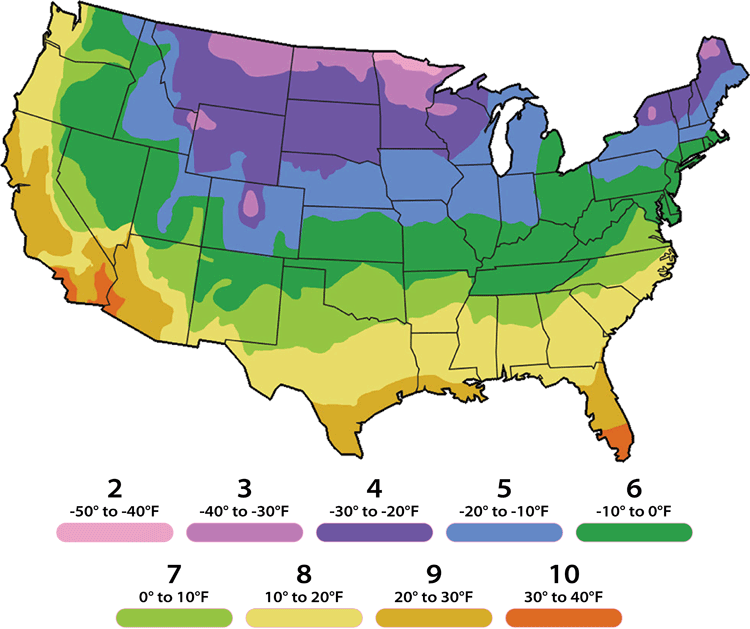
USDA Zone: 10-11
 Plant form: Small
 Mature height: 2-5 ft

 Sun exposure: Full sun or bright light indoor; semi-shade; shade
 Cold tolerance: Frost sensitive. Protect from freezing.
 Watering: Regular; moderate
 Suitable for: Outdoors in the suitable USDA zone; small gardens, containers, and indoor growing
 Ethnomedical: Ethnomedical plant, traditionally used in folk or indigenous medicine
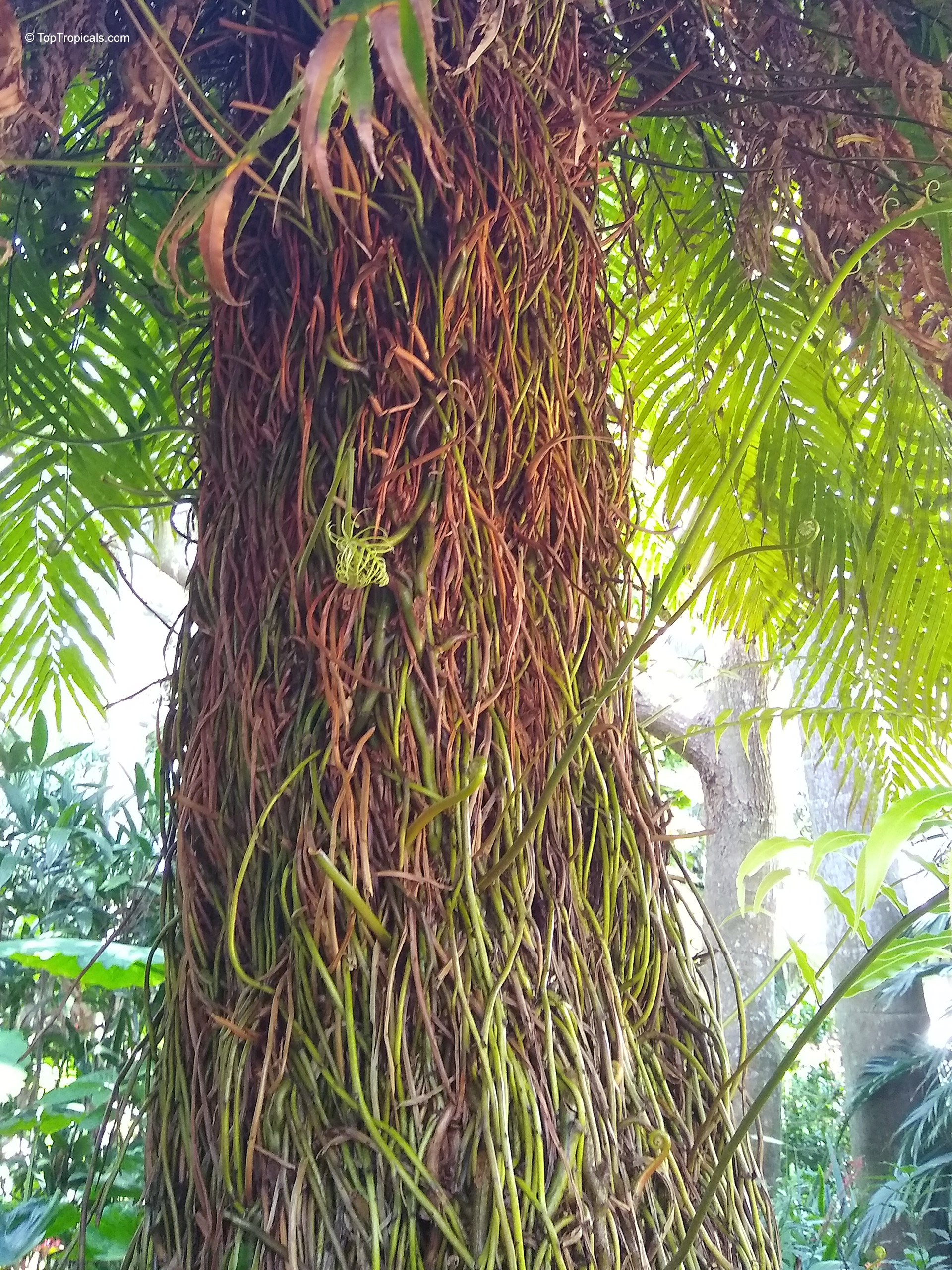
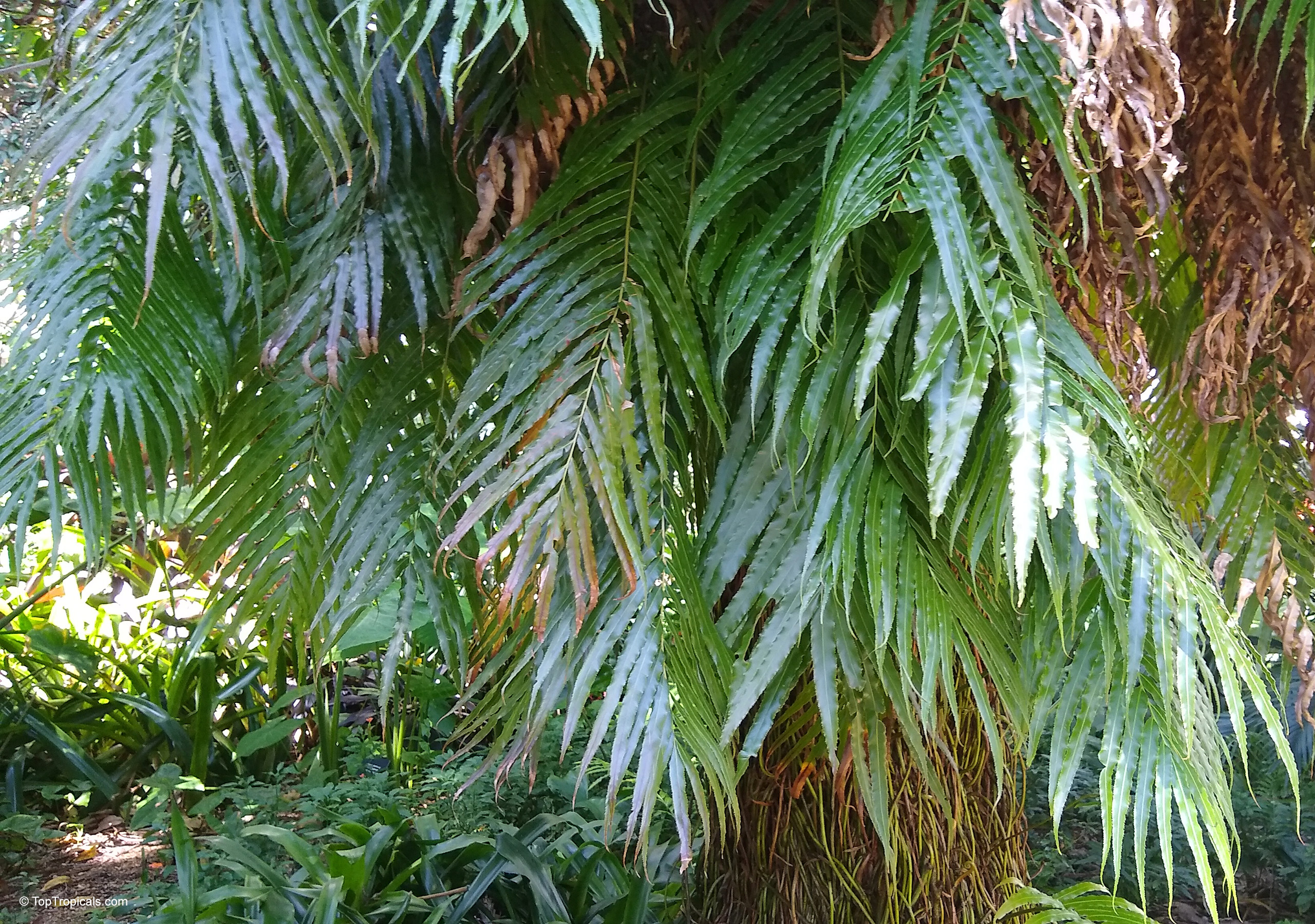
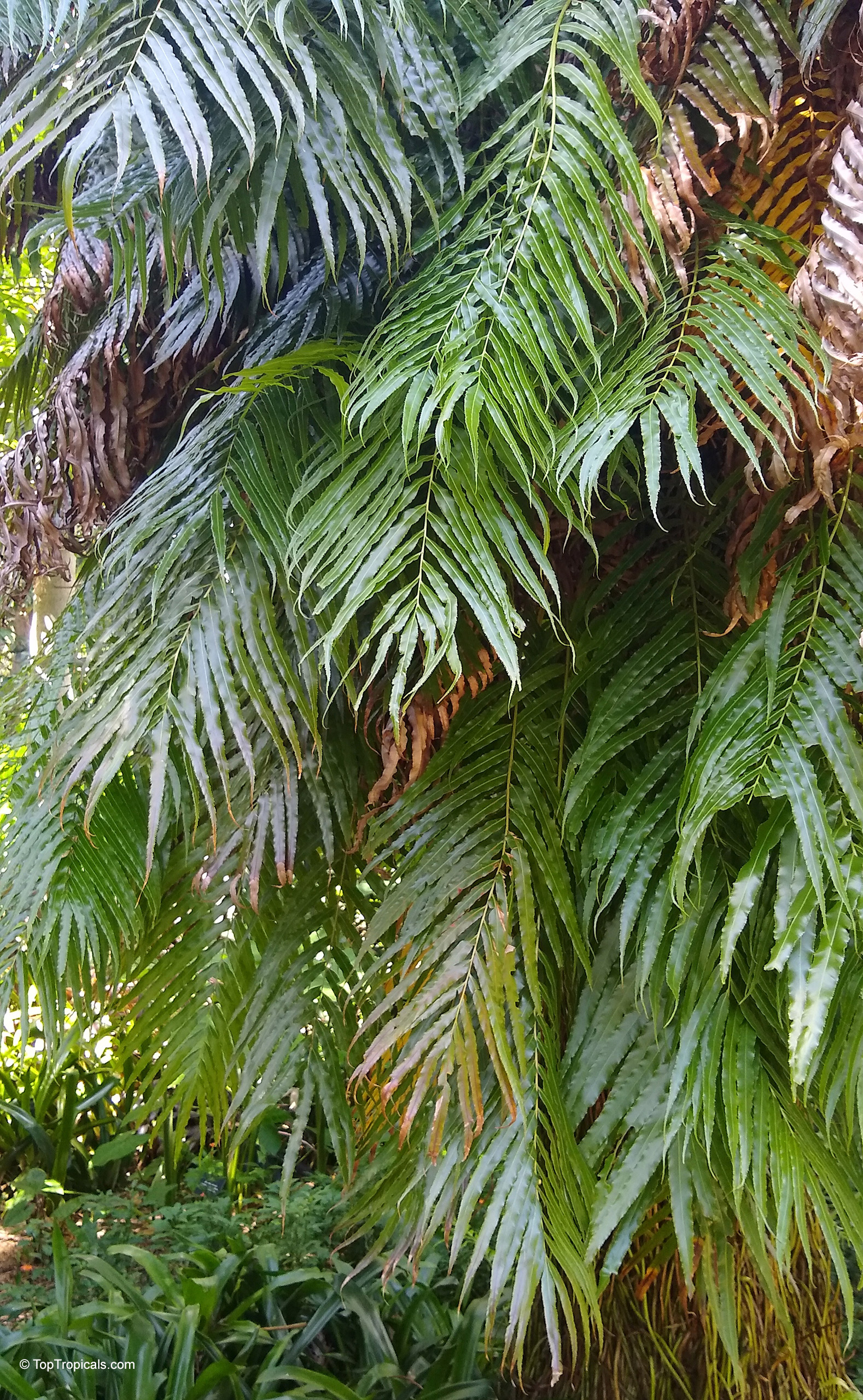
Stenochlaena tenuifolia, commonly known as African Climbing Fern or Giant Vine Fern, is a large climbing fern native to tropical and southern Africa, the Comoros, and Madagascar. It is a vigorous root-climber of wet tropical forests, with a long creeping or climbing rhizome that may extend 20 m or more and ascend high into surrounding trees. The climbing rhizome produces numerous adventitious roots that attach to trunks and other supports, allowing it to continue upward. Fronds are widely spaced along the rhizome and are dimorphic: broad pinnate sterile fronds contrast with much narrower fertile fronds or segments bearing sporangia.
Stenochlaena tenuifolia grows best in warm, humid conditions, partial shade to filtered light, and moist, organic, well-drained soil. It requires a substantial vertical support, such as a tree trunk, where its aerial roots can attach as the rhizome climbs. In suitable tropical conditions it can become a very large, vigorous plant rather than forming the compact clump typical of many ornamental ferns. Best suited to frost-free USDA Zones 10-12, it should be protected from cold and drying conditions. The species was long known as Lomariopsis tenuifolia, a name still widespread in horticulture and older botanical literature, but current taxonomy places it in Stenochlaena; Lomariopsis tenuifolia is now treated as a synonym.