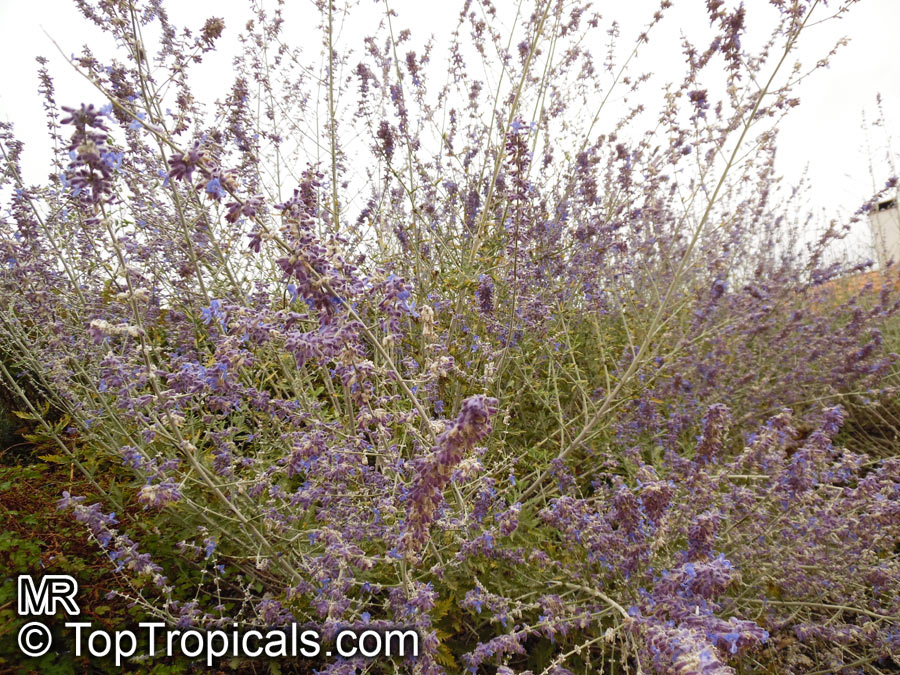
Perovskia sp. (Russian Sage)
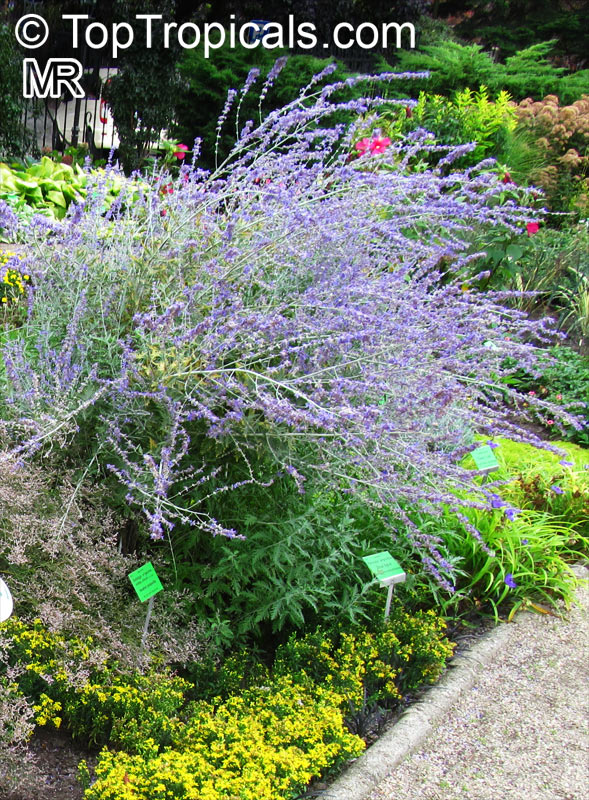
Botanical name: Perovskia sp.
Common name: Russian Sage
Family: Lamiaceae
Origin: Southwestern and Central Asia
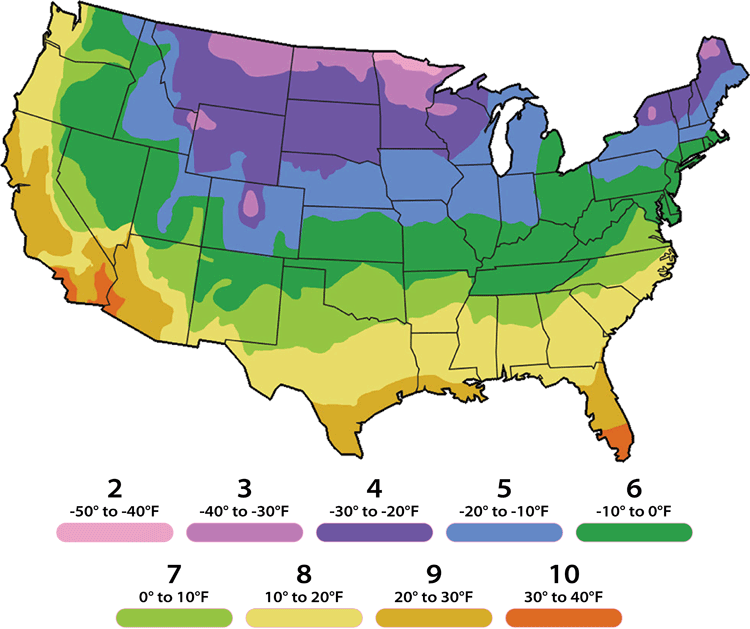
USDA Zone: 4-9
 Plant form: Small
 Mature height: 2-5 ft
 Sun exposure: Full sun or bright light indoor; semi-shade
 Cold tolerance: Tolerates light freezing to about 30°F for short periods (mature plants). Young plants must be protected.
 Watering: Moderate
 Flower color: Blue, lavender, purple
 Suitable for: Outdoors in the suitable USDA zone; small gardens, containers, and indoor growing
 Foliage color: Ornamental foliage
 Fragrance: Fragrant; perfume plant
 Wildlife: Attracts butterflies and hummingbirds
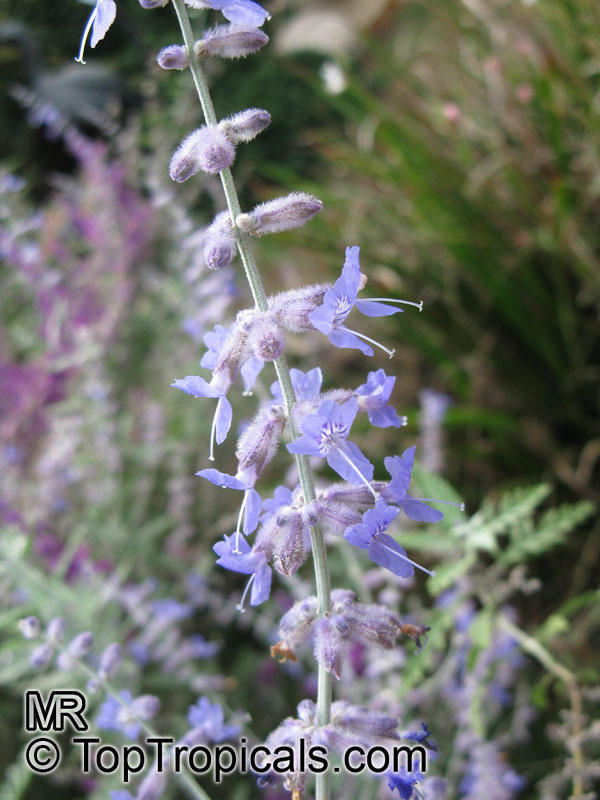
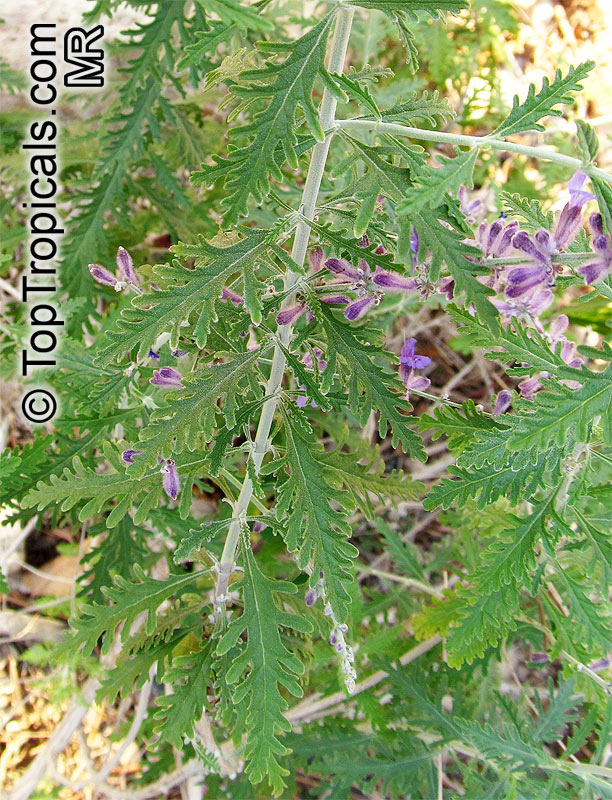
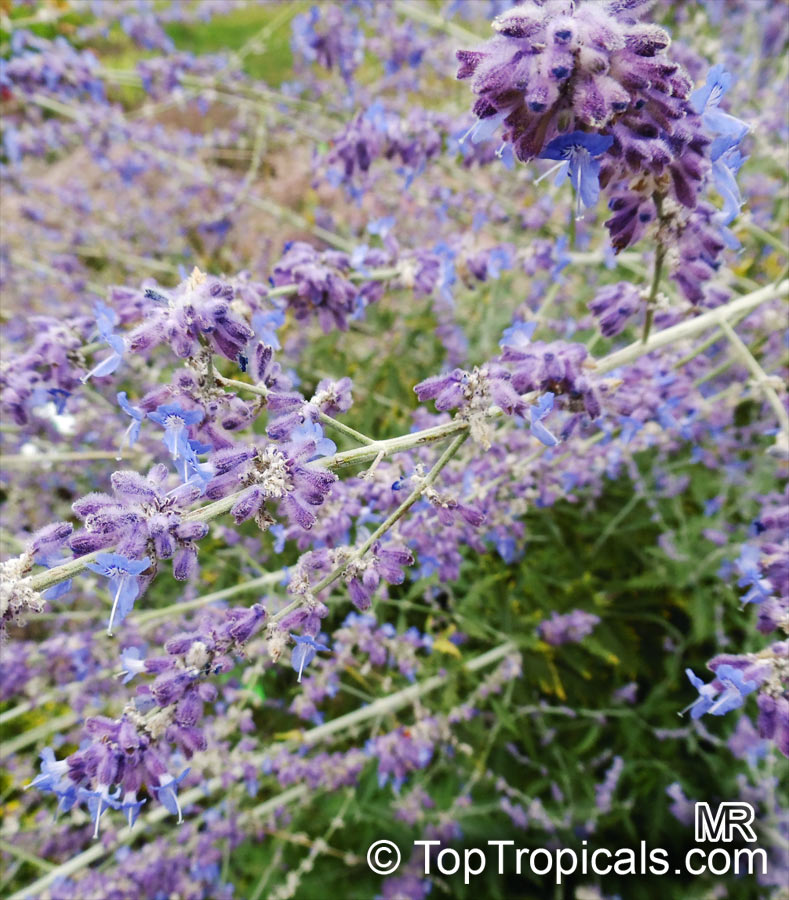
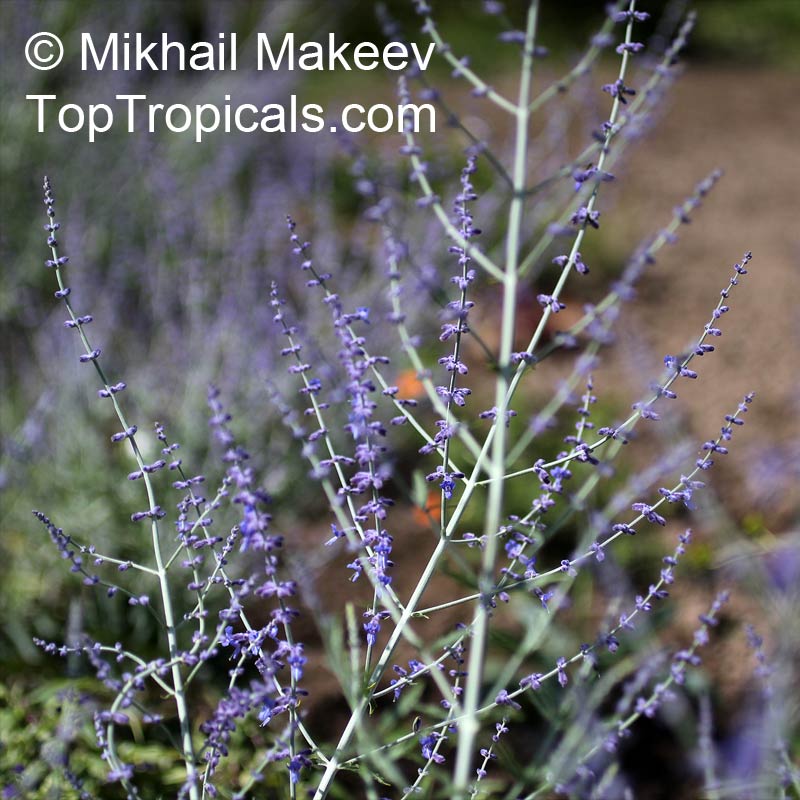
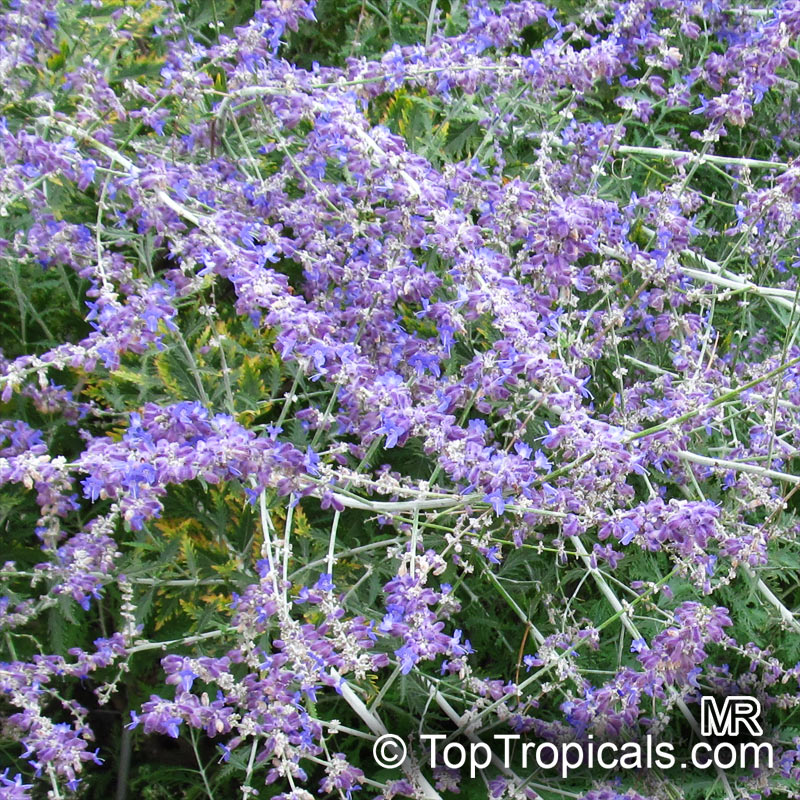
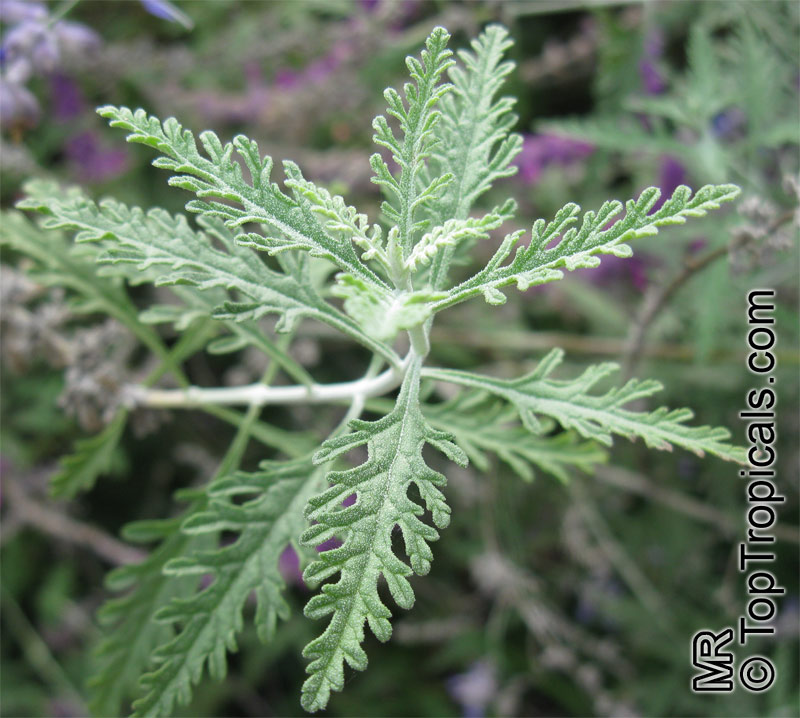
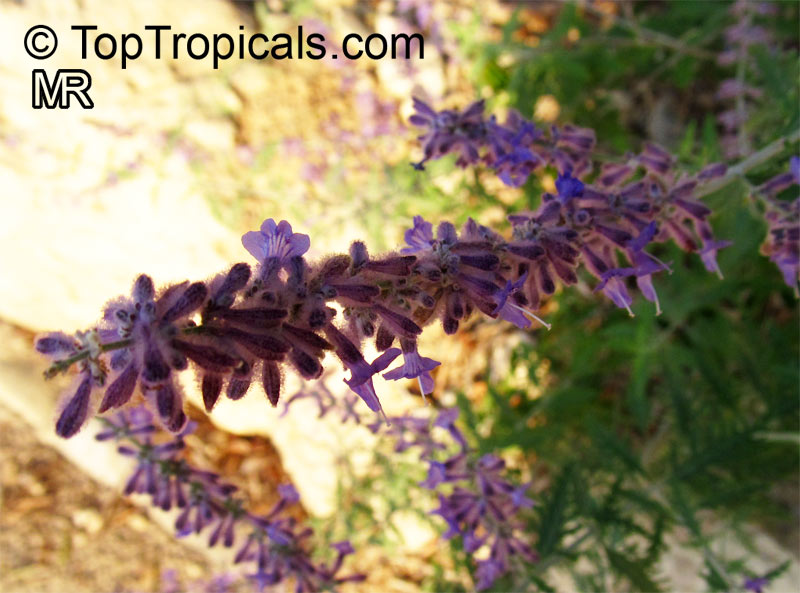
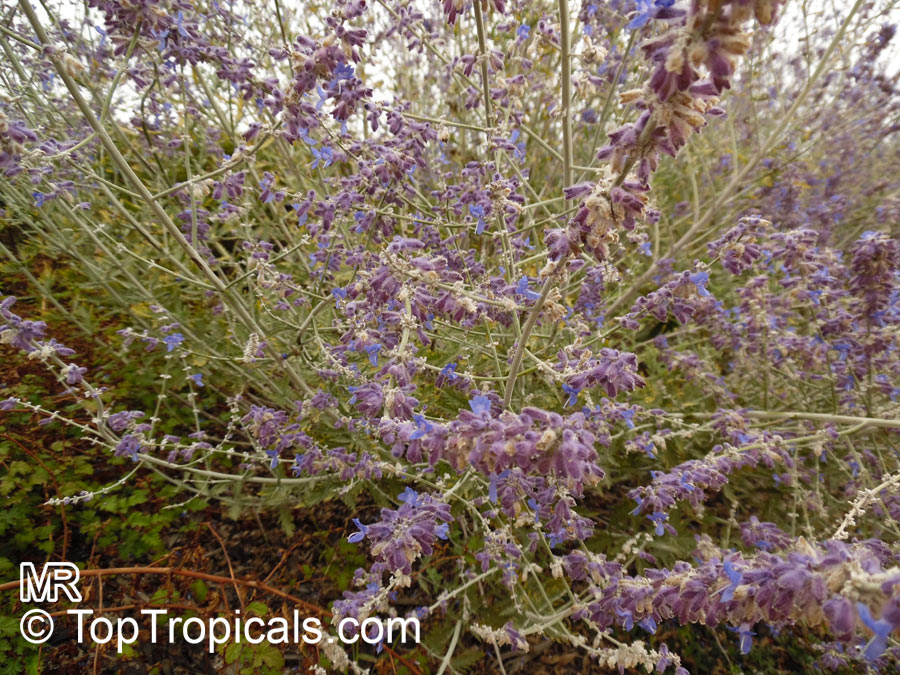
Perovskia sp. (Russian Sage) is a small flowering plant native to Southwestern and Central Asia. Growing to a height of 2-5 ft, this plant can be placed in semi-shade or full sun with moderate water. The ornamental foliage and pretty, blue, lavender and purple flowers makes it an attractive addition to any garden. It also attracts butterflies and hummingbirds, perfuming the air with its fragrant scent.
When mature, this plant is cold hardy, making it ideal for gardens in USDA Zone 4-9. This small, but strong flowering plant is a favorite for rock gardens, beds and borders because of its low maintenance needs and ability to grow in diverse climates.
When caring for Russian Sage plants, it is important to provide good, organic soil for them to grow in. For best growth, give them a slightly acidic soil. If planted in pots, then ensure the container has drainage holes and prevent the soil from becoming soggy as it may cause root rot. For cold regions, it is best to bring the containers indoors during the winter season to protect the plant from extreme temperatures.