Momordica charantia (Bitter Melon)
Botanical name: Momordica charantia
Common names: Bitter Melon, Balsam Apple, Balsam Pear, Karela
Family: Cucurbitaceae
Origin: SE Asia
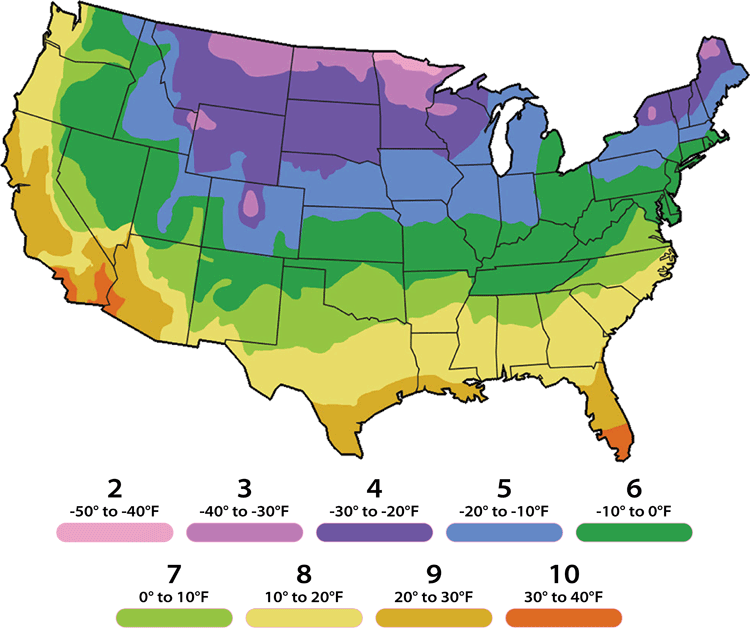
USDA Zone: 9-10
 Plant form: Climbing or creeping vine

 Sun exposure: Full sun or bright light indoor; semi-shade
 Cold tolerance: Frost sensitive. Protect from freezing.
 Watering: Regular
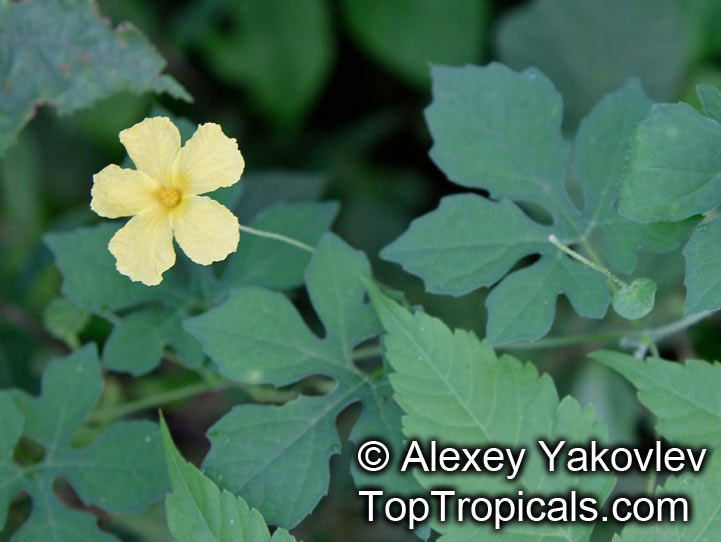
 Flower color: Yellow, orange
 Suitable for: Outdoors in the suitable USDA zone; small gardens, containers, and indoor growing
 Ethnomedical: Ethnomedical plant, traditionally used in folk or indigenous medicine
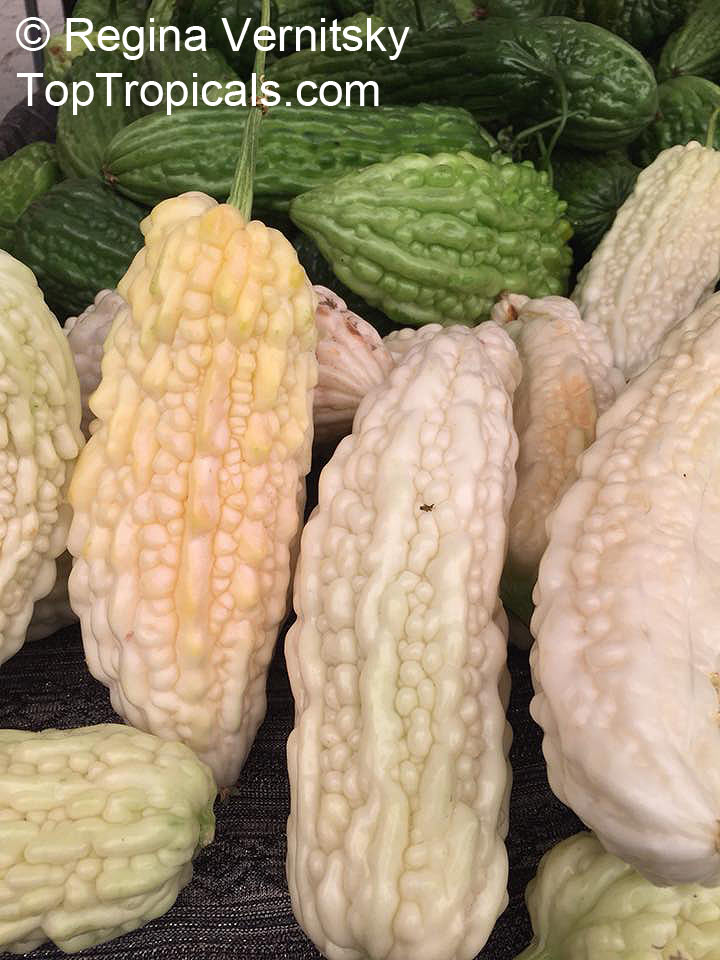
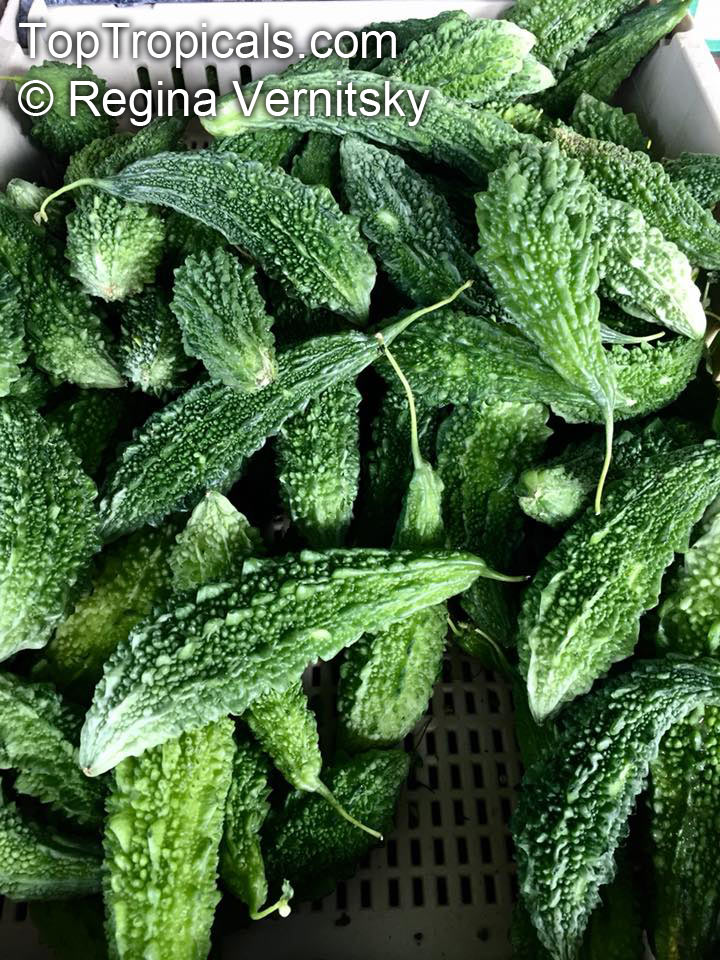
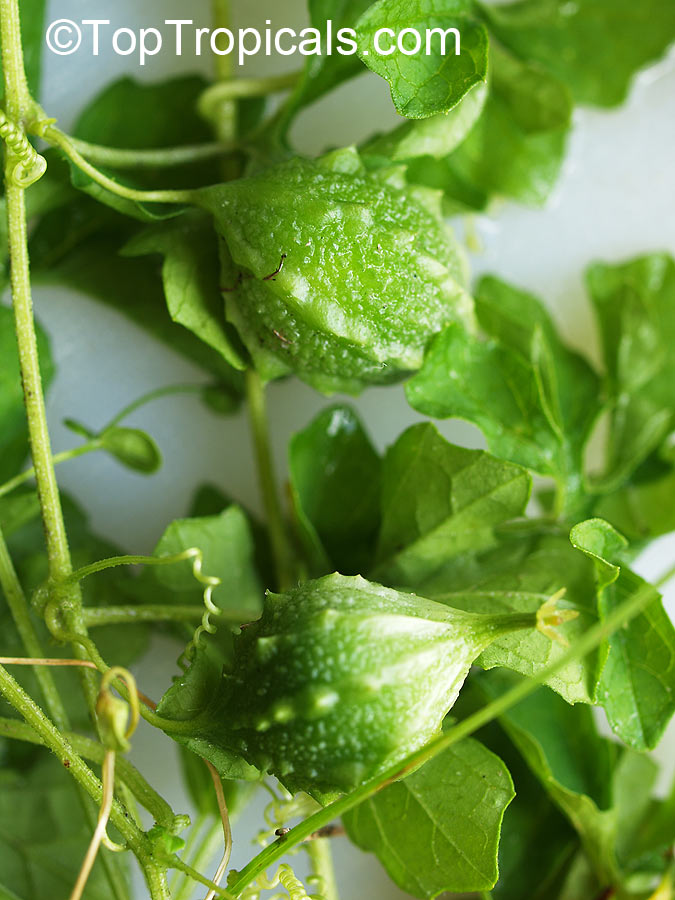
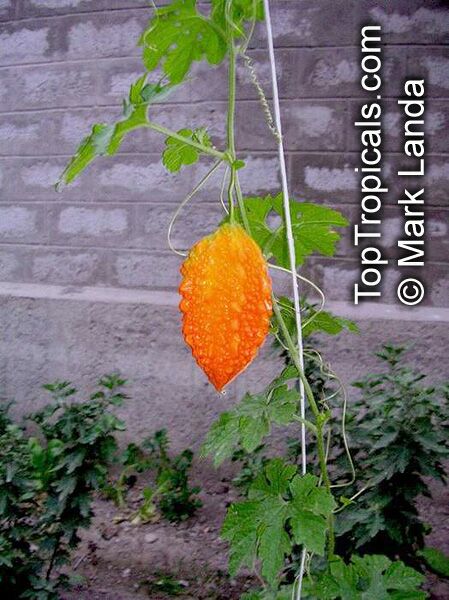
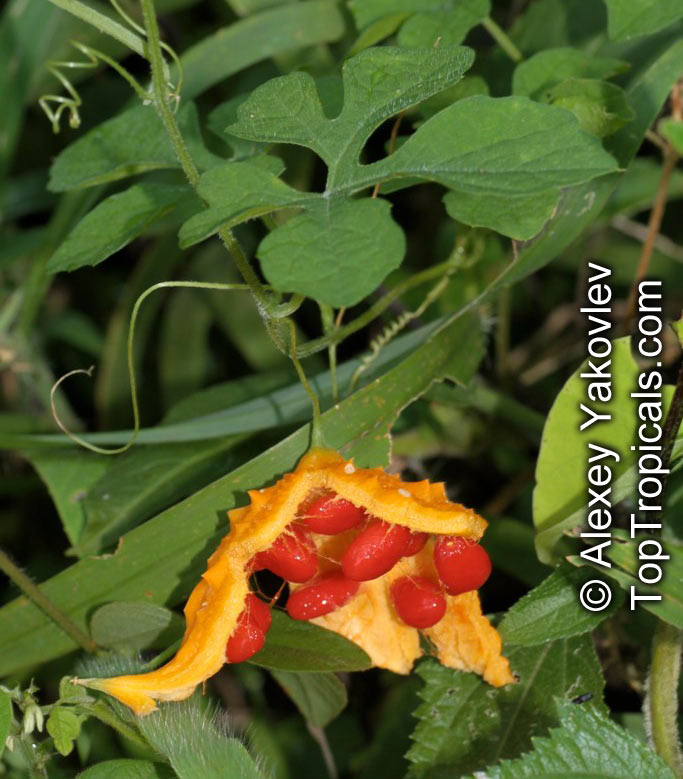
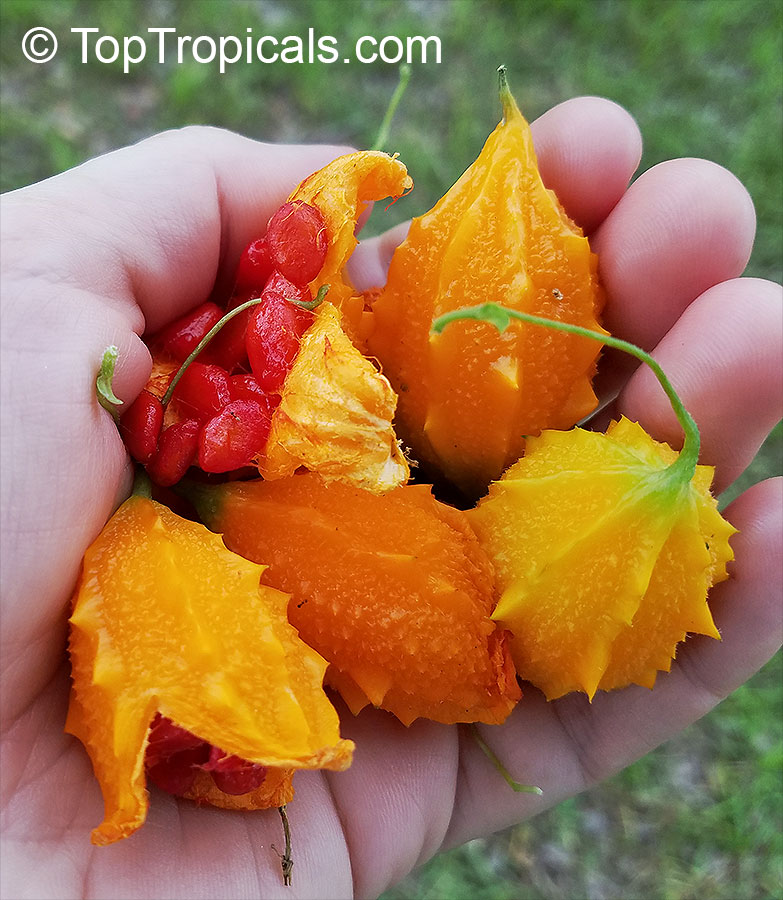
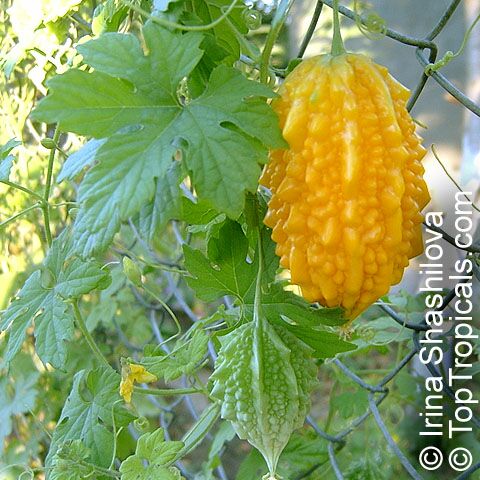
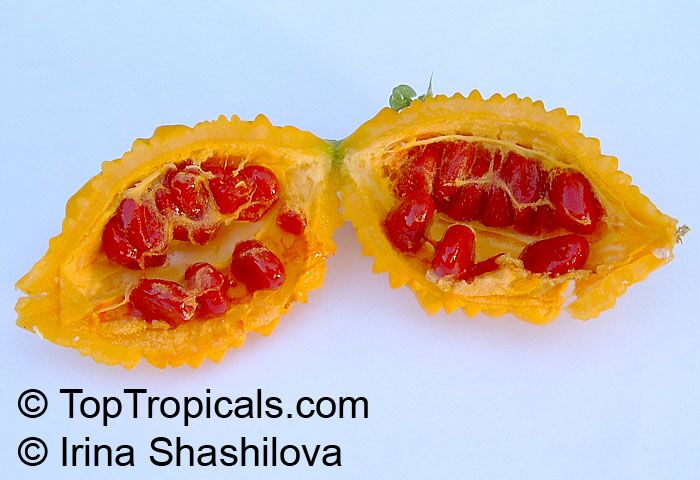
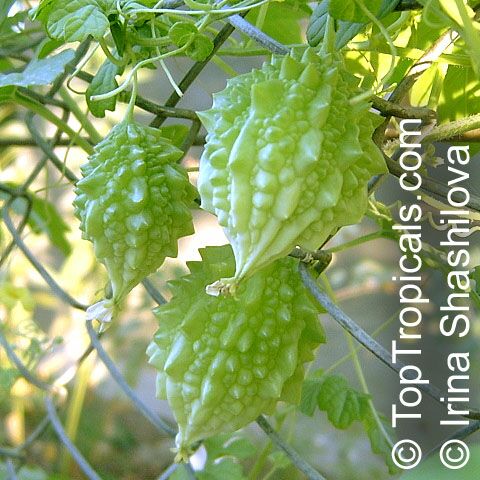
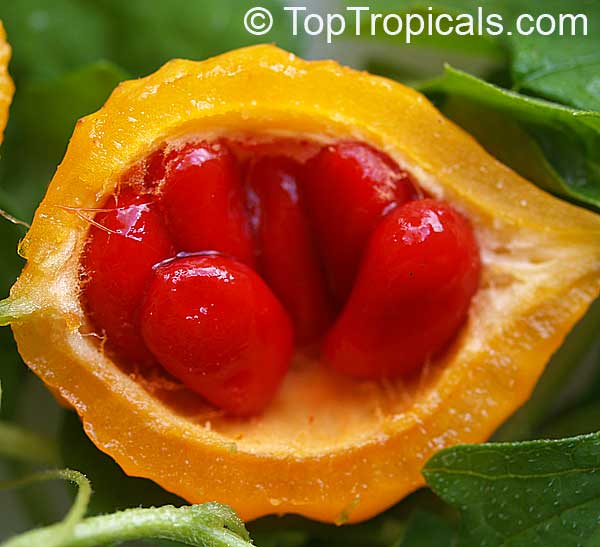
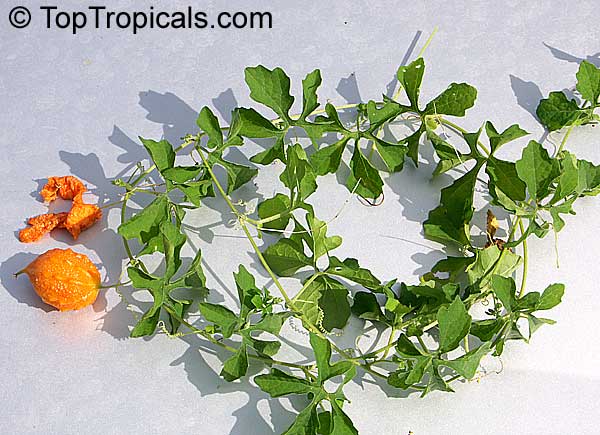
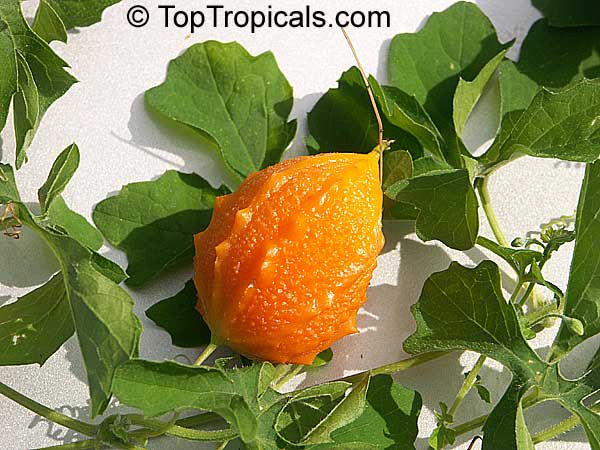
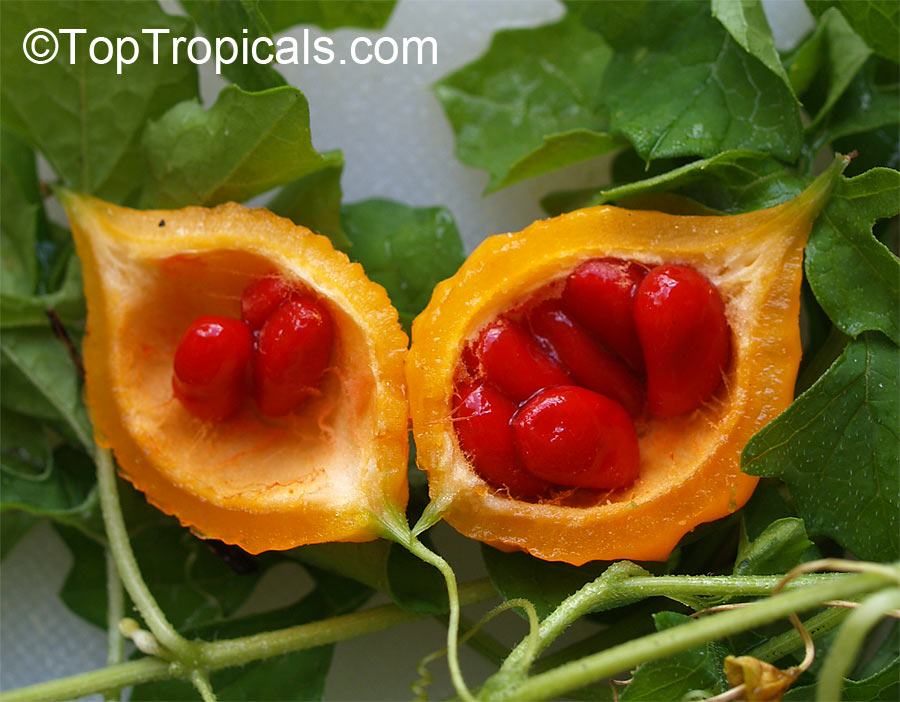
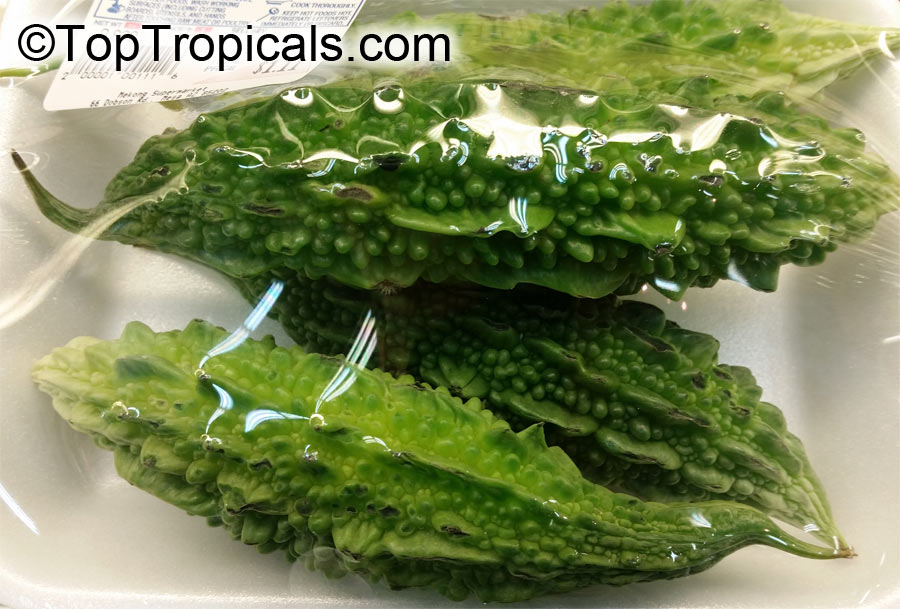
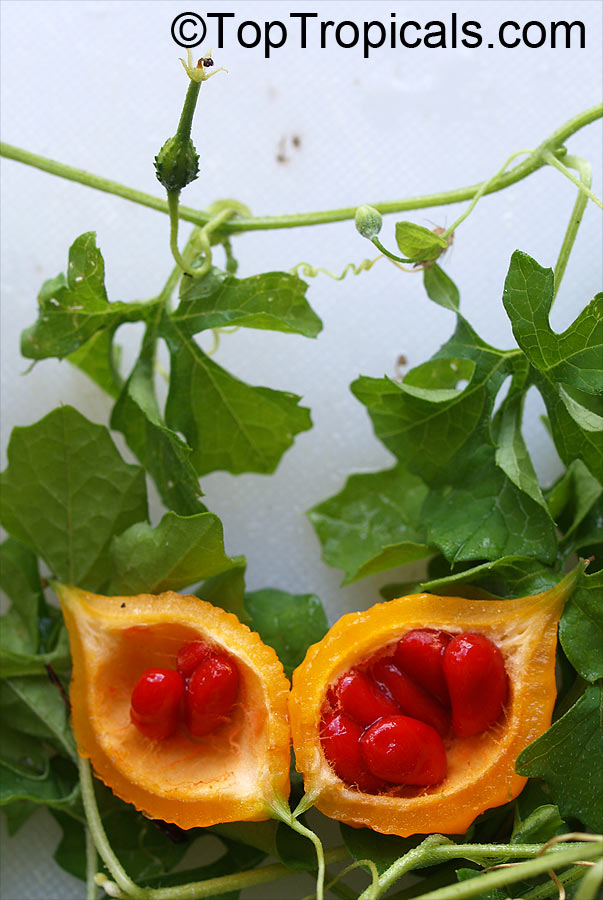
Momordica charantia is an annual and has a creeping or climbing stem. The fruit is broadly egg shaped, beaked, bumpy, ribbed, to 10 cm long and golden yellow to bright orange. At maturity the fruit breaks, bursting open along the 3 valves. The orange pulp contains bright red arils which enclose the seeds.
Momordica charantia has been used extensively in folk medicine as a remedy for diabetes. In Ayurveda, the fruit is considered as tonic, stomachic, stimulant, emetic, antibilous,laxative and alterative. The fruit is useful in gout, rheumatism and subacute cases of the spleen and liver diseases. It has also been shown to have hypoglycaemic properties (anti-diabetic) in animal as well as human studies.
Plant in rich moist soil, in frost free areas, since bitter melon is very sensitve to frost. Do not water too much.
In cooler climates start planting in pots 6 weeks before the frost free date; transplant when there is no more danger of frost.
Similar plants: Momordica charantia (Bitter Melon)